Pathogenic review: Damn, it feels good to be a virus
Over the past couple of weeks, my immune system has been struggling to fight off a cold. It’s been unpleasant, as all colds are. But over the same period—in defiance of my plight—I’ve been waging my own war against immune systems, thanks to Pathogenic, a new roguelite twin-stick shooter from developer Aberrant Labs.
As I’ve downed endless shots of ineffective cough syrup, I’ve done little else with my free time than repeatedly take on the role of a bodily invader. And let me tell you: Being on the enemy’s side is much more fun. Really fun, as it turns out.
Action roguelites are a dime a dozen these days, and it takes something special to stand out. So as quiet Internet whispers turned into widespread cacophonous praise—the little indie game quickly racked up 100,000 sales and an “overwhelmingly positive” review score on Steam—I set aside my default skepticism and gave it a shot.
I’m glad I did.
Under the skin
A brief introductory video sets the scene: A hapless lab assistant drops a vial, and wouldn’t you know it, the poor guy has a cut on his ankle. That’s where you come in. As a lone pathogen, you work your way through his body, starting in the skin and then moving on to the intestines, liver, stomach, lungs, and finally heart. Each zone culminates in a boss fight, and you’re continually upgrading your build along the way to keep pace with the stages’ increasing difficulty. Defeat the dreaded heart to kill your host and claim victory (or forge on to the secret brain boss for extra bragging rights).
What this means in gameplay terms is twin-stick shooting through a series of rooms filled with pesky macrophages and T cells, or even rival pathogens (don’t steal my kill!). Combat is fast and frequently demanding; you strafe and dodge around bullet-hell projectiles and hazards with the left stick while trying to keep your weapons trained on enemies with the right.
The setup is very Binding of Isaac—for this author’s money, one of the best video games of all time. In addition to combat rooms, each procedurally generated zone contains a few safe spaces that offer various powerups, either free or purchasable with in-game currency, and you’ll want to scour the level for these and other goodies before taking on the zone’s boss.
If this game is to be believed, the human body simply offers up upgrades to invading pathogens. No wonder I’m sick.
Credit: Aberrant Labs/Slug Disco
If this game is to be believed, the human body simply offers up upgrades to invading pathogens. No wonder I’m sick. Credit: Aberrant Labs/Slug Disco
Here’s where the game gets interesting. Your little parasite houses various slots to plug in your powerups, and each upgrade affects any weapons (or other upgrades) to which it’s attached. You can freely swap upgrades in and out as you get new ones. Add effects like fire or electric damage to your attacks, slot in new projectile or melee weapons, or even pick up active abilities to fill out your kit. Some upgrades allow you to “overcharge” and give bonuses to other nodes in your system when certain requirements are met. The game definitely has more than a little cell-stage Spore in it.
Ah nuts, it’s mutating
The magic is in how all these upgrades interact. The Binding of Isaac is known for its many and varied “synergies”—items that, when combined, produce surprising and delightful effects. That’s what Pathogenic is all about: creating game-breaking, frame-rate-hobbling builds that let you bully the game’s enemies into submission. Here, though, those synergies are modular and customizable.
Each node gives bonuses and special effects to the nodes it’s connected to. Moving stuff around can make a huge difference in how your build plays.
Credit: Aberrant Labs/Slug Disco
Each node gives bonuses and special effects to the nodes it’s connected to. Moving stuff around can make a huge difference in how your build plays. Credit: Aberrant Labs/Slug Disco
Say you’re using a weapon that spits out grenades. Cool, but basic. But then you attach an upgrade that makes those grenades grow in size and power over time. And then you add an effect that causes electricity to chain between them. Not content, you buff the damage of the electricity or infuse some other effect into it. Then, just for good measure, you make the whole thing home in on enemies.
There are an impressive number of interactions, and the game revels in piquing your curiosity. So many times, when connecting items, I’ve thought, “Surely this won’t work—OH MY GOD, IT DOES.”
The most satisfying part of roguelites isn’t becoming powerful because the numbers went up; it’s becoming powerful due to your own cleverness. Pathogenic is a toybox that rewards experimentation.
Get so strong, you can barely see what you’re doing.
Aberrant Labs/Slug Disco
Get so strong, you can barely see what you’re doing. Aberrant Labs/Slug Disco
Pretty!
Aberrant Labs/Slug Disco
Pretty! Aberrant Labs/Slug Disco
Get so strong, you can barely see what you’re doing. Aberrant Labs/Slug Disco
Pretty! Aberrant Labs/Slug Disco
Enemies drop DNA helixes on death; collect them to level up and mutate—i.e., choose between four random passive effects. Every few levels, you’ll be able to evolve into a newly configured pathogen with more slots for upgrades. Different pathogens offer different ways to build your character, including one that starts with very limited slots but lets you add them exactly where you want over time.
Between runs, you’ll spend the game’s meta-currency (mostly obtained from bosses) to unlock permanent upgrades on a skill tree, making subsequent runs a bit smoother. Each pathogen has its own tree; I’ve been focusing mostly on one for now since progression is slow but steady. There’s a ton to unlock, and completionists should be kept busy for quite some time.
Infectious fun
All the game’s content is rich in theme—the items have scientific-sounding names, and the stages pose thematically appropriate hazards. In the lungs, for instance, wind pushes you around, and the intestine stage features a long, winding hallway. The visuals are excellent, the music rocks, and the sound design is punchy.
You and your enemies have what the developer calls “soft body physics,” meaning you squish and squash as you ram into each other and into walls. Since many enemies don’t deal damage on contact, this opens up some interesting gameplay avenues, but mostly it’s just fun.
Things can get chaotic.
Credit: Aberrant Labs/Slug Disco
Things can get chaotic. Credit: Aberrant Labs/Slug Disco
Despite my praise, there are a few things to keep in mind. If you’re not into roguelites—maybe the whole “permadeath” thing turns you off—this game won’t be for you. And not every run will be a banger, of course; there’s plenty of randomness involved, as befits the genre. Making the best of what you get, and occasionally surprising yourself with a wacky build, is all part of the fun.
The game is also not easy; there’s a lot of bullet hell here, and many rooms are tight and filled with hazards and enemies. I’ve had more than a few frustrating deaths due to so much going on in small spaces, though I’m learning how to avoid them the more I play. Overwhelming visual effects can sometimes be an issue, but you can tone down the clutter in the settings if it gets to be too much.
Still, any death just makes it all the sweeter when you return next time with an overpowered build and delete entire rooms as you walk into them.
The game plays great on the Steam Deck, essentially a requirement for me these days. When things get chaotic and effects fill the screen in the later stages, there can be some slowdown, but nothing has been showstopping for me. It’s currently available only on PC, though, so console players are out of luck.
But the best news might be that the game is scandalously underpriced at $10. If you like action roguelites at all, this is a no-brainer pickup.
Being sick is miserable, but I have to admit, I’ve gained some newfound respect for the little guys that put me through this. May they all see a game-over screen soon.
Uefa could boycott the World Cup if Fifa plan goes ahead – what happens next?
The 55 member countries of Uefa – Europe’s governing body for football, whose teams are among the world’s best and tend to dominate international competitions, have drawn a line in the sand. On July 30, Uefa pledged to boycott all competitions run by Fifa, the sport’s global body, if a proposal to package up and sell interests in the World Cup to private investors went ahead.
A few hours later, Concacaf, the North American football confederation, also rejected the proposal. But how did it get to this? And what does this mean for football?
Let’s rewind to when the news broke that Fifa was looking to sell stakes in the World Cup to private investors. Things moved fast from there. There was plenty of condemnation of the plan from many in the game, including fan groups, players unions, and leagues.
Football administrators, too, were swift to react: Concacaf were “deeply concerned by the lack of due process”. Uefa noted that “the soul and governance of football are not assets to trade – especially with zero transparency as to who gains financially”.
The Asian Football Confederation (AFC) lamented the lack of “sufficient information and adequate time to assess the proposal in full, including its governance, legal, commercial and strategic implications”.
The AFC’s point was particularly pertinent given the scale of Fifa’s proposal to create a new subsidiary, Fifa Forward Enterprise, to oversee commercial rights (broadcast, sponsorship, ticketing and licensing) and event operations – and then proceed to sell shares in this new entity to private investors.
The proposal openly linked this deal with increased monies to member associations over the next funding cycle. Fifa’s budgets work in four-year cycles, with the next one set to run from 2027-2030. Where member associations would have received the currently budgeted $8m (£5.9m), under Fifa’s new proposal, they stood to gain $20m with optional access to another $20m in exceptional and immediate funding for special projects.
Money, money, money
Extra money is good right? After all, Fifa’s objectives include ensuring football “is available to and resourced for all who wish to participate” and that requires money. Well yes, but Fifa has announced that it made a record $15bn in revenue in the 2023-26 funding cycle. That’s on top of healthy reserves – money for a rainy day that could be repurposed for fair weather days too.
Then there is the issue of what else the proposals mean. Leagues and governing bodies selling rights to private investors in sport is not new. For example, we have seen it in rugby union, formula one, and football, including in Spain’s La Liga and France’s Ligue 1.
But these deals were all arranged with organisations that were in need of cash flow, as much of sport struggles to come up with money when needed. If you are desperate for cash, selling the family silver makes sense: you get money up front to survive now and you can worry about the future later.
But if, like Fifa, you do not have a cash flow problem and are, in fact, doing very well, why take such a deal? You get more money up front, yes, but you also lose money long-term: Fifa members will forever get roughly 20% less profits.
Then there is the point of control. The Fifa statement not only promised forward funding of $20m per member for the next four-year funding cycle, but also $22m and $24m for the next two cycles. This begs the question of where the money is coming from. The $20m per member for the upcoming cycle roughly equates to the proposed share sale value ($4.2bn = $20m per member x 211 members).
So, increasing money for the next two cycles means that either Fifa expects its profits to soar, or it is planning to sell more shares (in order to get equivalent cash) or use reserves.
If the former, then the valuation is too low – it would be giving away the family silver at heavily discounted prices. If more shares are sold, then Fifa could lose control over competitions to investors.
This would make Fifa beholden to its investors and make commercial return an obligation. This could potentially lead to everything from more hydration breaks (an opportunity for advertisers) to more frequent international competitions with more teams involved in order to maximise income.
This raises other governance concerns: how were the investors selected, what conflicts of interest were involved, and how much are individuals profiting from this deal?
Uefa’s president Aleksander Čeferin has found himself at odds with Fifa over several recent decisions.EPA/Ronald Wittek
So what happens now?
Fifa noted that it was all a consultation, so it can concede that this process did not bring the hoped for result of agreement. No harm done, although the fallout from such episodes can sometimes affect sponsorships, bring pressure for governance reform. or lead to changes to internal controls. However, it generally has a minor impact on the member associations.
If Fifa does not concede, this could be the first step in a very protracted negotiation. Through a Fifa competition boycott, Uefa would lose access to some competitions that bring in funds to their national teams (through prize money) and their clubs (through payments for players at World Cups).
Fifa would have to change hosts if this came to pass – a cost to Fifa. However, insurance or legal disputes may come into play. There is precedent for this, with the 1986 World Cup having moved to Colombia from Mexico, but it is costly.
For Fifa, however, a boycott would be damaging in terms of income: broadcasters and sponsors would not pay as much without European teams (including the current champions) in attendance.
Then there is the effect on the new subsidiary, which aims to “unlock the full potential of Fifa’s broadcast rights and sponsorships across all of its tournament portfolio”. The value of that portfolio would fall significantly without Uefa teams. Investors would therefore be willing to pay a lot less to acquire those shares. Which means less money without Uefa.
Some have floated the possibility of Uefa striking out on its own. This remains a very unlikely scenario, despite the likes of liberal democrat leader Sir Ed Davey urging them to consider it, and several steps too far ahead.
So it’s probably fitting to end where we started, with Uefa’s statement: “Some things are simply too important to sell. The Fifa World Cup belongs to football.” Time will tell whether it’s right.
Revolving door at 10 Downing St. is weakening the special relationship between UK and US
One of the first things Andy Burnham did on July 20, 2026, after assuming the role of Britain’s prime minister was make a long-distance call to Donald Trump.
The U.S. president later revealed some of the details of his conversation with “the new gentleman,” noting that they discussed “opening up North Sea oil” – a topic seemingly close to Trump’s heart.
But there have as yet been few clues on how Burnham intends to manage the “special relationship” between the U.S. and U.K. Certainly, that task will not have been made easier by the Labour Party leader’s past comments about Trump or those of his foreign secretary, Ed Miliband – a “racist, misogynistic self-confessed groper,” was Britain’s now top diplomat’s assessment of the U.S. leader back in 2016.
However, the challenges for the special relationship go beyond navigating personalities. Indeed, the enduring political instability in the U.K. since 2016 and the Brexit referendum that saw the U.K. exit the European Union is spilling over into foreign policy. Leadership turnover is hindering important reforms at home, but it is also preventing the U.K. from developing a clear strategy on the international stage.
Instability here to stay?
The U.K. has experienced a striking leadership carousel in the past decade.
This pattern of instability is highly unusual from a historical standpoint. Not since the 1820s has there been as many different prime ministers within the span of 10 years. And this past decade also marks a significant deviation from the rest of the post-World War II era – the period in which the special relationship navigated the reconstruction of Europe, the Cold War, the rise of China and threats from international terrorism.
Britain’s Prime Minister Keir Starmer and U.S. President Donald Trump attend the NATO Summit in Turkey on July 8, 2026.Saul Loeb/AFP via Getty Images
Between 1945 and 2016, U.K. prime ministers averaged five years in power; since then it has dropped to just 24 months.
But in all cases, their leadership was eroded by deep structural forces, especially the impact of Brexit.
Like prime ministers before him, Burnham is inheriting a sluggish economy, in part due to the significant economic costs of exiting the European market. He is also in charge of an economy that is more exposed to Trump’s attacks against the rules-based trading order, while unable to benefit from the shock absorbers provided by the EU’s large internal market.
Domestically, Brexit has deeply polarized the British electorate into new identities – leavers and remainers – who are less loyal to existing political parties. This has led to increased electoral volatility, which has helped to accelerate the fragmentation of British politics. For the first time in a century, there is a strong chance that the next prime minister will not be from one of the two main established parties, Labour and the Conservatives.
In other words, Burnham faces a tall order if he is to put a wedge in the revolving door at No. 10 Downing St., the residence of Britain’s prime minister.
Short-lived tandems
The impact of the prime minister carousel has not been confined to domestic politics – it is difficult to maintain a consistent and coherent foreign policy when those dictating it keep changing. This is particularly meaningful for the special relationship, as Brexit has made the U.K. more dependent on the U.S. Granted, much of the present attention will center on how Burnham manages, or not, his ties with Trump.
But leadership instability has and will continue to present additional challenges for the U.K.-U.S. partnership.
First, while not as drastic as in the U.K., U.S. politics are also experiencing more turnover than usual since 2016. Faith in the U.S. government plummeted to 17% in 2025, with voters increasingly irritable and impatient. This is also translating into greater volatility. At least one chamber of Congress has changed hands every two years since 2018, with the streak likely to continue in the midterms in November. And the succession of three one-term presidents has not happened in over a hundred years.
As a result, leadership ties between the U.S. and the U.K. have failed to build any momentum. In the past decade, the average tandem has barely lasted more than a year. At best, Burnham could coexist with Trump for a little over two years, with much of that including the latter’s lame-duck period.
Unclear post-Brexit strategy
Meanwhile, U.S. statesman Dean Acheson’s famous 1962 quip that “Great Britain has lost an empire and has not yet found a role” still rings true.
Exiting from the EU presented a profound challenge for the U.K. and what role it should play on the international stage. Brexit, after all, undermined Britain’s ability to play the role of bridge between America and Europe.
Successive leaders after 2016 failed to develop a clear post-Brexit doctrine, relying instead on an ad hoc balancing act between an Atlantic path, more cooperation with European partners and strategic autonomy. That does not bode well for the special relationship, at a time when the U.K. is grappling, like others, with the key dilemma of how to defend Europe without the U.S.
Strong headwinds
If Burnham does want to preserve and bolster the special relationship, he will need time in office to counter the current strong headwinds.
Historically, the partnership between the U.S. and the U.K. has endured testing times and similarly politically mismatched leaders. Burnham is seen as to the left of predecessor Keir Starmer in the center-left Labour Party – some way off Trump’s brand of conservatism. But Tony Blair and George W. Bush overcame divergent political ideologies a generation ago to forge a close relationship.
U.S. President George W. Bush and British Prime Minister Tony Blair take a walk around the Blairs’ private residence in 2003.Tim Sloan/AFP via Getty Images
But back then, the special relationship relied on deeper institutional ties, whether cultural, diplomatic, military or in the field of intelligence. Yet, the impact has been somewhat blunted of late by Trump’s very personalized diplomacy. Trump’s mistrust of the bureaucracy has limited Britain’s ability to benefit from its deep ties with the American foreign policy establishment.
As such, Burnham has inherited a tall task domestically and internationally. He will have to tackle the same challenges of Brexit that toppled his predecessors while shaping a more coherent post-Brexit future for the U.K. Confronting both would go a long way toward stabilizing the special relationship.
Data shows Indonesia is still importing from Israel, in the middle of a genocide, until now
Indonesia’s own Ministry of Trade has published data showing the country is still importing goods from Israel today, in 2026, almost three years into a genocide the world has watched unfold in Gaza. This is happening in the country with the largest Muslim population on earth, a country whose own citizens have spent the last three years marching, boycotting, and demanding their government cut ties with Israel.
Government trade data, from Indonesia’s own Ministry of Trade, shows imports from Israel never really stopped. They went up. From about 22 million US dollars in 2023 to over 54 million dollars in 2024 — the same year Gaza’s hospitals were being flattened and its children pulled out of rubble.
In 2025 imports finally dropped, by around 27%. But by mid-2026, the numbers were already climbing back up. That is not a country cutting ties. That is a country waiting for people to stop paying attention so it can go back to business as usual.
Meanwhile, ordinary Indonesians did the opposite. Following the BDS boycott movement, people stopped buying food, electronics, clothes, and apps linked to Israel. Thousands joined protests in Jakarta calling for an end to the killing in Gaza. This wasn’t a small group of activists. This was a massive, nationwide response from a country of over 270 million people.
So there’s a gap here that’s hard to ignore. Citizens boycotting Israeli products, while their own ministries keep buying them. The Indonesian government has said many times that it supports Palestinian independence and has no diplomatic ties with Israel. But trade doesn’t need a handshake or an embassy. It just needs money moving. And the money kept moving, year after year, while Gaza was being destroyed.
READ: Indonesia to deploy over 700 peacekeepers in southern Lebanon amid attacks, killings by Israel
This matters because words are cheap.
A government can say “we stand with Palestine” at every press conference and UN meeting. But if trade keeps flowing to the country doing the killing, that support means very little in practice. Genocide isn’t an abstract word here — it’s the mass killing, starvation, and displacement of a trapped population with nowhere to go.
You can’t oppose that with statements alone while your trade ministry quietly signs off on the paperwork underneath. Indonesia’s trade officials have argued that business-to-business trade is separate from politics. But that line doesn’t really hold up when the business in question helps keep the economy of a genocidal state running.
This isn’t only an Indonesian problem. It’s a pattern seen in many countries that call themselves friends of Palestine in public, while keeping their trade doors open in private. Real solidarity has a cost. If it costs nothing, it isn’t solidarity, it’s just talk. Indonesians didn’t march and boycott for years so their leaders could look sympathetic on camera and sign import papers the next day.
And there’s a bigger point that a lot of diplomats avoid saying out loud. Decades of peace talks, partition plans, and two-state proposals haven’t stopped the settlements, the walls, or the deaths. Every one of those plans assumed Israel would negotiate fairly. It hasn’t. What has actually happened, in plain view, is the slow removal of Palestinian land, homes, and now, in Gaza, lives. When people are being erased like this, the answer isn’t a new map that gives even more ground to the side doing the erasing. The answer is for the erasure to stop, full stop, so that Palestinians can finally live freely and fully on their own land, without having it carved up and handed away piece by piece.
Ordinary Indonesians already get this. That’s why they took to the streets in the first place. Now their government needs to catch up, and so does every other government hiding behind nice statements while their trade numbers keep climbing.
Boycotts by regular people matter, but they can only do so much without government action behind them. If Jakarta really means what it says about Palestine, it should stop the imports completely. Not a temporary 27% dip that bounces back a year later. A full, permanent stop.
Anything less is a government saying the right words while its own trade data tells a different story.
OPINION: Can disability become the next soft power tool in Indonesia-MENA ties?
The views expressed in this article belong to the author and do not necessarily reflect the editorial policy of Middle East Monitor.
Subscribe nowwith a one-month trial for only $1, then enjoy the first year at an exclusive rate of just $99.
Merz loses political control as Berlin’s troubles spread Diego Faßnacht reports that Friedrich Merz’s botched personnel reset has deepened doubts about his authority just as Germany’s industrial weakness spreads into municipal finances and regional property values. Political mismanagement, fiscal strain and rising AfD support are now reinforcing one another.
Japanese components, Chinese chip tech race past US sanctions Scott Foster reports that Japanese component makers remain deeply embedded in global EV supply chains while China’s semiconductor sector is finding ways around US sanctions. Advances in DUV immersion lithography and memory chips suggest technology markets are adapting faster than Washington can contain them.
The narrative shifts on Ukraine, the battlefield doesn’t James Davis reports that despite Western claims of improving Ukrainian momentum, Russian forces continue to make significant battlefield gains while expanding strikes on Ukraine’s ports, logistics and economic infrastructure. But the underlying military balance remains largely unchanged.
OPINION – The World Happiness Report: How To Explain Israel’s High Ranking?
One of the conundrums I often confront is how to comprehend Israel’s consistent ranking in the top 10 countries in the World Happiness Report, published by the Wellbeing Research Centre at the University of Oxford, in partnership with Gallup, the UN Sustainable Development Solutions Network and an independent editorial board.
It measures people’s self-assessed life evaluations, averaged over three years. The report uses factors including GDP per capita, social support, healthy life expectancy, freedom to make life choices, generosity, and perceptions of corruption to help explain differences between countries. For the last five years, Israel has ranked in the top 10, reaching a peak of fourth in 2023, fifth in 2024, and eighth in 2025.
In contrast, Australia, the US, and the UK have occupied rankings between 15 and 30. This is surprising since these countries are universally viewed as amongst the most desirable places to live.
At first glance, it is incomprehensible how a country that has been subject to war, terror and is wracked with social divisions and a dysfunctional political system which has polarised the nation, can achieve, yet alone sustain, such a high ranking.
Some factors can be readily explained.
Israel’s economic development over the last two decades has been remarkable, and its GDP per capita has improved dramatically.
The state is a flourishing democracy despite the high level of disdain that the country’s citizens hold towards its politicians. Witness the protests between supporters and opponents of Benjamin Netanyahu, against the judicial reforms, or over the conduct of the war in Gaza and demands for a negotiated release of the hostages.
Yet it is precisely the fact that there are demonstrations that are absent the kind of violence that the US experienced during the Black Lives Matter riots in 2020 and the hate marches of the alliance of Islamists and extreme left “Marxist” agitators throughout the West.
When it comes to health services, Israel’s ability to serve its citizens ranks highly. One does not hear the kind of criticisms that are levelled in the US in terms of the exorbitant costs of accessing health care or the repeated failures and shortcomings of the National Health Service in the UK.Israel has many flaws when it comes to social cohesion. There is the divide between religious and secular, Ashkenazi and Sephardi, and the ultra-Orthodox who oppose enlisting in the Israel Defense Forces (IDF)
By comparison, the US has long been beset by social divisions, racism and discrimination. Australia and the UK have seen mass immigration, including many from countries with no tradition of respect for democracy who enter and refuse to assimilate and respect the traditions and norms of the societies they have joined.
Other factors such as trust in government and the presence of corruption would demonstrate that democracies in the West with a history of embracing Judeo-Christian values will generally outrank governments run by autocrats, dictators or those that have been mired in poverty and corruption.
Whilst not seen as a measured metric, the term “resilience “ has often been applied to Israelis who manage to overcome adversity and carry on with their lives, whether after a terror attack or emerging from bomb shelters. Israelis can complain, argue, criticise and debate, but life goes on. Some have opined that Israelis possess this desire to live life to the fullest precisely because of the challenges they must confront.
Another revealing factor is the apparent decline in willingness among some young people in Western democracies such as the UK, US, and Australia to serve in the military or defend their nation. One poll, conducted by YouGov in the UK, found that 50% of young people aged 16-29 would refuse to fight for the UK under any circumstances.
By contrast, in Israel, the way the IDF has been able to rely on its reservists to augment its needs has exceeded all expectations despite the burden, dangers, and sacrifices involved.
I posed this conundrum at a social setting recently and received an emphatic response from one of those present. He stated that the answer can be summarised by one word; for Israelis, life has “meaning.”
As many commentators have argued, the West has been in a state of decay and decline, under assault from the extreme left in tandem with radical Islamists.
Today’s youth in the West now forsake the values of previous generations and have been imbued with progressive “woke” ideologies that are aimed at destroying western civilisation. This nihilistic movement—which includes calls for open borders, defunding the police, attacks on family values, transgender rights and attacking the binary definitions of male and female, global warming and the latest fad, Palestinianism—is creating division and ruptures throughout Western society.
Who could have imagined witnessing the burning or banning of the national flag or emblems in Australia, the US or the UK?
By contrast, the majority of Jews who live in Israel possess great pride in their Jewish identity and the achievements of the Jewish nation in establishing a state that has overcome adversity and continues to excel in all spheres of life.
The unity and support shown by Israelis for one another during the last three years demonstrates that, for many Israeli Jews, there is meaning in terms of living in a generation where they can express their Jewish identity loudly and proudly, unlike previous generations who constantly faced persecution and discrimination whilst in exile.
It is this pride that elevates Israelis to a state of happiness and meaning, and fuels its rise in the rankings. For Israelis and Jews, Israel is not just a military superpower, a safe haven or the start-up nation, it is a beacon of light where Jews are in control of their destiny.
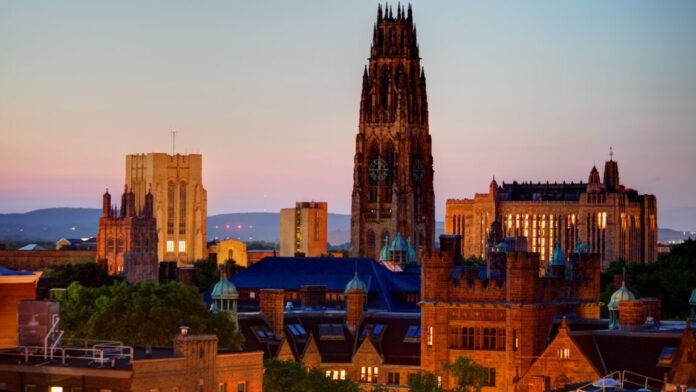
How a Yale AI-cheating dispute became a 13-count federal lawsuit
Thierry Rignol is furious at Yale.
Rignol paid Yale $208,500 in tuition for its Executive MBA program. But after he was accused of cheating, the school suspended him for a year and gave him an F in the course Sourcing and Managing Funds.
This happened despite the fact that Rignol was a “top student, on track to graduate first in his class,” he says. As a result, Rignol missed out on being named class valedictorian, an honor he claims to have earned “under Yale’s own stated criterion.”
So Rignol sued the school. His lawsuit has been running since February 2025. It opened with a motion to “Proceed in Fictitious Name”—which was denied—and has since sprawled across 125 docket entries and a highly unusual third amended complaint. It appears to be nowhere near trial.
What issue was big and loud enough to produce all this sound and fury? Artificial intelligence, of course.
Rignol’s final exam in Sourcing and Managing Funds was flagged as possibly composed with the aid of generative AI. Rignol’s professor used an AI detection tool called GPTZero on Rignol’s text. The tool said that whole sections were likely AI-generated. But such tools have well-known weaknesses; most are unreliable, and even Yale has noted that trying to police AI use through detection tools is infeasible.
In Rignol’s telling, his long, perfectly formatted test answers were the product of his own intelligence. “It was entirely expected,” his lawsuit says, “that [Rignol’s] exam writing would be thorough, well-organized, and display near perfect punctuation and grammar, attributes consistent with his academic excellence.”
There was also the matter of his French background. Rignol calls out “GPTZero’s known bias against non-native English speakers” like himself, and he argues that detectors can mistake the formal, structured prose of such writers for AI-generated text.
But it’s not just tools like GPTZero that enrage Rignol. He believes that Yale itself is against him and that the whole “sham” disciplinary process was designed to censor his “protected conservative political speech” after he advocated in courses for “smaller government, pro-business policies, and skepticism of DEI.”
After several expansions, Rignol’s case now contains 13 separate causes of action against Yale, including breach of contract, civil rights violations, emotional distress, unfair trade practices, defamation, and invasion of privacy. He wants damages “without limitation” to cover his physical well-being, emotional state, reputation, “past and future economic losses,” and damage to career prospects.
Despite everything, Rignol’s lawsuit still demands that Yale take him back (though the university says he has already returned from his suspension and has graduated). Rignol also wants his F reversed and his disciplinary records expunged.
But was Rignol actually the victim of a bad detection algorithm and political hostility at Yale? The school doesn’t think so—and it wants to know why Rignol took months to turn over a key file.
Incomplete
The saga began with the final exam in the spring 2024 session of MGT423E, Sourcing and Managing Funds. The test ran for four hours and was self-timed; it was “open book” but “closed Internet.” AI tools were strictly disallowed. Students wrote answers on their computers, generated PDFs from those files, and submitted the PDFs to their instructors. Of 72 students, only Rignol’s exam was flagged by a teaching assistant for possible AI use, in part because of its unusual length.
One of the course’s professors, K. Geert Rouwenhorst, emailed his dean on June 11 to describe the suspicions about the paper. While Rignol had argued largely over the use of tools like GPTZero, Rouwenhorst made clear that his teaching team had multiple reasons for concern.
First, he said, GPTZero thought it likely that AI was used in several answers. Second, one answer showed “substantial overlap” with output generated by ChatGPT in response to the same question. Third, Rignol “performed relatively poorly on question 5, where AI tools were the least helpful.” Finally, the teaching team questioned—though without testing the theory—whether anyone could have produced an exam of that length and polish within four hours.
The next day, Rignol learned that he would receive an “Incomplete” in the course while the issue was investigated.
Over the summer of 2024, various administrators looked into the matter. Rignol claimed innocence, saying the exam merely reflected his “exceptional performance as the top student in his class and his distinctive writing style as a non-native English speaker.” He thought Yale was pressuring him to falsely confess by “revising” his statement; the alternative, he thought, was to “refuse to confess and risk expulsion.”
Rignol even claims that one Yale dean “escalated the pressure by invoking the fear of deportation.” (Yale says that it has the right to explain to students what the consequences of disciplinary actions might be. In this case, Rignol was in the US on an investor visa, not a student visa, and Yale discipline would not have led to his visa being revoked.)
Yale sees things differently, and its filings portray Rignol as stalling and evasive. For instance, finance professor James Choi, who led the Honor Committee investigating the case, emailed Rignol multiple times looking for the underlying file Rignol had used to draft his exam answers. (Yale says that this file “could have shed light on whether Plaintiff used AI tools.”)
On August 10, Choi wrote:
Through Dean Wendy Tsung, I have twice asked you to send us the Microsoft Word file that produced [the] PDF file you submitted for the exam. I am now asking you directly. I remind you that when a student has been found by the Honor Committee to have lied to or not been forthcoming with the Committee, the most common punishment is permanent expulsion from Yale.
On August 12, Choi followed up to ask about the file again. “Should I note that you are refusing to share this file with the Honor Committee?” he asked.
On August 16, after Rignol expressed confusion about what was being asked of him and why, Choi responded, “I am asking you to send us the Word file from which the PDF was produced. You seem to be weighing whether you will cooperate or not. It’s your choice, but if history is a guide, failure to cooperate would be viewed by the Honor Committee as an extraordinary violation of the Honor Code.”
Choi asked again on August 19. No document arrived.
In September, the Honor Committee sent out its “official notification letter” telling Rignol that he was accused of “improperly utiliz[ing] AI on the final exam in [his] course.” The committee wanted to meet in October; Rignol told them he was getting married in Europe and asked to postpone. The request was granted.
In early November, just days before the hearing, Rignol was back from Europe and arguing about the committee’s composition. He said that its student members should be recused unless they had worked through the same courses and problem sets he had. Choi responded that there were “no grounds to require Committee members to meet the criteria you describe.”
The heating would go ahead.
Oh, that file!
On November 8, Rignol showed up to the hearing and again maintained his innocence. He argued that AI detectors were unreliable. He even submitted GPTZero scans he had made of works by a Yale dean and a former president. These “indicated there was a ‘100% probability’ that selections from these works, some published over 30 years ago, were written by AI, a clearly false result,” Rignol says in his lawsuit. “The Honor Committee’s response was silence.”
The Honor Committee was not silent, though, about asking Rignol once again to submit the underlying Word document used to prepare the PDF of his exam.
“As he had done before the hearing,” Rignol’s lawsuit says of this moment, “he offered to produce copies of any files related to his Yale assignments.”
The apparent contradiction turned on the word “Word.” Throughout the process, Yale had been asking for Word files. Rignol explained to the committee that he didn’t have any relevant Word files. He had written the exam answers in Apple Pages.
In court documents, Yale lawyers express incredulity about this answer:
For the first time, Plaintiff disclosed “that he did not use Microsoft Word” to create his exam submission but instead he used a different word processing program, Apple Pages. In other words, Plaintiff’s defense for failing to produce the requested files was that he did not have to respond to Professor Choi for weeks; he had no obligation of candor to correct Professor Choi that he used Apple Pages; and he did not have to produce the files because the Committee asked for a “Microsoft Word” file but he used “Apple Pages.”
The Honor Committee meeting ended around 2 pm. Wendy Tsung, assistant dean of the MBA for Executives program, called Rignol shortly afterward to ask for the Pages file he had mentioned. Rignol provided this around 3 pm.
Dean Tsung called him again at 3:30 pm. She texted him at 4 pm. Tsung wanted Rignol back on campus by 5:30 pm; the committee had asked to examine his laptop.
But Rignol had already left campus for the day. At 5:07 pm, he texted Tsung, “I am unfortunately not able to meet at 5:30 p.m. today.” Tsung called him 12 minutes later and reiterated her request. Rignol said that he could not return on such short notice. Would next week work?
It would not. That evening, at 8:28 pm, Rignol received a letter from Professor Choi. The Honor Committee had not ruled on the substance of the allegations, but it had found Rignol liable for “not being forthcoming”—which Yale treated as a separate honor code violation.
Rignol’s lawsuit calls this punishment a manifest injustice. “Before this point, Mr. Rignol had never received any notice from Yale that he was being charged with ‘not being forthcoming,’” it says, “nor was he afforded any of the due process protections required under Yale’s policies for such a charge. As a result, Mr. Rignol was never given the opportunity to defend himself against that charge.”
But Yale points out that Rignol had been told over the summer that candor was an issue and that he had still not provided the requested file until the day of the hearing.
Rignol was suspended for a year. In late November, the Honor Committee further decided that he had “violated the rules of the Sourcing and Managing Funds final exam” and imposed an F. Yale says this amounted to a finding that Rignol had used AI; he insists that the committee never expressly said so.
Rignol then appealed his suspension and his grade change to Yale administrators; both appeals were denied.
125 docket entries later
And so, in February 2025, Rignol sued Yale in federal court. But he has encountered some skepticism. As one judge said during a hearing, “Wouldn’t a reasonable professional person who was trying to be cooperative with a proceeding upon getting not just one email but many emails asking for the underlying document that was used to create a PDF say, ‘Oh, I didn’t use Word. I used Pages, a different word processing [program]?’”
More than two years after the contested final exam, Rignol’s court case continues. In June 2026—more than a year after Rignol sued—the judge gave him permission to file a third amended complaint, adding new material. But the approval came with a sharp warning.
“This delayed motion, submitted during the pendency of a fully briefed motion to dismiss, borders on meeting the standard of ‘futility, bad faith, undue delay, or undue prejudice to the opposing party,’” the judge wrote. The court also said it would “not grant another motion to amend the complaint absent extraordinary circumstances.”
Yale lawyers, who have been pushing for months to have the entire case dismissed, said in a motion on July 15, 2026, that the expanded complaint was “nothing more than the classic formulaic, conclusory recitations of elements of causes of actions without support from actual, well-pleaded facts.”
The final grade
In two years, the Rignol saga has morphed from a clear charge of “using AI on an exam” to a murkier fight about railroading, political bias, due process, and discrimination against non-native English speakers. Along the way, it has consumed fantastic amounts of time (and, one assumes, money).
Rignol has spent over a year in court insisting that Yale used the wrong tools, followed the wrong procedures, asked for the wrong file, and reached the wrong conclusions.
But Yale’s most damaging evidence may be simpler: For months, it asked for the file behind his exam, and Rignol did not quickly provide it.
BP puts UK North Sea oil and gas assets up for sale as CEO pushes overhaul
BP wants to sell its British oil and gas fields in the North Sea as new Chief Executive Officer Meg O’Neill accelerates a sweeping portfolio overhaul aimed at improving profitability.
A day earlier British Prime Minister Andy Burnham said he planned to take a “pragmatic” approach to developing and using oil and gas resources in the North Sea, setting out his position after U.S. President Donald Trump said the basin would be opened up.
“The North Sea remains integral to the UK’s energy system. However, as we focus our portfolio and direct capital to our highest-value opportunities, we believe our North Sea business will be better positioned as part of another company,” O’Neill said in a statement.
ExxonMobil , Chevron, ConocoPhillips, Shell, TotalEnergies and Eni have all sold, merged, spun off or otherwise reduced their operations in the ageing basin in recent years as production there falls and other locations offer more profitable projects.
BP, formerly known as British Petroleum, has worked in the North Sea for more than six decades and operates five major production hubs in the region, including the Clair oilfield, the largest on the UK continental shelf.
BP, which is expanding in regions such as the United States and Brazil, generated about 5% of its oil and gas output from the British North Sea last year, around 117,000 barrels out of a total of 2.3 million barrels of oil equivalent per day.
BP has since agreed to sell its stake in the Culzean field which reduces its UK output by around 25,000 boed.
BP will retain its UK aviation fuel distribution business, retail sites and its huge trading desk alongside its London headquarters, it said.
Its shares were up 0.4% at 0810 GMT versus a broader index of European energy companies up 0.7%.
‘PUNITIVE TAXATION’
As opposed to the other major North Sea oil and gas producer Norway, Britain’s tax regime on the industry in recent years has been marked by successive changes, decried by oil and gas companies for deterring investment.
“This decision is another stark reminder that confidence in the UK Continental Shelf has been badly shaken after years of policy uncertainty, punitive taxation and mixed messages about the future of the industry,” said Russell Borthwick, chief of the Aberdeen & Grampian Chamber of Commerce, which comprises many UK oil and gas producers.
Burnham’s Labour Party has already softened its election pledge to stop handing out new oil and gas licences and Energy Minister Miatta Fahnbulleh said she was in close contact with BP over its sale plan.
BP employs 1,100 workers in its North Sea business out of a total of around 14,000 employees in Britain, it said.
UK OIL AND GAS OUTPUT IN STEEP DECLINE
Overall output in the ageing oil and gas basin has plummeted to around 1 million boed last year from 4.5 million boed at the turn of the millennium.
BP has stepped up its efforts to reduce debt and refocus on its oil and gas businesses after scaling back its investment in renewable energy.
Since O’Neill took over in April, BP has reorganised into two business segments — upstream and downstream — from three, a change that took effect this month.
An internal email seen by Reuters on Thursday also disclosed BP’s plans to reduce its workforce by 700.
Abdul El-Sayed Answers: Can the Left Win in the Midwest? Yes.
On Tuesday, Abdul El-Sayed and Rep. Haley Stevens, D-Mich., will face off in the Michigan Democratic Senate primary. The race is the next biggest test of whether progressives can win statewide, particularly in purple territory.
The Michigan race is one of the most expensive primaries of the cycle. Outside groups have spent upward of $50 million in support of Stevens or against El-Sayed. Most of that money is coming from the American Israel Public Affairs Committee and its affiliated groups — close to $30 million, which their largest investment ever in a single race, according to The AP.
“It’s just anti-democratic on its own terms,” El-Sayed, the former public health official, tells The Intercept Briefing. “I always ask people, “OK, you’re covering this as a very close race, but would it be close if they didn’t have $60 million to spend? Would it even be a close race at all?’”
This week on The Intercept Briefing podcast, host Akela Lacy asks, can progressives win outside of blue cities? El-Sayed argues, if you focus on the issues people care about and act on them, you can: “Look, you have an option that’s not bought off by all the same corporations. And that option is desperately clear about wanting you to have healthcare, and also wanting your kid to have a good school, and also making sure that there’s not a data center that gets planted in your backyard to automate your job away.”
Lacy explores that question further with Ryan Clancy, a Wisconsin state representative and founding member of the state legislature’s current Socialist Caucus, and Thom Hartmann, a progressive political commentator.
Clancy says voters he speaks to in Milwaukee “want a fighter. People want people in office who are going to fight for the middle class, fight for actual transformative change.” He adds, “The idea that in order to win in a purple district that is roughly split between Democrats and Republicans, that you need when you’re a Democrat, to look as much like a Republican as possible is just not helpful.”
Polling suggests that El-Sayed has a commanding lead over Stevens in the Democratic primary. But polls for the November general election narrow sharply when El-Sayed is up against Trump-backed Republican candidate Mike Rogers; one shows Rogers beating him by 10 percentage points, which the Stevens’s campaign has leaned into.
“We’ve been in this change moment. We’re sick and tired of neoliberalism. We’re sick and tired of Reaganism. We’re sick and tired of the status quo. We’re sick and tired of a dying middle class. We have been living in this moment, in my opinion, since 2000, and I think in a big way since 2008. Obama promised hope and change, and really just brought us a bunch of health insurance companies,” says Hartmann. “I’m not sure if we’re there yet to the point where a good message like El-Sayed’s message can overcome millions of dollars from Israel and from big corporations. That’s going to be the big challenge.”
The Intercept invited Stevens on the program for an interview but as of publishing have not heard back yet.
For more, listen to the full conversation of The Intercept Briefing on Apple Podcasts, Spotify, YouTube, or wherever you listen.
Transcript
Akela Lacy: Welcome to The Intercept Briefing. I’m Akela Lacy, senior politics reporter at The Intercept.
What do Democratic voters really want? It’s the question that’s animated primaries so far this cycle in the ongoing battle over the future of the Democratic Party.
Progressives and democratic socialists say their recent wins from New York to Maine to Colorado, including a slew of races where insurgent candidates beat incumbents or others backed by the Democratic Party, have pushed their skeptics to move the goalposts.
The main criticism facing the left is no longer that its candidates can’t win — it’s that they can’t win in “normal” places outside of city enclaves full of young, educated, left-leaning voters.
AL: That argument has reared its head again ahead of key primaries in the Midwest set to test the power of progressives to win in statewide races pitting them against the Democratic establishment in states like Michigan, Minnesota, and Wisconsin.
This week on The Intercept Briefing, we’re talking about the question we just can’t seem to get away from: Can the left win in the Midwest?
We put that question to one of the candidates at the center of that debate, Dr. Abdul El-Sayed, who is running in Michigan’s Democratic Senate primary on Tuesday. We also asked his opponent, Rep. Haley Stevens, to discuss the issues, but she has not gotten back to us.
But first, I’m joined by Ryan Clancy, a Wisconsin state Rep. and founding member of the state legislature’s current Socialist Caucus and the first democratic socialist lawmaker elected in Milwaukee in more than half a century.
Ryan Clancy, welcome to The Intercept Briefing.
Ryan Clancy: Thank you so much for having me. Looking forward to this.
AL: We’re also joined by Thom Hartmann of the “Thom Hartmann Program” on radio stations across the country, and the author of “Who Killed the American Dream?”, about an 1886 Supreme Court decision that gave corporations constitutional rights. Thom, welcome to The Intercept Briefing.
Thom Hartmann: Thanks, Akela.
AL: So we’re talking about the question of whether the left can win in the Midwest, but I want to start with the premise of that question. Why is there this idea that the left can’t win in the Midwest? Where does that come from? Ryan, let’s start with you, and then Thom.
RC: I think it’s coming from two different places. One is just fear. In Wisconsin here, we’ve lived now for 16 years under Republican control. We haven’t had the abilities to even get bills hearings, much less pass things into law and do what Wisconsin needs us to. So I think there is some valid concern that people just don’t want another Republican.
But there really is no basis for not wanting somebody from the left unless you’re a Democrat who’s just a conservative or moderate and one of the folks who is, I think, on the way out both in Wisconsin and across the country.
AL: Thom, what’s your take?
TH: I think it’s astonishing that we’re calling this “the left.” I’m assuming that Ryan is not calling for all of the big companies in America to be owned by the government.
RC: Not until next week. [Laughter]
TH: Exactly. Right now where progressive Democrats are at is where Dwight Eisenhower was at. He ran for reelection in 1956 on the fact that he had almost doubled the number of people on Social Security. He’d expanded the benefits. He’d almost tripled the number of people eligible for union jobs and increased union membership by almost 100 percent.
My mom, in the 1950s, went to college, and she paid her way through Michigan State University and graduated — with a summer job as a lifeguard in Charlevoix, Michigan. That was the world.
Today, if anybody proposed that you should be able to go to college and work a part-time job for three months to pay for an entire year of a major Big Ten school!
Healthcare was inexpensive in Michigan where I grew up. Blue Cross Blue Shield was required by law to be a nonprofit. In fact, all of the insurance here, all of the hospitals in the state were required by law to be nonprofits. If anybody were to propose this stuff now, they’d be screaming “communism!” This is just common sense.
To the extent that America has been radicalized, I would say it’s the radical middle, not the left. The real left largely doesn’t exist in America.
RC: Yeah, you’re totally right. I think the reason for the resurgence of the left, really, is the economic conditions. It’s people having really been let down by capitalism, by so many years of moderate and Republican control.
We’ve seen the average age for somebody buying their first home go from the 20s years ago: It’s 41 now. The idea of the American Dream really is out of grasp for many people, even people who are working really hard to get there.
TH: Again, in the 1950s, my dad bought the house that I grew up in 1957. He was able to do that because he finally got a union job at a tool and die shop. With that one union paycheck, he was able to buy a house. He bought a new car every three years. He took a vacation every year. He retired and traveled the world. He put four boys through college — on a single paycheck!
If you use that as the definition of the middle class, 65 percent of Americans were there because a third of us had union jobs when Ronald Reagan came into office in 1981. Today, it’s 41 percent of us who can make that claim, who can satisfy all those tick marks for the middle class — and it requires two paychecks to do that.
This is 45 years of Reaganomics that’s just essentially ripped America apart, torn apart the middle class. So you’ve got people reacting and saying, no, we want to either go back or go forward — however you want to define it or frame it — to a world where work is honored, regardless of educational attainment. If somebody works a 40-hour week, they should be able to have housing and transportation and food and a decent life.
The reactionaries, the Reaganites, the crazies on the right start screaming “leftism” and “communism.” I’ll call myself the left, but the Overton window has just been — it hasn’t moved, it’s been blown off the side of the map.
“If somebody works a 40-hour week, they should be able to have housing and transportation and food and a decent life.”
RC: Absolutely.
AL: We were talking about this today in a meeting with some of my colleagues about criticism when reporters use the word “centrist Democrat” or “moderate Democrat.”
I think that’s the perfect counterpoint to the point that you both are making, which is that not only have policies that were considered common sense or mainstream half a century ago [are now] portrayed more and more as radical. But policies that are overtly conservative among the Democratic Party are portrayed as the common sense or the centrist position, when in reality, they are increasingly reflective of a right wing — a strong right wing — within the Democratic Party. How has that happened?
That subtext feels like it’s missing from all of the conversations that we’re having around this midterm cycle. Part of this is the messaging battle, right? That Republicans are very good at fearmongering — and Democrats are good at fearmongering around the left. But what has made that shift possible and that sort of flipping of these definitions?
RC: I think it’s a lack of political bravery. In Wisconsin 16 years ago, we had a trifecta, and Democrats totally missed the moment. We didn’t codify abortion rights. We didn’t raise the minimum wage from $7.25, where it has languished for many years now. The sub-minimum wage in Wisconsin is $2.33 for service industry workers that are customarily tipped.
When Democrats have the ability to make real substantial change, and they don’t, we’re in trouble. I think we see that window moving, slipping slowly to the right and have for the last 15 years.
TH: I think it’s important to put this in a historical context. When Franklin Roosevelt became president in ’33, only about 20 percent of America was in the middle class. He set out to create, and succeeded in creating, the world’s first middle class that was more than half of the nation’s population. And the principal thing that drove that was unionization.
He legalized unions in 1935 with the Wagner Act. So from the mid-’30s all the way up until really 1992, what you saw was that the Democratic Party was largely funded by unions, and the Republican Party was largely funded by corporations and fat cats. But in 1981, Reagan went after the unions. A third of us were in unions at that time when he was elected, and he starts with PATCO [the Professional Air Traffic Controllers Organization], and he just deconstructed the unions.
He puts an anti-union lawyer in charge of the Labor Department, et cetera. So by ’92, right when Clinton wants to run for president, the unions are down to like 10 percent of the American workforce, maybe 9 percent of the American workforce. They got no money.
So Clinton’s looking around going, “I can’t get enough money to run for president. What do I do?” And the solution that these guys came up with — and it was a reasonable one at the time in 1992 — was to say, “Well, I guess we’re going to have to take corporate money, but let’s take it from the good corporations. Let’s take it from health insurance companies and banks and pharmaceutical companies, not those awful oil companies or the chemical companies or the mining operations.”
So we got all this speechification from Clinton about the new jobs and everything else. But the bottom line was that was the point at which the Democratic Party essentially sold out to neoliberalism and this “moderate position.” In fact, Clinton called it the Third Way, The Third Way Democrats, and the new Democrats. The same thing was going on in the U.K. It wasn’t really until the Obama campaign in 2008 that we discovered that the internet was capable of raising money for a presidential campaign, enough to get somebody into the White House. But the Democrats had not, or at least about half of the Democrats right now, have still not sworn off that money that Clinton lurched at.
So you’ve got about half the Democratic Party that is beholden to their donors. That’s why you’re not seeing them take advantage of these opportunities like Ryan was talking about. Then you got another half of the Democratic Party, the Progressive Caucus in the House, about 100 members, who are not taking corporate money and are explicitly saying, “No, let’s work toward what people want.”
That schism — that split — in the Democratic Party, it’s way behind the American people. The Democratic base is 80, 90 percent with the progressives. The American public is 60, 70 percent with the progressives. But the institutional Democratic Party and the old line, or these on-the-take Democrats, I call them the Jared Goldens and Josh Gottheimers of the world — they’re going to fight like hell to hang on to that money and all those perks that go with it. That’s the real tragedy of this moment because it just cripples our ability to challenge the genuine fascists who are running our government right now and trying to take our country apart.
AL: Ryan, we’re two weeks out from a very big primary in Wisconsin. What are you hearing from your constituents on the issues that resonate with them from a democratic socialist perspective? Do voters in Midwestern states actually prefer more conservative Democrats?
RC: They absolutely do not want conservative Democrats. The playbook that I think a lot of Democrats are working from is old. I don’t think that it was really the case even 10 or 20 years ago. But the idea that in order to win in a purple district that is roughly split between Democrats and Republicans, that you need, when you’re a Democrat, to look as much like a Republican as possible is just not helpful.
It’s not what people want on the doors. People want a fighter. People want people in office who are going to fight for the middle class, fight for actual, transformative change. That’s the reason that we saw some voters move from a Bernie Sanders to a Donald Trump. It wasn’t necessarily the specific policies; it was the idea that they wanted somebody who would mess with the system.
“People want a fighter.”
I knock on Republican and Independent and socialist, libertarian doors all over the place. And there’s a critical mass of folks right now who still want that change, but they realize that it’s not going to come. The sort of change they want is not going to come in the form of a Donald Trump or in a Tom Tiffany, who is the likely Republican nominee for governor.
But they do want Democrats who are going to fight for them in ways that we’ve really missed the moment on in over the last decade and a half.
AL: The next biggest test on these questions, particularly whether progressive wins that we saw earlier this cycle will carry over into statewide races, is the upcoming Michigan Democratic Senate primary.
Dr. Abdul El-Sayed and Rep. Haley Stevens are facing off on Tuesday. El-Sayed, a former public health official, has the backing of some of the most well-known progressives in Congress, from Sens. Bernie Sanders and Elizabeth Warren to Rep. Alexandria Ocasio-Cortez. Stevens, on the other hand, is backed by members of the Democratic establishment, like Speaker Emerita Nancy Pelosi, Rep. Jim Clyburn, and Michigan Gov. Gretchen Whitmer. Sen. Chuck Schumer said she had the best shot of winning, though he didn’t officially endorse her.
This is one of the most expensive primaries of the cycle. Outside groups have spent upwards of $50 million in support of Stevens or against El-Sayed — most of that money coming from one single group, the super PAC for the American Israel Public Affairs Committee, which has spent a record amount, more than $25 million, on the race.
Stevens and El-Sayed debated on Monday. Let’s hear from both their opening statements.
Dr. Abdul El-Sayed: My friend is going to frame this race about me and her. It’s not about that. It’s about you. It’s about what you deserve. It’s about you deserving a politics that’s not bought off by the same corporations picking your pocket at every single turn.
I’m looking forward to the conversation about how we get money out of politics, put money in your pocket, and pass Medicare for All.
Rep. Haley Stevens: Look, Michigan deserves a senator who can win and who can deliver. I’m the only one on this stage who has flipped a Republican seat, and I was named Michigan’s most effective Democratic lawmaker in Congress because my only focus is you. Abdul is running for celebrity. Republicans are propping up his campaign.
RC: You could not have candidates that are more starkly contrasted with each other.
You have somebody who’s backed by AIPAC. In that same interview, actually, she was asked point-blank if she took money from their power company [two major Michigan utility companies]. And she said no, that she had not, and absolutely did.
RC: She is backed by all of the institutions that average people across that state, and across the U.S., absolutely revile. AIPAC is wildly unpopular now — so are power companies, for that matter.
You have a candidate who is very clearly beholden to his community, somebody who came up as a doctor in public health; and then you have somebody who claims to be successful. Her version of success is collaborating with Republicans to pass bad policy. That is not the definition of “effective” that most voters in the United States right now want. They want people who will be fighting for something better, not rolling over and collaborating with the people that have made it worse.
“Her version of success is collaborating with Republicans to pass bad policy. That is not the definition of ‘effective’ that most voters in the United States right now want.”
AL: Thom, what are the biggest takeaways from this race so far, and who do you think is going to win?
TH: It’s a classic example of the kind of Hillary–Bernie divide brought into this era. In that 2016 election, I was living on a boat in Washington, D.C., in the marina there. We were doing our show from D.C.
Maybe a third of the people who lived in that marina were either active-duty or retired Coast Guard or Navy, living in boats. Men mostly, and almost all every single one of them that I can recall called himself Republican. During that primary, most of them were actually planning on voting for Bernie, these Republicans, because they thought that he was going to bring genuine change.
But when the day finally came, and afterwards, I talked to many of them, a lot of them ended up voting for Trump because they thought that he would actually bring change.
“Obama promised hope and change, and really just brought us a bunch of health insurance companies.”
We’ve been in this change moment. We’re sick and tired of neoliberalism. We’re sick and tired of Reaganism. We’re sick and tired of the status quo. We’re sick and tired of a dying middle class. We have been living in this moment, in my opinion, since 2000, and I think in a big way since 2008. Obama promised hope and change, and really just brought us a bunch of health insurance companies.
I’m not sure if we’re there yet to the point where a good message like El-Sayed’s message can overcome millions of dollars from Israel and from big corporations. That’s going to be the big challenge. We’re seeing this now. In the 2024 election, 20 percent of all the spending in that election came from a handful of billionaire families, all for Republicans.
So it’s going to be really interesting, and it’s going to be really instructive, I think, next Tuesday to see how this shakes out. But it’s really a challenge of big money.
“It’s really a challenge of big money.”
AL: The irony being that Haley Stevens, in the last couple of debates in the final weeks of the race, has tried to make that argument against Abdul El-Sayed, saying he’s got all this personal wealth: “I’m the only non-millionaire in this race.” Meanwhile, she has the vast majority of outside spending on her side; it’s not even a comparison.
El-Sayed has been leading Stevens in primary polls, but her campaign has been touting other polling that shows her leading Republican Trump-backed candidate Mike Rogers in November, and El-Sayed losing to him.
This is another classic case of voters potentially having a different preference for the direction of the Democratic Party and the party pushing back against that with the electability argument. But if the less popular Democrat actually wins — either in the primary or in the general — where does that leave the party in the long term? Does that not aggravate voter frustration even more and set up a situation where the GOP gets the upper hand anyway?
TH: It does, and it always does. I would argue that when you look at these match-ups, with the general population voting and El-Sayed starts dropping — what you’re seeing there is racism and anti-Muslim bigotry probably more than anything else. And apparently it’s a bigger force, at least in this election, than misogyny. In addition to all the money that’s been spent.
AL: I will say my colleague Jonah Valdez did a great piece on Islamophobia in this race that I encourage all of you to read at The Intercept. This is for our listeners.
Ryan, did you want to add anything on that?
RC: I do think that the polls, both in Michigan and in here and other places, they are not measuring the enthusiasm gap as they should. I think they are underrepresenting these dynamic leftist candidates. Because when somebody is asked, they can only say yes so forcefully, right? A yes is a yes. But voters and people who are really engaged with these campaigns, when you knock on their doorstep and you ask them about somebody and they light up — these are the folks who are going to drag their friends to the polls, both for primaries and again in November, in a way that somebody grudgingly backing a centrist candidate just isn’t.
So I think he’s going to do fine.
AL: The counterpoint to the argument that progressives or a leftist archetype doesn’t work outside of blue cities is that there is an archetype that works. And it’s dictated largely by the Democratic Party and its campaign committees. But the Democratic Congressional Campaign Committee and other groups aligned with the conservative wing of the Democratic Party have had a very rough cycle.
They’ve lost races in Arizona, California, and Colorado, while other incumbents lost in New York and Texas. The DCCC recently added a candidate that they endorsed against in Arizona to their coveted Red to Blue list, which typically helps boost candidates with fundraising. That addition to the list comes along with another candidate, Sam Forstag, who’s running for a competitive congressional seat in Montana against Republican Aaron Flint.
Forstag is a firefighter and a union organizer who won the endorsement of democratic socialist Alexandria Ocasio-Cortez last month, and she spoke at a rally for him in Montana in May. This is a rare case of overlap between the DSA and the establishment wing. Is that surprising to you? Is this a model that we could potentially see in other races?
RC: It has to be, otherwise it is the death of the Democratic Party. The Democratic Party as a brand is not polling well at all. If I was the Democratic machine, if my goal was to make sure that the Democratic Party was strong and vibrant and thriving, I would be encouraging these awesome candidates on the left into my party.
But increasingly we are hearing Democrats talk about a big tent, but they only mean big to the right. For some reason, the tent flap is just not big enough to cover those on the left in a lot of cases. But ultimately that unity and saying, “Oh, the candidates on the left within our own party are not a threat to us, they are the future, they are how we get through this,” really is inevitable. And they have to do this or fall out of power even more than they have.
TH: Yeah, they’re 20 years behind the electorate right now.
AL: I want to turn now to the Wisconsin gubernatorial primary on August 11. Francesca Hong, democratic socialist candidate, has been leading in recent polling, while other Democratic candidates in the race like Mandela Barnes and David Crowley, who dropped out of the race and quickly reentered after the establishment pick Sara Rodriguez dropped out over a campaign finance scandal, have been polling below Hong.
What do you think it would take for a more progressive candidate to win in Wisconsin or throughout the Midwest? We’ll start with Ryan, and then I’ll come to you, Thom.
RC: Folks on doors are really concerned about everyday things. They’re concerned about affordability. They’re concerned that they cannot afford healthcare. They’re concerned that they can’t afford rent and that they’ll never be able to afford a home because everything’s getting more expensive.
“I’ve never seen people more concerned for themselves and their families.”
But they also have these existential concerns. I’ve never seen people more concerned for themselves and their families. I talked to a woman on doors a couple weeks ago who broke down crying at the door because rather than me showing up and saying, “Here’s who I am and, will you vote for me?” My question was, “How are you? What are you concerned about?” And she started crying and talked about how she was concerned about a family member being abducted by ICE and the ever-present threat of that. So we need people who are going to meet the moment, who are going to address those very real concerns from affordability to concern for community in a way that we haven’t yet but that we need to.
TH: I think that it’s really important that people who are concerned about this political future and where things are going and whatnot get inside the Democratic Party. The Democratic Party, it’s a billion-dollar corporation. It’s just sitting there, saying, anybody can come in and volunteer and participate.
I’ve had a bunch of people call into my program over the years since I’ve been ranting about this for a decade, who have gotten inside their local Democratic parties. And once you become a precinct committee person, you’re the person or the people who write the platform for the party. You’re the ones who determine who the primary candidates are going to be. You’re the first ones that when your congressperson or your senator comes into your state to talk to the people, you’re the first one they talk to. You have incredible power and influence. A lot of people are just sitting around complaining rather than doing something like this.
Progressives, social democrats, right across the board, I think that we need to be taking over the Democratic Party. We need to learn from the way that the GOP got flipped by the right a decade and a half ago.
AL: Ryan and Thom, thank you so much for joining me on The Intercept Briefing.
I will just mention for our listeners: Thom’s new book gets at one of the root causes of many of the issues that we’re talking about, giving corporations the same rights as people. Thank you both again for the time. This was a great conversation.
TH: Thank you.
RC: Thank you so much for having us.
[Break]
AL: The race on everyone’s minds is happening on Tuesday in Michigan, where Dr. Abdul El-Sayed is running against Rep. Haley Stevens in the state’s Democratic Senate primary.
El-Sayed joins me now. Dr. Abdul El-Sayed, welcome to The Intercept Briefing.
Abdul El-Sayed: Akela, it’s a privilege to be with you. You gotta call me Abdul.
AL: I will. Thank you. We also reached out to Stevens’s campaign to join us on the podcast and did not hear back.
Abdul, let’s just jump in. I’ve been listening to a lot of your interviews, and one thing that has stood out to me is that you’re walking this delicate line between providing what you say is an alternative for voters who’ve been disenchanted with both parties, while also trying to demonstrate your capacity to beat a Republican in November.
How do you square those two objectives between attracting support in a state that Trump won — including potentially from people who might have supported him — and also making this case that you can and will beat Mike Rogers, the Republican candidate Trump endorsed in the race and was campaigning with earlier this week.
AES: I don’t think about it as much as walking a line as I do about building something that is magnetic for everyone. I think walking a line implies a frame of this, like, left–right divide. “You don’t want to go too far left, otherwise you might lose the people who are on your right!” And I just don’t think that’s the reality for most people.
Most people don’t walk around asking, “Where do I sit on the left–right spectrum?” Most people are walking around asking, “What the hell’s going to happen if I get sick? What’s going to happen if I lose my home or I lose my job? Or AI, literally, they automate out the possibility of my being able to earn the money I need to provide for my family? Also, why does my kids’ school look like it did 50 years ago?”
I think those are the things that unite most Michiganders. You can go anywhere in the state, and you hear the same concerns. I’m looking to build a movement that pushes back on the bipartisan consensus that we ought to build a politics that is paid for by corporations, Big Tech, Big Pharma, DTE [Energy], Blue Cross — and that gives you milquetoast answers to most problems.
I’m looking to build a politics that takes the questions that we’re asking head on and answer them by telling folks that we really can get past the corporate-bought version of politics that’s too often forced into our eyeballs in tens of millions of dollars of spending on ads, and to a question of, let’s solve these things because we’re not bought off by the people who caused the problem in the first place.
AL: Touching on, this flipping the left–right divide framing on its head: Have you spoken with voters who’ve supported Trump? Are you courting those voters?
AES: They come to my events. That’s the thing is, that people think you gotta kinda go to different places to court different voters.
The nature of this world — you and I are talking by virtue of a set of microphones and cameras. This is going to go out into the ether, and it’s probably going to be clipped, and then people are going to hear these clips. What that means is that it’s a lot easier for folks to hear something, and then if that sounds kinda right, they’ll come and find you. And then they’ll come to your events.
I can’t tell you how many people have come to events of mine saying, “I voted for Donald Trump three times, and I’m voting for you.” I give them a kinda quizzical look. I’m like, “Me? Me?” And they’re like, “Yeah.” I ask why, and it’s because, “Hey, I really think you want me to have healthcare.” I’m like, “I really want you to have healthcare.” They’re like “I think you really are America first, like you want to keep my tax dollars here.” I was like, “I really want to keep your tax dollars here.” And they’ll say, “Look, I voted for Donald Trump not because I agree with him on everything, but he didn’t look like politics as usual.” And they’re right. He didn’t look like politics as usual. He was like the most heinous version of the worst things about politics as usual.
I’m out here trying to say, “Look, you have an option that’s not bought off by all the same corporations. And that option is desperately clear about wanting you to have healthcare, and also wanting your kid to have a good school, and also making sure that there’s not a data center that gets planted in your backyard to automate your job away.”
Imagine what that could look like. So what happens if, instead of Donald Trump, the person pushing back on politics as usual on both sides of the aisle is a doctor who rebuilt health departments to eliminate medical debt, provide Narcan, and put glasses on kids?
“I don’t do this because I care about the future of the Democratic Party. I care about the future of Michiganders.”
AL: You’ve said Trump is a symptom of the bigger problems in our political system, not the problem itself. A core part of your campaign is highlighting what you’ve described as the corruption of politics on both sides of the aisle by corporate and special interest money, as you’ve mentioned already, as we’re talking. Democrats just launched a new campaign hitting Trump’s corruption ahead of November, tying it to rising costs for Americans. And they’re preparing to make this the centerpiece of their agenda should they take control in Congress after the midterms.
Is that an effective strategy? What do you make of that effort? Is that an approach you share, or would you do anything differently?
AES: Yeah, I think we should take on his corruption. His corruption’s insane. It’s like he’s made $2 billion off of the White House. He just took out the East Wing because he wanted to, and is now fixated on drapes despite the fact that he took us into a war he doesn’t seem to know how to take us out of.
I think the issue here is corruption, but I also think that in order to talk about corruption, it really helps to be somebody who’s not played that game at all and will never play that game. We need more Democrats who make sure that we are not playing on that side so that the contrast is clear.
Look, I don’t do this because I care about the future of the Democratic Party. I care about the future of Michiganders. But if an election is an exercise in contrasts, and your argument is that they’re corrupt, it helps to make sure that you have not taken a dime of that corruption money.
AL: Democrats can’t make that argument in your race, right? One of the most expensive primaries in this cycle due almost wholly to the spending of one super PAC, United Democracy Project, AIPAC super PAC. But why does —
AES: Akela, if I can push back on that. Actually, UDP has only spent half the amount of money: $61 million, they’ve spent $31 million of it. So the other money is, it’s buried in these shell 501(c)(4)s.
Part of it is probably DMFI money, part of it’s also probably other AIPAC money, but a lot of it is also just your usual standard issue, Big Pharma, Big Tech, big everyone else. DTE, our local utility who’s one of the worst corporate actors in Michigan. So it’s all bundled in one and the same. Obviously, UDP is just insane amounts of money. They set a record against me in terms of the amount of money that they’ve spent.
But it is everyone, and part of it is also the point that it’s just anti-democratic on its own terms. I always ask people, “OK, you’re covering this as a very close race, but would it be close if they didn’t have $60 million to spend? Would it even be a close race at all?”
Then if it’s their corruption money against a campaign of grassroots organizers knocking nearly 10,000 doors a day, what kind of politics do we actually want? One where corporations and people who want to send your money abroad get to dump $60 million into a race? Or one where young organizers are coming together to build a movement, to knock doors, to have conversations about who we are and who we want to be?
It’s anti-democratic on its own terms. And Democrats, they’re all so worried about what this all means. I’m like, “It means that we still have an opportunity to inspire people, y’all. That’s what it means, and we can win if we do it.”
AL: One of the questions that we’ve been talking about a lot on this podcast is, why are Democrats so afraid of the message that you’re sending in terms of getting big money out of politics? Could the Democratic Party exist in its current form if they didn’t rely on these kinds of outside groups spending to prop up their preferred candidates, particularly in primaries?
“Democrats, they’re all so worried about what this all means. I’m like, “It means that we still have an opportunity to inspire people, y’all.’”
AES: Look, if you’re somebody like Chuck Schumer and your experience of politics is to be able to dictate where a whole bunch of money from big corporations and their lobbyists goes, so that you can handpick your senatorial colleagues who will do exactly what you want them to do, and then you get invited to their fancy cocktail parties and have a nice life — if that’s your vision of politics, then, yeah, you’re probably scared of somebody like me. Because, A, I’m not coming to your cocktail party. B, I’m not somebody who’s going to do what you tell me. And C, I don’t need you or your money. So I think that’s why they’re all so afraid. Now, of course, they hide behind the idea of, “Well, can somebody with his politics win in Michigan?”
If you were out there solving actual problems for people — if groceries weren’t inflating like a balloon, if people could afford their gas because you actually were an opposition party that could stand up to this absurd war, if people had healthcare and didn’t have to worry about it because you weren’t so bought off by Big Pharma and health insurance corporations, I think we would have so much better an opportunity to both win races and actually govern.
The problem, though, is that there’s a cynicism to this kind of politics. You retain a certain level of power, but the other side of it is you can’t actually solve the problems because, of course, that means opposing the very corporations who create the problems in the first place.
AL: Digging a little bit more into specific policy issues. You’ve said AI has taken over climate change as the biggest risk, though the two are inextricable. How has AI and the issue of data centers come up in your conversations with voters?
AES: Yeah, I don’t want to say biggest risk, just most urgent — because it’s imminent, right? And climate change feels imminent now that we’re all worried about trying to dodge air coming from wildfires in Canada. It looks like Europe is burning. So yes, I don’t want to undercut —
AL: They’re linked. They’re two sides of the same issue.
AES: They’re linked. It’s just this one is exceedingly urgent. I want all of us to step back and just remember that moment where ChatGPT came out. It was the end of 2022. It is now the middle of 2026, and I want you to think about just how much money is being flowed into the economy to enable research that’s foundationally unregulated, that could cause danger in so many different ways.
The first is, it can disrupt the social contract as we know it to the ability to sell your human capital on a market for money, when intelligence is now automated — that part.
Then there’s the question of data centers. This comes up all the time, and it comes up usually from communities where data centers are trying to be placed. Or it comes up from young people who are actually the most avid users of AI and also have this pit in their stomach about the existential risk of not having a job in the future.
I gotta be honest with you, the worry that I have is that you’ve got probably three nine-figure super PACs that are out there in the world right now. Two of them are AI PACs; the third one is AIPAC. They are trying to throw their body weight around in a way that could render AI ungovernable.
The reason I say this, and I started with this question of do you remember where you were, less than four years ago, is that it’s only been three and a half years. So what happens in the next three and a half? If our Congress is not capable of setting the regulatory framework now, we might reach escape velocity. I don’t love that future when a few billionaires get to decide what happens with the most powerful technology that’s ever existed.
“If our Congress is not capable of setting the regulatory [AI] framework now, we might reach escape velocity.”
AL: Abdul, you’ve criticized what you say has been a conversation about climate change that’s been held in esoteric terms. This is a criticism that Democrats have faced on other issues beyond climate too — criminal justice reform, racial inequality, et cetera, talking about issues in a way that can feel inaccessible or stuck in the ivory tower. Are there other policy issues where you see Democrats making that same mistake?
AES: I think a lot of them. I think AI is one of them. I think we need to be talking about the closest risk that people perceive, rather than the long-range risk that people don’t. It’s particularly hard when the causes of the problem feel less connected to the outcome of the problem.
Then when we don’t take seriously a lot of the pushback in the short run when it comes to the climate crisis, we all know that the pathway to solving it needs to be to get to 100 percent renewable energy. But so often we’ve situated it in the well-being of polar bears or the melting of ice caps, and I don’t know, I’ve never seen an ice cap. In fact, if I ever see an ice cap, I live in Michigan, I’m trying to get it off of something. I’ve never met a polar bear, and if I did, I would run like hell.
It’s a lot easier to just talk about the smokestacks that are pushing putrid chemicals into the lungs of our kids. It’s a lot easier to talk about how we could create an insane number of really high-quality jobs and reduce the price of your electricity in the process by investing in a renewable energy future.
But because we’re so busy talking about these other things, we’ve allowed those who want to continue to run interference for the worst actors — Chevrons and Exxons of the world — to win the argument about jobs and the price of electricity. They’ve used that to drive us backwards, even though our argument is the better one.
It’s because we’re out here having this academic conversation about 1.5 degrees or 2 degrees Celsius, rather than have a conversation about, “Hey, we can create a whole lot of jobs that they want to end. We can bring down the price of your electricity, which they want to jack up, and we can do it without burning stuff into the lungs of your kids, which they seem dead-set on doing.”
We win that argument every single day, but, like, enough with polar bears.
AL: Talking about this messaging question, talk about Democrats messaging on criminal justice reform. You’ve been criticized over talking about defunding the police in 2020. You’ve addressed this, and this issue has been litigated over and over in many races, not just yours.
But distinguishing the fact that calls to defund police meant in practice funding social services and addressing the root causes of crime. You’ve deleted some of those posts and said you didn’t want them taken out of context. I’m not asking you about this to relitigate it because I think it misses the broader point and can be an exercise in beating a dead horse or confirming priors rather than clarifying something about your policy position.
But I do want to ask you about this line of attack from a strategy standpoint because you’ve talked about Democrats always being on the defensive. I think we really saw that in the aftermath of calls to defund the police in 2020. Democrats didn’t just shy away from that slogan — they shied away from doing anything meaningful to address concerns around policing.
We’ve seen this narrative coming out of midterms that this cycle, candidates who backed away from campaigning on addressing police abuse are winning. What happened there?
AES: I’ve spent the last several years leading Wayne County’s Department of Health, Human, and Veteran Services. Among the roles that I performed in that job was overseeing health in the jail, and that meant overseeing a privatized contract — which taught me that you shouldn’t be privatizing anything having to do with incarceration. Because at the end of the day, who wins? It’s some private contractor. Who loses? It’s the whole system. Everybody whose job is to be taken care of, everybody who works in the system — all of those folks lose.
I also got to work alongside law enforcement. At the end of the day, all of us want to get home safely. That’s the goal here. And often, our answer to that has been a person with a gun for every problem. Turns out that there’s a lot of ways to make sure everybody gets to get home safely that is not that.
So the question of what we want is about investing in the kinds of intervention programs that can prevent a beef from turning into a full-on gun crime. The kinds of things we want are behavioral health responders who can answer a call when somebody’s in a mental health crisis. We want the mental health infrastructure that we have not funded and need to have in local communities.
And we want law enforcement, in the circumstances where the answer to a call needs to be a person with a gun, we want that person with a gun to come from the local community. So that instead of thinking of themselves as policing against that community, they’re policing with the community because those folks are their neighbors.
That means you gotta invest in recruitment, retention, retirement, so people can see themselves having a good, long-range career. If you’re underfunding the folks that you ask to show up with a gun — ask yourself whether or not you’re getting the best-equipped, most empathic folks that have the gun.
“No slogan really captures the complexity and the nuance of what we really want.”
It’s about what we want. And I think the hard part with sloganeering — which is the way we did all things in the early 2020s — is that no slogan really captures the complexity and the nuance of what we really want. But all of us are on the same idea: Everybody should get home safely. Whether you’re somebody who’s being policed against or you’re law enforcement doing the policing, everybody should get home safely.
If we keep that in our minds, I think you can architect a set of solutions that get us past the lack of nuance of a slogan and into the kind of future where people are protected, their bodily autonomy is protected, and that you are answering the call with the right kind of resource to actually make sure that you get to that goal where everybody gets home safely in the end.
AL: There’s been an effort to paint you as a socialist, right? Particularly among Republicans, but also among some centrist Democrats, though you’re not a democratic socialist. You’re not affiliated with DSA. And you’ve said you’re a capitalist who understands how capitalism works.
But why do you think it’s important to tell people that you’re not a socialist, despite having endorsements from the two biggest Democratic socialists in the country? If your policies are similar, why is that a meaningful distinction?
AES: Honestly, I’m just not out there really talking about it. I get asked about it all the time. But it’s not something I’m out there talking about. I’m trained as a scientist, and anybody who knows me knows that I demand data all the time. Make a claim, and then show me why your claim is correct.
Right now, I don’t really ascribe to any one ideology. I want solutions to problems. I know what our goal is. We want a America where everybody can get the healthcare they need, when they need it, without going into bankruptcy or worrying about their financial future.
We want to be able to breathe clean air, drink clean water. We all want to get home safely. We want an economy where everybody is dignified, they have the wages they need to be able to live their life, and nobody is oppressed upon by a few people who can extract from them. Those are all goals that we have.
“I’m trying to solve problems in the actual world.”
So I’m just trying to identify solutions around those problems, which is how I come to my policy positions. I just don’t come at it from an ideological bent, which apparently is what folks want me to do, but I just don’t. It’s just not how I operate in the world.
You get arguments from every side: “Why won’t you say this? Why won’t you—?” I’m like, because, I read a lot, unfortunately. For better or worse, I try to read about the things I talk about. The reality of it is that you might agree about a solution set to a particular problem, but when you ascribe to an ideology, what you’re also ascribing to is the extrema of both ideologies, right?
So I’m not a corporatist. I don’t want corporate capitalism; I want regulated capitalism. I’m also not a socialist because I don’t agree on the extreme on that part, either. I’m trying to solve problems in the actual world. That’s what I’m actually trying to do.
When I think about that, I want everybody to bring data — and maybe it’s just because of my training as a scientist, maybe it’s because of my training as a doctor. But at the end of the day, we’re like, all right, what actually works here? Show me what works, and we’ll do the thing that works. If we can do the thing that works, and we can get all the problems out of the way of the thing that works, then more people have the things that they need, and I’ve done my job.
AL: Turning back to money in this race, this is a big topic of discussion. As we’ve already mentioned, this is one of the most expensive primaries of this cycle. AIPAC has made its biggest investment ever spending against you.
But your opponent has been focused on your tax returns and claimed that the $2.1 million in wealth that you disclosed, including a home in Dubai and earnings from consulting and capital gains and other incomes, undermines your working-class message.
This came up in your debate with Stevens on Monday.
Rep. Haley Stevens: And you have not released your full tax returns. $300,000 in other income, while you sat in the podcast chair and you hawked junk healthcare cures that RFK Jr. would thumbs up. You talk about getting money out of politics and putting money in people’s pockets, but still no one knows who’s putting the money in your pocket.
AL: But you released your tax returns after requesting an extension that would have released them after the primary. Why did you request that extension originally?
AES: You know that property that you mentioned? It’s not mine. It is in the name of my wife, shared with all of her siblings and her parents. They inherited property, and then they sold it, and they purchased a different property. And if you’ve ever transacted with the real estate system or any system in India, it’s not the fastest system. And I would have loved to put everything out immediately. The hard part is that all of the powers that be to get us the forms to do all of those things just did not comply.
In the end, I love my wife, and I’m so grateful for her contribution in this race, and she happens to have property in different places, and that transaction happens to have happened this year, and it takes time to get those numbers.
AL: I know you’ve said you’re focused on Michigan, but you’ve also articulated, at least in private, a vision beyond this cycle for progressives in the left more broadly, talking about how progressives can win other races, primary someone like Sen. John Fetterman in Pennsylvania, and even put forth a presidential candidate ahead of 2028.
That approach has struck fear in the heart of the Democratic Party apparatus, which has been part of the efforts we discussed to drive fear around this idea that you’re another piece of this insurgent wave that’s threatening their existence, which in many ways you are.
But it sounds like you’re saying that in some ways, your campaign is part of this insurgent wave, but in other ways, it’s not. Is that right?
AES: My job is to serve Michiganders. Everything I’m doing is about trying to make sure that they can afford their groceries, that they know that they have stable housing, that they can get healthcare when they need it, and that their money is kept here.
Now, I’m going to the U.S. Senate because I want the U.S. Senate to vote for legislation to do those things. So part of my job is to make sure that we’ve got a U.S. Senate that can actually do that work. And my hope is that the conversations I can share with the 99 other senators, the persuasion that we can all do for the world that we want to build is enough. But also, let’s be clear, I want to serve Michiganders, and part of doing that is making sure that the U.S. Senate serves their interests.
I think that a lot of people are paying attention to this race because Michigan’s a microcosm of this country. It’s the most important state in the entire country — I’ve always known that — but I think people are starting to figure out why. And that’s because the things that Michiganders need and deserve, frankly, are the things that people across this country need and deserve.
AL: Dr. Abdul El-Sayed, thank you so much. We’re going to leave it there.
AES: Thank you.
AL: We want to hear from you. Tell us what you’re following or want to see more coverage of. Email us at podcasts@theintercept.com, or leave us a voice mail at 530-POD-CAST. That’s 530-763-2278.
That does it for this episode.
This episode was produced by Laura Flynn. Ben Muessig is our editor-in-chief. Maia Hibbett is our managing editor.
Fei Liu is our product and design manager. Nara Shin is our copy editor. William Stanton mixed our show. Legal review by David Bralow.
Slip Stream provided our theme music.
This show and our reporting at The Intercept do not exist without you. Your donation, no matter the amount, makes a real difference. Keep our investigations free and fearless at theintercept.com/join.
And if you haven’t already, please subscribe to The Intercept Briefing wherever you listen to podcasts. And leave us a rating or a review, it helps other listeners to find us.
As Trump’s Tariff War With Canada Drags On, This Border Community Suffers Without a Voice
On the northeast edge of Michigan’s Upper Peninsula, nearly 1,100 people gathered in late June for the International Bridge Walk across the long span that links two cities with the same name: Sault Ste. Marie, Michigan, and Sault Ste. Marie, Ontario. Both the sun and the sentiments were bright.
“We don’t like to say there’s a border there, because we’re twin cities. We’re one family, the countries of Canada and the United States,” Don Gerrie, mayor of the Michigan Sault (pronounced “Soo”), told the crowd ahead of the annual walk.
He sported a black ballcap that he said was given to him by his counterpart in the Ontario Sault. It featured flags from both nations with the words “Stronger Together” and “Allies and Friends.”
Canadians in cheerful patriotic attire joined the bridge walk, with maple leaves tagging their scarves and socks, shirts and shorts. Americans came out in star-spangled T-shirts heralding the nation’s 250th birthday. But this lively tradition is clouded by an increasingly hostile relationship between the U.S. and Canada.
Traffic over the bridge is way down. And, in recent weeks, President Donald Trump threatened new tariffs in retaliation for thick wildfire smoke wafting into the U.S. When his administration announced an additional 50% tariff on an array of Canadian products, the White House cited “Canada’s discriminatory treatment of American products.” Then, using a separate mechanism, it hit Canada with a further 10% in tariffs.
Following pressure from the Trump administration that delayed it, a new publicly owned bridge, the Gordie Howe, opened Monday between Detroit and Windsor, Ontario. Canada hosted a Canada-only opening ceremony.
Trump wasn’t present for the bridge’s ribbon-cutting, even though he used to cheer the project. Up at the Sault bridge, there was no sign of the region’s congressional representative at the celebration of international friendship, even though, during Trump’s first term, Rep. Jack Bergman, a Republican, hailed relations with Canada.
In 2020, when Bergman was appointed to an interparliamentary group that provides a forum for exchange between Canadian and American legislators, he boasted of the Sault bridge as a point where “millions” cross every year “to conduct business, shop, work and enjoy what each country has to offer.”
Yet Bergman, who is endorsed by Trump in an upcoming contested primary, has been virtually silent on the new tariffs and their blowback in local communities, even as he’s prodded to speak out by many of his constituents. The only references to Sault Ste. Marie in the news items on his website during Trump’s second term are a mention of an infrastructure project and a February 2025 letter to the president about a purported member of a Venezuelan gang crossing the border.
As Canada responds to Trump’s moves with emergency interventions and “buy local” boosterism, significantly fewer Canadians are crossing the border for once-ordinary activities: shopping, eating, fueling vehicles, vacationing or visiting family and friends.
The Sault area lost at least $82.9 million last year in local spending because of decreased crossings, according to an estimate from the International Bridge Administration, which manages the span: $62.7 million on the Michigan side and $20.2 million on the Ontario side.
There were 270,000 fewer total crossings last year at the Sault Ste. Marie International Bridge — nearly a 24% drop from 2024, exceeding similar declines at Michigan’s other border crossings. Based on the currency used to pay bridge fares and information from the Canadian prime minister’s office, the drop is largely due to the loss of Canadian travelers. Halfway into 2026, auto traffic has lingered at the same lower volume, according to the bridge director, while commercial traffic has fallen nearly 15% further.
Nationwide, the total number of Canadians returning from the United States last year dropped by more than 25%, according to data from the Canadian government.
“What Canadians have done, of course, is they’re boycotting the U.S.,” said Michael Broadway, a geographer and professor emeritus at Northern Michigan University who has researched the travel trends (and joined the bridge walk). Ordinary people can only do so much about federal politics, he said, “but what they can do is they can vote with their feet.”
These bridge and tunnel crossings connect Michigan and the Canadian province of Ontario.Cengiz Yar/ProPublica
The Sault bridge spans the St. Mary’s River, just west of the historic Soo Locks that serve as a hinge between two of the largest Great Lakes, Lake Superior and Lake Huron. Soaring high above the water to clear the thousand-foot freighters, it’s a critical gateway for commerce. And it’s the only vehicular border crossing for hundreds of miles in either direction.
The drop in traffic reversed a post-pandemic uptick, said Peter Petainen, bridge director and an Ontario Sault native. Just as the numbers were recovering, he told ProPublica, “the federal tariff dispute occurred and we’ve fallen off.”
Altogether, it’s a problem for Michigan’s rural Upper Peninsula — and also for the publicly owned bridge, which depends on tolls for maintenance and operations. As the bridge authority put it in its five-year plan, issued in December: “Border challenges negatively affecting bridge traffic, trade and tourism may significantly reduce bridge revenue or increase expenditures beyond operational sustainability.”
Participants make their way across the Sault Ste. Marie International Bridge during the 36th International Bridge Walk on June 27.The cross-border bridge walk is supposed to represent unity among the twin communities, which locals refer to as one family.
Wilda Hopper, co-owner of Bird’s Eye Outfitters in the Michigan Sault, feels the change. She said that the drop-off in Canadian visitors was most noticeable in the off-season, when her gear shop and cafe relies on the local community — including those from the Ontario Sault — to carry it through the snowy months.
Between fewer Canadian customers and rising costs, Hopper said, business is down about 27% compared with what it was last summer.
“I can tell you that I’ve spoken to business after business up in the Sault Ste. Marie area, and in the eastern Upper Peninsula, and they’re all feeling the pressure from this,” said Michigan state Sen. John Damoose, a Republican who represents the community in Lansing. “Mackinac Island’s feeling the pressure, everybody is feeling the heat from this deterioration in our relationship with Canada.”
It’s a bewildering fallout, he said. After a brutal ice storm last year, he remembered Canadians crossing the Sault bridge to help Michiganders repair the electrical grid. “This is our best friend in the entire world,” Damoose said.
Only so much can be done about it from the statehouse, though, when it’s Republicans in Washington in the power position. Two of Michigan’s voices in Washington are the Democratic Sens. Gary Peters and Elissa Slotkin. They don’t flatly oppose tariffs, but they have challenged Trump’s approach, calling it, respectively, “chaotic” and “sloppy.” Slotkin has said that, constitutionally, only Congress can levy tariffs or raise taxes. Peters introduced bipartisan legislation that seeks more tariff transparency.
Bergman, who has represented a district that encompasses the Upper Peninsula and an additional northern swath of the state’s “mitten” since 2017, once stressed the critical role Canada plays in Michigan’s economy. He vowed to work with the Canadian Parliament to “expand market access between both our nations” during Trump’s first term. And he championed the president’s new North American trade deal with Canada and Mexico, citing the benefits for Michigan’s farmers, small businesses and consumers.
But Trump’s trade policies have made it hard on many Republicans who once touted free trade. Pete Hoekstra, the U.S. ambassador to Canada and a former Michigan congressman, pivoted dramatically on trade in the Trump era, as ProPublica reported.
U.S. Rep. Jack Bergman of Michigan has been virtually silent during President Donald Trump’s second term about how tariffs are impacting his constituents.Tom Williams/CQ-Roll Call, Inc/Getty Images
Since Trump started his second term, there’s been no mention of tariffs in the press releases, articles and op-eds on Bergman’s website. Along with three of his colleagues in Congress, he criticized Canada’s handling of wildfires that sent thick smoke into Michigan in a recent letter to the prime minister.
ProPublica reached out to Bergman, his office and his campaign multiple times for comment on what’s happening in his district and received no response. Besides Trump’s endorsement, his reelection is supported by the Michigan and U.S. chambers of commerce.
He’s facing two challengers in the Republican primary on Aug. 4. Both of them told ProPublica that the district benefits from sustainable trading relationships.
They also echoed what many of Bergman’s constituents told ProPublica: that residents have had scarce opportunities to connect with the congressman in person. Bergman doesn’t appear to have hosted a public town hall in the district since his first year in office.
Bergman, who has a house in Louisiana, has faced long-standing allegations that he doesn’t even make Michigan his true home. Julie Hoffmeyer, a former member of Bergman’s staff who supports one of his primary challengers, told ProPublica that the congressman refers to his property in the western Upper Peninsula as a “cabin” or a “camp.”
Bergman, responding to past challenges to his Michigan residency, has called his home there his primary residence and noted that he’s a registered voter in the state.
Michael Broadway, a geographer and professor emeritus at Northern Michigan University, says many Canadians have, in effect, boycotted the U.S. over Trump’s policies. Businesses like Bird’s Eye Outfitters in Sault Ste. Marie, Michigan, have seen a noticeable drop-off in Canadian visitors.The director of the international bridge estimates that the Sault area, encompassing the two cities on opposite sides of the border, lost at least $82.9 million last year in local spending.
Trump’s quick-shifting trade policies are especially difficult for Michigan’s agriculture industry, the state’s second-largest sector, according to a recent report from the state’s agriculture department. The report, which hasn’t yet been publicly released, said that exports to Canada fell 12.3% last year, “signalling severe strain with a country that is our strongest trading partner.”
Meanwhile, the relationship between the U.S. and Canada is fraying ever further. A White House fact sheet on the new 50% tariff acknowledged the ways that Canadians have changed how they do business.
The White House said that Canadian imports of U.S. motor vehicles dropped by about 22% between April 2025 and March 2026, compared with the same period the year before. And, it said, due to provincial restrictions, Canadian imports of U.S. alcoholic beverages have plummeted.
Mark Carney, Canada’s prime minister, said in a letter posted on social media that the series of tariffs imposed by the U.S. began with ones that were “in direct violation” of the standing North American trade deal — the deal from Trump’s first term that he once celebrated, and that Bergman described as a great economic victory for Michigan.
With the deal up for review this year, the Trump administration declined a long-term extension of the pact. Carney has also widely signaled that Canada is looking beyond its near neighbor for trading partners.
Carney said, in an April video posted on his YouTube channel: “Many of our former strengths, based on our close ties to America, have become our weaknesses — weaknesses that we must correct.”
The Sault Ste. Marie International Bridge is the only vehicular border crossing between the countries for hundreds of miles in either direction.