The other side of the Taj Mahal: artisan workers struggle to survive while the world enjoys their craft
Agra is known as the home of the Taj Mahal, one of the seven wonders of the world and a bucket-list destination. Visitors marvel at its beauty, but few realise that another Agra exists in its shadow: the Agra of its artisans. These communities hold the essence of the city’s cultural legacy yet remain invisible to many of the people who seek beauty here.
Agra’s story is usually told through the gleaming marble of the Taj Mahal, not through the eyes of those who live and work nearby. The artisans, many from marginalised Dalit and Muslim communities, have practised their crafts for generations. These include marble inlay, Zardozi embroidery, perfumery, rafia, shoemaking, leatherwork and the weaving of Agra’s famous carpets.
As part of my ongoing research, I have conducted field surveys in this region. I discovered communities that are culturally ostracised yet resilient. There is also a strong historical continuity and a craft ecosystem that has been eroded.
Once respected and secure, these livelihoods have been damaged by neglect in education, housing and market access. This slow but steady exclusion has left many artisans struggling to survive, even as their crafts remain admired and monetised across the globe.
The divide in Agra between the haves and have-nots is stark. Within walking distance of the Taj Mahal are neighbourhoods like Taj Ganj and Kachhpura, where artisans live in cramped settlements and slums. In some places, five-star hotels share a wall with these communities.
In Taj Ganj, just south of the Taj Mahal, women artisans specialise in Zardozi embroidery, which involves gold and silver threads, pearls and beads, as well as carpet weaving. Many are not employed as full-time staff but as “allied” workers taking on stitching, cleaning or polishing carpets for middlemen.
Girls as young as 12 or 13 help by attaching laces and buttons, earning just 1 rupee (less than 1p) per piece, while the finished item sells for 200-500 rupees in domestic markets.
Trinkets made in this community are often exported to the UK and Europe; artisans receive around 50 rupees per piece. By the time these products appear in European boutiques, they can fetch £10-£25 each. The price difference reflects not increased craftsmanship, but the layers of profit in the supply chain. Artisans see almost none of this.
Zardozi embroidery is a highly skilled craft.PI/Shutterstock
Even moments of national pride bring no recognition. For the coronation of King Charles, Zardozi pieces from Taj Ganj were commissioned to commemorate the ceremony. Yet the women who created them remained anonymous. It was a lost opportunity to showcase their heritage to the world.
The buyers of artisan products in Agra range from individual artists and export houses to ecommerce entrepreneurs. Yet the supply chain remains opaque and even today, many artisans have no idea what their official daily wage should be.
For them, costing is a matter of simple arithmetic: materials plus labour, with a modest profit margin of 50–100 rupees (less than £1). This calculation, shaped by generations who were isolated from formal business practices, means they consistently undervalue their work.
The result is a supply chain where the well-connected middlemen and entrepreneurs capture the lion’s share of profits. Meanwhile, the true creators are left with a fraction of what their craft is worth.
Leather craft in the shadows
In the Kachhpura community, families make handcrafted leather footwear that is sold to local suppliers. As members of the Dalit community (a marginalised caste in India), they face discrimination that limits their business opportunities.
Even within Agra, their products are undervalued and their small businesses struggle to flourish. Community members express deep frustration: they feel that they are visited by non-governmental organisations (NGOs) and international agencies only when there’s a story to be told. They told me they felt their poverty was photographed, their words quoted and their struggles turned into media coverage – but with no tangible change in return.
These are not isolated cases. Across both communities, artisans face unfair wages and opaque supply chains. A lack of education leaves them struggling to gain access to markets and without intellectual property protection. This means their designs can be appropriated by global brands.
In a case involving Prada sandals, the luxury goods giant was inspired by the Kohlapuri chappal – the traditional handcrafted shoes of the Dalit community – but did not initially credit the artisans or collaborate with them. The company later acknowledged that this is where its inspiration had come from. But it is part of a broader pattern: heritage crafts from India are celebrated abroad while their custodians live in poverty.
The solution is not charity, but empowerment. Skills hubs would allow artisans to access design, marketing and business training. And direct-to-customer platforms would let them tell their own stories and set their own prices.
Heritage hubs could position these communities as living heritage sites as in Venice or Florence, where craft and culture are inseparable from place. Until these changes happen, Agra will remain a city of two worlds.
Agra’s artisan communities stand at a crossroads. On one side is a legacy passed down through generations, a living heritage that shapes the city’s identity and fuels its global image. On the other is a reality marked by low wages, educational neglect and exclusion from the markets that profit from their craft.
The disparity between the luxury price tags their work commands and the earnings they take home represents a gap in recognition, dignity and opportunity.
Oscar Winner Airlifted from Mountain in Scary Medical Emergency (Video)
Oscar-winning Disney animator Glen Keane had to be airlifted off an Arizona mountain Wednesday morning after a frightening hiking emergency left him too dizzy and weak to make it back down.
Keane, 72, was hiking Mummy Mountain near Paradise Valley with family shortly after 6 a.m. when he became stranded on a narrow ridge. The veteran animator called for help after realizing he could no longer safely continue.
Firefighters responded to the mountain and found Keane alert, but unable to walk back down on his own. Crews used ropes to secure him before a Phoenix Fire Department helicopter hoisted him from the steep terrain.
Keane was flown down the mountain and evaluated by paramedics. Fortunately, he did not need additional medical treatment.
The close call left the legendary animator shaken but grateful.
“I was being lifted up [in the helicopter], and I was looking at all the areas that I used to climb around as a kid. And I thought, Lord, thank you,” Keane told Arizona’s Family.
He described the ridge as dangerously narrow, saying, “It was very much just like a razor’s edge up there.”
Keane is best known for his decades of work with Disney, helping bring some of the studio’s most beloved characters to life. His credits include Beauty and the Beast, Aladdin and The Little Mermaid.
In 2018, he won an Academy Award alongside Kobe Bryant for the animated short Dear Basketball.
After the ordeal, Keane urged hikers to take Arizona’s brutal summer conditions seriously, warning that even familiar trails can become dangerous fast.
Chip boom’s dirty secret hiding in Samsung’s record earnings
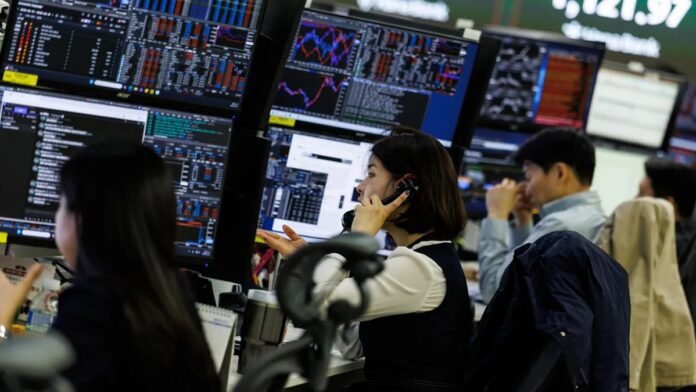
Samsung just posted an operating profit of 89.5 trillion won, roughly US$62 billion, for the second quarter. That’s a jump of 1,814% from a year earlier. Revenue climbed 130% to 171.5 trillion won, a company record. And Samsung’s shares fell anyway.
SK Hynix, the other pillar of South Korea’s chip industry, reported a record profit of its own this week. Its stock dropped nearly 6% on the day. The Kospi has now shed more than 16% across two trading sessions, one of the sharpest short-term drops in the index’s history.
Taiwan and Japan haven’t been spared either, with chip-linked names across both markets pulling broader indices lower even as underlying semiconductor earnings across the region keep beating forecasts.
Record profits get punished instead of rewarded for one reason: investors have stopped trusting the story behind the numbers, even while the numbers themselves keep improving. This gap between performance and trust is where real damage gets done, and it’s opening up right now across Asia’s biggest tech names.
The comforting explanation making the rounds is that chip demand has finally peaked. It hasn’t. Samsung’s Device Solutions division posted a 56% jump in quarterly sales, and the company says server memory will stay undersupplied through the rest of the year. Anyone blaming this selloff on weakening demand is reading the wrong page.
The real problem is who’s funding the buildout underneath that demand.
A large share of the capital driving AI infrastructure spending doesn’t come from independent buyers with their own separate revenue. It comes from the AI companies themselves, funded by investment from the very chipmakers and cloud providers who then book the resulting sales as growth.
Money gets committed at one end of the chain, flows through several related companies, and shows up again as revenue for the firm that put it in to begin with. Every link looks strong on paper. Pull on any single one and you find out how much of that strength was borrowed from the link next door.
Call it what it is: a circular economy dressed up as an earnings story. I’ve seen this pattern before, in telecoms in the early 2000s, in shipping finance before that, and it never ends the way its architects promise.
Value appears to be created fresh at each stage, but it’s the same capital changing hands, counted as growth every time it moves. It works beautifully while confidence holds. It turns ugly the second anyone asks where the outside money actually is.
This question hit Kospi traders this week, and it hit hard. They didn’t stop believing AI chip demand is real, and Samsung’s earnings prove it isn’t going anywhere. They stopped believing every dollar behind that demand is coming from somewhere solid.
Once this doubt takes hold among one group of investors, it doesn’t stay contained to one stock.
It spreads to every company whose growth story depends on the next company in the chain keeping its word, and that’s precisely what’s now happening across the broader semiconductor supply chain, from memory makers to the equipment suppliers and foundries that sit behind them.
Treating an earnings beat as proof of safety in this environment is a mistake, and investors who keep doing it are likely to get badly hurt.
An index fund tracking Korean, Taiwanese or Japanese tech doesn’t tell you which of its biggest names are being propped up by external customers and which are being propped up by their own suppliers wearing a different hat. This distinction is being repriced, stock by stock, in real time, and most portfolios simply weren’t built to tell the difference.
Fund managers who spent the last two years rewarded for maximum exposure to this trade are now the ones most exposed to a correction they didn’t see coming, because the earnings kept beating expectations right up until the moment sentiment turned.
Ask the blunt question before adding to any AI-linked position out of the region: does this company’s growth depend on customers with their own money, or on partners who are also investors, also suppliers, and also counting on the same success story to keep their own numbers looking good?
If you can’t answer that in one sentence, you don’t actually know what you own, no matter how good the last earnings call sounded. Samsung’s results this week were extraordinary by any conventional measure, and its stock fell regardless.
When the strongest possible numbers stop moving a stock in the right direction, investors are being told something the earnings call won’t say out loud: they no longer believe the money underneath the growth is real.
Anyone ignoring that signal now will be the one explaining large losses to someone else later, and pretending nobody could have seen it coming.
The companies that survive this repricing will be the ones whose revenue never depended on their own investors buying their own product in the first place. Everyone else is about to find out the hard way which category they actually belong to.
Nigel Green is CEO and founder of the deVere Group.
Pickaxe Mountain Puts the US-Iran Strategy to the Test, Experts Say
President Donald Trump and Prime Minister Benjamin Netanyahu emerged from their White House meeting united on the goal of preventing Iran from acquiring a nuclear weapon but noticeably less aligned, according to some experts, on how to achieve it. In his article Pickaxe Mountain Exposes Divide Between President Trump and Netanyahu on Iran, Expert Says, The Media Line’s Gabriel Colodro examines how a little-known underground facility known as Pickaxe Mountain became the focal point of that divide after Netanyahu arrived in Washington carrying new Israeli intelligence while President Trump publicly questioned why the information had been disclosed before their meeting.
Drawing on interviews with Israeli officials, legal experts, and specialists in US-Israel relations, Colodro traces the competing strategies shaping the allies’ approach to Iran. Professor Eytan Gilboa argues that the disagreement is less about the nuclear threat itself than about whether diplomacy or renewed military action offers the best chance of delaying Iran’s program, while Attorney Nitsana Darshan-Leitner contends that economic pressure may ultimately prove effective.
The report also explores the broader political context surrounding the talks. Netanyahu proposed gradually phasing out US military aid over the next decade, while both governments publicly emphasized their shared objective even as they left unanswered whether Washington accepted Israel’s assessment of activity at Pickaxe Mountain. Since the meeting, the United States has launched a new wave of strikes against Revolutionary Guard targets in Iran as President Trump continues weighing military and diplomatic options.
Beyond the immediate dispute, the article examines how domestic politics, sanctions, Lebanon, and the collapse of the US-Iran memorandum of understanding have shaped the calculations of both governments. It also considers whether Israel has meaningful leverage over Washington as the United States decides its next move.
Colodro’s full report explores whether Pickaxe Mountain represents a temporary disagreement between close allies—or the clearest sign yet that Washington and Jerusalem are pursuing different paths toward the same objective.
New MCP specification addresses the main barrier to enterprise adoption
This week, the Model Context Protocol (MCP), an open source standard for how AI systems interact with external tools and data sources, saw its largest update since its introduction. Most notably, MCP’s protocol core is now stateless, so requests are no longer dependent on a session tied to an individual server instance. This change has the potential to address long-standing barriers to scalability.
The blog post announcing the specification, written by lead maintainers David Soria Parra and Den Delimarsky (who both work at Anthropic), says:
The highlight of this release is a stateless protocol core—MCP is transforming from a bidirectional stateful protocol into a request/response stateless protocol. It was one of the most highly-requested features from developers who were eager to get better reliability and scalability for their MCP servers.
This update is “MCP’s most important since remote MCP first launched over a year ago,” Soria Parra also wrote. In addition, the update adds “Multi Round-Trip Requests, header-based routing, cacheable list results, authorization hardening, a formal extensions framework, and updated Tier 1 SDKs.”
The hope is that the changes, detailed in the protocol’s documentation, will make widespread deployment in an enterprise context much easier. MCP started as something that simply ran on a local machine, connecting models to local apps, so the new spec is a major rethink of some of its foundations.
There is also a new deprecation policy that ensures at least 12 months between when a feature’s formal deprecation is enacted and when the feature may actually be removed—with a narrow exception for critical security updates. This is again in keeping with the general “let’s make this work better at enterprise scale” theme of the new specification.
MCP is managed by the Agentic AI Foundation (AAIF), which sits under the Linux Foundation. MCP was originally introduced by Anthropic, just shy of two years ago, and Anthropic still has significant influence over its direction. Nonetheless, it has grown beyond just Anthropic—OpenAI, Google, Microsoft, and Amazon also contribute to it—and it’s supported by many developer tools and, increasingly, a wide range of software and services used for other knowledge and creative work.
The buck technically stops with individual maintainers, not any of these companies themselves, but as noted above, some of the principal maintainers currently work at Anthropic.
France, Spain and Greece battle wildfires as Europe swelters
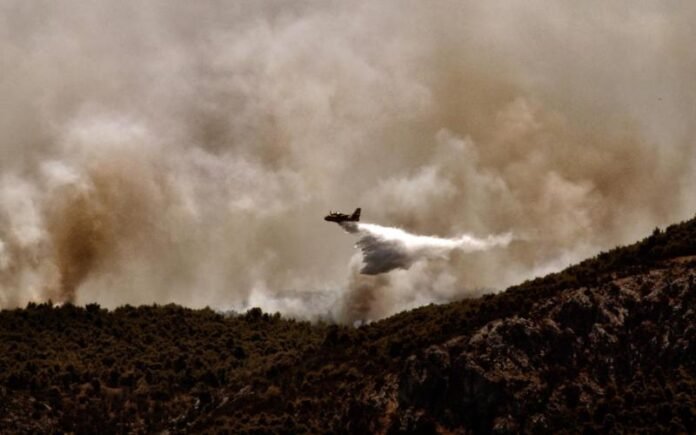
France, Spain and Greece battled major wildfires on Thursday as soaring temperatures, parched vegetation and powerful winds extended a summer of deadly fires, mass evacuations and mounting disruption across Europe.
France arrested two people on suspicion of arson as crews contained a vast fire near Bordeaux, Spain fought a blaze in the eastern province of Castellon and Greece battled fires on two fronts that killed three firefighters and forced tourists and residents to flee parts of Crete.
“The wind is unbelievable – you can’t stand sometimes. The flames were huge, it was really scary,” resident Chrissa Gioukaki told Reuters at Agia Galini, a coastal resort on Crete’s southern coast where a number of tourists and locals found shelter for the night in an indoor gym.
EUROPE IS WORLD’S FASTEST WARMING CONTINENT
Emergency crews have faced barely a pause between heatwaves and fire fronts this summer across an increasingly tinder-dry Europe, the world’s fastest warming continent.
EU countries are having an above-average season for wildfires, already overtaking 2025’s record-breaking year.
Thursday’s temperatures showed Europe was the continent furthest from its historic norm, according to the Reuters Climate Monitor. The average high is forecast to be 25.3 degrees Celsius (77.5 degrees Fahrenheit), which is 3.6C above what was typical from 1961 to 1990.
In southwestern France, authorities said the fires near Bordeaux had not spread overnight, with the area burnt holding at 42,000 hectares. Two people were arrested on suspicion of starting fires, the local administration said, without providing further details.
The French fires have torn through pine forests and forced about 220,000 residents and holidaymakers to evacuate, although some 60,000 have been allowed to return. Thousands of businesses which briefly suspended operations were gradually reopening, officials said.
Conditions were expected to ease around Bordeaux on Thursday, with the possibility of thunderstorms, greater humidity and temperatures below recent peaks. But an extreme heat warning remained in force in Gironde, the department of which Bordeaux is the main city, and authorities cautioned the fires were not over.
Meteo France warned in its latest bulletin on Wednesday afternoon that the highest danger of wildfires was now centred on southeastern France and the Mediterranean arc.
Wildfires in France have now burned more land than in any year since 2006.
GALE FORCE WINDS FAN FLAMES IN GREECE
Two firefighters died after becoming trapped in a fire which erupted in central Crete on Wednesday while they were driving between fire fronts. Another died in a separate fire in the Peloponnese region.
Hundreds of residents and tourists were evacuated from the area by sea and by land around the community of Krya Vrysi and surrounding villages as high winds pushed the fire out of control near popular holiday spots.
“The situation is desperate. The tragic part is that we lost two fellow firefighters,” said Yiannis Tartarakis, mayor of Agios Vasilios, a municipality that includes several affected villages in its district. Firefighting aircraft could not be deployed because of the strong winds, he said.
Intense heat from wildfires is known to create its own microclimate, which can occasionally lead to more extreme weather phenomenons; wind is one.
NEW FIRES AS SPAIN FACES ‘EXTREME’ CRISIS
Spanish Prime Minister Pedro Sanchez said the crisis facing the country was “extreme”, with at least 10 active wildfires causing concern.
“We’re in a critical, highly complex situation,” Sanchez said on Wednesday evening, referring to the combination of high temperatures, low humidity and strong wind gusts fuelling the flames.
Speaking from Mallorca, he added that he had asked European Commission President Ursula von der Leyen by letter to base a new EU wildfire-fighting centre for the western Mediterranean region on the Balearic island.
New wildfires have erupted in the northwestern Spanish provinces of Zamora and Leon amid the fourth heatwave of the summer, while the blaze in eastern Castellon province continued to spread, authorities said on Thursday.
More than 1,000 people have been evacuated in the area of Zamora’s Arribes del Duero natural park, while three separate fires in the north of Leon forced more than 300 people to leave their homes.
In Castellon, the head of the firefighting mission, Antonio Rodrigo, told reporters late on Wednesday that the fire’s 82-kilometre (51-mile) perimeter had been established but not secured after flames ravaged more than 9,300 hectares (23,000 acres).
The overnight operation involving 400 firefighters was “critical” to determine whether it would be stabilised within 48 hours, Rodrigo added, as weather conditions remained optimal before Thursday’s heat was expected to hamper efforts.
Bob Vylan Frontman Deported From Germany for Chanting “Death to IDF” at Glastonbury
The frontman of British punk rap band Bob Vylan was denied entry to Germany, detained at the Berlin airport, and ultimately deported to the United Kingdom last month due to his pro-Palestine statements.
German federal police justified deporting the band’s vocalist on June 15, referencing a performance at the Glastonbury Festival in England in 2025 where Bob Vylan led a chant of “Death, death to the IDF,” or the Israel Defense Forces.
Authorities later revoked the entry ban against the singer, whose legal name is Pascal Robinson-Foster, in a letter in late July, but refused to explain why it had been rescinded — or how the decision to impose it had been made in the first place.
A police file on Robinson-Foster obtained by The Intercept alleges that he disseminated antisemitic narratives and Hamas propaganda that could “radicalise certain segments of the [German] population” and serve as “ideological justification” for terrorist groups or individuals. It also says that Robinson-Foster poses a threat to Germany’s public security and public order. Allowing him into the country would cause “considerable reputational damage” by creating the impression that Germany was making “no effort to prevent the spread of the propagated antisemitism and the associated calls to violence.”
The German Federal Police declined to answer detailed questions about the now-revoked entry ban, citing public security interests and data protection. In response to a list of questions about the decision-making process behind the ban, its legal basis, and why it was lifted, Bundespolizei spokesperson Nikolai Jaletzke told The Intercept the agency does not comment on individual cases, internal threat assessments, or inter-agency coordination.
“It’s frankly absurd to suggest that I’m a threat to German national security,” Robinson-Foster told The Intercept. “It’s equally absurd to claim that we spread propaganda on behalf of any proscribed organization.”
“It’s frankly absurd to suggest that I’m a threat to German national security.”
Bob Vylan’s Glastonbury performance last year drew widespread international attention at a moment when an increasing number of artists were speaking out against Israel’s destruction of Gaza. The performance — and the chant of “Death, death to the IDF” — also drew condemnation from politicians, including then-U.K. Prime Minister Keir Starmer, and several pro-Israel Jewish organizations. Germany’s antisemitism commissioner, Felix Klein, described the performance as “hate speech and incitement” and called on concert organizers in Germany to cancel Bob Vylan shows.
Following that performance, Robinson-Foster and his bandmate Wade Laurence George had their U.S. visas revoked. However, Germany is the first country to deny entry and deport a member of the band.
The documents reviewed by The Intercept concern only the implementation of the ban — not the decision-making process behind it. “Our position is simple,” said Alexander Gorski, the German lawyer representing Robinson-Foster. “There is a constitutional right to know the file on which such a decision is based.”
Following Robinson-Foster’s deportation, Gorski submitted a request with the Federal Police headquarters in Potsdam seeking both the deletion of the entry ban from Germany’s national register and access to the files underlying the decision. Soon after, federal police rescinded the entry ban without explaining why it had been lifted. The two-page response, reviewed by The Intercept, states that no additional information could be disclosed.
“It is, of course, good that the ban is now lifted,” Gorski told The Intercept. “But from a rule-of-law perspective, it is deeply problematic that someone can be barred from entering the country over a political statement that is not a criminal offence — and then be denied access to the files.”
“If an artist wants to comply with the law, they have to know what the rules are.”
Gorski filed a formal objection seeking access to the internal files that led to the decision. He argues that Robinson-Foster has a right to know the factual and legal basis on which he was barred from entering Germany — not only to challenge the lawfulness of the measure, but also to understand what conduct German authorities consider grounds for refusing entry in the future.
“If an artist wants to comply with the law, they have to know what the rules are,” Gorski said.
It’s unclear how a British musician who hasn’t been charged with an offense in either the U.K. or Germany came to be classified by German authorities as a threat to public security. British police previously closed an investigation into Bob Vylan’s Glastonbury performance, concluding there was “insufficient evidence to support a realistic prospect of conviction.”
“There is a lack of crime, not a lack of evidence,” Robinson-Foster told The Intercept in response. “It’s on the BBC. They can just go and watch it.”
“There is a lack of crime, not a lack of evidence.”
According to Gorski, the case is yet another example of a broader shift in the use of German migration law against pro-Palestine figures. Last year, Berlin authorities moved to deport four foreign residents over their participation in protests against Israel’s genocidal war on Gaza.
Gorski argues that German authorities are increasingly using immigration law “to silence unwanted voices” by preventing critics of Israel from entering Germany or removing them from the country. Similar concerns have been raised by others, including Thomas Oberhäuser, chair of the German Bar Association’s executive committee on migration law, who argues that immigration law is increasingly used for political ends.
Gorski pointed to previous cases involving the British Palestinian surgeon Ghassan Abu Sitta and former Greek finance minister Yanis Varoufakis, both of whom he has represented in similar proceedings. German authorities sought to prevent them from entering the country to participate in Palestine-related events.
Robinson-Foster told The Intercept that he traveled to Germany in June in a private capacity to visit friends and music collaborators ahead of the release of the band’s new album. Bob Vylan has toured Germany in recent years, and Robinson-Foster hopes to return soon. Even though authorities rescinded the entry ban, Robinson-Foster said the incident continues to shape his travel plans, saying it “opened a Pandora’s box.”
“It would seem as though the refusal of entry into Germany has now sparked this continued border confusion whenever we try to enter countries,” he said.
Since his deportation, Robinson-Foster said both he and his bandmate have been stopped for questioning at European borders. In one instance, Belgian border officials questioned the band’s drummer about the incident in Germany despite not having traveled there himself, Robinson-Foster said.
“We have shows that we are wanting to put on in Germany,” he said. “It’s a place that we’ve toured for the last five years. For us not to be able to connect with the people that support us there would be a shame.”
Anthropic is finding bugs faster than Microsoft can fix them
On an afternoon in mid-May, dozens of Microsoft engineers and their managers gathered online and in a conference room at the company’s Redmond, Washington, headquarters to discuss Project Glasswing.
The tech giant was racing to fix weaknesses in its code that a new AI model known as Mythos was uncovering at an unprecedented clip. The AI behemoth Anthropic, which developed Mythos, had given access to select organizations that make software used by regular people, companies, and governments across the world. The goal was to find and fix the vulnerabilities before hackers and adversarial governments like China began using similar tools to find and exploit them for espionage and sabotage.
As the group settled in, one engineer asked the question that loomed over the meeting: Did Mythos “live up to the hype that Anthropic claimed it would have had?”
“Yes,” a manager responded, according to a recording of the meeting viewed by ProPublica.
The version being used by Microsoft, Claude Mythos Preview, was surfacing bugs faster than the tech giant could patch them, and engineers, the manager said, were now in “a mad dash” to close the gap.
One slide in that day’s presentation showed that in April alone, Mythos had uncovered 90 “critical” bugs and 141 “important” ones in SharePoint, Microsoft’s widely used collaboration software. In the first half of May it found even more.
“Please, please, please if your org has any April bugs, drive those down,” engineering manager Hans Andersen implored the group. They had roughly two weeks “to find as many things and do as much good as we can with this access.”
May 31, he explained, “is considered the day when the rest of the world will have caught up.”
The engineers on the call poked at that assertion, with one of them summing up the predicament: “So basically you’re saying if it’s released on June 1, then on June 2 the adversaries will have our bugs?”
Yep, one person responded. Yep, another echoed.
Ever since Anthropic kick-started a national conversation about the bug-hunting power of AI in April, when Project Glasswing was made public, national security experts predicted that the US would have a window of opportunity to fix flaws before adversaries would have similar models capable of discovering the same weaknesses. In late June, the international alliance of intelligence agencies known as the Five Eyes—whose members are the US, Australia, Canada, New Zealand and the UK—warned in an unusual joint statement that in a matter of months, that window would be closing. But the recording of the Microsoft meeting, along with internal documents reviewed by ProPublica, suggest the day of cyber reckoning may already be here.
Given the deluge of flaws Mythos has identified, Microsoft so far has focused on patching those it considers most dangerous, which are classified critical or important, according to the presentation as well as the company’s own public patch updates. The internal records indicate that Microsoft plans to eventually address “moderate”-severity flaws uncovered by Mythos. The documents made no mention of “low”-severity bugs.
The company’s approach reflects the triage system that is typical in the industry. Just as the sickest patients are the first to be treated in the emergency room, vulnerability triage prioritizes issues that are likely to cause the most damage if exploited by hackers.
But that strategy carries its own risk in this AI-powered bug-finding era, in which new tools are unearthing a record-breaking volume of weaknesses in the products we use every day. Mythos, for example, is able to chain together a string of bugs that build on one another, meaning that the low- and moderate-severity vulnerabilities that remain unpatched could create an opening to carry out devastating attacks.
“The problem now is that you can chain four low-level flaws, and that can equal a high severity,” said Vinh Nguyen, a senior technical adviser to Anthropic and a senior fellow for AI at the Council on Foreign Relations who formerly served as chief AI officer and chief data scientist at the National Security Agency. “If you’re Microsoft, the current triage strategy may be underpricing risks.”
In emailed responses to ProPublica’s questions, Microsoft stood by its approach, saying its triaging decisions are based on a number of factors, including exploitability and the impact on customers. The company presentation did not mention chaining, but a spokesperson told ProPublica that the technique “has long been considered as part of vulnerability assessment and risk analysis.”
Asked about the internal presentation and the then-looming May 31 deadline, the spokesperson downplayed its significance, saying that “accelerated targeting and exploitation of new vulnerabilities is not a new phenomenon.” That said, he added, the comments made during the meeting reflect how the company “feels a sense of urgency to help our customers at this time.”
“What was heard on that call and is true today is that security is Microsoft’s most important priority and teams across the company are prioritizing using AI to discover and remediate vulnerabilities as quickly as possible.”
Microsoft declined to answer questions about how many bugs engineers had patched since the presentation.
Anthropic declined to comment.
The internal Microsoft presentation and accompanying slides predicted that the group of staffers working on SharePoint, which is used by governments and businesses worldwide to manage data and documents, “will be busy for months,” first working through the highest-priority critical bugs, then tackling the important ones in August. Microsoft says vulnerabilities it categorizes as critical include so-called worms that can crash systems and spread malware as they race across computer networks. Important ones could result in “compromise of the confidentiality, integrity, or availability of user data” as well as the “availability of processing resources.” After those categories were cleared, the group would begin work on roughly 300 “moderate” bugs, according to the presentation.
While the internal documents reviewed by ProPublica do not include updates on the entire breadth of Microsoft’s offerings, they do give a sense of the scale of the problem. One document noted that, since the company started using Mythos earlier this year, it had collectively found hundreds of bugs that Microsoft categorized as either critical or important in popular products such as Microsoft 365, the Teams conferencing platform and the Copilot AI tool. As of mid-May, most of them had yet to be patched.
“They’re not profound and exotic, but they’re real,” Andersen, the engineering manager, said during the meeting. “And a lot of them are exploitable.”
It’s unclear whether hackers have exploited any specific bug identified by Mythos, but some have tapped AI to automate attacks and appear to be using Mythos-like tech to find and exploit weaknesses.
There have been outward signs of Microsoft’s internal struggle to deal with the growing list of bugs to be patched. Each month, the company publicly releases fixes for its software vulnerabilities in what’s known as “Patch Tuesday.” In June, it released patches for more than 200 bugs, which industry experts then said was an all-time high. But on July 14, the company blew through that record and released patches for more than 600 bugs. Only seven were categorized as low- or moderate-severity, one of which hackers were actively exploiting, according to Dustin Childs, leader of the Zero Day Initiative bug bounty program, which is part of cybersecurity company TrendAI. The rest were important or critical.
“Well folks. Here we are. The bug apocalypse has fully descended upon us,” Childs wrote in a blog post on July 14.
Microsoft told ProPublica that the overall volume of bugs “will not be plateauing for a bit,” but a spokesperson said the company has “invested heavily in both people as well as AI-powered triage solutions that scale quickly to handle the growing number of vulnerabilities.”
Given the new realities of the AI age, including the chaining capabilities, companies like Microsoft might need to rethink their entire approach to triage, said Nguyen, the NSA’s former AI chief. Rather than shunting what are now considered low-risk flaws aside, companies should be dedicating staff to developing and testing patches for the entire spectrum of vulnerabilities, he said. In other words, the cyber ER needs more doctors and nurses treating illnesses that are life-threatening as well as the minor wounds that could later turn deadly.
“There’s no alternative,” Nguyen said. “The patients are coming in fast and furious.”
Microsoft told ProPublica it’s “always going to be reevaluating and considering whether things that were previously lows or moderates be upgraded or thought about differently. With these AI systems, it makes us rethink some of these things. Across the industry, we’re all looking to see how drastic of a change it will be.”
Microsoft’s users may be particularly vulnerable. The popularity of its offerings, used the world over, makes it a frequent and lucrative target for hackers. In addition, many of its products contain “legacy” code. Developed decades ago using now-outdated technology, this code contains unaddressed flaws and contributes to what is known in the industry as “technical debt.”
But the challenge of fixing the flood of newly found bugs also extends to the rest of the software industry, and to open-source software code that is typically free to use and largely maintained by volunteers. Open source software underpins Internet infrastructure and is incorporated into much of the world’s modern technology, including products offered by major tech companies such as Microsoft.
“Nobody has really figured out how to deal with this, and everybody is casting around for what they need to do,” said J. Michael Daniel, a former cybersecurity adviser to President Barack Obama and the president of the Cyber Threat Alliance, a nonprofit organization focused on cybersecurity. “Our tech debt is coming due.”
Ben Edwards, a data scientist who specializes in managing software vulnerabilities, said the software industry was handling an “intense volume even before AI.”
“It was like drinking from a garden hose on the jet setting before, and now it’s like drinking from a fire hose,” Edwards said. “They might have had the teams that could handle that garden hose. Whether they can handle the fire hose is something else.”
Although the volume of vulnerabilities has grown over the years, Microsoft’s internal group responsible for fielding them, the Microsoft Security Response Center, has been perennially understaffed. Even before the crush of AI-identified bugs, the center fielded hundreds or even thousands of reports a month, pushing the group to its limits, ProPublica has reported.
The size of the center reflects Microsoft’s corporate philosophy: Plugging security holes is a cost center, while making new products is a profit center, former employees said. The company is loath to tie up its best engineers with making security patches—a cost center—instead of developing new products and features that will generate profits, ProPublica has reported.
Microsoft told ProPublica that it does not discuss internal staffing decisions but has made investments in recent years to “focus our teams on keeping our customers secure.” The company “continuously evaluates the staffing, processes, and technologies required to support security response and vulnerability management,” a spokesperson said.
According to the slides that accompanied the May internal presentation, Anthropic provided Mythos access to roughly 50 full-time Microsoft employees, with a goal to “harden critical services before publicly available models catch up.” A slide titled “What’s Next” predicted that the Microsoft Security Response Center would see continued case volume “as public tools catch up” to Mythos.
During the May meeting, one staffer appeared to take comfort in the belief that adversaries “don’t have the source code” that such an AI tool would scan for weaknesses. His colleagues, however, quickly corrected him. Portions of Microsoft’s code have, in fact, fallen into hackers’ hands over the years.
“It might not be this week’s source code,” one person said. “But they’ve got source code. It’s out there.”
In a statement to ProPublica, Microsoft downplayed the comment, saying engineers “design our security processes on the expectation that determined adversaries may gain access to code.”
We often think about weather controlling wildfires: Dry air, heat, wind and lightning determine when fires start and how quickly they spread. However, once a wildfire becomes intense enough, the relationship can flip. Instead of simply responding to the weather, the fire begins to create its own weather.
I study wildfires and air quality at the University of Texas at Arlington. Here are four key ways wildfires influence the weather around them:
1. Updrafts and fire tornadoes
Wildfires release a large amount of heat. As the air above the flames heats up rapidly, it becomes lighter than the surrounding air. As a result, the warm air rises.
The process is very similar to how a typical tornado forms, though fire tornadoes tend to be smaller and, because they feed off the heat, confined to the fire area.
As water vapor condenses, it releases additional heat, making the rising air even more buoyant. If the fire is intense enough and the atmosphere is unstable, the cloud can continue expanding upward into the upper troposphere. It may eventually develop into a pyrocumulonimbus cloud – a thunderstorm generated by the fire itself.
3. Fire-generated lightning
As the pyrocumulus cloud rises above the point in the atmosphere where the air temperature drops below freezing, cloud droplets begin to freeze, producing ice crystals, supercooled water droplets and graupel – a soft version of hail.
Collisions among these particles separate positive and negative electric charges within the cloud. Over time, the charge imbalance becomes strong enough to produce lightning.
Some of these lightning strikes can ignite new fires beyond the original fire perimeter, making firefighters’ jobs even harder.
Lightning is a frequent cause of wildfires. Wildfire smoke can fuel storm clouds that generate more lightning, which can start new fires.AFP via Getty Images
In late July 2026, a severe wildfire near Saumos in southwestern France became intense enough to generate a pyrocumulonimbus cloud. Lightning from the storm ignited new fires outside the original burn area, allowing the fire to spread beyond its initial blaze.
4. Smoke can change weather downwind
Wildfire smoke can also affect weather far from the flames. Smoke can travel hundreds or even thousands of miles. Along the way, it can influence how clouds form and how lightning develops.
Smoke contains large numbers of tiny particles. These particles act as seeds on which water vapor condenses to form cloud droplets. Scientists call these seeds cloud condensation nuclei. When wildfire smoke arrives over a region, it increases the number of cloud condensation nuclei in the atmosphere. As a result, the same amount of water is divided among many more cloud droplets, making each droplet smaller.
Smaller droplets take longer to merge into raindrops, which can delay rainfall or shift it to another location downwind. This is one reason why forecasting precipitation becomes more challenging during major wildfire events.
A pyrocumulus cloud builds over the Gold Mountain Fire on July 26, 2026, in western Colorado. Sláinte Farms.
Scientists have also found that wildfire smoke can alter lightning patterns in downwind thunderstorms.
Positive lightning is more powerful and damaging than negative lightning. It carries larger electrical currents, lasts longer and releases more energy. As a result, it is more likely to ignite new wildfires and can pose greater risks to people and infrastructure.
In some smoke-affected thunderstorms, positive flashes accounted for more than 40% of all cloud-to-ground lightning. In the most extreme cases, the fraction exceeded 90%, meaning that nearly all cloud-to-ground lightning was positively charged.
Living with fire and its consequences
The next time wildfire smoke turns the sky hazy, remember that the smoke is not simply drifting through the atmosphere – it is becoming part of the atmosphere.
Wildfires and their smoke can shape clouds, rainfall and lightning in ways we are only beginning to understand. As large wildfires become more frequent, living with them will require more than fighting fires. We must also learn to anticipate and adapt to their far-reaching effects on air quality, health and even the weather.
Explaining stock market movements is always a little bit of a fool’s errand; no one really understands why stocks boom or crash on a given day or in a given week. Over the long run, the stock market displays lots of “excess volatility” — prices move up and down much more than is warranted by changes in earnings or other measures of fundamental value.
There are plenty of theories about why those swings happen, but it’s very hard to know which of those — if any — is in operation at any given time. And so although every big stock market movement is followed by lots of articles claiming to know why, you should take them all — including this one — with several grains of salt.
Anyway, having said all that…
The Korean stock market has been crashing for weeks now. Around March, Korean stocks went on an epic tear; the KOSPI index rose from around 5,000 to over 9,000. Then, just over a month ago, it all went into reverse, with the index falling back to around 5,500:
There are probably two stories regarding why this happened — one about fundamentals, and another about finance. In fact, this is typical for bubbles and crashes, not just in stocks but in every asset class.
There’s almost always some kind of connection to fundamentals — some story about how we’re in a new economy, followed by doubts about whether that story is really true, and so on. But the big market movements are almost always accelerated by purely financial factors — “noise traders” armed with piles of excess cash, opportunistic speculators looking to ride the wave of sentiment and so on.[1]
For Korea, the fundamental story was about memory stocks. Korean companies like SK Hynix and Samsung make a lot of the world’s computer memory. Under normal circumstances, computer memory isn’t a great business to be in — the technology is fairly commoditized, the industry is brutally competitive, it takes a LOT of capital to build the factories, and it’s very risky to make long-term bets on the evolution of memory technology.
But computer memory is really important for AI data centers. And so the AI boom kicked off the mother of all memory booms. Only a few companies had the scale to meet a large amount of this demand explosion, and the two biggest of these were in South Korea. SK Hynix’s operating profit went from under US$10 billion in the first quarter of 2025 to over $35 billion in the first quarter of 2026:
Hynix, which specializes in memory, briefly had a higher market capitalization than Samsung, simply because the memory boom is so huge. Korea’s exports rose over 70% in just one year; in fact, the country’s whole national GDP growth rate increased by a noticeable amount over the past two quarters, just because of this one product:
That’s a pretty strong fundamental story about why South Korean stocks should be worth a lot more. So it’s no surprise that the Korean stock market boomed as soon as people realized in early 2026 that AI technology is going to be extremely valuable. Here’s a thread about just how epic the runup in these companies’ stock prices was:
What happened?
Chipmakers SK Hynix and Samsung saw historic gains, rising +1,900% and +600% in one year, respectively.
These two stocks accounted for as much as 50% of South Korea’s stock market last month.
— The Kobeissi Letter (@KobeissiLetter) July 29, 2026
What happened? Chipmakers SK Hynix and Samsung saw historic gains, rising +1,900% and +600% in one year, respectively. These two stocks accounted for as much as 50% of South Korea’s stock market last month. Never in history has growth at this scale happened so quickly.
This is where the financial story rears its head, though. A bunch of traders saw this enormous price rise and decided to buy into it.
You’d think a lot of these would be foreign, but international investors mostly avoided the boom (except for a few who bet big on Korean memory stocks). The most frenzied buyers were regular Korean people — the proverbial taxi drivers and teenagers.
These investors probably didn’t understand the fundamental story about AI and data centers and so on. Instead, they probably had extrapolative expectations — they see the price go up and up, and they figure stocks are just a “goer upper.”
As more and more buy in and the stock goes up more and more, the perception of a structural upward trend is only reinforced, causing yet more people to buy in. This isn’t the only explanation for coordinated “noise trader” buying frenzies, but it’s probably the most likely.
Normal people don’t have a lot of cash sitting around. But earlier this year, regular Korean people got the opportunity to effectively borrow lots of money to invest it in stocks, via the introduction of leveraged single-stock ETFs. When you buy a share in a leveraged single-stock ETF in SK Hynix, it’s like borrowing money to buy SK Hynix stock.
A whole lot of Koreans used leveraged ETFs and other borrowing methods to borrow huge amounts of money and buy lots and lots of Korean stocks — especially the memory company stocks that were driving everything.
There were some people selling — notably, foreign investors “taking profits” and getting out. But the noise traders overwhelmed all the selling pressure, and sent stock prices soaring.
Then something happened last month — either something fundamental or something financial. Hynix and Samsung are doing fine in terms of earnings growth, but it’s possible that something suddenly gave traders reason to doubt the overall story about the AI boom sending these companies’ profits to the moon.
The other possibility is that Korea simply ran out of hotheaded day traders willing to borrow more and more in order to bet on stocks, and the influx of cash naturally came to a halt.
Whichever it was, at that point the price faltered and began to fall. All that borrowed money accelerated the fall on the way down. When prices fall, leveraged ETFs have to sell some of what they hold.[2] When a bunch of leveraged ETFs do this at the same time, it pushes prices down, forcing others to sell.
In the meantime, people who had borrowed money to buy stock faced margin calls (or bankruptcy), forcing them to sell stock to raise cash. All of this created extra selling pressure, and so increased the rate at which Korean stock prices fell since late June.
Anyway, that’s the financial story. It’s a very old story — financial leverage plus unsophisticated new buyers plus a strong fundamental story often produces a bubble and crash, or exacerbates one that was already in progress. No wonder Korea is now moving — a little belatedly — to restrict leveraged ETFs.
But while financial factors affected the timing and the size of the stock price boom and bust, the fundamental story is more interesting. Fears of an AI bubble are quietly creeping back.
In 2025, as consumer chatbots struggled to find a market big enough to justify the kind of investments being made, there was a lot of talk about an AI bubble. One possibility was that AI revenues wouldn’t grow fast enough to justify the amount being invested in data centers. Another possibility was that AI companies wouldn’t have enough of a “moat” to make them consistently profitable.
In 2026, Claude Code exploded onto the scene, and everyone realized that AI had finally found “product-market fit.” We now know at least one thing that AI is incredibly useful for — writing computer code. Suddenly, an AI bubble seemed much less likely. Spending on AI was skyrocketing, and Anthropic — the new market leader — was successfully capturing much of the profits.
Cybersecurity and other zero-sum applications — where having the absolute best model can matter a lot — started to seem like the “moat” that AI had previously lacked. Suddenly, the giant data center construction boom seemed a lot more reasonable.
But slowly, doubts have begun to creep back in. AI is amazing at writing software, but writing software is different from selling it. So far, huge increases in coding productivity are translating into only minor increases in the amount of software being shipped:
It’s possible that a significant fraction of the explosion in the use of coding agents is just “tokenmaxxing” — companies trying to use as much AI as they can, either to learn to use the tools, or perhaps just to look like they’re doing something. If so, we can expect a retrenchment and a temporary slowdown of AI spending growth.
It’s also possible that even the revenue growth we’ve seen isn’t enough to offset the enormous costs of the data center boom. Here’s a recent report from The Economist:
A back-of-the-envelope calculation finds that covering AI capex through identifiable AI income requires revenue on the order of $2.5trn per year, more than tech’s entire combined revenue today…Anthropic pulls in perhaps $75bn, annualised; OpenAI makes tens of billions; Google, via its AI model Gemini, and Microsoft probably get a bit less. SpaceX may have a few billion dollars’ worth of revenue from enterprise AI this year. Meta also makes a few bucks from AI. Add this up and you land at roughly $150bn a year. [emphasis mine]
AI revenue is growing very fast, but if these calculations are right, it’ll have to grow by 17x from where it is now in order to justify the capital being spent. In other words, even Claude Code isn’t enough; AI revenue has to accelerate even further, and while it’s perfectly plausible that it could do that, it’s a big question mark.
There’s also the possibility that the moat of companies like Anthropic is less invincible than it looked just a couple of months ago. A Chinese company called Moonshot AI has released a model called Kimi K3 that nearly equals the best available American models.
American companies are using cheap Chinese AI models more and more for daily tasks. If Anthropic and OpenAI lose the overall b2b market to cheap Chinese competition — which is undoubtedly supported, of course, by China’s usual blizzard of subsidies and government supports — there’s not much chance that they’ll be able to pay for the data center boom.
And at that point, there could be a big, big bust — similar to when railroads went under in 1873. Investors are probably already beginning to worry about this. It isn’t just Korean AI-related stocks that have taken a hit recently. Here’s Nvidia, which designs and furnishes the chips that run data centers:
And here’s Micron, America’s top memory chip maker:
And here’s Microsoft, a big part of whose business is installing AI data centers:
There are similar (if less dramatic) stories at Google and Amazon, who also run a ton of data centers.
Here’s Bloomberg’s story about the decline of the so-called “Magnificent 7” tech stocks:
Wall Street is growing increasingly concerned about the hundreds of billions of dollars Big Tech is spending on artificial intelligence…“The real problem is the amount of spend that’s going on,” said Ken Mahoney, chief executive officer of Mahoney Asset Management. “No one knows what the return on investment is.”…The selloff is coming as investors grow increasingly cautious about the massive sums that Big Tech firms are spending to build out their AI infrastructure. The Mag 7 index is now down 11% from a record reached in late May, erasing $2 trillion in market value.
So although South Korea’s epic stock crash was probably related to Korea-specific financial factors, it could also herald the return of the “AI bubble” story. AI is far and away the most important thing going on in the American economy right now, so any hint of a bubble is worrying.
Notes
1 For the best simple explanation of how financial markets can go haywire, I recommend the famous paper by DeLong et al. (1990). If you don’t feel like reading through a mathematical model, just ask AI to explain it to you in simple terms.
2 Usually, futures or options or some other derivatives tied to the value of the underlying stock.