Saudi Arabia condemns Israeli official, settlers’ Al-Aqsa entry
Saudi Arabia on Sunday condemned an Israeli official and a group of settlers entering the courtyards of Al-Aqsa Mosque in occupied East Jerusalem, describing it as a “blatant violation and provocation to Muslims around the world”.
In a statement, the Saudi Foreign Ministry said the kingdom strongly condemned and denounced the entry of an Israeli official and a group of extremist settlers into the courtyards of Al-Aqsa Mosque under the protection of Israeli forces.
It said the incursion was “a blatant violation and provocation to Muslims around the world”.
Saudi Arabia reiterated its “categorical rejection of provocative practices and illegal and extremist acts of incitement and violence” by Israeli officials against Palestinians and holy sites in the occupied Palestinian territories.
It also called on the international community to fulfil its responsibility to stop such attacks, which it said violate international law and international humanitarian law.
Earlier on Sunday, the Palestinian Jerusalem Governorate said in a statement that Israeli National Security Minister Itamar Ben-Gvir entered Al-Aqsa Mosque under heavy police protection and performed Jewish religious rituals in its eastern area.
In a separate statement, the governorate said 992 settlers entered Al-Aqsa Mosque through the Moroccan Gate during the morning and evening entry periods.
READ: Ekrima Sabri says Israeli activities during Jewish holidays aim to assert Sovereignty over Al-Aqsa
West Bank Shooting Kills One, Manhunt Underway for Attacker
An Israeli man in his 30s was killed in a shooting near Neveh Tzuf, also known as Halamish, in the West Bank, as Israeli forces launched a manhunt and set up roadblocks in search of the attacker.
The victim was initially listed in critical condition after the shooting. Magen David Adom personnel performed CPR and succeeded in restoring his pulse, leading his condition to be temporarily updated to severe.
He was subsequently airlifted to Beilinson Hospital in Petah Tikva in critical condition, where doctors later pronounced him dead.
The gunfire was directed at a group of people bathing at a local spring near Neveh Tzuf. Initial reports said the shots came from what appeared to be a red Mitsubishi SUV with Palestinian Authority license plates as it passed the area.
Israeli Defense Forces (IDF) troops deployed across the surrounding area following the shooting and began searching for the suspected attacker. Forces also erected roadblocks as part of the effort to locate the shooter.
“Numerous IDF troops have launched a pursuit after the terrorist and are carrying out roadblocks in the area,” the military said.
Mecca pact faces first trial by fire with Houthi escalation
Last Thursday, US President Donald Trump said he had a “big decision” coming up about Iran’s regime:
Do I want to go in and annihilate them or do I not? […] Anything could happen with me.
This is not the first time he has spoken of such a threat. But it comes at a very critical juncture. A war he had once hoped to bring to a swift conclusion is now in its seventh month and threatens to engulf more of the region.
Over the weekend, the Iran-backed Houthis in Yemen said they had attacked “sensitive sites” in Saudi Arabia’s capital Riyadh with missiles and drones.
It’s an escalation that could put Saudi Arabia’s new defense agreement with Turkey and Pakistan – known as the “Mecca pact” – to its first serious test.
For Trump, failure to end this conflict in one way or another could also seriously jeopardize his remaining term in office and the United States’ standing in the world.
Why Trump’s options are narrowing
Several issues have brought the president to this point. Consumers in the US and across the world continue to suffer from intensified energy and economic impacts of the conflict.
Also at the weekend, Iran reportedly laid out its latest set of conditions to end the war with the US. These included ending the war on all fronts, releasing Iran’s frozen funds and ending the naval blockade on Iranian ports.
The US has not yet responded to these conditions. Should it consider them acceptable, it opens the way for a restart of negotiations, though the prospects look grim for a negotiated settlement to result in at least the reopening of the Strait of Hormuz any time soon.
Iran has felt pain, too. US military and economic pressure to end the war has proved to be very costly for the Iranian people in both human and material terms.
But it has not deterred Iran’s Islamic government from pursuing a robust defence, destroying American bases in the region, continuing the effective closure of the Strait of Hormuz and defying the US blockade of Iranian ports.
The war continues to widen
The conflict continued to widen at first into Lebanon, where Iran’s Hezbollah ally has been locked in confrontation with expansionist Israel, resulting in heavy damage to the country and its people. Now, it has extended to new fronts in Yemen.
Fighting the Saudi-backed Presidential Leadership Council (Yemen’s internationally recognised government) as well as Saudi Arabia, the Iran-backed Houthis have made major strategic territorial gains in the past two weeks.
The Iran-backed Houthi rebels, whose fighters are seen here in Al Jawf province, Yemen, have renewed their military campaign against Saudi-backed forces. Photo handout by Houthi Media Center via Getty Images via The Conversation
The Houthis occupy a large chunk of western Yemen and a sliver of the southern part of the country, including the capital, Sana’a. Their territory borders the strategic Bab al-Mandeb Strait on the Red Sea, a conduit for 10-12% of global maritime trade.
During the closure of the Strait of Hormuz, as much as 70% of Saudi oil exports have been transported from the Abqaiq fields in the Eastern province to Yanbu on the Red Sea for export to the outside world.
This pipeline is now damaged and shut. Its repair may take weeks, pushing up the prices of oil around the world with a massive impact on the global economy.
A new security pact faces its first test
Meanwhile, the US-allied Gulf Arab states (Saudi Arabia, Kuwait, Bahrain, Qatar, Oman and the United Arab Emirates) are becoming disillusioned with the Trump administration.
They have suffered for hosting American bases and bitterly learned that they can no longer depend on the US as their security provider.
For wealthy, oil-rich Saudi Arabia, a search for alternative arrangements has given rise to what is called the Mecca pact, signed into force in August.
It partners Saudi Arabia with two predominantly anti-Israel Sunni Muslim states: Turkey, a NATO member, with the second-largest army in the alliance, and Pakistan, the only nuclear-armed state in the Muslim world.
Although no other Arab states have joined the pact at this stage, the Shia Muslim dominated Iran has reportedly welcomed it and also even been invited to join the pact (although Iran has denied receiving a formal invitation).
The Houthi operations have nonetheless confronted the Mecca pact with the first test of its viability. Turkey and Pakistan have both voiced support for the defense of Saudi Arabia, but have not entered the conflict yet, possibly on the consideration that the Houthis’ actions do not represent state aggression against the kingdom.
At the weekend, however, Turkey’s foreign minister indicated the country could help Saudi Arabia’s military needs.
Turkey and Pakistan have both sought to persuade Tehran to restrain the Houthis. The two countries share common borders with Iran and maintain good working relations with it.
Ankara has stood for the unity of the Muslim world and Islamabad has acted as a mediator between Tehran and Washington. These are imperatives that they cannot easily overlook in invoking the Mecca pact.
Why the US is reluctant to get involved
In a similar vein, President Trump has so far rebuffed a Saudi request for strikes against the Houthis, for he has perhaps grown to see the limits of American power.
He has been hesitant to involve the US on another front, further shattering Riyadh’s confidence in US reliability. US Vice President JD Vance has said Washington is on top of the issue, signaling mediation between the Houthis and Riyadh. And the Houthis have stated they won’t target US vessels in the Red Sea.
Trump has been keen to see an end to the conflict and a more stable Middle East, saying that the war will be over immediately after the US mid-term elections in November. He has not said how this will happen, presumably depending on his pending decision.
Yet, the hardliners in Iran’s Islamic Revolutionary Guard Corps-influenced leadership appear in no mood to let Trump off the hook easily. It has prepared for potential escalation rather than de-escalation regardless of its crippling financial and economic impact on Iran.
The risk here is that once the mid-term elections are over, Trump may decide to escalate the conflict as well, unless the two Houses of Congress are dominated by the Democrats and able to stop him under the US War Powers Act.
At this point, there is no certainty as to where the current crisis will lead the Middle East and the world.
Tom Cruise Sparks Fears with Shocking ‘Death Declaration’
Tom Cruise has spent decades doing the kind of movie stunts that would make most people think twice — and at 64, the Hollywood superstar says fear still is not stopping him.
Cruise made a striking admission during a rare new interview with GQ when he was asked directly whether he fears death.
“No. I don’t,” Cruise said.
But the Mission: Impossible star’s full answer was more nuanced than the dramatic declaration might suggest. Cruise explained that he does experience fear — he simply does not see fear as something that should stop him.
“I’m not afraid to feel afraid,” he told GQ, describing his life as an adventure that has repeatedly required him to step into the unknown.
Cruise also compared his approach to life with standing on the edge of a cliff, both “physically and metaphorically.”
That comparison is especially fitting for an actor who has actually ridden a motorcycle off a cliff for a movie.
GQ directly brought up that now-famous stunt, along with Cruise’s history of hanging from aircraft, while questioning him about his attitude toward danger. The full video interview was released September 14 and can be watched through GQ.
Cruise told the magazine that the risks audiences see on screen are not simply spontaneous acts of daredevil behavior.
He said much of what he has done throughout his career has been deliberate, involving the development of new skills and extensive preparation.
Cruise described himself as someone who is “constantly pushing” himself and said he wants to keep taking what he has learned and putting it back into increasingly ambitious projects.
That philosophy has become one of the defining features of his career.
During Mission: Impossible — Rogue Nation, Cruise famously clung to the exterior of an Airbus A400M as it took off.
Years later, Mission: Impossible — Dead Reckoning Part One featured Cruise riding a motorcycle off a Norwegian mountain before opening a parachute in midair.
And he continued escalating the action with Mission: Impossible — The Final Reckoning.
Paramount released behind-the-scenes footage showing how Cruise and the filmmaking team created the movie’s elaborate aerial sequences rather than relying entirely on computer-generated action.
The spectacle has also remained valuable for the studio. Paramount reported that The Final Reckoning had earned more than $590 million worldwide by the end of July 2025 and delivered the biggest global opening in Mission: Impossible franchise history.
RadarOnline reported that Cruise’s latest comments have caused concern among people in the entertainment industry, quoting unnamed sources who questioned how far the actor might continue pushing himself.
Those comments, however, are not attributed to Cruise’s representatives, family members or named collaborators.
There has been no public indication from Cruise himself that he intends to take risks without extensive planning. In fact, his comments to GQ emphasized preparation, learning and attempting to turn uncertainty into something more controlled.
The interview arrives less than a year after Cruise reached another major milestone in a career stretching back more than four decades.
The Academy of Motion Picture Arts and Sciences presented Cruise with an Honorary Oscar at the Governors Awards on November 16, 2025.
The Academy specifically praised his commitment to filmmaking, theatrical movies and stunt work. Cruise previously received acting Oscar nominations for Born on the Fourth of July, Jerry Maguire and Magnolia, as well as a Best Picture nomination as a producer of Top Gun: Maverick.
It was his first competitive-or-honorary Oscar win after decades as one of Hollywood’s biggest stars.
Despite reaching that milestone, Cruise told GQ he has little interest in living in the past.
His attention is instead turning toward new projects, including Digger, his movie with Oscar-winning director Alejandro G. Iñárritu. During the interview, Cruise repeatedly returned to the idea that completing one challenge simply creates room for another.
That appears to be the larger message behind his comments about death and fear.
Cruise is not claiming that he never gets scared.
He is saying that being scared has never been enough to make him stop.
And after more than 40 years of increasingly elaborate stunts, there is little indication that Hollywood’s most famous daredevil plans to start playing it safe now.
ASEAN’s digital payment boom outrunning its scam defenses
Southeast Asia’s rapid economic integration has long been a celebrated success story, and nowhere is this more evident today than in its retail payment systems.
Across the region, central banks are linking their national QR code protocols under the ASEAN Regional Payment Connectivity initiative, enabling friction-free, cross-border digital transactions between citizens of Indonesia, Thailand, Malaysia and Singapore.
Yet, as the velocity and volume of cross-border capital flows accelerate, a troubling vulnerability has emerged: the infrastructure of crime is moving at the speed of light, while the architecture of enforcement remains tethered to national borders.
This gap is not merely a technical glitch; it poses an existential threat to the region’s broader digital economic ambitions. As multi-currency payment rails become frictionless, they simultaneously lower the barrier to entry for transnational financial cybercrime.
Unless regional regulators step in with joint enforcement now, rising cyber fraud will quietly gut the bedrock of any financial market: public trust. Once ordinary users write off cross-border rails as unsafe, ASEAN’s multi-billion-dollar push for seamless integration risks unraveling under its own structural flaws.
Connectivity paradox
Look no further than Indonesia, the region’s largest digital market, to see this contradiction in action.
However, rapid access has outpaced public understanding. Indonesia’s National Financial Literacy and Inclusion Survey 2026 reveals a stark structural vulnerability: while financial inclusion stands at a high 93.61%, financial literacy lags significantly behind at 69.57%. This nearly 24-percentage-point gap represents an expansive target surface for transnational cybercrime syndicates.
As highlighted in recent UNODC assessments on Southeast Asia’s criminal economy, criminal groups are exploiting low digital literacy through social engineering, phishing, and elaborate mule-account networks, criminal groups are siphoning vast sums out of legitimate financial channels.
This divide carries real human costs for ordinary users. Travelers making quick QR payments overseas often get caught by fake codes or phishing traps, with little to no legal help when they return home.
Worse yet, migrant workers sending remittances back to rural villages face targeted impersonation fraud — frequently watching life savings disappear with almost zero chance of cross-border recovery.
Meanwhile, micro-merchants engaging in regional e-commerce face fraudulent account takeovers and unauthorized transaction reversals that directly threaten their cash flow and livelihoods.
Jurisdictional silos vs. real-time scams
The core challenge facing regulators is a profound structural asymmetry.
Today’s financial scams move money across borders in milliseconds. Law enforcement, on the other hand, stays trapped behind rigid borders, slow diplomatic channels, and mismatched national rules.
By the time a victim reports a scam to local authorities, the stolen capital has often been laundered across multiple borders and converted into unrecoverable digital assets.
This reality underscores a critical policy truth recently articulated by Bank Indonesia Deputy Governor Filianingsih Hendarta: “Technology can enable the growth of trust, but technology alone cannot create it. It is governance that creates it.”
Silicon Valley often pitches AI and blockchain as silver bullets for digital safety, but technology cuts both ways. Cyber syndicates build AI-driven phishing setups just as fast as banks build defense walls. Without clear cross-border rules, shiny digital rails simply scale up the threats instead of solving them.
Recognizing this threat, Bank Indonesia recently introduced Regulation No. 6/2026 on Consumer Protection, embedding risk-based oversight directly into its 2030 Payment System Blueprint.
Central to this strategy is the establishment of the Indonesia Anti-Scam Centre (IASC)—an integrated mechanism designed to accelerate real-time detection, reporting, and fund freezing in collaboration with domestic law enforcement and international bodies like Interpol, the OECD Financial Consumer Protection Task Force, and the Asian Development Bank (ADB).
Regional anti-scam architecture
While national initiatives like the IASC are a vital first step, a purely domestic defense is fundamentally inadequate against an international threat. To safeguard its economic ambitions, ASEAN needs to upgrade these local efforts—including multilateral architectures like BIS Project Nexus—into a binding regional security pact.
First, central banks and Financial Intelligence Units across the bloc must link up for real-time data sharing. A suspicious transaction flagged in Jakarta or Bangkok should trigger an immediate, automated alert across neighboring banking networks, enabling the instant freezing of compromised accounts before capital can be funneled into offshore havens.
Second, the region must move toward a harmonized regulatory framework for cross-border emergency asset recovery. Waiting months for traditional diplomatic channels to freeze stolen assets renders consumer protection meaningless. ASEAN needs an expedited administrative protocol dedicated specifically to digital financial crime.
Finally, the private sector—including payment system operators, commercial banks, and big-tech platforms—must be held to higher standards of ethical responsibility. Platforms that profit from facilitating high-velocity transactions must be mandated to integrate real-time anomaly detection and built-in consumer protection mechanisms as a condition of operating across ASEAN’s connected payment rails.
ASEAN’s interconnected payment ecosystem represents a monumental leap forward for regional economic integration. Yet speed without safeguards only speeds up the breakdown of public trust. If Southeast Asia fails to match fast payment rails with equally fast legal cooperation, its greatest digital success could end up derailed by the very speed that built it.
Rabiul Misa is a junior analyst at Bank Indonesia. His work focuses on monetary economics, payment systems, financial inclusion, MSME development, and public policy. His commentary has appeared in Asia Times, Modern Dyplomacy, Kompas.id, Kompas.com, Tribun News, ANTARA News and Kumparan, covering topics monetary policy, cross-border payments, digital finance, MSME development and regional economic development.
Why Trump is so helpful to Russia on the Ukraine war
The past week crystallized a number of things. When you add them all together, however, the key thing is that it demonstrated just how important the US has become, through the Trump administration, in aiding the Russian war effort.
This might have been hidden in all the distracting stardust being thrown in the air about the Graham Tariff Bill, or the recently announced (extremely weird) possible sale of some motley air defense capabilities to Ukraine (arrival uncertain and unknown).
However, behind the stardust which the press seems too out of its depth to properly interrogate the reality is that the war has entered into a fascinating contrast.
On the land, where the Ukrainians were less reliant on the US, it is the Ukrainians who are showing the initiative and dealing some substantial blows to Russian military strength. If what we are hearing about Operation Vivaldi is only partially true, the Ukrainians are continuing to advance in the combined operations of infantry and UAVs.
In the ranged war, relying on Ukrainian sources, the Ukrainians are also showing some important strengths — when they concentrate on the right targets. However, it is in their ranged campaign against the Ukrainians, aided enormously by the US starving Ukraine of air defense (a great example of why relying on the weapons of another power is always so dangerous) that the Russians are being most effective — and almost certainly will continue to be so for the upcoming winter.
Add it up, and what we see is that Russia’s area of initiative in the war has been enormously abetted by the US and Donald Trump.
Operation Vivaldi: Ukrainian initiative on the front line
For weeks now there have been unconfirmed reports of an ongoing Ukrainian operation to push Russian forces back from outside of Lyman and, possibly, back into Luhansk. I’ve referred to this a few times, including in last weekend’s update.
However, without formal Ukrainian confirmation, I did not want to say too much about it. At that point, we had some more general statements from Zelensky about Ukraine taking the initiative in the land war, but nothing specific.
This week, something changed and the Ukrainians started speaking specifically about their operation and even gave it a code name—Operation Vivaldi.
Vivaldi is being conducted, it seems, primarily by the 3rd Army Corps commanded by Gen Andrii Biletskyi. Biletskyi confirmed this publicly on Sept. 15, saying the corps had launched Vivaldi under conditions of “maximum information silence.” The name refers somewhat cheekily to Antonio Vivaldi’s The Four Seasons (shout-out to Baroque music).
That is because the Ukrainians are saying the operation has four stages—or “seasons” and we are only now in the first stage. Biletskyi also asked the public not to “give away the spoilers” because the operation still requires silence.
There was this excellent story in The Kyiv Independent, which quoted Biletskyi and which provides a good overview of what we know and, crucially, what we do not know about Vivaldi.
Since then there has been more information coming out from Ukrainian sources. Yesterday (September 19) there were some official statements released by the Chief of Staff and Deputy Commander of the Third Army Corps, Petro Horbatenko. You can read much of what he said in this report.
Horbatenko also described an ongoing operation making substantial progress:
“We will continue to make progress in a week. Accordingly, in the near future we will inform you about new details regarding the operation and new results regarding its success….We continue to move. What was announced is one figure, it will increase over time. New data on successes and liberated settlements will come, we just can’t reveal and talk about everything yet. The enemy on this section is broken, disorganized. He is trying to transfer special forces units there to close the breakthrough, simply grinding them into “meat”, without achieving any success.”
These latest reports also provided some detailed news about the military units involved, which are units of the 60th separate mechanized brigade, the 125th separate heavy mechanized brigade, the battalion tactical group of the 3rd assault brigade, the 3rd separate reconnaissance and 25th separate anti-tank battalions of the corps, the 66th separate mechanized brigade, the 85th tactical group of the 8th SSO regiment, the Artan special unit of the GUR, and the 10th border detachment “Dozor.”
That is important as it shows the preparation the Ukrainians have put into this. This is a range of specialized units, all of which have seemingly been specially prepared for the operation.
And, not to reinforce this point every week, but it shows how the Ukrainians have been adapting their forces for the land war for a long time. In the Kyiv Independent story there was this description of how the Ukrainians are advancing in the modern battlespace and not suffering massive casualties:
“Instead, territory is taken by small groups of infantry and assault teams that focus on concealment, while being supported constantly by drones that scan the battlespace, strike enemy targets and shelters, and drop supplies and ammunition to the teams on the ground.”
This kind of extremely close and precise action, only possible if highly trained and motivated troops and drone forces can operate extremely well together. This minimizes the amount of time the attacking forces need to spend in the open, allowing them to move swiftly from point to point, take cover, and still be supplied.
It’s exactly what General Havrylov laid out as the intention nine months ago—when the western media, led by its deeply flawed analytical community, was still saying Ukraine needed to draft more of its young population and send them to the front.
“In addition to the advance itself, we can say that during this operation a fairly large number of enemy officers were also destroyed and a fairly significant number of enemy personnel were taken prisoner. Perhaps, in recent years, this is the largest replenishment of the exchange fund that came from the Ukrainian side.”
Horbatenko was even more pithy on Russian losses, saying: “Russian tactics generally do not change. These are just meaty assaults.”
And Ukrainian claims of Russian casualties over the past week (this is for all fronts, not just Vivaldi) have spiked. The Ukrainian General Staff claimed 11,090 Russian personnel losses in the seven daily reports from 14 to 20 September 2026, an average of about 1,584 a day. Here is a breakdown.
This is a crushing casualty rate, btw. If it were maintained for a month (30 days) it would be equal to 47,529. For 31 days we are talking over 49,000.
We must obviously be careful about not over-reacting to this. I dislike it intensely when people talk about a Russian “collapse” which makes it seem like the Ukrainians can start making swift advances. That still seems very unlikely in this battle space. Even large gaps in the line can be closed with drone forces and humans cannot survive for very long out in the open. So please rein such talk in.
However, the reality of this summer’s fighting seems to be this. Ukraine is demonstrating the capacity to take the initiative with new and better ways of fighting, which keep Ukrainian casualties down and ratchet Russian ones up. And the best thing about it is that the US cannot help the Russians that much at this point—which is a major contrast to the next story.
Russia batters Ukraine at range
The last week was actually a lighter week than the one before when it came to Russian ranged attacks on Ukraine. They launched attacks every night, but with a smaller number of systems than the seven days previously. Here is a table of the number of units attacking—mostly drones (which means Geran/Shaheds) from Sept 14-19. We do not have last night’s figures yet.
The reality of the ranged war, even with these reduced attacks, remains the same, however. Ukraine can do little to intercept Russian ballistic missiles. The attack on September 17, for instance, the only example of the Russians making a large ballistic missile assault last week, saw the Ukrainians claiming that they could not intercept one of them. The Ukrainian Air Force listed only Shahed/Gerans and Banderols as being neutralized that night.
[Note: Banderols are cruise missiles, not ballistic missiles.]
Indeed, this slower week could be a sign of the Russians stocking up for larger attacks in the fall and winter. They have a track record of doing that.
This is the reality. Ukraine, because of the US depriving it of Patriots. Even in the announcement yesterday that the US might be selling some air defense capability to Europe to pass on to Ukraine, there was no mention of Patriots.
What was announced was some “possible” sale of deficient systems. Indeed, the press did not even know how to report what happened—as in this CBS report.
“In a congressional notification, the State Department said that it made “a determination approving a possible Foreign Military Sale to the Government of Ukraine” for buying air defense development upgrades and related equipment and services. According to the statement, the Ukrainian government requested to buy S-300 Clone missiles, GAM-67 missiles, Range-Extended Air Defense Laser Guided Rocket missile systems, as well as various launchers, counter-drone radars, trailers and spare parts.”
My guess is that this is a political stunt by the Trump administration to look like it is doing something, when it is not. It will make no difference this winter.
And there we have it. Confirmation that, even on a relatively less damaging week, the big advantage that the Russians have is the one provided by the USA—which is doing nothing to help Ukraine in this vital area, and indeed is stringing the Ukrainians along and leaving them exposed.
Without this help, Putin and the Russians would be deprived of the strongest military card that they can play.
Trump, diesel and Ukrainian energy strikes
Another area where the Ukrainians confirmed that they can be effective when not impeded in the US, is their ongoing campaign against Russian fuel production. We have confirmation of that this week because Donald Trump came out and pleaded with the Ukrainians to do Putin a favor and stop attacking Russian refineries.
Things were so bad that Trump begged once and lied twice — before the Ukrainians made it clear exactly what their position is. It was a fascinating “exchange” that started last Sunday (13 September). Then Trump said this to the press:
“Mr. Zelenskyy has to do one thing. He has to stop knocking out diesel fuel in Russia…We spoke to Mr. Zelenskyy about it. There are plenty of other targets. Don’t hit diesel fuel, because that’s hurting, that’s hurting the world.”
However, Trump decided to blame the Ukrainians and help Putin when discussing the issue publicly. And this was not all. On September 14, Trump doubled-down on his claim that the rise in diesel prices was Ukraine’s fault but, miraculously, claimed that he had gotten the Ukrainians and the Russians to agree to stop all energy attacks. He tweeted:
“Ukraine has agreed not to hit Russian Energy targets. Russia has agreed to do, likewise!…The World’s Diesel price rise is mostly caused by the Russia/Ukraine War, not Iran.”
It is still shocking how the President of the US can just make up nonsense, spew it out, and some people will believe him. We could see that this latest announcement was complete and total nonsense because on the subsequent days, both the Ukrainians and Russians went out and openly attacked energy targets.
The Yaroslavl Refinery (Northeast Of Moscow) Is Hit
Zelensky even openly contradicted Trump, in denying any deal had been reached. He said Ukraine might consider a deal, but as of now“Russia hasn’t stopped striking our energy sector… And our responses to them for this are tangible.”
It was a revealing exchange. As always for Trump, Ukraine is the baddies and Russia is to be protected. That will never change.
The more interesting thing is the confirmation of the seriousness of the Ukrainian campaign on Russian oil production. It is why this must be the key target of the Ukrainian ranged campaign.
If the Ukrainians have no ability to defend themselves against Russian ballistic missiles because of the US, the least they can do is not listen to the US when the American president pleads with them to stop their most effective strategic campaign. For now, they seem to have received the message.
Phillips O’Brien is professor of strategic studies at the University of St. Andrew.
Asia Times republishes the weekend update with permission from Phillips’s Newsletter, his reader-supported publication. Read the original weekend update here. Get his other posts throughout the week by subscribing here.
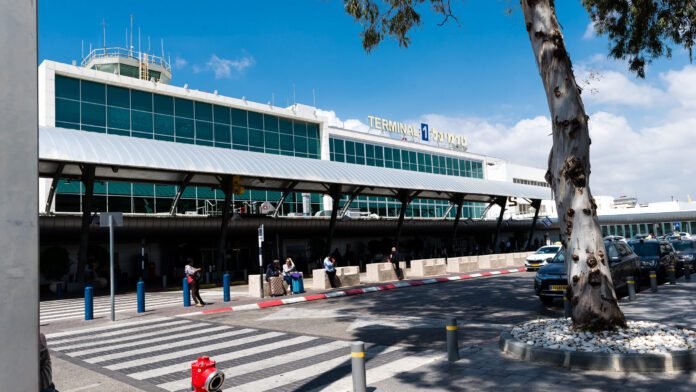
US Embassy Issues Israel Travel Warning Ahead of Yom Kippur
Americans traveling to and from Israel should prepare for possible flight cancellations and airspace closures with little warning, the US Embassy in Jerusalem said in a Sept. 19 security alert issued over concerns about a potential escalation.
The embassy advised travelers to confirm their flight status directly with their airlines and monitor official information from Ben Gurion Airport and Haifa Airport. Passengers were cautioned against relying on previously scheduled departure and arrival times because aviation operations could change quickly.
Concerns about a possible attack on the eve of Yom Kippur were cited against the backdrop of the warning. The embassy said the security situation remained complex and could change unexpectedly, potentially disrupting air travel.
Beyond aviation, US citizens in Israel were urged to prepare for possible security alerts by identifying their nearest protected space. The embassy recommended keeping water, food, medication, and other essential supplies accessible and ensuring mobile phones remain charged.
During an aerial attack or warning, Americans should stay clear of windows and glass doors and follow instructions from local authorities.
Additional precautions included avoiding demonstrations and large gatherings and staying away from locations with a significant police presence. US citizens were also advised to remain particularly vigilant around sites publicly identified with the United States.
The security notice also addressed potential threats beyond Israel and the Middle East. US diplomatic facilities have previously been targeted, the embassy said, warning that Iran and Iran-aligned actors could direct attacks against American interests in other parts of the world, including US-associated businesses and institutions.
Consular services have not been suspended. The US Embassy in Jerusalem and its branch office in Tel Aviv continue to provide both routine and emergency consular assistance despite the security alert.
Iran says US decided to resume strikes, vows retaliation
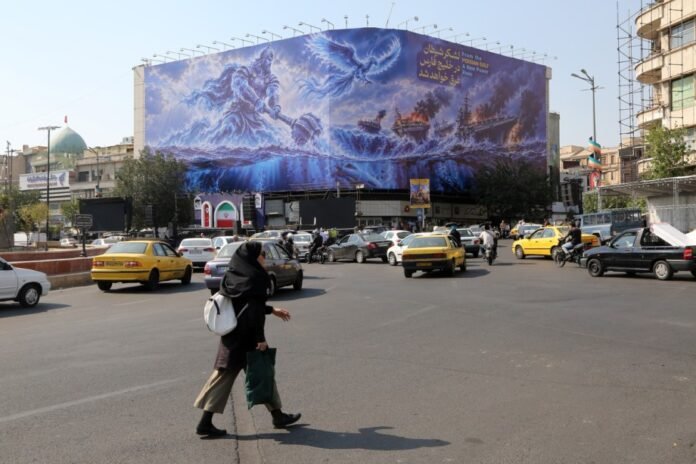
A huge anti-American billboard reading in Persian “The army of Satan will drown in the Persian Gulf” is unveiled at Enqelab Square amid heightened tensions between Iran and the United States as daily life continues in Tehran, Iran, on September 13, 2026. [Fatemeh Bahrami – Anadolu Agency]
Iran’s military said on Sunday that it has received information suggesting that the US decided to resume strikes against the Islamic Republic, Anadolu reports.
“According to the information received, the criminal America, has once again decided to resume measures against Iran, with the green light of some regional countries, at a joint meeting in a European country,” the Khatam al-Anbiya Central Headquarters said in a statement carried by state-run broadcaster IRIB.
It vowed retaliation against US interests and deployment areas in the region If Washington “makes a mistake.”
“We warn that if the countries of the region – by continuing their dual policy toward the Islamic Republic of Iran – align with the Great Devil’s aggression against a powerful and sovereign Iran they will all be considered complicit in this evil and can no longer expect restraint or decency from Iran’s powerful armed forces,” it said.
Tensions in the Middle East heightened after the US and Israel launched a war against Iran on Feb. 28, prompting Tehran to respond with strikes on regional countries hosting US assets. Iran also closed the Strait of Hormuz, one of the world’s most important waterways for oil and gas exports.
Washington and Tehran signed the framework deal in June, providing for a halt to military operations and arrangements to reopen the Strait of Hormuz to navigation. The deal later collapsed amid disagreements between the two parties over navigation in the strategic waterway.
Child Star Says He Hit Rock Bottom Weeks After Divorce Announcement
Frankie Muniz is opening up about one of the most difficult stretches of his life just weeks after announcing the end of his marriage to longtime partner Paige Price.
The 40-year-old Malcolm in the Middle star shared an emotional message on social media Friday, revealing that the previous six weeks had left him feeling overwhelmed and forced him into some serious self-reflection.
“The last 6 weeks of my life have been a nightmare I’m praying to wake up from,” Muniz wrote, adding that everything had felt “heavy, unclear” and as though it were falling apart.
But Muniz made clear that he does not view the difficult period as the end of his story.
Instead, the actor-turned-race car driver said the experience has forced him to confront parts of his life that he believes need to change.
Muniz said he had read that sometimes “hitting rock bottom” can serve as a wake-up call, pushing a person to make changes they may have avoided for years.
“This isn’t the end of the story,” he wrote, explaining that he now plans to begin what he described as the difficult and often uncomfortable work required to improve his life.
Muniz did not specify exactly what triggered the turbulent six-week period, so it would be speculation to attribute all of his comments directly to his marriage breakup. However, the timing comes shortly after he and Price publicly announced that they were ending their marriage.
The couple revealed their decision on July 1 after previously keeping a period of separation private.
In their announcement, Muniz said that after roughly a decade together, their relationship had evolved into what felt strongest as a friendship and co-parenting partnership.
The pair share 5-year-old son Mauz Mosley Muniz, who Muniz said remains the center of their lives.
Muniz also praised Price for supporting his career over the years and said the two planned to continue working together through Muniz Racing while raising their son.
Their relationship dates back to 2016. They became engaged in 2018, eloped in October 2019 and later held a formal wedding ceremony in February 2020. Their son was born in March 2021.
Despite Muniz’s emotional message, there are already signs that he and Price remain committed to the friendly relationship they described when announcing the split.
Just one day after his “rock bottom” post, Muniz shared new photos showing himself, Price and Mauz together following the boy’s soccer game.
“Post soccer shenanigans with the fam,” Muniz wrote, celebrating after Mauz received a medal for sportsmanship.
The family outing appeared consistent with the former couple’s earlier promise to remain a team as parents, although neither Muniz nor Price has suggested publicly that they are reconciling.
Price also publicly defended Muniz in July after he faced criticism over the lighthearted way their separation was initially announced.
She said divorce was obviously not something they were excited about, but argued that they were still two adults capable of remaining on the same team.
Muniz’s personal upheaval comes during an unusually busy period professionally.
He recently returned to the role that made him famous in Malcolm in the Middle: Life’s Still Unfair, the revival of the hit sitcom that originally ended in 2006. The new installment reunited Muniz with Bryan Cranston, Jane Kaczmarek and other returning cast members.
At the same time, Muniz has continued pursuing his racing career, including competition in NASCAR’s Craftsman Truck Series.
For now, Muniz appears focused on rebuilding rather than pretending everything is fine.
He ended his message by telling others going through their own difficult periods that reaching a low point does not necessarily mean their story is over.
For Muniz, at least, he appears determined to treat the past several weeks as a turning point rather than a final chapter.
Nepal isn’t the only disaster-struck country waiting for money from the global climate Loss and Damage Fund
As it faces the enormous task of rebuilding from a deadly flood that tore through communities in the Himalayas, Nepal is seeking compensation from the international Fund for Responding to Loss and Damage – meaning from countries that are major contributors to climate change, which it blames for the disaster.
Nepal Foreign Minister Shisir Khanal said it was not merely a request for aid or charity but a demand for justice and “legal and moral liability.”
“Nepal’s greenhouse gas emissions are virtually negligible. Yet, we are paying the ultimate price for a global crisis we did not create,” Khanal told the Kathmandu Post. “The rapid melting of glaciers and these catastrophic mountain tsunamis are direct consequences of global climate change.”
The New York Times compiled images from mountaineers and maps showing how the glacier collapsed on Aug. 26, 2026.
Nepal’s US$20 million request is small compared to the billions of dollars in damage, but it is an important test of the Loss and Damage Fund’s credibility. So far the fund, created during the U.N. climate conference in 2022 to respond to the impacts of climate change in developing countries, contains a fraction of the money major greenhouse gas emitters pledged to contribute, and it has paid out nothing despite requests from at least 119 nations.
Increasing greenhouse gas concentrations, largely from burning fossil fuels, have pushed global temperatures so high that sea levels are rising, and shrinking glaciers and thawing permafrost are leaving mountainsides less stable. A September 2026 U.N. Environment Program report determined that it is now inevitable that the planet will warm by at least 1.5 degrees Celsius (2.7 degrees Fahrenheit) compared to temperatures before the Industrial Revolution. Communities will have to adapt to increasing hazards.
The world committed under the Paris climate agreement to try to limit warming to 1.5 C in an attempt to avoid the worst effects of climate change. But it is not on track, and many countries are paying the price.
Is the fund just words?
At least 119 countries have submitted requests for money from the Loss and Damage Fund to help them respond to disasters or adapt to climate change.
About 93% of the requests as of June 2026 involved extreme events such as floods. Over three-quarters included slow-onset events, such as requests for help building the infrastructure, including sea walls, and the capabilities to adapt to sea-level rise.
Together, the requests totaled $2.8 billion – about 10 times the amount of money that had actually reached the fund.
The fund’s board, meanwhile, has yet to disburse money for any of the requests. At the most recent board meeting in June 2026, officials considered four requests for funding, but none were approved.
The board has a responsibility to ensure that the money will be used appropriately. But one analysis of comments countries made while negotiating the creation of the fund and decisions of the fund board suggested that the slowness of both the disbursals and the setting up of the fund had been deliberate – a practical evasion of a responsibility agreed to on paper.
The board is scheduled to meet next in December 2026. Eight of the 26 board members formally requested an emergency meeting to respond to the disaster in Nepal quickly. The co-chairs of the board acknowledged the request, but how the board might respond was unclear.
Nepal needs billions for recovery
Nepal is asking for about $20 million from the fund. However, the country’s finance minister, Swarnim Wagle, estimated that the country would need US$4 billion to $5 billion to rebuild from the flood damage – nearly a tenth of its national economy.
Nepal lost over 10% of its hydropower capacity when a glacier collapsed on Aug. 26, causing the landslide and flood. Mud, water and rock inundated several riverside communities near the border with China, killing more than 1,400 people and leaving thousands more missing. The flood also broke through several hydropower dams in the Bhote Koshi river basin.
The flood buried several riverside communities in mud and rock and damaged more than a dozen hydropower dams, knocking out about a tenth of Nepal’s power production.Daniel Ceng/Anadolu via Getty Images
In Nepal, many of the risks come from melting glaciers. The Himalayas and neighboring Hindu Kush mountains together contain one of the world’s largest volumes of ice, but studies show they have been losing that ice fast as temperatures rise, with the loss rate doubling since 2000. When glaciers retreat, the result can create glacial lakes prone to outburst floods and unstable slopes prone to landslides like Nepal experienced.
Nepal is receiving aid directly from other countries, but it wants support from the Loss and Damage Fund in part because of what that would represent.
Vulnerable countries fought through years of international climate talks to establish a principle of climate compensation and distinguish it from charity. Even if the amount that the fund disburses to Nepal is relatively small, it would represent compensation for harm caused by climate change.
The decision establishing the fund is very clear that contributions are voluntary and the act of contributing should not be interpreted as an acknowledgment of liability. Climate-vulnerable countries consented to that language in the hope that it would bring in much-needed help.
If the fund acts promptly and pragmatically on that shared responsibility, global efforts to establish liability for climate change through international tribunals and courts could ease.
Speed matters
To be effective, the Loss and Damage Fund needs to be more agile and responsive to the needs of the most climate-vulnerable countries. During negotiations to set up the fund, one negotiator emphasized the need for resources to be accessible within 24 to 48 hours of a climate disaster.
France 24 used amateur video from along the flood’s path to reconstruct the damage.
From response to anticipation
The Loss and Damage Fund could also use its symbolic and modest financial position to nudge the broader humanitarian, development and climate finance ecosystem toward what’s known as anticipatory action.
Anticipatory action involves moving resources into at-risk places before the disaster hits. It has been proven to speed up the response and recovery.
Emphasizing this approach could also lead to better forecasting, early warnings and planning that takes climate change into account to protect people in vulnerable regions around the world.