19.5 C
London
Sunday, July 26, 2026
Home Blog

EU Prepares for New US Tariffs as Trade Tensions Resurface

0
eu-prepares-for-new-us-tariffs-as-trade-tensions-resurface
EU Prepares for New US Tariffs as Trade Tensions Resurface


The European Union is preparing to accept a new wave of US tariffs on European goods, despite considering the measures unjustified, as Brussels prioritises maintaining the limits agreed under last year’s EU-US trade deal.

The expected duties relate to allegations over products linked to forced labour, with Washington arguing that insufficient action to tackle such supply chains is harming US businesses. The current US tariff regime is set to expire on Friday, with fresh measures expected shortly afterwards.

European Commission officials said their main objective was to ensure that any new tariffs remain within the 15% ceiling agreed in the Turnberry agreement signed in July 2025 by US President Donald Trump and European Commission President Ursula von der Leyen.

While Brussels has rejected the US findings, arguing that the EU already has strict rules against forced labour products, officials appear unwilling to reopen a wider trade dispute that could create uncertainty for European companies.

The situation highlights the delicate balance facing the EU as it seeks to defend its trade interests while preserving stability in its economic relationship with Washington.

The new measures follow months of uncertainty over US trade policy after previous tariffs faced legal challenges. The EU is now closely monitoring Washington’s next steps, hoping the latest dispute remains contained within the framework of the existing agreement rather than escalating into a broader transatlantic confrontation.

via Euronews

How Japan is putting AI in its cybernetic place

0
how-japan-is-putting-ai-in-its-cybernetic-place
How Japan is putting AI in its cybernetic place

Much of the Western debate about artificial intelligence centers on the machine itself. Will AI become conscious? Will it surpass human intelligence? Could it acquire goals of its own and escape human control?

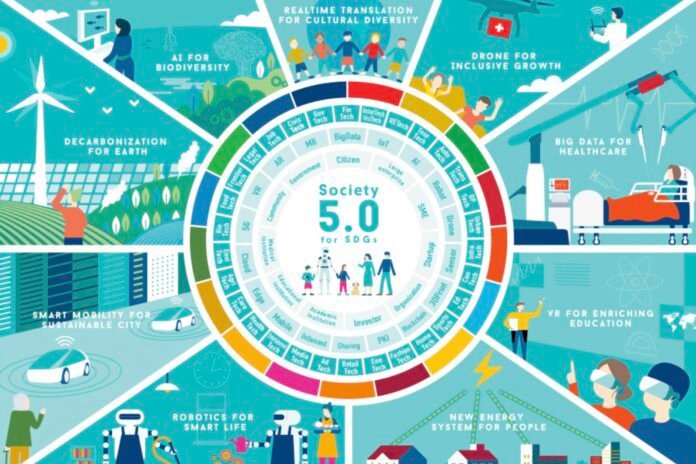
Japan’s Society 5.0 begins from a different premise. Rather than imagining AI as an autonomous mind, it places AI inside a larger social and technological system. Sensors collect information from the physical world; digital networks carry that information into cyberspace; AI analyzes it; and the resulting knowledge is returned to people, organizations, machines and public services.

Intelligence resides less in a single machine than in the circulation of information through the system as a whole. In this respect, Society 5.0 is best understood as a cybernetic vision of society. AI is a service within the feedback loop, not the sovereign agent directing it.

Beyond the information society

Society 5.0 was introduced in Japan’s Fifth Science and Technology Basic Plan, adopted in 2016. The name places the program within a sequence of historical social forms: the hunting society, the agricultural society, the industrial society, the information society, and finally Society 5.0.

Japan describes it as a human-centered society created through the close integration of cyberspace and physical space. Its objective is not technological development for its own sake, but the reconciliation of economic growth with the solution of social problems.

Those problems are particularly acute in Japan. The country has an aging and declining population, rural depopulation, labor shortages, rising healthcare needs, deteriorating infrastructure, vulnerability to natural disasters, and growing energy and environmental pressures.

Society 5.0 proposes to coordinate data, AI, robotics, communications networks and public institutions to respond to these interconnected challenges.

A cybernetic society

Japan’s foundational Society 5.0 documents generally speak of “cyber-physical systems” rather than relying heavily on the classical term “cybernetics.” Yet the architecture they describe is unmistakably cybernetic.

Cybernetics studies how systems use communication, feedback and control to adapt their behavior. A thermostat provides the simplest example: it measures a room, compares the result with a desired temperature, and adjusts the heating.

More complex cybernetic systems continually collect information about their environment, evaluate it against objectives, act, and then measure the consequences.

Society 5.0 applies this pattern on a societal scale. Physical activity generates data through sensors and connected devices. That data moves into cyberspace, where it is combined and analyzed. The resulting recommendations or decisions return to the physical world, producing new conditions and new data. The cycle then begins again.

The cybernetic connection becomes explicit in later Society 5.0-related programs. Japan’s Moonshot research program, for example, includes a goal devoted to “cybernetic avatar infrastructure.”

It envisions people using networked robots and digital avatars to extend their physical, cognitive, and perceptual capabilities. The stated purpose is not to replace humans with autonomous machine agents but to expand what people can do while preserving inclusion and social participation.

Society 5.0 can therefore be understood as a modern form of social cybernetics: data circulates among people, machines, institutions, and environments, enabling the wider system to respond more effectively.

AI as a service

Artificial intelligence occupies an important but carefully delimited place within this architecture. It processes information; it does not define society’s purposes.

In a 2017 speech explaining Society 5.0, then-prime minister and now deceased Shinzo Abe described how sensors connected through the Internet of Things would accumulate large quantities of data. AI would analyze that data, he said, producing “new wisdom.”

The examples he gave were practical: finding patterns in medical data, improving factory maintenance, and helping automated vehicles respond to road conditions.

This formulation is revealing. AI is treated as a service and tool that turns data into useful knowledge, enhancing human capabilities rather than establishing its own goals. The system’s objectives — health, mobility, safety, sustainability and well-being — remain socially determined.

That does not mean every decision must be made manually. Automated systems may control vehicles, balance energy demand, coordinate logistics, or detect medical abnormalities. But their agency is functional and delegated. They operate inside architectures established by people and institutions.

In other words, AI may optimize the means, but it does not determine the ends.

AI industrial roadmap

Japan’s Artificial Intelligence Technology Strategy translated this philosophy into an industrialization roadmap.

Rather than organizing policy around the creation of a single general-purpose artificial intelligence, the strategy concentrated on three domains: productivity, health, medical care and long-term care, and mobility. Information security supported all three.

The roadmap anticipated a phased development. In the first phase, data-driven AI would be introduced into individual industries and services. In the second, AI and data use would spread across public domains. In the third, formerly separate fields would become interconnected, producing a broader ecosystem.

The underlying logic was cumulative. AI applied to healthcare could reduce the burden on medical workers and help people remain healthy longer. AI applied to mobility could improve transport for older people and residents of depopulated regions.

AI applied to manufacturing and logistics could compensate for labor shortages. Once these systems exchanged information, their value would exceed that of isolated applications.

This is another cybernetic characteristic of Society 5.0. The intelligence of the whole emerges from coordination among specialized components. No single AI needs to become generally intelligent because capability is distributed across the system.

Model-centered to system-centered

This distinguishes Society 5.0 from model-centered visions of AI that dominate much contemporary discussion. In a model-centered approach, progress is measured primarily by the intelligence of the model: how well it reasons, writes, codes, plans, or competes with humans.

Society 5.0 instead asks how many elements can be coordinated around a social purpose. The important questions are whether healthcare data can improve treatment, whether transport systems can respond to changing demand, whether infrastructure failures can be predicted, and whether services can reach people regardless of age, location, or disability.

AI is not absent from this picture. It is ubiquitous. But it becomes ubiquitous by disappearing into infrastructure.

Society 5.0 is not simply an AI strategy. It is an attempt to define the social system within which AI should operate. Its central question is not whether a machine can become an independent intelligence, but whether networks of people and machines can make society more adaptive, inclusive, and resilient.

The distinction is fundamental. In Society 5.0, AI is not an artificial person waiting to awaken. It is a component of a larger cybernetic system, a tool for converting data into new wisdom, while human beings retain responsibility for deciding how that wisdom should be used.

Nablus: When the killer becomes the victim

0
nablus:-when-the-killer-becomes-the-victim
Nablus: When the killer becomes the victim

In the occupied West Bank, the story often starts too late.

It starts when an Israeli settler is killed, injured, or frightened. It starts when Israeli officials speak, when the army enters Palestinian villages, and when headlines describe a “clash” or a “terror attack”. Suddenly, the settler becomes the victim, the Palestinian village becomes the threat, and the occupation disappears from the story.

But Nablus cannot be understood from the middle of the story.

For years, Palestinian villages around Nablus have lived under daily pressure: land seizures, settlement expansion, military raids, road closures, intimidation, and settler violence.

This is not a normal conflict between two equal communities. It is a system where one side expands with weapons, army protection, and state support, while the other side is expected to remain silent

That is why the recent events of yesterday near Nablus cannot simply be called a “clash”. The word sounds neutral, but the reality is not neutral. A clash suggests two equal sides. But there is no equality between armed settlers living on occupied land and Palestinians living in villages surrounded by settlements, checkpoints, and military control.

Of course, individual settlers can suffer. Death is death. Fear is fear. No human pain should be mocked or ignored. But the pain of one incident cannot erase the larger reality. A settler can be a victim in one moment, while still being part of a wider system that causes fear, dispossession, and daily suffering for Palestinians.

This is the contradiction: the executioner becomes the victim only when the story is cut away from its history.

When the headline begins with Israeli pain, Palestinian pain becomes invisible. The settler becomes a civilian under attack. The Palestinian becomes a security threat. The settlement becomes a neighbourhood. The occupied village becomes a battlefield. The army becomes “protection”. Resistance becomes “terrorism”. And the occupation, which created this whole reality, disappears.

This is not by accident. This is how power protects itself.

The settlement movement has always tried to make its presence in the West Bank look normal. It wants the world to see settlers as ordinary residents, not as people living inside a political project built on occupied land. It wants attacks on Palestinians to look like isolated events, while every Palestinian reaction is used to say that Palestinians are violent and must be controlled.

But the truth is simple: a system built on domination cannot bring security.

It can bring temporary control. It can create fear. It can silence people for a while. It can build walls, checkpoints, settler roads, and military zones. But it cannot bring peace. When land is taken, when homes are attacked, when settlers enter Palestinian villages, and when the army protects one side only, violence is not an accident. It becomes part of the system.

This does not mean every settler carries the same guilt. It does not mean every Israeli death should be dismissed. It means that individual suffering should not be used to hide collective power. The victimhood of the settler cannot be used to erase the long victimhood of the occupied.

Yet this is what often happens.

The Palestinian is asked to explain his anger. The settler is rarely asked to explain why he is there. The village is asked to condemn violence. The settlement is rarely asked to justify its existence. The occupied are told to stay calm, while the occupier calls control “security”.

That is why the phrase “when the executioner becomes the victim” matters. It is not a denial of human pain. It is a refusal to forget the political reality.

A settler killed in one incident may be a victim of that incident. But the settlement project remains a machine of dispossession. The grief of one Israeli family does not erase the daily fear of Palestinian families living beside armed settlers, checkpoints, and expanding settlements. One tragic day does not erase decades of occupation.

Nablus shows this clearly. The more Israel protects settlements, the more tension it creates. The more settlers expand, the more Palestinian space shrinks. The more Palestinian life is controlled, the more resistance becomes likely. Then, when violence erupts, Israel presents itself as surprised, as if it had no role in creating the conditions.

This is the oldest trick of domination: create the wound, then cry when the wound bleeds.

The question after Nablus is not only who fired first. That question matters, but it is not enough. The deeper question is: who built the reality where armed settlers, occupied villages, military raids, and daily humiliation became normal?

Who allowed settlers to move through Palestinian land with confidence, while Palestinians move through their own land with fear? Who turned settlements into protected facts, and villages into security zones? Who decided that Palestinian life could be restricted every day, then acted shocked when this reality produced violence?

Until these questions are answered, every incident will be treated as a beginning, when it is actually only another consequence.

When the executioner becomes the victim, the world must be careful. It must see human pain, but it must also see the political structure. It must mourn the dead, but it must not forget the system that keeps producing death.

Because the real tragedy is not only that people die. The real tragedy is that occupation creates the conditions for death, then asks the world to feel sorry when those conditions return to its own doorstep.

The views expressed in this article belong to the author and do not necessarily reflect the editorial policy of Middle East Monitor.

Energy Crisis Set to Keep Food Inflation Elevated, UN Warns

0
energy-crisis-set-to-keep-food-inflation-elevated,-un-warns
Energy Crisis Set to Keep Food Inflation Elevated, UN Warns


Rising energy and fertiliser costs linked to ongoing conflicts and global supply disruptions are expected to continue fuelling food inflation, threatening efforts to make healthy diets affordable worldwide, according to a new United Nations report.

The UN warned that while global hunger has eased slightly in recent years, progress remains fragile, with more than 500 million people still projected to face chronic hunger by 2030. Africa is expected to carry the heaviest burden.

Conflicts including the war in Ukraine and instability affecting energy routes are driving up the cost of fuel, fertiliser and agricultural inputs, creating further pressure across food supply chains. The International Fund for Agricultural Development warned that prolonged shocks could push millions more people into hunger.

The impact is particularly severe for small-scale farmers, who rely heavily on fuel for irrigation, harvesting and transporting produce. Higher costs are ultimately passed on to consumers, adding to inflationary pressures.

The report highlighted that the average global cost of a healthy diet has already increased significantly, with affordability becoming one of the biggest challenges facing food security.

The UN said strengthening agricultural resilience, improving infrastructure and reducing supply chain vulnerabilities will be essential as conflicts and climate-related disruptions continue to reshape global food markets.

via Euronews

Bride in Shock After Spotting Her Dead Father in Wedding Photos

0
bride-in-shock-after-spotting-her-dead-father-in-wedding-photos
Bride in Shock After Spotting Her Dead Father in Wedding Photos


A bride who brought her late father’s old film camera to her wedding as a quiet tribute was left stunned when the developed photos appeared to show him “showing up” for the big day in a way she never could have predicted.

Mia Chard, 43, had carried her father’s 1979 film camera to major family milestones for years after his death in 2018. For her May 2026 wedding, the social worker brought it along again, hoping it would make him feel close during one of the most emotional days of her life.

But when the film came back, Chard did not just see images from her wedding. She saw her parents staring back at her from decades earlier.

The first photograph that appeared was not from the ceremony at all. It was from her brother’s 1999 graduation, more than 20 years before Chard walked down the aisle.

“I remember being stunned and not sure where these photos came from,” Chard told PEOPLE. “I identified right away that it was my brother’s graduation from 1999 that I was looking at and that the photos must have been double exposed.”

The old graduation images had somehow been layered over the new wedding photos, creating a haunting and deeply emotional blend of past and present. Chard understood the technical explanation, but she still could not explain how a roll of already-used film ended up in the camera that day.

“I still can’t say how that already used roll of film was the one that got loaded,” she said. “It really is a mystery.”

At first, the bride feared the accident had destroyed two sets of priceless memories. She thought the old photos from her brother’s graduation had been ruined, and that her wedding pictures had been lost too.

“It did feel like everything was ruined,” she said. “I thought I’d ruined the old pictures and the new ones.”

Then she kept looking.

When Chard reached the image of herself walking down the aisle, the shock turned into something far more powerful. In the double exposure, she appeared perfectly centered in the frame, surrounded by the ghostly presence of images from her family’s past.

“When I got to the picture of me walking down the aisle was when I really felt it,” she said. “The fact that somehow in the overlay, I was perfectly in the middle seemed more than a coincidence to me.”

For Chard, the photo immediately brought back one of her final conversations with her father before he died of liver disease in 2018. She remembered asking him whether he was afraid of dying. He told her he was not afraid of death itself, but he was heartbroken at the thought of leaving his family behind.

“I remember telling him that he taught and loved us well, so even if he died, he would still be with us,” she said.

Years later, as she stared at the wedding photo, the meaning felt unmistakable to her.

“Wow, he found a way to be there,” she remembered thinking.

The camera had long been one of Chard’s ways of keeping her father present for the moments he never got to witness. She brought it to birthdays, family gatherings and other major events. On her wedding day, she also tied her father’s wedding band to her bouquet before walking down the aisle.

After the emotional discovery, Chard shared the story on TikTok, expecting it might touch a few people who knew her family. Instead, the video exploded, reaching millions of viewers and prompting countless people to share their own stories about the mysterious, comforting ways they still feel connected to loved ones they have lost.

Some viewers saw the photos as a spiritual sign. Others saw them as a strange but beautiful coincidence. Chard said she is not trying to convince anyone how to interpret them.

“People are going to see it differently, and I don’t think there is a right or wrong answer,” she said. “What it means to me and what it means to you can be different, and that’s okay.”

For the bride, though, the image of herself walking down the aisle with the past layered over the present gave her something she never expected from a roll of film: the feeling that her father had found one last way to stand beside her.

AI firms want more data centers; Trump’s EPA may give neighbors less say

0
ai-firms-want-more-data-centers;-trump’s-epa-may-give-neighbors-less-say
AI firms want more data centers; Trump’s EPA may give neighbors less say

The Trump administration is quietly considering a rule change that could make it easier for polluters to build facilities—including certain gas plants and diesel generators that power data centers—with little to no notice to the public.

On Wednesday, the Environmental Protection Agency held a public hearing on a proposed rule change that would hand the power to states to decide how the public participates in the permitting process for certain new sources of air pollution. The proposed rollback comes as data centers face greater pushbackacross the US, with many communities using the permitting process to try to slow down development. Any changes could have major consequences for how ordinary people are given notice about new or expanded polluting facilities coming into their neighborhoods.

“As someone actively working in communities with data centers, I know this to be fundamentally true: People want to have a say,” Vanessa Lynch, a Pennsylvania organizer with Moms Clean Air Force, said at the EPA hearing.

Companies building any kind of facilities that release air pollution are required to get permits under the Clean Air Act. Polluting sources can either be put through a “major” permitting process, meaning that they meet or exceed thresholds for certain pollutants, or a “minor” one for those that don’t.

Major sources of pollution are reviewed by both federal and state regulators and have extensive requirements before and after construction. However, there’s less oversight of minor sources. The scope of what gets permitted as a minor source is extremely broad and can include everything from dry cleaners and auto body shops to to diesel and gas engines. The latter two are increasingly being used to power data centers, with operators such as xAI and Meta using minor source permitting processes to build behind-the-meter gas plants.

The Clean Air Act does require the public to be involved in permitting processes; Congress has specified that major sources need to have several public steps, including a public hearing. EPA rules require some public participation for minor source permits. But thanks to a patchwork of state enforcement laws, that engagement process—and whether state agencies are actually complying with EPA requirements—varies across the US.

If the proposed rule is finalized, “it would put state and local agencies most familiar with local issues in the driver’s seat to determine whether, when, and for how long to provide opportunities for public participation for proposed new minor sources and modifications,” an EPA spokesperson tells WIRED, noting the rule wouldn’t alter emissions standards.

These state-by-state differences can make a big difference in how the public gets involved. Keri Powell, an Atlanta-based attorney at the environmental legal advocacy group Southern Environmental Law Center, says that groups like hers often end up taking on cases in states like Georgia, which, she says, has a more robust public notification and participation process for minor sources. Earlier this month, the group alerted the state utility about construction issues at a data center, based on information they’d gotten from the companies’ public air permit applications. But if the EPA removes the federal requirement, community and legal groups in the state could get little to no heads up about upcoming projects and be shut out of participation and review.

“Georgia is an example of a place where I can say I’m concerned,” Powell says.

Sara Lips, the director of communications at Georgia’s Environmental Protection Division, says that the agency is “determining whether proposed federal rule changes would affect the public participation requirements per the state regulations.”

Kentucky also has stronger public participation laws for minor source permits. Byron Gary, a senior attorney at the Kentucky Resources Council, says state agencies have made an “informal commitment” behind the scenes to keep their public participation rules the same, even if the EPA changes its rules. But, he says, that could shift: “Who knows [if] the next administration, whether they would actually change it.”

Texas is an example of what lower levels of engagement look like. The data center boom there has driven a massive buildout of private gas plants, many of which rely on minor pollution permits. The state’s lower levels of enforcement have left some communities living in the shadows of data centers surprised at the scope of fossil fuel infrastructure being installed near their homes.

Since coming into power, the Trump administration has gone all in on artificial intelligence, removing multiple roadblocks for data center development at the federal level. That includes efforts at the EPA, which is working to make the US “the AI capital of the world,” the agency spokesperson says.

Companies are also spending vast sums of money on the data center buildout: Spending on data center construction outpaced spending on public transportation infrastructure for the first time in June. Given that public opposition is creating a new bottleneck for data center development, the timing of the rule revision, Powell says, is probably not an accident.

“I think it’s part of a package of rules that the Trump administration is pushing through to make it easier for AI data centers to be constructed,” she says.

This story originally appeared on wired.com.

Leaked Email Reveals New Requirements for ICE Vehicle Stops

0
leaked-email-reveals-new-requirements-for-ice-vehicle-stops
Leaked Email Reveals New Requirements for ICE Vehicle Stops


Less than two weeks ago, following a pair of fatal shootings by immigration officers in Texas and Maine, U.S. Immigration and Customs Enforcement ordered a halt to vehicle stops nationwide.

The directive was initially passed down through ICE field offices on the evening of July 13 — just hours after the Maine shooting — followed by an official agencywide memo that made the rounds the next morning.

Then, on July 15, President Donald Trump took to his social media platform Truth Social and directed ICE to resume its vehicle stops, presumably reversing the orders announced the day before by ICE internal leadership.

“The president says one thing but in reality we all follow established policy.”

Despite Trump’s apparent reversal of the ICE directive, immigration enforcement officers in at least 4 so-called areas of responsibility — ICE’s regional jurisdictions — did not resume vehicle stops, according to officials who spoke with The Intercept.

“I follow policy that comes down the appropriate channels,” said one ICE official, who works in a southern regional office and requested anonymity to avoid retaliation. “The president says one thing but in reality we all follow established policy.”

A second ICE official, who operates in the Western U.S., told The Intercept, “Following the orders of the guys I’ve worked with in the field and have my back vs the head of an administration that treats me like a meme? It’s a no brainer.”

Three other ICE whistleblowers from areas of responsibility in the Midwest, South, and Northeast also told The Intercept that vehicle stops did not resume in their areas of responsibility over the past week. (ICE did not respond to a request for comment.)

Now, however, a new official vehicle stops policy has been passed down through the proper channels at ICE’s Enforcement and Removal Operations division.

An internal agencywide email, sent on July 22 and obtained by The Intercept, ordered the resumption of vehicle stops, with new guidelines that change how deportation officers will engage with vehicles moving forward.

“ERO law enforcement officers are authorized to conduct vehicle stops,” says the email. “Officers must continue to coordinate with their immediate supervisors regarding any enforcement activities.”

Killings in Maine and Texas

The pair of deadly ICE shootings, just six days apart in the second week of July, both involved officers traveling in and engaging with vehicles. The killings — of Lorenzo Salgado Araujo in Houston, Texas, and a Johan Sebastián Durán Guerrero in Biddeford, Maine — sparked nationwide outrage and catapulted ICE back in to the news cycle.

ICE quickly came under pressure from both the public and government officials to hold the officers involved in the shootings accountable and offer more transparency about ICE’s tactics when engaging with vehicles.

One glaring issue that arose was the fact that, according to the Department of Homeland Security, the officers involved in both shootings were not wearing body cameras.

In the case of the Maine shooting, The Intercept previously reported, officers on the scene were wearing multifunctional devices designed to work as body cameras, but they were unable to record video on the devices because they didn’t have a required cloud-based subscription service.

The new ICE vehicle stops policy addressed the apparent failure in Maine and Texas to capture the incidents on video. Now, according to the new policy, at least one officer involved in a vehicle stop must be wearing “an issued and activated body worn camera.”

The rollout for ICE body cameras, however, is proceeding slowly. About half of ICE officers have been issued cameras, according to DHS, with the other half to receive them in the next two months. Officers will then need to complete a training process with the body cameras before they can use them in the field.

Gutted Training Standards

Starting in summer 2025, in an effort to ramp up deportations, the Trump administration implemented an accelerated ICE training and hiring spree that lasted until June 30, 2026.  

During that time, ICE hired more than 12,000 new recruits and cut more than 40 percent of its basic training curriculum.

Among those new recruits, according to The Atlantic, was the ICE officer who allegedly pulled the trigger in the Maine shooting.

The new ICE policy distributed on Wednesday now lists training as a requirement for officers making vehicle stops.

“The officer or officers conducting the stop must have successfully completed an ICE-administered vehicle stop training,” the guidance says.

The policy guidance says that ICE officers may make vehicle stops in cases of criminal arrests or while executing search warrants, but only when a certified member of a Special Response Team — ICE’s equivalent of SWAT — conducts the stop.

SDCC teaser gives us our first good look at Blade Runner 2099

0
sdcc-teaser-gives-us-our-first-good-look-at-blade-runner-2099
SDCC teaser gives us our first good look at Blade Runner 2099

It’s been nearly five years since Ridley Scott first announced his plans for a TV spinoff of his sci-fi masterpiece Blade Runner (1982) and the 2017 sequel Blade Runner 2049. It’s finally here—or almost, anyway. Prime Video debuted the first teaser for the new ten-episode series, Blade Runner 2099, at San Diego Comic-Con on Friday. We also got a teaser for the third season of Prime Video’s Rings of Power and a new trailer for HBO’s Lanterns.

Yeoh and Schafer joined show runner Silka Luisa (Shining Girls) onstage for the big reveal, which also included an exclusive clip shown to the audience. Luisa told Entertainment Weekly that the series stays true to the original’s “noir principles… and there’s a mystery at the heart of the show that looks both forwards and backwards in terms of mythology.”  An uprising has occurred and the humans lost, which means they are now the hunted second-class citizens. “The show is really imagining what comes after us, and what does it mean to be human in a world where humanity is no longer relevant,” said Luisa.

Per the official synopsis:

Fifty years after the events of Blade Runner 2049, Los Angeles has been reborn, just not by humanity. Cora, a fugitive in a final bid to stop running, takes on one last identity: a Blade Runner. Forced to partner with Olwen, a Replicant days from dying, she hunts down a runaway hiding a truth that could collapse their fragile city.

The incomparable Michelle Yeoh stars as Olwen, the dying Replicant, along with Hunter Schafer (Euphoria) as Cora. The cast also includes Hugo Hamlet as Buster Friendly, as well as Dmitri Abold, Lewis Gribben, Katelyn Rose Downey, Daniel Rigby, Johnny Harris, Amy Lennox, Sheila Atim, Matthew Needham, Tom Burke, and Maurizio Lombardi—all in as-yet-undisclosed roles.

Blade Runner 2099 will premiere on November 25, 2026, on Prime Video.

Rings of Power S3

Prime Video made a major investment in The Rings of Power when it acquired the rights to the source material from the Tolkien estate, even committing to multiple seasons upfront.  We’re now coming up on S3 and based on the teaser the streaming platform unveiled at SDCC, we’ll finally get to see Sauron (Charlie Vickers) forging the One Ring.

Per the official synopsis:

In season three, Middle-earth is at war. Five years have passed since the fall of Eregion. Sauron’s armies have marched across the whole of the world, conquering all in their path. Only a few isolated pockets stand between the Dark Lord and total victory—Khazad-dǔm, where the Dwarves are now sealed deep within their mountain halls, and the elven realms of Lindon and Rivendell, which are protected by their Three Rings.”

But deep in the land of Mordor, in his newly completed tower of Barad-dûr, the Dark Lord toils day and night, obsessed with harnessing a power that will bring the last of his enemies to their knees: One ring to rule them all… Now, all the free peoples of Middle-earth—Dwarves, Elves, Men, and Wizards alike—must find a way to come together, in a race against time to prevent Sauron from achieving his goal of utter domination of all life

We’re also getting some new characters this season, most notably Jamie Campbell Bower as Galadriel’s (Morfydd Clark) long-lost husband Celeborn. Zubin Varla will play Khamul the Easterling of Rhun; Eddie Marson will play Thrain, order brother to King Durin IV (Owain Arthur); Andrew Richardson will play Anarion, younger son of Elendil (Lloyd Owen) and brother to Isildur (Maxim Baldry); and Adam Young will play an Orc named Marnukh who “might not be what he seems.” Oh, and none other than Simon Pegg will voice the fiery Balrog.

The third season of Rings of Power premieres on November 11, 2026, on Prime Video.

Lanterns

We’ve seen a couple of teasers thus far for Lanterns, the new DC Universe series coming to HBO Max, both of which made it clear we’re in for a show that’s closer to a sci-fi True Detective than your standard superhero fare. HBO unveiled a full trailer at SDCC that is a little less Earthbound. It leans into the “space cop” vibe, reveals that shapeshifting Manhunters will be central to the plot, takes us into outer space, and also gives us our first look at Sinestro (Ulrich Thomsen), a former Corps member gone rogue. HBO threw in seven preview clips for good measure, although these have not been released publicly.

Per the official logline, “The series follows new recruit John Stewart (Aaron Pierre) and Lantern legend Hal Jordan (Kyle Chandler), two intergalactic cops drawn into a dark, earth-based mystery as they investigate a murder in the American heartland.” There will be two storylines: one set in 2016 about a murder in Nebraska, and the second set in 2026.

Chandler’s Hal Jordan is a former test pilot nearing retirement from the Green Lantern Corps. He’s training Pierre’s John Stewart Jr., a new recruit, to replace him. Nathan Fillion reprises his Superman role as the obnoxious Guy Gardner; we get a brief glimpse of him in the new teaser. The cast also includes Kelly MacDonald as Kerry, a small-town family-oriented sheriff; Jason Ritter as Billy Macon, Kerry’s husband; Garret Dillahunt as William Macon, Kerry’s cowboy father-in-law; Poorna Jagannathan as a woman named Zoe; and Paul Ben-Victor as an extraterrestrial called Antaan.

Sherman Augustus plays John Stewart Sr., with J. Alphonse Nicholson playing the younger version; Nicole Ari Parker plays Bernadette Stewart (mother to John Jr.), with Jasmine Cephas Jones playing the young version of the character. In addition, Chris Coy plays a suspiciously nervous truck driver, Waylon Sanders; Cary Christopher plays a gifted child named Noah; Laura Linney will play a senior Guardian; and Paula Patton will appear in an as-yet-undisclosed guest role. We also know that the show will feature the inter-dimensional prison and the Checkmate organization introduced in Peacemaker’s S2 finale.

Lanterns premieres on August 18, 2026, on HBO Max.

Spaceballs: The New One

group of actors and producers on stage at San Diego Comic-Com, with many mock bending the knee to a man standing in the center.

Credit: Chris Frawley / Amazon MGM Studios

This long-overdue sequel to Mel Brooks’ 1987 cult classic isn’t being released until next spring, but that didn’t stop Amazon MGM Studios from putting together an SDCC panel this year anyway in a clever parody of the extravagant Marvel panels of yore. Because it’s early days, there haven’t been any publicly released teasers or trailers, although some teaser footage was shown at CinemaCon in April and yesterday at SDCC.

Apparently we owe this sequel to Josh Gad, who co-wrote the script and pitched Brooks on a cold call. Gad has said he showed the original movie to his daughter during the COVID-19 pandemic and she loved it so much she wanted to see the sequel. Here’s the official synopsis:

Somehow, Dark Helmet has returned! Forty years after the events of the first Spaceballs, fifty years after the events of Star Wars: A New Hope, and one year after the events of The Devil Wears Prada 2, the galaxy is once again under threat. A threat so evil, so unstoppable, so completely lacking in any original ideas, that it has vowed to bring back the past… every last bit of it.

With Lone Starr in hiding, Queen Vespa on the throne, and the Schwartz stretched thinner than a franchise releasing TV episodes theatrically, the only hope for the galaxy is Vespa’s undisciplined son, Prince Starburst, and a mysterious Palace advisor named Destiny. Together, they must find Lone Starr, Yogurt, and any other iconic legacy characters fans are demanding before they discover the hard way that, while some threats you can fight, the reboot is not one of them.

The 100-year-old Brooks is reprising his role as Yogurt via motion capture (he filmed his lines in a studio). Also returning: Rick Moranis as Lord Dark Helmet, Bill Pullman as Lone Starr, Daphne Zuniga as Queen Vespa, and George Wyner as Colonel Sandurz. Pullman’s son, Lewis Pullman, joins the cast as Prince Starburst, son to Lone Starr and Vespa, along with Keke Palmer as a palace advisor named Destiny. Gad plays a mawg, the same species as the late John Candy’s Barf. Anthony Carrigan and Rowan Witt have also been cast in as-yet-undisclosed roles.

Spaceballs: The New One hits theaters on April 23, 2027. May the Schwartz be with you!

poster art of a desert-like sand dune environment with a rover raking out a

Credit: AmazonMGMStudios

US Warns Iran Is Not Serious About Ending War as Conflict Escalates

0
us-warns-iran-is-not-serious-about-ending-war-as-conflict-escalates
US Warns Iran Is Not Serious About Ending War as Conflict Escalates


US Secretary of State Marco Rubio has warned that Iran is not showing genuine commitment to negotiations aimed at ending the conflict, as Washington signals it is prepared to take further action if diplomatic efforts fail.

Speaking in Manila during a meeting of Southeast Asian foreign ministers, Rubio said the US remained open to talks but would respond if Tehran was not serious about reaching an agreement. “If they’re serious, we’re serious,” he said, while warning that Washington would continue to protect its interests and those of its allies.

The comments come as the war continues to widen, with attacks extending beyond Iran’s borders and threatening key energy infrastructure across the region. Iran has targeted vital water desalination and energy facilities in Kuwait and says it has struck US military assets in Kuwait, Bahrain and Jordan.

Tensions have also intensified around global shipping routes, with Iran threatening traffic through the Strait of Hormuz and Yemen’s Iran-aligned Houthis threatening Saudi oil shipments through the Red Sea.

Mediators are pushing for a temporary ceasefire proposal, with analysts suggesting Tehran may be seeking to strengthen its position ahead of possible talks. However, Rubio’s comments indicate that Washington remains sceptical about Iran’s intentions, raising further uncertainty over whether diplomacy can halt the escalating conflict.

via Reuters

Syria: 38 Killed, Dozens Injured in Bus Collision on Damascus–Deir Ezzor Highway  

0
syria:-38-killed,-dozens-injured-in-bus-collision-on-damascus–deir-ezzor-highway  
Syria: 38 Killed, Dozens Injured in Bus Collision on Damascus–Deir Ezzor Highway  


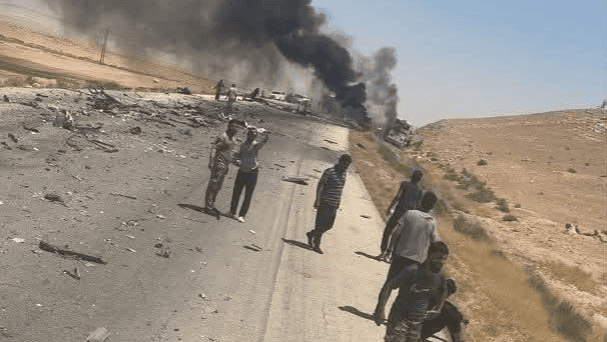
[DAMASCUS] Thirty-eight people were killed and dozens injured on Saturday after a passenger bus collided with a bus belonging to Syria’s Interior Ministry on the Damascus–Deir Ezzor highway, a Health Ministry official told The Media Line. 

Dr. Najib al-Naasan, director of the Referral, Ambulance and Emergency Department at Syria’s Health Ministry, said the death toll had risen to 38, while dozens of others were injured, including several in critical condition, as emergency teams continued evacuating victims and transporting the wounded to hospitals. 

The collision occurred on a remote desert stretch of the highway linking Damascus with the eastern province of Deir Ezzor. The impact caused extensive damage to both buses, leaving rescue crews working for hours to recover victims, free passengers trapped inside the wreckage, and clear the road. 

Emergency medical teams, civil defense personnel, and other government agencies were dispatched to the scene shortly after the crash. The Defense Ministry also deployed military helicopters to airlift critically injured victims, since the nearest hospital is about 65 kilometers (40 miles) from the accident site.  

Authorities have not yet announced the cause of the collision. Officials have launched an investigation to determine the circumstances surrounding the crash, including whether mechanical failure, road conditions, or human error played a role. Identification of some victims was still underway as rescue and recovery operations continued. 

The Damascus–Deir Ezzor highway is one of Syria’s main transportation routes, connecting the capital with the country’s eastern provinces. The road carries regular passenger bus services as well as commercial freight traffic and passes through long stretches of sparsely populated desert, where emergency response can be delayed by the distance between medical facilities and rescue centers. 

Major traffic accidents on Syria’s highways continue to pose a challenge for emergency services, particularly in remote areas where access to advanced medical care is limited. Saturday’s crash prompted a large-scale response from health authorities, civil defense teams, and the military as efforts continued to evacuate the injured and investigate one of the country’s deadliest road accidents in recent years. 


0FansLike
0FollowersFollow
0FollowersFollow
0SubscribersSubscribe
- Advertisement -
Google search engine

Recent Posts