23.5 C
London
Saturday, July 25, 2026
Home Blog

US House rebukes Trump again over Iran war

0
us-house-rebukes-trump-again-over-iran-war
US House rebukes Trump again over Iran war


The US House of Representatives has approved a Democratic-led war powers resolution criticising President Donald Trump’s handling of the conflict with Iran, with four Republican lawmakers joining Democrats in a narrow 214-208 vote.

Although the measure is largely symbolic and does not require the president’s signature, it marks the second time the House has voted to oppose the administration’s approach to the war. A similar vote is expected in the Senate, following earlier congressional efforts in June to end US involvement in the conflict.

Democrats said the resolution is intended to increase pressure on the White House and force Republicans to publicly declare their position on the increasingly unpopular war, which has entered its fifth month. The latest escalation has included the deaths of four US military personnel in the Middle East, while renewed peace efforts have failed.

The Trump administration maintains that a temporary ceasefire earlier this year effectively reset the timeline under the War Powers Resolution, allowing continued military action without new congressional authorisation. Critics dispute that interpretation, arguing the US remained engaged in hostilities throughout the ceasefire, including through a naval blockade of Iranian ports.

Despite the House vote, Trump is expected to ignore the resolution and would almost certainly veto any binding legislation limiting his authority over military operations.

via Politico

Politicians vs generals: Ukraine’s long, hidden war within

0
politicians-vs-generals:-ukraine’s-long,-hidden-war-within
Politicians vs generals: Ukraine’s long, hidden war within

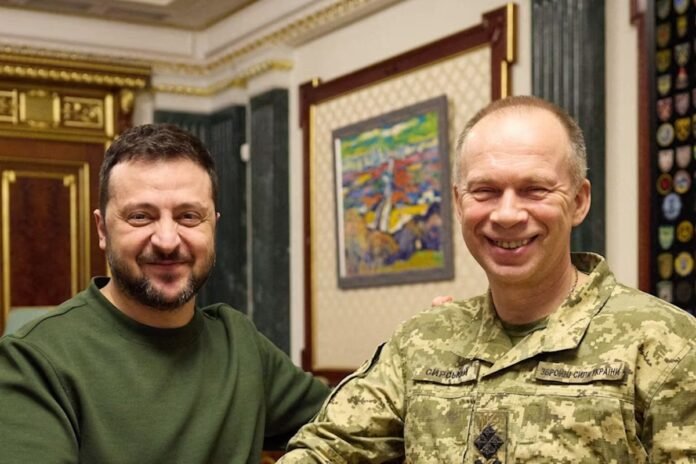
The Ukrainian president, Volodymyr Zelensky, has dismissed the country’s commander-in-chief, Oleksandr Syrskyi, after a turbulent week in which he also removed his defense minister, Mykhailo Fedorov.

The dismissal of the popular defense minister, who is credited by many as the brains behind Ukraine’s successful drone strategy, brought thousands onto the streets in protest.

Despite the clear public pressure to fire Syrskyi, Zelensky has presented his removal as part of an overall restructuring of Ukraine’s armed forces. He has appointed Mykhailo Drapatyi, commander of Ukraine’s joint forces group, to take over as commander-in-chief.

Much of the analysis of this episode has focused on personalities, presenting it as a personal conflict within Zelensky’s team.

Some saw the president’s decision to side with the unpopular Soviet-style military leadership of Syrskyi rather than the popular modernizer as illogical. But our research shows that tensions between the civilian defense minister and the military leadership are institutional.

Where such conflicts arise, the war makes it logical for the president to side with the commander-in-chief. Zelensky’s recent sacking of Syrskyi due to public pressure will not alter this dynamic.

Disagreements between civilian and military leadership are normal in any country, democratic or otherwise. There will inevitably be conflicting interests. Democratic civilian control – civilian oversight of the military with a clear chain of responsibility – helps to manage these differences on a day-to-day basis.

Nevertheless, war exacerbates normal competing interests and their political importance due to the existential threat. In Ukraine, institutional weaknesses make such conflicts more likely, and more difficult to regulate.

Zelensky’s dismissal of Fedorov highlights a pattern identified in our research of the period between 2019, when Zelensky was elected, and 2022 when Putin launched his full-scale invasion.

Democratic civilian control of the military was an official goal in line with NATO/EU requirements. Legislation was passed but its implementation was hampered by key people’s limited acceptance of the core idea – the notion that the defense minister should be a civilian.

Our interviews with participants in the defense reform process immediately prior to the 2022 full-scale invasion made it clear that the military leadership was, perhaps predictably, resisting all manifestations of civilian control.

Perhaps more surprisingly, Zelensky remained ambivalent about even its most basic requirement (a civilian defense minister). One Ukrainian defense expert captured this, telling us that Zelensky “failed to understand the logic that civilians must do the strategic policy-making.”

In line with the 2018 law adopted after Western pressure, since 2019 Zelensky has appointed five civilians as defense ministers. But the people we spoke with explained that he has always relied on the commander-in-chief for defense policymaking.

This has marginalized successive defense ministers and their attempts at reform – whether modest or radical.

It doesn’t help that the ministry has faced repeated corruption scandals relating to defense procurement. Three men who served civilian defense ministers between 2010 and 2014 (plus the chief of the general staff 2012-14) are now accused of treason for allegedly selling off military equipment without authorization.

This has made establishing the trust needed for a functioning relationship between the military and civilian leadership particularly challenging.

Institutionalized conflict

Sidelining the minister was possible because the 2018 law preserved a Soviet legacy system where both the minister and the commander-in-chief were both separately responsible to the president.

This means that military chiefs tended to resist taking strategic direction from the minister – usually a central tenet of democratic civilian control. When they disagreed with the minister, military commanders went directly to the president.

Conflict resurfaced despite personnel changes. For example, one senior figure we interviewed told us that, between 2017 and 2019, defense minister Stepan Poltorak and his military counterpart Lieutenant-General Viktor Muzhenko “would not even be in the same room together.” During 2019-20, relations between General Ruslan Khomchak and new minister Andriy Zagorodniuk “went south very quickly” according to our sources.

Zagorodniuk, a reformer, was then sacked by Zelensky after just six months. In 2020-21, Khomchak’s conflict with Zagorodniuk’s successor Andriy Taran became spectacularly public when one sued the other.

During 2020-21 there was a huge push by reformers in the ministry, parliament, civil society and by western defence advisers to solve this institutional conflict by subordinating the commander-in-chief to the minister. But this reform failed. The military leadership strenuously resisted and Zelensky did not intervene.

All roads lead to Zelensky

Military resistance was predictable because in Ukraine’s weakly institutionalised system of power, the president is the key political player.

Access to him remains the most valuable political asset. The ongoing war made Zelensky more dependent on the military top brass. He needed their trust in the face of the threat from Russia.

Our research tells us that Zelensky is more likely to side with the military leadership in the event of conflict with the defense minister. In the most recent crisis, he also initially sided with his general – although this time it triggered a political crisis and the president was forced to also dismiss the military leader.

A long existential war is a complicating factor for civil-military relations because public interest in defense policy is much higher than during peacetime. Fedorov came to symbolize a more modern and hi-tech approach to warfare in contrast to Syrskyi’s Soviet style of military leadership. With protests demanding Syrskyi’s resignation and Zelensky keen to retain public confidence, a change of commander-in-chief became unavoidable.

But new personnel will not change the underlying structures which generated the political crisis in the first place. Civilian control of the military remains contested. Meanwhile, the institutional arrangement allows the military leadership to bypass ministers and engenders conflict – and war strengthens the military’s ability to resist reforms that might change this.

Sarah Whitmore is associate professor of politics, Oxford Brookes University and Bettina Renz is professor of international security, University of Nottingham

This article is republished from The Conversation under a Creative Commons license. Read the original article.

Judge rebuffs Trump admin demand for phone records from NYT reporters

0
judge-rebuffs-trump-admin-demand-for-phone-records-from-nyt-reporters
Judge rebuffs Trump admin demand for phone records from NYT reporters

After criticism from a federal judge, the Department of Justice yesterday withdrew demands for phone records and grand jury testimony from New York Times reporters who wrote about security concerns related to the Air Force One jet donated to Trump by Qatar.

It was a setback in the Trump administration’s attempts to unmask journalists’ confidential sources. US District Judge Arun Subramanian “grilled Justice Department lawyers for nearly an hour over their handling of the subpoenas” during a hearing on Thursday, The New York Times wrote.

“Either we can quash the subpoenas, or you could withdraw the subpoenas,” Subramanian reportedly told Sean Buckley, chief counsel for the US attorney in New York’s southern district.

Subramanian reportedly said during the hearing that subpoenas to reporters “are not the first thing you do—they are the last thing you do,” and that “it’s a matter of basic compliance with the law.” Government lawyers agreed to withdraw the subpoenas during the hearing.

“As stated on the record during the July 23, 2026, hearing, the Government has voluntarily withdrawn the challenged subpoenas, including the subpoenas issued to the journalists as well as the third-party subpoenas. Those subpoenas are null and void. As a result, the motions to quash are moot,” Subramanian wrote in an order yesterday.

NYT: “Brazen effort to intimidate the press”

The NYT reported on Monday that the US government sought phone and text messaging records of NYT journalists and their relatives, including one reporter’s mother and two reporters’ spouses. This was in addition to subpoenas demanding that reporters testify before a federal grand jury.

On July 15, the NYT filed a motion to quash the subpoenas seeking grand jury testimony. The motion called the demands “a brazen effort to intimidate the press into abandoning its critical, constitutionally protected role.” The motion said armed federal agents served the subpoenas at the journalists’ homes, ordering them to appear before a grand jury within three business days.

“The Federal Bureau of Investigation Director [Kash Patel] orchestrated this activity from within the White House, in close coordination with top Administration officials and in response to the President’s anger over the reporting,” the motion said.

Two days after this motion was filed, the government revealed in a call with NYT counsel that it also served subpoenas on phone providers for call records, according to a July 18 filing. In the newer filing, the NYT asked the court “to quash the newly-disclosed grand jury subpoenas served on third-party phone service providers on July 10, July 14, and July 16, 2026, for records associated with the Journalists.”

Trump admin lashes out at judge

During Subramanian’s questioning of DOJ lawyers, “the government acknowledged factual errors in its filings. It conceded that it had omitted significant information—including that the case pertained to journalists’ records—when it asked a different federal judge to prevent a phone company from disclosing a record request,” the NYT reported.

Buckley had “argued that the nature of The Times’s reporting on sensitive national security matters had allowed for an exception to standard procedures,” but “he struggled to identify the precise legal rationale for that exception when the judge pressed him,” the NYT article said.

Buckley apparently admitted that the subpoenas shouldn’t have sought phone records of reporters’ relatives. “Mr. Buckley also acknowledged that the phone record subpoenas had inadvertently encompassed relatives of the Times reporters—including the mother of one and the spouses of two others—calling it an error and ‘a consequence of trying to move quickly,’” the NYT wrote.

The Trump administration lashed out at the judge after the hearing. “This judge threatened our attorneys with sanctions unless subpoenas were withdrawn, and blocked us from presenting the meticulous process of this investigation,” a DOJ spokesperson said in a statement provided to Ars today.

“The grand jury has a right to hear testimony from all material witnesses in a federal criminal investigation,” the DOJ statement continued. “This judge’s conduct overrides clear longstanding principles and common sense—blocking the grand jury from receiving core evidence in a national security investigation. Make no mistake, this investigation remains ongoing, and we will pursue justice against those threatening national security by leaking classified information, a serious federal crime.”

US previously seized Washington Post reporter’s devices

NYT newsroom lawyer David McCraw issued a statement calling the hearing “an important affirmation of our country’s commitment to a free press. We are pleased that the government finally conceded that the subpoenas violated the law, but they should never have been issued in the first place.”

The NYT motion to quash said that after Trump accepted the Boeing jet from Qatar, “concerns were immediately raised about the ethical implications of accepting a $400 million gift from a foreign government, the costs to American taxpayers of retrofitting a commercial jet to serve as a ‘flying White House’—with all the necessary communications, security, and support capabilities—and the national security implications of using a foreign-donated aircraft for that purpose.”

The NYT motion said the paper’s reporting on the topic “was manifestly in the public interest. It contributed to the public’s knowledge about the workings of the Executive Branch, the President’s dealings with foreign nations, and the safety of an aircraft that transports the President and many other public officials, reporters, and guests.”

In January, the FBI seized devices from a Washington Post reporter who had built up a contact list of 1,100 current and former government employees. The government said it was unable to access data from the iPhone because it was protected by Apple’s Lockdown Mode, but it did access the reporter’s work MacBook Pro by compelling her to unlock it with her fingerprint.

A judge ordered a halt to the FBI search of the Post reporter’s devices, and decided the court would do the search itself because the government only had probable cause to obtain a small fraction of the material it seized.

RFK Jr.’s handpicked committee approves manufacture of peptides he uses

0
rfk-jr.’s-handpicked-committee-approves-manufacture-of-peptides-he-uses
RFK Jr.’s handpicked committee approves manufacture of peptides he uses

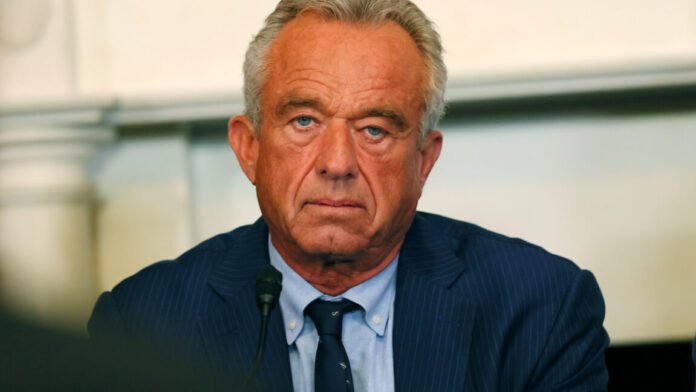
In a widely expected move, a committee organized by the Food and Drug Administration (FDA) has voted to endorse removing restrictions on the manufacture of peptides for human use. Thursday’s panel meeting saw a sharply divided group recommend lifting limits on four peptides; votes on three additional peptides are scheduled for today. The move comes despite a continuing lack of evidence regarding their safety and effectiveness.

The move had been telegraphed months earlier as peptide enthusiast and Health and Human Services Secretary Robert F. Kennedy Jr. took steps to ensure this outcome.

Like proteins, peptides are composed of amino acids that are chemically linked into a chain. Peptides differ merely by length; they’re often 10–20 amino acids long, in contrast to proteins, which can be hundreds or thousands. Some of them, such as insulin, are specifically made by targeted processing of a protein into shorter fragments, and the resulting peptide interacts with receptors that have evolved to send signals to cells based on its levels.

But a lot of peptides are just the result of the messy complexity of biology, where larger proteins may break down in a way that consistently produces a stereotypical pattern of fragments. Some of those fragments, being relatively short and flexible, may stick to other proteins in ways that trigger some sort of physiological response. Others may simply be digested and recycled without doing anything of note.

Understanding how a peptide is made and what downstream effects it triggers can take decades of research. In many cases, we have some evidence of what happens when we expose cultured cells to a peptide, but lack any indication of what might happen if an intact animal is. (Notably, transiting this same evidentiary gap is often where promising-looking drug candidates turn into failed ones.)

RFK Jr. and many like him, who fear the clearly defined and well-understood proteins in vaccines, are perfectly willing to inject various peptides in the complete absence of any safety data. However, unlike most of the peptide fans who share anecdotes online, Kennedy is in a position to turn his hobby into policy.

While the FDA has already used its standard processes to approve peptide drugs like insulin and some recently developed weight loss drugs, the lack of safety and efficacy data has kept most peptides off the market. The Biden administration also blocked their manufacture by compounding pharmacies, which make specialty drugs. But, earlier this year, Kennedy announced his interest in reversing that ban.

At the time of his announcement, Ars’ Beth Mole wrote, “Outside experts and watchdogs suspect that before the first meeting in July, Kennedy will work to stack the advisory board with questionably qualified allies who will come with a predetermined decision to ease access to the drugs—no rigorous scientific evaluation needed.” That’s exactly what came to pass. In June, Kennedy added members to the advisory group who, with one exception, had obvious interests in the manufacture and sale of the unapproved peptides.

Yesterday, those newly appointed members provided the decisive votes for overturning the ban, with all of the pre-Kennedy members voting against doing so. Despite Kennedy’s earlier claim that “independent experts will rigorously evaluate each substance on its scientific merits using full clinical, pharmacological, and safety evidence,” no such evidence was presented at the meeting.

According to The New York Times, when asked by a committee member whether the FDA had ever approved anything that had never been tested in humans before, an FDA official said it had not. That may be a critical factor in what happens next. The committee’s role is advisory, and the FDA could reject its recommendations. Doing so, however, would place the FDA’s experts in direct conflict with the wishes of Kennedy, who can simply fire them.

Mike Tyson Reveals Mom Gave Him Drugs at 10-Years-Old

0
mike-tyson-reveals-mom-gave-him-drugs-at-10-years-old
Mike Tyson Reveals Mom Gave Him Drugs at 10-Years-Old


Mike Tyson has never been shy about the darkness that shaped him, but his latest confession may be one of his most disturbing yet.

The former heavyweight champion, now 60, revealed that his first exposure to alcohol and marijuana came when he was just a little boy — and, according to Tyson, the person who introduced him to both was his own mother.

Speaking on The Joe Rogan Experience, Tyson said his mother, Lorna Tyson, struggled with alcoholism and gave him liquor and marijuana when he was around 9 or 10 years old because she believed it might help him sleep.

“When you’re a kid your mother gives you liquor and marijuana for you to think that you’re going to go to sleep or something,” Tyson told Rogan.

The boxing icon then added bluntly: “My mother was an alcoholic. Liquor and marijuana to see if you go to sleep.”

Rogan pressed Tyson on how young he was when he first tried drugs, and the answer stunned him.

“Kid. 10 years old, 9 years old,” Tyson said. “Smoking and drinking.”

The shocking admission painted a grim picture of Tyson’s childhood in Brooklyn, where the future champion grew up surrounded by poverty, instability and street violence long before he became one of the most feared athletes on the planet.

But Tyson’s early exposure to substances did not stop with booze and marijuana.

He told Rogan that as he got older, he began experimenting with more drugs.

“Then as I got older, I tried acid,” Tyson said.

When Rogan asked how old he was at the time, Tyson replied: “Probably 11.”

The confession is the latest chapter in Tyson’s long and painful public reckoning with the trauma of his youth. Long before he became “Iron Mike,” the youngest heavyweight champion in boxing history, Tyson was a troubled kid growing up in Brownsville, Brooklyn, where crime and survival were part of daily life.

Tyson has often described his childhood as chaotic and frightening. He was frequently in trouble, bullied as a child and pulled into the streets at an early age. By the time he was a teenager, he had already been arrested multiple times.

His mother died when Tyson was just 16 years old, leaving him with complicated grief and deep emotional scars that he has spent decades trying to understand.

Despite the pain, Tyson has credited legendary boxing trainer Cus D’Amato with saving his life and giving him the structure he never had at home. D’Amato became Tyson’s legal guardian and mentor, molding the troubled teenager into a disciplined fighter with a terrifying style and unmatched intensity in the ring.

Under D’Amato’s guidance, Tyson transformed from a lost Brooklyn kid into a boxing phenomenon. In 1986, at just 20 years old, he became the youngest heavyweight champion in history, launching one of the most explosive careers the sport has ever seen.

But behind the fame, money and knockouts, Tyson’s personal demons never disappeared.

Over the years, he has spoken openly about addiction, rage, depression and the emotional wreckage that followed him into adulthood. His rise was legendary, but his downfall played out just as publicly, with legal troubles, substance abuse, financial collapse and personal turmoil turning him into one of the most complicated figures in sports history.

In recent years, Tyson has taken on a more reflective tone, often speaking about the damage caused by childhood trauma and the long road to healing.

He has also credited cannabis with helping him manage his pain, calm his mind and move away from harder substances. Tyson has become a major advocate for marijuana, even building a cannabis business as part of his post-boxing career.

The former champ has said he now views much of his past through the lens of survival rather than shame. While his reputation was once built on fear, intimidation and destruction, today Tyson often speaks like a man trying to make peace with the frightened child he once was.

His latest remarks about being given liquor and marijuana before he was even a teenager are likely to shock fans, but they also help explain the harsh world that shaped one of boxing’s most ferocious champions.

For Tyson, the story of his life has never been just about what happened in the ring.

It has also been about what happened long before the lights, the crowds and the championship belts — when a little boy in Brooklyn was already being handed substances no child should ever touch.

Trump’s new tariffs to cost Americans $100 billion per year

0
trump’s-new-tariffs-to-cost-americans-$100-billion-per-year
Trump’s new tariffs to cost Americans $100 billion per year

Donald Trump thinks tariffs make America great but US households will be left to foot the bill. Image: X Screengrab

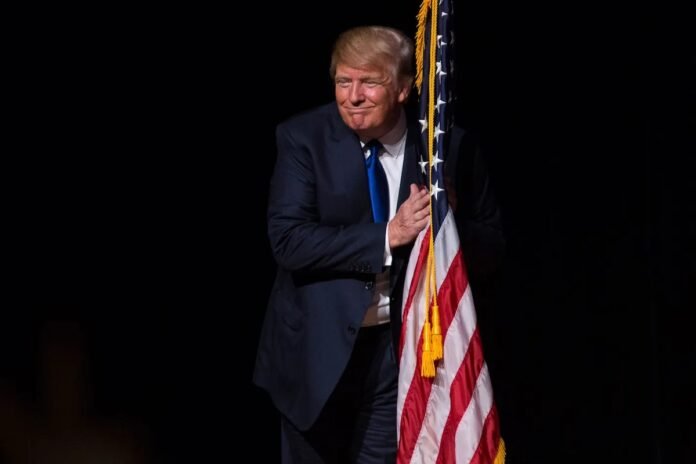
US President Donald Trump on Thursday unveiled a new package of tariffs targeting 60 countries that account for over 99% of US imports, a move that—if upheld in court—would cost Americans an estimated US$100 billion per year in the form of higher costs.

The duties, ranging from 10% to 12.5%, were announced as part of the president’s effort to maneuver around repeated court rulings against his sweeping tariffs, including by the conservative-dominated US Supreme Court.

Jamieson Greer, the Trump administration’s top trade official, pointed to Section 301 of the Trade Act of 1974 to justify the new tariffs, introduced with the purported goal of penalizing countries “for their failure to impose and effectively enforce a prohibition on the importation of goods produced with forced labor.”

Observers questioned the administration’s pretext. “Magically, the US tariff probe on forced labor practices is done perfectly in time to replace the generalized but expiring Section 122 tariffs,” noted Bloomberg’s Josh Wingrove, referring to the legal authority Trump cited for earlier tariffs.

Rep. Mike Levin (D-Calif.) acknowledged that “Section 301 is a law Congress passed,” but added, “What was passed in 1974 was authority to respond to specific unfair trade practices after investigation.”

“What is being done with it now is a tariff on 99% of American trade, set by Trump, with no expiration, no vote, and no ceiling,” said Levin.

“If a delegation that broad is lawful, then the tariff power in Article I means very little. The Supreme Court struck down the last version of this policy in February. The response was to avoid Congress and find a different statute and rebuild substantially the same tariffs, effective the same minute the old ones lapsed,” Levin said.

The list of countries targeted by the Section 301 tariffs includes Canada, Australia, Brazil, China, Mexico, Russia, Norway, the United Kingdom, and Vietnam.

Between the start of his second administration and January 2026, Trump’s tariffs cost American families $1,700 each on average as importers passed burdens onto consumers in the form of higher prices. The tariffs have also hammered small businessesincreased hardship for farmers, and failed to arrest the decline of American manufacturing jobs.

The Progressive Policy Institute said Thursday that the new tariffs would “likely cost Americans $100 billion a year” collectively—though the group’s trade director, Ed Gresser, said the administration’s order “looks vulnerable to challenge, and courts would have good reason to strike it down.”

“Its vague claims about forced labor abroad do not hold up,” said Gresser.

“Constitutionally, it is likely impermissible as an attempt to use a law designed for problem-solving abroad to impose a general tariff increase. And legally, Section 301 requires administrations to demonstrate ‘unreasonable acts, policies, or practices’ which impose a burden on US commerce, which this executive order fails to do.

“While making emotive claims about forced labor, it neither presents evidence that the listed countries are buying goods made with the use of forced labor, nor demonstrates that if they were, this would impose the statutorily required ‘burden on US commerce,” Gresser said.

Rep. Brendan Boyle (D-Pa.), the top Democrat on the House Budget Committee, said in a statement that “these new tariffs are more of the same: a nationwide sales tax that will make life even harder for families already struggling under the costs of Trump’s reckless war in Iran.”

– Common Dreams

Hormuz traffic falls as Bab el-Mandeb activity rises

0
hormuz-traffic-falls-as-bab-el-mandeb-activity-rises
Hormuz traffic falls as Bab el-Mandeb activity rises

Maritime activity showed an uneven pattern across key chokepoints, as ship crossings dropped in the Strait of Hormuz while the Bab el-Mandeb strait experiences increased vessel movements. an international maritime tracker reported on Friday.

MarineTraffic data showed that traffic through the Strait of Hormuz fell to just six confirmed crossings, which represented a 60% decrease day-on-day.

Five of the six vessels followed the Iranian Unilateral Scheme, and this highlighted the continued concentration of traffic along that specific route.

Meanwhile, the Bab el-Mandeb strait recorded 49 confirmed crossings, and this total included five sanctioned vessels, 11 shadow-fleet vessels, and four dark transits.

Several ships that previously reversed their course in the Gulf of Aden and the Red Sea later completed their passages, while others remained on hold.

READ: Report says Bahrain, Kuwait carried out strikes inside Iran earlier this month

John King Cautions Against Ground Front: Eyes on Kurds, Kharg Island and Kuwait 

0
john king cautions against-ground-front:-eyes-on-kurds,-kharg-island-and-kuwait 
John King Cautions Against Ground Front: Eyes on Kurds, Kharg Island and Kuwait 


“Washington may believe additional pressure will force negotiations, while Tehran may interpret the same pressure as preparation for regime destruction. … The conflict could become region-wide with very little warning,” King said.

The confrontation between the United States and Iran is increasingly becoming a conflict without a clearly contained battlefield.  

What began as an escalation centered on direct US-Iran military exchanges and the strategic struggle over the Strait of Hormuz is now generating pressure across a much wider geographical space. Gulf states have faced attacks and threats against critical infrastructure. The possibility of US operations against Iranian territory has expanded beyond air strikes to discussions surrounding Kharg Island and potential cooperation with Kurdish and other anti-regime forces. Iranian warnings have, in turn, raised the possibility of retaliation extending to Kuwait and potentially Bahrain.  

A source inside Iran told The Media Line that Tehran is threatening to invade Kuwait if the US undertakes a ground operation backed by Kurdish forces. The report echoes a threat by Ahmad Bakhshayesh Ardestani, a member of parliament’s National Security Committee,  last week that “If the United States puts boots on the ground in Iran, we may also launch ground attacks on Kuwait and Bahrain.”   

Meanwhile, the Houthis have added another layer of instability around Bab-el-Mandeb by targeting Saudi-linked shipping, placing pressure on one of the principal maritime alternatives available to Riyadh as the crisis around Hormuz continues.  

Israel, which has remained outside the latest phase of the direct US-Iran confrontation, is also watching events closely. The reopening of public shelters in several municipalities on Thursday does not indicate that an Iranian attack is imminent, but it does reflect concern that a further escalation between Washington and Tehran could once again bring Israel directly into the conflict.  

Is a Ground War Likely? 

Taken together, these developments do not yet demonstrate that a regional ground war is imminent. But they raise a consequential question: whether the growing number of military options now being discussed could eventually create an escalation that neither Washington nor Tehran initially intended.  

The distinction is important because a conventional US invasion of Iran, a limited seizure of an island such as Kharg, a special-forces operation and a campaign relying on Kurdish or other local forces would each represent fundamentally different forms of military intervention.  

John King, founder of Q Advisory, cautioned against interpreting the existence of such options as evidence that the White House has already decided to open a ground front.  

“These possibilities must be taken seriously, but contingency planning should not be confused with a presidential decision to begin a ground war,” King told The Media Line. “The Pentagon plans for multiple options, including limited island seizures, special-operations missions and support for indigenous forces.”  

These possibilities must be taken seriously, but contingency planning should not be confused with a presidential decision to begin a ground war

For King, the operational indicators required for a substantial ground operation have not yet been publicly demonstrated.  

“I have not seen publicly verifiable evidence of the integrated command arrangements, protected staging areas, sustained logistics and US air-support commitments that would indicate an imminent operation,” he said. In his view, a Kurdish ground component would be more plausible than a conventional American invasion, but that would still require extensive US support, he added.  

The distinction between planning and execution remains central to understanding the current phase of the war.  

Large militaries routinely prepare multiple scenarios. But once one side begins to believe that contingency planning reflects a decision to pursue regime destruction or territorial occupation, the political meaning of military preparations can change rapidly.  

From Tehran’s perspective, that danger is particularly significant. Mohammed Ali Ghanamizadeh Fallahi, a Middle East researcher based in Tehran, argued that the pattern of American strikes in southern Iran should already be viewed within the context of possible preparations for a wider operation.  

“The most important issue is that the US attacks on southern Iran, according to the footage released by CENTCOM [United States Central Command], are not primarily aimed at military targets or even important infrastructure,” he told The Media Line. Ghanamizadeh Fallahi said that in his opinion, the type of target selection shows that the US is waging a psychological war against the people of the southern regions, so that if a ground attack is carried out, these areas would already be depopulated and the defenses reduced.  

His interpretation of American intentions is an assessment rather than an independently established US strategy. But it highlights one of the central risks of the current confrontation: Washington may consider its actions part of a coercive military campaign, while Tehran increasingly interprets the same actions as possible preparations for a much broader attack.  

Ghanamizadeh Fallahi also questioned whether a southern ground operation would be strategically sustainable. “The plan to attack through southern Iran is not very wise or practical, because American equipment is not suitable for the climate of the Iranian islands,” he said, adding that other forces of the resistance axis may also be able to cut off American forces.  

He argued that the history of previous ground wars fought by the US would also weigh heavily on any decision to move beyond air and maritime operations, especially against an opponent with significant experience in ground and guerrilla warfare, and remembering its own experiences from Vietnam, Iraq and Afghanistan. “This makes a ground attack against Iran difficult, even from different fronts, unless it inflames internal protests in Iran and disrupts Iranian national unity,” he said.  

The Possible Effects of Kurdish Involvement 

It is precisely that possibility—the combination of external military pressure and internal instability—that has made the Kurdish and ethnic-minority question increasingly relevant to speculation surrounding the next phase of the conflict.  

Iran is not ethnically homogeneous, and several communities have longstanding political grievances with the central government. Kurdish armed organizations operating from northern Iraq have previously confronted Tehran, while Baluch areas in southeastern Iran have also experienced persistent instability.  

A strategy based on such groups could theoretically allow Washington to create pressure inside Iran without immediately deploying large numbers of American ground forces. Yet such a strategy would carry risks that extend far beyond the battlefield.  

King said Kurdish forces could provide Washington with several tactical opportunities.  

“Washington might hope that Iranian Kurdish forces could divert the Islamic Revolutionary Guard Corps, disrupt supply routes, collect intelligence, secure territory or encourage broader opposition to Tehran,” he said.  

But tactical pressure and strategic success are not the same thing.  

The danger is that this could transform a conflict over Iran’s nuclear, missile and maritime behavior into an ethnic and territorial war

“The danger is that this could transform a conflict over Iran’s nuclear, missile and maritime behavior into an ethnic and territorial war,” King said. “Iranian nationalism could strengthen the government rather than weaken it, while Tehran could retaliate directly against Iraqi Kurdistan. Turkey, Baghdad and neighboring states would also fear separatist spillover.”  

In that scenario, an effort intended to weaken the Iranian state could instead strengthen nationalist support for Tehran while simultaneously creating new tensions across Iraq and Turkey. “Kurdish forces could create tactical pressure, but they are unlikely by themselves to produce controlled regime change or a stable postwar settlement,” King said.  

Kobi Michael, an analyst and researcher at the Institute for National Security Studies and the Misgav Institute, also believes Kurdish involvement could become relevant if the confrontation continues to expand.  

“The Kurds might play a role, but it depends on the developments,” Michael said, noting that many Kurds are interested in achieving increased autonomy.  

He also pointed to other minorities with unresolved grievances against Tehran, suggesting that a broader internal front could eventually emerge even without a single, centrally coordinated military operation.  

But any attempt to introduce Kurdish armed groups into the confrontation would immediately affect relations with Turkey.  

The Kurdish question remains one of Ankara’s most sensitive national-security concerns, particularly because any significant Kurdish territorial or political gains in Iran or Iraq could have implications for Turkey’s own Kurdish population.  

Michael acknowledged that Turkish opposition would be substantial but argued that Ankara would not necessarily be able to prevent Kurdish groups from acting if they believed the regional conflict had created a historic opportunity.   

Ghanamizadeh Fallahi presented a sharply different view from Tehran.  

“They are counting on the Kurds inside Iran, but this is wrong,” he said. “The Kurds in Iran are not going to tie themselves to them.”, he added. He also suggested that Iran and Turkey could find overlapping interests in containing Kurdish separatist forces.  

The disagreement reflects a larger uncertainty surrounding any strategy based on Iran’s internal divisions. Ethnic grievances exist, but that does not automatically translate into support for a foreign military intervention. Nor does opposition to Tehran necessarily imply a willingness to participate in a campaign that could fragment the country.  

The Pivotal Role of Kharg Island 

The possibility of a more limited US territorial operation, particularly against Kharg Island, presents a different strategic calculation.  

Kharg is important because of its role in Iran’s oil-export system. Seizing or neutralizing the island could theoretically deprive Tehran of a major economic asset while giving Washington additional bargaining power.  

But an operation that appears limited geographically could still produce region-wide consequences. “Seizing Kharg Island could deprive Tehran of its principal oil-export hub and give Washington a powerful bargaining asset,” King said. “It would not necessarily provide decisive leverage.”  

The difficulty would not simply be capturing territory. “Capturing an island is different from holding it against missiles, drones, mines, small boats and attacks launched from the nearby Iranian coast,” King said. “Iran could damage or destroy its own facilities rather than permit the United States to operate them,” he stressed.  

Iran could damage or destroy its own facilities rather than permit the United States to operate them

The strategic problem for Washington is therefore not only whether it could seize Kharg, but what would follow.  

An island operation could create a new military commitment requiring constant protection while simultaneously giving Tehran justification to widen its retaliation against American forces and Gulf infrastructure. “Tehran could also retaliate against Gulf oil terminals, desalination facilities, ports, US bases and commercial shipping,” King said.  

Such retaliation would place the Gulf states in an increasingly difficult position.  

Many Gulf governments have spent years attempting to maintain security relationships with Washington while simultaneously preserving channels with Tehran. But as military operations increasingly affect civilian infrastructure, energy exports, and maritime routes, the space for strategic hedging becomes narrower.  

Could Iran Invade Kuwait or Bahrain? 

The most extreme version of this dilemma emerged with Iranian warnings that a US ground operation could trigger an Iranian response involving Kuwait and potentially Bahrain. The feasibility of a conventional Iranian invasion remains deeply disputed.  

Willian, a US Department of State adviser,  expressed skepticism about Iran’s ability to take Kuwait while acknowledging the broader uncertainty surrounding the conflict.  

Iran doesn’t have the capacity to take Kuwait. … It’s not impossible, but I don’t think it’s something that’s going to happen right now.

“Iran doesn’t have the capacity to take Kuwait. … It’s not impossible, but I don’t think it’s something that’s going to happen right now.” he told The Media Line.  

King similarly described a conventional Iranian occupation of Kuwait or Bahrain as militarily improbable. “Iran has no direct land border with Kuwait, meaning its forces would have to cross Iraqi territory or conduct a highly exposed amphibious operation,” he said. “Bahrain is an island hosting the headquarters of the US Fifth Fleet, making an Iranian occupation attempt even more difficult.”  

But the distinction between occupation and a limited operation is crucial. Iran would not necessarily need to capture and hold an entire Gulf state to create a major strategic shock.  

“Missile and drone attacks, sabotage, infiltrations, attacks by aligned groups or a limited raid intended to capture American personnel are considerably more plausible,” King said.  

“If Tehran believed the survival of the state was at stake, it might accept extraordinary losses to attempt such an operation, but occupying either country would be beyond Iran’s realistic conventional capacity.”, he added.  

Michael also considered a conventional invasion unlikely but warned that Tehran could become less predictable if it believed the regime itself faced an existential threat.  

“They will do whatever they can do. They are not going to surrender, at least when it comes to this regime,” Michael said.  

“Until the end, I don’t see any surrender of this regime. And therefore, they will try even to use ground forces. But the probability that they will be succeeding in doing that is very low when it comes to Kuwait and to Bahrain,” he added.  

For Michael, an operation conducted through Iraqi militias would also face significant obstacles.  

“It’s not an idea that you push a button and then in three seconds you have the Iraqi militias in Kuwait,” he said. “It’s a logistical effort. It is something that takes time, something that creates a lot of noises for the intelligence to monitor it,”, he added.  

A large militia mobilization would have to cross Iraqi territory, potentially encounter opposition from Baghdad and expose itself to extensive American and regional intelligence surveillance.  

Yet the former Bahraini diplomat interviewed for this article, who requested that his identity and current affiliation remain undisclosed, argued that the danger should not be evaluated exclusively through the lens of conventional invasion.  

“The main aim could be to seize US bases, capture hostages, or just conduct temporary operations and withdraw,” he told The Media Line, while stressing that he was not a military expert and could not assess whether Iran or its allies had the capacity to conduct such an operation.  

The main aim could be to seize US bases, capture hostages, or just conduct temporary operations and withdraw

His assessment points toward a broader characteristic of the conflict: limited actions can generate strategic consequences disproportionate to their military scale.  

A raid on a military installation, the capture of American personnel or a temporary incursion into a Gulf state could force Washington to respond rapidly even if Tehran had no intention of permanently occupying territory.  

King warned that the threshold for such a regional escalation could be crossed quickly.  

A high-casualty strike, an attempted seizure of a US installation or a ground incursion could bring American retaliation within hours and place the broader Gulf security architecture under pressure.  

Not every Gulf state would necessarily choose to join offensive operations, but as bases, intelligence facilities, air defenses and logistical networks across the Gulf became part of the conflict, remaining outside the war could become increasingly difficult.  

For the former Bahraini diplomat, the deeper question is therefore whether the current confrontation could ultimately expose structural limits in the Gulf’s dependence on American deterrence.  

“In my view, if the United States continues to escalate militarily but is unable to achieve a decisive strategic outcome against Iran and its allies through military operations alone, the Gulf states—including Bahrain—may eventually, and unfortunately, find themselves compelled to pursue a new regional security arrangement that accommodates Iran as an established stakeholder in the Gulf’s security architecture,” he said.  

“Such a development would not necessarily reflect a political preference, but rather a pragmatic adaptation to a changing regional balance of power,” he added.  

The Strait of Hormuz as a Strategic Weapon 

For Washington, allowing Iran to maintain the ability to disrupt one of the world’s most strategically important maritime corridors carries both economic and geopolitical costs.  

For Tehran, the ability to threaten Hormuz represents one of its most important instruments of leverage against a militarily superior opponent.  

The former Bahraini diplomat argued that the conflict has already demonstrated how difficult it is for conventional military superiority to completely neutralize asymmetric pressure.  

“Despite its overwhelming military superiority, the United States appears unable to guarantee complete and economically sustainable control over the Strait of Hormuz, while Iran has demonstrated that relatively low-cost asymmetric capabilities can repeatedly disrupt the Strait,” he said.  

“In this sense, the Strait of Hormuz has effectively become a strategic weapon in its own right—a geopolitical asset whose ability to disrupt global energy markets rivals the strategic impact traditionally associated with far more sophisticated military capabilities,” he added.  

Michael reached a similar conclusion regarding the strategic value Iran assigns to the waterway.  

The current regime will never give up on the control of Hormuz because this is the ultimate and maybe the only strategic leverage that they have over the US

“The current regime will never give up on the control of Hormuz because this is the ultimate and maybe the only strategic leverage that they have over the US,” he said.  

This creates what Michael described as a strategic impasse.  

Washington cannot easily end its campaign while appearing to accept continued Iranian pressure over Hormuz. Tehran, meanwhile, has little incentive to surrender one of the few instruments capable of imposing substantial economic costs far beyond the immediate battlefield.  

The Houthis Block Saudi Arabia’s Alternate Route 

The Houthis’ attacks against Saudi-linked tankers around Bab-el-Mandeb carry particular significance because the Red Sea represents an essential alternative route for Saudi Arabia at a time of instability around the Persian Gulf.  

If Hormuz and Bab-el-Mandeb come under simultaneous pressure, Riyadh faces a strategic problem that extends beyond individual attacks on ships.  

The issue becomes whether alternative export routes can genuinely provide protection when multiple maritime chokepoints are exposed to different but interconnected conflicts.  

Michael, however, cautioned against treating the Houthis as actors who simply execute Iranian orders.  

“They are not a classical Iranian proxy,” he said. “It is true that they support the Iranians. It’s true that they are willing and they are ready to be part of the resistance axis and to do some things that might help Iran. But they have their interests, they have their agenda, they have their aspirations,” he added.  

The distinction is important.  

A regional escalation does not require every actor to operate under a single command. Iran, the Houthis, Iraqi militias and other armed groups can pursue distinct interests while their actions simultaneously increase pressure on the same regional security architecture.  

This makes deescalation harder because resolving one confrontation does not necessarily neutralize the others.  

Ghanamizadeh Fallahi also framed the current confrontation as part of a larger struggle over the future of the American role in the Middle East.  

“You know, both Iran and the United States want the withdrawal of the US military presence from the Middle East, but the United States wants this withdrawal to end with the absorption of Iran into its new economic ecosystem,” he said.  

If the United States initiates a ground operation and fails, the Middle East will be over for Trump forever

“If the United States initiates a ground operation and fails, the Middle East will be over for Trump forever,” he added.  

His assessment reflects a broader Iranian argument that a failed American ground campaign would have consequences beyond Iran, potentially weakening US deterrence and accelerating the wider erosion of Washington’s regional position.  

From another perspective, however, precisely that reputational question could make disengagement more difficult for Washington.  

If the United States has made freedom of navigation and control of escalation around Hormuz a central objective, ending the confrontation without achieving a visible strategic result could carry significant political costs.  

The result is a conflict in which both sides may understand the dangers of escalation while simultaneously believing that backing down carries unacceptable consequences.  

Could Israel Get Involved? 

Although it has been absent from the latest phase of direct American-Iranian exchanges, the reopening of shelters in several Israeli municipalities has renewed speculation over whether it could soon find itself involved again.  

The shelter decisions alone should not be interpreted as proof of an imminent Iranian attack. Municipal authorities have strong reasons to prepare for contingencies when ballistic-missile warning times are limited.  

King said the significance of the measures would increase only if they were accompanied by broader national military preparations.  

“A local shelter decision is not, by itself, proof that Israel has intelligence of an imminent Iranian strike,” he said.  

“The assessment would become more serious if Israel’s Home Front Command changed national guidance, reserve and air-defense deployments increased, American-Israeli military coordination intensified, or multiple municipalities simultaneously took similar measures,” he added.  

Yet the possibility of renewed Israeli intervention cannot be separated from the wider trajectory of the war.  

Michael believes that Israel is increasingly likely to find itself drawn back into the confrontation, but he also identified a significant difference between Israeli and American strategic priorities.  

“If we are talking about probabilities, there is a higher probability that Israel will find itself involved,” Michael said. “I think that this is not in the Israeli interest currently. I think that Israel prefers that the Americans will do what they have to do,” he added.  

There is a higher probability that Israel will find itself involved. I think that this is not in the Israeli interest currently.

The problem, he argued, is that Washington’s immediate focus and Israel’s strategic objectives are not necessarily identical.  

“Israel is interested in other issues. Hormuz is not an Israeli issue,” Michael said. “Israel is interested in eliminating, first, the nuclear capabilities of Iran, secondly, the ballistic missiles, thirdly, all the idea of the proxies,” he added.  

This creates two very different paths toward Israeli involvement.  

Iran could attack Israel directly, forcing Jerusalem to respond and potentially giving the Israeli military greater freedom to pursue its own strategic priorities.  

Alternatively, Washington could ask Israel to join an American-led operation whose principal objective remains different from Israel’s own.  

In the second scenario, Israel could find itself assuming substantial military risks in support of American objectives while gaining less freedom to determine when and how the campaign ends.  

The danger is that any of the current fronts could trigger another.  

A US move against Kharg Island could prompt attacks against Gulf oil, water and military infrastructure.  

An attempt to mobilize Kurdish or Baluch forces could transform an interstate war into an ethnic and territorial conflict inside Iran while creating new tensions with Turkey and Iraq.  

An Iranian raid against Kuwait, Bahrain, or an American military installation could trigger a rapid US response even without any realistic Iranian ability to permanently occupy territory.  

Continued Houthi pressure around Bab-el-Mandeb could reduce Saudi Arabia’s ability to compensate for disruption in Hormuz.  

And a renewed Iranian attack on Israel could return the Israeli military to the center of a war whose objectives have already expanded well beyond the confrontation that initially brought Washington and Tehran into direct conflict.  

For King, the central danger remains that military pressure is interpreted differently on each side.  

The central danger is miscalculation

“The central danger is miscalculation,” he said. “Washington may believe additional pressure will force negotiations, while Tehran may interpret the same pressure as preparation for regime destruction,” he added.  

“Once either side adopts the second interpretation, military decisions will be driven by survival rather than bargaining, and the conflict could become region-wide with very little warning,” he added. 

For now, there is still no publicly established evidence that Washington has decided to launch a large-scale ground invasion of Iran.  

But that may no longer be the only relevant threshold.  

The more significant question is whether increasingly discussed territorial options—an island seizure, a special operation, support for Kurdish or other armed groups, or limited Iranian operations against neighboring states—could gradually move from contingency planning into action as both sides search for new forms of leverage.  

The conflict is therefore becoming dangerous not only because Washington or Tehran may deliberately choose a wider war, but because each successive attempt to increase pressure reduces the space available for the other side to absorb the attack without responding.  

Hormuz, Bab-el-Mandeb, Gulf infrastructure, Iran’s internal ethnic divisions, the future of the American military presence and the possibility of renewed Israeli involvement are no longer entirely separate questions.  

They are increasingly becoming different fronts of the same strategic confrontation.  

And the closer those fronts come to intersecting, the more difficult it becomes to distinguish between coercion designed to force an agreement and escalation that makes an agreement impossible.  


Oil prices hit $100 for the first time since May

0
oil-prices-hit-$100-for-the-first-time-since-may
Oil prices hit $100 for the first time since May


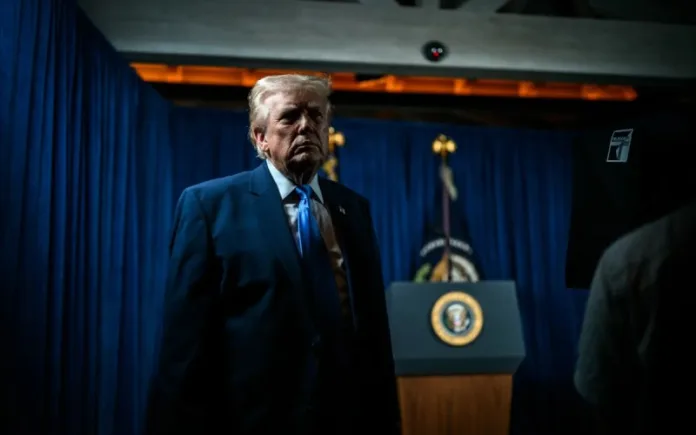
Oil prices have surged to $100 a barrel for the first time since May as renewed fighting in the Middle East raises concerns over global energy supplies.

Brent crude, the international benchmark, jumped more than 6% on Thursday after several days of gains as the United States intensified military strikes against Iran. Prices were further pushed higher after Houthi militants in Yemen attacked oil tankers in the Red Sea, threatening a key trade route used by Saudi Arabia to bypass the Strait of Hormuz.

Gas prices have also continued rising, with the UK benchmark reaching around 150p per therm, compared with about 98p at the end of June.

Oil markets had previously eased following a temporary ceasefire between the US and Iran, returning to levels seen before military action by the US and Israel began on 28 February. However, the truce has collapsed, with US Secretary of State Marco Rubio saying Iran’s leadership was not prepared to reach an agreement.

The renewed conflict is fuelling fears of higher inflation across major economies. Rising oil prices could push up petrol and diesel costs, while businesses may pass increased transport and production expenses on to consumers through higher prices for everyday goods, including food.

via BBC

Roku raises streaming stick prices by up to 60 percent

0
roku-raises-streaming-stick-prices-by-up-to-60-percent
Roku raises streaming stick prices by up to 60 percent

Roku is raising the prices for its streaming sticks and boxes by up to 60 percent.

Roku has updated its website with the new prices. Currently, it is still selling its streaming players at their old MSRPs but lists those prices as sale prices. The new prices are:

  • Roku Streaming Stick: $40 (formerly $30)
  • Roku Streaming Stick Plus: $60 (formerly $40)
  • Roku Streaming Stick 4K: $80 (formerly $50)
  • Roku Ultra: $150 (formerly $100)
  • Roku Streambar SE: $150 (formerly $100)

Roku is even upping the price for a bundle that includes a Streaming Stick Plus and a one-month subscription to Fox One. As recently as July 20, Roku listed the bundle at $60 with a sale price of $25, according to the Internet Archive’s Wayback Machine. Now, the bundle carries an $80 MSRP and $45 sale price.

When I tried buying the devices at their “sale prices,” Roku’s store limited me to three units per model. Other retailers will continue to sell the devices at the lower prices until supply runs out, The Desk reported today.

Roku is raising prices in response to the shortage of memory, as well as “other components, caused by the artificial intelligence rush,” The Desk reported, citing a “Roku executive.”

This is an about-face from May, when Roku founder and CEO Anthony Wood said that the memory shortage is “great” for Roku. During a call with investors, Wood said that the Roku TV operating system “requires significantly less memory and storage” than rivals because Roku has focused on keeping its bill of materials low.

“Although there is issues around memory that we have to manage, [the RAM shortage] is generally great for our business because of our bill of materials cost advantage, which allows us to just have a lower cost than … all the competing products. That gap is just widening right now by a pretty wide margin,” Wood said, per a transcript of the call.

The executive also noted that the low costs associated with running Roku OS have helped the company win over TV OEMs and retailers.

Many tech companies have hiked prices recently due to the memory shortage. On the streaming hardware side, for example, Apple last month raised prices for Apple TV boxes from $129 to $199 for the 64GB version and from $149 to $249 for 128GB.

Apple has a reputation for selling high-end devices at a premium, though. Roku, on the other hand, has built a name for itself through affordability. The company may have a harder time getting people to accept higher prices for what have traditionally been viewed as budget products.

A Roku representative told The Desk that the company still thinks its devices are competitively priced.

“We are doing our best to have great deals like what we have going on right now,” the executive told the publication.

Roku’s price hikes come weeks after Fox announced it is buying Roku for an enterprise value of $22 billion. The deal remains subject to regulatory and shareholder approval and is expected to close in 2027.

0FansLike
0FollowersFollow
0FollowersFollow
0SubscribersSubscribe
- Advertisement -
Google search engine

Recent Posts