US Senate rejects resolution to limit Trump’s Iran war powers
The US Senate on Thursday failed to advance a resolution that would have directed President Donald Trump to withdraw American forces from hostilities against Iran, Anadolu reports.
The Senate voted 47-49 against the War Powers Resolution introduced by Democratic Senator Chris Van Hollen of Maryland, falling short of the votes needed to advance.
Republican Senator Susan Collins of Maine broke with her party to vote in favor of the measure, while Democratic Senator John Fetterman of Pennsylvania voted against it.
Senators Katie Britt, Mitch McConnell, Lisa Murkowski, and Rand Paul did not vote.
The resolution would have required Trump to remove US forces from hostilities “within or against Iran,” absent a declaration of war or specific congressional authorization.
Democrats and some Republican lawmakers have argued that in current US campaign against Iran, Trump has illicitly usurped Congress’ exclusive power to declare war.
READ: US House passes $1.15tn defence bill embedding Israel’s war machine inside America
President Trump Says Saudi Nuclear Deal Hinges on Israel Normalization
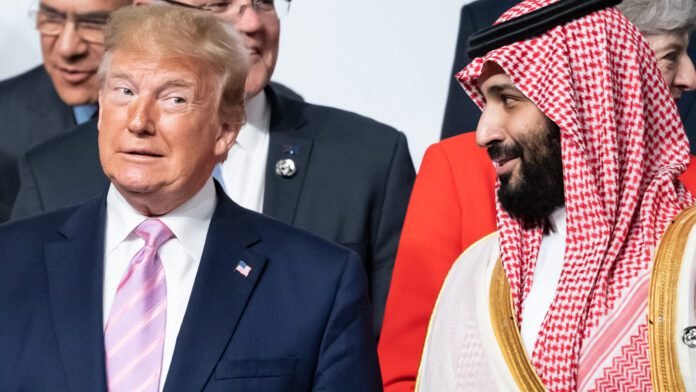
President Donald Trump said the newly signed US-Saudi civilian nuclear agreement will move forward only if Saudi Arabia establishes diplomatic relations with Israel by joining the Abraham Accords, adding a new condition that was not included when the agreement was first announced.
In a post on Truth Social, Trump said the agreement “will be approved, but is totally subject to Saudi Arabia joining the very respected and successful Abraham Accords.” He also said the deal would not allow the kingdom to enrich nuclear material on its own territory.
President Trump’s statement introduced a condition that was absent from the original announcement of the civilian nuclear program. It was not immediately clear how the administration would alter a legal agreement already signed with the Saudi government.
Saudi Arabia has consistently maintained that normalization with Israel depends on clear progress toward the establishment of a Palestinian state. The Saudi Energy Ministry declined to immediately comment on the conditions Trump attached to the agreement.
The Biden administration also pursued discussions on a civilian nuclear agreement with Saudi Arabia, but similarly linked such an arrangement to the establishment of diplomatic relations between Saudi Arabia and Israel.
According to the agreement, Saudi Arabia will build nuclear power plants using US technology, creating a pathway to a Saudi nuclear enrichment program. The proposal has prompted debate in Congress, where lawmakers have raised concerns that permitting additional countries to develop uranium enrichment capabilities could eventually increase the number of states possessing nuclear weapons.
Before Trump’s Truth Social post tying the agreement to normalization with Israel, former Prime Minister Naftali Bennett criticized the emerging deal, calling it a strategic setback for Israel.
“The nuclear agreement that is coming together with Saudi Arabia, over Israel’s head, is a serious strategic failure that endangers our security,” said Bennett, who is seeking to unseat Netanyahu in an October 27 election.
“Nuclear enrichment on Saudi soil could lead to a regional nuclear race and a dangerous loss of control.”
Biillions in Trump tariff refunds won’t unwind the damage done
An Australian clothing company, Nashie, recently received a six-figure refund from the US government, including 6% interest, for tariffs it had paid on US imports. It’s just one of thousands of businesses reclaiming tariffs imposed on what President Donald Trump called “Liberation Day.”
Of the roughly US$166 billion due to be refunded, more than US$85 billion has already been returned to businesses.
But although a US Supreme Court ruling in February reversed the tariffs, much of the economic and political damage, and perhaps some of the Trump administration’s gains, will be hard to undo.
Tariffs not designed to last
Trump’s April 2025 tariffs relied on the International Emergency Economic Powers Act (IEEPA), a 1977 law that lets presidents respond to extraordinary foreign threats – yet never mentions the word “tariff.”
On February 20 2026, the US Supreme Court ruled in a 6-3 decision that IEEPA did not authorise tariffs: znder the Constitution, only Congress has the power to impose taxes and duties.
The decision placed an important limit on the president’s power to impose tariffs. But it did not end Trump’s tariff policy, which was, from the beginning, designed to buy time to rewrite US trade relations with the rest of the world.
Trump responded with a temporary 10% global tariff, which expires on July 24 after the statutory 150-day limit.
These require investigations into foreign trade practices and lengthy procedures, which slow the process and also create a record that can be scrutinized in court.
So while the Supreme Court closed one legal door, the Trump administration was already preparing to walk through another. And it has bought itself yet more time.
That said, the US$166 billion being paid out is not a fine. Much of it is money the government collected without legal authority and must now return. This is real money, but it’s less than 2% of the projected 2026 federal government spending.
Without any fanfare to match “Liberation Day,” the political cost may be smaller still.
The refunds involve a technical process and are dispersed among many importers, making them far less visible than the original tariff announcements.
And concessions that trading partners, including the UK and the European Union, made under the threat of higher tariffs don’t automatically vanish when a tariff is struck down.
What’s in a refund?
For businesses, repaying money they should never have paid doesn’t recreate the position they were in before the tariffs.
Importers had capital tied up for months as financing costs mounted, orders were canceled and inventory sat stranded. Many had to renegotiate contracts.
They paid customs brokers and lawyers, and delayed other investments while waiting to learn which tariff would apply. Some stopped shipping to the US altogether, unsure what customs duties they would incur.
Smaller firms were especially exposed. They generally have smaller cash reserves, fewer alternative suppliers, and less capacity to absorb an unexpected increase in duty.
One analysis estimated that small business importers in the US each paid US$306,000 extra in tariffs on average.
The Federal Reserve Bank of Atlanta estimates that “financially constrained” businesses will receive 34% of all refunds, or about US$56 billion. These firms are most likely to use the money to invest, hire staff or reduce prices.
Better-financed businesses are more likely to save it, repay debt or distribute it to shareholders. PepsiCo said it would use the refunds to offset some commodity inflation.
But few are likely to pass the refunds back to consumers due to the complexity and cost involved. Nintendo is being sued by its own customers, who argue the tariff refunds should be paid to consumers to offset the higher prices they paid.
Access is also uneven. A business with a US bank account and customs broker can get its refund relatively smoothly. Australian businesses shipping via Australia Post face further delays: those shipments weren’t entered through the system US Customs and Border Protection uses for refunds, and no refund pathway exists yet.
Nor does the refund necessarily reach whoever ultimately paid. Rather, it goes to the importer, even where the cost was passed on to a retailer or consumer through higher prices.
The deeper cost is uncertainty
The most important consequence of Trump’s tariff policy is persistent uncertainty.
Trump can impose an immediate commercial disruption, then use that disruption as leverage in negotiations with other governments. The latest example is Monday’s 50% tariff on a range of Canadian goods, which the US says responds to Canadian retaliation and discrimination against US cars, dairy and alcohol.
Persistent uncertainty also encourages global commerce to fragment into competing blocs whose market access is more predictable.
As our Weaponized Trade project shows, the deeper danger is other governments adopting the same playbook: temporary, legally questionable trade restrictions becoming the norm rather than the exception.
Litigation to roll back these measures takes months or even years.
And if a court does eventually invalidate a measure, the US can invoke another law and restart the process. Courts operate retrospectively. Markets, on the other hand, react to them immediately.
The Supreme Court ruling did not return lost customers, reverse commercial decisions or restore confidence in predictable trade rules.
Google hit with $1 billion in fines as EU braces for Trump battle
On Thursday, Google became the third tech giant slapped with massive Digital Markets Act (DMA) fines, ordered to pay more than $1 billion for two serious violations that the European Commission (EC) found went unchecked for way too long.
In a press release, the EC explained that the fines were due to Google “self-preferencing its own services on Google Search” ($522 million) and for anti-steering practices, like charging fees or restricting app developers from directing consumers to cheaper purchase options outside of Google Play ($488 million).
Google has 60 days to make changes to its services, or else risk even more daily fines. To comply with the DMA, the EC has asked Google to “treat third-party services that feature on Google’s search results in a fair and non-discriminatory manner” compared to its own services in categories like shopping, hotels, and flights. And Google must also allow app developers, “both technically and contractually,” to freely sign up users and promote offers outside of Google Play.
Google can appeal the decision, and if it does, it may get backing from the Trump administration.
Ahead of the EC’s decision, 25 Republican lawmakers urged Donald Trump in a letter to retaliate against the anticipated Google fine by launching trade investigations. Such a move could threaten the European Union with tariffs or restrict the EU from accessing US tech, if any resulting probes confirm lawmakers’ fears that the EU plans to use the DMA as a “tool of economic extraction and regulatory coercion against American firms,” Reuters reported.
The letter may embolden Trump, who’s been threatening to impose more aggressive trade restrictions against the EU since last spring—when Apple and Meta together were first to get hit with more than $700 million in DMA fines. Lawmakers don’t even think that Apple and Meta should be labeled as gatekeepers under the DMA since popular Chinese firms like Temu and AliExpress aren’t bound by the same rules, the letter said.
“It is important to make clear that the EU’s access to the US market is not guaranteed and can be limited should the EU continue to pursue discriminatory acts, policies, and practices in the digital sector,” the letter said.
In response to the letter, the EC’s spokesperson Thomas Regnier told Reuters that “when it comes to our rules, the EU has the sovereign right to regulate economic activities on its territory.”
“This of course also applies to our digital regulation, where we will keep enforcing our rules in a fair and non-discriminatory manner—as we have always done,” Regnier said.
Seemingly, the EU is still hopeful that a diplomatic path will emerge allowing it to enforce the DMA without clashing with the Trump administration.
“We believe there is significant potential to deepen cooperation across a broad set of digital issues, including those identified in the EU-US Joint Statement, while respecting our regulatory autonomy,” Regnier said.
Google rushes to make changes
Risking even higher fines for delaying updates, Google does not appear to be depending on Trump quickly stepping in to block the fines.
The EC confirmed that Google has already “rolled out changes related to Google’s steering terms,” which the Commission said showed “good progress towards compliance.”
Additionally, Google has conducted testing on “changes to how it presents its own services on Google Search for free services such as shopping, hotels and flights,” as well as “changes to how it presents shopping ads and content related services, such as sports.”
The search giant has also said that it will voluntarily make changes to AI Overviews and AI Mode to similarly align with the EC’s expectations and avoid self-preferencing or anti-steering practices.
Ars could not immediately reach Google for comment, but its President of Global Affairs, Kent Walker, told Reuters that Google disagreed with the decision and is considering an appeal.
Yelp applauds Google DMA fine
Although Google is cooperating with the EC, the company is clearly upset about required changes that it claims degrade its popular products just to satisfy “a small group of self-serving complainants.”
“To comply, we are having to strip away real-time Search features Europeans love—like instant pricing and direct availability for hotels, flights, and restaurants—and dismantle safety protections on Google Play,” Walker said. “Regulation should improve products, not make them worse,” he added.
Since last September, Google has advocated for a “reset” of the DMA, warning that US tech giants face “considerable uncertainty and unpredictability” trying to comply. Google has maintained that the DMA currently favors “commercial interests of a small set of intermediary sites” and complying has already delayed some of Google’s AI features “by up to a year.”
However, the EC said the fines were “proportionate and appropriate,” following a “thorough investigation, including feedback from market participants, and extensive dialogue with Google.”
Among Google rivals celebrating the DMA ruling was Yelp. In a statement provided to Ars, Yelp’s vice president of public policy, David Segal, “applauded” the decision as finally ending Google’s enduring abuses, while accusing Google of degrading its own user experience by promoting its own products above others.
“When told to give equal footing to rivals in line with the DMA, a solution that fosters competition and benefits consumers, Google has instead consistently chosen to unilaterally degrade its own user experience by removing functionality, which is the telltale mark of a monopolist,” Segal said. “European consumers and businesses will reap the rewards of a more fair and open Internet as a result of meaningful enforcement of the DMA, and we are hopeful that the Commission will work to ensure Google comes into compliance and implements a search experience that truly focuses on the user.”
In the press release, Teresa Ribera, an EC member charged with keeping the EU on track with its goals with the DMA, defended the commission’s decision.
“The best products should succeed because they’re better, not because they’re owned by the company running the search engine,” Ribera said. “And European consumers have a right to be told by app developers where to sign up to the best offers, even when the app store owner does not get a cut. This is the promise of the DMA, protecting fairness, choice and innovation in digital markets for the benefit of all European citizens.”
A fresh and colorful Roasted Beet Chickpea Arugula Salad with creamy feta, crisp chickpeas, and tender roasted beets.
Roasted Beet Chickpea Arugula Salad brings earthy-sweet beets, lightly crisp chickpeas, peppery greens, and creamy feta together in one colorful bowl. The beets roast in cubes, creating tender centers and deeply caramelized edges. Meanwhile, cumin-seasoned chickpeas add heartiness without making the salad feel heavy.
Toasted walnuts provide a warm, buttery crunch, while fresh mint keeps every bite lively. A bright orange-balsamic vinaigrette ties everything together with Dijon, shallot, and just enough maple syrup to soften the acidity.
This roasted beet salad feels special enough for entertaining but remains wonderfully manageable for a weeknight. Serve it as a satisfying vegetarian lunch, a beautiful dinner side, or a centerpiece salad for the holidays. Most of the components can also be prepared ahead. Simply keep everything separate and assemble shortly before serving for the freshest flavor and texture.
A fresh and colorful Roasted Beet Chickpea Arugula Salad with creamy feta, crisp chickpeas, and tender roasted beets.
Recipe Yield: 6 side servings
INGREDIENTS
Salad: 1 ½ lb red beets, peeled and cut into ¾-inch cubes 1 (15-oz) can chickpeas, rinsed, drained, and patted very dry ½ cup walnut halves, roughly chopped 5 oz baby arugula ½ cup crumbled feta cheese 3 tbsp extra-virgin olive oil, divided ¾ tsp kosher salt, divided ½ tsp black pepper, divided ½ tsp ground cumin ¼ cup fresh mint leaves, lightly torn
Orange-balsamic vinaigrette: ¼ cup extra-virgin olive oil 1 ½ tbsp fresh orange juice 1 tbsp balsamic vinegar 2 tsp Dijon mustard 1 tsp pure maple syrup 1 tsp finely grated orange zest 1 small garlic clove, finely grated ¼ tsp kosher salt 1 small shallot, very thinly sliced
INSTRUCTIONS
1. Preheat and prepare: Preheat the oven to 425°F. Line a large rimmed sheet pan with parchment paper.
2. Start the beets: Toss the beets with 2 tbsp olive oil, ½ tsp salt, and ¼ tsp pepper. Spread them in a single layer over one half of the pan. Roast for 15 minutes.
3. Add the chickpeas: Toss the dry chickpeas with 1 tbsp olive oil, cumin, ¼ tsp salt, and remaining ¼ tsp pepper. Stir the beets, then spread the chickpeas over the empty half of the pan.
4. Finish roasting: Roast for 20–24 minutes, stirring both once halfway through. The beets should be fork-tender and caramelized, while the chickpeas should be lightly crisp. Cool for 10 minutes.
5. Toast the walnuts: Meanwhile, toast the walnuts in a dry skillet over medium heat for 3–5 minutes. Stir frequently until fragrant, then immediately transfer them to a plate.
6. Make the vinaigrette: Whisk the remaining ¼ cup olive oil, orange juice, balsamic vinegar, Dijon, maple syrup, orange zest, garlic, and remaining ¼ tsp salt. Stir in the shallot and let it soften for 10 minutes.
7. Toss the greens: Combine the arugula, mint, roasted chickpeas, walnuts, and half the feta. Add half the vinaigrette and toss gently, adding more as needed.
8. Finish and serve: Arrange the roasted beets over the salad. Sprinkle with the remaining feta and finish with another light drizzle of vinaigrette. Serve immediately.
Helpful Tips to Perfect This Recipe
Dry the chickpeas thoroughly: Any remaining moisture creates steam instead of crisp edges. Pat them dry before adding the oil and cumin.
Use a large sheet pan: Giving the beets and chickpeas enough room encourages caramelization. A crowded pan can leave both ingredients soft and steamy.
Cool the roasted ingredients briefly: Ten minutes keeps the beets pleasantly warm while protecting the delicate arugula from excessive wilting.
Add the beets after tossing: Arranging them over the finished greens preserves the salad’s vibrant colors instead of staining every ingredient pink.
Prepare the components ahead: Roast the beets and make the vinaigrette up to three days ahead. Store everything separately and assemble just before serving.
Rate This Recipe
Tried this recipe? Your rating helps others and means so much.
Iranians find community in art, culture and memes as missiles fly
Coverage of the conflict between Iran, Israel and the United States has largely focused on battlefield developments, political statements and international diplomacy.
However, another story has been unfolding on the streets of Iran.
Despite fears of further military escalation dominating daily life, residents continue to take up space, both in person and online. Night after night, they gather in public spaces, posting the evidence on social media.
In this process, many have turned to culture and the arts to show solidarity, and to encourage coming together during this uncertain time.
Battling crisis through community
It’s common for civilians living through conflict to seek community.
In moments of crisis, public visibility becomes a way to reclaim agency when all else feels precarious. In Iran, this response is taking shape across three interconnected layers: physical presence, cultural presence and digital presence.
Physical presence
The Iranian public has maintained a noticeablepresence in streets, parks and public squares. What began as gatherings shaped by shock, mourning and uncertainty gradually evolved into a kind of ritual.
The significance of these gatherings goes beyond displays of courage. During wartime conflicts, empty streets can become symbols of fear, instability and social disruption.
Public presence, by contrast, communicates continuity. By remaining visible, citizens symbolically assert they have not completely surrendered to the logic of war.
For many, this isn’t necessarily about supporting a certain political system or leader. It’s about protecting the places, communities and relationships that define their lives.
Years of work, family histories and collective memory are threatened by this conflict. Remaining present is a way to defend these attachments.
In April, after US President Donald Trump threatened Iran’s critical infrastructure, musician Ali Ghamsari protested by traveling to the Damavand power plant and playing his music in front of the facility. Ghamsari’s image quickly became part of a broader conversation around civic responsibility.
We also saw the strength of mass physical presence demonstrated earlier in July, during the funeral ceremonies for Iran’s Supreme Leader Ayatollah Ali Khamenei. Tens of thousands of mourners gathered in Tehran in a major public display of collective mourning.
Their participation helps instill a sense of belonging, while encouraging people to remain engaged with public life.
In this sense, art and culture function not only as entertainment, but as a form of social infrastructure connecting individuals with communities.
Music, poetry, religious chanting and visual art have all become ways to collectively process fear, grief and uncertainty – and explore broader questions of resilience and identity.
One example is the song Hasbi Allah by Iranian singer-songwriter Mohsen Chavoshi, with lyrics by Mehdi Abassi.
This song draws on a long tradition of Iranian poetry, music and spirituality. It reflects on the human cost of war, mourning those who have suffered, while expressing attachment to the homeland.
Similarly, religious chants (maddahi) have become an important part of wartime gatherings.
Traditionally associated with mourning and collective remembrance in Shia Islam, these chants in a conflict context often combine religious symbolism with expressions of love for one’s country, and a willingness to sacrifice for it.
Some chants also draw on Iran’s broader cultural and historical imagination. Another video, for example, references figures such as Arash the Archer, or Arash-e Kamangir. This hero from Persian mythology is said to have sacrificed his life by shooting an arrow that defined the borders of Iran.
These performances create a bridge between religious devotion, historical memory, and national identity.
Digital presence
One of the most distinctive features of this conflict has been the emergence of AI-generated videos, memes and parody as vehicles for wartime storytelling.
Unlike the highly ideological, martyrdom-centred narratives in earlier eras of Iranian propaganda, much of this content adopts the language of contemporary internet culture.
One example is a series of AI-generated Lego animations that have gone viral, with some accumulating hundreds of millions of views. These videos recreate military events, while incorporating references to Iranian history and mythology and humour – often parodying Donald Trump and Israeli Prime Minister Benjamin Netanyahu.
Many are overlaid with English music and lyrics, which suggests they were designed to travel beyond Iranian audiences. Yet the creators behind them are largely anonymous.
We’ve also seen younger residents use irony, memes and pop culture references to communicate their feelings about the war.
For instance, one video combines patriotic themes with playful visuals and self-aware humor. The rap repeats the line, “from us remain spirits that live on because they love the homeland.”
These examples reveal a significant shift in the language of wartime communication. Iranian citizens are no longer just audiences receiving official messaging. They are active participants in building narratives about the war.
Some of the most compelling stories of the conflict have emerged not from the battlefield, but from the people who refuse to watch along helplessly.
San Diego Comic-Con has kicked off strong, and we’ve got a couple of new trailers to show for it: the final trailer for Coyote vs. Acme, and the full trailer for director Zach Cregger’s fresh take on Resident Evil. Some lucky folks were also treated to a screening of Resident Evil’s first 18 minutes.
Coyote vs. Acme
We were thrilled when the first trailer for Coyote vs. Acme dropped in April. The film had been shelved for years and is finally getting the broad theatrical release it deserves thanks to Ketchup Entertainment, which acquired it from Warner Bros. The concept alone is sheer brilliance: Wile E. Coyote, after decades of ACME equipment failing him in his efforts to catch that darned Road Runner, decides to sue the corporation. It’s based on a well-known satirical piece by Ian Frazier (also titled “Coyote vs. Acme”) published in The New Yorker in 1990.
Per the official premise:
After decades of being blown to bits by bombs, demolished by dynamite, mangled by magnets, battered by boulders, trampled by trains, tricked by tunnels, sprung by springs, steamrolled by steamrollers, maligned by misfires, bedeviled by bungees, rattled by rockets, backstabbed by bat suits, rocked by rocket skates, upended by unicycles, quaked by quake pills, rubberized by rogue bands, and hurled headlong off every cliff in the Southwest, Wile E. Coyote (Genius) finally fights back. Teaming up with billboard accident lawyer Kevin Avery (Will Forte), he takes on slick corporate counsel Buddy Crane (John Cena) and ACME, Inc., the profit-obsessed conglomerate behind every one of the Coyote’s chaotic catastrophes.
In addition to Forte and Cena, the cast includes Lana Condor as Kevin’s niece, Paige Avery; P.J. Byrne as ACME lawyer Bill Pellicano; and Luis Guzman as the judge presiding over the trial. Director Dave Green even tapped longtime voice actor Eric Bauza—a longtime fixture for Looney Tunes—to voice several classic characters, including Tweety Bird, Daffy Duck, Bugs Bunny, and Foghorn Leghorn.
We loved the first trailer, and the second is even funnier. There’s not a ton of new footage, but we get Porky Pig showing up for a “pants-less modeling” audition, and Cena’s slick lawyer interrogating Tweety Bird (“I don’t pay you to ‘tink you taw,’ I pay you to ‘taw’”). Good trailers don’t automatically translate into good movies, but it’s still hard to believe that Warner Bros. shelved this movie as a tax write-off.
Coyote vs. Acme hits theaters on August 28, 2026.
Resident Evil
The Resident Evil film franchise has grossed over $1.2 billion worldwide since the first film debuted in 2002, but an attempt to reboot it a few years ago floundered. Sony Pictures is trying again, this time tapping Zach Cregger—who wrote, produced, and directed last year’s Oscar-winning horror hit Weapons—for the project. The studio showed the first teaser for Cregger’s Resident Evil during CinemaCon in April and dropped the full trailer today at SDCC.
Per the official logline: “Resident Evil follows Bryan (Austin Abrams), a medical courier who unwittingly finds himself in a nonstop race for survival as one fateful, horrifying night collapses around him in chaos.” Joining Abrams (who also appeared in Weapons) in the main cast are Paul Walter Hauser as Carl, Zach Cherry as Dave, Kali Reis as Pauline, and Johnno Wilson as Max.
According to Cregger, this new film is not a direct game adaptation, but an original story with original characters set in the same fictional universe. Nor will it be like Weapons; Cregger’s Resident Evil vision, he said, is closer to Evil Dead II. But it would, he said, be “true to the spirit of the games.”
The new trailer firmly establishes our protagonist, Bryan, as a likable everyman working as a medical delivery driver to bring transplant organs to hospitals. It’s a cold winter night, with heavy snow falling, when he agrees to make an urgent delivery outside “the zone”—for double the pay—to Raccoon City General. While Bryan is driving and arguing with his pregnant girlfriend on the phone, a woman walks into the road, and he hits her.
We know she’s a zombie, but Bryan does not—although he’ll figure it out pretty quickly. We see him searching frantically for ammo in a nearby house where something very bad has clearly happened. The rest of the town is just as overrun, and according to Carl, “Everything that has happened in this town transpired in a matter of hours.” So much for Bryan’s extra run being “no sweat.”
Resident Evil opens in theaters on September 18, 2026.
Aston Martin Secures £550 Million Lifeline Amid Debt Dispute
Luxury carmaker Aston Martin has secured a £550 million financing package from private credit firm HPS, despite strong objections from a group of its existing lenders, as the company seeks to strengthen its finances amid mounting losses and a debt burden exceeding £1.5 billion.
The package consists of a £450 million term loan, with an additional £100 million available if required. Aston Martin said the funding will improve its liquidity and provide greater financial flexibility to support current and future vehicle programmes.
However, the deal has sparked a dispute with several creditors, who argue that the financing breaches the terms of the company’s existing borrowing arrangements by placing key assets beyond their reach. A group representing around two-thirds of Aston Martin’s senior secured debt had urged the company to consider alternative financing proposals before proceeding.
The latest funding comes as Aston Martin continues to face significant financial pressures, including weaker demand in China and the impact of US tariffs. The company has issued several profit warnings over the past year, increasing investor concerns over its ability to raise fresh capital.
Despite the criticism, Aston Martin completed the transaction, with the new loan carrying an interest rate of around 10%. The company expects the deal to increase its available liquidity from £230 million to approximately £340 million.
The move highlights the growing role of private credit in corporate financing, particularly for companies facing limited access to traditional funding markets, while underlining the financial challenges still confronting one of Britain’s most iconic automotive brands.
Trump’s Crypto Corruption Puts Centrist Democrats in Bind
The latest version of a sweeping crypto bill exposed a deep divide between progressives and moderate Senate Democrats: whether to accommodate the industry ahead of the fall midterms, or declare open war on it.
Seven Democrats issued a statement Wednesday night lamenting that they cannot vote for the latest draft of the bill, citing weak provisions aimed at tamping down Donald Trump’s crypto self-enrichment, among other issues. In a joint statement, they pledged to keep working with Republicans to “get this over the finish line.”
Other Democrats say they have had enough of crypto, however. The problems with the bill run much deeper than Trump’s corruption, Sen. Chris Murphy, D-Conn., said at a Wednesday speech, and it is time for Democrats to openly break with the industry and its $189 million in campaign funds.
“This bill is in front of the Senate because the industry paid for it,” Murphy said. “We should, in this election, make crypto’s purchase of our political process, AI’s purchase of our political process, a major campaign issue.”
“This bill is in front of the Senate because the industry paid for it.”
The two sides staked out their position as Republicans released a draft text of the far-reaching bill known as the Clarity Act, which would create an industry-friendly regulatory structure for cryptocurrencies.
Critics say there are many problems with the bill, including lax consumer protections and loopholes that would enable money laundering. Nothing in the monthslong fight over the legislation has generated as much controversy as Trump’s self-dealing, however.
Between the $TRUMP meme coin and other ventures, Trump profited at least $1.4 billion off crypto last year. Democrats have proposed requiring Trump to divest himself of his crypto ventures and put enforcement in the hands of Democratic state attorneys general.
Instead, Republicans issued a proposal, with Trump’s blessing, that would prevent him from issuing new meme coins and put enforcement in the hands of his own Department of Justice and would not be enforceable after he leaves office.
No matter what’s in the legislation, the bill is meaningless if it leaves enforcement to Trump’s own administration, said Mark Hays, the associate director for cryptocurrency and financial technology at Americans for Financial Reform and Demand Progress.
“I don’t think anybody who is following the DOJ seriously thinks they will do that,” he said. “That is just not how this administration works.”
Even Sen. Adam Schiff, a California Democrat who has often sided with crypto in the past, said he opposes the language in the bill addressing Trump. Schiff told reporters at the Capitol that that text gives the appearance it applies to Trump and his family without actually doing so.
“It’s a complete nonstarter,” he said.
The bill’s flaws led the seven mostly centrist Democrats to issue a statement hours after the release of the draft text saying that they could not vote for it in its current form.
“Key provisions including those addressing ethics for elected officials, consumer protection, illicit finance, conflicts of interest and market integrity must be strengthened. We have been working in good faith with our Republican colleagues for the past year and will continue doing so to get this over the finish line,” said the group, which included Sen. Angela Alsobrooks, D-Md., one of the top negotiators on the bill.
The time for Democrats and Republicans to reach a compromise is slipping fast, however. The Senate goes into recess on August 7, and few observers expect Congress to take the measure up again as the midterms approach.
Senate Majority Leader John Thune said that he hopes to put the measure to a vote before senators leave town.
Democrats are nervously eying the industry’s war chest if they are put on the record as opposing the Clarity Act. Companies including Coinbase, the largest publicly traded crypto company, have contributed $189 million into super PACs and candidate campaign funds to influence the midterms.
Murphy, in the Wednesday speech at the Center for American Progress, said it would be better to attack the industry than try to work with it.
“They are spending money in order to get a pro-crypto bill passed through the United States Senate and House of Representatives,” Murphy said. “And there are, I guess, two approaches that the Democratic Party could take. One approach is to just do what the crypto industry wants and then cross our fingers and hope they don’t spend money against us in the next election. Good luck with that strategy. The second approach is to make the industry’s brazen attempts to buy our political process a campaign issue.”
‘Hello Savannah, We Have Your Mother’: Nancy Guthrie’s First Eerie Ransom Note Revealed
A chilling new twist has emerged in the mysterious disappearance of Nancy Guthrie, the elderly mother of Today host Savannah Guthrie, as the alleged first ransom note tied to the case has now been revealed in disturbing detail.
Nancy, who vanished nearly six months ago from her Tucson, Arizona, home, has remained missing despite an intense investigation, national attention, and a $1 million reward offered by her family. Now, the contents of the eerie first note have shed new light on the terrifying early hours after she was allegedly taken.
Reporter and Crime Junkie podcast host Briana Whitney shared the details with viewers on July 23, saying she wanted the public to understand exactly what investigators and the family were dealing with when the case first exploded.
“I think you guys deserve to know everything that I know, no holding back,” Whitney said before reading from the alleged note.
The letter, which Whitney said was sent on February 2, one day after Nancy was reportedly abducted from her home, began with a direct and haunting message to Savannah.
“Hello Savannah. We have your mother, Nancy,” the note allegedly stated.
From there, the message grew even more disturbing.
“She is safe but scared,” the letter continued, according to Whitney. “She will be held for ransom, and once payment is received, she will be released unharmed. We will be holding her for a maximum of seven days.”
The note immediately raised questions, not only because of its terrifying contents, but also because of the way it was written. Whitney pointed out that the person behind the letter addressed Savannah directly, rather than writing to the Guthrie family as a whole.
That detail stood out because Savannah was the only family member named in the greeting, even though Nancy has other loved ones who were also desperate for answers.
Whitney also noted another strange element. The writer allegedly demanded millions in “US dollars,” a phrase she said sounded odd for someone supposedly operating inside the United States.
As the note continued, the alleged kidnapper became more threatening and more specific.
According to Whitney, the letter said Nancy would be released “within 12 hours” after the ransom was paid to a Bitcoin address listed in the note. The writer also claimed Nancy would be dropped off at a safe location back in Tucson, language that appeared to suggest she had been taken out of the city.
Then came the most horrifying warning.
The note allegedly told Savannah that if the payment was not received by the final deadline of February 9 at 5 p.m., Nancy “will be killed.”
“Your mother is aware of this, and her life is in your hands,” the message reportedly said.
The chilling letter allegedly went on to warn Savannah not to involve authorities or attempt to negotiate.
“There will be no negotiation. Do not play games,” the note reportedly stated. “Law enforcement will not be able to help you.”
At the bottom of the message was a Bitcoin wallet and address where the ransom money was supposed to be sent.
The alleged note also appeared to include details that suggested whoever wrote it had been inside or near Nancy’s home. According to the report, the writer mentioned that Nancy’s white smartwatch was on the floor at the foot of her bed and that a backyard floodlight had been destroyed.
Those details only deepened the unease surrounding the case, especially because a Nest doorbell camera reportedly captured a masked man armed with a gun at Nancy’s front door in the hour she disappeared. Authorities have not identified that man publicly.
The first letter was reportedly sent to two Tucson television stations, as well as TMZ.
The case took another dark turn months later when NBC News reported on June 22 that a second note allegedly from the kidnappers claimed Nancy had died shortly after being taken from her home.
Then, on February 13, TMZ reported receiving a third letter from someone who appeared to claim they could identify the kidnappers in exchange for money.
Savannah and her family later offered a $1 million reward in late February for information leading to Nancy’s recovery, but so far, that reward has not produced a public breakthrough.
Despite the disturbing trail of letters, federal authorities have reportedly cast doubt on their authenticity. While the FBI has not formally declared the ransom notes fake, a bureau official told Reuters on June 30 that “none of the ransom notes are believed to be genuine.”
A second law enforcement source familiar with the case reportedly supported that assessment, saying the notes did not appear to be credible.
Still, the mystery has only grown more painful for the Guthrie family.
Nancy Guthrie remains missing nearly six months after vanishing from her Tucson home. There have been no confirmed answers about where she was taken, who may have been involved, or whether she is still alive.
For Savannah Guthrie and her family, the alleged note is another grim piece of a case that has become every family’s worst nightmare: an elderly mother gone without a trace, a masked man caught on camera, terrifying letters sent to the media, and still no clear path to the truth.