History suggests geography can be a nation’s greatest economic asset or its greatest geopolitical liability.
Whenever maritime arteries have been disrupted — whether by war, conflict or political confrontation — the economic costs have extended far beyond the countries directly involved.
The eight-year closure of the Suez Canal after the 1967 Arab-Israeli war forced ships to sail around the Cape of Good Hope, sharply increasing voyage times, freight costs and insurance premiums.
More recently, Iran’s repeated threats to close the Strait of Hormuz, coupled with the Houthi campaign against commercial shipping in the Red Sea, have again demonstrated how even partial disruptions ripple across global supply chains, affecting exporters, importers and consumers alike.
There are two very different models of maritime commerce: monetizing geography, which can be sustainable, and weaponizing geography, which usually provokes backlash.
Egypt and Panama do not charge for the right to pass through the Suez Canal and the Panama Canal, respectively — they charge because ships are using man-made infrastructure that they built, operate and maintain.
Egypt has earned billions of dollars in Suez Canal transit fees for decades without fundamentally disrupting global trade. Even during periods of political tension, it has generally kept the canal open because its economic value depends on being seen as a reliable passage.
Panama has similarly prospered by efficiently managing one of the world’s most important maritime choke points. Its greatest strategic value has come not from restricting access but from ensuring reliable transit, while generating steady toll revenues and supporting a broad ecosystem of logistics, shipping and financial services.
The example of the Strait of Malacca is particularly instructive. Despite periodic concerns over piracy and regional tensions, Singapore, Malaysia and Indonesia have consistently treated the waterway strictly as a commercial thoroughfare.
Malaysia and Indonesia do not levy canal-style transit tolls because it is an international strait; their benefits come indirectly, through ports, bunkering, logistics, ship repair, customs, trade and industrial activity, rather than passage fees.
Singapore, in particular, has built a major maritime economy around this model. Rather than exploiting its geographic advantage, it invested in maritime security, port infrastructure and logistics.
The result has been remarkable: Singapore has evolved into one of the world’s leading ports and financial centers, while Malaysia and Indonesia have benefited from expanding trade, investment and industrial growth linked to the uninterrupted flow of commerce through the strait.
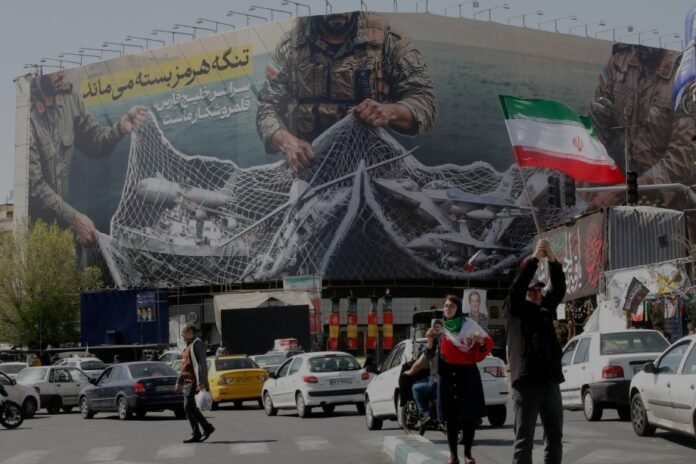
Now contrast these with examples of geography used coercively. Iran’s constant threats to shut down the Strait of Hormuz have created temporary oil price spikes and also encouraged importers to diversify supply routes, sometimes even justifying a sustained foreign naval presence.
This is reminiscent of Russia’s actions affecting energy transit to Europe, which only accelerated Europe’s efforts to reduce its dependence on Russian oil and gas. Moscow’s leverage declined over time as customers diversified.
As one of the world’s largest petroleum producers, Iran has a far greater economic interest in ensuring that its own exports move freely through Hormuz than in periodically threatening to disrupt the passage of others.
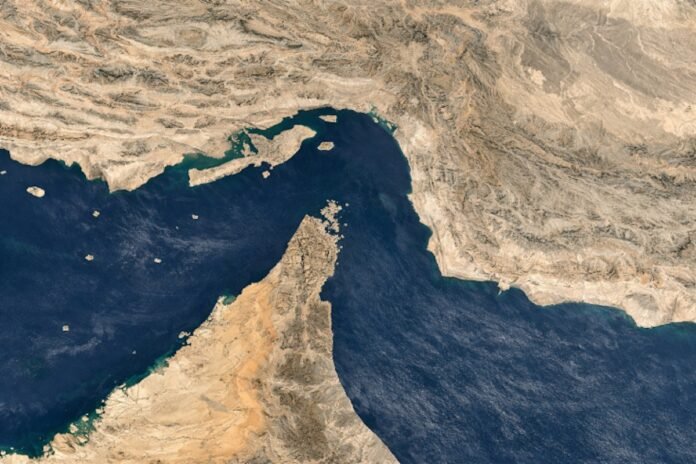
The Strait of Hormuz, like the Strait of Malacca, is a natural international strait. Under the UN Convention on the Law of the Sea (UNCLOS), ships enjoy the right of transit passage, and coastal states cannot simply impose tolls for using the strait because they happen to control its shores.
They can charge only for specific services, such as port facilities, bunkering (fuel), repairs and navigation assistance.
This is one of the strongest critiques of Iran’s current strategy. Iran possesses perhaps the world’s most valuable geographic asset after the Suez and Panama canals. If it consistently guaranteed safe passage through the Strait of Hormuz, it could become a regional shipping and logistics hub, a preferred destination for energy infrastructure, a magnet for foreign investment and an indispensable commercial partner for Asia, Europe and the Gulf.
Instead, repeated threats to shipping have encouraged countries to seek alternatives — pipelines bypassing Hormuz, diversified energy suppliers, larger strategic petroleum reserves and greater naval deployments. The very leverage Iran seeks to preserve risks diminishing over time.
The difference is essentially one of strategy: Egypt and Panama monetize confidence. The world pays because it trusts the route will remain open. Iran, by contrast, monetizes uncertainty, seeking geopolitical leverage from the possibility of disruption — but at the cost of investment, trade and diplomatic goodwill. In the long run, the first model has consistently produced greater and more sustainable economic returns than the second.
The issue is ultimately about the balance between short-term leverage and long-term costs. Iran seeks to leverage its position astride the Strait of Hormuz because doing so provides enormous bargaining power in the moment.
It has no legal right under UNCLOS to levy transit charges simply for allowing merchant ships to pass, and even attempting to commercialize access in that manner would be economically self-defeating.
Ultimately, there are two competing models for leveraging geography. The coercive model treats a choke point as political leverage by threatening navigation. The facilitation model keeps trade routes open, predictable and commercially attractive, generating long-term economic returns.
Iran’s preference for the former reflects its security calculus: Tehran views the threat to Hormuz as one of its few effective deterrents against militarily superior adversaries. Whether preserving that leverage continues to outweigh the economic costs remains an open question.
Raghu Gururaj is a retired Indian ambassador and former foreign service officer.