18.3 C
London
Thursday, July 23, 2026
Home Blog

More than half of Earth’s migratory bird species are declining – here’s how we can still save them

0
more-than-half-of-earth’s-migratory-bird-species-are-declining-–-here’s-how-we-can-still-save-them
More than half of Earth’s migratory bird species are declining – here’s how we can still save them

Every year, billions of migratory birds connect the world’s continents, oceans and ecosystems as they undertake epic journeys between their foraging habitats and their breeding grounds.

A bobolink (Dolichonyx oryzivorus) leaves its breeding grasslands of North America for the Pampas of South America. A Newell’s shearwater (Puffinus newelli) spends months soaring across the North Pacific before returning to the Hawaiian Islands to breed. A spoon-billed sandpiper (Calidris pygmaea) travels from Arctic Russia to the rapidly disappearing tidal mudflats of Southeast Asia for its nonbreeding season.

These birds could hardly be more different. They occupy different habitats, follow different migratory routes and face different threats. Yet they share one remarkable characteristic: Their survival depends on networks of habitats stretching across thousands of miles and multiple countries.

a black  bird with a yellow cap on its head and white patch on its wing.

The bobolink breeds in the grasslands of North America, but it makes an epic migration journey to South America each year. Grayson Smith/USFWS.

Today, all three species and many others are in trouble. Their migrations remain among nature’s greatest spectacles, but the birds themselves are increasingly at risk as the habitats and ecological connections they depend upon are lost or degraded and threats to their survival and ability to reproduce increase.

We study migratory birds as scientists. With an international group of colleagues, we just published a comprehensive assessment of the status, threats and conservation efforts involving more than 3,380 of Earth’s migratory bird species.

The results are sobering. We found that more than half of the world’s migratory bird species are declining because of an array of threats, including habitat loss, invasive species that harm birds, collisions with buildings, hunting, the pet trade, toxic pesticides and, in some cases, being caught in commercial fishing nets.

But our study offers a second conclusion with more hope. The science around migratory birds has changed dramatically over the past two decades, and conservation can help save these incredible species – if governments act before they become endangered.

Protecting birds across their epic journeys

If migratory bird conservation is refocused on the birds’ full annual cycles, it can protect birds and their habitats throughout the year, from their breeding grounds to their nonbreeding homes and their migratory routes in between.

This approach combines protecting and restoring important places, reducing threats wherever they occur. It also relies on international cooperation and proactive conservation led by engaged governments before species become endangered.

Maps show different migration patterns.

Some of the amazing migrations that take place around the world. (a) The lines reflect prebreeding (solid) and postbreeding (dashed) migration routes of several birds. (b) Some birds, like the Hudsonian godwit (Limosa haemastica), a member of the sandpiper family whose annual cycle is shown here, travel thousands of miles. (c) The Barau’s petrel (Pterodroma baraui) spends much of its nonbreeding time over islands and open water. (d) Other species, like the giant hummingbird (P. gigas) found in the Andes mountains, travel to higher elevations after breeding. Nature Reviews Biodiversity/Peter P. Marra, et al., 2026

Migratory birds are far more than remarkable travelers. They pollinate plants, disperse seeds, control agricultural pests, transport nutrients between ecosystems and support local economies by drawing birdwatchers and ecotourism. Their declines are not simply a loss of biodiversity; they signal a growing breakdown in ecosystems that sustain both wildlife and people.

The encouraging news is that humans have never been better equipped to reverse these species’ declines.

Hands attached a tiny backpack to a bird.

Researchers attach a satellite transmitter to the back of a red knot, a rapidly declining migratory species. Tiny trackers like these show migration routes and help locate the potential harms and ways to help these species. Tim Romano, courtesy of the Smithsonian Institution

A penny compared to a tiny tracker that's not much later than the letter O in 'One Cent'

Trackers on birds are like tiny backpacks. Smaller than a penny, birds can carry them hundreds of miles, giving scientists insight into their patterns and habitats and ways to help them survive. Tim Romano, courtesy of the Smithsonian Institution

Miniature tracking devices, genetics, automated radio telemetry networks, long-term monitoring and citizen-science initiatives such as eBird that document species numbers around the world have transformed knowledge of migratory birds’ habits and the risks they face.

For the first time, scientists can follow individual birds across continents and determine where conservation actions will have the greatest impact.

A new strategy

For much of the past century, migratory bird conservation focused on protecting important places, such as the breeding grounds, wetlands, nonbreeding habitats and migration stopover sites birds depend upon.

That strategy has been enormously successful and remains indispensable. Protected areas have prevented countless extinctions and will continue to be a cornerstone of biodiversity conservation.

A hand and bird flying away

A scientist releases a Kirtland’s warbler with its tracker attached. Tim Romano, courtesy of the Smithsonian Institution

But research has revealed something equally important: Protecting places, while essential, is often not enough to conserve species whose lives unfold across continents and oceans. It’s also important to understand where and when populations are most at risk and address those constraints across the birds’ entire annual cycle.

The three species that opened this story illustrate why.

Bobolinks breed across North American grasslands but spend much of the year in South America. Conserving breeding habitat alone cannot reverse their declines if grasslands continue to disappear or if birds are poisoned by pesticides.

Newell’s shearwaters spend most of their lives over the Pacific Ocean but return to Hawaii to breed, where artificial lights, collisions with power lines, and introduced predators such as domestic cats threaten already vulnerable populations.

Listen to spoon-billed sandpipers as they forage for food. Cornell Bird Lab.

Critically endangered spoon-billed sandpipers depend on a shrinking network of tidal mudflats that serve as stopover sites between their breeding grounds on Russia’s Chukotka Peninsula and their nonbreeding areas in Southeast Asia. Losing even a handful of these staging areas can jeopardize one of the world’s rarest migratory birds.

Each species requires a different conservation strategy, but all require the same way of thinking: conserving their entire annual cycle rather than focusing on a single place, season or threat.

Fortunately, this approach is already starting to take hold in the United States and demonstrates what is possible.

What success can look like

Road to Recovery is an international initiative designed to reverse the losses of North America’s fastest-declining bird species before they require protection under U.S. endangered species legislation.

Rather than waiting for populations to collapse, Road to Recovery brings together scientists, governments, conservation organizations, landowners and local communities to form species working groups. These groups help identify the harms bird populations are facing and how to be more surgical in where limited conservation dollars are invested.

Today, more than 50 international working groups are developing conservation strategies for species including bobolinks and lesser yellowlegs (Tringa flavipes) to evening grosbeaks (Coccothraustes vespertinus) and yellow-billed cuckoos (Coccyzus americanus). Their work has already led to new research, habitat protection, policy changes, hunting reforms and international partnerships.

International agreements such as the Convention on the Conservation of Migratory Species of Wild Animals, along with regional flyway partnerships and treaties, provide ways for nations to work together to conserve migratory species across political boundaries.

Scientists attach a leg band with a tracker to a very calm Newell’s shearwater during its breeding season in Hawaii.

However, the convention’s effectiveness is severely hindered when many of the world’s largest, wealthiest and most influential countries have not signed on to it. That includes the United States, Canada, Mexico, Russia and Japan.

Broader international participation and sustained investment from governments can help translate scientific knowledge into coordinated conservation action across the full annual cycle.

But governments cannot do it alone. Landowners, businesses, conservation organizations and individuals all have roles to play. They can help protect and restore habitat and reduce threats, such as free-ranging cats and collisions with buildings. They can support bird-friendly policies and participate in citizen-science programs that help track migratory bird populations.

Applying these lessons

There is every reason for hope.

Around the world, conservation initiatives repeatedly demonstrate that when threats are identified and addressed, bird populations recover. The pesticide DDT almost caused the extinction of species such as the bald eagle, peregrine falcon and osprey, but humans stepped in, banned its use, and all species recovered.

The challenge now is applying what science has found.

Next spring, bobolinks will once again return to North America’s grasslands. Newell’s shearwaters will navigate thousands of miles of open ocean back to Hawaii. Spoon-billed sandpipers will once again attempt one of the world’s most extraordinary migrations.

Whether future generations can continue to see these magnificent migrations will depend on the choices of current generations and the steps they take to save them.


ISPs’ long nightmare of having to list all the fees they charge is finally over

0
isps’-long-nightmare-of-having-to-list-all-the-fees-they-charge-is-finally-over
ISPs’ long nightmare of having to list all the fees they charge is finally over

The Federal Communications Commission today voted to eliminate a Biden-era rule that required Internet service providers to list all of their so-called “passthrough” fees on easily accessible broadband price labels.

Instead of advertising accurate prices, ISPs like to advertise artificially low prices and then add all sorts of fees to subscribers’ monthly bills. To prevent bill shock and help consumers compare prices, the FCC updated its broadband-label rules in 2023 to require that ISPs “itemize on the label all discretionary monthly fees that the provider passes through to the consumer.”

ISPs complained about the burden and complexity of listing all the passthrough fees they had chosen to charge. It would presumably be less burdensome for providers to advertise accurate prices, eliminating the need to charge additional fees and list them on the labels. But a few weeks ago, FCC Chairman Brendan Carr helped ISPs out by proposing to let them display passthrough fees in an aggregate “up to” amount instead of listing them all individually.

With this change, ISPs can continue advertising inaccurate prices as long as they provide the total amount of passthrough fees on broadband price labels. Separating these costs from the advertised price makes it harder for consumers to find out what they will pay each month, and gives ISPs another method of raising customer bills without announcing a price increase.

As we wrote previously, Carr also proposed letting ISPs provide links to the required price labels instead of displaying the full labels prominently on ordering pages and account portals. In addition to having less information on pricing, the new labels will be a little harder for customers to find.

Fees will be described instead of listed

The proposal was approved today. It was changed a bit since it was released in draft form, but the final order is not yet public. The vote was 3-0, with Democrat Anna Gomez joining the Republican majority. Gomez described some changes made since the proposal was released in draft form.

Gomez said she would prefer to keep requiring full itemization of fees, but thanked the chairman’s office for working with her on displaying certain kinds of information in the labels. Instead of listing every fee, she said the updated labels will provide a description of fees that are remitted to state and local governments and a description of fees remitted to third parties.

“Though I would have preferred that the labels provide a complete itemization [of fees], consumers will have the option to click on a link below to learn more about each of the types of fees and what they are used for,” Gomez said at today’s FCC meeting.

Unless the scheduled implementation date has changed since the draft was released, today’s order will take effect 30 days after it is published in the Federal Register.

Final version a compromise

A spokesperson for Gomez told Ars that under the labels’ aggregate or “up to” amount for passthrough fees, there will be one subcategory for fees remitted to state and local governments and another subcategory for fees remitted to third parties. The two subcategories will have lists of the types of passthrough fees and “a link to a provider-managed webpage that describes what each of these fees (e.g., E911 or pole attachment fees) means and what it is used for,” Gomez’s office said.

These requirements were not in the publicly released draft order but were added in a compromise, Gomez’s office told us. Carr’s draft order released a few weeks ago would have let providers display only a single number to indicate the maximum amount of fees that might be charged.

At today’s meeting, Gomez discussed how the new rules will let ISPs provide links to the labels instead of displaying them prominently. The final order “retains the requirement that providers include broadband labels in customers’ account portals,” she said. “However, we narrow that requirement to providing a hyperlink or icon rather than requiring the full label to be displayed. While my preference would have been to display the full label, my hope is that the commission, our industry partners, and consumer groups will work together to promote and advertise the concept of broadband labels such that consumers seek out this resource and use it regularly.”

Passthrough fees are not taxes, but vary by location and are “imposed by a government entity or third-party infrastructure owner rather than set by the provider itself,” the FCC said in the draft order. The fees include “state and local right-of-way fees, pole attachment fees imposed by third-party pole owners, and similar charges,” the FCC said.

In the FCC’s words, these fees “represent costs the provider chooses to pass through to consumers rather than rolling them into the base monthly price.” Ultimately, the fees are part of an ISP’s total cost of doing business and could be reflected in the overall advertised price. But ISPs choose to treat them as separate charges for the purpose of billing consumers.

The burden of listing fees

While ISPs seem to have little difficulty charging the fees when it’s time to issue monthly bills, they complain about the burden of listing all the fees on the broadband price labels. Broadband lobby group USTelecom complained to the FCC that “providers must create and update hundreds of different labels to account for geographic variability and to ensure that their systems properly queue the label specific to the proper location when the customer inputs their address.”

Previous FCC leadership implemented broadband labels in response to a directive from Congress. “Over the last few years, we have learned that when labels become cluttered with unnecessary details, they stop being the quick, easy-to-use shopping tool Congress envisioned,” Carr said at today’s meeting.

In a press release, the FCC said the previous rules resulted in “sometimes-confusing labels that strayed beyond the statutory framework Congress created, increasing compliance costs for providers in the process.” Carr said the new labels will be simpler but that “providers will still offer a label for every standalone broadband plan” with “necessary information about pricing, introductory rates, broadband speeds, and data allowances. The labels will also remain accessible and available in the languages providers use to market their services.”

Another change made today will let ISPs have their customer service reps “discuss the label conversationally over the phone, rather than reading it to consumers verbatim,” the FCC said. Gomez said phone calls remain an important point of sale, particularly for people who don’t currently have broadband service. She said the updated rules “require that critical information is conveyed over the phone, including the monthly price, inclusive of any monthly fees, the introductory rate and its duration, typical download and upload speeds, latency, data allowance, contract term, and early termination fees.”

NFL Lineman Arrested in Canada

0
nfl-lineman-arrested-in-canada
NFL Lineman Arrested in Canada


Arizona Cardinals offensive lineman Isaiah Adams has been arrested in Canada on multiple weapons charges just as the team prepares to open training camp.

Adams, 25, was taken into custody in Ontario and charged with four firearm-related offenses, according to an online release from the Durham Regional Police Service. The charges include possession of a firearm obtained in a crime, possession of a restricted or prohibited firearm, possession of a loaded firearm without a license and possession of a prohibited device.

The arrest immediately cast a shadow over the Cardinals’ preseason plans, with Adams expected to report for training camp as he competes for a bigger role on the offensive line.

Adams was one of four people arrested in the case, police said.

His attorney, however, is strongly pushing back against the allegations and insisting the NFL player did nothing wrong.

“Isaiah is completely innocent in this matter,” Adams’ attorney Adam Weisberg said in a statement. “He had no knowledge of any firearm, and he will be fully exonerated.”

According to Durham Regional Police, officers had been investigating a man believed to be in possession of a firearm and allegedly involved in drug trafficking. Police said the investigation concluded Friday, leading to the arrests.

Two of the other people arrested in the case were also charged with possession of fentanyl with intent to distribute, according to the police report.

The Cardinals acknowledged the arrest but offered little detail as the legal process unfolds.

“We are aware of the situation involving Isaiah Adams,” the team said in a statement. “Out of respect for the process, we will refrain from commenting further at this time.”

The timing could hardly be more dramatic for Arizona.

The Cardinals are scheduled to hold their first training camp practice Thursday, and Adams was still expected to be at camp, according to a person familiar with the situation who spoke to the Associated Press on condition of anonymity because the team is not publicly discussing the details.

For Adams, the arrest comes at a critical moment in his young NFL career.

The Ontario-born lineman, who is from Ajax, is entering his third season with the Cardinals and is considered to be in the mix for a starting job. Arizona selected him in the third round of the 2024 NFL Draft out of Illinois, hoping he could become a key piece of the team’s offensive front.

Now, instead of simply fighting for snaps, Adams is facing serious legal accusations in Canada while his attorney insists he was unknowingly caught up in a situation involving others.

The case remains active, and the Cardinals appear to be taking a wait-and-see approach as training camp gets underway.

For now, Adams’ future on the field — and in court — is suddenly under a much brighter spotlight.

Nonproliferationists demand Congress reject Trump-Saudi nuke deal

0
nonproliferationists-demand-congress-reject-trump-saudi-nuke-deal
Nonproliferationists demand Congress reject Trump-Saudi nuke deal

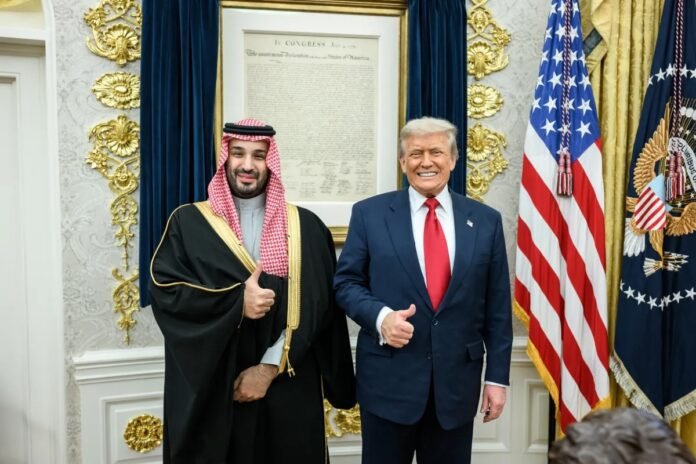
Saudi Crown Prince Mohammed bin Salman and US President Donald Trump. Photo: The White House

Nonproliferation experts are raising alarms after Reuters reported that President Donald Trump’s administration plans to ask Congress to approve a deal that could allow Saudi Arabia to develop nuclear weapons.

According to Reuters, an agreement crafted by the Trump administration would allow the US to share nuclear power technology with the Saudis without proper safeguards that “would stop materials being used in nuclear weapons programs.”

Specifically, Reuters’s sources said the deal “does not include the ‘Gold Standard’ that would block the kingdom from enriching uranium and reprocessing spent nuclear fuel, both of which are potential pathways to nuclear weapons.”

Kelsey Davenport, director for nonprolifertion policy at the Arms Control Association, warned in a Tuesday social media post that the reported agreement “sets a terrible precedent” because it “goes against long-standing bipartisan support for negotiating nuclear cooperation agreements that prohibit enrichment and reprocessing.”

“If the deal is inadequate, which it seems to be,” Davenport added, “Congress should vote to disapprove it.”

Andrea Stricker, deputy director and research fellow at the Foundation for Defense of Democracies’ Nonproliferation Program, said that “Congress should block” the deal, which she warned could lead other states in the region to seek their own nuclear weapons.

If Congress fails to block the deal, Stricker added, then “one hopes the policy will be reversed by a subsequent administration before too much damage is done in terms of watering down safeguards, setting negative precedents for other states, and failing to contain the spread of enrichment and reprocessing.”

James Acton, co-director of the Carnegie Endowment for International Peace’s Nuclear Policy Program, said the reported Saudi nuclear deal is “tantamount to the United States giving up on nonproliferation.”

“Saudi officials are open about a potential interest in nuclear weapons,” Acton said. “The United States should do nothing to facilitate enrichment or reprocessing in the Kingdom.”

Emma Ashford, senior fellow at the Stimson Center, agreed that the reported agreement would mean the end of US attempts to curtail the spread of nuclear weapons, and noted the irony of the Trump administration “bombing Iran to prevent them ever having enrichment, while giving it to the Saudis.”

Rosemary Kelanic, director of the Middle East Program at Defense Priorities, called the reported deal a “terrible idea” that “goes against decades of US policy to give enrichment technology to a country that doesn’t already possess it.”

Kelanic also warned that the agreement would empower the Saudi government in ways that could come back to bite the US.

“Aside from the proliferation risks, uranium enrichment would give Saudi Arabia a potent source of leverage to extract future concessions from Washington,” Kelanic explained, “including new security guarantees, by threatening to weaponize its program unless the United States promises enhanced military protection. That has happened before, for instance in South Korea and West Germany, where the U.S. traded protection to persuade partners to abandon nuclear programs.”

Rep. Gregory Meeks (D-NY), ranking member of the House Foreign Relations Committee, expressed “deep concerns” about the reported deal, which he said “would significantly erode existing nonproliferation standards.”

“Any agreement must include appropriate limits on enrichment and reprocessing,” Meeks emphasized, “as well as the [International Atomic Energy Agency’s] Additional Protocol.”

-Common Dreams

After Trump’s threat, Iran warns no one will sell oil if Tehran can’t

0
after-trump’s-threat,-iran-warns-no-one-will-sell-oil-if-tehran-can’t
After Trump’s threat, Iran warns no one will sell oil if Tehran can’t

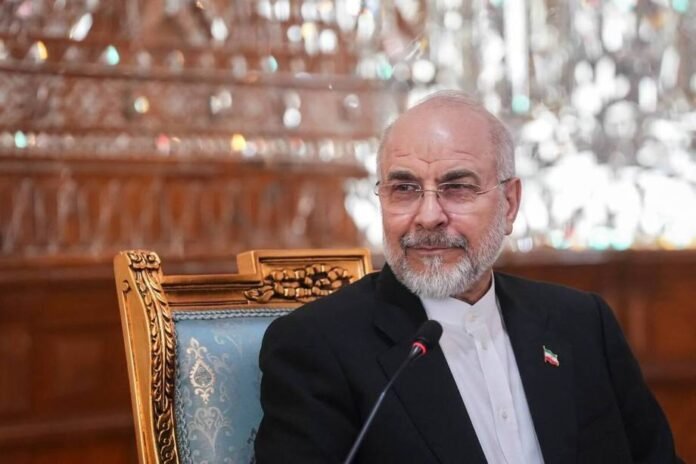
Iran’s Parliament Speaker and chief negotiator Mohammad Bagher Qalibaf said Wednesday that the situation in the Strait of Hormuz would not return to its pre-war state, warning that no country in the region would be able to sell oil if Iran was prevented from doing so, Anadolu reports.

In a post on the US social media platform X, Qalibaf said the conflict had become an “all or nothing” equation.

“In a region where we cannot sell oil, no one will sell oil,” he warned.

Qalibaf also warned that if Iran’s security was not guaranteed, “no infrastructure will remain secure.”

He further argued that security in the Strait of Hormuz depends on the absence of US forces, adding that Iran had repeatedly stated that conditions in the strategic waterway would not revert to those that existed before the war.

READ: Trump says 18 US troops killed during war with Iran

The remarks came hours after US President Donald Trump threatened to bomb an Iranian bridge or power plant each time Tehran attacked a commercial vessel in the Strait of Hormuz.

Iran has repeatedly insisted that commercial shipping through the strait will remain safe if vessels coordinate with Tehran under its new maritime arrangements, while warning that it will continue exercising control over the waterway as part of what it describes as safeguarding its long-term security.

The Strait of Hormuz, through which roughly one-fifth of the world’s seaborne oil trade passes, has become a focal point of tensions since the outbreak of the Iran-US war in February and subsequent disputes over navigation through the strategic waterway.

READ: Trump warns US will bomb bridge or power plant for every attack on ship in Hormuz

Microsoft brings original Xbox backward compatibility to Windows PCs

0
microsoft-brings-original-xbox-backward-compatibility-to-windows-pcs
Microsoft brings original Xbox backward compatibility to Windows PCs

For years, Microsoft has leaned heavily into extensive backward compatibility across multiple generations of Xbox hardware as a major selling point for its consoles. Today, that effort expands past the console ecosystem, making select original Xbox titles officially playable (and purchasable) on Windows PCs for the first time.

The appropriately and bluntly named “Xbox Backward Compatibility on PC” program kicks off today with compatibility for BLiNX: The Time Sweeper, Conker: Live and Reloaded, Crimson Skies: High Road to Revenge, and Fuzion Frenzy. PC players can download each title for $10, but those with Xbox Game Pass subscriptions or existing digital licenses for these games on console will have instant access without an additional purchase (no such luck if you simply stick an original Xbox disc in your PC drive, alas).

Playing these older Xbox titles on PC enables some bonus graphical features like Vsync support, anisotropic filtering, enhanced anti-aliasing, and up to 4x resolution scaling of the original SD signal (to 2560×1920). Games are limited to their original frame rates and aspect ratios, though, which means a 30 fps 4:3 image in most cases. Microsoft says this first batch of games should be playable with 11-year-old GTX 950 graphics hardware, but recommends a 2017-era GTX 1070 Ti with 8GB of VRAM for best performance.

Early testing from Digital Foundry found the PC experience akin to playing the same games on an Xbox Series X. That said, the testers reported weak anisotropic filtering, some frame timing issues that led to “jerky camera motion,” and “a handful of visual bugs” across the initial wave of titles.

What even is an “Xbox” game, anymore?

From a technical standpoint, getting original Xbox games running on PC isn’t a big deal. Since the days of the Xbox 360, Microsoft has relied on software emulation to get original Xbox games running on subsequent console hardware. Porting that kind of emulation technology to the PC is a simple, if not trivial, process and mimics functionality that any number of Xbox emulators have offered to PC players for years now.

Today’s announcement is much more relevant from a business perspective, signaling another crack in the already porous wall between Microsoft’s PC and console gaming ambitions. Those cracks date back to the 2016 rollout of Xbox Play Anywhere cross-platform purchases, but more recently have extended to Microsoft granting the Xbox branding to handheld gaming PCs and announcing that the upcoming Project Helix will play “Xbox and PC games.”

Making classic Xbox exclusive playable directly on PC represents yet another sign that Microsoft wants to effectively merge its struggling console business with the more successful Windows gaming ecosystem. And Microsoft says today’s rollout is just “the beginning of a broader effort to preserve Xbox games from the past and bring them to PC over time,” meaning I can still hold out hope of one day playing Rockstar Games Presents Table Tennis on my Windows 11 gaming rig.

Ukraine recaptured 700 sq km of territory this year

0
ukraine-recaptured-700-sq-km-of-territory-this-year
Ukraine recaptured 700 sq km of territory this year


Ukraine has recaptured 700 sq km (270 sq miles) of ​its territory this year, outgoing Commander in ‌Chief Oleksandr Syrskyi said on Wednesday, confirming he was leaving the top military job.

“I am handing over to my successor ​an army that is not only holding ​the defence but is also on the offensive,” ⁠Syrskyi said in a statement on Telegram.

President Volodymyr ​Zelenskiy said on Tuesday that a young major general, Mykhailo ​Drapatyi, would replace Syrskyi after days of street protests.

The move followed the ousting in a wider government reshuffle last week ​of tech-savvy reformist defence minister Mykhailo Fedorov, which brought ​out into the open the deep divisions in the Ukrainian defence ‌leadership.

Syrskyi ⁠has held the commander in chief position since early 2024, after playing key roles in Kyiv’s defence in the early days of the war and in ​a lightning ​counteroffensive to ⁠retake swathes of the northeastern Kharkiv region in 2022.

But he has faced harsh ​criticism for a rigid command style which ​some ⁠service members have said resulted in unjustifiably high troop losses.

In his statement he highlighted his track record, including ⁠stopping ​a Russian offensive in the Kharkiv ​region, and an operation in Russia’s Kursk region in 2024.

Source:  Reuters

South Korea’s far right is on the rise – with MAGA’s backing

0
south-korea’s-far-right-is-on-the-rise-–-with-maga’s-backing
South Korea’s far right is on the rise – with MAGA’s backing

South Korea is often regarded as an example of a young and vibrant democracy. Merely two years ago, mass protests thwarted a self-coup attempted by the sitting far right President Yoon Suk-yeol.

However, due to an array of social factors, the support of wealthy donors like retail tycoon Chung Yong-jin, the chairman of the conglomerate that owns Starbucks Korea, and growing links to the US right, an anti-democratic and reactionary movement is steadily picking up steam.

Seoul was a major overseas stop for far right influencer Charlie Kirk ahead of his September 2025 assassination. Kirk was the keynote speaker in 2025 at the annual rally of Build Up Korea, a far right group founded in 2023 by Mina Kim, a young conservative Christian educated in the US who appears to be determined to create a reactionary youth movement in the image of Kirk’s Turning Point USA.

Kim also serves as president of EveryLife Korea, the national franchise of an anti-abortion diaper brand with a self-described “‘Make More Babies’ mission” in which Donald Trump Jr. holds a stake through a financial vehicle. In the US, the brand remains marginal, depending exclusively on mail order sales. In South Korea, however, its products are sold in Korea’s largest mass retailer (led by Chung) with about $20 billion in annual sales.

In a September 2025 interview with Charlie Kirk, Mina Kim jokingly asked if he would sue her for imitating Turning Point USA’s tactics and politics. Participants were kept caffeinated throughout the two-day event by a seemingly endless stream of coffee donated by Starbucks Korea, which is owned by Shinsegae, the country’s largest retail conglomerate, which is headed by Chung.

Starbucks Korea’s role in stoking the rise of the far right

In addition to providing free coffee throughout the far right Build Up Korea conference, Starbucks Korea has also stoked anti-democratic forces in sweeping symbolic ways.

Starbucks Korea struck a nerve on May 18 when it launched a reusable travel cup named “Tank” and branded the promotion “Tank Day.” It was a symbolic, and painful, affront to South Korea’s democratic legacy. May 18 marks the anniversary of the beginning of the Gwangju Uprising, the 10-day civilian resistance to the military coup of 1980, which was crushed by special warfare troops using tanks and armored vehicles to overrun the southwestern city of Gwangju.

The “Tank Day” fiasco enraged much of the South Korean public, triggering consumer boycotts targeting Starbucks, for which Chung holds the exclusive franchise rights in the country.

In an attempt to contain the fallout from the controversy, more than 2,000 Starbucks stores across South Korea closed early on June 21 to conduct historical awareness trainings for the company’s 24,000 or so baristas. The franchise reported that due to the early closure, it incurred 2.1 billion South Korean won ($1.4 million in U.S. dollars) in lost sales. But the closure was deemed necessary to manage the backlash Starbucks Korea was facing and contain fallout from the controversy that had been building around Chung.

Chung Yong-jin, the chairman of Shinsegae Group (center), visits Washington to attend Donald Trump’s second inauguration ceremony, meets with Trump Jr. (left) and introduces his wife Han Ji-hee (right). Photo: Shinsegae Group

Chung, a retail tycoon and longtime friend of Donald Trump Jr., is open about his far right views and has often made provocative remarks on X. These statements had largely been dismissed as the provocative musings of a powerful tycoon, buffered by the PR influence of his conglomerate.

The scandal elicited media scrutiny from outlets worldwide, including The New York Times and The Financial Times. While most coverage focused on the conglomerate’s convoluted corporate governance, which allowed even a marketing promotion to be tailored to the chairman’s political taste in spite of public sentiment, it largely overlooked another dimension of the story: Chung has been helping bankroll a rising far right movement. He effectively put Mina Kim on his payroll by letting her sell her diaper brand through his vast retail network.

Meme-ing the far right agenda

The Starbucks fiasco is already having ripple effects. On June 29, during a popular livestreamed baseball match, players on a Seoul team mocked their opponents from Gwangju, chanting “Let’s go to Starbucks” and “Tank Day” from the dugout while performing a choreographed gesture. Far right propaganda has leaned into entertainment value, with Build Up Korea and other right-wing variants flooding social media with short-form videos, memes, and catchy songs to attract teenagers and young adults.

In early June, these emerging layers of the far right converged at Olympics Park in Seoul to protest what they claimed was election fraud. The government should bear some responsibility for the flare-up — ballots ran out at a polling station in the park a few hours before voting closed in a local election. As of this writing, hundreds of young far right elements are still squatting in the park, now blanketed with banners and posters promoting their conspiracy theory and slogans.

The movement has drawn both ideological inspiration and tactical cues from the MAGA movement in the United States.Protesters rallied almost daily in central Seoul, repeating slogans such as “Stop the Steal” and “CCP Out” (referring to the Chinese Communist Party), often in English. The demonstrations increasingly took the form of a typical MAGA rally, with heavy emphasis on social media

Over the past two years, the ties between MAGA and its Korean clones have deepened. At last year’s Conservative Political Action Conference (CPAC), conservative commentator Gordon Chang, a China hawk who has extended his acid-tongued rants to paint South Korea’s liberalism as pro-China and pro-North Korea, defended Yoon’s coup in his remarks.

At this year’s gathering, Hwang Kyo-ahn, a conservative Christian and former South Korean prime minister — the latter being a role roughly equivalent to the United States’ vice presidency — alleged that the recent South Korean elections were rigged through a tripartite collusion of the South Korean left, North Korea and China.

A failed coup galvanizes the far right

In much of the global imagination, South Korea has come to be seen as a democracy with a unique cultural cachet — having transformed from a grim authoritarian industrial park into an emerging soft power conquering global cultural platforms with K-pop and K-dramas.

This relatively new public image has often obscured the smoldering political tensions between the far right, liberals and the left. That steadily growing cacophony finally broke containment on December 3, 2024, when then-president Yoon Suk-yeol abruptly declared martial law to stage a self-coup on the pretext of protecting the government from “communist and Chinese interference,” echoing far right conspiracy theories that CCP-hired hackers and North Korean operatives manipulated South Korean elections.

In response, South Korean citizens spontaneously took to the streets, supporting the legislature to override martial law. Because its people knew how they should respond to the president’s subversion of their hard-won democracy, South Korea appeared to emerge from the crisis with a new opportunity to renew its democracy.

On the surface, the sequence of post-coup developments confirmed that belief — Yoon was impeached and swiftly tried for insurrection and Lee Jae-myung, of the liberal Democratic Party of Korea (DPK), was elected president in a snap election. Once again, these reassuring changes obscured a more troubling reality — the failed coup has revitalized, rather than demoralized, the far right.

Yoon’s ill-fated power grab provided far right forces with the momentum these once-fringe groups needed by drawing on their anti-China conspiracy theories and faith-based anti-communism. Yoon then further inflamed these fanatics by resisting arrest inside the presidential residence for more than a month.

And he had success. In January 2025, Yoon’s supporters raided and torched a courthouse in Seoul, injuring 40 police officers, after the court extended the detention warrant for Yoon. Lee, the liberal DPK candidate, failed to win more than 50 percent of the vote in the snap election, which many had expected would give him a landslide win.

Meanwhile, the US right stepped in to support Yoon. One of the first figures — Korean or foreign — to publicly approach the president during his attempted coup was Matt Schlapp, president of the American Conservative Union. At a CPAC forum attended by Steve Bannon in 2025, Schlapp claimed that Yoon believed Chinese technology firm Huawei was influencing South Korea’s elections, alleging that election servers were compromised by Chinese malware.

Fertile ground for the far right

Shaped by Cold War politics and evangelical Christianity, South Korea is fertile ground for the far right. The country is home to five of the world’s 20 largest Christian congregations — including the largest Presbyterian megachurch and likely the largest Methodist megachurch as well — many of which were preaching prosperity theology long before it spread widely in the US. About 33 percent of the population identifies as Christian.

In the 1970s and 1980s, a succession of US-backed military dictatorships permitted few large outdoor gatherings. Christian rallies were among the exceptions. A watershed moment came in 1973, when US evangelist Billy Graham held his largest-ever crusade in Seoul under the auspices of President Park Chung-hee — a Buddhist who saw conservative Christian congregations as a counterweight to a rising labor movement.

The rally was broadcast nationwide and rebroadcast repeatedly. Megachurch expansion followed, as Billy Kim, Graham’s Korean interpreter and a Baptist pastor, later recalled.

Today, these congregations face a familiar problem: declining attendance in an aging, shrinking society. Their response has often been to rebrand — mobilizing homophobia, Islamophobia, Cold War anti-communism and hostility to organized labor as adhesive forces for diminishing memberships.

Youth discontent provides a parallel current for the far right. South Korea’s youth unemployment rate sits around 7% – well under the Organization of Economic Co-operation and Development (OECD) average. The issue is not joblessness per se, but credential inflation without commensurate returns.

Roughly 77 percent of South Korean women aged 25-34 in 2023 had completed postsecondary education, and 63 percent of their male counterparts had as well, according to a recent OECD report. Yet 13 percent of South Korean men with postsecondary degrees in this age group were economically inactive at that time – neither employed nor seeking work.

The standard explanation points to exam preparation. While the rate of economic inactivity among South Korean women aged 25-34 with postsecondary education is even higher at 21 percent, pressure on them to seek employment has perhaps been less acute due to entrenched biases against working women, and those who do seek work experience a demographic imbalance that favors women in the labor market.

Many inactive young men are studying for civil service and other competitive positions, where women have recently outperformed them.

The political implications are stark. College-educated young men unable to secure work commensurate with their credentials have gravitated toward online subcultures of misogyny and conspiracy theories – a Korean analogue to the US incel phenomenon. In the post-coup period, many became foot soldiers of the far right. Women facing parallel frustrations have also joined in significant numbers.

At the risk of oversimplification, the traditional far right of older conservative Christians has joined with younger organizations such as Mina Kim’s Build Up Korea to constitute a new force in alliance with the US MAGA movement. When Kirk died, Kim’s group erected an impromptu altar for him in central Seoul. Build Up Korea and Free University, its campus affiliate, have since organized debates in Kirk’s signature style and anti-China protests, while mobilizing as the youth infantry of the movement to attempt to restore Yoon to power.

The older traditional forces have found a new face in Busan-based Presbyterian evangelist Son Hyun-bo, who launched Save Korea, a political movement, in the aftermath of the failed coup. The group has gained traction through its austere, disciplined rallies, drawing support from megachurches and conservative lawmakers. At one such rally, 37 lawmakers from the People Power Party (PPP) appeared, publicly endorsing Son’s claims of election fraud and his defense of Yoon.

In early September 2025, Son was detained for violating electoral regulations by holding rallies for conservative candidates without party affiliation. By then, however, he appeared to have gained the ear of US Vice President JD Vance, who serves as a leading voice for Christian nationalism within the Trump administration. During a January meeting with his South Korean counterpart, Vance raised concerns about Son’s detention.

In January, a court released Son, waiving his six-month prison sentence. Upon his release, he claimed that his two adult sons had been invited to the White House on two separate occasions while he was in detention awaiting trial. Son also said that Alliance Defending Freedom, a conservative legal fund in the US, had donated $15,000 to his legal defense.

MAGA internationalism

South Korea’s MAGA-inspired far right realignment is not unique. From Europe to South America, MAGA has emerged not only as a source of inspiration but also as a provider of tactics, offering a flexible playbook that has proven effective in mobilizing younger generations.

At first glance, it may seem counterintuitive that a movement rooted in nativism and nationalism would seek global influence. But another core pillar of MAGA is evangelical Christianity, which has long pursued transnational reach.

While cracks have surfaced within MAGA over the geographic scope and ambitions of the movement – especially in the wake of Trump’s assault on Iran – these divisions should not be overstated. So long as MAGA’s ideas continue to find receptive audiences abroad, amplified by the international ambitions of evangelical networks, the global reactionary movement will continue to grow. South Korea is a case in point.

Kap Seol is a Korean writer and researcher based in New York. His writings have appeared in Labor Notes, Jacobin, In These Times, Business Insider and other publications. This article was originally published by Truthout and is republished under a Creative Commons license.

Haim Yavin, Israel’s Enduring Voice of Public Television, Dies at 93  

0
haim-yavin,-israel’s-enduring-voice-of-public-television,-dies-at-93  
Haim Yavin, Israel’s Enduring Voice of Public Television, Dies at 93  


Known to Israelis as “Mr. Television,” Yavin was a foundational figure in Israeli broadcasting—someone who did not simply report the country’s history but helped establish the medium through which much of that history was experienced

The Media Line is saddened by the loss of Haim Yavin, a broadcaster whose voice and presence were woven into Israel’s public life for generations. Yavin also held a valued place in The Media Line community, serving on the Professional Advisory Board of its Mideast Press Club from 2005 to 2008.  

The Press Club was created during a period when contact between Israeli and Palestinian journalists had largely broken down. Its purpose was practical—to create a professional setting in which reporters, editors and broadcasters could meet, learn from one another and improve coverage of the people and issues on both sides of the conflict. Yavin’s participation reflected his belief in journalism as a public responsibility, grounded in seriousness, dialogue and first-hand knowledge. We extend heartfelt condolences to his wife, Yosefa, his children and grandchildren, and to his many colleagues and admirers. 

Known to Israelis as “Mr. Television,” Yavin died on July 22 at the age of 93. He was a foundational figure in Israeli broadcasting—someone who did not simply report the country’s history but helped establish the medium through which much of that history was experienced. 

He was born Heinz Kluger in 1932 in Upper Silesia, then part of Germany. His family came to Mandatory Palestine in 1933. Before beginning the career that would make him a household name, he worked at the Phoenicia glassworks in Haifa and later studied Hebrew and English literature at the Hebrew University of Jerusalem. 

Yavin entered radio in 1956, joining Kol Yisrael at a time when broadcasting was developing into a central institution of the young state. He later helped build the radio service that became Reshet Bet. By the time television reached Israeli homes in 1968, he was among the people helping to shape its character and standards. 

On July 23, 1968, Yavin anchored the first edition of Mabat, the nightly news broadcast of the new public television service. He remained identified with the program for roughly four decades, working not only as its anchor but also as an editor and senior television executive. Between 1986 and 1990, he headed Israeli Television. 

His delivery was deliberate and unadorned. In an age before dozens of channels, rolling updates and social media, viewers often encountered national events through a single evening broadcast. Yavin brought authority without theatricality, which made him a trusted guide through moments of war, political change, grief and celebration. 

One such moment became part of Israel’s political vocabulary. On the night of the 1977 election, when Menachem Begin’s Likud ended Labor’s long hold on power, Yavin announced the result with the word “mahapach”—upheaval. The expression has remained attached both to that election and to his public persona. 

Yavin’s work was not confined to the anchor desk. He made documentaries that explored difficult issues in Israeli life, including the country’s relationship with the Palestinians and the settlement movement. His 2005 series Land of the Settlers drew intense debate because it brought the veteran broadcaster’s personal observations to a subject he had long covered from the news studio. 

He retired from presenting Mabat in February 2008, but his standing in Israeli media endured. In 1997, he received the Israel Prize for communications, in recognition of a career that spanned radio, television leadership, documentary filmmaking and public affairs. 

Yavin belonged to the generation that created Israeli television’s common language. He helped set an expectation that news could be sober, precise and attentive to the public interest. For those who watched him over the years, his legacy will be measured not only in broadcasts and honors, but in the confidence he inspired whenever Israel faced a moment that demanded to be understood. 


Sales were up at Tesla but so were costs and spending

0
sales-were-up-at-tesla-but-so-were-costs-and-spending
Sales were up at Tesla but so were costs and spending

Tesla posted its financial statement for the second quarter of the year this afternoon. Earlier in July, we learned that the American automaker had had a good quarter in terms of sales, growing 25 percent year over year. Fans hoping that sales increase would result in a plenty profitable Tesla may be disappointed, though. Revenues are up but so are expenses, and the company’s once-enviable double-digit profit margin has fallen to just 1.4 percent.

Tesla brought in $20.5 billion from its electric vehicle business, a 23 percent increase year over year, and just $146 million came from automotive regulatory credits. Credits have been a key to Tesla’s profitability in previous challenging quarters, but they were abolished in the United States with Musk’s blessing in 2025.

There was growth from its energy and storage business, which grew 13 percent year over year to revenues of $3.1 billion, but the most growth was in Tesla’s services, which doubled, bringing in $4.6 billion. Tesla’s shift from a one-time purchase to a monthly subscription for its much-criticized FSD partially automated driver assist—something tied to CEO Elon Musk’s gargantuan remuneration package—was a big help here.

Overall, total revenues were up 26 percent, to $28.2 billion.

But the cost of doing business went up more. Tesla’s operating expenses went up 47 percent to $4.4 billion, and income from those operations fell by 57 percent year over year to $398 million. The company is still profitable—it generated $1.1 billion for the quarter, but that’s 5 percent less than the same three months last year.

In large part, that’s because Tesla has been spending heavily. Its capital expenditures grew by 142 percent to $5.8 billion, and free cash flow is currently negative $1.1 billion. That’s an 848 percent drop compared to last year, but Q2 2025 was barely positive either. For a more short-term comparison, Tesla ended last quarter with a free cash flow of more than $1.4 billion. It’s also lost another $1.2 billion from its investments.

Despite so much of Tesla’s revenues coming from cars, then solar and batteries, its spending is not on developing a new line of cars or even finally making those solar roof tiles we were promised a decade ago. It’s still all about AI, humanoid robots, and more robotaxi rollouts, despite a high preponderance of crashes in Texas, including one involving a teleoperator and a Houston tree stump.

In its statement to investors, Tesla says that it anticipates beginning production for its humanoid robots later this year, and that robotaxi deployments are “in line in seven major metros,” although it acknowledges that at least one of these requires the assent of California regulators, who we have seen are notably less permissive than equivalents in Arizona, Florida, Nevada, or Texas.

0FansLike
0FollowersFollow
0FollowersFollow
0SubscribersSubscribe
- Advertisement -
Google search engine

Recent Posts