President Trump Warns of Possible Strike on Iran’s Fortified Pickaxe Mountain
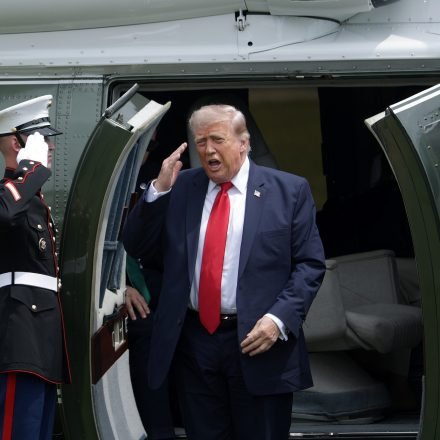
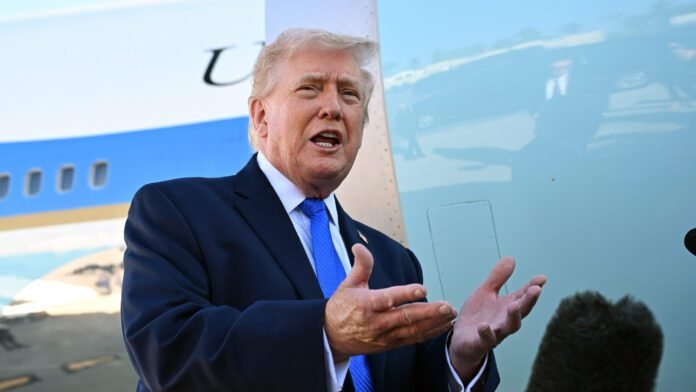
President Donald Trump said Tuesday that the United States is likely to strike Iran’s Pickaxe Mountain “pretty soon” and “very heavily,” escalating his rhetoric as the US-Iran war entered its 10th day.
Speaking during a White House meeting with Lebanese President Joseph Aoun, Trump described Pickaxe Mountain as a possible location for Iranian centrifuges and said Washington was closely tracking Iran’s nuclear-related activity.
Trump said reports that centrifuges may have been moved there were not confirmed and argued that centrifuges alone would not be decisive without access to nuclear material. “We follow the material,” he said, suggesting the administration’s focus is on preventing Iran from restoring any pathway toward weapons-grade enrichment. He also said Iran could be trying to reconstitute nuclear infrastructure and warned that any site connected to such efforts could face powerful US action.
The comments marked a more forceful posture than Trump’s earlier suggestions that a negotiated end to the conflict remained possible. On Tuesday, he said the United States had “no interest in meeting” with Iran for now, while insisting that Washington was “not finished at all” with its military campaign. Axios reported that Trump’s remarks indicate he is leaning away from a ceasefire and toward a broader effort, potentially alongside Israel, to compel Tehran to yield.
Pickaxe Mountain has become a central focus because it is believed to contain heavily protected underground tunnel complexes near Natanz, one of Iran’s main nuclear-enrichment areas. Its depth and fortification could make it a difficult target, though a strike could still seek to damage entrances and disrupt operations.
Nintendo says users voluntarily paid higher prices, have no right to tariff refunds
Nintendo urged a court to dismiss a lawsuit demanding that it pass tariff refunds on to customers, saying that people who bought a Switch console or other products have no legal right to refunds that Nintendo is due to receive from the government.
Nintendo said in a motion to dismiss yesterday that plaintiffs are “ask[ing] this Court to invent a legal duty out of whole cloth to retroactively re-price completed sales simply because the legal landscape has changed.” Nintendo said the plaintiffs “have no legal entitlement to the tariff refunds Nintendo stands to receive.”
The lawsuit was filed in April by two customers who seek to represent a class of all US residents who bought Nintendo products from February 2025 to February 2026. California resident Gregory Hoffert and Washington resident Prashant Sharan filed the class action complaint in US District Court for the Western District of Washington, alleging unjust enrichment and a violation of the Washington Consumer Protection Act’s prohibition on unfair or deceptive acts.
“Nintendo engaged in unfair acts by: (i) raising prices due to tariffs; (ii) failing to disclose that it intended to seek tariff refunds; and (iii) retaining tariff refunds despite having passed the costs to its customers,” the lawsuit alleged. In their unjust-enrichment claim, plaintiffs said Nintendo profits were “unjustly obtained as a result of its price increases on goods subject to unlawful tariffs.” Nintendo raised prices for the original Switch console by $30 to $50 and added $5 to $10 to the prices of various Switch 2 accessories.
Nintendo told the court that “the doctrine of unjust enrichment does not apply when a party voluntarily pays a purchase price and receives a product in return.” Nintendo said plaintiffs “received exactly what they paid for: Nintendo products that Plaintiffs knowingly and voluntarily purchased at the advertised price. Nor is there anything ‘unjust’ about Nintendo retaining money that it may receive from the government as tariff refunds. The fact that Nintendo stands to receive tariff refunds does not give Plaintiffs any legal entitlement to those funds.”
Consumers paid price of Trump tariffs
A similar lawsuit was filed in May against Sony by plaintiffs who bought PlayStation consoles. Sony has not yet filed a motion to dismiss that case, which is in the Northern District of California, but is likely to fight it using similar legal reasoning as Nintendo’s. Another lawsuit seeking tariff refunds for Xbox buyers was filed against Microsoft on July 17.
Many companies raised prices in response to tariffs imposed by President Trump. In February, the Supreme Court ruled that Trump illegally imposed the International Emergency Economic Powers Act (IEEPA) tariffs, and the lengthy refund process began in April.
Trump imposed another round of tariffs after the Supreme Court ruling, and those tariffs were judged to be illegal by the US Court of International Trade. Ordinary residents of the US have paid the price of Trump’s trade war.
“As it stands, Defendant has retained profits generated from its sales of products subject to tariff-related price increases and should not be permitted to retain those ill-gotten profits when it is seeking a refund of the duties it paid,” the lawsuit against Nintendo said.
It’s easy to see why consumers are angry about having paid tariff-inflated prices. The government isn’t issuing refunds to any resident who indirectly paid for Trump’s tariffs. The government refund portal set up after the Supreme Court ruling is for importers and authorized customs brokers.
Over 100 tariff lawsuits against businesses
Nintendo is one of many companies that sued the Trump administration in an attempt to make sure the government doesn’t worm its way out of issuing refunds. The class action against Nintendo pointed to this lawsuit as evidence that “Nintendo stands to receive a windfall: it has already recouped tariff costs from consumers through higher prices, and it now stands in line to recover those same unlawful tariff payments from the federal government.”
Lawsuits seeking refunds from companies aren’t just being filed against gaming console makers. Since the Supreme Court ruling, “plaintiffs’ firms have filed more than 100 putative consumer class actions against businesses nationwide that have sought refunds of tariffs paid as a result of these now invalidated charges,” said a July 9 article by Foley & Lardner lawyers. These cases have been filed in more than 30 federal districts in over 20 states, they wrote.
The legal theory behind the lawsuits is not specific to any industry. “Plaintiffs have filed class actions against companies across varying industries and points in the supply chain from food manufacturers to logistics providers. The specific allegations in each case differ, but the primary legal theory is the same: companies cannot pass tariff costs to consumers and retain government refunds for the same tariffs,” Foley & Lardner lawyers Erik Swanholt and Kelsey Boehm wrote.
Holland & Knight lawyers wrote in a legal alert that “any business that both passed tariff costs through to customers and is pursuing government refunds could become a litigation target.”
Nintendo tries to compel arbitration
With lawsuits in the early stages, no court has ruled on the core legal theories, Holland & Knight lawyers wrote. Businesses have several potential defenses, such as arguing that there can be no unjust enrichment when there is a contract between the parties.
“In many jurisdictions, unjust enrichment is unavailable where an express contract governs the parties’ relationship,” Holland & Knight partners Ashley Akers and Austin Rainwater wrote.
Businesses can also argue “that the challenged charges were imposed while the IEEPA tariffs remained legally effective and enforceable,” the Holland & Knight alert said. “According to this view, the Supreme Court’s subsequent decision invalidating the tariffs does not necessarily render charges collected before that decision unlawful or create a retroactive obligation to refund amounts previously paid.”
Although the lawsuit against Nintendo did not allege breach of contract, the Holland & Knight alert said some of the tariff cases make this claim. “This is the principal claim in many shipping and logistics cases. Plaintiffs allege that tariff-related surcharges were not authorized under applicable shipping agreements, terms of service or tariff schedules,” the law firm said.
Companies are likely to ask courts to enforce mandatory arbitration provisions contained in their terms and conditions, and Nintendo has already done so. Nintendo filed a motion to compel arbitration with Hoffert because of evidence that he “affirmatively accepted contractual agreements with Nintendo at least twice.” Nintendo said in its motion to dismiss that it “expressly reserves the right to move to compel Mr. Sharan’s claims to arbitration if discovery reveals his claims are arbitrable.”
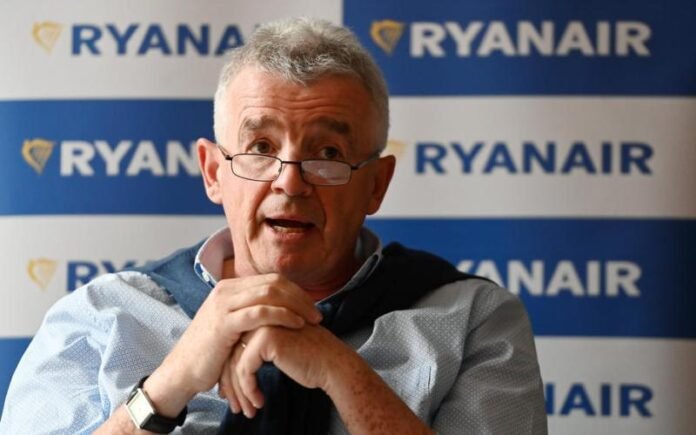
Ryanair CEO Michael O’Leary said that an initial finding from a probe into an incident in which a passenger was partly sucked out of a Boeing 737’s roken window suggested “foreign object damage” and was not due to the aircraft’s age or servicing conditions.
The U.S. National Transportation Safety Board is investigating the July 10 incident, in which a piece of engine broke off the aircraft and smashed the window shortly after takeoff from Thessaloniki in Greece, according to video and the Federal Aviation Administration. The plane, headed to Germany, lost pressure and made an emergency landing.
“Initial indication would suggest it looks like a foreign object damage to the engine on takeoff at Thessaloniki, but we don’t have, we can’t say that definitively,” O’Leary told analysts after Ryanair’s results for the April-June quarter.
O’Leary said the aircraft was 18 years old and its engine had been fully serviced and overhauled within the last two years. He added that a draft report on the incident would be issued in about 28 days, followed by a more detailed report.
The event, which had echoes of two Southwest Airlines b Boeing 737 NG flights in 2016 and 2018, prompted a re-evaluation of the response to those incidents, FAA Administrator Bryan Bedford told Reuters last week.
Confirmation that damage was caused by an external object could reduce Boeing’s and Ryanair’s responsibilities over the incident.
Why the Iran war hasn’t caused a global oil crisis — yet
When the Strait of Hormuz first closed at the start of the 2026 Iran war, the world braced for the “largest energy crisis in history.” Before the conflict began, almost 20 percent of the world’s traded oil passed through the narrow waterway between the Persian Gulf and the Gulf of Oman. Iran’s blockade of the strait effectively erased 15 million barrels per day from circulation overnight.
Many experts and commentators predicted that the supply gap would have catastrophic consequences. Australia expected fuel rationing, the European airline industry warned of mass flight cancellations, and Goldman Sachs predicted widespread oil shortages. The International Monetary Fund warned of a potential global recession, and some traders worried that oil prices could hit $200 a barrel.
But a little over four months into the war, little of that has come to pass.
Timeline
How the oil market has handled the Iran war
The United States and Israel launch a joint military operation against Iran.
Iran retaliates and announces that it has closed the Strait of Hormuz. Benchmark oil prices rise above $100 a barrel.
The International Energy Agency announces a coordinated strategic reserve release of around 400 million barrels from more than 30 countries, including the United States.
Governments across Asia introduce energy-saving measures such as remote work mandates and restrictions on who can drive.
The United States and other countries increase domestic crude production and exports, filling the gap created by the closure of the strait.
Brent crude rises toward around $120 a barrel, its highest level on the year, as traders fear a prolonged supply disruption.
On June 17, the United States and Iran sign a ceasefire agreement. Commercial shipping resumes through the Strait of Hormuz, and benchmark oil prices fall back to about $70 per barrel.
The ceasefire breaks down. The U.S. announces a new blockade of Iranian oil and Iran announces new transit requirements for the Strait of Hormuz. Prices rise back to about $85 per barrel.
True, oil prices have gone up around the world, and there have been critical shortages of products such as cooking oil in some places, but rationing and recession have largely not arrived. Instead, a series of emergency measures have helped avoid the predicted crises: Oil exporters including the United States stepped in to fill the gap, either by drawing down strategic petroleum reserves or increasing production. Countries that were most reliant on fossil fuel imports from the Middle East took emergency conservation measures to reduce their demand.
Here’s how the world has averted the worst of the oil shock so far, and what experts say might happen next if the conflict continues to drag on.
Finding alternative sources of oil
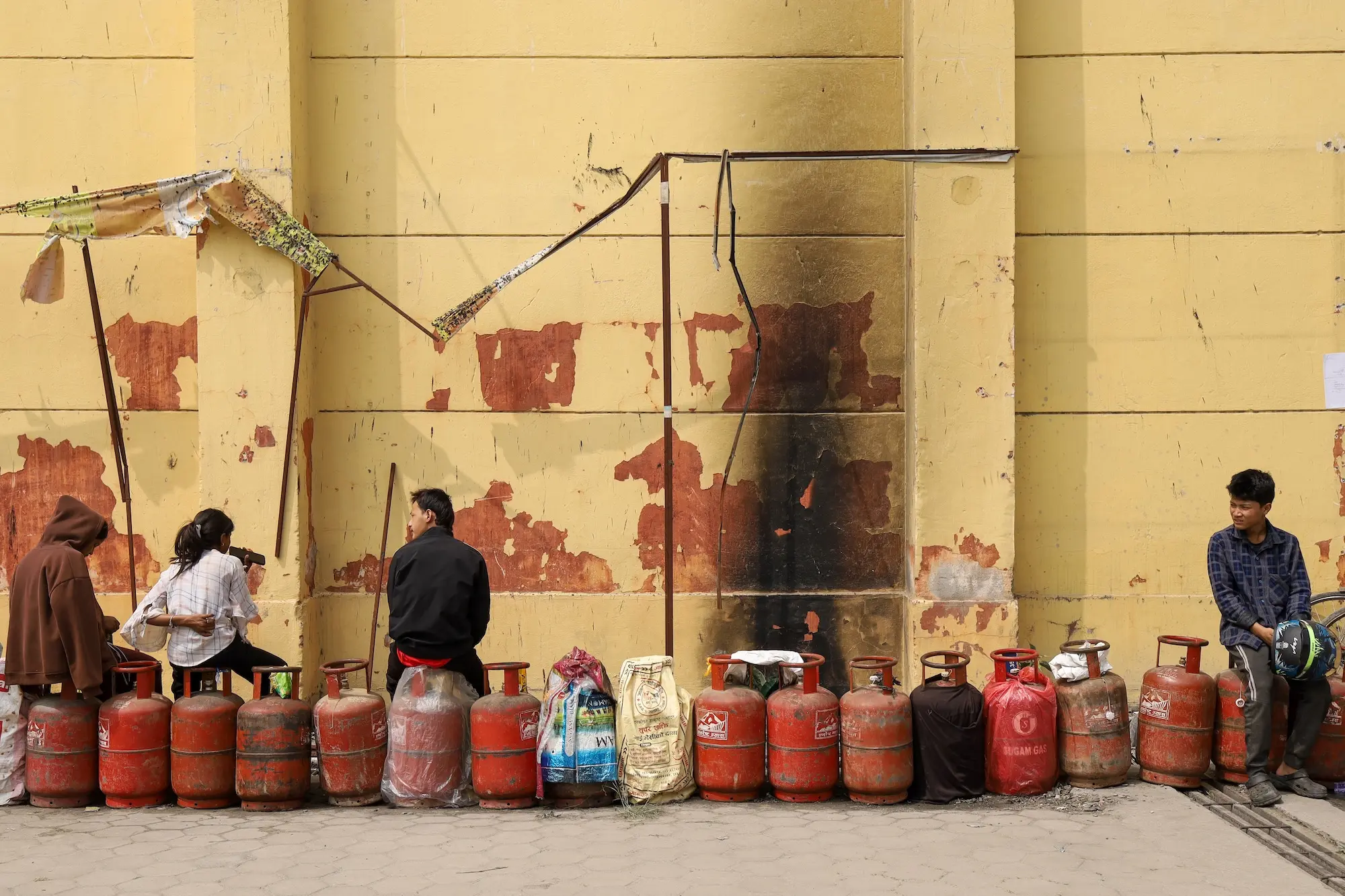
In the months since Hormuz cut off access to Iran’s main oil supply, the world has scraped every corner to find substitute barrels of crude oil. Many countries had stockpiles of oil saved up for an emergency, and in March, the International Energy Agency coordinated a historic release of oil from those reserves. That put on the market more than 400 million barrels, enough to fill about 20 days’ worth of the supply from Hormuz.
doubled its oil imports from the United States between February and April of this year. Iraq and Saudi also routed more than 6 million barrels of oil per day through land pipelines that were operating below capacity, skirting the strait altogether.
China, the world’s largest oil importer, also helped stabilize the world market. It stopped buying oil for its own strategic reserve after the war began, and it also stopped purchasing crude for its own domestic refineries, shutting them down for months. To generate electricity, it pivoted to coal and solar. These measures together freed up another 5 million barrels per day for the world market.
Using less oil
Even as the world scrambled to replace Middle East oil, the Asian countries that rely on it moved aggressively to slash their usage. Many nations idled their factories and industrial facilities that use petroleum-based liquids, which shaved off a few million more barrels a day. Some increased imports of electric vehicles or accelerated plans to adopt solar and wind technology to reduce their dependence on foreign oil and gas. But the vast majority of imported oil is used for transportation and power generation, so in order to weather the crisis, countries also needed to change consumer behavior.
Read Next
More than 100 countries enacted some form of conservation measure, ranging from limits on elevator usage to outright restrictions on when people could drive. The Philippines, Pakistan, and Sri Lanka all moved to a four-day work week, and Myanmar restricted gas vehicles to driving every other day based on the number of one’s license plate. Bangladesh limited air conditioning temperatures to 77 degrees Fahrenheit and closed public university buildings. This helped reduce demand on a power grid that runs on imported oil and liquefied natural gas, much of which also comes through Hormuz.
Some wealthier countries in Europe got even more ambitious: The Netherlands, for instance, allowed citizens to trade in gas cars for electric ones, and Sweden halved the cost of public transportation fares.
prevented an out-of-control price spiral, giving importers time to procure more oil from other nations. They also likely saved Asian countries from needing to impose extended periods of rationing the way the United States had to do during the oil crisis of the 1970s, the largest previous disruption to the world’s oil supply.
“There have been multiple measures taken by governments both on the supply and demand side, but mainly on the demand side for large oil importers,” said Kevin Morrison, an analyst at the Institute for Energy Economics and Financial Analysis who focuses on oil and gas in Australia. “This is a trend that is likely to continue as the uncertainty around future oil supplies remains uncertain.”
How long can these tactics last?
Even though the most dire early predictions haven’t borne out, the closure has not been easy. In the early days of the crisis, before countries procured substitute fuel, price spikes and supply disruptions in Asia altered millions of lives. Taxi drivers in Myanmar lost their livelihoods and funeral homes shut cremation services for lack of fuel. A lack of fertilizer during key rice planting times in Asia will likely hamper harvests later this year, contributing to higher food prices.
Aside from crude oil, the war has caused shortages of other goods like helium and sulfur, shipments of which also pass through the Strait of Hormuz. This has contributed to broader inflation for everything from nickel to semiconductors.
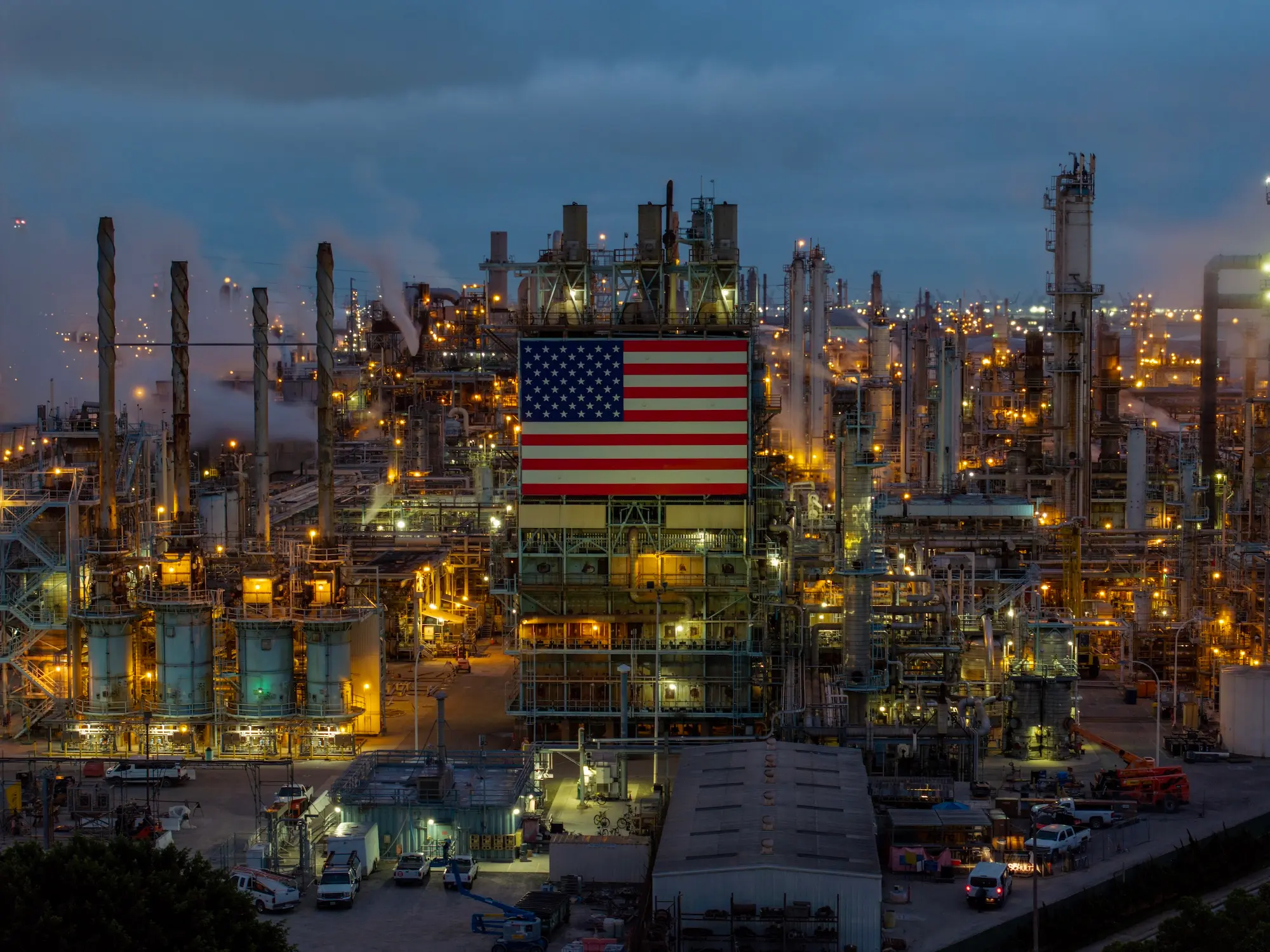
keep airlines supplied, but that means they have also produced less gasoline for cars. As the U.S. heads into the peak summer driving season, its gasoline inventories are as low as they have been in a decade. Supplies could drop even lower this fall as companies perform delayed maintenance on their hard-working refineries, said Bob McNally, the founder of the analysis group Rapidan Energy Group, who also advised the administration of President George W. Bush on oil policy.
It may soon get a lot worse. Even though global oil prices have fallen from their peak, there’s still a fundamental mismatch between oil demand and oil supply. As a result, experts say the world could still experience severe economic disruption later this year if the strait remains closed. Some vessel traffic resumed through the Strait of Hormuz last month following a tentative agreement between the United States and Iran, but the ceasefire has collapsed and Iran now says the strait is closed again.
Read Next
“The market decided at the end of Round 1 to price for perfection” in an Iran deal, McNally said. “Instead, we’re getting Round 2. We played some tricks and some cards, but all these things … are either wearing off or already known.”
Those “tricks” have run their course. Most countries’ emergency stockpiles are close to depleted, and the U.S. strategic petroleum reserve has fallen so low that its structural integrity is starting to strain. At the same time, China has ended what McNally called its “crash diet” and has started to buy oil for its refineries again.
This leaves the world without the buffer that it had during the first round of the crisis.
“Hormuz 1.0 was about supply and inventory,” said McNally. “In Hormuz 2.0, prices will have to do more of the work. And they have to go really high, because the problem is demand is inelastic — you’ve got to eat.”
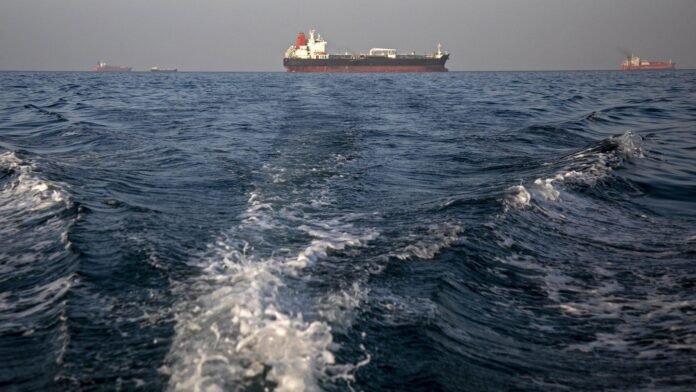
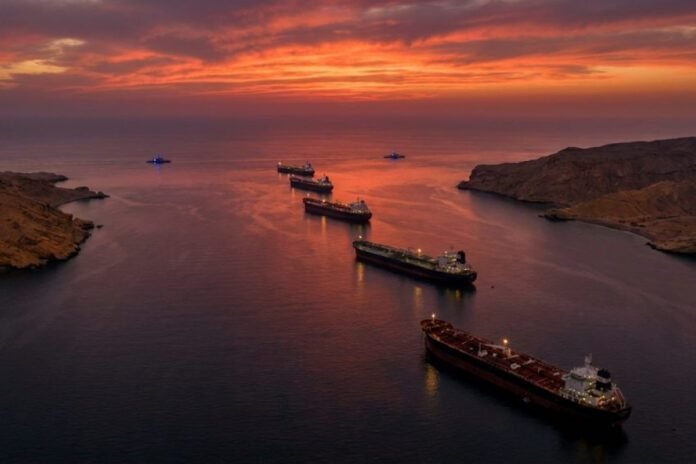
As much as one-fifth of the world’s oil shipments traditionally travel through the blocked Strait of Hormuz. Image: X
Five months after Israel and the United States launched strikes that killed Iran’s Supreme Leader and ignited a wider war, the Strait of Hormuz has become the conflict’s most stubborn front, a 21-wide chokepoint where military power and diplomatic paralysis meet.
The pattern by mid-July had become grimly familiar. The US hit Iranian military targets, coastal radar, drone sites and missile infrastructure night after night, describing each round as necessary to protect commercial shipping.
Iran answered by striking tankers, including two vessels flagged to a Gulf ally that were hit inside Omani waters, and by insisting, at various points, that the strait was closed to traffic it hadn’t authorized.
A ceasefire brokered earlier in the spring collapsed; indirect talks fell apart; both governments’ leaders traded public threats. This is no longer a slow-burning standoff. It is an active, if intermittent, war being fought largely through the strait itself.
Why can neither side simply win here? Military logic explains the deadlock better than anything else.
Washington has the firepower to degrade Iran’s coastal defenses and has done so repeatedly. But US Vice President JD Vance put his finger on the underlying problem: you can strip away radar, drones, and missiles, and Iran can still threaten shipping with small boats, mines, and short-range fire, an asymmetric tactic that doesn’t require the capabilities the US keeps destroying.
Iran, for its part, cannot hope to defeat the US Navy or hold the strait closed indefinitely; a genuine closure would cut off its own oil exports and invite even harsher retaliation. What both sides can do is make the strait too dangerous to be useful, which is functionally what has happened; commercial transits have slowed to a fraction of normal levels.
Diplomacy keeps failing for structural reasons, not just bad timing. Tehran’s foreign ministry has said flatly that it has no plans to negotiate, and past rounds of indirect talks broke down before producing anything durable.
Part of the difficulty is that the war has generated new points of friction faster than old ones can be resolved: Iran’s floated idea of charging tolls for transit through the strait — which it frames as compensation for “services” it provides, has drawn a blunt rejection from the US and International Maritime Organization, which notes there’s no legal basis for one country to toll an international strait.
That toll dispute is minor next to the war itself, but it illustrates how each side keeps introducing new demands that make de-escalation harder to negotiate even when both may want it.
The stakes go well beyond the two belligerents. The strait carries roughly a fifth of the world’s seaborne oil and a similar share of global LNG. A multinational Persian Gulf Strait Authority has emerged as an attempt at collective management.
Washington has openly appealed to China, Japan, South Korea, European states and others to send ships and share the burden of keeping the lane open, a tacit admission that unilateral American power hasn’t been sufficient to guarantee safe passage.
Gulf states like the UAE, meanwhile, are absorbing direct costs: tankers hit, crew killed, and commerce disrupted in waters they don’t control and didn’t choose to fight in.
What does the deadlock actually reveal? The Hormuz standoff isn’t a puzzle waiting for the right diplomatic key. It’s a structural mismatch: American strikes can punish and degrade but not permanently secure the strait, while Iranian attacks can disrupt and intimidate but not close it on Tehran’s terms or sustain the campaign without self-inflicted damage.
Absent a negotiated settlement neither government currently seems ready to accept, the likely near-term future is more of what mid-July has already shown: cycles of strikes, tanker incidents, brief lulls, and traffic that never quite returns to normal.
The question hanging over the region isn’t really who wins at Hormuz. It’s how long global energy markets and Gulf neighbors keep absorbing the cost of a fight that neither principal party can decisively end.
This article was originally published on Leon Hadar’s Global Zeitgeist and is republished with kind permission. Become a subscriber here.
Bahrain sounds air raid sirens for 3rd time Tuesday amid Iranian attacks
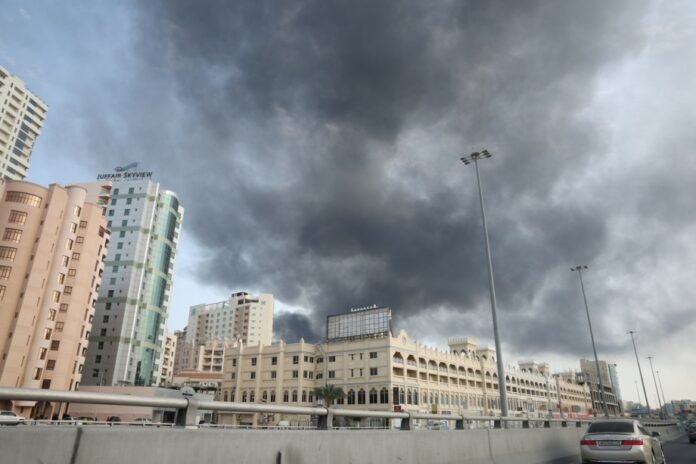
Smoke rises after Iran launched a missile attack targeting the headquarters of the U.S. Navy’s Fifth Fleet in Manama, following what it described as retaliation against U.S. and Israeli strikes, in Manama, Bahrain on February 28, 2026. [Stringer – Anadolu Agency]
Bahrain sounded air raid sirens for the third time on Tuesday amid continued Iranian missile and drone attacks in the region, Anadolu reports.
In a statement, the Interior Ministry urged citizens and residents to remain calm, proceed to the nearest safe location and follow developments through official channels.
The latest alert came after Bahrain sounded sirens twice since morning as Iranian attacks targeted the Gulf country.
Iran’s army earlier said it had targeted the US-operated Sheikh Isa Air Base in Bahrain with drones, while the Islamic Revolutionary Guard Corps claimed it had struck infrastructure linked to US technology company Amazon in the kingdom with cruise missiles.
Neighbouring Kuwait also said its air defences had intercepted Iranian missiles and drones on Tuesday, adding that explosions heard in the country resulted from interception operations.
The attacks came as Iran and the US continued exchanging strikes despite a Pakistan-brokered memorandum of understanding aimed at ending the war and paving the way for a lasting agreement.
Iraq is emerging as the Middle East’s strategic connector – but can it turn foreign competition into advantage?
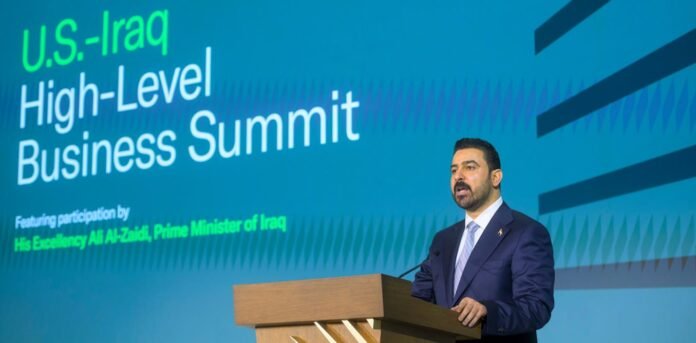
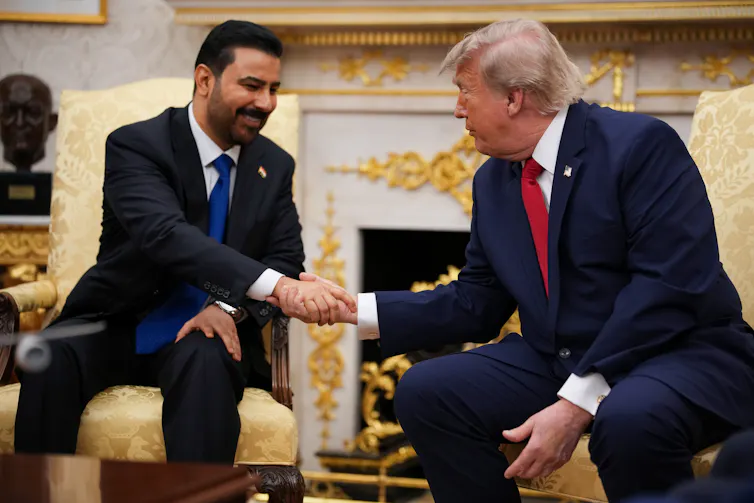
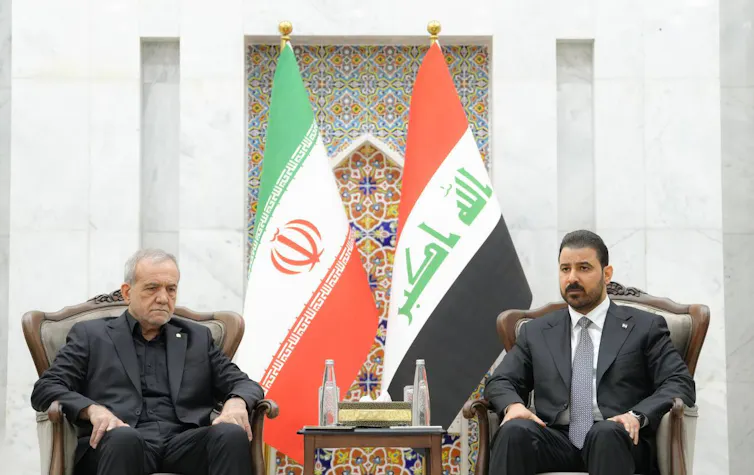
Iraqi Prime Minister Ali al-Zaidi is on something of a diplomatic roll at the moment. Having concluded a weeklong visit to the United States on July 19, 2026, during which he charmed President Donald Trump, al-Zaidi is now expected to head to Tehran to do the same with Iran’s new leaders. Trips to Qatar, Saudi Arabia, Turkey and Syria all figure on his itinerary, too.
The U.S. visit was the first – and arguably most important – stop on a broader effort to give domestic legitimacy to al-Zaidi’s government and attract foreign investment while elevating Iraq’s status in the Middle East.
But it is also telling that the U.S. visit – which included a high-level business summit and meetings with American energy executives in Houston – was carefully orchestrated with an eye towards a new U.S. regional strategy focused on trade and investment in the Middle East, with Iraq as a key component. As a close observer on Middle East geopolitics, I believe it all points toward Iraq’s emergence as a strategic connector in a Middle East increasingly shaped by energy, infrastructure trade and investment networks.
Iraq’s value to competing countries
Iraq’s growing importance as a potential nexus for diplomacy and commerce reflects both domestic changes and broader regional shifts. The massive degrading of the Islamic State group in Iraq and across the region, improvements in security and Baghdad’s more active diplomacy have expanded Iraq’s room for maneuver.
At the same time, the fall of the Tehran-aligned Assad regime in Syria, the weakening of Iran’s proxies in the region and the U.S.-Iran war have heightened the strategic value of Iraq’s geography, institutions and relationships. In short, as the regional balance has been reshaped and Iran’s traditional network of influence disrupted, Iraq has become an increasingly important platform for military coordination, regional diplomacy and economic connectivity.
In a sign of the importance of the relationship, Iraqi Prime Minister Ali al-Zaidi made the United States his first foreign trip since taking office.Andrew Harnik/Getty Images
Amid those changes, al-Zaidi’s U.S. visit underscores that Washington is reassessing Iraq’s role at a time when nearly every major regional actor is doing the same. Iran, the Arab Gulf states and China have each deepened their engagement with Baghdad, pursuing different objectives yet recognizing that Iraq occupies a position of unusual strategic importance.
For Washington, the reassessment reflects a shift away from the post-Iraq War view of Baghdad primarily through the lens of counterterrorism and military stabilization. Instead, U.S. officials and Iraqi counterparts increasingly see a broader partnership. New economic deals signal an effort to strengthen Iraq’s energy sector, modernize infrastructure and expand private-sector investment.
Security cooperation remains important, but it now complements a broader strategy aimed at building a more resilient Iraqi state capable of managing competing external pressures and governance in general.
Beyond the US role
For Tehran, Iraq is central to its regional strategy at a moment when Iran faces a more challenging environment elsewhere. Iraq provides a strategic buffer, extensive commercial ties and a critical corridor connecting Iran to partners across the Levant. As Tehran’s broader regional allies such as Hezbollah and Yemen’s Houthis come under pressure, preserving its position in Iraq has become even more important.
The Arab Gulf states have similarly recalibrated their approach. While security concerns – particularly Iraq’s relationship with Iran – continue to shape their policies, Saudi Arabia, the United Arab Emirates and other Gulf kingdoms view Baghdad’s post-Islamic State group trajectory as an opportunity for engagement through investment, infrastructure and economic integration.
A more stable and connected Iraq can link Gulf markets, capital and infrastructure initiatives with global trade and investment while reducing the risks associated with instability emanating from Iran.
China’s role illustrates another dimension of Iraq’s importance. As Baghdad becomes an increasingly important arena for geopolitical and commercial competition, Chinese companies will need to compete more aggressively for contracts, and Beijing will face greater incentives to deepen its engagement in Iraq to preserve its influence.
Yet China’s interests are not limited to securing access or outcompeting rivals; a stable, economically viable Iraq is itself valuable to Beijing as a reliable energy partner and a potential hub for broader regional connectivity. In this respect, quite apart from great-power competition, U.S. and Chinese interests are broadly compatible.
These various developing relationships with Iraq do not represent a simple competition among rival countries or blocs. Instead, they coexist, reflecting Baghdad’s effort to diversify external relationships while avoiding excessive dependence on any single power.
An emerging strategic connector
What distinguishes Iraq is not simply its geography but the unusual overlap of relationships that few other Middle Eastern states possess. Baghdad can engage Washington on security and energy, Tehran on political and commercial ties, Beijing on infrastructure and trade and the Gulf states on investment and regional connectivity.
This gives Iraq the characteristics of what I am calling an “intermediary state” – a country whose influence derives from its ability to remain connected to competing political, economic and security networks while helping shape how those networks interact.
Iraq therefore offers a glimpse of a broader transformation in Middle Eastern geopolitics. Military power and traditional alliances remain central but influence increasingly flows through the systems that connect economies and societies: energy infrastructure, electricity networks, logistics corridors, financial systems and investment relationships.
States that shape these networks will have greater ability to influence the region’s future.
The vulnerability in Iraq’s approach
The challenge is whether Iraq can convert this connectivity into national advantage without allowing external competition to overwhelm government decision-making.
The same relationships that increase Baghdad’s value also create incentives for outside actors to compete within its political system. Connectivity can provide leverage, but without stronger institutions it can also deepen dependence.
The most immediate challenge is consolidating state authority. Al-Zaidi’s effort to bring non-state armed groups under government control will test whether powerful Iran-aligned militias in Iraq will relinquish the autonomy, political influence and economic interests they have accumulated over two decades. Progress toward disarmament is likely to prove uneven, particularly if regional tensions again increase the perceived value of these groups to Tehran.
Iraq’s domestic political economy presents an equally formidable obstacle. Patronage networks, corruption and fragmented governance continue to limit Baghdad’s ability to implement nationwide reforms, attract sustained investment and translate external partnerships into broad-based economic development. Converting strategic importance into lasting national strength ultimately depends as much on institutional capacity as foreign relationships.
External dynamics will also remain consequential. Persistent distrust between Washington and Tehran ensures that Iraq will continue to face pressure from competing powers seeking to shape its political trajectory. Distrust alone would be the least of Iraq’s concerns. Were the current escalation in U.S.-Iran hostilities to spiral into a protracted, wider regional war, both Iraq’s prospects of realizing this potential and the al-Zaidi government’s survival would be at risk.
Whatever transpires on that front, China is unlikely to retreat from a market where it has become a leading trading partner and major infrastructure investor. The Arab Gulf states will continue seeking a more stable and economically integrated Iraq. And Washington will still want a partner capable of resisting destabilizing pressures, not to mention helping to counterbalance China.
The challenge for Baghdad will be managing these overlapping relationships while ensuring that foreign partnerships strengthen rather than constrain Iraqi sovereignty.
Linux-focused gaming site Boiling Steam breaks down the historical data, showing how the Deck’s chart position has fallen from fifth place immediately after orders resumed in late May down to 14th place for two weeks in early July (the hardware sits at 12th place in the current edition of those charts).
That’s in sharp contrast to 2025, when the Steam Deck never dropped below seventh place on the bestseller charts and was only rarely outside the Top 5. Then Valve warned of “intermittent shortages” for the Steam Deck starting in February, leading to weeks of lower chart positions before the Deck became completely unavailable until May.
Boiling Steam does some back-of-the-envelope math to try to translate these revenue-based chart positions into estimated unit sales ranges for the Steam Deck, based on assumptions about average sale price across hardware models (both before and after the price hike) and estimated weekly revenues for the surrounding games on the charts. That rough model suggests Steam Deck sales may have fallen by approximately 80 percent from a 2025 baseline of about 11,000 to 18,000 units per week to a current estimate of just 1,400 to 3,000 per week. While there’s a lot of wiggle room in those estimates, anything close to those numbers would reflect a huge slowdown in sales for a handheld that sold an estimated 4 million units in its first three years.
Supply and demand
Boiling Steam attributes this marked sales dip to a price increase that has “completely shut down demand for the Steam Deck.” And it’s likely that the Steam Deck’s historical $400 to $649 price range was much more attractive to consumers than the current $789 to $949 range brought on by RAM and storage shortages. At current prices, consumers might start considering more powerful handheld gaming PCs in the same price range from competing hardware lines like ROG’s Ally, Lenovo’s Legion Go, or MSI’s Claw.
But the relative dip in Steam Deck sales could also reflect the shortages in Steam Deck supply that Valve still warns are impacting availability in some regions “intermittently.” While some stock trackers have shown consistent availability for the Steam Deck since late May, the hardware was briefly unavailable in North America shortly after relaunching at its new prices, suggesting Valve can’t always satisfy the current market demand.
Regardless of the reason, it seems clear that Valve is currently selling many fewer Steam Deck units than it did even six months ago. In normal times, this might be a good sign that Valve should get moving on finalizing and releasing the long-awaited Steam Deck 2. But given how component pricing is looking for the immediate future, we shudder to think what Valve would have to charge to make a profit on a more powerful handheld today.
Back in May, some authors fought to block the settlement, which was proposed after the court ruled that Anthropic training AI on books was fair use; however, its piracy of works was likely not.
Authors opposing the settlement argued that lawyers’ fees were too high and authors’ payouts were too low. Hoping to avoid accepting the estimated $3,000-per-work payout and file separate lawsuits to seek higher damages, a handful of authors tried to opt out past the deadline.
In her order, US District Judge Araceli Martínez-Olguín overruled objections to the settlement as lacking merit. She emphasized that about 95 percent of the class received notifications and approximately 91 percent of authors and publishers impacted have already filed claims. Only 350 class members opted out, while another 54 sought to object or filed late opt-out requests, Martínez-Olguín said.
The high rate of participation suggested that most authors received timely notice of the distribution plan, agreed it was “fair,” and supported the settlement, Martínez-Olguín wrote. She also noted that the $3,000-per-work payouts were “four times the minimum statutory damages.”
Lawyers fees, plaintiffs awards cut
Although Martínez-Olguín approved the total settlement amount, she reduced both lawyers’ fees and the requested awards for the three authors who represented the class in the litigation.
Lawyers originally asked for 20 percent of the settlement in fees, requesting $300 million. Ahead of Martínez-Olguín’s ruling, that percentage was reduced to 12.5, with the total fees requested amounting to approximately $187 million.
The judge ruled that 12.5 percent was too high, however, cutting fees down to less than 7 percent of the settlement fund, which is about $101 million.
Some of those fees include future work that lawyers will do to distribute funds, and some authors argued that lawyers’ projections for time spent were alarmingly inflated. Acknowledging these concerns, Martínez-Olguín wrote in a footnote that the court decided to take “an additional step to protect the interests of the Class.” Once payouts have been finalized, lawyers will be required to file a post-distribution accounting, and if their fees are less, then the court “may reduce” them, Martínez-Olguín said.
Although the settlement likely relieves the three authors who spent years defending their works and 506,194 works from potential class members, the lead plaintiffs are likely disappointed by a decision to reduce their requested service awards from $50,000 to $15,000.
But Martínez-Olguín said that the higher amount was “unreasonable,” despite authors spending substantial time and resources on both litigation and the settlement negotiation. Without a sign that authors may face retaliation for filing the lawsuit, the judge ruled that lower awards were due.
In a statement to Reuters, lead plaintiffs said that the settlement “brings us one step closer to real accountability for Anthropic and puts all AI companies on notice they can’t shortcut the law or override creators’ rights.”
It’s unlikely, but still possible, that authors may receive more than $3,000 per work.
“If any funds remain in the Settlement Fund after all Valid Claims are paid, the Parties anticipate a redistribution of the remaining funds to Settlement Class Members unless it is economically infeasible to do so,” Martínez-Olguín said.
Authors’ lawyers celebrated the judge’s approval, writing in a press release that “rightsholders came together to call foul” on Anthropic’s piracy and describing support for the settlement among them as “overwhelming.”
Anthropic also seems happy to be done arguing about the settlement. In a statement provided to Ars, Anthropic’s deputy general counsel, Aparna Sridhar, said that Anthropic is glad the case’s landmark ruling established that its AI training was fair use and is happy that most rightsholders have already filed claims.
“We are pleased that more than 91 percent of authors and publishers covered by the settlement have claimed their share of the payment, and we’re looking forward to bringing this matter to a close,” Sridhar said.
Anthropic blocked last-minute opt-outs
For every opt-out granted, Anthropic risks facing separate litigation on what Martínez-Olguín said remains a complex case for courts to assess. It makes sense then that Anthropic was motivated to block delayed requests to opt out.
Some authors who opposed the settlement argued that they did not receive timely notices, the opt-out period was too short, and the settlement awards to authors were unacceptable, because the Copyright Act allowed for potentially higher statutory damages.
Martínez-Olguín confirmed that 350 class members successfully opted out of the settlement, but dozens of objections were denied, as were at least nine authors’ direct requests to opt out after the March 30 deadline.
Ultimately, Martínez-Olguín overruled most of the objections and denied most of the late opt-out requests.
The court only accepted two late opt-out requests from authors who showed “excusable neglect” in failing to meet the deadline, Martínez-Olguín said.
The two were co-authors who did not receive settlement notices. One author filed an opt-out request a few days late, which was granted, while the other request was granted after a much longer delay, due to the author suffering a stroke. That author also garnered the court’s sympathy by noting that she “lives in Mexico, speaks Spanish, was not able to understand the class notice, and asserts no Spanish translation was provided.”
One of the last authors to try to escape the settlement at the last minute was Donald Passman, an entertainment lawyer and author who sent his request at the end of June. That was three months after the deadline, which Martínez-Olguín said was “inexcusably late” since records showed the notices were delivered to his current address, where at least one notice was “received,” albeit more than a month after the opt-out deadline.
In a court filing, Passman argued that evidence showed he received late notice of the settlement. He allegedly couldn’t even rely on his publisher, Simon & Schuster, to forward notices and “had no information about the existence of any opt-out deadline” until he received a letter past the deadline that only invited him to claim his payout and did not mention opt-outs.
Passman did not immediately respond to Ars’ request to comment on the settlement approval. But he’s likely disappointed, since he argued that his book, All You Need to Know About the Music Business, is a key industry text and “the estimated per-work settlement payment of approximately $3,351.39 does not adequately compensate me for the potential value of my individual copyright claims.”
Anthropic fought Passman’s attempt to opt out, arguing that he took months to file his opt-out request after learning about the settlement. According to Anthropic, it allegedly strained credulity that Passman “somehow did not hear about the largest copyright settlement ever in a case that generated mountains of headlines.”
“Allowing Mr. Passman to opt out after such a long and unjustified delay would invite others to try the same, undermining finality and risking undue delay in the distribution of Settlement funds,” Anthropic argued. “In a Class of hundreds of thousands, only a tiny fraction—approximately 400—have sought to opt out.”
Martínez-Olguín agreed with Anthropic and said that granting Passman’s request risked opening the floodgates for other authors to back out of the settlement.
In her order, Martínez-Olguín reminded authors that the settlement provided non-monetary benefits they seemed to be ignoring. For one, authors can avoid costly, lengthy, complex litigation that could result in a loss with “zero recovery,” she said, citing precedent showing that “prompt closure” provides value to class members. For another, the settlement requires Anthropic to destroy all their works and allows for future litigation, should Anthropic misuse their works after the dust settles.
“Cover-Up” Unravels as Pentagon Admits Nearly 100 Injured in Iran Strikes
The Pentagon belatedly admitted that almost 100 U.S. troops have been injured in the last two weeks as Iran has hit U.S. targets across the Middle East, following months of reporting by The Intercept that found the Pentagon’s official tally of dead and wounded personnel is a gross undercount, which one U.S. government official previously called a “casualty cover-up.”
The disclosure came one day after a U.S. official told The Intercept that recent attacks by Iran had wounded “far more” personnel than the Pentagon had acknowledged, with “dozens” receiving medical attention.
After ranting that reports of a Pentagon effort to withhold news of dozens of U.S. casualties were “baseless and malicious,” Sean Parnell, a Pentagon spokesperson, admitted on Monday that “nearly 100 service members were deemed to have some degree of injury since July 7.” But as of early Tuesday morning, the official Pentagon database tracking U.S. casualties continue to show no U.S. forces were wounded in action during July.
The U.S. official, speaking on the condition of anonymity because they were not authorized to discuss American casualties, called this “official ineptitude” in the service of the Trump administration.
The disclosure comes after three Army soldiers were killed in ballistic missile attacks on Muwaffaq Salti Air Base in Jordan over the weekend. Pvt. Isabella Gonzales, 19, of Carrollton, Texas, and Lt. Tyler James Feehan, 25, of Ewa Beach, Hawaii, were killed in action. The third soldier is provisionally listed as missing, but the official said that “unidentified remains” found after the attack were “certainly” those of the missing soldier. A second official confirmed this assessment and said the soldier’s body was so badly disfigured that a “complete investigation” had to be conducted in order to confirm the identity.
In Iraq, Army Sgt. Michael Emmanuel Swinton, 30, of Fayetteville, North Carolina, was killed and another soldier was wounded over the weekend “during a controlled detonation” of an Iranian attack drone at Erbil Air Base.
U.S. bases across the Middle East suffered “significant” damage over the last week, according to the official speaking on the condition of anonymity. In addition to attacks in Jordan and Iraq, Iran struck U.S. military installations in Bahrain, Kuwait, and Syria according to the semi-official Tasnim News Agency, which is associated with Iran’s Islamic Revolutionary Guard Corps. The attacks came after the U.S. failed to achieve any of its war objectives and April and June ceasefires crumbled. The official said Iran had learned how to defeat U.S. air defense systems by overwhelming them using a mix of ballistic missiles and attack drones.
Both Central Command and the Office of the Secretary of War failed to respond to detailed questions from The Intercept about the attacks and U.S. casualties.
Parnell said on X that further casualty updates would be posted to the Defense Casualty Analysis System, which tracks “deceased, wounded, ill or injured” service members for Congress and the president. Prior reporting by The Intercept found DCAS is missing hundreds of dead and wounded personnel. DCAS was also previously adjusted downward by 15 casualties without explanation. For months, the Pentagon has ignored requests by The Intercept for comment or clarification.
Parnell said on Monday morning that “casualty information is publicly available and regularly updated online on the Defense Casualty Analysis System for everyone, including the media, to review.” But DCAS was, uncharacteristically, not updated on Monday morning and instead offered outdated figures posted on Friday. On Monday afternoon, the count of wounded on some DCAS webpages rose from 427 to 447, but the Pentagon’s official tally of troops “wounded in action” during July remained at zero as of early Tuesday morning.
The U.S. official called the Pentagon’s confused casualty count “official ineptitude” that “serves the interests of this administration.” The source said errors, conflicting information, and disappearing data were tolerated because it “floods the zone” with misinformation and adds to confusion among the press and public.
Parnell claimed that the “vast majority of injuries experienced [this month] were minor concussions,” and that 96 percent of personnel have returned to duty. But blast symptoms — like traumatic brain injuries — can take time to manifest, if the military even bothers to assess them.
The Trump administration has often discounted head trauma. President Donald Trump himself has long dismissed brain injuries as “headaches” and “not serious.” After an Iranian missile attack on Al-Asad Air Base in Iraq in January 2020, Trump said, “We suffered no casualties.” The Pentagon would later acknowledge casualties resulting from the attack and proceeded to adjust the figure upward at least five times, with Central Command ultimately admitting that 110 troops suffered traumatic brain injuries. A November 2021 inspector general report indicated that the number of brain injuries may have been even higher, because “DoD cannot determine whether all Service members are being properly diagnosed and treated for TBIs in deployed settings.”
Alyssa Farah, a former Pentagon spokesperson, later revealed on a podcast that the Trump White House pressured the military to downplay those troops’ injuries. “We did get pushback from the White House of ‘Can you guys report this differently? Can it be every 10 days or two weeks, or we do a wrap-up after the fact?’” said Farah. “The White House would prefer if we did not give regular updates on it.” She added, “And I think that it ended up glossing over what ended up being very significant injuries on U.S. troops after the fact.”

 doubled its oil imports from the United States between February and April of this year. Iraq and Saudi also routed more than 6 million barrels of oil per day through land pipelines that were operating below capacity, skirting the strait altogether.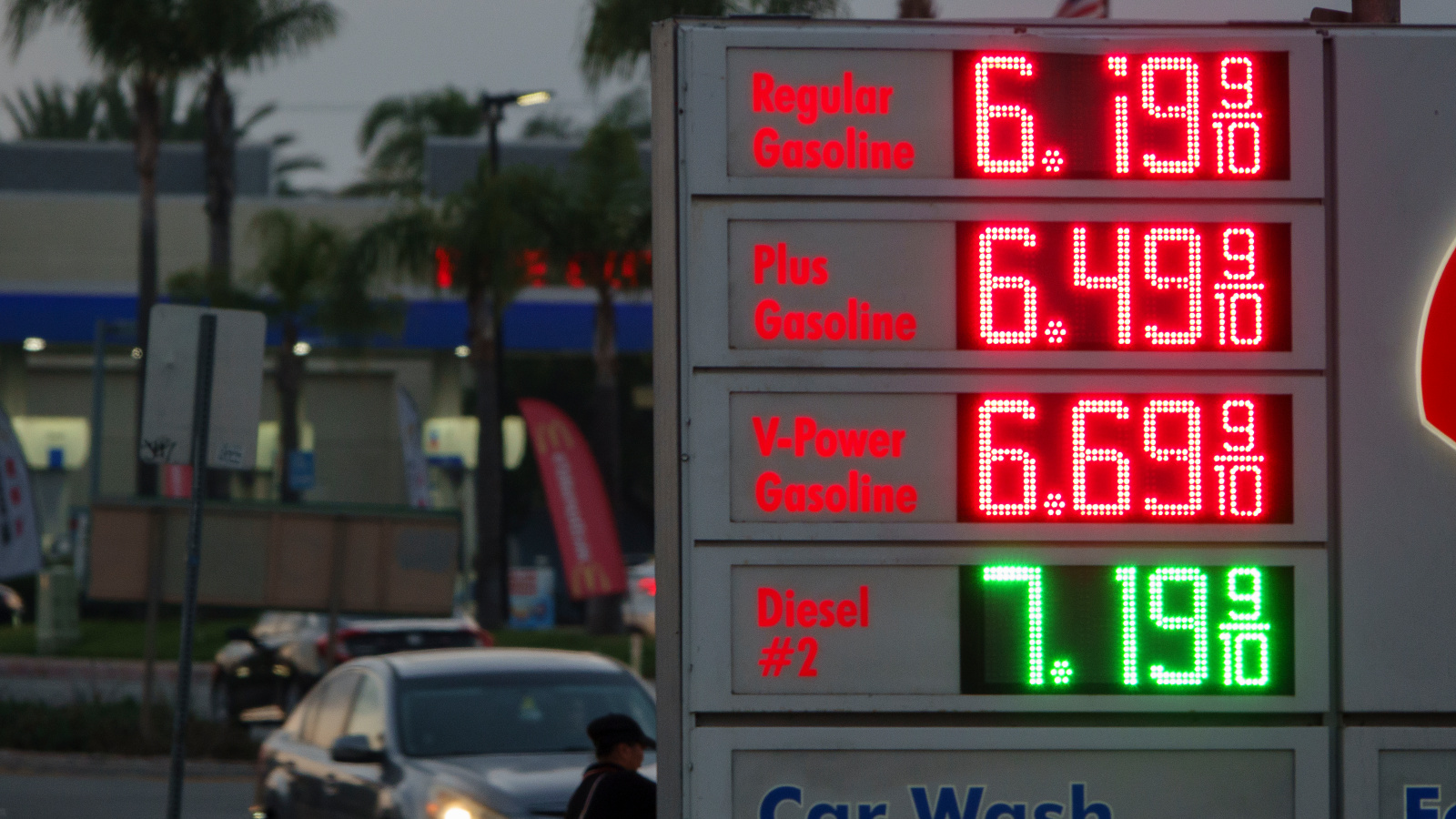
 prevented an out-of-control price spiral, giving importers time to procure more oil from other nations. They also likely saved Asian countries from needing to impose extended periods of rationing the way the United States had to do during the oil crisis of the 1970s, the largest previous disruption to the world’s oil supply.
 keep airlines supplied, but that means they have also produced less gasoline for cars. As the U.S. heads into the peak summer driving season, its gasoline inventories are as low as they have been in a decade. Supplies could drop even lower this fall as companies perform delayed maintenance on their hard-working refineries, said Bob McNally, the founder of the analysis group Rapidan Energy Group, who also advised the administration of President George W. Bush on oil policy.

![Smoke rises after Iran launched a missile attack targeting the headquarters of the U.S. Navy’s Fifth Fleet in Manama, following what it described as retaliation against U.S. and Israeli strikes, in Manama, Bahrain on February 28, 2026. [Stringer - Anadolu Agency]](https://i0.wp.com/www.middleeastmonitor.com/wp-content/uploads/2026/03/AA-20260228-40692011-40692008-IRAN_LAUNCHES_MISSILE_STRIKE_ON_US_FIFTH_FLEET_HEADQUARTERS_IN_BAHRAIN.jpg?fit=920%2C613&ssl=1)