23.4 C
London
Tuesday, July 21, 2026
Home Blog

When your vehicle outlives its cloud: What happens next?

0
when-your-vehicle-outlives-its-cloud:-what-happens-next?
When your vehicle outlives its cloud: What happens next?

Do you use your vehicle’s app to pre‑cool the cabin on a scorching day, confirm the doors are locked from bed, or have the car automatically call for help when the airbags go off?

Savor those connected, cloud‑based conveniences while you can—the clock is already ticking on their obsolescence. In a few short years, you may be driving today’s vehicle without many of the features you currently enjoy.

How we got hooked on the cloud

“Connected services”—cloud-based and networked features that let a vehicle communicate with external systems to deliver apps, data, and remote functions to drivers and passengers—have been around since the 1990s, when GM introduced OnStar as an option. Those early systems were mostly voice‑centric, but they still depended on centralized back‑end systems. Modern versions, which are fully data-driven and cloud-hosted, use much more sophisticated over-the-air data links to allow a considerably better feature set.

Today, virtually every volume brand offers some form of cloud-based telematics or a connected services stack. They can be deeply embedded, and most are fully integrated as the core of modern vehicle connectivity, supporting over-the-air (OTA) updates for the vehicle and app-based services for owners. As GM’s OnStar celebrates more than 30 years of service, a dozen others have joined, with each automaker branding its own unique services. HondaLink, Lexus Enform, FordPass, BMW ConnectedDrive, Volvo On Call, and Porsche Connect are just a few.

Despite their catchy marketing names, the systems are all functionally similar—each offers a very comparable feature set. Basics include remote lock/start, vehicle status and maintenance updates, location and tracking, and emergency assistance. Additional premium features include in-vehicle Wi-Fi hotspots, cabin preconditioning, stolen-vehicle tracking services, and concierge owner services.

A man sits in a BMW and looks at the BMW app on his phone

BMW’s service is called ConnectedDrive.

BMW’s service is called ConnectedDrive. Credit: BMW

Consumers have embraced the remote conveniences and demonstrated to automakers that they are more than willing to pay for them. After a bundled “free trial” following new vehicle delivery, manufacturers charge monthly fees or subscriptions for connected services.

Why automakers love a connected car

Of course, the OEMs get something out of it, too. Cloud-based services allow manufacturers to perform OTA software updates, eliminating the need to pay dealers for labor-intensive warranty repairs such as software-related safety recalls, bug fixes, and powertrain calibration errors. Instead of repairing one vehicle at a time, automakers can push updates to thousands of vehicles simultaneously. Plus, they can offer “product improvements” to owners, including UX changes, ADAS refinements, and new software versions for infotainment apps long after the start of production.

Vehicles require unique hardware for OTA and connected services, of course. The basic components of original equipment (OE) hardware in most passenger vehicles include a telematics box (TCU) with a 3G/4G/5G modem, a SIM/eSIM, and antennas—these comprise the “smartphone” component. There’s also a main onboard computer with flash memory and a boot system to install the new hardware (programmed to revert to early code if something goes wrong so the car doesn’t “brick” itself).

The TCU/main computer is tasked with sending signals over the vehicle’s internal wiring (CAN/Ethernet) to various ECUs, which are engineered to accept updates. For everyone’s peace of mind, robust security measures have been put in place to ensure that only genuine factory software can be installed and that hackers are locked out.

Subscription costs aside, consumers are generally pleased with cloud-based services. Connectivity improves convenience, comfort, and safety, while OTA updates keep vehicles feeling fresh and up to date. Unfortunately, that honeymoon phase doesn’t last forever—over time, vehicle-cloud-based connected services are scaled back or, worse, shut off entirely.

The day the signal dies

There is no single event or element that triggers the end—it’s a combination of things. As vehicles age, OE on-board hardware becomes obsolete as cellular providers replace older technology and automakers stop investing in aging back-end stacks and features. Manufacturer contracts for connected services can also expire. Taken together, these factors mean that time ultimately kills cloud-based vehicle services.

In 2022, many US cellular carriers, including AT&T, T‑Mobile/Sprint, and Verizon, shut down their 3G networks to create system capacity for upcoming 4G and 5G rollouts. When the 3G signal finally ceased, vehicles with the technology lost their connected cloud-based services (Porsche, Nissan, and Volkswagen were just a few of the automakers affected).

Lexus owners felt this shift acutely. The company’s Enform connectivity, which relied on the 3G network and was fitted to nearly all 2010–2017 models, went dark overnight because the hardware simply wasn’t forward‑compatible. (Lexus refunded owners for paid time left, while opportunistic dealers suggested that frustrated owners upgrade to a new Lexus that supported current technology.)

A person holds a smartphone in front of a Kia EV6.

Kia Connect.

Kia Connect. Credit: Kia

Last year, Acura announced that it would stop supporting vehicles with the older AcuraLink-backed stack and feature set, eliminating app-based remote access, service reminders, lock/unlock capabilities, “Find My Car,” and emergency call functions for many owners. The announcement itself was unremarkable, but many were stunned to learn that the technology was fitted to 2014–2022 models, including cars with current 4G hardware.

Even though the vehicles and their modems could connect, Acura chose to stop supporting the old AcuraLink backend stack and feature set because the company determined it wasn’t worth it. Obsolescence was not an issue. (Acura provided prorated refunds to the relatively small number of customers still on paid plans but offered no retrofit path or migration for those vehicles that lost services.)

In early 2022, BMW ended ConnectedDrive/BMW Assist services for vehicles equipped with 3G telematics. As the end date neared, owners were not permitted to renew their contracts. That February, when the official stop date arrived, all 3G services were terminated, even for those with vehicle connectivity that functioned perfectly. (BMW provided selected owners with other complimentary services; some vehicles with 4G-capable telematics were offered an upgrade at no charge, but many simply lost connectivity altogether.)

Life after the shutdown

When cloud-based connectivity goes away, it’s more of an inconvenience than a disaster. While remote conveniences and safety services end, they don’t serve an important role in the vehicle’s daily mechanical operation, meaning the powertrain, climate control, and accessories continue to work.

But what if you use those cloud-based features and need an alternative once the existing system shuts off? Thankfully, there are a handful of possibilities, including software/OTA updates, hardware/TCU replacements, aftermarket telematics and OBD devices, and smartphone apps to keep vehicles connected to the cloud.

Software/OTA updates are the easiest path to restore cloud services, but that assumes the vehicle has the proper hardware installed. Some 2017–2019 Genesis vehicles, including G80 and G90 models, used an SVLTE-type telematics system that could be upgraded with new software (the pure 3G-only units lost services when Verizon dropped its 3G network). Honda offered many customers free over-the-air software upgrades to 4G LTE in advance of AT&T’s cutoff. And GM brand owners, including those with Buick, Cadillac, Chevrolet, and GMC vehicles, were offered over-the-air software updates that preserved core OnStar services even after the first 3G network ceased.

Things are a bit more complicated with hardware upgrades, as swapping out the physical telematics control unit typically requires a visit to the dealership. Many 2016–2018 Subaru models equipped with the brand’s Starlink Safety & Security required a new 4G network telematics Starlink data communication module (DCM) to keep cloud-based services running (the remedy was offered at no charge to eligible subscribers).

Nissan offered a $199 2G‑to‑3G TCU upgrade, which was partially subsidized by the manufacturer, for many 2011–2014 Leaf models but then offered the same upgrade to 2015 Leaf owners for free. BMW told i3 owners that no official technology upgrade was available, so owners took matters into their own hands and bought up-to-date 4G TCUs and paid to have them coded—this cost upward of $1,400 per vehicle.

A finger presses the SOS button in a Toyota

Not all connected services are smartphone apps.

Not all connected services are smartphone apps. Credit: Toyota

Although less integrated with the vehicle’s systems, aftermarket telematics and diagnostic-port (OBD) solutions offer limited cloud connectivity to fill the gap left by OE services when they’re phased out. Unfortunately, most are engineered for fleet services—creating app-based trip logs, GPS tracking, driving-style scoring, and basic OBD fault-code data for remote monitoring and data logging. They’re effective in this role, but they generally can’t duplicate OEM functions such as remote lock/engine start, automatic crash notification, or SOS features because they sit on the OBD port rather than on the carmaker’s proprietary telematics stack.

When cloud-based connectivity services disappear, those who can’t update via software or hardware (or simply don’t want to pay subscription and fee costs) often adopt a simple handheld solution—they rely on their smartphone. Apple CarPlay and Android Auto have been cleanly integrated into nearly all the OE infotainment systems on the market for the past decade. Consumer acceptance is high, as the interactive screens duplicate smartphone interfaces, keeping the UI effortless. There are also regular OTA updates via the mobile subscribers’ 4G/5G service.

While remote lock/engine start and climate control preconditioning typically aren’t part of the Apple CarPlay and Android Auto equation, most smartphones offer some sort of crash‑detection and SOS functions, reincorporating some of the important safety features lost with OEM cloud-based systems. Mobile phones also offer Wi-Fi via mobile hotspots, adding another useful feature. Phone-driven connectivity, with cloud services routed through CarPlay and Android Auto, has proven both dependable and virtually seamless for some drivers.

A connected future with an expiration date

Cloud-based vehicle connectivity is growing. While only about half of the vehicles on the road today utilize the technology, industry experts predict that 90–95 percent of new vehicles will be Internet‑connected by 2030. Most vehicles, even those on the assembly line today, still rely on embedded modem-based hardware. That means they’ll all eventually face the same obsolescence challenges.

One proposed solution to the problem is modular software-defined architecture at the OE level, allowing consumers to physically swap hardware and upgrade software as technology advances. That welcome advancement would allow owners to upgrade their cloud-based connectivity and services rather than simply go dark.

Supreme Court ruling hands Trump sweeping new powers and limits Congressional oversight

0
supreme-court-ruling-hands-trump-sweeping-new-powers-and-limits-congressional-oversight
Supreme Court ruling hands Trump sweeping new powers and limits Congressional oversight

Donald Trump recently took to his Truth Social platform to celebrate a Supreme Court judgment. In response to the court’s decision in Trump v Slaughter on June 29, he posted: “90 years of precedent has been COMPLETELY AND UNEQUIVOCALLY OVERRULED, greatly increasing Presidential Power at a time when it is most needed!”

The US president is famously hyperbolic, but this time he did not exaggerate. His reading of US constitutional law was entirely correct. The court overruled its own precedent set in 1935 and held that the president had the power to fire federal trade commissioner Rebecca Slaughter “at will”.

Slaughter was one of two Democratic members of the commission sacked by Trump. The president invoked his powers under Article II of the constitution and said that their continued service was “inconsistent” with the “administration’s priorities”.

She sued Trump and other administration officials on the grounds that Congress, by statute, had said that a commissioner of the independent agency could only be fired “for cause”, meaning there had to be a proven reason to terminate her.

In 1935, in Humphrey’s Executor v United States, the court held 9-0 that then-president Franklin D. Roosevelt did not have the power to fire Federal Trade Commission (FTC) commissioner William Humphrey. Roosevelt had asked Humphrey to resign because he believed that his administration’s agenda for the FTC would be “most effectively carried out with personnel of my own selection”.

But when Congress established the FTC, it insulated the agency’s political independence by design. Commissioners could only be fired for “inefficiency, neglect of duty, or malfeasance in office”.

Overruling the precedent set by Humphrey’s Executor gives the president individual authority over great swaths of the administrative state. Since the FTC was established, Congress has created dozens of “independent agencies” operating under the same “for cause” rule to protect their independence.

The decision is a triumph for the US Supreme Court’s conservative supermajority of six justices. Their aim is to restructure the US government according to the “unitary executive” theory of the constitution. This theory holds that when the framers of the constitution “vested” the power of the executive in a president, they intended that the power and responsibility for executing the laws of the United States would ultimately be held by one man.

Under this theory, the president must be able to control the entire executive branch, including its independent agencies. Ironically, given the No Kings protests against Trump, the version of history promoted by this Supreme Court under the leadership of the chief justice John Roberts, maintains that the framers did this because only a single, all-powerful president could resist a return to a monarchy.

Trump posted: “The Republican Party was treated very fairly by the United States Supreme Court. Thank you for your attention to this matter!” Overruling Humphrey’s Executor was included in Project 2025, the blueprint drawn up by ultra-conservative thinktank the Heritage Foundation for Trump’s second term.

The conservative legal movement could be confident that this aim would be well received by the court. Roberts had championed the unitary executive agenda since his days in Ronald Reagan’s justice department in the 1980s.

Unprecedented power

Justice Sonia Sotomayor, joined by justices Kagan and Jackson, dissented from the Slaughter decision. She wrote in her dissenting opinion the court “gives the President a power unknown even to the English Crown against which the Founders revolted”. In the dissenters’ view, for at least the past 140 years Congress and the president, together, had set up independent agencies that did not rely “on who is disfavored or owed a favor by those in office”.

The US Supreme Court had approved “for cause” requirements in statutes as constitutional in 1935. But only now did the court decide that the president, congress and the court had all been “acting in open defiance of the Constitution all this time”.

People walk near the US Supreme Court building in Washington DC..

Conservative supermajority: the US Supreme Court building in Washington DC. EPA/Shawn Thew

Under the guise of upholding the principle of “separation of powers”, the court reinterpreted the constitution and shifted power away from Congress to the president.

Already in Trump’s second term, the court has given the president unprecedented power at the expense of Congress. Following on from its decisions on abortion and voting rights, the court has continued to overrule its own precedent and reinterpret the US constitution in line with the public policy objectives of the conservative legal movement.

In two years, Trump will be out of office and a Democrat might even replace him. But the court’s decisions will remain, and the only check on presidential power will be the president’s own morality and self-restraint.

Hezbollah faces a reckoning as support wanes in Lebanon

0
hezbollah-faces-a-reckoning-as-support-wanes-in-lebanon
Hezbollah faces a reckoning as support wanes in Lebanon

Hamas announced this month it would dissolve its government in Gaza to transfer control to a US-backed Palestinian committee. This was one of the mandates of the US-brokered peace deal between Israel and Hamas last year.

While this means Hamas will not be operating in a governance role in the strip, it does not necessarily mean its military wing will be dissolved or disarmed.

The move could just be symbolic, a way for Hamas to rebrand itself. Critics say a true transfer of power in Gaza would require dismantling Hamas’ security apparatus.

Regardless of how it plays out, Hamas appears to be taking a step back in Gaza. Will Hezbollah now follow its lead in Lebanon?

Hezbollah under pressure

Since the start of Israel’s war on Gaza, Hezbollah and Hamas have projected a united front as part of Iran’s axis of resistance.

Iran and Hezbollah share a support base. Image: Vahid Salemi / AP via The Conversation

Like Hamas, Hezbollah has suffered significant leadership and military losses during the war. However, it has still been able to maintain its organizational cohesion and military capability.

Israel and Hezbollah agreed to a tenuous ceasefire in 2024, but this fell apart earlier this year after the US and Israel launched their war against Iran.

Last month, Israel and Lebanon signed another ceasefire agreement – without Hezbollah – that called for the militant group to disarm. However, Hezbollah’s leader said his group would continue fighting until Israeli troops withdrew from Lebanon.

With pressure now building on Hezbollah, the group will need to recalibrate its role in both Lebanon and the region.

Specifically, it will have to re-examine the tenuous balance it strikes between its military activism, political legitimacy and strategic position as part of Iran’s proxy network. There are a number of scenarios for how this could play out.

Political transformation

Hezbollah may seek to transform itself into a purely political organization in Lebanon, relinquishing its military wing altogether. This would give the group new legitimacy in the region and improve its relationship with the Persian Gulf states in particular.

However, it would also fundamentally alter Hezbollah’s core ideological identity – the group emerged in the 1980s as an armed militia to liberate southern Lebanon from Israeli occupation – and its relationship with Iran.

This seems unlikely in the short term, given Hezbollah continues to receive significant military, diplomatic and political support from Iran. In the eyes of Hezbollah supporters, Israel’s ongoing military operations in Lebanon also demonstrate a continued need for a military wing.

Becoming just a political party would also end Hezbollah’s ability to sit on the fence in Lebanon. The group has long enjoyed the ability to criticize the Lebanese government for being corrupt without being held accountable itself.

As yet another party with no policy platform or political program, it could fail miserably.

Re-branding its military wing

Instead of relinquishing its armed wing, Hezbollah could rebrand it as a national necessity to deter against further Israeli attacks. This could be successful if the group portrays itself as compensating for Lebanon’s weak army, leaning into its narrative of resistance.

But this would only be achievable if the Lebanese people continue to see Israel as the principal threat and Hezbollah as a nationalist organization. And this appears to be shifting.

Hezbollah’s popularity has diminished recently due to the number of wars it has dragged Lebanon into. Many Lebanese also believe Hezbollah is prioritizing Iran’s regional agenda over Lebanon’s national interests.

If Hezbollah’s public support continues to erode, the group could become increasingly marginalized. Afraid to criticize the group in the past, some of Hezbollah’s core supporters in Lebanon’s Shiite community may become even more disillusioned with it.

This may accelerate if the party loses its ability to provide financial support to its base. For some Lebanese, this is the main reason they back the organization in the first place.

If Hezbollah becomes more marginalized, pressure to disarm would come from within Lebanese society itself – not just the international community.

Maintaining the status quo

Lastly, the ceasefire agreements between Israel and Lebanon could falter, leading to renewed fighting between Hezbollah and Israel.

This could result from the renewed hostilities between Iran and the US in recent days, Hezbollah’s continued rejection of any agreement between Israel and Lebanon, or its refusal to disarm.

Lebanon’s government has been under extreme pressure from the US and Israel to disarm the group by whatever means necessary. But the specter of another devastating civil war has so far prevented its army from disarming the group by force.

Iran plays a role in this. Even though Hezbollah has tried to project an image of operating semi-autonomously from Iran, its future very much depends on Tehran – and how necessary the Iranian regime believes Hezbollah continues to be.

For the time being, Hezbollah remains a vital asset to Iran’s strategic defense. Until that changes, Hezbollah is not going anywhere.

Mariam Farida is lecturer in security studies, Macquarie University

This article is republished from The Conversation under a Creative Commons license. Read the original article.

The Anti-Klan Law Comes for Trump’s Israel Lobby | Palestine This Week

0
the-anti-klan-law-comes-for-trump’s-israel-lobby-|-palestine-this-week
The Anti-Klan Law Comes for Trump’s Israel Lobby | Palestine This Week

In this episode, we examine Trump’s drastically reduced Gaza recovery plan, growing criticism within Hamas over the consequences of 7 October and Israel’s covert efforts to downplay the scale of death, starvation and destruction in Gaza.

In this episode, we examine Trump’s drastically reduced Gaza recovery plan, growing criticism within Hamas over the consequences of 7 October and Israel’s covert efforts to downplay the scale of death, starvation and destruction in Gaza.

We also discuss the failure of a major pro-Israel influence campaign in the US, rising congressional resistance to military aid, Mahmoud Abbas’s proposed Palestinian elections, legal challenges to US sanctions on the International Criminal Court and Mahmoud Khalil’s case against Trump administration officials and pro-Israel groups.

The episode also explores Palestinian claims to ownership of land designated for a new US embassy in Jerusalem, reports that Trump urged Israel to withdraw from Syria and Lebanon and FIFA corruption.

WATCH: ‘Israel Loses Europe and America, Gains Somaliland’ | Palestine This Week

India’s first privately developed rocket reaches orbit on dramatic debut launch

0
india’s-first-privately-developed-rocket-reaches-orbit-on-dramatic-debut-launch
India’s first privately developed rocket reaches orbit on dramatic debut launch

Indian space officials celebrated the debut flight of Skyroot Aerospace’s Vikram-1 rocket, India’s first fully commercial satellite launcher, as a “grand success” Saturday after an on-target climb into a 280-mile-high orbit following liftoff from an island spaceport in the Bay of Bengal.

The Vikram-1 lifted off from India’s primary spaceport on Sriharikota Island at 1:35 am EDT (06:35 UTC) Saturday, around midday at the launch base along India’s southeast coast. The launch was delayed more than a half-hour to resolve a last-minute technical problem. The countdown resumed, culminating in the command to ignite Vikram-1’s solid-fueled first stage booster to propel the rocket off the launch pad.

Vikram-1 is modest in size compared to India’s larger workhorse rockets. Skyroot’s rocket stands about 72 feet (22 meters) tall, with the capability to place payloads of up to 770 pounds (350 kilograms) into low-Earth orbit. This makes Vikram-1 somewhat larger than the Electron launch vehicle developed by Rocket Lab, the world’s most successful dedicated small satellite launcher.

The flight Saturday went off without any major problems. Three solid-fueled rocket motors fired in succession to reach space, then a small liquid-fueled fourth stage ignited and accelerated to orbital velocity, some 17,000 mph. Live views from onboard cameras showed each phase of the launch sequence.

The only sign of anything unusual came during the separation of the rocket’s third stage from its fourth stage. The spent third stage motor appeared to remain near the fourth stage during a brief coast, rather than backing away to a greater distance. Nevertheless, the fourth stage did its job, firing its 3D-printed engine to reach an orbit approximately 280 miles (450 kilometers) high at an inclination of 60 degrees to the equator, quite close to preflight predictions, according to Skyroot Aerospace. US military tracking data confirmed the rocket’s successful arrival in orbit.

Skyroot Aerospace’s Vikram-1 rocket lifts off Saturday from the Satish Dhawan Space Center on Sriharikota Island, India.

Skyroot Aerospace’s Vikram-1 rocket lifts off Saturday from the Satish Dhawan Space Center on Sriharikota Island, India. Credit: R. Satish Babu/AFP via Getty Images

Beating the odds

“We achieved one of the biggest milestones ever in India’s space sector—the first private orbital rocket reaching orbit on the very first attempt,” said Pawan Kumar Chandana, Skyroot’s cofounder and CEO, in remarks to the company’s launch team. “It still feels like a dream, and you all made this dream happen.”

The first flights of new private orbital-class rockets don’t have a great track record. It took SpaceX four tries before reaching orbit with the Falcon 1 rocket for the first time in 2008. Rocket Lab’s Electron didn’t make it to orbit on its first launch in 2017. Blue Origin beat the odds with the inaugural flight of its heavy-lift New Glenn rocket in 2025, but the company’s engineers had previous experience with numerous launches of the smaller New Shepard suborbital rocket.

“On the first attempt, reaching orbit, I never thought it was possible,” Chandana said. “Skyroot’s team made it possible. A big, big, big shoutout to this phenomenal team, which made it happen. In fact, this launch was nothing short of a suspense movie.”

Skyroot officials set humble goals for the first launch of Vikram-1. In a press kit released before the flight, the company said its primary objective for the launch was to complete a successful liftoff, clear the tower at the launch site, and gather maximum data during ascent.

“The mission objective was only to lift off and clear the tower,” said Pawan Goenka, chairman of IN-SPACe, a government organization set up in 2020 to promote India’s commercial space industry. “That was only about 100 meters, but what we went to was 450 kilometers, and it also released all the satellites that were supposed to release. So the mission was absolutely perfect.”

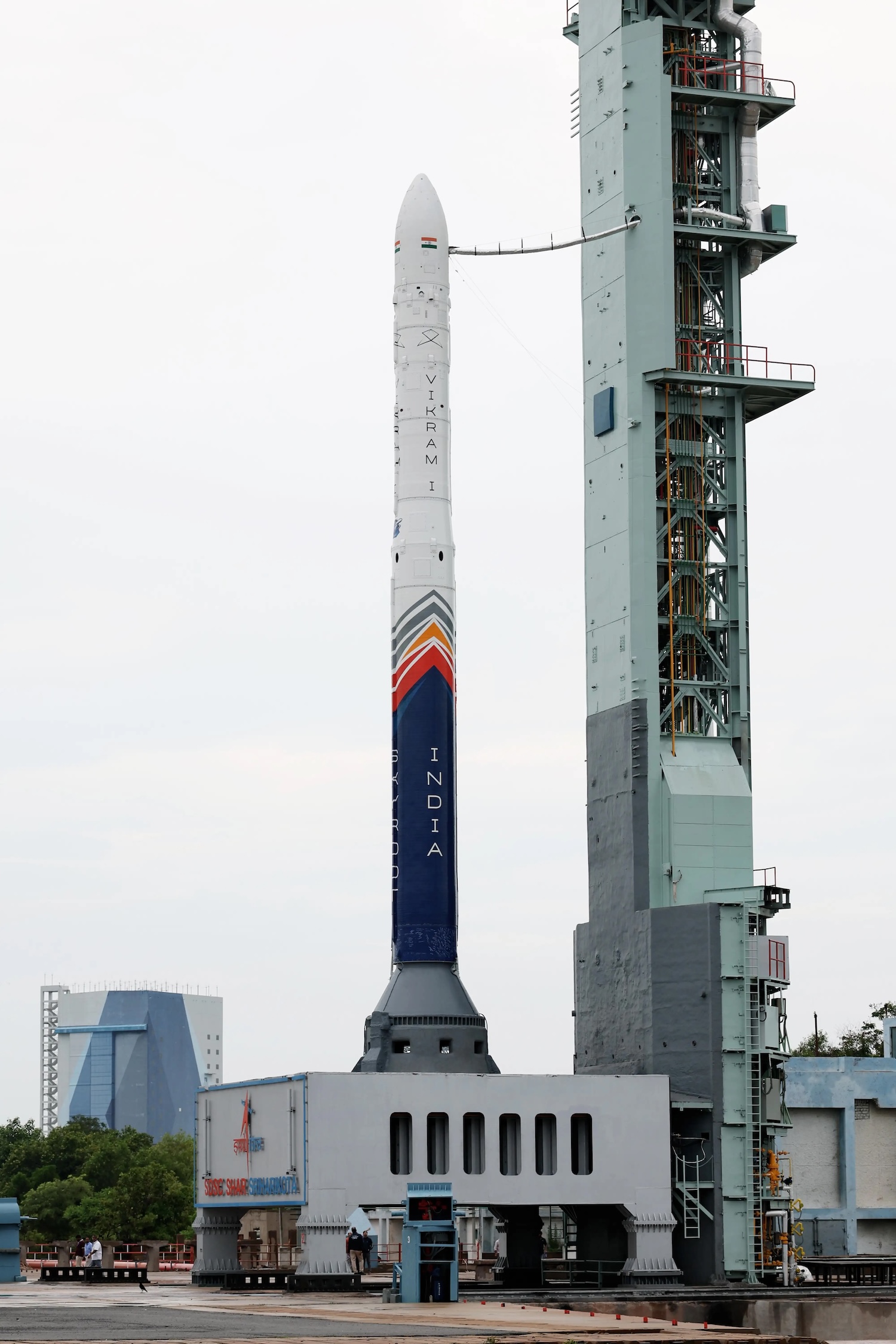
Skyroot Aerospace’s Vikram-1 rocket on its launch pad.

Skyroot Aerospace’s Vikram-1 rocket on its launch pad. Credit: ISRO

In a statement, the Indian space agency, ISRO, said it offered “handholding and support” to the Skyroot venture by providing access to solid rocket motor casting and test facilities at ISRO’s spaceport on Sriharikota. ISRO also allowed Skyroot to launch from one of its two active launch pads.

Painted blue and white, the Vikram-1 is made of lightweight carbon composite materials and is named for the Indian physicist Vikram Sarabhai, considered the father of the Indian space program. Skyroot successfully launched a suborbital rocket, Vikram-S, to an altitude of nearly 300,000 feet (90 kilometers) in November 2022.

The Vikram-1 builds on lessons learned with Vikram-S. Skyroot’s future roadmap includes the Vikram-1U, with additional strap-on solid rocket boosters to haul heavier payloads, and the Vikram-2, which will debut a cryogenic upper stage to reach a payload capacity of 2,000 pounds (900 kilograms) to low-Earth orbit. The initial purpose of the Vikram rocket family is to “deliver dedicated and responsive launch services for small satellites,” Skyroot officials wrote in the press kit for Saturday’s mission.

But the company has loftier ambitions. In an interview ahead of the first Vikram-1 launch, Chandana told Ars his aspiration for Skyroot involves larger liquid-fueled fully reusable rockets, with a “daily cadence” from multiple countries.

Skyroot will need a lot more funding to realize that dream, but Saturday’s launch showed the company has ingredients required for a successful launch company. Saturday’s launch vaulted Skyroot to a plane above any other space startup in India, or, for that matter, in any country outside of the United States and China. Skyroot has, so far, raised approximately $160 million in capital, bringing the company’s valuation to $1.1 billion. Skyroot now has more than 1,000 employees, mostly working out of the company’s headquarters in Hyderabad. The average age of Skyroot’s workforce is 28 years old.

This view of the payload deck of the Vikram-1 rocket’s upper stage was captured moments after orbital insertion Saturday. The rocket deployed two small CubeSats and hosted several more payloads that remained attached to the upper stage.

This view of the payload deck of the Vikram-1 rocket’s upper stage was captured moments after orbital insertion Saturday. The rocket deployed two small CubeSats and hosted several more payloads that remained attached to the upper stage. Credit: Skyroot Aerospace

Skyroot’s breakthrough launch comes as India’s government, led by Prime Minister Narendra Modi, seeks to supercharge the country’s space industry. India has long had a robust space program, with government-developed rockets such as the Polar Satellite Launch Vehicle and the larger LVM3 often attracting commercial customers from the United States and Europe. India became the fourth country to successfully land a spacecraft on the Moon in 2023, and is working on an oft-delayed human-rated crew capsule to fly astronauts to low-Earth orbit.

Modi has told the Indian space industry to increase its annual launch total from about five launches per year to 50 before the end of the decade. The prime minister called Chandana and congratulated the Skyroot team after Saturday’s launch.

“This is a defining moment in India’s space journey,” Modi said in a statement. “The growing participation of our private sector is opening new frontiers and accelerating innovation. This achievement will encourage countless youngsters to dream bigger and innovate fearlessly.”

Chandana, a former engineer at India’s space agency, founded Skyroot in 2018 with another ISRO scientist, Naga Bharath Daka. They decided to focus on developing a solid-fueled launcher first, optimizing for what Chandana described as the lowest development time and the lowest cost per launch. “We wanted to get to an orbital launch vehicle in a few years,” Chandana told Ars.

“It’s a test launch,” he said at the time. “Statistically, the first launch from a private company almost always fails. It’s very difficult to succeed with all new systems. But I think we have done everything we can do to ensure the first launch goes well.”

Indeed, the first launch went very well, exceeding all expectations. A second Vikram-1 launch could happen before the end of the year, Chandana said.

“This is a 100 percent designed in India rocket, a 100 percent made in India rocket, built by 100 percent Indian people, for India and for the world,” Chandana said after the launch Saturday. “This was a historic moment for India, but also a very proud moment for the global space sector because the world needs more access to space.”

Romania says ship heading to Ukraine struck off its coast

0
romania-says-ship-heading-to-ukraine-struck-off-its-coast
Romania says ship heading to Ukraine struck off its coast


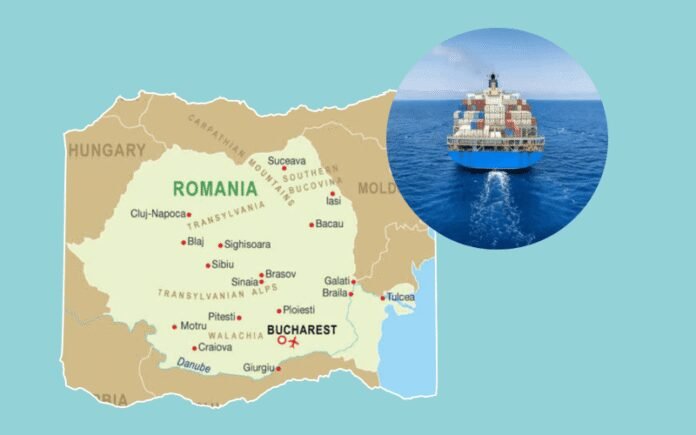
A Liberian-flagged vessel sailing from Egypt to Ukraine has been hit off Romania’s ​coast in an attack likely linked to Russia’s ‌war on Ukraine, Romanian President Nicusor Dan said on Tuesday.

This year, Russian and Ukrainian drones have repeatedly ​breached the airspace and territorial waters of Romania, ​officials in the European Union and NATO ⁠member state neighbouring Ukraine have said.

“Last night, ​the LPG Gas Lisbon, a Liberian-flagged vessel, was ​hit outside Romanian territorial waters, approximately 20 nautical miles (40 km) off the Romanian coast,” Dan wrote on ​X.

Dan said Romanian rescuers had evacuated the ​crew, including three injured members, and a tugboat had been ‌dispatched ⁠to ensure the vessel did not drift and pose a danger to navigation.

“State institutions are on alert and will clarify the circumstances, ​causes and ​responsibilities related ⁠to this serious incident, most likely part of the illegal war ​of aggression of the Russian Federation ​against ⁠Ukraine,” Dan said.

Russia, which launched a full scale invasion of Ukraine in 2022, has either denied ⁠responsibility ​for reported attacks on ​Romania, said they were carried out by Ukraine, or blamed ​Ukrainian “provocation”.

Source:  Reuters

Iran becoming the ‘forever war’ Trump promised to avoid

0
iran-becoming-the-‘forever-war’-trump-promised-to-avoid
Iran becoming the ‘forever war’ Trump promised to avoid

When Donald Trump returned to the White House, he promised to avoid another Middle Eastern “forever war.” After the costly experiences of Iraq and Afghanistan, that pledge resonated with an American public weary of prolonged military intervention.

For a brief moment, it appeared that this promise might be realised. The memorandum of understanding (MoU) signed by the US and Iran on June 17 seemed to offer a pathway away from escalating confrontation. Markets stabilised, regional tensions eased and there was cautious optimism that Washington and Tehran had stepped back from the brink.

That optimism has proved remarkably but unsurprisingly short-lived. US military strikes have resumed and Iran has retaliated against American and its allies across the Gulf. Iran’s proxy allies, the Houthis, have declared themselves ready to close the Red Sea chokepoint at the Bab-el-Mandeb Strait, which has provided an alternative transit route for some oil exports, particularly from Saudi Arabia.

Washington continues to combine military pressure with calls for renewed negotiations. But rather than representing the collapse of an isolated peace initiative, these developments may confirm the reality of grey zone conflict – where diplomacy manages war rather than ends it.

When Americans think of forever wars, Iraq and Afghanistan understandably dominate the discussion. Those conflicts were characterized by invasions, prolonged occupations, attempts at nation-building and the deployment of hundreds of thousands of troops over many years. Their enormous political, financial and human costs eventually became impossible to sustain.

The confrontation with Iran is fundamentally different. It is unlikely to require the occupation of territory and no serious or sustained attempt to directly remake the Iranian state.

Instead, it is fought through air strikes, cyber operations, sanctions, maritime confrontation, intelligence activity and proxy warfare. Military escalation is followed by diplomacy, diplomacy gives way to renewed confrontation, and each episode is presented as a separate crisis.

Viewed collectively, these episodes are better understood as the latest phase of a strategic confrontation that began with the 1979 Iranian Revolution rather than as isolated crises. The conflict has evolved over the years through sanctions, proxy warfare, covert operations and cyber conflict into a more direct military confrontation.

The repeated breakdown of de-escalation efforts is often attributed to mistrust or diplomatic failure. Both undoubtedly matter, but they do not fully explain why the MoU has unravelled so quickly.

Many of its core provisions have become sources of dispute. Israel has continued military operations in Lebanon, despite expectations that regional hostilities would subside. Washington initially signaled greater economic flexibility towards Iran, including easing restrictions on oil exports and discussions surrounding Iranian assets. Yet sanctions have subsequently expanded and further economic measures have been introduced.

From Tehran’s perspective, these actions represent a breach of the spirit – and, in some cases, the letter – of the agreement. From Washington’s perspective, they are responses to continued Iranian activity that it considers destabilising.

The Strait of Hormuz illustrates how quickly ambiguity can become renewed confrontation. Article 5 of the MoU envisaged Iran facilitating the safe passage of commercial shipping through the waterway. Commercial traffic initially increased following the agreement.

But disagreement soon emerged after Oman – in coordination with the International Maritime Organization and with US backing – established a temporary maritime corridor closer to the Omani coast.

Tehran viewed this as inconsistent with the agreed framework and argued that it undermined Iranian responsibility for administering safe passage. Washington rejected that interpretation, maintaining that additional security measures were necessary to protect international shipping.

The competing interpretations rapidly became another source of escalation.

The conflict itself has also evolved. What began largely as strikes against military infrastructure has increasingly extended to facilities with direct consequences for civilian life. This has included energy infrastructure and desalination plants that are essential to freshwater supplies across parts of the Gulf.

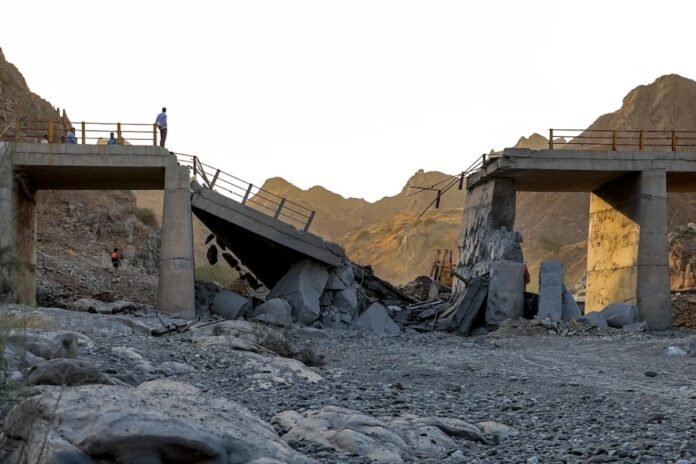
Transport infrastructure, including bridges, has also been targeted. This has prompted debate among military analysts about whether operational objectives are expanding beyond coercive signaling – using limited military force to pressure or influence an opponent’s behavior – towards broader military aims. It has also raised questions about whether some attacks could violate international humanitarian law and, depending on the circumstances, amount to war crimes.

While the expansion of US strikes in this way does not in itself demonstrate that a US ground offensive is imminent, it reflects a widening conflict whose effects increasingly reach civilian populations.

Diplomacy is managing conflict, not resolving it

The deeper problem is that the strategic objectives of the main players here remain fundamentally incompatible.

The US continues to insist that Iran’s nuclear program and regional influence must be constrained. Iran regards those same capabilities as essential to its security and deterrence. Israel continues to view a strategically stronger Iran as an unacceptable security threat.

These objectives cannot all be achieved simultaneously. As a result, diplomacy struggles – not because negotiators lack skill, but because they are attempting to reconcile goals that remain at odds. The MoU temporarily reduced tensions, but it did not alter the structural realities driving the conflict.

This has important implications for how the current crisis should be understood. Much of the debate focuses on whether the latest escalation will produce a wider regional war. That possibility cannot be dismissed.

Yet another scenario may be equally, if not more, plausible. The US and Iran are settling into a prolonged cycle of calibrated confrontation that lasts far longer than many currently anticipate.

Trump promised to end America’s forever wars. Ironically, his presidency may instead come to symbolize the evolution of a new kind of forever war without a clearly defined beginning or end.

The greatest danger may therefore not be another Iraq. It may be the gradual normalization of an enduring conflict that repeatedly disappears from the headlines, only to return in new forms because the political conditions necessary for genuine peace have yet to emerge.

This is a new normal for a US foreign policy establishment that retains militarist mindsets, a massive global military capacity and footprint, and values global primacy in an age of power shifts towards a more multipolar world.

Bamo Nouri is honorary research fellow, Department of International Politics, City St George’s, University of London and Inderjeet Parmar is professor in international politics, City St George’s, University of London

This article is republished from The Conversation under a Creative Commons license. Read the original article.

My Maddening Quest to Find Out if Blueberries Come From Farms Where Workers Were Harmed

0

My Maddening Quest to Find Out if Blueberries Come From Farms Where Workers Were Harmed

Over the past year, I’ve reported about crimes against farmworkers who have come to the U.S. legally from Mexico and Central America. I haven’t stopped thinking about how they suffered. Their wages were stolen, guns were pointed in their faces, and one woman I met was held captive, raped and nearly killed.

As I wrote those stories, there was something else I couldn’t stop thinking about — something I keep thinking about: Whenever I go to the grocery store, I have no easy way of knowing if the fruits and vegetables I put in my cart are part of the problem I’ve documented.

Footage from labor contractor Javier Sanchez Mendoza in 2018 on a blueberry farm. Mendoza was charged in a federal indictment and pleaded guilty to conspiracy to engage in forced labor. via Facebook

I eat a lot of blueberries, which happen to be the fruit grown most in the state where I live, Georgia, and the state where I tracked these abuses. During the long drives back and forth between my home in Atlanta and my reporting trips in the rural South, I had a lot of time to consider how little we know about the farms that feed us.

Max Blau/ProPublica

I struggled with the disconnect between the problems on America’s farms and the limited awareness of those problems in most American households. I felt that disconnect in my own kitchen, every time I reached for the berries in my fridge.

I wanted to know: With enough digging, would it be possible to determine if the blueberries I’m buying come from farms with a record of mistreating workers?

Federal regulators don’t require blueberry brands to disclose on their packaging any information about the individual farms they buy from. So I had to spend time — a lot of time — trying to figure that out.

I started by looking at labels on the blueberry pints in my grocery stores.

I snapped photos. I researched the brands. I read government records.

Max Blau/ProPublica

If you look closely, you’ll see that the pints often list the state where the berries are grown or the city they’re distributed from. But not the farm itself.

Mauricio Rodríguez Pons/ProPublica

As it turns out, the pints sold by a specific brand aren’t always sourced to a single farm. To keep up with demand, and to help keep prices low, brands buy berries from a whole bunch of farms and sell them under a single label.

Illustration by Andrew B. Myers for ProPublica

That makes it even harder to know if the berries you’re buying come from farms where workers were harmed.

I was able to trace one brand’s berries back from my grocery store to an individual farm. I’m not going to name that brand, though, because its practices are hardly unique. Sure enough, I found that the brand did buy berries from a farm that had hired a labor contractor, and that contractor was responsible for some of the abuses in one of America’s largest labor trafficking prosecutions.

That case, which I wrote about at length, revealed that thousands of foreign farmworkers had been illegally charged fees by labor contractors to work in the U.S. Some were forced to pick crops for little to no pay in what prosecutors described as a form of modern-day slavery.

This wasn’t the first case of the abuse of farmworkers at the hands of labor contractors. Or the last. Many of these harms might have been prevented if the workers had received the protections they were promised by the U.S. government. And there have been no substantial reforms to address the abuses, either.

The reason contractors exist in the first place is because farmers struggle to find workers in the U.S.

Many farmers speak only English. So they end up hiring contractors to bring foreign laborers to the U.S. and oversee their work.

That outsourcing can shield farmers from responsibility for — or even awareness of — harm against their workers.

Labor regulators have repeatedly failed to make sure that contractors do what the government requires them to do: keep workers safe and pay them what they’re promised.

Many farmers, brands and grocers were reluctant to talk to me about these abuses. I spoke with experts to see if there are ways for consumers to know if the people picking their blueberries are being mistreated.

Those experts, who study farm labor conditions and food supply chains, said the gold standard for preventing worker abuse is the Fair Food Program. Under the program, supermarkets and other corporate buyers commit to paying a little more for produce — a cost so negligible, at a few pennies per pound, that one expert said it shouldn’t drive up prices.

For those few pennies, grocers get crops from farms that offer their workers stronger protections.

Two farmworkers wear long pants and long sleeves, and bend over a row of tomato plants, with red buckets at their feet. Green tomatoes are scattered on the dirt around them.
Pacific Tomato Growers is one of a few dozen farms to participate in the Fair Food Program, which protects workers against abuse and exploitation. Audra Melton for ProPublica

Fruits and vegetables from those farms are labeled with a green sticker of a woman holding a basket of tomatoes. The stickers give consumers like me a clear indication that the workers who picked that produce were treated fairly.

When I’ve found these tomatoes in my grocery stores, they don’t cost measurably more than others without the label.

Tomatoes with “Fair Food” stickers in a wooden bowl.
Mauricio Rodríguez Pons/ProPublica

Dozens of farms have signed on to the Fair Food Program, and participation in it has been shown to prevent abuse in the fields.

But only a few small blueberry farms participate in the program.

Until that or something else changes, consumers will know virtually nothing about the farms their blueberries come from. And they won’t be able to make choices that could make a difference in the lives of the people who pick them.

ProPublica reached out to more than 75 blueberry brands, grocery stores, fast-food chains, farmers, trade groups and labor contractors over the course of reporting this series.

Only one brand responded. Dole wrote in a statement that it requires contract farmers to comply with labor laws to protect “worker welfare.” Dole added it can trace berries back to the farms where they came from but that it has not made that information available to consumers.

ProPublica also reached out to over 30 of America’s largest grocery and fast-food chains to ask why they haven’t joined the Fair Food Program or expanded their limited participation. None of the companies answered questions about the program.

Over two dozen trade groups declined to talk about why so few farmers participate in the program. Some have opposed efforts by regulators to enact protections like the ones that the program requires. They said the changes would “burden the whole industry for a few bad apples” who disregarded the rights of workers.

Israel Criticizes Australian Labor for Focusing on Israel While Downplaying Hamas 

0
israel-criticizes-australian-labor-for-focusing-on-israel-while-downplaying-hamas 
Israel Criticizes Australian Labor for Focusing on Israel While Downplaying Hamas 


Israel issued strong criticism of the Australian Labor Party’s proposed policy platform ahead of its national conference, saying the draft presents an unbalanced account of the Israeli-Palestinian conflict by focusing heavily on Israel while failing to adequately address Hamas’ role and the responsibilities of the Palestinian leadership. 

In a four-page statement released by the Israeli Embassy in Canberra, Israeli officials challenged several proposals set to be debated at the party’s conference this week, arguing that the draft does not accurately reflect the causes and conduct of the conflict. 

“The Embassy of Israel notes these policy motions are still in draft form, and will continue to engage constructively with the Australian Labor Party through the usual diplomatic channels,” the statement said. 

“However, the embassy respectfully submits that several elements of the draft platform risk placing responsibility for the conflict on one party while giving insufficient attention to the decisions, conduct and continuing obligations of the Palestinian leadership and terrorist organisations such as Hamas.” 

The embassy also rejected what it described as allegations that Israel is committing genocide and objected to the emphasis placed on violence by Israeli settlers in the West Bank. 

Calling settler violence a “reprehensible but marginal phenomenon,” the embassy argued that the issue occupies an outsized place in the draft platform. 

“Those seeking peace would be better served to focus its scrutiny on the terrorism experienced by both Jewish and Arab Israelis at the hands of terrorist groups such as Hamas,” the statement said. 

The intervention comes before Labor’s triennial national conference in Adelaide, where delegates are scheduled to determine the party’s official positions on a range of domestic and international issues, including Israel and the Palestinians. 

Labor’s proposed 2026 platform expands significantly on the party’s 2023 document, which addressed the issue only in relation to recognizing a Palestinian state—a policy formally adopted by the Australian government last August. The new draft includes language opposing the annexation of Palestinian territory and calling for an end to settler violence and what it describes as “the occupation.” 

Israeli officials also pointed to changes made during the drafting process. A provision in an earlier version stating, “Hamas must disarm and can have no role in the State of Palestine,” was removed before the conference draft was finalized. The current version, however, still identifies Hamas as responsible for terrorism and violent extremism. 

Australian Foreign Affairs Minister Penny Wong declined to comment. 


Pay up or not? Ransomware surge has victims facing tough choices.

0
pay-up-or-not?-ransomware-surge-has-victims-facing-tough-choices.
Pay up or not? Ransomware surge has victims facing tough choices.

Nearly half of companies that are targets of a ransomware cyber attack end up paying a ransom to release their data or systems, according to 2025 research from cybersecurity group Sophos, while the median amount demanded is rising.

Globally, some jurisdictions are responding by banning payments to hackers. In the UK, for example, the government is advancing plans to prohibit public sector bodies and critical national infrastructure groups—including the National Health Service, local councils and schools—from making payouts.

The potential veto comes as ransomware hackers have become more advanced and meticulous in their targeting of companies, particularly vulnerable small and medium-sized businesses, over time.

“In 2026, the ransomware landscape has evolved into a highly sophisticated, corporate-style ecosystem,” says Haydn Brooks, chief executive of supply chain security group Risk Ledger. “While ransomware groups operate like smart B2B operations to ensure data return, the legal and sanction risks of paying are at an all-time high.”

This has been powered by the rise of malicious AI hacking tools such as WormGPT, FraudGPT and BruteForceAI, according to Dave Spillane, systems engineering director at Fortinet, who notes that confirmed ransomware victims rose 389 percent year-on-year in 2025, from around 1,600 in 2024 to 7,831 globally.

“In the time it would have previously taken to commit one ransomware attack, hackers can now target four separate organizations simultaneously,” he says.

“The cost per attack has dramatically decreased, commoditizing sophisticated attacks, whereas the cost to defend is increasing,” agrees Shashi Kiran, chief marketing officer of tech group Nile. “What required nation states earlier can be accomplished by individuals with half-baked skills leveraging the power of AI.”

Nevertheless, whether to pay out or not remains one of the most divisive areas in cybersecurity.

Jim Walter, a senior threat researcher at SentinelOne, says that his cyber security group takes a hard line against responding to ransoms.

“Paying extortive threat actors only strengthens the ecosystem and the entities that enable it,” he says, noting that threat actors cannot be trusted to delete data upon payment.

Re-extortion and the ongoing monetization of stolen data are commonplace, he adds. “Paying absolutely does not guarantee recovery, it actually encourages further crime and extortion.”

Others are less absolute. “Our concern with a ban is what happens when a payment ban is in place but data recovery is not feasible,” says Andy Maus, head of cyber recovery services at DriveSavers, which recovers hard drive data. “Situations are almost always more nuanced than a ban accounts for.”

When it comes to critical national infrastructure, for example, such as a water utility or power provider, the consequences for customers can be more serious if a ransom cannot be paid but data also cannot be recovered. “We can see how payment bans make sense where data recovery is a viable alternative; however, blanket prohibition has the potential to cause more harm than it prevents,” Maus says.

He notes that in North Carolina and Florida, where statewide bans were introduced in 2021 and 2022 respectively, “neither ban appears to have materially deterred criminal activity.”

Brooks at Risk Ledger warns that without critical national infrastructure payouts, cyber criminals will “aggressively pivot” to the more unregulated private sector.

If public bodies are banned from paying, “the cyber insurance market will inevitably shift,” he adds, “excluding these payouts and driving premiums sky-high as the costs dwarf the original ransom demands.”

There is now a growing market of services to support companies in their response to attacks, including ransom negotiators, incident response teams and breach coaches that assess data recovery options.

Maus argues that details such as what data was stolen, whether it involves personally identifiable or sensitive health information, and which threat group is responsible, should all be part of weighing whether data recovery is viable or payment is the right option.

But instead of whether to ban payments or not, “the more important question is how to make ransomware less profitable in the first place,” says Gavin Millard, vice-president of product at cyber security company Tenable. Most ransomware attacks still rely on familiar problems such as known vulnerabilities, exposed systems and security gaps, he adds, and the focus should therefore be “exposure management.”

Walter at SentinelOne says companies need an “awareness of emerging trends in the threat landscape alongside proper technical hygiene” including the continuous monitoring of devices and enforced multi-factor authentication.

“What you really need is visibility over access to internal systems, and the ability to limit impact once they’re inside,” says Spencer Young , international senior vice-president at access management group Delinea. “Strong controls—like giving employees temporary, on-the-spot permission only when needed—shrink the blast radius and stop ransomware actors from achieving their goals.”

Others are calling for more innovative support from governments.

Rather than prohibiting payment for an attack that has already happened, DriveSavers’ Maus says investing in subsidized backup infrastructure or tax incentives for cybersecurity spending “would do more to reduce the underlying exposure.”

© 2026 The Financial Times Ltd. All rights reserved. Not to be redistributed, copied, or modified in any way.

0FansLike
0FollowersFollow
0FollowersFollow
0SubscribersSubscribe
- Advertisement -
Google search engine

Recent Posts