Firefighting drones in the works as wildfires plague US nearly year-round
Drones capable of spraying water and fire retardants have been practicing how to snuff out wildfires early in California and Alaska this summer—demonstrating a possible rapid-response tool for firefighting as climate change transforms wildfire season into a nearly year-round risk for much of the United States.
Most drones are significantly smaller than crewed aircraft and have shorter flight ranges, meaning they cannot replace large airtankers in delivering massive payloads of water or other fire-suppressing payloads to remote wildfires. But companies and fire agencies—along with organizers of the $11 million XPRIZE competition—are testing whether drones can help firefighting crews respond more quickly to small fires and put them out before they become more destructive.
The California Department of Forestry and Fire Protection, also known as CAL FIRE, ran its own field test involving five autonomous drones that worked together to deploy between 500 and 1,000 gallons of foam combined for suppressing fires on July 15, according to the TV station KPMH. The demonstration was organized with the help of the nonprofit FireWERX and the California-based company Seneca, which is making the drones commercially available starting in 2026.
Each of Seneca’s Argo-1 drones can carry about 100 pounds of water or fire retardant while working together in swarms of four to six drones. Once a human operator uploads a GPS waypoint, the autonomous drones fly toward their target and use onboard sensors to spot the heat signature of a fire, HeliOps Magazine reported. The drones then find the best hovering altitude before each lining up to spray the fire, one after the other.
The fully loaded drones are limited to a round trip of 10 miles while flying at about 30 miles per hour on average, which means they would ideally need to be prepositioned in fire-prone areas or first transported by ground vehicle. But each drone can fit in the back of a pickup truck with the tailgate down, and two people can even manually carry the empty drones.
Seneca told HeliOps Magazine that the goal is to enable firefighters to refill a returning drone’s payload and swap in a fresh battery so that it’s ready to fly again in two minutes. The company previously demonstrated its drone technology for San Bernardino County Fire in December 2025.
Testing in the Alaskan wilderness
Separately, the XPRIZE Wildfire competition gave another firefighting drone system its own trial by fire in finals testing just outside of Fairbanks, Alaska in June 2026. The Silvaguard autonomous firefighting drone system—developed by the German company Dryad Networks—worked with the Dryad’s Silvanet wildfire detection network to autonomously detect and suppress a wildfire within the competition’s 1,000 square kilometer test area.
Dryad’s detection system consists of solar-powered sensors attached to trees that are designed to detect the smoke from a smoldering fire. When a sensor triggers the alarm via a wireless mesh network to an Internet-connected border gateway device, a prepositioned Silvaguard observation drone launches to confirm and geolocate the fire using infrared and optical imaging sensors, while also ensuring that it’s not a false alarm.
That sets the stage for a Silvaguard suppression drone to take off and deploy up to 26 gallons of fire suppressant onto the fire. The drones can be prepositioned inside solar-powered, spherical hangar pods.
Dryad’s Silvaguard drone.
The ultimate test for whether Dryad’s system or Seneca’s drones can nip fires in the bud will come if fire agencies deploy them during the lengthening wildfire season. The Aspen Fire Protection District in Colorado has become an early customer by already committing to a $5 million contract for deploying five of Seneca’s drones over five years.
CAL FIRE has not signed up any firefighting drones just yet, but it represents another large potential customer. The California fire agency already operates the world’s largest aerial firefighting fleet with more than 70 crewed fixed-wing aircraft and helicopters, along with using AI-powered camera networks and supporting development of the FireSat constellation designed to spot wildfires from space even faster.
The current state of democracy in the world is fragile. According to the V-Dem Project, which measures global democracy, 41% of the world’s population live in autocratizing countries — that is, those becoming more authoritarian.
In fact, a “third wave of autocratization” has seen democracy pushed back to levels not seen since 1978, the authors of the 2026 V-Dem report conclude. Worse, many of the 92 autocracies around the world are becoming more repressive.
And all this is happening while the economy has globalized — something that many political economists thought would encourage democracy among previously undemocratic nations.
The logic was straightforward: Take away the state’s economic power, and you limit its ability to repress. The theory was that economic liberalization did this by privatizing state-owned enterprises, deregulating markets and opening economies to trade and investment.
As people became less dependent on the government for jobs, credit and economic opportunity, they would gain the autonomy to organize, oppose authoritarian rulers and demand greater political freedoms.
This idea, associated with Nobel laureates Milton Friedman and Friedrich Hayek, remains influential among many scholars and even served as part of the founding mythos of the Washington Consensus, a policy agenda championed by international financial institutions and leading world powers. It helped make economic liberalization the default prescription for countries across the developing world.
About half of all autocracies have experienced similar trajectories after opening their economies. Why did a policy meant to weaken authoritarian rule sometimes make it more violent instead?
My answer focuses on the role of autocratic political elites – that is, the party officials, military officers and other regime insiders who control the state. For them, liberalization not only brings economic change, but it also represents a fundamental political threat.
It can empower regime outsiders, such as an emerging business class or opposition leaders, who may later force their way into the system, diluting the influence of the old guard.
Dictators who liberalize then risk alienating their ruling coalition. When elites are strong, dictators cannot afford to lose their support, as they would risk a potential coup. Leaders with strong elites must then find ways to appease insiders, and one way they do that is through repression.
By cracking down on opposition groups, leaders signal that they remain committed to protecting elite interests. Repression, in this sense, is not just about silencing dissent — it’s about managing elite politics.
The book documents, for example, how Mexico’s presidents used repression against the same opposition they had long tolerated to compensate the party elite for accepting reforms that threatened their political influence.
When dictators deploy repression in this way, they solve a broader political dilemma. On the one hand, they must contend with a political elite that sees liberalization as a threat to its influence.
But, on the other, they also need to avoid alienating international actors, such as the United States, that are quick to punish governments that abandon the Washington Consensus. Repression allows leaders to retain elite backing while adhering to international demands for economic liberalization.
How does your theory apply to Cuba or Venezuela today?
A key distinction in my theory is that the effects of liberalization depend on how strong the regime’s elites are relative to the leader.
When elites are strong, dictators need to accommodate them, often by repressing outsiders to shield insiders from potential challenges. When elites are weak, leaders do not need to make those concessions.
The question then comes down to which of these two camps Venezuela and Cuba currently occupy.
In the case of Cuba, we have seen some of the power flow from the leader to the party. Former leader Raul Castro extended and institutionalized the role of the party in the late 2010s. The military also gained more autonomy during that period, having secured economic privileges that are more resilient to the whims of the leader.
This all suggests that elites have extended their capacity to make demands on the leadership. In that context, further economic liberalization could trigger the dynamics I describe, pushing the regime toward more repression. There is a good argument that we have already started to see some of that.
Venezuela is in a similar situation. It is too early to say for sure, but the removal of Nicolás Maduro in a US raid in January 2026 might create an opportunity for regime insiders to carve out some more independence and influence. If that is the case, then future deregulation may hurt, rather than help, human rights.
Ultimately, outcomes will depend on how these regimes evolve. But if current dynamics persist, external pressure for economic reform is unlikely to improve human rights – and may well make them worse, if my theory holds.
I got the idea for this book from listening to my father’s stories about how the liberalization of the automobile industry in Mexico in the 1970s affected the factory where he worked. It was all very specific, so I assumed it would not apply more generally to more countries. But the more cases I looked at, the more I realized this pattern of liberalization leading to repression was not uncommon.
In the book, I ended up statistically estimating that most dictatorships who have liberalized have displayed this pattern.
Another thing that surprised me was how the implications of the core argument kept extending to new areas.
For example, I expected that leaders pushed to liberalize their economies would become especially repressive if they also faced the threat of international prosecution. These leaders want to avoid ending up in front of institutions like the International Criminal Court, so they go to greater lengths to stay in power. That often means keeping their elites satisfied at all costs.
Where else are you seeing the dynamic play out?
One area I’m watching is the rise of artificial intelligence. My book focuses on economic liberalization, but it really is about how autocratic regimes adapt to a shifting economic structure. When new sources of wealth or influence emerge, they can give leaders an opportunity to bring in new allies and, in the process, weaken established elites.
China is probably the most relevant case for how these dynamics might play out in AI. Under Xi Jinping, there has been a clear push to centralize control over the AI sector. For example, the new Central Science and Technology Commission is led by one of Xi’s closest allies, placing oversight of this key sector closer to his inner circle.
At the same time, the state has been heavily involved in promoting AI firms aligned with priorities associated with Xi’s leadership, while disciplining more independent tech entrepreneurs.
What I find interesting is what this might mean politically. If these sectors are producing new elites whose success depends on their relationship with the leader, they could become an alternative base of support.
That, in turn, could give leaders more room to maneuver in dealing with established elites. I do not think we know yet how far that goes, but I suspect it may very much fall in line with the dynamics the book highlights.
Mamdani says ICC warrant against Netanyahu should be ‘taken seriously’
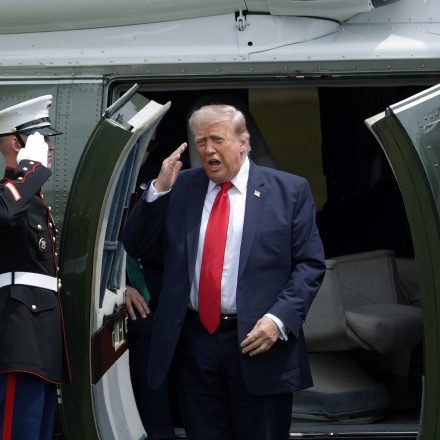
New York City Mayor Zohran Mamdani said Monday that the International Criminal Court (ICC) arrest warrant against Israeli Prime Minister Benjamin Netanyahu should be “taken seriously,” hours US President Donald Trump said Netanyahu would not face arrest in the US, Anadolu reports.
Speaking at a press conference, Mamdani said Netanyahu is “the subject of an International Criminal Court arrest warrant” over alleged crimes against humanity and war crimes.
“We’re speaking about someone who’s the subject of an International Criminal Court arrest warrant. And he’s the subject of this arrest warrant for alleged crimes against humanity, for war crimes, and he’s the architect of the genocide against Palestinians in Gaza as Israel’s prime minister,” Mamdani said.
He added that his remarks were based on “facts of public record,” not personal opinion.
“I believe that when someone is charged with an International Criminal Court warrant, it’s something that should be taken seriously—whether it’s Benjamin Netanyahu or it’s Vladimir Putin or whomever else. What I’ve also made clear is that my administration will follow all applicable local laws,” he said.
READ: Mamdani says New York City reviews authority to arrest Netanyahu during UN visit: Report
Mamdani reiterated that position, saying: “If someone is charged with a warrant by the International Criminal Court for these kinds of crimes, that’s something I believe should be honored. And I’ve also said that we will follow our local laws.”
His comments came after US President Donald Trump said Netanyahu would not face arrest in the United States.
In a Truth Social post earlier Monday, Trump said the Israeli leader “will not be arrested, in any way, shape, or form, while in the United States of America.”
Earlier, Mamdani told The New York Times that his administration’s legal department was discussing the possibility of Netanyahu’s arrest if he visited New York, saying he believes the Israeli premier “belongs in The Hague.”
The ICC issued arrest warrants in November 2024 for Netanyahu and former Defense Minister Yoav Gallant over allegations of war crimes and crimes against humanity in Gaza.
READ: Netanyahu seeks extended security protection for his family beyond potential end of premiership
DA: Cop covered bodycam to snap nude prisoners on his iPhone—but other cams caught him
On March 31, 2026, a rather odd complaint arrived at the Bucks County, Pennsylvania District Attorney’s Office.
It came from the local sheriff’s office, and it concerned one of their own, Deputy Sheriff Ryan Gaffney. The allegation was unusual: Gaffney had used his iPhone to snap photos of nude prisoners he had encountered in his job—and he had then shared those photos with “several female civilian employees inside the Sheriff’s Office.”
The main claim involved a local man suffering a mental health crisis on the morning of January 30, 2026. Five fully uniformed deputies had arrived at the house and were in the upstairs bedroom. Their detainee was naked from the waist down and had just been persuaded to put on some pants.
At some point in this process, Gaffney was believed to have obtained a photo of the man’s genitalia, because after the arrest and booking, another deputy admitted that he had seen Gaffney showing the photo on his phone to a female civilian employee “in jest.” This same witness said that Gaffney had done something similar in late 2024, taking a photo of a “subject’s naked buttocks while in custody.”
Investigators checked the logs from the Axon system. These showed that Gaffney did not access bodycam footage from the January incident for many months. So if Gaffney had shown a photo on his phone to the female employee on the day of the arrest, it must have come from some other source.
Perhaps Gaffney had used his own phone? Yet his bodycam footage never showed it. Still, it did show him covering his bodycam’s lens with a hand for a few moments.
Investigators pulled bodycam footage from other cops who had been in the room. These picked up Gaffney as the deputies stood around the bed of the nude man. According to investigators, when the man sat down on the bed to pull on his pants, Gaffney removed a glove from his right hand and pulled an iPhone 15 from his right pants pocket. He was then “observed manipulating the cell phone in his right hand” and putting it back in his pocket.
Investigators say that he placed his left hand over his bodycam, blocking its view, as he reached into his pocket again to retrieve the cell phone. He pointed it for just a moment toward the man getting dressed while the phone screen appeared to have “the camera application open,” investigators say.
This gave them enough to go to a judge. On April 22, they obtained a warrant to search Gaffney’s cell phone, which was done the next day by a detective unaffiliated with the investigation. Both nude pictures previously described by witnesses were allegedly located on the phone.
Further phone searches showed, investigators say, that Gaffney had shared one image with “two stored contacts” and the other with “twelve contacts from his personal device on four different dates.”
Gaffney had already sat for a voluntary interview about the case with the Bucks County sheriff. He was asked about allegations of taking pictures of naked detainees with this phone. According to a written statement that he signed off on as accurate, Gaffney had told the sheriff, “I used it for texting my wife, but in relation to the allegations? No.”
Gaffney had also offered his own evidence for this claim. His lawyer sent along screenshots from Gaffney’s iPhone, showing his photo library from January 18 through February 7, 2026. The photos at issue were not in it. Nor were they in the “Recently deleted” folder.
But investigators later said that their detailed forensic search was in fact able to turn the photos up on Gaffney’s phone. They also noted that metadata helped them tie the photos to that very device—and even to specific moments in time that could be cross-checked with bodycam footage.
Watching the watchers
Gaffney was fired from the Sheriff’s Office last month and was today charged by Bucks County District Attorney Joe Khan with “secretly photographing naked prisoners.” This didn’t result in just one charge, either; Gaffney was hit with a batch of charges, including official oppression, unsworn falsification to authorities, possessing an instrument of crime, and obstructing the administration of law or other government function.
“When a deputy sheriff breaks the law and then attempts to cover it up by lying about it,” Khan said today, “it erodes the public trust that thousands of honest public servants work daily to preserve. This Office will continue to aggressively investigate and prosecute official misconduct at all levels of government to ensure that no one is above the law, especially not those who are sworn to enforce it.”
If the charges stick, then Gaffney acted as though he lived in an old-fashioned world, one where police abuse could be hidden with a hand over the camera and some misleading screenshots sent to one’s boss. But a world awash in surveillance cuts both ways—and it can trip up cops who aren’t aware of just how many logs, metadata, and recordings capture their every move.
U.S. Official: Iran Attacks Injured “Far More” Troops Than Pentagon Admits
U.S. casualties of the Iran War spiked even as U.S. Central Command withheld information about Americans killed and injured from the public. It’s part of a long-running pattern of the Trump administration manipulating such data.
A crushing wave of attacks in Bahrain, Iraq, Jordan, and Kuwait left U.S. forces in “disarray,” causing significant damage to facilities, dozens of injuries, and the first troops killed in action since a June ceasefire collapsed, according to a U.S. official. Three Army soldiers were killed in “devastating” ballistic missile attacks on Muwaffaq Salti Air Base in Jordan, said the official whom The Intercept is not naming because they are not authorized to speak publicly.
Pvt. Isabella Gonzales, 19, of Carrollton, Texas, was killed in action on Friday. Lt. Tyler James Feehan, 25, of Ewa Beach, Hawaii, was killed on Saturday. The third soldier is provisionally listed as missing, but the official said that “unidentified remains” found after the attack were “certainly” those of the missing soldier. A second official confirmed this assessment. At least four and as many as 10 troops were also injured in the attacks in Jordan, according to the first official.
In northern Iraq, a U.S. service member was killed and another wounded on Saturday when ordnance from a downed Iranian drone exploded. CENTCOM claimed that the injuries occurred during a “controlled detonation” of the downed aircraft.
The surge in deaths and injuries raise the official U.S. casualty count to at least 446. U.S. casualties have increased by more than 15 percent since the first ceasefire between the U.S. and Iran was struck on April 8. The first official told The Intercept that recent attacks had wounded “far more” personnel than are reflected in the Pentagon’s current casualty count. They did not provide numbers but said “dozens” had received medical attention.
Neither CENTCOM nor the Pentagon replied to numerous requests by The Intercept for information on the casualties, nor would either address the effort to cover up U.S. losses.
On Monday, the New York Times reported that the Pentagon withheld information on “dozens of U.S. military injuries in Iran War.” Pentagon spokesperson Sean Parnell called the article “baseless and malicious.”
U.S. bases across the Middle East suffered “significant” damage over the last week, according to the official speaking on the condition of anonymity. That source said Iran had learned how to defeat U.S. air defense systems by overwhelming them using a mix of ballistic missiles and attack drones. They said multiple U.S. aircraft had also been damaged in the attacks. Videos circulating on social media showed the impact and aftermath of Friday’s missile strikes on Muwaffaq Salti Air Base.
“They’ve got some missiles. They’ve got some drones,” Trump said on Sunday of an Iranian military he has insisted, for months, had been annihilated. “We hit them very hard, again, tonight and we did that in honor of the probably three, probably three as opposed to two, great patriots.”
U.S. Central Command announced later on Sunday night that it had “successfully completed the ninth consecutive evening of strikes,” claiming that the “U.S. military is holding Iran accountable at the Commander in Chief’s direction.”
“Their sacrifice only stiffens our resolve.”
The office of self-styled War Secretary Pete Hegseth attempted to keep information about the new casualties under wraps. “We have nothing to provide beyond what is listed on the website,” a representative of Hegseth’s office told The Intercept late Friday night, without specifying which website, when questioned about U.S. casualties. Hours later, U.S. Central Command acknowledged “two U.S. service members in Jordan were killed in action” on Friday amid “Iranian ballistic missile and drone attacks.” The command also disclosed that four other troops “were medically evacuated to Jordanian hospitals,” an unspecified number of other troops were evaluated for injuries, and “one service member is currently missing in action.” CENTCOM later stripped “in action” from the announcement of the missing soldier, but would not explain the reason to The Intercept.
“Godspeed, heroes,” Hegseth wrote on X. “Their sacrifice only stiffens our resolve.”
The spike in U.S. casualties over the last week followed the Pentagon quietly adding another fatality to its rolls earlier Monday. After Iran claimed to have killed three U.S. personnel in Kuwait last weekend, U.S. Central Command said last Sunday that there were “zero reports of U.S. service member deaths or injuries in the region.” But last Monday, the Pentagon’s official toll of injuries and deaths in the war quietly climbed upward.
After ignoring numerous requests for clarification, an official from Office of the Assistant to the Secretary of War for Public Affairs intimated the fatality added last week was Cmdr. Gabriel Edwards, the commanding officer of Helicopter Sea Combat Squadron (HSC) 5 who went missing almost two weeks prior, following his “helicopter’s emergency landing in the Arabian Sea.” But that official refused to confirm it.
Historically, there was little lag between a casualty occurring in the field and its inclusion in the DCAS system, according to two people who used to work on the official casualty tally.
Asked why it took a week after the search for Edwards ended to add him to the casualty rolls, the second official said a blend of incompetence and deliberate slow-walking of casualty data has slowed down the process of updating publicly available statistics.
For months, the Pentagon list of the names of the dead has also been missing Maj. Sorffly Davius, a signals and communication officer with the New York Army National Guard who was assigned to the headquarters of the 42nd Infantry Division and reportedly died of sudden illness while on duty in Camp Buehring, Kuwait, on March 6. Davius’s death was widely acknowledged even as it was excluded from the official count: Rep. Mike Lawler, R-N.Y., spoke about him during a memorial service that month, and Gen. Dan Caine, chair of the Joint Chiefs of Staff, recognized Davius while “honoring our fallen.”
Counting Davius and the “missing” soldier in Jordan, the U.S. has suffered 19 deaths during the Iran War. Parnell said on Monday that “casualty information is publicly available and regularly updated online on the Defense Casualty Analysis System for everyone, including the media, to review.” DCAS was, uncharacteristically, not updated as of Monday afternoon and instead offered outdated figures posted Friday morning.
While DCAS provides a running tally of “non-hostile” deaths — meaning those who died from accidents or by illness — it doesn’t include “non-hostile” injuries. The DCAS figures show that 68 Navy personnel have been wounded in action. Missing, however, are the more than 200 sailors treated for smoke inhalation or lacerations due to a March 12 fire that raged aboard the USS Gerald R. Ford. The aircraft carrier had been conducting round-the-clock flight operations to, in Caine’s words, “project combat power” in the Middle East.
The casualty numbers also don’t include a sailor who suffered a non-combat-related injury aboard the USS Abraham Lincoln as it was involved in “strike missions in support of Operation Epic Fury” on March 25.
On April 21, the number of wounded-in-action troops declined by 15 without public comment from the War Department. Despite repeated questions over three months, the Pentagon has not explained the disparity in its casualty count.
The Trump administration began undermining transparency surrounding U.S. military casualties almost a decade ago. Not long after Trump first took office in 2017, and following an uptick of violence in the conflict, the Pentagon stopped releasing immediate information about American combat deaths in Afghanistan.
After an Iranian missile attack on Al-Asad Air Base in Iraq on January 8, 2020, Trump peddled a complete fiction to the public. “No Americans were harmed in last night’s attack by the Iranian regime,” he said at the time. CENTCOM ultimately admitted that 110 troops suffered traumatic brain injuries. An inspector general report indicated that the number of wounded may have been even higher, because “DoD cannot determine whether all Service members are being properly diagnosed and treated for TBIs in deployed settings.”
On the campaign trail in 2022, Trump claimed that for a year and a half of his first presidency, the U.S. suffered no deaths in the Afghan War. “In 18 months in Afghanistan, we lost nobody,” he said. But an Associated Press investigation found that there was no year-and-half span during Trump’s first term when there were no combat deaths.
Last spring, The Intercept reported on an effort by CENTCOM, the Pentagon, and the White House to keep casualties of the U.S. war against Yemen’s Houthis under wraps. It represented a departure from the Biden administration, when the Office of the Secretary of Defense and CENTCOM provided detailed data on attacks on military bases across the Middle East — including to this reporter. CENTCOM had provided the total number of strikes, breakdowns by country, and the total number injured, and even individual synopses of more than 150 attacks.
Hamas Elects Khalil al-Hayya To Lead Terrorist Organization
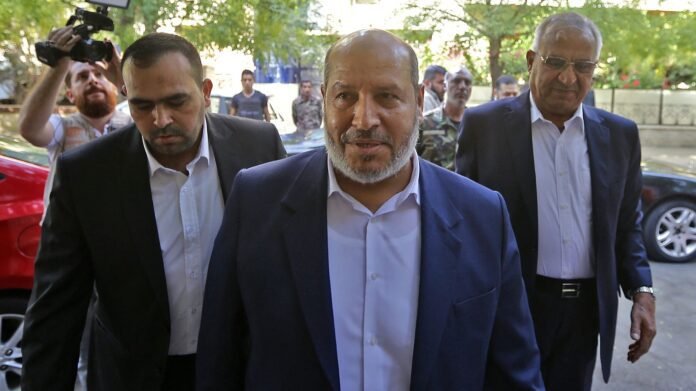
Hamas announced Monday that Khalil al-Hayya has been elected head of the terrorist organization’s political bureau, formally replacing Yahya Sinwar as the group’s overall leader following Sinwar’s death during fighting with Israeli forces in October 2024.
Al-Hayya’s appointment marks Hamas’ first selection of a permanent successor since Sinwar was killed. Al-Hayya, who served as Sinwar’s deputy and led the organization’s negotiating team, was elected during Hamas’ internal leadership vote.
His election is widely seen as a continuation of the hardline approach pursued by Sinwar rather than an indication of a political or ideological shift within Hamas.
The decision followed an initial round of voting in which members of Hamas’ Shura Council failed to choose between al-Hayya and Khaled Mashal, who has returned in recent years to a central role in the organization’s decision-making. According to Arab reports, al-Hayya secured nearly unanimous support in the subsequent round.
Reuters, citing a Hamas statement, reported that the election formally confirms al-Hayya as the group’s new overall leader. The news agency said the veteran Hamas official had increasingly assumed a leadership role following the deaths of several senior figures, including Sinwar and former political bureau chief Ismail Haniyeh, who was killed in Iran in July 2024.
Born in Gaza City in 1960, al-Hayya is one of Hamas’ longest-serving senior leaders and belongs to the organization’s veteran leadership generation. He is considered one of Sinwar’s closest associates after serving for years as his deputy.
Following the deaths of Haniyeh and Sinwar, al-Hayya became Hamas’ most prominent leader operating outside the Gaza Strip and has been based primarily in Qatar.
He headed Hamas’ negotiating team in indirect talks with Israel on ceasefires and the release of hostages, with Egypt, Qatar, and other parties serving as mediators.
Al-Hayya survived an Israeli assassination attempt in Doha on September 9, 2025. His son was killed in the strike, and his wife was wounded.
Indian police bash and gas youth-led ‘cockroach’ protesters
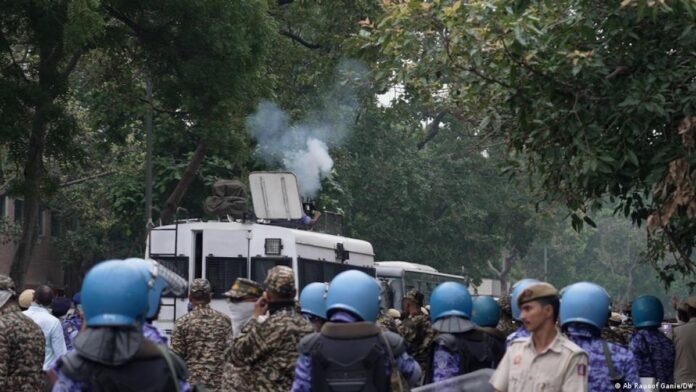
Despite the crackdown, many protesters continued marching toward Parliament. Photo: Ab Rauoof Ganie / DW
Indian protesters rallying Monday in New Delhi under the banner of the youth-led Cockroach Janta Party were attacked by police as they marched toward the country’s Parliament demanding the resignation of the country’s education minister and denouncing the government of Prime Minister Narendra Modi.
Tens of thousands of protesters took to the streets of the Indian capital despite police bans, barricades, internet shutdowns and a heavy security presence. Police, some of them in plain clothes, attacked the overwhelmingly peaceful demonstrators with baton charges and tear gas. Delhi police are controlled by the Bharatiya Janata Party (BJP)-ruled central government.
The Wire reported that thousands of people were injured – some seriously – by police. Despite video footage and photos showing officer brutality, Delhi Police denied “sporadic use of violence” against protesters.
The protesters are seeking the resignation of Education Minister Dharmendra Pradhan following repeated leaks of National Eligibility Entrance Test papers that have upended the lives of millions of students by forcing them to retake the grueling exams and delaying university admissions. Protest organizers say more than 20 students have killed themselves over the matter.
Late last month, Pradhan dismissed the protesters as “the B-team of terrorists.”
“Already more than 20 students have died by suicide, but this government is not done yet,” Cockroach Janta Party (CJP) founder Abhijeet Dipke said on social media. “This government has resorted to hooliganism now.”
Protester Rhythm Katoch told The Guardian on Monday: “They are calling this protest illegal, they are calling us anti-national. But I am 22 years old, and I am standing here to fight for our education system, for the rights of the young people, and for our democracy. Is it too much to ask for the government to listen to us?”
The CJP and other student groups have been leading hunger strikes at the Jantar Mantar, an 18th-century astronomical observatory designated as the protest site. Three students from the leftist All India Students’ Association ended their fast on Monday, while environmentalist Sonam Wangchuk, who has been on a hunger strike since June 28, was taken by authorities on Saturday to Safdarjung Hospital, where he continues his fast.
“I am touched and moved by how the youth have held on to peace despite provocation,” Wangchuk said Monday.
The movement began in May after Chief Justice of India Surya Kant reportedly compared unemployed young people to “cockroaches.” The protesters satirically reclaimed the slur as the symbol of a movement that has grown into a broader challenge to Modi’s increasingly authoritarian Hindu nationalist rule, which has seen mounting repression of protest and dissent, including restrictions on journalists and activists, and the use of legal measures to target critics.
On Monday, protesters chanted “Go, Pradhan, Go, Saat Mein Modi Ko Bhi Lo! (Take Modi along with you too!),” banging plastic bottles on the ground to keep the beat.
“It’s just shocking to see that the people we elected have turned a blind eye to youth dying … because of their incompetency,” Sajal, a 22-year-old law student, told The Straits Times.
Another protester, yoga instructor Jyoti Rajput, told The Associated Press that she joined the demonstration because “this rotten system refuses to take action.”
“It cannot see the pain of students, and that’s why so many people have joined this movement,” she added.
Amid Monday’s demonstration, CJP leaders met Union Minister JP Nadda at his Delhi home.
“The minister assured us he will discuss this at the appropriate level,” CJP spokesperson Saurav Das said on social media. “However, no commitments have been made so far.”
Responding to the crackdown, Amnesty International India board chair Aakar Patel said in a statement that “the images and reports emerging from the protest at Jantar Mantar show how peaceful dissent is being suppressed in India.”
“The role of the authorities is to protect and facilitate peaceful protests, not to suppress them,” he continued. “The right to freedom of peaceful assembly is recognized under international human rights law and the Indian Constitution.”
“The Delhi Police’s actions raise serious questions about whether their response met the requirements of legality, necessity, and proportionality under international human rights standards,” Patel added. “We call on the Delhi Police to exercise restraint and immediately cease the use of unlawful force against peaceful protesters. Authorities must ensure that all allegations of unlawful conduct, including the reported excessive use of batons, tear gas, and stone-throwing by police personnel, are promptly, independently, and impartially investigated.”
Brett Wilkins is a San Francisco-based journalist and author who contributes regularly to Common Dreams and Counterpunch. He is also a member of Collective 20, a new anti-war collective with Noam Chomsky, Medea Benjamin and others.
On This Nearly Deserted Alaska Island, You Pay to Keep Hundreds of Empty Buildings Wired for Internet
On an island in the Bering Sea 1,200 miles from Anchorage, Alaska, sits an abandoned house on an abandoned Navy base. There is no furniture, and the wind blows through broken windows. The last people to live here moved away long ago. Yet a bright orange pipe with a black fiber-optic cable inside runs from the outer wall down into the surrounding soil.
The cable was installed to connect the home to the internet after the base closed. It costs more than $340,000 per year to provide this building and hundreds of others — all but a few of them empty — with internet access no one says they use.
The money being wasted is yours.
It comes from a fee added to nearly every American’s phone bill as part of a Federal Communications Commission subsidy program intended to bring fast, affordable internet to remote towns.
Reporting this year by the Anchorage Daily News and ProPublica has found that the multibillion-dollar Universal Service Fund pays for what often amounts to slow internet access for customers who actually no longer use it.
The FCC keeps the money flowing to telecom companies regardless of their owners’ track records. It kept paying a Fairbanks company to provide internet service while its owner served federal prison time for tax evasion. The government kept paying Alaska’s largest telecom, GCI, even after it signed a settlement for alleged fraud related to the subsidy. (The settlement said it was neither an admission of guilt by GCI nor a concession by the Justice Department that the claims were not well founded.)
Yet few places make the federal government’s failure to safeguard this money more obvious than Adak.
At its population peak decades ago, Adak housed thousands of Navy personnel and their families. Now, most homes in the town near the western end of Alaska’s Aleutian Island chain are left abandoned and deteriorating.Marc Lester/ADN
Once home to thousands of sailors and their families, the island emptied after the base closed in 1997. While the state estimated the population to be 77 last year, residents themselves put it at closer to two dozen — meaning the federal internet subsidy to the local telecom amounts to about $14,000 a year per person. And, it turns out, there’s zero indication any of these people are benefiting from it.
We know this because we flew to the island in June and visited every building the company itself told regulators it serves. We knocked on every door. Talked to every person we could find.
Not a single one told us they subscribe to the island’s subsidized internet service.
Residents get online through Starlink, the Elon Musk satellite service that arrived in 2023 without any subsidy from the FCC. People here say it’s up to 40 times faster and costs $90 to $140 per month, compared with the hundreds of dollars a month that Adak Eagle, the local telecom, once collected from customers on top of its subsidy checks. (Adak Eagle’s website currently advertises internet plans for $99 to $550 per month.)
But the subsidies remain.
Like many Alaska telecoms, Adak Eagle was built on public money. It began in the early 2000s with FCC subsidies and federal loans to upgrade old telephone wires for fiber-optic lines that could support both voice and internet service. By 2011, the company was collecting $2.68 million a year from the Universal Service Fund.
Once-occupied homes along Kuluk Bay have been ravaged by weather and time since Adak was an important Cold War outpost.Marc Lester/ADNOne of many play areas left in disrepair on residential streets in AdakMarc Lester/ADNOnce-occupied homes along Kuluk Bay have been ravaged by weather and time since Adak was an important Cold War outpost.Marc Lester/ADNOne of many play areas left in disrepair on residential streets in AdakMarc Lester/ADN
A 2013 federal order determined company president Larry Mayes spent telecom subsidy money on a fleet of vehicles and a fishing boat that weren’t necessary for his business, and that the $237,455 salary Mayes paid himself one year was “unreasonable” and “disproportionate” given the size of the company and what’s typical for Anchorage, where he lives.
(The company filed letters with the FCC at the time stating its salaries “should be evaluated in the context of a small company where each employee wears multiple hats” and citing the island’s “remoteness and harsh climate conditions.”)
On top of the $3.6 million his company has received from the federal broadband subsidy since 2016, he also received $3.54 million from the FCC through a program that replaces revenue phone companies once earned connecting long-distance calls. The state kicked in an additional $3.75 million through its own subsidy program, the Alaska Universal Service Fund. (Some Adak residents said they continue to pay the company for landlines that they use as cellphone backup.)
When we first asked Mayes about the federal internet money, he hung up on us. He did not respond to questions emailed in May, a written interview request delivered to his Adak office in June or detailed questions emailed and hand-delivered to his Anchorage office in July. Reached again by phone on July 13, he declined to comment and ended the call.
The one thing Mayes did say before hanging up on the first call: that he is playing by the rules of the FCC’s subsidy program, and if we had questions about it, we should ask the agency.
We did. Repeatedly. About the publicly funded connections to demolished homes on Adak and other uses of internet subsidies in Alaska.
The FCC never responded.
Internet for Vacant Homes
A vehicle kicks up dust on Bayshore Highway outside of the town of Adak on Adak Island.Marc Lester/ADNA seal spies a walker along the coastline near Clam Lagoon.Marc Lester/ADNA vehicle kicks up dust on Bayshore Highway outside of the town of Adak on Adak Island.Marc Lester/ADNA seal spies a walker along the coastline near Clam Lagoon.Marc Lester/ADN
Step outside Adak’s tiny airport terminal, and the scene is straight out of “The Walking Dead.” You can spend hours walking the city streets without seeing another human, the only sounds the dry scrape of tall grass and warbling seabirds. Stiffened copies of People magazine declare George Clooney the 2006 Sexiest Man Alive. A shuttered McDonald’s drive-thru still advertises 99-cent hamburgers.
Subdivisions outside the city core sprawl like any in America, with neatly arranged ranch-style homes, powder-blue roofs, wide driveways and generous garages. After the Navy shipped out, hurricane-force Aleutian winds pried homes apart. The worst of it is in a beachfront neighborhood called “Officer’s Country” on old city maps. Bathroom mirrors and toilets and kitchen tables stand exposed to the rain in homes cleaved in half like dollhouses.
Even in newer neighborhoods, we found rotted exterior walls with holes so wide you could drive a truck inside. Grass grew on living room floors. Bedrooms were filled with bird nests.
Exterior walls are missing on one home in a central subdivision of Adak.Marc Lester/ADN
In the few homes the FCC paid Adak Eagle to connect that are habitable, the occupants have abandoned Adak Eagle.
Henry Collins, 61, lives in one of those homes. He was partially blinded in a chemical accident years ago while cleaning a boat at the island docks. Now he and his wife spend their days caring for their newborn. Sometimes they FaceTime with his wife’s family in the Philippines and hold the baby up to the screen.
He accidentally cut Adak Eagle’s internet cable with a string trimmer. No matter. He never could afford the subsidized service anyway, and his rooftop Starlink receiver was untouched in the landscaping incident.
One street over, 26-year-old Steven Ivanoff pays close attention to internet speeds because he plays Overwatch and Fortnite competitively online.
Steven Ivanoff, a year-round Adak resident, relies on Starlink to play video games with other people online.Marc Lester/ADN
Before Starlink, residents said, Ivanoff’s former roommate and fellow gamer was notorious for using up the scant bandwidth Adak Eagle provided every time he went online to play. Neighbors hollered at him to get off the damn computer. Adak Eagle’s subsidized fiber offers download speeds of 1 to 10 megabits per second, according to the FCC National Broadband Map — far short of the FCC’s 100-megabit standard for broadband and, at the low end, barely fast enough to load a modern webpage.
All that has changed. At our request, Ivanoff tested the speed of his Starlink connection using an online service called speedtest.net. He clocked it at a screaming (by Alaska standards) 447 megabits per second.
At another house, four dachshunds stood guard in a fenced yard while inside, an agent with the Transportation Security Administration who moved from Arkansas was playing a reality TV show on her widescreen — Starlink-powered, like everyone else’s internet.
Elizabeth Pryor’s Adak home is on the list of those federally subsidized for internet service. She uses Starlink for internet service, the standard for the town’s few remaining residents.Marc Lester/ADNHenry Collins said he accidentally cut the cord for Adak Eagle internet service, which he didn’t subscribe to anyway. He relies on Starlink instead.Marc Lester/ADN
Elizabeth Pryor has leaned into the isolation by starting a mini farm. In her solarium, a cardboard box trembled with teenage chicks, peeping under a heat lamp. No bears on the island, she said. So that’s nice. No foxes either. “But the rats ate my jalapeno peppers down to the stalk! Chomp chomp chomp.”
Her house rises across the street from a pile of rubble, the remains of a house fire.
Both properties — the rubble pile and Pryor’s home, alive with puppies and chickens — are on the list of houses for which Adak Eagle received subsidies to connect to the internet. She doesn’t use it.
Wiring an Empty Island
Fog obscures the views surrounding the city of Adak. Residents say only a couple dozen people live there.Marc Lester/ADN
Adak was already a ghost town when Mayes’ company started wiring the island.
According to the U.S. Navy’s own Record of Decision on the base closure, published in 2000, “there was no established community on Adak” after the military’s departure. The Navy’s ongoing assessments documented houses being condemned and boarded up.
Andilea Weaver, the company’s former vice president, said Adak Eagle began replacing rat-gnawed copper landline wires to Adak buildings in 2006 — nine years after the base closure.
In 2016, Adak Eagle proposed a 10-year plan to receive new subsidies in exchange for connecting or maintaining lines to 346 locations, nearly every building left standing. The FCC agreed. The agency formally declared the new spending plan to be in the public interest.
According to federal data published by the Universal Service Administrative Co., the most locations that Adak Eagle reported having broadband available was 283.
The buildings the FCC says Adak Eagle keeps wired for internet include duplexes, fourplexes and ranches where we found no sign of life. The agency shows connections at places where we found doors yawning open in the wind, hinges screaming with rust — no furniture inside, no appliances, yet in many cases, a single telephone still plugged into a wall.
A destroyed home among many abandoned ones in Adak’s sparsely populated Sandy Cove neighborhood. Government agencies, hunting lodges and a few year-round residents occupy a small portion of housing.Marc Lester/ADN
Whether the abandoned structures Adak Eagle has prepped for low-speed internet can beckon new occupants is an open question.
Adak is so far west of the Alaska mainland that it’s in a different time zone. So far west that it’s almost in the Eastern Hemisphere.
The last vestige of industry departed with the closure of the island’s fish processing plant in 2020. Now the economy consists of a bit of hunting and bird-watching that lures a few hardy tourists aboard the two flights a week that serve the island. (Warning: Pack canned goods. The grocery store and restaurant were closed our entire visit.)
Alaska’s Republican U.S. Sen. Dan Sullivan has argued the U.S. should open a new military base on Adak because of its strategic proximity to waters cruised by the Chinese and Russian navies. With $115 million set aside by Congress last year for “exploration and development of existing Arctic infrastructure,” a Pentagon-led task force is developing recommendations on how to proceed, a Sullivan spokesperson said.
The remains of a meal left behind by a bald eagle on the shores of Betty LakeMarc Lester/ADNA bald eagle takes flight from a post on the south end of the city.Marc Lester/ADNThe remains of a meal left behind by a bald eagle on the shores of Betty LakeMarc Lester/ADNA bald eagle takes flight from a post on the south end of the city.Marc Lester/ADNPaint peels and windows are shattered on a structure once occupied by the Navy on Adak’s hillside.Marc Lester/ADN
After knocking on hundreds of doors and canvassing every subdivision, we spent our last hours in Adak checking to see if anyone was using the subsidized internet in the old commercial buildings and offices scattered around the center of the city.
At one of the last addresses on the list crouched a cinder block building surrounded by pickup trucks and wide spools of orange piping — the same piping we’d seen leading up to demolished houses the day before. A rotary phone hung on the wall.
This was the local office of the company we’d been examining. Even the people who work there have stopped relying on the internet service that you pay for. Above the front door, above the sign for Adak Eagle Enterprises, stood two Starlink dishes.
Starlink equipment is mounted on the roof of internet provider Adak Eagle Enterprises.Marc Lester/ADN
The Space Force is now seeking to buy up to $30 billion in rocket launches
It seems as though $5.6 billion wasn’t enough. That was the news from the US Space Force on Friday, when military officials announced they were tripling the maximum value of one of the service’s National Security Space Launch contracts to $17 billion.
The expansion of the Space Force’s National Security Space Launch (NSSL) Phase 3 contract comes as the Pentagon signals rising demand for military satellite launches. The NSSL program is set up to allow Space Systems Command, which oversees the Space Force’s launch program, to select from a pool of launch providers for individual missions to deliver the military’s satellites to orbit.
The NSSL program has two parts. Lane 1 covers the Space Force’s more risk-tolerant missions, such as medium-lift launches with experimental payloads or rideshare missions carrying satellites for the Pentagon’s surveillance or data relay constellations. Lane 2 includes higher-priority strategic missions, like the government’s largest and most expensive spy satellites, or radiation-hardened communications satellites designed to survive a nuclear war.
Lane 1 is open to commercial launch providers without requiring extensive certification and oversight from the Space Force. This is the part the Pentagon has now authorized for $17 billion in launch procurement expenses. Missions in Lane 2 can only launch on rockets that go through the military’s lengthy certification reviews. Only SpaceX’s Falcon 9 and Falcon Heavy, and United Launch Alliance’s Vulcan rocket are certified for Lane 2 missions.
More money for more launches
There are more launch companies qualified for Lane 1 contracts. Space Systems Command originally selected SpaceX, ULA, and Blue Origin for Lane 1 in the Phase 3 round of the NSSL program in 2024. Rocket Lab, Stoke Space, and most recently, Relativity Space and Impulse Space were added to the roster of companies competing to launch Lane 1 missions. The Space Force issues a request for bids on a number of Lane 1 missions each year, and then doles out individual fixed-price “task orders” to the winners. SpaceX has won the lion’s share of Lane 1 task orders to date, and Blue Origin won its first earlier this year.
The Space Force originally estimated the Lane 1 launch providers would compete for at least 30 task orders over a five-year period. Officials put a ceiling of $5.6 billion on the Lane 1 contract to cover these 30 missions. The Space Force capped the Lane 2 contract at $13.7 billion last year, a number officials thought was sufficient to cover an estimated 54 launches projected for procurement through 2029.
But things have changed rapidly. In April, Space Systems Command said it had identified 25 additional Lane 2 missions on top of the 54 included in the original contract just one year before. Now, the Space Force is tripling the maximum value for the Lane 1 contract. The service has not said how many more missions it expects to order in Lane 1 beyond the initial estimate of 30.
With Friday’s announcement, the combined maximum value of Lane 1 and Lane 2 has reached more than $30 billion, and the number is likely to climb again. Space Force officials have not publicly identified exactly what missions they plan to add to each of the NSSL contracts. But there are a few obvious programs driving the military’s rising launch demand.
One is the Space Force’s recent award of multibillion-dollar contracts to SpaceX for the deployment of numerous satellites for the Pentagon’s Space Data Network and Airborne Moving Target Indicator programs. The SDN and AMTI satellite constellations will provide global connectivity and targeting information for US forces. Another is Golden Dome, the Trump administration’s proposed missile defense shield, which is expected to include an untold number of space-based missile warning sensors and space-based interceptors.
The Trump administration requested $71.1 billion for the Space Force in fiscal year 2027, up from approximately $40 billion allocated for fiscal year 2026. The House Appropriations Committee’s draft 2027 budget for the Pentagon includes $55.5 billion for the Space Force, somewhat less than the White House’s request. The Senate has not released its Pentagon budget bill.
King Charles Said Camilla was ‘Non-Negotiable’ After Diana
King Charles may have spent years trapped between palace tradition, public fury and the long shadow of Princess Diana, but when it came to Queen Camilla, one royal author says there was never really a choice.
Camilla was “non-negotiable.”
That is the striking claim at the center of Catherine Mayer’s new book, Divide & Rule, which examines some of history’s most misunderstood royal wives and takes a fresh look at Camilla’s extraordinary rise from scandalized “other woman” to crowned queen.
According to Mayer, anonymous friends of the monarch said Charles viewed Camilla’s place in his life as something that could not be debated, even after his bitter divorce from Diana and the princess’s shocking death in 1997.
A spokesperson for Buckingham Palace told Fox News Digital the palace does not comment on books.
Mayer, who previously wrote a biography of Charles, told the outlet that the future king’s determination to keep Camilla by his side became especially clear after the collapse of his marriage to Diana.
“I think the non-negotiability was the point after the divorce and, of course, after Diana’s death,” Mayer said. “He understood that this was the one woman who could really sustain him.”
That support, Mayer argued, was exactly what Charles felt he needed.
Camilla, she said, was not simply a romantic partner. She was the woman who steadied him, lifted him and gave him the kind of private reassurance he had long craved inside the rigid world of royalty.
“This is, in many ways, one of the most unlikely love stories you can imagine,” Mayer said.
For millions around the world, Charles and Diana had once looked like a fairy tale. Their 1981 wedding was watched by a global audience and sold as the perfect royal romance. But behind palace walls, the marriage was unraveling under pressure, incompatibility and the presence of Camilla Parker Bowles.
When the marriage finally imploded in public, Mayer said the world was forced to confront a very different truth.
“There were a lot of people who bought into the idea of the fairy-tale marriage between Diana and Charles,” Mayer said. “It was only when it imploded so spectacularly that they were forced to recognize that wasn’t the truth of what had happened.”
By then, Camilla had already been cast in the harshest possible role.
She was blamed as the woman who came between Charles and Diana, and for years her name was tied to one of the biggest royal scandals of the modern age.
Mayer said she does not believe Charles and Diana’s marriage ever had a real chance of working, though she was careful to stress that Diana was deeply wronged.
“I personally don’t think the relationship between Diana and Charles could ever have worked,” she said. “But that doesn’t mean I don’t think Diana was very badly treated.”
Still, Mayer claimed that Charles’ reaction to Camilla was impossible to miss.
After spending time following Charles during her research, Mayer said she saw the effect Camilla had on him firsthand.
“You would see him tired, very obviously out of sorts,” she recalled. “And then she would come into a room, and he would light up. She just lifts him.”
Charles first met Camilla through mutual friend Lucia Santa Cruz in 1970, and by many accounts, he was immediately taken with her. But romance alone was not enough for the future king.
At the time, palace expectations were unforgiving. Camilla was not seen as the proper woman to marry the heir to the throne. She had a social life, a romantic past and none of the carefully preserved innocence that royal insiders believed was required of a future queen.
“She had something of a past,” Mayer said.
The author insisted she was not portraying Camilla as some grand seductress, but rather as a lively, experienced woman who enjoyed life.
That, Mayer suggested, was exactly why Charles was drawn to her.
Camilla chain-smoked, loved social occasions and had boyfriends, including Andrew Parker Bowles, the man she would later marry. Mayer even recalled one colorful story about Camilla heading off to America, riding around on a motorbike in leathers and living with a freedom that the palace world found difficult to accept.
To the old guard, Mayer said, Camilla was the sort of woman a prince might enjoy, but not the sort of woman he should marry.
“This dusty, old-fashioned institution, they’re telling the heir to the throne, ‘This is the kind of woman you go off and have fun with, but not the kind you marry,’” Mayer said.
Royal broadcaster Ian Pelham Turner agreed that Camilla gave Charles something different from what he found inside palace life.
“Camilla gave Charles, from the early days, a feeling of masculinity, making him feel sexual desire,” Turner told Fox News Digital. “She treated him like a man rather than a royal.”
But Charles and Camilla did not marry in those early years. Charles joined the Royal Navy in 1971, and Camilla married Andrew Parker Bowles in 1973.
Charles was reportedly devastated, though the two remained close.
By 1980, Charles began courting Lady Diana Spencer, who appeared to fit the royal mold perfectly. Diana was young, aristocratic and widely viewed as the ideal bride for the future king.
Charles and Diana married the following year in what became known as the “wedding of the century.”
But the shadow of Camilla never disappeared.
Royal author Penny Junor previously claimed Charles and Camilla rekindled their physical relationship around 1978 or 1979. People magazine has also reported that Charles and Camilla began seeing each other again in 1986, while both were married and had children.
Mayer said the exact timeline remains difficult to untangle.
“I think they did intend to break things off in terms of any kind of physical relationship, and they did,” she said. “But exactly when they rekindled it is another matter entirely because what they’ve said and what the evidence suggests don’t always exactly match.”
Diana, according to Turner, seemed to understand early on that Camilla would never be fully gone from Charles’ life.
“Camilla, without doubt, has been the love of Charles’ life,” Turner said. “He never stopped wanting to be with her, even when he married Diana.”
One of the most infamous symbols of the love triangle was a pair of gold cuff links engraved with interwoven Cs, which Diana believed represented Charles and Camilla.
Mayer said the cuff links carried deep meaning for Charles.
“There was a famous incident described in Jonathan Dimbleby’s authorized biography of Charles in which Diana found cuff links she realized were a gift from Camilla to Charles ahead of the wedding,” Mayer said.
She also said one source described a separate incident in which Charles became upset after losing one of the cuff links.
“The suggestion is that these things had great meaning for him and that the friendship had great meaning for him,” Mayer said.
Diana later described confronting Camilla directly about the affair in recordings made for Andrew Morton’s book Diana: Her True Story.
“I was terrified of her,” Diana said, according to People.
Diana recalled telling Camilla, “I know what’s going on between you and Charles, and I just want you to know that.”
Camilla allegedly responded by telling Diana she had everything she could want, including the love of men around the world and two beautiful children.
Diana’s answer became one of the most painful lines in royal history.
“I want my husband,” she said.
Years later, Diana would famously tell the BBC’s Panorama, “There were three of us in this marriage, so it was a bit crowded.”
Charles and Diana separated in 1992. Their divorce was finalized in 1996. One year later, Diana died from injuries suffered in a Paris car crash at age 36.
For Camilla, the years that followed were brutal. Public anger remained intense, and the palace faced the delicate task of slowly reshaping her image.
Mayer said that effort was “painstaking,” but Charles’ position did not waver.
Camilla, in his eyes, was not going anywhere.
In 2005, Charles and Camilla married. In 2023, after Charles became king, she was crowned Queen Camilla.
Turner said Camilla has proved to be a vital force in Charles’ life and reign.
“In a lot of ways, Camilla has been very good for Charles,” he said. “She’s supported him in his efforts to become a great king. She has been his confidante, mentor and companion.”
British broadcaster and photographer Helena Chard said Mayer’s “non-negotiable” description fits the long arc of Charles and Camilla’s relationship.
“For years, the palace kept Charles and Camilla in separate boxes,” Chard told Fox News Digital. “Eventually, he chose love over protocol.”
Chard said Camilla survived by staying steady, avoiding unnecessary attention and carrying out her duties until the public mood began to shift.
“She became an asset, not a liability,” Chard said. “By the time Charles took the throne, it was a no-brainer. You get the king, you get the queen. There was no plan B.”
It is a stunning turnaround for a woman once blamed for helping destroy the world’s most famous marriage.
But according to Mayer’s new book, the ending was always hiding in plain sight.
For Charles, Camilla was not a scandal to be managed.