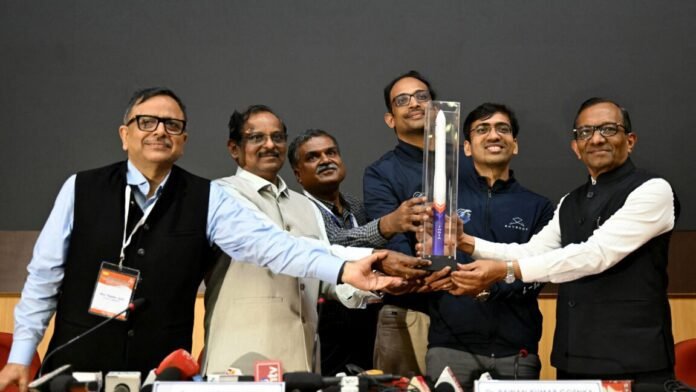
Indian space officials celebrated the debut flight of Skyroot Aerospace’s Vikram-1 rocket, India’s first fully commercial satellite launcher, as a “grand success” Saturday after an on-target climb into a 280-mile-high orbit following liftoff from an island spaceport in the Bay of Bengal.
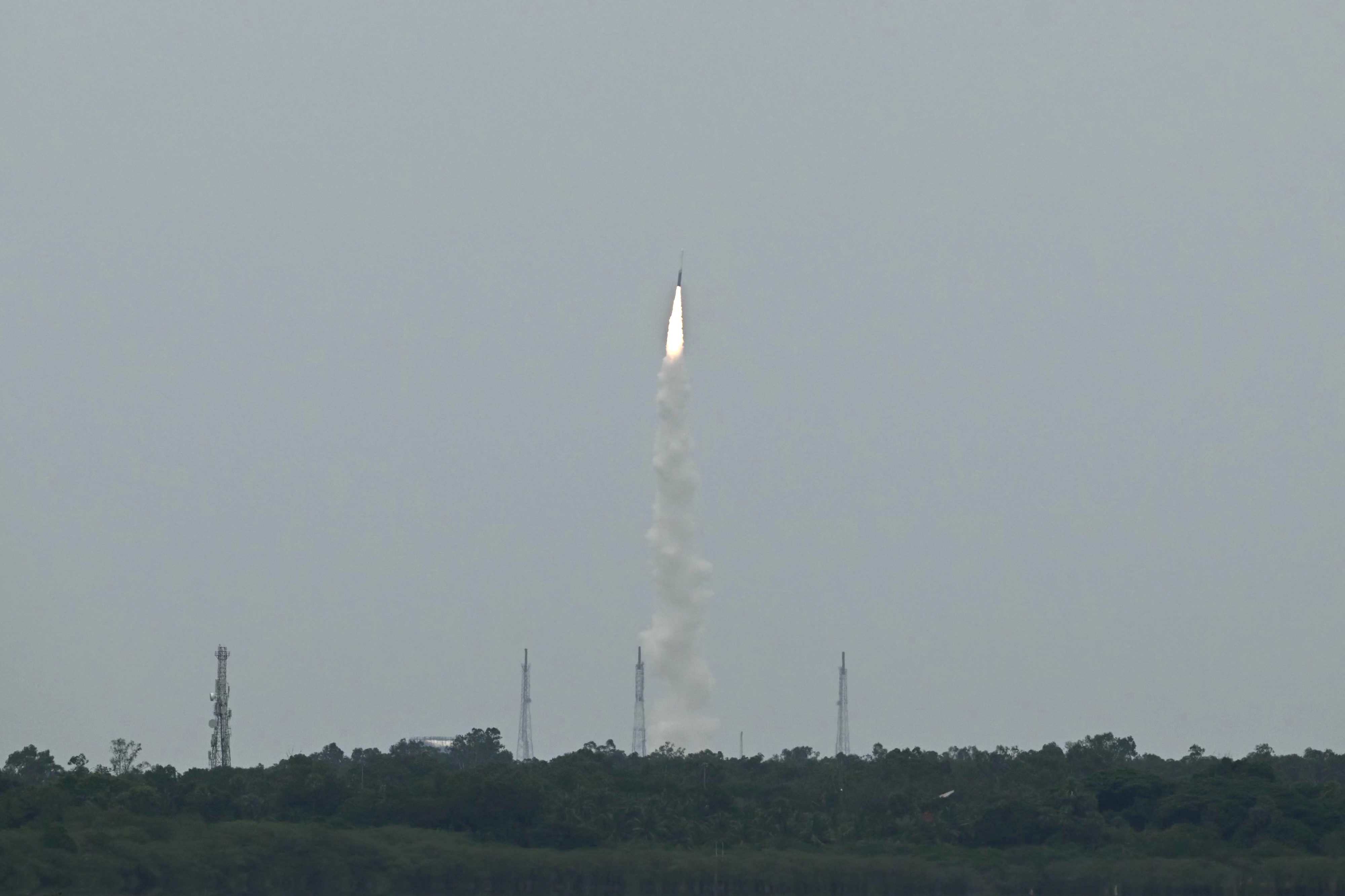
The Vikram-1 lifted off from India’s primary spaceport on Sriharikota Island at 1:35 am EDT (06:35 UTC) Saturday, around midday at the launch base along India’s southeast coast. The launch was delayed more than a half-hour to resolve a last-minute technical problem. The countdown resumed, culminating in the command to ignite Vikram-1’s solid-fueled first stage booster to propel the rocket off the launch pad.
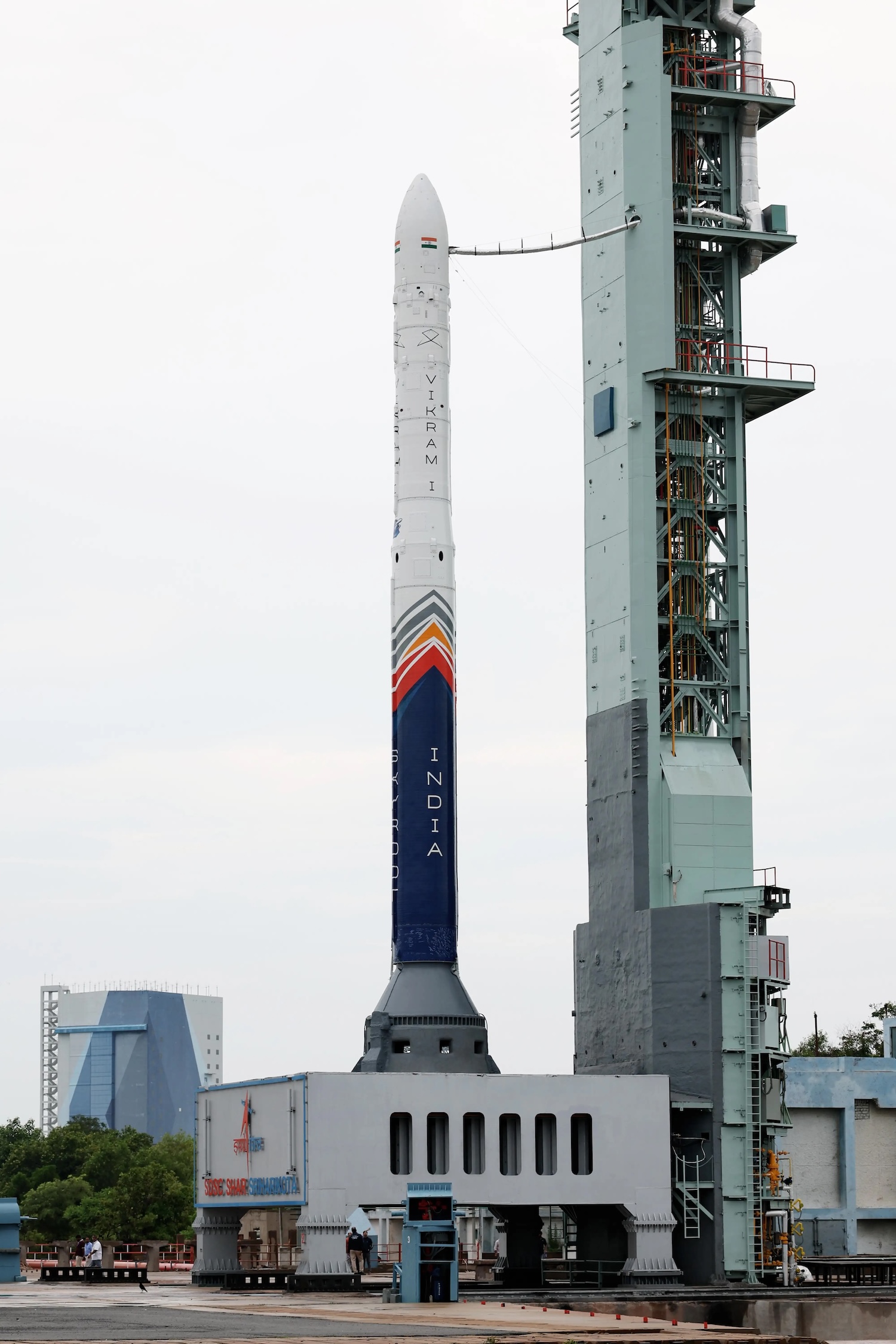
Vikram-1 is modest in size compared to India’s larger workhorse rockets. Skyroot’s rocket stands about 72 feet (22 meters) tall, with the capability to place payloads of up to 770 pounds (350 kilograms) into low-Earth orbit. This makes Vikram-1 somewhat larger than the Electron launch vehicle developed by Rocket Lab, the world’s most successful dedicated small satellite launcher.
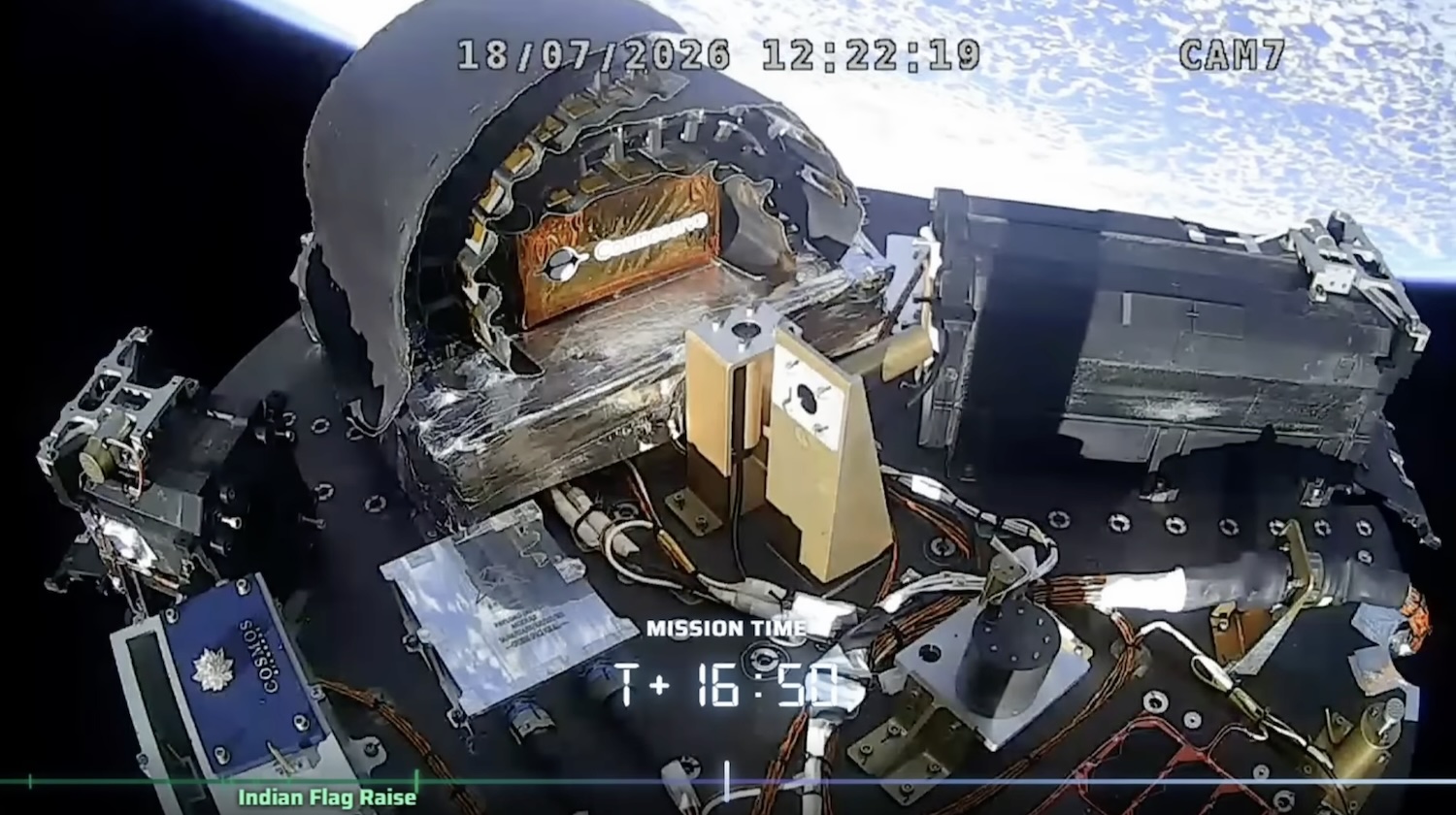
The flight Saturday went off without any major problems. Three solid-fueled rocket motors fired in succession to reach space, then a small liquid-fueled fourth stage ignited and accelerated to orbital velocity, some 17,000 mph. Live views from onboard cameras showed each phase of the launch sequence.
The only sign of anything unusual came during the separation of the rocket’s third stage from its fourth stage. The spent third stage motor appeared to remain near the fourth stage during a brief coast, rather than backing away to a greater distance. Nevertheless, the fourth stage did its job, firing its 3D-printed engine to reach an orbit approximately 280 miles (450 kilometers) high at an inclination of 60 degrees to the equator, quite close to preflight predictions, according to Skyroot Aerospace. US military tracking data confirmed the rocket’s successful arrival in orbit.
Beating the odds
“We achieved one of the biggest milestones ever in India’s space sector—the first private orbital rocket reaching orbit on the very first attempt,” said Pawan Kumar Chandana, Skyroot’s cofounder and CEO, in remarks to the company’s launch team. “It’s still feels like a dream, and you all made this dream happen.”
The first flights of new private orbital-class rockets don’t have a great track record. It took SpaceX four tries before reaching orbit with the Falcon 1 rocket for the first time in 2008. Rocket Lab’s Electron didn’t make it to orbit on its first launch in 2017. Blue Origin beat the odds with the inaugural flight of its heavy-lift New Glenn rocket in 2025, but the company’s engineers had previous experience with numerous launches of the smaller New Shepard suborbital rocket.
“On the first attempt, reaching orbit, I never thought it was possible,” Chandana said. “Skyroot’s team made it possible. A big, big, big shoutout to this phenomenal team, which made it happen. In fact, this launch was nothing short of a suspense movie.”
Skyroot officials set humble goals for the first launch of Vikram-1. In a press kit released before the flight, the company said its primary objective for the launch was to complete a successful liftoff, clear the the tower at the launch site, and gather maximum data during ascent.
“The mission objective was only to lift off and clear the tower,” said Pawan Goenka, chairman of IN-SPACe, a government organization set up in 2020 to promote India’s commercial space industry. “That was only about 100 meters, but what we went to was 450 kilometers, and it also released all the satellites that were supposed to release. So the mission was absolutely perfect.”
In a statement, the Indian space agency, ISRO, said it offered “handholding and support” to the Skyroot venture by providing access to solid rocket motor casting and test facilities at ISRO’s spaceport on Sriharikota. ISRO also allowed Skyroot to launch from one of its two active launch pads.
Painted blue and white, the Vikram-1 is made of lightweight carbon composite materials and is named for the Indian physicist Vikram Sarabhai, considered the father of the Indian space program. Skyroot successfully launched a suborbital rocket, Vikram-S, to an altitude of nearly 300,000 feet (90 kilometers) in November 2022.
The Vikram-1 builds on lessons learned with Vikram-S. Skyroot’s future roadmap includes the Vikram-1U, with additional strap-on solid rocket boosters to haul heavier payloads, and the Vikram-2, which will debut a cryogenic upper stage to reach a payload capacity of 2,000 pounds (900 kilograms) to low-Earth orbit. The initial purpose of the Vikram rocket family is to “deliver dedicated and responsive launch services for small satellites,” Skyroot officials wrote in the press kit for Saturday’s mission.
But the company has loftier ambitions. In an interview ahead of the first Vikram-1 launch, Chandana told Ars his aspiration for Skyroot involves larger liquid-fueled fully reusable rockets, with a “daily cadence” from multiple countries.
Skyroot will need a lot more funding to realize that dream, but Saturday’s launch showed the company has ingredients required for a successful launch company. Saturday’s launch vaulted Skyroot to a plane above any other space startup in India, or, for that matter, in any country outside of the United States and China. Skyroot has, so far, raised approximately $160 million in capital, bringing the company’s valuation to $1.1 billion. Skyroot now has more than 1,000 employees, mostly working out of the company’s headquarters in Hyderabad. The average age of Skyroot’s workforce is 28 years old.
Skyroot’s breakthrough launch comes as India’s government, led by Prime Minister Narendra Modi, seeks to supercharge the country’s space industry. India has long had a robust space program, with government-developed rockets such as the Polar Satellite Launch Vehicle and the larger LVM3 often attracting commercial customers from the United States and Europe. India became the fourth country to successfully land a spacecraft on the Moon in 2023, and is working on an oft-delayed human-rated crew capsule to fly astronauts to low-Earth orbit.
Modi has told the Indian space industry to increase its annual launch total from about five launches per year to 50 before the end of the decade. The prime minister called Chandana and congratulated the Skyroot team after Saturday’s launch.
“This is a defining moment in India’s space journey,” Modi said in a statement. “The growing participation of our private sector is opening new frontiers and accelerating innovation. This achievement will encourage countless youngsters to dream bigger and innovate fearlessly.”
Chandana, a former engineer at India’s space agency, founded Skyroot in 2018 with another ISRO scientist, Naga Bharath Daka. They decided to focus on developing a solid-fueled launcher first, optimizing for what Chandana described as the lowest development time and the lowest cost per launch. “We wanted to get to an orbital launch vehicle in a few years,” Chandana told Ars.
“It’s a test launch” he said at the time. “Statistically, the first launch from a private company almost always fails. It’s very difficult to succeed with all new systems. But I think we have done everything we can do to ensure the first launch goes well.”
Indeed, the first launch went very well, exceeding all expectations. A second Vikram-1 launch could happen before the end of the year, Chandana said.
“This is a 100 percent designed in India rocket, a 100 percent made in India rocket, built by 100 percent Indian people, for India and for the world,” Chandana said after the launch Saturday. “This was a historic moment for India, but also a very proud moment for the global space sector because the world needs more access to space.”