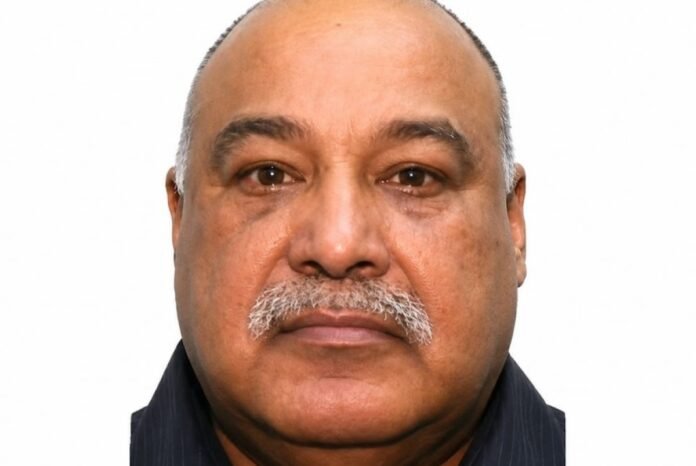
Ahmed’s crimes are not in dispute. Convicted by British courts of serious sexual offenses committed against children in Britain, he represents one of the gravest failures of public protection. His victims deserve justice, and the British state has a continuing obligation to ensure that dangerous offenders are effectively managed under the law.
Pakistan has unequivocally condemned such crimes and has consistently stated its willingness to cooperate with international partners, including the United Kingdom, in combating serious criminality in accordance with domestic and international law.
The controversy today, however, is no longer focused solely on his crimes. Rather, it increasingly centers on his identity.
As political pressure has intensified following his release from prison, public debate has shifted toward whether Ahmed should now be viewed primarily through the lens of his Pakistani origins rather than the country where he spent almost his entire adult life. That shift transforms what began as a criminal justice issue into a diplomatic one.
Ahmed arrived in Britain in the late 1960s as a teenager and lived there for nearly six decades. His education, employment, family life and criminal conduct all unfolded within British society.
His victims were in Britain. His offenses were investigated by British police, prosecuted by British authorities, adjudicated by British courts and punished within the British prison system. Every stage of his legal accountability has taken place under British jurisdiction.
Supporters of deportation argue that serious offenders with legal ties to another country should not benefit indefinitely from legal protections that prevent their removal. That is a legitimate public policy argument, particularly in cases involving grave offending.
The difficulty is that the Ahmed case sits at the intersection of domestic politics and international law. Once deportation depends on another sovereign state accepting an individual, the issue no longer belongs exclusively to one country’s immigration system. It becomes part of a wider framework of nationality, sovereignty and interstate cooperation.
Domestic politics meet international responsibility
Britain’s difficulty in deporting Ahmed stems largely from its own legal framework, which provides protections for certain long-settled residents and requires courts to weigh factors such as long-term residence, family life and proportionality before authorizing removal.
The current British government has indicated that it wants those rules tightened. Democratic governments are entitled to revisit immigration laws if they conclude that existing legislation no longer reflects public expectations or strikes the right balance between individual rights and public safety.
Changing domestic law, however, is only one part of the equation.
International law does not automatically require one state to accept every individual another state wishes to deport. Governments retain the sovereign authority to determine nationality under their domestic legislation and to verify whether legal requirements have been satisfied before recognizing an individual as their national.
Pakistan has publicly maintained that any request should proceed through established legal procedures governing nationality and that satisfactory legal evidence is required before responsibility can be assumed.
Britain, meanwhile, argues that serious offenders should not be able to rely indefinitely on legal protections that frustrate deportation. These positions reflect different legal responsibilities operating at different levels rather than necessarily conflicting legal principles.
This illustrates a broader reality of migration governance: decisions made within one country’s immigration system often depend upon the sovereign decisions of another. What appears to be a domestic immigration matter can quickly become a question of diplomacy.
When deportation becomes diplomacy
The Ahmed case reflects wider pressures confronting many Western democracies. Across Europe and elsewhere, governments are attempting to reconcile three competing realities: growing public demands for stricter immigration enforcement, legal obligations protecting long-term residents and increasingly diverse societies shaped by decades of migration.
When those pressures collide, deportation can become politically attractive because it offers a visible demonstration of government action. At the same time, migration policy has increasingly become intertwined with foreign policy.
Across Europe, migration has become a central feature of foreign policy. Readmission agreements with countries in Africa, South Asia and the Middle East increasingly shape broader diplomatic relationships involving visas, trade, development assistance and border management. As a result, deportation disputes are no longer simply administrative matters; they have become tests of interstate cooperation.
Against that backdrop, individual deportation cases can acquire significance well beyond the individuals involved. They become tests of legal cooperation, diplomatic trust and competing interpretations of sovereignty.
That broader context should not obscure another important reality. Britain’s own public inquiries into grooming gang scandals identified serious shortcomings in policing, safeguarding and local governance. Those institutional failures require continued attention regardless of whether particular offenders are ultimately deported.
Even where deportation is lawful, it does not absolve governments of responsibility for addressing the institutional failures that allowed such crimes to occur. Removing an offender may reduce immediate risks, but it cannot substitute for reforms that strengthen child protection, improve policing or restore public confidence in state institutions.
The wider implications also deserve careful consideration. If governments increasingly seek to remove long-term residents by emphasizing historical nationality or country of origin, similar disputes are likely to become more common. States receiving deportees will continue to insist on nationality verification and due process, while states seeking deportation will argue that public confidence in immigration enforcement requires firmer action.
Reconciling those interests requires legal cooperation rather than political rhetoric.
The Ahmed case ultimately illustrates a broader challenge confronting migration governance in the 21st century. Citizenship, nationality and long-term residence no longer fit neatly into traditional assumptions about belonging or responsibility.
As migration continues to reshape societies, governments will increasingly face difficult questions about where legal accountability begins and where sovereign responsibility ends.
Britain may ultimately decide to reform its deportation laws. Pakistan may continue to apply its own nationality laws when considering any request. Both are legitimate exercises of sovereign authority.
The larger lesson extends beyond one offender or one bilateral relationship. As migration, identity and security become increasingly intertwined, deportation is becoming not only an instrument of immigration policy but also one of diplomacy.
Governments may be able to move offenders across borders, but responsibility for the institutions that failed to stop them remains far less transferable.
Saima Afzal is a researcher specializing in South Asian security, counterterrorism, and broader geopolitical dynamics across the Middle East, Afghanistan, and the Indo-Pacific. She is currently a Research Scholar at Justus Liebig University, Germany.
US Strikes Iran After Hormuz Shipping Attack; Explosions Heard in Bahrain’s Capital
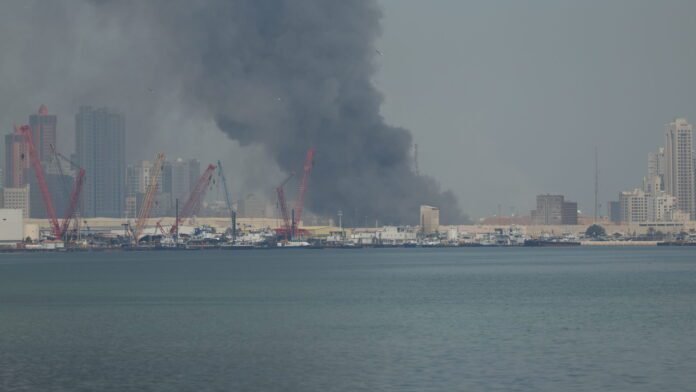
The United States launched a ninth consecutive night of strikes against Iran after Iranian forces targeted oil tankers in the Strait of Hormuz, while Iran expanded its attacks across the Gulf, triggering repeated air raid sirens in Bahrain, where explosions were reported in the capital, Manama.
US Central Command (CENTCOM) said American forces completed a wave of strikes targeting Iranian command centers, air defense systems, maritime surveillance positions, and missile and drone launch sites. President Donald Trump said, “Tonight we hit Iran very hard again.”
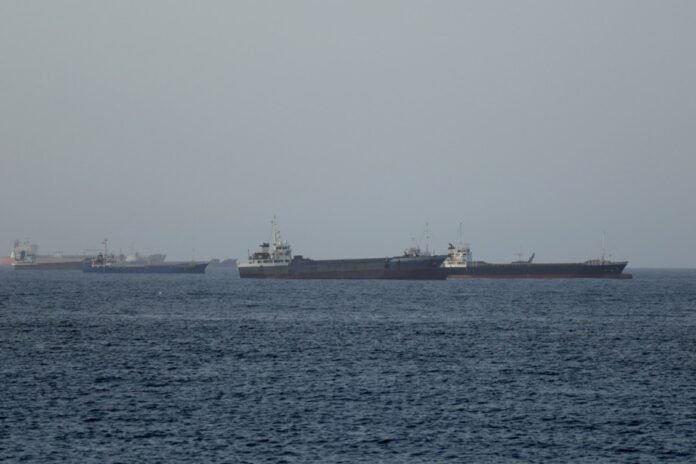
Earlier, the Revolutionary Guards said they had attacked two oil tankers sailing in the Strait of Hormuz outside a route approved by Iran. The group also warned the United States to expect “punishment.”
Bahrain’s Interior Ministry announced multiple rounds of air raid sirens overnight. State television later reported that the country’s air defense systems were intercepting an Iranian attack after explosions were heard in Manama, Reuters reported. The US Embassy in Bahrain warned American citizens of a potential Iranian attack in the capital, urging them to remain vigilant and follow official guidance.
The Kuwaiti army said it intercepted drones launched from Iran.
CENTCOM said US naval forces remain focused on enforcing the maritime blockade against Iran. It added that six commercial vessels were diverted from their course in the Strait of Hormuz.
CENTCOM also announced that one American soldier was killed in northern Iraq during the controlled detonation of munitions left from a downed Iranian drone. A second soldier was injured in the incident. Separately, the command said “unidentified findings” had been recovered from the scene where two American soldiers were killed in Jordan the previous day and remain under investigation.
Iran’s Fars news agency reported that the remains of an American MQ-9 drone were found in the mountains near Asaluyeh on Friday and were transported using a donkey.
Speaking after a meeting with Lebanese President Joseph Aoun, US Secretary of State Marco Rubio described the talks as “very positive” and said “the US is open to a diplomatic solution with Iran,” Reuters reported.
Outsourcing US deterrence: PIPIR and the Asian allies left exposed
America’s Asia-Pacific defense decentralization policy is rooted in a systemic crisis gripping its military-industrial complex. The breaking point has come to light amid its ongoing conflict with Iran, combined with a protracted maritime campaign against Houthi militants in the Red Sea.
These conflicts have forced the US military to expend long-range precision munitions and air-defense interceptor missiles at a scale unseen since the Cold War, exposing the fragility of Washington’s high-intensity war readiness, particularly in East Asia vis-à-vis a fast-militarizing China.
The Middle East theater has served as a harsh wake-up call for the Pentagon regarding the unsustainable cost-exchange ratio inherent in modern wars of attrition. US Navy and Army units have routinely fired Standard Missile-6 (SM-6) interceptors, costing $5.3 million each, or Patriot PAC-3 missiles, costing $3.9 million each, to neutralize cheap Iranian-designed one-way attack drones like the Shahed-136. Iran’s drones cost as little as $20,000 to $50,000 to produce.
This tactical imbalance has drained US air-defense magazines and handed Iranian attackers a clear logistical advantage. When the cost of deterrence far outpaces the cost of aggression, the conventional defense model faces a long-term strategic failure.
The fallout has severely degraded Washington’s global combat readiness, drawing down as much as half of its total inventory of Patriot and Terminal High Altitude Area Defense (THAAD) missiles. The depletion has exposed a geostrategic vulnerability in the Western Pacific, leaving US ammunition stockpiles inadequate to backstop Taiwan’s defense contingencies against a potential Chinese invasion.
The inability to rapidly replenish stocks stems from the structural atrophy of America’s defense industrial base, which for decades has operated on a peacetime footing, prioritizing cost efficiency and just-in-time inventory practices.
As a result, surge production capacity was hollowed out — a crisis compounded by chronic bottlenecks among lower-tier component suppliers, a severe contraction in solid rocket motor (SRM) manufacturing and a critical shortage of specialized labor after decades of national deindustrialization.
To bypass these domestic constraints, the US Department of Defense launched the Partnership for Indo-Pacific Industrial Resilience (PIPIR). First introduced at the Shangri-La Dialogue in May 2024 and formally inaugurated in Honolulu that October, the multilateral framework has since expanded to 16 nations, most recently welcoming Thailand and the United Kingdom.
Unlike short-term crisis mechanisms in Europe, PIPIR is designed as a long-term, institutionalized defense-industrial architecture, distributing production, assembly and maintenance nodes as close as possible to potential flashpoints in an effort to defeat the Pacific’s “tyranny of distance” and blunt China’s Anti-Access/Area Denial (A2/AD) capabilities.
By embedding logistics bases directly on the frontlines, Washington hopes to sustain high-intensity combat operations without relying on trans-Pacific supply lines vulnerable to interdiction.
Asymmetric industrial reality
However, Washington’s PIPIR ambitions confront China’s vastly larger defense-industrial machinery, which operates on what amounts to a permanent wartime footing.
Through its state-mandated Military-Civil Fusion strategy, Beijing has integrated its civilian manufacturing sector with national defense requirements, opening a wide capacity gap vis-à-vis the US across critical domains. This integration would conceivably allow China to replace combat losses and replenish missile magazines within weeks – a logistical advantage the Western bloc no longer enjoys.
In shipbuilding, for example, China’s construction capacity is estimated at many times that of all US shipyards combined — one widely cited Pentagon estimate put the gap at roughly 200-to-1. A single Chinese shipyard, such as Jiangnan Shipyard in Shanghai, has a physical footprint larger than the entire US military and commercial shipbuilding industry.
That industrial dominance shows up directly in hull counts: The Pentagon assesses the PLA Navy (PLAN) as the world’s largest navy by number of ships, while the US Navy’s active battle fleet has shrunk to under 300 vessels. China is also mass-producing advanced warships, such as the Luyang III-class (Type 052D) destroyer, equipped with Active Electronically Scanned Array (AESA) radar and vertical launch systems that rival the US Aegis system.
Although the US retains a qualitative edge with its 11 nuclear-powered supercarriers, China is quickly closing the gap with its newest carrier, the Fujian, which features an electromagnetic aircraft launch system (EMALS).
A similar US-China imbalance exists missile technology and combat aviation. Within the First Island Chain, China holds a large asymmetric advantage, deploying more than 1,250 land-based intermediate-range ballistic and cruise missiles.
The US, by contrast, has no land-based missiles in this class — a legacy of its historical compliance with the now-defunct INF Treaty — forcing it to rely on air and naval platforms operating within China’s dense denial zone.
Meanwhile, the US military’s inventory of combat-coded frontline fighter jets has shrunk to about 800, short of the roughly 1,200 aircraft the Pentagon says are needed to manage two simultaneous regional conflicts.
Beijing, meanwhile, is producing fifth-generation J-20 stealth fighters faster than Western intelligence agencies had projected. While the US still leads in total military aircraft and helicopters, China is rapidly scaling its tactical helicopter fleet to prepare for large-scale amphibious and air-assault operations across the Taiwan Strait.
Operationalization of PIPIR
To counter this, PIPIR operates across four highly specialized workstreams: sustainment (maintenance, repair and overhaul), production, supply-chain resilience and policy and optimization.
Funding blends US military allocations — including the $9.9 billion Pacific Deterrence Initiative for fiscal 2025 and a $24.7 billion supplemental appropriation for munitions supply-chain recovery — with international development capital, including the US Development Finance Corporation’s $205 billion investment portfolio.
Yet even combined, the defense budgets of Washington’s three primary Pacific allies — Japan, South Korea and Australia — total roughly $160 billion, a fraction of what’s needed to build manufacturing infrastructure capable of matching China’s industrial output.
Tactically, PIPIR distributes responsibilities based on each ally’s industrial strengths. Australia is leveraging its aerospace sector to become a regional MRO hub for the P-8 Poseidon’s radar systems and to co-produce Guided Multiple Launch Rocket Systems (GMLRS).
Japan is leading efforts to manufacture solid rocket motors, PAC-3 MSE interceptors and AIM-120 AMRAAMs, while opening its commercial shipyards to service frontline US Navy warships.
South Korea has positioned itself as a regional MRO base, maintaining turboshaft engines for CH-47 Chinook helicopters and executing overhaul contracts for US military logistics vessels at Hanwha Ocean and HD Hyundai Heavy Industries.
The Philippines is slated to anchor frontline manufacturing of 30mm tactical cannon ammunition. Backstopping these efforts are the trilateral Luzon Economic Corridor (LEC) and the Pax Silica Hub in New Clark City, which integrate commercial infrastructure, secure semiconductor supply chains, small modular reactor (SMR) nuclear energy assistance, and access to critical minerals such as nickel and cobalt for the US defense supply chain.
China’s strategic pushback against the PIPIR has been forceful. Beijing has condemned PIPIR as an illegal “securitization of economic issues”, arguing that it disrupts global markets. In response, China has reinforced its own defense-industrial network by deepening the “Axis of Upheaval” with Russia, Iran and North Korea.
Avoiding direct, overt lethal aid to skirt Western sanctions, Beijing instead functions as a major supplier of dual-use technologies and raw materials — providing precursor chemicals for missile propellants to Iran and microelectronics for Shahed drones, which are then mass-produced at Russia’s automated Alabuga factory.
In the Indian Ocean, China has countered India’s alignment with the US by deepening its military-industrial ties with Pakistan. This defense partnership includes the delivery of eight Hangor-class AIP-equipped diesel-electric submarines, collaboration on the fifth-generation J-35 stealth fighter, and acquisition of the HQ-19 missile shield, designed to intercept hypersonic threats.
Pacific hegemony projection
The rollout of PIPIR has altered the regional landscape, creating a security dilemma for the very allies Washington seeks to enlist.
First, the introduction of missile-assembly plants and SRM manufacturing lines makes these allied territories potential targets for preemptive strikes by the PLA Rocket Force should a conflict erupt over Taiwan.
The prospect of their homelands becoming proxy battlefields risks fueling anti-militarization protests in Japan, South Korea and the Philippines, where many view their countries as shifting from political allies to front-line shock absorbers in any great-power conflict.
Second, PIPIR complicates and destabilizes the diplomatic and economic ties these allies share with China, which remains their largest trading partner. Heavy reliance on Chinese export markets and Beijing’s dominance in rare earth elements leave these nations exposed to economic coercion — a tactic China has already used through export restrictions targeting Japan.
Rather than achieving comprehensive security, closer alignment with and active participation in the US military-industrial network risks triggering retaliatory sanctions from Beijing capable of damaging hundreds of billions of dollars in domestic civilian manufacturing.
Third, friction between the US and its partners threatens to undermine the coalition, worsened by Washington’s transactional approach to defense burden-sharing and unilateral trade tariffs.
Political sensitivities in Tokyo, mounting pressure on Seoul to absorb higher basing costs and a massive $32 billion US weapons-delivery backlog for Taiwan are chipping away at the credibility of America’s extended deterrence umbrella.
Long-term, PIPIR cannot substitute for a binding collective defense commitment if the Pentagon continues to treat its regional partners as manufacturing instruments for its own wartime logistics rather than equal stakeholders.
Without an overhaul of the International Traffic in Arms Regulations (ITAR) export control laws and a genuine commitment to equitable technology sharing, PIPIR risks being perceived as a new form of military-industrial exploitation, not cooperation.
At worst, the initiative could fracture defense relationships, deepen regional polarization and accelerate a shift in hegemonic power toward China in the Asia-Pacific – precisely the opposite of what the initiative seeks to deter.
Ronny P. Sasmita, PhD, is senior international affairs analyst at the Indonesia Strategic and Economic Action Institution.
US energy chief says Gulf oil flows nearing 14M barrels per day despite Iran tensions
US Energy Secretary Chris Wright on Sunday claimed that nearly 14 million barrels of oil per day have been flowing from the Gulf region, with about half passing through the Strait of Hormuz, Anadolu reports.
Speaking in an interview with ABC News, Wright said traffic through the Strait of Hormuz had not stopped despite ongoing exchanges between the US and Iran.
“I get the data on that every day. The seven-day trailing average right now is just under seven million barrels a day flowing through the waterway and just under seven million barrels a day additional flow through the bypass pipelines,” Wright said.
“So, we’re at a little under 14 million barrels a day from the Arabian Gulf region. That’s two-thirds of pre-conflict traffic, dramatically up from where we were back in March.”
READ: Turkish foreign minister urges return to US-Iran agreement, says Ankara coordinating with Qatar
Tensions have escalated in the Middle East as the US and Iran continue to exchange attacks.
The military escalation comes despite a Pakistan-brokered memorandum of understanding signed in June to end the war and pave the way for a lasting peace agreement.
According to Wright, “almost all the public data” he had seen was “incorrect.”
He added: “There’s flow through two routes through the Strait of Hormuz.”
Wright also said that “oil and gas and other products can flow through the Strait of Hormuz, with or without Iranian cooperation,” adding that US President Donald Trump “wants to end it with a peaceful agreement with Iran, but it takes two parties to do that.”
He said that “if they’re ready to do that, that’s the way it will end. If not, we will continue to assure flow of traffic through the Strait without Iran’s cooperation.”
READ: US says naval blockade of Iran remains in effect
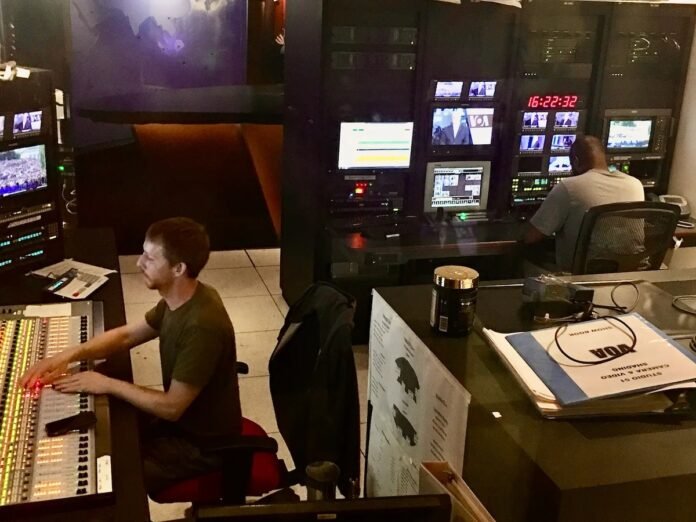
A propagandistic Voice of America hands strategic victory to adversaries
The war with Iran is driving fuel shortages and inflation around the world, deepening anti-American sentiment at a time when international confidence in the United States is already in decline. A June Pew survey found unfavorable views of the rising across 36 countries.
This is precisely the moment Washington needs credible international broadcasting to explain its policies through fact-based journalism. Yet, after failing to silence the Voice of America, the taxpayer-funded independent international broadcaster, the Trump administration is transforming it into a government mouthpiece.
In doing so, the administration is not only breaking the law; it is handing Tehran, Moscow, and Beijing a strategic victory as they ramp up their own global influence operations. A shuttered VOA cedes the information space to America’s adversaries. A propagandistic VOA advances their disinformation campaigns and forfeits the trust of the 360 millionpeople who used to tune in to its broadcasts each week.
Current editorial priorities bear many of the characteristics of wartime propaganda, including at VOA Farsi, one of only six of VOA’s 49 language services brought back in a much-reduced capacity following legal action against the administration.
Stories center on administration statements, often without opposing context. Recent articles highlight administration claims that oil prices are lower than before the war and that maritime traffic through the Strait of Hormuz has been restored. Meanwhile, VOA suppressed coverageof civilian death tolls from airstrikes and barely mentioned the February bombing of the elementary school in Minab.
This reporting bears little resemblance to VOA’s journalism that until March 2025 was guided by the VOA Charter. This 1976 law enshrines editorial independence by mandating three things: VOA will serve as a consistently reliable and authoritative source of news; VOA will represent America, not any single segment of American society; and VOA will present policies clearly and effectively, with responsible discussions and opinion on those policies.
That means covering military objectives and declarations of success alongside critics’ scrutiny of those claims, the war’s humanitarian consequences, and its cost to American taxpayers. Statements from the administration alongside lawmakers, analysts, activists, Trump supporters, and the majority of Americans who oppose the war. It also means including Tehran’s position, the voices of Iranian civilians and diaspora groups, international reactions, and the complex history of -Iran ties.
Little of that is evident in VOA’s reporting today.
Those steering the agency away from objective journalism may be tempted by what they see as an immediate payoff: making military operations appear more successful, and amplifying the president’s message.
In reality, this approach undermines interests from the outset. Narratives that contradict audiences’ lived reality are unlikely to persuade them. Iranians feel the war’s impact in their daily lives. People across Africa and Asia feel it in their wallets.
Even if some are persuaded, any short-term messaging advantage would be outweighed by the broader loss of credibility. Once audiences see that VOA serves the administration rather than the truth, they are less likely to trust its reporting on anything else, whether it’s the war in Ukraine or Gaza, the earthquake response in Venezuela, even something as indisputable as World Cup scores.
This trust can only be sustained if VOA continues to produce journalism, not propaganda. Unlike Russian and Chinese state media which can broadcast their governments’ consistent political narratives, a broadcaster that echoes its administration may need to change its message every four years, sacrificing credibility every time.
The VOA Charter states: “The long-range interests of the United States are served by communicating directly with the peoples of the world…” This emphasis on long-range interests transcends administrations, and it has worked: more than 80 percent of VOA’s global audience found its reporting trustworthy.
‘We shall tell you the truth‘
VOA made a promise to audiences in its first broadcast in 1942: “The news may be good for us. The news may be bad. But we shall tell you the truth.” This has repeatedly proven to be the right course of action, even when the news is devastating.
In March 2012, Staff Sergeant Robert Bales killed 16 Afghan civilians in a shooting spree in Kandahar. The killing, reported by VOA,made the area “a very difficult place to operate in,” said Jason Church, a retired Army captain and Purple Heart recipient deployed in Afghanistan at the time. Yet, he views VOA’s coverage in Pashto, Dari, Urdu, Farsi and other languages of the region as essential, because without it the only message the people would hear is from “an angry [Afghan President Hamid] Karzai and the Taliban.”
Reporting bad news is not “anti-American,” as Project 2025 claimed in its chapter on USAGM. On the contrary, journalism that reflects a nation unafraid of scrutiny embodies the very best of American ideals. For more than eight decades, VOA reports carried an implicit message: A strong nation is one willing to tell the truth about itself. That message, more than any government talking point, has made VOA one of America’s most effective instruments of soft power that is too valuable to squander.
This commitment to truth – applying the same journalistic standards to every administration and every government including its own – is what distinguished VOA from state-controlled broadcasters such as China Media Group, Russia Today, and Islamic Republic of Iran Broadcasting.
RAND researchers describe RT’s approach as a “firehose of falsehood”: high-volume, repetitive messaging unconstrained by objective reality or consistency. Rather than persuading audiences through credibility, this model seeks to overwhelm the information environment, and erode trust by making the truth seem unknowable.
The RAND study also suggests that if audiences have already been primed with accurate information, disinformation becomes less persuasive. As outlined in the now-abandoned USAGM’s 2022-2026 Strategic Plan, that is precisely VOA’s goal: to be “extremely capable first responders in the current war on truth.”
Why abandon that goal? Turning VOA into a propaganda outlet will not help the administration control the narrative; it will only serve adversaries’ purpose of making all information seem unreliable. With a silenced VOA, the unilaterally disarms in the global information war. With a propagandistic VOA, it arms its adversaries.
This July marks the 50th anniversary of the VOA Charter. It is time to return to it.
Patsy Widakuswara is a former VOA White House bureau chief who has been a lead plaintiff against the administration’s attempt to dismantle the agency. The views expressed here are her own and do not reflect the views of her employer. This article is republished with permission from Stephen Herman’s Substack Newsguy.
Andy Burnham and the Middle East: What Britain’s Incoming Prime Minister Is Likely To Do
Burnham appears likely to take a more openly critical line on Israel’s conduct in Gaza than Sir Keir Starmer initially did, but his record points to a shift in tone and pressure, not an upheaval in Britain’s wider Middle East policy
Andy Burnham is set to become Britain’s prime minister on Monday after the governing Labour Party selected him to replace Sir Keir Starmer. Before returning to Parliament in June, Burnham spent nine years as mayor of Greater Manchester. He previously held senior government positions, including health secretary, during the administrations of Prime Ministers Tony Blair and Gordon Brown.
Burnham enters Downing Street with considerable domestic political experience but a comparatively limited record in foreign affairs. His clearest Middle East positions concern Israel, the Palestinians, and Gaza. On Iran, the Gulf states, and most of the wider region, he has said much less.
How Burnham Reached Downing Street
Burnham returned to Parliament by winning a by-election in Makerfield, giving him the Commons seat needed to seek the Labour leadership. He was formally elected party leader on July 17 after receiving the support of 379 Labour MPs and 23 affiliated organizations.
Because Labour already holds a substantial parliamentary majority, Burnham can become prime minister without an immediate general election. He will arrive with overwhelming support inside the Parliamentary Labour Party but without a personal nationwide electoral mandate for his foreign policy.
Gaza and October 7
The strongest indications of Burnham’s likely Middle East policy come from his statements about the Hamas-led October 7 attack and the subsequent war in Gaza.
Burnham has condemned the Hamas attack and sought to reassure Britain’s Jewish community that his criticism of Israel will not weaken Labour’s opposition to antisemitism. At the same time, he has apologized for Labour’s initial response to the war, saying the party “didn’t get it right” and that Britain was too slow to call for a ceasefire.
“We’ve got to do more to put pressure on the Israeli government,” he said in July. “But let’s be honest, the UK was too slow to call for a ceasefire. And we must now do more to strengthen our approach.”
That marks a change from Starmer’s early post-October 7 positioning, which placed greater emphasis on Israel’s right to defend itself and resisted immediate calls for a ceasefire.
Burnham has described the destruction in Gaza as appalling and said there is “increasing evidence” that war crimes may have been committed. He has stopped short of declaring that Israel committed genocide, saying such determinations belong to international courts rather than politicians.
Israel, Palestine, and Settlements
Burnham’s record on Israel and the Palestinians predates the Gaza war.
In 2012, he visited the West Bank as part of a parliamentary delegation. One of the delegation’s organizers later recalled that Burnham was struck by the extent of settlements, checkpoints, barriers and military infrastructure and questioned whether a viable Palestinian state remained possible.
During his 2015 Labour leadership campaign, Burnham supported recognition of Palestinian statehood and described Israeli settlements as illegal and immoral. He also condemned Hamas terrorism and opposed the Boycott, Divestment and Sanctions movement against Israel, favoring measures directed specifically at settlement products instead.
That year, Burnham joined Labour Friends of Israel and said that Israel would be his first foreign destination if he became Labour leader. There is no clear public record showing that he subsequently made such a visit.
His current position therefore represents a change in emphasis rather than a complete ideological reversal. Burnham continues to support a two-state solution and does not advocate isolating Israel, but he has indicated that his government could pursue additional sanctions against people or organizations involved in violence and consider banning trade in goods produced in Israeli settlements.
Israel and Antisemitism
Burnham has insisted that strong criticism of Prime Minister Benjamin Netanyahu’s government is compatible with uncompromising opposition to antisemitism.
“There is no contradiction between a zero-tolerance approach to antisemitism and holding the Netanyahu government to account,” he said.
That distinction will matter politically. Labour spent years trying to rebuild relations with British Jewish communities after the antisemitism crisis under former party leader Jeremy Corbyn. Burnham will face pressure from pro-Palestinian Labour members seeking stronger action against Israel while also being expected to prevent criticism of Israeli policy from becoming hostility toward Jewish people or institutions.
Military Intervention and Iraq
Burnham should not be portrayed simply as a politician opposed to military action in the Middle East.
As a Labour MP, he voted in 2003 for the motion that authorized Britain’s participation in the Iraq War. He later voted against several proposed inquiries into the decision and conduct of the war.
During the 2013 parliamentary confrontation over Syria’s use of chemical weapons, Burnham backed Labour’s more restrictive approach, which required further consideration by the United Nations and another Commons vote before British forces could participate in military action.
His record suggests neither automatic support for intervention nor categorical opposition to it. As prime minister, he is likely to face immediate decisions over the US-Iran conflict, protection of British forces and facilities, maritime security, and any international effort to stabilize shipping through the Strait of Hormuz.
Iran
Burnham has not yet presented a detailed Iran policy.
He has referred to Iran and the deteriorating international security environment when arguing that Britain needs stronger armed forces and greater domestic defense production. That establishes his concern about preparedness but does not reveal how he would approach Tehran’s nuclear program, sanctions, direct military confrontation or diplomacy.
The developing US-Iran war may force Burnham to define those positions much sooner than expected. His choices will include whether to provide diplomatic, logistical or military support to Washington and how to balance Britain’s alliance with the United States against pressure to avoid another prolonged Middle Eastern conflict.
The Gulf and Wider Region
There is little public evidence from which to construct a distinct Burnham policy toward Saudi Arabia, the United Arab Emirates, Qatar, Bahrain, Oman, or Kuwait.
Britain’s relationships with the Gulf states involve defense cooperation, intelligence, trade, energy and investment. Those ties are deeply embedded in British policy and are unlikely to disappear merely because the prime minister changes. That expectation reflects institutional continuity, though, not a detailed policy Burnham has personally announced.
The same limitation applies to Syria and Lebanon. Burnham has not articulated a developed position on Syria’s new government, Hezbollah’s weapons, Israeli operations in Lebanon or the future of British engagement with Damascus.
Burnham’s public record offers little basis for assessing how he would approach many of the other conflicts, bilateral relationships and diplomatic disputes that regularly demand a British prime minister’s attention. His years as Greater Manchester mayor brought him into contact with diaspora communities and foreign representatives, but municipal engagement does not amount to a developed national foreign-policy program.
The United States
Burnham has given no indication that he intends to weaken Britain’s strategic relationship with Washington.
He may disagree with President Donald Trump over individual Middle East decisions, especially if the American president seeks British participation in military operations against Iran. Yet NATO, intelligence cooperation, nuclear policy, and the broader US-UK security relationship are likely to impose strong limits on any divergence.
Continuity With a Sharper Tone
Burnham’s probable Middle East approach can be described with more confidence on Gaza than anywhere else.
He appears more willing than Starmer initially was to acknowledge Palestinian suffering, criticize Israeli conduct, consider settlement-related trade restrictions and use sanctions as leverage. His history also includes support for Palestinian statehood and concern about settlement expansion.
Yet Burnham has condemned Hamas, rejected treating genocide as a political determination, opposed a general boycott of Israel and emphasized zero tolerance for antisemitism. He has not advocated breaking Britain’s alliance with the United States or dismantling its strategic relationships with Gulf governments.
The likeliest outcome is not a foreign-policy revolution. It is a British government that speaks more critically about Israel, places greater public emphasis on Palestinian rights and tests targeted economic pressure, while proceeding cautiously across Iran, the Gulf, Syria and Lebanon.
How far that distinction survives contact with war, alliance commitments, and the practical demands of governing will become clearer only after Burnham enters Downing Street.
Mom Kills Man Hiding Under Daughter’s Bed — Now She’s Being Charged with Murder
A Tennessee mother is facing a first-degree murder charge after police say she shot and killed a man she allegedly found hiding under her teenage daughter’s bed in the middle of the night.
Kendra Scott, 36, has been charged with first-degree murder and employing a firearm during the commission of a dangerous felony following the deadly July 16 shooting in Memphis, according to court records and an arrest affidavit obtained by PEOPLE.
The chilling incident unfolded around 1:40 a.m. in the 3000 block of Travis Road, where Memphis police responded to a report of a shooting. When officers arrived, they found an unresponsive man lying in the front yard with a gunshot wound to the back of his head, according to the affidavit.
The man, tentatively identified as Rodderius Morton, was pronounced dead at the scene. His age has not been released.
Police said Scott was at the home when officers arrived and allegedly told them she had come home and “saw a dude under my kid’s bed.”
“I did what I had to do,” Scott allegedly told police, according to the affidavit.
A neighbor told investigators he came outside after hearing a gunshot and saw a man who had been shot near Scott’s front porch. The neighbor also claimed he saw Scott standing in the front yard holding a gun and saying, “I shot him, I shot him.”
But the case quickly grew more complicated after police spoke with a juvenile who was inside the home at the time.
According to the affidavit, the juvenile told investigators they had invited Morton into the home around 1:20 or 1:30 a.m., without Scott’s knowledge. The juvenile’s name has not been released.
The juvenile allegedly told police Scott arrived home shortly afterward and began yelling, “Who’s at my house?”
According to the affidavit, the juvenile said they were afraid of Scott, who allegedly had a gun in her hand and had previously warned that if she ever “sees a boy in my house I will put a hole in his ass.”
Police said Scott then discovered Morton hiding under the juvenile’s bed.
The juvenile told investigators Morton gathered his belongings and left the home. Moments later, the juvenile said they heard a gunshot.
Scott’s attorney, Blake Ballin, told PEOPLE in a statement that the incident “started with the worst nightmare of any parent.” Ballin also claimed the juvenile involved was a 13-year-old girl.
“One of the key questions in this case will be whether anyone could act rationally in this circumstance,” Ballin said.
Scott is currently being held without bond, according to Shelby County public court records. Her first arraignment hearing is scheduled for Friday, July 24.
Autocracies get more repressive when opening up their economies – a political scientist explores why
The current state of democracy in the world is fragile. According to the V-Dem Project, which measures global democracy, 41% of the world’s population live in autocratizing countries — that is, those becoming more authoritarian.
In fact, a “third wave of autocratization” has seen democracy pushed back to levels not seen since 1978, the authors of the 2026 V-Dem report conclude. Worse, many of the 92 autocracies around the world are becoming more repressive.
And all this is happening while the economy has globalized — something that many political economists thought would encourage democracy among previously undemocratic nations.
The logic was straightforward: Take away the state’s economic power, and you limit its ability to repress. The theory was that economic liberalization did this by privatizing state-owned enterprises, deregulating markets and opening economies to trade and investment. As people became less dependent on the government for jobs, credit and economic opportunity, they would gain the autonomy to organize, oppose authoritarian rulers and demand greater political freedoms.
This idea, associated with Nobel laureates Milton Friedman and Friedrich Hayek, remains influential among many scholars and even served as part of the founding mythos of the Washington Consensus, a policy agenda championed by international financial institutions and leading world powers. It helped make economic liberalization the default prescription for countries across the developing world.
But reality has been much messier. The book documents how countries like Mexico, Malaysia and Senegal saw human rights abuses increase after embracing liberalization. About half of all autocracies have experienced similar trajectories after opening their economies. Why did a policy meant to weaken authoritarian rule sometimes make it more violent instead?
My answer focuses on the role of autocratic political elites – that is, the party officials, military officers and other regime insiders who control the state. For them, liberalization not only brings economic change, but it also represents a fundamental political threat. It can empower regime outsiders, such as an emerging business class or opposition leaders, who may later force their way into the system, diluting the influence of the old guard.
Dictators who liberalize then risk alienating their ruling coalition. When elites are strong, dictators cannot afford to lose their support, as they would risk a potential coup. Leaders with strong elites must then find ways to appease insiders, and one way they do that is through repression.
By cracking down on opposition groups, leaders signal that they remain committed to protecting elite interests. Repression, in this sense, is not just about silencing dissent — it’s about managing elite politics. The book documents, for example, how Mexico’s presidents used repression against the same opposition they had long tolerated to compensate the party elite for accepting reforms that threatened their political influence.
When dictators deploy repression in this way, they solve a broader political dilemma. On the one hand, they must contend with a political elite that sees liberalization as a threat to its influence. But, on the other, they also need to avoid alienating international actors, such as the United States, that are quick to punish governments that abandon the Washington Consensus. Repression allows leaders to retain elite backing while adhering to international demands for economic liberalization.
How does your theory apply to Cuba or Venezuela today?
A key distinction in my theory is that the effects of liberalization depend on how strong the regime’s elites are relative to the leader.
When elites are strong, dictators need to accommodate them, often by repressing outsiders to shield insiders from potential challenges. When elites are weak, leaders do not need to make those concessions.
The question then comes down to which of these two camps Venezuela and Cuba currently occupy.
In the case of Cuba, we have seen some of the power flow from the leader to the party. Former leader Raúl Castro extended and institutionalized the role of the party in the late 2010s. The military also gained more autonomy during that period, having secured economic privileges that are more resilient to the whims of the leader.
This all suggests that elites have extended their capacity to make demands on the leadership. In that context, further economic liberalization could trigger the dynamics I describe, pushing the regime toward more repression. There is a good argument that we have already started to see some of that.
Venezuela is in a similar situation. It is too early to say for sure, but the removal of Nicolás Maduro in a U.S. raid in January 2026 might create an opportunity for regime insiders to carve out some more independence and influence. If that is the case, then future deregulation may hurt, rather than help, human rights.
Ultimately, outcomes will depend on how these regimes evolve. But if current dynamics persist, external pressure for economic reform is unlikely to improve human rights – and may well make them worse, if my theory holds.
I got the idea for this book from listening to my father’s stories about how the liberalization of the automobile industry in Mexico in the 1970s affected the factory where he worked. It was all very specific, so I assumed it would not apply more generally to more countries. But the more cases I looked at, the more I realized this pattern of liberalization leading to repression was not uncommon.
In the book, I ended up statistically estimating that most dictatorships who have liberalized have displayed this pattern.
Another thing that surprised me was how the implications of the core argument kept extending to new areas.
For example, I expected that leaders pushed to liberalize their economies would become especially repressive if they also faced the threat of international prosecution. These leaders want to avoid ending up in front of institutions like the International Criminal Court, so they go to greater lengths to stay in power. That often means keeping their elites satisfied at all costs.
Where else are you seeing the dynamic play out?
One area I’m watching is the rise of artificial intelligence. My book focuses on economic liberalization, but it really is about how autocratic regimes adapt to a shifting economic structure. When new sources of wealth or influence emerge, they can give leaders an opportunity to bring in new allies and, in the process, weaken established elites.
China is probably the most relevant case for how these dynamics might play out in AI. Under Xi Jinping, there has been a clear push to centralize control over the AI sector. For example, the new Central Science and Technology Commission is led by one of Xi’s closest allies, placing oversight of this key sector closer to his inner circle. At the same time, the state has been heavily involved in promoting AI firms aligned with priorities associated with Xi’s leadership, while disciplining more independent tech entrepreneurs.
What I find interesting is what this might mean politically. If these sectors are producing new elites whose success depends on their relationship with the leader, they could become an alternative base of support.
That, in turn, could give leaders more room to maneuver in dealing with established elites. I do not think we know yet how far that goes, but I suspect it may very much fall in line with the dynamics the book highlights.
Creamy Avocado Cilantro Lime Hummus with fresh jalapeño, red onion, cilantro, and a slice of crusty toasted bread.
Avocado Cilantro Lime Hummus gives classic chickpea hummus a bright, creamy upgrade. Ripe avocado creates a silky texture, while fresh cilantro, lime, and jalapeño bring lively flavor without overpowering the dip. Tahini adds its familiar nutty richness, and a touch of cumin rounds everything out.
The entire recipe comes together in a food processor with no cooking required. Serve it with warm pita, crunchy vegetables, tortilla chips, or crisp crackers. It also makes a flavorful spread for wraps, sandwiches, and veggie burgers. A drizzle of olive oil, finely chopped red onion, and fresh jalapeño make the simple green hummus feel instantly special. The heat stays gentle and adjustable, so every scoop tastes fresh, balanced, and easy to enjoy.
Creamy Avocado Cilantro Lime Hummus with fresh jalapeño, red onion, cilantro, and a slice of crusty toasted bread.
Recipe Yield: About 2 1/2 cups (8 servings)
INGREDIENTS
1 (15 oz) can chickpeas, drained and rinsed 1 large ripe avocado, peeled and pitted, about 1 cup 3 tbsp well-stirred tahini 3 tbsp fresh lime juice 1/2 tsp finely grated lime zest 1 small garlic clove, roughly chopped 1 small jalapeño, stemmed, seeded, and roughly chopped 1/2 cup loosely packed fresh cilantro leaves and tender stems 1/2 tsp ground cumin 1/2 tsp fine sea salt 3–5 tbsp ice water, divided 2 tbsp extra-virgin olive oil, divided 1 tbsp finely chopped red onion, for garnish Thin jalapeño slices and fresh cilantro leaves, for garnish
INSTRUCTIONS
1. Mellow the garlic: Add the lime juice, garlic, jalapeño, cumin, and salt to a food processor. Process until finely chopped, then let the mixture rest for 5 minutes.
2. Whip the tahini: Add the tahini and 2 tbsp ice water. Process for 45–60 seconds, stopping once to scrape down the bowl, until pale and creamy.
3. Blend the chickpeas: Add the chickpeas and 1 tbsp olive oil. Process for 2 minutes, scrape down the bowl, then blend for 1 minute more. Add the remaining ice water 1 tbsp at a time until smooth and light.
4. Finish the hummus: Add the avocado, cilantro, and lime zest. Process for 45–60 seconds until evenly green and silky, stopping to scrape down the bowl as needed.
5. Garnish and serve: Taste and adjust the salt or lime juice as needed. Spoon the hummus into a serving bowl, swirl the top, and drizzle with the remaining olive oil. Garnish with red onion, jalapeño slices, and cilantro.
Helpful Tips to Perfect This Recipe
Choose a perfectly ripe avocado: The avocado should yield gently when pressed but remain green and fresh inside. An overripe avocado can give the hummus a dull or slightly bitter flavor.
Stir the tahini thoroughly: Natural tahini separates in the jar. Mixing it until completely smooth before measuring ensures the hummus has consistent flavor and texture.
Add the ice water gradually: Begin with the amount used to whip the tahini, then add only enough additional water to create a silky hummus that still holds its swirls.
Adjust the jalapeño heat: Removing the seeds and pale membranes creates gentle warmth. Leave a small amount intact for a noticeably spicier avocado hummus.
Keep it fresh and green: Store the hummus in the smallest suitable airtight container, smooth the surface, and cover it with a thin layer of olive oil. Refrigerate and enjoy within 2 days.
Rate This Recipe
Tried this recipe? Your rating helps others and means so much.
For instance, it seems that the command of General Oleksandr Syrskyi is now hanging by a thread – and one of the reasons Fedorov was removed by President Zelensky was supposedly to protect Syrskyi. There is even talk that Fedorov could be reinstated in some position.
This tweet by Fedorov last night was a really positive sign.
So are we witnessing the worst week for Ukraine in years turning into one of the best?
Well, let’s start with why it was the worst? Well as this is being written, Fedorov is still out. As Defense Minister Fedorov was a key part in the efforts to modernize, re-equip and ultimately reimagine the structure and conduct of the Ukrainian armed forces. Like many who have contacts in Ukraine, I had heard for a while that he and Syrskyi were quarreling, that forces which preferred the old, corrupt ways of doing business were angry at him, and even that Zelensky was growing jealous of Fedorov’s increasing popularity. However, I never thought he would be fired – his successes seemed so manifest that I thought in the end it could not happen. The first time I came across such a report, I tried to wish it away.
However, my wishing, not surprisingly, was irrelevant and, a few days later, he was out. To understand why this is such a terrible move, it is important to understand what made Fedorov so important, why the reasons for his removal are terrible signs for the Zelensky government, and where we might go from here. So, this update will mostly be about this move.
There will be two other stories as well. The first is about the status of the US license (still not actually granted) to allow Ukraine to build Patriots or at least Patriot interceptors. Finally, we have had, once again, contrasting attacks on Moscow and Kyiv (and another example of why waiting for at least a year for Patriots is such a help to Putin). We can expect more of what we have seen the last few days.
However, before that, the main story.
The worst week for Ukraine in years: Can it become the best?
I was in Kyiv when, in January of this year, stories about Fedorov’s possible appointment as defense minister started circulating. When the move was announced it ended up as the centrepiece of a weekend update. What I heard from Ukrainians about Fedorov was remarkable. Below is the key part of that update about him. Rarely had I had such a unanimously positive view expressed about any Ukrainian political figure. His ideas also seemed to be the right ones.
The Ukrainians I spoke to were all very enthusiastic about the appointment. One of the first people I heard from simply wrote back “Best Possible Choice.” The overwhelming sentiments were that Fedorov was “results oriented,” made decisions quickly and effectively, was able to get his way against bureaucratic inertia – systematic and thinks technologically and “out of the box.” I could go on and on, but you get the idea….
Fedorov also was explicit about what Ukraine needs to prioritize in its military needs. He put stress on air defense, the vital importance of drone production, and did not shy away from the vital question of the treatment of personnel.
Fedorov was clear that the personnel issues facing Ukraine were not ones that would be met by drafting more young people – it was about making the present system work. He claimed that 200,000 soldiers have gone AWOL while up to two million have dodged the present systems of conscription. It was clear from his remarks that one of the key ways he sees correcting this problem is by making military service more professional across the board.
Ukraine has a problem with very uneven brigade performance and command. Some units have extremely high morale and behave with extreme efficiency. Others are disorganized, poorly led and suffer from much lower morale.
Since his appointment I would go further. Fedorov revealed himself to be the most effective defense minister on the planet. He seemed to choose all the right priorities for Ukraine and improved performance in them all. Here are some quotes of his from the time he was appointed so you can see just how he had a clear (and I believe absolutely right) vision of how Ukraine needed to press ahead. Here are just some of the areas:
Drone production: Fedorov not only wanted to increase production, he wanted to protect and enhance supply lines to decrease Ukrainian vulnerabilities.
Professionalization of the military: Fedorov understood that the last thing Ukraine needed was lots of unmotivated conscripts. He wanted to make military service much more professional and appealing to draw in the right kind of motivated recruits who could fight in this environment.
Moving against systemic corruption: There are two kinds of arms manufacturer in Ukraine. There is a dynamic, start-up culture with companies that are adaptive and efficient, and there are some older, legacy producers that work on more corrupt practices. Fedorov wanted to support the former.
Mathematics of war: He just understood this as you can see from this quote. “Thanks to ePoints, we fully understand what is happening with drones. Soon, we will launch a revolutionary project, Mission Control: each crew will enter into the system the UAV type, destination, launch location, and more. This allows us to better understand the situation along the line of battle and the effectiveness of drone use.With Mission Control, we will close the entire drone cycle: procurement, delivery, and then battlefield employment. Through ePoints, we currently see only mission execution reports, while it is important for us to have the full picture, including results and accumulated experience. We worked on Mission Control functionality for two years. The next step is to launch Mission Control for artillery.It is very important that we have begun to calculate everything systematically. Soon, we will have complete information on drone crews: commanders, their monthly ratings, and statistics for the entire corps. We need to see the full picture to simplify and speed up management decision-making.”
Now, Fedorov did not start from a blank sheet. Ukrainian strategy had been moving in this direction before he became defense minister. There had been an understanding of the importance of increasing drone production, of decreasing Ukrainian casualties and raising Russian ones under accelerated attrition, of the importance of the long-range/mid-range strike campaign, etc.
And the relationship between Zelensky and Fedorov also became strained. I have never been one of those to overly praise Zelensky because as a war leader he has strengths and real weaknesses. The corruption scandal of last summer showed many of the weaknesses, which you can read about in this piece.
Basically Zelensky liked backing corrupt and inefficient cronies like Yermak and Syrskyi, and at one point threatened a political crisis in doing so. Here is a quote from that piece. The “he” in the first sentence is Zelensky.
The key reason is that he has seemingly prioritized loyalty over competence, and given a great deal of power to people who are of debatable abilities. The two most obvious, and they are not alone, are Andrii Yermak, the head of Zelensky’s office and Oleksandr Syrskyi, the commander in chief of the armed forces.
Yermak is the most controversial – arguably the most powerful person in Ukraine after Zelensky. Its very difficult to have a conversation in the country without someone complaining of his personalization of power and the damage he has (allegedly) done to the war effort. Yermak has seen other major figures go (Danilov, Zaluzhny, Resnikov, etc.) while his power has grown. From what I hear there is now an unhealthy culture of trying to suck up to Yermak about many in the diplomatic community in Kyiv, as he is seen as the real power behind the throne.
Clearly, also, Yermak is serving at Zelensky’s behest and Zelensky is in no rush to replace him. If anything, Zelensky seems to like having Yermak around as everyone can blame Yermak for things that go wrong (exonerating Zelensky unconsciously).
Syrskyi is also in post, it seems, because of his loyalty to Zelensky – more, many would argue, than for his competence in post.
In firing Fedorov and protecting Syrskyi last week, Zelensky was once again showing his worst side as a war leader. He was protecting loyal incompetence over what was better for the country. There can be no sugar-coating of the pill on this.
Fedorov, thankfully, chose not to go quietly. When his dismissal was made clear, he gave a press conference in which he outlined his vision point by point and described what he was trying to achieve. Here is an English-language translation of the press conference, which really is too long and detailed to quote but provides a great glimpse into why he was so important.
Here is just one example from it – when Fedorov admits he wanted Syrskyi and Syrskyi’s key deputy, out. The boldfacing is mine for emphasis.
What solutions were proposed at the time? Radical personnel decisions, including replacing both the commander-in-chief and the chief of the General Staff. I promised today that we needed to speak as adults. In reality, we have no other choice if we want to defeat the enemy asymmetrically and with minimal losses, in a system where strong commanders and leaders are allowed to develop rather than being suppressed, written off, sent away, reprimanded and held back. A modern organization built around technology requires leadership in management. It involves numerous sensors, working with IT specialists and intelligent people, and attracting talent despite limited resources and the absence of high salaries. It requires an entirely different model of management.
The reaction of Ukrainian civil society and elements of the armed services, to Fedorov’s removal showed that his vision had a wide base of support in Ukraine and that this move was not going to be quietly accepted. Ukrainians understood that Fedorov was a key part of the changes that were giving them the initiative in the war. They understood the importance of his outlook and why his fights to improve soldiers’ lives and to cut back corruption were so important. Protests started—and actually grew in Kyiv, Odesa, Kharkiv, Lviv and many other Ukrainian cities (large and small).
The dissension in the armed forces seems to have been extremely worrying for Zelensky. Many of the best and most effective units had members willing to speak up against Syrskyi and for Fedorov – and at the same time, Syrskyi was pressuring them to support him.
This really is a crucial moment. The firing of Fedorov, if it is allowed to stand along with the keeping of Syrskyi, will not mean that Ukraine will lose the war. However it will mean higher casualties, more corruption, less flexibility and more Soviet-style thinking. I can think of nothing worse.
So right now as I am writing we are still facing the worst week of the war as we have Fedorov out and Syrskyi in.
However the mood music seems to be heading to Fedorov back in some position and Syrskyi under threat. If things evolve into Fedorov back and Syrskyi out, it will be the best week for Ukraine in years.
An update on Ukraine and Patriot interceptors
I originally thought last weekend that this would be the story of the week. All the talk of Trump’s pivot to Ukraine by giving them a license to build Patriots did seem to die down in the focus on Fedorov’s firing this week. However, this story, as the attacks last night on Kyiv reconfirmed, remains vital. And, as always when it comes to Trump, the reality is far less than that which people understand.
Here is what I have been able to understand from talking to people who know. No one is going on the record, but there has been a great consistency in what I am hearing. So I cannot attribute any of this, but I can guarantee that it was what I am hearing and I believe the people I speak to.
There are indeed discussions now about Ukraine getting a license for some kind of Patriot production (maybe just interceptors). The companies seem willing to do this and therefore moves are being made. It might be announced soon or actually it could take longer (Trump might change his mind).
There was NO preparation for this. The companies had not been consulted on this by the administration and had made no preparations to help Ukraine in attempts to source their own production. This is crucial as it means Ukraine building actual copies of advanced Patriot interceptors is probably years away (if they get built at all).
What Ukraine might be able to hope for in a year or two is their own, less capable version of a Patriot interceptor that can fire from the Patriot system. When Zelensky is talking about getting help, this is what he is referring to. Take note of his careful language here from just a few days ago:“We have a political agreement [with US President Donald Trump], and we expect that by the end of 2026 we will have the technical ability for a Ukrainian team to produce American missiles using our own capabilities.” Note that having the technical capability to manufacture something is different from having a productive system up and running.
So that means at least one more winter and probably two with little in the way of much support from this initiative. Even then, to get actual Patriot-class interceptors will take longer. We can hope that the Ukrainian version of the interceptor is effective, but cannot tell now.
There is a great deal here to unpack. The fact that there was no preparation for this means that Ukraine was not included in any supply chains until now. It will need to source the advanced components in a highly competitive market with no head start. And in the meantime, the US is further running down its stocks of Patriots in its never-ending war with Iran, which means Ukraine will probably get no more Patriots from the USA.
The upshot is that Ukraine might have a less complex (and hopefully not less effective) version of what they had in the winters of 2024-2025 and 2025-2026, but will not have them until the winter of 2027-2028 or maybe 2028-2029. That means, because of Donald Trump, Ukraine is facing a terrible winter this year, as Russia can blast it with ballistic missiles and the Ukrainians will lack the right interceptors.
What seemed to happen was this. Trump was tired of getting flack for not helping Ukraine, was hearing that Ukraine was doing much better than he expected and did not want to be left behind, so took a step to make it seem like he was helping Ukraine but that would not hurt Putin for a long time and would actually help Putin in the near term. Remember that, when some Trump backer tells you that Trump now supports Ukraine. He has actually made sure Ukraine will be easier for Putin to attack this year and the next.
Moscow and Kyiv
The two capital cities had major attacks launched against them in the last two days. Last night, the Russians launched a major attack on Kyiv using exactly the systems that they know Ukraine cannot intercept because of the Patriot shortage. According to the Ukrainian Air Force, the Russians sent 25 ballistic missiles, 10 Zirkon hypersonic missiles, and six other missiles (and a number of drones) against Kyiv.
This might have been the largest ballistic missile attack on Kyiv so far. Early reports on casualties are thankfully light (one dead and a number wounded), however that could be down to luck as much as anything else. What is clear is that the bombardment of Ukrainian cities by Russian ballistic missiles is now a preferred strategy and something that we should expect to see more of.
The day before, the Ukrainians launched a long-range drone attack on targets around Moscow (and other places). The Moscow targets showed a Ukrainian favorite (an oil facility) but also something new—a Wildberries warehouse. The latter went up in a black cloud of smoke.
The Wildberries attack is notable because it is the kind of target that the Ukrainians could have hit before but chose not to. Certainly from the fires it seems that these facilities were pretty easily attacked, were hit directly and probably not well defended.
As targets of war, these warehouses go into the more debatable category. Did they contain some components that could help war production? Undoubtedly. Do they contain elements that support civilian life? Undoubtedly as well. The interesting thing shown by these attacks is that Ukraine is more and more edging over to a broader interpretation of what is a legitimate target of war.
It might also be a signal to Russia, particularly as Ukraine knows that in the winter of 2026-2027 there will be little it can do to stop Russian ballistic missiles. The message is: “We can strike what you do not want us to strike. Just so far we have held back. We might no longer.”
I think what we can say is that we will see more of what we have seen in the last two days – from both sides.
Phillips P. O’Brien is professor of strategic studies at the University of St. Andrew. This article is republished with permission from Phillips’s Newsletter, a reader-supported publication. To receive new posts and support Phillips’s work, consider becoming a free or paid subscriber.