19.6 C
London
Saturday, July 18, 2026
Home Blog

Will AI fix prior authorization—or make it worse?

0
will-ai-fix-prior-authorization—or-make-it-worse?
Will AI fix prior authorization—or make it worse?

If you’re like me, you or a loved one has struggled through the process of gaining pre-approval for the medical care that your physician has recommended. Personal stories abound regarding the tribulations of patients as they go through hoops to get their health insurer to pay for certain prescription medications, medical procedures, and more.

When used judiciously, this process—known as prior authorization—serves as a check on overuse and spending on services or technologies for which there are less costly alternatives. But a large majority of physicians voice concerns about care delays, which can cause patients to abandon recommended treatments while waiting for the insurance company to verify their eligibility and confirm that the treatment is, indeed, medically necessary. Patients who are denied care may submit an appeal, but that requires more time.

AI might be able to help. With its ability to efficiently sort through vast reams of information, artificial intelligence could theoretically expedite approval of unambiguously allowable claims, thereby reducing care delays. However, AI-driven prior authorization is facing resistance, as it may increase wrongful denials of health insurance coverage. A 2025 American Medical Association survey of physicians revealed significant concern about the application of AI tools, with 61 percent of doctors worrying that AI will exacerbate denials of what they deem are necessary treatments.

The AMA advocates requiring insurers to provide detailed clinical reasoning to justify denials of coverage, in addition to more transparency regarding AI algorithms.

In an email to Undark, health policy analyst Camm Epstein wrote that “AI should be used to make appropriate care easier to approve, not necessary care easier to deny.”

President Donald Trump’s administration is currently piloting a program in six states, using AI to reduce unnecessary medical spending. But it remains to be seen whether this new approach will help fix a tortuous system.

Regardless of the degree to which AI is involved, the public views prior authorization as a major burden. In Medicare Advantage—the privately run alternative to original Medicare that now enrolls roughly 55 percent of Medicare-eligible seniors and disabled people—insurers issue millions of full or partial claim denials annually based on prior authorization. Federal government reports issued in June showed that plans sometimes even reject requests for skilled nursing and rehabilitation admissions. Erecting obstacles to medically appropriate care is viewed as a particular area of concern.

Patients can request medical exemptions or appeal plan decisions, but the process is often complicated and cumbersome. NBC News reported that some patients are “stuck in prior authorization” purgatory as they “run out of time or treatment options.”

A newly released Commonwealth Fund survey finds that roughly one in five American working-age adults with private insurance reported that either they or a family member were denied insurance coverage for physician-recommended medical care in 2025. Forty-one percent of people who experienced a prior authorization denial said it delayed their care, and more than a quarter reported that their health problem worsened as a result.

The government and private insurers have tried to make improvements.

A rule issued by former President Joe Biden’s administration in 2024, for example, included reforms designed to reduce delays for patients with government-run plans while streamlining the prior authorization process for physicians. It required insurers to make certain prior authorization decisions within 72 hours for urgent requests, and seven calendar days for non-urgent requests. Per Jan. 1 of this year, these timeline requirements went into effect for most health plans in the public sector. Last year, together with insurers, the Trump administration pledged to further streamline and accelerate prior authorization processes. Private insurance companies vowed to standardize electronic requests by 2027 and to “reduce the volume of medical services subject to prior authorization” by 2026, including for common procedures like colonoscopies and cataract surgeries.

Now, the Trump administration wants to further ameliorate prior authorization protocols by expanding the use of AI.

This year, the Centers for Medicare and Medicaid Services began a demonstration project called WISeR, or Wasteful and Inappropriate Service Reduction Model. Using AI, WISeR is designed to reduce waste and fraud in original Medicare, aiming to decrease unnecessary procedures. The project runs through December 2031 in six states, and combines technologies such as machine learning with human clinical review to evaluate services CMS believes may be vulnerable to overuse, fraud, and abuse, including skin and tissue substitutes, electrical nerve stimulator implants, and knee arthroscopy for knee osteoarthritis.

Although prior authorization has been used extensively in Medicare Advantage, it has rarely been deployed in original Medicare. And this shift might not be good for patients.

An HHS Office of Inspector General memorandum published in 2022 pointed to more than one in 10 instances in which Medicare Advantage plans denied beneficiaries’ access to services even though they apparently met coverage rules. (Being denied access doesn’t mean patients can’t ever gain access. In 2024, for example, Medicare Advantage plans overturned 81 percent of denials upon appeal.)

By integrating AI into the prior authorization process, CMS says the WISeR model will “ensure timely and appropriate Medicare payment for select items and services.” But this is not how critics see it. Before WISeR was implemented, Wendell Potter, an advocate for health insurance reform and former executive at health insurer Cigna, covered the political pushback against the model on the Substack publication “HEALTH CARE un-covered.” In the same publication, Zena Wolf, a researcher with the Center for Health & Democracy, cited investigations by the Washington Post, KFF Health News, and the Seattle Times that suggest in the first few months of the year, the model has caused delays in care and denials in some instances in each of the six states where it is being piloted. And despite automated processes, there can be a high administrative burden for health care providers, which includes additional work dealing with denials.

Additionally, vendors participating in the WISeR model, who were hired to carry out AI-driven prior authorization, earn a share of what CMS calls “averted expenditures.” This could entail revenues for rejecting care requests. In turn this points to a broader discussion about long-standing concerns regarding profit-making on the basis of discouraging patients from getting medically necessary care. Several lawmakers have introduced resolutions and amendments to block funding for the WISeR model, citing threats to patient access.

Yet the Trump administration seems to be of two minds when it comes to prior authorization. As CMS expands its use in original Medicare using AI, the agency wants to lessen and streamline its use by private insurers, including Medicare Advantage plans. CMS Administrator Mehmet Oz has warned insurance company executives that they must ease the burden of prior authorization, or the federal government will impose regulation: “If you don’t do it yourselves, then we’re going to do it for you,” he told the National News Desk, a TV news program.

Possibly to preempt further executive branch action or passage of laws by legislators, health plans released data recently that suggest they’re complying with administration demands. The industry-based survey reveals that between June 2025 and April 2026, requests for prior authorization declined by 11 percent. It’s unknown, however, whether the denial rate has decreased.

Responding to an industry group survey conducted last year, all responding health plans agreed with the statement, “AI or algorithms without clinician or practitioner review are not used to deny prior authorization requests that involve medical necessity or clinical considerations.” Moreover, insurers promised more transparency around clinical reasoning underlying prior authorization.

This may alleviate some of the worry about a lack of human review of decisions made by AI. But placating detractors won’t be easy.

Jared Dashevsky, a physician and founder of a media and educational platform called Healthcare Huddle, wrote that AI could “eliminate barriers, reduce administrative waste, give us more time with patients. But that’s not what’s being built.” Instead, he says, there’s an “arms race to deny faster and appeal faster. More automation of a broken system that shouldn’t exist in its current form.”

This article was originally published on Undark. Read the original article.

http://arstechnica.com/

Kasparov Warns Putin Will Escalate War Rather Than Seek Peace Deal

0
kasparov-warns-putin-will-escalate-war-rather-than-seek-peace-deal
Kasparov Warns Putin Will Escalate War Rather Than Seek Peace Deal


Russian opposition figure Garry Kasparov has warned that Vladimir Putin is unlikely to pursue a peace agreement with Ukraine and may instead escalate the conflict after Russia’s parliamentary election in September. The former world chess champion argued that Putin has historically responded to pressure with further aggression and that any settlement short of a Russian defeat would allow Moscow time to rebuild its forces.

Kasparov suggested a possible escalation could involve testing NATO’s resolve through a limited provocation, such as an incursion into a Baltic state, rather than a full-scale attack. He pointed to recent Russian measures easing troop mobilisation and continued Kremlin messaging as signs that Moscow is preparing for prolonged conflict rather than negotiations.

His comments come as Ukraine intensifies strikes against Russian military logistics and energy infrastructure, with officials in Estonia saying the attacks have weakened Russia and could strengthen Kyiv’s position in future talks.

Kasparov urged Europe to abandon hopes of a compromise-based solution and instead support a Ukrainian victory through stronger sanctions and pressure on Russia’s elite. He also called for programmes to help skilled Russians who oppose the Kremlin relocate, arguing that Russia’s technological and professional talent represents a key vulnerability for Putin’s government.

Kasparov, one of the Kremlin’s most prominent exiled critics, said the ultimate objective should be separating Putin from the country’s elites, claiming that Russia’s defeat in the war would threaten the president’s hold on power.

via Politico

The United States of Betrayal

0
the-united-states-of-betrayal
The United States of Betrayal


Trump Adds to America’s Lethal Legacy of Treachery

Who can even remember it now? That giddy moment less than five months ago when President Donald Trump called on the Iranian people to rise up and take on the ruling regime. “When we are finished, take over your government. It will be yours to take. America is backing you with overwhelming strength,” Trump promised on February 28. “This is the moment for action. Do not let it pass.”

Like a million Trump pledges before it, it was part bluster, part bullshit. Last week, Trump admitted as much, stating he knew the Iranian opposition had no chance against the ruling regime. “Nobody is gonna take over. They have no guns, and the other side has machine guns,” he said at the NATO summit in Ankara, Turkey. “They can’t take over because they’re dead.” This was not, however, just a routine Trumpian lie; it was also part of a grand American tradition.

They say baseball is America’s national pastime, but you could make a solid case that it’s actually betrayal. Washington loves nothing more than to sell out its friends, betray its partners, leave its allies in a lurch, and call people into the streets and then abandon them to slaughter.

In an interview with the Washington Post on the Iran war’s first day, Trump said that “freedom for the people” of Iran was the goal of the conflict. It never was. But what would be lost in luring Iranian activists into the streets — aside from Iranian lives?

This type of lethal double-cross has been America’s stock-in-trade since its infancy — and has continued across the globe no matter the conflict, era, or president.

During the American Revolution, most Native peoples viewed America’s colonial rebels with skepticism and attempted to remain neutral or sided with the British. But some placed a bet on the revolutionaries, assuming that they would be rewarded with fair, if not preferential, treatment in the event of a win by the colonies. They were, in the end, wrong to assume their allies would act honorably.

The Oneida, for example, split from most of the Haudenosaunee Confederacy — the Mohawk, the Onondaga, and others — who allied with the British. “There would have probably been a lot more death for the Continental Army,” according to Heather Bruegl, a public historian and citizen of the Oneida Nation of Wisconsin who noted that the Oneida altered the tide of the war by breaking the famine at Valley Forge.

Even the Pentagon lauds the Oneida Nation, noting its “support for American independence saw the Continental Army through its lowest point in the Revolutionary War” but admitted that while Congress offered thanks, “that gratitude did not always translate into equitable treatment.” This is nothing but a mealy-mouthed reference to the fact that at the end of the Revolutionary War, the Oneida Homelands were estimated at between five to six million acres of land but were reduced to just 32 acres by the early 1900s.

The Lenape people also threw in with the American rebels, signing a treaty that pledged their backing to the nascent United States in exchange for protection and the creation of a 14th state, governed by Native Americans. The agreement fell apart within weeks. As the official State Department history puts it:

First, the Lenape leader White Eyes died. While American officials insisted White Eyes died from smallpox as the cause, evidence indicated members of the [colonial] militia murdered him, and the circumstances remain unclear to this day. This act showed the Lenape that the Americans did not value nor honor the importance of kinship alliances.

Despite a failure by the Americans to protect Lenape lands, some Lenape warriors nonetheless assisted the Continental Army and a delegation went to the Continental Congress to attempt to repair the pact. But the Americans made no effort to salvage the agreement and said the Lenape had broken the treaty. Worse still, in 1782, Pennsylvania militia massacred a neutral, pacifist Christian Lenape community in Gnadenhutten, bludgeoning 96 unarmed people to death. Thirty-nine of those killed, many with a hammer to the back of the head as they prayed for mercy, were children.

Deception and Disloyalty

Still, it wasn’t until the 20th century that America hit its stride, selling out allies at an unbelievable clip. Approximately 250,000 Filipinos joined the U.S. military, for example, and fought for America during World War II. Washington promised them the same health and pension benefits as their American counterparts, a pledge that was even reaffirmed at the close of the war. But then Congress passed and President Harry Truman signed the Rescission Act of 1946 that said that the service of Filipinos “shall not be deemed to be or to have been service in the military or national forces of the United States or any component thereof or any law of the United States conferring rights, privileges or benefits.”

Also during World War II, the U.S. Office of Strategic Services, a forerunner of the CIA, armed, trained, and supported a guerrilla force in French colonial Vietnam fighting the Japanese and their French quislings. In 1945, with the Japanese defeated, the top local OSS agent — the charismatic Ho Chi Minh — proclaimed Vietnam’s independence, using the words of the U.S. Declaration of Independence as his template. “All men are created equal,” he told a crowd of half a million Vietnamese in Hanoi. “The Creator has given us certain inviolable rights: the right to life, the right to be free, and the right to achieve happiness.”

Ho thought his allies would back him. He was wrong. They instead turned on Ho and his comrades, funded the French reconquest of Vietnam, and spent the better part of the next three decades propping up an ever more corrupt and repressive rump state in South Vietnam while advising, arming, training, and funding an allied South Vietnamese military, and fought a long, destructive war against revolutionaries in the South and Ho’s North Vietnam that left millions dead, wounded, or displaced.

Eager to turn the conflict over to the Potemkin state they fostered and extricate the U.S., President Richard Nixon pledged to re-enter the war with the “full force” of American power, to induce the despotic South Vietnamese government to sign a 1973 peace agreement with the North. Two years later, the U.S. ignored this guarantee and abandoned South Vietnam and millions of allies, collaborators, and hangers-on.

No single moment sums up this betrayal better than an incident recounted by Stuart Herrington, a counterintelligence officer who spent 30 years in the Army. Herrington made a vow to hundreds of Vietnamese who crowded onto U.S. Embassy grounds in Saigon on the final day of the U.S. evacuation in 1975. “Nobody is going to be left behind,” he assured them. One of the 420 Vietnamese who was there remembered his words: “I promise me and my soldiers will be the last ones to leave the embassy.” Herrington promised them that a large helicopter was coming to rescue them and then excused himself to go “take a leak.” Scurrying off into the shadows, Harrington slipped into the embassy building and onto a helicopter, abandoning those to whom he’d just given his word.

A U.S.-backed military regime in neighboring Cambodia also crumbled in 1975 and was abandoned to face the genocide of the Khmer Rouge. A proxy army in neighboring Laos was similarly discarded in the 1970s. Decades later, surviving troops and their families were still in hiding and on the run. “We want America to give us a place to live,” Va Chang, a then-60-year-old veteran found in the jungle in the mid-2000s told a reporter. “If the Americans don’t want to do that, they should drop a big bomb on us and end our misery.”

Prior to a 1956 uprising, the CIA air-dropped leaflets into Hungary with messages like “The regime is weaker than you think.” János Rainer, director of Hungary’s 1956 Institute Foundation, said, “Hungarians clearly got the impression that, in the event of a rebellion, the U.S. would support them effectively.” But the U.S. stood aside as the Soviet Union crushed the uprising, killing and wounding almost 20,000, imprisoning 13,000, and executing 229 others following trials, according to one count. The writer Tamás Aczél, who fled to the U.S. in 1956, wrote that Hungarians had been naive to put their faith in U.S. calls for “liberation” in Eastern Europe, writing: “[W]e learned what we didn’t know — that the West had written off these countries and only their propaganda machines pretended otherwise.”

In an even more egregious exercise, the CIA trained and armed Cuban exiles, landing them at the Bay of Pigs in 1961. The counterrevolutionaries were promised ample air cover — “the sky will be yours” — and led to believe they would be supported by 15,000 American troops. But the invasion of Cuba went south quickly, President John F. Kennedy canceled a second round of airstrikes, and the exiles ran out of ammunition, were pushed back into the sea, and were abandoned. Grayston Lynch, a CIA operative who participated in the landing, recounted that he called two American destroyers on the scene for help but was told by the captain of one: “My orders are not to become involved.”

While the U.S. has betrayed people the world over, one group stands preeminent in the sheer amount of American treachery. “Nothing in this world is certain except death, taxes, and America betraying the Kurds,” wrote Jon Schwarz for The Intercept in October 2019, recounting eight instances from the 1920s to that very moment when the U.S. used independence-seeking Kurdish peoples to further American aims and then cut them loose.

One of the most craven of these instances was a Nixon-era plot with then U.S.-allied Iran to use the Kurds to bleed the then-Soviet-aligned Iraqis.

Once the Kurds outlived their usefulness, however, U.S. aid was then cut and the Iraqi military killed thousands as the Kurds begged for help. As a congressional report later admitted, “Even in the context of covert action ours was a cynical enterprise.” But Secretary of State Henry Kissinger shrugged at the slaughter, explaining “covert action should not be confused with missionary work.”

As the U.S. bombed Iraq during the Gulf War in 1991, President George H.W. Bush called on “the Iraqi military and Iraqi people to take matters into their own hands, to force Saddam Hussein, the dictator, to step aside.” Both Shias in southern Iraq and Kurds in northern Iraq answered the call, expecting U.S. military support. It never came, Hussein stayed in power, and some 20,000 Kurds and up to 60,000 Shias who rose up were slaughtered by the Iraqi military.

More than a decade later, another failed U.S. war in the Middle East fostered the rise of the Islamic State group and the creation of a brutal caliphate across a wide swath of Iraq and Syria. Between 2014 and 2017, Kurdish-led forces dismantled this quasi-state for the U.S. But after 93 percent of Iraqi Kurds voted for independence in 2017, America was nowhere to be found. Within weeks, Iraqi federal troops and Iranian-backed Hashd al-Shaabi militias launched a coordinated offensive. The Kurds lost the city of Kirkuk, the Nineveh Plains, and roughly 40 percent of the territory their fighters had held. Washington offered no military response and no assistance — not even a diplomatic protest to the government in Baghdad. Then in 2019, President Donald Trump withdrew U.S. troops from northeastern Syria, opening the door for a Turkish invasion of the very land the Kurdish-led Syrian Democratic Forces had taken from ISIS at the cost of more than 20,000 lives.

Hundreds of thousands of locals also served alongside U.S. troopsdiplomatsintelligence officers, and contractors during the failed Afghan War. Despite 20 years of Americans mouthing the phrase “shohna ba shohna” (“shoulder to shoulder” in Dari), it meant very little. In the chaotic 2021 U.S. withdrawal from Afghanistan, most Afghans who fought on the side of the U.S. and its coalition partners were left behind as the Taliban retook the country.

But even those who made it out have been abandoned. In April, the Trump administration floated plans to send Afghan allies stranded at Camp As Sayliyah in Qatar to the Democratic Republic of Congo. While that plan was reportedly shelved, rumblings of casting them to the winds elsewhere remain. And in May, the Department of Homeland Security formally ended Temporary Protected Status for roughly 10,000 Afghans who fled after the Taliban’s return to power.

“We made a promise to those who helped America in our time of need, and it’s wrong to turn our backs on them,” Rep. Jason Crow, D-Colo., a member of the House Armed Services Committee and a combat veteran who fought in Afghanistan, said last month, noting that they will likely face torture, persecution, and even death if they are returned to Afghanistan.

Won’t Get Fooled Again?

The principal proverb of personal responsibility has been kicking around since at least the 1600s: “Fool me once, shame on you. Fool me twice, shame on me.” But what happens if the “you” — in this case the United States — is always the same, and the “me” is always someone or somewhere different?

The viceroys, envoys, and foot soldiers of American empire talk a good game. And the carrots offered and sticks wielded by the superpower are immense. But the U.S. hasn’t won a significant military conflict since the 1940s and when its wars go south, its proxies and partners — particularly smaller, weaker nations that it sees as disposable — are the ones sacrificed. People around the world need to take this long history into account when the United States comes calling with money, weapons, and offers of friendship.

The Trump administration is currently waging a war on history, white-washing America’s past to cast the country in a more favorable light. But other nations would do well to study — really examine — how America treats its friends. The people of Iran, even dissidents and those with a grudge against the ruling regime, resisted the urge to put their faith in the United States earlier this year. But many in Venezuela, Mexico, Ecuador, and elsewhere have forged closer ties with the Trump administration. History suggests those taken in by Americans bearing gifts will pay dearly for it. For 250 years, Americans have been double-crossing partners and selling out allies; betrayal — the past has shown — is in the nation’s DNA.

Monuments without a country: Indonesia’s empty gesture to Palestine

0
monuments-without-a-country:-indonesia’s-empty-gesture-to-palestine
Monuments without a country: Indonesia’s empty gesture to Palestine

Madrid played host this week to a strange piece of theater. Ministers gathered to talk about rebuilding Palestinian culture — its cinema, its archives, its museums — at a conference bearing the bloodless title “International Conference on the Reconstruction of Cultural Sector in Palestine.”

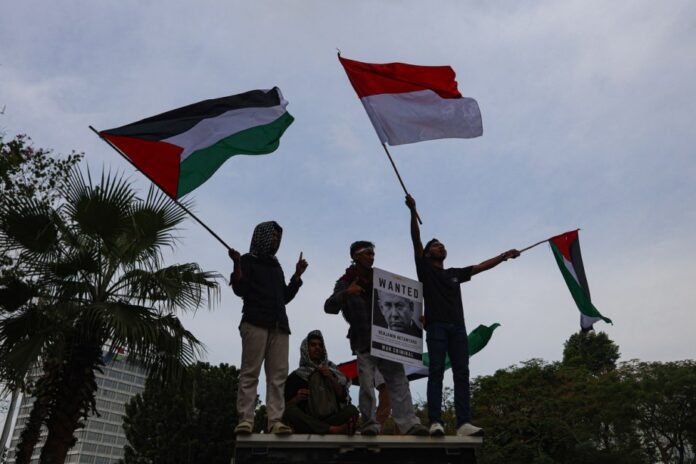
Indonesia’s culture minister, Fadli Zon, came home with pledges: a Palestinian museum wing at Taman Mini in Jakarta, a cultural center in Jerusalem, a slate of literary translations into Bahasa Indonesia. All very warm. All very photogenic.

And all, frankly, beside the point while the thing that actually matters goes conveniently unmentioned.

What exactly is the point of restoring a people’s culture if you have no intention of restoring their country?

Culture is not a museum piece. It is not embroidery under glass, waiting patiently for a foreign minister to admire it on a conference sideline. It is what a people build while they are living.

And Palestinians right now are living under siege, under bombardment, under a two-year campaign that the world’s most credible human rights bodies — and a growing number of Israel’s own former security officials — have stopped dancing around and started calling what it plainly is: genocide.

You do not answer genocide with a translation grant. You do not answer the flattening of a people’s universities, hospitals, and archives with a promise to co-produce a film.

Minister Zon says he wants Indonesians to know Palestine “not only through conflict, but through civilization, art, tradition.” That line should embarrass him. It treats the extermination of a people as an unfortunate distraction from the real cultural content — when the extermination is the story, and everything else being lovingly cataloged is what’s being erased alongside the bodies.

Look closely at what Jakarta actually offered. A wing in an amusement park, for “the Palestinian struggle” — struggle rendered as diorama, struggle you can walk past on the way to the food court.

A cultural center proposed for Jerusalem, a city whose disputed sovereignty is the very crux of this catastrophe, as if erecting a building there resolves anything rather than decorating the wound.

Co-produced films. Translated poems. A memorandum of understanding, and now a memorandum to follow the memorandum.

None of it reopens a single university flattened in Gaza. None of it hands a filmmaker in Ramallah a permit to cross into his own capital. None of it feeds a single child.

This is not solidarity. It is a government finding the cheapest, safest, most exportable way to look like it cares while asking nothing of itself.

And Indonesia knows better. This is not a naive country stumbling into this issue for the first time. It has refused to open an embassy in Israel since independence. It votes for Palestinian statehood at the UN reflexively, ritually, as it has since Bandung in 1955.

Its diplomats can read the same reports everyone else can — the ones documenting mass starvation used as a weapon, hospitals reduced to rubble with patients still inside, entire extended families erased in single airstrikes, a death toll that keeps being revised upward because the counting itself keeps getting interrupted by more killing.

Knowing all of this and responding with a museum wing is not an oversight. It is a decision. It is choosing the version of solidarity that costs nothing — no sanctions, no severed trade ties, no real diplomatic confrontation, no risk to a single Indonesian export contract — over the version that might actually matter to someone standing in the rubble.

Here is the truth Indonesia’s cultural diplomacy is built to avoid saying out loud: there is no “restoring” a people’s heritage while that people has no state left to hold it in.

You cannot preserve a house’s furniture while letting the house itself be condemned, bulldozed, and built over by someone else’s settlers. Sooner or later someone has to ask what all that carefully archived furniture is even for, if there is no home left standing to put it in — if the people meant to inherit it are being killed faster than their poems can be translated.

If Indonesia’s decades of rhetoric mean anything at all, the honest conclusion is not a two-state compromise that has been dead in practice for years and exists mainly to give powerful bystanders an excuse to keep doing nothing while the map keeps shrinking.

It is one state, across the whole of historic Palestine — one people, one vote, one government answerable equally to everyone who lives there, with no ethnic hierarchy engineered into the machinery of who gets water, who gets a permit, who gets to exist.

That is a far harder sentence to say from a podium in Madrid than “we’re funding a museum.” It demands actual cost: formal recognition, prosecution at the ICJ, sanctions with real teeth, an arms embargo, genuine diplomatic rupture with a state carrying out mass atrocities.

Indonesia has said none of it. It offered a museum instead.

That is the safest possible imitation of solidarity — visible, warm, cost-free, and almost entirely irrelevant to the people it claims to honour. Build the wing if it must be built. But do not, under any circumstance, call it justice. It is not.

The views expressed in this article belong to the author and do not necessarily reflect the editorial policy of Middle East Monitor.

Ars is looking for a senior technology reporter, and you might be it!

0
ars-is-looking-for-a-senior-technology-reporter,-and-you-might-be-it!
Ars is looking for a senior technology reporter, and you might be it!

If you’re a skilled writer with outsize technology chops who gets excited by the idea of taking the Ars audience with you as you go hands-on with hardware—all kinds of hardware!—then this position has your name all over it. Plus, you get to have me as your boss, and how could that be anything other than awesome?!

The job

The formal job description and application is right here and has all the specifics and HR stuff, including salary range. The short summary is that we’re looking for an experienced writer (where “experience” means “several years of professional work”), who is a technologist first and foremost. We want people who tinker around with tech because they can’t not tinker around with tech; that kind of joy tends to leak out into the work, and it’s impossible to fake.

Some specifics on the subject matter the job will cover, copied from the job description:

  • Desktop and mobile operating systems, including Windows, macOS, Linux, iOS, and Android
  • Desktops and laptops
  • Mobile phones and related devices
  • CPU & GPU architecture
  • Storage, including NAS, hard drives, and solid-state drives
  • Self-hosting and homelab-type services, including and especially solutions based around open source software

This is a full-time job with benefits. Candidates must be eligible to work in the United States and should expect to travel perhaps 4–5 times per year. As this is a work-from-home position, you should be comfy in that environment (though we try to all get together and see each other at least once a year at a big in-person all-hands meeting).

If that all sounds good to you, hit the link and apply right here. We hope to have this position filled by August!

Is vanadium the future of critical minerals? Kazakhstan hopes so

0

Vanadium is viewed as a critical mineral by the United States, the European Union, Russia, China and many other countries because of its importance to energy storage and industrial alloys.

At the Astana Metals & Metallurgy (AMM) Congress, Ferro-Alloy Resources CEO Nicholas Bridgen discussed the company’s assets, strategy, and valuation with The Times of Central Asia, noting that the company appears undervalued amid supply chain disruptions and the rising strategic importance of vanadium.

The discussion highlighted vanadium’s emerging demand-supply imbalance and efforts to better align market perception with fundamentals.

Of the critical metals that will define the next half-century, vanadium has perhaps the strongest claim to indispensability: it hardens the steel in our infrastructure and defense systems, and it stores the energy that our grids will increasingly depend on. Yet the market has consistently failed to price that future in, and nowhere is that mispricing more visible than in the vanadium deposits of Kazakhstan.

In 1941, with the Second World War raging, Soviet geologists fanned out across Central Asia looking for strategic minerals. Around 180 kilometers east of Almaty, in the foothills of the Tian Shan mountain range along the borders with China and Kyrgyzstan, they found tungsten at the Boguty deposit.

At roughly the same time, they were delineating what would become the Northern Katpar and Upper Kairakty tungsten deposits. The geology was well understood, and the resource was real, but nothing happened for the better part of 75 years.

The deposits sat idle not because tungsten was unimportant, but because there was no pressing reason for, first, the Soviet Union or later the West to develop them. That changed when the scale of China’s dominance in critical metals became impossible to ignore.

By the early 2020s, China was producing over 75% of the world’s tungsten output, alongside similarly dominant shares of rare earth elements and a range of other strategic minerals. This concentration of supply was not accidental.

It was the product of decades of deliberate industrial policy, patient capital, and a willingness to operate at low margins long enough to drive out competitors.

The tungsten lesson

Chinese mining company Jiaxin International Resources Investment Ltd. moved in 2014 to acquire Boguty for an undisclosed sum, almost certainly a modest one. The deal further consolidated China’s grip on global tungsten supply.

Jiaxin then spent approximately US$300 million developing the deposit and listed on the Hong Kong Stock Exchange at a valuation in excess of $600 million. The investment thesis seemed straightforward enough at the time.

In 2025, it looked positively prescient: China imposed export controls on tungsten, and key prices outside China more than doubled. According to the Financial Times, Jiaxin’s market capitalization stands at close to HK$22.3 billion, equal to US$2.84 billion, approximately 9.5 times the stated development expenditure.

Meanwhile, Skyline Builders Group Holding Ltd. and Cove Kaz Capital Group LLC (“Cove Kaz”) have moved to acquire the two other formerly dormant tungsten deposits in Kazakhstan, Northern Katpar and Upper Kairakty.

On this occasion, the US was not content to watch from the sidelines. Washington supported the projects through letters of interest totaling up to $1.6 billion.

The Export-Import Bank of the United States (EXIM) issued a letter of interest for up to $900 million under its Supply Chain Resiliency Initiative. The US International Development Finance Corporation issued a separate letter of interest for up to $700 million in debt and project-development financing.

Cove is a private company, so there is no market capitalization to examine, but the directional logic is not hard to follow. The pattern is instructive in its simplicity.

Consider a critical mineral deposit, known for decades, that sits undeveloped and undervalued despite being well-understood and strategic. Over a brief period of time, geopolitics shifts the price calculus.

The early mover captures extraordinary value. The late mover pays a strategic premium to catch up. The question worth asking now is: where is the next version of this story to play out?

The case for vanadium

The answer may already be visible if the tungsten lesson is applied with any consistency. China currently accounts for over 72.4% of global vanadium production, according to the US Geological Survey, while Russia supplies around 18.5%. Producers outside this duopoly are under pressure.

South African output fell sharply in 2025, while Brazil’s Largo cut output amid financial strain. The supply picture for the West has been deteriorating for a variety of reasons at exactly the moment that demand is beginning a structural upswing.

Vanadium has two distinct demand drivers. The first, and older, is its use as an alloying agent in high-strength steel, which is essential to infrastructure, including pipelines, and to defense applications.

The second is its role in vanadium redox flow batteries (VRFBs), increasingly viewed as the optimal technology for large-scale, long-duration electricity storage on power grids. As renewable generation capacity grows and grid operators require multi-hour storage to manage intermittency, VRFB deployment is moving from pilot scale to industrial rollout.

While projections vary across research firms, the consensus base case points to growth of four to six times in the VRFB market over the next decade, with Asia-Pacific leading installed capacity and North America recording the fastest growth.

This is expected to contribute to a significant structural vanadium supply deficit. One major forecaster estimates that the vanadium market will grow at a compound annual growth rate of around 7% over the next 15 years.

Vanadium features on the critical minerals list of every country that maintains one because of both its supply concentration and its battery metal status. As previously reported by The Times of Central Asia, a congressional letter to the Pentagon made the supply problem concrete. The US consumed 14,000 metric tons of vanadium in 2024 while producing only 3,800 tons domestically, with imports from South Africa and other producers at growing risk.

The current situation with vanadium is almost identical to what happened with tungsten before China imposed export controls in 2025. In other words, the warning signs are familiar.

Like tungsten before it, vanadium is embedded in China-dominated mining, processing, and supply chains under geopolitical and national security strain. If history repeats, export restrictions and severe market disruption may follow.

Kazakhstan’s Balasausqandiq: the numbers

Ferro-Alloy Resources Limited (FAR), a company based in the United Kingdom and listed on the London and Astana stock exchanges, holds the exploration and development rights to the Balasausqandiq vanadium deposit in Kazakhstan.

The company has been developing the project for more than two decades. Kazakhstan leads Central Asia in vanadium assets, and Balasausqandiq is the most advanced of its three known deposits.

Balasausqandiq’s most recent resource estimate stands at 32.9 million tons at a mean grade of 0.62% vanadium pentoxide (V₂O₅). However, this is from just one of seven known ore bodies covered by the company’s mining rights. According to FAR, the full deposit could meet the projected global shortfall on its own.

What distinguishes the project is not scale alone, but geology and cost structure. Most vanadium deposits are hosted in vanadiferous titano-magnetite ore, which requires energy-intensive roasting to process. Balasausqandiq is a shale deposit amenable to whole-ore acid leaching, a substantially cheaper and more environmentally benign processing route.

FAR CEO Bridgen has described this as giving the project the lowest production costs of any current or planned vanadium operation in the world, a structural advantage that persists regardless of where the vanadium price settles.

FAR’s October 2025 feasibility study sets out the financial case in detail. Phase 1, drawing on just one of seven identified ore bodies, targets annual production of 8,500 tons of vanadium pentoxide with a net present value (NPV) of around $0.75 billion and an internal rate of return (IRR) of 22% at conservative price assumptions that stand well below average levels this century in markets outside China.

The IRR is notable: 22% represents a return profile that comfortably clears the hurdle rates of major mining houses and infrastructure funds, and it is calculated before any premium for the project’s strategic value to Western governments is factored in. Using a provisional capital cost estimate from a Chinese construction company, those figures rise to an NPV of nearly $1 billion and an IRR of 31%.

FAR’s strategy, according to Bridgen, is to scale output to 23,000 tons from four ore bodies, more than 10% of current global supply, drawn from a deposit that can be expanded in multiple open-pit stages, giving a mine life that would sustain operations well beyond any planning horizon currently relevant to investors.

FAR’s current market capitalization is approximately $37 million. Set against a Phase 1 NPV of close to $1 billion, the discount is not easily explained by project risk or development-stage uncertainty: the company has operated in Kazakhstan for over two decades, the feasibility study is complete, and it has an existing concentrate-processing operation.

The gap between its market value, what buyers and sellers are willing to pay at present, and its intrinsic value, what an asset is worth based on its fundamentals and discounted cash flows, is, instead, almost entirely a function of a depressed vanadium price driven by the Chinese construction slowdown – the same cyclical dynamic that periodically made Kazakhstan’s tungsten deposits look uninvestable to Western capital for decades at a stretch.

FAR: ready for the major leagues

According to Bridgen, FAR is not a grassroots explorer. It is a company that has crossed the threshold that separates junior development-stage miners from operators capable of competing with the sector’s larger players.

Two decades of in-country operations have produced an established relationship with Kazakhstani regulators, a functioning processing facility, and a management team with the track record to execute at scale. The feasibility study, the IRR, and the Phase 1 production plan are the outputs of a management team that has done the engineering work and is ready to scale up.

The strategic context reinforces the timing. In December 2025, President Donald Trump held calls with the leaders of both Kazakhstan and Uzbekistan. The White House and the US Department of State are focused on Central Asia and its critical minerals wealth.

The November 2025 gathering of Central Asian heads of state at the White House under the C5+1 format placed the region more firmly on Washington’s strategic map than at any previous point.

At the 16th AMM Congress on June 11–12, David Fogel, assistant secretary of commerce and director general of the United States and Foreign Commercial Service, said the US is moving from discussion to strategic execution in Central Asia’s critical minerals sector.

On June 30, the US Department of War awarded Canada’s Largo Inc., through Largo Resources USA Inc., a five-year contract to supply high-purity vanadium pentoxide from its Largo Vanadio de Maracas operation in Brazil.

Kazakhstan, with its established record of foreign investment from major energy companies such as Chevron and ExxonMobil, and now with investment from Cove Kaz, is a natural entry point for Western governments, private funds, and corporate groups seeking to diversify and secure vanadium supplies outside China and Russia.

That is the niche FAR operates in and has operated in, at meaningful development cost, for more than 20 years. The Boguty tungsten deposit was discovered in 1941. By 2025, the company that moved early had achieved a multibillion-dollar valuation.

The Balasausqandiq vanadium deposit, meanwhile, has been known for decades, with a pilot and concentrate-processing facility already operating at the site, a completed feasibility study, a nearly $1 billion NPV, a 31% IRR and a $37 million market cap.

Vanadium will not stay in a depressed pricing environment indefinitely. The question is who is positioned early enough to capture that value while securing geostrategic interests to boot.

This article first appeared on The Times of Central Asia and is reproduced here with the author’s permission. The views expressed in this article are those of the author and do not necessarily reflect the official policy or position of the publication, its affiliates, or any other organizations mentioned.

New Pipelines Could Turn Iraq Into a Gulf-to-Mediterranean Bridge

0
new-pipelines-could-turn-iraq-into-a-gulf-to-mediterranean-bridge
New Pipelines Could Turn Iraq Into a Gulf-to-Mediterranean Bridge


Proposed routes through Syria and Turkey could diversify Iraqi oil exports but would require security, investment and political cooperation

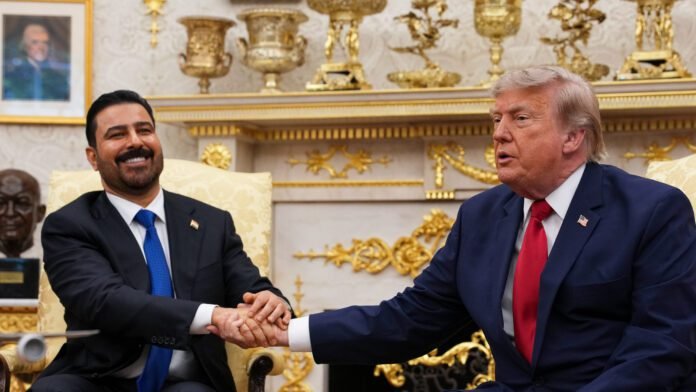
The meeting between US President Donald Trump and Iraq’s new prime minister, Ali al-Zaidi, was presented in Washington as the beginning of a different relationship with Baghdad—one centered on oil, investment and economic integration as the United States prepares to complete the withdrawal of its remaining forces from Iraq.

Behind the handshakes at the White House lie difficult questions: Can Iraq expand its ties with Washington without destabilizing its essential relationship with Tehran? Can new energy corridors through Iraq and Syria to the Mediterranean become part of a broader regional architecture designed to reduce dependence on the Strait of Hormuz?

Similar questions are emerging in Syria and Lebanon.

President Trump has reportedly intensified pressure on Israeli Prime Minister Benjamin Netanyahu to begin redeploying Israeli forces from Syria and move forward with withdrawals from Lebanon, while suggesting that Syrian President Ahmed al-Sharaa could play a role in addressing the Hezbollah threat. Taken together, the moves may reflect an American attempt to shift greater responsibility toward central governments in Baghdad, Damascus and Beirut while reducing direct US military involvement and, potentially, Israel’s territorial footprint beyond its borders.

Whether those governments are capable of exercising that authority remains far less certain.

During the July 14 meeting at the White House, the US president praised al-Zaidi and emphasized Iraq’s oil resources and the expanding involvement of American companies. He said new oil partnerships were being formed and described forthcoming agreements as potentially among the largest of their kind.

Al-Zaidi presented the visit as the beginning of an economic partnership and reiterated that the remaining US forces were expected to leave Iraq by September 30. He also said that weapons should ultimately come under the exclusive control of the Iraqi state.

Days earlier, al-Zaidi had participated in events surrounding the funeral in Iraq of Iran’s late Supreme Leader Ali Khamenei. He then traveled to Washington despite reported Iranian pressure against making the United States his first foreign destination as prime minister.

According to Axios, which cited two unnamed US officials, Washington interpreted the visit as evidence of an emerging “Iraq first” approach and hoped al-Zaidi would move against Iran-backed armed groups. Yet his government emerged from an Iraqi political system in which Tehran-linked parties and armed actors retain considerable influence.

Laura Silvia Battaglia, a Middle East correspondent currently reporting from Baghdad, sees a strategic incentive for the new prime minister to move closer to Washington, even as she warns that the domestic balance of power will constrain him.

Battaglia told The Media Line that, in her view, if it were up to al-Zaidi, Baghdad would already have decided to chart its future with the United States rather than with Iran.

“This is because closeness to the United States means greater security, investment, the country’s reintegration into the global financial system, infrastructure, and a renewed strategic role as a corridor between the Gulf and the Mediterranean,” she said.

The difficulty, she argued, begins when that foreign-policy ambition encounters Iraq’s internal political system, where Iran-backed armed groups and their political allies retain substantial influence over security and government decision-making.

“Once back home, al-Zaidi will not have an easy life. The militias are pushing to preserve their role and to guarantee the continuation of Iran’s sphere of influence in the country,” she noted.

In practical terms, Battaglia said, those groups are likely to resist any attempt by al-Zaidi to curb their political power, bring their weapons under state control or weaken Iraq’s strategic ties with Tehran.

“Even if, in the best-case scenario, they were absorbed by the central government as secondary military bodies, their political demands would still be difficult to reject, especially considering that the Shiite bloc holds a majority in parliament,” she added.

Battaglia was referring to demands by Iran-backed factions and their political allies to retain influence over security policy, government appointments, state resources and Iraq’s relationship with Tehran. Their parliamentary strength, she argued, would make it difficult for al-Zaidi to bring their weapons fully under state control or sharply reduce Iranian influence.

Dr. Tallha Abdulrazaq, an independent analyst specializing in Middle Eastern politics and security who has written for outlets including TRT World and Middle East Monitor, disputes the idea that al-Zaidi’s arrival in Washington should itself be interpreted as evidence of a meaningful Iraqi strategic realignment.

“It’s not very significant,” he told The Media Line, arguing that similar pledges by Shiite Islamist politicians have repeatedly failed to materialize.

Although al-Zaidi is new to the political scene, Abdulrazaq said, his rise was enabled by the Coordination Framework, a Shiite Islamist bloc dominated by figures including Nouri al-Maliki, whom he described as Iran’s principal ally in Baghdad. He added that President Trump had alluded to Maliki when saying he did not want him back in power and argued that Maliki’s support for al-Zaidi carries clear implications given Maliki’s ties to Tehran.

For Abdulrazaq, the underlying assumption that Baghdad is attempting to escape Iranian influence is itself questionable. He asserted that almost everyone holding political power in Iraq today has links to Iran and that many were empowered following the US-led invasion in 2003.

“There’s no getting around this reality, and the attempts of making the Green Zone politicians appear to be reluctantly under Iran’s thumb when in actual fact they are willing participants [show] how poor the understanding and analysis of Iraq has been for almost a quarter of a century since the invasion,” he said.

John Keith King, founder of Q Advisory, offers a more intermediate assessment. Rather than interpreting the moment as a decisive Iraqi move from one camp to another, he sees the possibility of a gradual diversification of Baghdad’s relationships.

“The Trump–al-Zaidi meeting is significant, but it should not be interpreted as Iraq abruptly changing sides. It signals an attempt to redefine the US–Iraq relationship around investment, energy, trade and Iraqi state sovereignty as the American military presence is reduced.”

King said Washington clearly sees al-Zaidi as a potential partner in limiting Iranian influence, particularly by strengthening legitimate Iraqi institutions and bringing weapons under state control.

The real test, however, will be whether the agreements reached in Washington produce measurable changes inside Iraq

“The real test, however, will be whether the agreements reached in Washington produce measurable changes inside Iraq,” he told The Media Line.

Baghdad can rebalance its relationships, King said, but it cannot realistically separate itself completely from Tehran. Iran’s influence is embedded in Iraqi political parties, commercial networks, religious relationships and powerful armed organizations, while the two countries share a long border and substantial economic ties.

In his view, a successful Iraqi strategy would rely on diversification rather than confrontation: expanding relations with the United States, Turkey, Europe and the Gulf states while maintaining a functional relationship with Iran.

Attempting to force Iraq into an exclusively anti-Iranian alignment could destabilize the country and weaken al-Zaidi

“Attempting to force Iraq into an exclusively anti-Iranian alignment could destabilize the country and weaken al-Zaidi,” he argued.

The Pipeline Proposal

At the center of the economic discussion is Iraq’s geography.

Recent disruption in and around the Strait of Hormuz has again exposed the vulnerability of countries whose energy exports depend heavily on the waterway. Saudi Arabia and the United Arab Emirates already possess routes allowing at least part of their exports to bypass the strait. Iraq, by contrast, remains heavily dependent on its southern outlets and is examining additional export routes.

US envoy Tom Barrack has held discussions with Iraqi and Syrian officials, as well as companies including Chevron, over reviving the long-defunct Kirkuk-Baniyas pipeline, which would carry Iraqi crude from the Kirkuk region through Syria to the Mediterranean port of Baniyas.

Other options are also under consideration, including a new route from southern Iraq through Haditha that could branch toward Syria, Turkey or Jordan. President Trump said during al-Zaidi’s Washington visit that major new oil agreements would soon be announced.

The projects remain under discussion and would require substantial investment, security guarantees and political coordination before they could provide meaningful alternative export routes.

In Battaglia’s reading, oil pipelines and a possible revival of the Hejaz Railway could help Iraq position itself not simply as an oil producer but as a geographical bridge linking the Gulf to the Mediterranean, provided political and security conditions allow it.

King also sees strategic potential in the pipeline concept but cautions against overstating how quickly such infrastructure could transform regional energy flows.

“The Hormuz crisis substantially increases Iraq’s strategic importance because Iraq can potentially provide energy routes to the Mediterranean that do not depend on the Strait. The pipeline through Turkey offers the more immediate option, while a revived route through Syria could provide additional long-term resilience. However, pipelines through Syria will require significant investment, physical security, political agreements, and dependable infrastructure. They cannot replace Iraq’s southern export capacity overnight,” he said.

For King, the importance of the project goes beyond energy.

The Iraq–Syria pipeline should be understood as both an energy-security project and a geopolitical instrument

“The Iraq–Syria pipeline should be understood as both an energy-security project and a geopolitical instrument. Economically, it would diversify Iraqi exports and reduce vulnerability to disruptions in Hormuz. Strategically, it could connect Iraq more closely with Syria, Turkey, Gulf investors and Western markets while diminishing Iran’s ability to exploit regional chokepoints,” he said.

Yet King warned that presenting the infrastructure too explicitly as an anti-Iranian project could threaten its viability. The pipeline must remain commercially credible and Iraqi-led, he said. If it is portrayed primarily as an American weapon against Tehran, armed groups could target it, and Iraqi political support could quickly disappear.

Abdulrazaq is more skeptical about describing Iraq as an alternative regional energy corridor.

“Theoretically, yes. But practically, no. Iraq is not really an alternative energy corridor at all, as it can only ship its own oil to Syria and Turkey; it has no influence on international oil shipping routes,” he said. “The reason for this is that (a) Iraq’s only access to the sea depends on Hormuz itself and (b) for countries like Saudi Arabia to start pumping energy through Iraqi territory and beyond, they would need to trust that Iraq is no longer under the thrall of Iran, the country that’s been bombing them since the end of February.”

He viewed that prospect as extremely unlikely, arguing that Iranian influence is too deeply embedded in Iraq for neighboring states to ignore, regardless of Baghdad’s public statements.

Abdulrazaq said reducing reliance on the Strait of Hormuz is not only a US policy objective but also a priority for Iraq and, in some respects, Iran. He maintained that Iran has long used Iraq as a sanctions-evasion channel, while the US Treasury routinely targets Iraqi entities accused of conducting business for Tehran and the Islamic Revolutionary Guard Corps.

No party benefits if Iraq loses access to its primary source of economic growth, Abdulrazaq argued. With a “vanishingly small private sector,” an oversized public sector, limited industry and innovation, and near-total dependence on energy exports, Iraq is especially vulnerable to disruption.

“If those go down, and Iraq goes down with it, everyone from the US to Iran loses out,” he said.

The pipeline debate reveals the contradiction at the center of Iraq’s geopolitical position. Infrastructure could give Baghdad greater strategic flexibility, but it would have to cross a political environment in which competing regional powers, armed groups and domestic factions retain the capacity to obstruct it.

From Iraq to Syria and Lebanon

The emerging American approach is also increasingly visible to Iraq’s west.

President Trump has pressed Netanyahu to begin redeploying Israeli forces from Syrian territory and to proceed with withdrawals in Lebanon. According to US and Israeli officials cited by Axios, the US president told Netanyahu that the Israeli presence in Syria was generating tensions and could produce further escalation.

Netanyahu emphasized Israel’s demand for security zones along its borders as Lebanon and Israel advanced a separate US-brokered process. Under the June 26 framework, the parties agreed to establish “pilot zones” involving the deployment of Lebanese state forces, the disarmament of armed groups in those areas and the progressive withdrawal of Israeli troops.

Following the latest negotiations in Rome, US officials said the two sides had agreed on the structure and guidelines for beginning implementation, although fundamental disagreements remain over Hezbollah’s weapons and the timetable for an Israeli withdrawal.

President Trump has repeatedly suggested that al-Sharaa’s government in Syria could help “take care of” Hezbollah, arguing most recently that Syrian forces could act more precisely than Israel. Al-Sharaa, however, has publicly rejected military intervention in Lebanon and said Syria intends to remain outside the wider regional war.

“Trump’s request for the withdrawal of Israeli troops from Lebanon and Syria is an attempt that reflects the conditions and recommendations of the Gulf countries, but it does not align with the strategy pursued so far by the messianic Israeli right in power in Tel Aviv. Even if there is a formal withdrawal, the IDF will find other ways to re-enter the picture in those border areas over the medium term,” Battaglia noted.

King argues that an Israeli withdrawal from Lebanon should remain the objective but cannot be separated from the question of who controls the territory and weapons after Israeli forces leave.

“A complete Israeli withdrawal from Lebanese territory should remain the diplomatic objective because Lebanese sovereignty cannot be strengthened while foreign forces retain positions inside Lebanon. However, withdrawal should be coordinated with verifiable security arrangements, deployment of the Lebanese Armed Forces and concrete steps to establish the Lebanese state’s exclusive authority over weapons,” he said.

His assessment of al-Sharaa’s potential role is more limited than the one repeatedly suggested by President Trump.

“Ahmed al-Sharaa’s government can help secure Syria’s borders, exchange intelligence and disrupt weapons trafficking. It should not be encouraged to conduct a military intervention inside Lebanon, which could revive historical fears of Syrian domination and inflame sectarian tensions,” King said.

Abdulrazaq similarly argues that Hezbollah ultimately must be addressed internally, while warning that continued Israeli military operations can make it politically harder for Lebanese or Syrian actors to confront Iran-aligned groups.

“The Hezbollah problem has to be resolved locally and by local actors. Israel’s presence simply makes matters worse and more volatile, and it delegitimizes local actors who could otherwise handle the threat. Right now, the Lebanese government and armed forces are being described as ‘Zionists’ in Iran-sponsored strategic messaging from Hezbollah media outlets linked to the IRGC. The same applies to Syria,” he said.

Taken together, the developments point toward an emerging American concept for the region, even if it has not yet become a coherent doctrine.

As the remaining US forces prepare to leave Iraq, Washington is promoting American investment in Iraqi energy, exploring infrastructure routes through Syria, pushing for stronger state control over armed groups, and pressing Israel to reduce its presence inside neighboring countries.

The potential model would rely less on permanent American deployments and more on interconnected economies, energy corridors, and local governments capable of controlling borders and weapons.

King believes such a shift may already be beginning, but he cautions that economic integration cannot entirely replace security power.

“That would be a strategically sustainable direction, but economic engagement cannot entirely replace deterrence. Washington will still require limited security partnerships and the ability to respond when terrorist organizations or armed groups threaten regional stability,” he added.

For Abdulrazaq, Washington continues to underestimate the depth of Iraq’s structural problems.

“The US should stop searching for quick fixes within the current establishment and instead work on building a ‘Syria solution’ in Iraq, where Iraqis who are hostile to Iran and open to relationships with international state actors—including the US—govern. Anything less than that, and we’re going to keep going round the corruption and Shia militia merry-go-round, achieving nothing but speeches and platitudes,” he contended.

He is equally skeptical that a White House meeting alone can change the regional equation.

“While this sounds good on paper, a few handshakes with men like Zaidi aren’t going to accomplish that, and instead only serve to kick the can down the road. And without anyone having their hand on the rudder, things can quickly spin out of control,” he said.

The central test facing al-Zaidi will be whether he can translate the promises made in Washington into changes inside Iraq.

Pipeline projects, American investment, and renewed diplomatic attention can offer Baghdad alternatives that did not previously exist. But infrastructure alone cannot redefine the regional order. The same applies to an Israeli withdrawal from Lebanon or Syria: Territorial redeployment can create political space, but only functioning state institutions can fill it.

Whether the current moment produces a genuine redistribution of power depends less on announcements in Washington than on what happens next in Baghdad, Damascus and Beirut.

For Iraq, the question is whether al-Zaidi can place weapons under state authority without destabilizing the political coalition that brought him to power. For Lebanon, it is whether the state can expand its authority as Israel withdraws while confronting Hezbollah’s continued armed presence. For Syria, it is whether al-Sharaa can become a stabilizing regional actor without being drawn into another country’s internal conflict.

The United States appears to be betting that economic corridors and stronger states can gradually replace some of the military mechanisms that have shaped the region for decades. Whether those states are strong enough to carry that burden remains unanswered.

Queen Camilla ‘Cut Off’ Andrew’s Daughters Over Their Close Ties to Harry and Meghan

0
queen-camilla-‘cut-off’-andrew’s-daughters-over-their-close-ties-to-harry-and-meghan
Queen Camilla ‘Cut Off’ Andrew’s Daughters Over Their Close Ties to Harry and Meghan


Queen Camilla reportedly once “totally cut” Princess Beatrice and Princess Eugenie out of the royal fold over fears they were too close to Prince Harry and Meghan Markle, according to a source.

The claim centers on the daughters of Andrew Mountbatten-Windsor, who have long been seen as two of the few royals still friendly with the Duke and Duchess of Sussex.

According to the source, Camilla was not happy about that bond.

The insider claimed Eugenie and Beatrice were viewed with suspicion inside the palace because of their loyalty to Harry and Meghan, especially after the couple stepped down from royal duties and moved to the United States in 2020.

“Eugenie and Beatrice are very close to Harry, and both stayed loyal to him and Meghan through thick and thin,” the source said in a resurfaced interview. “Now the chickens have come home to roost.”

The alleged freeze-out reportedly became even more noticeable while Kate Middleton was battling cancer. At the time, Beatrice and Eugenie were not asked to step in and help cover royal events, even as the family faced a thinner public schedule.

The source claimed the decision left Andrew’s daughters “very upset.”

But according to the insider, Camilla and Prince William were not moved by their reaction.

“That’s not holding water with Camilla or her stepson, future king William, who’ve formed an unlikely alliance to cut Harry and Meghan off at the knees,” the source claimed.

The source alleged both Camilla and William believed Harry and Meghan had learned too much private family information with help from Beatrice and Eugenie, even if the sisters did not mean to share anything damaging.

“Both believe Harry and Meghan wouldn’t know as much as they do if it weren’t for Beatrice and Eugenie, even if the girls leaked secret details by accident,” the insider claimed.

Harry and Meghan’s relationship with the royal family has been strained for years.

After leaving official royal duties in 2020, the couple moved to California and later spoke openly about their royal experiences in interviews, their Netflix docuseries, and Harry’s memoir Spare.

Those revelations deepened the divide with the palace.

According to the source, Beatrice and Eugenie’s ongoing friendship with the Sussexes has been treated as “a black mark against them.”

“They’re no longer trusted and have been branded as backstabbers and traitors,” the source claimed.

Still, the insider suggested the York sisters may have their own reasons for keeping the Sussex connection alive.

Their father, Andrew, has remained under a cloud of scandal for years because of his ties to late sex offender Jeffrey Epstein. His controversies have repeatedly dragged his daughters back into uncomfortable headlines.

“An alliance with the Sussexes gives the girls a bolt-hole if their father’s sex scandal gets even more out of hand,” the source claimed. “Andrew just can’t put the Epstein thing behind him, and it keeps dragging Bea and Eugenie down.”

Andrew has denied allegations against him.

The source also claimed some palace watchers believe Beatrice and Eugenie could one day become more involved with Harry and Meghan in a business capacity.

That move, the insider said, would likely cause a major stir in Britain.

“If Eugenie and Beatrice jump on board, there’s no doubt it would get a lot of people’s backs up in England and solidify all those accusations about them being spies for the Sussexes, which they scoff at,” the source said.

For now, Beatrice and Eugenie appear to be caught between two sides of the royal divide.

On one side are Harry and Meghan, the cousin and wife they reportedly refuse to abandon.

On the other are Camilla, King Charles, and Prince William, who still hold the power inside the monarchy.

“At the end of the day, their consciences are clear, and they refuse to turn their backs on a beloved cousin and his wife just because they didn’t fit into the royal way of life,” the source claimed.

But the insider added that the palace may see things very differently.

“At least that appears to be the story they’re telling,” the source said. “But Camilla, the king and William are spinning a different version and they’re the ones who hold all the cards.”

San Francisco orders Apple, Google to remove nudify apps from app stores

0
san-francisco-orders-apple,-google-to-remove-nudify-apps-from-app-stores
San Francisco orders Apple, Google to remove nudify apps from app stores

This week, San Francisco’s attorney general, David Chiu, sent cease-and-desist letters, demanding that Apple and Google remove 13 so-called nudification apps from their app stores, Wired reported.

Nudification apps can make it trivially easy to transform ordinary photos of real people into explicit images. The harmful AI tools allow bad actors to remove clothing, change a person’s features, place them in sexualized positions, and swap victims’ faces onto other people’s naked bodies.

Chiu’s letter warned that app stores were violating “California’s laws that prohibit supporting services that create deepfake pornography,” Wired reported.

Talking to Wired, Chiu said his office was “absolutely horrified” by how ubiquitous the nudifying technology has become, victimizing mostly women and children at an alarming scale as more tools became available.

“These images are used to bully, humiliate, and threaten women and girls,” Chiu told Wired. “This industry has a horrific impact on one’s reputation, mental health, loss of autonomy. There have been victims who’ve been suicidal.”

Wired reviewed the letters and confirmed that Chiu asked Google to remove five apps and Apple to remove eight. No apps were named in the report to “avoid pushing people toward them,” Wired said. However, one app had more than a million downloads and advertised features to sexualize images of women or make “free and uncensored” videos, Wired reported.

Chiu told Wired that allowing any such apps to remain in app stores is unacceptable.

“Generating non-consensual intimate images is illegal, harmful, and completely unacceptable,” Chiu said. His office estimated that Apple and Google have likely “made millions of dollars in fees” by ignoring the harmful apps rather than taking stronger actions or developing better detection to avoid profiting off a public nuisance.

In a statement to Ars, Google spokesperson Dan Jackson said the five apps that Chiu flagged were suspended from the Google Play store for violating policies against harmful content.

“Google Play does not allow apps that contain sexual content, and we continually take proactive steps to detect and remove apps with harmful content,” Jackson said. “When violations are reported to us, we investigate and take swift action, which in the case of these apps has included suspending hundreds of violating apps and restricting related search terms like ‘nudify’ on our store.”

Apple did not respond to Ars’ request to comment.

The Grok elephant in the room

Although Apple has removed some apps flagged by researchers, the iPhone maker otherwise has remained notably silent amid calls to police nudification apps more aggressively in its App Store.

App stores’ detection abilities matter, as Wired’s report noted that researchers have recently warned that some harmful apps have gotten better at avoiding app store removals by only promoting face-swapping features while hiding nudifying capabilities. In a May preprint paper, researchers identified 420 apps touted as generic face-swapping tools and tested 155 to see if they could be used to sexualize images. In 70 percent of apps tested, nudification was possible.

There’s also the Grok elephant in the room to consider. This week, xAI filed a lawsuit confirming that it found instances of Grok-generated child sexual abuse materials (CSAM) and other nonconsensual intimate imagery (NCII) targeting adults. To prevent the Grok misuse, xAI sued the user allegedly responsible for prompting Grok to generate the illegal content, but the question remains whether xAI is liable for the outputs.

Ever since the Grok scandal erupted, app stores have faced questions on whether xAI’s chatbot is violating app store policies against harmful content. Back in April, Apple told Senators that it had privately threatened to remove Grok, NBC News reported, but the xAI app remains in the app store today.

So long as it’s possible to use Grok to generate illegal content, app stores will likely continue to face pressure to take action to prevent harmful outputs, just as Chiu said that app stores should be doing with all apps allowing nudification if they want to comply with California deepfake laws.

Although Google’s spokesperson said that Google continuously tests generative AI apps to make sure they have safeguards preventing NCII and CSAM creation, Jackson did not respond to Ars’ request to comment on whether the way that Grok performs today is an exception to Google’s policy.

In his letters to app stores, Chiu did not request Grok removals, but it is clear he is hoping that his demands will help broadly tighten up enforcement in both app stores, starting with removing the apps that his office flagged.

“My hope is that Apple and Google will immediately remove these apps and strengthen their screening systems to make sure that apps like this never get onto their platforms in the future,” he says. “It’s our hope that these companies will do the right thing—but if they don’t, we will have to consider all of our legal options.”

India-linked organized crime expands overseas

0
india-linked-organized-crime-expands-overseas
India-linked organized crime expands overseas


An international law enforcement operation targeting India-linked organized crime has underscored how criminal syndicates that once operated primarily within India have evolved into sophisticated transnational networks spanning North America, Europe and beyond, according to law enforcement officials and security experts.

The operation, dubbed “Operation Hard Ball” by the FBI, resulted in the arrests of 24 suspects across the United States, Canada and Spain and the indictment of 37 people. Investigators say the case marks the largest international crackdown to date on India-based organized crime groups.

At the center of the investigation is jailed Indian gangster Lawrence Bishnoi, whom U.S. prosecutors accuse of directing murders, extortion schemes and international drug trafficking from prison using smuggled mobile phones. His alleged deputy, Goldy Brar, remains a fugitive and is wanted by the FBI.

India welcomed the U.S. indictment of Bishnoi and several associates over the 2023 killing of Sikh separatist leader Hardeep Singh Nijjar in Canada, describing the case as evidence of the growing threat posed by transnational organized crime. The indictment alleges Bishnoi’s organization orchestrated the killing but does not accuse the Indian government of involvement.

A new generation of organized crime

Security analysts say the Bishnoi organization represents a new phase in the evolution of Indian organized crime, differing from earlier syndicates led by figures such as Dawood Ibrahim and Chhota Rajan.

While previous organizations relied on smuggling routes, geographic safe havens and centralized command structures, investigators say newer networks exploit encrypted communications, diaspora connections, social media and decentralized overseas operatives to coordinate extortion, drug trafficking, weapons procurement and contract killings across multiple countries.

Experts told DW that expanding Indian diaspora communities, particularly in North America, have created both new opportunities for criminal organizations and new targets for extortion. Business owners in Canada, the United States and Britain have reported receiving extortion demands allegedly linked to India-based gangs.

Although analysts caution that these groups do not rival the scale of Latin American drug cartels, they say Indian criminal organizations have become increasingly significant players in international organized crime.

Former intelligence and security officials said technology has transformed the way criminal networks operate. Encrypted messaging platforms, cryptocurrencies and inexpensive international travel have enabled loosely connected cells to collaborate across continents while remaining difficult for authorities to dismantle.

They argue that organized crime has become increasingly global while policing remains largely organized along national lines, allowing criminal groups to exploit legal and jurisdictional gaps. International cooperation, intelligence sharing and coordinated law enforcement operations will be essential to disrupting these networks, they said.

0FansLike
0FollowersFollow
0FollowersFollow
0SubscribersSubscribe
- Advertisement -
Google search engine

Recent Posts