17.6 C
London
Tuesday, July 14, 2026
Home Blog

Trump knocks US-Iran war back to square one

0
trump-knocks-us-iran-war-back-to-square-one
Trump knocks US-Iran war back to square one

For all practical purposes, the US-Iran Memorandum of (Mis)Understanding is over. The dispute over how to manage the Strait of Hormuz in the interim has pushed the two sides back into open war. But to what end?

There is little reason to believe another round of fighting can alter the fundamentals enough to change the reality from which the two sides must ultimately negotiate. If they are fortunate, the MOU’s collapse may yield another round of talks in which the allure of reshaping facts on the ground through force has finally faded.

As I have written elsewhere, the dispute over the Strait turns, at least on the surface, on Paragraph 5 of the MOU: whether Iran is responsible for safe passage throughout the Strait for the duration of the agreement, or only for the waterway’s northern corridor.

Beneath the surface, however, lies a more fundamental strategic disagreement. Even before the MOU was signed, Tehran believed Washington’s objective was to establish a southern shipping corridor through Omani waters that would gradually erode Iran’s control over the Strait.

Such a corridor would require Oman’s cooperation, which may explain why Trump at one point threatened to bomb Oman unless it abandoned its proposal for joint management of the Strait, with administrative fees collected by Muscat and Tehran.

The corridor would remain operational even if war resumed and Iran sought once again to close the Strait. From Tehran’s perspective, Washington used the MOU to strengthen this alternative route, and the US military’s escort of commercial shipping without coordinating with Iran marked a significant step in that direction.

If successful, the strategy would deprive Iran of its most important source of leverage — which is precisely why it appeals to Washington.

This is why Tehran has insisted that all ships transiting the Strait — regardless of the corridor they use — coordinate with Iran, consistent with its reading of Paragraph 5 of the MOU. Washington, by contrast, argues that the MOU merely assigns Iran responsibility for ensuring the safe passage of commercial vessels, without granting it operational control over all maritime traffic.

Before the funeral of former Supreme Leader Ayatollah Khamenei, the two sides explored a compromise under which ships would coordinate their transit with both Iran and a designated Gulf Cooperation Council (GCC) state.

As I wrote in my Substack, “Under such an arrangement, ships would notify Tehran while also reporting to a GCC maritime authority, balancing Iran’s demand for oversight with Washington’s desire to avoid granting Tehran exclusive control.” But no agreement was reached before diplomacy was suspended for the duration of the funeral.

Accounts of what transpired in Muscat over the weekend naturally differ, but three proposals emerged. Iran advanced a variation of the earlier compromise: a dual-notification system for all vessels transiting the Strait. 

Qatar proposed three channels — an Iranian corridor in the north, an Omani corridor in the south, and a neutral corridor in the middle. For Tehran, this was a nonstarter, as it would effectively restore the Strait to its pre-February status.

According to Tehran, the United States and Oman favored separate management of the Iranian and Omani corridors: Iran could require coordination for vessels using its corridor, while Oman’s would remain unrestricted.

Tehran saw this as an attempt to formalize what it had long suspected was Washington’s strategy: creating a southern corridor through the Strait beyond Iran’s influence, leaving Tehran no means of challenging it short of war with Oman.

Iran also contends that Muscat advanced the proposal only under intense US pressure, noting that Oman had previously supported a joint management system.

Washington disputes this account. US officials maintain they were open to several arrangements, provided commercial vessels could transit the Strait safely. According to the American version, the talks unraveled only after Iranian Foreign Minister Abbas Araghchi consulted Tehran regarding a joint Iranian-Omani statement declaring the Strait open.

From Washington’s perspective, negotiations had been progressing until Araghchi was overruled by hardliners in the IRGC, who chose confrontation over compromise.

Whether such a fracture proved decisive in this instance is unclear. What is clear is that the outlook of Iranian strategists has hardened markedly in recent weeks as they have become increasingly convinced that Trump intends to restart the war.

Several developments have reinforced that belief. First, Trump’s rhetoric shifted dramatically: he called the Iranians “scum,” declared the ceasefire over, and said he might resume bombing to “finish the job.”

Second, as I argued here, Tehran believes Washington brokered the Lebanese-Israeli agreement — which contradicts the US-Iran MOU by conditioning Israel’s withdrawal from Lebanon on Hezbollah’s disarmament — to enable Israel to retain key positions that would weaken Hezbollah’s ability to support Iran in the next war.

Third, White House officials leaked the US demand that Tehran declare the Strait open and, at least implicitly, accept responsibility for attacks on shipping. Rather than seeing the leak as political posturing to make Trump appear tough, Tehran increasingly viewed it as a deliberate attempt to derail the talks and steer the crisis back toward military confrontation.

Taken together, these developments convinced Tehran that Washington was preparing to resume the war. From that perspective, Iran’s best option was to close the Strait immediately.

Rather than an attempt to extract additional concessions or an instance of overplaying its hand, Tehran’s decision appears to have been driven by the fear of losing its most important source of leverage before the next round of fighting.

In the view of Iranian decision-makers, closing the Strait would not trigger war because war was already coming. (If their assessment was incorrect, however, Tehran’s own actions have likely created a self-fulfilling prophecy by taking actions that made a military response from Washington next to inevitable).

Still, much indicates that another round of war will not fundamentally change realities on the ground or the balance between the US and Iran. Trump, in particular, does not have time on his side when taking into account both economic and political realities, and even some military factors.

By almost every meaningful measure, the global oil inventory position is materially weaker today than it was before the February war. Since the end of February, observed global oil inventories have fallen by roughly 360–370 million barrels, with only about 21 million barrels rebuilt after the US-Iran MOU — recovering just 5% of the wartime draw.

More importantly, the apparent recovery reflects oil in transit rather than replenished storage: oil on water increased by 117 million barrels, while onshore inventories fell by 96 million barrels. OECD inventories declined by another 62 million barrels in June alone, including roughly 44 million barrels released from government emergency stocks.

The United States also enters any renewed conflict with a substantially smaller strategic cushion. It has fallen from about 415 million barrels before the war to roughly 337 million barrels, while commercial crude, gasoline and distillate inventories all remain below their five-year seasonal averages. Consequently, Washington has significantly less capacity than in February to absorb another major disruption to global oil flows.

In addition, the United States is now only four months away from the midterm elections, dramatically shortening Trump’s economic and political pain threshold. In February, the administration could plausibly argue that the oil shock was temporary and that prices would normalize before voters went to the polls.

A renewed conflict today would push its most visible economic consequences directly into the campaign: higher gasoline prices, inflation, interest rates, and rising food, airline, freight, and utility costs.

As a Pentagon source told me last year, Iran builds missiles faster than the United States produces missile interceptors. And while Washington must divide its attention and resources among multiple theaters — from Ukraine to Taiwan — Iran has only one.

Thus, although the United States could, given enough time, degrade Iran’s ability to threaten shipping in the Persian Gulf, there is little reason to believe it could do so before the economic and political costs became prohibitive for Trump.

It is essentially the same strategic reality he confronted in February. The difference is that he lacked the benefit of hindsight then. Now he has it — though it does not appear to have mattered.

Trita Parsi is executive vice president of the Quincy Institute and an expert on US-Iranian relations, Iranian foreign politics and the geopolitics of the Middle East. He is author of “Losing an Enemy – Obama, Iran and the Triumph of Diplomacy”; “A Single Roll of the Dice – Obama’s Diplomacy with Iran”; and “Treacherous Alliance: The Secret Dealings of Israel, Iran, and the United States.”

– Common Dreams

States sue to block Paramount/WBD merger that was approved by Trump admin

0
states-sue-to-block-paramount/wbd-merger-that-was-approved-by-trump-admin
States sue to block Paramount/WBD merger that was approved by Trump admin

A group of 12 states led by California sued Paramount Skydance and Warner Bros. Discovery today in an attempt to block a $111 billion merger that was greenlit by the Trump administration last month.

“The unlawful merger of these two entertainment behemoths would lead to higher prices, lower quality, and less content for film and television, harming movie theaters, basic cable distributors, and ultimately, audiences on every sofa and movie theater seat in the US,” California Attorney General Rob Bonta said.

The merger would combine two of the largest movie studios and merge streaming service Paramount+ with HBO Max. Netflix previously had a deal to buy WBD’s streaming and movie studios businesses, but Paramount succeeded in a hostile takeover bid helped along by support from the Trump administration.

The states trying to block the deal “asked Warner Bros. and Paramount not to close the merger until after the judicial process concludes, and if they do not agree, the coalition will be filing [a motion for] a temporary restraining order,” Bonta’s announcement of the lawsuit said.

Paramount gets help from Trump admin

A Semafor report yesterday said that Paramount is considering moving its corporate headquarters out of California in response to the state’s efforts to block the merger. Today’s lawsuit was filed by Arizona, California, Colorado, Connecticut, Massachusetts, Minnesota, Nevada, New Jersey, New Mexico, New York, Oregon, and Washington. The case is in US District Court for the Northern District of California.

The US Justice Department approved the merger on June 12, saying it determined it will not harm competition or American consumers. The approval reportedly surprised DOJ staff lawyers who led the agency’s investigation into the deal and were leaning toward recommending a lawsuit to block it.

Paramount CEO David Ellison reportedly told Trump administration officials that he would make big changes at the Warner-owned CNN, a longtime target of President Trump’s wrath. Paramount previously won US approval to buy Skydance after agreeing to install what Federal Communications Commission Chairman Brendan Carr called a “bias monitor” at CBS.

Paramount last year also reached a $16 million settlement with Trump over his claim that 60 Minutes deceptively edited a Kamala Harris interview, despite CBS releasing transcripts and camera feeds that showed Trump’s claim was baseless. The settlement was widely seen as a quid pro quo, although both Paramount and the FCC denied the settlement and merger approval were connected.

30-movie promise called an “empty commitment”

In today’s lawsuit, states alleged that the deal violates the Clayton Act prohibition on mergers in which “the effect of such acquisition may be substantially to lessen competition, or to tend to create a monopoly.” The states say the merger is anticompetitive in the markets for theatrical film releases and licensing of basic cable channels.

“The merger combines two of the nation’s five major film distributors, leaving only four to control over 85 percent of all wide-release theatrical films in the United States,” the lawsuit said. “It combines two of the five major owners of basic cable channels, leaving only two (the combined company and Disney) to control 59 percent of all basic cable in the United States.”

The states’ lawsuit said the merging companies’ public commitment to release “at least 30 films annually” will not fix the harms caused by the deal. The promise is not legally enforceable and “fails to address the harms to competition in basic cable programming,” the lawsuit said.

Warner Bros. previously committed to create 16 theatrical films in 2023 and over 20 in 2024, but ended up releasing only 11 in 2023 and nine in 2024, the lawsuit said.

“Theaters, distributors, and the viewing public should not be forced to rely on Defendants’ empty commitments to protect them from the effects of an unlawful merger. They are better served if Paramount and Warner Bros. continue to compete for their business,” the lawsuit said.

States do the job DOJ “refused to do”

States further alleged that the merger will give Paramount too much control over the market for TV programming, and would be able to use that as leverage in bargaining with distributors:

A distributor who rejects the combined company’s fee demands would risk losing, for example, CNN for news viewers, Nickelodeon and Cartoon Network for family households, HGTV and Food Network for lifestyle audiences, and TNT and TBS for sports and entertainment viewers. Faced with this threat, distributors would likely be forced to accept higher fees to distribute basic cable channels than they would absent the proposed merger. Those higher fees will likely be passed on to their subscribers in the form of higher monthly bills.

John Bergmayer, legal director at advocacy group Public Knowledge, said that “state attorneys general are doing the job the Justice Department refused to do.” He said the merger “would give one company more power over what gets made, what theaters can show, what distributors must pay, and what audiences ultimately see and pay for,” leading to “fewer films, worse terms for theaters, higher ticket prices, higher cable bills, and less investment in programming.”

We contacted Paramount today and will update this article if it provides a response. Before the lawsuit was filed, Paramount told Deadline: “We continue to engage constructively with the remaining few regulators around the world still considering the merger, including state attorneys general, and are prepared to address any legitimate antitrust issues.”

Paramount also said it is “confident this transaction raises no such concerns, as demonstrated by the dozens of antitrust authorities around the world that have carefully reviewed the transaction and either cleared it or concluded that it does not violate applicable competition laws.”

Rivalries and anxieties: Reviving the Hejaz railway

0
rivalries-and-anxieties:-reviving-the-hejaz-railway
Rivalries and anxieties: Reviving the Hejaz railway

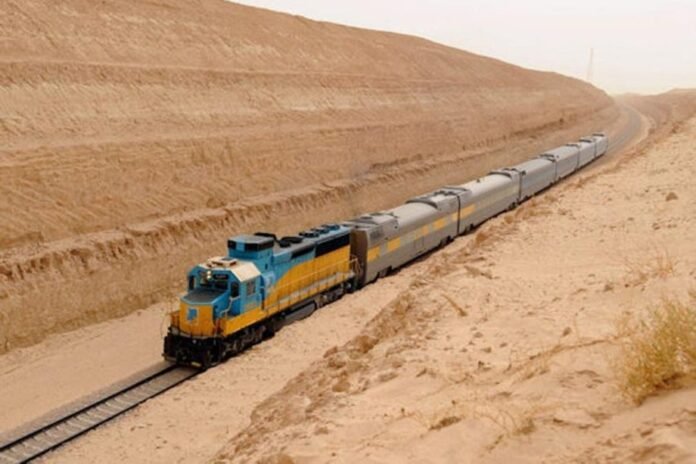
History is not so much past as vigorously present, often a scab to be irritated in fitful anger, or a romantic affectation to be cherished.  When it comes to controlling trade and establishing new routes, this is particularly apt.  The Hejaz Railway project, seemingly long past, is now being dusted down.  In a June 9 memorandum of understanding signed between Türkiye and Saudi Arabia, a railway line is envisaged between the two countries that will traverse Jordan and Syria and create a strategic logistics artery linking the Gulf states to Europe.

According to a media release from the Saudi Press Agency, the agreement will focus “on enhancing cooperation on railway standards, technologies, and related innovations, while facilitating the exchange of expertise and knowledge on best practices in the design, operation and maintenance of railway projects.”  There is much in the way of everything railway related – engineering, expertise, maintenance, innovations – but the historical, and strategic potency of the agreement is unmistakable.  As former advisor to the Saudi Ministry of Foreign Affairs, Salem Al-Yami, wistfully notes, this new project draws inspiration from the Ottoman-era railway built in 1900, covering 1,300 kilometres from Damascus to Medina.

The MoU between Ankara and Riyadh also came several months after the transport ministries of Türkiye, Syria and Jordan had reached a separate agreement envisaging a technical roadmap lasting five years intended to revivify the transportation infrastructure of the three states.

For Israel, this has more than tickled a nerve.  Rather than seeing it as a healthy instance of regional competition on matters relating to transport and trade, a reinvigorated Hejaz railway is seen as threatening to the India-Middle East-Europe Economic Corridor (IMEC). 

Launched in September 2023, the IMEC, unsurprisingly, positions Israel as the central transit hub linking the Gulf to Europe.  But Israeli diplomacy and initiatives have suffered of late, notably after the October 7, 2023 attacks by Hamas which saw a retributive war, not only against the Palestinians in Gaza, but Hezbollah in southern Lebanon and the illegal war launched against Iran in collusion with the United States on February 28.  

READ: Trump says US likely to take control of Hormuz, expects other countries to contribute financially

What is particularly curious in the fearful critiques offered by Israeli figures is the implicit suggestion that Israel’s own economic plans and schemes are somehow free of a political, strategic, even security sting.  Underlying this is the implicit suggestion that Israel’s claims to logistical and economic supremacy as a transit hub should be beyond competition from any rivals.  Consider, for instance, the views of former Israeli Communications and Media Minister Ayoub Kara, who automatically assumes that the Hejaz Railway project is of a military nature and should be guarded against.  “Any cooperation built on security and military ties that is aimed at undermining Israel is a cause for concern,” he told MBN.  

Much the same view is held by Mendi Safadi, a member of the ruling Likud Party and head of the Israeli Safadi Center for International Diplomacy, Research, Public Relations and Human Rights.  Not missing a trick, Safadi thought it wise to make the railway project something greater than a threat to Israel’s own interests.  While there would be “both security and economic risks” to the Jewish state, Europeans also had reason to worry.  “Turkey could use this trade corridor as leverage to advance its political objectives.”  In an economic world of Trumpian self-interest and exploitation, such a statement comes across as quaint.

Israel’s Transportation Minister, Miri Regev, has led the pack in fussing about the project in the broader context of Israel’s security environment.  In a letter to Prime Minister Benjamin Netanyahu, she anxiously claimed that “we are witnessing a rapid transformation of regional partnerships in trade and energy that deliberately bypass Israel and pose a genuine strategic threat to national security.” 

The Hejaz Railway project, as well as “additional bypass corridors” threatened “to permanently render the Israeli route obsolete.”  Were such “bypass scenarios” to be realised, Israel would be left “outside the map of global trade”.

READ: Turkiye, Saudi Arabia ink railway, transport agreements

Turkish officials have certainly played up Ankara’s regional ambitions through the vehicle of the Hejaz railway.  Last month, just prior to the signing of the memorandum, Türkiye’s Trade Minister Omer Bolat told those attending the AA City Economics Summit in Gaziantep that, “The reduction of Israel’s influence in the region, together with increased political and economic stability among us, will bring economic prosperity, peace and stability to the Middle East, the Gulf and Türkiye’s southern borders.”

Whether this grand scheme materialises beyond the confines of paper and enthusiastic dreams remains a heavily question of significance.  Ankara had previously fanned a similar idea in 2009.  The current project lacks a clear funding mechanism and sponsor.  There will also have to be an understanding on how the route will be governed by all countries concerned.  Security promises to be another headache: war-torn Syria, through which much of the railway would pass, remains marred by pockets of instability in the south, with an Israeli presence in the Quneitra Province.

A less pessimistic reading of the project could see Israel benefit in the distant future.  “Although at first glance the revival of the railway appears intended to bypass Israeli territory,” writes Gallia Lindenstrauss for Israel Hayom, “an examination of some of the maps published around the time of the signing, including one released by Turkey’s official news agency, shows that the historical connection to Haifa Port appears in them.”  Furthermore, given that a lack of suitable railway infrastructure in Jordan remains the great limiting factor of the IMEC vision, Israel might also benefit from an Ankara-Riyadh agreement that engenders construction within Jordan itself.  Less a strategic threat to a beleaguered country than a sprig of opportunity that smells of trade rather than war.

OPINION: Deferring a Crisis: The Iran-US Ceasefire Cracks

The views expressed in this article belong to the author and do not necessarily reflect the editorial policy of Middle East Monitor.

EU Commission examines plan to place staff in national governments

0
eu-commission-examines-plan-to-place-staff-in-national-governments
EU Commission examines plan to place staff in national governments


The European Commission is considering stationing its officials in EU capitals, speeding up recruitment and getting the institution “AI-ready,” according to a sweeping set of proposals unveiled in an internal meeting Monday.

“There is an appetite for change,” said Piotr Serafin, the commissioner responsible for human resources. “There’s a readiness to reform the Commission … among the staff.”

The potential changes are part of the Commission’s first comprehensive workplace review in two decades. Launched last year, the review aims to make the Commission more efficient and a more attractive employer, with final recommendations due to be presented to President Ursula von der Leyen by the end of 2026.

The review comes as von der Leyen’s self-described “geopolitical Commission” confronts growing demands, from trade tensions with Washington and Beijing to supporting Ukraine against Russia. Its expanding role has also sharpened sensitivities in some capitals about the EU executive’s growing reach.

Monday’s proposals include shifting more officials from the Commission’s Brussels headquarters to EU capitals to strengthen ties with the bloc’s 27 member countries, accelerating the promotion of a new generation of leaders ahead of an expected wave of retirements, and preparing the institution to become “AI-ready,” according to a senior official involved in the review.

The official, granted anonymity to discuss the contents of the internal report, stressed that the proposals stopped short of abolishing any of the Commission’s 41 directorate-generals (DGs), the EU executive’s policy departments, or creating additional ones. It also won’t recommend cutting staff.

Instead, the focus was on making sure staff are not “siloed” in their departments and can collaborate more easily, the official said, along with reprioritizing work to make better use of existing resources.

‘More and more’

That effort may still require more people. According to a second official, the Commission plans to hire an additional 1,500 staff under the EU’s next seven-year budget, which starts in 2028, alongside another 1,000 roles across other EU institutions.

The first batch of recommendations — laid out in a 400-page report compiled by senior officials from 15 departments — was presented to all 30,000 Commission staff during a virtual meeting on Monday.

Serafin noted that the Commission employs around 1,500 fewer staff than it did in 2014 — even as demands have grown.

The Commission is expected to do “more and more,” he warned, arguing the institution needs adequate funding to match its expanding responsibilities.

Part of the solution, he said, is rethinking where EU officials work. More Brussels-based staff should spend time in national administrations of member countries to deepen cooperation.

“We have the people from the national administrations coming to Brussels, and I believe that we should also invest into the model of EU officials going to national administrations to have this cross-fertilizing of both systems,” he said.

Best talent

Recruitment remains another weak spot. Serafin singled out the European Personnel Selection Office, arguing that its lengthy hiring process is undermining the Commission’s ability to compete for talent.

“My biggest concern with the current model of EPSO is that it takes two to three years from the moment of application to the moment to the first salary,” he said. “This is not a recipe for attracting the best talent to the European institutions.”

Meanwhile, changes at the top are already looming, POLITICO’s Brussels Playbook reported. Several senior roles are expected to open in the coming months as officials retire or move on.

Among them is Gert Jan Koopman, the veteran Dutch official running the Commission’s DG ENEST enlargement department, according to two EU officials.

Michael Karnitschnig, currently acting director-general of DG MENA (foreign relations in the Middle East and North Africa), and Deputy Director-General Despina Spanou of DG CONNECT (comms networks and tech) are both tipped as candidates to replace him, which would leave their roles vacant.

Via Politico

Indonesia-Singapore reset marks new era of ASEAN transactionalism

0
indonesia-singapore-reset-marks-new-era-of-asean-transactionalism
Indonesia-Singapore reset marks new era of ASEAN transactionalism

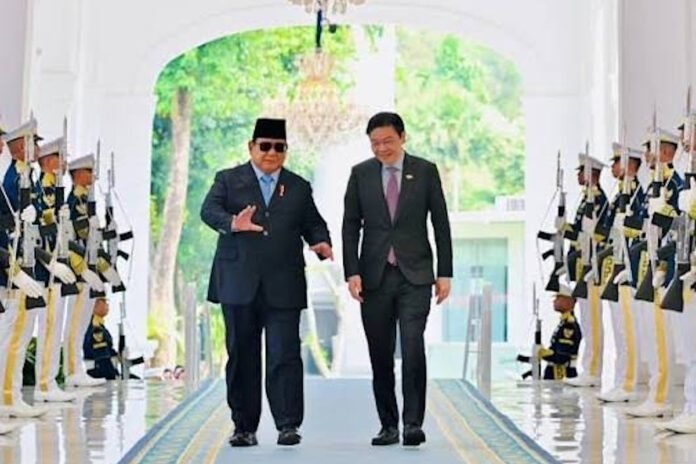
JAKARTA – The annual Indonesia-Singapore Leaders’ Retreat, held at Merdeka Palace in Jakarta on July 6, was more than a routine diplomatic exercise.

With Indonesian President Prabowo Subianto and Singapore’s Prime Minister Lawrence Wong presiding, the summit marked the full consolidation of a new generation of leadership in both nations.

Flanked by key Cabinet members, including Deputy Prime Minister and Minister for Trade Gan Kim Yong and Defense Minister Chan Chun Sing, Wong was received with formal military honors on the palace grounds before beginning intensive talks.

The official schedule yielded 26 deliverables, comprising 18 government-to-government pacts and eight business-to-business agreements, spanning sectors including supply chain resilience, digital infrastructure and clean energy interconnection.

From a regional standpoint, the retreat signaled a shift in strategic calculus. The headline agreements went well beyond routine diplomacy, laying out frameworks for cross-border electricity trading, multibillion-dollar solar projects in Morowali backed by the Indonesia Investment Authority and Sembcorp, and cross-border insolvency legal cooperation.

Against a volatile global backdrop, the moves by both nations sent a strong signal to regional markets. Singapore needs physical space and supply chain certainty, while Indonesia under Prabowo is pressing for more equitable partnerships, domestic industrial downstreaming and recognition of its growing economic weight in Southeast Asia.

Yet behind the handshakes and photo opportunities was a more complicated picture. The retreat took place as escalating tensions in the Middle East repeatedly threatened the security of the Strait of Hormuz, pushing Singapore to look warily toward the nearby Strait of Malacca. The city-state’s central concern is ensuring its immediate neighborhood remains insulated from Indonesia’s increasingly assertive resource nationalism.

Jakarta, meanwhile, used Wong’s visit to showcase its new sovereign wealth fund, Daya Anagata Nusantara (Danantara), gently positioning it as a rival to Singapore’s Temasek and GIC. Both leaders tested the limits of pragmatic compromise amid growing global turbulence.

Tensions beneath

Assessing Indonesia-Singapore relations requires unvarnished realism, without the diplomatic platitudes that often characterize ASEAN’s formal rhetoric.

Analysts suggest Prabowo views Singapore with a mix of respect for its economic efficiency and a firm resolve that Indonesia will no longer be treated merely as a source of cheap raw materials. Prabowo has signaled he expects a more reciprocal relationship prioritizing balanced, mutual gains.

Prime Minister Wong, by contrast, is seen as viewing Indonesia as an unavoidable giant, a nation whose market potential and geographic scale will shape Singapore’s economic prospects for decades to come.

While the bilateral relationship is institutionally stable — cemented by full implementation of long-stalled agreements on flight information regions, extradition and defense cooperation — structural friction points mean tensions still simmer beneath the surface.

The sharpest point of friction lies where regulatory shifts collide with economic nationalism. Jakarta’s stop-and-start policies on exporting sea sand and sediment for Singapore’s land reclamation projects remain a persistent sticking point.

Singapore views the bans as arbitrary constraints on its need for physical expansion, while Jakarta frames them as matters of ecological sovereignty and maritime boundary enforcement.

Indonesia’s mandates for local data center hosting and required technology transfers in green energy projects are also forcing Singapore’s economic planners to recalculate profit margins. The current alignment between the two capitals is driven largely by pragmatism: both need high growth and regional stability.

This bilateral dynamic is further shaped by the wider US-China rivalry. Singapore maintains a long-standing strategic and military alignment with Washington while serving as a major financial conduit for Chinese capital.

Indonesia, meanwhile, under Prabowo’s “free and active” foreign policy doctrine, is balancing Beijing’s economic footprint in its nickel downstreaming and infrastructure sectors by upgrading defense ties with the United States and its Western allies.

Some in Singapore fear Indonesia could swing too far into Beijing’s economic orbit, a shift that could upend the security balance in the South China Sea and the Strait of Malacca.

Jakarta, in turn, remains wary of Singapore’s diplomacy, at times viewing it as overly accommodating to US security architecture in Southeast Asia — a posture that risks provoking Beijing and fracturing ASEAN unity.

Food insecurity, Malacca trepidation

The most urgent driver behind Wong’s visit to Jakarta is Singapore’s shortage of land to meet its energy needs and net-zero emissions targets. The island nation lacks the land mass required to deploy large-scale renewable energy infrastructure.

The cross-border power trading framework and the Morowali solar project signed at the summit amount to an economic lifeline for Singapore. Without green electricity imports from Indonesia, Singapore’s manufacturing hubs and data centers risk losing global competitiveness and failing to clear international carbon requirements.

Wong sought long-term legal certainty to ensure billions in investments by Singaporean entities are not derailed by shifts in Indonesian domestic politics.

Beyond the power grid, Singapore’s food security also looks fragile. Global supply chain disruptions have made food source diversification a priority, and Indonesia is the most logical option.

However, Jakarta’s economic trajectory under Prabowo — including the centralization of state control under Danantara’s super-holding company and an emphasis on domestic food self-sufficiency — sits somewhat uneasily with Singapore’s free-market business model.

Singapore fears a form of backdoor protectionism in which Jakarta could restrict commodity exports to stabilize its own markets. Those policy shifts toward more economic nationalism are forcing Temasek and its portfolio companies to reassess risks in Indonesia.

The geopolitical weight of the Strait of Malacca also weighs on ties. Wong’s visit touched on securing the strait against pollution, shipping accidents and piracy, amid a surge in maritime traffic diverting from volatile Middle East transit routes.

It is critical for Singapore that Indonesia keeps the Strait of Malacca open for global transit in accordance with international maritime law, rather than using its geography as geopolitical and geoeconomic leverage. Any disruption to traffic through the strait would immediately threaten Singapore’s trade-dependent economy.

ASEAN’s axis

Historically and prospectively, the Indonesia-Singapore relationship serves as a primary engine for ASEAN’s geopolitical and economic architecture.

Should this relationship fracture, ASEAN as an institution would face near-total paralysis. The pragmatism on display in Jakarta offered a realistic blueprint for regional economic integration, which has long languished due to bureaucratic inertia.

Mapping out cross-border electricity flows between Jakarta and Singapore could lay the foundation for the long-elusive ASEAN Power Grid, a project long on declarations but short on implementation.

The Prabowo-Wong meeting signaled that regional integration will increasingly be driven not by broad treaties, but by interconnected infrastructure that binds the economic fates of ASEAN member states.

Indonesia’s need for Singapore remains substantial, using the city-state as a global financial gateway and hub for risk management. Jakarta relies on Singapore to channel foreign direct investment into Prabowo’s capital-intensive infrastructure and downstream industrial projects. Singapore’s reliance on Indonesia, meanwhile, is even more fundamental.

Singapore needs Indonesia’s clean energy, its airspace for military drills and civil navigation, its maritime security enforcement in the Strait of Malacca and its large consumer market to absorb Singapore’s financial services and technology exports.

This is an asymmetric interdependence — unbalanced in nature, but equal in urgency for both sides. Looking beyond the Prabowo-Wong summit, the relationship appears to be entering an era defined by institutionalized, transactional pragmatism. It is likely to rely less on the traditional rhetoric of ASEAN brotherhood and more on concrete political and economic calculations.

There is plenty of room for the relationship to strengthen further, anchored not by sentiment but by subsea power cables, integrated data centers across the Batam-Bintan-Karimun economic zone and closer defense cooperation.

Indeed, as US-China rivalry intensifies in Southeast Asia’s troubled waters, a stable Jakarta-Singapore relationship could serve as a stabilizing force for the broader ASEAN bloc.

Ronny P. Sasmita, PhD, is senior international affairs analyst at the Indonesia Strategic and Economic Action Institution.

Solution to Feynman’s reverse sprinkler puzzle also applies to “silly sprinklers”

0
solution-to-feynman’s-reverse-sprinkler-puzzle-also-applies-to-“silly-sprinklers”
Solution to Feynman’s reverse sprinkler puzzle also applies to “silly sprinklers”

Watering your lawn in the summer can be both pragmatic and fun with so-called “silly sprinklers,” designed to create amusing loops and spirals of water jets. And there’s some fascinating physics at work to boot. Researchers at New York University’s Courant Institute conducted a series of experiments with different silly sprinkler designs to find the answer to a longstanding problem in fluid dynamics, according to a new paper published in the Proceedings of the National Academy of Sciences.

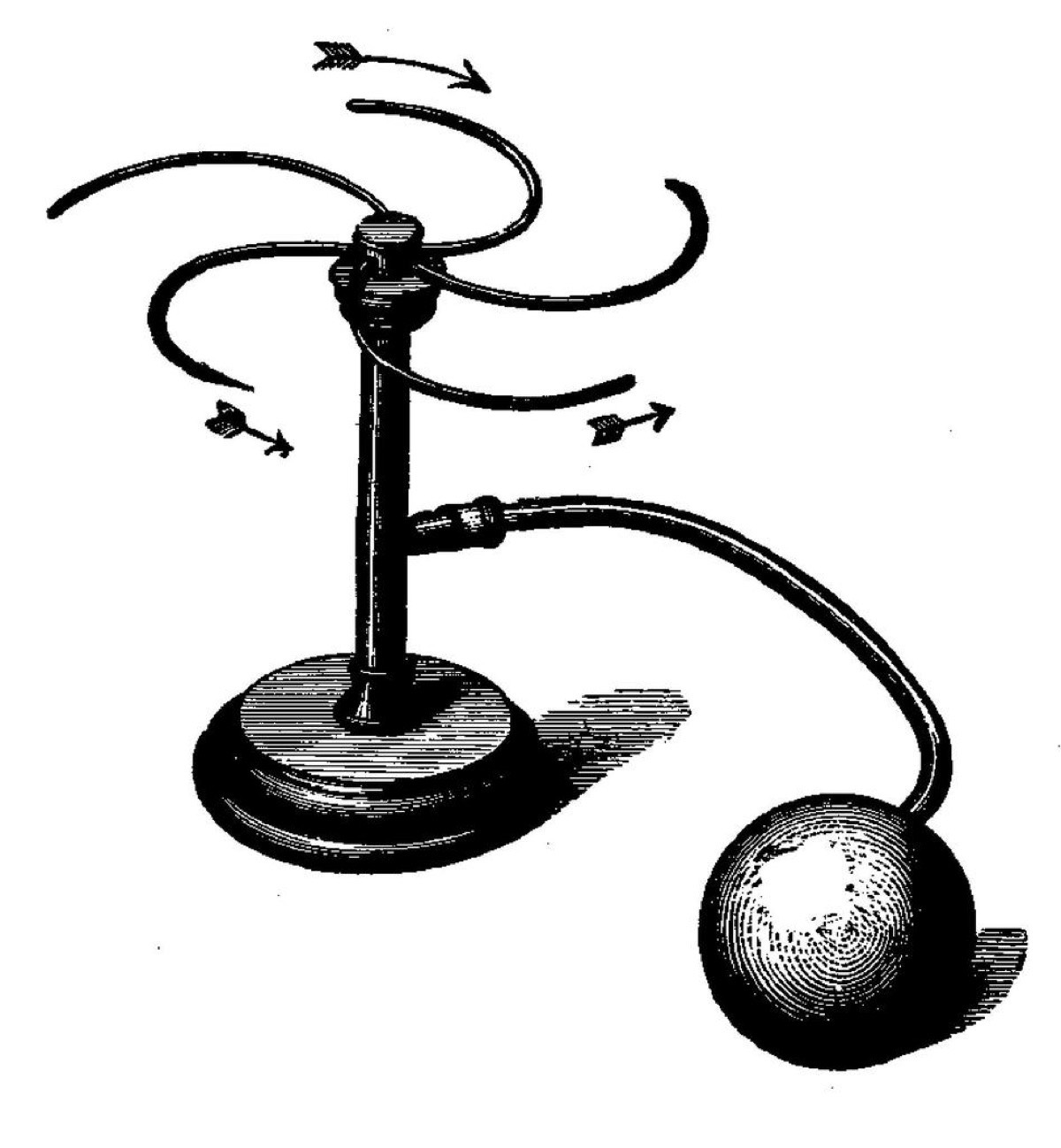
As previously reported, the reverse sprinkler problem is associated with physicist Richard Feynman because he popularized the concept, but it actually dates back to a chapter in Ernst Mach’s 1883 textbook The Science of Mechanics (Die Mechanik in Ihrer Entwicklung Historisch-Kritisch Dargerstellt). Mach’s thought experiment languished in relative obscurity until a group of Princeton University physicists began debating the issue in the 1940s.

Feynman was a graduate student there at the time and threw himself into the debate with gusto, even devising an experiment in the cyclotron laboratory to test his hypothesis. One might intuit that a reverse sprinkler would work just like a regular sprinkler, merely played backward, so to speak. But the physics turns out to be more complicated. “The answer is perfectly clear at first sight,” Feynman wrote in Surely You’re Joking, Mr. Feynman (1985). “The trouble was, some guy would think it was perfectly clear [that the rotation would be] one way, and another guy would think it was perfectly clear the other way.”

Mach proposed that there would be no rotation with a reverse sprinkler: the reaction force on the nozzle as it sucks in water pulls the nozzle counter-clockwise, while the water flowing into the inside of the nozzle pushes it clockwise. The two forces cancel each other out in this steady-state scenario. Feynman’s own experiment showed a slight tremor when pressure was first applied to pump water through the nozzle, and then the sprinkler returned to its original position and remained still.

Illustration of a “reaction wheel” from Ernst Mach’s Mechanik (1883).

Illustration of a “reaction wheel” from Ernst Mach’s Mechanik (1883).

Illustration of a “reaction wheel” from Ernst Mach’s Mechanik (1883). Credit: Public domain

But others suggested that if the friction was low enough and the inflow rate high enough, a reverse sprinkler would start to turn in the opposite direction of an ordinary sprinkler, thanks to the formation of a vortex inside. Since Feynman’s efforts, experiments have been all over the place: some showed steady reverse rotation, some showed only transient rotation, and some produced unsteady rotation that changed direction or flowed in a direction determined by the contraption’s geometry.

When sprinklers get silly

In 2024, New York University applied mathematician Leif Ristroph and several colleagues built their own custom sprinkler that incorporated ultra-low-friction rotary bearings so their device could spin freely. They immersed their sprinkler in water and used a special apparatus to either pump water in or pull it out at carefully controlled flow rates. This let the team observe how water flowed inside, outside, and through the device. Adding dyes and microparticles to the water and illuminating them with lasers helped capture the flows on high-speed video. They ran their experiments for several hours at a time, the better to precisely map the fluid-flow patterns.

The team found that the reverse sprinkler rotates 50 times slower than a regular sprinkler, but it operates along similar mechanisms, which surprised them. Ristroph described the behavior as an “inside-out rocket,” where the internal jets shoot inside the chamber where the arms meet and collide—but they don’t collide head-on, which results in the forces that rotate the sprinkler in reverse. By contrast, a forward sprinkler is more like a rotating rocket, with jets shooting out of its arms.

the jet-like flows of water emitted by the forward sprinkler, as visualized using dye and false colored.

The jet-like flows of water emitted by the forward sprinkler, as visualized using dye and false colored.

The sprinkler designs studied, with the observed rotation direction in the forward (red arrow) and reverse (blue) modes.

The sprinkler designs, with the observed rotation direction in the forward (red arrow) and reverse (blue) modes.

The 2024 experimentally observed flow patterns were in excellent agreement with the group’s mathematical models—which they dubbed the momentum flux theory. However, it didn’t definitively rule out competing theories. Also, the group only looked at sprinklers with S-shaped arms. So this latest paper builds on that earlier work by extending the experiments to silly sprinklers the team created themselves. Ristroph et al. tested them in both forward mode (where water sprays out) and reverse mode (where water is sucked in).

Their observations strongly supported Ristroph et al.’s momentum flux theory and were inconsistent with both Mach’s and Feynman’s hypotheses. They also found that the arm shape of a given sprinkler can control the jet flow, and the team devised specific guidelines for designing structures to control flow to produce torque and rotation. “Our findings provide a firmer understanding of how components respond to fluid flows—knowledge that can guide future engineering and technological advances for devices, such as turbines, that convert these flows into energy,” said co-author Brennan Sprinkle of the Colorado School of Mines.

Ristroph’s lab frequently addresses these kinds of colorful real-world puzzles. For instance, in 2018, Ristroph and colleagues fine-tuned the recipe for the perfect bubble based on experiments with soapy thin films.  In 2021, the Ristroph lab looked into the formation processes underlying so-called “stone forests” common in certain regions of China and Madagascar. In 2021, his lab built a working Tesla valve, in accordance with the inventor’s design, and measured the flow of water through the valve in both directions at various pressures. And in 2022, Ristroph studied the surpassingly complex aerodynamics of what makes a good paper airplane—specifically what is needed for smooth gliding.

PNAS, 2026. DOI: 10.1073/pnas.2537479123 (About DOIs).

Ukraine’s robot army advancing on the war’s front lines

0
ukraine’s-robot-army-advancing-on-the-war’s-front-lines
Ukraine’s robot army advancing on the war’s front lines

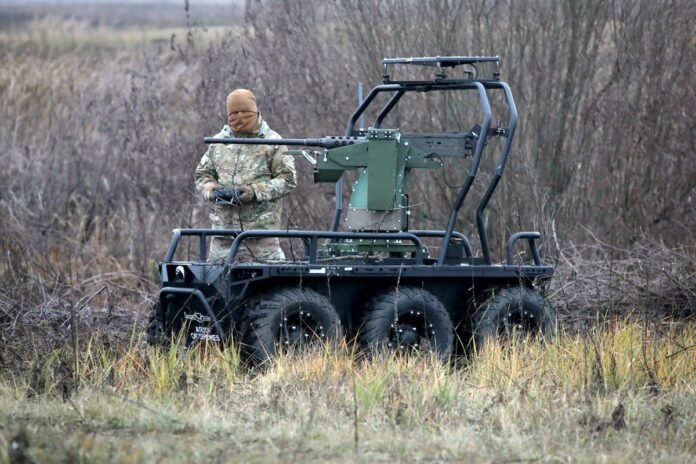
The Ukrainian military is steadily replacing dangerous frontline tasks with ground robots. In April, President Volodymyr Zelensky ordered the military to field at least 50,000 unmanned ground vehicles (UGVs) in 2026, calling them “the next big step” in saving soldiers’ lives.

Ihor Shmyryov, head of the UGV department at Ukraine’s defense innovation platform Brave1, expects Ukraine to exceed Zelensky’s target once direct brigade purchases are included. “In the first half of 2026, 25,000 UGVs will be contracted for deployment to the front,” he said. “That’s twice the number contracted during all of 2025.”

Ukraine’s UGV industry is booming. A study jointly conducted by the KSE Institute, Brave1 and Defense Builder found Ukraine’s UGV market grew 488% in 2025. In March, Andrii Biletsky, commander of Ukraine’s 3rd Army Corps, said UGVs could eventually replace up to one-third of soldiers along the front.

“The goal is to replace an infantryman on the front line with drones, as much as possible,” Shmyryov said. That means pairing aerial drones with UGVs.

Kyiv is already implementing that vision. In April alone, Shmyryov said Ukrainian UGVs carried out more than 10,000 missions, most delivering supplies to frontline positions. As the battlefield grows more dangerous, demand for machines that can replace soldiers keeps rising.

“Drones can make ground unlivable,” said Heiner Philipp, an engineer with Technology United for Ukraine. Ukrainian forces can now detect and strike Russian troops day and night, often suppressing positions before infantry move in. Increasingly, the first thing advancing across that ground is not a soldier, but a robot.

Pavel Shurmei of the Kastus Kalinoŭski Regiment said his unit initially experimented with machine-gun-equipped UGVs but now uses them mainly for logistics, where the systems have found their clearest battlefield role.

Another mission is countering Russia’s growing use of small infiltration groups, allowing armed UGVs to engage them without exposing more soldiers inside the drone kill zone.

“Primarily, it involves engaging enemy personnel and equipment using turrets. This is already operational on the front lines,” Shmyryov said. “Robots can perform patrols and hold positions.”

In February, Khartiia’s Lava regiment cleared a Russian strongpoint near Kupiansk using ground robots, kamikaze UGVs and strike drones without sending infantry into the objective.

Two months later, Ukraine’s Defense Ministry announced the formation of “drone assault units,” integrating aerial drones, ground robots and infantry into a single combined-arms system.

Ground robots are also taking on engineering tasks. Dima, a soldier with Ukraine’s 3rd Assault Brigade, told me his unit uses UGVs to deploy concertina wire and MZP barriers in front of defensive positions. “But it’s tough,” he said. “As soon as a robot rolls out to the frontline, all the enemy’s FPVs try to strike and destroy it.”

Developers are expanding what UGVs can do. Ratel Robotics began testing net launchers mounted on ground robots to intercept low-flying drones.

In June, the 3rd Army Corps unveiled an AI-enabled robotic air-defense system capable of autonomously detecting, tracking and engaging aerial targets, highlighting how rapidly UGVs are evolving into modular battlefield platforms.

A Brave1 representative told me AI-enabled UGVs are already being used on the front lines for missions ranging from fire support to air defense, including engaging Russian Shahed kamikaze drones.

Poor communications remain one of the biggest barriers to deploying ground robots at scale. Rather than relying on a single radio link between an operator and a robot, mesh networks allow drones, UGVs and ground stations to relay commands through one another, making robotic formations withstand jamming.

“Mesh networking is essentially a prerequisite for UGV employment at scale,” said Ryan O’Leary, a former commander of Ukraine’s Chosen Company volunteer unit.

Russia is pursuing many of the same concepts. Samuel Bendett, an adjunct senior fellow at the Center for a New American Security, said Russian forces are fielding UGVs for logistics, casualty evacuation and combat roles, including systems such as the Courier, Depesha and Impuls, alongside improvised robots built by frontline units.

But he believes Ukraine currently retains an advantage in deployment. “The overall Russian UGV number used at the front today is likely smaller than the Ukrainian one,” said Bendett, adding that communications limitations have constrained wider Russian use. Even so, he said, both militaries increasingly see that ground robots are becoming essential on a battlefield dominated by drones.

Ukrainian commanders are beginning to plan assaults around what robots can accomplish before soldiers move forward.

The commander of the NC13 strike UGV company in the 3rd Assault Brigade told the Ukrainian outlet Militarnyi in December that his unit has already conducted offensive operations using multiple armed robots simultaneously. The next step, he said, is making such assaults routine rather than exceptional.

More capable robots do not mean infantry is disappearing. “UGVs can support frontal assaults and degrade enemy forces,” said George Barros of the Institute for the Study of War.

“They are not a perfect substitute for infantry. At the end of the day there will always be a requirement for old-fashioned infantry to occupy and control terrain,” Barros said. He added that current systems remain vulnerable to FPV drones and mines, and armed UGVs must still be physically reloaded after expending their ammunition.

“Progress here depends as much on hardware as software,” said Deborah Fairlamb, founding partner of Ukraine-focused venture capital firm Green Flag Ventures. Advances in software and AI should make UGVs more capable as better hardware reaches the battlefield.

During casualty evacuations, several robots may be lost attempting to recover a wounded soldier before one succeeds. As Yuliia Trybushna of NUMO Robotics told me: “It’s better to lose four machines than one soldier.”

Ukraine plans to field more than 50,000 UGVs this year. But Trybushna estimates replacing most frontline positions would ultimately require roughly 150,000 to 200,000 annually.

Combat UGVs remain relatively uncommon not because they have failed, she said, but because the doctrine needed to employ them at scale is still being developed. Individual battlefield successes come first; standardized tactics follow.

Ground robots are unlikely to replace infantry soon. But they are steadily replacing many of the tasks soldiers once performed, offering an early glimpse of a battlefield where soldiers increasingly stay behind while machines go forward.

David Kirichenko is a freelance journalist and an associate research fellow at the Henry Jackson Society. His research focuses on autonomous systems, cyber warfare, irregular warfare, and military strategy. His analyses have been widely published in outlets such as the Atlantic Council, the Center for European Policy Analysis, the Irregular Warfare Center, Military Review and the Modern Warfare Institute, as well as in peer-reviewed journals. Follow him on X: @DVKirichenko.

Houthi Missiles Target Saudi Airport, Air Bases as 4-Year Truce Collapses 

0
houthi-missiles-target-saudi-airport,-air-bases-as-4-year-truce-collapses 
Houthi Missiles Target Saudi Airport, Air Bases as 4-Year Truce Collapses 


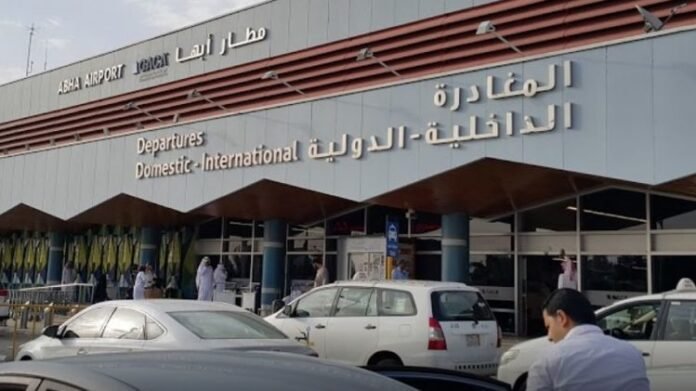
Yemen’s Houthis launched a barrage of ballistic missiles toward Abha International Airport and two military bases in Saudi Arabia after an attack on the runway at Sanaa International Airport that Yemen’s internationally recognized government said was aimed at preventing an Iranian aircraft from landing. 

The Saudi-led military coalition in Yemen said air defenses stopped the missiles before they reached targets in the kingdom’s south. 

A coalition spokesperson said on X that the intercepted weapons had been “launched by the terrorist Houthi militia toward the southern region.” 

The attacks brought an end to four years of truce between Saudi Arabia and the Iran-aligned Houthis and renewed direct hostilities between the two sides. 

The Houthis blamed Saudi Arabia for the action at Sanaa airport, alleging that the kingdom had launched several airstrikes against the facility. Yemen’s internationally recognized government, which is supported by Saudi Arabia, gave a different account, saying its forces struck the runway to block the arrival of an aircraft from Iran. 

“In an unjust aggression, the Saudi enemy carried out several airstrikes against Sanaa International Airport,” Houthi military spokesman Yahya Saree said shortly after reports of the attack surfaced. 

Saree said the deescalation period was over and pledged that the Houthis would respond immediately. 

The group then directed ballistic missiles at Abha International Airport and the two Saudi air bases. Saudi air defenses intercepted the missiles targeting the country’s southern region, the coalition said. 

The Houthis described the missile barrage as retaliation for the attack at Sanaa International Airport. 

Saudi Arabia supports Yemen’s internationally recognized government in its conflict with the Houthis, who are aligned with Iran. 


California creates $3,500 rebate for new electric vehicle buyers

0
california-creates-$3,500-rebate-for-new-electric-vehicle-buyers
California creates $3,500 rebate for new electric vehicle buyers

At the end of last September, electric vehicle adoption in the US began to crater. That followed the abolition of the IRS clean vehicle tax credit as part of a series of moves by President Trump and congressional Republicans to undermine energy efficiency and pollution control measures. Until then, buyers of some EVs could claim up to $7,500 from the purchase as part of the IRS Section 30D credit, assuming the EV was below the price cap and the buyer earned less than the income cap. Since then, EV sales have dried up, and automakers have canceled entire product lines as they face the reality of a US government that has soundly rejected moving past oil dependence.

But EV buyers in California aren’t quite as unlucky as their peers in the other 49 states and the District of Columbia. Yesterday, California Governor Gavin Newsom signed a new EV rebate into law for residents of the Golden State.

As Newsom said in a statement:

Donald Trump is doing everything in his power to pollute our air and surrender the clean car industry to China on a silver platter. California is putting its foot on the accelerator. With our new instant rebate program for electric vehicles, we’re making it easier for families to drive clean, breathe clean, and keep more money in their pockets. As California leads the world toward a clean future, our message is clear: no one can stop Californians from choosing vehicles that are better for their wallets and better for the air they breathe.

California’s new MyFirstEV Zero Emissions Vehicles instant rebate program will provide a $3,500 rebate at the point of purchase for a California resident buying their first EV, so long as that EV costs less than $50,000. Additionally, there’s a $1,750 rebate for used EVs that cost less than $25,000.

The latest state budget allocates $135.5 million to partially fund the rebate program; participating automakers will collectively contribute another $135.5 million to MyFirstEV as well.

However, according to Electrek, the program has exemptions for California-based automakers. As long as an EV manufacturer is headquartered in the state—like Rivian and Lucid—its products are not subject to the price cap. Despite being founded in California by Martin Eberhard and Marc Tarpenning, current Tesla CEO and political activist Elon Musk famously moved the HQ to Texas in a fit of pique following his refusal to obey public health laws during the COVID-19 pandemic. Only new Tesla EVs that cost less than $50,000, therefore, will be eligible for a rebate for a first-time EV buyer in California.

California has not announced the list of participating manufacturers yet.

UPDATED: UK counter-terrorism police now probing former minister Widdecombe’s suspected murder

0
updated:-uk-counter-terrorism-police-now-probing-former-minister-widdecombe’s-suspected-murder
UPDATED: UK counter-terrorism police now probing former minister Widdecombe’s suspected murder


British counter-terrorism police officers are now leading ​the investigation into the suspected ‌murder of former British government minister Ann Widdecombe, interior minister Shabana Mahmood said on Monday.

Widdecombe, 78, was ​found dead at her home ​in rural southwest England on Thursday with ⁠what police described as “serious injuries”. Officers arrested ​a white British man in Rotherham, ​northern England, late on Saturday.

Get a look at the day ahead in European and global markets with the Morning Bid Europe newsletter. Sign up here.

“Following new information and evidence, they (counter-terrorism police) are now leading on the ​investigation into the horrific murder of ​Ann Widdecombe,” Mahmood said on social media platform ‌X.

“The ⁠police are pursuing multiple lines of enquiry to establish the motivation for this attack,” she said, adding that she ​would update ​lawmakers in ⁠parliament later in the day.

The Devon and Cornwall police force, ​who were previously investigating the ​suspected ⁠murder, had said on Sunday that there was no evidence suggesting there was ⁠a ​political motive or that ​the incident was terrorism related.

Who was Widdecombe

Her political career spanned decades, serving as MP for Maidstone in Kent for 23 years, before going on to join Reform UK.

She worked as a Home Office and employment minister in Sir John Major’s government between 1994 to 1997.

After leaving Parliament she embarked on a showbiz career,appearing on Strictly Come Dancing in 2010 and Celebrity Big Brother in 2018.

A staunch supporter of the UK’s departure from the EU, she became an MEP for the Brexit Party, representing South West England in the European Parliament between 2019-2020.

In 2023, Widdecombe joined Nigel Farage’s Reform UK, after the party changed its name from the Brexit Party, and made a number of appearances as the party’s immigration and justice spokesperson.

Following news of her death, Farage credited Widdecombe for playing a “decisive role” in getting Brexit “over the line”.

“When Ann Widdecombe decided to stand for The Brexit Party in the snap 2019 European Elections, it was a big moment and huge boost. The voters loved her,” he wrote in a post on X, adding she would be “missed by us all”.

Conservative leader Kemi Badenoch described Widdecombe as a “formidable politician who was never afraid to speak her mind and fought hard for what she believed”.

Tory MP and former party leader Iain Duncan Smith said she expressed her views “strongly and straight, which was refreshing in many senses and sometimes difficult”.

By appearing on Strictly, he said she discovered “a new lease of life, an inner Ann that we never had any sight of at all”.

Former Conservative MP and friend Gyles Brandreth described her as “a curious mix of Danny de Vito and Margaret Rutherford”.

“We met when we were both 19 and remained friends because she was fun and kind – even when you disagreed with her fiercely.”

Lord Howard, a former Conservative leader who clashed with Widdecombe when they were both ministers at the Home Office, told BBC Radio Kent she was a “feisty lady” and a “good minister”.

Widdecombe famously described him as having “something of the night about him”.

Lord Howard acknowledged they had had “our ups and downs” but later “made up”.

Speaking on Friday morning, health secretary James Murray said Widdecombe “was never shy of having quite firm views and sharing them quite willingly”.

“I can’t say I always agreed with her views, but she was such a part of our politics,” the Labour minister told Times Radio, adding “everyone can recognise the contribution that she made to politics” and public life.

In a statement, her agent Cloud 9 Management said her life and career were “driven by her strong Christian values and commitment to public service”.

They added that Widdecombe loved the “cut and thrust of political debate” and despite leaving Parliament 16 years ago, was “still actively campaigning for Reform UK”.

“For many, of course, she will be best (or worst?) remembered for her unforgettable appearances on Strictly Come Dancing, defying the judges week-after-week as the public delighted in her unsuccessful attempts to follow the choreography of the long-suffering Anton Du Beke,” the statement went on to say.

The former Tory minister became a favourite with viewers when she appeared on the BBC’s Strictly Come Dancing in 2010.

One judge likened her to a “Dalek in drag” but her popularity with the audience took her to the semi-finals.

She described her 10 weeks on the show as “magnificent” and life-enhancing”.

During her parliamentary career, Widdecombe, a staunch Catholic, often sparked controversy due to her socially conservative views, including opposing abortion and comments about the LGBT community.

In 2019, the former minister received backlash after suggesting science might one day “produce an answer” to being gay.

In the 1990s she converted to Catholicism, a move she later described as the best decision she ever made.

She told The Times newspaper: “To have a church which calls a sin a sin and has done with it is a blessed relief.”

During her political career, faced cruel comments about her appearance, with newspapers calling her “Doris Karloff”, a reference to the old Hollywood horror movie star, Boris Karloff.

However, she breezily dismissed the jibes saying: “I am toothy, dumpy, ugly, overweight, a spinster – what the hell.”

Source:  Reuters

0FansLike
0FollowersFollow
0FollowersFollow
0SubscribersSubscribe
- Advertisement -
Google search engine

Recent Posts