21.1 C
London
Sunday, July 12, 2026
Home Blog

Kash Patel Announces FBI Is Investigating Sudden Death of Sen. Lindsey Graham 

0
kash-patel-announces-fbi-is-investigating-sudden-death-of-sen.-lindsey-graham 
Kash Patel Announces FBI Is Investigating Sudden Death of Sen. Lindsey Graham 


The FBI is assisting local authorities following the death of South Carolina Sen. Lindsey Graham, whose office said the 71-year-old Republican died Saturday night after a “brief and sudden illness.” 

FBI Director Kash Patel called Graham a “devoted public servant, a fierce defender of our nation, and a true patriot who dedicated his life to the people of South Carolina and the United States” in a statement Sunday. 

Officials said the FBI was assisting local authorities following Graham’s death. 

Graham met Ukrainian President Volodymyr Zelenskyy in Ukraine on Friday during his tenth visit to the country. A defense hawk, Graham was a staunch supporter of Ukraine in its war against Russia. 

He was also a consistent supporter of Israel and spent the final weeks of his life discussing efforts to secure normalization between Israel and Saudi Arabia by November, before the next US Congress is sworn in, Axios reported Sunday, citing conversations with Graham over the previous couple of weeks. 

Emergency crews were called to Graham’s home following a report of chest pain and later described performing CPR on a person experiencing apparent cardiac arrest, according to emergency audio reviewed by USA Today. Graham’s office did not disclose details about his illness. 

Shortly before emergency responders arrived, Graham spoke by phone with President Donald Trump after recently returning from Ukraine. 

“He said he’s a little tired. It’s a long trip, you know, many hours. And he had just gotten back,” Trump said during a July 12 phone interview on NBC’s “Meet the Press.” 

President Trump said responders appeared to have reached Graham’s home soon after the conversation ended. 

“I mean, it must have been right after that because I understand the police, or whoever it is, came there about 7:30, 8 o’clock in the evening,” President Trump said, adding that they had planned to speak again. 

“We thought we might even meet today. And then that was it,” the president said. “It could have been his last call. I don’t know exactly.” 


Rachael Ray Sparks Fresh Concern After New Video

0
rachael-ray-sparks-fresh-concern-after-new-video
Rachael Ray Sparks Fresh Concern After New Video


Rachael Ray has fans talking again after a new cooking video left some viewers worried about the beloved TV chef’s appearance.

The 57-year-old Food Network star appeared in a recent Instagram clip this week, where she was seen seasoning food and doing what fans have watched her do for decades: cooking up a storm in the kitchen.

But this time, many viewers seemed more focused on Rachael herself than the food she was preparing.

The comments quickly filled with fans reacting to her appearance, with some saying they had to take a second look before realizing it was really her.

“That is not Rachael Ray,” one person wrote.

“Rachael Ray is that really you?” another asked.

“Oh god she looks ….different,” someone else commented.

“That’s not her,” another viewer added.

One fan said they only realized it was Rachael after hearing her speak, writing, “I only recognized her voice… good to see you again.”

Another admitted, “At first I didn’t even recognize her.”

Still, plenty of fans rushed to defend the longtime TV favorite and shower her with love.

“Always such a Ray of sunshine!!! She has the perfect last name,” one supporter wrote.

“Omg, I’ve missed you,” another commented.

Someone else added, “I love Rachael’s cooking and vibe. past present and future. She is that girl.”

The latest reaction comes after months of fan chatter about Rachael’s health and appearance.

Earlier this year, the celebrity chef showed off a noticeably slimmer look, which sparked renewed attention from fans online. She has previously credited her weight loss to following a Mediterranean diet.

Back in March, Rachael looked almost unrecognizable to some viewers as she displayed her slimmed-down figure. Months before that, in August, fans praised her healthier appearance on social media, with some saying it was the best she had ever looked.

The concern over Rachael’s health is not new.

Last year, viewers grew worried after she appeared to slur her speech in a clip from her cooking show Rachael Ray in Tuscany. Rachael did not publicly address those concerns at the time and later filtered comments on some of her Instagram videos.

Fans have also been seeing less of Rachael since her long-running daytime talk show came to an end in 2023.

The Rachael Ray Show aired for nearly two decades on CBS before it was canceled. Rumors about the show’s future had been circulating for months before the decision became official.

At the time, Rachael said she had chosen to step away from the talk show to focus on her production company, Free Food Studios.

Even with the concern, one thing is clear: viewers still have a strong attachment to Rachael after years of watching her on television.

For many fans, seeing her back in the kitchen was a welcome sight — even if her latest appearance left some doing a double take.

‘Why take those jobs away?’: The unionized workers decrying Trump’s war on wind

0
‘why-take-those-jobs-away?’:-the-unionized-workers-decrying-trump’s-war-on-wind
‘Why take those jobs away?’: The unionized workers decrying Trump’s war on wind

This story was originally published by The Guardian and is reproduced here as part of the Climate Desk collaboration.

Donald Trump has blamed everything — from “national security” issues, the deaths of birds and whales, and cancer — in his decades-long campaign against windfarms. But as the Trump administration continues to undermine the industry, what worries workers most is their jobs.

Since taking office for a second term, Trump has issued an executive order aiming to halt all wind-energy leases and permits, attempted to issue stop-work orders on wind projects under construction, and paid more than $2.6 billion in settlements to buy out wind energy leases. And hundreds of workers have been affected.

Thomas Kilday, a furnace electrician with IBEW Local 99 in Providence, Rhode Island, was in the midst of a four-week shift onboard a vessel off the Atlantic coast working on the Revolution Wind Project in August last year when the Trump administration issued a stop-work order on the project.

“No one really knew what was going on. We didn’t know what it meant for us. We just knew that everything was up in the air,” said Kilday. “You plan your whole life around being gone for 28 days, and to come out here and have it thrown up in the air, worrying what does this mean for me, for my pay for the next four weeks, what’s going to happen? There’s a lot of uncertainty.”

Read Next

Construction on the project is done on shifts of 28 days on and 28 days off, with workers residing on a vessel on the ocean and taking helicopters to work on the turbines.

A federal court granted an injunction to block the stop-work order in September last year. In December, the Trump administration issued another 90-day stop-work order, citing national security, before a second judge issued an injunction in January.

When the second stop-work order was issued, Kilday was celebrating Christmas with his family and preparing for another four-week shift.

“That was really difficult,” he said. “I just spent a bunch of money on Christmas gifts for my family, and it was not what I wanted to be thinking about. Six months out of the year, we’re away from home, and for what little time we do have at home, not to be able to just focus all of that time and energy on our families, it’s tough. It’s not a great feeling to be worried about your job when you’re supposed to be home.”

“We’re proud of the work that we do out here, and we want to be able to continue to do it. We think it’s important work,” added Kilday. “When I’m at home, and I drive down my street, I look up at those power lines. I helped create the power that’s running through those power lines, and I’m proud of that.”

Read Next

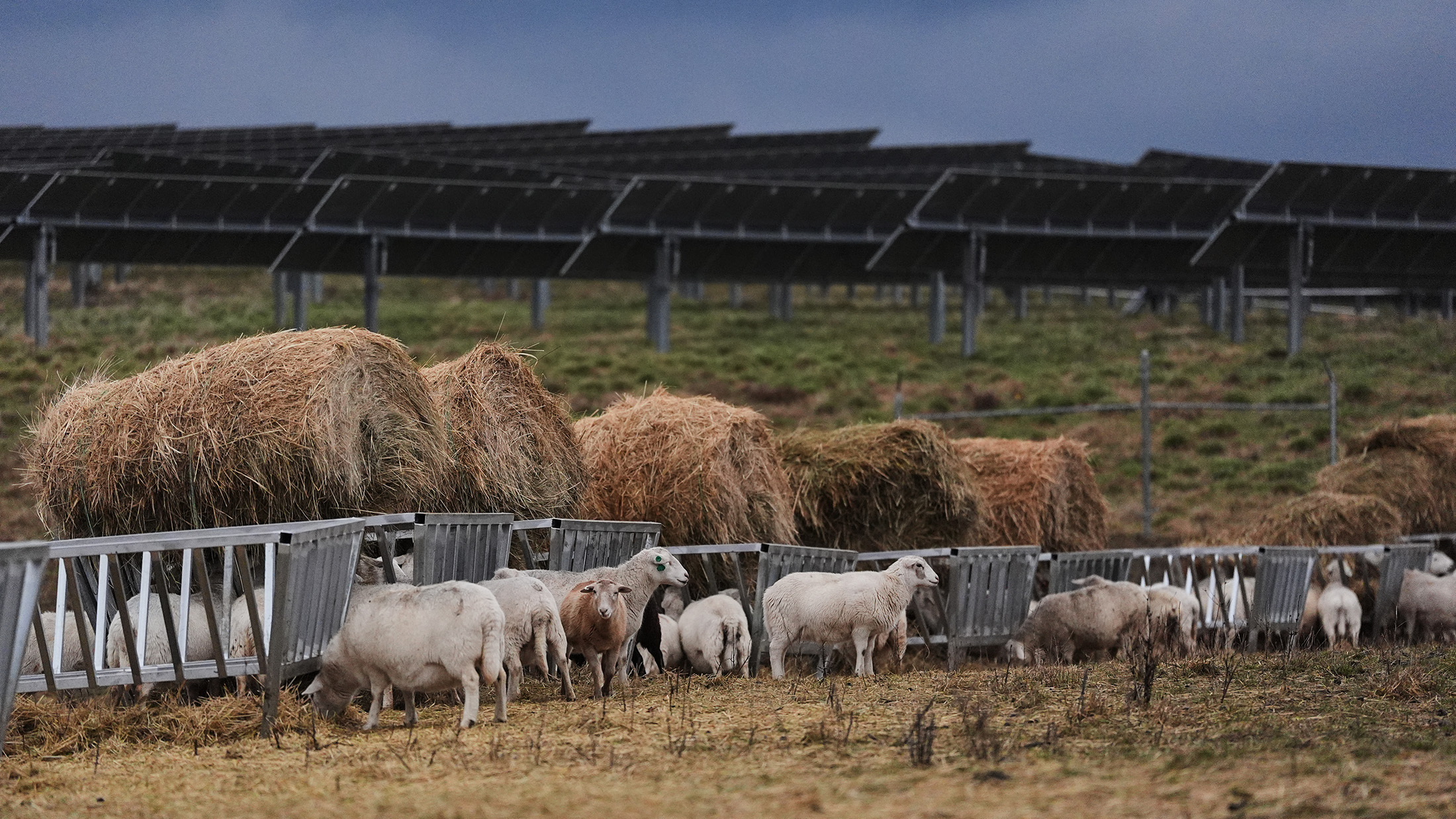
Revolution Wind announced in March that it began delivering power to New England, citing the work of more than 1,000 local union workers, and is expected to power more than 350,000 homes and businesses. The project’s construction is over 90 percent complete.

In June, the Trump administration abandoned an effort to try to halt all wind projects and leases across the U.S., giving up a challenge in court to a judge tossing Trump’s executive order to freeze all permitting and leasing for wind projects.

Instead, the Trump administration has opted to buy out wind project leases.

Trump’s Department of Interior has completed four deals so far to cancel wind project leases, paying energy corporations a sum of more than $2.6 billion, including paying $765 million to Invenergy to abandon four wind projects in California, New York, and Maine and nearly $900 million to Bluepoint Wind and Garden State Wind to cancel offshore wind leases in New York and California.

“I think it’s a foolish policy that the Trump administration is engaging in trying to buy out these leases,” Pat Crowley, president of the Rhode Island AFL-CIO, told The Guardian. “These projects are not only helping to reduce our carbon emissions, they’re providing good-paying union jobs for thousands.”

Crowley said that workers would have had long-term job stability from working on these projects. He noted the Trump administration had lost in court in its attempts to issue stop-work orders on five wind projects in the Rhode Island area.

Read Next

“We’re five for five taking on the Trump administration,” he said. “What the Trump administration is doing is just throwing money away for the sake of their ideology.”

Will Gonzalez, a construction laborer with the Laborers’ Local 385 in Fairhaven, Massachusetts, worked on the Vineyard Wind 1 project off the coast of Martha’s Vineyard, a project the Trump administration attempted to halt in January. The project is now completed and fully operational.

He criticized the Trump administration’s efforts to halt wind turbine projects, claiming the opposition from Trump stems from his experiences trying to stop a wind turbine project near his golf course in Scotland, losing an appeal in December 2015.

“It’s a personal vendetta,” said Gonzalez. “Good union jobs – we shouldn’t be trying to take those off the table. That just doesn’t make any kind of sense. Families obviously need good jobs … why take those jobs away?”

Gonzalez said he and his co-workers were leaving training and certifications unused because of the halting of wind power projects.

“All of us that worked on that Vineyard Wind 1, obviously, we would have loved to segue right into another project,” he said. “We’re fully trained, ready to go, willing and able, so it directly affected us. But you move on. You [have] got to move on. You can’t sit and dwell on that, because that’s not going to pay the bills.”

The White House directed comment to the Department of Interior.

A spokesperson for the department denied the cancellation and stop-work orders of projects had had any impact on jobs, even on projects under construction when halted. The spokesperson did not respond to a question asking for clarification and did not comment on Trump’s prior animus toward wind turbine projects involving his golf courses.

“No jobs were eliminated because none of these leases were operational or supporting employment,” the spokesperson said.

“Rather than waiting years for the projects to materialize, the Trump administration is prioritizing investments in existing infrastructure and functioning supply chains that can create jobs now and deliver economic benefits faster.

“This approach puts more people to work more quickly, using proven, affordable, and reliable energy rather than relying on projects tied to leases that were not producing jobs in the first place.”


Israeli panel approves bill to suspend detention of ultra-Orthodox draft evaders

0
israeli-panel-approves-bill-to-suspend-detention-of-ultra-orthodox-draft-evaders
Israeli panel approves bill to suspend detention of ultra-Orthodox draft evaders

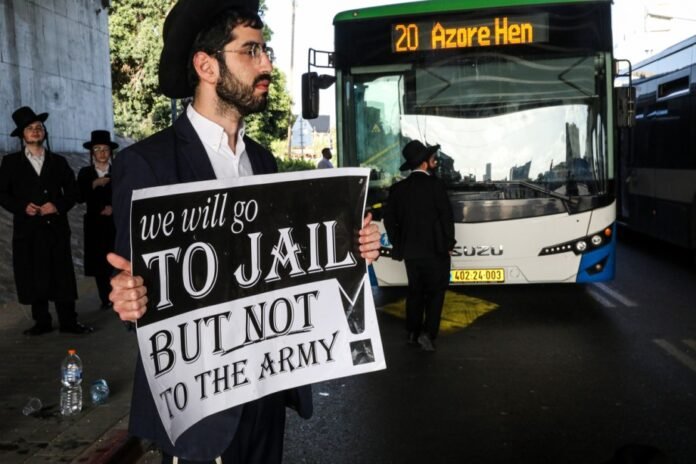
An Israeli parliamentary committee approved a bill on Sunday to suspend the detention of ultra-Orthodox (Haredi) Jews who evade mandatory military service, paving the way for final votes in the full Knesset later this week, according to local media, Anadolu reports.

The Knesset’s Foreign Affairs and Defence Committee approved a temporary order freezing the detention of draft evaders studying at religious seminaries, or yeshivas, Israel’s Yedioth Ahronoth daily reported.

The newspaper said the governing coalition intends to press ahead with the hot-button legislation despite a legal opinion concluding that the bill “does not achieve balance, but rather deepens inequality.”

The bill is expected to be brought before the Knesset for its second and third readings later this week.

Under the proposal, the measure would remain in force until Nov. 30. However, Yedioth Ahronoth said it would effectively remain valid for six months rather than three because Article 38 of Israel’s Basic Law automatically extends any law set to expire within four months of the parliament’s dissolution until the end of the first three months of the next Knesset’s term.

Reacting to the committee’s approval, opposition leader and former military chief Gadi Eisenkot said on US social media company X that Prime Minister Benjamin Netanyahu’s coalition “discriminates between citizens in bearing the burden of military service.”

“In Netanyahu’s government, dodging military service pays off. In the government we will form, those who serve and defend the country will receive the appreciation and respect they deserve,” Eisenkot said.

The governing coalition is preparing for a decisive legislative week, expected to be the last before the Knesset is dissolved ahead of anticipated general elections in October, according to Israeli public broadcaster KAN.

Alongside the draft-evasion bill, the coalition also plans to advance a law which seeks to enshrine Torah study as “a fundamental value” in Israel.

Earlier this month, the Knesset approved the bill in its first reading by a vote of 63-53, granting Torah study special constitutional status and strengthening legal protections for students at Jewish religious schools.

Haredim make up about 13% of Israel’s population, which exceeds 10 million. They reject military service on the grounds of full-time Torah study, saying integration into secular society threatens their religious identity.

For decades, Haredi men avoided conscription at age 18 through repeated deferments for religious study until reaching the exemption age, currently 26.

But in 2024, Israel’s Supreme Court ruled that Haredim must be drafted into the military and ordered the suspension of state funding for religious institutions whose students refuse enlistment.

Herzl Lived Upstairs. A Palestinian Pizza Shop Lives Below

0
herzl-lived-upstairs.-a-palestinian-pizza-shop-lives-below
Herzl Lived Upstairs. A Palestinian Pizza Shop Lives Below


At Vienna’s Berggasse 6, a single address holds the intersecting legacies of Theodor Herzl, the Holocaust, and the Israeli-Palestinian conflict

Some homes preserve history. Others become museums. At Berggasse 6 in Vienna, the past remains unusually present.

The building was constructed in the mid-1850s. Today, it brings together unlikely layers of religious and political history: It belongs to the Catholic Schottenstift Abbey, its ground floor houses a Palestinian-owned pizzeria, and from 1896 to 1898 it was home to Theodor Herzl, a founder of modern Zionism. Decades later, several Jews connected to the building were deported and murdered during the Holocaust, giving the address another, darker place in Jewish history.

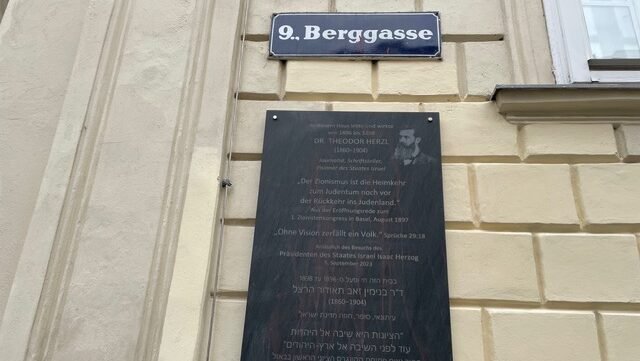
Today, little about the building indicates its importance in Jewish history, except for a plaque honoring Herzl, which was unveiled by Israeli President Isaac Herzog a month before the October 7 massacre. The sign has since been defaced with red markings.

The Room Where Zionism Took Shape

“The road from Palestine to Paris is beginning to pass through my room,” Herzl wrote in his diary on January 6, 1897. While Herzl lived there for only two years, from 1896 to 1898, his apartment in Vienna’s 9th District played a pivotal role in the creation of a Jewish state.

In a very real sense, his home was also the central office of the Zionist movement

“In a very real sense, his home was also the central office of the Zionist movement,” Dr. Daniel Polisar, executive vice president and co-founder of Shalem College in Jerusalem, told The Media Line. “But you could also say that from his home, he built the Jewish state. A large number of the most important meetings took place there. A lot of the most important work took place there. A lot of his writing took place there.”

Polisar, who served as the founding chairman of the National Council for the Commemoration of the Legacy of Theodor Herzl, described the period in which Herzl lived in the apartment building as “the peak of his activity.” From his home, Herzl founded the newspaper Die Welt and organized the First Zionist Congress in Basel in 1897, among other major initiatives. Later, he organized activities for the newly formed World Zionist Organization (WZO) from his home and held WZO’s executive meetings there.

Herzl also used his home as a diplomatic meeting place. In a Dec. 13, 1896, diary entry, he included a letter offering to receive Prussian Minister of War Julius von Verdy du Vernois at his home to make the case for a Jewish state. He also used the residence to seek support among Jewish figures. In diary entries from 1897, Herzl referred to meetings or expected meetings with Dr. Joseph Samuel Bloch, an Austrian parliamentarian and rabbi; Rabbi Sigmund Gelbhaus, a Galicia-born rabbi and Jewish scholar then active in Vienna; Sigmund Mayer, a Pressburg-born Viennese Jewish merchant, communal leader, and writer active in Jewish civic defense; and J. K. Poznanski of Łódź, a wealthy Russian Polish Jewish industrialist.

The Jews Who Never Reached Safety

Years after Herzl lived at Berggasse 6, the case for Jewish sovereignty became tragically clearer. At least three Jews were deported from the same apartment building and murdered during the Holocaust. Hugo and Irene Roden were deported on July 14, 1942, to Terezín, the ghetto and concentration camp in what is now the Czech Republic. Of the 1,009 people on their transport, 950 were killed, including Hugo. Irene was among a group of 59 who survived Terezín, but she was later deported to Auschwitz, where she was murdered. The death dates of Hugo and Irene Roden are not known.

Camilla Tandler was deported three days after the Rodens. She died at Auschwitz, and her date of death is also unknown.

Heinrich and Adele Kurtz, residents of Herzl’s building in 1919, sought permission in 1939 to immigrate to Mandatory Palestine. At the time, Jewish immigration there was controlled by the British authorities. The Kurtzes never reached safety. Heinrich Kurtz was transported to Treblinka in September 1942 from Terezín, where he was killed. Adele Kurtz died on Feb. 23, 1942, four months before her husband was deported from a different address in Vienna. Her cause of death is unknown.

The Building Today

Hakim Hadid, the owner of Pizzeria Valentino, in Vienna. (Courtesy)

Today, the closest most visitors can get to Herzl’s former apartment is Pizzeria Valentino, a restaurant on the ground floor of the same building.

The address carries a striking irony: Herzl’s work above the restaurant, nearly 130 years ago, helped shape the life of its current owner, Hakim Hadid, a Palestinian.

In the same building where Zionism moved from idea to organized political movement, Hadid keeps a framed photograph of Yasser Arafat, the longtime leader of the Palestine Liberation Organization and later president of the Palestinian Authority. Hadid said he had known Arafat since he was 12 years old, through an uncle who was close to the former leader.

Framed photo of Arafat in Hadid’s office. (Courtesy)

When asked how he felt about the building’s history, Hadid told The Media Line: “Not good.”

Born in Nablus, 67-year-old Hadid moved to Libya as an infant. He studied for his master’s degree at the Technical University of Vienna but dropped out after two years and has now been working at the pizzeria for 43 years, 18 of those as the sole proprietor.

Hadid says that many people, including Israelis, come to ask him about the building’s history. He said he just wants to be left alone because he sometimes “gets the sense that they want me out,” and the Israelis “have already taken my house [in the West Bank].” He said he did not understand why people made such a big deal about the building, since he had been there for about four decades longer than Herzl.

Back in Hadid’s office, taped near the printer, is a large picture of Israeli Prime Minister Benjamin Netanyahu cut from a newspaper article with the headline: “Haftbefehl gegen Netanjahu.” The English translation: “Arrest Warrant for Netanyahu.”

“Haftbefehl gegen Netanjahu.” The English translation: “Arrest Warrant for Netanyahu.” (Courtesy)

Despite Hadid’s family history, he thinks there can be peace in the region, with a Palestinian state beside a Jewish one. While he believes that Israel is an “illegal” state, he said one has to accept the reality that it is not going anywhere.

He framed coexistence not as affection, but as necessity.

“We cannot kill all the Israelis,” Hadid said.

Interview translation provided by Prabhu Guptara and Clemens Öllinger.

Company That Bragged It Could Track U.S. Spies Hired to Investigate “Havana Syndrome”

0
company-that-bragged-it-could-track-us.-spies-hired-to-investigate-“havana-syndrome”
Company That Bragged It Could Track U.S. Spies Hired to Investigate “Havana Syndrome”


The U.S. military inquiry into the so-called Havana syndrome, the mysterious illness claimed by a litany of American intelligence officers, is tapping a controversial contractor: a private surveillance firm that once boasted of its ability to stalk American intelligence officers.

Documents obtained by The Intercept through a Freedom of Information Act request reveal that technology from the Virginia-based startup Anomaly 6 has been used to assist the “Anomalous Health Incidents Cross Functional Team,” the Pentagon’s official Havana syndrome investigatory task force. That group studies a cluster of strange symptoms claimed by personnel from U.S. spy agencies, the State Department, and elsewhere in the federal government.

In 2022, The Intercept revealed that Anomaly 6 had used a provocative demonstration of its surveillance prowess in a closed-door business pitch. The company, which purchases bulk cellular location data harvested from millions of unwitting smartphone users around the world, showed a potential customer that its data stores were so vast and accurate that it could pinpoint the movements of employees of both the CIA and NSA, tracking them as they commuted between their homes and their respective agencies headquarters. It was a remarkable demonstration of the advanced capabilities of private sector surveillance brokers, who lean on unscrupulous smartphone apps and advertisers that indiscriminately share and sell users’ location data.

For any military, the appeal of this technology is obvious, and the Pentagon has used commercial device tracking for years. Although Anomaly 6 previously marketed its wares by showing how it could spy on fellow Americans, the pitch also showed how the company could track a foreign adversary’s naval assets abroad, for example.

It’s not clear on what basis the U.S. Air Force Concepts, Development, and Management Office chose Anomaly 6 for its Havana syndrome investigation; federal records note the contract is worth nearly $6 million and set to run through September.

Anomaly 6 and the Air Force did not respond to a request for comment.

The Air Force redacted most of the document before releasing it to The Intercept, providing only fragments of information about how Anomaly 6 is help investigate “anomalous health incidents.” The contract, described in public procurement records as Project Yellowfin, notes that the Anomalous Health Incidents Cross-Functional Team will make use of the company’s “expertise in location intelligence” to “identify actors and activities of interest,” and that the “Contractor shall produce data visualization products capable of being utilized as stand-alone brief materials by decision-makers and senior leaders. These products will enable briefers to highlight geographical distribution, temporal patterns, patterns of life, and interconnectivity of events and actors.”

This reference to actors of interest may relate to the intensely held belief by Havana syndrome patients that their suffering is due to a covert energy-based attack by a foreign government. In its 2022 pitch, Anomaly 6 singled out its ability to track the movements of Chinese and Russian military personnel, both countries that have been implicated in hypothesized Havana syndrome schemes.

Last year, the U.S. intelligence community released a report that stated most of its constituent agencies believe it is highly unlikely the symptoms are the result of actions by a national adversary.

When asked if Anomaly 6 location data had been used to investigate this proposed nexus or contributed to the intelligence report, the Air Force did not respond. In February, Defense Secretary Pete Hegseth announced the reorganization of the Anomalous Health Incidents Cross-Functional Team, now a division of the Office of the Undersecretary of War for Research and Engineering, helmed by former Uber executive Emil Michael. Michael’s office did not respond to a request for comment.

The real mystery behind Moana: After 1,700 years, why did Polynesians suddenly sail east?

0
the-real-mystery-behind-moana:-after-1,700-years,-why-did-polynesians-suddenly-sail east?
The real mystery behind Moana: After 1,700 years, why did Polynesians suddenly sail east?

The same question drives both the plot of Moana and decades of archaeological research: Why, after centuries of relative stability, did Polynesian voyagers suddenly begin settling islands thousands of kilometers away across the Pacific?

The latest Moana movie is a live-action adaptation of a Disney animated movie of the same name. While the films are fictional, they draw inspiration from the rich seafaring heritage of Polynesian peoples, whose ancestors undertook one of the greatest episodes of maritime exploration in human history.

New climate evidence may help us understand why they embarked on these voyages.

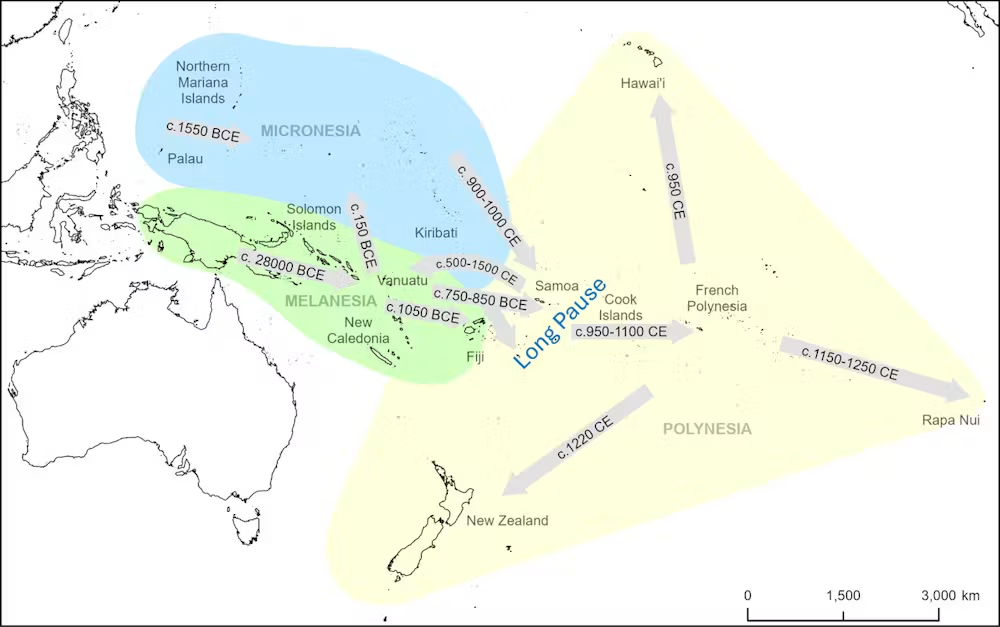
The backdrop to Moana is the mystery of the “long pause”. This was a period when Polynesian ancestors, the Lapita people, sailed east into the Pacific as far as the island archipelagos of Samoa and Tonga, arriving around 3,000 years ago. They brought with them distinct pottery styles and an island-based culture.

Human migrations into the Pacific:

Ancestral Polynesians only moved beyond Samoa and Tonga after a 1,700-year “long pause.” The remaining island archipelagos were then settled rapidly.

Ancestral Polynesians only moved beyond Samoa and Tonga after a 1,700-year “long pause.” The remaining island archipelagos were then settled rapidly. Credit: David Sear

Yet, for the next 1,700 years, there was little voyaging further east. Archaeological evidence suggests that populations in Tonga and Samoa grew and developed their own distinct post-Lapita culture.

Then, between 900 and 1100 AD, ancestral Polynesians suddenly undertook a massive phase of eastward migration. Over the next century, voyagers in huge double-hulled sailing canoes reached Hawaii, Aotearoa (New Zealand), and Rapa Nui (Easter Island). The spread of sweet potatoes around Pacific islands indicates they probably made contact with the continental Americas too.

When European navigators finally arrived centuries later, they were astonished to find even the smallest atolls peopled by communities sharing deep cultural and linguistic commonalities.

The mystery of the “long pause”

For generations, anthropologists and historians have debated what ended the long pause. Was it new sailing technology able to combat the easterly trade winds? Was it driven by social pressures and growing populations? Or was there a physical, environmental catalyst behind their choice?

To answer this, we have to look at the physical factors that make survival on a Pacific island possible: fresh water and food. As populations grow, resource demands intensify.

While ancestral Polynesians were highly adaptable and accustomed to seasonal droughts, prolonged and severe droughts during times of high population density might mean an island could no longer support its human population. Ultimately, island survival hinges on a single critical resource: rainfall.

Unlocking the climate record

Until recently, scientists lacked evidence from the Tonga and Samoa region of what the climate was like in this critical migration era. But we were able to reconstruct these past changes by analyzing hydrogen isotopes—slightly different forms of the same element—preserved in ancient mud from swamps and lakes.

In the tropics, the isotopic composition of rainwater reflects the amount of rainfall. As algae and plants grow and absorb this water, they lock this chemical signature into molecules that can survive in sediment for thousands of years, providing a natural archive of past rainfall.

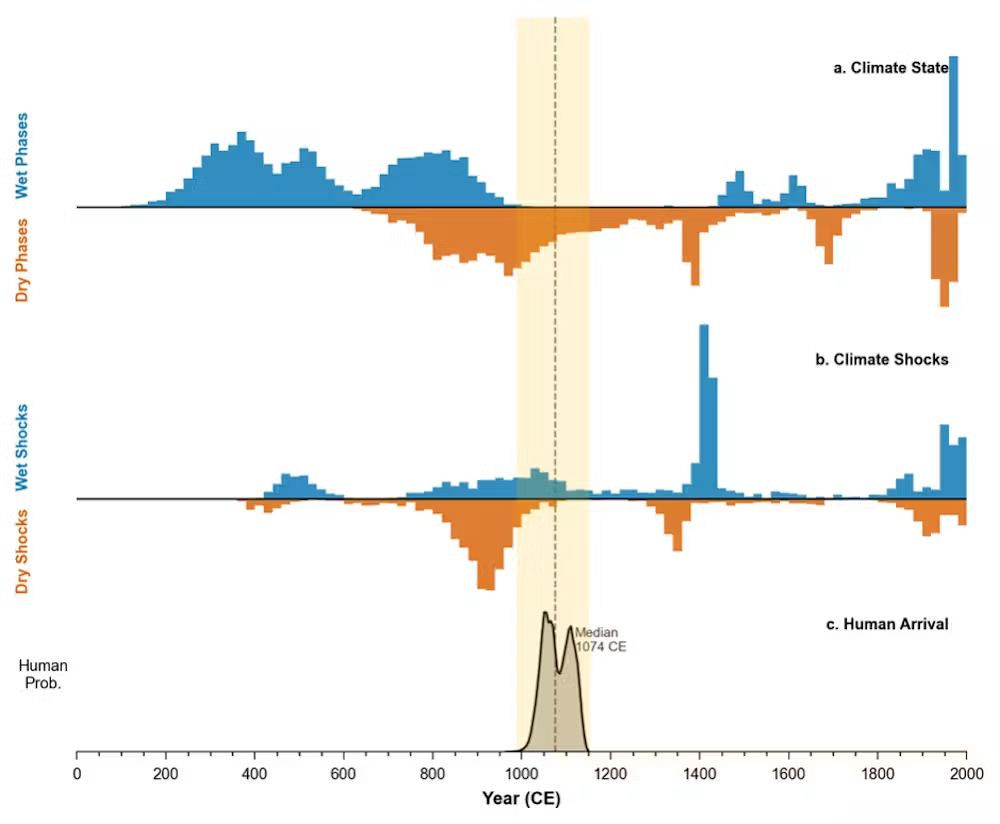
Using this technique, we found evidence of a sustained, severe dry period in the southwest tropical Pacific between 850 and 1200 AD. Our results, recently published in the Journal of Pacific Archaeology, indicate this was the driest period the region had experienced in the past 2,000 years. Crucially, this drought coincided with a time when island populations were larger.

The great migration into the eastern Pacific coincided with a dry climate in the western Pacific:

Humans mostly arrived in the eastern Pacific soon after a dry period (marked orange) of long-term climate conditions further west (top graph) and a series of sudden ‘dry shocks’ (marked orange, in the middle graph).

Humans mostly arrived in the eastern Pacific soon after a dry period (marked orange) of long-term climate conditions further west (top graph) and a series of sudden ‘dry shocks’ (marked orange, in the middle graph). Credit: David Sear

Why would some islands experience a decades or centuries-long drought? Rainfall in the tropical South Pacific depends on the position of the South Pacific Convergence Zone, or SPCZ, a major belt of clouds and rain that shifts east and west over time, driven by patterns of sea surface temperature. Short-term shifts are linked to El Niño and La Niña, but the SPCZ can also move over much longer timescales, bringing decades of unusually dry or wet conditions to different parts of the Pacific.

All this matches up with genetic data that indicates Samoa’s population rapidly increased around 1000 AD, perhaps thanks to the arrival of new people. This suggests several factors aligned—severe climate stress, expanding populations, better canoe technology—to prompt daring exploration eastward.

The story of Polynesian expansion is remarkable in its own right. As Moana introduces new audiences to Pacific voyaging traditions, scientists are continuing to deepen our understanding of the environmental challenges these extraordinary navigators faced—and how they responded with ingenuity, resilience and exploration on an oceanic scale.

David Sear, Professor in Physical Geography, University of Southampton; Manoj Joshi, Professor of Climate Dynamics, University of East Anglia, and Mark Peaple, Research Fellow, Palaeoclimate, University of Southampton. This article is republished from The Conversation under a Creative Commons license. Read the original article.

Qatar, Syria discuss stronger ties, reconstruction, chemical weapons cooperation

0
qatar,-syria-discuss-stronger-ties,-reconstruction,-chemical-weapons-cooperation
Qatar, Syria discuss stronger ties, reconstruction, chemical weapons cooperation

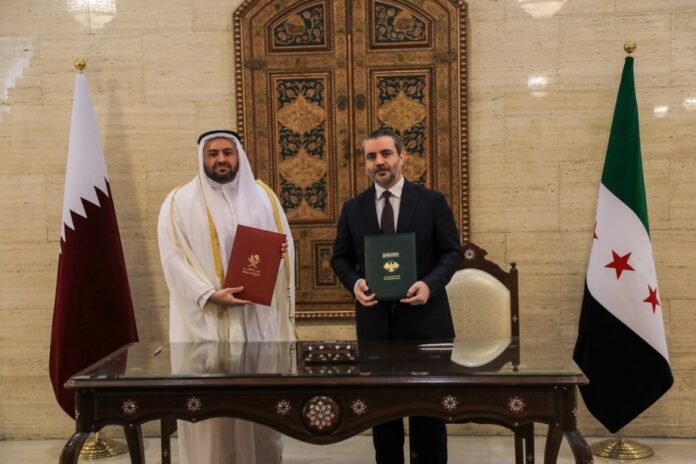
Syrian President Ahmad al-Sharaa and Qatar’s Minister of State at the Foreign Ministry Mohammed bin Abdulaziz Al-Khulaifi discussed bilateral relations and ways to strengthen cooperation between the two countries on Saturday, Anadolu reports.

Al-Sharaa received Al-Khulaifi and his accompanying delegation at the People’s Palace in Damascus in the presence of Syrian Foreign Minister Asaad al-Shaibani, the Syrian Arab News Agency (SANA) reported.

The talks focused on efforts to promote regional openness and cooperation, as well as reconstruction, humanitarian response, and investment opportunities during Syria’s recovery phase, according to SANA.

Separately, Al-Shaibani met Al-Khulaifi at Tishreen Presidential Palace, where they discussed expanding bilateral cooperation, particularly in the political and economic fields.

Qatar’s Foreign Ministry said in a statement that the meeting also reviewed progress on Syria’s chemical weapons file under the existing partnership between Doha and Damascus.

The two sides discussed efforts to support Syria’s implementation of its relevant obligations and strengthen cooperation with the Organisation for the Prohibition of Chemical Weapons (OPCW), the ministry said.

In May, Al-Shaibani announced new progress in dismantling remnants of Syria’s chemical weapons program linked to the former regime after authorities discovered and secured munitions, materials, and equipment used in the production and storage of chemical weapons pending their destruction.

READ: Israeli army launches incursion, sets up checkpoint in southwest Syria

On Thursday, the OPCW Executive Council adopted a decision restoring Syria’s rights and privileges under the Chemical Weapons Convention after some of its membership rights had been suspended in 2021 over violations committed under the former Bashar al-Assad regime.

During the meeting, Al-Khulaifi reaffirmed Qatar’s full support for Syria and pledged Doha’s continued contribution to regional and international efforts aimed at helping the Syrian people achieve development and prosperity.

Following the talks, the Syrian and Qatari foreign ministries signed a memorandum of understanding on cooperation in diplomatic studies and training.

Al-Khulaifi’s visit to Damascus, the duration of which was not disclosed, came less than a week after Al-Shaibani met Qatari Prime Minister and Foreign Minister Sheikh Mohammed bin Abdulrahman Al Thani in Doha.

Relations between Qatar and Syria have gained momentum since the overthrow of Bashar al-Assad’s regime on Dec. 8, 2024, with the two countries expanding official exchanges and cooperation on reconstruction, economic development, and support for Syria’s transitional period.

OPINION: Rouzaina… the true face of Syria

Jordan and Bahrain Drawn Deeper Into Iran’s Regional Storm

0
jordan-and-bahrain-drawn-deeper-into-iran’s-regional-storm
Jordan and Bahrain Drawn Deeper Into Iran’s Regional Storm


Missile attacks, maritime tensions, and the collapse of the June ceasefire are increasing pressure on Gulf governments to balance security with diplomacy

Renewed US-Iran fighting drew Jordan and Bahrain deeper into the regional fallout over the weekend, as Iran launched another wave of missiles and drones toward US military facilities and countries hosting American forces following large-scale US strikes inside Iran.

The latest escalation marked a significant expansion of the fighting that resumed on July 8 and 9, further undermining the memorandum of understanding Washington and Tehran signed on June 17. Iran again declared the Strait of Hormuz closed, while the United States said commercial traffic continued and carried out strikes against Iranian missile sites, naval assets, communications infrastructure, and other military targets.

Iranian attacks and alerts were reported across Bahrain, Kuwait, Qatar, Oman, the United Arab Emirates, and Jordan. Tehran said it was striking US military infrastructure, although many of its claims about specific targets and damage could not be independently confirmed.

The renewed confrontation followed an Iranian attack on a Cyprus-flagged container vessel in the Strait of Hormuz. The ship was seriously damaged and one Indian crew member was reported missing. The United States responded with an extensive series of strikes intended, according to US officials, to reduce Iran’s ability to threaten commercial shipping.

Jordan had already confronted a direct threat during the previous round of fighting. The kingdom’s state news agency, Petra, reported that Jordanian air defenses intercepted and shot down eight missiles launched from Iran toward Jordanian territory on Thursday, July 9, citing a military source at the General Command of the Jordan Armed Forces-Arab Army.

Missile debris fell in several areas, but no casualties or property damage were reported, the source said.

For Jordan, the incident reinforced a message Amman has repeated throughout the conflict: The kingdom is not a party to the war, but it will respond when its airspace, territory, or civilians are threatened.

Jordan has made its position clear: it is not a party to this conflict and will not allow its sovereignty or the safety of its citizens to be compromised

“Jordan has made its position clear: it is not a party to this conflict and will not allow its sovereignty or the safety of its citizens to be compromised,” Mai Anati, managing editor of The Jordan Times newspaper in Amman, told The Media Line.

She said the interception of the missiles “demonstrates the kingdom’s capability and unwavering commitment to defending its airspace and protecting its people.”

Anati said Jordan’s priority remains safeguarding its national security while preventing the conflict from spreading into its territory.

“The kingdom has long maintained a high level of military readiness, with the Jordan Armed Forces fully prepared to confront any threat to national security. However, Jordan’s priority remains preventing further escalation,” she said.

Jordan’s position illustrates the dilemma facing countries within range of Iranian missiles and drones but formally outside the US-Iran confrontation. Amman has sought to avoid being treated as a belligerent while making clear that it will intercept projectiles directed at Jordan or entering its airspace.

Bahrain faces a related but more persistent risk. The Gulf state hosts the headquarters of the US Navy’s 5th Fleet and has repeatedly faced Iranian missile and drone attacks since the conflict began in February.

Manama must contend with both the immediate military danger and the possibility that temporary diplomatic understandings will repeatedly break down while the central US-Iran dispute remains unresolved.

The MOU reduced tensions but did not resolve the underlying strategic causes of the conflict, making renewed escalation a realistic possibility

“In my assessment, the renewed attacks are not surprising,” a former Bahraini diplomat who requested anonymity told The Media Line. “The MOU reduced tensions but did not resolve the underlying strategic causes of the conflict, making renewed escalation a realistic possibility.”

The former diplomat said Bahrain had faced sustained military pressure despite not participating directly in the US offensive and supporting diplomatic efforts to contain the conflict.

“Bahrain has faced hundreds of missile and drone attacks from Iran and its proxies, despite avoiding direct participation in the military campaign and supporting diplomatic efforts to contain the crisis,” he said. “Yet daily life and economic activity have largely continued. Compared with the initial phase of the conflict, both institutions and the public appear better prepared and more resilient.”

The Media Line could not independently verify the number of attacks cited by the former diplomat. It was also unclear whether his estimate referred to individual projectiles, separate attack waves, or incidents involving Iran-aligned armed groups.

Bahrain appears unlikely to abandon its defensive and diplomatic posture in favor of direct military involvement.

“[Bahrain] is likely to continue relying on diplomacy and multilateral engagement, consistent with its role as a non-permanent member of the UN Security Council, including its sponsorship of Security Council Resolution 2817 (2026), which condemned Iran’s attacks against Bahrain and other Gulf states,” the former diplomat said.

The Security Council adopted Resolution 2817 on March 11. Bahrain presented the measure on behalf of the Gulf Cooperation Council, and it passed by a vote of 13-0, with China and Russia abstaining.

The resolution condemned Iranian attacks against Bahrain, Kuwait, Oman, Qatar, Saudi Arabia, the United Arab Emirates, and Jordan. It also affirmed the affected countries’ rights under international law.

The renewed fighting has again placed the Strait of Hormuz at the center of the conflict. Iran says it has the authority to regulate or restrict traffic through the waterway, while Washington maintains that freedom of navigation must be preserved.

For Gulf countries, the danger extends beyond attacks on military installations or civilian territory. Continued fighting could disrupt shipping, oil and gas exports, supply chains, trade, and foreign investment.

The June memorandum had extended the ceasefire and provided a 60-day framework for negotiations, including arrangements intended to restore maritime traffic. It did not settle the underlying dispute over Iran’s role in administering passage through the Strait or the possibility that Tehran might eventually demand fees from ships.

The former diplomat said further escalation remained likely because Washington and Tehran continue to pursue incompatible objectives, particularly over control of the waterway. Any new ceasefire, he said, would probably be another temporary pause rather than a lasting political settlement.

Iran appears to be trying to pressure Washington by threatening American military facilities and regional partners while avoiding an unrestricted direct confrontation with the United States, he said.

Iran appears determined to sustain pressure on the United States by threatening its strategic presence and partners across the Gulf instead of engaging in direct confrontation

“Iran appears determined to sustain pressure on the United States by threatening its strategic presence and partners across the Gulf instead of engaging in direct confrontation,” he said. “This approach places Gulf states, including Bahrain, on the front line of regional retaliation despite their preference for deescalation and diplomacy.”

Using Bahrain and other Gulf countries as leverage against Washington could further damage Tehran’s relations with its neighbors, he added.

“On the contrary, it risks further damaging Iran’s relations with its Gulf neighbors and deepening regional mistrust,” he said.

The latest exchanges demonstrate that the June memorandum was unable to resolve disputes over the US military presence in the Gulf, Iranian deterrence, the security of Washington’s regional partners, and control of strategic maritime routes.

Diplomatic contacts have continued, including efforts involving Oman, but the ceasefire established in June has effectively collapsed under successive rounds of attacks.

The former diplomat said prolonged escalation would damage regional stability, freedom of navigation, shipping, energy markets, and investor confidence without advancing Iran’s long-term interests.

Jordan and Bahrain represent two aspects of the same regional problem. Jordan is defending its sovereignty while trying to prevent the conflict from crossing its borders. Bahrain is absorbing repeated security pressure while attempting to preserve diplomatic channels and domestic stability.

Neither country has sought direct confrontation with Iran. Both nevertheless remain exposed whenever the US-Iran dispute returns to military action.

The immediate question is no longer merely whether the June understanding will survive. It is whether continuing diplomatic contacts can produce another pause before attacks on regional countries and shipping broaden into a more sustained Gulf conflict.
Portugal launches reform to liberalise rental market, speed evictions

0
portugal-launches-reform-to-liberalise-rental-market,-speed-evictions
Portugal launches reform to liberalise rental market, speed evictions


Portugal’s minority centre-right government has launched plans to speed evictions and bring forward the end of rent controls, prompting criticism from ​tenant groups who say the moves will deepen the housing crisis ‌that the government aims to solve.

Housing Minister Miguel Pinto Luz said late on Thursday that the reform sought to promote contractual freedom and boost landlords’ confidence in the rental market, “encouraging ​more property owners to bring homes onto the market”.

The government estimates ​that more than 250,000 empty homes remain off the market due ⁠to what it describes as “deep legal uncertainty” that discourages owners from renting ​them out.

Portugal has around 1 million rented homes, but its rental market is ​dominated by ageing, low-rent contracts: more than 23% are over 20 years old and 13% over 40 years.

Antonio Machado, head of the Lisbon Tenants’ Association (AIL), told Expresso that it was “not morally ​appropriate” to shorten eviction deadlines and argued that the proposed measures would ​do little to tackle Portugal’s housing shortage.

Portugal faces one of Europe’s worst housing crises, with new-lease rents ‌almost ⁠doubling since 2017, becoming unaffordable for many Portuguese.

The reform speeds up evictions by cutting the rent arrears threshold from three months to two and allows evictions of tenants who repeatedly pay more than eight days late.

It clarifies that landlords ​can refuse the ​first automatic renewal ⁠of a lease.

It also brings forward by three years, to end-2026, the expiry of a rent-control measure limiting rent increases ​on new leases to 2% for properties rented out within ​the previous ⁠five years.

Higher-income tenants under 65 will gradually lose rent protections attached to low-rent pre-1990 leases, allowing rents to be updated based on the property’s current value.

The government ⁠will ​send the bill to parliament for final approval, ​but it needs backing from either the Socialists or the anti-immigration, anti-establishment Chega party, neither of which ​has indicated how it will vote.

0FansLike
0FollowersFollow
0FollowersFollow
0SubscribersSubscribe
- Advertisement -
Google search engine

Recent Posts