European Parliament approves €144.1 million in disaster aid for Spain, Romania and Cyprus
he European Parliament on Tuesday approved the release of €144.1 million from the European Union Solidarity Fund (EUSF) to support recovery efforts in Spain, Romania and Cyprus following major wildfires, floods and heatwaves that struck the three countries in 2025.
MEPs adopted the measure by 642 votes in favour, 13 against and one abstention.
Under the approved allocation, Spain will receive €120.55 million, Romania €14.34 million and Cyprus €9.21 million.
According to the European Parliament, Spain and Cyprus have already received advance payments of €30 million and €2.3 million respectively to support their initial recovery efforts.
The funding is intended to help finance emergency response measures, including restoring essential infrastructure and public services, clearing disaster-affected areas, providing temporary accommodation, supporting rescue services and covering other urgent recovery needs.
The Parliament said Spain experienced prolonged drought, intense heatwaves and several major wildfires during 2025, with the most destructive fires beginning in August, forcing mass evacuations and resulting in eight deaths.
Romania was affected by severe flooding in May and June after days of heavy rainfall, causing extensive damage in several regions. The Parliament said floodwaters at the Praid Salt Mine damaged critical infrastructure and led to widespread power outages.
In Cyprus, two major wildfires in July mainly affected the Limassol and Paphos regions, displacing thousands of residents, claiming two lives and destroying nearly 900 private properties. The fires also disrupted education and healthcare services.
The European Parliament said the European Union Solidarity Fund is the EU’s main instrument for post-disaster assistance. Since its creation in 2002, it has provided more than €10 billion in support for 147 disaster events, including 127 natural disasters and 20 public health emergencies across 25 EU member states and six accession countries.
Savannah Guthrie’s Missing Mom Killed in Chilling Cartel-Linked Kidnap Plot?
Savannah Guthrie’s 84-year-old mother may have been targeted in a chilling kidnapping plot tied to organized border-crossing criminals and Mexican cartels, according to a new report.
Nancy Guthrie vanished from her home outside Tucson, Arizona, on Feb. 1, and investigators have been chasing a terrifying theory ever since: that the Today host’s frail mother was snatched as part of a ruthless extortion scheme aimed at wealthy American families.
According to RadarOnline, the case may fit the pattern of a so-called “wrench attack,” a brutal crime tactic in which kidnappers use threats, violence or abduction to force victims or their families to hand over cryptocurrency.
Private investigator Jason Jensen told the outlet that Nancy’s kidnapping may have been carried out by cross-border criminals with cartel backing.
“Cross-border kidnapping has been increasing in Texas, Arizona and New Mexico. It’s a modern version of border raids,” Jensen said. “Savannah Guthrie’s mom lived very close to the border, and everybody knew that Savannah’s mother lived [near] Tucson.”
He added, “It’s likely someone from the cartel thought it would be a great idea to kidnap Savannah’s mother.”
The ransom demands were as cold as they were brazen.
After Nancy disappeared, chilling notes were reportedly sent to several media outlets demanding $4 million in Bitcoin by Feb. 5. When that deadline passed, the demand allegedly jumped to $6 million, with a menacing “or else” warning attached.
Investigators attempted to outsmart the kidnappers by sending $152 to the specified Bitcoin wallet in a maneuver known as “tickling the wire,” hoping the small payment would help them trace the crypto accounts. But the suspects did not take the bait.
The situation later took an even darker turn when the kidnappers allegedly sent an “apology” and demanded $4 million for the return of Nancy’s body.
In May, investigators acted on a tip that Nancy had been buried in a shallow grave. A Mexican volunteer group searched a remote area near Nogales, Mexico, about 70 miles south of Tucson, but no remains were found.
The disturbing case comes as experts warn that cryptocurrency-related abductions are on the rise.
A 2026 report from the crypto security firm CertiK said there has been a 41 percent increase in “wrench attacks.” The term comes from a comic that showed criminals using a wrench to beat a password out of a victim.
CertiK’s report identified Nancy Guthrie as a “proxy target,” meaning she may have been targeted because of her famous daughter and her family’s perceived wealth.
The report also stated that estimated losses across all demand types, including failed demands, ransom payments, frozen funds and recovered funds, reached about $101 million over four months.
For Savannah, the nightmare remains deeply personal.
The Today anchor recently made an emotional plea on-air, begging anyone with information to come forward after another note was reportedly sent to media outlets suggesting her mother had died.
“Somebody knows something,” Savannah said through tears.
Nancy Guthrie’s whereabouts remain unknown, and the case has left investigators, loved ones and viewers across the country asking the same haunting question: who took Savannah Guthrie’s mother, and why?
Armed Israeli Settlers Detained Ro Khanna. He Wants Their Illegal Outposts Demolished.
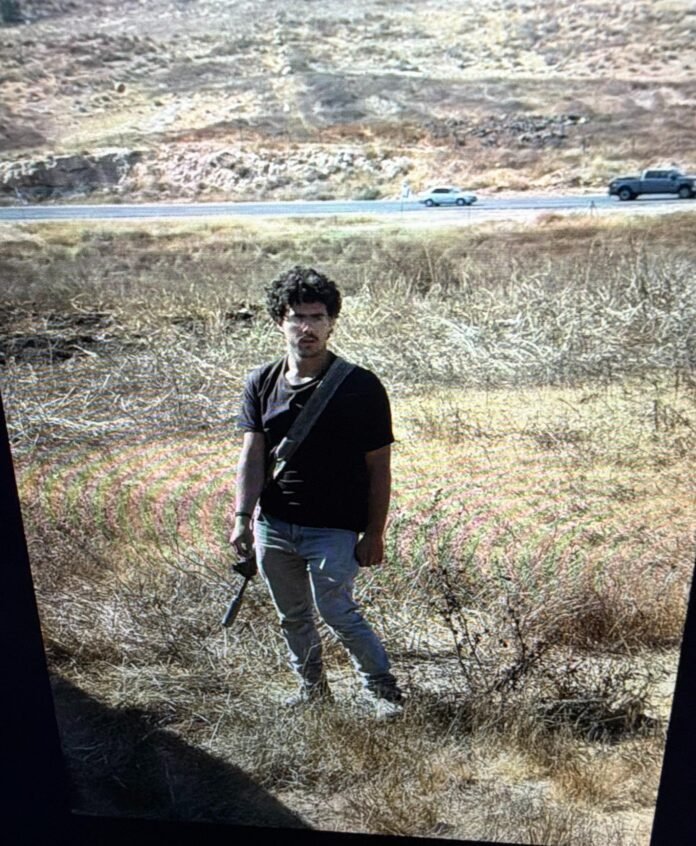
On a hot Wednesday afternoon in the Palestinian village of Zanuta, California Rep. Ro Khanna walked through the ruins of a Palestinian school demolished by Israeli settlers several years earlier.
While standing amid the rubble, one of Khanna’s staffers spotted an Israeli settler wearing a large smile on his face with an assault rifle draped around his shoulder, peering at the group through a broken window.
Khanna and his small delegation of his staffer Cameron Kasky, their driver, and a security guard hurried back into their van, Khanna and Kasky, a Parkland school shooting survivor and former congressional candidate, said in interviews with The Intercept.
Settlers had parked their car directly in front of them, blocking their exit along a narrow dirt road that juts from Highway 60 with rocky slopes and dry grass on both sides.
Over the next 75 to 90 minutes, Israeli settlers, who carried what appeared to be M4 assault rifles, intimidated and harassed Khanna and his group, who felt their fear rising from inside the van. The settlers proceeded to menace the Americans: They prevented the group from leaving the village, brandished their rifles, laughed and yelled taunts at the group, kicked the van’s tires, and wiped down the windows with their hands to gawk inside, recording the group and snapping photos. Khanna and Kasky said their security aide identified the men as members of the Hilltop Youth, an extremist settler group with a history of violent raids, which prompted more concern among the delegation.
A video provided by Cameron Kasky appears to show members of the Israeli military talking with the settlers who had blocked the road to stop Khanna’s delegation from leaving.
“It’s the most powerless I have felt,” Khanna told The Intercept. “They paraded around the van, laughing, smiling, brandishing the M4s. I have not been treated that way in any other country I’ve traveled to, including China. In any place that I have traveled, it’s the most arrogant and humiliating treatment of American citizens I have endured — I was quite shocked.”
“It’s the most powerless I have felt.”
Two white pickup trucks later pulled up and out stepped more armed settlers, according to video and footage reviewed by The Intercept. Later, another vehicle arrived carrying a group of four men and women dressed in green military uniforms, which their security aide identified as Israeli military, Khanna and Kasky recalled. Rather than attempting to resolve the situation, the soldiers joined the group, laughing and talking with the settlers, and at one point, smoking cigarettes together, they said.
Even after the security aide identified the group as an American delegation with a member of Congress, the settlers and soldiers did not budge. “The security person said this is the most concerned he’s ever been, and he’s done tours for decades,” Khanna recalled.
In response to a request for comment by The Intercept, the Israeli military acknowledged that “a report was received regarding Israeli civilians who were unlawfully blocking the vehicles of foreign nationals and members of the media.” The statement directly contradicted Khanna’s and Kasky’s account, with the military claiming soldiers had helped clear the group of settlers.
“Upon receiving the report, IDF troops were dispatched to the scene, quickly dispersed the Israeli civilians, and reopened the blocked road. The IDF soldiers operating in the area did not take part in blocking the road,” the military said, adding, “The identity of the armed individual is currently under review.”
“I’m a Jewish school shooting survivor, and I’m sitting here looking at Jewish kids who have the eyes of a school shooter.”
Kasky, who joined Khanna’s office in January following his own visit to the West Bank and has been working with Khanna on his Israel and Palestine policy, said he was afraid the incident would turn more violent, recalling accounts of settler attacks.
“I was sitting there like, ‘Are the Hilltop Youth about to blow a bunch of holes in our vehicle?’” Kasky remembered saying to himself. “I’m a Jewish school shooting survivor, and I’m sitting here looking at Jewish kids who have the eyes of a school shooter. So it was a very surreal experience for me.”
Harassment of foreign delegations in the West Bank is more rare. In September 2023, European Union diplomats reported harassment by Israeli settlers during a visit. In May 2025, Israeli soldiers fired warning shots toward a delegation of diplomats visiting Jenin, which included officials from the United Kingdom, France, Canada, and Ireland. The last reported instance of harassment toward an American delegation was in 2015, when settlers hurled rocks at diplomats investigating reports of settler attacks in the area.
Members of Congress have visited the West Bank in the past, but Khanna’s run-in with settlers is the first known instance of direct harassment by Israeli settlers toward a sitting U.S. lawmaker.
“Imagine what life is like for ordinary Palestinians who do not have a national platform.”
During the incident, Khanna said he phoned an official in the U.S. Embassy, which urged the group not to escalate the situation. After more than an hour, the group of settlers and soldiers suddenly drove off. Shortly after, Israeli police arrived and instructed the group not to return under threat of arrest.
“I thought to myself, if they can do this to an American member of Congress and to American citizens, imagine what life is like for ordinary Palestinians who do not have a national platform, who can’t just pick up the phone and call the American embassy,” Khanna said.
The recent trip wasn’t Khanna’s first visit to the West Bank. In 2022, Khanna joined a delegation of lawmakers, led by Rep. Nancy Pelosi, D-Calif., and visited with leaders in Israel and Palestinian leaders in Ramallah. Khanna’s remarks praising Israel’s tech industry drew criticism from pro-Palestine advocates, who at the time accused the lawmaker of using the visit as a “photo op” to “whitewash Israeli apartheid.”
Khanna had long branded himself as an anti-war figure. In 2004, he ran an unsuccessful bid for Congress centered around his opposition to the Iraq War. And after being elected to Congress in 2016, Khanna would help spearhead an effort to halt U.S. military support to Saudi-led military intervention in Yemen’s civil war.
Israel, however, remained a blindspot. But since the October 7 Hamas attacks and the start of Israel’s genocide in Gaza, Khanna has evolved from a pro-Israel Democrat who regularly voted to send military aid to Israel into one of its staunchest opponents, especially as he gears up for a potential 2028 presidential run.
Khanna is a co-sponsor to the Block the Bombs bill and in April said he opposes the transfer of all U.S. arms — both offensive and so-called defensive weapons — to Israel. Last month, he attempted to strike a portion of the National Defense Authorization Act that seeks to codify Israel’s joint development of weapons with the U.S. and said he would also urge senators to oppose the pro-Israel proposal. Khanna is also a co-sponsor on the West Bank Violence Prevention Act, which seeks to codify sanctions on Israeli settlers, and in January, introduced a resolution opposing the expansion of settlements. In his war powers resolution against the Iran war, he said in June 2025, “U.S. involvement in Israel’s war with Iran is a red line.”
After the run-in with Israeli settlers, the congressman put a finer point on the need to stop arming Israel.
“We’re supplying them the M4s that they’re using to detain American citizens,” he said. “We’re supplying them the weapons that they’re using to kill Palestinian Americans. We’re supplying them the weapons that they’re using to commit terror on the Palestinian population in the West Bank. It is simply inhumane, and the United States needs to not just sanction these extremist settlers — we need to demand that the IDF start to demolish the outposts in the West Bank.”
“We’re supplying them the weapons that they’re using to kill Palestinian Americans.”
Khanna said he still differentiates between settler outposts and larger, long-standing Israeli settlement communities that function as suburban neighborhoods. While he believes outposts should be dismantled, he said the larger settlements should be subject to a land swap with Palestinians as part of a broader political deal to grant Palestinians sovereignty. Yet he still opposed the expansion of the larger settlements and said U.S. funds should not be used to construct such developments.
As Congress took its summer recess, Khanna took the three-day visit to the West Bank this week at Kasky’s urging. The American journalist Jasper Nathaniel, who extensively covers the West Bank and facilitated Kasky’s previous visit, had invited Khanna to visit and connected the group with local Palestinian residents, businesses, activists, and leaders.
When Khanna and Kasky landed in Tel Aviv on Tuesday, Kasky said Israeli airport security took him to a back office where officers questioned him for 40 minutes while showing him a printed screenshot of his Twitter profile where he had previously written in his bio “Stop funding genocide” and a separate printout of a tweet by a pro-Israel user who had spotted Kasky at Tel Aviv’s Ben Gurion Airport in December 2025. The officials continued to hold Kasky despite Khanna identifying him as a part of his office.
After his release, Kasky said he received notification that the Israeli government had revoked his travel visa.
“I’m probably never going to get into the country again,” he said.
During the wide-ranging trip, the delegation spoke with Palestinian shopkeepers in Hebron, who reported harassment from neighboring Israelis who from the upper floors hurled rotten vegetables and acid, and urinated on their stores below. Mayors of Bethlehem, Beit Sahour, and Beit Jala told Khanna of water shortages and the Israeli military-imposed restrictions on Palestinians from drilling new wells, while Israeli settlers enjoy unfettered access to water. Khanna met with the relatives of Amer Mohammad Saada Rabee, the 14-year-old Palestinian American from New Jersey who was shot and killed by Israeli soldiers in April. Other Palestinian residents, including American citizens, spoke of settlers destroying their cars and raiding their homes. The brother of Awdah Hathaleen, who was shot dead by the Israeli settler Yinon Levi in July 2025, told Khanna how he still sees Levi roam free as Israeli prosecutors mull whether to charge him.
On Wednesday, the same day of the incident with Israeli settlers, Khanna’s group had been held up for more than an hour by Israeli officials in Masafer Yatta, where the Israeli government constructed a large metal gate on the only road in and out of the area. Khanna, who is Hindu and of Indian descent, said he has never been more acutely aware of his identity as when he was in Palestine, with Israeli guards constantly asking about his race and religion.
Khanna — who is a ranking member of the House Armed Services subcommittee on Cybersecurity, Innovation Technology, and Information Systems — urged other members of Congress, especially other ranking members in foreign policy committees, to also visit the West Bank in Palestinian-led visits.
He said he would raise the issue of the settler incident with the State Department and his colleagues in Congress.
“I am convinced that the most pro-Israel candidate — who may dispute my characterization of genocide by legal means, who may disagree with me in my belief of a Palestinian state, who may argue with me about Israel taking preventive measures, in their view, to minimize civilian casualties — even such a person, if they spent one day in the West Bank,” Khanna said, “if they visited the Palestinians side of Hebron, if they visited Um al-Khair, if they visited Palestinian towns and villages in Areas A and B, if they saw the settler’s outpost, they would conclude that it is apartheid, that it is unjust, that it is a perversion of Judaism in any form of civilized human existence.”
A majority of Jewish adults in the United States say they feel less safe than before Hamas’ Oct. 7, 2023, attack on Israel, as separate polling shows that one in six young Democrats in the US have a sympathetic view of Hamas.
About 6 in 10 Jewish adults feel “less safe” as Jews in the US than before the 2023 attack, according to an AP-NORC poll. The figure rises to about 7 in 10 among religiously Jewish respondents.
Roughly 4 in 10 said they are “less likely” to wear, carry or display items identifying them as Jewish. About 3 in 10 said they or someone in their household experienced physical assault, verbal abuse, online harassment or property damage because of their Jewish background over the past year.
About 6 in 10 described prejudice against Jews as an “extremely” or “very” serious problem in the US. Jewish adults with strong emotional attachments to Israel were more likely to hold that view.
The Associated Press-NORC Center for Public Affairs Research surveyed 3,040 US adults from June 11-17, 2026, through NORC’s probability-based AmeriSpeak Panel.
A separate Pew Research Center survey found declining views of Israel, while 13% of Americans aged 18-29 expressed a favorable opinion of Hamas.
This percentage was down from 18% last year and 14% in 2024. Favorable views of the terrorist group stood at 13% among Democrats and 6% among Republicans.
Among Democrats aged 18-29, one in six viewed Hamas favorably, compared with one in nine young Republicans. Support was highest among Muslims at 44%, up seven points from 2024, and lowest among Jews at 2% and white evangelical Protestants at 4%.
The share of Americans holding an unfavorable view of the Israeli people rose from 25% in 2022 to 42%, while favorable views fell from 67% to 52%. Unfavorable views of the Israeli government increased from 43% in 2022 to 62%.
Respondents under 30 favored Palestinians over Israelis, 58% to 32%. Among young Democrats, 72% were pro-Palestinian and 26% pro-Israeli.
The Pew survey questioned 12,574 US adults in May and had a margin of error of 1.3%.
Like a cheat code for your car: We investigate ECU tuning
Anyone who has followed the aftermarket automotive performance industry for long enough can tell you just how dramatically it has changed over the past few decades. What once required mechanical tinkering and a lot of know-how can now be done in mere minutes via an electric control unit (ECU), which can extract significant boosts in horsepower and torque from naturally aspirated, turbocharged, or supercharged engines.
In some ways, though, the process has become much more difficult.
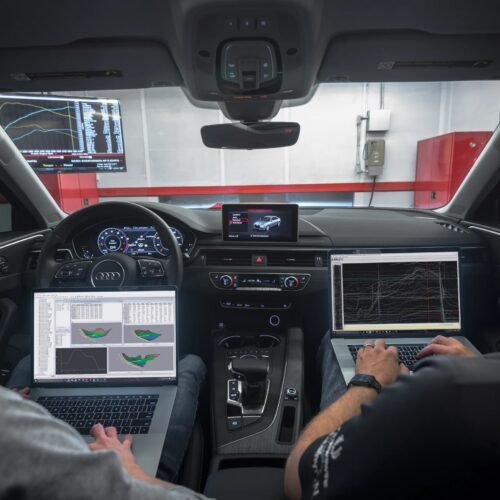
Just ask Alabama-based Audi Performance & Racing, more prominently known as APR. As modern vehicles become increasingly software-driven and OEMs continue to tighten security, the company has had to work harder each year to offer ECU tuning that delivers more power while staying within factory parameters for overall reliability. It’s a far more arduous process now than it was in the early aughts, when my own B5-generation Audi S4 was still fresh on the market.
I recently spoke with APR engineers to discuss the transition and learn more about the fascinating history of ECU tuning—including why unlocking more boost, advanced ignition timing, and other performance gains once felt more like entering a cheat code in a video game.
Simpler times
People have been modifying engine air/fuel ratios and ignition timing since the term “automobile” became commonplace. The early hot rod and muscle car eras stand out as high points, as do the early days of turbocharging.
Fast-forward to the ’90s, and aftermarket tuners were routinely cracking open an engine’s computer, removing the appropriate memory chip, inserting it into a reader, and writing lines of code to a new chip. From there, they could make the changes they wanted: letting the turbo (or turbos) build more boost before dumping it all out the wastegates, adding fuel to accommodate the extra boost pressure, and more.
The EMCS had its own processor and memory, with four times the memory and four engine maps: one for 91 octane fuel, one for 93 or 100 octane, and others, each with its own advantages. Its processor could even tell the ECU to check whether it should use a different map.
How could it do this? As APR Calibration Engineer Chas Gorton explained, around the turn of the century, “Somebody had the bright idea: ‘Hey, we have the cruise control; what if we add a sequence of events that causes that window to move?’ That’s where program switching started.”
Before that, an early version relied on a physical switch on the side of the ECU, a cumbersome setup that meant popping the hood, removing trim, and flipping a switch. Eventually, somebody sat down and reverse-engineered a better solution, Gorton explained.
“What do I have access to, what can I see from this other controller that we just added to the ECU to know when the user is doing something?” Gorton said.
By digging into the system, APR could monitor the state of the cruise control, so it wrote code to change maps, clear fault codes, and perform other functions when a specific sequence of inputs was made via the cruise control stalk.
That’s why it’s like a cheat code—simply perform some basic, easy-to-remember actions while the engine is off, and you can increase the factory boost a few PSI over stock for extra performance or control.
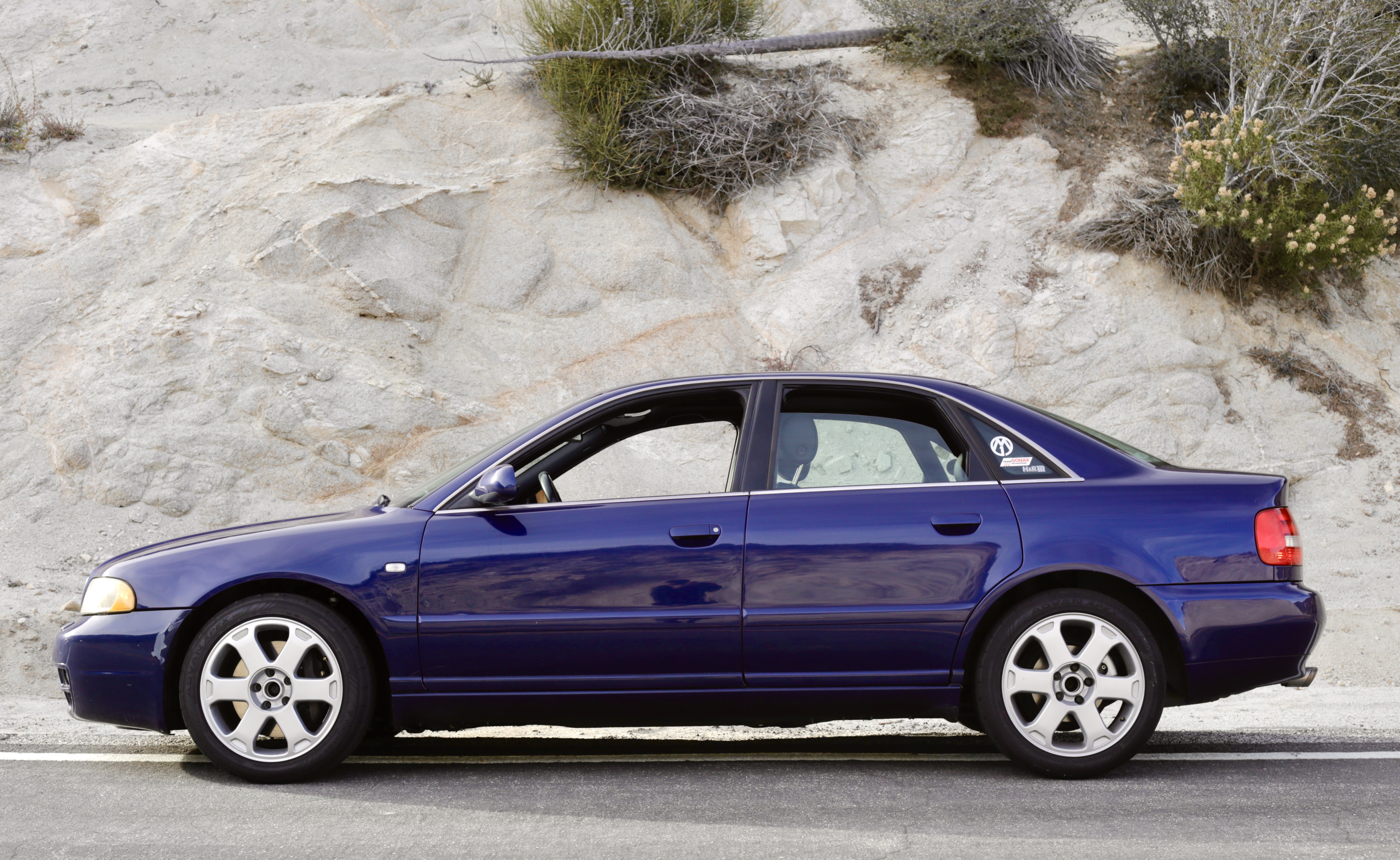
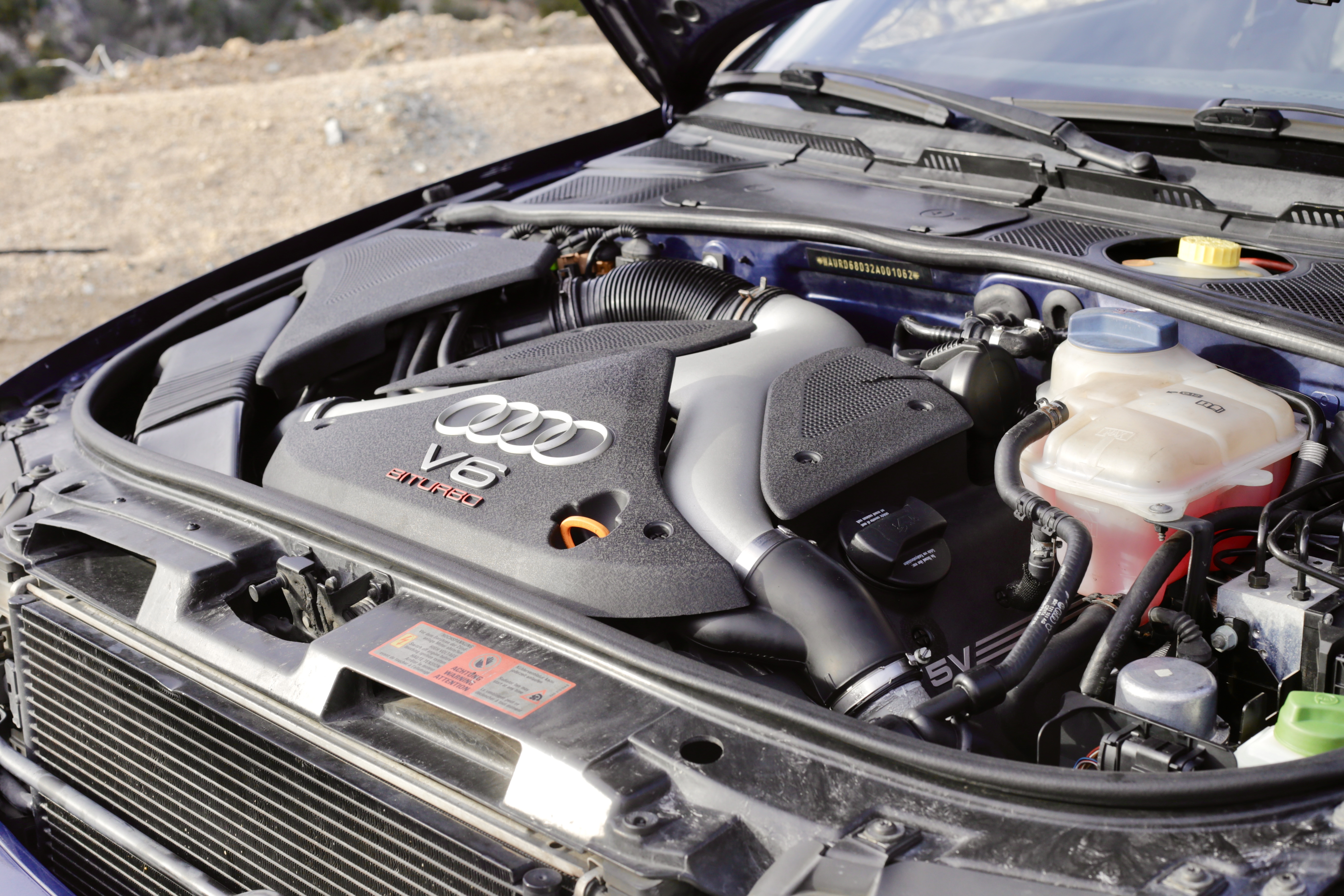
My interest in tuning started when I picked up a used (and presumably very old) APR-chipped ECU for my S4’s twin-turbo 2.7-liter V6. The first map is the factory tune, while the second increases the factory max boost pressure from around 9 PSI to 14.5 (1 bar) on 91 octane. The third map runs 1 bar on 100 octane. Because that fuel resists knock, ignition timing can be advanced quite a bit to take advantage of the boost.
The S4’s engine bay, now with APR power.
Credit: Peter Nelson
The S4’s engine bay, now with APR power. Credit: Peter Nelson
On just the 91 map, my little sedan pulls as it should have from the factory. 250 hp (186 kW) and 258 lb-ft (350 Nm) was respectable for the turn of the century, but come on—this thing has two turbos. The 100 map, on the other hand, pushes it into modern premium sport-compact territory. I have yet to subject it to a dyno test, but I wouldn’t be surprised if output was closer to just over 300 each at the wheels.
After the floodgates
The introduction of the onboard diagnostics (OBD2) port in 1996 not only benefitted consumers and automakers from a serviceability standpoint; it also, in Gorton’s words, “opened the floodgates” for aftermarket ECU tuners. One of the mandates of OBD2 was the ability to update factory ECU software via the port—this also gave tuners an easier way to work their magic.
As Gorton and other APR engineers told me, they technically had the ability to plug in and start making changes as early as 1996, when OBD2 was implemented, but no one had yet figured out the security measures the OEMs put in place. It was still easier to pop the chip out and make changes from the bench, including installing the EMCS when it debuted.
That opened the door for tuners to later make changes as needed via the port. Around 2005, advances in technology meant it was no longer necessary to physically access the ECU, and work could be done directly through the port. By 2008, VW/Audi had significantly tightened security, forcing tuners to return to the drawing board. That’s when the true cat-and-mouse game between OEM security and the aftermarket began.
Beyond security measures, the increasing complexity of OEM software didn’t help, either. It gradually became physically impossible to fit different maps into the system. At one point, it was possible to apply only the changes between maps, but features like radar cruise control and other modern technological amenities put an end to that. Then the software itself was relocated across different areas of the ECU. Over time, the calibration strategy changed significantly.
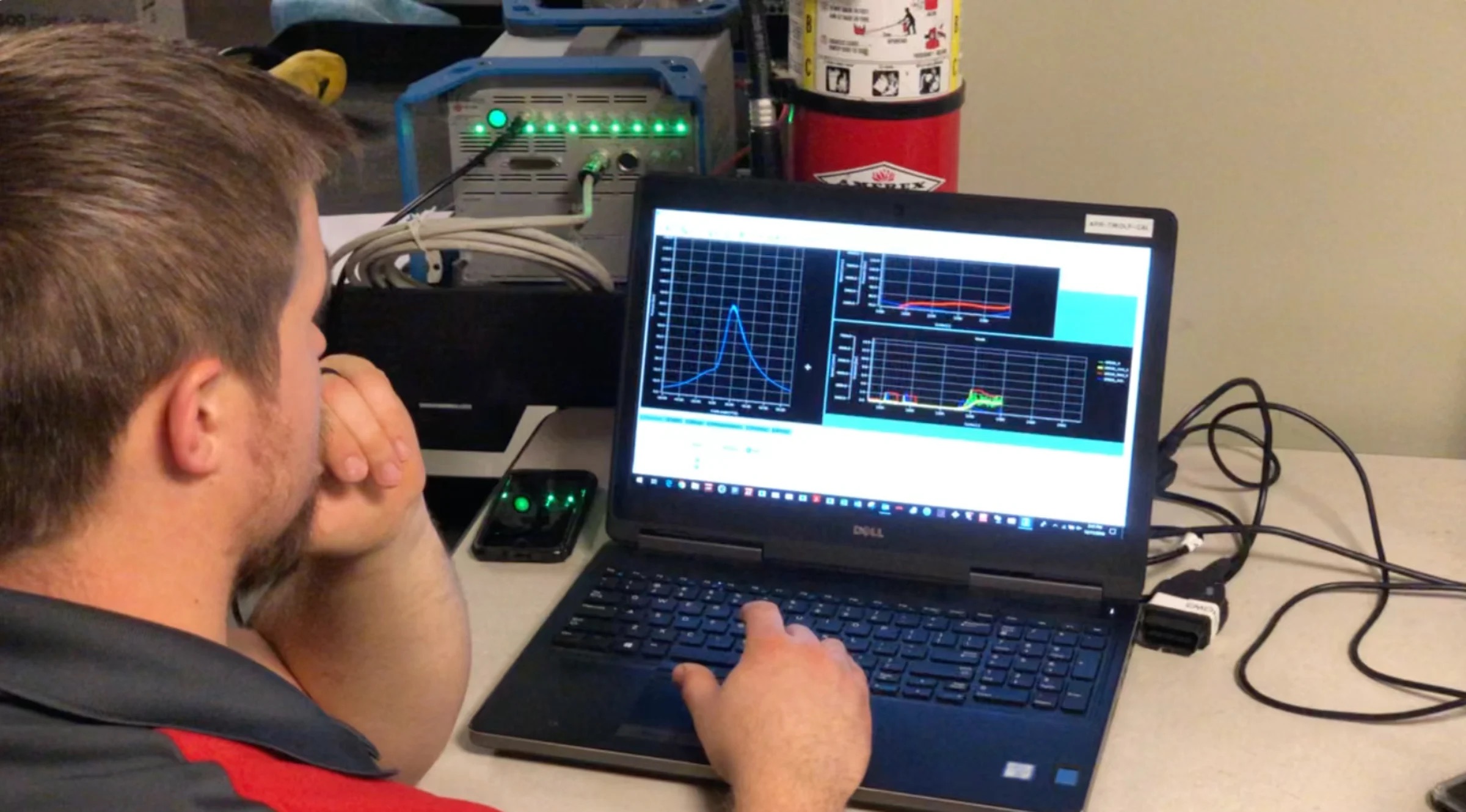
When APR and other tuners are working on a new tune, there are so many unknowns that require extensive poking and prodding. “I can’t even roadmap how many layers of security we have to break through, let alone how long it’s going to take to break through,” said Gorton. “Up until the day it’s released, we honestly don’t know how long we have until it’s ready because there are so many unknowns.”
An APR engineer working on a tune.
Credit: APR
An APR engineer working on a tune. Credit: APR
“The biggest challenge that we run into is that whenever [APR’s reverse engineering team] finds a new vulnerability, 99.9 percent of those end up as a dead-end,” said Jamie Harvey, software engineering manager and powertrain calibration engineer at APR. “And you have to do some serious legwork to get to that dead-end.” That process repeats over and over and can be very disheartening to the team.
“What we have to do is look at how the code executes and goes through its steps and basically look at it at every step along the way and go, ‘Can I make it do something out of the ordinary at that step?’” Gorton said. “And if I can, can I then make the next step do something out of the ordinary that works with that previous step? How do we set up these little blocks to jump on to get around the security?”
Part of the process is to tell the ECU how much data is being flashed, something both Gorton and Harvey described in detail. You’re basically saying, “I’m going to send you a 4 megabyte file and I need you to start here and end here.”
But then there’s the question of whether tuners even need to tell the ECU where the endpoint is—maybe it does the math itself. So what happens if you give it an unusually small or large number? How does it handle bad data at that step, and what does it do with it? “Will it unlock another path that we can use?” Gorton said.
The process is tedious, to say the least.
It can even brick the ECU. As Harvey noted with a chuckle, APR ends up making a lot of “$1,800 lawn ornaments.” He also clarified that the company often holds on to them, as they could potentially be recovered and used for future R&D.
Sheer complexity
Mapping out a safe tune that preserves factory protections, such as fault codes, has always been hard work, but it has only become more challenging as technology has progressed.
This reflects the increasing complexity of modern fuel-injection systems. For the B5 Audi S4, there were only 10 to 15 things that needed adjustment, APR said. By contrast, the 2005 Volkswagen GTI required 90. “Current production stuff? We’re well-north of a couple hundred changes,” said Gorton—about 225 for the 2022 GTI and over 400 for the current Porsche 911 Carrera.
“We’re over 500 on the latest product that’s coming out,” Harvey added. As he explained, turning one knob can cause 50 others to react, so you have to find the sweet spot for each parameter to ensure everything works in harmony.
Factory ECU calibrations are also now global, meaning variables like fuel quality and operation environment must be accounted for in a single file. Tuners often don’t know which parts of the code correspond to their region, so APR says its software is designed to work no matter your location.
Then there are the surprising differences between models that share the same engine, like an 8V-generation Audi A3 and a Mk7-generation VW GTI. Each development team has its own philosophy for how the car should drive and perform.
Torque management is a prominent concern—should the model be tuned to err on the side of efficiency, or should it be more snappy and fun? Those differences make APR’s job harder because even with identical engines, “the two teams came at the same problem from opposite directions, and nothing lines up,” Gorton said.
Modern ECU tuning as a push-to-pass on the track
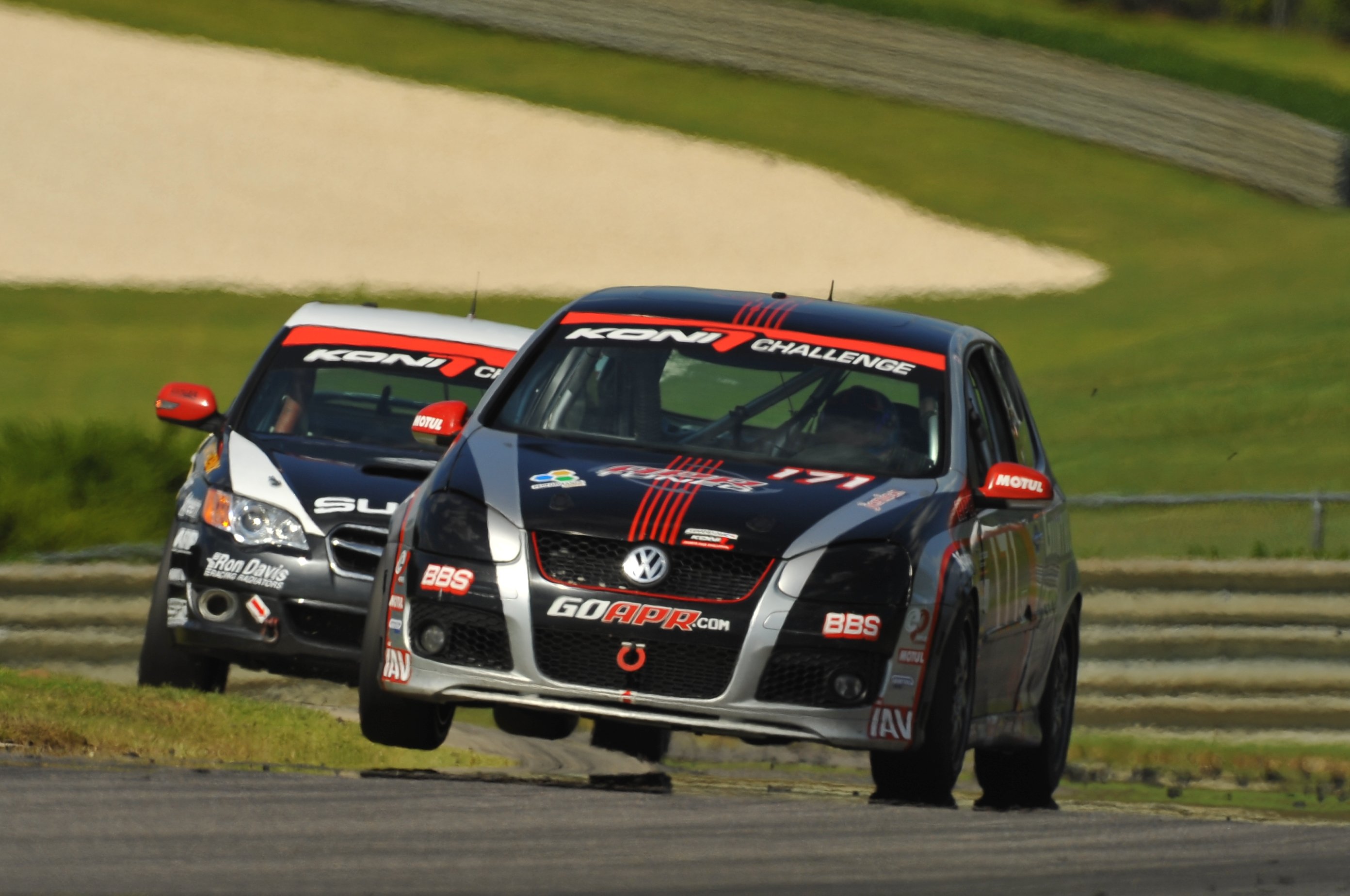
Despite the growing complexity of ECU tuning, it has brought some advantages to motorsports. The first year APR fielded a race team in the Grand-Am KONI Challenge Series (IMSA’s Michelin Pilot Challenge is the modern equivalent), it had a calibration engineer present at every event. “If he needed to, he could make a change to the file in the car to meet the conditions,” Gorton said.
In the second year, the company began adjusting the boost levels. Because of how complex modern ECUs are, you can’t just add a manual boost controller anymore since the system is constantly monitoring conditions and will respond by triggering errors or going into limp mode.
APR’s Koni Challenge race car.
Credit: APR
APR’s Koni Challenge race car. Credit: APR
“One year, we did some creative interpretation of the rules,” said Ian Baas, marketing coordinator and in-house hot shoe at APR (including during the 2008 and 2009 Koni Challenge seasons). “Basically, we were able to put a push-to-pass system in our vehicle that would over-boost it for a certain period of time without actually sending any red flags.”
If a driver had a bad exit out of a corner, they could quickly pull the cruise-control stalk and get a few more PS—and therefore an extra slug of power—for a limited amount of time.
“In order to capitalize on it, you had to have incredibly good boost control by the calibrator,” Harvey added. “Every moment you went over that line, a timer would start clicking every millisecond you were over it. If we didn’t cross that line, that was in reserve for the moment that the driver needed it.”
This level of precision carried over to its street products—APR has long emphasized the effort it has put into its boost control.
Of course, the first time this push-to-pass function was used, it raised some eyebrows. At one event, “I was faster than the GS [meaning, the fastest class] cars,” Baas shared with a laugh. “We were fastest overall in one [practice] session.”
What’s next?
As technology advances, new models arrive, and new powertrains—including hybridized ones—enter the market, giving tuners more software than ever to dig into and modify. But not before breaking through the constantly evolving security measures that OEMs implement.
And even when automakers use the same hardware, each approaches security in its own way. BMWs were once easy to break into and tune, but once that changed, it took tuners a long time to regain entry. The same is true for Ford, which has recently begun implementing more robust security measures. APR’s sister companies under the Holley umbrella have run into the same problems, and while APR can share general approaches to cracking, it can’t provide specifics since the process varies so much by manufacturer.
During our chat, the team understandably couldn’t share details of what’s next. But as Gorton put it, “You gotta keep pushing the envelope. You can’t just sit back and do what you’ve been doing and expect the business to keep growing.”
French court orders town hall to remove Palestinian flag
Palestinian, French and European Union flags fly outside the town hall in Vaulx-en-Velin, an eastern suburb of Lyon, France, on July 11, 2026. [Mathieu Prudhomme – Anadolu Agency]
A French court ordered the town hall of Vaulx-en-Velin, a suburb of Lyon, to remove a Palestinian flag flying from its facade, ruling that it breached the principle of neutrality in public services, Anadolu reports.
The Lyon administrative court, ruling in an emergency procedure brought by the Rhone prefect, ordered the flag to be removed without delay and imposed a fine of 100 euros ($117) for each day of non-compliance.
The Palestinian flag was raised on July 4 during a municipal event and displayed alongside the French and European flags.
READ: Israel deports French journalist over criticism of Gaza genocide
UN probe says mass killings, rapes, abductions, starvation by Sudan force amount to genocide
Sudan’s RSF forces carried out mass killings, abductions of women and girls, mass gang rapes and forced starvation in a city they besieged and captured last year, as part of an intentional policy amounting to genocide, a U.N. probe said.
The Rapid Support Forces, which are battling the Sudanese army in a civil war, committed the crimes in al-Fashir in north Darfur, which they captured last year after a long siege, the U.N. Fact-Finding Mission for Sudan found.
Survivors described to the mission being raped in rooms where bodies of recently killed civilians, including their own family members, were still lying on the ground.
The report found that the RSF and allies committed the war crime of starvation by imposing a prolonged siege on the city, impeding relief supplies, and shelling food production systems.
The RSF has denied such abuses in over three years of civil war, saying the accounts have been manufactured by its enemies and making counter-accusations against them.
The U.N. human rights chief warned on Friday that a similar “catastrophe” was unfolding around another large city, al-Obeid, the capital of North Kordofan state, and that his office had documented patterns of summary executions, abductions, torture and sexual violence in the surrounding region.
Members of the U.N. human rights council on Monday condemned the violence and set up an urgent inquiry,into alleged abuses there.
Britain and other states have warned of a risk of large-scale atrocities as the RSF massed forces around al-Obeid, now home to around half a million people including more than 83,000 internally displaced people.
The fact-finding mission had already concluded in a previous report in February that mass killings of non‑Arab communities when the RSF captured al-Fashir bore hallmarks of genocide.
Its new report said it found additional evidence that the widespread and systematic pattern of conduct of the RSF, including large-scale killings, mass-scale rape and deliberate starvation, was part of an intended policy.
“The patterns we documented in al-Fashir – including encirclement, attacks on civilian infrastructure, restrictions on humanitarian access, and widespread abuses against civilians – serve as a stark warning,” said Mohamed Chande Othman, the mission’s chair.
“The international community must heed these lessons and act to prevent further catastrophe,” he added.
Rocket Report: “Panic” over Transporter availability; Isar to launch from Canada
Welcome to Edition 9.02 of the Rocket Report! Our attention in the coming days turns to Asia, where there are a couple of notable rocket debuts. Up first is the Long March 10B on Friday, a medium-lift rocket with a reusable first stage. After launch this stage will attempt a landing on a recovery ship. Then, as early as Sunday, the private Indian company Skyroot may attempt to launch its first rocket, Vikram-1.
As always, we welcome reader submissions, and if you don’t want to miss an issue, please subscribe using the box below (the form will not appear on AMP-enabled versions of the site). Each report will include information on small-, medium-, and heavy-lift rockets as well as a quick look ahead at the next three launches on the calendar.
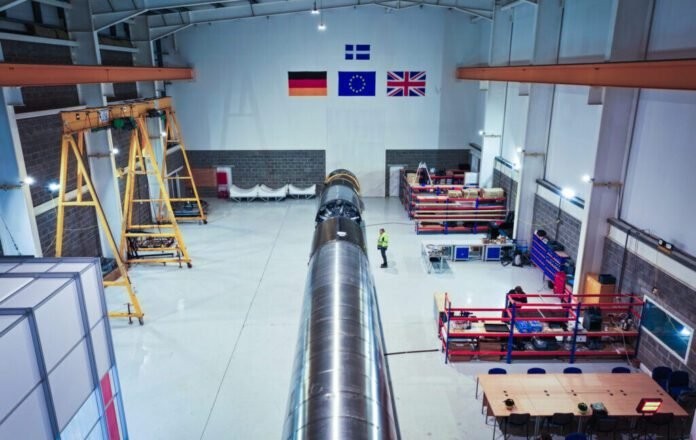
RFA sets launch date for August. Almost two years after an RFA One first stage burst into flames during a static fire test, German rocket-builder Rocket Factory Augsburg is preparing for a second attempt at the rocket’s inaugural flight from SaxaVord Spaceport in Scotland, European Spaceflight reports. The launch window will open on August 10, the Spaceport said in its announcement.
Getting close … The notice did not identify a specific operator, stating simply that it was “one of SaxaVord’s clients.” However, it did provide enough detail to identify Rocket Factory Augsburg as the unnamed customer. Additionally, in April, Rocket Factory Augsburg announced that it was working toward a launch window opening on July 1. However, the company stressed that “there are uncertainties, and the schedule may evolve.” Now, it seems, there is less uncertainty.
Final Pegasus rocket delivers its payload. After flying just once in seven years, the air-launched Pegasus XL booster successfully launched the half-ton “Link” satellite for Katalyst Space Technologies on July 4. The mission is intended to rescue NASA’s Swift satellite by boosting its orbit, Ars reports. An aircraft carrying the rocket and satellite took off from the US Army’s Ronald Reagan Space and Missile Test Range on Kwajalein Atoll, a facility leased from the Marshall Islands. This was likely the final time a Pegasus rocket, first deployed in 1990, would fly.
Why choose a Pegasus booster? … The Swift rescue mission needed to launch into an unusually low-inclination orbit to reach its target. Swift’s orbit is inclined 20.6 degrees to the equator, and the Link satellite would have required a launch on an oversized, more expensive rocket to reach that orbit from a spaceport like Cape Canaveral, Florida. Launching from the equatorial Pacific solved that problem. Over the next several weeks, Katalyst will perform checkout procedures for Link, including assessments of its propulsion, sensor, and navigation systems.
The Ars Technica Rocket Report
The easiest way to keep up with Eric Berger’s and Stephen Clark’s reporting on all things space is to sign up for our newsletter. We’ll collect their stories and deliver them straight to your inbox.
Impulse Space enters military launch competition. This week, the US Space Force brought two more companies into the pool of bidders eligible to compete for its launch contracts—Impulse Space and Relativity Space. For a rocket company, cracking into the lucrative US military launch market is both a sign of maturity, as well as an important source of revenue. The inclusion of Relativity Space, which is making credible progress toward the launch of its heavy-lift Terran R rocket, is perhaps not a huge surprise, Ars reports. But the other company, a provider of in-space propulsion, was.
The Space Force gets creative … Impulse Space is developing a “kick stage” it calls Helios, which can provide up to 9 km/s of delta-V to a payload, rapidly boosting it from low-Earth orbit to geostationary orbit about 36,000 km above the Earth’s surface. Essentially, this allows the company to transform a medium-lift rocket, such as SpaceX’s Falcon 9 vehicle, and give it the performance of a larger and more powerful rocket. Impulse Space will contract with the Space Force to provide end-to-end service, procuring a launch vehicle and then stacking the Helios stage and designated satellite into the payload fairing of the rocket.
Isar inks deal to launch from Canada. Halifax-based Maritime Launch Services Ltd. says Germany’s Isar Aerospace plans to build a dedicated complex for its Spectrum rocket at the Nova Scotia company’s site near Canso, CBC reports. The two-stage rocket is designed to carry small- and medium-sized satellites into space. The German company, which has already established its first launch site in Norway, has created a new Canadian subsidiary, Isar Aerospace Canada Inc.
Launches could begin in a couple of years … Canada does not have the ability to launch satellites on its own and has relied on the United States to get its satellites into orbit. Ottawa has flagged space launches as a key sovereign capability in its new defense industrial strategy. German rockets launching from Canadian soil may be a bridge to that until Canadian companies can develop their own boosters. The spaceport developer, Maritime Launch CEO Stephen Matier, says Isar plans to spend about $100 million as a tenant to make its launch pad ready. Isar will begin construction this year with plans for space launches by 2028.
What’s left for the Atlas V before retirement? The final flight of United Launch Alliance’s Atlas V rocket is still several years off, but an important era for the once-dominant launch company recently came to a close, Ars reports. The final flight of an Atlas V for the Amazon Leo broadband constellation lifted off from Cape Canaveral Space Force Station in Florida last Thursday, sending 29 satellites to orbit to move the network closer to providing initial services. Thursday’s launch marked the ninth Atlas V flight for Amazon Leo and the fourth Atlas V launch in less than three months, hitting a cadence the rocket has rarely seen in nearly a quarter-century of service.
A long goodbye … The surge of launches comes as the Atlas V nears the end of its near-flawless career. Thursday’s launch was the 110th flight of an Atlas V rocket since its debut in 2002. There are six more Atlas Vs in ULA’s inventory to launch Boeing’s Starliner crew capsules to the International Space Station under contract to NASA. But it is not certain today that Boeing will use all six of those Atlas Vs. Last year, NASA reduced the number of guaranteed missions in Boeing’s commercial crew contract from six to four after chronic delays in the program. It would be difficult to source a fairing to use the Atlas V for missions other than Starliner.
ArianeGroup and Beyond Gravity extend deal. ArianeGroup and Beyond Gravity have signed a new contract for the operational phase of Ariane 6, the companies said this week in a news release. The agreement covers the supply of 27 payload fairings for flights 16 to 42 of Ariane 6. Depending on the mission, the European heavy-launcher can be equipped with a short (14-meter) or long (20-meter) payload fairing.
Moving into operational phase … The new contract for the operational phase starts at the end of 2026 and marks the largest to date in the history of Beyond Gravity’s Swiss launch vehicle business. As part of the contract, Beyond Gravity will produce 20 long and seven short fairings. “We are delighted to actively help shape the ramp-up of the Ariane 6 launch vehicle program by supplying key technologies,” Barbara Frei-Spreiter, chief executive officer of Beyond Gravity, said.
Panic setting in over future of Transporter missions? There are growing concerns within the small-satellite industry that SpaceX is winding down its Transporter program, at least using its workhorse Falcon 9 rocket, Space News reports. Several customers of those rideshare missions have previously said SpaceX is not accepting Transporter reservations beyond late 2028 or early 2029. Now a competitor, Rocket Lab, says it has heard the same from its customers.
SpaceX may focus on its own internal needs … “In the last three to six months, the term I would use to describe customer conversations about access to Falcon 9 would be anxiety. There seems to be a panic setting in,” said Adam Spice, chief financial officer of Rocket Lab, on Tuesday. “There’s not as much conviction that Falcon 9 is going to be available for the merchant market out beyond what they’ve committed to the manifest.” He said he expects SpaceX to focus Falcon 9 more on its own internal customers, including Starlink and its future orbital data center system.
ArianeGroup testing more powerful Vinci engine. Details of a previously unannounced test campaign involving an upgraded Ariane 6 rocket engine have emerged in new annual filings, European Spaceflight reports. The corporate filings describe the testing of a 200-kilonewton version of the rocket’s Vinci upper stage engine at DLR’s Lampoldshausen facility in Germany. The upgrade increases the engine’s thrust by around 11 percent, from 180 kilonewtons. The testing was “conducted throughout the year” and included a long-duration test in October that lasted 570 seconds.
Part of Block 2 upgrades … The upgraded Vinci engine is being developed under a European Space Agency contract. Evidence from a September 2022 ESA Space Transportation Proposal presentation suggests that the adaptation of the engine was part of a 357.6 million-euro Ariane 6 Product Adaptations Element approved at the agency’s Ministerial Council meeting in 2022. The more powerful upper stage engine is part of a suite of upgrades included in the Ariane 6 Block 2 configuration. This upgrade package also includes the more powerful P160C solid-fuel boosters introduced in June and a lighter upper stage structure.
Falcon 9 sets new reuse record. SpaceX broke another rocket reuse record Thursday morning when it launched its most-flown Falcon 9 booster for a 36th time, Spaceflight Now reports. It flew in support of the Starlink 10-42 mission, which added another 29 broadband Internet satellites to the company’s low-Earth orbit constellation. SpaceX currently has more than 10,700 Starlink satellites in orbit.
Piling up milestones … SpaceX’s most-flown booster, B1067, began flying in June 2021 with the company’s 22nd Dragon flight as part of the Commercial Resupply Services-2 contract with NASA. It went on to fly the Crew-3 and Crew-4 missions as well as 24 batches of Starlink satellites. A little more than eight minutes after liftoff, B1067 landed on the drone ship, A Shortfall of Gravitas, positioned in the Atlantic Ocean. This was the 160th landing for this vessel and the 635th booster landing to date for SpaceX.
Rockets may be starting to dictate satellite design. It wasn’t easy to find anyone outside of SpaceX clamoring for a rocket like Starship just 10 years ago. Today, the space industry can’t wait for Starship to finally deliver. With a payload capacity of more than 100 metric tons (220,000 pounds) to low-Earth orbit, SpaceX’s new rocket is changing the thinking of just about everyone in the space industry. Included in this is a reversal of how things usually go in the balance of supply and demand between launch vehicles and satellite operators, Ars reports.
Rack ’em like pancakes … Rocket designers have long engineered their vehicles to match trends in the satellite industry. They designed for their customers’ needs, or at least for what their customers were telling them they needed. But in 2026, a new era of abundant super-heavy-lift launch promises to unlock entirely new applications for satellites and new designs. Notably, one trend is toward flat-packed, stackable satellite architecture. For example, Muon Space, a satellite manufacturing startup, announced earlier this month that it is developing a new high-power satellite design to take advantage of Starship’s payload accommodation.
Blue Origin will seek to raise private capital. The rocket company founded by Jeff Bezos, Blue Origin, is raising private capital, Ars reports. Bezos is seeking a $10 billion investment in the company, valuing it at $130 billion. Founded in 2000, Blue Origin is seeking to become a global leader in spaceflight, developing a line of super heavy lift rockets, lunar landers, and plans for two megaconstellations. It is seeking to compete in the same areas—launch, telecommunications, data centers from space—as SpaceX.
Seen as likely to happen … In March, Ars predicted that Bezos would likely take on outside investors in the near future in order to compete financially with SpaceX. Even so, the amount Blue is seeking to raise is dwarfed by the $85 billion that SpaceX raised through its initial public offering process earlier this year, and its valuation of approximately $2 trillion. Blue Origin also needs such a plan to compete with the lucrative stock options offered by SpaceX to its employees.
Next three launches
July 10: Long March 10B | Demo mission | Wenchang Space Launch Site, China | 04:10 UTC
July 11: Falcon 9 | Starlink 10-48 | Vandenberg Space Force Base, Calif. | 02:00 UTC
July 12: Gravity 1 | Unknown Payload | Haiyang Oriental Spaceport, China | 02:00 UTC
Actress’s Heartbreaking Final Years: Star Hid Away on Texas Ranch and Feared ‘Aliens’
Shelley Duvall spent her final decades far from the bright lights of Hollywood, living quietly on a 10-acre ranch in Blanco, Texas, where locals claimed the once-beloved star had become increasingly isolated and troubled.
Duvall, best known for her unforgettable role as Wendy Torrance in The Shining, died in 2024 at the age of 75. As the two-year anniversary of her July 11 death approaches, new attention is being paid to the actress’ painful final chapter — one marked by seclusion, strange fears, and a long retreat from the industry that made her famous.
The actress moved to the rural Texas ranching community in the early 2000s after stepping away from acting. For more than 20 years, she largely kept to herself, living a life that was a world away from the red carpets, movie sets, and famous co-stars of her earlier career.
Residents in the area later claimed they had seen Duvall wandering around town alone. According to a resurfaced 2009 interview, some locals alleged she would “mutter” and talk about “aliens living in her body.”
One source claimed Duvall had taken extreme precautions around her property because of her alleged fear of extraterrestrials.
“Shelley keeps her gate locked all the time,” the source said. “She has barbed wire around the fence and said it was to keep the aliens out. She told a friend of mine that she can’t leave the house until the aliens are asleep.”
The source described the situation as “terribly sad.”
Another alleged insider from a local hardware store claimed Duvall once came in asking for supplies to block what she believed was a “portal” on her land.
“One time, she came in and asked for dirt and boards to block up a hole in the backyard because, she said: ‘That’s a portal into another dimension. That’s where the aliens are coming in,’” the insider claimed.
The person also alleged Duvall once said she needed wood because she believed metal hidden inside her bed was being used by aliens to shock her.
Duvall’s struggles became painfully public in 2016 when she appeared on Dr. Phil in an episode that was widely criticized at the time. During the interview, the actress admitted she was “very sick,” appearing to suggest she may have been dealing with mental health issues.
She also made troubling claims about her late Popeye co-star Robin Williams, saying she believed he was still alive and “shapeshifting.” She also spoke about alien “implants” she claimed were inside her leg.
Before her quiet life in Texas, Duvall had built a remarkable Hollywood career. She appeared in films including Annie Hall, 3 Women, Popeye, Roxanne, The Portrait of a Lady, and more.
But no role haunted her public image quite like The Shining.
Duvall later described the 1980 horror classic as her “most difficult” and “almost unbearable” role. For years, rumors swirled that director Stanley Kubrick had pushed her to the edge while filming the psychological thriller. Jack Nicholson even alleged that clumps of her hair had fallen out during the production.
“From May until October I was really in and out of ill health because the stress of the role was so great,” Duvall said in the book The Complete Kubrick. “Stanley pushed me and prodded me further than I’ve ever been pushed before.”
In 2002, around the same time she moved to Texas, Duvall walked away from acting entirely. Her Hollywood absence lasted more than two decades.
Then, in a surprising final act, she returned to the screen one year before her death. Duvall’s last role was as “Mama” in Scott Goldberg’s 2023 psychological horror film The Forest Hills.
It was a brief return for a star whose life had taken a heartbreaking turn far from Hollywood — a woman remembered for her wide-eyed vulnerability on screen, and for the lonely, complicated years she spent out of the spotlight.
Volkswagen Group tells its board how to fix it, unions disagree
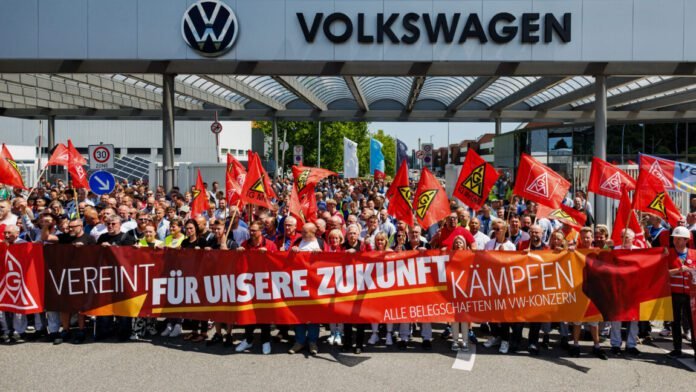
Volkswagen Group is doing well with electric vehicle sales in its home region, but costly tariffs and eroding market share in China and North America have been hurting it badly. Europe’s largest automaker, which also owns brands including Audi, Porsche, Skoda, and Lamborghini, has seen its profit margins evaporate, and yesterday the company’s supervisory board was presented with a plan to ameliorate that. An expected call for factory closures and redundancies wasn’t included—at least not in VW Group’s public statement—but according to Reuters, the measure failed anyway in a 12-7 vote.
Unlike most automakers, worker unions are extremely powerful at the VW Group. Half of the 20 seats on the supervisory board are appointed by worker councils. Another two seats are spoken for thanks in part to the company’s partial ownership by the German state of Lower Saxony—currently held by that state’s minister of education and minister-president. So while profit has been important, it’s not the only thing that matters to the decision-makers.
Over the years, there have been lengthy fights over any suggestion of redundancies. Lately, VW Group and its unions spent months in negotiations in 2024 before finally agreeing to a plan to cut 35,000 jobs by 2030.
That number had scaled up to 50,000 by this March, as the extent of its problems continued to grow. Then, in late June, a German magazine reported that now, 100,000 jobs would go by 2030, along with the unthinkable: closing four German factories, something that has never been done in its history.
However, Volkswagen’s public statement on the restructuring plan makes no mention of job losses or factory closures—at least not directly.
But it does call for a heavily edited model lineup, with half as many vehicles offered across all its brands. These will be “concentrated on the most attractive market segments,” VW Group says, which probably means mostly crossovers, now as beloved by European car buyers as their counterparts in the US. To make things simpler for the factories, “offering complexity—for example, the number of available equipment options—will be reduced by up to 75 percent.”
The proposal also details a mismatch between global demand for VW Group products, at 9 million vehicles a year, and the company’s annual capacity to build 10 million vehicles a year (although it notes that VW has reduced its capacity by 2 million units since COVID).
So while the plan doesn’t explicitly say VW will cut jobs and shutter plants, it does involve building fewer cars with less differentiation to them, something that sounds like it’s less labor-intensive.
Or did. Assuming Reuters’ sources are correct, it’s time for Blume and his colleagues to think of something else.




![Palestinian, French and European Union flags fly outside the town hall in Vaulx-en-Velin, an eastern suburb of Lyon, France, on July 11, 2026. [Mathieu Prudhomme - Anadolu Agency]](https://i0.wp.com/www.middleeastmonitor.com/wp-content/uploads/2026/07/AA-20260711-41952708-41952707-FRENCH_COURT_ORDERS_REMOVAL_OF_PALESTINIAN_FLAG_FROM_VAULXENVELIN_TOWN_HALL-1.jpg?fit=920%2C613&ssl=1)