32.7 C
London
Wednesday, July 8, 2026
Home Blog

El Niño is here, and it’s already scrambling fisheries throughout the Pacific

0
el-nino-is-here,-and-it’s-already-scrambling-fisheries-throughout-the-pacific
El Niño is here, and it’s already scrambling fisheries throughout the Pacific

We’re not even one month into “super” El Niño, the natural Pacific weather pattern characterized by warmer than average sea surface temperatures, and fisheries around the world are already getting scrambled.

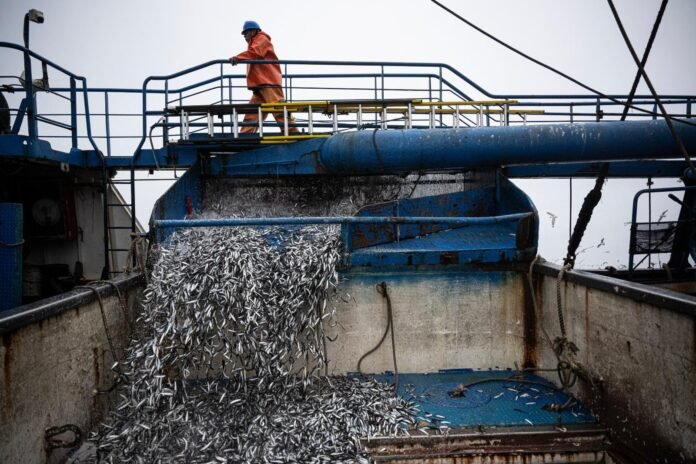
In Peru, government officials have effectively canceled the fishing season for anchovies, one of the country’s most important exports and a leading source of fish oil and animal feed globally. The Indian government is preparing for a season of smaller, less plentiful Indian mackerel. Meanwhile, in Southern California, recreational and commercial fishers have reported some of the most successful months of tuna fishing they’ve ever seen. 

The divergent situations show how El Niño can create winners and losers across the fishing industry, decimating some species while making others easier to catch. For fishers, the result is instability, with many forced to consider seasonal diversification. And consumers can expect fluctuations in the price of key fish products.

“People are worried,” said Juan Carlos Sueiro, an economist and fisheries director for the nonprofit Oceana Peru. As climate change is expected to drive more frequent, stronger El Niños, “our vulnerability is increasing.” 

El Niño is a weather phenomenon that happens every two to seven years in the tropical Pacific Ocean. It was named by Peruvian fishers who, hundreds of years ago, noticed periodic fluctuations in their catches, with huge declines occurring every few years around Christmas. They called it El Niño, after the baby Jesus.

The reason it has such disparate impacts on different fisheries has to do with the way it moves around ocean water. 

Under normal conditions, trade winds blowing west along the equator move warm water from South America toward Asia. This causes cold, nutrient-dense water to rise up from the depths, a process known as “upwelling” that encourages the growth of tiny algae near the ocean’s surface. During an El Niño, however, weakening trade winds slow or even stop this upwelling. Less algae at the surface means species that depend on it, like anchovies, are forced to search for grub in deeper waters. Not only does this make the fish harder to catch, it can also stress and shrink their populations.

At the same time, those ocean dynamics can boost other fisheries. El Niño often sees warm-water species like the skipjack tuna straying toward coastal waters of the Americas, where temperatures would normally be too frigid for them. Nearer to the shore, these species become easier to catch.

Both of these dynamics affect Peru, where El Niños of the past have both wiped out the country’s anchoveta fishery — the largest single-species fishery in the world — and increased the availability of shrimp, scallops, dolphinfish, and tuna. This spring and summer, coastal El Niño conditions have already strained the country’s anchovies, prompting the government to issue an indefinite ban on fishing for them during the April to July season so their populations don’t fall even further. Humberto Speziani, a Peruvian industrial fishing adviser and former director of the International Marine Ingredients Organization, said vessels equipped with sonar technology have been locating anchovies more than 100 meters below the sea surface. Even if commercial fishers were trying to catch those anchovies, they likely couldn’t — that’s twice the depth that’s reachable using normal purse seine fishing nets.

A fisherman carries a box with fish on a beach in Peru

A fisherman carries a box of fish at Chorrillos beach in Lima, Peru, in April. Luis Robayo / Getty Images

Seafood prices are liable to change, too, due to El Niño’s milder impacts outside the Pacific Ocean. Wild salmon, for example, can get so skinny from a lack of food during El Niño that they’re dubbed “snakes”; their decline in North American coastal waters can lead to higher ex-vessel prices — what fishers receive at the dock — that are then passed down to retail and restaurant customers. And in local Peruvian markets, prices for jack mackerel and corvina have already reportedly doubled, prompting families to buy more chicken instead. Sueiro said the opposite may happen with species like shrimp, whose populations have boomed during past El Niños.

One demographic that is likely to benefit from El Niño is Southern California fishers, who call the weather phenomenon a “special treat” due to higher-than-normal catches of bluefin tuna, swordfish, blue marlin, and other species that usually stay closer to the equator. Even before El Niño was officially declared in June, SoCal’s recreational anglers and commercial fishers were celebrating “unprecedented” bluefin tuna yields; one fishing tracker suggests that nearly 300,000 more of the fish were caught off the California coast during the first half of the year, compared to the same period last year.

“We’ve got yellowfin, we’ve got bluefin, yellowtail, and dorado. What else can you ask for?” the manager of one San Diego-based sportsfishing company said on YouTube at the end of April. “It’s not even May, and fishing’s been red-hot.”
Read Next

Although artisanal fishers in South America often catch more of these species, too, they’re unlikely to fully offset economic losses wrought by El Niño. For one, high winds associated with the weather phenomenon can frustrate shipping vessels, making it harder to reel in additional species. And heavy rainfall can damage onshore infrastructure needed to process marine animals and take them to market.

El Niño-related shifts in fish migration can impact more than fishing economies. High ocean temperatures associated with the weather phenomenon can decimate coral reefs and the species that call them home. They can also cause kelp to deteriorate faster, reducing the amount of underwater oxygen available to maintain healthy ecosystems. And there’s been some research to suggest that shifting fish populations can escalate geopolitical conflict, as vessels stray into other countries’ economic zones.

Arnaud Bertrand, a senior scientist at the French National Research Institute for Sustainable Development, also worries about the Humboldt squid. These animals are an important income source for Peru’s artisanal fishers — they yield half a million tons of catch per year — and they tend to fare poorly during El Niños due to changes in prey availability. “If the Humboldt squid collapses, then you’ll have 10,000 boats that will try to find another resource,” Bertrand said. And because these artisanal fishers are less strictly regulated than commercial enterprises, all those boats looking for alternative species could have “huge, huge consequences for the ecosystem.”

Ultimately, the exact impacts will depend on how this El Niño forms and when its peak arrives. Exceptionally high temperatures in September could signal a more damaging El Niño, on par or similar to the disastrous one that struck in 1982. But even then, it’s hard to say exactly what will happen.

“Each El Niño is different,” Bertrand said, though climate change doesn’t make him optimistic. “With global warming, the worst is the most probable.” 

Another Trump Ceasefire With Iran Crumbles

0
another-trump-ceasefire-with-iran-crumbles
Another Trump Ceasefire With Iran Crumbles


The Trump administration’s phony ceasefire with Iran is over.

Maybe.

“To me, I think it’s over,” President Donald Trump said on Wednesday, referring to a preliminary truce inked in Islamabad, Pakistan, in June. That ceasefire, an American capitulation intended to reopen the Strait of Hormuz — a key oil and gas shipping route whose closure by Iran was wreaking havoc on the global economy — never quite took effect. The price of oil spiked to its highest level in weeks following Trump’s Wednesday remarks.

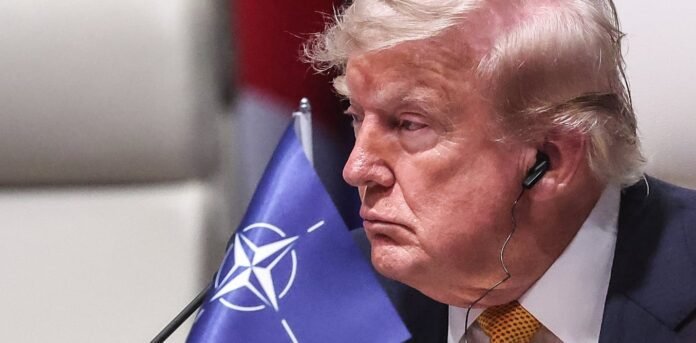
“I don’t want to deal with them anymore. They’re scum,” said Trump, referring to Iran’s leaders, as he wrapped up his trip to the NATO summit in Ankara, Turkey. “They’re cuckoo.” At one point in his remarks, the 80-year-old president claimed that a U.S. warship was attacked by the “the Islamic Republic of Japan.”

The June agreement between the United States and Iran, designed to usher in further negotiations toward permanently ending the war that Trump began on February 28, echoed another faux ceasefire, signed in April, which was also largely a fiction.

Trump’s statement that he “thinks” the ceasefire has concluded surprised one U.S. official, who spoke on the condition of anonymity. “Shouldn’t he know?” the source said.

That official said the Trump administration had mismanaged the conflict and been repeatedly outmaneuvered by Iran, leading to a “twilight state” between war and peace, which has allowed Tehran to fortify its defenses and reconsolidate power. “He must be trying for the record of how many times you can lose the same war.”

An Intercept analysis found that, despite celebrating the June agreement as a victory, the Trump administration failed to achieve any of its war aims. For weeks, the White House has failed to respond to repeated requests for confirmation that the June ceasefire had collapsed and no goals of the war were reached. The White House did not reply to a question on Wednesday concerning the collapse of the ceasefire nor Trump’s claim of an attack by “the Islamic Republic of Japan.”


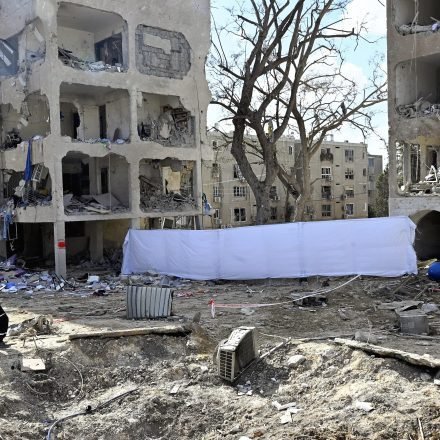
The United States attacked Iran on Tuesday, after reimposing sanctions on Iranian oil sales. U.S. Central Command said that it had struck “over 80 targets with precision munitions as an immediate response to Iran’s latest attacks on commercial vessels transiting the Strait of Hormuz.” Iran did not claim responsibility for Tuesday’s attacks on commercial ships, including a Saudi oil tanker and a Qatari ship carrying liquefied natural gas in waters off Oman’s coast.

CENTCOM also claimed to have attacked “more than 60 Islamic Revolutionary Guard Corps small boats in and near the strait.” U.S. officials have previously claimed to have completely annihilated Iran’s naval forces. “Their Navy is gone,” Trump wrote on Truth Social on April 11, just after the first ceasefire was announced and fell apart.

Mohammad Bagher Ghalibaf, Iran’s top negotiator and Parliament speaker, accused the United States of multiple violations of the June ceasefire agreement, in a Tuesday post. “The era of bullying and extortion is over. It leads nowhere. We don’t fold,” he wrote. Iran’s Islamic Revolutionary Guards Corps said in a statement published on state media on Wednesday, that in response to U.S. violations of the ceasefire, it had attacked 85 U.S. military sites in Bahrain and Kuwait and also shot down an American MQ-9 Reaper drone.

“They’re vicious, violent people,” Trump said during his remarks in Ankara.

During the president’s war of choice on Iran, the U.S. and Israel struck more than 17,000 separate targets in 40 days — a rate of strikes almost unprecedented in modern conflict, according to the civilian harm-monitoring group Airwars. On the first day of the war, the U.S. attacked the Shajarah Tayyebeh elementary school in Minab, killing more than 150 people, most of them children. In the weeks that followed, tens of thousands more civilians would be killed or wounded in U.S.–Israeli strikes, according to World Health Organization estimates. 

The official number of dead and wounded U.S. personnel stands at 426, an almost 11 percent increase since the first ceasefire between the U.S. and Iran was struck on April 8. For months, The Intercept has reported that the Pentagon’s official tally of dead and wounded military personnel from the Iran war is a gross undercount, stemming from what another U.S. government official called a “casualty cover-up.” The Defense Casualty Analysis System, which tracks “deceased, wounded, ill or injured” service members for Congress and the president, is missing hundreds of known American casualties. The true number exceeds 625.

Trump vowed more attacks on Iran at the NATO summit. “I’ll give them a little warning we’re going to hit them hard tonight,” he said. On Monday, Trump threatened attacks on Iran’s civilian infrastructure that would “affect 91 million people,” almost all of them civilians.

“The child-killing and terrorist U.S. military in the early hours of this morning openly violated the ceasefire and violated the Islamabad understanding by launching an airstrike on a number of coastal bases and civilian stations,” the IRGC said in its statement.

CENTCOM claimed to have struck Iranian air defense systems, “command and control networks,” coastal radar sites, and other targets and threatened further attacks. “CENTCOM forces remain postured and prepared to hold Iran accountable when the agreement is not adhered to or obeyed,” the command posted on X.

After previously failing to make good on his pledge to ensure Iran “can never obtain a nuclear weapon,” since Tehran still maintains its stockpile of enriched uranium, Trump said on Wednesday that the U.S. would “de-nuke it.”

The U.S. official laughed when appraised of Trump’s pledge. “What is that supposed to mean?” he asked of Trump’s denuclearization statement. The official said Trump had painted himself into a corner. “There is one word that describes this man and this war: a trainwreck.”

‘Let the people judge me’: how Marine Le Pen and Nigel Farage learned a potent populist tactic from Donald Trump

0
‘let-the-people-judge-me’:-how-marine-le-pen-and-nigel-farage-learned-a-potent-populist-tactic-from-donald-trump
‘Let the people judge me’: how Marine Le Pen and Nigel Farage learned a potent populist tactic from Donald Trump

The European populist right has been at the top of the political agenda in recent days.

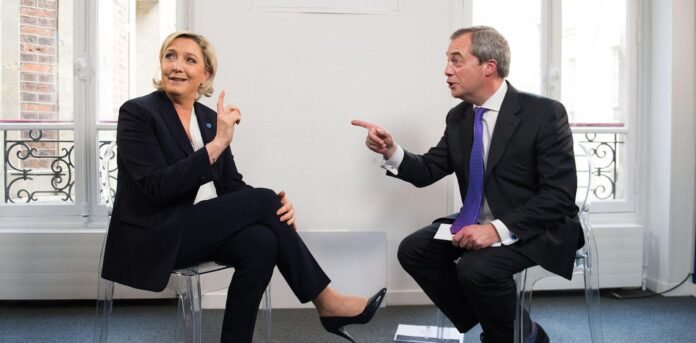
On July 7, everyone in France was waiting expectantly for a Paris appeal court to decide on whether Marine Le Pen, the leader of the Rassemblement National (RN), would be allowed to run in the 2027 presidential election after her conviction for embezzlement of European funds.

But just as the European media machine was gearing up for the verdict, across the Channel, Nigel Farage – the leader of Reform UK – announced on X that he would be making a “statement about his future”. This came after multiple allegations of undeclared gifts and an ongoing investigation into possible money laundering. Farage maintains that he has done nothing wrong.

The parallels were impossible to ignore. Here were two prominent European populist rightwing politicians whose political careers were being threatened by extensive and well-documented corruption claims. How would they respond?

We did not have to wait long to find out. Only hours after the verdict, Le Pen announced that she was now officially a candidate for the 2027 presidential election. Despite the fact that her initial conviction was upheld on appeal, she intends to contest the appeal court’s decision. This means she retains her presumption of innocence and is able to proceed with her election campaign as if nothing happened.

It is a remarkable sleight-of-hand; Le Pen has found the narrowest of legal loopholes through which to pass. In her announcement, she presented her decision as a democratic one: the French people should judge her, not the courts.

In the meantime, Farage told his supporters that he is stepping down from his parliamentary seat of Clacton after being made the subject of a parliamentary inquiry into his alleged improprieties. This will trigger a byelection – but, in an equally remarkable gambling act, he plans to run himself in the hope of winning back his seat. Again, he is suggesting that this means letting the voters decide whether he is guilty or not.


Read more: Why Nigel Farage is resigning as an MP, only to stand again – expert analysis


Le Pen and Farage are both reading from a well-thumbed playbook. The people v the courts; voters v judges; the “transparent” legitimacy of the ballot box v the “opacity” of lengthy legal and regulatory proceedings. All of these tropes will be familiar to observers of populist politics in the United States, Hungary or Turkey.

The bigger question is: do voters care whether populist politicians break the rules? Le Pen and Farage are hoping that, like Donald Trump, they can simply swat aside legal and regulatory processes on the road to their ultimate electoral triumph.

Question of standards

There are many reasons to take Le Pen and Farage’s arguments with a pinch of salt. A closer analysis of the relationship between the populist right and corruption reveals a more complicated picture, perhaps especially in France, which is gearing up for its most important electoral cycle in 2027.

At face value, Le Pen has little to worry about since French politics is famously corrupt. Every French president of the Fifth Republic, except Charles de Gaulle and Emmanuel Macron, has a major corruption scandal to their name. Both Jacques Chirac and Nicolas Sarkozy have been found guilty of corruption by French courts. They have been joined by countless MPs and mayors over the years who have been convicted of similar crimes.

Former French president, Nicolas Sarkozy leaves a Paris court in May 2026.

Former French president, Nicolas Sarkozy, was convicted on charges of criminal conspiracy in 2025 and sentenced to fice years in prison. His case is now subject to appeal. EPA/Yoan Valat

Until recently, this level of corruption was widely tolerated. French voters largely accepted that politicians would embezzle money, employ their family members on the public purse, or swing large public contracts for their benefit. They were more concerned with ideological faultlines than political integrity – and they displayed little of the hand-wringing that accompanied equivalent scandals like Watergate in the US in the 1970s or the “cash-for-questions” affair in the UK in the 1990s.

Yet this tolerance has begun to dissipate in recent years. Public anger towards politicians has reached unprecedented levels, most notably in recent protest movements such as the “gilets jaunes” (yellow vests), and the deep personal hostility many French voters feel towards Macron.

Le Pen and the RN have provided a highly effective electoral outlet for this anger, and they have made much of their commitment to probity in public office. Le Pen even said herself that she would not run for election while wearing an electronic tag, and for many years the party campaigned for politicians found guilty of corruption to be banned from public office for life.

Rocky road to the Elysée Palace

But Le Pen and the RN’s role as standard-bearers of the “ordinary” French person’s rage against a “rigged” and “corrupt” political system is now under threat. By effectively stamping her dynastic authority on the party that was previously run by her father, and by blocking the rise of her young protege Jordan Bardella, Le Pen has boxed herself into a corner.


Read more: Le Pen to run for French presidency despite conviction – her protege Jordan Bardella would make a better candidate


Her only way out is by the ballot box. Yet the chances of her winning the presidential election remain slim. She – and her party – lack the necessary support to win in the second round of the elections where vote transfers from eliminated parties and candidates determine the overall result, and she still suffers from a credibility deficit in comparison to more mainstream politicians.

She may well have made matters worse by giving her opponents a powerful stick with which to beat her. Even in France, accusations of corruption can be hard to shake off. And, as Le Pen and Farage know from long experience, it is just as possible to lose at the ballot box as it is to win.

Aussie gov’t tells volunteers to throw out thousands of functioning test routers

0
aussie-gov’t-tells-volunteers-to-throw-out-thousands-of-functioning-test-routers
Aussie gov’t tells volunteers to throw out thousands of functioning test routers

Last week, thousands of SamKnows routers were bricked after a government program ran its course.

In 2020, as part of a program conducted by the Australian Competition & Consumer Commission (ACCC), the Australian government’s chief competition regulator, thousands of volunteers received routers to help test and report on the typical speed and performance of broadband plans in Australia. (More specifically, the Measuring Broadband Australia (MBA) program targeted fixed-line broadband services provided over the NBN, Australia’s government-owned wholesale open-access broadband network, as well as services delivered over other access networks.)

According to the final report that the ACCC distributed, the routers are whiteboxes that were “supplied by SamKnows” and that “perform tests to measure internet performance using test servers maintained by SamKnows and hosted in Australia.”

Last month, the program concluded, and the ACCC released its final performance report (PDF). Subsequently, the routers used for the program were bricked after June 30.

Ars Technica reviewed a copy of an email that an MBA volunteer received in mid-June informing them that the program would end on June 30, 2026 and further stating:

Service Termination: Your whitebox will be disabled, and your SamKnows One account will be closed.

The email, signed by “The SamKnows Team (part of Cisco),” noted that after June 30, the devices would stop collecting data and that users’ “measurement and registration data will be deleted in accordance with our retention obligations under our end-user license agreement.”

However, as one MBA volunteer pointed out to Ars via email, the routers are still working, making the decision to disable the devices an avoidable e-waste risk.

When asked by Ars, the ACCC didn’t specify the number of SamKnows routers disabled last month. However, in a report about the MBA program released in December 2020 (PDF), the ACCC said it initially expected to release about 4,000 whiteboxes throughout the program’s duration and had distributed “over 2,600″ by December 2020. The report noted that the ACCC retained an “adequate pool of whiteboxes to allow for the expansion of our reporting to cover, for example, emerging [retail service providers] and new speed tier plans.”

Salvageable

The volunteer I emailed with and who asked to remain anonymous due to privacy concerns noted that the whiteboxes run a custom version of OpenWRT, an open source, Linux-based operating system for embedded devices. This means the devices “can easily be reflashed into normal Wi-Fi routers with very decent performance,” they said.

The volunteer added:

I personally reflashed my own device (an operation that requires a soldering iron when you do it without company support), and it is now working great as a Wi-Fi router running OpenWRT. So everything already exists to do this …

Regarding hardware disposal, SamKnows’ email to volunteers reads:

You may unplug your whitebox and we encourage you to dispose of it in an environmentally responsible manner. Free e-waste recycling services can be found at your Local Council & Resource Recovery Centre or your nearest Officeworks, JB Hi-Fi, or Harvey Norman store.

Still, the volunteer I spoke with believes that something better could be done to ensure that thousands of functioning routers don’t become trash.

“It seems a shame to me that these perfectly good devices should all be [disabled] simply because the company can’t be bothered to send out a final firmware update that opens the devices up to end users,” they said.

In a similar study, SamKnows distributed 9,000 routers to volunteers to help test Internet speeds in the US for a report published in 2011. The FCC and SamKnows haven’t publicly stated what happened to those routers.

In an attempt to learn why the routers were disabled, I reached out to SamKnows via the email used to contact MBA program volunteers. Although I received an emailed response saying that my message was “being reviewed,” I never received an answer from SamKnows. I also didn’t receive a response from ThousandEyes, the networking intelligence company that Cisco bought in 2020 and whose website SamKnows.com now redirects to.

When I contacted SamKnows-owner Cisco, a company representative told me, “Per SamKnow’s agreement with the ACCC, all inquiries related to the Measurement Broadband Australia program should be directed to the ACCC.”

It’s unclear whether Cisco had any say in the routers being disabled, even though it may have had the technological capability to help keep them running. Notably, Cisco acquired SamKnows in 2023, six years after the ACCC announced that it would use SamKnows for the MBA program.

I asked the ACCC why the routers were disabled instead of opened up via a final firmware update and for the ACCC’s response to e-waste concerns. A spokesperson sent a statement that didn’t answer those questions and read:

The ACCC delivered the MBA program with SamKnows, its testing provider. The SamKnows “Whitebox” is a dedicated hardware-based device that was provided to a few thousand volunteers accepted into the program. The device was manufactured and supplied by SamKnows and used to measure broadband performance as part of the program. With the conclusion of the Measuring Broadband Australia program, the whiteboxes deployed during the MBA program have been disabled and are no longer operational.

The statement also noted that “volunteers are encouraged to unplug their disabled whitebox and dispose of it in an environmentally responsible manner via free e-waste recycling services.”

The relevant stakeholders appear reluctant to provide a clear explanation of why working routers were bricked when another solution was available. It’s possible that SamKnows/Cisco and/or the ACCC don’t want to be associated with future potential issues or concerns about the routers should the devices be updated for easy, continued use. On the other hand, some tinkerers have already shared details on how to keep the disabled routers working.

Oil jumps over 5% after Trump says deal with Iran ‘over

0
oil-jumps-over-5%-after-trump-says-deal-with-iran-‘over
Oil jumps over 5% after Trump says deal with Iran ‘over


Oil prices jumped ​more than 5% on Wednesday, hitting a two-week high after U.S. President Donald Trump said the ‌memorandum of understanding to end the conflict with Iran was “over”, renewing fears of disruptions to Middle East oil supplies.

Brent crude futures gained $3.82, or 5.15%, hitting $77.98 a barrel at 0832 GMT, while U.S. West Texas Intermediate crude climbed $3.70, or 5.25%, to $74.14 a barrel. The benchmarks are at ​their highest levels since June 23.

Both rose about 3% on Tuesday after the U.S. revoked the general licence ​authorising the sale of Iranian crude.

Speaking ahead of a NATO summit in Ankara, Trump said the ⁠interim pact to end the war that the U.S. and Israel launched against Iran in February was “over”, adding he ​didn’t want to engage with Tehran.

“The latest developments have effectively thrown the future of the 60-day negotiation process into doubt,” ​said Bjarne Schieldrop, chief commodities analyst at SEB.

“In my view, a price closer to $80 a barrel is more consistent with current market fundamentals than $70,” he added.

The U.S. airstrikes were in response to Iranian attacks on three commercial vessels that were transiting the Strait of Hormuz, U.S. Central Command ​said on Tuesday. Iran’s Revolutionary Guards then said they targeted U.S. military sites in Bahrain and Kuwait early on ​Wednesday.

Four oil and gas tankers have reportedly either decided not to transit the strait or been forced to turn around after Iran ‌declared that ⁠the only safe shipping route through the Strait of Hormuz is the one designated by Tehran,” said PVM analyst Tamas Varga.

After the U.S. and Iran signed their truce agreement last month, oil prices tumbled back to pre-war levels and traders amassed large short positions in oil futures, betting that prices would fall further.

Expectations of a wave of pent-up Middle East supply coming ​onto the market caused the ​price declines.

Iran did not ⁠take responsibility for the vessel attacks, but Qatar blamed Iran for them, including one on a Qatari liquefied natural gas tanker, which reported being struck by a drone that caused ​a fire in its engine room.

The attacks renewed concerns about tanker traffic through the ​Strait of Hormuz, ⁠which carried cargoes equal to about one-fifth of global energy supply before the war began in late February.

Since the start of the conflict, nations have drawn down their inventories to make up for the supply shortfall.

U.S. crude oil inventories fell again last week, market ⁠sources ​said on Tuesday, citing data from the American Petroleum Institute. Analysts polled by ​Reuters had expected crude stockpiles to decline by about 2.4 million barrels in the week ended July 3. ,

Source:  Reuters

Have a 401(k)? Help ProPublica Investigate What’s Really Happening to Your Money.

0
have-a-401(k)?-help-propublica-investigate-what’s-really-happening-to-your-money.
Have a 401(k)? Help ProPublica Investigate What’s Really Happening to Your Money.

For some employees, the 401(k) system works great: They have easy access to low-cost funds with high returns. But many participants are stuck in investments with bloated fees and pay for costly advisory services on top — and may never know it because they’ve never scrutinized their plans’ disclosures. (If you’re worried this is you, our questionnaire below explains how you can check.)

As we’ve reported, the Trump administration wants employers to include less-regulated “alternative” investments like private equity and cryptocurrency in 401(k) plans. To make that happen, the administration is changing regulations and pulling back on enforcement of the law that protects participants.

ProPublica is taking this opportunity to investigate these changes and the broader 401(k) system. To do this reporting, we need detailed insight into what’s happening inside plans: what products financial services companies are pushing and what fees they are charging. Many of these details are not made public, but they are disclosed to plan participants. That’s why we need to hear from participants in these plans, employers (particularly small-business owners) and those with expertise in the industry. The more people we hear from, the better informed our reporting will be. 

Note: We are not asking for anything that shows your account balances or personal information. If you have a 403(b) plan and work for a private, tax-exempt organization, we’d also like to hear from you.

Our team may not be able to respond to everyone personally, but we will read everything you submit. We take your privacy seriously. We are gathering these materials for the purposes of our reporting and will contact you if we wish to publish any part. 

If you would prefer to use an encrypted app, see our advice at propublica.org/tips.

Concentration Camps Inside a Concentration Camp: Israel’s New Plan for Gaza | Palestine This Week

0
concentration-camps-inside-a-concentration-camp:-israel’s-new-plan-for-gaza-|-palestine-this-week
Concentration Camps Inside a Concentration Camp: Israel’s New Plan for Gaza | Palestine This Week

In this episode of Palestine This Week, we examine Hamas’s decision to dissolve its government and the wider implications of Trump’s so called peace plan, as Israel moves ahead with proposals for “controlled humanitarian zones”.

In this episode of Palestine This Week, we examine Hamas’s decision to dissolve its government and the wider implications of Trump’s so called peace plan, as Israel moves ahead with proposals for “controlled humanitarian zones”.

We also discuss whether Hamas remains a major threat or has become a convenient justification for continued Israeli domination, before turning to new claims about 7 October, debates over just war theory, Zionism’s erasure of Palestinians, Mike Huckabee’s remarks in Jerusalem and reports that US officials feared Israel was plotting to kill Iranian negotiators.

WATCH: Podcast by Jasim Al-Azzawi with former CIA analyst Larry Johnson & Ray McGovern

Google revamps Android AI dev benchmark, adds Fable 5 and other agents

0
google-revamps-android-ai-dev-benchmark,-adds-fable-5-and-other-agents
Google revamps Android AI dev benchmark, adds Fable 5 and other agents

Code generation is emerging as one of the most popular applications for large language models (LLMs), but not all agents are equally good at all development tasks. Google created a benchmark earlier this year to evaluate how LLMs perform in Android app development, and Android Bench is getting a big update today. The leaderboard now includes a raft of new models, and Google has adopted a new framework that should be easier to use. Developers are invited to run their own tests and submit feedback that could shape the future of Android Bench.

While they are popular coding tools, LLMs don’t get everything right. Separating the useful outputs from straight-up slop means choosing the right tool. Android Bench aims to demonstrate which AI agents do best on a suite of 100 Android development tasks. After launching Android Bench in March, Google has added metrics like cost and efficiency, as well as open-weight models.

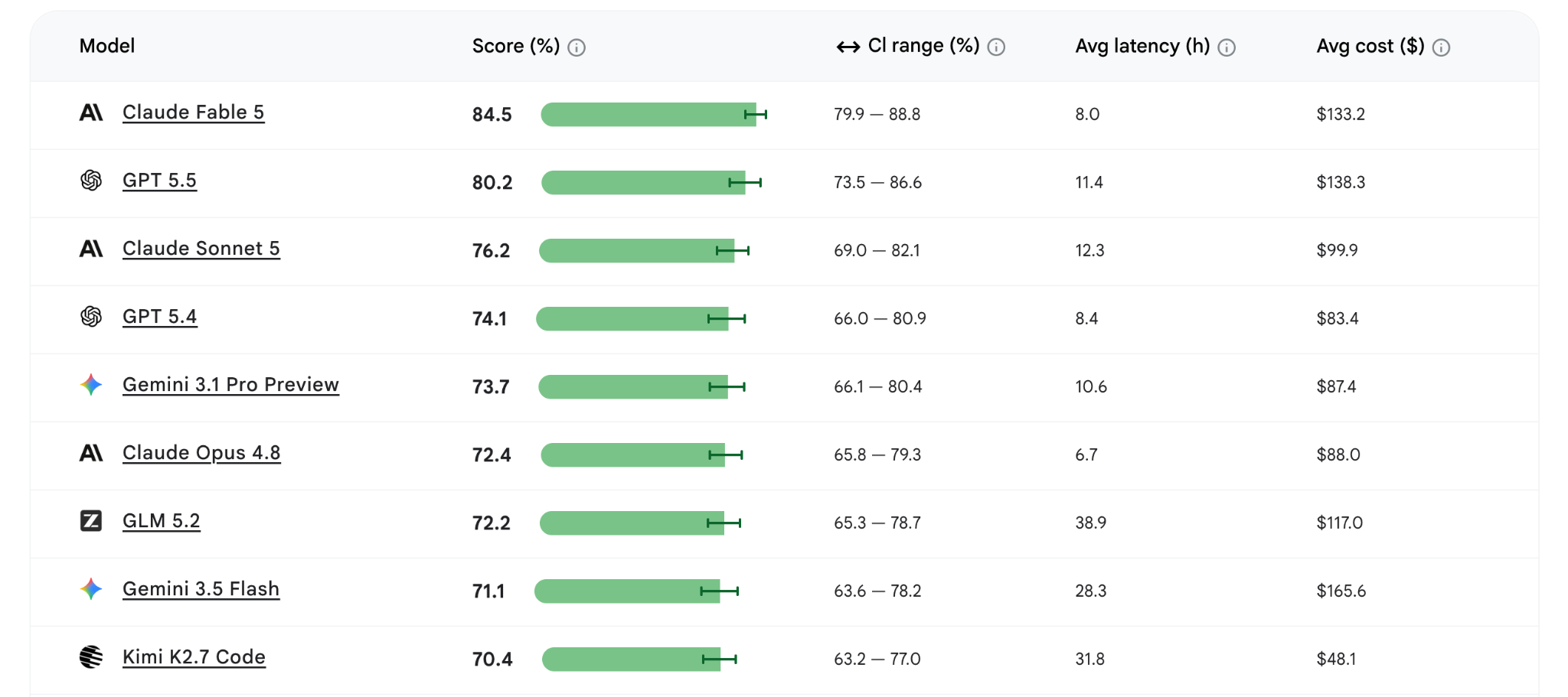
To keep Android Bench relevant, Google is updating the test with eight new models, including all the latest heavy-hitters: Claude Fable 5, Claude Sonnet 5, Claude Opus 4.8, GLM 5.2, Kimi K2.7 Code, MiniMax M3, Qwen 3.7 Plus, and Qwen 3.7 Max.

Even the initial release of Android Bench didn’t have Google’s AI models at the top—OpenAI’s latest LLMs were slightly in the lead. The story is worse for Gemini now that Google has expanded the lineup. In the new leaderboard, Gemini 3.1 Pro is in fifth place, behind GPT 5.4, Claude Sonnet 5, and Claude Fable 5. In fact, Fable 5 lives up to the hype with a sizeable lead at 84.5 percent accuracy in the test.

Google’s updated leaderboard shows Gemini slipping to fifth place.

Google’s updated leaderboard shows Gemini slipping to fifth place. Credit: Google

However, Fable 5 and GPT 5.5 also have extremely high operating costs, chewing through more than $130 in tokens for the 100-problem, 10-run benchmark. Gemini 3.1 Pro didn’t score as high, but it only costs $87 to run the test. Gemini 3.5 Flash, which is supposed to be cheaper to run than other models, has the highest cost on the leaderboard because it took so much longer to complete the benchmark: $165 per run and a 28-hour runtime.

The Android coding performance gap for Google’s models is a problem as the company shifts many of its projects toward agentic development. Obviously, Google would prefer that Android developers use Google’s tools in their workflows, which may be why Google has reportedly been offering to buy application source code from developers for AI training.

Community collaboration

Android Bench is supposed to evolve over time, adopting new workflows to test models. Google hopes that developers will want to contribute to Android Bench by sharing benchmarks and development tasks. To make that more feasible, Google is switching to the Harbor framework. According to the company, this testing sandbox makes it easy for developers to run, evaluate, and share results for Android Bench.

Google re-ran all its previous tests with Harbor to get a new baseline for LLM performance. So there’s been some shift in the previously reported scores even though the underlying tests haven’t changed (yet). The historical data will remain online in an archive.

With the new, easier framework, developers can run their own development tasks against Android Bench and submit those for possible inclusion in the official test. The Android Bench GitHub has been updated with the new dataset and instructions on how to get involved.

Iran ceasefire was always going to break – here’s why

0
iran-ceasefire-was-always-going-to-break-–-here’s-why
Iran ceasefire was always going to break – here’s why

Less than a month after a ceasefire was signed between the US and Iran, conflict has returned to the Middle East. The peace agreement Donald Trump signed at the palace of Versailles in France on June 18 – which he hailed as Iran’s “unconditional surrender” – is now, in the US president’s own words, “over”.

I recently argued that the memorandum of understanding (MoU) between Washington and Tehran was best understood not as a peace agreement but as a “deferred crisis” – a ceasefire with a built-in detonator. That detonator has now gone off.

Trump’s declaration that further talks with Tehran are “a waste of time”, which he made on the sidelines of the Nato summit in Ankara, Turkey, on July 8, follows an escalation spiral that will feel grimly familiar to anyone following this conflict.

Iran attacked three commercial vessels in the Strait of Hormuz on Tuesday. The US responded with what one unnamed US official described as “punishment” strikes on more than 80 Iranian targets and reimposed sanctions on Iranian oil sales – stripping away Tehran’s central gain from the deal.

Iran, in turn, launched retaliatory strikes on US military installations in Bahrain and Kuwait. Oil prices have surged, reviving the very economic pressure – rising prices at the American gas pump – that dragged Trump to the negotiating table in June.

None of this should come as a surprise. The agreement signed at Versailles did not resolve the contradictions that produced the war. It institutionalised them and inadvertently created the very conditions under which escalation becomes more likely.


Read more: The flaws at the heart of Donald Trump’s Iran ceasefire deal


The US has launched fresh strikes on Iran in response to attacks on commercial shipping in the Strait of Hormuz.

The structural flaw in the ceasefire deal was visible from the outset. The MoU rested on Iran reopening the Strait of Hormuz in return for the lifting of sanctions on Iranian oil – almost the only lifeline sustaining the Iranian economy. But nothing in the agreement resolved the question of Lebanon.

Iran had made clear that one of its core objectives was to prevent further Israeli strikes against Hezbollah – an attempt to salvage its proxy network in the region. Israel, for its part, cannot permanently suspend its right to self-defence as the price of a US diplomatic agreement. Reports suggest the Israeli prime minister, Benjamin Netanyahu, was “fuming” over the MoU agreement, which Israel was not party to when it was drafted and signed.

This has produced the cycle now on full display: continued Israeli military action in Lebanon, Iran flexing its leverage over the Strait of Hormuz and US strikes on Iranian assets to save face – even as Washington pressures Israel to stand down. Each iteration intensifies the conviction in Tehran, Jerusalem and Washington that restraint is no longer a viable course of action.

Leaders abandon restraint not simply when threats grow, but when holding back stops feeling like a way of acting at all. Restraint survives only while it seems to be working, points towards a better future and feels like a choice rather than something imposed. When those conditions fail, restraint starts to look like paralysis and escalation becomes the only way of restoring control.

For Trump, all three of these conditions have collapsed. Iran is attacking commercial shipping despite the deal. Oil prices are climbing as the US midterm elections approach. And every Iranian strike demonstrates that Tehran, not Washington, is setting the tempo and direction of the ceasefire. This dynamic is fundamentally unsustainable for the US.

For Netanyahu, this collapse is not a failure but a confirmation of his lack of conviction in the ceasefire deal. Israel never accepted the premise of the MoU. Its security establishment has maintained throughout that the war with Iran was paused, not concluded, and that any framework granting Iranian-backed forces impunity in Lebanon was unsustainable.

Shortly after the deal was signed in June, Netanyahu said that Israel’s “struggle is not over” and its military will “remain in these security zones for as long as necessary to defend our country”.

What comes next

Two scenarios now present themselves and, in both, the Strait of Hormuz decides the outcome. In the first, the US continues its bombardment of Iranian military assets while attempting to keep the strait open by force. This is a formidable task.

Iran does not need to defeat the US Navy to close the waterway; it merely needs to make transit unsafe enough that insurers refuse to cover vessels. Sustained airstrikes may degrade that capacity, but they cannot eliminate it. This raises the question of whether ground forces would eventually be required, though this development would probably be challenged by Congress.

In the second, Trump limits the strikes and uses them as leverage to renegotiate the ceasefire. But this path has its own problem. Without the ability to guarantee free navigation of the strait, it is hard to see how Trump extracts a better deal than the one he has just abandoned – from a belligerent and emboldened Iran that has absorbed enormous punishment and survived.

Either way, Trump’s off-ramps are narrowing. Until Iran loses its leverage over the strait, the cycle we are currently witnessing makes a prolonged conflagration more likely.

Australia-Fiji defense pact likely spurred China’s missile splash

0
australia-fiji-defense-pact-likely-spurred-china’s-missile-splash
Australia-Fiji defense pact likely spurred China’s missile splash

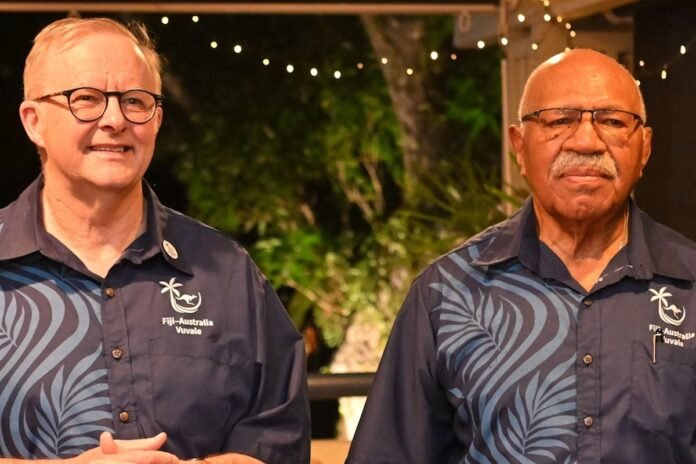
As part of his tour of the Pacific, Prime Minister Anthony Albanese has signed a significant defense treaty with his Fijian counterpart Sitiveni Rabuka.

Called the Ocean of Peace Alliance or Veitacini Treaty, the agreement is the latest step in Australia’s efforts to sign treaties that make it the regional “hub” for its Pacific Island country partner “spokes.” It follows:

New Solomon Islands Prime Minister Matthew Wale has requested Australia negotiate a bilateral treaty (building on their 2017 treaty). Australia is also in talks to make a treaty with Tonga.

Shortly after the agreement with Fiji was signed, China conducted a long-range missile test in the Pacific Ocean. The test provoked criticism from regional leaders, and underscored the need for Pacific Island countries to collectively think through their defense and security arrangements.

There is also much to digest in the Veitacini Treaty, and its accompanying Vuvale Union, which seeks to elevate security, economic ties and people-to-people links.

Youtube video

The signal, and who it’s aimed at

Like the 1951 Australia, New Zealand and United States (ANZUS) Treaty, the security guarantee created by the Veitacini Treaty is largely unenforceable.

Article 6 provides that each party would “act to meet the common danger” of an armed attack in the Pacific on any of the parties. But this comes with the caveat that this action will occur “in accordance with its domestic processes.”

That qualified undertaking is much weaker than the more definite guarantee provided in the NATO Treaty, which states an “armed attack on one” party is deemed to constitute an attack on all parties, and they will consequently “exercise the right of individual or collective self-defense.”

As with the Nakamal Agreement Australia recently made with Vanuatu, the Veitacini Treaty is largely symbolic. Even if the treaty was enforceable, Australia relies on the US to defend it and would struggle to defend Fiji on its own.

Indeed, the symbolism of the Veitacini Treaty is the point. Look beyond the diplomatic platitudes of “friendship” and “mutual respect”, and the treaty is intended to send a signal about Fiji and Australia’s shared concerns about China’s strategic interest in the region.

Rabuka’s remarks at the signing ceremony were telling. He stressed he did not expect “severe pushback” from China, and that the alliance threatens neither country’s relationship with Beijing.

A leader does not repeatedly reassure a country that a treaty is not aimed at it unless everyone understands it is, at least partly, a signal to that country, and to a region watching to see whether Fiji has picked a side.

Questions the region should ask

First, does the Veitacini Treaty encourage the militarization of the Pacific?

Article 12 provides that other Pacific Island countries can request to accede to the treaty if they are “in a position to further (…its) purposes and principles.”

This implies these countries will require militaries, which only PNG, Fiji, Tonga and New Zealand have. It also raises the risk of creating two tiers of security relationship in the region: the deeper integration generated by mutual defence treaties available to countries with militaries, and lesser security cooperation treaties to those without.

This may lead Pacific Island countries to conclude they should develop militaries if they are going to shape the regional strategic agenda. Indeed, it is something Solomon Islands has foreshadowed.

Given the costs, this may entrench dependence on Australia as the main provider of defence assistance. Militaries can also be a mixed blessing: useful in leading disaster responses; risky for internal instability (as Fiji’s 1987 and 2006 military coups demonstrate).

Second, how does an alliance sit with the region’s architecture?

Although pushed by Rabuka, the Blue Pacific Ocean of Peace Declaration was endorsed by Pacific Islands Forum leaders at their 2025 leaders’ meeting as a regional vision. Borrowing its name for a bilateral (for now) military alliance raises the question of who speaks for the Ocean of Peace: the forum, or Fiji and Australia?

With the Forum Secretariat’s headquarters in Suva, and Fiji positioning itself to host an Ocean of Peace Centre under the accompanying Vuvale Union, there is the risk of reinforcing perceptions that Pacific regionalism is already too Suva-centric. This is a longstanding grievance, particularly among Micronesian Forum members.

Third, has Fiji abandoned the regional commitment to “remain friends to all and enemies to none” reiterated in its 2025 National Security Strategy?

Pacific leaders have repeatedly emphasized that they reject “a choice between a China alternative and our traditional partners.” A mutual defense treaty is an unfriendly choice; it is to defend against threats from at least one other country.

Questions Fijians should ask

First, what are the costs of implementation?

Alliance obligations imply interoperability, sustained exercises, and equipping and maintaining forces able to – as Article 6 of the treaty provides – “act to meet the common danger.”

The costs of achieving this are high, as Australia is regularly reminded in its efforts to keep up with the US. Will the Fiji budget stretch to meet these costs, or will it depend on Australian assistance?

The cost of mutual defense is particularly high. Although heavily qualified, a perceived need to make “insurance payments” on an alliance can see a country entrapped into following its ally into wars it wouldn’t choose. This could, in turn, risk entangling the region more broadly.

Second, how does the Veitacini Treaty interact with ANZUS?

Both treaties relate to armed attacks in the Pacific, with Australia as the ally that links the two. What obligations may arise, for example, if Australia responds to an attack on the US in the Pacific (say, on its massive Joint Region Marianas base on Guam), and in turn is attacked itself?

Will Fiji be expected to respond? Has Fiji unnecessarily made itself a strategic target? China’s ballistic missile test may be an unsubtle reminder to Fiji of the potential risks of this approach.

Third, how transparent will implementation be?

The treaty leaves governance to consultation mechanisms that the parties will “determine”. Previous agreements offer little comfort: implementation of the Falepili Union and the Nauru-Australia Treaty has proceeded largely out of public view.

Nor is there any publicly available systematic assessment of whether the 2019 Fiji-Australia Vuvale Agreement (which was renewed in 2023) has delivered.

A good neighbor?

Australia has legitimate strategic concerns about China. But Australia’s response of Pacific treaty-making resembles “sugar-rush” diplomacy: announcements first, hard questions later.

Whether Australia and Fiji can answer these questions in ways that advance Australian, Fijian, and Pacific security will depend on transparency, honest evaluation and genuine deference to the Pacific Islands Forum.

One thing is certain: the region will notice whether Australia behaves like a good neighbor.

Joanne Wallis is professor of international security, Adelaide University and Salote Tagivakatini is a PhD candidate in politics and international relations, Adelaide University

This article is republished from The Conversation under a Creative Commons license. Read the original article.

0FansLike
0FollowersFollow
0FollowersFollow
0SubscribersSubscribe
- Advertisement -
Google search engine

Recent Posts