29.2 C
London
Friday, July 10, 2026
Home Blog

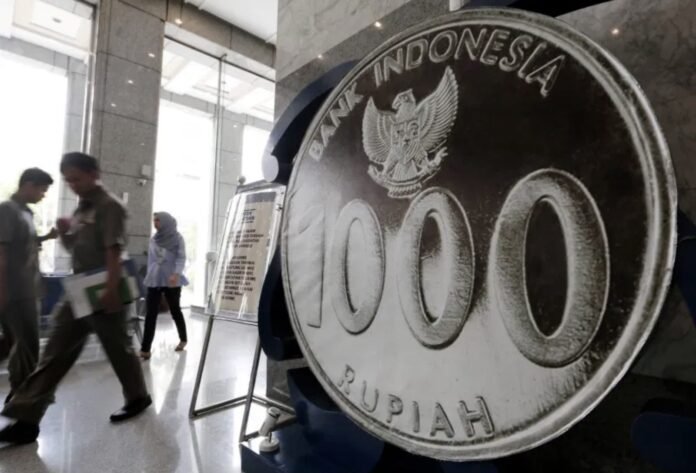
Indonesia is rewriting the emerging-market inflation playbook

0
indonesia-is-rewriting-the-emerging-market-inflation-playbook
Indonesia is rewriting the emerging-market inflation playbook

For over three decades, the standard playbook for taming inflation has remained virtually unchanged.

Faced with surging prices, central banks invariably resort to hiking interest rates. The ripple effects are swift: demand cools, consumption slows and inflationary pressures gradually recede.

This inflation-targeting framework has anchored global monetary policy since the 1990s, proving highly effective—especially when dealing with demand-driven crises. However, the global economy is now grappling with a fundamentally different beast.

Over the past five years, price pressures have been overwhelmingly triggered by supply-side disruptions. First, the pandemic fractured global supply chains. Soon after, the Russia-Ukraine war upended energy and food markets.

Compounding these vulnerabilities are escalating geopolitical frictions — from European theaters to the US-Iran flashpoint in the Red Sea and the critical chokepoint of the Strait of Hormuz. Simultaneously, climate change has begun systematically disrupting agricultural yields worldwide.

In such a chaotic global landscape, aggressive monetary tightening can suppress consumption, but it cannot accelerate harvest cycles, reopen blockaded shipping lanes or pump more crude oil.

This mismatch begs a critical question for emerging Asia: can the burden of inflation control still be left solely to central banks?

Changing face of Asian inflation

Indonesia is currently charting a different course. When state energy firm Pertamina adjusted non-subsidized fuel prices in July 2026, public anxiety over an inflationary spike immediately flared.

These fears were well-founded; rising energy costs inevitably inflate logistics and distribution expenses, creating a domino effect that drives up food and basic commodity prices.

Furthermore, pricier non-subsidized fuel often forces consumers to migrate to subsidized alternatives. If this consumption shift intensifies, it swells the government’s subsidy burden and chokes fiscal space.

Consequently, the brewing pressure is dual-pronged: monetary and fiscal. Left unchecked, this spiral threatens not just consumer purchasing power but national economic growth targets as well.

In response to such headwinds, the standard central bank manual dictates interest rate hikes to anchor inflation expectations and cool demand. While necessary, this toolkit falls short when the root shock lies in production and distribution.

This is where Jakarta’s dual-track approach becomes instructive. Indonesia has not abandoned the Inflation Targeting Framework (ITF). As global energy shocks, a depreciating rupiah and external uncertainties mounted, Bank Indonesia (BI) acted in tandem with its global peers.

Over the past three months, BI has incrementally lifted its benchmark rate from 4.75% to 5.75% — a clear signal of its commitment to currency stability and its inflation target.

Yet, Indonesian policymakers recognize that monetary policy is a blunt instrument against supply-side shocks. Rate hikes can dampen demand, but they cannot manufacture rice, secure horticultural yields, or bring down fuel-driven freight costs.

‘Total football’ strategy

Consequently, Indonesia’s inflation strategy does not stop at the central bank’s door. Alongside monetary tightening, Jakarta has intensified cross-ministerial and inter-regional orchestration through the Central and Regional Inflation Control Teams (TPIP and TPID).

This institutional framework bridges Bank Indonesia, technical ministries, regional governments, the state logistics agency (BULOG) and private distributors. Mirroring the “total football” strategy, the success of this model relies not on a single star player, but on the synchronized execution of all institutional actors.

To be sure, other nations have deployed supply-side interventions. India taps buffer stocks via the Food Corporation of India to stabilize wheat and rice. The US periodically taps its Strategic Petroleum Reserve; and European states have utilized price caps and energy subsidies.

However, Indonesia’s distinct advantage lies in structural integration. In many economies, these interventions are reactive and siloed within disparate ministries.

Indonesia, by contrast, has formalized a institutional bridge linking independent monetary policy with supply-side logistics. The central bank retains its mandate, but it does not fight supply-chain fires alone.

The data underscores the efficacy of this strategy. The Central Statistics Agency (BPS) recorded Indonesia’s annual headline inflation in June 2026 at a manageable 3.34%, with core inflation at 2.76%. Despite fuel adjustments and rising transport costs, anchored core inflation indicates that public expectations remain stable.

Price stability, therefore, is being achieved not merely through demand destruction, but by mitigating cost-push propagation across sectors.

New policy blueprint for emerging Asia

Looking ahead, Jakarta is shifting its inflation strategy from reactive crisis management toward long-term capacity building and food security. The core philosophy is clear: supply-side shocks must be preempted before they manifest in market prices.

This paradigm shift holds profound relevance for the rest of developing Asia. Many regional economies share identical vulnerabilities: heavy reliance on energy imports, acute exposure to climate-induced agricultural shocks, and logistical bottlenecks.

Under these conditions, relying on interest rates as the sole remedy risks inflicting heavy economic pain without curing the underlying disease.

While institutional setups like TPIP and TPID cannot be copied blindly, the underlying principle is a universal lesson for the region: when supply disruptions dominate the economic landscape, inter-agency coordination is just as vital as monetary policy.

In an era defined by trade fragmentation, geopolitical volatility and climate crises, controlling inflation can no longer be judged strictly by a central bank’s ability to manipulate interest rates.

Success now hinges on a state’s capacity to orchestrate monetary, fiscal, agricultural and logistical policies in a unified front. The future of price stability lies beyond mere inflation targeting; it demands inflation governance.

Rabiul Misa is a junior analyst at Bank Indonesia. His work focuses on monetary economics, payment systems, financial inclusion, MSME development and public policy. His commentary has appeared in Kompas.id, Kompas.com, Tribun News, ANTARA News and Kumparan, covering topics including monetary policy, cross-border payments, digital finance, MSME development, and regional economic development.
China temporarily bans helium exports as US-Iran tensions flare again

0
china-temporarily-bans-helium-exports-as-us-iran-tensions-flare-again
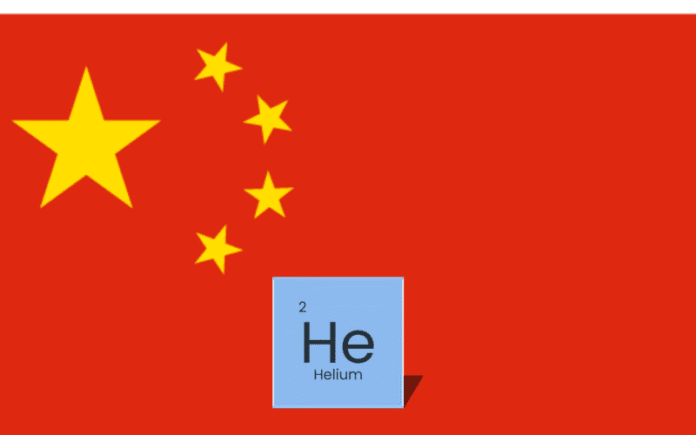
China temporarily bans helium exports as US-Iran tensions flare again


China announced on Friday a temporary export ban on ​helium, effective immediately, as resumption of military conflict in ‌the Middle East threatens to trigger new shortages of the gas critical for chip manufacturing.

Earlier this year, the U.S.-Israeli war on Iran led to helium ​shortages, disrupting companies globally, including in China, where the ​AI industry increasingly relies on domestic chips for training and ⁠running AI models. Helium is essential for heat management in ​semiconductor production.

The helium ban is the latest example of Beijing seeking ​to prevent domestic shortages of critical materials by curbing exports. It has previously imposed similar measures on fuel, fertilisers and sulphuric acid.

China is also looking ​to boost domestic chip manufacturing capacity and reduce the industry’s dependence ​on cutting-edge Nvidia semiconductors that fall under U.S. export controls.

CHINA RE-EXPORTS HELIUM

China is ‌heavily ⁠dependent on overseas helium despite efforts to expand domestic production.

Still, the export ban could squeeze global supply further because Chinese companies have increasingly acted as intermediaries, importing Russian helium and re-exporting some ​volumes to overseas ​markets, including Europe.

Analysts ⁠estimate China imports around 85% or more of its helium requirements. Qatar accounts for a major share ​of global helium output and has supplied more than ​half ⁠of China’s imports in recent years.

Helium is extracted from natural gas fields with unusually high helium concentrations and cannot be quickly manufactured from ⁠other ​industrial processes.

In chipmaking, it is used for ​wafer cooling, plasma etching, chemical vapour deposition, atomic layer deposition, lithography support and leak ​detection.

Source:  Reuters

Prince Harry Left ‘Close to Tears’ as William Turns Cold During Explosive UK Visit

0
prince-harry-left-‘close-to-tears’-as-william-turns-cold-during-explosive-uk-visit
Prince Harry Left ‘Close to Tears’ as William Turns Cold During Explosive UK Visit


Prince Harry’s latest trip to Britain was supposed to spotlight the Invictus Games. Instead, it has turned into another royal mess — complete with legal setbacks, security drama and claims that the Duke of Sussex was left “close to tears.”

Multiple royal experts told Fox News Digital that the royal family is running out of patience with Harry’s emotional battle over police protection in the U.K. And according to one expert, Prince William may be the least moved of all.

A source previously told Vanity Fair’s Katie Nicholl that Harry was “devastated and close to tears” after the U.K. government refused to grant his family police protection outside royal residences. The decision reportedly forced Harry to return to Britain alone on July 6, without Meghan Markle or their children.

Harry is expected to remain in the U.K. through July 11 for events connected to the Invictus Games, including the One Year to Go celebrations for the Invictus Games Birmingham 2027. But the trip has already been overshadowed by the same family rift that has haunted the royals for years.

It remains unclear whether Harry will meet with King Charles during the visit, or whether Meghan and the children will join him later in the week.

“My understanding is that Harry was deeply emotional,” Kinsey Schofield, host of YouTube’s “Kinsey Schofield Unfiltered,” told Fox News Digital. “For the royal family, there is exhaustion. The king is frustrated, Prince William is detached, and the broader family has very little appetite for another round of Sussex drama.”

Schofield described William as the royal family’s “biggest realist,” saying the future king now sees every decision through the lens of protecting the monarchy he will one day inherit.

“That naturally makes him more cautious than sentimental,” Schofield said. “He is a good judge of character, and I’m told he no longer recognizes Prince Harry.”

According to Schofield, Charles and William are approaching the Harry crisis from very different places.

“King Charles still has the instincts of a father,” she said. “William has increasingly had to think like a future king. Those are very different perspectives, and history suggests heirs are often less willing to take institutional risks than reigning monarchs.”

That may explain why William appears to be keeping his distance as the latest Sussex storm plays out in public.

“William, in particular, seems grateful to be removed from the soap opera,” Schofield said. “His priority is Princess Catherine, their children and protecting the peace of his household. We have seen plenty of the Wales family this week, and they look blissful and carefree. They aren’t giving the Harry drama a second thought.”

Harry’s difficult week got even worse shortly after he arrived in London.

On July 7, the Duke of Sussex lost his yearslong privacy lawsuit against Associated Newspapers Limited, the publisher of the Daily Mail and the Mail on Sunday. The case involved Harry and six other claimants, including Elton John and Elizabeth Hurley, who accused the publisher of unlawful information gathering.

The High Court dismissed their claims after finding they failed to prove the allegations.

Associated Newspapers Limited celebrated the ruling as an “overwhelming victory” and a “magnificent vindication.” Harry, however, said the court had denied him the justice and accountability he had been seeking. The publisher has long denied the claims, calling them “preposterous” and insisting its articles were based on lawful sources, including friends, royal aides and publicists.

British royal expert Hilary Fordwich told Fox News Digital that the security dispute and Harry’s “self-inflicted court case” have been deeply stressful for King Charles.

Harry has previously said the litigation became a major source of tension with both his father and brother. By taking the matter to court, he broke with long-standing royal tradition.

“Members of the royal family don’t file such lawsuits, let alone lose on all counts in a highly public court case that Harry himself chose to file,” Fordwich said.

Now, with the case dismissed, Harry and the other claimants are expected to be responsible for court costs.

“Harry initially being in tears wouldn’t be surprising at all,” Fordwich said. “Everything is of his own doing, which must make it even more painful. He chose to leave royal life.”

Royal expert Richard Fitzwilliams was just as blunt, saying Harry’s emotions are unlikely to soften the family’s stance.

“Harry’s emotions are likely to leave the royal family cold,” Fitzwilliams told Fox News Digital.

He also called the trip “an overhyped mess,” noting that it had supposedly been planned for months but still appeared to unravel almost immediately.

“We still don’t know whether he will see his father or, if so, where and with whom,” Fitzwilliams said. “But it’s certain to reinforce William’s belief that his approach — ignoring the Sussexes — is the right one.”

The heart of the latest drama is Harry’s long-running fight for taxpayer-funded police protection in Britain.

Harry and Meghan lost that level of security after stepping back as senior working royals in 2020 and moving to California. The Duke of Sussex has since argued that his family cannot safely visit the U.K. without it.

The security decision is handled by the Executive Committee for the Protection of Royalty and Public Figures, known as RAVEC. Harry was denied the restoration of that protection, and taxpayer-funded security is generally provided only to full-time working members of the royal family on a case-by-case basis.

People magazine previously reported that Harry’s team spent several days trying to arrange enhanced private security before the trip. Palace sources said Harry was initially invited to stay at a royal residence, but declined before later accepting on Saturday.

Harry’s spokesperson told People that an offer for him to stay at Buckingham Palace during his London visit was withdrawn after he had formally accepted it. Palace sources disputed that version, claiming Harry failed to respond by the deadline and that his later acceptance came too late for arrangements to be made.

Harry had reportedly hoped to bring Meghan and their children to Britain for the first time since 2022. But after learning they would receive police protection only while on royal property, and not throughout the trip, it was reported on July 4 that they would not accompany him.

The issue is especially sensitive because Harry has said he wants his children to know their British heritage and have a relationship with King Charles, who continues to undergo cancer treatment.

In a 2025 BBC interview, Harry said he hoped to reconcile with his family because “there’s no point continuing to fight anymore.” He also claimed his father was no longer speaking to him because of the ongoing security dispute.

Harry has long blamed the British press for damaging his relationships and has said the media left him “paranoid beyond belief.” He has also blamed the press for the death of his mother, Princess Diana, and for the coverage of Meghan before the couple quit royal duties.

“They continue to come after me; they have made my wife’s life an absolute misery,” Harry testified in January, choking back tears in the witness box.

But experts say Charles cannot simply step in and overrule the government on Harry’s security, no matter how emotional the situation becomes.

“Constitutionally, the king has no role in this security decision, and Buckingham Palace cannot be seen interfering with government or legal processes,” Schofield said.

Still, she argued that Harry has tied the security fight to something far more personal: whether his children can visit their grandfather in Britain.

“But Harry understands emotional leverage,” Schofield said. “By tying security to whether his children can visit the U.K. or see their grandfather, he creates a narrative in which the palace appears cold, even though the decision is not the palace’s to make.”

According to Schofield, the trip may have only made the royal rift worse.

“This visit has likely deepened the rift because it has once again turned a family issue into a public pressure campaign,” she said. “Instead of building trust privately, Harry’s team appears to brief and litigate through the media. That makes reconciliation almost impossible.”

A source told Vanity Fair that Harry believed bringing his children, along with King Charles making a royal residence available, would lead to the full-time police protection he has been seeking.

“That has not been the case,” the source said. “The king has made it clear that while he wants to see his estranged son and grandchildren, he will not intervene in security matters.”

As the family standoff continues, Schofield said the frustration inside the palace comes down to one central contradiction.

“I’m told there is frustration that he still wants the freedom of private life with the infrastructure of public duty,” she said. “That is the contradiction at the heart of this entire fight. Harry wants the world to believe he left the institution, but not the importance that came with it.”

For now, Harry’s latest homecoming has done little to heal old wounds. Instead, it appears to have reminded the palace just how deep the divide has become — and why William may have no interest in reopening the door.

Is an air-conditioning revolution coming to Europe?

0
is-an-air-conditioning-revolution-coming-to-europe?
Is an air-conditioning revolution coming to Europe?

If you’re reading this while the blinds are drawn against yet another heat wave and wondering whether it’s finally time to buy an air conditioner, you’re far from alone. At the end of June, as temperatures climbed well above 40° Celsius across Europe, shoppers in France literally forced their way into stores to snatch up portable fans and ACs before they sold out. Such scenes are likely to become more common. As the planet warms, the demand for cooling is rising worldwide. The International Energy Agency (IEA) predicts two-thirds of households could own an AC by 2050.

Politicians are, of course, turning ACs into a weapon in their broader culture wars. Far-right figure Marine Le Pen pledged to roll out air-conditioning across France if her party comes to power, while the British Conservatives vowed to overturn net-zero rules that restrict AC installation in new builds. On the left, the argument runs that air-conditioning would mainly benefit the rich and not those who need it most. It would also lock Europe into the same high-energy cooling spiral seen in the US and Asia. To date, only around 20 percent of Europeans have AC at home (and a mere 4 percent in the UK), compared with roughly 90 percent in the US, where electricity is considerably cheaper.

In Europe, air-conditioning is no longer just about comfort. It helps adults stay productive through extreme heat, and children concentrate in poorly ventilated schools. It helps people nod off when the air is still stiflingly warm long after sunset. It can even save lives. One research group estimated that air-conditioning prevented nearly 200,000 premature deaths among people over 65 in 2019 alone.

Europe is warming faster than any other continent, and countries that once had relatively mild summers are now experiencing increasingly frequent and intense heat waves. Research by Nicole Miranda and her colleagues at the University of Oxford suggests that countries such as the UK, Switzerland, Norway, and Finland could see some of the largest relative increases in heat exposure and cooling demand if global warming reaches 2° C above preindustrial levels.

“We will need more cooling to protect people”, says Miranda, a senior lecturer in engineering and carbon reduction manager at the university. “The question is how to provide it in a way that is efficient, equitable, and smart. Not by panic-buying inefficient, energy-intensive portable ACs.”

June’s record-breaking heat wave offered a glimpse of what lies ahead. In northern Europe, homes and offices built to retain heat during long winters turned into ovens. A recent report by the UK’s Climate Change Committee warns that by mid-century, over 90 percent of existing homes could overheat during severe heat waves. Even further south, centuries-old architectural adaptations—such as thick stone walls, white-painted façades, blinds and small windows designed to block the sun—are reaching their limits. People in Europe are already fed up with the extreme heat.

But simply adding more air-conditioning is not necessarily the answer—at least not in its current form. Because air-conditioning is built on a paradox: The machines that keep us cool are also heating the planet. The electricity they consume already accounts for roughly 3 percent of global greenhouse gas emissions, slightly more than the aviation industry. “We expect cooling to become one of the biggest drivers of electricity demand growth worldwide, along with data centers,” says Fabian Voswinkel, an energy-efficiency policy analyst at the IEA. With new units being installed worldwide every minute, electricity demand for space cooling could more than triple by 2050.

Solar power will help cut emissions, but it won’t clear air-conditioning’s bad reputation. Conventional ACs still run on a century-old principle: refrigerants cycle between liquid and gas to pull heat out of rooms and dump it outside. Manufacturers continue to refine the technology, but many of the refrigerants remain problematic. Fluorinated gases, for instance, have a global warming potential thousands of times greater than CO2 if they leak into the atmosphere. The EU therefore introduced a regulation in 2024 to phase them out gradually. “In the next few years, air conditioners and heat pumps using these gases won’t even be able to be sold here”, says Voswinkel. But alternative gases bring their own trade-offs: Propane is highly flammable, while ammonia is toxic.

This impasse has led some scientists and companies back to the drawing board to ask: Instead of searching for a better refrigerant, what if air-conditioning systems didn’t need one at all? Their answer lies in materials that change temperature when exposed to external forces—a field known as solid-state cooling, which could revolutionize how we cool the air around us.

Paul Motzki, professor of smart material systems at Saarland University in Germany, heads an EU-funded scientific consortium focusing on nickel-titanium. When the metal is stretched and released, it snaps back to its original shape, absorbing heat from its surroundings and generating what is known as an elastocaloric cooling effect. In practice, the technology could be used to cool rooms by 5° to 10° C and, according to Motzki, do so even more efficiently than conventional AC systems today. The team is currently testing the prototype in the lab, but expects to deploy it in new buildings within the next few years. If the technology works, it “could lead to disruption, even a paradigm shift, because the technology is so different from established cooling systems,” Motzki says. The group is collaborating with Irish company Exergyn, which is also developing a refrigerant-free heat pump.

Brooklyn-based Mimic Systems has developed a heat pump based on semiconductive materials capable of moving heat in and out of rooms when an electric current passes through. The prototype is being tested in an apartment in Vancouver. Magnotherm, a spinoff from the Technical University of Darmstadt, is using magnetic fields in refrigerators and will test its prototype in a German supermarket chain later this year before taking on air-conditioning. In the UK, University of Cambridge spinoff Barocal is experimenting with flexible plastic crystals that, when squashed and released in a pressurized chamber, release heat. The startup recently raised $10 million in seed funding.

Motzki says Europe is clearly at the forefront in solid-state cooling, including in efforts to bring the technology to market. “I see a major opportunity for Europe to achieve technological leadership all the way through to market maturity,” he adds. “Of course, this will all depend heavily on private capital and public funding.”

Lindsay Rasmussen sees the same potential. At Third Derivative, a climate-tech accelerator founded by the US nonprofit Rocky Mountain Institute, she works with startups such as Mimic Systems and Magnotherm on next-generation cooling. She stresses that solid-state cooling technologies are still in their early stages—promising, but unproven at scale. But “the space can move quickly if the right capital and partnerships are in place.”

The real question is not just whether these new technologies will work, but who will scale them and how quickly. History suggests the path won’t be linear, nor will it necessarily stay in Europe. Solar photovoltaics, for instance, began with research breakthroughs in Europe, moved into commercialization in the US, and ultimately scaled in Asia through vertically integrated supply chains. Solid-state cooling could follow a similar trajectory. As Rasmussen explains, innovations typically leave the lab and startups once they become commercially viable and are picked up by major manufacturers. Today’s cooling market is already dominated by multinational conglomerates such as Daikin and Samsung, which closely track emerging technologies and are ready to move quickly.

As the world rushes to cool itself, one reality risks getting lost: Installing more air conditioners will not, on its own, solve Europe’s overheating problem. Many of its cities trap heat in tightly packed buildings and concrete streets, and the challenge is how to cool them without compromising the aesthetics that make them so distinctive.

Both University of Oxford researcher Miranda and IEA analyst Voswinkel call for a “cooling hierarchy”: The priority should be preventing buildings from overheating in the first place—through trees, shade, reflective materials, and natural ventilation. Active cooling should come later, focused on the places that need it most, such as schools, hospital wards, and care homes. From Paris, where he is based, Voswinkel points to one efficient example: Ahead of the 2024 Summer Olympics, the city expanded its district heating network to also distribute chilled river water through underground pipelines, cooling public buildings. “I think that these heat waves are making more and more policymakers realize that we have to face this new reality and make good plans,” he says.

This story originally appeared at wired.com.

Watchdog blows the whistle on America’s biggest AI villains

0
watchdog-blows-the-whistle-on-america’s-biggest-ai-villains
Watchdog blows the whistle on America’s biggest AI villains

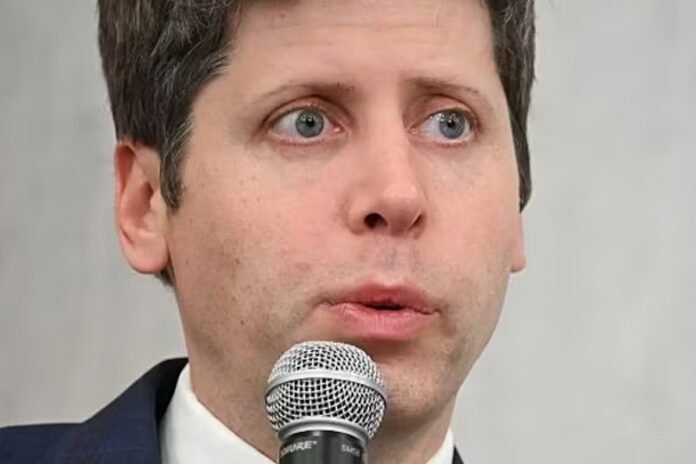
OpenAI CEO Sam Altman speaks at the Federal Reserve in Washington, DC, on July 22, 2025. Photo: Mandel Ngan / AFP via Getty Images via Common Dreams

With backlash against the artificial intelligence industry growing throughout the US, one government watchdog has created a database to help keep tabs on the people it describes as the biggest “AI villains.”

The Revolving Door Project on Thursday launched a webpage that tracks the actions of major players in the AI industry and their ties to President Donald Trump’s administration.

“The Trump administration is all in on artificial intelligence,” the Revolving Door Project explained. “The federal government shares the tech industry’s vision for AI to be embedded everywhere, displacing human thought and labor, and deepening the strains on the environment and climate.”

The watchdog added that the government is pursuing an “AI first” policy “despite little proof that its value for the American public is anywhere close to commensurate with its costs.”

While there are several well-known names on the Revolving Door Project’s list — including SpaceX CEO Elon Musk, OpenAI CEO Sam Altman, and Oracle co-founder Larry Ellison — it also shines a light on more obscure figures including Chris Lehane, director of government affairs at OpenAI, and Greg Brockman, president of OpenAI.

Lehane is notable due to his long connections to Democratic Party politics, including a stint as a special assistant counsel in the Clinton administration and work as deputy campaign manager for former Vice President Al Gore’s 2000 presidential campaign. Since then, he has mostly done public relations work for Silicon Valley firms, including Airbnb and Coinbase.

According to The Revolving Door Project, Lehane during the second Trump administration has been a big proponent of an AI regulatory framework that he describes as “reverse federalism” that aims to shut down individual states’ powers to put guardrails on the industry.

Brockman, meanwhile, is much more traditionally aligned with the GOP, as he and his wife were the largest donors to the MAGA, Inc. super PAC in 2025, and he is described by the watchdog as “a regular attendee at White House events throughout Trump’s second term.”

This coziness has helped Brockman push for policies beneficial to the AI industry such as fast-tracking data center construction and the aforementioned “reverse federalism” regulatory framework.

The Revolving Door Project also pays special attention to Marc Andreesen, co-founder of venture capital firm Andreessen Horowitz (a16z), whose allies the watchdog describes as “deeply entrenched” in the Trump administration.

Among the Andreesen acolytes to have worked in the Trump are Sriram Krishnan, a former general partner at a16z who served as a senior AI policy advisor; Peter Bowman-Davis, former engineering fellow at a16z who served as acting chief AI officer at the Department of Health and Human Services; and Scott Kupor, former managing partner at a16z who serves as director of the Office of Personnel Management.

Andreesen himself serves as a member of the President’s Council of Advisors on Science and Technology, which the Revolving Door Project describes as a “vessel… to freely lobby on behalf of the tech industry’s interests without the need for lobbyist intermediaries—especially at meetings with the president and his closest advisors.”

In a newsletter explaining the purpose of the tracker, the Revolving Door Project’s Fletcher Calcagno wrote that it was needed to help understand why the Trump administration so far has been willing to “accept Big Tech’s maximally irresponsible recommendations” for AI regulation.

– Common Dreams

US Begins Process To Remove Syria From Terrorism List, Signaling Major Shift in Relations 

0
us-begins-process to remove-syria from terrorism-list,-signaling-major-shift-in-relations 
US Begins Process To Remove Syria From Terrorism List, Signaling Major Shift in Relations 


Syrian political analyst Abdul Karim told TML the notification “included a commitment to remove the obstacles preventing Syria’s reconstruction, while also confirming that American companies are prepared to invest in the country”

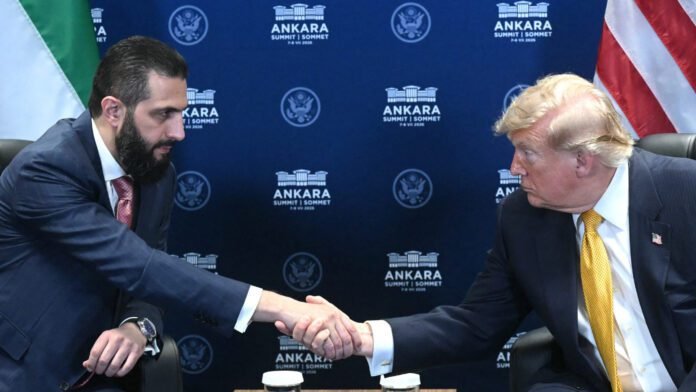
[DAMASCUS] The United States on Wednesday officially began the process of removing Syria from its list of State Sponsors of Terrorism after President Donald Trump notified Congress of his decision to rescind the designation, which had been in place since 1979. The move could mark a major turning point in relations between Washington and Damascus and pave the way for increased American investment and economic engagement in Syria. 

Under US law, Congress now has a 45-day review period before the decision can take effect. In a formal letter addressed to Syrian President Ahmed al-Sharaa, President Trump said Washington intends to remove the “obstacles” preventing Syria’s reconstruction, adding that American companies are now “ready to invest” in the country. 

The decision represents one of the most significant shifts in US policy toward Syria in decades. It ends a designation that has shaped bilateral relations for nearly 47 years and follows a series of gradual American steps in recent months, including easing certain restrictions and expanding engagement with Syria’s new government following the country’s political transition. 

Although the move does not lift all US sanctions imposed on Syria, it removes one of the most significant legal and political barriers that has discouraged international banks and foreign companies from reentering the Syrian market. 

Syria was first designated a State Sponsor of Terrorism on December 29, 1979, becoming one of the earliest countries placed on the list following its establishment under the US Export Administration Act. At the time, Washington justified the designation by accusing Damascus of supporting organizations that the United States classified as terrorist groups, as well as hosting leaders of Palestinian and Lebanese factions included on US terrorism lists. 

For more than four decades, Syria remained on the list despite changes in successive US administrations, making it one of the longest-serving countries under the designation. During that period, Washington imposed a broad range of restrictions, including bans on arms exports, limitations on US economic assistance, tighter controls on dual-use exports, and additional financial and banking restrictions. 

Syrian political analyst Abdul Karim believes that notifying Congress was far more than a legal procedure required before removing a country from the terrorism list. 

“The notification reflects profound political and economic implications that signal a shift in Washington’s approach toward Damascus,” Karim told The Media Line. 

He said President Trump’s letter to al-Sharaa went beyond simply announcing the beginning of the legal process. 

“It included a commitment to remove the obstacles preventing Syria’s reconstruction, while also confirming that American companies are prepared to invest in the country. This is the first official indication at this level linking a change in US policy toward Damascus with direct economic engagement,” he told The Media Line. 

Karim added that the decision follows a series of steps taken by the US administration in recent months, including easing several restrictions on Syria and opening channels of communication with the country’s new government, as part of a broader policy that differs from the one that governed bilateral relations for decades. 

Syrian legal expert Ibrahim Hussein said the decision does not mean Syria will be removed from the list immediately, as US law grants Congress a 45-day review period before the measure can take effect. 

The removal of the designation does not automatically lift the other US sanctions imposed on Syria

“The removal of the designation does not automatically lift the other US sanctions imposed on Syria, many of which are based on separate laws and executive orders,” Hussein told The Media Line. “However, it removes one of the most politically significant classifications affecting how international financial institutions and companies engage with Damascus.” 

For more than four decades, Syria’s designation as a State Sponsor of Terrorism served as one of the principal obstacles limiting its economic ties with the United States and Western countries. The designation-imposed restrictions on US assistance, exports, financial transactions, and significantly increased the legal and commercial risks facing banks and companies considering business with Syria. 

Syrian economist Osama Qadi said that completing the removal process would give international financial institutions and foreign companies greater confidence to explore opportunities in Syria, even if other sanctions remain in place. 

“The State Sponsor of Terrorism designation carried legal and psychological consequences that extended far beyond the direct sanctions themselves,” Qadi told The Media Line. 

He added that the US president’s explicit reference to American companies being ready to invest in Syria represents a notable shift in US rhetoric. 

“For years, official US statements focused primarily on sanctions, counterterrorism, and humanitarian assistance,” he said. “The current message is the first to present a vision in which the American private sector could participate in rebuilding Syria’s economy, provided the necessary legal and political procedures are completed.” 

The current message is the first to present a vision in which the American private sector could participate in rebuilding Syria’s economy

Qadi argued that these messages are directed not only at Damascus but also at international banks, financial institutions, and American and European companies. 

“They are intended to demonstrate that US policy toward Syria has entered a new phase based on gradual engagement rather than comprehensive isolation,” he told The Media Line. 

Meanwhile, Syrian political analyst Abdullah al-Abdoun said Damascus views the decision as one of its most significant diplomatic achievements since the formation of the new government. 

“The decision provides Syria with an important opportunity to advance its efforts to reintegrate into the global economy, attract foreign investment, and convince Western governments that the country’s political landscape has fundamentally changed,” al-Abdoun told The Media Line. 

At the same time, he cautioned that Syria’s full return to the international financial system remains a long-term process. 

“The success of this step will ultimately depend on the future of the remaining sanctions, as well as Syria’s ability to implement economic and institutional reforms and provide the legal and security environment necessary to attract investors,” he said. 

If the process is completed following Congress’ review period, Syria would become the first country to be removed from the US State Sponsors of Terrorism list since Sudan in 2020. Iran, North Korea, and Cuba would remain on the list, highlighting the significance of Washington’s changing approach toward Damascus. 

Despite the importance of the decision, it does not mark the end of the broader US sanctions regime on Syria. Rather, it represents one step within a wider legal and political process that has gradually emerged following Syria’s political transition. Understanding the significance of the move requires looking back at the evolution of US sanctions policy over the past four decades. 

Following the outbreak of Syria’s uprising in 2011 and the subsequent civil war, Washington dramatically expanded its sanctions regime against Damascus. Then-President Barack Obama signed a series of executive orders targeting former President Bashar Assad, senior government officials, and key state institutions. The measures included asset freezes, restrictions on financial transactions, a ban on new US investment in Syria, and sanctions targeting the country’s oil, energy, and banking sectors. 

In 2019, Congress passed the Caesar Syria Civilian Protection Act, which took effect in June 2020. The legislation significantly broadened the scope of US sanctions by targeting individuals, companies, and foreign governments that provide financial, technical, or engineering support to the Syrian government or participate in reconstruction projects without US authorization. 

The Caesar Act became one of Washington’s most powerful economic pressure tools against Damascus, discouraging many international companies and financial institutions from entering the Syrian market for fear of becoming subject to secondary US sanctions. 

Despite its political and legal significance, removing Syria from the State Sponsors of Terrorism list does not automatically eliminate the broader US sanctions regime. Most of the restrictions imposed over the past decade are rooted in separate legislation and executive orders, particularly the Caesar Act. As a result, removing Syria from the terrorism list would eliminate one of the most consequential legal and political obstacles facing the country, but it would not dismantle the wider framework of US sanctions. 

For that reason, many analysts view the Trump administration’s decision as the beginning of dismantling one of Washington’s oldest pressure mechanisms against Syria rather than the end of the sanctions architecture that has evolved over several decades and intensified after 2011. 

While removing Syria from the State Sponsors of Terrorism list does not mark the end of US sanctions, it does bring to a close one of the longest-standing instruments of American pressure on Damascus, dating back to the late 1970s. 

The real test now is whether Washington will follow the decision with additional legal and economic measures capable of reopening Syria to international finance and investment, or whether the move will remain a significant political gesture without being matched by broader policy changes that fundamentally reshape US-Syrian relations. 


Wally Funk, last of Mercury 13 and oldest woman in space, dies at 87

0
wally-funk,-last-of-mercury-13-and-oldest-woman-in-space,-dies-at-87
Wally Funk, last of Mercury 13 and oldest woman in space, dies at 87

Wally Funk, who in 2021 became the oldest woman to fly into space—60 years after she and 12 other women sought the same opportunity as NASA’s original astronauts—died on Wednesday at 87 years old.

Funk was the last living member of the First Lady Astronaut Trainees (FLATs, or as they were later dubbed by the media, the Mercury 13), a group of women pilots who volunteered to go through the same physical and psychological tests as the United States’ first spacemen.

Despite performing as well or better than their male counterparts, though, the Lovelace Woman in Space Program was conducted separately from NASA, and the space agency required that its astronauts be test pilots with jet time. The U.S. military, however, did not accept women into its flight programs.

Still, Funk never gave up the dream, and when she was invited by Blue Origin to join Jeff Bezos on the company’s first human suborbital spaceflight, she boarded the New Shepard capsule on July 20, 2021, and logged a 10-minute flight at the age of 82.

“The Grapevine community joins family, friends and admirers around the world in mourning the passing of aviation pioneer Wally Funk, 87, who passed away peacefully last night at home, surrounded by those she loved,” read a release from her Texas hometown. “The City of Grapevine proudly recognizes Wally Funk, whose extraordinary career has inspired generations by breaking barriers in aviation and space exploration.”

Funk’s NS-16 flight earned her the Federal Aviation Administration’s 13th pair of Commercial Space Astronaut Wings. She was the 26th person in history to fly beyond 50 miles (80 km) altitude and the 585th person to enter space, as recorded in the Registry of Space Travelers by the Association of Space Explorers.

“I felt great! I felt like I was just laying down and I was going into space,” said Funk at a post-flight press conference. “I have been waiting a long time to finally get up there … I want to go again, fast.”

black and white image of a young women pilot on a ladder leading into a jet

Wally Funk, seen at age 21 as a flight instructor, prior to her joining the First Lady Astronaut Trainees or “Mercury 13.”

Wally Funk, seen at age 21 as a flight instructor, prior to her joining the First Lady Astronaut Trainees or “Mercury 13.” Credit: Wally Funk/Blue Origin

Born Mary Wallace Funk on February 1, 1939, in Las Vegas, New Mexico, Funk took up an early interest in aviation. She graduated from Stephens College in Missouri with an Associate of Arts degree and her pilot’s license. She received a Bachelor of Science degree in Secondary Education from Oklahoma State University, while also racking up certificates and ratings, including her commercial, single-engine land, multi-engine land, single-engine sea, instrument, flight instructor, and all ground instructor ratings.

Beyond joining the FLATs, Funk became a professional aviator, instructing US Army officers on how to fly. She was the first female flight instructor to serve at a US military base. In 1971, she achieved the rating of flight inspector from the FAA, becoming the first woman to do so, and three years later, was hired by the National Transportation Safety Board as its first female air safety investigator.

Funk raced planes and became a renowned pilot trainer and speaker on aviation safety. She was chief pilot for five aviation schools across the country, qualifying thousands of students on multiple airflight ratings.

Wally Funk, second from left, along with fellow members of the “Mercury 13,” pose for a photo in front of space shuttle Discovery ahead of the launch of NASA’s first woman pilot in 1995.

Wally Funk, second from left, along with fellow members of the “Mercury 13,” pose for a photo in front of space shuttle Discovery ahead of the launch of NASA’s first woman pilot in 1995. Credit: NASA

As a member of the Mercury 13, Funk attended the launch of the first woman to pilot a space shuttle into space, Eileen Collins in 1995, and in 2020, published a memoir, Higher Faster Longer: My Life in Aviation and My Quest for Space Flight with co-author Loretta Hall.

For her contributions to aviation and spaceflight history, Funk was inducted into the Texas Aviation Hall of Fame in 2024 and will be posthumously inducted into the International Space Hall of Fame at the New Mexico Museum of Space History later this year. She received a Guinness World Record as the oldest woman in space and, in 2022, was awarded the National Air and Space Museum’s Michael Collins Trophy for Lifetime Achievement.

Funk was unmarried and did not have children. She was preceded in death by her fellow Mercury 13 members Myrtle Cagle, Jerrie Cobb, Janet Dietrich, Marion Dietrich, Sarah Gorelick (later Ratley), Jane “Janey” Briggs Hart, Jean Hixson, Rhea Woltman, Gene Nora Stumbough (later Jessen), Irene Leverton, Jerri Sloan (later Truhill), and Bernice Steadman. She also outlived the Mercury 7 astronauts.

Lawmakers Call for CDC to Track Vitamin K Shot Refusals, Cite ProPublica Report

0
lawmakers-call-for-cdc-to-track-vitamin-k-shot-refusals,-cite-propublica-report
Lawmakers Call for CDC to Track Vitamin K Shot Refusals, Cite ProPublica Report

Two members of Congress have called on federal officials to address what they described as “a growing and preventable public health crisis” of families refusing the long-standard vitamin K shot for their newborns, which has led to some of those babies suffering uncontrollable bleeding and even dying. 

“We write to urge the Centers for Disease Control and Prevention (CDC) to take immediate action,” two Democrats, Rep. Kim Schrier, from Washington, and Sen. Angela Alsobrooks, from Maryland, wrote in a letter last week to Dr. Jay Bhattacharya, who is acting as director of the CDC. 

The letter followed a ProPublica investigation that found babies were dying after families refused the vitamin K shot, a critical and inexpensive injection given at birth to help the blood clot, and that federal and state agencies were not tracking vital data. 

“Recent reporting from ProPublica has highlighted a major problem: the federal government does not currently track vitamin K shot refusal, vitamin K deficiency bleeding, or the preventable deaths related to vitamin K deficiency,” Schrier and Alsobrooks wrote in the letter. 

The vitamin K shot has been routine in the U.S. since the American Academy of Pediatrics recommended it for all newborns in 1961, but some families in recent years have declined the shot — which is not a vaccine — amid a rising mistrust of medical institutions and false information online. 

No federal or state agencies track refusal rates or subsequent bleeding.

“It was ProPublica’s reporting that gave us this additional information and led to us writing this important letter, and asking, of course, that CDC take action,” Alsobrooks said in an interview. 

She called on Health and Human Services Secretary Robert F. Kennedy Jr. to publicly voice his support for the shot. He has previously refused to do so and instead stated that he has never said anything about the injection.

“There are so many who are hanging on the word and advice of a person in his position,” said Alsobrooks, who has called for Kennedy’s resignation. “I think he has a moral obligation to state in clear and no uncertain terms that this is safe and effective, and that families should be giving this shot to their babies.”

An HHS spokesperson, reiterating a previous comment, said that the CDC recommends that parents allow newborns to get the vitamin K shot within six hours of their birth to prevent vitamin K deficiency bleeding. She also said that uptake of the shot has declined in recent years “as public trust in health care institutions has fallen, particularly during the COVID-19 pandemic amid heavy-handed mandates and inconsistent messaging during the Biden administration.”

The American Academy of Pediatrics applauded the lawmakers and ProPublica for bringing attention to the issue, which Dr. Andrew Racine, AAP’s president, said the organization has been concerned about for some time. 

One function of government, he said, is to provide clinicians and the public with data that will allow them to make informed decisions. If a sick baby comes into a hospital, doctors should know if they are in an area with a high vitamin K refusal rate so they can quickly diagnose and treat them. He likened it to tracking measles cases. 

“We depend upon the CDC to let us know about that,” Racine said. “And this is essentially a medical condition that is affecting newborn babies that pediatricians or people who look after children need to be aware of.”

He said, too, that HHS leadership should be vocal in their support for the shot and in communicating what could happen if a baby who did not receive the shot starts bleeding. 

“It’s not simply to track it,” Racine said. “It’s to message it.”

Research shows babies who don’t get the vitamin K shot are 81 times more likely than those who do to develop late vitamin K deficiency bleeding, which can lead to bleeding in the brain. According to the CDC, 1 in every 5 babies with vitamin K deficiency bleeding will die.

A national study of more than 5 million births found a rise in the rate of babies not receiving vitamin K at birth, which topped 5% in 2024. Some hospitals have told ProPublica that their refusal rates have more than doubled in recent years.

Schrier and Alsobrooks wrote in their letter that historically there wasn’t a need for robust monitoring systems to track cases of vitamin K deficiency bleeding. But now, without a solid understanding of the scope, experts can’t determine the extent of the problem or develop a public health campaign. The CDC, they wrote, has the tools needed to understand and address the crisis and should use them.

“I believe that the best way to set the record straight for parents is to be able to provide modern-day, accurate information,” Schrier said. “Once you stop doing these things that are preventative, cases rise.”

Read more

Germany’s Merz tells Netanyahu US-Iran deal is ‘best chance’ for stability

0
germany’s-merz-tells-netanyahu-us-iran-deal-is-‘best-chance’-for-stability
Germany’s Merz tells Netanyahu US-Iran deal is ‘best chance’ for stability

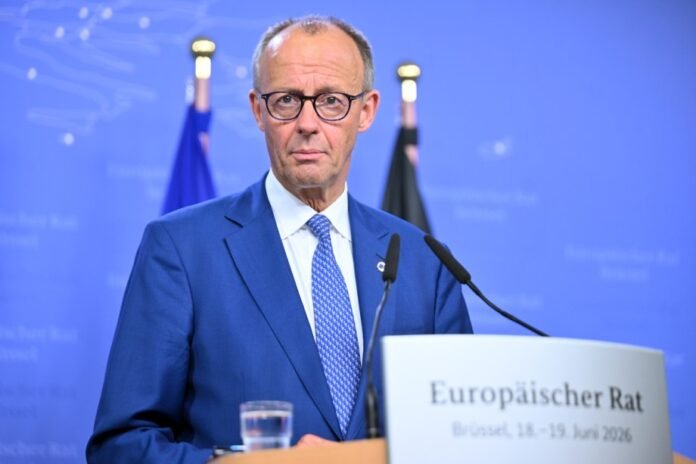
German Chancellor Friedrich Merz holds a press conference after the European Union Leaders Summit in Brussels, Belgium on June 19, 2026. [Dursun Aydemir - Anadolu Agency]

German Chancellor Friedrich Merz holds a press conference after the European Union Leaders Summit in Brussels, Belgium on June 19, 2026. [Dursun Aydemir – Anadolu Agency]

German Chancellor Friedrich Merz told Israeli Prime Minister Benjamin Netanyahu during a phone call Thursday that the US-Iran framework agreement is the “best chance” for stability in the region, Anadolu reports.

German government spokesman Stefan Kornelius said in a statement that the two leaders “exchanged views, especially on the situation in Lebanon as well as in the Palestinian territories.”

Merz “emphasized that there must be no steps toward a de facto partial annexation of the West Bank,” the statement said. He also “underlined the importance of the framework agreement between the US and Iran as the best chance for stability in the region,” Kornelius added.

The spokesman did not provide further details about the leaders’ conversation or Netanyahu’s response to Merz’s comments.

EU considers tariffs on imports from illegal Israeli settlements

0
eu-considers-tariffs-on-imports-from-illegal-israeli-settlements
EU considers tariffs on imports from illegal Israeli settlements


The European Commission is proposing tough measures to reduce imports from illegal Israeli settlements in the West Bank, as part of options presented to national capitals this week.

A paper from the EU’s executive branch, marked confidential and seen by POLITICO, states that “strengthened enforcement may reduce imports from settlements channelled into the EU in violation of existing rules, without requiring new EU legal instruments.”

Among the ideas being considered are an import licensing system, whereby goods from illegal settlements would need special permission to be exported to the bloc; tariffs targeting goods originating in the settlements; or an outright ban on imports from illegal settlements.

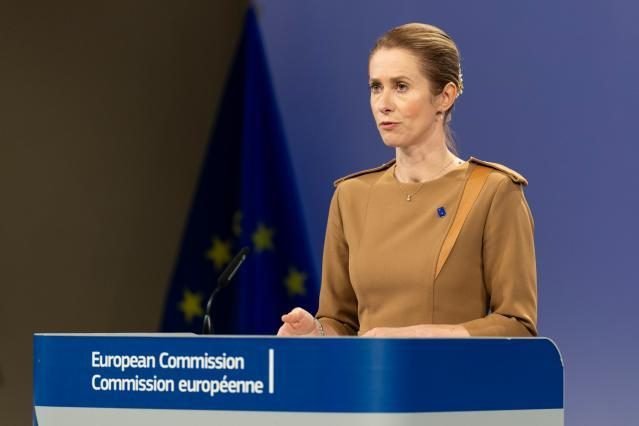
The options paper was requested by the EU’s top diplomat, Kaja Kallas, following a meeting with foreign ministers in Luxembourg last month. The Commission has already presented suggestions for possible trade restrictions and sanctions on “extremist” Israeli ministers, but these have so far not found the support required from member countries.

Suspending a trade agreement with Israel in its entirety or sanctioning individual politicians would require unanimous support from all 27 EU countries, and Czechia has vowed to veto any such move.

While goods from Israeli West Bank settlements are in theory excluded from preferential trade arrangements for export to the EU, capitals have raised concerns that they could be benefiting from those terms by not being properly labelled or monitored.

Foreign ministers will discuss the proposals at a summit in Brussels on July 13.

“It’s a symbolic measure,” said one EU official critical of the proposals, granted anonymity to speak freely. “To do a symbolic measure now is too little, too late — and when they have elections, it’s driving the rhetoric that Israel’s hardline ministers want.” Israel holds a parliamentary election in October.

Source: Politico

0FansLike
0FollowersFollow
0FollowersFollow
0SubscribersSubscribe
- Advertisement -
Google search engine

Recent Posts