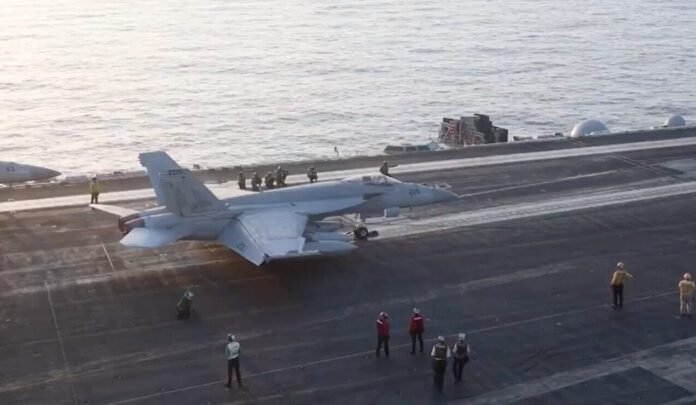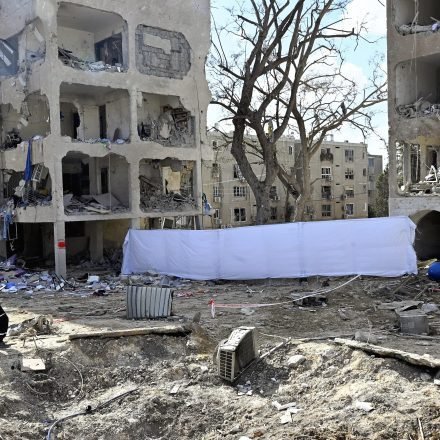
For several decades, Iran has devoted substantial financial, institutional and political resources to military expansion. It has invested heavily in supporting its regional partners, as well as in pursuing geopolitical influence across the Middle East.
Previously, the Islamic Republic has shown few signs of swivelling its resources toward fixing its ever expanding environmental problems.
And those problems are considerable. Around 11% of deaths and 52% of the burden of diseases across the country are attributable to environmental risk factors, according to the World Health Organization.
Excessive groundwater extraction has caused buildings and roads to crack and sometimes collapse. Iran’s capital Tehran is often ranked as having the worst levels of air pollution in the world. In 2025 local media reported 350 deaths caused by poor air quality within a ten-day period. Hospitals at the time reported rising numbers of cases of respiratory and cardiac complications across Iran.
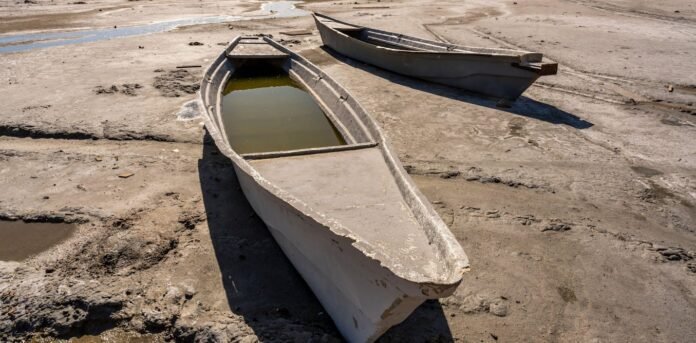
Lake Urmia – once the Middle East’s largest saltwater lake – has dried out, leaving salt-laden dust plumes were capable of travelling hundreds of kilometres and even crossing national borders in less than 12 hours.
The peace agreement that is being hammered out between the US and Iran’s leaders could hand Tehran a significant financial asset. It may unfreeze Iranian assets in foreign banks that they were previously unable to access due to US sanctions. This will give the government access to billions of dollars. Iran is also now exporting millions of barrels of crude oil that had been held in storage during the conflict.
The question then is where will all this money be spent.
Many analysts suggest a massive reconstruction project is needed to rebuild damaged factories, roads, and other essential infrastructure. While it thought highly unlikely that Tehran will see environmental investment as its top priority, the approach could provide major economic benefits.
Iran is now using its groundwater far faster than it can be naturally replenished. As a result, major lakes and wetlands are drying up. Water shortages are undermining agriculture, and forcing some rural communities to leave their farms. Studies indicate that approximately 56,000 km2 (3.5%) of the country’s area is subject to land subsidence, caused by excessive groundwater extraction.
Air pollution imposes significant public health and productivity costs. This contributes to thousands of premature deaths each year, and reduces labour productivity through illness and absenteeism. Dust and salinity storms continue to hit many parts of the country. They damage crops and soils, increase respiratory disease, disrupt daily life, and make already vulnerable regions harder to inhabit.
Rich rewards
When a state destroys its basic natural resources, it is not merely experiencing an ecological downturn. Natural systems (water, soil, ecosystems) are the foundations of any country. Without them, a nation has severely undermined its long-term economic output: farms disappear, road and rail systems crack and break, and people struggle to live.
A peace dividend from the US deal could therefore present Tehran with a rare moment of strategic re-evaluation and a chance to fix its long-term environmental problems. A different approach could generate long-term value, economic stability and, potentially, improved public health outcomes.
A serious national investment, and reconstruction, programme needs to focus on repairing leaking urban water networks, restoring wetlands and forests that regulate water and reduce dust storms. It could also upgrade ageing water and energy infrastructure, and redesigning cities to better withstand drought, extreme heat, and air pollution. It would also create jobs and mobilise high-skilled labour across engineering, science, manufacturing and technology sectors. This would begin reversing decades of damage to the natural systems on which Iran’s economy depends.
What needs work?
Restoring depleted aquifers, rehabilitating degraded land and modernising water and energy systems would increase the economy’s capacity to produce goods and services while reducing the long-term costs associated with environmental degradation.
Iran should see environmental restoration as its most important long-term growth strategy. A national investment programme could be centred on modern irrigation networks, wastewater recycling and reuse. These alongside renewable energy, and ecosystem recovery, would be a massive economic engine.
More efficient water use would strengthen food security. Investments in infrastructure would continue generating economic returns long after the initial capital has been spent.
Legal caps on groundwater abstraction, and economic diversification away from water-intensive crops are essential. Improved irrigation and wastewater reuse plus adjusting water pricing to reflect scarcity would also help.
This approach could not only be a valuable peace dividend for the Iranian people, but also a massive economic boost. Those financial benefits may have some appeal to a government which has ignored many of these environmental problems for so long.