
23.5 C
London
Tuesday, July 7, 2026
Home Blog

NRC is (sort of) getting rid of “as low as reasonably achievable” standard

0
nrc-is-(sort-of)-getting-rid-of-“as-low-as-reasonably-achievable”-standard
NRC is (sort of) getting rid of “as low as reasonably achievable” standard

Last week, just before the US started its break for the July Fourth holiday, the Nuclear Regulatory Commission (NRC) proposed a new rule that would change how it regulated exposure to radiation. The Trump administration has been pushing to restart construction of nuclear power plants in the US, and many pro-nuclear advocates have been complaining about the US’s existing regulations, portraying them as the main barrier to the flourishing of the industry. So, it had seemed likely that major revisions were coming.

Instead, the NRC’s proposed new rules endorse the science behind its current rules and suggest that any problems are largely in the vagueness of the terminology that it has been using. So, instead, it’s endorsing standards that are meant to accomplish the same thing, but avoid using some of the language it had relied on. Probably the clearest indication of the evolutionary change at play is that the NRC estimates the changing rules will save industry—not just power, but also medical and research applications—only about $9.5 million a year.

LNT and ALARA

There are two technical abbreviations at the center of US nuclear regulations. The first is LNT, which stands for “linear non-threshold.” It’s in reference to the issue of whether there’s any level of radiation that is so low that it no longer produces harmful biological effects—the “threshold” in LNT. The “non-threshold” implies that it doesn’t, and that’s in keeping with biology, which has demonstrated that even single particles or photons of radiation can damage DNA and that the mechanisms cells have for repairing that damage are inherently error-prone. The “linear” in LNT simply describes how the impact of radiation scales directly with the dose.

Despite the solid foundation in basic biology, LNT has been difficult to demonstrate in the real world. Humans are exposed to many factors that can influence the development of cancer, including naturally occurring radiation. Teasing out the impact of a small dose of radiation that occurs in addition to all those other exposures is extremely challenging, and the impact of extremely low exposures has not been decisively demonstrated.

Complicating matters, a number of people have advocated for something called hormesis, in which small doses of radiation purportedly promote the cellular repair of damage from other sources. The evidence for this is even spottier, and when the NRC was petitioned to adopt hormesis as part of its scientific framework during Trump’s first term, it rejected the petition.

Given its acceptance of an LNT model of exposure risks, the NRC had chosen exposure standards that fell under the general term of ALARA: as low as reasonably achievable. If any exposure to radiation poses a risk, then minimizing it is the clearest way to protect the health of people who work with radioactive substances. The challenge there is that it’s possible to set exposure limits that people outside the industry regularly exceed each time they board a commercial aircraft.

So, the word “reasonable” plays an outsized role while remaining highly subjective. Critics have charged that it precipitates an endless cycle of reasonable exposure limits leading to searches for additional ways to lower them further, or of adoption without cost considerations. And here, the NRC is acknowledging that there have been issues. “In essence, the reasonableness test that is supposed to be inherent to ALARA-related decision-making has gradually become an expectation that if a means of dose reduction is available, regardless of its reasonableness in relation to the total dose and the amount of reduction, it should be applied without further consideration,” its new proposal suggests.

In the past, the NRC has attempted to address this by attaching a financial value to each unit of exposure based on estimates of the value of healthy life developed elsewhere. But in the new proposal, it accepts that “there have been challenges in the implementation of the ALARA requirement, namely a lack of clarity of when dose reduction is deemed sufficient, excessive subjectivity, and susceptibility for selective or inconsistent enforcement.” So, it’s giving up on a term that it now views as a source of confusion.

What’s different

One of the key things here is that the LNT model of exposure risks isn’t going away. In its earlier denial of petitions that it change its standards, the NRC had concluded that “in the absence of convincing evidence that there is a dose threshold or that the health effects of low levels of radiation are fully understood, the LNT model for cancers and genetic effects was appropriate for formulating radiation protection standards and planning radiation protection programs.” In the proposed new rules, that logic is left intact. “The NRC finds that no consensus-supported, regulation-ready alternative model to the LNT model exists at this time,” it states.

More specifically, it states, “It is unlikely there might be a threshold level of exposure below which biological response does not occur. Such a threshold could only occur if DNA repair processes were totally effective in that dose range or if a single radiation track were unable to produce an effect.”

It’s worth noting that the NRC is making that decision despite the fact that Trump issued an executive order that describes LNT and then calls it irrational. “The NRC utilizes safety models that posit there is no safe threshold of radiation exposure and that harm is directly proportional to the amount of exposure,” the order reads. “Those models lack sound scientific basis and produce irrational results.” The agency is keeping LNT in place despite being specifically ordered to reconsider it.

With LNT intact, the scientific backing for ALARA remains in place. So, the new proposed regulations largely focus on calling it something else. “The NRC proposes to remove references to the ALARA principle, which rests on the LNT model’s assessment of risks from very low doses of radiation, from its regulations,” the proposed changes say. “Instead, the NRC would apply a less-subjective, graded approach to managing doses below regulatory limits.”

To replace ALARA, the NRC will start with a limit at which evidence clearly indicates radiation impacts would be apparent and set exposure thresholds below that. From lowest to highest exposure, these thresholds will require increasingly aggressive efforts to limit exposures.

The language of the details is a bit confused, however. As its name implies, the LNT model suggests there are no thresholds below which biological risks go away, and the NRC accepts that model. Yet it’s regulated based on thresholds. It’s also referring to those thresholds as an implementation of an “optimization” approach to safety. But it also quotes a definition of optimization that refers to it as a form of ALARA—which, again, is a term that the NRC wants to get rid of.

Beyond that action, the rule changes the NRC is proposing largely focus on updating regulations on the use of equipment to monitor exposures. Technology has advanced since the agency last modified its requirements there, and it’s using this proposal to update them accordingly.

Number crunching

Regardless of the confusion, it’s clear that the changes aren’t going to cause the sort of boom in nuclear power that the Trump administration expected in its executive order. One of the key features of the planned rules is that any organization that’s currently in compliance will remain that way without making any changes. Changes will only make sense if an organization thinks it can save money by adopting them.

And, as noted above, those savings for industry will be pretty minimal, with the total estimated at $9.5 million a year. Even if we assume that these savings go only to nuclear power and are ascribed only to dropping ALARA (as opposed to cheaper exposure monitoring, for example), spread out across the 57 nuclear plants in the US, that means just an average savings of a bit over $150,000 per plant.

So, those who viewed ALARA as the cause of all the nuclear industry’s woes will likely be excited to see the NRC eliminate it. But they’ll also be disappointed to find that its scientific foundations remain intact, and the regulatory environment will be minimally changed as a result.

Royal Family Plotting to ‘Drown Out’ Prince Harry?

0
royal-family-plotting-to-‘drown-out’-prince-harry?
Royal Family Plotting to ‘Drown Out’ Prince Harry?


Prince Harry is heading back to Britain this week, but the Royal Family reportedly has no intention of letting his visit dominate the headlines.

The Duke of Sussex, 41, is expected to spend several days in the UK promoting the Invictus Games before traveling to England’s Midlands and making a private visit to the grave of his late mother, Princess Diana, at Althorp.

However, palace insiders claim senior royals are preparing to quietly undermine Harry’s trip by filling the royal calendar with enough public appearances to “totally drown out” the publicity surrounding his return.

Harry will make the trip without his wife, Meghan Markle, 44, or their two children, 7-year-old Prince Archie and 5-year-old Princess Lilibet.

The family reportedly decided to stay behind because of continuing concerns over Harry’s security arrangements in Britain.

While Harry carries out his own engagements, King Charles, 77, and other senior working royals are scheduled to complete more than 29 public appearances between the duke’s arrival and departure. The packed calendar also includes private audiences and official meetings.

One palace source said there is little interest inside the royal household in becoming entangled in another round of drama involving Harry.

“There is absolutely no appetite within the household to be drawn into another cycle of drama surrounding the Duke of Sussex,” the source said. “The King’s priority, and the priority of every working royal, is to get on with the job.”

According to the insider, the palace believes the best way to respond to Harry is not to respond at all.

“The feeling is that the strongest response is not to engage with the drama but to keep the focus on public service, allowing official engagements to speak for themselves rather than reacting to every headline,” the source added.

Another royal insider said the palace is determined not to allow the monarchy’s schedule to revolve around Harry’s movements or his latest family disputes.

“The program of engagements was always going to be full, but there is a clear determination that the institution should not revolve around Harry’s movements or the latest twists in his personal situation,” the insider said.

Senior members of the Royal Family reportedly want the week’s coverage to focus on the charities, communities and organizations they are supporting rather than on Harry’s personal battles.

But the insider went even further, claiming the strategy is meant to steal attention away from the duke.

“Essentially, the intention is really to sabotage Harry’s trip by generating so much press coverage around their engagements it will drown out the publicity he wants to drum up with his visit,” the source claimed.

Many of the royal appearances were reportedly scheduled long before Harry finalized his travel plans. Still, the timing comes as frustration grows inside palace circles over what insiders see as another unnecessary controversy involving the estranged prince.

The latest dispute centers on security.

Harry reportedly hoped Meghan and the children would join him in Britain, but those plans fell apart after the Home Office’s Royal and VIP Executive Committee declined to reconsider the security arrangements imposed after the couple stepped away from royal duties.

Harry ultimately decided his family would remain elsewhere in Europe while he traveled to Britain alone.

Sources close to the situation have questioned why such a high-profile trip was organized before his security plans were settled, especially after Harry previously lost a legal challenge over his access to publicly funded police protection while visiting the UK.

The security battle is not the only complication hanging over the trip.

There are also questions about whether Harry will meet with King Charles following a separate dispute over where the duke would stay.

Charles reportedly invited his younger son to stay at a royal residence, with Buckingham Palace offered as an option. Harry, however, is no longer expected to stay there.

According to reports, Harry failed to formally accept the invitation before a deadline at the end of last week. He was then told the accommodation was no longer available.

A representative for Harry reportedly called the decision “disappointing” and accused the Royal Family of withdrawing the offer “at the last moment.”

The representative said Harry had delayed responding because he was trying to arrange his own security after learning he would not receive official protection during the visit.

It is now unclear where Harry will stay while in Britain, although the duke is known to prefer hotels over royal residences.

With Meghan and the children staying away, his palace accommodation gone and senior royals preparing for a wall-to-wall week of engagements, Harry’s latest homecoming appears to be growing more chaotic before it has even begun.

Iraq prepares to reopen Syrian land route for oil exports to bypass Gulf

0
iraq-prepares-to-reopen-syrian-land-route-for-oil-exports-to-bypass-gulf
Iraq prepares to reopen Syrian land route for oil exports to bypass Gulf

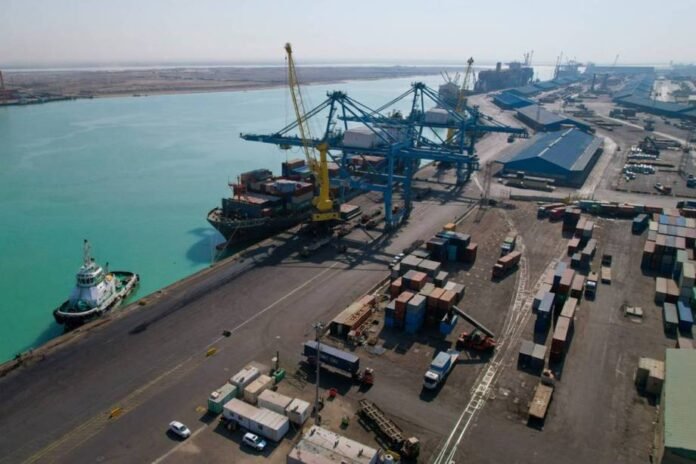
Iraq is planning a new land route through Syria to diversify its oil exports after the rising security risks in the Strait of Hormuz paralyzed the global oil and energy market amid the Middle East crisis, Anadolu reports.

Iraq exports most of its crude through southern terminals in Basra, but recent maritime tensions in the Gulf have prompted Baghdad to seek alternatives.

Asim Jihad, an Iraqi oil expert, told Anadolu Agency that the Iraqi Oil Ministry’s main mitigation strategy is to increase shipments through Turkiye’s Port of Ceyhan from the current daily volume of 150,000-200,000 barrels to 300,000 barrels.

Suspended shipments in the Strait of Hormuz are costing Iraq around 3.5 million barrels of oil per day.

He said the ministry is preparing to export 50,000 barrels of Basra crude per day to global markets by tanker trucks through Syria’s Banyas port, as Iraq needs to offload heavy crude that is causing blockages in refineries and disrupting operations.

While revenues from the alternative tanker shipments are expected to be limited, Jihad said Baghdad is pursuing the option to ease economic pressure and address budget shortfalls.

READ: Iraq sends first oil shipment to Syria via newly reopened key border crossing

He said constructing new pipelines would be the ultimate and only sustainable long-term option, as the existing Iraq-Syria oil pipeline is not currently suitable for exports.

Ali Naji, president of the Eco-Iraq Observatory, said resuming shipments through Syria is important because it would provide Iraq with a much-needed alternative and allow the country to build a more flexible export structure by reducing its heavy dependence on the Gulf.

Naji said establishing an additional export corridor through Syrian territory could lay the foundation for bilateral cooperation in oil and logistics, support broader economic ties, and create a suitable environment for reactivating pipeline projects or developing new energy infrastructure.

He added that the high logistical cost of transporting oil by tanker trucks, compared with traditional pipelines, poses a challenge to the project, along with the limited volume that can be moved by truck and ongoing security risks along land routes.

OPINION: The future of Gulf energy and trade routes after the Hormuz crisis

Judah Gribetz, Architect of $1.25 Billion Holocaust Restitution Plan, Dies at 97

0
judah-gribetz,-architect-of-$1.25-billion-holocaust-restitution-plan,-dies-at-97
Judah Gribetz, Architect of $1.25 Billion Holocaust Restitution Plan, Dies at 97


Judah Gribetz, the former aide to New York Gov. Hugh L. Carey who later designed the distribution plan for more than $1.25 billion in restitution from Swiss banks to Holocaust survivors and other victims of Nazi persecution, died Friday at his home in the Rockaway Park neighborhood of Queens. He was 97. 

Gribetz was appointed by Brooklyn federal Judge Edward R. Korman to develop a framework for distributing the settlement reached in a class-action lawsuit against Swiss banks. The lawsuit accused the banks of causing additional harm to victims of Nazi persecution by failing to return assets entrusted to them during World War II. 

The settlement covered more than 500,000 claimants, including Jews whose deposits were never returned, former enslaved laborers whose employers held revenues in Swiss banks, and individuals whose property looted by the Nazis had been disposed of through Swiss institutions. 

Gribetz’s assignment as a “Solomonic role,” which required him “to adjudicate between the competing needs of different groups of aging Holocaust survivors, from Florida to Ukraine,” The Forward wrote.  

After 18 months of work, Gribetz presented Korman with a 900-page plan. It allocated up to $800 million to survivors or their heirs whose claims involving unreturned bank deposits were validated, with payments adjusted for inflation. 

The remaining $450 million was designated for other eligible claimants, including former enslaved laborers, who initially received $1,000 each, later increased to $1,450, as well as needy victims whose property had been looted and who received assistance through various programs. 

By 2020, nearly $1.288 billion, including accumulated interest beyond the original settlement amount, had been distributed or allocated to more than 458,400 claimants. 

Looking back on the effort in an interview with The New York Times, Gribetz said the work had been demanding but “very satisfying.” 

“We tried to do as transparent and as far-reaching a solution as possible,” he said. 

Born on April 1, 1929, in Brooklyn, Gribetz was the son of Abraham and Ida (Heller) Gribetz. His father became executive director of the Hebrew Free Loan Society in 1938, helping immigrants in need. 


Kremlin suspected of flying drones over Europe using Russian shadow fleet

0
kremlin-suspected-of-flying-drones-over-europe-using-russian-shadow-fleet
Kremlin suspected of flying drones over Europe using Russian shadow fleet

Mysterious drone flights that disrupted major European airports and flew over NATO member military bases hosting US nuclear weapons may be the work of a coordinated Kremlin campaign launched from Russian-linked commercial ships.

That recent assessment from the UK-based International Institute for Strategic Studies used automatic identification system (AIS) maritime tracking data and other publicly available data to show how Russian-linked ships and “shadow fleet” vessels that transport sanctioned Russian oil were often located nearby during various drone incidents. The report suggests that the drone incidents—which impacted a dozen NATO member countries and Ireland between August 2024 and February 2026—also revealed the vulnerability of European air defenses against surveillance and harassment incursions by low-cost drones.

The IISS report identified 144 drone sightings over Europe during that time period that were unlikely to involve hobbyist recreational drones or drone activity related to the war in Ukraine. About 48 percent of the sightings took place over military bases, 26 percent happened over critical infrastructure such as ports and energy or industrial facilities, and 18 percent occurred over civilian airports. Most occurred at night or in the early morning hours before sunrise, and the drones themselves were typically described in media reports as resembling “professional” or “military-style” drones.

The think tank’s report does not claim that all drone sightings were attributable to Russian drones or were even real. But it describes the pattern of certain drone incursions as being “consistent with the Kremlin’s effort to probe allied defenses, test civilian-military response mechanisms and normalize low-level airspace violations below the threshold of an armed attack.”

The only drone incident directly attributed to Russia came in February 2026, when the Swedish military confirmed spotting and subsequently jamming a drone that took off from the Russian signals intelligence vessel Zhigulevsk in Swedish territorial waters. The Russian drone launch took place while the French aircraft carrier Charles de Gaulle and its escort ships were nearby during a visit to Sweden. But despite being the only confirmed example, the incident showed that Russian-linked ships have the capability to launch drones at sea for potential surveillance purposes.

The drone lineup

One possible drone candidate for ship-launched operations is the Merlin-VR, a fixed-wing drone developed by Russia that can be launched by a shipboard catapult system and recovered by parachute. It has the necessary flight range to enable a number of identified drone incursion incidents, while being capable of night operations and having the ability to spend time loitering over targets, according to the IISS report.

Russian companies have also developed vertical-take-off-and-landing (VTOL) drones, including the Legioner E29 Fixed-Wing Electric Drone, that require very little deck space for takeoff and landing operations. However, the IISS report suggests that homemade or commercial drones could have also been modified for a Kremlin drone campaign over Europe to prevent easy attribution to Russia.

A more common Russian drone model reported as being involved in the campaign is the Orlan-10, a fixed-wing drone with an operational range of 500 kilometers and battery endurance of up to 12 hours, along with maximum speeds between 90 kilometers per hour and 130 kilometers per hour. Such performance capabilities are “consistent with maritime launch from a vessel operating well beyond visual detection range of the European coastlines in question,” according to the IISS report.

The Orlan-10 range and payload capabilities are “consistent with stand-off collection against coastal and inland targets,” while also being able to fit within the deck space of a “mid-sized commercial vessel,” according to the IISS report. The Orlan-10 can carry payloads such as a module for spoofing signals from GPS and other global navigation satellite systems, along with a communications network monitoring module and various optical and thermal sensors.

The Orlan-10’s distinctive combustion engine noise is also consistent with the accounts of people who witnessed drone incursions that took place near RAF Lakenheath in the UK between November 20 and November 26 in 2024.

Drone sightings and lurking ships

The mystery drone incursions in November 2024 occurred at RAF Lakenheath and several other Royal Air Force stations—including RAF Fairford, RAF Feltwell, and RAF Mildenhall—that represent the home bases for thousands of US Air Force personnel and dozens of US military aircraft.

As the largest US military base in the UK, RAF Lakenheath is also set to receive more than $1.6 billion in upgrades that include facilities for housing a nuclear arsenal, The Guardian reported on June 30, 2026.

The drone incidents over the UK military bases in November 2024 occurred when the cargo ship Hav Dolphin, flagged in Antigua and Barbuda but operating with a Russian crew, was docked in the UK. The same Hav Dolphin ship was later separately investigated by German authorities after it anchored offshore near the German city of Kiel in May 2025, which coincided with drone sightings at a German submarine base at Eckernförde just northwest of Kiel on the Baltic Sea coast.

The incidents in the UK coincided with other drone sightings over sensitive military sites in November 2024. For example, drones repeatedly entered the airspace over Kleine-Brogel Air Base in Belgium for three consecutive nights in early November, while other drone sightings occurred over a military facility in Leopoldsburg. The Kleine-Brogel Air Base houses US nuclear weapons that could be deployed by allied aircraft under NATO’s nuclear-sharing arrangement.

Meanwhile, drones were spotted over Ramstein Air Base in Germany on November 26, 2024, which represents the headquarters for both NATO Allied Air Command and the US Air Forces in Europe and Air Forces in Africa. Such mystery drone flights over Ramstein continued through early 2025.

Drones also targeted the Volkel Air Base in the Netherlands for three separate days in November and December 2025. That base houses military aircraft capable of being armed with US nuclear bombs under the NATO nuclear-sharing agreement.

The biggest drone incursion at Volkel occurred during the evening of November 21, 2025, a “highly coordinated flight” of up to 10 drones was spotted over Volkel and evaded capture or destruction despite base security attempts to shoot them down. That coincided with drone sightings over Eindhoven Airport that forced authorities to briefly shut down civil air traffic across the southern Netherlands.

Those drone incursions over the Netherlands coincided with “multiple suspicious vessels,” including the shadow fleet ships Arctica, Cgas Leopard, Tranquil Sea, and Eagle S, loitering in international waters or at anchorages near the Dutch and French coasts. The Eagle S oil tanker had been previously investigated for severing undersea cables in the Baltic Sea on Christmas Day in 2024, although a Finnish court dismissed the case after ruling that it lacked jurisdiction over the matter.

In early December 2025, five drones were detected over the Île Longue base in Brittany, France, which houses French nuclear ballistic missile submarines and the stockpile of their nuclear weapons. By chance, the suspect ships Hav Dolphin and Arctica (the latter operating under a different name at the time) were also located within 350 and 370 kilometers of the base at the time, while three other shadow fleet ships were even closer.

A prime shadow fleet suspect

One of the most intriguing ship suspects linked to various drone incidents is the oil tanker Boracay. That ship became the focus of a Danish investigation after drone sightings in September 2025 disrupted air traffic operations at airports all across Denmark and even forced the temporary closure of Copenhagen Airport along with the Aalborg Royal Danish Air Force base.

Danish authorities did not specifically name Russia as the main culprit behind the drone incursions but described the possibility of drones launching from ships. Much of their investigation focused on the Boracay shadow fleet vessel that was located off the Danish coast during the incidents.

On September 28, 2025, French naval commandos made additional discoveries after boarding the Boracay off the French coast—possibly because of the ship’s suspected link to the drone incidents over Denmark. The French commandos found that the ship had a Chinese captain but also happened to be carrying two Russians employed by the Moran Security Group, a Russian private military company founded by former Federal Security Service officers. One of the Russians also previously worked for Russia’s Wagner Group private military company.

Interviews revealed that the Russians were charged with “gathering intelligence, protecting the vessel and ensuring the captain strictly adhered to Russian interests.” That provided “direct evidence of a shadow-fleet vessel linked to Russian intelligence structures,” according to the IISS report.

On March 30, 2026, a French court sentenced the Chinese captain in absentia to one year in prison and issued an arrest warrant after convicting him of failing to comply with orders to stop his ship. The court also ordered the captain to pay a $172,000 fine.

The European response

The full report goes into much more detail about the movements of individual shadow fleet vessels during various drone incidents. But the overall picture of the possible Russian drone campaign suggests that the European response has been fragmented and uncoordinated for the most part so far.

The European Union is working to develop a European Drone Defence Initiative (EDDI) that would enable member countries to deploy interoperable counter-drone technologies for detecting, tracking, and shooting down or otherwise neutralizing drones. But the system is not expected to be fully functional until the end of 2027.

The IISS report also warns that “no amount of hardware will compensate for the absence of political authority to use it,” and suggests that European governments need to better coordinate to establish legal clarity around rules of engagement for drone incursions.

Then there is the “hardest” problem of maritime accountability, according to the IISS report. That will require European governments to be more willing to investigate and stop Russian-linked ships and shadow fleet vessels from loitering near European coasts while launching drones with “effective impunity.”

Indonesia needs China’s know-how, not just its cash and contracts

0
indonesia-needs-china’s-know-how,-not-just-its-cash-and-contracts
Indonesia needs China’s know-how, not just its cash and contracts

For more than a decade, Indonesia has measured its economic partnership with China in dollars and cents. The numbers are certainly impressive: Chinese companies have poured billions into nickel processing, industrial estates, power plants and, more recently, electric vehicle batteries.

In late June, Indonesia and China’s CATL broke ground on a lithium-ion battery plant in West Java that is expected to begin operating by the end of 2026. It is part of a $6 billion supply chain stretching from nickel mining to battery recycling.

By those measures, Indonesia has done well. But there is another way to judge whether an industrial strategy is working, and it receives far less attention. After years of Chinese investment, what technologies can Indonesian companies develop today that they could not develop ten years ago? That question matters because investment and technological progress are not the same thing.

Indonesia’s nickel industry illustrates why. The government’s downstream policy has fundamentally changed the industry. Instead of exporting raw ore, Indonesia now produces intermediate products such as mixed hydroxide precipitate (MHP), an important ingredient for battery production.

Yet much of the higher-value processing still takes place elsewhere. Battery materials such as lithium iron phosphate (LFP), which has become the dominant battery chemistry in China, are largely produced outside Indonesia before batteries are assembled domestically.

There is nothing unusual about participating in global supply chains — every manufacturing economy does. The more important question is whether Indonesia is gradually moving into the parts of the supply chain where products are designed, manufacturing processes are improved and intellectual property is created.

Those are the activities that generate lasting industrial strength, and China understood this long before it became the world’s manufacturing powerhouse.

When Beijing welcomed foreign manufacturers in the 1980s and 1990s, the objective was never simply to create jobs or increase exports. Investment became one way of acquiring knowledge.

Chinese firms learned through joint ventures, supplier networks, research institutes and deliberate industrial policies. Over time, they stopped assembling products designed elsewhere and began competing with the companies that had once taught them.

Indonesia has successfully attracted Chinese capital. Whether it has built equally strong institutions for absorbing Chinese technology, however, is much less obvious. One reason is that technology transfer is still discussed as though it happens automatically, but in reality technology has to be successfully absorbed.

Engineers need opportunities to master production processes. Local suppliers need incentives to move beyond manufacturing components and into designing them. Universities need stronger links with industry so that research finds its way onto factory floors instead of remaining in academic journals.

Indonesia’s debate often feels incomplete on this point. Investment figures are announced with great enthusiasm. Export values are carefully tracked. New factories become symbols of success. Yet there is remarkably little discussion about how to measure technology transfer itself.

How many Indonesian engineers have moved into senior technical positions? Which investment projects have generated patents owned by Indonesian firms? So far, there is little public data to answer either question, and without answers, technology transfer remains more an aspiration than a policy.

The structure of investment also deserves closer attention. Indonesia generally treats foreign investors as though they all contribute knowledge in similar ways, but that assumption deserves closer scrutiny.

Partnerships with Chinese state-owned enterprises may create different opportunities for technological learning than projects led by private companies with primarily commercial priorities. That difference should not be assumed — it should be studied.

The same thinking applies beyond industry. Some Chinese academics have questioned why many Indonesian universities appear more interested in establishing commercial companies than strengthening the links between research laboratories and manufacturers.

The criticism may be overstated, but it points to a genuine issue: strong industrial economies depend on effective “lab-to-fab” systems that move ideas from research into production. Indonesia has spent years building factories; it now needs to devote equal attention to building those connections.

China’s own economic transition may create new opportunities. Years of fierce competition have left much of China’s solar industry struggling with falling prices and shrinking profits. Some of the country’s biggest solar manufacturers are responding by expanding aggressively into battery storage, where margins are stronger and demand is growing faster.

For Indonesia, this changing landscape is worth watching. China itself accelerated its technological rise in the years following the 2008 global financial crisis by acquiring distressed foreign companies, particularly in Germany, to gain access to patents, engineering talent and advanced manufacturing expertise. Indonesia has rarely, if ever, discussed pursuing a similar strategy.

This is where Danantara, Indonesia’s new sovereign investment fund, could eventually play a larger role. Instead of looking only at financial returns or domestic infrastructure projects, it could identify opportunities to acquire technology, intellectual property and engineering capabilities while valuations in parts of China’s clean-tech sector remain under pressure.

None of this would replace foreign investment, nor should it. Indonesia still needs foreign investment, just as it needs strong economic ties with China. But the next phase of that relationship should be judged differently. The first decade was about bringing factories to Indonesia.

The next should be about ensuring that the knowledge behind those factories no longer remains somewhere else.

Muhammad Zulfikar Rakhmat is director of the China-Indonesia and MENA-Indonesia desks at the Center of Economic and Law Studies (CELIOS), a Jakarta-based think tank.

FIFA Gives Trump Exactly What He Wants

0
fifa-gives-trump-exactly-what-he-wants
FIFA Gives Trump Exactly What He Wants


President Donald Trump regularly resorts to bluster and threats to get his way — from efforts to overturn election results to campaigning for international prizes — often with little success. But in FIFA, he has finally found a pliant partner to massage his ego and do his bidding.

In a highly unusual move this weekend, the international soccer federation reversed a suspension of a top U.S. player after a personal intervention by Trump, undermining the integrity of the game, according to experts.

Trump personally called FIFA President Gianni Infantino, following a win by the U.S. men’s soccer team in the FIFA World Cup last week, and asked him to review the one-game suspension of striker Folarin Balogun, the team’s top goal scorer. On Sunday, FIFA reversed course, announcing Balogun would be eligible to play in the upcoming U.S. match against Belgium. It was the first time that FIFA has nullified a suspension for a red card received during the World Cup in 64 years.

“Thank you to FIFA for doing what was right, and reversing a great injustice!” Trump wrote on Truth Social on Sunday. 

The Union of European Football Associations expressed “disbelief at such an unprecedented, incomprehensible and unjustifiable decision” that it said undermined not just the tournament but soccer itself.

“Football, like any other sports, relies on rules, which are the basis for fair, honest and transparent competition,” UEFA said in a statement. “When the certainty of rules is no longer guaranteed by its guardians, the integrity of the game is at stake and the credibility of a competition is undermined.”

On Monday, Trump described FIFA referee Raphael Claus, who gave Balogun the red card after a review suggested by the video assistant referee, as “very suspect” — an apparent reference to past accusations of match fixing.

Asked if his intervention with Infantino created a troubling precedent which would lead other world leaders to attempt to exert influence over soccer, Trump dismissed concerns. “I had nothing to do with the decision,” he said on Monday. “What I did have to do is, I said, I think this should be reviewed.”

The red card reversal is not FIFA’s first concession to Trump. After years of lobbying and begging by Trump failed to win him a Nobel Peace Prize, FIFA created its own peace prize last year and presented it to Trump.

FIFA signed a partnership agreement with Trump’s so-called Board of Peace to “foster investment into football for the purpose of helping the recovery process in post conflict areas,” Infantino announced earlier this year. Trump controls the Board of Peace’s finances as its chair, creating what looks to be a massive slush fund. For the past year, FIFA has also leased office space at Trump Tower in New York City.

For more than six months, FIFA has ducked questions from The Intercept about the Peace Prize and the organization’s fealty to Trump. FIFA spokesperson Jhamie Chin did not reply to repeated questions about the federation’s recent capitulation over Balogun’s suspension.

Trump undercutting the credibility of the single largest and most-watched sporting event in the world mirrors his long-running efforts to weaken the electoral process in the United States and undermine the integrity of elections. Trump is currently attempting to force Congress to pass legislation — the SAVE America Act — which threatens to increase the difficulty or block the ability to vote for millions of eligible American citizens, justifying the legislation with false claims of voter fraud. According to research by the Brennan Center for Justice, more than 21 million citizens do not have ready access to a birth certificate, a passport, or naturalization papers that would be needed to comply with a so-called “show your papers” provision.

For years, Trump has regularly peddled fictions about “rigged” elections, including his 2020 presidential election loss to Joe Biden. After the 2020 election, the results were certified, and 61 of 62 lawsuits challenging the results of the election failed. Trump refused, however, to accept the facts and continues to peddle the lie that he won the 2020 race. Since then, Trump has regularly claimed, without offering evidence, that Democratic electoral victories are the result of fraud. Most recently, he claimed, without any proof, that the Los Angeles mayoral race was “rigged” against former reality star Spencer Pratt.

Trump said on Monday that he would view a victory by Belgium in the same light. “If they beat us, I say it was rigged, just like the election was rigged in 2020,” he announced.

In awarding him its inaugural peace prize, FIFA said that Trump was “recognised for his tireless efforts to promote peace.” In the five-plus years Trump has been in the White House, alone, the U.S. has been embroiled in more than 20 military interventions, armed conflicts, and wars, according to an analysis by The Intercept.

Chin deflected when asked in February how FIFA could ignore Trump’s constant war-making. The spokesperson failed to respond to repeated follow-up questions on Monday.

Amid Mounting War Casualties, Pete Hegseth “Defunded and Impeded” Efforts to Protect Civilians, Lawmakers Say

0
amid-mounting-war-casualties,-pete-hegseth-“defunded-and-impeded”-efforts-to-protect-civilians,-lawmakers-say
Amid Mounting War Casualties, Pete Hegseth “Defunded and Impeded” Efforts to Protect Civilians, Lawmakers Say

ProPublica is a nonprofit newsroom that investigates abuses of power. Sign up to receive our biggest stories as soon as they’re published.

Ten Democratic lawmakers told Defense Secretary Pete Hegseth in a letter Sunday that his gutting of a program focused on protecting civilians is a leadership failure that imperils service members and erodes the military’s moral standing.

Led by Sen. Elizabeth Warren, D-Mass., the joint letter echoed concerns raised by a recent Defense Department inspector general report that described civilian protection efforts as largely “inactive.” Lawmakers also cited reporting by ProPublica and other news outlets in pushing to preserve the framework known as civilian harm mitigation and response, or CHMR.

“The Trump administration — potentially in violation of federal law — has defunded and impeded civilian protection efforts,” the lawmakers asserted.

A Pentagon spokesperson declined to answer questions from ProPublica, noting: “As with all congressional correspondence, the Department will respond directly to the authors.”

The retreat from civilian protection drew global attention in February when an apparent U.S. strike killed dozens of children and teachers at a school on the first day of the U.S.-Israeli war in Iran — an incident the Pentagon says is under investigation.

Beyond those deaths, conflict monitoring groups have recorded a surge in reports of civilian casualties, most notably in Somalia and Yemen, which have both seen a dramatic increase in U.S. strikes under the second Trump administration.

In March, ProPublica interviewed current and former national security officials across party lines who said the discarding of civilian protections is part of a broader remaking of the military around two key principles: more aggression, less accountability.

The harm mitigation leadership, housed in a specialized Civilian Protection Center of Excellence mandated by Congress in 2022, aimed to reduce the number of civilian casualties of U.S. military operations, a problem that has spanned administrations in the post-9/11 “forever wars.”

The idea was to embed prevention specialists within targeting teams and foster a culture that prioritizes civilian security in accordance with U.S. law and international rules of war. Senior military leaders have publicly supported the mission, expressing both a moral obligation to safeguard civilian life and a necessity to hit their intended targets.

The program was still being rolled out when momentum halted under Hegseth.

In the spring of 2025, as U.S. operations in Yemen reportedly killed dozens of civilians, the Defense Department was scrapping the CHMR mission as out of step with Hegseth’s “lethality” doctrine, according to current and former staffers. Hegseth repeatedly has expressed disdain for guardrails he describes as hindrances to combat forces.

By the time of the Iran school strike, current and former personnel told ProPublica, the protection mission had been slashed by about 90%, leaving just a handful of staffers to monitor civilian harm issues even as the Defense Department accelerated the strike tempo across swaths of Africa and the Middle East.

Militant groups exploit civilian casualties to gain recruits and support, a practice retired Gen. Stanley McChrystal, who commanded U.S. and NATO forces in Afghanistan, has called “insurgent math”: For every innocent killed, the theory goes, at least 10 new enemies are created.

“The Trump administration’s military adventurism overseas, combined with its obvious disregard for civilians, do not make the American people or our service members safer,” the 10 Democrats said in their letter to Hegseth.

Three signees are military veterans: Sen. Tammy Duckworth of Illinois, Sen. Mark Kelly of Arizona and Rep. Jason Crow of Colorado.

The letter ended with 20 questions the lawmakers want answered by July 9, including requests for the latest CHMR staffing and funding numbers, and an explanation for why the department wasn’t cooperative with the inspector general’s inquiry.

Current and former CHMR personnel said it’s impossible to know whether a more robust prevention team could’ve helped the military avoid civilian casualties in Yemen and Iran. But they said the program could have made a difference, providing transparency and immediate inquiries into civilian deaths.

Within days of the strike on the elementary school adjacent to an Iranian military compound in Minab, open-source investigative outlets surfaced video showing a U.S.-made Tomahawk missile likely was responsible. The Washington Post, citing officials familiar with the Minab inquiry, reported that the school was on a U.S. target list and “may have been mistaken for a military site.”

A partially destroyed building, with piles of rubble and school desks in front of it.
Over 150 students and staff members of the Shajareh Tayyebeh girls’ elementary school in Iran were killed in a missile strike. Stringer/Anadolu via Getty Images

Nearly five months later, the Trump administration has yet to explain what happened.

“The command investigation will take as long as necessary to address all the matters surrounding this incident,” Hegseth said in March.

Annie Shiel, U.S. director of the Center for Civilians in Conflict, which advocates for the protection of noncombatants in warfare, said congressional support is “critical” at a moment when the CHMR mission hangs in the balance.

“The department is violating U.S. laws and policies that have grown out of hard-learned lessons from past wars and garnered bipartisan support across multiple administrations,” Shiel said.

Plan Sprung From Civilian Deaths

Historically, the military’s prioritizing of civilian protection has followed a pattern, analysts say: A catastrophic incident kills civilians, the Pentagon pledges reviews and reforms, the issue recedes from view and oversight slips until the next disaster.

During the Biden administration’s chaotic withdrawal of U.S. forces from Afghanistan in August 2021, a missile strike in Kabul killed an aid worker and nine of his relatives, including seven children. Then-Defense Secretary Lloyd Austin apologized and said the department would “endeavor to learn from this horrible mistake.”

That incident, along with a New York Times investigation into deaths from U.S. airstrikes, spurred the adoption of the civilian harm mitigation and response action plan in 2022. Proponents didn’t view the plan as a cure-all but called it a step toward breaking the cycle of intermittent attention by making civilian protection a year-round mission.

Now that mission is in limbo, and, according to the May inspector general’s report, defense leadership “withheld access” to department tools that track the program’s implementation.

“You are in violation of the law right now on civilian harm,” Rep. Adam Smith, D-Wash., told Army Secretary Daniel Driscoll at a hearing in May. “I’d like to know either A. what the explanation is for why you think it’s OK for you to ignore the law that this Congress passes or B. what you’re planning to do to fix that problem.”

The new letter comes as critics, including some Republicans and veteran commanders, grow increasingly vocal about Hegseth’s attempts to overhaul the Department of Defense, which the Trump administration refers to as the Department of War.

The secretary’s sweeping terminations of high-ranking officers without public explanation has drawn bipartisan criticism and accusations that the moves are rooted in political vengeance, racism and bias against women. Hegseth has repeatedly condemned military officers for comments lauding diversity, saying in one speech, “We became ‘the woke department.’ … We’re done with that shit.”

Hegseth has said that out of respect for the officers he won’t speak about why they were fired. He said it was “very difficult to change the culture of a department that was destroyed by the wrong perspectives with the same officers that were there.”

Public rebukes followed Hegseth’s decision last month to effectively fire Gen. Chris Donahue, a respected four-star commander who came up the ranks through the special forces. In 2023, Donahue said that any concerns over wokeness were “BS,” adding: “We’re focused on people, war-fighting and making sure that we’re prepared for the next fight. There ain’t no ‘woke’ here.”

FCC to end Biden-era rule that forces ISPs to list all their fees

0
fcc-to-end-biden-era-rule-that-forces-isps-to-list-all-their-fees
FCC to end Biden-era rule that forces ISPs to list all their fees

The Federal Communications Commission will vote to eliminate a rule that requires Internet service providers to list all of their so-called “passthrough” fees on an easily accessible broadband price label. The FCC vote could also make the price labels themselves a bit harder for consumers to find.

ISPs routinely advertise prices much lower than those actually charged to consumers on their monthly bills. One method of raising monthly bill prices above advertised rates is to tack on fees that, ISPs claim, are used to offset charges imposed by local governments.

ISPs would be well within their rights to advertise accurate monthly prices and charge those exact prices on monthly bills. But because ISPs rarely do that, the FCC has required them to make specific price disclosures to consumers for the past decade.

The Biden-era FCC updated the broadband-label rules to require that ISPs “itemize on the label all discretionary monthly fees that the provider passes through to the consumer.” The change drew protest from Comcast and other ISPs that complained bitterly about the complexity of listing all the hidden fees they had chosen to charge.

Under Chairman Brendan Carr, the Trump FCC has steadily whittled away at requirements imposed under Democrats. An order released in draft form last week would eliminate the requirement to itemize passthrough fees and let ISPs list them in a single “up to” amount. The “up to” amount can include both government fees and fees charged by non-government entities such as owners of utility poles.

“Rather than continuing to require providers to itemize ‘passthrough fees’ that can vary by location, we allow providers to display such fees in the aggregate, either as a maximum or ‘up to’ amount for the total fees applicable in any location where the service plan is offered, or as the exact total of such fees assessed in a particular location,” the FCC draft order said.

Making price info less accessible

The order to be voted on later this month includes a few other changes that will please ISPs and their lobby groups. ISPs will be allowed to provide links to price labels instead of displaying the full labels prominently on ordering pages and account portals, and will be allowed to stop making the price-label information available in machine-readable spreadsheets.

The FCC is also relaxing the requirement that price information be available over the phone. The FCC said the change will “allow phone sales representatives to present label information conversationally, as a summary of key label fields, rather than require verbatim recitation.”

The changes have been in the works since October 2025, when the FCC issued a Notice of Proposed Rulemaking to let the public submit comments on the proposals. The outcome of that process is the draft order, which will be voted on at the FCC’s July 22 meeting and take effect 30 days after it is published in the Federal Register.

There are many types of passthrough fees that ISPs will be able to stop listing individually and roll into the “up to” amount. The FCC defined the fees as follows, saying they include just about anything that isn’t a tax:

For purposes of this Report and Order, “passthrough fees” are monthly charges that 1) are imposed by a government entity or third-party infrastructure owner rather than set by the provider itself; 2) represent costs the provider chooses to pass through to consumers rather than rolling them into the base monthly price; and 3) vary by consumer location. For example, “passthrough fees” include state and local right-of-way fees, pole attachment fees imposed by third-party pole owners, and similar charges. “Passthrough fees” do not include taxes.

If ISPs wanted to make things simpler for consumers, they could treat these non-tax expenses as the cost of doing business and incorporate them into their advertised monthly prices. The prices consumers ultimately pay might not change if advertised prices were accurate, but it would be easier for regular people to figure out what they’ll pay when they sign up for service.

Junk fees, hidden charges

A planned change mentioned earlier in this article will likely result in fewer consumers seeing the price labels at all. Instead of displaying the full label at the point of sale and in each customer’s account portal, ISPs will be allowed to use hyperlinks to direct potential buyers and current customers to the labels displaying the full price information.

“While using hyperlinks to broadband labels instead of displaying the labels automatically may result in fewer consumers reading the label, interested consumers still have the opportunity to view the broadband label,” the FCC said.

It may become more difficult for third parties to collect price data because the FCC intends to eliminate the requirement that ISPs provide the price-label contents separately in machine-readable spreadsheet files on their websites. ISPs will still have to make the information accessible to people with disabilities by making the labels compatible with screen readers and other assistive technologies.

Public interest groups urged the FCC to scrap the planned changes during the comment period. The changes will make “the problem of junk fees, hidden charges, and difficult-to-understand billing worse, which could result in the widening of the digital divide. The Commission must not weaken oversight by allowing ISPs to operate without transparency, evade accountability, and entrench abusive practices,” a January 2026 filing said.

The filing was submitted by Public Knowledge, the National Digital Inclusion Alliance, the Open Technology Institute at New America, the National Consumer Law Center, the Benton Institute for Broadband & Society, and the Leadership Conference on Civil and Human Rights. The groups said that scrapping the fee-itemization rule “would strip consumers of critical pricing transparency and invite providers to mask charges they choose to pass along to consumers. Allowing providers to forgo itemization is similar to permitting hospitals to send bills to patients with no explanation of charges, medication, or facility fees.”

The groups urged the FCC to preserve machine-readable price information, saying it “clearly benefits consumers by aiding in the development of comparison shopping tools and aggregate market research.” The groups also said that “telephone-based disclosures remain essential to informed consumer decision-making” because they “serve as an important safeguard against scams and misleading offers that may reach consumers via mailers, e-mail, text messages, fake/scam websites, or robocalls.”

ISPs get what they asked for

Another planned change will eliminate a requirement that providers archive all labels for at least two years after a service plan is no longer available. The Utility Reform Network, an advocacy group, told the FCC that the archived labels provide crucial data about how prices and services change over time, and that machine-readable labels are important for affordability research and information accessibility.

The Utility Reform Network also said that itemization of passthrough fees helps prevent bill shock. Displaying an “up to” price instead “would only serve to dilute the effectiveness of the label and increase consumer confusion around how the final price they pay is calculated,” the group said.

Cable and telecom lobby groups submitted comments supporting the FCC plan to eliminate or relax various requirements.

“The Commission correctly highlights the complexity and burdens providers have had to undertake to display all ‘charges that providers impose at their discretion, i.e., charges not mandated by a government’—including the passthrough of government-imposed fees,” USTelecom said. “To comply with this government-imposed fees requirement, providers must create and update hundreds of different labels to account for geographic variability and to ensure that their systems properly queue the label specific to the proper location when the customer inputs their address.”

USTelecom said that requiring machine-readable information is only helpful for “third-party researchers who are not the intended beneficiaries of the label” and “has no clear purpose or benefit except for third parties seeking to mine this information.”

Urging the FCC to stop requiring the listing of all fees, cable lobby group NCTA said it is burdensome “to create and maintain labels for each and every combination of government passthrough fees.” The NCTA complained that this rule and others “are unnecessary or unhelpful in informing consumers about the services that providers offer and impose an outsized compliance burden on providers.”

No, China did not manage to avoid a crash

0
no,-china-did-not-manage-to-avoid-a-crash
No, China did not manage to avoid a crash

Back in the 2010s, a lot of people marveled at China’s seemingly recession-proof economy. Throughout the global financial crisis of 2008 and the Chinese stock market crash and capital flight of 2015, the country never recorded a single quarter of negative economic growth. Here’s what I wrote back in 2019:

China’s government seems to have developed a highly effective new form of economic stabilization. Its extensive control of the financial system allows it to turn on a flood of bank loans when the economy looks weak, and restrain credit when the danger has passed.

China’s avoidance of recession in at least the past three decades suggests that this form of credit-based stabilization is more effective than traditional, more indirect stimulation of the economy through government deficits and central bank monetary easing…

When a recession threatens, the government tells banks to lend –— to local governments, construction companies and real estate developers. Then, if the credits go bad, the government swoops in and takes the nonperforming loans off of financial companies’ books. Uninterrupted rapid growth then shrinks the government debt as a percentage of gross domestic product, and the system sails blithely forward[.]

And here’s what I wrote in 2018:

China…directed banks to lend lots more money [in 2009]. The World Bank estimated that increased bank credit represented 40 percent of China’s stimulus. Much of the lending was done by China’s four large state-owned banks. The money went to infrastructure, real estate and all kinds of corporate projects, many of which were carried out by the country’s state-owned enterprises.

Basically, most countries use two types of policy to get the economy moving again when some sort of negative shock hits it:

  1. monetary policy (e.g. cutting interest rates), and
  2. fiscal policy (e.g. stimulus spending).

Macroeconomists disagree about why interest rate cuts give the economy a boost, but most agree that the policy usually has an effect. Although there are many other theories and interpretations, one way you can think of rate cuts is as a financial policy — by making it easier for businesses to borrow and invest, low interest rates stimulate business activity.

Fiscal policy, in contrast, pretty much bypasses the world of finance and aims directly at the real economy — you build a bridge or a road, which employs some people who might otherwise be unemployed, and then those people turn around and spend their money elsewhere in the economy, igniting a virtuous cycle of spending and working.

China uses both of those, but it also uses a third policy: financial policy. Instead of simply cutting interest rates and hoping that this filters through to bank lending, China’s government uses its direct control over the banking system to push banks to lend more.

In the 2010s, after the Great Recession and the 2015 Chinese stock crash, this mostly meant lending to real estate companies. This lending fueled the biggest property boom the world has ever seen.

The boom ended in late 2021. The crash of the Chinese property developer Evergrande began a sequence of bankruptcies and defaults across the entire real estate sector. China’s property prices began to fall, and have not stopped falling to this day:

Chinese housing construction plummeted as well:

Source: Bloomberg

But despite the housing crash, China’s official growth rate never fell below zero — or even below 3%:

In fact, China did this by resorting to a version of the same playbook it used in 2009 and 2015. The Chinese party-state called up its captive banking system and told it to lend huge amounts of money to manufacturing companies. And that’s exactly what it did — industrial loans surged, even as real estate loans petered out:

Source: Bloomberg

It’s tempting to cry “China’s done it again!” In fact, that’s exactly what some people are now doing:

Remember when in 2021 Wall Street was talking about China’s Lehman moment? Well, here we are. The real estate bubble has been deflated without a crash. That’s the difference between free and managed markets. There might be a lesson for the AI hype in this. pic.twitter.com/hm6YEGCDuF

— Isabella M Weber (@IsabellaMWeber) July 5, 2026

Remember when in 2021 Wall Street was talking about China’s Lehman moment? Well, here we are. The real estate bubble has been deflated without a crash. That’s the difference between free and managed markets. There might be a lesson for the AI hype in this.

Skeptics will caution, of course, that this sort of stabilization policy can come with a cost: lower productivity growth and economic inefficiency over the long term.

That’s probably what happened in the 2010s, as China’s repeated use of real estate lending to stabilize the economy directed resources to inefficient real-estate companies and led to lower productivity growth.

Now there’s the possibility that China’s wave of financial stimulus in 2022-2024 may lead to an overhang of unproductive “zombie” companies that keep soaking up labor and other resources for years to come.

But admirers of China’s economic system will be undeterred. They will point out that productivity is hard to measure; that long-term costs are both uncertain and hard to verify; and that long-term problems can always be fixed later. The more important fact, they’ll argue, is that China did exactly what Xi Jinping said it would do — to pivot away from an excessive reliance on real estate without causing the economy to shrink.

“Chinamaxxers” will use this as reason to crow about the superiority of the Chinese way, while left-leaning intellectuals will use China’s performance as a foil to demonstrate the benefits of greater government control over the economy.

There’s just one problem with this triumphalism: China did, in fact, have an economic crash as a result of its real estate bust.

The first way to see this is to look at China’s job market. In 2023, China famously modified its youth unemployment data to use a narrow definition of unemployment, because the numbers were getting too high. But even the revision couldn’t mask the upward trend:

Source: VOA

Overall unemployment was recorded as rising only a small amount. But as Bloomberg reported at the time, China’s total unemployment numbers aren’t a very good measure of the labor market, and alternative indicators told a much more pessimistic story:

Alternative indicators and anecdotal reports suggest unemployment is worse than the official monthly figures show…[T]he [official headline] figures aren’t sensitive to changes in the number of migrants from China’s rural areas who work in cities; they also don’t capture the number of people who have dropped out of the labor market for more than three months or those unable to start work…

The employment sub-index for China’s non-manufacturing purchasing manager’s index, which tracks hiring intentions in the service and construction sector, has stayed consistently below pre-pandemic levels for most of the past 12 months…Official data shows there’s been no growth in the migrant worker population since the pandemic…

The average number of workers at industrial enterprises with revenues above 20 million yuan ($3.1 million) fell to 7,398 in November 2021 from 7,419 in November 2020, according to official statistics…Because of the weak labor market, record numbers of young people are preparing to take exams to qualify for post graduate courses or enter the civil service [and] would not be counted as job seekers[.]

What about GDP growth? In her tweet above, Kathleen Tyson declares that China “was the first to deflate a massive, leveraged housing bubble without a single quarter of economic contraction or loss of growth momentum in the real economy”. But is that true?

Well, no, it’s not. According to China’s official statistics, the Chinese economy shrank by 0.8% in the second quarter of 2022:

Source: NBS

China’s growth is usually reported in year/year numbers, but quarter/quarter is how the US and most countries do their reporting. So by the kind of measurement Americans are used to hearing about, China’s economy officially contracted at an annualized rate of over -3% in the second quarter of 2022.

This was also revised down from the -9.3% that was reported in the initial version of the statistics. As for “loss of growth momentum”, China’s economy is officially growing around 2 percentage points slower than it was just before the pandemic.

So even if we accept the official numbers, the claim is wrong. But should we accept the official numbers? Probably not. There is evidence that the Chinese government “smooths” its growth numbers — in good years, it fudges downward, and in bad years it fudges upward. This is from Nakamura et al. (2016), who use detailed data on Chinese consumption to estimate how incomes changed:

Our estimates suggest that official statistics present a smoothed version of reality. We find that inflation was overestimated and growth underestimated by several percentage points per year in the late 1990s. In contrast, since 2002, official inflation statistics have risen only modestly, but our Engel curve based estimates have risen much more. Our estimates imply that growth was substantially lower than official statistics suggest since 2002, and actually dipped into negative territory in 2007 and 2008.

A bunch of analyses claim that China has also done this in response to the property crash. The Rhodium Group used alternative data sources to estimate that China’s economy actually shrank in 2022 and grew much more slowly in 2023 than the official numbers suggest:

Officially, China reported 3.0 percent real GDP growth in 2022, despite the fact that significant proportions of the economy were under strict lockdowns to prevent the spread of COVID-19 during large portions of the year, retail sales fell outright, and investment in the property sector was collapsing. In 2023, the decline in property investment continued, net exports and government spending were drags on growth, and household consumption growth remained relatively low.

Beijing provided little direct assistance to households to facilitate spending, and Chinese households added to savings and paid down mortgage debt instead of spending more. Yet China officially reported 5.2 percent real GDP growth in 2023, barely slowing from the pre-pandemic pace of 6 percent in 2019, even though the property sector was experiencing a boom in 2019 and was collapsing in 2023…

We estimate that real GDP growth was closer to a contraction of -0.3 percent to -0.8 percent in 2022, and there was only modest growth of 1.5 percent to 2 percent in 2023. [emphasis mine]

The Bank of Finland was a little less negative, but still estimated that growth stalled in 2022:

Source: Bank of Finland

Capital Economics, which tracks a whole bunch of independent estimates, finds that China probably did experience a recession in 2022, though it’s pretty positive about growth since then.

One particularly pessimistic indicator is inflation, which has slipped into negative territory in China since the real estate bust:

Source: Bloomberg

Deflation is a classic sign of low aggregate demand and a slowing economy.

It should be noted that there are a few analysts who disagree, and think that China’s growth numbers are basically accurate. But most independent assessments conclude that China’s growth not only suffered a sharp hit in 2022, but has been weaker in the years since the end of the pandemic.

It makes sense that China’s government would continue their traditional approach of smoothing out growth numbers in the short term in order to project an attitude of stability and calm. But smoothing only works if the economy eventually bounces back.

If China is on a new longer-term trajectory of lower growth — which of course remains to be seen — then there will be too few good years to “pay back” the growth that was “borrowed” in the bad years of 2022 and beyond.

I don’t want to detract from China’s accomplishment here, or say that its macroeconomic stability is entirely fake. China has invented — or, perhaps, perfected — an alternative tool for macroeconomic stabilization.

Countries all over the world, including the US, should study China’s financial stabilization policy and think about how to accomplish something similar without direct government control over bank management.

But at the same time, I don’t think we ought to be idolizing Chinese macroeconomic policy either. Even if there don’t turn out to be long-term productivity costs — which is a big “if” — China still hasn’t managed to rewrite the rules of aggregate demand and aggregate supply.

This article was first published on Noah Smith’s Noahpinion Substack and is republished with kind permission. Become a Noahopinion subscriber here.

0FansLike
0FollowersFollow
0FollowersFollow
0SubscribersSubscribe
- Advertisement -
Google search engine

Recent Posts