US Hits Civilian Infrastructure With Strike on Iran Bridge
The United States struck a bridge connecting Bandar Abbas and Shiraz on Thursday. Tasnim reported that the strike hit the Bandar Abbas-Kahorstan-Shiraz bridge, causing power outages in the Kahorstan area. Kan News also reported the attack.
The bridge strike came days after President Donald Trump publicly warned that Iranian infrastructure could become a target if Tehran failed to resume negotiations with Washington.
Speaking during an interview on Fox News, Trump said the United States would broaden its target list if diplomacy failed.
“Next week it gets really bad for them,” President Trump said. “We’re going to knock out all their power plants. We’re going to knock out all their bridges unless they get to the table and negotiate.”
He also said energy facilities remained under consideration: “I’ll save the energy targets for last, but ultimately we’ll hit energy targets.”
According to President Trump, US negotiators told their Iranian counterparts on Tuesday evening that Tehran should return to negotiations.
“They better make a deal, or you’re not going to have anything left,” he said.
Iran responded with fresh warnings directed at the region’s energy infrastructure. An adviser to Supreme Leader Ayatollah Ali Khamenei said, “We will destroy the entire energy supply chain in the region.”
Separately, a report said Iran has instructed the Houthis to close the Bab-el-Mandeb Strait if the United States attacks Iran’s electricity grid.
xAI can’t deny Grok makes CSAM anymore. So it’s suing users.
Facing mounting pressure to acknowledge that Grok can still be used to generate non-consensual sexualized images of adults and minors, xAI filed a lawsuit Tuesday, suing the first user that Elon Musk’s firm has accused of using its chatbot to create illegal content.
The complaint targets Terry Wayne Harwood, who was arrested earlier this year for possession and distribution of child sexual abuse materials (CSAM), the South Carolina attorney’s office announced.
As xAI alleged, the company assisted in that arrest after discovering that Harwood had been using two xAI accounts for months to undress or “nudify” non-sexual images of multiple victims, including a young girl who appeared to be as young as 10.
xAI’s lawsuit comes a little more than a week after a different young girl joined a proposed class action representing several kids allegedly harmed by Grok. She alleged that her stepfather committed suicide after he was discovered using Grok, possibly in conjunction with other AI tools, to create 7,000 sexualized images of her and then distribute them on the dark web.
In that case, the victim alleged that xAI refused to help police identify the user who uploaded her image to Grok. To support claims that it is xAI’s common practice, her lawyers cited a 2026 National Center for Missing & Exploited Children (NCMEC) report confirming that 90 percent of xAI’s CyberTipline reports “were not actionable by law enforcement because xAI declined to include user information that would allow law enforcement to track and locate perpetrators.”
As victims accused X of shielding predators, Musk had previously maintained that he had not seen any examples of Grok-generated CSAM. Rather than move to restrict Grok’s outputs to make CSAM outputs impossible, Musk warned users to act responsibly, posting on X on January 3 that “anyone using Grok to make illegal content will suffer the same consequences as if they upload illegal content.”
While Musk was posting through it, though, Harwood was allegedly ignoring Musk’s warning and prompting Grok as many times as it took to get the chatbot to generate likely nonconsensual explicit images.
Now Musk seemingly can’t deny that Grok makes CSAM. xAI’s lawsuit claimed that Harwood used at least two accounts with convoluted usernames—“ceae2cb4-a9f6-4885-8ae9-6e2096d084f4” and “befccb94-4029-454d-9f1f-0d4945e8fa7c”—to generate illegal content from December 8 to February 18.
Sometimes Grok safeguards did prevent harmful outputs, “refusing to follow” some of the prompts “on the basis that such material violated Grok’s content moderation guardrails.” The lawsuit includes an example of an especially creepy prompt that Grok rejected, using phrases like “white slime” to mask intent to generate sexualized images.
That particular prompt may have been rejected for an obvious reason, though. Harwood explicitly asked the chatbot to “remove all her clothing,” which directly violates xAI user terms against requests to undress real people. In the proposed class action, it’s alleged that xAI overlooks a lot of bad requests, only reporting to NCMEC one prompt to depict “gang rape” out of 7,000 harmful outputs in the most recent victim’s case.
Likely to avoid other bad actors circumventing safeguards, xAI did not include examples of Harwood’s successful prompts or describe methods used to bypass filters. xAI only alleged that Harwood modified prompts to get around safeguards “in clear violation of the xAI Terms of Service and of US law,” including “some” requests for “obscene” images involving the “likeness of minor children.”
A spokesperson for the South Carolina attorney general’s office told Ars that Harwood’s case is still pending. Specifically, he has been charged with “distributing, transporting, exhibiting, receiving, selling, purchasing, exchanging, or soliciting CSAM that was ‘through the use of an artificial intelligence platform.’”
The spokesperson was not authorized to verify if Grok was the platform used. However, xAI’s complaint alleged that “upon information and belief, at least some of the images at-issue in the Harwood Criminal Action were generated or altered through Defendant’s violative use of Grok.”
xAI did not immediately respond to Ars’ request to comment.
xAI’s plan to blame users
In the lawsuit, xAI makes its case for why only users should be liable for Grok-generated CSAM. If the court agreed, such a finding could strengthen xAI’s defense in the looming potential class action, which lawyers estimate could involve thousands of victims. It could also give xAI a hammer to bring down on other users any time a victim comes forward with a complaint.
xAI said that it was partly suing Harwood for breach of contract to avoid “substantial legal fees” and the “risk of considerable liability for damages” that may be sought if any of his alleged victims sues xAI over his harmful Grok use.
Musk’s firm argued that Grok should be viewed by the court as “a neutral tool, subject to user control.”
“Like any generative AI tool, every response, every image, every generation is the result of the user’s prompts and directions,” xAI argued.
The complaint emphasized that xAI’s terms of use draw “a bright line” between safe Grok uses and those that are harmful, and every user agrees to the terms upon sign-up.
As relevant in Harwood’s case, Grok users are prohibited from using Grok to “undress or nudify real persons,” or otherwise using the chatbot to alter “a real person’s image or likeness to depict them in an intimate or sexual context,” xAI’s terms said. Users are also banned from “depicting likenesses of persons in a pornographic manner” or “sexualizing or exploiting children.”
It’s further noted that any CSAM uncovered by xAI is reported to NCMEC.
In its complaint, xAI claimed that Harwood alone is responsible for his outputs because he “flagrantly violated” xAI’s rules and “went to great lengths to circumvent” Grok’s “technological safeguards.”
Harwood allegedly did this by relying on “misleading prompts,” xAI said. And Harwood also failed to police himself once he saw that he could generate illegal content, xAI argued. In the complaint, xAI alleged that Harwood should have known that he was banned from using Grok after the first time he relied on the chatbot to make illegal content. Glaringly, though, xAI does not indicate that Harwood received any warnings that his account risked penalties.
Instead, Harwood allegedly “continued to use Grok during the Relevant Period after violating the xAI Terms of Service,” xAI argued. “The xAI Terms of Service to which he agreed prohibited his use after his prior violations.”
xAI is hoping the US district court will rule that Harwood violated xAI’s terms and breached his contract with xAI. But perhaps more importantly, Musk wants the court to recognize an indemnity clause that holds that only users—and not xAI—are liable for Grok-generated CSAM and NCII. According to xAI, when people use Grok, they are responsible for all of their content, which xAI insisted includes both inputs and outputs.
Whether the court will agree that users are responsible for AI outputs has yet to be seen. Perhaps notably, the Copyright Office does not view AI outputs as human-created. That could throw a wrench in xAI’s offense, if the court struggles to see how child sex images generated by an AI tool could be created by the user if any other image could not be legally credited that way.
If xAI wins this fight, Harwood could owe substantial damages, including damages for “any real harm to third parties,” xAI’s “exposure to potential third-party claims and lawsuits,” and “any xAI reputational harm,” the complaint said.
AI cities abound in ASEAN regional headlines, as if the future had already arrived. Numbers pale compared to spending in the US, where the so-called hyperscalers alone have poured well over a trillion dollars into AI data centers since 2022. But resources permitting, ASEAN is gearing up for a big regional rollout.
There’s a catch: our ChatGPT sessions, our Claude chats, the cameras that watch us — the AI that is supposed to change everything, maybe take our jobs and usher in a world of plenty, or possibly even destroy us all — does not live in a “cloud.” It runs in vast warehouses of computers that gobble enough electricity and water to power small nations.
The latest entrant is Thailand, whose Board of Investment (BOI) reported more than 1 trillion baht (US$30.7 billion) in investment applications in the first quarter of 2026, with the digital sector accounting for some 874 billion baht.
National races for data center crowns have recently become a regional obsession. Yet it might be more useful to ask whether ASEAN overall, or any member nation, has what it takes to be a serious AI player: reliable power and water. In that sense, ASEAN’s AI future is fragmented — separate grids, separate aquifers and, above all, inter-nation rivalry.
The original map everyone is working from was drawn by Singapore. The city-state’s moratorium on new data center builds, imposed in 2019 and only partially relaxed in 2022, was the single most consequential policy decision in the region because it forced pent-up demand to relocate elsewhere.
Singapore still hosts more than 70 facilities and roughly 1.4 gigawatts of capacity, but its Energy Market Authority effectively caps data centers at around 12% of national grid load. Data center construction costs there ranked second only to Tokyo’s globally in 2025, at $14.53 per watt.
In short, Singapore’s answer has been to ration access and sell scarcity as a premium. In December 2025, it opened a second Call for Applications for at least 200 megawatts, requiring half the power to come from green sources, and it is anchoring a 700-megawatt low-carbon park on Jurong Island.
In other words, the city-state has stopped competing on volume and started competing on governance and efficiency. Other ASEAN states are now racing individually to pick up the slack Singapore left behind.
A causeway away
The largest beneficiary sits a causeway away. Johor has gone from Singapore’s overflow valve to a market in its own right, and the numbers are impressive.
JLL projects Malaysian capacity will more than double to 2,055 megawatts by the end of 2026, a roughly 70% compound annual growth rate. Another 3,500 megawatts are in the pipeline beyond that.
According to Cushman & Wakefield, Thailand and Malaysia together supplied nearly two-thirds of all new Asia-Pacific data center capacity — measured in megawatts of IT load — in the first half of 2025. But Johor is also where the model’s limits first became visible to ordinary residents.
In February 2026, residents of Gelang Patah protested outside a data center construction site over water — a resource that centers consume in enormous volumes for cooling, and the kind of essential, basic resource Malaysian voters notice fastest.
The AI boom will likely bring many more such backlashes in the years ahead, given precarious resources across much of the region.
Thailand’s bid should be read against that backdrop, and its most telling asset is not the BOI’s headline numbers but who is doing the building.
Gulf Development — the country’s largest privately-held power producer — has pledged up to 140 billion baht over five years to expand from roughly 200 megawatts of data center capacity toward 2,000, in partnership with Google, which is putting $1 billion into a Bangkok cloud region, as well as Microsoft and a Singtel-AIS venture.
Arguably, that’s the whole story in one company. When reliable power — “firm power,” as it’s known in the business — is the leading hurdle, whoever already owns the power plants is halfway to the finish line.
Elsewhere in ASEAN
CBRE now ranks Thailand alongside Indonesia as a high-growth Asia-Pacific destination, with Eastern Economic Corridor campuses scaling past 300 megawatts.
The caveat is that BOI approval is not a guarantee of a built facility, and Thailand’s own promoters concede that power readiness and a thin pool of skilled operators remain real constraints. Approved value, signed agreements and operational megawatts are three different things.
Indonesia is the market where scale and sovereignty collide most directly, which makes it the one to watch. Microsoft has committed $1.7 billion and Nvidia a smaller sum to a venture in Solo, but the more telling deal is RangeIDC’s $5 billion campus in Batam — the first overseas project for a Shenzhen-listed operator, sited on an island that is itself a low-latency (i.e., data speed) annex of Singapore.
Jakarta is simultaneously building a sovereign-AI story around GPU Merdeka and the Sahabat-AI local-language models, pitching domestic control of compute as a national project.
Chinese capital, American chips and Indonesian sovereignty rhetoric are being poured into the same concrete. How Jakarta manages that triangle will tell us more about the region’s direction than any megawatt tally.
The Philippines is the market that most regional analyses leave out, and the omission is a story in itself. The country has a credible pipeline — ABB recently energized VITRO Santa Rosa in Laguna, billed as the country’s first AI-ready hyperscale site, with announced builds from ePLDT, STT GDC, Digital Edge and others behind it.
What holds it back is structural: grid-delivered power costs around $154 per megawatt-hour, the second-highest in ASEAN after Singapore, on a grid that cautious investors consider high risk.
On the other hand, Manila has the land, the connectivity and an anglophone workforce. But until it can guarantee firm power, it will remain the market everyone thinks of last.
AI eyes on Vietnam
Vietnam is the mover to watch on the variable governments actually control — the rules. Hanoi now permits wholly foreign-owned data centers, an unusual move that reportedly drew more than $7 billion in AI data center commitments before the country’s national AI law took effect in March.
STT VNG’s second Ho Chi Minh City hyperscale facility was due online in the first half of this year, and Nvidia has planted a research center and acquired a domestic AI unit.
Notably, the ceiling here is not Vietnamese policy, but Washington’s: US export controls on advanced accelerators stretched local procurement times from eight weeks to 26 weeks and pushed spot prices for high-end cards to punishing levels, splitting the market between operators with offshore access to chips and those without.
And perhaps that best sums up ASEAN’s AI story in miniature. Southeast Asia’s data center buildout is routinely described as a digital-economy success story. Aggregate capacity may well triple by 2030. But the underlying contest is not for an “AI city.”
It is about who can deliver firm, increasingly green electricity; defend their water tables against the first stirrings of organized public anger; and balance American silicon and Chinese capital without being captured by either — a difficult-to-achieve outcome in an every-nation-for-itself ASEAN.
Chris Taylor is a senior risk consultant at Access Asia Group, a due-diligence consultancy based in Singapore.
Seven Greek islands in the Aegean Sea have declared drought emergencies this year to preserve water as climate change makes summers hotter and rainfall more erratic.
Now, authorities are wondering if it will rain next year to sustain the thousands of tourists who strain the supply of water just when locals need it most.
The butterfly-shaped island of Astypalaia, which relies on bottled water for drinking, lies east of the mainland and did not benefit from rain in northern and western parts of Greece that gave the country its wettest winter since 2022.
For Astypalaia in the southeastern Aegean, it was the second driest season since 2020, according to data by local authorities, creating dilemmas for officials.
“If we collected all the water dropped throughout the year in a bucket or in a washbowl, it would be 2.5 cm deep,” said mayor Nikos Komineas, standing near a man-made lake surrounded by dry hills with sparse low scrub, the island’s sole water reservoir built in the mid-1990s.
FARMERS GO BACK TO RELYING ON WELLS
Authorities cut off farmer Evdokia Palatianou from a man-made lake to save water in April. The vegetables she grows in her orchard withered as she was forced to rely on brackish water pumped from her well.
“Unless it rains, I won’t plant anything,” said Palatianou, 71, standing next to a dead tree once full of mandarins on the coastal village of Livadi, the island’s main fertile region.
The lake supplying water for household use and irrigation in Livadi and to the main tourist town of Chora, the island’s capital, now contains some 150,000 cubic metres, a sixth of its storage capacity.
With daily consumption at about 900 cubic metres in the summer, it would last around five and a half months.
Authorities declared a water emergency in May to fast-track a temporary desalination plant with a daily output of 600 cubic metres for Chora, and blocked irrigation for farmers in Livadi to safeguard the lake’s reserves until autumn, Komineas said.
“We did it with a heavy heart, but anyway, thankfully there’s this alternative for them,” he said, adding that if rain replenishes the Livadi reservoir, they will reconnect the farmers.
CONSUMPTION SOARS DURING PEAK SUMMER MONTHS
A map compiled by the Copernicus European Drought Observatory marked Astypalaia in orange in June, an early sign of emerging drought.
At the seaside village of Analipsi on the island’s east, sheep and goat farmers carry in water to fill up tanks or use low-quality water from boreholes.
A desalination plant that supplies tap water there was unable to cover a population that swells to 7,000 from 1,400 in midsummer, so a second, temporary facility was set up in Chora pending construction of a permanent one planned for the end of the year.
Dozens of energy-intensive desalination plants are installed on Greek islands. Κomineas said the temporary plant was a fallback for drought, while admitting it was costly.
“A major worry for me was what will happen if there is no rain once again this year,” he said.
HOTELS CONSIDER WATER-SAVING MEASURES
Some hoteliers on Astypalaia have already taken action to save water. Carolina Alkalai, 42, who operates a hotel on a hillside in Chora, with views of the castle and the Aegean Sea, offers a €5 voucher to guests who skip the daily cleaning service.
“Clients have embraced it,” she said. She envisioned a second hotel on the island that would incorporate a cistern able to retain rainwater instead of a pool or a jacuzzi.
Environment Minister Stavros Papastavrou has approved €15 million ($17 million) for desalination, grid upgrades and water tanks on nine of Greece’s more than 200 inhabited islands, including 1.5 million euros for Astypalaia. In June, he briefed other environment ministers in Luxembourg on water resilience.
“For Greece, water isn’t theoretical- it’s about security, economic growth and the protection of local communities,” he said.
The Athens-based National Centre for Scientific Research “Demokritos” says drought could get worse by 2049 as global temperatures rise, exacerbating water scarcity on the vulnerable islands.
It’s official: EU will force Google to share search data and open up AI on Android
Europe wasted no time using its landmark Digital Markets Act (DMA) to try and rein in Big Tech. Companies like Apple, Meta, and Google have faced steep fines and orders to modify their business practices since the law came into force in 2024. And the hits keep on coming for Big Tech in Europe. After several months of consideration, the European Commission has announced new DMA measures that will force Google to support interoperability and competition in the European Union, and Google is not happy about it.
The new “specification measures” cover two elements of Google’s business: Android phones and search. Both changes could theoretically increase competition and give users more choices, but Google claims they will undermine privacy and security. But as a “gatekeeper” under the DMA, Google has no choice but to comply. As the European Commission points out in its announcement, these decisions are legally binding.
On Android, Google will have to open up access to competing AI platforms. Currently, Google’s Gemini gets preferential access to the system. Gemini is preloaded on all Google-certified Android phones and can wake up in response to the “Hey Google” hot word. Google’s AI also includes system and app automation features, screen content access, and more.
“Third-party AI assistants are therefore limited in how they can offer their innovative services, making them less attractive to 60% of EU users who have an Android device,” the Commission said in its press release.
Whether mobile AI is truly innovative is up for debate, but according to EU regulators, users should be able to install an AI system of their choice without losing features. The Commission says these measures have been designed to preserve user privacy and device integrity. However, generative AI feeds on data, and deploying any such assistant on your phone means inviting your chosen model to pig out. Google is at least the devil you know.
The EU’s mandates for Google Search could have more wide-ranging implications. Google will be forced to share search data with competing search providers, giving them a better chance of gaining market share and loosening Google’s iron grip on web search. The Commission alleges this action was necessary because Google’s past sharing offers have not gone far enough.
Under the new rules, Google will have to provide data to other search firms transparently and for a reasonable fee. Google will also have to treat AI chatbots as search services for the purposes of data sharing. The goal is for other companies to get access to search metrics similar to what Google itself sees, which EU regulators claim is essential for a smaller player to challenge Google’s dominance.
Google calls for “balance”
Google was vocally opposed to the EU’s new rules before they were finalized, and the company is not mincing words now that they’re final. Kent Walker, Google’s president of global affairs, claims Google offered more measured solutions that it believed could satisfy the DMA’s goals, but the path chosen by the European Commission goes too far and will harm users.
“Today’s decisions risk undermining vital privacy and security guardrails for millions of Europeans,” said Walker.
Walker objects to the Commission’s position that AI assistants need greater access to Android. He claims that AI tools are widely supported, with phone makers playing a key role in vetting them. Granting non-Gemini AI platforms deeper integration with Android could circumvent safeguards, he said.
Similarly, Google contends that sharing search data as the EU now demands will risk user privacy. The DMA action calls on Google to anonymize data using a multilayered approach, and the Commission is open to amending its decision to ensure identifiable data is appropriately handled. Google acknowledges that regulators are open to adjusting the rules, but Walker still characterizes this ruling as a threat to privacy, business trade secrets, and even national security.
Google will have some time to hash out the specifics with EU regulators. The company must be ready to start sharing search data with other companies in January 2027. The Android platform must be updated for deeper integration with AI apps by July 2027.
China’s desert mock-up rehearses a US warship’s death at sea
This month, multiplemediaoutlets reported that satellite imagery showed a detailed, full-scale replica of a US Navy Arleigh Burke-class guided-missile destroyer in China’s remote Taklamakan Desert.
Construction of the 155-meter mock-up began around October 2025 at the Ruoqiang Test Range in Xinjiang and was completed within six months. Located 2,700 kilometers from the nearest ocean, the structure marks a major advance over previous flat outlines, incorporating a full mast, simulated radar equipment and sensors designed to reproduce an active warship’s radar profile.
The mock-up could allow the People’s Liberation Army (PLA) to test anti-ship ballistic missiles, hypersonic weapons and AI-assisted guidance systems against a more realistic target and simulated electronic countermeasures.
The facility aligns with China’s anti-access and area-denial (A2/AD) strategy, which seeks to deter or defeat US carrier strike groups intervening in a conflict over Taiwan. The facility also includes rail-mounted structures that can simulate moving naval targets and comes amid a reported expansion of domestic missile production.
Replicating a warship’s radar signature could help refine target classification, over-the-horizon tracking and weapons guidance. Detecting a vessel is not enough: identifying its type and affiliation allows forces to verify targets, select appropriate weapons and coordinate electronic countermeasures and intercepts.
Losing an Arleigh Burke wouldn’t automatically render a US carrier defenseless, as US naval defense relies on a network of escorts, aircraft and satellites, as well as the carrier’s own systems.
However, losing one would remove nearly 100 vertical-launch cells, a major radar and fire-control node, antisubmarine capability and part of the formation’s command network in a single strike.
The remaining ships would face larger surveillance sectors, fewer engagement opportunities and greater magazine pressure, potentially forcing the carrier to withdraw, alter course or divert aircraft from strike missions to self-protection.
In a May 2026 article in the peer-reviewed journal Tactical Missile Technology, Gao Tianyun and his co-authors argue that defeating a carrier group would require opening a narrow breach in its distributed defenses rather than attacking every ship simultaneously.
Their proposed attack sequence begins with submarine-launched hypersonic missiles striking forward Aegis missile-defense nodes, with decoys and low-cost munitions drawing defensive fire toward the flanks, while concentrated hypersonic salvos would overwhelm successive escorts along a single attack corridor.
Gao and his co-authors say a “leader-follower” missile swarm would then re-task surviving weapons after each strike and guide ballistic missiles toward the carrier.
They add that aircraft and expendable reconnaissance systems would assess the damage, allowing AI to reallocate missiles and repeat the strike–assess–strike cycle until the group’s command structure, defenses and carrier core collapse.
But striking a desert mockup is far easier than finding and attacking a moving target that can fight back.
Destroying a moving warship — let alone a carrier — remains a daunting challenge. Space-based sensors may work well against ships in port, but tracking maneuvering vessels can be limited by satellite coverage, revisit times and network bandwidth; imagery only a few hours old may already be useless for targeting.
Arleigh Burke-class destroyers also operate within mutually supporting, multilayered defenses combining hard-kill interceptors with soft-kill countermeasures.
SM-6, SM-2 and RIM-116 interceptors, backed by close-in weapons systems, provide layered kinetic protection. Meanwhile, electronic warfare, chaff and infrared flares can obscure a ship’s signature or confuse incoming missile seekers.
The best defense may also be a good offense. US forces could therefore follow a “shoot the archer” approach, destroying missile launchers and their supporting sensors before they can attack.
Drawing on the “Inside-Out Defense” concept developed by Thomas Mahnken, Travis Sharp, Billy Fabian and Peter Kouretsos, US forces could combine survivable units inside the First Island Chain with supporting forces operating beyond the densest missile-threat zone.
Forces operating within the First Island Chain could include mobile land-based cruise and anti-ship missile batteries, air and sea drones, special operations units, stealth fighters and submarines designed to survive within China’s A2/AD zone.
They could pass targeting data to surface action groups and combat aircraft positioned near the zone’s outer edge. Farther back, CSGs, amphibious ready groups (ARGs) and strategic bombers would generate sorties, provide strategic reserves and preserve nuclear deterrence.
Yet such a distributed posture would remain dependent on the sensors, communications and logistics networks connecting its widely separated forces.
Rather than attacking carriers and destroyers directly, the PLA could target the force integrators — the networks and logistics assets that hold US joint operations together. Potential targets include forward air and naval bases, logistics ships, tankers, airborne early-warning aircraft, missile-defense radars, satellites and computer networks.
The aim would be to blind and starve US forces, fragment their operations and create openings to destroy major warships, including an Arleigh Burke destroyer or even a carrier.
A US-China naval clash may therefore hinge less on the ability to destroy individual warships than on the capacity to fuse sensors, maintain targeting networks and sustain missile salvos under combat disruption.
That prospect could push US forces toward a more distributed and logistics-resilient posture while making satellites, bases, tankers and command networks — not carriers alone — the decisive targets in a Western Pacific conflict.
Would-Be Platner Replacements in Maine Rally Around “Abolish ICE” (or Something Close)
In the wake of a deadly shooting of a young father in southern Maine on Monday, the abbreviated race to replace Graham Platner on the Democratic Party ticket for the 2026 Senate race quickly became centered on immigration — and most of the serious contenders are on the same page.
At least five of the candidates to replace Platner have come out in favor of abolishing or “dismantling” U.S. Immigration and Customs Enforcement after federal agents gunned down Johan Sebastián Durán Guerrero in Biddeford, Maine.
The scramble to denounce ICE by would-be Democratic Senate nominees came days ahead of a scheduled debate on Thursday evening, where the hopefuls will face off to make the case for why they should take on incumbent Republican Sen. Susan Collins.
Panagioti Tsolkas, a spokesperson for the Maine Immigrants’ Rights Coalition, said he was “heartened” to see the outpouring of anger from candidates in the wake of the shooting, but cautioned that a sustained effort would be needed from Maine’s politicians.
“We want to see the state of Maine step up right now and take action on a full investigation and accountability in this killing,” Tsolkas said. “It’s gotta be more than lip service, and it has to be more than just showing up at the vigils when you have a chance to speak on stage.”
Durán Guerrero died early Monday morning after an ICE agent shot the 25-year-old during a traffic stop targeting another man, according to a spokesperson for the agency.
Durán Guerrero’s father told a news station in his native Colombia that his son was in the country legally, according to a report in the New York Times, and worked two jobs as a food delivery driver and cleaner at a veterinary clinic. Durán Guerrero leaves behind a wife and 3-year-old daughter.
The killing sparked furious protests across the state and turned immigration enforcement into a centerpiece issue of Maine political chatter and the crowded mini-race, which kicked off last week and is set to culminate in a nominating convention in Bangor, Maine, on July 25.
Platner — who dropped out of the race last week after allegations emerged that he had sexually assaulted a former girlfriend, which he denies — had also called for ICE to be abolished. In his July 10 letter removing himself from the race, he signed off by saying, “F*ck ICE.”
The unusual circumstances of Platner’s self-ejection from the race — despite the popularity of the movement that won him the primary in June — has set a curious political mood in Maine. Candidates seeking to replace him are hewing to his message while differentiating themselves from his scandal-plagued personal brand.
With just days left to make their pitch to Mainers, many of the candidates to replace Platner veered toward the nearest solidarity rally or anti-ICE protest as news of the killing filtered out of Biddeford.
The candidates calling for ICE to be abolished include Troy Jackson, a progressive from northern Maine who’s swept up a raft of endorsements from local politicians and labor groups despite an underwhelming showing in the recent gubernatorial primary; fellow gubernatorial also-ran Dr. Nirav Shah; social worker Paige Loud and former political operative and fundraiser Jordan Wood, both of whom ran in the Democratic primary for Maine’s 2nd Congressional District; and Dan Kleban, the founder of a beer company in Maine who threw his hat into the ring for the Senate race last week.
While most Democrats in Maine have been highly critical of ICE and President Donald Trump’s mass deportation agenda — especially in the wake of a surge of federal agents to the state in January — only Jackson and Loud appear to have called for the agency to be abolished prior to Monday’s shooting. With a majority of the candidates now declaring a full-throated commitment to scrapping ICE altogether, this week marked a sharp leftward shift in immigration discourse in Maine in the wake of Durán Guerrero’s killing.
Other candidates, while sharply criticizing ICE for the killing of Durán Guerrero, stopped short of calling for the agency to be abolished. Shenna Bellows, the current Maine secretary of state, spoke in Biddeford about having denied Border Patrol the use of undercover license plates in the state during the surge earlier this year. On X, she employed the slogan “ICE off our streets.”
Barns, Go-Karts and Strip Malls: The Wild West of Private Schools That Collect Taxpayer Dollars
Reporting Highlights
Private Schools, Public Money: Friendly state legislatures are steering money to private schools, catalyzing huge growth in recent years with far-reaching consequences.
Minimal Oversight: States examined by ProPublica have little interest in overseeing the schools: not who runs them, what they teach or how they perform.
Troubling Backgrounds: In Florida, a public school teacher lost her license and was prosecuted over sexual abuse of a minor, but now she runs a private school.
These highlights were written by the reporters and editors who worked on this story.
A decade ago, the state of Florida stripped a teacher of her license for sexual abuse of a 16-year-old boy. Last year, she opened a private school there with ease.
Her name and photo were on her new school’s website and details of her case were easy to find with an online search.
The state also knew that a transplanted Midwesterner had been fired from her Cincinnati charter school, following felony charges related to misuse of public funds, and had been banned from teaching or running schools in Ohio. Yet Florida did not stop her from starting a private school and collecting public money.
As private schools proliferate in Florida and across the country, fueled by taxpayer dollars, states are choosing not to closely regulate who is operating them or to oversee student safety and achievement, a ProPublica investigation found.
The backgrounds of school founders and employees often simply don’t matter. In Arizona, for example, “state law prohibits our department from a role overseeing private schools,” a spokesperson for the state Department of Education told ProPublica.
In 2024, Arizona’s top education official lauded Mike Tyson, the heavyweight boxer who served time in prison for rape, for his involvement in launching a private school that bore his name, calling Tyson “a champion of education.”
Some states, including Arizona, cannot say how many private schools exist or where they operate despite spending hundreds of millions of taxpayer dollars on voucher-style programs. The federal government also does not keep a comprehensive accounting.
Have you had trouble finding a school or using a voucher-style program? Do you have concerns about schools — public or private — in your area? Help us understand how families across the country are navigating their school options.
ProPublica analyzed data from 13 states of varying sizes that do publish private school directories and offer public funding to these types of schools, and found that at least 1,500 more are listed today than were five years ago — bringing the total to more than 9,600. The numbers provide a rare look into the growth catalyzed by friendly legislatures and government money, while public school districts are losing students and closing schools.
When public money is available, most private schools take advantage of that funding. In several states, all or nearly all students at some private schools pay tuition with public dollars. For instance, public funds subsidized 99% of all private school students in Iowa this past school year, the third year the program was available.
An average of 100 new private schools have launched in Florida each of the last five school years. West Virginia, a state with fewer school-age students than are enrolled in Chicago Public Schools, has gained about 40 new private schools.
And in the three years since Arkansas began allowing students to get about $7,000 annually toward tuition, about 120 new private schools opened. ProPublica detailed the consequences of the rapid growth and meager oversight in Arkansas in a previous story, spotlighting a school where students were subjected to menial labor and violence. The owner there was convicted of permitting child abuse, a felony. The state has said student safety is its top priority, but the school remains eligible to receive state money after a temporary stop.
Many States Across the Country Have Seen Rapid Growth in Private Schools
Source: ProPublica analysis of state private school directory dataAlyssa Fowers, special to ProPublica
It has been a conservative goal for decades to diminish the role of public schools and privatize American education. A surge in private-school funding programs since the pandemic represents significant progress toward that goal. Now about 30 states have some version of a program that allows families to spend public money on private school tuition.
EdChoice, a group that advocates for these plans, estimated that more than 1.5 million students are taking advantage of them. And that number is expected to rise further as a federal tax-credit program signed into law by President Donald Trump provides the first-ever federal plan to fund K-12 private schools.
The vouchers have allowed some students to access private or religious schools they previously could not afford. But others — often students with disabilities — are finding that they’re excluded from private schools, which, unlike public schools, do not have to admit them. So they’re unable to exercise the educational freedom politicians have touted.
Even when every single student in a private school pays tuition with public money, that school still operates without the same accountability applied to public schools, where everything from finances to curriculum to student achievement is open to public inspection. The contrasting standards vex those worried for the future of public education.
“I’ve got the West Virginia codebook, which governs public education, which is over 1,300 pages long,” said Paul Hardesty, the president of the West Virginia Board of Education and a critic of the state’s permissive private school regulations.
“It’s thicker than two Sears catalogs. Rules that govern home school and private school in West Virginia — those will fit on an index card.”
Tara Salute lost her teaching license in 2015 and served probation after she was prosecuted for sexual abuse of a minor. Last fall, she founded Crystal River Learning Academy in Florida.Citrus County Sheriff’s Office
So when things go badly inside the opaque world of many private schools, it can be left to parents, police, journalists and amateur sleuths to find and expose wrongdoing. With state officials lacking oversight authority in Florida, for instance, concerned parents and citizens in Citrus County began posting online about the prior sexual misconduct of the founder of Crystal River Learning Academy.
Even the police chief of the public school system weighed in. Her post included a mug shot of the now-leader of the Crystal River school in an orange jumpsuit.
She exhorted: “Please do your research!”
Barns, Go-Karts and Mike Tyson
For many, private school evokes images of elite academies, manicured campuses and plaid Catholic-school uniforms.
“But that’s not the vast majority of private schools,” said Douglas Harris, a Tulane University economist who studies voucher programs and has expressed skepticism that a free-market approach works well for schools. “They’re all over the place and sometimes in places you don’t even realize — they’re not even advertised. It’s important to understanding the potential of where this is and where it is going.”
In this recent expansion, private schools have opened in farms and barns, addiction treatment centers, co-working spaces, people’s homes and parks, ProPublica’s review of 13 states found. A West Virginia family opened a school at the family fun center they operate. It’s next to the waterpark, mini golf course and go-kart track.
Tell Us About Your Experience With School Vouchers
If your child has disabilities and you’ve used — or were unable to use — school voucher programs, we’d like to hear about your experience.
Tiny new Christian schools, often operating in Sunday school spaces in churches, are proliferating. At the same time, small fly-by-night schools have been opened by profiteers and people with problematic pasts or no educational experience.
And while the majority of American students still attend public schools and the largest share of funding goes to public districts, EdChoice estimated that last year alone, states allocated $10.6 billion to programs that can be used to pay for private schools — a 29% increase over the previous year.
One Michigan-based company that launched last year to encourage churches to tap into public funds refers to these programs in its promotional videos as “God’s new gold mine.”
In Phoenix, the Mike Tyson-branded Tyson Transformational Technologies Academy, operating in a strip mall, was opened as part of a chain of schools for foster children, unhoused or expelled students created by former MMA fighter and WWE wrestler Daniel Puder.
Tyson lent his name to the academy for $1 a year, has appeared at ceremonies for the school and given motivational speeches to students. “This visionary project reflects Tyson’s commitment to providing quality education and opportunities,” a 2024 news release for the school stated. He was described as a co-founder of the school.
Tuition is free to families: The state of Arizona paid the school $231,973 in fiscal year 2025, according to the state education department.
Puder explained in a podcast interview that his own journey from fighter to motivational speaker to private-school operator began when he and a friend were musing about Puder’s efforts to help address bullying at a local school district.
“My buddy looks at me and I’m like, ‘Dude, the turnover in public schools is crazy,’” Puder said.
“And he’s like, ‘Start a school.’ And I’m like, ‘Jamie, what are you talking about? I’m a special ed kid.’ I’m like, ‘I didn’t graduate college.’ … He’s like, ‘No, start a school.’ I’m like, ‘OK.’”
In addition to the Tyson academy, Puder now has eight schools in Florida and one in West Virginia, according to the website for ELEV8 School, the umbrella company under which the academies operate.
After a recent rebranding, the Phoenix school Tyson helped launch is now simply called ELEV8. Puder told ProPublica that Tyson is never left alone with students. ProPublica reached out to Tyson through ELEV8 and his Florida publicist but did not get a response.
In West Virginia, ELEV8’s school advertises that tuition is “completely covered” by the Hope Scholarship, the state’s Education Savings Account program that provides each family with about $5,400 a year in public funds that can be spent on tuition, tutoring or homeschooling supplies.
Puder’s schools provide tutoring, mentoring and flexible scheduling for teens who may have jobs or are parents themselves. He told ProPublica that he wants to transform lives and guide students to college, trade school or the military.
Puder has ambitious plans to expand the enterprise, with more schools and related components in real estate, school security, artificial intelligence and school health clinics. He’s sought investors in a variety of forums, including a webinar called “Discover the Investment Model Behind Our State-Funded Private Schools — with Mike Tyson.”
Daniel Puder, shown here in 2018, is a former MMA fighter and WWE wrestler who has opened 10 private schools across the country.Santiago Felipe/Getty Images
Up until five years ago, states provided an opportunity for only a small segment of students — such as those who have disabilities, come from low-income families or would otherwise attend poorly performing public schools — to tap into public money for private school tuition. West Virginia adopted the nation’s first program to make those funds universally available in 2021 and today, 18 states are inviting any student to partake, regardless of family income or existing private school enrollment.
Once schools are open and accepting tax funds, few states then regulate what is taught, what qualifications employees should have or what funds may be spent on. But it’s not just the oversight that private schools get to avoid. They also are free to adopt policies — such as discriminatory admissions — that public schools cannot.
Several private schools in Ohio and Virginia permit paddling as discipline even though those states outlaw corporal punishment in public schools. As a condition of being tax-exempt, nonprofit private schools must attest that they won’t discriminate based on race, color, or national or ethnic origin. But they’re free to refuse admission to students for a range of other reasons.
It’s common, for example, for both new and established religious schools to refuse to admit (or to expel) students who say they’re gay, who condone homosexuality or whose parents are gay. One school noted on its website that it is “permitted to discriminate on the basis of religion in accordance with our Statement of Faith.” Many schools decline to enroll students with disabilities. An Alabama school that opened this past fall says it will expel students who have HIV, gonorrhea or syphilis.
Advocates of private-school voucher programs argue against restrictions on how the schools operate and push back against the type of oversight enforced on public schools. They fear that any strings attached to the public money will make many private schools balk at taking it.
“You try to not take the private school system and make it the public school system. Parents are looking for an alternative. They’re looking for something that operates differently and, they hope, serves their child better,” said Patrick Wolf, who studies vouchers and similar funding models at the University of Arkansas. His research often highlights the benefits of the systems.
Read More
Earlier this year, a handful of West Virginia legislators pushed to add some “bumpers” to the program to safeguard public funds. One provision would’ve required private schools accepting public money to give a common standardized test and report results to the county superintendent, allowing more insight into the schools’ educational quality.
The proposals didn’t pass. And then legislators who had supported them were ousted in the state’s May primaries, rebuked by the pro-voucher governor and then by voters who sided with candidates the governor had backed.
A Conviction, Then a Fresh Start
The lack of private-school oversight is built straight into the law in most of the states ProPublica studied.
Florida, for example, advertises: “The Florida Department of Education does not have jurisdiction over private schools. Legislative intent not to regulate, control, approve, or accredit private educational institutions, churches, their ministries, religious instruction, freedoms, or rites, is explicit.”
As a result, the state takes few steps to protect students from private school educators with troubled pasts.
Florida Gov. Ron DeSantis has been a passionate proponent of “educational freedom” in the state, endorsing an aggressive push to catalyze the growth of private schools. But contacted for this story and asked about the state’s oversight of those schools, his office offered no comment while referring reporters to the Florida Department of Education.
The department responded to questions about the state’s record on regulation with a statement that emphasized it requires schools to conduct background screening for owners and employees who have direct contact with students.
In addition, ProPublica reached out to four leading lawmakers who were key to Florida’s 2023 bill that extended public money to all families opting for private education. None commented.
In conducting background research on private schools in Florida, ProPublica discovered that a woman named Lisa Helton running a private school in Tampa was once named Lisa Hamm — the former superintendent of Cincinnati College Preparatory Academy charter school in Ohio.
Read More
State audits alleged that Hamm misspent public funds in Ohio for years, using school funds for extravagant staff development trips, arena suites for students to attend Taylor Swift and Justin Bieber concerts and a Cirque du Soleil show, Nutrisystem weight loss meals for staff lunches, theater tickets and dry cleaning.
She and the school’s treasurer were fired in 2013 after being indicted on 26 felony counts of theft in office, unauthorized use of property, tampering with evidence and tampering with records. Hamm entered into an arrangement where she would accept conviction on three counts of unauthorized use of property while maintaining her innocence and avoiding prison.
After she was sentenced in 2014, then-Ohio Auditor Dave Yost, whose office had investigated Hamm’s spending practices, issued a statement: “This was a looting that would make even a pirate blush, with children and taxpayers as victims. I suppose walking the plank was out of the question. However, the court’s decision will prevent her from ever stealing from students again.”
The state permanently revoked her educator license. Hamm moved to Tampa, Florida, changed her name to Helton — taking a relative’s name — and tried to get a Florida educator license. The state, aware of the misconduct findings in Ohio, granted a temporary one that has since expired.
Helton founded American Education International in 2022 and registered it as a private school with Florida. She said she planned to enroll international students who want to learn English online and earn an American high school diploma. But then Florida homeschoolers tried to enroll, so Helton transformed the business to also offer in-person teaching two days a week for homeschool students out of a sleek coworking space.
She applied for her school to participate in Florida’s voucher-like program as a tutoring service and was approved.
After Ohio permanently revoked her educator license, Lisa Helton moved to Florida and founded the American Education International school. Students learn online and are tutored in-person in a coworking space.Megan O’Matz/ProPublica
Step Up For Students, a nonprofit that manages scholarship money distribution for the state, did not know about Helton’s trouble in Ohio, according to a spokesperson. But “we are not aware of any determination by Florida authorities that would have prohibited her from founding or operating the school” and there have been no complaints in Florida about Helton, the spokesperson said. Step Up said it follows statutory requirements in administering funds and reports “any complaints or reports of fraud” to the state education department.
Over three years, Helton’s business has collected $291,165 in public scholarship funds, Step Up said.
Helton was working on her computer on her back porch when visited by a ProPublica reporter. She said auditors in Ohio created a “false narrative” about her charter school and her actions, and that she took a plea deal only after being exhausted emotionally and financially by a drawn-out investigation. She said she acted with board approval and spent school money on kids and for staff development and incentives to retain valued personnel in a challenging inner-city environment.
“I have no background issues at all, criminally,” she said, saying her case was “erased after so many years.” There is no longer any public trace of Helton’s criminal case in the Ohio county court system; certain nonviolent cases are allowed to be sealed or expunged after a set amount of time has passed. Helton, who has a doctorate in education, said she is highly skilled and trustworthy.
“The concern is not me,” she said. “It’s people running schools with no educational background.”
The Teacher, the Teen and the Detective
About 80 miles north in Crystal River, Florida, the stir over the local educator who’d lost her license over sexual abuse began in March after a retired detective named Kat Powers posted online — at first, just to her Facebook friends. She used the pseudonym “Petera Falk,” a reference to the actor who played TV detective Columbo.
She had recognized the name of a woman who’d just opened her own private school in the fall of 2025: Tara Salute.
“I don’t do a lot of social media, it’s all about grandbabies and recipes for me,” Powers said. But she couldn’t let this go; her colleagues had handled Salute’s case, and she remembered it well. A 40-year-old vice president of the local Little League at the time, Salute in 2012 had been charged with unlawful sexual activity with a minor after a drunken night at her home with her son’s friend, a sophomore in the district where she recently had taught elementary school. After intercourse, the teenager had snapped photos of her naked body on a futon as evidence.
Salute pleaded no contest to a lesser charge of felony child abuse, the state took her educator license, and she served about a year and a half of probation. The judge “withheld” a formal conviction, a form of leniency in Florida. Salute did not respond to repeated outreach by ProPublica for comment.
When Powers — posting as Falk — came upon the Crystal River Learning Academy’s Facebook page and saw people from the community liking the page and supporting Salute, she was stunned.
“I’m like, how do people forget the background of this woman?” Powers said. “If she’d have gone to Lowe’s or Home Depot, it wouldn’t bother me. But you’re opening a school? That bothered me.”
The detective’s Facebook friends urged her to make her post public, so she did — screenshots of Salute’s court records, her mug shot and her new school photo. The Facebook post tagged news outlets, and soon the Citrus County Chronicle, the local newspaper, wrote a story.
Following the revelation, the state took action to protect state money.
The Florida Department of Education found that Crystal River had qualified for scholarship money despite not registering with the state as a private school and after Salute had uploaded someone else’s teaching certificate for her application. It called the use of the license “fraud.”
Crystal River had received a total of $150 at that point for a curriculum packet it sold. Florida’s education commissioner then revoked the school’s eligibility for state funds.
Opening a school without registering is a misdemeanor under Florida law. Asked how Salute is able to run a school in Florida despite her past and not registering, the state Education Department did not provide a direct answer. Instead, it pointed to the scholarship revocation action as evidence of its oversight.
On its website, however, Crystal River still is providing information on the Step Up scholarship for parents while inviting students to enroll for next school year. Tuition for middle and high school students will be $12,000.
In May, Crystal River’s Facebook page posted a photo of Salute posing between two teens at a local high school graduation ceremony.
“CRLA is incredibly proud to have been part of your journey,” the congratulatory message read.
Have you had trouble finding a school or using a voucher-style program? Do you have concerns about schools — public or private — in your area? Help us understand how families across the country are navigating their school options.
HP fined 1.4 billion rupees for “cartelization” of ink cartridges, toner, PCs
The Indian government has fined HP India and its partners a total of 1.4 billion rupees (about $14.4 million) for working with reseller partners in the “cartelization” of computers, ink cartridges, and toner.
The Competition Commission of India (CCI) said this week that it found HP India had colluded with some channel partners to drive up the cost of bids for government contracts for computers, as well as for selling ink cartridges, toner, and other printing supplies, including graphic and digital manufacturing supplies.
It said that HP was aiming to outcompete other OEMs and discourage resellers from selling “counterfeit” ink and toner.
In an order, the CCI said that HP India worked with five resellers to coordinate their bid prices for government contracts to increase the chances of an HP partner winning the contracts. The company was fined 1.3 billion rupees (about $13.1 million).
The order reads:
[C]ertain resellers approached HP India to help facilitate an arrangement that would enhance their chances of securing Government supply contracts against other competing HP India resellers. These requests included: (a) restricting participation of resellers from other territories in local tenders; (b) seeking support in dividing the accounts/relevant tenders amongst themselves; (c) restricting the number of MAFs [manufacturer’s authorization forms] issued to other resellers or to issue MAFs to some designated resellers only; (d) addressing instances where bid prices offered by other resellers were below the [Government e Marketplace, India’s online procurement platform] platform price or rate contract prices, through corrective action, and (e) facilitating “cover” bids.
HP was also fined 119.8 million rupees (about $1.2 million) for “indulging in cartelization in sale and supply of supplies products comprising of toner, cartridges, and other consumable used with print hardware products,” CCI said in its announcement.
The agency also fined 21 HP resellers 35.2 million rupees (about $365,335).
In a separate order, the CCI said that WhatsApp records showed that HP and 16 of its Tier-2 reseller partners operated “in a collusive arrangement” and that the messages show the companies engaging in “bid rigging, including cover bidding, price fixation, and customer allocation during 2017–2020.” HP India played a central role, the regulator said.
Per the order, HP India said that high printing supply prices led some resellers to threaten to “shift to low-cost counterfeit products to compete on price.”
“HP India was commercially forced into a position where it had to support the collusive arrangement adopted by the Tier-2 resellers,” the order reads.
For its part, the order said that HP India “humbly objects to HP India’s role being characterized as a ‘kingpin’ of the entire collusive arrangement.”
Still, the revelation that some HP resellers are struggling with the exorbitant price of printer ink and toner underscores a problem many printer users face. The economic challenge is exacerbated by HP’s tendency to block third-party ink in already-purchased printers through firmware updates. At the same time, with even its own partners threatening to take their ink business elsewhere, HP is pressured to get more HP printer users to only use HP-brand ink and toner.
The CCI also ordered HP India and its channel partners to “cease and desist from anti-competitive conduct” and to hold competition compliance training programs within 60 days.
US urges citizens in Iraq to remain alert after drone attack in Erbil
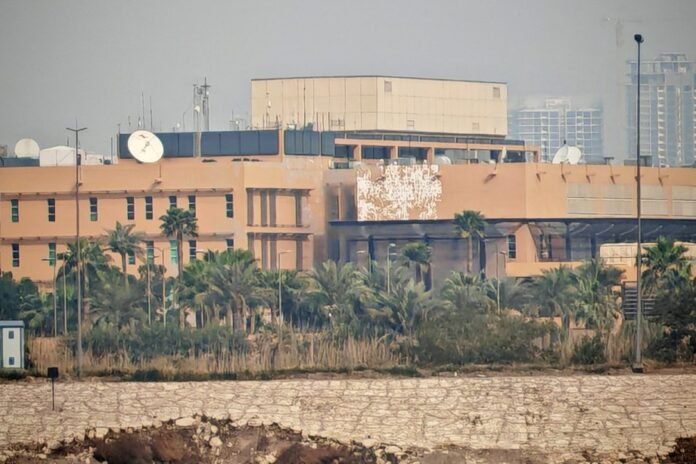
The US Embassy in Baghdad urged American citizens in Iraq on Thursday to maintain heightened readiness following a drone attack in the northern city of Erbil a day earlier, Anadolu reports.
In a security alert, the mission advised Americans in Iraq to monitor local media and follow instructions issued by local authorities, warning that travel disruptions and airspace closures could occur with little notice.
The embassy reiterated the State Department’s Level 4 “Do Not Travel” advisory for Iraq, citing “terrorism, kidnapping, armed conflict, civil unrest” and Washington’s limited ability to provide emergency assistance to US citizens in the country.
READ: US launches 5th consecutive night of strikes against Iran: Central Command
“Do not travel to Iraq for any reason,” the advisory said.
US citizens planning to leave Iraq were urged to confirm flight schedules with their airlines before traveling to airports, as departures could change on short notice.
The notice came after several explosions were reported in Erbil on Wednesday evening. The Erbil-based Rudaw Media Network said that the blasts were caused by air defense systems intercepting a drone.
It came amid escalating tensions between the US and Iran over the Strait of Hormuz, with the two sides exchanging attacks despite a Pakistan-mediated memorandum of understanding aimed at ending their conflict and reaching a lasting peace agreement.
READ: The lesson of time: What Iraq might learn from Japan’s two devastating experiences