Assad Cousin Sentenced to 30 Years in US Narco-Terrorism Case
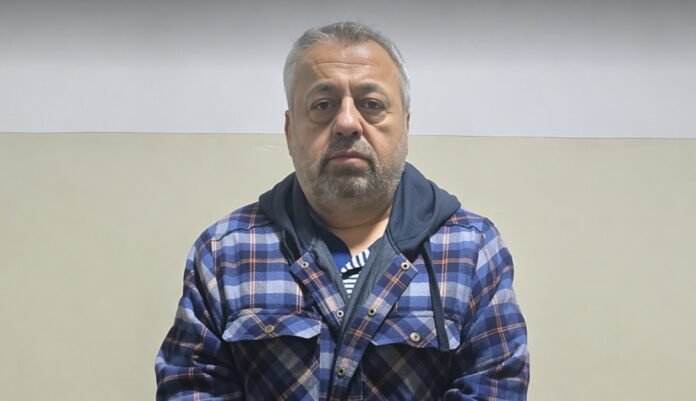
Antoine Kassis, a cousin of former Syrian President Bashar Assad, has been sentenced to 30 years in a US prison after being convicted in a transnational narco-terrorism case involving cocaine trafficking, military-grade weapons and support for Colombia’s National Liberation Army (ELN).
US prosecutors said Kassis, 59, used his connections within the former Assad regime to arrange the exchange of weapons for hundreds of kilograms of cocaine in a scheme involving co-conspirators based in Colombia and Mexico.
According to court records and evidence presented at trial, Kassis agreed beginning in April 2024 to provide assault rifles, machine guns and missiles diverted from Syrian military stockpiles to the ELN in return for 500 kilograms of cocaine. Authorities said the arrangement was valued at approximately $14 million.
The ELN is a Colombia-based terrorist organization designated by the US Secretary of State as a Specially Designated Global Terrorist Organization.
Prosecutors said Kassis told participants in the deal that he was working directly with General Maher Assad, brother of former President Bashar Assad, and other senior Syrian military officials. He also claimed the Syrian government would facilitate the shipment of cocaine through the Port of Latakia, where he allegedly paid the government $10,000 for each kilogram imported.
The investigation found that Kassis traveled from Lebanon to Kenya to meet what he believed was an ELN weapons inspector before signing an agreement to import a container of fruit from Colombia to Latakia that was intended to conceal the cocaine shipment. Authorities said the purported buyers and the weapons inspector were undercover US law enforcement agents.
Evidence presented at trial also alleged that Kassis retained access to weapons supplied to the Assad regime by Russia and Iran even after the regime’s fall.
Prosecutors said Kassis and his associates laundered nearly $100 million in less than 18 months for transnational criminal organizations, including the Sinaloa Cartel and Hamas.
Following his arrest in Kenya, Kassis was extradited to the United States in May 2025. A federal jury subsequently convicted him of narco-terrorism and providing material support to a foreign terrorist organization. The case was investigated by the Drug Enforcement Administration’s Special Operations Division Bilateral Investigations Unit with assistance from US and international law enforcement agencies.
Chemical accidents rise as Trump administration proposes weakening safety rules
Physicist Ronald Koopman appeared at a Southern California Air District meeting in 2018 to talk about what seemed like an arcane scientific topic: hydrofluoric acid dispersion and water mitigation testing.
Hydrofluoric acid, also known as hydrogen fluoride or HF, is used to manufacture a range of materials, including refrigerants, gasoline, fluorine-based pesticides and fluoropolymers like those used to make Teflon. It’s also one of the most corrosive and dangerous chemicals known. Koopman conducted experiments with the chemical in the 1980s that warned about the potential of deadly accidents at facilities that use the hazardous materials.
With the Trump administration poised to roll back rules intended to protect workers and communities from catastrophic industrial chemical releases, and a new analysis showing rising rates of chemical accidents, Koopman’s presentation on highly hazardous materials has taken on a new urgency.
The number of accidents involving releases of dangerous chemicals rose by 57 percent between 2021 and 2025, from 83 to 131, according to an analysis released Monday by Public Employees for Environmental Responsibility, a nonprofit that works with former government officials.
Injuries or deaths from accidents also rose, from 60 to 89 over the same five-year period, the analysis found. Incident reports released by the Chemical Safety Board (CSB), an independent agency that investigates chemical accidents, show that more than 650 accidents occurred between April 2020 and May 2026, with 103 resulting in fatalities, 355 causing injuries and 314 doing “substantial property damage.”
Close to 150 million people live within 3 miles of these facilities. Historically underserved and overburdened populations, including people who identify as Black and Latino, are at greatest risk of exposure to an accidental release.
Many refineries were built before 1985, the analysis notes. “With each passing year the risk gets greater because the infrastructure continues to age,” said Jeff Ruch, senior counsel at PEER.
The 1980s HF experiments were run by Koopman, who now runs Hazard Analysis Consulting, on behalf of the oil company Amoco (later acquired by BP) to understand how the highly toxic refinery chemical would behave in a spill.
The test was a “spectacular success” in demonstrating what could happen and how serious the problem might be, Koopman said at the air district meeting. When they released 1,000 gallons of the noxious chemical, they expected it to pool on the ground and emit a small quantity of gas. Instead, a billowing “ground-hugging” mist formed, allowing the deadly gas to travel miles downwind, considerably farther than anyone thought possible.
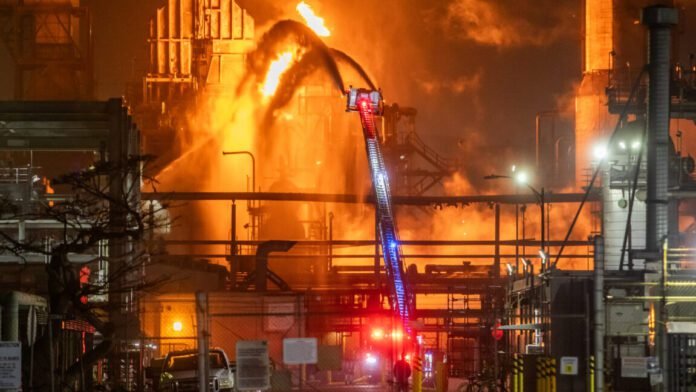
Years later, after a series of fiery explosions at a hydrofluoric-acid unit at the Philadelphia Energy Solutions refinery rocked the surrounding South Philadelphia neighborhood in 2019, Koopman told NPR, “it’s just unconscionable” to allow people to live so close to these refineries.
The accident released more than 5,000 pounds of the chemical. The neighboring mostly Black and brown South Philadelphia neighborhood was spared thanks to “favorable wind conditions,” the CSB said.
“We had tried and failed to induce EPA to phase out hydrogen fluoride at these refineries,” said Ruch. “The refineries are near population centers, and the release of the gas could be just a horrible tragedy.”
Exposure to 170 parts per million of hydrogen fluoride for 10 minutes can cause death or serious injury.
After the massive Philadelphia refinery explosion, PEER petitioned the EPA to ban hydrogen fluoride in 2019. The agency refused to consider the petition.
Close to 50 refineries use hydrogen fluoride and have reported more than 200 accidents resulting in serious injuries and deaths to the EPA over the past 25 years, according to the nonprofit Public Health Watch. The refineries represent just a fraction of the 12,000 facilities that use certain hazardous substances and are regulated by the EPA’s Risk Management Program under the Clean Air Act.
The new statistics released by PEER were made public as a result of a lawsuit PEER and other groups filed to compel the Chemical Safety Board to disclose industrial chemical releases as required by the Clean Air Act. A federal judge ruled in 2019 that communities have a right to know what hazardous chemicals are released nearby.
Yet Trump’s EPA removed a public data tool designed to inform communities of nearby risks last year. President Trump has also tried to eliminate the Chemical Safety Board by withholding funding, though Congress has continued to fund the agency.
Earlier this year, the administration proposed to significantly weaken RMP rules finalized in 2024 “to reduce regulatory burden” and accepted public comment on the rules until early May.
The Biden administration’s strengthened RMP rules require a number of measures to reduce the risk of catastrophic accidents, including safer-alternatives analyses, independent analyses of accidents’ root causes, worker participation in accident-prevention plans and preparations to adapt to climate change.
An EPA spokesperson said the agency is reviewing public comments and continues to work toward completing the final rule in late 2026.
“EPA’s proposal relies on a rigorous analysis of RMP reportable incidents between 2014 and 2023, which shows accidental releases unequivocally declined significantly over that period,” the spokesperson said. “This means that RMP-regulated facilities had successful prevention programs in place before the Biden EPA finalized its nonsensical and burdensome 2024 rule.”
The Biden EPA used the same data and came to the opposite conclusion, said PEER’s Ruch. Plus, he added, “the conclusion that any decline is due to industry prevention plans is a supposition which the current EPA does not have the data to support.”
“With each passing year the risk gets greater because the infrastructure continues to age,” Ruch said. At the same time, he added, “the federal response to it is shrinking.”
This article originally appeared on Inside Climate News, a nonprofit, non-partisan news organization that covers climate, energy, and the environment. Sign up for their newsletter here.
Graham Platner Has Already Inspired Another Left-Wing Veteran to Take On an Establishment Dem
Eoin Higgins is the author of “Owned: How Tech Billionaires on the Right Bought the Loudest Voice on the Left.”
When Maine Democratic Senate hopeful Graham Platner sealed the deal on his resounding primary victory in June, the oysterman turned political lightning rod sounded a note of defiance — one that resonated with another would-be candidate across the country.
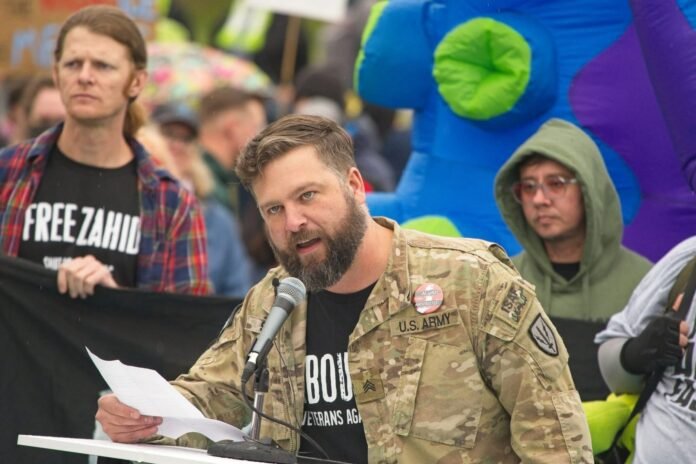
In Washington state, Alex Scheel, who is also a veteran of the U.S. wars in Iraq and Afghanistan, saw Platner’s win and decided to take the plunge. He officially launched his congressional bid to unseat incumbent Rep. Marilyn Strickland on June 13.
“Platner is an inspiration for this, he’s got a similar background to me with the veteran thing,” Scheel said in an interview with The Intercept. “I think Americans are so tired and disengaged. … There’s hope for more left-wing candidates to challenge Trump and the corporate Democrats.”
At 38, Scheel is a few years younger than Platner, but he’s a more seasoned organizer; a longtime member of Democratic Socialists of America, Scheel has been his local branch’s housing justice chair, secretary-treasurer, membership coordinator, and campaign coordinator.
Scheel’s hopeful that his experience with the DSA — which is currently enjoying electoral upsets in Colorado and New York — as well as the political moment that Platner and other insurgent candidates have tapped into will propel him through the state’s August 4 primary. Like California, Washington has jungle primaries, where the top two finishers (of any party) advance, meaning that if his long-shot candidacy pays off, he wouldn’t have to beat Strickland outright until November.
“People are hungry for normal, regular, working-class people to step up.”
“People are hungry for normal, regular, working-class people to step up and say, ‘If we get together, we can build power, and we can make America, we can make the world a better, safer, peaceful place,’” Scheel said. “It’s obvious that we’re ready for that. Whether it’s Mainers or whether it’s Washingtonians, we don’t want the same old neoliberal politics.”
While more left-leaning than many of their peers, Platner and Scheel are part of a large cohort of veterans running for office this cycle. According to data from the advocacy group With Honor, which tracks veterans in politics, 2026 has seen a 47 percent increase in candidates with military backgrounds from 2024, with 752 running so far, up from 513.
Born in San Diego in 1987 and raised in northern Michigan, Scheel joined the military in 2007. He served as an interrogator in Iraq until 2011 and in 2012 worked in intelligence in Afghanistan. That experience “radicalized” him, Scheel said. Speaking to men his age who were potential “enemies,” he instead found common ground with their frustration and could relate to their rage.
“As an interrogator, I sat and talked to Iraqis and Afghans every day and got to know them and got to understand where they were coming from,” he said. Scheel said his interaction with one man, Muthanna, sticks with him in particular. He told Scheel “how the Americans came in, invaded, bombed the electricity plants, and bombed water treatment plants. They had four hours of electricity a day and no clean drinking water, [the U.S.] killed his dad in the invasion, and they threw his uncles into prison.”
Scheel continued, “He was painting this horrible picture. I had enough empathy to put myself in his spot and go, ‘Holy shit, I would do the exact same thing. I would join any sort of group that tried to defend my country and my family and friends.’”
In 2014, Scheel left the military and relocated to Washington, where he attended Evergreen State College. Four years later, he got involved in community activism after joining the Tiki tenants fight in Tacoma, where a developer attempted to displace poor, disabled, and elderly tenants of an apartment building. (While the organizers won some concessions, the project ultimately went forward.)
“Because of my service, I realized that our government is often just straight-up lying to you,” Scheel said. “We can go bomb and kill and do all this horrible shit in the name of democracy or whatever, and your average person doesn’t know it.”
While Democrats can point to politicians like New Jersey Gov. Mikie Sherrill as proof of concept that veterans get elected, it’s not, necessarily, an indicator of long-term success.
For decades, centrist Democrats, perhaps most notably Rahm Emanuel during his time as chair of the Democratic Congressional Campaign Committee, have looked to recruit veterans to topple popular Republican incumbents, often to little lasting electoral success. In the last 10 years, liberals have poured money into losing campaigns like Kentucky’s Amy McGrath, MJ Hegar in Texas, and Marcus Flowers in Georgia, with the hope that moderates and disillusioned Republicans would cross the aisle.
Scheel is disrupting that model by running on Medicare for All and housing justice, among other progressive policies he believes will resonate in his 10th Congressional District, which includes the left-wing cities of Tacoma and Olympia. He faces an uphill climb: The establishment Democratic incumbent has around $800,000 campaign cash on hand and the backing of the local party. But he’s betting that his time organizing in the area will help to narrow that disadvantage. He’s raised around $5,000 so far, he said.
In a sign of how the party’s primary contests are splitting down new lines, Scheel is setting himself apart from Strickland by running an anti-war campaign that highlights his opposition to military aid to Israel. Adam Arafat, a fellow veteran who is also running in Washington’s 10th District, led off a candidate questionnaire question about the issues in the race by saying he would refuse “corporate PAC money and AIPAC money.”
Nationally, there is a real hunger for change — and Scheel believes he can offer a new way forward. The party establishment is failing a base that’s expecting them to fight and stand up for what’s right and has been repeatedly disappointed. Scheel told The Intercept he believes Democrats, including his opponent Strickland, have fallen down on the job, which has created an opening for the left wing of the party.
“This last presidential campaign failed because they didn’t deliver on their promises to fight Trump and to make the country a better place,” he said. “Standard of living is horrible, affordability is horrible, and it shows in their polling. Their polling is almost as bad if not worse as Trump. So there’s an opportunity.”
Cargo vessel comes under attack off Yemen’s Red Sea coast, British maritime agency says
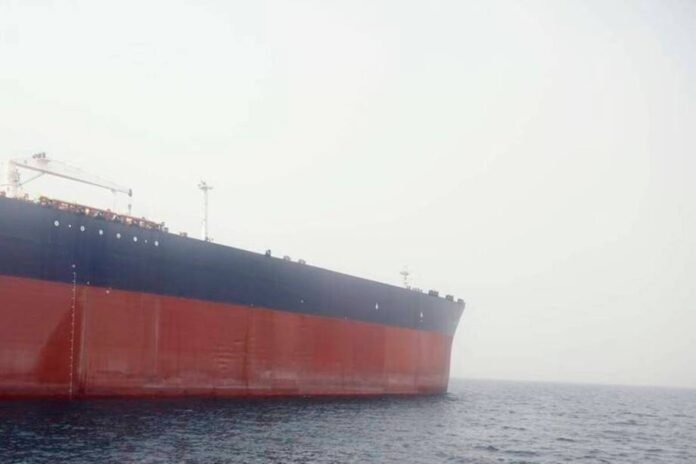
A cargo ship came under attack on Sunday off Yemen’s Red Sea coast, the UK Maritime Trade Operations (UKMTO) center said, Anadolu reports.
UKMTO said it has received a report of an incident 30 nautical miles southwest of Al Hudaydah.
“A cargo vessel has triggered a distress alert stating that they are under attack by unknown armed assailants,” it added on US social media company X.
Authorities are investigating the incident, the agency said, urging vessels operating in the area to exercise caution and report “any suspicious activity.”
No further details were immediately available.
READ: Houthis declare ‘total’ ban on Israeli maritime navigation in Red Sea
Pakistani police have arrested four men in connection with the alleged kidnapping, gang rape, and extortion of two foreign women in Lahore.
The case has sent shockwaves through the country and ignited intense public scrutiny after the principal suspect was identified as a close relative of Deputy Prime Minister and Foreign Minister Ishaq Dar.
The victims, identified as Stephanie Adriana Mo-Asim of the Netherlands and Astrid Robinson Bracho of Venezuela, traveled to Pakistan on June 29.
According to the First Information Report (FIR), the women accepted an invitation from the primary suspect, Muhammad Raza Dar, whom they had initially met in Singapore in October 2025.
Investigators revealed that Dar had facilitated the women’s Pakistani visas prior to their arrival.
The complaint alleges that shortly after arriving in Lahore, the women were taken to a residence in the city’s upscale Defence Housing Authority (DHA) neighborhood.
Once inside, they were unlawfully confined, repeatedly sexually assaulted, robbed, and threatened with knives and a firearm.
Information obtained by The Media Line indicates that the suspects subsequently demanded a $1.5 million ransom from the victims’ families in exchange for their safe release.
The investigation escalated rapidly after the father of one of the victims placed an overseas call from Spain to Lahore Police’s Rescue 15 emergency helpline, reporting that his daughter and her friend had vanished after traveling to Pakistan and that the family was receiving ransom demands originating from Lahore.
Police sources noted that the emergency complaint prompted an immediate, high-priority response from the Punjab government because the victims were foreign nationals. The Dutch ambassador to Pakistan also became directly involved upon learning of the incident, further accelerating the operation.
Within two hours of receiving the emergency call from Spain, police successfully traced the women to the DHA residence, rescued them, and apprehended four suspects.
Alongside the principal suspect, Muhammad Raza Dar, authorities arrested Hassan Raza, Sikandar Khan, and Sajid Ali. Law enforcement continues to search for a fifth suspect, identified by police sources as Ali Dar.
Lahore Deputy Inspector General (Operations) Faisal Kamran told reporters that medical examinations of the victims found evidence of rape.
“We have obtained the physical remand of the four suspects to recover the weapons allegedly used in the crime,” Kamran stated.
When questioned directly about the principal suspect’s relationship to Deputy Prime Minister Ishaq Dar, Kamran did not dispute the reported family relationship.
“Even if he is related to him, the law is equal for everyone. The police are under no pressure, and the operation was carried out on the directions of Punjab Chief Minister Maryam Nawaz,” Kamran said, adding that investigators are pursuing the case without political interference or preferential treatment.
Neither Ishaq Dar nor Pakistan’s Foreign Office had publicly commented on the reported family connection at the time of publication.
A Lahore court has placed the four arrested suspects on physical remand to allow investigators to collect forensic evidence and continue their search for the remaining suspect. In its written order, the court directed authorities to present the suspects again on July 8 following the expiry of their remand, along with a progress report on the investigation.
Meanwhile, Senator Faisal Vawda described the case as a “national disgrace” and called on Deputy Prime Minister and Foreign Minister Ishaq Dar to resign over the alleged involvement of his close relative.
In a statement posted on X, Vawda said Dar no longer had the moral authority to remain in office. He also accused the government of attempting to suppress the case by treating it primarily as an extortion investigation rather than a rape case and alleged that authorities were making efforts to facilitate the early departure of the two foreign women from Pakistan.
The government has not publicly responded to Vawda’s allegations.
Beauty Queen Makes Shocking Accusation About Ivana Trump
A former international beauty queen has made a stunning new allegation about Ivana Trump, claiming Donald Trump’s first wife helped bring young women into Jeffrey Epstein’s social circle in much the same way as convicted sex trafficker Ghislaine Maxwell.
Beatrice Keul, a former Miss Switzerland and Miss Europe contestant, made the explosive claim during the final installment of a three-part interview with PunchUp, a Substack publication launched by the Daily Beast.
Keul, now 55, alleges Ivana acted as a trusted and reassuring presence at glamorous, high-end events where young women could be introduced to powerful men and later isolated.
“Ivana played a major role in this whole cosmos, bringing in women in the same way as Maxwell,” Keul told the outlet.
“Was Maxwell a madam or an enabler? However you would describe her, Ivana was the same.”
The claim has not been independently verified.
PunchUp said it has seen no evidence that Ivana knew about, participated in, or helped carry out any criminal activity connected to Epstein.
Ivana, the mother of Donald Trump Jr., Ivanka Trump and Eric Trump, died in 2022 at age 73. She was never charged with any crime related to Epstein.
Keul said she encountered Donald and Ivana Trump at the 1993 Donald J. Trump American Dream Pageant, where she alleges she saw Ivana interacting with contestants in a way she now compares to Maxwell’s role in Epstein’s operation.
Keul has also accused Donald Trump of groping her during the event, when she was a 23-year-old banking executive and model. She further claims Trump threatened her if she spoke publicly about the alleged encounter.
Trump has denied all allegations of sexual assault and harassment, describing them as “unequivocally false.” He has also said he never met some of the women who have accused him of misconduct.
Keul has separately alleged that Epstein identified her as his intended “prey.”
Trump and Epstein were known to socialize during the 1990s and were photographed together at parties, including at Trump’s Mar-a-Lago estate in Florida. Their relationship reportedly ended sometime in the 2000s.
The White House has insisted Trump “has been totally exonerated on anything relating to Epstein.”
Maxwell was convicted in 2021 of helping Epstein recruit and sexually abuse underage girls. She is currently serving a 20-year federal prison sentence.
PunchUp said Maxwell’s representatives did not respond to a request for comment.
Keul’s claims add another dramatic chapter to the continuing scrutiny surrounding Epstein’s powerful social circle. However, no evidence has been publicly produced showing that Ivana Trump knew about or assisted in Epstein’s crimes.
Iranian president criticises international silence over Israeli actions
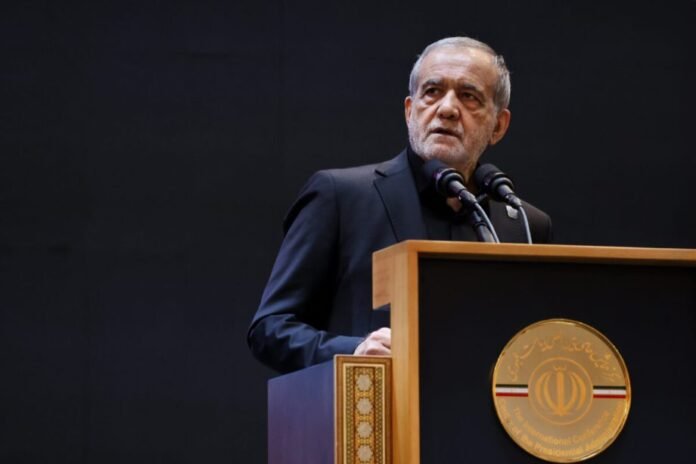
Iranian President Masoud Pezeshkian on Saturday criticised international institutions for what he described as their failure to stop Israeli actions in the region, saying global bodies have remained silent while Israel openly speaks of assassinations and targeted killings, Anadolu reports.
Speaking at a conference in Tehran’s Summit Hall held in commemoration of slain former Supreme Leader Ali Khamenei, Pezeshkian said international organisations and human rights advocates were expected to prevent such actions, but instead political and logistical support was being provided.
He said Israel attacked multiple countries in the region and was responsible for many of the crises and instability across the Middle East, adding that Muslim countries had not initiated such aggression.
Pezeshkian also referred to the beginning of a “new leadership” for the Islamic community, saying the current leadership bears a heavy responsibility and that his government would continue working toward the ideals of the revolution, strengthening Islamic unity and expanding solidarity among Muslim nations.
The remarks came as funeral ceremonies for Khamenei got underway in Tehran, where thousands of mourners gathered at the Imam Khomeini Mosalla Mosque.
READ: Iran rejects UK-France Hormuz statement, warns against foreign military presence
Khamenei was killed in joint US-Israeli strikes on Iran on Feb. 28, which triggered weeks of war before a ceasefire was reached under Pakistan’s mediation in April, followed by an interim deal in June.
According to the official schedule, memorial ceremonies will continue in Tehran through the weekend with the participation of heads of state, senior officials and religious figures.
Public farewell ceremonies are scheduled for Saturday and Sunday, followed by the main funeral procession in Tehran on Monday. The funeral rites will then move to Qom on July 7.
On July 8, ceremonies are scheduled in Iraq, including in Baghdad, Najaf and Karbala, where the body will be received by religious and political figures before being transferred to major Shia shrines.
The final funeral and burial ceremony is scheduled for July 9 at the Imam Ali Reza Shrine in the northeastern city of Mashhad, one of Shia Islam’s holiest sites.
NATO gathers in Ankara amid efforts to reduce friction with Trump
NATO leaders gather next week in Ankara, where Europeans aim to set aside strife with U.S. President Donald Trump over Iran and Greenland and show they are stepping up to defend the continent as Washington cuts back on its commitments to the alliance. NATO Secretary General Mark Rutte says the gathering next Tuesday and Wednesday will show Europeans are honouring pledges to hike defence spending to deter Russia from any attack, with arms deals worth tens of billions of dollars to be signed. Leaders are also expected to vow to keep funding weapons for Ukraine’s fight against Russia’s invasion. Ukrainian President Volodymyr Zelenskiy will attend a dinner hosted by Turkish President Tayyip Erdogan, who will also hold bilateral talks with Trump. European officials say they hope Trump’s strong relationships with Erdogan and Rutte will ensure a smooth summit but cannot be sure, given lingering transatlantic bitterness over the Iran war and the U.S. president’s frequent criticism of NATO.
Here is a look at the main challenges facing NATO in the months and years to come:
KEEPING TRUMP IN
NATO officials say one of their primary goals is to maintain unity and keep the U.S. committed to the alliance’s Article 5 clause, which specifies that an attack on one of its members is an attack on all.
The alliance faced two crises this year which have fuelled tension in the transatlantic relationship: U.S. President Donald Trump’s demands for ownership of Greenland, an autonomous territory of NATO-member Denmark, and his anger at NATO allies over their response to the Iran war.
The U.S. president branded the alliance a “paper tiger” and said he was considering withdrawing from NATO. The alliance’s Secretary-General, Mark Rutte, has sought to smooth over tensions, using a mix of flattery and data to persuade Trump that European NATO members are fulfilling their promises.
BURDEN-SHIFTING
The Trump administration has pushed European governments to take on primary responsibility for the conventional defence of Europe as Washington seeks to dedicate more resources to the Indo-Pacific.
Some changes are already under way: Washington has decided to shrink the pool of U.S. military capabilities available to NATO in a crisis, and European NATO members have filled almost all the gaps. U.S. Defense Secretary Pete Hegseth has also announced a new review of America’s troop deployments in Europe and threatened to withhold some U.S. dues to NATO if “free-riding” allies did not meet their defence spending commitments.
European officials say they are working to step up on defence. But some have also questioned the U.S. approach, arguing that a transition requires time and raising concern about the unpredictability of policy coming from Washington.
SPENDING MORE
European NATO members and Canada are under significant pressure to boost defence investment both to improve deterrence and defence against Russia and to demonstrate to Trump that they are taking his demands for burden-shifting seriously.
At a summit in the Hague last year, NATO leaders backed the big increase in defence spending that Trump demanded, pledging to spend 5% of GDP on defence and defence-related measures within a decade. Countries pledged to spend 3.5% of GDP on core defence — such as troops and weapons — and 1.5% on broader defence-related measures.
NATO’s European allies and Canada increased defence spending by 20% in 2025 compared with the previous year in real terms, according to alliance data. But not everyone is on a trajectory to meet the new goals, and a number of governments are starting to run into political difficulties with defence spending.
INDUSTRY
With European NATO countries boosting defence investment, a major challenge for the alliance is how to turn money into new military capabilities in a short timeframe.
In Ankara, NATO members are expected to announce tens of billions of dollars in new contracts. But some officials have expressed frustration that production has not increased at the pace they had hoped and that it still takes years to get some orders.
NATO’s leadership has called on industry to work together, open new production lines and deliver more quickly.
DETERRING RUSSIA
NATO leaders meeting in Ankara are expected to reiterate that Russia poses a long-term threat to Euro-Atlantic security.
While alliance officials say Russia is grappling with significant economic problems and Ukraine has strengthened its position, Rutte has cautioned that nearly half of Russia’s state budget is now dedicated to defence and that the alliance cannot be naive about Moscow.
UKRAINE
European NATO members are continuing to finance aid for Kyiv, more than four years since Russia’s full-scale invasion.
Money is channelled in various ways, including bilateral assistance, a European Union loan and the Prioritised Ukraine Requirements List initiative where European countries pay to supply Ukraine with U.S. weapons.
While most European leaders say they are committed to continuing to support Kyiv, sustaining a high level of funding remains a challenge amid other demands on national budgets and concern in some capitals that some European governments are contributing disproportionately more than others.
Assassination Concerns Keep Mojtaba Khamenei From Father’s Funeral
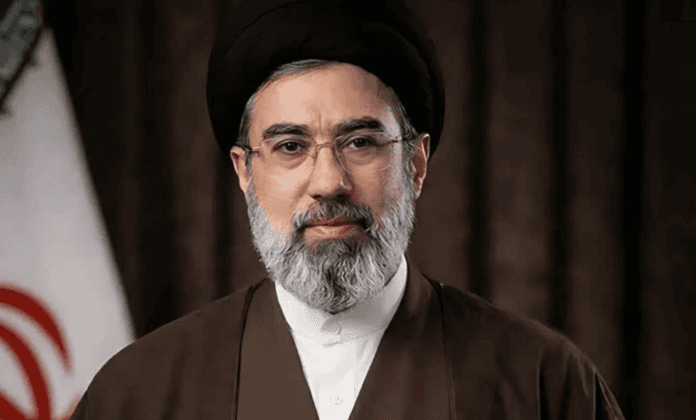
Iranian security officials have barred Supreme Leader Mojtaba Khamenei from attending the funeral of his father, former Supreme Leader Ali Khamenei, after determining that a public appearance could expose him to a potential assassination attempt, the New York Times reported.
The newspaper, citing two members of the Revolutionary Guards and an individual involved in organizing the funeral, reported that Mojtaba Khamenei wanted to attend the ceremonies and personally recite the funeral prayer over his father’s body. Security officials, however, rejected the request because they feared Israel could target him or use the event to identify his location.
Mojtaba Khamenei has not been seen publicly since Ali Khamenei and several members of his family were killed in an airstrike on Feb. 28.
Iran has meanwhile begun a series of funeral events for the former supreme leader. Iranian state media reported Friday that Ali Khamenei’s body was transferred to the Imam Khomeini complex in Tehran, where coffins containing his remains and those of several relatives have been placed on public display ahead of ceremonies scheduled from July 4 through July 9.
Authorities expect the multi-city funeral events to attract millions of mourners.
Iranian President Masoud Pezeshkian has invited foreign leaders and official delegations to participate in the funeral and burial ceremonies. The Times of India reported that invitations were sent to Russia, China, India and Pakistan.
Iranian officials also issued a warning to the United States and Israel against carrying out military action during the funeral period.
Ali Abdollahi, commander of Khatam al-Anbiya Central Headquarters, said in a statement carried by state media: “We warn the enemies of Iran, especially the US and the Zionist regime (Israel), to avoid any miscalculation and to think about the harsh retaliation our armed forces would make to any threat and aggression against our country.”
Gardener Dies After Bamboo Stake Spears Him in Groin in Freak Castle Accident
A beloved gardener died in a gruesome freak accident after he was speared in the groin by a bamboo cane while working at a historic castle estate.
Norman MacKenzie, 68, was trimming topiary hedges at Darnaway Castle on the Moray Estate in Elgin, Scotland, when he slipped while climbing down a step ladder and crashed onto a bamboo stake sticking out of a flowerbed.
The cane plunged into his groin, leaving the father of two with what officials later described as a “blunt, penetrating and dirty injury.”
In a tragic twist, MacKenzie initially turned down medical treatment.
But after he noticed severe swelling in his genitals, he sought urgent medical help and was rushed to a hospital in Elgin before being transferred to Aberdeen Royal Infirmary in September 2024.
At first, the longtime estate worker appeared stable.
Then his condition took a horrifying turn.
While waiting for surgery, MacKenzie developed blood poisoning and necrotizing fasciitis, a fast-moving bacterial infection sometimes known as “flesh-eating disease.”
Doctors fought desperately to save him, but MacKenzie died on Sept. 21, just four days after the freak accident.
The tragedy stunned his family and coworkers.
MacKenzie had spent 40 years working for Moray Estates and was described as one of the most experienced and respected members of the team.
A fatal accident inquiry at Elgin Sheriff Court later uncovered a series of troubling details surrounding the deadly incident.
Sheriff David B. Harvie found that MacKenzie could reasonably have been given antibiotics under Grampian Health Board guidelines because the wound had been contaminated by the bamboo cane.
The inquiry also heard that MacKenzie did not receive surgery within the target time because medical staff were dealing with other emergencies.
The missed deadline was later recorded as a system failure.
However, the sheriff said there was no evidence proving that the delay caused or contributed to MacKenzie’s death.
The inquiry also found that the deadly fall might have been avoided if MacKenzie had been using a safer platform-style ladder.
The sheriff said MacKenzie should not have been cutting hedges at height because of existing medical conditions.
Despite the shocking findings, no formal recommendations were issued because the estate and the health board had already made changes following the tragedy.
Moray Estates has since removed every bamboo cane from its sunken gardens and flowerbeds.
The company also overhauled its supervision and accident-reporting procedures, admitting that a worker’s years of experience should never replace proper oversight.
Andrew Howard, managing director of Moray Estates, said MacKenzie’s death devastated everyone who knew him.
“Norman was a key member of our team for 40 years and a highly respected colleague,” Howard said.
“We were all devastated at his untimely death and still miss him. Our thoughts remain with his family, who continue to mourn his loss.”
The health board also admitted that its system for recording discussions about serious medical cases had not been good enough.
NHS Grampian has since changed how it documents internal reviews and missed surgical target times.
Geraldine Fraser, the health board’s chief officer for acute services, offered condolences to MacKenzie’s family and said the inquiry found that doctors made reasonable decisions based on the information available at the time.
“We have since made system and process improvements for how we record meetings and review surgical target times,” Fraser said.
Sheriff Harvie also offered his condolences to MacKenzie’s grieving family and friends after the horrifying workplace death.