16.7 C
London
Saturday, July 18, 2026
Home Blog

How a Man Once Ordered to Pay Libel Damages Helped Launch an Investigation Into Islamic Private Schools

0
how-a-man-once-ordered-to-pay-libel-damages-helped-launch-an-investigation-into-islamic-private-schools
How a Man Once Ordered to Pay Libel Damages Helped Launch an Investigation Into Islamic Private Schools

Nearly a decade ago, a British court ordered a man named Sam Westrop to pay the equivalent of more than $173,000 in libel damages after he published an article on his website calling the founder of a London-based Islamic TV channel a “convicted terrorist.”

Westrop eventually admitted the underlying evidence for the claim was not reliable, according to court filings, and corrected the story on his website.

“There simply was no evidence to support the allegation of terrorism,” the judge in the case wrote.

Years after that ruling, Westrop made similar claims about a group of Islamic private schools in Texas that had applied to the state’s new voucher program. He alleged the school leaders had connections to Islamic extremist or terrorist groups, such as Hamas. Westrop shared his research as early as last fall with the Texas Comptroller of Public Accounts, which oversees the voucher program that awards eligible families taxpayer dollars for private education or homeschooling.

In December, acting Comptroller Kelly Hancock asked the state’s top lawyer if the agency could exclude from the voucher program an unnamed number of schools with supposed ties to the Chinese Communist government or that had hosted events for the Council on American-Islamic Relations, a Muslim civil-rights group. A month later, Texas Attorney General Ken Paxton ruled that it could.

Westrop’s allegations, along with claims made by several others, were among the primary reasons the comptroller’s office investigated the schools and delayed their admittance in the voucher program, according to new legal filings.

The scope of the investigations was also far broader than what was previously known, the filings show. The state used taxpayer money to contract with two investigators to dig into the histories of nearly 50 private schools across the state with alleged ties to radical Islamic organizations and the Chinese government — a number that far exceeds what has been reported.

The extent of the state’s probe and Westrop’s involvement are detailed as part of a new trove of legal filings in a lawsuit four Islamic private school campuses filed against the state comptroller in March after the agency initially kept them out of the program. It draws heavily on an eight-hour deposition of Murl Miller, the comptroller’s chief counsel for general litigation, taken in May as part of the lawsuit.

While the comptroller has since accepted all of the investigated schools into the voucher program, the schools that pursued the legal action are still asking the judge to certify a class-action lawsuit to ensure the comptroller can’t discriminate against certain private schools in the future.

“Religious liberty is not a temporary pass issued after a lawsuit,” said Eric Hudson, an attorney representing the Islamic schools. “We’re pressing on so equal treatment is the rule — not an exception granted under pressure.”

The comptroller’s office has objected to certifying the lawsuit as a class action, saying it shouldn’t be allowed to continue since the four Islamic campuses were ultimately allowed into the voucher program. The state’s lawyers also maintain that a class-action claim is outside the jurisdiction of the current court and case.

“Plaintiffs received not only the initial approval they sought, but also the continuing ability to participate in the Program on the same footing as all other approved providers and families,” the state’s June 26 filing said.

The debate over whether to allow the schools into the voucher program has come amid a wave of anti-Muslim rhetoric among some elected officials and prominent political candidates in Texas and across the country. At the state Republican Party convention last month, members tried to remove Muslims as delegates. Dr. Rick Scarborough, a former Southern Baptist pastor, told a Muslim attendee he wanted him to leave the event. (Scarborough later clarified to The Texas Tribune he wanted him to leave the country and admitted he had some regrets about the interaction.) In November, Texas Gov. Greg Abbott designated CAIR a foreign terrorist organization. Florida’s governor soon followed with his own accusations. CAIR is part of a lawsuit against Abbott and Paxton challenging the enforcement of the governor’s designation, saying he issued it “without due process and in violation of federal law.” The case is ongoing.

In the months since the Islamic schools’ lawsuit was filed, the comptroller’s office has maintained that its leaders did not purposefully single out certain schools. Instead, agency officials said that the Islamic schools were swept up in a wider review of some 700 private schools that were accredited by Cognia, a nonprofit that vets tens of thousands of schools worldwide. The agency has said it did not know which schools had Islamic connections but instead set aside the entire group after discovering not all had up-to-date accreditations, which are mandated to qualify for the Texas voucher program. Cognia could not be immediately reached for comment.

Miller’s deposition, however, contradicts the state’s claim.

In the deposition, Miller said the agency began receiving information as far back as last summer that identified almost 50 schools with alleged links to the Chinese Communist Party or extremist groups. He also confirmed that the third-party researchers hired by the comptroller only examined those particular campuses out of the more than 2,600 private schools now approved for the voucher program.

The filing also said the comptroller initially approved at least one of the Islamic schools represented in the lawsuit for the voucher program, Bayaan Academy, then later removed it two hours after Westrop shared some of his research in January via email.

Miller’s deposition cited a range of sources that prompted the comptroller’s investigations into the schools, including Westrop, a regional Homeland Security Task Force launched last summer to “combat emerging threats from transnational criminal organizations in Southeast Texas,” congressional hearings probing potential terrorist activities in Texas and the RAIR Foundation, an activist and investigative journalism organization combating “the threats from Islamic supremacists, radical leftists and their allies.”

Miller spoke with Westrop on the phone at one point this year. He told lawyers Westrop appeared credible.

“Did you Google Mr. Westrop?” Hudson asked during the May deposition.

“I did not Google, no,” said Miller, who added that the investigators the state hired confirmed his credentials.

“Did they make you aware of a defamation judgment against him for falsely accusing someone of being a terrorist?” Hudson asked.

“No, they did not,” Miller replied.

Westrop, who could not be reached for comment, was hired this year by the Texas Public Policy Foundation, an influential conservative think tank based in Austin. He has continued raising allegations on at least one podcast that extremist groups will take advantage of the school voucher program funding.

Westrop later published his research, which he had shared with the comptroller, on Middle East Forum, a website founded in 1994 that “promotes American interests in the Middle East and protects the West from Middle Eastern threats.”

Miller said in his deposition that the comptroller’s office is “not readily prepared to do investigations and to do deep research into foreign terrorist organizations or any other accusation.”

The comptroller, instead, handed over the list of accused schools provided by Westrop and others to two third-party counterterrorism researchers, Reuben Katz and Lara Burns, a retired FBI agent who now works with George Washington University’s Program on Extremism.

Katz and Burns, who could not immediately be reached for comment, provided the agency with dossiers on each school. Their research included cross-referencing accused school leaders against government terrorism and extremist group databases.

The comptroller ultimately allowed in all of the schools alleged to have Islamic terrorist or Chinese Communist Party ties.

The Islamic school plaintiffs have said their inclusion in the program is still not guaranteed long term and they hope a class-action suit could help change the comptroller’s processes that allowed the agency to delay their admission in the first place.

The filing pointed to a March 24 letter Hancock sent the state attorney general, in which he continued pushing claims linking the Houston Quran Academy’s principal to the Muslim Brotherhood. In the letter, he says the school had been “temporarily” approved for the voucher program but called for its removal. (The school could not be immediately reached for comment; the Houston Chronicle previously reported that Principal Hamed Ghazali said the school has no ties to CAIR and is “purely academic.”) Hancock asked Paxton, whom the comptroller had been feuding with over the attorney general’s legal strategy in the investigation, to highlight what he called the school’s “terror ties.” He urged the attorney general to strip the school, “and any other school with documented ties to terrorism,” of its corporate charter. (Hancock has since announced he will step down from his position as acting comptroller at the end of this month.)

Of Hancock’s comments, Miller said in his deposition, “There’s a lot of mistakes and misstatements in this particular letter, but again, I’m not the acting comptroller.”

“We,” Miller said, had determined the accusations of terrorist ties were not accurate. “This letter came completely out of the blue, and — and so this was a surprise to all of us.”

An attorney for the plaintiffs asked whether the comptroller has the authority to remove a school from the approved list, overriding the agency’s own internal research. Miller opposed the notion multiple times before conceding at one point.

“It’s possible, yes,” Miller said.

Israeli drone strike on funeral gathering in central Gaza kills 8, injures 20

0
israeli-drone-strike-on-funeral-gathering-in-central-gaza-kills-8,-injures-20
Israeli drone strike on funeral gathering in central Gaza kills 8, injures 20

At least eight Palestinians were killed and 20 others injured Friday when an Israeli drone struck a civilian gathering during the funeral of a Palestinian who had been killed earlier by Israeli forces in the Nuseirat refugee camp in central Gaza, despite a ceasefire, Anadolu reports.

The strike raised the number of Palestinians killed in Israeli attacks across Gaza since dawn Friday to 13 and to 25 over the past 72 hours, according to Gaza authorities.

Al-Awda Hospital in the Nuseirat refugee camp said in a statement that it received the bodies of eight people and treated 20 injured after an Israeli strike targeted a gathering of civilians in the Al-Balata market area.

Eyewitnesses told Anadolu that the drone targeted Palestinians gathered outside the Ahmad Yassin Mosque as they waited to begin the funeral procession.

The funeral was for a Palestinian who had been killed by Israeli forces earlier Friday, the witnesses said.

Videos circulating on social media showed several bodies and wounded people lying on the ground, with blood covering their clothes and bodies.

Commenting on the attack, the Gaza Media Office said the Israeli army had killed more than 25 Palestinians over the past 72 hours in attacks targeting markets, funerals, civilian gatherings and residential homes.

In a statement, the office said it was “following with grave concern the systematic criminal escalation carried out by the Israeli occupation army against unarmed civilians in Gaza, in blatant defiance of all agreements, conventions, customs and international humanitarian law.”​​​​​​​

It added that “the killings and the war of genocide continue at an escalating pace, carried out through a policy of bombing popular markets, funerals, peaceful civilian gatherings and safe residential apartments over the heads of their inhabitants.”

The office said the attacks “constitute a clear entrenchment of a policy of terrorism directed against every living being in the Gaza Strip.”

The attack came as Israel continued to violate the ceasefire agreement that has been in effect since Oct. 10, 2025.

According to Gaza’s Health Ministry, Israeli ceasefire violations had killed 1,127 Palestinians and injured 3,643 others as of Thursday.

The ministry says Israel’s military campaign in Gaza since October 2023 has killed more than 73,000 Palestinians and wounded over 173,000, while causing widespread destruction to about 90% of the enclave’s civilian infrastructure.

Knesset Dissolves, Setting October Election After Flurry of Final Legislation  

0
knesset-dissolves,-setting-october-election-after-flurry-of-final-legislation  
Knesset Dissolves, Setting October Election After Flurry of Final Legislation  


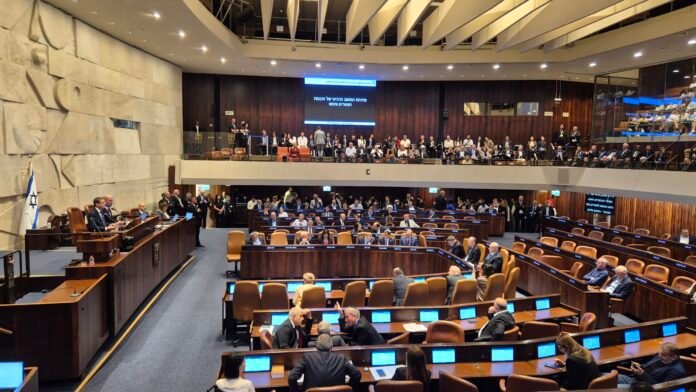
Israel’s Knesset voted overnight Thursday to dissolve itself, clearing the way for parliamentary elections on Oct. 27, after lawmakers approved a series of high-profile measures on military service, judicial reform and media regulation before ending the current legislative session.  

Until a new government is formed, the current administration will remain in office in a caretaker capacity, with its authority generally limited to routine government business.  

Attention now shifts to the election campaign, as political parties prepare candidate lists, negotiate alliances and begin nationwide efforts to win seats in the 120-member Knesset.  

Before voting to dissolve parliament, lawmakers passed several pieces of legislation touching on some of Israel’s most closely watched domestic issues.  

Among them was a temporary measure extending mandatory military service from 30 months to 32 months. The legislation is intended to help the Israel Defense Forces meet operational requirements and address continuing security needs.  

At the same time, the Knesset approved bills that may increase exemptions for the ultra-Orthodox community from military service. One measure establishes Torah study as one of Israel’s Basic Laws. Lawmakers also approved legislation to halt the arrest of haredi draft evaders.  

The legislative package also included a measure allowing gender-segregated academic programs for advanced degrees.  

In addition, lawmakers approved changes to the country’s communications regulatory framework and passed legislation separating the responsibilities currently held by the attorney general.  


Will Russia’s answer to the Falcon 9 rocket ever take flight?

0
will-russia’s-answer-to-the-falcon-9-rocket-ever-take-flight?
Will Russia’s answer to the Falcon 9 rocket ever take flight?

Everyone seems to be launching and landing rockets these days.

Last week, China joined the club of countries that have launched an orbital mission and brought its booster safely back to Earth, which is just the beginning of public and private ventures in that country aggressively pushing into rocket reuse. Also in Asia, Japan’s space agency has been conducting hop tests, and Honda recently performed vertical reuse tests.

In the United States, of course, SpaceX launches and lands reusable rockets every few days. Blue Origin, although its New Glenn booster is temporarily grounded, has also demonstrated the ability to both land and re-launch a large orbital booster. Other US companies, including Stoke Space, Rocket Lab, and Relativity Space, are all making credible progress toward partially or fully reusable rockets.

So what about Russia, which boasts a storied history of spaceflight and conducted the world’s first orbital launch nearly seven decades ago? There was some news this week from Russian space officials, but it does not exactly bolster confidence.

Waiting on Amur

Nearly six years have now passed since the state-backed Russian space corporation, Roscosmos, unveiled plans to develop a reusable rocket called “Amur-LNG.” Clearly designed in response to SpaceX’s Falcon 9 rocket, Amur was intended to have a reusable first stage, methane-powered engines, and be capable of delivering 10.5 metric tons to low-Earth orbit in reusable mode.

At the time, Russian space officials said they planned to debut the rocket in 2026, so basically right about now.

This week, in an interview with the RBC business publication, a senior Russian rocket official provided some new information about the developmental timeline for the Amur rocket. Dmitry Baranov, Roscosmos’ Deputy Director General for Rocket Programs, said the current focus is on developing a “demonstrator” for the first stage of the rocket.

This hopper vehicle, likely reminiscent of SpaceX’s Grasshopper test bed, is intended to undergo two tests beginning in 2028. During the first of these, the vehicle will rise to an altitude of less than 1 km, with its engine running the whole time, before returning to the location it launched from. The second test will be more ambitious, with the rocket launching to 10km, shutting off its engine, and then restarting to land on deployable legs.

Such a timeline seems plausible, as Russian officials have previously disclosed that the RD-0169A rocket engine intended to power the Amur rocket is in the preliminary stages of test firings.

Soyuz 2 is probably safe for now

The goal is for this vehicle to, in Baranov’s words, “definitely and fairly quickly” replace the Soyuz 2 rocket that is presently the workhorse of the Russian space program. This rocket is currently used for both Russian crew and cargo launches to the International Space Station.

When might that happen? Baranov did not offer a new target date in the interview. But earlier this year, we got an indication from the Roscosmos State Corporation’s booth at the International Security Forum in May. A placard about the Amur-LNG rocket indicated that it would begin flight tests in 2031.

To summarize, when the Amur rocket was announced in 2020, its flight date was scheduled for 2026. Some six years later, its projected launch date has moved five years into the future.

The only reasonable conclusion is that Russia’s answer to the Falcon 9 rocket will not arrive any time soon, and it is unlikely to do so until at least two decades after SpaceX first landed an orbital rocket.

Andy Burnham to be made UK Labour leader on way to becoming prime minister

0
andy-burnham-to-be-made-uk-labour-leader-on-way-to-becoming-prime-minister
Andy Burnham to be made UK Labour leader on way to becoming prime minister


Andy Burnham, ​nicknamed the ‘King of the North’, will become leader of Britain’s governing Labour Party ‌on Friday, the final step before becoming its seventh prime minister in a decade on a pledge to thwart the rise of the populist Reform UK.

At a ‘special conference’ on Friday, Burnham, who earned the regal moniker ​for his determination as mayor of Greater Manchester to defend the region’s interests, will ​be elected after gaining overwhelming support from Labour lawmakers.

The event is little more ⁠than a formality before he replaces Keir Starmer as Britain’s leader on Monday, when the party ​will be eager to find out his cabinet team and learn more about his approach to ​government.

BURNHAM’S BIG ‘REBALANCING OF POWER’

Burnham, 56, has given one speech since returning to parliament last month by winning a parliamentary seat in Makerfield, the start of a four-week process to install him as prime minister and remove ​Starmer, whose unpopularity across Britain turned his lawmakers against him.

In it, he sketched out some ​of his domestic agenda, saying he wanted to oversee the “biggest rebalancing of power” from London to Britain’s regions – ‌something he ⁠believes will reduce inequality and reduce the anger felt by ‘left-behind communities’ who have increasingly flocked to Reform.

That message of having a plan to thwart the rise of Reform won over Labour lawmakers, who feared they would lose their parliamentary seats to veteran Brexit campaigner Nigel Farage’s populist ​party, which has topped ​the opinion polls for ⁠months, at the next national election, due by 2029.

Some of that sheen has been tarnished in recent weeks by Farage’s acceptance of funds ​from wealthy donors, perhaps giving Burnham an opening to revive Labour’s fortunes.

Yet ​he does ⁠not have much time.

With a general election no more than three years away, Burnham will need to start implementing some of his pledges, many of which are based on long-term thinking, as fast ⁠as possible.

Nigel ​Wilcock, executive director at the Institute of Economic Development, ​an independent body representing economic development professionals, said Burnham had spent years making the case for a different approach to economic ​growth:

“The challenge is turning that vision into a reality.”

Source:  Reuters

Shocking New Toy Sparks Backlash with Parents

0
shocking-new-toy-sparks-backlash-with-parents
Shocking New Toy Sparks Backlash with Parents


A new doll is already raising eyebrows online before it even hits store shelves — and parents are not quite sure whether to laugh, learn, or look away.

Toy company Zuru has debuted the My Mini Baby Mom & Surprise Doll, a pregnant doll that comes with a removable stomach, a tiny plastic newborn, and what may be the most talked-about toy accessory of the year: a realistic-looking amniotic sac filled with slime.

Yes, really.

The toy’s unusual “birthing” feature has quickly gone viral after U.K. content creator and mom Louise Boyce, known online as @mamastillgotit_, posted a video unboxing the doll and reacting in real time to its very hands-on delivery process.

The doll, which is currently available for pre-order in the U.K., according to Today.com, lets kids remove the mom doll’s belly, pull out the amniotic sac, and squeeze it until the baby pops out along with a bit of goo. After the birth, the stomach piece can be flipped around so the doll has a flat tummy again.

“Unbox your precious newborn: Each mini mom doll comes ready to give birth to a unique baby, complete with a soft swaddle blanket,” the toy description on Amazon reads.

The internet, unsurprisingly, had plenty to say.

In Boyce’s now-viral clip, she appears both fascinated and horrified as she demonstrates the doll’s birth process. At one point, she jokingly questions the toy’s family setup.

“I do have a question. Where’s Ken?” she teases. “I mean, I get that she had a C-section, the baby was breech. Where’s Ken?”

She also jokes about the doll’s remarkably quick post-baby bounce-back.

“Also, if she could share her fitness routine, that would be great,” Boyce says. “Those abs after a C-section, damn.”

Viewers flooded the comments with reactions ranging from amused to deeply unsettled. Some called the doll educational, while others said the design was a little too realistic for comfort.

“As a midwife I have NEVER seen a c-section incision performed in a circle…..that’s new,” one commenter wrote.

“Oh!! No one ever explained that I just flip my stomach around,” another joked.

“I can’t decide if this is educational or terrifying or a bit of both,” someone else admitted.

Another viewer summed up the collective confusion with: “What in the amniotic fluid is going on here?”

The doll also comes with a newborn baby, swaddle blanket, and baby accessories, according to its online listing.

While some parents see the toy as a quirky way to introduce kids to pregnancy and birth, others think the slime-filled delivery may be a little much for the playroom.

Zuru did not immediately respond to PEOPLE’s request for comment.

Taco Bell iceberg lettuce identified as source of cyclosporiasis in 5 states

0
taco-bell-iceberg-lettuce-identified-as-source-of-cyclosporiasis-in-5-states
Taco Bell iceberg lettuce identified as source of cyclosporiasis in 5 states

Federal officials on Friday announced that shredded iceberg lettuce imported from Mexico and served at Taco Bell restaurants in five states is a source of Cyclospora, the foodborne parasite causing the nationwide surge in cases of explosive, watery diarrhea. The five states are Indiana, Kentucky, Michigan, Ohio, and West Virginia.

A traceback investigation by the Centers for Disease Control and Prevention and the Food and Drug Administration identified a single supplier in Mexico as the source of iceberg lettuce for Taco Bell restaurants where sick people reported eating. While federal authorities did not name the supplier, sources told the Washington Post that it is Taylor Farms.

Taylor Farms was also implicated in a 2024 multi-state E. coli outbreak linked to contaminated onions served at McDonald’s and other fast-food restaurants. At the time, FDA inspectors found multiple violations at a Taylor Farms facility in Colorado.

Amid the current outbreak, the FDA and CDC urge consumers not to eat iceberg lettuce from Taco Bell restaurants in the five listed states. They note that shredded iceberg lettuce sold in grocery stores or served in other restaurants has not so far been implicated.

Cyclosporiasis cases have been reported in 34 states, with multiple clusters and outbreaks suspected. The CDC is reporting 1,645 laboratory-confirmed cases nationwide, including 141 hospitalizations, but state and local health departments report much larger case tallies, which also include probable cases.

Michigan, which has been hit hard in the Taco Bell-linked multi-state outbreak, reported 5,002 cases as of July 17, along with 102 hospitalizations.

In the Wake of Fatal ICE Shootings, Democrats Drag Their Feet

0
in-the-wake-of-fatal-ice-shootings,-democrats-drag-their-feet
In the Wake of Fatal ICE Shootings, Democrats Drag Their Feet


Democrats in Congress have remained largely silent and inactive in the wake of ICE agents’ fatal shootings of two immigrant men in Maine and Texas, displaying lackluster energy compared to the party’s response to the killings of two white U.S. citizens earlier this year. 

By early March, after federal immigration agents shot and killed Renee Good and Alex Pretti in Minneapolis, 32 Democratic members of Congress had called to either abolish or dismantle Immigration and Customs Enforcement, including three members who had previously voted to “express gratitude to ICE.” Democrats rapidly introduced legislation to restrict, defund, or abolish the federal immigration agency. And for months, Democrats in the House successfully blocked funding of the Department of Homeland Security with the unrealized goal of obtaining minor restrictions on immigration agents. 

Although protesters took to the streets in Maine and Texas in the ides of summer to object to ICE’s killing of 25-year-old Johan Sebastián Durán Guerrero in Biddeford and 52-year-old Lorenzo Salgado Araujo in Houston, that glimmer of enthusiasm for action appears to have died down in the halls of Congress.

“I’ll be honest. I’m not seeing [anger] to the extent I saw when Alex and Renee were executed by ICE in Minnesota. … I’ve seen some statements come up, and some conversations, but it has not been elevated to the extent that I would expect from a number of my colleagues,” said Rep. Delia Ramirez, D-Ill. “It feels like we’re normalizing it.”

Democrats caved on DHS funding in April, and with some exceptions, most of the caucus has been silent on the existing bills to restrict the agency. Progressives have criticized their colleagues for not continuing to fight against funding the Department of Homeland Security, and for only acting in a moment of heightened political attention. 

In January, Ramirez and Rep. Yvette Clarke, D-N.Y., introduced the Melt ICE Act, a bill that would end DHS funding to detain or monitor immigrants. The legislation, which Ramirez says is “not all things” but represents a meaningful step toward dismantling the entire agency, currently has 12 co-sponsors, including members of the progressive Squad and two retiring members who will leave Congress at the end of the current term.

Ramirez said she had hoped to pick up additional backing in the wake of Durán Guerrero and Salgado Araujo’s killings, but she has yet to hear from any additional co-sponsors — even from colleagues who were calling to “Abolish ICE” in February and sharing press releases with the words “Melt ICE” in them.

The Chicago congresswoman said she worried that the lack of action had to do in part with the fact that Pretti and Good were white U.S. citizens, and Durán Guerrero and Salgado Araujo were noncitizens from Colombia and Mexico, respectively. She noted that one of the first fatal ICE shootings under the second Trump administration — of undocumented Mexican immigrant Silverio Villegas González last September in Chicago — rarely gets mentioned.

“Why is it that for some, when the person seems to be lighter-skinned, a U.S. citizen, the uproar seems to be deeper?” Ramirez said. “And why was it that his name seems to be a name that many people don’t know?”

While political energy remains low, the Department of Homeland Security continues to be a lethal force. On Tuesday morning, a man in Florida running from immigration officers was struck by a semi-truck, marking the third time a person had been killed during an encounter with immigration agents within a week.

Violence has surged within detention centers as well. Within the first 500 days of Trump’s second term, 52 people have died in ICE custody, the highest mortality rate in over a decade, according to a recent report from Human Rights Watch and Physicians for Human Rights. On Monday, Jesús Manuel Arenas-Silva, a 45-year-old Venezuelan man died in a private prison used for ICE detention in Georgia in an apparent case of medical neglect. 

Meanwhile, ICE has punished protesters who object to its brutality with more violence. Physicians for Human Rights and the UC Berkeley Law School’s Human Rights Center documented 412 incidents between June 2025 and May 2026 where law enforcement agents used excessive force or chemical weapons on ICE protesters, children, journalists, legal observers, and bystanders.

Dr. Rohini Haar, an adjunct professor of epidemiology at UC Berkley’s School of Public Health and lead author of the use-of-force study, said lawmakers should not allow these attacks to be met with “impunity” just because there is less impending political pressure.

“Do not ignore this just because it’s less newsworthy,” said Haahr, who is also a medical adviser for Physicians for Human Rights. “You’re going to keep getting [violence] when no one is held accountable.” 

Progressives, including Ramirez, have criticized their colleagues for not anticipating that the violence would continue once DHS funding was fully restored. In April, House Democrats agreed to fund the Department of Homeland Security under a two-track model that would immediately fund most of the Department and push ICE and Border Patrol funding through a separate process that would not require any Democratic support. In June, Republicans voted to fund ICE and Border Patrol to the tune of $70 billion.

“I said this a couple of weeks ago, that I would not be surprised if, when ICE funding started up again, we would start to see more civilian deaths at the hands of ICE,” Rep. Alexandria Ocasio-Cortez, D-N.Y., who did not co-sponsor Melt ICE, told reporters on Monday. “And that’s exactly what has happened.”

The Intercept asked whether the congresswoman planned to co-sponsor Ramirez’s legislation and was directed to her public statements on the DHS funding measure. The Intercept also reached out to Progressive Caucus Chair Greg Casar, D-Texas., who is also not a co-sponsor of the legislation, to ask if he planned to co-sponsor the bill in the wake of the Texas shooting, but did not receive a response.

Although anger has bubbled up again in protests across the country, the public’s attention does appear to have waned since its peak in January after federal immigration agents fatally shot Good and Pretti. 

Manisha Sinha, an American history professor at the University of Connecticut, said there are several potential reasons for lowered attention on Salgado Araujo and Durán Guerrero’s deaths. The Trump administration has changed its tactics to deemphasize cities where protesters and local leaders could jointly resist immigration enforcement, as they did in Minnesota. And, undoubtedly, the fact that “Alex Pretti and Renee Good were citizens” added to the public outrage over their killings, said Sinha. 

Without the same intensity of pressure from voters as there was in winter and spring, Ramirez said many of her colleagues are not motivated to take principled positions on immigration that might anger their deep-pocketed donors. But she said she understands that people may also be wary of risking their lives while members of Congress go about their business as usual. 

“People in the street don’t feel like the members on the inside really have the pulse of what’s happening to them, and that frankly they’re fucking tired,” Ramirez said. “And I hate that I have to ask them to keep showing up. But knowing this body, I know that this body only moves from pressure.”

Shoshana Bryen, Asia Times contributor, dies

0
shoshana-bryen,-asia-times-contributor,-dies
Shoshana Bryen, Asia Times contributor, dies

Shoshana Bryen. Photo: Jewish Policy Center

Shoshana Bryen, senior director of Washington’s Jewish Policy Center and editor of inFOCUS Quarterly, died on Thursday, July 16, 2026.

She was a longtime contributor to Asia Times of articles often written in collaboration with her husband, former US Under Secretary of Defense Stephen Bryen.

She died after “a long struggle with cancer,” according to her husband, who survives her along with four children and five grandchildren. “She was truly a woman of valor.”

According to the Jewish Policy Center’s obituary:

Shoshana devoted her life to the security of the Jewish people and strengthening the alliance between the United States and Israel. She spent more than three decades at the Jewish Institute for National Security of America (JINSA).

In 2012, Shoshana brought her experience and moral clarity to the Jewish Policy Center. Shoshana was the intellectual heart of the JPC. She served as Senior Director and edited inFOCUS Quarterly into a serious and widely read journal of ideas and policy. She brought clarity, conviction, and a lifetime of expertise in American defense policy and Middle East affairs to everything she touched.

Her voice was fearless and unmistakable, and her insight shaped the thinking of countless colleagues, readers, and leaders.

A leading specialist in U.S. defense policy and Middle East affairs, she worked with the Strategic Studies Institute of the US Army War College and the Institute for National Security Studies in Tel Aviv, lectured at Israel’s National Defense University and reached a broad public through decades of columns and commentary. 

Those who sat across the table from Shoshana will remember that she was, more often than not, the smartest person in the room, but never once made anyone feel it. She listened before she spoke. She gave younger colleagues room to think, and credit when they earned it. Her intelligence was matched only by her generosity, and generations of analysts, officers, and writers owe part of who they’ve become to her leadership.

Shoshana devoted herself to the security of the United States and Israel and to the strength of the Jewish people. She mentored many and made this world better than she found it.

Read Shoshana Bryen’s final Asia Times article here.

Hegseth wants a “High-T” military; doctors call it a clinical minefield

0
hegseth-wants-a-“high-t”-military;-doctors-call-it-a-clinical-minefield
Hegseth wants a “High-T” military; doctors call it a clinical minefield

On Wednesday, Defense Secretary Pete Hegseth made the startling announcement that the US military would begin requiring all active duty and reserve personnel aged 30 and older to undergo mandatory screening for testosterone deficiency. The screenings will take place during yearly health assessments. Those under age 30 can also get screened on request.

In a short video posted on social media, Hegseth explained to the military community that the screenings and possible subsequent treatments are intended to “optimize your performance, your resilience, and your long-term health.” While saying that the initiative wasn’t about “artificial enhancement” and that members could decline treatment, Hegseth claimed that the testing and potential treatment was for “restoring and optimizing” capabilities, protecting “longevity,” and “ensuring you have the biological foundation required to sustain the fight.”

But will testosterone screening and treatment actually “optimize” our “warfighters”? Will it help most of them live longer? Should everyone else get screened and treated, too?

“A big fat ‘Oh, no’”

Screening people widely for medical conditions and then treating those who need it may sound like a huge social positive. But issues around male hypogonadism—the condition in which the body doesn’t produce enough testosterone—can be complex.

That’s why the Endocrine Society—made up of experts in the complex systems that release hormones in the body—posted a statement on the topic in the wake of Hegseth’s announcement. The document notes that “there is insufficient evidence to support a general recommendation to perform population-level screening for hypogonadism in asymptomatic men with measurement of blood testosterone level.”

To find out why, Ars Technica spoke with Professor Bradley Anawalt, chief of medicine at the University of Washington Medical Center. He specializes in endocrinology and men’s health.

“This is a great big fat ‘Oh, no,’” Anawalt said in reaction to Hegseth’s announcement. “We’re turning the clock back on rational healthcare. … I’m worried about the ethics. I’m worried about the health consequences. I’m worried about unnecessary evaluations, incorrect assessments, and incorrect diagnoses that lead to inappropriate prescriptions of testosterone.”

To understand why, let’s start with the basic question: Why might someone have low testosterone?

Causes of “low T”

Disease states that can cause low testosterone include genetic conditions, such as Klinefelter syndrome (when a male has an extra X chromosome) or a problem with the brain’s pituitary gland, which controls hormone levels in the body. Pituitary problems may come from damage, dysfunction, or tumors (which are often noncancerous).

For these patients, “It’s not difficult to make the diagnosis,” Anawalt said. Genetic tests can detect Klinefelter disease, for instance, confirming an explanation for low testosterone levels. Similarly, in patients with pituitary problems, tests for other blood hormones (such as luteinizing hormone and follicle-stimulating hormone) can confirm the source of the problem.

But these conditions are uncommon, affecting maybe 1 percent of men at most, Anawalt said.

Meanwhile, many other things can lower testosterone levels, such as: cancer treatments, medications (such as corticosteroids or opioids), anabolic steroids, obesity, HIV, surgery, trauma, stress, sleep deprivation, and the natural process of aging. Many of these causes would not necessitate testosterone replacement therapy. For someone with sleep deprivation, the best treatment would be rest, for instance.

Symptoms

In patients with true hypogonadism, the primary symptoms are lower libido, erectile dysfunction, lowered sperm count, breast enlargement or tenderness, reduced energy, reduced muscle mass, shrinkage of testes, mood changes (such as irritability or depressed mood), and hot flashes. Over time, low testosterone can cause loss of body hair, muscle bulk, and bone density, and it can reduce red blood cell counts.

In clear cases of disease, these symptoms are easy to spot. In the general population, it’s much harder.

“What’s more difficult to suss out is the men that have vague symptoms,” Anawalt said. “‘I don’t feel so good. I’m tired. My energy’s not so good. My erections aren’t what they used to be. My mood is not very good. I’m not concentrating well.’ These are all common things that people are concerned about, but they’re neither specific nor particularly common symptoms of testosterone deficiency.”

The testing process

The actual testing mechanics can also be tricky.

“Tests that measure testosterone are a disaster unless you use a CDC validated or certified testosterone assay,” Anawalt said.

In recent years, the Centers for Disease Control and Prevention began certifying testosterone blood tests for quality, accuracy, and reliability. Still, not all laboratories use certified tests. This can lead to unusual results. In addition, some laboratories use nonstandard reference ranges for what they consider “normal.”

The Endocrine Society reports that a common, generally accepted clinical threshold is near 300 ng/dL, though some clinicians may consider the threshold slightly lower, such as in the 260s.

Anawalt recalled a patient who had been diagnosed with low testosterone based on a normal testosterone test result of 489 ng/dL. The patient’s previous doctor had used a lab that considered the minimum threshold for normal to be 700 ng/dL.

“It’s a whole other topic to get into the ‘whys’ and the ‘wherefores’ of that, but it’s largely to promote prescriptions of testosterone,” Anawalt said.

Even if you use an accurate test with a high-quality reference range, testing for testosterone isn’t simple. Hormone levels fluctuate and tend to be highest in the morning. Thus, experts say the testing must be done early in the morning before eating breakfast to get morning fasting levels. They also recommend doing repeat early morning tests to confirm that a low level is consistent and not a one-off.

Standard testosterone tests also look for levels of total testosterone. “But the evidence indicates that the active form of testosterone hormone is the hormone that is not bound to anything. It’s called free testosterone,” Anawalt explained. (A key binding protein for testosterone is called the “sex hormone binding globulin.”)

This is critical because some patients may have lab results indicating a low level of total testosterone but still have completely normal levels of free testosterone—the form that seems to matter most.

This is sometimes the case for men with excess weight (a body mass index of 27 or higher). Evidence suggests that these patients have a decline in sex hormone binding globulin and that their levels of total testosterone will be low. But their levels of free testosterone may be completely fine. This can also be the case for patients with diabetes.

Even if all these issues are accounted for, testosterone replacement therapy may not be recommended. For instance, if a patient with obesity is diagnosed with hypogonadism and no other condition explains the low testosterone levels (such as a pituitary tumor), the first-line treatment is weight loss.

Testosterone replacement therapy (TRT)

Assuming a clear diagnosis of hypogonadism, TRT can reverse some of the dramatic effects of disease. Anawalt gave the example of a man with cancer who has his testicles removed. That man will face decreased bone density, muscle mass, strength, libido, and probably a shorter life expectancy.

“If you give testosterone therapy to restore that man into the normal range, you will bring bone density and bone mass up, and muscle mass and muscle strength up,” he said. “And it’s possible that it might address the concern of a shortened lifespan by a couple of years.”

For people without such a clear need, though, benefits may be nonexistent.

If you give a man with normal testosterone levels a TRT dose intended for someone who has testosterone deficiency, “You’re not going to do anything for performance,” Anawalt said.

Generally, the benefits of TRT will depend on the severity of the deficiency. But “for a 50-year-old soldier who comes back with a testosterone that is just a little low, most of these men are not going to have any substantial benefit with testosterone therapy,” Anawalt added.

The benefits Hegseth mentioned in his social media video do not appear to be widely supported by evidence. There’s no evidence testosterone will extend a healthy person’s life, for instance—though it may restore natural longevity in people with clear disease. Additionally, studies looking into the effects of TRT on cognition have found no measurable benefit.

Risks of TRT

One of the obvious concerns about Hegseth’s plan to screen young men—those in their 30s or even younger—is that TRT has real side effects.

TRT shuts down sperm production, for instance, which can thwart plans to start a family. Sperm counts can rebound once off the therapy, but the higher the dose and longer the treatment, the longer it takes to recover. After TRT treatment for a year or two, it may take six months to a year until sperm counts are back to normal.

Other risks include high red blood cell counts, acne, increased prostate size, and sleep apnea.

Some evidence of harms from testosterone stem from people who abuse the hormone, taking levels well above what would be used to bring a patient with hypogonadism into a normal range. Such doses are used based on claims that they can increase strength, particularly in athletes. Those claims were echoed by Hegseth in his announcement this week mentioning enhancement and optimization.

To test if these claims are real, a 1996 randomized controlled trial examined the use of testosterone doses at least six times higher than a normal TRT dose, and it gave them to healthy men. The trial found that the high dose did, in fact, improve strength when combined with standardized strength training.

But data from elsewhere has raised concerns about the risks of such high doses, including higher risks of cardiovascular disease and prostate cancer. The authors of that 1996 trial were themselves cautious in their conclusions. “Our results in no way justify the use of anabolic–androgenic steroids in sports, because, with extended use, such drugs have potentially serious adverse effects on the cardiovascular system, prostate, lipid metabolism, and insulin sensitivity,” they noted.

That trial only lasted for three months, so there was no data on possible long-term effects.

The Endocrine Society similarly warns that TRT is only meant for hypogonadism. “Boosting testosterone is NOT approved by the US Food and Drug Administration to help improve your strength, athletic performance, physical appearance, or to treat or prevent problems associated with aging,” the society warns. “Using testosterone for these purposes may be harmful to your health.”

Given concerns over increased cardiovascular risk, another randomized and controlled trial called TRAVERSE looked for such problems with standard TRT. The trial enrolled middle-aged and older men with hypogonadism who already had cardiovascular disease or were at high risk. The study found that conventional TRT did not raise the risk further for cardiovascular disease. But the study did signal that TRT could raise the risk of blood clots in the lungs, which is potentially life-threatening. The Endocrine Society flagged this risk in their statement this week.

Another, potentially overlooked risk that Anawalt noted is about coming off testosterone. People with clear disease will be on the hormone for the rest of their life, he said. But for those who are taking it without such a need, they may go off the therapy at some point. If they do, they will go through a withdrawal syndrome that is generally miserable.

“They feel crappy,” Anawalt said. “They won’t be making their own testosterone for months or even longer than a year.”

Screening in the military

Given the complexity of diagnosing and treating hypogonadism, Anawalt is gravely concerned about Hegseth’s plan to make screening mandatory.

“This is basically one giant experiment without consent,” he said. “It is going to lead to inappropriate evaluations, inappropriate diagnoses of testosterone deficiency, and likely going to lead to the prescription of testosterone to a number of young men.”

Further, he worries that testosterone is being seen as “magic,” driving people beyond the military to get screened unnecessarily. Anawalt himself has a six-month-long waiting list for patients looking to have their testosterone checked. One of his own family members in his 40s recently called and asked if he and his friends should go on TRT.

But the endocrine system is complex, and “simple” solutions can lead to problems. To illustrate the point, Anawalt pointed to a prior hypothesis that testosterone could be used to help people lose weight because it could boost their metabolism. At the time, this made total sense. In trials, testosterone did help people lose weight—but it also made their bone density decline. Their muscle mass also declined relative to their fat mass, and they developed irregular heartbeats.

“It seemed like a great idea, seemed intuitive,” he said. “And it was wrong.”

“We doctors, we’re not a cabal trying to withhold some secret recipe,” Anawalt said. “If testosterone was good for all men, we’d be telling everybody that. We’re not withholding information. What we’re saying is that the information available and prior experience suggests we should be cautious and do studies.”

0FansLike
0FollowersFollow
0FollowersFollow
0SubscribersSubscribe
- Advertisement -
Google search engine

Recent Posts