14 C
London
Monday, June 29, 2026
Home Blog

To beat China in the lab, America’s edge is trust not speed

0
to-beat-china-in-the-lab,-america’s-edge-is-trust-not-speed
To beat China in the lab, America’s edge is trust not speed

The United States is right to worry about losing ground to China in clinical research. But if Washington frames trial reform mainly as a race, it risks missing the larger prize: a faster, safer and more trusted model for developing medicines that the rest of the world can rely.

The Food and Drug Administration’s (FDA) new pilot program, part of a broader Department of Health and Human Services effort, aims to accelerate early-stage trials and could shorten development timelines by six to 12 months.

It responds to a real shift. More early drug research has moved overseas — to China, but also to countries such as Australia — where companies cite lower costs, faster regulatory processes, tax incentives and more efficient clinical networks.

The numbers behind America’s anxiety are striking. Federal officials say China now runs more clinical drug trials than the US, and by one estimate, it accounted for 39% of all global trials in 2024.

Those facts deserve attention. Early-stage trials are not just technical exercises; they are the front door of biomedical innovation. Where they take place shapes which patients gain early access to new therapies, which institutions build expertise, where investment flows and whose regulatory standards become the global norm.

Still, the right question is not whether America can “beat” China. It is whether the US can make its system fast enough to attract science, rigorous enough to protect patients, and open enough to produce evidence the world can trust.

The proposed reforms point in that direction. The FDA plans to give companies earlier clarity on manufacturing requirements, dose selection and approval pathways and to review some applications on a rolling basis before all documents are complete.

The agency has also reaffirmed that, in certain cases, a single high-quality late-stage trial backed by confirmatory evidence can support approval, instead of the two trials long expected.

Other agencies are moving as well. The National Institutes of Health is expected to explore new trial designs, artificial intelligence and real-world data, along with faster ethics review. Federal health-technology officials are examining how electronic health records could connect more patients to studies.

These are sensible steps. The American system is not slow because regulators dislike innovation.

It is slow because so many separate stages — trial activation, contracting, ethics review, site selection, patient recruitment, data collection and communication between sponsors and regulators — operate as disconnected layers. Each may be defensible on its own. Together, they create the friction that pushes companies abroad.

The danger is that speed becomes a slogan. If faster trials simply mean thinner evidence, weaker oversight or more pressure on patients to enroll quickly, the US will not strengthen its position. It will effectively trade one disadvantage for another. Public trust, once lost, is far harder to rebuild than a regulatory timeline.

This is where the comparison with China should be handled with care. China’s rise in clinical research is not only a story of subsidies and light regulation. It reflects deliberate investment: dense hospital networks, large patient pools, growing scientific talent and tight alignment between industrial and health policy.

The US should study these strengths honestly, without caricature. Learning from a competitor is not surrender; it is strategic maturity.

At the same time, America’s real advantage was never so much speed as credibility. FDA decisions carry global weight because the agency is seen, for all its flaws, as methodologically serious and relatively transparent. So the US should compete not by imitating another country’s model, but by making trust itself the foundation of how it innovates.

One way to do that would be to build a national network of “trial-ready” sites. Instead of treating every study as a one-off project, the government could certify standing research networks that already have master contracts, agreed-upon data standards, privacy safeguards, community engagement plans and shared ethics review. Sponsors could plug into them quickly, and patients and doctors could see which sites meet clear quality benchmarks.

A second reform would make taking part in a trial less dependent on geography. If patients must travel repeatedly to specialized centers, enrollment will stay slow and unequal. A more practical future is one in which more research happens during routine care, supported by electronic health records and stronger local networks. That would make trials feel less like rare events and more like a normal part of health care.

It also helps to separate two kinds of speed. Regulatory speed means shorter queues and clearer instructions. Evidence speed means learning faster — through smarter trial designs, better measures of success, data that moves easily between systems, and tools that detect benefits and harms earlier. The first mainly helps companies; the second helps patients. A durable reform agenda needs both.

For Asia, the stakes go well beyond a two-way contest. If the US pulls more trials back home, research centers across the region could face stiffer competition for investment. But a better outcome is possible: clinical research that is more distributed and interoperable across trusted jurisdictions.

Rather than splitting into rival blocs, regulators could compete on quality while cooperating on the essentials — data integrity, patient protection and transparency.

That would serve China, the US and the wider region alike. China has an interest in the world trusting its research. The US has an interest in learning from efficient trial systems abroad. And patients everywhere have an interest in faster access to medicines that are genuinely proven, not merely promoted.

By that logic, a new FDA initiative should be judged against three tests. Does it cut needless bureaucracy without lowering the bar for evidence? Does it widen access to trials beyond elite academic centers and big-city hospitals? And does it produce evidence that other countries can examine, reproduce and trust?

If the answers are yes, the US will do more than win back trial volume. It will redefine what leadership in biomedical innovation actually means. In an age of strategic competition, the smartest country will not be the one that turns science into another battlefield. It will be the one that shows speed and trust can advance together.

Y. Tony Yang is an endowed professor at the George Washington University in Washington, D.C.

Beloved News Anchor Steps Away From TV After Shocking Diagnosis

0
beloved-news-anchor-steps-away-from-tv-after-shocking-diagnosis
Beloved News Anchor Steps Away From TV After Shocking Diagnosis


A beloved Northern California news anchor is stepping away from the desk after more than two decades on the air, months after revealing a heartbreaking Stage 4 lung cancer diagnosis.

Monty Torres, the longtime Fox 26 KMPH anchor in Fresno, shared the emotional news with viewers in a video message Thursday night, telling the community he will not be returning to the nightly newscast.

“I promised to keep you updated on my progress since my lung cancer diagnosis, and tonight I am here to keep that promise,” Torres said.

The announcement came after a frightening health battle that began last year, when Torres suddenly disappeared from the 10 p.m. broadcast. In October, he finally told viewers why: he had been diagnosed with Stage 4 lung cancer that doctors said was inoperable and incurable.

Now, nine months later, Torres said he has received encouraging news. His symptoms have “nearly all disappeared,” and a recent biopsy of trace fluid in his lungs showed “no malignant cells present.” According to Torres, doctors did not find a trace of cancer in that sample.

Still, the veteran anchor made it clear that his fight is not necessarily over. Doctors have warned there could still be cancer elsewhere in his body.

Despite the hopeful update, Torres said the time has come for him to walk away from the news desk that made him a familiar face in homes across the Central Valley.

“After more than 20 years as part of the Fox 26 news family, I am here also tonight to sadly announce that I will not be returning to the news desk,” Torres said.

He added that he and his family plan to remain in the Valley as he continues focusing on his recovery, unless “God sends us somewhere else.”

“I will very much miss my nightly connection to my workers, co-workers and colleagues here at KMPH, and all of you,” he said.

Torres first revealed his diagnosis after weeks away from the broadcast, telling viewers at the time that he felt he owed them an explanation after spending so many years with them almost every night.

“About a month ago, I started experiencing severe shortness of breath, difficulty breathing, wheezing and coughing,” he said in his earlier message.

An X-ray showed fluid in his lungs and revealed that one of his lungs had partially collapsed. Further testing brought the devastating news: Stage 4 cancer.

“It is inoperable, due to its location, and incurable,” Torres told viewers then. “But still treatable.”

Torres has been a fixture in California news for years. Born and raised in Southern California, he began his career in Los Angeles as a weekend anchor and co-host of a community affairs program before joining KMPH in Fresno as a general assignment reporter in 1996.

He later worked at stations in Florida, Michigan and North Carolina before returning to Fresno in 2006, where he became one of the familiar faces of the Fox 26 10 o’clock news.

Torres is married to his wife, Lorretta, and the couple has six children.

His emotional goodbye marks the end of a major chapter for Fresno viewers who spent more than 20 years watching him deliver the news. But for Torres, the focus now is on family, faith and healing.

Syrian-American Jew Says Historic Chair Recovered From Old Damascus Synagogue

0
syrian-american-jew-says-historic-chair-recovered-from-old-damascus-synagogue
Syrian-American Jew Says Historic Chair Recovered From Old Damascus Synagogue


[DAMASCUS] Syrian-American Jew, Joseph Jajati, told The Media Line that a historic chair stolen from a synagogue in Damascus’ Old City’s Jewish Quarter has been recovered, crediting local residents with helping secure the return of what he described as one of the Syrian Jewish community’s most significant heritage artifacts.

Speaking exclusively to The Media Line, Jajati said he felt “immense gratitude, relief, and joy” following the chair’s recovery, describing the outcome as “a great success” for both the local community and those committed to preserving Syria’s Jewish heritage.

According to Jajati, the recovered object is not merely a piece of furniture but the Chair of Elijah (“Kisse shel Eliyahu”), a ceremonial chair that holds deep religious significance in Jewish tradition. The chair is traditionally used during circumcision ceremonies, symbolizing the presence of the Prophet Elijah.

Jajati said the chair is of exceptional historical value, explaining that it was handcrafted in Damascus around 1946 by Jewish artisans from the city’s long-established Jewish community. He described it as an irreplaceable testament to the cultural and artistic legacy left by Damascus’ Jews over centuries in the Syrian capital.

He added that the chair’s recovery would not have been possible without the cooperation of residents of the Jewish Quarter in Old Damascus, who, he said, helped track down the artifact and facilitate its return to the synagogue. Jajati expressed gratitude to everyone involved, emphasizing that protecting cultural heritage is a shared responsibility that transcends religious affiliation.

“The recovery of this chair sends a positive message about what communities can achieve when they work together to safeguard their shared historical heritage,” Jajati said. “A true community is one in which neighbors look out for one another and protect the heritage that unites them.”

Jajati did not disclose details about the theft or specify when it occurred. Syrian authorities have not issued an official statement confirming either the reported theft or the chair’s recovery.

The Jewish Quarter of Old Damascus is one of the oldest historic neighborhoods in the Syrian capital and was home for centuries to one of the Middle East’s oldest Jewish communities. Although the number of Jews remaining in Syria has declined dramatically over recent decades, several synagogues, historic buildings, and religious artifacts remain, forming part of Damascus’ rich cultural and historical landscape.

The Chair of Elijah occupies a special place in Jewish religious tradition and is among the most recognizable ritual objects used during traditional circumcision ceremonies. While its design varies among Jewish communities worldwide, antique examples often carry significant historical and artistic value, particularly when handcrafted and associated with a specific local Jewish community.

Researchers specializing in the history of Syrian Jewry note that Damascus once housed several historic synagogues containing manuscripts, religious artifacts, and finely crafted wooden and metal works dating back centuries. These collections are widely regarded as part of Syria’s broader cultural heritage, regardless of their religious affiliation, because of their historical and artistic importance.

If independently confirmed, the recovery of the chair highlights the importance of protecting religious and historical property in Syria’s ancient cities, particularly after years of conflict during which numerous heritage sites and valuable artifacts were damaged, looted, or trafficked.

Iran urges US to set timeline for ‘unconditional’ Israeli withdrawal from Lebanon

0
iran-urges-us-to-set-timeline-for-‘unconditional’-israeli-withdrawal-from-lebanon
Iran urges US to set timeline for ‘unconditional’ Israeli withdrawal from Lebanon

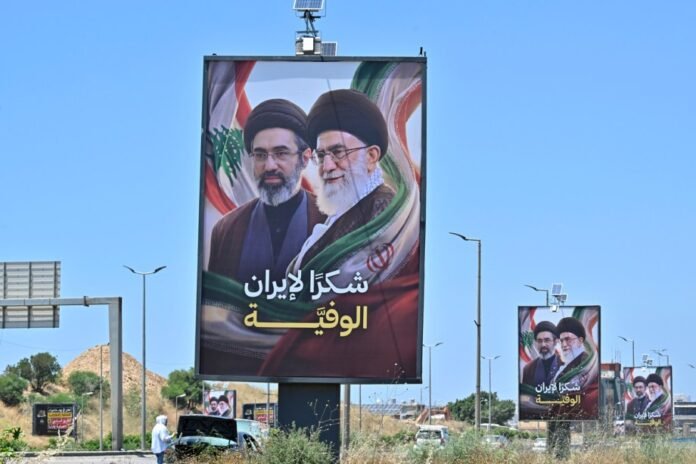
Billboards featuring the late former Iranian leader Ali Khamenei and his son Mojtaba Khamenei, who were killed in U.S. and Israeli attacks against Iran on February 28, are displayed on the Rafic Hariri International Airport highway with the text reading

Billboards featuring the late former Iranian leader Ali Khamenei and his son Mojtaba Khamenei, who were killed in U.S. and Israeli attacks against Iran on February 28, are displayed on the Rafic Hariri International Airport highway with the text reading “Thank you, loyal Iran” in Beirut, Lebanon on June 21, 2026. [Houssam Shbaro – Anadolu Agency]

Iran urged the US on Sunday to set a timetable for Israel’s “unconditional” withdrawal from occupied Lebanese territories under a war-ending memorandum of understanding signed between Tehran and Washington, Anadolu reports.

“Ending the war and military operations of the Zionist regime against Lebanon, as well as the withdrawal of occupiers from all occupied Lebanese territories, is a necessary condition for reaching a final and sustainable agreement to establish stability in the region,” Foreign Ministry spokesman Esmaeil Bagaei said in a news briefing carried by ISNA News Agency.

Bagaei said Tehran considers safeguarding Lebanon’s sovereignty and territorial integrity, as well as “the dignity and security of all Lebanese people,” as “essential” for the durability of any agreement related to ending the war with the US.

Iran has placed “ending the war and military operations of the Zionist regime in Lebanon alongside ending the war against Iran” at the top of its demands in both the April ceasefire understanding and the June 18 memorandum, he added.

Bagaei also said Iran expects Washington to fulfill its commitments under the memorandum and “take all necessary measures to force the Zionist regime to stop any aggression and military operations against all Lebanese regions.”

He added that Tehran is calling for “the swift determination of a timetable for unconditional withdrawal from occupied Lebanese territories.”

The call comes as Iran and the US continue efforts to implement a broader 14-point understanding reached following weeks of regional military escalation and diplomatic negotiations.

‘Recognizing Israel Is a Big Step but It’s Normal,’ Lebanese Politician Tells TML

0
‘recognizing-israel-is-a-big-step-but-it’s-normal,’-lebanese-politician-tells-tml
‘Recognizing Israel Is a Big Step but It’s Normal,’ Lebanese Politician Tells TML


Lebanon’s Washington framework with Israel puts Hezbollah’s disarmament, state sovereignty, and Iran’s regional role at the center of a fragile test for both Beirut and Jerusalem

The new US-brokered framework between Israel and Lebanon was signed within a larger regional architecture that remains fragile, contradictory, and far from settled.

Washington is trying to stabilize the broader confrontation with Tehran through a preliminary US-Iran memorandum of understanding, or MOU, that gives both sides 60 days to negotiate final terms. That track includes nuclear restrictions, sanctions relief, provisions related to the Strait of Hormuz, and language aimed at halting hostilities across regional fronts, including Lebanon. At the same time, the United States has placed Israel and Lebanon on a separate track: a framework tying Israel’s gradual withdrawal from Lebanese territory to the verified disarmament of Hezbollah and the restoration of the Lebanese state’s monopoly over force.

The two frameworks do not mirror one another. They expose one of the central contradictions in Washington’s regional diplomacy. The US-Iran track may open economic channels for Tehran, while the Israel-Lebanon framework seeks to prevent money, weapons, and political cover from reaching Hezbollah. One track treats Iran as a necessary party to regional de-escalation. The other implicitly removes Tehran from Lebanon’s sovereign decision-making and frames Hezbollah not as a resistance force, but as the central obstacle to Lebanese statehood and Israeli security.

The Israel-Lebanon framework, signed in Washington, sets out a sequenced process. The Lebanese Armed Forces are expected to assume responsibility in two initial “pilot zones” in southern Lebanon, where Hezbollah infrastructure is to be dismantled, and Lebanese civilians allowed to return under state authority. If the process succeeds, it is expected to expand to other areas. A security annex, which has not been made public, is understood to define the operational details.

The framework also points to a broader political shift. It does not merely speak of restoring calm along the border. It refers to Lebanese sovereignty, the disarmament of nonstate armed groups, preventing reconstruction funds from reaching armed actors, and working groups for a future comprehensive peace and security agreement. For Lebanon, the text touches the most sensitive issue in the country’s modern political history: whether the state, and not Hezbollah, has the exclusive authority to decide war and peace. For Israel, the issue is whether any withdrawal can be accepted without repeating previous arrangements that were signed but never fully implemented on the ground.

Sarit Zehavi, founder and president of Alma Center, said the most important part of the agreement may be the part that remains unpublished.

“It’s an MOU, so not all details are published. It seems like there is another part of the agreement that was not published, which is the security part,” Zehavi told The Media Line.

Zehavi said the pilot-zone mechanism remains unclear, including whether the Israel Defense Forces, the Lebanese Armed Forces, or both would be responsible for removing Hezbollah infrastructure.

From Zehavi’s perspective, the framework’s main innovation is that Israeli withdrawal is no longer based only on Lebanese assurances, but on verified steps.

“I think the positive development of this agreement, with regard to the pilot zone, is the fact that there is an understanding that Israel is withdrawing only under proven actions of disarmament in Lebanon,” she said. “This was not the case in the two previous agreements that we had in 2006 and in 2024. In both cases, we had withdrawn based on a Lebanese promise that was never fulfilled. This time, it’s exactly the opposite.”

That sequencing is also where Israeli skepticism begins. The agreement depends not only on the Lebanese army entering areas vacated by the IDF, but on Hezbollah being prevented from returning with the civilian population. For Israel’s northern communities, many of which remain scarred by months of fighting, this is the central test.

“It is clear that it’s for the Lebanese army to make sure that Hezbollah is not coming back with the civilians,” Zehavi said. “Israel will not withdraw completely if it does not have proof that any area that was evacuated by the IDF is not being used for Hezbollah to come back. That’s the main achievement from the Israeli point of view.”

Zehavi also reads the framework as politically larger than a ceasefire.

“The second achievement, which works for both sides, I think, is the fact that there is mutual recognition in the very existence of the State of Israel,” she said. “And the idea is that it’s an MOU for a peace agreement, not for a ceasefire agreement.”

That is also why Hezbollah has rejected it. The group has long justified its weapons as a necessary resistance to Israel. A framework that makes disarmament a condition for withdrawal reverses that equation: Hezbollah’s arsenal becomes the reason Israel remains, not the reason it leaves.

Hezbollah doesn’t want to be disarmed. Hezbollah wants to preserve its power.

“Hezbollah doesn’t want to be disarmed. Hezbollah wants to preserve its power,” Zehavi said.

The fear in Lebanon is that Hezbollah will frame any attempt by the Lebanese army to enforce the agreement as an attack on the Shiite community and on the “Axis of Resistance,” raising the specter of civil war. Zehavi acknowledged that risk but argued that failing to confront Hezbollah would carry its own danger.

Inside Lebanon, the framework has produced sharply divided reactions. Supporters see it as a possible exit from a perpetual state of war, a path to reconstruction, and an opportunity to restore Lebanese sovereignty. Critics, especially Hezbollah and its supporters, portray it as surrender, normalization under pressure, or an arrangement that legitimizes Israeli military presence until Hezbollah disarms.

Marwan Abdallah, head of the Foreign Affairs Department of the Lebanese Kataeb Party, said the Israel-Lebanon framework should not be read as an annex to the US-Iran track. He said the Washington framework is separate from other regional discussions and should not be linked to diplomatic processes involving Iran, Qatar, Oman, or Pakistan.

Not Islamabad, not Tehran, not Qatar, not Oman. None of these processes is linked to the framework agreement between Lebanon and Israel.

“Not Islamabad, not Tehran, not Qatar, not Oman. None of these processes is linked to the framework agreement between Lebanon and Israel,” Abdallah told The Media Line.

For Abdallah, Iran’s only acceptable role in Lebanon would be to cut off Hezbollah financially, politically, and militarily.

“As Lebanese, and I think as Israelis, we don’t acknowledge Iran’s role in our process,” he said. “If Iran wants to have a role in our process, the only role that it’s required to do is to stop supporting Hezbollah, stop financing it, stop giving it orders to support their front and to launch attacks, and help us dismantle the organization.”

“Otherwise, there’s no role for Iran, irrespective of what is mentioned in the MOU that they signed with Washington,” he added.

This is where the contradiction with the broader US-Iran framework becomes politically dangerous for Lebanon. The Israel-Lebanon framework calls for preventing money from reaching Hezbollah and other nonstate armed groups. But if Tehran receives economic relief, Lebanese critics of Hezbollah fear those resources could eventually strengthen Iran’s regional network.

Abdallah said Western assumptions that any unfrozen assets returned to Iran would go to domestic needs underestimate the ideology and priorities of the Iranian system.

But Lebanese experience with Iran and Hezbollah, he argued, points in the opposite direction.

“We know for a fact that none of the money will go to the people of Iran, and it will be used to support the terrorist activities of Iran,” Abdallah said. “So, this is a naive approach from the West and the Americans.”

Zehavi made a similar point from the Israeli side, saying the two tracks appear to work against each other. The Israel-Lebanon agreement seeks to prevent money from reaching Hezbollah, she said, while the Iran-US track could give Tehran resources that may eventually flow to the group.

“I don’t know how to solve this contradiction. This is something that America created, and they will have to solve it. Time will tell,” she added.

Still, both analysts see the Israel-Lebanon framework as a moment of possible change, even if both remain cautious about implementation.

For Abdallah, the pilot zones are a technical test of whether the Lebanese army can assert state authority and dismantle Hezbollah infrastructure village by village. He said the army could be given information through the monitoring mechanism, including from Israel and the United States, and then be asked to take control and remove Hezbollah infrastructure in one area before the process moves to the next.

He described the Lebanese army’s role as essential because it would restore authority through a national institution, not a foreign one.

“For us as Lebanese, it’s the Lebanese army that’s taking control, so it’s not a foreign army. And I think this is the best thing that can happen,” he said.

But Abdallah also argued that the opportunity came only after devastation in the south. He said Lebanon failed to act before Israel attacked, occupied the territories, and destroyed many villages, including Hezbollah infrastructure. He blamed Hezbollah for launching a war it could not sustain and then refusing to give up its weapons even after the destruction of the south.

For Abdallah, the framework should not stop south of the Litani River. If the pilot zones work, he said, the same model should be expanded across the south and eventually throughout Lebanon.

The political opening is tied to a deeper social change inside Lebanon. During the war, public discussion over peace with Israel became less taboo in some Lebanese circles. Lebanese officials, including President Joseph Aoun and Prime Minister Nawaf Salam, took sharper positions against Hezbollah than many would have expected years earlier. Israeli voices appeared on Lebanese television. Polling suggested that a growing share of Lebanese were no longer committed to permanent confrontation with Israel.

Abdallah said Aoun and Salam represent a broad parliamentary majority and are acting in line with Lebanon’s national interest. He cited recent polling that he said showed 55% of Lebanese supporting peace with Israel.

“Peace, not just cessation of hostilities, not going back to the truce of 1949,” Abdallah said.

That argument directly challenges Hezbollah’s claim that disarmament would trigger civil war. Abdallah said the term itself is being misused. A clash between political parties or sectarian groups, he said, would be civil war; an army enforcing the law against an illegal armed group would be an act of state authority.

“But when the army, the legitimate army of the country, is implementing the law and the constitution of the country, and is given an order by the president, the prime minister, and the cabinet of the country to dismantle a military group that is illegal, it’s not a civil war. It’s a terrorist organization or a military group resisting the law enforcement entities and resisting the rule of law.”

Abdallah said Hezbollah is the only actor that can turn the process violent.

“No one wants to do a civil war except for Hezbollah,” he said. “No one is capable of doing a civil war except for Hezbollah because they are the ones who are armed and have their own militia.”

He said the Lebanese state is offering alternatives, including disarmament, demobilization, and reintegration.

“We are proposing many nonviolent paths to disarm willingly, to create economic opportunities and incentives for the people who are in Hezbollah, to do a DDR process, to help them rebuild their villages, to help them go back to their villages,” he said.

“If you want to stay stubborn about what you are doing or what you are deciding because Iran asked you to, then you have to pay the price,” he added.

The recognition question may be the most symbolically important part of the framework. Lebanon and Israel have technically remained in a state of war since 1948. Even indirect acknowledgment of Israel’s legitimacy is politically explosive in Lebanon, where Hezbollah and its allies have built much of their identity around resistance.

Abdallah said Lebanon has spent too long trapped in endless war and that the moment has come to move toward peace.

“I think it’s time. No human being lives to fight. No people in the world, no country in the world exists to keep fighting all the time,” he said.

He also separated Lebanon’s national interest from the Israeli-Palestinian conflict.

“The idea of removing Israel from existence is not something that we believe in,” Abdallah said.

“There’s a problem between the Israelis and the Palestinians. It’s for the Israelis and the Palestinians to solve. It’s not for us, the Lebanese, to solve,” he said. “We are too small a country. We carried the Palestinian cause for 80 years now, and now is the time to move on.”

For Abdallah, the desire to end the war is not limited to one sect.

“The decision is clear, and it’s cross-sectarian by the way. It’s not Christian only. The Sunnis, the Druze, the Christians, and some of the Shia are fed up with the war, and we want to live in peace,” he said.

“So yes, recognizing Israel is a big step, but it’s normal. The big step would be when we find peace, and this would mean ending 100 years of conflict,” he added.

On the Israeli side, Zehavi said communities in the north are not rejecting peace with Lebanon, but they are waiting to see whether the words will become facts on the ground.

The feeling is: let’s wait and see

“The feeling is: let’s wait and see,” she said. “This agreement will only be proved to be a success if it is implemented. And this is a question, whether it will be implemented. The people here are welcoming the idea of peace with Lebanon. Nobody is against that here.”

“But since we were disappointed so many times, we want to wait and see if it will succeed,” she added.

The coming weeks will show whether Washington can manage both tracks at once: a regional bargain with Iran that does not revive Hezbollah, and a Lebanon-Israel framework that depends on Hezbollah’s weakening without collapsing Lebanon internally.

The framework’s core premise is simple but politically explosive: Lebanon cannot recover its sovereignty while Hezbollah retains an independent military role, and Israel will not fully withdraw while Hezbollah remains capable of returning to the border.

The question is whether the Lebanese state, backed by Washington and tolerated by Israel, can enforce that premise without the country being dragged into another internal confrontation. For supporters of the framework, this is the first real opening in decades. For its opponents, it is a forced surrender. For both Israel and Lebanon, it is a test of whether the end of one war can avoid becoming the beginning of another.

Why did this journal retract two 1940s papers by Max Planck?

0
why-did-this-journal-retract-two-1940s-papers-by-max-planck?
Why did this journal retract two 1940s papers by Max Planck?

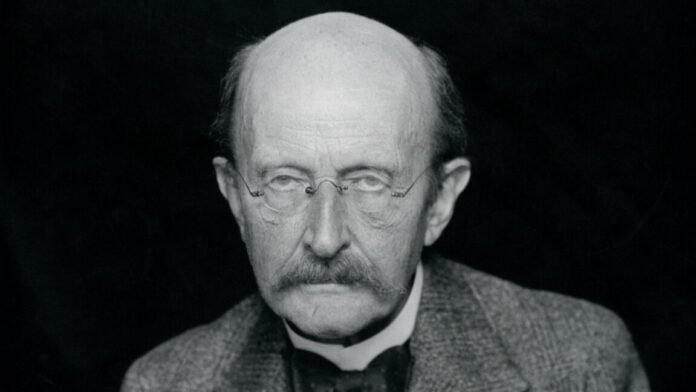
German physicist Max Planck was one of the pioneers of quantum mechanics in the early 20th century, earning the 1918 Nobel Prize in Physics for his discovery of quanta.  There has never been a whisper of scandal about the man’s integrity or his scientific work. So a pair of science historians were puzzled when they discovered that a scientific journal had inexplicably retracted two of Planck’s papers from the 1940s.

The journal in question is Naturwissenschaften, now known as The Science of Nature.  The journal typically adds a large RETRACTED notice across digital papers that have been retracted, leaving them available for download. But it has removed the two Planck papers entirely, leaving just a blank page (and empty PDFs) with a brief note saying the articles had been “withdrawn due to article violation.”

Physics historian Yves Gingras of the University of Quebec in Montreal was browsing the blog Retraction Watch’s list of Nobel Prize winners who have had scientific papers retracted, just out of curiosity. Gingras was shocked to see Planck’s name on the list, and enlisted fellow historian Mahdi Khelfaoui, of the University of Quebec at Trois-Rivieres, to investigate why the two papers had been retracted. They outlined their findings in a preprint posted to the physics arXiv.

The journal’s current editor-in-chief, Suzanne Scarlata of the Worcester Polytechnic Institute, told Science reporter Sam Kean that she had not known the papers had been retracted prior to Kean contacting her for comment. “That’s crazy,” she said. “I don’t understand why they were flagged. I think it just happened with their algorithm. It’s a mistake they should probably rectify.” (Kean claims Springer Nature is still selling the empty PDFs for $39.95 a pop, but I had no trouble downloading both empty files for free, for what it’s worth.)

A question of copyright?

Gingras and Khelfaoui suspected that the retractions occurred due to the journal publisher’s “misunderstanding, or ignorance, of past publication practices.” The specific reason for the retractions was copyright violation, so there was nothing wrong with the actual papers from a scientific standpoint. (Both are “philosophical reflections on the nature of scientific knowledge.”) They were able to retrieve metadata showing that the DOI records for both papers had been created in April 2005, coinciding with the large-scale switch to electronic publishing that occurred across most journals. Over time, those journals also integrated historical studies into their searchable online archives.

screenshot of empty web page of Planck paper

screenshot of empty web page of Planck paper

Gingras and Khelfaoui suspect the retraction decision was made around this time. “All this clearly suggests that some lawyer at Springer was overshadowing the process and considered these papers as problematic forms of ‘duplicate publications,’” they wrote. The first retracted paper (“Meaning and Limits of Exact Science”), was published in 1942, based on a lecture Planck delivered in Berlin the prior year. It was also published as a booklet, in another journal, and included in an anthology of Planck’s essays and lectures.

The second retracted paper (“Natural Science and the Real External World”) appeared in 1940. It had not been published or reprinted elsewhere. But a scientist named Aloys Muller published a critique of Planck’s 1931 essay on positivism that year, to which Planck responded in the same journal using the same title just a few months later. Gingras and Khelfaoui suspect the retraction was the result of a “cataloguing ambiguity” since there were two separate papers by different authors in the same journal with identical titles. This would have confused any algorithmic tool used to catch instances of duplication or “self-plagiarism,” for example.

The real issue is whether publishers of scientific journals should retroactively apply contemporary standards regarding duplicate publication or self-plagiarism to historical papers. The journal publishing norms in the early 20th century were substantially different. The emphasis was on achieving the widest dissemination of knowledge across a fragmented scientific community separated by language and geographical distance, publishing in many different journals. As a result, the boundaries were heavily blurred between lectures, conference proceedings, booklets, collected essays, published journal articles and so forth.

The scientific enterprise has since evolved to the point where it is dominated by large commercial publishing groups that are much more sensitive to protecting copyrights and turning a profit. Duplication/self-plagiarism is also more of an issue now, when publications are a major factor when it comes to hiring and promoting scientists, as well as acquiring research fundings. Applying these contemporary standards can be problematic for the “digital circulation of historical texts,” the authors concluded.

The journal’s publisher, Springer Nature, killed an editorial Scarlata planned to run addressing the issue. Springer Nature also declined to comment for the Science article, merely telling Kean through a representative that “detailed information about specific retractions is usually confidential and can only be shared with the relevant authors.”

Given that Planck died in 1947, he can’t get a direct answer either. Both papers are now in the public domain in most countries, so it’s not like copyright violation is even an issue anymore. It’s still possible to access both papers via the Internet archive. But as Gingras and Khelfaoui argue in the their preprint, removing the two papers distorts the historical record.  “Whoever did it, I don’t care,” Gingras told Science. “Just put them [back] in the database. Intellectually, it’s not acceptable.”


MLB Player’s Wife Killed in Earthquake

0
mlb-player’s-wife-killed-in-earthquake
MLB Player’s Wife Killed in Earthquake


The wife of former Major League Baseball outfielder Gorkys Hernández was killed in the devastating double earthquakes that shook Venezuela this week, leaving the ex-MLB player shattered as rescuers searched through the ruins of a collapsed hotel.

Hernández revealed the heartbreaking news Saturday in an emotional Instagram tribute to his wife, Deisy Tovar de Hernández.

“You are and always will be the queen of my life — the most beautiful, lovely, and precious woman in the world,” Hernández wrote.

The former outfielder, who played in the majors from 2008 to 2018 with teams including the Pittsburgh Pirates, San Francisco Giants and Boston Red Sox, described Deisy as the person who always helped him through his darkest moments.

“You were the one who always found a way to lift me up during hard times,” he wrote. “You were and remain the most beautiful woman of my life. You will always be with me, at every hour and in every moment.”

Deisy, 36, was reportedly inside the Hotel Eduards in La Guaira when the powerful back-to-back earthquakes struck. Several relatives of players from the La Guaira Delfines were also believed to be inside the hotel while the team was preparing to play the Aragua Tigres at the beachfront Estadio Forum de La Guaira in Macuto.

The game was suspended after the terrifying 7.2 and 7.5 magnitude quakes rattled the country. Hernández and his teammates immediately rushed to the hotel, desperate to find their loved ones.

Photos from the scene showed former Los Angeles Angels prospect Luis Viloria staring at the rubble, while Hernández was seen sitting near a fence outside the hotel, looking down at his phone as the nightmare unfolded around him.

Hernández and Deisy had only married in December 2025. She leaves behind a daughter, Vittoria Vásquez, from a previous relationship.

In his tribute, Hernández begged his late wife to give him the strength to continue.

“Fly high, my princess, my queen; may God hold you in His glory,” he wrote. “Guide me to keep moving forward and to lift up our family.”

He added, “Love you — rest in peace, my girl. Give me strength, love of my life, because we had a mission, and I am here to fulfill it.”

The tragedy grew even more chilling Friday night when Vásquez shared a message on Instagram Stories claiming that cries could still be heard coming from the rubble of the Hotel Eduards.

“As of 4:00 p.m. today, screams can still be heard from the Hotel Eduard,” the message said. “There are people still alive inside. Help is needed to move the rubble — heavy machinery is required.”

Local sports broadcaster Raúl Zambrano later reported on X that rescue teams were still searching for the wife and daughter of former major leaguer and Delfines coach Eliézer Alfonzo.

For Hernández, the loss of Deisy has left an unimaginable hole.

“You taught me to be strong through life’s challenges — which is never easy — but that is how you want me to be, and that is how it will be,” he wrote. “My warrior, Deisy Maria Tovar De Hernandez.”

Cow manure could be the next data center fuel

0
cow-manure-could-be-the-next-data-center-fuel
Cow manure could be the next data center fuel

This story was originally published by Sentient.

At first glance, Lent Hill Dairy Farm in Steuben County, New York, looks like most other industrial dairies. There are red buildings that house some 4,000 cows, a staggering manure pit, and two gigantic dome-like structures that serve as anaerobic co-digesters.

These giant machines break down manure and local food waste to produce biogas. This renewable natural gas, or RNG, is then typically transported for use as electricity, heating, and fuel. But at Lent Hill, the gas produced isn’t just heating homes or running tractors. It’s also powering an on-site cryptomine.

The operation, run by Pennsylvania-based Ag-Grid Energy, is the first of its kind in the country. The company claims the anaerobic digestion of manure and food waste could be a game-changer, not only in powering crypto, but data centers, which currently use 4.9 percent of the country’s electricity, a figure that could double by 2030.

“At the end of the day, our model is providing value to the rural area that we are in,” Rashi Akki, the founder and CEO of Ag-Grid Energy, told Sentient.

The project claims to recycle more than 45,000 gallons of food waste per day and the manure of 4,000 cows. “What we want to do is also provide, if possible through fiber optics, [the] value of the AI computing capacity to that same regional area,” Akki said.

While Ag-Grid Energy wants to work with midsize dairies to create on-site power generation for small-scale data centers, the world’s largest technology players have bigger visions. Tech giants are increasingly searching for fossil fuel alternative fuel sources to power hyperscale data centers that won’t put a strain on the grid.

Read Next

Biogas proponents — a broad coalition of industries, including agriculture, fossil fuels, utilities, and waste management — are pushing renewable natural gas, sourced in part by manure digesters, as a sustainable way forward.

In California, Microsoft has partnered with Enchanted Rock to use RNG for backup data center power. Vanguard Renewables, a waste management company and portfolio company of Black Rock, has touted RNG as “the fuel of the AI age.” Critics, however, fear the digester-to-data-center connection will give digesters an economic lifeline at a time when they’re struggling to stay online.

Renewable natural gas from digesters are touted as a drop-in energy solution, Sarah D’Onofrio, a scholar and advocate who works with digester-impacted communities across the country, told Sentient. This means the RNG can be used without changing existing fossil fuel based infrastructure, and can be added to other fuel sources like natural gas so companies could claim they are fueling data centers sustainably, according to D’Onofrio.

But researchers like D’Onofrio argue that to truly reduce emissions, we need to transition to clean energy fuels rather than rely on renewable substitutes for fossil fuels.

Read Next

“Why would you want to incorporate that [RNG] into our fuel system during the period of climate change?” she said.

D’Onofrio has helped communities in Wisconsin, Pennsylvania, Michigan, Georgia, and North Carolina defeat proposals for large-scale co-digesters. She fears data centers are creating a new, massive market for the manure-to-energy industry, which could in turn incentivize the further proliferation of factory farms.

“It attaches these industrial food operations into our energy system and makes us really dependent on them over time, because the more it becomes intermingled with agriculture, the more it’s going to concentrate agriculture,” said D’Onofrio.

Animals raised on factory farms in the U.S. produce an estimated 941 billion pounds of manure each year, which pollutes air and water in communities all over the United States. In addition to problems with leakage, digesters do not make the manure disappear. The digested waste, or digestate, is meant to be recycled, potentially into a range of products, such as fertilizer and animal bedding. But there are a number of challenges with these downstream products, from economic to environmental. Digested manure can be more polluting than manure that hasn’t been digested, according to USDA research.

In 2023, Victoria Gehrke, a community organizer who owns recreational property in Lind, Wisconsin, learned that a leader in the waste-to-energy field had proposed a co-digester in the town, touting it as a way to manage manure and reduce waste.

Gehrke and her fellow organizer Laurie Knutzen quickly discovered the impacts a co-digester would have on the community: hazardous air emissions, trucks going in and out delivering industrial food waste — and few restrictions about where that waste would come from — and water pollution. The project intended to send about 41,000 gallons of waste per day into a tributary of Walla Walla Creek, which empties into Lake Michigan.

Read Next

“These are manure and industrial food-waste processing and biogas-producing facilities, they are not ag accessories,” Gehrke said of co-digesters. “They don’t belong on ag land,” she explained, “and what they’re really doing is having our small rural communities — because we’re so vulnerable — we become sacrificial dumping grounds for the industrial waste that other big places don’t want to put in their communities.”

After more than a year of relentless community opposition, the town of Lind denied Vanguard’s application in the spring of 2024. The organizers celebrated the decision as a win for Lind, but Vanguard is still “developing and operating” more than 50 co-digesters across the country. It aims to have more than 100 completed projects by the end of 2028.

Patrick Serfass, the executive director of the American Biogas Council, told Sentient that biogas is an “excellent fit” for data centers in search of a reliable and high-capacity fuel source.

“We’re really excited about the prospect of biogas systems being able to provide power to data centers, because they can provide that reliability,” Serfass says.

Data center demand could lead to the expansion of co-digester buildouts across the country, he said. Serfass estimates that the U.S. has only built about 10 percent to 15 percent of the biogas market’s capacity.

“The data centers are going to be so hungry for power that they could eat up pretty much all of the supply that the biogas industry could create,” Serfass says.

Read Next

Vanguard Renewables makes a similar pitch. “As energy demand from data centers continues to grow, there is increasing interest in solutions that are both reliable and lower carbon,” Vanguard Renewables told Sentient in an email statement.

The company is yet to partner with any data centers directly, but they have partnered with energy delivery companies like TotalEnergies and Enbridge, and both of these companies have relationships with hyperscalers and data center operators. In November 2025, TotalEnergies signed a 15-year deal with Google to provide solar energy to support the company’s data center operations in Ohio.

Anaerobic digesters are not new. They have long been hailed as a way to reduce emissions, capture methane and manage waste — a solution to agriculture’s methane problem with few tradeoffs.

The technology has received billions in subsidies at both the federal and state level. The California Low-Carbon Fuel Standard, a climate program implemented to incentivize the production of alternative fuels, funds nearly 200 digesters across 16 states; in 2023, Joe Biden’s Inflation Reduction Act provided over $150 million in funding to biogas projects across the country; and the Michigan Strategic Fund has approved more than $100 million in private bonds for digesters.

Akki said tax credits are incredibly important in making Ag-Grid Energy’s projects a reality. While most of the subsidies given to digester projects have been to support electricity and fuel for transportation, she wants to see fiscal support specifically for co-digesters that power AI.

Read Next

“Tax credits — just like what we had with the Inflation Reduction Act — for electricity production for AI would really support our projects,” Akki says.

But using tax-payer dollars to support digesters has lost favor with the Trump administration’s Department of Agriculture. In May, the USDA extended a 90-day moratorium on loans for anaerobic digesters through the end of the year amid environmental concerns and delinquent loans. According to a review of USDA lender data by Inside Climate News, 11 percent of the 746 project lenders across the country were considered over 90 days delinquent.

On top of this, a growing body of research raises questions about whether digesters make economic or environmental sense.

Government subsidies for digesters create a “perverse incentive where the value of manure or animal waste starts to compete with the value of the milk,” Brent Kim, a researcher at the Johns Hopkins Center for a Liveable Future, told Sentient. In other words, farmers are incentivized to produce waste for profit, not to produce milk for human consumption.

Kim and his colleagues published a scientific review of the touted benefits and downsides to the controversial technology. “The reality is nuanced,” he said of digesters. While they can reduce methane emissions in the short term, they may also lead to an increase in ammonia emissions, toxic byproducts, and other pollutants released into the environment, a phenomena Kim calls “pollution swapping.”

“So sure, all else being equal, you do have a reduction in methane, but if they’re incentivizing growth in the industry, the larger herd size is going to release more methane,” Kim said.

Some research suggests digesters aren’t always effective at reducing methane either. As Sentient has previously reported, research from the World Resources Institute found that digesters offer limited climate benefit given their cost. Digesters reduce methane from manure storage by only about 25 percent, the WRI research finds.

report from Friends of the Earth found that dairies with digesters increased herd sizes by 3.7 percent annually, or 24 times the growth rate of dairies without digesters. In Kewaunee County, Wisconsin, herd sizes grew by about 58 percent since they were installed.

The trend comes as no surprise to Lynn Henning, a soybean farmer in Michigan who lives near a Chevron-owned co-digester. When manure becomes “more valuable than the milk,” it creates incentive for growth, and changes what farming is all about, she told Sentient.

“The system is changing farming. They’re shifting from producing food for people instead to producing manure so they can be paid more by the government,” Henning said.

Kathy Morrison, a farmer in Fremont, Michigan, has similar concerns. She lived next to a co-digester for years, and it significantly impacted her quality of life. The smell was unbearable, sometimes so bad it woke her up in the middle of the night. She described it as being at a giant music festival and all the Porta Potties are overflowing. That smell was digestate, the liquid solid waste that’s left over and spread on fields after the digestion process.

Morrison is not against the technology of digesters themselves, particularly at the local level, but with so many private companies looking to make a profit, equitable implementation and scale is hard to control. Data centers (which come with their own environmental impacts) would likely expand those opportunities for profit.

“I would be all in favor of small, very controlled, community-size digesters, but when they’re large scale like this, and they’re operating for profit, corners get cut,” she said. But this is something else, she said. “All the different industries that have come together to turn this into something insanely profitable. …There’s just so many industries behind this. It’s wild.”


US to continue targeting Iran if Hormuz shipping is threatened: Envoy to UN

0
us-to-continue-targeting-iran-if-hormuz-shipping-is-threatened:-envoy-to-un
US to continue targeting Iran if Hormuz shipping is threatened: Envoy to UN

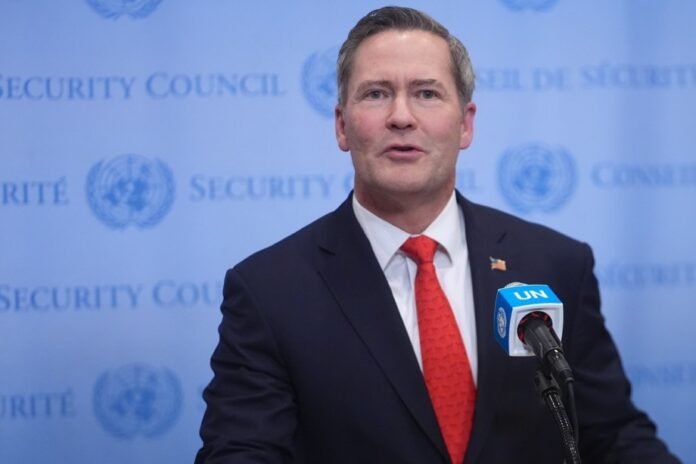
Ambassador Mike Waltz, Permanent Representative of the United States to the United Nations holds a press briefing at the UN Security Council (UNSC) Media Stakeout following adoption of a US-drafted UNSC Resolution, endorsing President Donald Trump's plan to end the war in Gaza on November 17, 2025, in New York City, United States. [Selçuk Acar - Anadolu Agency]

Ambassador Mike Waltz, Permanent Representative of the United States to the United Nations holds a press briefing at the UN Security Council (UNSC) Media Stakeout following adoption of a US-drafted UNSC Resolution, endorsing President Donald Trump’s plan to end the war in Gaza on November 17, 2025, in New York City, United States. [Selçuk Acar – Anadolu Agency]

The US will continue to target Iran’s military infrastructure if Tehran threatens international shipping in the Strait of Hormuz, US Ambassador to the UN Mike Waltz said in an interview with Fox News on Sunday, Anadolu reports.

“If the Iranian regime thinks for a second that President (Donald) Trump is going to sit by, stand by, while Iran continues to attack international shipping without a response, or our bases without a response, they’re sadly mistaken, and they saw that loud and clear over the last few nights,” Waltz said.

He added that the US would “continue to, militarily, if needed, take down their infrastructure that they’re trying to use to illegally control an international waterway.”

Waltz also said technical discussions between Washington and Tehran remain underway, adding that Trump “will always give diplomacy a chance,” but “the president’s patience isn’t going to last forever.”

“Don’t think for a second that President Trump isn’t going to leave every option on the table to achieve not just our aim, the entire world’s aim that Iran never has a nuke,” he added.

On Saturday, the US military’s Central Command said that it had carried out strikes against multiple targets in Iran after Tehran’s latest attack on a commercial ship near the Strait of Hormuz.

Iran’s Islamic Revolutionary Guard Corps, for its part, said it launched missile and drone strikes targeting eight US military sites in Kuwait and Bahrain in response to the US attacks.

On June 18, the US and Iran signed a memorandum of understanding aimed at reaching a lasting peace agreement, and started talks on June 21 to implement its provisions and end their war.

President Trump Threatens 100% Tariffs on Countries Imposing Digital Taxes

0
president-trump-threatens-100%-tariffs-on-countries-imposing-digital-taxes
President Trump Threatens 100% Tariffs on Countries Imposing Digital Taxes


US President Donald Trump announced on Friday that the US will levy a 100% import tariff on any European country that adopts a digital services tax targeting major US technology companies.

In a post on Truth Social, President Trump said several European countries were considering such a tax and that some were nearing implementation. He said the tariffs would take effect immediately and would override any existing bilateral trade agreements.

“Please let this statement serve to represent that any Country that imposes such a Tax will immediately be met with a 100% TARIFF on any and all Goods sent to the United States of America,” he wrote.

President Trump’s proposals would likely affect previous agreements, such as a deal the US and EU agreed to last year, which caps US tariffs on European goods at 15% in exchange for EU countries reducing tariffs on US. industrial goods to zero.

A lengthy EU legislative process to meet the bloc’s commitments under the deal prompted President ‌Trump ⁠to threaten to reimpose a 25% tariff on imports from Europe, including autos. EU lawmakers then scrambled to meet the president’s deadline to implement the changes by July 4.

French President Emmanuel Macron said last week, before meeting with Trump at a G7 summit, that France would not bow to pressure from him and scrap its digital tax on US tech giants. The digital ⁠services it taxes include online marketplaces and advertising.

Before the G7 summit, President Trump warned he would “have no choice” but to impose the 100% tariffs on French wine unless Paris eliminated its digital tax.

0FansLike
0FollowersFollow
0FollowersFollow
0SubscribersSubscribe
- Advertisement -
Google search engine

Recent Posts