22.7 C
London
Sunday, June 28, 2026
Home Blog

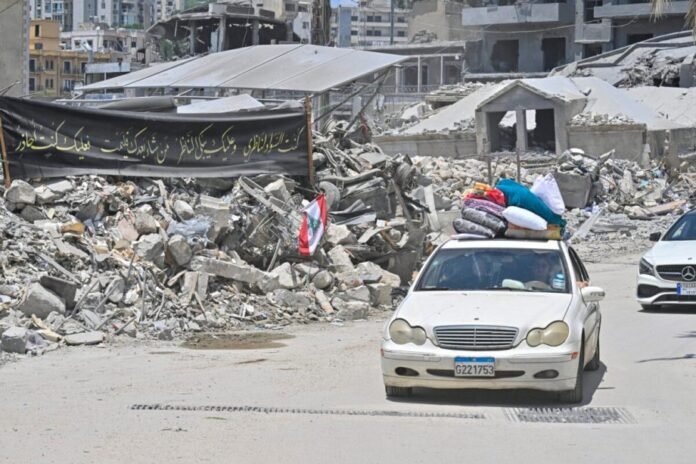
‘Recognizing Israel Is a Big Step but It’s Normal,’ Lebanese Politician Tells TML

0
‘recognizing-israel-is-a-big-step-but-it’s-normal,’-lebanese-politician-tells-tml
‘Recognizing Israel Is a Big Step but It’s Normal,’ Lebanese Politician Tells TML


Lebanon’s Washington framework with Israel puts Hezbollah’s disarmament, state sovereignty, and Iran’s regional role at the center of a fragile test for both Beirut and Jerusalem

The new US-brokered framework between Israel and Lebanon was signed within a larger regional architecture that remains fragile, contradictory, and far from settled.

Washington is trying to stabilize the broader confrontation with Tehran through a preliminary US-Iran memorandum of understanding, or MOU, that gives both sides 60 days to negotiate final terms. That track includes nuclear restrictions, sanctions relief, provisions related to the Strait of Hormuz, and language aimed at halting hostilities across regional fronts, including Lebanon. At the same time, the United States has placed Israel and Lebanon on a separate track: a framework tying Israel’s gradual withdrawal from Lebanese territory to the verified disarmament of Hezbollah and the restoration of the Lebanese state’s monopoly over force.

The two frameworks do not mirror one another. They expose one of the central contradictions in Washington’s regional diplomacy. The US-Iran track may open economic channels for Tehran, while the Israel-Lebanon framework seeks to prevent money, weapons, and political cover from reaching Hezbollah. One track treats Iran as a necessary party to regional de-escalation. The other implicitly removes Tehran from Lebanon’s sovereign decision-making and frames Hezbollah not as a resistance force, but as the central obstacle to Lebanese statehood and Israeli security.

The Israel-Lebanon framework, signed in Washington, sets out a sequenced process. The Lebanese Armed Forces are expected to assume responsibility in two initial “pilot zones” in southern Lebanon, where Hezbollah infrastructure is to be dismantled, and Lebanese civilians allowed to return under state authority. If the process succeeds, it is expected to expand to other areas. A security annex, which has not been made public, is understood to define the operational details.

The framework also points to a broader political shift. It does not merely speak of restoring calm along the border. It refers to Lebanese sovereignty, the disarmament of nonstate armed groups, preventing reconstruction funds from reaching armed actors, and working groups for a future comprehensive peace and security agreement. For Lebanon, the text touches the most sensitive issue in the country’s modern political history: whether the state, and not Hezbollah, has the exclusive authority to decide war and peace. For Israel, the issue is whether any withdrawal can be accepted without repeating previous arrangements that were signed but never fully implemented on the ground.

Sarit Zehavi, founder and president of Alma Center, said the most important part of the agreement may be the part that remains unpublished.

“It’s an MOU, so not all details are published. It seems like there is another part of the agreement that was not published, which is the security part,” Zehavi told The Media Line.

Zehavi said the pilot-zone mechanism remains unclear, including whether the Israel Defense Forces, the Lebanese Armed Forces, or both would be responsible for removing Hezbollah infrastructure.

From Zehavi’s perspective, the framework’s main innovation is that Israeli withdrawal is no longer based only on Lebanese assurances, but on verified steps.

“I think the positive development of this agreement, with regard to the pilot zone, is the fact that there is an understanding that Israel is withdrawing only under proven actions of disarmament in Lebanon,” she said. “This was not the case in the two previous agreements that we had in 2006 and in 2024. In both cases, we had withdrawn based on a Lebanese promise that was never fulfilled. This time, it’s exactly the opposite.”

That sequencing is also where Israeli skepticism begins. The agreement depends not only on the Lebanese army entering areas vacated by the IDF, but on Hezbollah being prevented from returning with the civilian population. For Israel’s northern communities, many of which remain scarred by months of fighting, this is the central test.

“It is clear that it’s for the Lebanese army to make sure that Hezbollah is not coming back with the civilians,” Zehavi said. “Israel will not withdraw completely if it does not have proof that any area that was evacuated by the IDF is not being used for Hezbollah to come back. That’s the main achievement from the Israeli point of view.”

Zehavi also reads the framework as politically larger than a ceasefire.

“The second achievement, which works for both sides, I think, is the fact that there is mutual recognition in the very existence of the State of Israel,” she said. “And the idea is that it’s an MOU for a peace agreement, not for a ceasefire agreement.”

That is also why Hezbollah has rejected it. The group has long justified its weapons as a necessary resistance to Israel. A framework that makes disarmament a condition for withdrawal reverses that equation: Hezbollah’s arsenal becomes the reason Israel remains, not the reason it leaves.

Hezbollah doesn’t want to be disarmed. Hezbollah wants to preserve its power.

“Hezbollah doesn’t want to be disarmed. Hezbollah wants to preserve its power,” Zehavi said.

The fear in Lebanon is that Hezbollah will frame any attempt by the Lebanese army to enforce the agreement as an attack on the Shiite community and on the “Axis of Resistance,” raising the specter of civil war. Zehavi acknowledged that risk but argued that failing to confront Hezbollah would carry its own danger.

Inside Lebanon, the framework has produced sharply divided reactions. Supporters see it as a possible exit from a perpetual state of war, a path to reconstruction, and an opportunity to restore Lebanese sovereignty. Critics, especially Hezbollah and its supporters, portray it as surrender, normalization under pressure, or an arrangement that legitimizes Israeli military presence until Hezbollah disarms.

Marwan Abdallah, head of the Foreign Affairs Department of the Lebanese Kataeb Party, said the Israel-Lebanon framework should not be read as an annex to the US-Iran track. He said the Washington framework is separate from other regional discussions and should not be linked to diplomatic processes involving Iran, Qatar, Oman, or Pakistan.

Not Islamabad, not Tehran, not Qatar, not Oman. None of these processes is linked to the framework agreement between Lebanon and Israel.

“Not Islamabad, not Tehran, not Qatar, not Oman. None of these processes is linked to the framework agreement between Lebanon and Israel,” Abdallah told The Media Line.

For Abdallah, Iran’s only acceptable role in Lebanon would be to cut off Hezbollah financially, politically, and militarily.

“As Lebanese, and I think as Israelis, we don’t acknowledge Iran’s role in our process,” he said. “If Iran wants to have a role in our process, the only role that it’s required to do is to stop supporting Hezbollah, stop financing it, stop giving it orders to support their front and to launch attacks, and help us dismantle the organization.”

“Otherwise, there’s no role for Iran, irrespective of what is mentioned in the MOU that they signed with Washington,” he added.

This is where the contradiction with the broader US-Iran framework becomes politically dangerous for Lebanon. The Israel-Lebanon framework calls for preventing money from reaching Hezbollah and other nonstate armed groups. But if Tehran receives economic relief, Lebanese critics of Hezbollah fear those resources could eventually strengthen Iran’s regional network.

Abdallah said Western assumptions that any unfrozen assets returned to Iran would go to domestic needs underestimate the ideology and priorities of the Iranian system.

But Lebanese experience with Iran and Hezbollah, he argued, points in the opposite direction.

“We know for a fact that none of the money will go to the people of Iran, and it will be used to support the terrorist activities of Iran,” Abdallah said. “So, this is a naive approach from the West and the Americans.”

Zehavi made a similar point from the Israeli side, saying the two tracks appear to work against each other. The Israel-Lebanon agreement seeks to prevent money from reaching Hezbollah, she said, while the Iran-US track could give Tehran resources that may eventually flow to the group.

“I don’t know how to solve this contradiction. This is something that America created, and they will have to solve it. Time will tell,” she added.

Still, both analysts see the Israel-Lebanon framework as a moment of possible change, even if both remain cautious about implementation.

For Abdallah, the pilot zones are a technical test of whether the Lebanese army can assert state authority and dismantle Hezbollah infrastructure village by village. He said the army could be given information through the monitoring mechanism, including from Israel and the United States, and then be asked to take control and remove Hezbollah infrastructure in one area before the process moves to the next.

He described the Lebanese army’s role as essential because it would restore authority through a national institution, not a foreign one.

“For us as Lebanese, it’s the Lebanese army that’s taking control, so it’s not a foreign army. And I think this is the best thing that can happen,” he said.

But Abdallah also argued that the opportunity came only after devastation in the south. He said Lebanon failed to act before Israel attacked, occupied the territories, and destroyed many villages, including Hezbollah infrastructure. He blamed Hezbollah for launching a war it could not sustain and then refusing to give up its weapons even after the destruction of the south.

For Abdallah, the framework should not stop south of the Litani River. If the pilot zones work, he said, the same model should be expanded across the south and eventually throughout Lebanon.

The political opening is tied to a deeper social change inside Lebanon. During the war, public discussion over peace with Israel became less taboo in some Lebanese circles. Lebanese officials, including President Joseph Aoun and Prime Minister Nawaf Salam, took sharper positions against Hezbollah than many would have expected years earlier. Israeli voices appeared on Lebanese television. Polling suggested that a growing share of Lebanese were no longer committed to permanent confrontation with Israel.

Abdallah said Aoun and Salam represent a broad parliamentary majority and are acting in line with Lebanon’s national interest. He cited recent polling that he said showed 55% of Lebanese supporting peace with Israel.

“Peace, not just cessation of hostilities, not going back to the truce of 1949,” Abdallah said.

That argument directly challenges Hezbollah’s claim that disarmament would trigger civil war. Abdallah said the term itself is being misused. A clash between political parties or sectarian groups, he said, would be civil war; an army enforcing the law against an illegal armed group would be an act of state authority.

“But when the army, the legitimate army of the country, is implementing the law and the constitution of the country, and is given an order by the president, the prime minister, and the cabinet of the country to dismantle a military group that is illegal, it’s not a civil war. It’s a terrorist organization or a military group resisting the law enforcement entities and resisting the rule of law.”

Abdallah said Hezbollah is the only actor that can turn the process violent.

“No one wants to do a civil war except for Hezbollah,” he said. “No one is capable of doing a civil war except for Hezbollah because they are the ones who are armed and have their own militia.”

He said the Lebanese state is offering alternatives, including disarmament, demobilization, and reintegration.

“We are proposing many nonviolent paths to disarm willingly, to create economic opportunities and incentives for the people who are in Hezbollah, to do a DDR process, to help them rebuild their villages, to help them go back to their villages,” he said.

“If you want to stay stubborn about what you are doing or what you are deciding because Iran asked you to, then you have to pay the price,” he added.

The recognition question may be the most symbolically important part of the framework. Lebanon and Israel have technically remained in a state of war since 1948. Even indirect acknowledgment of Israel’s legitimacy is politically explosive in Lebanon, where Hezbollah and its allies have built much of their identity around resistance.

Abdallah said Lebanon has spent too long trapped in endless war and that the moment has come to move toward peace.

“I think it’s time. No human being lives to fight. No people in the world, no country in the world exists to keep fighting all the time,” he said.

He also separated Lebanon’s national interest from the Israeli-Palestinian conflict.

“The idea of removing Israel from existence is not something that we believe in,” Abdallah said.

“There’s a problem between the Israelis and the Palestinians. It’s for the Israelis and the Palestinians to solve. It’s not for us, the Lebanese, to solve,” he said. “We are too small a country. We carried the Palestinian cause for 80 years now, and now is the time to move on.”

For Abdallah, the desire to end the war is not limited to one sect.

“The decision is clear, and it’s cross-sectarian by the way. It’s not Christian only. The Sunnis, the Druze, the Christians, and some of the Shia are fed up with the war, and we want to live in peace,” he said.

“So yes, recognizing Israel is a big step, but it’s normal. The big step would be when we find peace, and this would mean ending 100 years of conflict,” he added.

On the Israeli side, Zehavi said communities in the north are not rejecting peace with Lebanon, but they are waiting to see whether the words will become facts on the ground.

The feeling is: let’s wait and see

“The feeling is: let’s wait and see,” she said. “This agreement will only be proved to be a success if it is implemented. And this is a question, whether it will be implemented. The people here are welcoming the idea of peace with Lebanon. Nobody is against that here.”

“But since we were disappointed so many times, we want to wait and see if it will succeed,” she added.

The coming weeks will show whether Washington can manage both tracks at once: a regional bargain with Iran that does not revive Hezbollah, and a Lebanon-Israel framework that depends on Hezbollah’s weakening without collapsing Lebanon internally.

The framework’s core premise is simple but politically explosive: Lebanon cannot recover its sovereignty while Hezbollah retains an independent military role, and Israel will not fully withdraw while Hezbollah remains capable of returning to the border.

The question is whether the Lebanese state, backed by Washington and tolerated by Israel, can enforce that premise without the country being dragged into another internal confrontation. For supporters of the framework, this is the first real opening in decades. For its opponents, it is a forced surrender. For both Israel and Lebanon, it is a test of whether the end of one war can avoid becoming the beginning of another.

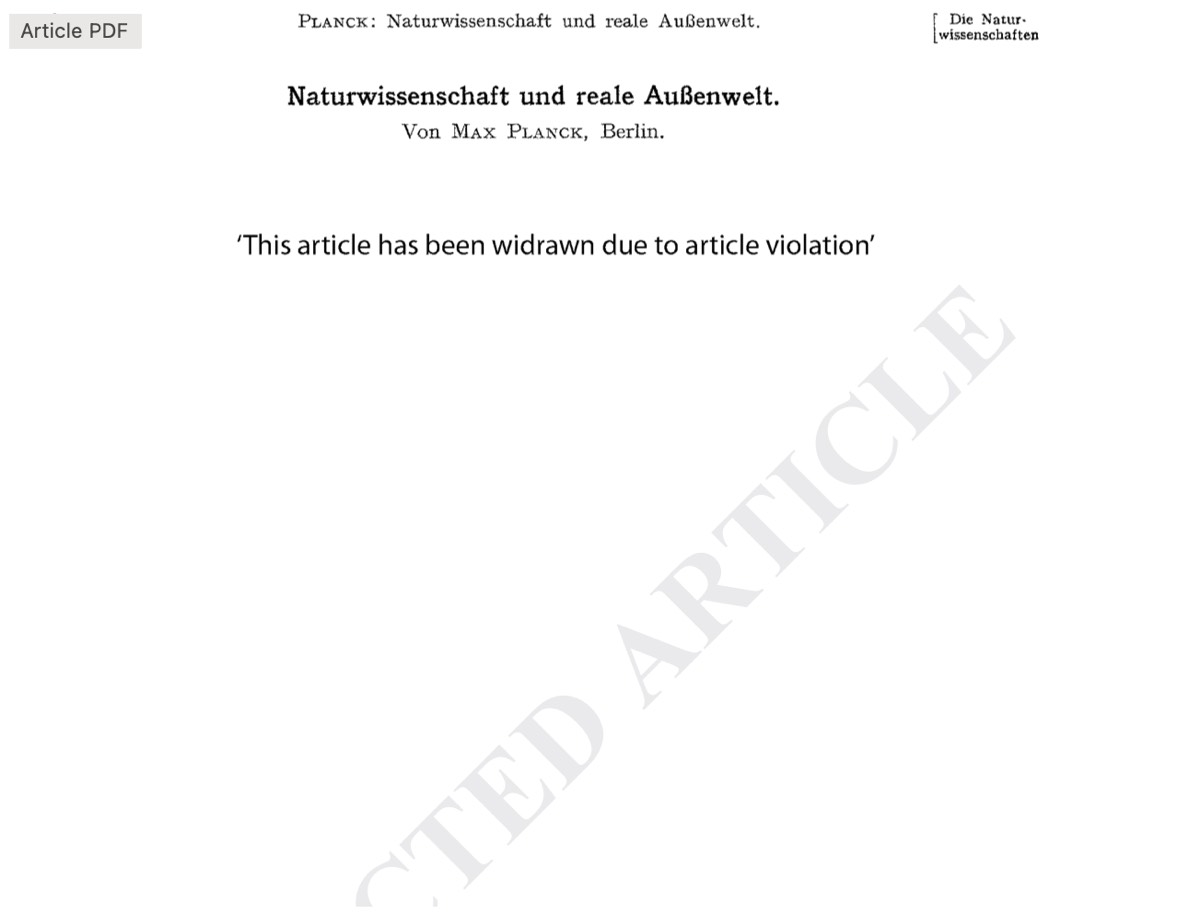
Why did this journal retract two 1940s papers by Max Planck?

0
why-did-this-journal-retract-two-1940s-papers-by-max-planck?
Why did this journal retract two 1940s papers by Max Planck?

German physicist Max Planck was one of the pioneers of quantum mechanics in the early 20th century, earning the 1918 Nobel Prize in Physics for his discovery of quanta.  There has never been a whisper of scandal about the man’s integrity or his scientific work. So a pair of science historians were puzzled when they discovered that a scientific journal had inexplicably retracted two of Planck’s papers from the 1940s.

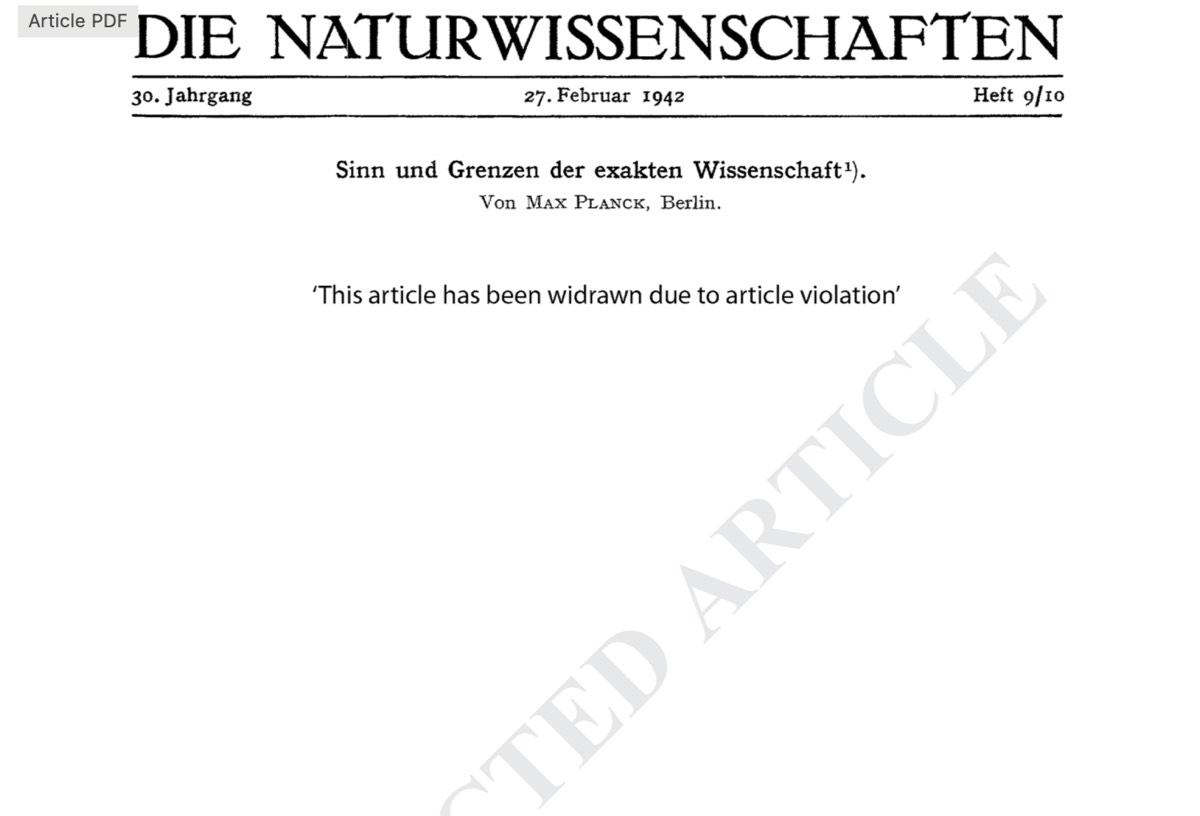
The journal in question is Naturwissenschaften, now known as The Science of Nature.  The journal typically adds a large RETRACTED notice across digital papers that have been retracted, leaving them available for download. But it has removed the two Planck papers entirely, leaving just a blank page (and empty PDFs) with a brief note saying the articles had been “withdrawn due to article violation.”

Physics historian Yves Gingras of the University of Quebec in Montreal was browsing the blog Retraction Watch’s list of Nobel Prize winners who have had scientific papers retracted, just out of curiosity. Gingras was shocked to see Planck’s name on the list, and enlisted fellow historian Mahdi Khelfaoui, of the University of Quebec at Trois-Rivieres, to investigate why the two papers had been retracted. They outlined their findings in a preprint posted to the physics arXiv.

The journal’s current editor-in-chief, Suzanne Scarlata of the Worcester Polytechnic Institute, told Science reporter Sam Kean that she had not known the papers had been retracted prior to Kean contacting her for comment. “That’s crazy,” she said. “I don’t understand why they were flagged. I think it just happened with their algorithm. It’s a mistake they should probably rectify.” (Kean claims Springer Nature is still selling the empty PDFs for $39.95 a pop, but I had no trouble downloading both empty files for free, for what it’s worth.)

A question of copyright?

Gingras and Khelfaoui suspected that the retractions occurred due to the journal publisher’s “misunderstanding, or ignorance, of past publication practices.” The specific reason for the retractions was copyright violation, so there was nothing wrong with the actual papers from a scientific standpoint. (Both are “philosophical reflections on the nature of scientific knowledge.”) They were able to retrieve metadata showing that the DOI records for both papers had been created in April 2005, coinciding with the large-scale switch to electronic publishing that occurred across most journals. Over time, those journals also integrated historical studies into their searchable online archives.

screenshot of empty web page of Planck paper

screenshot of empty web page of Planck paper

Gingras and Khelfaoui suspect the retraction decision was made around this time. “All this clearly suggests that some lawyer at Springer was overshadowing the process and considered these papers as problematic forms of ‘duplicate publications,’” they wrote. The first retracted paper (“Meaning and Limits of Exact Science”), was published in 1942, based on a lecture Planck delivered in Berlin the prior year. It was also published as a booklet, in another journal, and included in an anthology of Planck’s essays and lectures.

The second retracted paper (“Natural Science and the Real External World”) appeared in 1940. It had not been published or reprinted elsewhere. But a scientist named Aloys Muller published a critique of Planck’s 1931 essay on positivism that year, to which Planck responded in the same journal using the same title just a few months later. Gingras and Khelfaoui suspect the retraction was the result of a “cataloguing ambiguity” since there were two separate papers by different authors in the same journal with identical titles. This would have confused any algorithmic tool used to catch instances of duplication or “self-plagiarism,” for example.

The real issue is whether publishers of scientific journals should retroactively apply contemporary standards regarding duplicate publication or self-plagiarism to historical papers. The journal publishing norms in the early 20th century were substantially different. The emphasis was on achieving the widest dissemination of knowledge across a fragmented scientific community separated by language and geographical distance, publishing in many different journals. As a result, the boundaries were heavily blurred between lectures, conference proceedings, booklets, collected essays, published journal articles and so forth.

The scientific enterprise has since evolved to the point where it is dominated by large commercial publishing groups that are much more sensitive to protecting copyrights and turning a profit. Duplication/self-plagiarism is also more of an issue now, when publications are a major factor when it comes to hiring and promoting scientists, as well as acquiring research fundings. Applying these contemporary standards can be problematic for the “digital circulation of historical texts,” the authors concluded.

The journal’s publisher, Springer Nature, killed an editorial Scarlata planned to run addressing the issue. Springer Nature also declined to comment for the Science article, merely telling Kean through a representative that “detailed information about specific retractions is usually confidential and can only be shared with the relevant authors.”

Given that Planck died in 1947, he can’t get a direct answer either. Both papers are now in the public domain in most countries, so it’s not like copyright violation is even an issue anymore. It’s still possible to access both papers via the Internet archive. But as Gingras and Khelfaoui argue in the their preprint, removing the two papers distorts the historical record.  “Whoever did it, I don’t care,” Gingras told Science. “Just put them [back] in the database. Intellectually, it’s not acceptable.”


MLB Player’s Wife Killed in Earthquake

0
mlb-player’s-wife-killed-in-earthquake
MLB Player’s Wife Killed in Earthquake


The wife of former Major League Baseball outfielder Gorkys Hernández was killed in the devastating double earthquakes that shook Venezuela this week, leaving the ex-MLB player shattered as rescuers searched through the ruins of a collapsed hotel.

Hernández revealed the heartbreaking news Saturday in an emotional Instagram tribute to his wife, Deisy Tovar de Hernández.

“You are and always will be the queen of my life — the most beautiful, lovely, and precious woman in the world,” Hernández wrote.

The former outfielder, who played in the majors from 2008 to 2018 with teams including the Pittsburgh Pirates, San Francisco Giants and Boston Red Sox, described Deisy as the person who always helped him through his darkest moments.

“You were the one who always found a way to lift me up during hard times,” he wrote. “You were and remain the most beautiful woman of my life. You will always be with me, at every hour and in every moment.”

Deisy, 36, was reportedly inside the Hotel Eduards in La Guaira when the powerful back-to-back earthquakes struck. Several relatives of players from the La Guaira Delfines were also believed to be inside the hotel while the team was preparing to play the Aragua Tigres at the beachfront Estadio Forum de La Guaira in Macuto.

The game was suspended after the terrifying 7.2 and 7.5 magnitude quakes rattled the country. Hernández and his teammates immediately rushed to the hotel, desperate to find their loved ones.

Photos from the scene showed former Los Angeles Angels prospect Luis Viloria staring at the rubble, while Hernández was seen sitting near a fence outside the hotel, looking down at his phone as the nightmare unfolded around him.

Hernández and Deisy had only married in December 2025. She leaves behind a daughter, Vittoria Vásquez, from a previous relationship.

In his tribute, Hernández begged his late wife to give him the strength to continue.

“Fly high, my princess, my queen; may God hold you in His glory,” he wrote. “Guide me to keep moving forward and to lift up our family.”

He added, “Love you — rest in peace, my girl. Give me strength, love of my life, because we had a mission, and I am here to fulfill it.”

The tragedy grew even more chilling Friday night when Vásquez shared a message on Instagram Stories claiming that cries could still be heard coming from the rubble of the Hotel Eduards.

“As of 4:00 p.m. today, screams can still be heard from the Hotel Eduard,” the message said. “There are people still alive inside. Help is needed to move the rubble — heavy machinery is required.”

Local sports broadcaster Raúl Zambrano later reported on X that rescue teams were still searching for the wife and daughter of former major leaguer and Delfines coach Eliézer Alfonzo.

For Hernández, the loss of Deisy has left an unimaginable hole.

“You taught me to be strong through life’s challenges — which is never easy — but that is how you want me to be, and that is how it will be,” he wrote. “My warrior, Deisy Maria Tovar De Hernandez.”

Cow manure could be the next data center fuel

0
cow-manure-could-be-the-next-data-center-fuel
Cow manure could be the next data center fuel

This story was originally published by Sentient.

At first glance, Lent Hill Dairy Farm in Steuben County, New York, looks like most other industrial dairies. There are red buildings that house some 4,000 cows, a staggering manure pit, and two gigantic dome-like structures that serve as anaerobic co-digesters.

These giant machines break down manure and local food waste to produce biogas. This renewable natural gas, or RNG, is then typically transported for use as electricity, heating, and fuel. But at Lent Hill, the gas produced isn’t just heating homes or running tractors. It’s also powering an on-site cryptomine.

The operation, run by Pennsylvania-based Ag-Grid Energy, is the first of its kind in the country. The company claims the anaerobic digestion of manure and food waste could be a game-changer, not only in powering crypto, but data centers, which currently use 4.9 percent of the country’s electricity, a figure that could double by 2030.

“At the end of the day, our model is providing value to the rural area that we are in,” Rashi Akki, the founder and CEO of Ag-Grid Energy, told Sentient.

The project claims to recycle more than 45,000 gallons of food waste per day and the manure of 4,000 cows. “What we want to do is also provide, if possible through fiber optics, [the] value of the AI computing capacity to that same regional area,” Akki said.

While Ag-Grid Energy wants to work with midsize dairies to create on-site power generation for small-scale data centers, the world’s largest technology players have bigger visions. Tech giants are increasingly searching for fossil fuel alternative fuel sources to power hyperscale data centers that won’t put a strain on the grid.

Read Next

Biogas proponents — a broad coalition of industries, including agriculture, fossil fuels, utilities, and waste management — are pushing renewable natural gas, sourced in part by manure digesters, as a sustainable way forward.

In California, Microsoft has partnered with Enchanted Rock to use RNG for backup data center power. Vanguard Renewables, a waste management company and portfolio company of Black Rock, has touted RNG as “the fuel of the AI age.” Critics, however, fear the digester-to-data-center connection will give digesters an economic lifeline at a time when they’re struggling to stay online.

Renewable natural gas from digesters are touted as a drop-in energy solution, Sarah D’Onofrio, a scholar and advocate who works with digester-impacted communities across the country, told Sentient. This means the RNG can be used without changing existing fossil fuel based infrastructure, and can be added to other fuel sources like natural gas so companies could claim they are fueling data centers sustainably, according to D’Onofrio.

But researchers like D’Onofrio argue that to truly reduce emissions, we need to transition to clean energy fuels rather than rely on renewable substitutes for fossil fuels.

Read Next

“Why would you want to incorporate that [RNG] into our fuel system during the period of climate change?” she said.

D’Onofrio has helped communities in Wisconsin, Pennsylvania, Michigan, Georgia, and North Carolina defeat proposals for large-scale co-digesters. She fears data centers are creating a new, massive market for the manure-to-energy industry, which could in turn incentivize the further proliferation of factory farms.

“It attaches these industrial food operations into our energy system and makes us really dependent on them over time, because the more it becomes intermingled with agriculture, the more it’s going to concentrate agriculture,” said D’Onofrio.

Animals raised on factory farms in the U.S. produce an estimated 941 billion pounds of manure each year, which pollutes air and water in communities all over the United States. In addition to problems with leakage, digesters do not make the manure disappear. The digested waste, or digestate, is meant to be recycled, potentially into a range of products, such as fertilizer and animal bedding. But there are a number of challenges with these downstream products, from economic to environmental. Digested manure can be more polluting than manure that hasn’t been digested, according to USDA research.

In 2023, Victoria Gehrke, a community organizer who owns recreational property in Lind, Wisconsin, learned that a leader in the waste-to-energy field had proposed a co-digester in the town, touting it as a way to manage manure and reduce waste.

Gehrke and her fellow organizer Laurie Knutzen quickly discovered the impacts a co-digester would have on the community: hazardous air emissions, trucks going in and out delivering industrial food waste — and few restrictions about where that waste would come from — and water pollution. The project intended to send about 41,000 gallons of waste per day into a tributary of Walla Walla Creek, which empties into Lake Michigan.

Read Next

“These are manure and industrial food-waste processing and biogas-producing facilities, they are not ag accessories,” Gehrke said of co-digesters. “They don’t belong on ag land,” she explained, “and what they’re really doing is having our small rural communities — because we’re so vulnerable — we become sacrificial dumping grounds for the industrial waste that other big places don’t want to put in their communities.”

After more than a year of relentless community opposition, the town of Lind denied Vanguard’s application in the spring of 2024. The organizers celebrated the decision as a win for Lind, but Vanguard is still “developing and operating” more than 50 co-digesters across the country. It aims to have more than 100 completed projects by the end of 2028.

Patrick Serfass, the executive director of the American Biogas Council, told Sentient that biogas is an “excellent fit” for data centers in search of a reliable and high-capacity fuel source.

“We’re really excited about the prospect of biogas systems being able to provide power to data centers, because they can provide that reliability,” Serfass says.

Data center demand could lead to the expansion of co-digester buildouts across the country, he said. Serfass estimates that the U.S. has only built about 10 percent to 15 percent of the biogas market’s capacity.

“The data centers are going to be so hungry for power that they could eat up pretty much all of the supply that the biogas industry could create,” Serfass says.

Read Next

Vanguard Renewables makes a similar pitch. “As energy demand from data centers continues to grow, there is increasing interest in solutions that are both reliable and lower carbon,” Vanguard Renewables told Sentient in an email statement.

The company is yet to partner with any data centers directly, but they have partnered with energy delivery companies like TotalEnergies and Enbridge, and both of these companies have relationships with hyperscalers and data center operators. In November 2025, TotalEnergies signed a 15-year deal with Google to provide solar energy to support the company’s data center operations in Ohio.

Anaerobic digesters are not new. They have long been hailed as a way to reduce emissions, capture methane and manage waste — a solution to agriculture’s methane problem with few tradeoffs.

The technology has received billions in subsidies at both the federal and state level. The California Low-Carbon Fuel Standard, a climate program implemented to incentivize the production of alternative fuels, funds nearly 200 digesters across 16 states; in 2023, Joe Biden’s Inflation Reduction Act provided over $150 million in funding to biogas projects across the country; and the Michigan Strategic Fund has approved more than $100 million in private bonds for digesters.

Akki said tax credits are incredibly important in making Ag-Grid Energy’s projects a reality. While most of the subsidies given to digester projects have been to support electricity and fuel for transportation, she wants to see fiscal support specifically for co-digesters that power AI.

Read Next

“Tax credits — just like what we had with the Inflation Reduction Act — for electricity production for AI would really support our projects,” Akki says.

But using tax-payer dollars to support digesters has lost favor with the Trump administration’s Department of Agriculture. In May, the USDA extended a 90-day moratorium on loans for anaerobic digesters through the end of the year amid environmental concerns and delinquent loans. According to a review of USDA lender data by Inside Climate News, 11 percent of the 746 project lenders across the country were considered over 90 days delinquent.

On top of this, a growing body of research raises questions about whether digesters make economic or environmental sense.

Government subsidies for digesters create a “perverse incentive where the value of manure or animal waste starts to compete with the value of the milk,” Brent Kim, a researcher at the Johns Hopkins Center for a Liveable Future, told Sentient. In other words, farmers are incentivized to produce waste for profit, not to produce milk for human consumption.

Kim and his colleagues published a scientific review of the touted benefits and downsides to the controversial technology. “The reality is nuanced,” he said of digesters. While they can reduce methane emissions in the short term, they may also lead to an increase in ammonia emissions, toxic byproducts, and other pollutants released into the environment, a phenomena Kim calls “pollution swapping.”

“So sure, all else being equal, you do have a reduction in methane, but if they’re incentivizing growth in the industry, the larger herd size is going to release more methane,” Kim said.

Some research suggests digesters aren’t always effective at reducing methane either. As Sentient has previously reported, research from the World Resources Institute found that digesters offer limited climate benefit given their cost. Digesters reduce methane from manure storage by only about 25 percent, the WRI research finds.

report from Friends of the Earth found that dairies with digesters increased herd sizes by 3.7 percent annually, or 24 times the growth rate of dairies without digesters. In Kewaunee County, Wisconsin, herd sizes grew by about 58 percent since they were installed.

The trend comes as no surprise to Lynn Henning, a soybean farmer in Michigan who lives near a Chevron-owned co-digester. When manure becomes “more valuable than the milk,” it creates incentive for growth, and changes what farming is all about, she told Sentient.

“The system is changing farming. They’re shifting from producing food for people instead to producing manure so they can be paid more by the government,” Henning said.

Kathy Morrison, a farmer in Fremont, Michigan, has similar concerns. She lived next to a co-digester for years, and it significantly impacted her quality of life. The smell was unbearable, sometimes so bad it woke her up in the middle of the night. She described it as being at a giant music festival and all the Porta Potties are overflowing. That smell was digestate, the liquid solid waste that’s left over and spread on fields after the digestion process.

Morrison is not against the technology of digesters themselves, particularly at the local level, but with so many private companies looking to make a profit, equitable implementation and scale is hard to control. Data centers (which come with their own environmental impacts) would likely expand those opportunities for profit.

“I would be all in favor of small, very controlled, community-size digesters, but when they’re large scale like this, and they’re operating for profit, corners get cut,” she said. But this is something else, she said. “All the different industries that have come together to turn this into something insanely profitable. …There’s just so many industries behind this. It’s wild.”


US to continue targeting Iran if Hormuz shipping is threatened: Envoy to UN

0
us-to-continue-targeting-iran-if-hormuz-shipping-is-threatened:-envoy-to-un
US to continue targeting Iran if Hormuz shipping is threatened: Envoy to UN

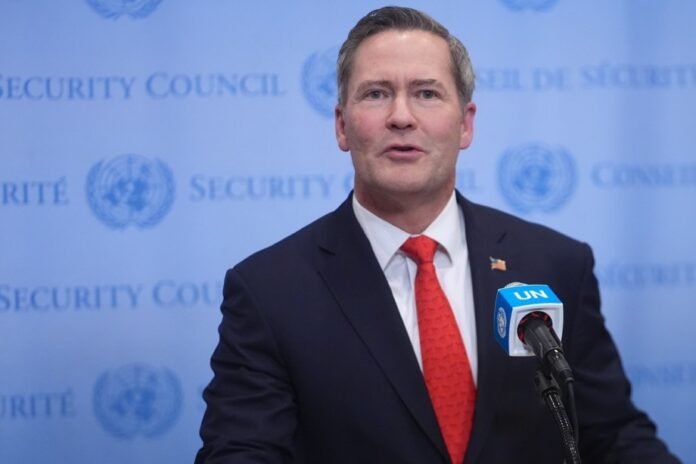
Ambassador Mike Waltz, Permanent Representative of the United States to the United Nations holds a press briefing at the UN Security Council (UNSC) Media Stakeout following adoption of a US-drafted UNSC Resolution, endorsing President Donald Trump's plan to end the war in Gaza on November 17, 2025, in New York City, United States. [Selçuk Acar - Anadolu Agency]

Ambassador Mike Waltz, Permanent Representative of the United States to the United Nations holds a press briefing at the UN Security Council (UNSC) Media Stakeout following adoption of a US-drafted UNSC Resolution, endorsing President Donald Trump’s plan to end the war in Gaza on November 17, 2025, in New York City, United States. [Selçuk Acar – Anadolu Agency]

The US will continue to target Iran’s military infrastructure if Tehran threatens international shipping in the Strait of Hormuz, US Ambassador to the UN Mike Waltz said in an interview with Fox News on Sunday, Anadolu reports.

“If the Iranian regime thinks for a second that President (Donald) Trump is going to sit by, stand by, while Iran continues to attack international shipping without a response, or our bases without a response, they’re sadly mistaken, and they saw that loud and clear over the last few nights,” Waltz said.

He added that the US would “continue to, militarily, if needed, take down their infrastructure that they’re trying to use to illegally control an international waterway.”

Waltz also said technical discussions between Washington and Tehran remain underway, adding that Trump “will always give diplomacy a chance,” but “the president’s patience isn’t going to last forever.”

“Don’t think for a second that President Trump isn’t going to leave every option on the table to achieve not just our aim, the entire world’s aim that Iran never has a nuke,” he added.

On Saturday, the US military’s Central Command said that it had carried out strikes against multiple targets in Iran after Tehran’s latest attack on a commercial ship near the Strait of Hormuz.

Iran’s Islamic Revolutionary Guard Corps, for its part, said it launched missile and drone strikes targeting eight US military sites in Kuwait and Bahrain in response to the US attacks.

On June 18, the US and Iran signed a memorandum of understanding aimed at reaching a lasting peace agreement, and started talks on June 21 to implement its provisions and end their war.

President Trump Threatens 100% Tariffs on Countries Imposing Digital Taxes

0
president-trump-threatens-100%-tariffs-on-countries-imposing-digital-taxes
President Trump Threatens 100% Tariffs on Countries Imposing Digital Taxes


US President Donald Trump announced on Friday that the US will levy a 100% import tariff on any European country that adopts a digital services tax targeting major US technology companies.

In a post on Truth Social, President Trump said several European countries were considering such a tax and that some were nearing implementation. He said the tariffs would take effect immediately and would override any existing bilateral trade agreements.

“Please let this statement serve to represent that any Country that imposes such a Tax will immediately be met with a 100% TARIFF on any and all Goods sent to the United States of America,” he wrote.

President Trump’s proposals would likely affect previous agreements, such as a deal the US and EU agreed to last year, which caps US tariffs on European goods at 15% in exchange for EU countries reducing tariffs on US. industrial goods to zero.

A lengthy EU legislative process to meet the bloc’s commitments under the deal prompted President ‌Trump ⁠to threaten to reimpose a 25% tariff on imports from Europe, including autos. EU lawmakers then scrambled to meet the president’s deadline to implement the changes by July 4.

French President Emmanuel Macron said last week, before meeting with Trump at a G7 summit, that France would not bow to pressure from him and scrap its digital tax on US tech giants. The digital ⁠services it taxes include online marketplaces and advertising.

Before the G7 summit, President Trump warned he would “have no choice” but to impose the 100% tariffs on French wine unless Paris eliminated its digital tax.

King Charles Slammed for ‘Selfish and Self-Indulgent’ Decision

0
king-charles-slammed-for-‘selfish-and-self-indulgent’-decision
King Charles Slammed for ‘Selfish and Self-Indulgent’ Decision


King Charles is facing fresh backlash after deciding he will not move back into Buckingham Palace, even after taxpayers helped fund a massive renovation project costing nearly half a billion dollars.

The decision has sparked outrage among critics who say the King should live in the historic palace after so much public money was poured into fixing it up.

Charles, 77, and Queen Camilla, 78, are expected to keep Clarence House as their main London home instead of returning to Buckingham Palace when its long-running refurbishment is finished.

The palace has been undergoing a major 10-year overhaul to replace old boilers, electrical systems, plumbing and other aging infrastructure. The project was designed to reduce the risk of fire and flooding while bringing the famous royal residence into the modern age.

But now that the work is almost complete, some are asking a blunt question: What was the point of spending all that money if the King does not even plan to live there?

One senior Labour figure in Britain has been especially critical of the decision.

Baroness Margaret Hodge, a former Labour MP and former chair of the Commons Public Accounts Committee, questioned whether the huge renovation bill really gave taxpayers value for money.

“They’ve spent £370million on doing up Buckingham Palace,” Hodge said. “They’re now not going to move back there.”

When asked if she believed that was a problem, she replied: “I think it is.”

Royal officials have pushed back against the criticism, insisting the decision is not as dramatic as it sounds. They noted that Buckingham Palace has not been used as a regular royal home for several years.

Queen Elizabeth II last stayed overnight at the palace on March 18, 2020, before moving to Windsor Castle ahead of the first Covid lockdown.

Instead of serving as the King and Queen’s personal residence, Buckingham Palace will continue to operate as the official headquarters of the monarchy. The palace will still be used for state events, royal duties and formal occasions.

James Chalmers, Keeper of the Privy Purse, said the decision was made partly to open more of the palace to the public.

“After careful consideration, and to greatly increase opportunities for public access, the King and Queen have decided not to adopt Buckingham Palace as a personal residence and will instead continue to use Clarence House as their London home,” Chalmers said.

He added that the King and Queen will still have access to private rooms inside the palace during working days.

“Their Majesties will, however, have access to private rooms within the palace where they can retire during the course of a working day, and which could be utilized as potential residential accommodation in times ahead,” he said.

Buckingham Palace has been the official home of British monarchs since Queen Victoria moved her court there in 1837. Over the years, it became one of the most recognizable symbols of the monarchy and one of Britain’s biggest tourist attractions.

That is why critics say Charles’ decision feels like a snub to the building’s history — and to the taxpayers who helped pay for its renovation.

One critic blasted the move as “selfish and self-indulgent.”

“With this amount of money being spent on Buckingham Palace, Charles should install himself there and help bring in tourism money to Britain,” the critic said.

The controversy comes as royal finances are once again under the microscope.

The latest royal accounts showed Charles paid about $17.4 million in tax during the 2024-25 financial year, after paying an estimated $15.8 million the year before. Since becoming King in 2022, he has paid more than $40.5 million in taxes.

Prince William, 44, also disclosed his tax payments for the first time. He paid around $10.5 million in 2024-25 and roughly $11.3 million the previous year.

The accounts also revealed that William’s charter flight to Saudi Arabia in February was the royal family’s most expensive overseas trip, costing about $176,000.

Meanwhile, the Sovereign Grant, which funds the monarch’s official duties and household operations, is also rising. It increased to about $178 million for 2025-26, while its core funding is expected to climb from around $70 million to roughly $135 million by 2027-28.

Hodge also took aim at the wider royal money machine, including the Duchy of Cornwall and Duchy of Lancaster.

“Their personal taxation shouldn’t be a concern of us,” she said. “What I am bothered about is that they get the sovereign grant, they get money from the Crown Estate, and then they have these two big pots of money, they have the Duchy of Cornwall and the Duchy of Lancaster.”

She argued those funds should be treated as public money.

“Now, in my view, those are both public pots of money,” Hodge said. “The Royal Family doesn’t agree with me.”

She added: “They were given to the Royal Family in the 13th century by Edward III as a sovereign grant, so I think they should still be part of the public pot, and if you put all that together, it’s one heck of a lot of money.”

For Charles, the Buckingham Palace decision may have been framed as practical and modern. But to critics, it is another royal money controversy at a time when many families are struggling with rising costs.

And after nearly $500 million in renovations, the optics are hard to ignore: the palace is polished, modernized and ready — but the King appears to have no interest in calling it home.

The end of ambiguity: How the Washington framework broke the post-Taif order

0
the-end-of-ambiguity:-how-the-washington-framework-broke-the-post-taif-order
The end of ambiguity: How the Washington framework broke the post-Taif order

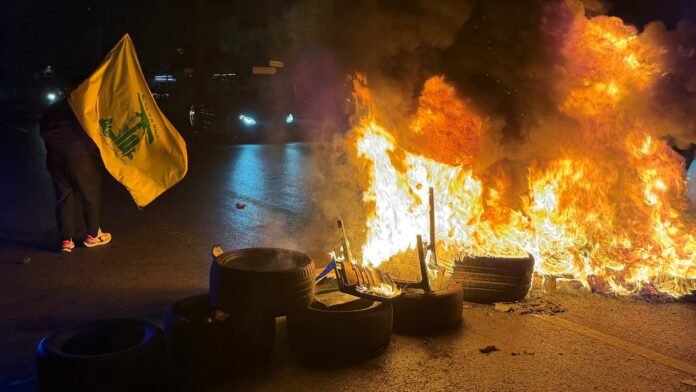
The framework agreement signed in Washington on June 26 between the United States, Israel, and Lebanon is being analyzed in most capitals as a diplomatic development. In Lebanon, it is being experienced as something closer to a political earthquake. Within hours of the signing, Hezbollah’s secretary-general called it “null and void.” Parliament Speaker Nabih Berri, the principal intermediary between Hezbollah and the state, called it “incitement to civil war.” Hezbollah supporters blocked roads in Beirut’s southern suburbs with burning tires. And Kataeb leader Samy Gemayel congratulated the president and prime minister on “an achievement accomplished by the Lebanese state.”

The reactions do not describe a country debating the merits of an agreement. They describe a country discovering that the arrangement it has lived under since 1990 has been formally terminated.

The post-Taif order was built on ambiguity. The Taif Accord of 1989 ended the civil war by distributing power across Lebanon’s confessional communities through a set of formal and informal arrangements that left the most dangerous questions deliberately unanswered. The most dangerous question of all, whether the Lebanese state was sovereign over its own territory or whether sovereignty was shared with Hezbollah, was resolved not by answering it but by agreeing never to ask.

The state and the resistance coexisted through institutional opacity: each operated within its own sphere, each maintained its own logic, and neither was forced to confront the other’s claims. This was not a failure of governance. It was governance itself. The ambiguity was the architecture.

The framework agreement ends the ambiguity.

The text commits Lebanon to a “sequenced process” in which the Lebanese Armed Forces will restore “effective sovereign authority over all Lebanese territory, pending the verified disarmament of non-state armed groups.” The language is precise. “Effective sovereign authority.” “All Lebanese territory.” “To the exclusion of all non-state actors.” “Verified disarmament.” Each phrase answers the question that the post-Taif order was designed to avoid. Is the state sovereign over the south? Yes, says the document. Does sovereignty include Hezbollah’s territory? Yes. Does sovereignty require Hezbollah’s disarmament? Yes. Is the disarmament subject to external verification? Yes.

The Lebanese government signed this document at the State Department, witnessed by the US Secretary of State, on the same day the Shia community was marking Ashura in processions through the destroyed streets of Nabatieh. The timing was not designed to provoke, but it did. Ashura commemorates the refusal to submit to illegitimate authority.

The framework agreement commits the Lebanese state to dismantling the institution that a significant portion of its population considers the only legitimate guarantor of their security.

The community was commemorating resistance while the state was signing its terms of resolution.

Netanyahu removed any ambiguity about what the agreement means for Israel: “We will maintain the buffer zone until Hezbollah disarms and as long as there is a threat to the State of Israel.” Since Israel defines the threat and controls the verification timeline, the agreement produces not a process for ending the occupation but a legal framework for extending it indefinitely, conditioned on a requirement, Hezbollah’s disarmament, that every actor involved knows will not be met.

The Lebanese domestic response to the agreement did not follow the usual pattern of managed disagreement within the confessional system. It followed a pattern that Lebanon has not seen since the years preceding the civil war: absolute rejection from one side, celebration from the other, and the language of existential conflict entering the political discourse within hours.

Berri’s statement is the most structurally significant. The Speaker of Parliament is not a commentator. He is the chairman of the legislative body of the state that signed the agreement. He is the leader of the Amal Movement, the Shia community’s state-aligned political organization. He is the intermediary who facilitated every round of the Washington talks.

For Berri to call the agreement “incitement to civil war” is to say that the state he sits atop has produced a document that threatens to unravel the political order he has spent three decades managing.

Berri is not rejecting the agreement from outside the system. He is warning, from inside the system, that the system cannot survive what it has just signed.

His position reveals the impossible geometry of post-agreement Lebanese politics. Berri cannot endorse the framework without endorsing Hezbollah’s disarmament, which would destroy his communal base. He cannot reject it without breaking with the government his parliamentary bloc supports, which would destroy his institutional position. He cannot remain silent because the agreement forces a response from every actor in the political system. The result is the language of civil war, deployed not as a threat but as a diagnosis: this is where the agreement leads if it is implemented.

Hezbollah’s rejection went further than opposition. Qassem’s declaration that the agreement is “null and void” is not the language of political disagreement. It is the language of an organization that does not recognize the authority of the entity that signed the document. Mohammad Raad, head of Hezbollah’s parliamentary bloc, called the agreement “the Lebanese authority’s complete submission to America and the Zionist enemy.” The phrasing is deliberate: “the Lebanese authority,” not “the Lebanese government.” The distinction delegitimizes the state itself, not merely the officials who happen to occupy it.

On the other side, Gemayel’s congratulations framed the agreement as a national achievement, the state asserting its sovereignty over its own territory for the first time since Taif. This reading is shared, with varying degrees of enthusiasm, by the Lebanese Forces, segments of the Sunni establishment, and the Druze leadership. For these communities, the framework agreement is what they have demanded for three decades: the state reclaiming its monopoly on force. Their celebration is genuine. It is also premature. The agreement commits Lebanon to delivering an outcome, Hezbollah’s disarmament, that the Lebanese state has never had the capacity or the political consensus to deliver.

The fracture the agreement has produced runs along every fault line in Lebanese society simultaneously. Shia politics is split between Berri’s state track and Hezbollah’s rejection. The broader national divide between communities that have long demanded disarmament and communities that have long defended against the resistance has been formalized in an international document. The coexistence that held the system together, the deliberate ambiguity about sovereignty, about the resistance, about who controls what and who can see what, has been replaced by a text that answers every question the system was built to avoid.

This is not a ceasefire agreement. It is the death certificate of the post-Taif order, issued from Washington and signed by one side of the Lebanese political equation without the consent of the other.

Whether what follows is a new political settlement, a prolonged crisis, or something worse depends on whether the political class can construct a new form of coexistence to replace the one that just died. The history of Lebanese politics suggests that such reconstructions are possible. It also suggests that they are preceded by periods of intense instability, during which the language of civil war stops being a warning and becomes a description.

The agreement was signed on Ashura. The old order ended on the day the Shia community commemorates the original refusal to accept an unjust settlement. Whether the new order that emerges from this moment is more just than what preceded it, or merely differently unjust, is a question that no framework signed in Washington can answer. That answer will come from the streets of Dahiyeh, the halls of parliament, and the villages of the south, where the consequences of what was signed will be lived long after the ceremony is forgotten.

The views expressed in this article belong to the author and do not necessarily reflect the editorial policy of Middle East Monitor.

Online Age Verification Law Could Kill Whistleblowing

0
online-age-verification-law-could-kill-whistleblowing
Online Age Verification Law Could Kill Whistleblowing


Caitlin Vogus is a senior adviser to the Freedom of the Press Foundation and a First Amendment attorney.

Aliya Bhatia is a senior policy analyst with the Center for Democracy & Technology’s Free Expression Project. 

Democrats and Republicans in Congress have struck a deal on a bill they say will help keep children and teens safe online. The KIDS Act could pass on the House floor as soon as next week; if enacted, it would fundamentally change the way everyone — not just kids — accesses the internet.

At stake is your ability to use many social media platforms without revealing your identity. 

That’s because the KIDS Act at least strongly incentivizes — and, for some services, outright requires — age verification. Many platforms will turn to age verification to avoid potential liability under the law. Companies like X, video-sharing services like Vimeo, and others with a history of users’ populating social feeds with edgy content may be required to verify users’ ages because they host a certain amount of content deemed “sexual material harmful to minors,” a term that the KIDS Act defines broadly. 

That’s a big problem for people who need to be able to use the internet anonymously, since, as Taylor Lorenz has previously written about in The Intercept, “there’s no way to reliably verify someone’s age without verifying who they are.” 

Threats to online anonymity harm everyone, but one group is often overlooked: journalists and the sources who talk to them. Age verification requirements will help the Trump administration carry out its vendetta against the press by creating new avenues to identify journalists’ confidential sources.  

Age verification laws will create a new pool of data that the government can demand when it’s hunting for information about the people who may have spoken to the press.

Trump’s administration has made no secret of the fact that it wants to destroy journalism that holds it to account, including by unmasking sources and punishing them. This week, for instance, news broke that the Department of Justice had unsuccessfully subpoenaed reporters from the Washington Post and Wall Street Journal, likely as part of a leak investigation.

But what if it could skip the journalists and simply demand that tech companies identify sources who may have spoken to reporters using their platforms?

The risk isn’t hypothetical. The first Trump administration abused its authority to spy on journalists to figure out who they’re talking to, including online. The second Trump administration has already repeatedly attempted to unmask its critics online and raided a journalist’s home and seized the devices she used to communicate with her sources. 

In the face of these risks, using secure communication methods, like Signal or SecureDrop, can help. But some sources may still reach out to reporters through social media. As a result, age verification laws will create a new pool of data that the government can demand when it’s hunting for information about the people who may have spoken to the press.

The most common methods of age verification rely on the collection of government IDs to verify a user’s date of birth with certainty. The KIDS Act says it won’t require platforms to collect government IDs, but at least some platforms will likely choose this route to comply with the law or offer it as a fallback approach when other methods inevitably fail

But online anonymity isn’t assured even if platforms use other ways to verify users’ ages. Even so-called “privacy-preserving” approaches risk exposing users’ identities and undermine anonymity. All of the methods ultimately require platforms to collect, process, and retain more data on all users, raising the risks for anonymous sources who use online platforms to contact reporters.

Age verification laws will also make it difficult or impossible for journalists to use anonymous social media accounts to gather information, like sock puppet accounts used to infiltrate and report on online extremist groups, or to avoid surveillance by the very Big Tech companies they’re reporting on. Reporters outside the U.S. who publish anonymously on platforms like X or Facebook to avoid the wrath of autocratic regimes will also find those entry points vanish.

Requiring platforms to collect less data, not more, is a better approach.

Pools of incredibly sensitive identity data also creates an enticing “honey pot” of information that malicious actors could use to target, intimidate, and chill journalists from pursuing certain stories or sources from speaking to them. Already, many age verification providers have been breached, leaking users’ sensitive data and allowing others to link online activity to users’ offline identity. Age verification companies may also grant access or sell the data they collect to others, like payment processors, creating another avenue for data breaches.

Many Democratic lawmakers recognize that journalism is under threat from the Trump administration. Rep. Frank Pallone, the ranking member of the House committee that reached the deal on the KIDS Act, has rightfully blasted the Federal Communications Commission for abusing its power to destroy press freedom and free speech, for instance. So why would he and other Democrats now support legislation that serves the same anti-press agenda? 

Proponents of the KIDS ACT, and similar bills in the Senate, say these laws are necessary to protect children. But the truth is that age verification requirements are bad for everyone, including children. Why should we trust platforms with even more personal information, including from kids, when so many companies already use that data to target ads or share materials with law enforcement agencies that users believed was private?

That’s not to say that platforms shouldn’t be required to do more to actually protect children online — they should. But comprehensive privacy legislation that protects everyone and requires platforms to collect less data, not more, is a better approach.

Mandating age verification, in contrast, effectively hands Big Tech and the government a skeleton key to the identities of every whistleblower, dissident, and investigative reporter who uses online platforms, not to mention everyone else, including children. This kind of surveillance on steroids that surrenders our right to speak, report, and read the news anonymously won’t make anyone safer.  

Iranian Suspect Arrested in Montenegro Over Alleged $3.4 Billion US Cyber Hacking Campaign 

0
iranian-suspect-arrested-in-montenegro-over-alleged-$3.4-billion-us-cyber-hacking-campaign 
Iranian Suspect Arrested in Montenegro Over Alleged $3.4 Billion US Cyber Hacking Campaign 


An Iranian national wanted by US authorities on cybercrime charges was arrested in Montenegro in a joint operation involving Montenegrin authorities and the US Federal Bureau of Investigation, after investigators alleged he participated in a yearslong hacking campaign targeting American universities and infrastructure that caused an estimated $3.4 billion in losses. 

The suspect, identified only as A.B., is a 39-year-old dual Iranian and Turkish citizen sought by the Southern District Court in New York on charges including conspiracy to commit computer fraud, hacking and identity theft. 

Montenegro’s police directorate said he was detained Thursday in the Adriatic coastal resort of Kotor. Authorities said the case will now be referred to a High Court judge in Montenegro’s capital, Podgorica, to begin extradition proceedings. 

In a statement, the police directorate alleged that, “From 2013 onward, … he carried out massive hacking attacks … targeting more than 150 universities in the United States, causing damage estimated at over $3.4 billion.” 

Authorities said the cyber campaign focused on compromising university systems and stealing data from academic institutions across the United States. Investigators also alleged that access to hacked university accounts, along with the information obtained through the intrusions, was exploited for the benefit of the Islamic Revolutionary Guard Corps and other Iranian entities, including universities. 

The arrest followed cooperation between Montenegrin authorities and the US Federal Bureau of Investigation as part of the effort to locate and detain the suspect sought by US prosecutors. 

The extradition request will now be reviewed by the Montenegrin judiciary, which will determine whether A.B. will be transferred to the United States to face the charges filed in New York. 

US authorities have repeatedly warned about cyber operations linked to Iran that target American infrastructure and institutions. Intelligence and law enforcement agencies have also reported an increase in Iranian hacking campaigns during April, citing continued efforts by state-linked actors to infiltrate networks and obtain sensitive information. 


0FansLike
0FollowersFollow
0FollowersFollow
0SubscribersSubscribe
- Advertisement -
Google search engine

Recent Posts