Home Blog

EU Tax Simplification Plans Spark Debate Over Impact on Tax Avoidance

0
eu-tax-simplification-plans-spark-debate-over-impact-on-tax-avoidance
EU Tax Simplification Plans Spark Debate Over Impact on Tax Avoidance


The European Commission has unveiled an ambitious package of tax reforms aimed at simplifying tax rules across the European Union, reducing compliance burdens for businesses and strengthening the competitiveness of the Single Market. However, while the proposals have been welcomed for their efforts to cut red tape, concerns have already emerged over their potential impact on the fight against tax avoidance.

The package includes two legislative proposals: the Direct Taxation Omnibus and a recast of the Directive on Administrative Cooperation (DAC). Together, the measures seek to modernise the EU’s direct tax framework, making it more efficient and better suited to today’s economic realities while maintaining safeguards against tax fraud, evasion and avoidance.

According to the European Commission, the reforms could generate savings of approximately €7.9 billion by reducing compliance costs for businesses operating across the bloc. The package forms part of the Commission’s broader drive to simplify EU legislation, create a more business-friendly environment and encourage investment, innovation and economic growth.

Among the measures proposed are greater harmonisation of tax rules across Member States, streamlined implementation procedures and enhanced administrative cooperation between tax authorities. Supporters argue that these changes could help remove barriers within the Single Market and make it easier for businesses to operate across borders.

However, the proposals have attracted criticism from the Socialists and Democrats (S&D) Group in the European Parliament, which warned that simplification should not come at the expense of effective tax enforcement.

S&D spokesperson on taxation Bruno Gonçalves said that while the group supports efforts to reduce bureaucracy and improve harmonisation, it is concerned about proposals to broaden exemptions on withholding taxes for interest, royalties and dividend payments.

He argued that, without adequate safeguards and minimum effective taxation requirements, the measures could encourage aggressive tax planning and create new opportunities for tax avoidance.

The S&D Group said it would seek amendments during upcoming parliamentary negotiations, with a focus on strengthening protections against harmful tax practices while preserving the benefits of simplification. The debate is expected to centre on striking a balance between reducing administrative burdens and ensuring that taxation remains fair and effective across the European Union.

Trump bombs Iran after strike on cargo ship in Strait of Hormuz

0
trump-bombs-iran-after-strike-on-cargo-ship-in-strait-of-hormuz
Trump bombs Iran after strike on cargo ship in Strait of Hormuz

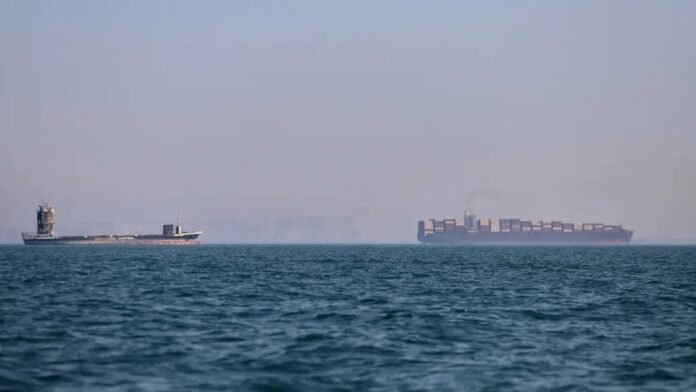
A cargo ship is attacked by Iran on June 26.

US President Donald Trump resumed bombing Iran on Friday, a day after an Iranian attack on a cargo ship in the Strait of Hormuz, elevating concerns about the future of a ceasefire agreement just as Israel and Lebanon signed a related deal.

The Trump administration – which partnered with Israel to launch a war on Iran in late February – and the Iranian government agreed on a memorandum of understanding (MOU) earlier this month. On Thursday, Iran attacked a Singapore-flagged commercial vessel, the Ever Lovely, in the strait, a key trade waterway.

“The Islamic Republic of Iran shot at least four One Way Attack Drones at Ships transversing the Strait of Hormuz,” Trump wrote on his Truth Social platform Friday morning. “One of the Drones solidly hit the upper deck of a large and very expensive Cargo Carrying Ship. Damage was done, but the Ship was able to proceed on its way. We knocked down three other Drones. Obviously, this is a foolish violation of our Ceasefire Agreement.”

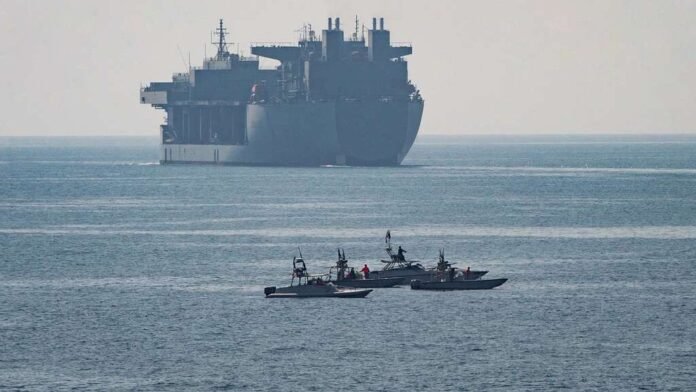
Later Friday, US Central Command (CENTCOM) announced that “as a powerful response to yesterday’s attack on a commercial ship that was transiting the Strait of Hormuz,” American aircraft “struck Iranian missile and drone storage locations and coastal radar sites.”

“The unwarranted aggression against commercial shipping by Iranian forces clearly violated the ceasefire,” CENTCOM said. “Furthermore, Iran’s dangerous behavior undermined freedom of navigation as commerce increasingly flows through the vital international trade corridor.”

“CENTCOM forces continue to provide safe passage coordination and support to commercial vessels transiting the strait,” Central Command added. “The US military remains present and vigilant to ensure all aspects of the agreement with Iran are adhered to, obeyed, and in full force and effect.”

Al Jazeera reported late Friday that Iran’s Islamic Revolutionary Guard Corps (IRGC) released a statement saying it had responded with fire:

The IRGC said its Navy targeted locations in the region where US forces are deployed, without specifying where or providing additional details.

It condemned the US strikes on Iran, saying Washington, “as always, violated its commitments and launched an airstrike” on the Iranian coast.

“According to Article 5 of the memorandum of understanding, Islamabad has arrangements for controlling traffic in the Strait of Hormuz with the Islamic Republic of Iran,” the IRGC said.

“However, the US, by inciting various parties, sought to violate this commitment, which was met with the necessary response,” the statement continued. “If the aggression is repeated, our response will be more extensive.”

Responding on the social media network X, Ebrahim Azizi, who heads the Iranian Parliament’s Commission on National Security and Foreign Policy, said: “The reality in the Persian Gulf has changed. The Strait of Hormuz is governed by Iran, so: Respect the rules. Use secure routes. Do not mistake control for escalation. If you do not learn the rules, the Iranian armed forces will teach them to you. This is not a violation of the ceasefire; it is ceasefire management.”

Flagging CENTCOM’s announcement, the National Iranian American Council (NIAC) pointed out that “this marks the first publicly acknowledged US military action against Iran since the recent ceasefire agreement, potentially representing the most serious test yet of the fragile understanding between Tehran and Washington.”

“Notably, the alleged violation of the MOU resulted in military retaliation,” NIAC added, “contra coordination via the executive mechanism that was supposed to be established to monitor implementation of the deal.”

As for the administration’s supposedly diplomatic efforts, US Secretary of State Marco Rubio announced that the United States, Israel, and Lebanon – which Israeli forces have been bombing throughout the Iran War – had signed a trilateral framework that he claimed “builds a realistic path out of endless conflict.”

“This agreement establishes a clear and structured process to restore Lebanon’s sovereignty, disarm Hezbollah, and dismantle its terrorist infrastructure, and enable Israel to return to its borders once that threat to its citizens is removed,” Rubio said. “It also creates a trilateral Military Coordination Group for Lebanon (MCG4L), facilitated by the United States, allowing the two sides to implement this framework. For Lebanon, this framework provides a genuine pathway out of a long crisis. For Israel, it creates a verifiable path to removing the persistent threat on its northern border.”

The framework was met with protests in the Lebanese capital. Lebanon’s National News Agency reported that Hezbollah supporters gathered on motorcycles in Beirut to oppose the deal.

-Common Dreams

Singapore-Flagged Ship Hit in Strait of Hormuz as Iran Tests US Deal 

0
singapore-flagged-ship-hit-in-strait-of-hormuz-as-iran-tests-us-deal 
Singapore-Flagged Ship Hit in Strait of Hormuz as Iran Tests US Deal 


Two senior US officials told The Wall Street Journal that Iran’s Islamic Revolutionary Guard Corps (IRGC) struck a Singapore-flagged merchant vessel transiting the Strait of Hormuz on Thursday. 

The ship was operating near Oman’s coastline when it was hit, hours after Iran’s paramilitary navy instructed commercial vessels to avoid using sea lanes through the strategic waterway unless they had Tehran’s approval. 

There was damage to the vessel’s bridge, where its navigation, communications and command functions are located. UK Maritime Trade Operations reported structural damage to that section of the ship but said there were no injuries among the crew. 

The attack marked a significant test for the US-Iran agreement signed in mid-June, which commits both sides to keeping the Strait of Hormuz open to international shipping. The newspaper said the White House declined to comment on the incident. 

Iran’s warning to merchant shipping was issued only hours before the vessel was attacked. Tehran had directed ships to avoid transit routes through the strait that were not specifically authorized by the Iranian government. 

During the weekend, Iran closed the Strait of Hormuz after Tehran demanded an end to Israeli military operations in Lebanon. The latest attack occurred after that closure despite the agreement’s provisions calling for the waterway to remain open. 

The International Maritime Organization said the Singapore-flagged cargo ship targeted in the attack was not participating in the evacuation program. 

Before the regional conflict that began this spring, the Strait of Hormuz carried approximately 20% of the world’s oil and gas shipments. Interruptions to maritime traffic through the passage have triggered sharp swings in global oil prices.  

Keir Starmer’s Downfall Is the Only Reward for Simpering Centrism

0


Sean Bell is a writer and journalist based in Edinburgh.

Keir Starmer, the U.K.’s sixth prime minister in a decade, has resigned. Even allowing for the weariness of repetition, this should theoretically be a big deal.

Within that benighted kingdom, it will be for some — the John Fetterman-esque cartoon Andy Burnham, now widely considered Starmer’s all-but-inevitable successor, looks set to grip the poisoned chalice that is leadership of the British Labour Party, for all the good it will do him. The ascendant far-right outfit Reform U.K. will likely regard Starmer’s downfall as another stepping stone to turning Oswald Mosley’s deferred dreams of Anglified fascism into reality.

The Greens, who have enjoyed some recent success with their novel proposal that left-wing people might actually want a left-wing party to vote for, may see this as further proof of the once-verboten idea that — whisper it — maybe the Labour Party doesn’t need to exist. And those constituent nations of the U.K. which are not England but are nevertheless forced to abide by its whims will be reminded that the British state they are bound to has not enjoyed stable government for quite a while.

The question of whether the wider world should take heed of the U.K. and its travails remains open, and for good reason. The centuries long legacy of Britain’s various eccentric neuroses being imposed outside of its island isolation is horrifically grim, and I would not blame anyone for wishing to see it quarantined like patient zero in a zombie outbreak. Yet there are lessons to be learned from Starmer’s short, sad tenure, especially as the international left will continue to face manifestations of the worldview he represented — not least the U.S. Democratic establishment, as New York primary voters will need no reminding this week, who seem stubbornly resistant to learning them.

Starmer pursued the credo of centrism by meeting his government’s increasingly psychotic right flank where they were.

It shouldn’t be controversial to say that Starmer’s rise was not achieved on his own merits. As Labour leader, Starmer’s role was essentially pest control: He was installed as head of a party that has historically, if intermittently, pretended to belong to a species of socialism, and was tasked with disinfecting Labour of any threat it might genuinely embody that ideology. In this mission, he was nominally successful, purging the party of anything associated with his leftist predecessor Jeremy Corbyn (whose specter continues to haunt Britain’s commentariat, despite achieving precisely zilch). Starmer, the best that central casting could produce, was then delivered to Downing Street with a ridiculous majority by an electorate exhausted by more than a decade of Conservative government.

In power, the Tories had alternated between brutality and incompetence, and Starmer did not buck that trend, reaffirming Gore Vidal’s contention that trying to find much difference between Labour and the Tories was like bringing “a measuring rod to Lilliput.” At every turn, Starmer pursued the credo of centrism by meeting his government’s increasingly psychotic right flank where they were, and was somehow shocked and dismayed to find this only made him more despised, while also emboldening and empowering reactionary forces.

Under Starmer’s health secretary and supposed human being Wes Streeting, trans youth in the U.K. were stripped of gender-affirming healthcare, and Britain’s frothingly transphobic “gender-critical” lobby — from which their equally exterminationist American sympathizers have taken much inspiration — fumed that young trans people still existed.

Starmer’s government saw Palestine solidarity activists criminalized under a dubious interpretation of anti-terrorism law, yet British right-wing media continued to grumble that pro-Palestinian protests were still possible at all. Within a year of Starmer vowing his government would curb legal immigration and “take back control” of the U.K.’s borders, immigrants in Britain were subjected to pogroms and firebombing.

It should not need to be spelled out, but Starmer and his backers have shown time and again that it still does — if the mythic Overton window shifts to the right, and you obligingly follow suit, it will simply move further toward that extreme, and reward only the tip of the spear. Those in the U.S. who saw Kamala Harris struck mute on trans rights and blind in the face of genocide in Gaza know too well the stakes of “moderating” to the right in the interest of “consensus.”

Since his resignation, a small and desperate coterie of British pundits have urged their dwindling readership to focus on the positives of Starmer’s reign by emphasizing those instances in which he stood firm on the rock of not-quite-fascism, particularly in foreign affairs. After all, they point out, he recognized a Palestinian state (while simultaneously offering precious little resistance to killing the people who would otherwise live there). But whether in the United States’ kidding-but-not-really bid to colonize Greenland, its pursuit of regime change in Venezuela via the enactment of a lousy ’80s action movie, or a war with Iran — the sheer sloppy-drunk incompetence of which stunned even its most vociferous critics — the Starmer administration never achieved any greater fortitude than weakly suggesting, “I say, steady on …”

There was never any realistic hope that this erstwhile human rights lawyer was going to seriously confront a sclerotic superpower ruled by a meat-headed fascism which treats human rights as a laughable suggestion. It is appropriate that in his resignation speech, Starmer expressed pride in supposedly protecting Britain’s youth from social media; this feat of Herculean self-aggrandizement was, in its own way, telling of Starmer’s entire premiership. Given the choice between taking on the entrenched power of social media platforms (to which the U.K.’s political class remains unashamedly addicted) or restricting the liberties of a constituency not particularly useful to him, Starmer inevitably chose the latter.

Less than a decade ago, the idea that the American progressive left might be in a healthier state than its British equivalent would have drawn hoots of derision from those smugly confident in Corbyn’s brief ascendance. Yet the left in the United States — from the days of Occupy Wall Street through Black Lives Matter, the Palestinian solidarity movement, and on-the-ground anti-ICE resistance — has wised up to the idea that it must move in an independent and extra-parliamentary manner. They may take heart in developments such as the rise of figures like Zohran Mamdani, but they seem to understand that real political change requires mass organizing beyond party structures and a willingness to break with the accepted norms and niceties of the political process.

This understanding passed entirely by all those on the British left who invested in Labour, along with those centrists and liberals who warned against the insidious influence of identity politics and “culture wars” that would require giving a shit about the rights, liberation, and lives of embattled and persecuted minorities. Starmer’s premiership, and its ignominious end, are the consequence.

The lesson of Keir Starmer’s undistinguished spell as prime minister is that — in the U.K. or anywhere else — if you throw red meat to a bloodthirsty right, it is only a matter of time before they are devouring your own flesh. You will not defeat fascism, or even delay it — you will simply make sure that when it arrives, much of its work has already been done.

Plane Slams into Beijing’s Tallest Skyscraper (Video)

0
plane-slams-into-beijing’s-tallest-skyscraper-(video)
Plane Slams into Beijing’s Tallest Skyscraper (Video)


A small aircraft appeared to smash into Beijing’s tallest skyscraper Friday afternoon, sending debris raining down in a stunning scene that unfolded in one of the most heavily guarded cities on Earth.

The aircraft reportedly struck the 109-story CITIC Tower, also known as China Zun, a gleaming landmark that dominates the skyline of China’s capital.

Dramatic footage posted on social media showed debris falling from the massive tower as stunned witnesses gathered below. Other images appeared to show part of the aircraft’s tail section on the ground, along with the shattered window of a taxi nearby.

A CNN journalist at the scene saw people evacuated from the skyscraper standing in the streets near the entrance as firetrucks, police cars and an ambulance arrived.

Authorities had not immediately released official details about the frightening incident.

CNN reported that a person who answered the phone at the relevant district branch of the Beijing Public Security Bureau said they were “not familiar with the situation” and referred the outlet to another number. That call reportedly went unanswered.

CNN also reached out to the Beijing Municipality Government and a number listed for the aircraft’s owner.

Images circulating online appeared to show the plane’s registration code, which seemed to link it to a domestically manufactured light sport aircraft, the Sunward SA 60L Aurora.

The aircraft was reportedly owned by a local general aviation company that offers services such as pilot training, personal recreational flights and aerial photography.

Unverified flight data posted online from Flightradar24 appeared to show the aircraft had taken a seriously abnormal path before the incident.

The crash is especially shocking because Beijing has some of the tightest airspace controls in the world.

Since May 1, the city has also been under sweeping restrictions aimed at keeping drones out of the capital. Residents are not allowed to buy, rent or fly drones within Beijing’s sprawling jurisdiction without government approval.

It remains unclear what caused the aircraft to veer toward the skyscraper, whether anyone was injured, or how much damage was done to the building.

The incident left many wondering how a small aircraft could end up colliding with such a high-profile tower in the heart of Beijing.

US Navy’s repair gap could hand the Pacific war to China

0

The US Navy’s greatest vulnerability in a war with China may not be losing ships — but getting them back into the fight.

RAND released a recent report warning that the US Navy faces severe risks to its maritime dominance because repairing battle-damaged Arleigh Burke-class destroyers in a hostile Indo-Pacific theater is significantly more complex and difficult than current military plans allow.

Based on a two-day wargaming tabletop exercise sponsored by the Joint Staff and held in August 2025, defense experts from the US and regional allies — including Japan, South Korea and Australia — simulated conflict vignettes against China to evaluate strategic ship-salvage and force-regeneration capabilities.

The analysis revealed critical bottlenecks in industrial ship repair, finding that the US Navy’s organic capabilities are insufficient for major repairs and can only stabilize ships to the point that they can transit back to the US.

Repairs are further crippled by a severe shortage of specialized technicians and a rigid peacetime regulatory framework that stalls emergency wartime operations.

Additionally, tech-sharing hurdles and the non-standardized, “snowflake” configurations of individual Aegis combat systems make it nearly impossible to substitute or cannibalize parts.

This lack of specialized spare parts is compounded by the extreme physical vulnerability of allied shipyards to enemy attacks and commercial constraints at regional hubs such as Singapore.

Together, those factors threaten to leave damaged US warships stranded and defenseless during an active campaign.

The US Navy’s battle damage repair capabilities may not be limited to just the Arleigh Burke destroyer class. A US Government Accountability Office (GAO) report from June 2021 states that the US Navy is still in the early stages of developing the capabilities needed to repair battle damage in great-power conflicts.

The GAO report says that the US Navy lacks an established wartime doctrine, has fragmented planning on which authority oversees repair and maintenance efforts, and faces severe shipyard capacity shortages, because it hasn’t had to repair damaged warships on a scale not seen since World War II.

Compounding these vulnerabilities, the report says the US Navy relies on outdated ship survivability models, leaving it without reliable data on modern failure points needed to accurately analyze battle damage repair needs.

Furthermore, Michael Hogan mentions in a May 2025 article for the Center for International Maritime Security (CIMSEC) that post-Cold War downsizing slashed the US Navy’s auxiliary fleet to just three ocean-going tugs, two rescue ships and two submarine tenders, driving its declining repair capabilities and leaving it unable to handle sudden wartime battle damage.

According to Hogan, US public shipyards are already operating at maximum capacity, and routine peacetime modernization means fewer than 40% of maintenance periods are completed on time. He stresses that with a massive domestic shipbuilding bottleneck, the US faces a crippling capacity deficit compared to China, leaving forward-deployed warships highly vulnerable in a conflict.

Illustrating the US Navy’s massive shipbuilding deficit vis-a-vis China, The War Zone (TWZ) reported in June 2023 that a leaked US Navy intelligence slide revealed that China possesses an astonishing 232 times the shipbuilding capacity of the US.

The slide said China’s state-run shipyards produce a massive capacity of approximately 23.25 million gross tons, compared to less than 100,000 tons domestically for the US.

Moreover, Arjun Vohra mentions in a Geopolitical Monitor article this month that the US today maintains only eight military shipyards, a far cry from its robust World War II industrial base.

Vohra points out that because modern destroyers take 5 to 7 years to build, compressing wartime timelines is nearly impossible, forcing the US Navy to rely heavily on retrofitting older vessels rather than building new ones.

Against that backdrop, China’s naval repair enterprise is evolving in the opposite direction. Contrasting China’s approach to naval shipbuilding and repair with that of the US, a RAND report this month mentions that the People’s Liberation Army Navy (PLAN) is transitioning toward a hybrid maintenance framework, balancing the replacement of older hulls with comprehensive overhauls of its newest, highly sophisticated surface combatants.

The report says that to support its breakneck shipbuilding pace, China heavily prioritizes organic, grassroots self-sufficiency, though its lower-level units still struggle with surface-level practices and rely on higher echelons for complex repairs.

It notes that this strategy directly contrasts with the US Navy’s longstanding, repair-focused approach, which remains severely hindered by domestic shipyard bottlenecks, compounding maintenance backlogs and critical workforce shortages.

A Center for Strategic and Budgetary Assessments (CSBA) report warns that the lack of rapid repair capabilities has diminished the US Navy to the point of functioning as a mere “garrison force,” dependent on a forward network of ports and bases rather than the true expeditionary force it was during World War II.

It warns that in a protracted war of attrition against a peer adversary like China, this decay would be catastrophic. Lacking mobile repair assets and flexible surge capacity to triage struck vessels, the US Navy faces a steep drop in operational availability and a dramatically higher loss percentage of salvageable warships, the report says.

Those shortcomings could be especially consequential in a Taiwan contingency. A January 2023 Center for Strategic and International Studies (CSIS)  report mentions that a potential Chinese amphibious invasion of Taiwan would inflict catastrophic losses on the US Navy, typically sinking two US carriers and 10 to 20 large surface combatants within three weeks, losses that could cripple the US’s global position for years.

Reversing those shortcomings will require more than additional funding — it will require a fundamental shift in how the US Navy prepares to regenerate combat power during wartime.

William Arnest writes in a March 2025 Proceedings article that, to reverse severe post-Cold War capability divestments, the US Navy must transition from peacetime efficiency metrics to a wartime framework focused on rapid force regeneration through a tiered triage matrix that prioritizes quick, mission-essential fixes over full restoration.

Arnest urges accelerating the procurement of Navajo-class salvage ships and next-generation submarine tenders, using existing expeditionary fast transports as repair platforms, and deploying containerized, mobile Expeditionary Maintenance and Repair Facilities (EMRFs).

He adds that the US Navy must have a flag-level champion within the Chief of Naval Operations (CNO) staff to bridge structural organizational divides and secure vital funding. Whether the US can sustain maritime power in the Indo-Pacific may ultimately depend less on how many warships it fields than on how quickly it can return damaged ones to the fight.

Unless the US rebuilds the industrial, logistical and organizational foundations of wartime naval resilience, China’s growing advantages in shipbuilding and force regeneration could increasingly shape the strategic balance in any prolonged conflict.

South Korea Targets AI Chip Boom with $648B Samsung-Led Investment Drive

0
south-korea-targets-ai-chip-boom-with-$648b-samsung-led-investment-drive
South Korea Targets AI Chip Boom with $648B Samsung-Led Investment Drive


Samsung Group plans to invest around 1,000 trillion won ($648 billion) in South Korea over the next decade, according to a media report, in a major push to convert surging AI-driven semiconductor demand into a broader national growth strategy.

Senior executives from Samsung Electronics and SK Hynix are expected to meet President Lee Jae Myung to present investment plans aimed at expanding industrial capacity beyond the Seoul region. The initiative aligns with the government’s effort to reduce regional economic concentration and develop new industrial hubs.

Samsung’s proposed investment reportedly includes large-scale spending on AI data centres, batteries, and displays, along with a potential 300 trillion won allocation for semiconductor manufacturing facilities in South Korea’s southwest. The broader Samsung Group, South Korea’s largest conglomerate, includes affiliates such as Samsung SDI and Samsung SDS.

The policy push comes as South Korea seeks to leverage its dominant position in high-end memory chips, a critical component in global AI infrastructure. However, infrastructure constraints, energy supply limits, and skilled labour shortages could complicate efforts to relocate major industrial capacity away from the capital region.

The presidential office is expected to unveil “three mega-projects” covering semiconductors, AI data centres, and robotics, jointly developed with industry leaders. SK Hynix and Samsung have not publicly commented on the reported plans.

The proposal has triggered political debate, with critics arguing investment decisions are being influenced by regional politics ahead of upcoming leadership contests. Some analysts also warn that building a new chip cluster in the southwest may face long-term workforce challenges, potentially limiting its economic impact.

South Korea’s push reflects a broader strategy to translate its AI chip leadership into balanced national development, but execution risks remain significant.

via Reuters

Palestinian injured, 2 arrested in Israeli raids across occupied West Bank

0
palestinian-injured,-2-arrested-in-israeli-raids-across-occupied-west-bank
Palestinian injured, 2 arrested in Israeli raids across occupied West Bank

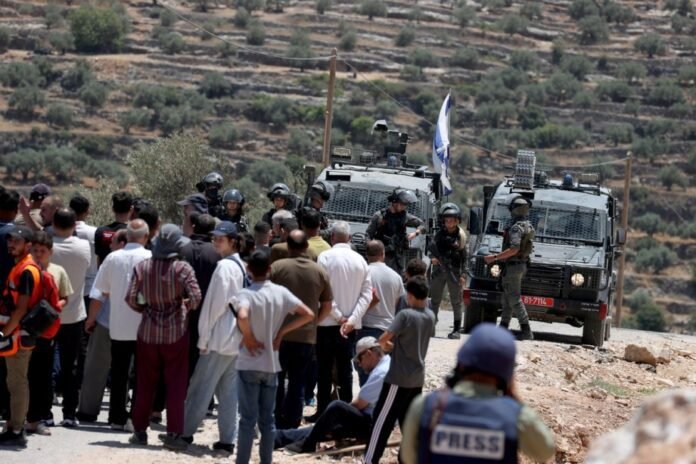
A Palestinian was injured and two others were arrested Saturday as the Israeli army carried out raids across several areas of the occupied West Bank, accompanied by occupiers’ attacks and the closure of roads and town entrances, Anadolu reports.

The latest incidents came a day after Israeli forces arrested 10 Palestinians from the village of Burqa, east of Ramallah, and burned about 10 dunams (2.5 acres) of olive groves.

The Jerusalem Governorate said in a statement that a young Palestinian suffered facial injuries, while several others, including children and elderly people, were overcome by tear gas after Israeli forces stormed a wedding celebration in the town of Hizma, northeast of Jerusalem, and fired a tear gas canister directly at attendees.

In the southern West Bank governorate of Hebron, the Palestinian news agency WAFA reported that Israeli forces arrested a Palestinian while he was grazing livestock in the village of Al-Deirat, east of Yatta. Another Palestinian was arrested while Israeli troops chased shepherds in the Wadi Rahila area near the village of Al-Rakeez in Masafer Yatta.

READ: Israeli forces kill Palestinian man inside home in occupied West Bank raid

The agency also said Israeli occupiers attacked a home in the Wadi Sair area northeast of Hebron and attempted to drive their livestock into the property before the homeowner confronted them and forced them to leave.

Meanwhile, Israeli forces erected several military checkpoints at the entrances to Hebron governorate and blocked major and secondary roads with iron gates, concrete blocks and earth mounds, severely restricting movement, witnesses told Anadolu.

In the northern West Bank governorate of Tubas, Israeli troops raided the village of Tayasir, deployed throughout its neighborhoods and searched several homes, ransacking property and mistreating residents, according to local sources.

East of Ramallah, Israeli occupiers grazed their sheep on privately owned agricultural land in the village of Al-Mughayyir after cutting through a metal fence surrounding the property, causing damage to crops and trees, the sources said.

The occupied West Bank has witnessed a sharp increase in attacks by Israeli occupiers and military forces targeting Palestinian farmland, including arson, land bulldozing and preventing farmers from accessing their land, particularly in areas near illegal settlements and settlement outposts.

According to official Palestinian figures, Israeli military operations and occupiers’ attacks in the occupied West Bank since Oct. 8, 2023, have killed 1,173 Palestinians, injured 12,666 others, led to the arrest of about 23,000 people and displaced about 33,000 residents.

READ: Palestine urges international steps to halt illegal Israeli settlement activity, Palestinian displacement

Rome and Persia history lessons for US-Iran peace deal

0
rome-and-persia-history-lessons-for-us-iran-peace-deal
Rome and Persia history lessons for US-Iran peace deal

A public event in Tehran depicting ancient Persian warriors alongside modern Iranian forces. Image: EPA via The Conversation / Abedin Taherkenareh

“Making peace with Iran may be just as painful as winning the war,” a recent CNN report noted. As negotiations roll on during a shaky ceasefire, what a deal between the US and Iran might look like and whether it holds is anyone’s guess.

As a scholar of ancient Persia (which eventually became Iran), the difficulties US President Donald Trump is now facing don’t exactly surprise me.

After dozens of wars between the two ancient empires of Rome and Persia, peace deals often failed to solve problems and sometimes made the situation worse.

Lurching from conflict to conflict

The powerful empires of ancient Persia (ruled by the Parthians from 247 BCE to 224 CE, and then the Sasanians from 224 to 651 CE) rivaled the Roman Empire for centuries. They often went to war and the peace deals they struck were mostly about buying time.

The first major conflict between Rome and Persia was the disastrous invasion led by the Roman general Crassus in 53 BCE. Crassus himself died and thousands of Roman soldiers were killed in the plains near Carrhae in southern Turkey.

Ongoing conflict emboldened the Parthians and in 20 BCE, the Romans were forced to recognize the Euphrates River as a boundary as part of a peace agreement. For Rome, this represented a concession because up to this point its territorial expansion couldn’t be stopped.

Conflict between Rome and Parthia would break out again in the middle of the first century CE. This time, it was over the kingdom of Armenia, which sat strategically between the two empires in modern Armenia and eastern Turkey.

Following the war, the Roman emperor Nero and the Parthian King, Vologases I, struck the Treaty of Rhandeia in 63 CE. Under this deal, the king of Armenia was to be nominated by the Parthians but actually crowned by the emperor in Rome. The treaty settled the immediate dispute but over time became unwieldy.

Later, when the Parthians simply brushed the treaty aside, the Roman emperor Trajan punished them with a major invasion in 114 CE.

Despite some impressive initial successes, including the capture of the Parthian capital, the invasion failed. All of Trajan’s gains were lost by the time of his death in 117 CE.

Following the replacement of the Parthians by the Sasanians as rulers of Persia in 224 CE, conflict with Rome escalated even further. Control of Armenia was often the focus and formed a key element of peace agreements.

After the Roman emperor Gordian III’s death in an invasion of the Sasanian Empire in 244 CE, a fresh agreement was struck between the two powers. The Sasanians imposed financial penalties and a clause banning Roman involvement in Armenia.

But within a few years Rome ignored the treaty. This led to a series of devastating Sasanian invasions of Roman territory and the capture of the Roman emperor Valerian in 260 CE.

In the late 290s, Rome would extract some revenge with a significant victory over the Sasanian king, Narseh. The Treaty of Nisibis that followed in 299 CE contained a number of clauses, which extended Roman power further east. It also gave control of Armenia to Rome.

But this treaty sowed the seeds of considerable enmity. When the Sasanian king Shapur II invaded Roman territory in the 350s, his main aim was to repudiate the treaty made 60 years earlier. This was reinforced when the Roman emperor Julian invaded the Sasanian Empire and suffered a heavy defeat (including his own death) in 363 CE.

While the level of conflict between Rome and ancient Iran was lower in the fifth century CE, it was even more pronounced in the sixth and seventh centuries. Rome and Iran were almost constantly at war during this period.

There were numerous treaties and attempts to strike peace but none lasted. Perhaps the most futile was the so-called Eternal Peace of 532, which lasted less than eight years.

Easier to make war than peace

As history shows, peace deals may be trumpeted at the time they are signed but can end up sowing the seeds of discord and future conflict.

Rome and Persia’s fight over Armenia was eventually settled in an agreement to partition the kingdom between Rome and Iran in the 380s. But it took more than 400 years to achieve, despite dozens of attempts.

An ongoing ebb and flow of conflict, invasions, threats and stalemates punctuated the entire time frame before.

Does a lasting peace arrangement between the US and Iran face similar prospects? Only time will tell. Hopefully this time, it won’t take centuries to get there.

Peter Edwell is associate professor in ancient history, Macquarie University

This article is republished from The Conversation under a Creative Commons license. Read the original article.

4 IDF Soldiers Wounded in Southern Lebanon as Israel-Lebanon Talks Continue 

0
4-idf-soldiers-wounded-in-southern-lebanon-as-israel-lebanon-talks-continue 
4 IDF Soldiers Wounded in Southern Lebanon as Israel-Lebanon Talks Continue 


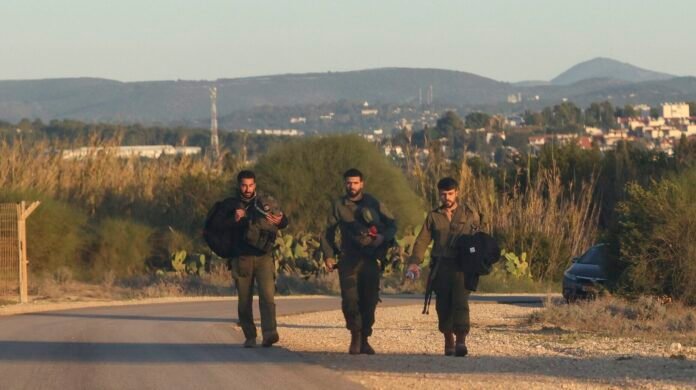
An Israel Defense Forces (IDF) combat officer was moderately wounded, and another combat officer and two additional soldiers sustained light injuries during an encounter with a terrorist in Beit Yahoun in southern Lebanon, as US-mediated negotiations between Israel and Lebanon were extended another day without a breakthrough.  

The IDF Spokesperson said a member of an armed group threw a grenade at the soldiers before being eliminated. The injured personnel were evacuated for medical treatment, and their families were notified. 

The incident occurred as Israeli and Lebanese delegations completed a third day of talks in Washington on Thursday. An Israeli embassy spokesperson told The Times of Israel that the negotiations ended without an agreement on a proposed partial Israeli withdrawal from southern Lebanon, but both sides agreed to continue discussions for a fourth day. Negotiators are scheduled to reconvene on Friday at the US State Department. 

According to The Times of Israel, US officials had hoped Thursday’s discussions would produce an agreement under which Israel would withdraw from designated areas in its buffer zone, referred to as “pilot zones,” with Lebanese army forces replacing Israeli troops. 

An Israeli source told the publication that the proposed arrangement would not affect Israel’s six-mile-deep buffer zone in southern Lebanon. Instead, the IDF would withdraw only from locations where Hezbollah infrastructure had already been cleared while maintaining its broader security zone. 

Earlier Thursday, Israeli and Lebanese officials rejected a US claim that Israel had already begun withdrawing from key positions in southern Lebanon. A US official reportedly said the troop movement was a goodwill gesture toward the Lebanese government during ongoing negotiations. 

Both Israeli and Lebanese officials have also expressed frustration over the US decision to address the conflict with Hezbollah as part of the memorandum of understanding signed last week with Iran rather than treating Lebanon as a separate diplomatic track. 

Speaking on Thursday, US Secretary of State Marco Rubio said Israel and Lebanon were close to reaching a “commitment of intent” but did not provide further details on the negotiations. 


0FansLike
0FollowersFollow
0FollowersFollow
0SubscribersSubscribe
- Advertisement -
Google search engine

Recent Posts