34.5 C
London
Friday, June 26, 2026
Home Blog

Rocket Report: China may soon attempt booster landing; Rocket Lab does rapid response

0
rocket-report:-china-may-soon-attempt-booster-landing;-rocket-lab-does-rapid-response
Rocket Report: China may soon attempt booster landing; Rocket Lab does rapid response

Welcome to Edition 8.47 of the Rocket Report! We have now very nearly reached the midpoint of 2026, a year in which several new US rockets were advertised as potentially making their debuts. But now, we have to wonder whether any of them—Rocket Lab’s Neutron, Stoke Space’s Nova, Relativity Space’s Terran R, and Astra’s Rocket 4—will make it. I’d probably put the over/under at something like 0.5 of these launching. Please share your thoughts in the comments below!

As always, we welcome reader submissions, and if you don’t want to miss an issue, please subscribe using the box below (the form will not appear on AMP-enabled versions of the site). Each report will include information on small-, medium-, and heavy-lift rockets as well as a quick look ahead at the next three launches on the calendar.

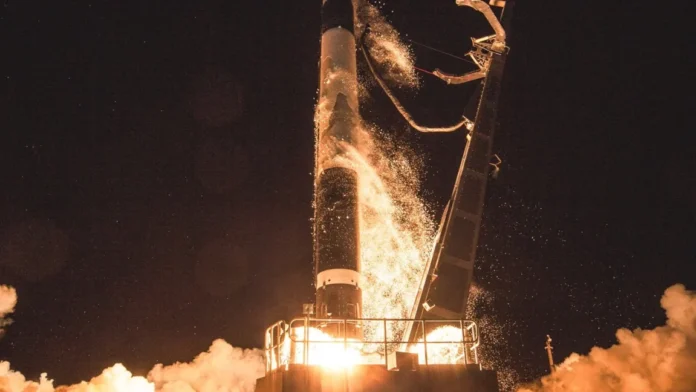
Rocket Lab executes rapid response mission. Last Friday Rocket Lab launched the Victus Haze mission just 16 hours and 42 minutes after receiving the US Space Force’s Notice to Launch, beating the previous record by more than 10 hours, the company said. The launch was scarcely announced in advance, Ars reports. The only public indication of an impending launch was the release of a warning for pilots and sailors to steer clear of the rocket’s flight path. Rocket Lab did not provide a livestream of the launch, as it does for most of its missions.

Getting to orbit quickly … The Space Force announced plans for the mission in 2024 when it selected Rocket Lab and True Anomaly to build and launch two satellites into low-Earth orbit. At a high level, the idea was to launch a small satellite built by True Anomaly first, posing as a satellite from a potential adversary, like China or Russia. Rocket Lab was supposed to have a satellite on standby to go up and inspect True Anomaly’s spacecraft, ready to launch on short notice once military officials gave the order. The objective of the Victus Haze mission is to demonstrate how the military and its commercial partners might be able to quickly go up and assess a threat in orbit.

RFA parent company to raise serious funds. Publicly listed German space technology company OHB has announced plans to raise up to 510.7 million euros ($580 million) by issuing approximately 1.7 million new shares, European Spaceflight reports. In addition to its significant satellite manufacturing business, OHB is involved in two launch vehicle programs through its subsidiary MT Aerospace, a major supplier to the Ariane 6 program, and its stake in Rocket Factory Augsburg.

Strong interest in commercial space … Founded in 2018 as a spinoff of OHB, Rocket Factory Augsburg is working toward the debut launch of its RFA One rocket, which has an uncertain date due to a first-stage anomaly during a static fire test in August 2024. Of the funding to be raised, the publication estimates that about 14 percent, or $80 million, could flow to Rocket Factory Augsburg as it continues development. Separately, this week, the launch company revealed plans for two larger rockets.

The Ars Technica Rocket Report
The easiest way to keep up with Eric Berger’s and Stephen Clark’s reporting on all things space is to sign up for our newsletter. We’ll collect their stories and deliver them straight to your inbox.

Sign Me Up!

Sirius Space claims pad in French Guiana. The French space agency, CNES, has selected Sirius Space Services to fill a vacancy at the Guiana Space Center’s new multi-user commercial launch facility, European Spaceflight reports. The space became available after MaiaSpace shifted its planned launch operations to the spaceport’s former Soyuz launch facility.

Three variants of small lift … Sirius Space is developing a range of three rockets based around common rocket boosters. The smallest is Sirius 1, a two-stage, single-stick rocket capable of delivering payloads of up to 180 kilograms to orbit. Sirius 13 adds two strap-on boosters, increasing payload capacity to 800 kilograms, while the largest vehicle, Sirius 15, features four boosters and tops out at 1,100 kilograms.

Pam Melroy joins Gilmour’s board of directors. Australian aerospace company Gilmour Space said this week it appointed former NASA deputy administrator, astronaut, and retired US Air Force Colonel Pamela Melroy to its board of directors. “I’m excited to join Gilmour Space at such an important stage of its journey,” Melroy said in a statement. “The team is building a genuinely critical sovereign capability for Australia, with ambitions that extend well beyond launch.”

Still working on Eris … Gilmour Space is building sovereign Australian capabilities across launch vehicles, satellites, advanced manufacturing, and spaceport operations to support commercial, government, and defense missions. The company operates Bowen Orbital Spaceport in North Queensland, Australia’s first licensed orbital launch site. A launch campaign for the debut flight of the company’s Eris rocket ended when there was a problem with its payload fairing during pre-launch testing a year ago.

SpaceX may be planning to shutter Transporter program. For years, small satellite manufacturers have built their business plans around the idea that SpaceX could launch their payload to space through its affordable Falcon 9 Transporter and Bandwagon rideshare missions. But now, Space News reports, these rideshare programs may be ending. At least nine SpaceX partners and customers told the publication that SpaceX is not accepting Transporter reservations beyond late 2028 or early 2029, and the manifest for the next couple of years is nearly full.

Companies now left scrambling … Some customers said they expect that SpaceX will extend Falcon 9 rideshares if its super heavy-lift Starship rocket does not come online as quickly as company leaders anticipate. But the lack of spots, potentially as few as half as many as in recent years, has left satellite companies scrambling to find a way to space. While secondary payloads can fly with many launch providers, none offer transportation as frequently or inexpensively as SpaceX rideshare. Will small launch companies be ready to step up?

Long March 10B debut coming soon. China is set for a debut flight of its Long March 10B rocket in July and attempt to recover the first stage at sea, Space News reports. Recently issued airspace and maritime warning notices indicate that the first Long March 10B reusable rocket, to launch from Hainan Commercial Space Launch Site, Hainan Island, now has a launch window opening July 10.

Will be interesting to see if it can land … The two-stage kerosene-liquid oxygen Long March 10B is a cargo variant of the Long March 10A, a rocket designed to launch a new crew spacecraft to low-Earth orbit. It has a capacity of about 11 metric tons to low-Earth orbit. China conducted a wet dress rehearsal of the Long March 10B back in April, with the launch initially expected in the weeks that followed. The debut flight of the 5.0-meter-diameter rocket was, however, delayed for unspecified reasons.

Falcon 9 may be used for rocket cargo program. A SpaceX Falcon 9 rocket lifted off on Tuesday to test a new reentry vehicle designed to deliver cargo anywhere in the world from low-Earth orbit, Ars reports. The company developed the new saucer-shaped reentry pod, called Starfall, under a veil of secrecy. Its purpose is to support the “transport and delivery of goods through space.” Most of what we know about Starfall comes from the FAA’s environmental assessment.

An option for lighter deliveries … In that document, the FAA writes that Starfall will “enable point-to-point delivery of critical cargo through space on rapid timelines” and provide access to space for commercial in-space manufacturing. Another potential use is the military’s Rocket Cargo or Point-to-Point Delivery, which would use Starship to deliver massive loads of equipment and supplies to far-flung locations in less than an hour. Starship is an enormous vehicle, nearly 20 stories tall and 30 feet wide, that must land at prepared sites. Starfall could prove to be a more versatile option for lighter deliveries.

SpaceX to develop ‘Starpipe’ for Starship. SpaceX plans to begin building an eight‑mile (13-km) natural gas pipeline called “Starpipe” to its Texas launch facilities next month, according to county filings, Reuters reports. Starpipe, which will end at SpaceX’s Texas company town of Starbase, is ‌expected to be in service by next January. Designed to be fully ​reusable, Starship uses about 630,000 gallons (2.4 million liters) of liquid methane per launch, currently delivered by hundreds of tanker trucks in ⁠an hours-long process incompatible with Musk’s expansion plans.

Drill, baby, drill? … Although it is unusual for a space company to build its own natural ​gas pipeline for launchpad fuel, Starpipe might only be an initial step in a longer-term plan for SpaceX, which has spent years exploring its own drilling operations near Starbase and throughout Texas, according to a Reuters review of Cameron County land records. SpaceX President Gwynne Shotwell told CNBC on June 12, when the company went public, that SpaceX planned to build pipelines and process ​its own propellant, and was looking into drilling its own natural gas.

Kennedy not ready for super heavy rockets. NASA’s infrastructure at Kennedy Space Center, the crown jewel of US spaceports, is aging and approaching its limit due to increased demand from private companies, including SpaceX and Blue Origin, a new report from the Office of the Inspector General finds. Although the Space Force manages its own launch facilities nearby, the military works closely with NASA, and they share some responsibilities, Ars reports.

Too many launches, too little time … Most critically, there are problems with supply lines for helium and nitrogen, as well as 231 miles of paved roads and bridges that serve both Kennedy and Cape Canaveral. Additionally, the report cites serious concerns about a six-decade-old electricity distribution system for NASA’s launch pads. Officials are also concerned that the number of annual launches, in addition to major test firings, will reach or exceed the number of days in a year by late 2028 or 2029, placing “significant strain” on Kennedy’s spaceport systems.

Analysis details exorbitant SLS costs. On Wednesday, NASA’s Office of the Inspector General prepared a memorandum on the elements of the Artemis Program that NASA was canceling as its focus shifted to the Moon’s surface. For the Space Launch System rocket, these included the Exploration Upper Stage, the Universal Stage Adapter, and Mobile Launcher 2. The memorandum notes that each of these projects has experienced substantial cost increases and numerous delays over the last decade, Ars reports.

That’s an expensive adapter … The least expensive of the SLS contracts, for the Universal Stage Adapter, is perhaps the most illustrative. NASA contracted with Dynetics in June 2017 to design, test, and build this piece of spaceflight hardware. Made largely of composites, the adapter weighed 9,650 pounds (4.3 metric tons) and stood 33 feet (10 meters) tall. The original contract awarded to Dynetics totaled $131 million, to which NASA later added $9 million for a payload separation system. At the time the program was canceled earlier this year, the contract value had grown to $353 million, with a delivery date delayed to September 2028. The inspector general’s report projected that the project would likely cost $497 million and not be ready until May 2030.

Endeavour gets its due. It has taken four years to construct the new Samuel Oschin Air and Space Center, which is located at the California Science Center in Los Angeles. But now that it is largely completed, the facility has accomplished what many thought impossible: stacking a space shuttle orbiter with its external tank and twin solid rocket boosters without using a NASA facility intended for that purpose. This week, the science center offered a sneak preview to select media, Ars reports.

Shining a light on history … Space Shuttle Endeavour is configured so that from one angle, its payload bay doors appear closed, while from another, you can peer through an open door to see the payloads arranged as they would have been for a mission to the International Space Station. “For the most part, we still have to adjust the lighting in the payload bay,” said Dennis Jenkins, a former space shuttle engineer who led the preparation and delivery of the orbiters for their museums before becoming the project director for the science center. “Once that gets configured, then we have to latch the closed payload bay door and put a sheet of acrylic over the open crew hatch so that it stays clean inside Endeavour.”

Next three launches

June 27: Pegasus XL | Swift Boost Mission | Kwajalein Atoll, Pacific Ocean | 09:00 UTC

June 28: Falcon 9 | Starlink 17-40 | Vandenberg Space Force Base, California | 14:00 UTC

June 29: Falcon 9 | SiriusXM-11 | Cape Canaveral Space Force Station, Florida | 02:25 UTC

When ‘Made in India’ really means ‘Made in China’

0
when-‘made-in-india’-really-means-‘made-in-china’
When ‘Made in India’ really means ‘Made in China’

India’s pharmaceutical industry is a significant global player. It produces about 20% of the world’s generic drugs by volume and has supported major vaccine efforts, providing affordable medicine worldwide.

These results are real and contribute to India’s sense of self-sufficiency. However, the industry shows significant vulnerability beneath the surface.

A June 2026 NITI Aayog government think-tank report highlights issues with the government’s self-reliance ambitions. The report finds that India’s export strength hides a structural reliance on Chinese raw materials for the pharmaceutical sector.

The report dissects a dangerously anemic supply chain. For all its manufacturing might, India’s industry is a giant with feet of clay. It is reliant on China for over 65% of its key starting materials (KSM) and active pharmaceutical ingredients (APIs) — the chemical heart of any medicine, according to NITI Aayog’s Trade Watch Quarterly.

This dependency exceeds 85% for entire classes of life-saving drugs, including antibiotics and fever reducers. This is not an equal partnership — it is a tenuous pipeline. A single geopolitical tremor, trade dispute or new lockdown at a Chinese port could choke off these critical supply lines.

This could quickly lead to a public health crisis for India and other developing nations that depend on it for affordable drugs. India’s “Pharmacy of the World” title now requires a clear Made in China warning.

This dependence challenges the Narendra Modi government’s “Made in India” economic nationalism. Although its policies promote local manufacturing, the industry’s supply chain remains closely tied to China.

The NITI Aayog report illustrates the difference between government statements and actual industry dependence. The question remains: how did a leading sector grow so reliant on imports?

To be sure, China’s industrial dominance is a common challenge in emerging economies. India is highly productive but not always profitable. India supplies about 60% of global vaccine doses — six out of every ten — earning it global recognition.

But this numerical dominance collapses when measured in actual dollars. India’s share of the global vaccine market by value is a negligible 0.6%.

It provides the world with the bulk of its immunity but captures less than a penny for every dollar of revenue. The Indian economy is essentially donating its manufacturing heft. This is a charitable act of industrial policy, as unsustainable as it is generous.

Ashok Kumar Lahiri, vice chairman of NITI Aayog, has said the sector needs to “move up the value chain.” India’s industry works hard but fails to achieve commensurate economic benefits.

The challenge is compounded as the global pharmaceutical industry advances into high-margin areas such as biologics, cell and gene therapies, and immunologics.

India’s industry, by contrast, remains trapped in the low-cost, generic pill model. This is a crucial but thankless business with razor-thin margins. The reason for this innovation gap is no mystery. It is a story of underinvestment, bureaucratic inertia and regulatory overreach. Together, they have conspired to starve the sector of its creative oxygen.

Top international pharma companies typically invest 15%-20% of their revenues in research and development — a commitment that can require billions of dollars and a decade to yield a single drug.

Various studies, including a recent analysis by NITI Aayog, have estimated that Indian companies invest around 7%. It is not just a matter of culture but of survival.

India’s patent approval process is slow and complex, discouraging inventors and investors and making long-term innovation less attractive. These challenges, in turn, may lead companies to prefer copying drugs rather than developing new ones.

Environmental regulations that should encourage responsible stewardship have instead become a straitjacket of red tape. Stringent rules, such as the Zero Liquid Discharge (ZLD) mandate, while noble in intent, have massively inflated production costs.

These costs hit particularly hard for the small and medium enterprises that form the backbone of the API sector. In some R&D operations, between 35% and 40% of expenses are now allocated not to science but to managing wastewater and navigating environmental approvals.

The rational choice for a factory owner is painfully clear: stop making the ingredient domestically and import a cheaper, regulation-free version from China.

As a result, environmental regulations have led to increased imports and greater dependence on China, rather than fostering domestic resilience. This domestic policy failure is compounded by a foreign policy that has sometimes prioritized geopolitics over economic sense.

Since the 2020 border tensions with China, India has enthusiastically embraced the West’s “China plus one” and “decoupling” strategies. It has tightened restrictions on Chinese investment and technology transfer, a move framed as a step toward strength. Yet, as the NITI Aayog report implicitly shows, this has not reduced dependence; it has merely made it more opaque.

Western capitals, while cheering on India’s posture, have continued to aggressively pursue their own trade and investment deals with China, securing their supply chains, while India’s remain vulnerable. India has grown increasingly reliant on China’s supply chains yet lacks the diplomatic ties needed to address and manage crises.

To address these challenges, India needs realistic strategies that prioritize national interests over political rhetoric.

Viewing China solely as an adversary carries concrete commercial risks. The first is a drug shortage. Disruption in API supplies would raise costs and limit access, especially for poorer populations.

The second is a long-term technological divide. China is no longer just a manufacturer; it has become a world leader in digital infrastructure, renewable energy and advanced manufacturing technologies. To cut India off from this whole system would set back its industrial development by decades.

True self-reliance requires consistent investment in R&D, an efficient patent process and effective but manageable environmental rules. Until India solves these and various other problems, “Made in India” will remain dependent on “Made in China.”

Follow Bhim Bhurtel on X at @BhimBhurtel. Subscribe to his Substack here.

Cracks in European unity emerge over Ukraine and security

0
cracks-in-european-unity-emerge-over-ukraine-and-security
Cracks in European unity emerge over Ukraine and security

When Donald Trump signed the memorandum of understanding (MoU) in Versailles on June 17 after the G7 summit, it dominated the headlines around the world. This is no more than you’d expect. The 60-day ceasefire, which – despite a few wobbles – appears to be largely holding in both Iran and southern Lebanon, was a major breakthrough, even if US concessions to secure the deal raised more than a few eyebrows.

But the noise from Versailles effectively obscured some very significant developments at the G7. First, and most importantly, the G7 leaders’ adept handling of the US president, Donald Trump, seems to have edged him back into line with Europe over the war in Ukraine.

As we’ve come to know over Trump’s presidencies, this could easily change. But for now, the European G7 countries’ pledge to provide more military aid to support Ukraine over the winter will have come as a considerable fillip for Ukraine’s president, Volodymyr Zelensky. And the American president’s promise to provide “backstop” for these efforts made this all the sweeter.

These, and the success of recent strikes on targets deep inside Russia, have greatly improved the mood in Kyiv.

But the apparent unity of the G7 on Ukraine concealed some important differences of approach developing as European members work out if – and how – they might “go it alone” when it comes to their security arrangements. This has been an issue greatly exercising European leaders’ minds as the US downgrades its commitment.

Stefan Wolff, of the University of Birmingham, and Richard Whitman, of the Royal United Services Institute and the University of Kent highlight a row among EU leaders about how to present a united front to Russia as symptomatic of this disunity. And Germany’s recent decision to pull out of a showcase Franco-German collaboration to build state-of-the-art warplanes shows how two of Europe’s “big beasts”, so often at loggerheads in the past, are competing for leadership on key defence issues.


Read more: If Europe wants to ‘go it alone’ on security, countries need to learn to sing from the same songsheet


One of the big things complicating all this is that the diplomatic world has changed significantly during the Trump years. The US president’s singular and mercurial approach to international relations – and his preference for using personal friends or business associates instead of professional diplomats has made if tricky for allies and adversaries alike to navigate complex situations.

We’re lucky to have the insights of Nicholas Westcott, a former British ambassador to Cote d’Ivoire, Burkina Faso, Togo and Niger. Westcott, professor of practice in diplomacy at SOAS, University of London, parses the US president’s unique diplomatic style, pointing out five distinct features of the US president’s approach and the way other countries’ leaders are having to adapt to cope.


Read more: How Donald Trump has changed the way diplomacy is done


One of the issues complicating America’s diplomatic efforts is that Trump’s main envoys, Jared Kushner and Steve Witkoff, are often pursuing parallel business opportunities, sometimes in countries where the US is playing an important role in the mediation of conflicts.

And sometimes these business interests themselves have sparked conflict. This can be seen currently in Albania, where thousands of people have taken to the streets to protest about a coastal resort being developed by companies associated with Kushner on southern Albania’s unspoiled Zvërnec coastline and surrounding wetlands.

Apart from environmental objections, there are also land ownership issues. The protests have snowballed into a broad anti‑government movement, writes Altin Gjeta, a political scientist at the University of Birmingham. Gjeta says the public anger has been exacerbated by the public perception of decades of official corruption – although there’s no suggestion this relates in any way to the Kushner-backed project.

But the unrest is causing problems for Albania’s ruling Socialist party and prime minister Edi Rama, several of whose former cabinet ministers are publicly criticising him over the issue.


Read more: Why a development project linked to Donald Trump’s son-in-law has rocked Albania


Flawed agreement

When it comes to the MoU itself, the agreement prompted a great deal of criticism from both the US and its close ally Israel. Israelis were furious, claiming that the US president had sold them out for reasons of his own, putting their long-term security in jeopardy. Many in Trump’s Republican party thought the deal was a capitulation on the president’s part.

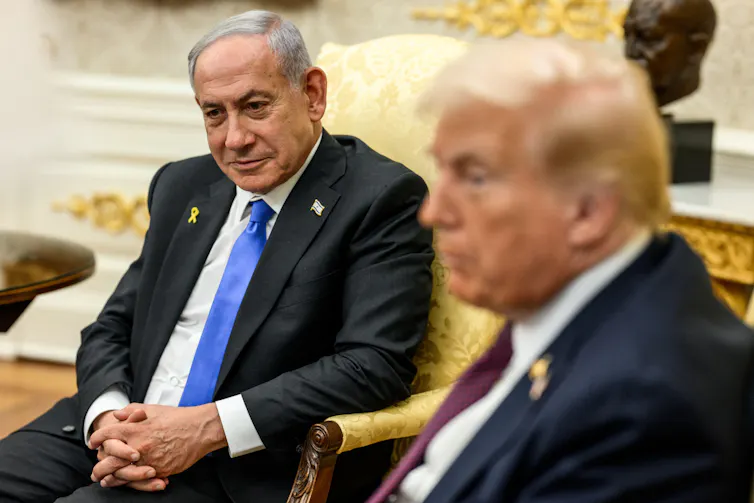
Donald Trump and Benjamin Netanyahu in the Oval Office

Donald Trump and Benjamin Netanyahu are close allies, but their relationship is often stormy. Official White House Photo by Daniel Torok/American Photo

The deal highlighted what many of us already suggested: that Iran’s ability to spark economic turmoil by closing the Strait of Hormuz gives it considerably leverage over the US. Ben Soodavar, an expert in foreign relations in the department of war studies at King’s College London, identifies a vicious cycle that presents the US with a serious quandary.

Israel has a right to defend itself against Hezbollah attacks. But when it takes action against Lebanon, Iran reacts by threatening to close the Strait. The US puts pressure on Israel to stand down and Israel resists. The ceasefire deal was largely prompted by Trump’s realisation that the US in unable to put sufficient military pressure on Tehran to break this cycle.

Soodavar fears that once all the players realise that restraint is also unlikely to solve anything, then “escalation ceases to be a choice. It may come to be the only available logic”.


Read more: The flaws at the heart of Donald Trump’s Iran ceasefire deal


Bamo Nouri and Inderjeet Parmar, international security experts at City St George, University of London, foresee a strengthened Iran continuing to flex its muscles in the region.

Tehran, they write, will be encouraged by the clear geopolitical shifts the war has already prompted – not least the cessation of any hopes that the US might have harboured to expand the Abraham Accords and the normalisation of Arab states’ relations with Israel. So the Islamic Republic is likely to continue to compete for influence via its proxies in the region and via “grey-zone” tactics such as cyber-warfare.

Meanwhile the underlying drivers of the conflict remain intact, they write: “US-Iran-Israeli relations are therefore likely to continue oscillating between confrontation and accommodation.”


Read more: Will the US-Iran talks in Switzerland deliver peace? It’s unlikely


The “sad inevitability” of Europe’s heat wave

0
the-“sad-inevitability”-of-europe’s-heat-wave
The “sad inevitability” of Europe’s heat wave

Europe is in the midst of its second big heat wave of the year, and it’s breaking more records. France just recorded its hottest day ever, with temperatures exceeding 44° Celsius in some places. Around 40 people have drowned in local water bodies, likely attempting to escape the heat, and thousands more are without electricity.

As temperatures hit a sweltering 36° in some regions of the United Kingdom, schools canceled classes and train delays abounded. United Nations Secretary-General Antonio Guterres described London as “cooking.” As the city hosts its annual Climate Action Week, the UK meteorological service has issued a red alert for multiple regions, signaling that exceptionally hot and humid weather is forecasted and likely to impact the general public. Switzerland and Spain have also issued warnings to residents.

Emma Howard Boyd, the former chair of the London Climate Resilience Review who now chairs the National Heat Risk Commission in the UK, said that when it comes to heat resilience in the country, the problem is not just homes—which are usually not air-conditioned.

“All of our infrastructure was built for a different type of climate,” she said. Even seemingly small things, like malfunctioning elevators in tall buildings, could become lethal during a fire. The London Climate Resilience Review found that 18 elevators in public housing blocks in a single city borough failed during the 2022 heat wave.

National policies to address the changing climate, she said, should also take into account those most vulnerable to heat stress, like children, the elderly, and pregnant women. On Monday, two children died in a hot car in France.

Heat can adversely impact many different essential bodily functions, like sleeping and exercising.

For many climate scientists, the link between the frequency and duration of these heat waves and climate change cannot be overstated. Some have even gone public with their dissatisfaction with the media coverage of the heat wave. This past May, only 40 percent of British television and radio news stories about the heat wave linked it to climate change, according to Climate News Tracker.

“There’s a sad inevitability to all of this, with scientists like me trotting out the same quotes year after year,” Friederike Otto, a professor of climate science at the Imperial College London who leads the World Weather Attribution, a group that works to link weather events to climate change, said in an email. “Simply put, we remain on a one-way trip towards a more dangerous future, and it’s time we hit the brakes.”

With the planet on track to exceed 1.5° Celsius of human-induced warming, it is no surprise that extreme heat events increase in frequency, intensity, and duration, said Daniel Swain, a climate scientist at the California Institute for Water Resources at University of California, Los Angeles.

“A rising tide raises all boats,” he said. Climate warming doesn’t just worsen heat waves by increasing temperatures by a few degrees. For the most extreme events, scientists have found that a warmer climate can amplify meteorological feedback loops, further worsening heat waves and sometimes even leading to droughts.

In Western Europe, the incidence of a type of weather system called a blocking pattern—essentially an atmospheric traffic jam that can extend weather patterns—has increased, and scientists are currently researching the link between these patterns, human-induced global warming, and heat waves.

“Heat waves are going to keep getting hotter and more frequent until we reach net zero,” Helen Millman, a climate scientist and postdoctoral research fellow at the Global Systems Institute at University of Exeter, said in an email. “While people worry about the upfront cost of decarbonising, that investment is tiny compared to what we will pay to constantly repair a country battered by a harsher climate.”

Noah Diffenbaugh, an earth system sciences professor at Stanford University who has served as a lead author for the Intergovernmental Panel on Climate Change, said that even if the European Union meets its goal of reaching net zero by 2050, that’s still another quarter-century of planet-warming greenhouse emissions being released into the atmosphere.

This story originally appeared on Inside Climate News.

Global trade in cocaine, methamphetamine is booming, UN drug report shows

0
global-trade-in-cocaine,-methamphetamine-is-booming,-un-drug-report-shows
Global trade in cocaine, methamphetamine is booming, UN drug report shows


– The global trade in illicit drugs is booming, with cocaine production ‌and seizures of methamphetamine at an all-time high, a United Nations report showed on Friday, warning of a surge in new drugs filling a gap left by the collapse in heroin supply.

Cocaine production surged to roughly 4,100 metric tons of pure ​product in 2024, the latest year on record, a fourfold increase within a decade, while methamphetamine ​seizures suggest production is growing 13% a year, the United Nations Office on Drugs ⁠and Crime (UNODC) said in its annual World Drug Report.

“We have seen an unprecedented spike in new types ​of drugs on the market, and worryingly, some are more potent or dangerous than before,” UNODC Executive Director ​Monica Juma said in a statement.

Opium production in long-dominant supplier Afghanistan plummeted in 2023 after the Taliban took back power and banned it, and it has not bounced back since, leading to a decline in the supply and use of heroin, ​which is derived from it.

But 2024 saw a sharp increase in reports of new synthetic opioids, such as ​fentanyls or even more potent nitazenes, which could be filling at least some of the gap left by the drop ‌in ⁠heroin supply, particularly in Europe, the UNODC said.

“Instances of NPS (new psychoactive substance) synthetic opioids reported in early warning systems increased in 2023 and 2024 across most regions, but most prominently in Europe, Oceania and Africa, suggesting a recent diversification by market actors,” the UNODC said.

“North America, where fentanyl has largely displaced heroin, reported around ​a 10% increase in the ​number of NPS synthetic ⁠opioids identified in 2024 from the previous year, while that number rose by more than 80% in Europe and by 150% in Oceania,” it said.

Supply and harder-to-estimate ​demand for cocaine continued to increase strongly, the report said. It also said ​that the ⁠way cocaine is consumed has changed while purity has increased and prices have dropped.

“Qualitative research conducted in 2024 indicates an expansion of cocaine use to social settings beyond the nightlife scene and its integration into daily routines, together ⁠with an ​upsurge in ‘crack’ cocaine use among socioeconomically disadvantaged groups and a ​shift from heroin use to ‘crack’ cocaine use,” the report said.

Data on those receiving treatment for drug use strongly suggests an increase in crack ​cocaine use in Western and Central Europe beginning in 2015, it added.

Source:  Reuters

Bitcoin dips as Iran oil returns to the dollar system

0
bitcoin-dips-as-iran-oil-returns-to-the-dollar-system
Bitcoin dips as Iran oil returns to the dollar system

Bitcoin’s latest weakness cannot be explained only by ETF outflows or a cooling of large-holder demand. There is another layer that has not been sufficiently priced into the discussion: Iran’s partial return to legal, dollar-linked oil settlement.

I would not call it the single cause of Bitcoin’s decline. It is better understood as one structural pressure inside a broader repricing. But it matters because it cuts to the heart of one of crypto’s most politically powerful narratives — that digital assets serve as a backdoor for countries pushed outside the dollar system.

On June 22, 2026, the US Treasury’s Office of Foreign Assets Control issued Iran General License X, authorizing the production, delivery and sale of Iranian-origin crude oil, petrochemical products and petroleum products until August 21, 2026.

Reuters reported that the authorization also covers related services such as banking transactions, insurance and shipping, with payments allowed in US-dollar-denominated funds.

This should not be mistaken for a full lifting of Iran sanctions. It is temporary, narrow and tied to the present peace deal negotiations between Washington and Tehran. The political conditions may change quickly if those talks falter. Still, for markets, even a limited opening can change behavior.

Iranian oil is not a marginal story. The US Energy Information Administration (EIA) estimated in its June 2026 report that Iran exported about 1.576 million barrels per day of crude oil and condensate in 2025, generating roughly $48 billion in export revenue.

The same report pointed to the opacity surrounding Iranian oil flows: vessels turning off identification signals, ship-to-ship transfers and the relabelling of origin. That is the practical world in which alternative settlement systems gained relevance. It was never an abstract crypto thesis. It sat inside real energy trade, real compliance risk and real payment friction.

Crypto’s role in that environment has also been documented by US authorities. On June 2, the US Treasury sanctioned Nobitex, Iran’s largest digital-asset exchange, saying it handled more than 50% of Iran’s digital-asset inflows in 2025 and helped Iran’s central bank obtain hundreds of millions of dollars in stablecoins.

The same action named Wallex, Bitpin and Ramzinex, describing significant digital-asset flows and, in some cases, billions of dollars in transactions. Washington was not treating these platforms as ordinary exchanges. It was identifying them as part of the financial architecture used to move value around sanctions.

That is why the market implication is more subtle than the question of whether Iran literally buys or sells oil with Bitcoin. The first instruments affected are probably stablecoins, OTC brokers and informal cross-border payment routes.

Bitcoin is not the settlement tool for every barrel of oil. But Bitcoin is the flagship narrative asset of the crypto market. When the political case for sanctions-driven adoption weakens at the margin, Bitcoin does not escape the repricing.

The logic is simple: if a trader can settle Iranian oil through banks, shipping insurance and dollar-denominated payments under a legal authorization, the incentive to use crypto rails falls. Bitcoin carries price volatility. Stablecoins carry issuer, exchange and traceability risk.

OTC routes often come with discounts, compliance uncertainty and the danger of being mapped later by enforcement agencies. For a sanctioned trade, those costs may be acceptable. For a trade that can temporarily pass through the front door, they become much harder to justify.

This is happening just as Bitcoin’s own funding structure is under pressure. According to Galaxy Research, US spot Bitcoin ETFs saw 13 consecutive trading days of outflows from May 15 to June 3, with total redemptions of about $4.4 billion, or roughly 59,351 BTC.

CoinDesk and The Defiant reported the same figures. The market, therefore, is not reacting to a single Iran headline. Rather, it is digesting several disappointments at once: ETF demand is no longer behaving like a one-way absorption machine; large-holder buying is no longer enough to calm the market; and one part of the sanctions-driven crypto story has become less compelling.

Data source: Farside Investors  Image: Archduke United LPF

The IEA’s June report also pointed to a recovery in Middle Eastern export flows after the temporary US-Iran arrangement, with Strait of Hormuz-related flows rising from a May low of about 9.6 million barrels per day to around 12 million barrels per day.

When physical energy flows normalize, payment workarounds lose some of their urgency. That does not mean Bitcoin’s long-term value disappears. It does mean that one of the market’s favorite geopolitical arguments has to be marked down.

For years, crypto bulls have argued that sanctions, war and dollar restrictions would push states and traders toward digital assets. That argument is not dead. Russia, Iran and parts of the gray commodity world will still look for alternative rails whenever formal finance is blocked.

But the Iran case shows the other side of the same trade. When Washington opens even a narrow legal channel, the need for the workaround immediately becomes less obvious.

When the gray world is handed a front-door key, the back door starts to look less essential. The license is temporary and the order is unchanged — but markets are built on the margin, and at the margin, that key matters.

Jeffrey Sze is chairman of Habsburg Asia and GP of Archduke United LPF. He specializes in high-end art transactions and RWA-T operations, and secured a cryptocurrency exchange license in Switzerland in 2017.

Trump Administration Advances $700 Million Jet Engine Sale to Turkey 

0
trump-administration-advances-$700-million-jet-engine-sale-to turkey 
Trump Administration Advances $700 Million Jet Engine Sale to Turkey 


The administration of US President Donald Trump has formally notified Congress of its intention to sell approximately $700 million worth of jet engines to Turkey, Reuters reported, citing two sources. 

The proposed sale has drawn opposition from some lawmakers because of Turkey’s continued possession of Russian defense systems acquired in 2019. 

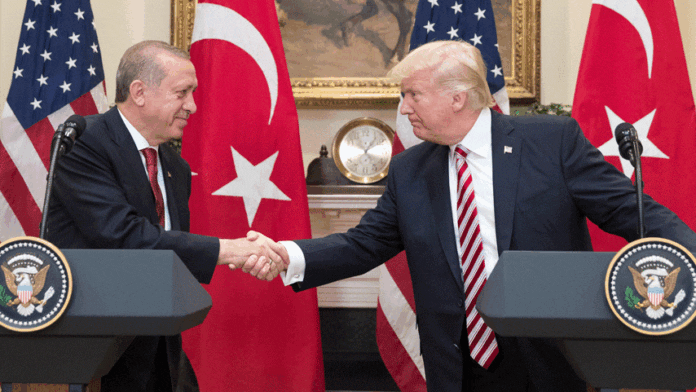
If approved, the transaction would represent a significant gesture toward Turkish President Recep Tayyip Erdoğan, whom President Trump considers one of his key allies, ahead of next month’s NATO summit. 

In its notification to Congress, dated June 24 and delivered late Wednesday, the State Department said, “The US government is prepared to license the export of these items having taken into account political, military, economic, human rights, and arms control considerations.” 

Congress has 15 days to introduce a joint resolution of disapproval if lawmakers seek to block the sale. Any such measure would have to pass both chambers of Congress and could still be vetoed by President Trump. 

At the same time, Vice President JD Vance said the administration is reviewing whether Turkey meets US egal requirements before moving ahead with additional defense agreements, including the possibility of readmitting Ankara to the F-35 fighter jet program. 

Speaking in the Oval Office, President Trump claimed Erdoğan had been close to becoming involved in the conflict with Iran. 

“He was a prime candidate to go into the war with Iran — maybe on the Iran side, because he’s not a big fan of Israel,” President Trump claimed, even though Turkey gave no indication that it was preparing to enter the US-Israel war against Iran and even came under Iranian fire at one point. 

“I asked him to stay out. He stayed out,” he told reporters. 

Praising the Turkish leader, President Trump added, “Erdogan is a great leader, a very strong person … Everything I’ve ever asked from him, he’s done. I’m going to probably do something that’s going to make him very happy.” 

Relations between Israel and Turkey have deteriorated since the Hamas massacre in Israel on October 7, 2023. In July 2024, Erdoğan said he might consider military action against Israel to halt the war in Gaza. Earlier this month, Turkey’s interior minister called for the “liberation” of Jerusalem. 

TV Stars Tragic Cause of Death Revealed

0
tv-stars-tragic-cause-of-death-revealed
TV Stars Tragic Cause of Death Revealed


The heartbreaking mystery surrounding The Wire actor Bobby J. Brown’s death has finally been answered.

Brown, who died at 62 after being caught in a Maryland barn fire in February, passed away from diffuse thermal injury and smoke inhalation, PEOPLE confirmed through the Maryland Office of the Chief Medical Examiner.

His death was officially ruled an accident.

The actor, best known for roles in The Wire, We Own This City, Law & Order: Special Victims Unit and Homicide: Life on the Street, died on Feb. 24 after the devastating fire.

For Brown’s family, the shocking news came in the middle of the night.

His daughter, Reina, previously recalled being jolted awake by a terrifying phone call from her younger sister.

“I was sound asleep. I had gone to bed about two hours before,” Reina told PEOPLE. “My little sister [was] freaking out, saying that Dad’s gone and that he got caught up in a barn fire, and I’m like, ‘What do you mean?’ ”

The news was so horrifying that Reina said she had to physically ground herself to believe it was real.

“I literally went outside and put both my feet on my front walk,” she said. “It’s cold, and I stood out in my bare feet in a nightgown because I wanted to make sure I was really awake.”

She added that she stood there to make sure she was not dreaming.

“I couldn’t believe it,” Reina said. “I was like, this isn’t real. And I still don’t even feel like it’s real.”

According to Reina, Brown had called for a family member to bring him a fire extinguisher as the flames spread.

“Everybody is still trying to process it,” she said. “It’s been difficult for all of us.”

She remembered her father as far more than an actor.

“My dad was an amazing human being,” Reina said. “He was super awesome. He was a pillar in the community, and he’s going to be missed by a lot of people.”

Brown’s agent, Albert Bramante, also paid tribute to the late performer after his death, praising both his talent and character.

“Bobby J. Brown was an actor of immense talent and even greater integrity,” Bramante told PEOPLE. “He approached his work with a discipline and a passion that were truly inspiring to witness.”

He continued, “While his career included many notable performances, it was his unwavering dedication to the craft of acting that defined him as an artist. We are deeply saddened by this loss and ask for privacy for his family and loved ones during this time.”

Brown was born and raised in Washington, D.C., and had already lived a remarkable life before finding success on screen.

Before acting, he was a boxer who won five Golden Gloves championships. He later trained under boxing trainer Carmen Graziano and pursued a professional boxing career in New Jersey before turning his attention to acting.

That decision eventually took him to New York, where he studied at the American Academy of Dramatic Arts.

Brown went on to appear in several gritty, acclaimed crime dramas, including The Wire, The Corner, We Own This City, Law & Order: Special Victims Unit and Homicide: Life on the Street.

He also worked behind the camera, directing the documentaries Off the Chain, which explored the abuse of American pit bull terriers, and Tear the Roof Off: The Untold Story of Parliament Funkadelic.

According to his IMDb biography, Brown donated a third of the profits from Off the Chain to animal welfare efforts through the Humane Society.

Months after his sudden death, the official ruling confirms what his family already knew: Brown’s final moments came in a terrifying accident that left those closest to him stunned, grieving and still trying to make sense of the loss.

Planet orbits so close to its star that their magnetic fields connect

0
planet-orbits-so-close-to-its-star-that-their-magnetic-fields-connect
Planet orbits so close to its star that their magnetic fields connect

For most of human history, our view of “close to the Sun” was defined by the orbit of Mercury, with its 88-day orbit and barren, baking surface. But from the moment we started discovering exoplanets, it became very clear that our own Solar System was anything but a guide to the rest of the galaxy. Planets with orbits only a few days long are strikingly common, with the proximity to the star creating things that seem bizarre from our perspective: metal vapor in the atmosphere, or atmospheres puffed out to ridiculously low densities.

Now, we can apparently add an additional oddity: overlapping magnetic fields. Researchers have found a star/planet combo that experiences periodic brightening, which they ascribe to the interactions between the magnetic fields of both bodies.

Looking for repetition

This is one of those cases where theory came before discovery. People had already proposed that a planet orbiting close to its host star could interact with it if its magnetic field were sufficiently strong. And, in a number of cases, researchers have found evidence that this is happening, with one case of an extremely young star emitting flares seemingly in response to the orbit of its innermost planet.

An international team of researchers has created the most comprehensive look at flaring in a star with a close-in planet. The star itself is called GJ 436, a red dwarf half the mass of the Sun that resides about 30 light-years from Earth. It has a single known exoplanet that is about four times as massive as Earth, and it completes an orbit every 2.6 days.

The researchers focused on the chromosphere, a thin layer near the exterior of the star that has emissions that are dominated by a relatively small number of ions and is known to be influenced by the star’s magnetic environment. The researchers used specific emissions from hydrogen and calcium ions as a marker for activity in the chromosphere.

We’ve been observing GJ 436 for years, so the team had a huge amount of archival data to search through. The team looked for periodic fluctuations in the emissions at the relevant wavelengths as a potential sign of a fluctuating magnetic influence. They found one, roughly the same period as the planet’s orbit, suggesting that the magnetic interactions were either limited to, or peaked at, one specific orbital configuration.

Why didn’t the signal line up precisely with the planet’s orbit? A model they produced helps explain this by also including factors like the star’s rotation, the uneven distribution of activity across the star’s surface, and the fact that the planet’s axis of rotation (and thus its magnetic field) probably isn’t precisely perpendicular to the plane of its orbit. With all of those factors considered, it’s possible to figure out how all of these details can produce a signal that lags the orbital period by a few hours.

It comes and goes

There were some other oddities, though. One is that there are no signs of enhanced activity from various other elements that are thought to be present in the chromosphere of most stars. The researchers, however, note that the chromosphere itself has multiple layers and propose that the signal they’re seeing is originating in the lower chromosphere.

The second issue was that in some observations, there were no periodic signals at all. Because we have enough archival observation data, however, the researchers were able to track when the signal appeared and disappeared. And they were able to find a periodicity to that—one that lined up precisely with the star’s cyclic activity. (Think of our Sun’s solar cycle, and apply that to a different star.)

The researchers suspect that, during high solar activity, the signal from the planet’s magnetic influence is swamped. At low periods in the cycle, the researchers suspect that there simply isn’t enough activity there for the magnetic interactions to enhance. So, they think that we see the enhanced chromosphere emissions only at intermediate levels of stellar activity.

How is the magnetic influence showing up on the star in the first place? The researchers consider a number of theoretical models, but the only one that produces enough energy at the chromosphere is one where loops of magnetic field connect the fields of the planet and the star. This model allows them to estimate the strength of the planet’s magnetic field, which they put at a minimum of 6 Gauss, over 10 times the strength of Earth’s.

While that all may seem a bit extreme, it’s not especially unusual, even in our Solar System. The magnetic field strength is similar to that of Jupiter, and Neptune’s magnetosphere extends out to far greater distances than the gap between GJ 436 and its planet.

As we noted above, this is the most comprehensive look at magnetic-driven flaring in an exosolar system, but it’s not the first. And there are hundreds of additional systems with close-in planets that we can still examine. So, in time, having measurements of exoplanet magnetic fields may become commonplace.

Science, 2026. DOI: 10.1126/science.adv3075 (About DOIs).

Alexandria Ocasio-Cortez Wades Into Tennessee Primary, Endorsing Justin J. Pearson

0


After rattling some observers by staying out of a slew of competitive congressional primaries in her home state this week, Rep. Alexandria Ocasio-Cortez, D-N.Y., endorsed a candidate in Tennessee on Thursday. 

Ocasio-Cortez is backing Tennessee state Rep. Justin J. Pearson in the 9th Congressional District, which will be a tough win for Democrats after Republicans scrambled to gerrymander it earlier this year thanks to the Supreme Court’s gutting of a key portion of the Voting Rights Act. The district covering parts of Memphis and its suburbs is one of more than a dozen that Republicans have redrawn at President Donald Trump’s demand to ward off what many in the GOP see as the increasingly likely prospect that they lose both congressional chambers to Democrats in November. 

An endorsement from democratic socialist Ocasio-Cortez is a coveted stamp of approval for progressive insurgents looking to challenge incumbents or capture open congressional seats. She has endorsed several Democratic primary candidates running for open seats in other states this cycle including Chris Rabb, who won his primary in Pennsylvania; Analilia Mejia, who won in New Jersey; and Junaid Ahmed, who lost his primary in Illinois. But critics raised eyebrows at her decision to stay out of key congressional primaries in New York; she opted instead to endorse a slate of democratic socialist candidates in the state Assembly.

The endorsement is a major boost to Pearson, who is also backed by Justice Democrats, the progressive group that first backed Ocasio-Cortez in 2018 against longtime incumbent Rep. Joe Crowley, and Sen. Bernie Sanders, I-Vt. Pearson originally launched his campaign with the intention of ousting two-decade incumbent Rep. Steve Cohen, the last remaining Democrat in Tennessee’s congressional delegation. Cohen dropped out of the race in May after state lawmakers split up his district into three neighboring districts, saying it was “drawn to beat” him. 

Observers theorized that Ocasio-Cortez’s absence from New York’s congressional primaries reflected a desire not to butt heads with Democratic Party leaders who endorsed against leftist challengers, potentially signaling her plans to run for higher office in a future cycle. Others argued that she stayed out to split her efforts with New York City Mayor Zohran Mamdani to maximize the left’s political currency in a cycle with historic outside spending against their candidates. Mamdani emerged as a kingmaker in Tuesday’s elections, backing three congressional candidates who won their primaries on Tuesday: socialists Clare Valdez and Darializa Avila Chevalier, and progressive Brad Lander, and several — but not all — of the New York City DSA’s endorsed candidates.

On Wednesday, Ocasio-Cortez said the left’s wins in New York’s House primaries were part of both “a moment” and “a movement” of voters demanding more from the Democratic Party after major losses in 2024. 

Endorsing in the races would have pitted Ocasio-Cortez against her congressional colleagues whose support she might need in a run for higher office, including House Minority Leader Hakeem Jeffries, poised to become House speaker if the Democrats retake the chamber in November. She’s made most of her other endorsements this cycle in open seats with no incumbent, including Rabb, Mejia, Ahmed, Adelita Grijalva in Arizona, Adam Hamawy in New Jersey, and Sam Forstag in Montana. She endorsed Democratic candidate Randy Villegas against the incumbent Republican, Rep. David Valadao, in California. Her former chief of staff, Saikat Chakrabarti, said her decision not to endorse him likely contributed to his loss in an open California primary to replace retiring Rep. Nancy Pelosi, D-Calif., by fueling attacks from his opponents.  

In New York City, Avila Chevalier and Lander ousted incumbents backed by Jeffries and Democratic leaders: Congressional Hispanic Caucus Chair Adriano Espaillat and Rep. Dan Goldman. Valdez won her primary in an open seat where retiring Rep. Nydia Velázquez had endorsed her preferred successor, Brooklyn Borough President Antonio Reynoso. Velázquez bemoaned Mamdani’s endorsement of Valdez against her pick in the months leading up to the race. And even after their candidates lost on Tuesday, Jeffries and other party leaders aired their disappointment in Mamdani’s decision to go against them. 

But in Tennessee, Pearson emerged as the frontrunner when the incumbent dropped out. He’s hoping to tap into voters’ frustrations with both parties by campaigning on economic change for the working class — a message that boosted both Ocasio-Cortez and Sanders. 

0FansLike
0FollowersFollow
0FollowersFollow
0SubscribersSubscribe
- Advertisement -
Google search engine

Recent Posts