29.3 C
London
Wednesday, June 24, 2026
Home Blog

What is the ‘Omega Block’ causing Europe’s intense heatwave?

0
what-is-the-‘omega-block’-causing-europe’s-intense-heatwave?
What is the ‘Omega Block’ causing Europe’s intense heatwave?


The intense heatwave engulfing Western Europe, resulting in more than 40 deaths in France alone, is being sustained by a weather pattern known as an omega block.

Here is what ​you need to know about omega blocks and whether climate change means they could ‌become more frequent in the years ahead.

WHAT IS AN ‘OMEGA BLOCK’?

An omega block takes its name from the shape of the Greek letter Ω — with a bulge of warmer, settled high pressure held between two cooler low pressure ​systems.

The “blocking” element refers to how the high pressure area of warm air gets stuck. Under ​normal conditions, the jet stream carries weather systems steadily from west to east.

But ⁠during an omega block, that flow becomes disrupted and can buckle dramatically north and south, isolating ​the pressure systems. Weaker steering winds and temperature contrasts in the atmosphere contribute to these slow-moving, locked ​patterns.

The result is that hot, still air gets lodged over the same area. Omega blocks typically last between three and 10 days, but can persist for weeks.

WHAT HAPPENS DURING AN OMEGA BLOCK?

Under the high-pressure area in the centre, ​conditions become hot and dry. The high pressure also suppresses cloud formation, resulting in clear, sunny ​skies that allow temperatures to climb.

It is conditions like these that are baking France and Spain, where temperatures have exceeded ‌40 degrees ⁠Celsius (104 degrees Fahrenheit).

Regions in the low-pressure areas flanking the heatwave, meanwhile, are more likely to see cooler, rainy conditions.

Britain lies on the boundary between the high-pressure system and the cooler air to the northwest – producing intense heat in the south and east, and cooler, wetter conditions in the north and ​west, according to the UK ​Met Office.

IS ⁠CLIMATE CHANGE RESPONSIBLE?

Scientists have not yet agreed upon how climate change is affecting the frequency of blocking events like this one.

However, the global scientific consensus ​is clear that climate change is increasing the frequency and intensity of heatwaves.

Greenhouse ​gas emissions, ⁠mainly from burning coal, oil and gas, have heated the planet by about 1.3 C since pre-industrial times.

That warmer baseline means heatwaves reach higher temperatures.

Europe is now experiencing heatwaves that are 2 to 4 degrees ⁠hotter than ​they would have been without human-caused warming, said Clair Barnes, ​a research associate in extreme weather and climate at Imperial College London.

As a result, when patterns like omega blocks occur, the ​resulting heat can be significantly more intense.

The hidden amnesty in Indonesia’s cut-rate Patriot Bonds

0
the-hidden-amnesty-in-indonesia’s-cut-rate-patriot-bonds
The hidden amnesty in Indonesia’s cut-rate Patriot Bonds

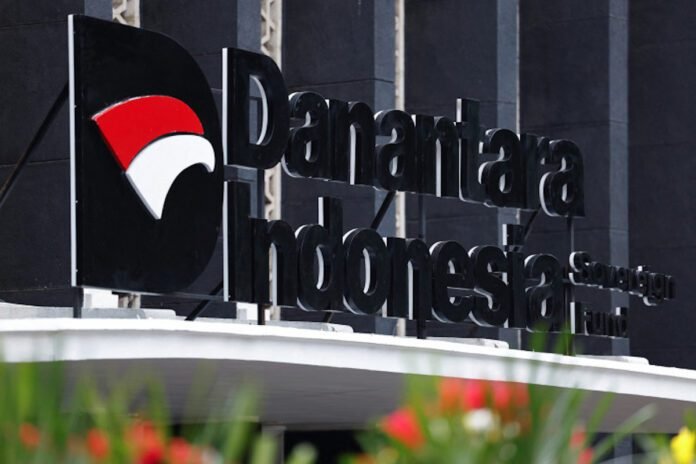
Indonesia’s new sovereign investment vehicle, BPI Danantara, has officially launched the Patriot Bond, targeting an extraordinary 50 trillion rupiah (US$2.8 billion) in fundraising.

The special debt instrument consists of two tranches worth 25 trillion rupiah each: Series A with a five-year maturity and Series B with a seven-year maturity. The proceeds are expected to finance a range of large-scale strategic projects, from waste-to-energy facilities and renewable energy transitions to downstream industrialization initiatives across multiple sectors.

Yet behind the ambitious narrative of nation-building lies a feature that has sparked intense debate among market participants, independent analysts and financial academics: a fixed annual coupon rate of just 2% for both bond series.

That figure is far below prevailing market rates. Indonesia’s benchmark interest rate currently ranges between 5.25% and 5.8%, while retail government bonds such as SR023 offer yields of approximately 5.8% to 5.95%.

Such an issuer-friendly coupon structure would be virtually impossible to market to retail investors seeking market-based returns. The Patriot Bond is thus being distributed through a private placement mechanism aimed exclusively at major domestic corporations and conglomerates.

Cigarette manufacturer PT Hanjaya Mandala Sampoerna Tbk (HMSP), for example, became one of the first major buyers, purchasing 500 billion rupiah worth of the paper, evenly split between Series A and Series B.

From a corporate perspective, large business groups may be willing to absorb these low-yield bonds using idle capital because the return sacrificed relative to market rates can be viewed as a political transaction cost, one that helps secure legitimacy, regulatory goodwill and long-term business protection from the state.

This pragmatic calculation reflects a deeper anxiety about Indonesia’s current financing architecture. The government’s conventional fiscal capacity has been stretched by the rising costs of new populist programs, including the Free Nutritious Meals initiative, while the tax ratio is expected to remain stagnant.

To avoid breaching the legal budget deficit ceiling of 3% of GDP, the government has increasingly relied on Danantara as a centralized off-balance-sheet financing vehicle. Debt issued by Danantara is recorded as corporate debt rather than sovereign debt, preserving the appearance of fiscal stability.

Fiscal accounting engineering

Transferring debt obligations outside the state budget does not eliminate fiscal risk – it merely relocates it. If Danantara-funded mega-projects fail commercially, global financial markets and international creditors will still regard the Indonesian state as the ultimate bearer of risk.

The danger is amplified by the consolidation of major state-owned enterprises, including Pertamina, PLN and Telkom Indonesia, under Danantara’s umbrella. These corporations carry billions of dollars in international bond obligations, many of which contain strict change-of-control clauses.

Any transfer of majority ownership without careful negotiation could trigger technical defaults, allowing creditors to demand immediate repayment and potentially generating systemic liquidity shocks.

These structural concerns are reinforced by assessments from Moody’s Investors Service, which has argued that Danantara’s centralized management of mega-projects outside open-tender mechanisms represents a form of policy de-institutionalization.

The traditional technocratic roles of Indonesia’s National Development Planning Agency (Bappenas) and parliamentary oversight functions are becoming increasingly marginalized.

The government’s decision to revoke mining concessions and seize approximately four million hectares of private palm oil plantations for transfer to Danantara, without transparent criteria, may also be interpreted as an exercise of extrajudicial authority that weakens contractual certainty. When businesses can no longer accurately model regulatory risk, long-term investor confidence inevitably erodes.

From a macroeconomic perspective, if Danantara functions as a state entity engaged in quasi-fiscal activities, any investment losses it incurs will effectively become contingent liabilities of the government. The accumulation of debt and troubled projects outside the discipline of the national budget increases the probability of future defaults.

Over time, these liabilities could significantly inflate Indonesia’s public debt burden, strain government finances, and undermine long-term fiscal solvency. Signs of this pressure have already emerged.

The recent sharp depreciation of the rupiah beyond 18,000 per US dollar, marking a record low, reflects deep market concerns over the rapid expansion of quasi-fiscal liabilities and growing uncertainty about the government’s fiscal trajectory.

Red carpet for a hidden amnesty

The unusually lenient conditions attached to Patriot Bond purchases stem from Law No. 4 of 2026, which amended Indonesia’s Financial Sector Development and Strengthening Law (P2SK) and came into force on June 17, 2026.

Embedded within this sweeping legislative package is Article 50A, which grants extraordinary legal protection to Patriot Bond investors in the primary market. Buyers receive extensive immunity from criminal prosecution, special criminal investigations, including tax-related cases, and civil lawsuits.

Transaction records cannot be used as a basis for tax assessments or as evidence in court proceedings. The finance minister has further stated that the origin of funds invested in Patriot Bonds will not be scrutinized by national financial authorities.

A critical reading of Article 50A suggests that it effectively functions as a disguised amnesty, one that is considerably more generous and less demanding than Indonesia’s 2016 Tax Amnesty program.

Participants in the 2016 scheme were required to disclose their assets in detail and pay redemption fees. Under the Patriot Bond framework, however, holders may avoid disclosure requirements altogether, pay no redemption fee, enjoy sweeping legal protection over transaction data and still receive a state-backed 2% return.

This creates a profound legal and ethical contradiction. On one hand, middle-class taxpayers, workers, civil servants and small businesses are subjected to increasingly sophisticated tax surveillance systems such as Coretax and can face penalties for relatively minor administrative errors.

On the other hand, holders of undeclared wealth are offered a protective legal shield that allows them to conceal assets with minimal scrutiny. The contradiction becomes even sharper when compared with Indonesia’s export proceeds regulations, which require natural-resource exporters to repatriate 100% of their foreign-exchange earnings under stringent supervision.

While compliant businesses face ever-tighter oversight, individuals controlling opaque funds appear to receive an alternative pathway with remarkably few questions asked.

Doom loop effect

A policy that deliberately ignores the origin of invested funds weakens three foundational pillars of modern financial governance: Know Your Customer (KYC) standards, anti-money laundering (AML) enforcement and beneficial ownership transparency.

Under such a framework, KYC obligations risk becoming little more than procedural formalities. The result could be the transformation of Danantara into the largest legally sanctioned conduit for money laundering in Indonesia’s financial history.

Proceeds from corruption, narcotics networks, illegal online gambling operations or large-scale tax evasion could potentially be funneled into Patriot Bonds and re-emerge as ostensibly legitimate assets.

The long-term implications for Indonesia’s international reputation could be severe. The country only recently secured full membership in the Financial Action Task Force (FATF) after years of effort. Creating a legally protected channel with limited scrutiny risks raising concerns among global regulators and could ultimately jeopardize Indonesia’s standing within the international financial system.

Should confidence deteriorate further, long-term foreign institutional investors, many of whom operate under strict compliance mandates, could reduce their exposure to Indonesian assets. The consequence would be a higher sovereign risk premium and significantly more expensive borrowing costs in the years ahead.

The risks do not end there. Massive liquidity absorption by Danantara could crowd out private-sector financing, depriving productive businesses of capital needed for expansion and investment.

The final layer of vulnerability stems from the Financial Services Authority’s decision to permit Patriot Bonds to serve as collateral for bank lending, particularly at state-owned banks.

From a macroprudential standpoint, this creates a dangerous concentration of risk. If Danantara’s infrastructure or downstream projects fail financially, the market value of Patriot Bonds could collapse. Banks holding those bonds as collateral would then face a rapid deterioration in asset quality and a sudden surge in non-performing loans.

Losses originating from Danantara’s investment portfolio would quickly spread into the banking system, creating a classic doom loop in which fiscal distress and financial-sector instability reinforce one another.

To prevent such an outcome, Indonesia needs corrective measures, including stricter KYC and AML enforcement by the Financial Transaction Reports and Analysis Center (PPATK), explicit ring-fencing of sovereign guarantees and macroprudential limits restricting Patriot Bond collateral exposure to no more than 10% of a bank’s capital base.

Without such safeguards, a financing instrument designed to support development could ultimately become a source of systemic risk for Indonesia’s financial sovereignty.

Ronny P. Sasmita is senior analyst at the Indonesia Strategic and Economic Action Institution think tank and holds a Ph.D. from the University of Tokyo.

Early land animals skipped the tadpole phase

0
early-land-animals-skipped-the-tadpole-phase
Early land animals skipped the tadpole phase

For decades, biologists thought that early tetrapods, ancient vertebrates that started conquering the land over 300 million years ago, developed like modern amphibians—beginning their lives as purely aquatic tadpoles and then metamorphosing into terrestrial adults. “A lot of that comes from this old ‘scala naturae’ idea that you had fish that evolved into the next stage up, which were amphibians, and then amphibians evolved into the next stage up, which were reptiles that evolved into birds and mammals,” said Jason Pardo, a research associate at the Field Museum.

We’ve never had evidence that early tetrapods had an amphibian lifestyle; we have assumed it because it made intuitive sense. “It’s easier to make the transition from water to land if you’re already making that transition as part of your life cycle,” Pardo said. But now, a new Science study that Pardo co-authored with Arjan Mann (the Field Museum’s assistant curator of early tetrapods) shows our most basic assumptions about the first tetrapods that started living on land might be wrong.

Baby monsters

The researchers’ study focused mainly on embolomers, an extinct group of large predators that lived roughly 300 million years ago. Embolomers looked like a cross between a crocodile and an eel, with large skulls full of sharp teeth, followed by long, eel-like bodies. It had short, stocky limbs adapted mainly for paddling in water, but also capable of powering brief, clumsy excursions on land. They are thought to be one of the first vertebrates that made a partial transition from an aquatic to a terrestrial lifestyle. These animals could reach over three meters in length, but to understand the very beginning of their life cycle, scientists focused on examining some of their centimeter-scale babies.

One of the most important specimens in the study was an embolomere fossil designated FMNH PR 1082, which has been sitting in the collections at the Field Museum for decades. “I think it’s been there for about 50 or 60 years. It was originally found by a collector,” Mann said. The fossil was initially classified as a different tetrapod species due to its very small size. But armed with modern imaging techniques like electron microscopy, Pardo and Mann realized the fossil was in fact a very young embolomere that died before it could even consume its first meal. “We were able to identify features that linked it to embolomers like the shape of the vertebrae, the radial spines on the tail, and the nice little fangs,” Mann said.

The team also realized that this young embolomere looked like a miniature adult. What’s more, the individual had an abdominal yolk, a portion of the egg’s yolk sac that an embryo internalizes into its body cavity just before hatching to use as an energy reserve. (According to the researchers, this internal yolk mass suggests the ancestral tetrapod egg was relatively large and nutrient-dense, like the ones laid by reptiles and birds, as opposed to the small eggs laid by amphibians and fish.) Despite having hatched recently, the specimen lacked the external gills that tadpoles should have, and there were signs of ossification in its bones—it was a youngling, but it was no tadpole.

The lack of a tadpole phase so early in life suggested there was no metamorphosis in this animal’s life cycle, which led Pardo and Mann to hypothesize the development of early tetrapods was direct, as it is in the reptiles or mammals that appeared much later.

Then they started looking at other fossils to make sure the FMNH PR 1082 was not some kind of outlier. It turned out it wasn’t.

Skipping the tadpole

To confirm this wasn’t an isolated case, the team looked at a second, even smaller embolomere hatchling that also showed no signs of external gills. Once this was confirmed, the team started checking fossil collections in other museums across America, looking for youngsters of other ancient lineages to see whether the missing tadpole phase was a broader evolutionary trend. They found that a tiny hatchling of Phlegethontia longissima, a strange group of early tetrapods that lost their limbs entirely. These had a head dominated by large eyes and a partially ossified jaw—but again, no external gills.

Then, the researchers started looking further out along the evolutionary tree at earlier animals that hadn’t yet fully made the transition from fins to limbs. They focused on fossils that had historically been thought to be larval lungfish. Pardo and Mann’s re-examination revealed that these were young megalichthyids, early finned tetrapodomorphs that predated emobolomeres by 20 to 30 million years.

The smallest of these specimens measured just two centimeters. In a few cases, multiple individuals were preserved together in the same concretion, indicating that these animals may have remained in groups for some time after hatching. But even this species showed signs of direct development, with gradually ossifying bones rather than undergoing an abrupt, amphibian-like metamorphosis.

“We looked at a number of different species that represent different lineages in the transition from fish to tetrapods, and what we found is that none of them have anything that looks remotely like a tadpole,” Pardo said.

Without the tadpole phase and metamorphosis, though, the transition from water to land was probably way tougher than we thought.

Amphibian innovation

“We have lots of assumptions in our field that are based on relatively limited data,” Pardo said. One of those assumptions was that a distinct aquatic larval stage made the water-to-land transition easier for early tetrapods. While direct development, without undergoing a radical metamorphosis early in the animal’s lifecycle, might appear to be a simpler solution, it likely made the lives of young embolomers considerably harder.

The first challenge they faced was being tied to the same environment throughout their entire lifespan. Unlike amphibian tadpoles, they lived in the same ecological niche as larger juveniles and three-meter-long adults and had to compete with them for resources. Then there was the problem of supporting their body mass on land. The team noted in the paper that juvenile embolomers had weak, poorly developed limbs at hatching, which probably left them unable to move long distances across land. They were likely stuck wherever they hatched.

“It certainly makes it harder to not have a tadpole stage,” Pardo said.

He suggested that this is evidence that amphibian metamorphosis is not an ancient evolutionary stepping stone that enabled the first animals to expand out of water and conquer the land, which was then preserved in modern frogs or toads. Instead, it might be an evolutionary innovation that amphibians developed much later in response to challenges coming with the water-to-land transition.

“It may be something unique to amphibians that emerged as an adaptation to their specific way of living on land,” Pardo said. “Instead of being primitive, it may actually be something new, something novel and exciting. We’ve never thought about it this way.”

Science, 2026. DOI: 10.1126/science.aeb7635

Michael Jackson’s Bizarre Final Obsession Revealed

0
michael-jackson’s-bizarre-final-obsession-revealed
Michael Jackson’s Bizarre Final Obsession Revealed


Michael Jackson spent his life thrilling the world. But behind the curtain, sources claim the King of Pop had one final, jaw-dropping obsession: living forever.

The Thriller superstar, who died on June 25, 2009, at just 50 years old, was reportedly fascinated by the idea of human cloning and believed science could one day help him carry on his legacy long after death.

According to insiders, Jackson didn’t just daydream about immortality. He allegedly explored the idea seriously and even discussed making sure his DNA could be preserved for the future.

“Michael was very excited about having himself cloned,” one source close to the music legend claimed. “He wanted to live forever.”

The wild story reportedly traces back to 2002, when Jackson attended a cloning conference in Las Vegas with his longtime friend, famed illusionist Uri Geller.

Jackson’s former chauffeur, Al Bowman, said he drove the pair to the event and watched the pop icon leave completely electrified by what he had heard.

“He bounced out of that conference like a small child,” Bowman recalled. “He was smiling and on a high.”

According to Bowman, Jackson was especially intrigued by the Raëlians, a controversial group that believes human cloning could be the key to eternal life.

Bowman claimed he overheard Jackson and Geller talking in the back of the limo after the event, with Jackson allegedly saying he wanted a “mini-version” of himself to carry on his legacy.

“He was hoping that he could live forever,” Bowman said.

The chauffeur also claimed Jackson grabbed Geller by both arms and told him, “I really want to do it, Uri, and I don’t care how much it costs.”

For Jackson, the idea reportedly wasn’t new. Bowman, who worked for the Billie Jean singer for a decade, said Jackson had been fascinated by cloning ever since Dolly the sheep made worldwide headlines in 1996.

But the most sensational claim came from Michael C. Luckman, director of the New York Center for Extraterrestrial Research, who alleged Jackson made secret “safe deposits” of his sperm at three medical facilities around the world.

Luckman said he was told about the alleged deposits by late celebrity fashion designer Andre Van Pier, who had designed stage costumes for both Jackson and his sister Janet.

According to Luckman, Van Pier learned about the alleged futuristic plan through a source connected to a longevity center in Panama.

“Michael’s wish was the replicas would be able to carry on his legacy after his passing,” Luckman claimed.

Jackson’s death stunned the world in 2009. The Man in the Mirror singer died after suffering acute propofol intoxication, and his death was later ruled a homicide.

His personal physician, Dr. Conrad Murray, was convicted of involuntary manslaughter in 2011 and sentenced to four years in prison.

Even after death, Jackson’s empire continued to make staggering money. In 2016, his estate reportedly earned $825 million, marking the highest annual total ever recorded for a celebrity by Forbes at the time.

Still, Luckman claimed Jackson wanted more than a financial legacy.

Despite having three children — Prince, Paris and Prince Michael II — Jackson was allegedly obsessed with the idea that a scientific replica could one day continue his work.

Luckman has even claimed samples connected to Jackson were moved from a Los Angeles fertility clinic to the United Kingdom for safekeeping, raising his belief that the cloning dream may not be over.

“Michael wanted this to happen, and spent time and money trying to achieve his goal,” Luckman said.

He also suggested Jackson might not be the only dead icon people could try to “bring back” through science, pointing to the case of a Canadian dentist who purchased one of John Lennon’s teeth and publicly discussed using its DNA.

Whether Jackson’s alleged cloning dream was fantasy, science fiction or a secret plan that went further than anyone imagined, one thing is clear: the King of Pop’s strange fascination with immortality remains one of the most bizarre chapters in his already legendary life.

Socialists Are Setting the Agenda in New York City

0
socialists-are-setting-the-agenda-in-new-york-city
Socialists Are Setting the Agenda in New York City


THree key primaries in New York City delivered whopping victories for an emboldened left led by Mayor Zohran Mamdani on Tuesday, as democratic socialists sought to define the future of the Democratic Party.

All three candidates Mamdani backed — democratic socialists Claire Valdez and Darializa Avila Chevalier, and his onetime mayoral competitor Brad Lander — won their races in the heat of a midterm cycle that could see Democrats take back the House of Representatives. One message from the results was clear: The left isn’t just having a moment — it’s dictating how Democrats play the game of electoral politics.

“A year ago, it was not the end of a political movement. It was the beginning,” Mamdani said at a victory party for Valdez and several down-ballot socialists who also won Tuesday. “Let’s hear it for a politics that will never forget working people. For a politics that is ready to write a new chapter in our party’s history. And for a politics that realizes the old politics that got us into this crisis is not gonna get out of this crisis.”

Several races played out as proxy wars between the Democratic Party establishment and progressive insurgents, or even between progressives and socialists, to prove who would do more to disrupt the status quo. In hotly contested primaries spanning four out of five NYC boroughs, candidates touted endorsements from Mamdani and Sen. Bernie Sanders, I-Vt., as well as their proximity to the most unconventional wings of the Democratic Party. 

“Even when we are outspent, our agenda and operation bring out voters in a way the Democratic Party establishment no longer aspires to,” Gustavo Gordillo, co-chair of the New York City chapter of the Democratic Socialists of America, told The Intercept. “It is democratic socialists who are defining much of the political terrain in New York.” 

“If you’re an establishment Democrat, that’s spent,” streamer Hasan Piker told local outlet Hell Gate. “We’re not giving another dime to Israel, hopefully an arms embargo, or at least pushing for one. We’re gonna make sure that we change the American trajectory.”

Avila Chevalier, a former organizer in the Columbia University encampments for Palestine, was considered a long-shot candidate when she launched her campaign against the powerful incumbent Rep. Adriano Espaillat in the 13th Congressional District. She won the tightest race of the three Tuesday night, saying in a statement: “We deserve leadership in Washington that will fight tooth and nail for every single one of us, and I can’t wait to get to work with our community to deliver on that promise.”

Lander, who is not a DSA member but represents the clearest bridge between socialists and progressives out of the three Mamdani-endorsed congressional candidates, was the first to sail to victory, defeating Rep. Dan Goldman, D-N.Y., less than 10 minutes after polls closed with roughly a third of votes counted in the 10th Congressional District. Goldman, an heir to the Levi Strauss fortune and a staunch supporter of Israel, had lagged in public polling for months, suggesting the energy on the ground was firmly against the incumbent.

“This campaign was born out of solidarity. Solidarity is not the same as unity. Unity means we already agree. Solidarity is a practice of building bridges, even when we don’t,” Lander said Tuesday. “When I launched this race, I said it wasn’t progressives versus moderates. It’s fighters versus folders.”

The momentum among progressives and the left in New York forced Democrats close to the party’s establishment to change the way they campaign. And the rise of the DSA chapter in New York following Mamdani’s upset win last year has also raised questions about how the progressive and socialist wings of the party will share power as they seek to expand their coalition beyond New York and across the country. Some critics condemned socialist darling Rep. Alexandria Ocasio-Cortez, who rose to fame eight years ago with her own insurgent campaign against an influential incumbent, for staying out of New York’s congressional primaries — while others theorized that the congresswoman and the mayor were dividing their political clout across competitive federal and state-level races. 

The primaries also created an unusual lane for the progressive New York Working Families Party, which found itself siding with the establishment it has long fought by backing Brooklyn Borough President Antonio Reynoso, outgoing Rep. Nydia Velázquez’s handpicked successor, against DSA candidate Valdez. 

Jasmine Gripper, co-state director for the New York Working Families Party, said the efforts to sow division with DSA or to separate WFP from the left’s rise erased its legacy — helping to defeat efforts to gut the party and fight conservative Democrats like former Gov. Andrew Cuomo; winning a $15 minimum wage; and expanding investments in pre-K and paid sick and family leave — and ignored that WFP was part of a much broader coalition that helped Mamdani beat Cuomo last year. 

“The Working Families Party has been at the forefront of literally every major victory that has actually tangibly helped working families, and so to call us establishment is to not know our history and to not know the history of New York,” Gripper said. 

She said WFP’s role moving forward was to work in tandem with DSA, not to compete with it.

“There was a point where there was no one to the left of the [Working Families] party, and if you were to the left of the party, you were crazy,” she said. “Now we’re in a moment where there’s a whole entity that’s to the left of the WFP, and that is OK.”

The democratic socialists’ growing power seems to have inspired fear among liberals and conservatives alike. Outside groups spent heavily ahead of Tuesday’s primary, widely seen as a test of where the Democratic Party stands after its 2024 failures and ahead of the November midterms, to ward off the possibility that democratic socialists would chart the party’s next chapter.

Special interests including the pro-Israel lobby and dark-money groups spent a collective $8.4 million in the three races against Mamdani’s endorsed candidates. In response, progressive groups made their biggest investments in recent history, with American Priorities, a new pro-Palestine super PAC, investing $2 million to back Mamdani’s picks and the progressive outfit Justice Democrats spending a combined $1.8 million backing Valdez and Chevalier. In total, progressive groups spent $1.3 million backing Valdez and $2.9 million backing Chevalier.

“This year we’ve continued to show that in New York, it is the democratic socialist movement that is leading a transformative agenda with popular support,” said Gordillo, the NYC DSA co-chair.

“Even when we are outspent, our agenda and operation bring out voters in a way the Democratic Party establishment no longer aspires to.”

Having more groups organized, resourced, and willing to fight the establishment makes the left stronger, WFP’s Gripper said.  

“Not only are the establishment Dems looking over their back for one of us, they’re now looking over their back for two of us,” she said. “At the end of the day, we build more power in our unity than we do being divided.”

As she spoke to The Intercept, Gripper was on her way to meet two democratic socialists who won elections at the state level Tuesday night. State Sen. Jabari Brisport comfortably held onto his seat, while challenger Eon Huntley toppled an incumbent in the state Assembly. Both were endorsed by WFP and DSA.

“I think it’s naive for anyone to expect that 100 percent of the time we’ll all be on the same page,” Gripper said. “But that doesn’t mean we’re each other’s enemy either.” 

Or, as Pennsylvania Sen. John Fetterman put it to CNN on Tuesday, “The dirtbag left is surging.”

This developing story has been updated.

Jury Finds Home Financing Scheme That Targeted Muslims in Minnesota Violated State Law

0
jury-finds-home-financing-scheme-that-targeted-muslims-in-minnesota-violated-state-law
Jury Finds Home Financing Scheme That Targeted Muslims in Minnesota Violated State Law

A Minnesota home seller and financier has been found liable for violating state laws in a scheme that targeted East African Muslims with deceptive real estate deals marketed as “sharia compliant.”

After a two-week trial in downtown Minneapolis, a jury sided with Minnesota Attorney General Keith Ellison’s office Monday afternoon in a civil case alleging that Chadwick Banken knowingly deceived home buyers through a complicated process known as “contract for deed.” The unusual real estate contracts, according to Ellison’s office, reaped massive sums of money for Banken and his companies while leaving his customers financially ruined. 

Through those predatory deals, Banken sold homes to Muslim buyers at high markups and on worse terms than offered on traditional home sales, the state’s lawyers argued, luring customers into risky transactions through the promise of the American dream of owning a home.

“Chad Banken exploited people’s willingness to sacrifice for this dream,” Assistant Attorney General Karthik Raman said during his opening argument. 

The seven-person jury deliberated for about eight hours over two days before finding Banken and several of his companies civilly liable for violating the Minnesota Human Rights Act. The jury also determined that Banken violated the state Consumer Financial Protection Act on two counts, along with the Prevention of Consumer Fraud Act and the Uniform Deceptive Trade Practices Act. The latter four verdicts are considered advisory, meaning a judge will make the final determination on those counts. 

The court will also determine whether to order restitution be paid to victims or assess other penalties, which could include up to $25,000 in fines per violation, along with surrendering profits.

The lawsuit, filed in Hennepin County District Court, followed a 2022 investigation by ProPublica and the Sahan Journal that found a rising market in Minnesota for contract-for-deed home sales, in which homebuyers pay the sellers directly in installments. Many buyers in Minnesota’s expansive Somali community say that paying interest violates their Islamic religious beliefs. They often turned to investors like Banken, who buy the houses and then resell them to people purchasing through a contract-for-deed program, as a way to purchase “interest-free” homes.

In some cases, however, Banken hid the amount of interest, or he front-loaded it into abnormally high down payments, according to lawyers in Ellison’s office. Banken used inflated home prices, confusing paperwork and six-figure balloon payments due at the end of short contracts to push buyers into default and to ultimately retain ownership of the property, the attorney general’s lawsuit said.

Read More

Some customers sacrificed far more than they understood when they signed the paperwork. They lost their life’s savings and their homes, unknowingly violating their religious principles in the process. One testified that he ended up homeless and living in his truck.

“I’m not saying Mr. Banken wanted these transactions to fail — I’m not saying that — but he sure was indifferent,” Assistant Attorney General Mark Iris told jurors during closing arguments last Thursday.

Banken sold 160 homes using contracts for deed, targeting Muslims and buyers with poor credit with an offer of “creative financing.” Ellison called Banken’s contract-for-deed scheme “one of the worst that I’ve seen.”

Throughout the trial, Banken’s lawyer, Jack Pierce, described Banken as an honest businessman who only offered alternative financing to those who couldn’t qualify for or objected to traditional avenues. He said Banken purchased the houses his customers picked out, flipped them the same day and charged a markup for profit. 

“For some people it didn’t work out,” Pierce told jurors. “And that’s too bad. It’s unfortunate. That’s life. Sometimes things don’t work out.”

Pierce said Banken was not to blame for the failures. He said his customers’ realtors were responsible for referring clients to his program, drawing up the paperwork and explaining the terms, and he only came in at the end of the process. Pierce said the prospective buyers approached Banken — not the other way around — and Banken only offered a menu of options. It was up to the customers to decide which they wanted, Pierce said.

“Is that wrong?” Pierce asked the jury. “Are we going to punish somebody for providing the opportunity for someone else to buy a house in the option they wanted?”

Lawyers for the state countered that Banken did not give buyers an informed choice, and the customers, some of whom were not native English speakers, didn’t understand what they were agreeing to when they signed the contracts. In some cases the clients were quoted a price and then were surprised at the end of the process with much higher costs. 

Abdinoor Igal, 40, was among the customers who lost money through Banken’s program. A long-haul trucker who operated his own small business, Igal testified through a translator that a real estate agent told him he could purchase a no-interest home through Banken’s sharia-compliant program. 

Igal, whose story was featured in the ProPublica-Sahan Journal reporting, said he put down $20,000 in 2022 to secure a house in suburban Lakeville, which he was originally told would cost about $638,000. When he began to see documents showing a cost of $727,000, he said he had second thoughts, but he was told he would lose his down payment if he backed out.

Later, he found out a large portion of his monthly payments was going toward interest. When he realized the deal he’d entered into was different from what he’d thought it was, Igal asked for an emergency meeting with Banken, saying he needed to sell the house immediately and back out. 

”Put on the market as for sell,” Igal wrote in an email provided to the jury. “I don’t wanna be your slave.”

Unable to get out of the deal, Igal eventually walked away from the house after making $170,000 in payments, according to the lawsuit. The financial toll was so devastating, he said, that he had to send his kids back to live in Africa while he rebuilt his savings. 

“I lived in my truck for one year as a homeless person,” Igal told jurors.

Igal said after the verdict that he was “very happy” with the outcome.

“Me and my kids — we got justice at least,” he said.

China’s bear hug won’t save Myanmar’s Min Aung Hlaing

0

When Chinese President Xi Jinping welcomed Myanmar coup-maker Senior General Min Aung Hlaing to Beijing on June 15 with full state-visit honors — Huawei phone gift included — the choreography was meant to read as consolidation.

Five days later, when UN Special Envoy Julie Bishop stood at the General Assembly and used the titles “President Win Myint” and “State Counsellor Aung San Suu Kyi” — the constitutionally legitimate officeholders deposed in a 2021 coup — the gap between Beijing’s ambition and its actual reach became the most important fact in Myanmar’s war.

China’s influence in Myanmar is real but it is also highly exposed. The 18 cooperation documents signed during the visit covered transport, public health and media. However, the two unsigned documents mattered more.

That is, there was no agreement on the Kyaukphyu deep-sea port, the flagship of China’s Indian Ocean access strategy, nor on the Muse–Mandalay railway, the spine of the China-Myanmar Economic Corridor.

Three years after Beijing first framed the CMEC as the deliverable of its Myanmar bet, and two months after Min Aung Hlaing’s staged December–January sham election produced his self-installed “civilian presidency,” those anchor projects remain unsigned exactly because Min Aung Hlaing cannot deliver the territory through which China’s hoped-for pipelines, rails and roads run.

That’s because the territory is controlled and administered by Myanmar’s armed resistance to military rule. In western Rakhine State, the Arakan Army now besieges the naval approaches to Kyaukphyu, and junta retaliation in Kyaukphyu Township has displaced more than 50,000 civilians.

In northern Kachin State, the Kachin Independence Army holds the rare-earth belt that feeds China’s heavy-metal separation industry. The Ta’ang National Liberation Army holds the rail corridor north of Mandalay; at talks in Kunming brokered by Beijing in May 2026, the TNLA refused junta demands to evacuate four further townships.

The Myanmar National Democratic Alliance Army (MNDAA) was forced out of Lashio in eastern Shan State in April 2025 under Chinese pressure and is now functionally compliant. But Beijing has had to absorb the diplomatic cost. India’s Vivekananda International Foundation, hardly an advocacy outlet, has stated plainly that China’s “non-interference” claim rings “increasingly hollow.”

This is the structural ceiling on China’s grand strategy in Myanmar. Beijing wants a tractable, indebted, junta-led Myanmar that delivers resources, corridor access and border quiet. But Beijing is engaging a military regime that cannot govern the ground its corridors criss-cross.

The 18 documents are a substitute for the two that matter. Min Aung Hlaing’s Huawei phone is a substitute for the partnership Xi wished he could announce.

The June 19 response from UN Envoy Bishop and from the European Union closed off the alternative path Beijing was reaching for: international normalization. Bishop’s preservation of pre-coup titles was a clean statement that the UN does not recognize Min Aung Hlaing’s “civilian presidency.”

The EU went even further. Speaking for the bloc, Ambassador Hedda Samson said staged elections “do not confer legitimacy,” called for a global arms embargo and warned that “countries that continue to supply lethal assistance … must stop” — a formulation that names China and Russia without naming them.

The EU added that 640 children have been killed by junta airstrikes in the current reporting period and that 3.7 million Myanmar civilians remain internally displaced.

The combined effect of these two interventions, 48 hours after Beijing’s red-carpet treatment for Min Aung Hlaing, was a de facto rebuke of China’s self-interested machinations.

Indian strategic discourse is moving in the same direction. The Observer Research Foundation has argued that India’s state-centric Myanmar policy is “increasingly inadequate” and that New Delhi must engage Myanmar’s ethnic armed organizations directly, not only Naypyidaw.

The Manohar Parrikar Institute for Defense Studies and Analyses has written that the Kachin Independence Army’s control over rare-earth supply may compel China to engage with ethnic forces rather than with the junta — a reading that complicates Beijing’s preferred narrative of a single channel through the capital.

Dr. Hla Kyaw Zaw, writing on the same day as the Bishop briefing, named the “Sagaing trap”: instability in Sagaing Region threatens both India and China, because CMEC must transit Sagaing and Sagaing is the heart of the resistance. The two regional powers have a positive-sum interest in a settlement they cannot get from the junta.

The next test arrives in late 2026. The 81st UN General Assembly opens in September, and its Credentials Committee will again take up Myanmar’s representation. UN Ambassador Kyaw Moe Tun, appointed by President Win Myint in 2020, has held the seat for five consecutive years through deferral by consensus.

Beijing, Moscow and Naypyidaw will push hard not for outright junta credentialing — which would lose a General Assembly floor vote — but for a “seat empty” compromise wrapped in moderate language that quietly silences the resistance’s current voice at the UN.

But Myanmar’s people have what the regime cannot buy and what China cannot manufacture: the moral cause, the territory, the time and now an international response that has explicitly refused to normalize the junta’s sham election.

The regime must govern; the resistance needs only to survive. China has staked its prestige on a general who cannot consolidate and is paying the price for that decision at the UN, with the EU and, to a lesser degree, vis-à-vis its rival in New Delhi.

China’s strategy in Myanmar seeks managed instability rather than outright victory. Beijing prefers a manageable problem to a settled solution, because Beijing’s leverage is maximized when Naypyidaw is dependent in a wartime environment.

But that preference cannot deliver Kyaukphyu, the Muse–Mandalay rail line, Kachin’s rare earths or even UN credentialing. It cannot deliver the popular legitimacy that Xi himself conceded, in coded language during the June visit, that Min Aung Hlaing lacks.

The people of Myanmar are not waiting for China to allow their victory. They are taking the ground, township by township, while their military junta adversary signs cooperation agreements about media and public health.

International partners, among them the EU, UN and India’s influential strategic community, as well as the Indonesian, Malaysian, Singaporean and Filipino voices in ASEAN that have refused to bless the staged election, should recognize that the contest is winnable, that the time for decisive support is now and that the cost of inaction will continue to be measured in junta airstrikes on civilian populations.

Beijing has placed a heavy bet on a regime that cannot repay it. The people of Myanmar are not the long shot in this contest – they are the side with the odds increasingly in its favor.

James Shwe is a Myanmar democracy advocate based in California. He has served in advisory roles on sanctions enforcement, ESG accountability for resource extraction and diaspora policy outreach.

ABC asks viewers to protest FCC attempt to “control who is allowed” on The View

0
abc-asks-viewers-to-protest-fcc-attempt-to-“control-who-is-allowed”-on-the-view
ABC asks viewers to protest FCC attempt to “control who is allowed” on The View

ABC is urging viewers to write to the Federal Communications Commission and tell it to stop trying to “control who is allowed to appear” on The View. An ABC commercial that started airing yesterday asked viewers to submit responses to the FCC’s call for public comment on whether the talk show is a “bona fide news interview program.”

The View has welcomed your favorite guests and covered the issues you care about for nearly 30 years,” ABC’s ad said. “Now, the FCC wants to control who is allowed on the show. Viewers, use your voice. Tell the FCC to let the viewers decide.”

For decades, the FCC has classified late-night and daytime entertainment talk shows as bona fide news for the purposes of their interview segments. This makes the shows exempt from the equal-time rule, which requires equal opportunities for opposing political candidates on non-news programming.

Shows are not required to ask for exemptions from the equal-time rule, but some have done so in order to avoid any semblance of doubt. Notable exemptions were given by the FCC to Phil Donahue, Sally Jessy Raphael, Jerry Springer, Bill Maher, Jay Leno, and Howard Stern. The View itself won a bona fide news exemption from the FCC in 2002, during President George W. Bush’s first term.

FCC Chairman Brendan Carr, who has repeatedly threatened to punish networks and shows that aren’t beloved by President Trump, departed from the FCC’s longstanding approach by opening a proceeding that could force The View to comply with equal-time requirements. There is a July 6 deadline for comments, which can be filed at this FCC link. The docket with previous comments can be found here.

Carr’s attacks on ABC

Carr started taking action against The View after it aired an interview with Texas Democratic Senate candidate James Talarico, and the FCC issued a broad warning to all broadcast TV stations that late-night and daytime talk shows should not be used for “partisan political purposes.” Carr has not opened similar proceedings into the interview segments of talk radio shows, which are predominantly conservative.

Carr also opened an unusual review of ABC owner Disney’s TV station licenses. The eight broadcast TV stations owned by the company protested the review, accusing the FCC of trying to suppress speech as part of “an unprecedented attack on a single company’s entire portfolio of broadcast licenses.”

The station license review is ostensibly based on allegations that Disney’s diversity, equity, and inclusion (DEI) practices violate anti-discrimination rules. But Carr previously threatened the licenses of ABC stations for airing Jimmy Kimmel, and ABC said the FCC is “using the license process renewal to punish a broadcaster for its editorial choices.”

The FCC slammed Disney in a statement provided to news outlets yesterday. “Disney wants the FCC to classify ‘The View’ as a ‘bona fide news program.’ And it has chosen to run a campaign of misinformation to make its case—misleading viewers about the law. That is a choice,” the FCC statement said.

We asked the FCC public relations office to explain which part of ABC’s ad is “misinformation” and will update this article if we get a response.

Carr responds

Carr responded to ABC’s ad in an X post. “Disney wants the FCC to classify The View as a ‘bona fide news program’ under federal law,” Carr wrote. “Doing so would exempt The View from the political equal time requirements that Congress passed decades ago. What do you think? Is The View bona fide news?”

Carr’s post did not mention that The View already received an exemption from the rule 24 years ago.

“Until now, it has never been disputed that The View qualifies as a bona fide news interview program,” ABC said in a May 7 filing. “In 2002, ABC requested and obtained a Declaratory Ruling from the Mass Media Bureau confirming that status. That Declaratory Ruling remains in full force and effect. The Commission has taken no action over the last two decades to modify or overturn the Declaratory Ruling and there is no basis for doing so now.”

Carr’s threats to broadcasters like ABC have drawn bipartisan opposition. US Senators Ted Cruz (R-Texas) and Ron Wyden (D-Ore.) recently proposed a law on “jawboning” to stop federal officials from trying to coerce broadcasters or tech platforms into restricting speech.

DOJ Probes Brooklyn Cafe After It Boasts of Refusing Service to Pro-Israel Congressman

0
doj-probes-brooklyn-cafe-after-it-boasts-of-refusing-service-to-pro-israel-congressman
DOJ Probes Brooklyn Cafe After It Boasts of Refusing Service to Pro-Israel Congressman


The Justice Department has opened a civil rights investigation into a Brooklyn coffee shop after it publicly claimed it refused service to Rep. Dan Goldman over his support for Israel, a move federal officials said could violate anti-discrimination laws governing public accommodations. 

“The Civil Rights Division has opened an investigation and will bring an enforcement action if warranted,” Assistant Attorney General Harmeet Dhillon wrote Monday on X. 

Dhillon added that “Federal law prohibits public accommodations such as coffee shops from discriminating against patrons based on their race, religion, or national origin.” 

The investigation follows a social media controversy involving Poetica, a cafe in Williamsburg, which posted and later deleted a message after Goldman visited the shop during a Democratic primary campaign stop. 

In the deleted post, the cafe wrote: “Hey Congressman Dan Goldman, we see that you stopped by our shop today for a coffee. Do you see how it doesn’t taste like genocide juice? Or are you still having a hard time telling the difference?” 

The business also said it had refunded Goldman for his purchase without being asked and added: “We don’t need your money (it’s probably coming from AIPAC anyways,” referring to the American Israel Public Affairs Committee. 

Goldman addressed the incident during an appearance on CNN with Laura Coates, saying the encounter inside the cafe had been cordial. 

According to the congressman, he entered the shop because his seven-year-old daughter needed to use the restroom. After a barista allowed her to do so, Goldman said he bought a coffee and left a large tip. 

“I had such a nice interaction with the barista in the coffee shop,” Goldman said. 

“She was wearing a hijab, I didn’t know her, but she couldn’t have been nicer and allowed my daughter to go use the bathroom, and I honestly was so grateful for her kindness that I felt like I should buy a coffee, and so I did, and I gave her a large tip.” 

Goldman said the episode reflected broader political divisions. 

“It’s a reflection, I think, of a sad state of affairs that without knowing me, we could have had such a nice interaction,” Goldman continued. 

The controversy erupted on the eve of Goldman’s Democratic primary contest against former New York City Comptroller Brad Lander, who has highlighted Goldman’s past support from AIPAC during the campaign. 


Libya’s eastern government bans entry of nationals from Sudan, Eritrea, Ethiopia and Somalia

0
libya’s-eastern-government-bans-entry-of-nationals-from-sudan,-eritrea,-ethiopia-and-somalia
Libya’s eastern government bans entry of nationals from Sudan, Eritrea, Ethiopia and Somalia


Libya’s eastern-based government has banned the entry of nationals of four African countries, a decision ​a government source said was due to a “reorganization ‌of foreign nationals’ entry to Libya”.

“Citizens of Sudan, Eritrea, Ethiopia and Somalia are prohibited from entering Libyan territory through all land, sea, ​and air ports,” according to a decree by ​the parallel government in Libya’s second-largest city Benghazi.

The ⁠Benghazi-based government of Osama Hamad is allied to military ​commander Khalifa Haftar, who controls the east and large areas ​of southern Libya.

The internationally recognized government of Abdulhamid Dbeibah, who came to power through a U.N.-backed process in 2021, is based in ​Tripoli.

An eastern-based government source told Reuters that the decision ​is aimed at “reorganizing foreign nationals’ entry to Libya”.

The decision exempts members of ‌accredited ⁠diplomatic and consular missions and family members from the four countries.

It also exempts workers in the education, medical and allied health professions services provided they obtain the necessary ​approvals and valid ​work contracts ⁠from relevant authorities.

Libya has become a transit route for migrants fleeing conflict and poverty ​to Europe across the Mediterranean since the fall ​in ⁠2011 of dictator Muammar Gaddafi to a NATO-backed uprising. Factional conflict has split the country since 2014.

The North African country ⁠is ​home to more than 900,000 migrants, ​according to U.N. data collected early this year.

Source:  Reuters

0FansLike
0FollowersFollow
0FollowersFollow
0SubscribersSubscribe
- Advertisement -
Google search engine

Recent Posts