32.7 C
London
Tuesday, June 23, 2026
Home Blog

ICE Tried to Deport an Asylum-Seeker. Now He’s Being Denied Care for a Growing Tumor in a Private Prison.

0
ice-tried-to-deport-an-asylum-seeker-now-he’s-being-denied-care-for-a-growing-tumor-in-a-private-prison.
ICE Tried to Deport an Asylum-Seeker. Now He’s Being Denied Care for a Growing Tumor in a Private Prison.


In his dreams, Aliaksei Shcharbachenia is on a plane with an immigration agent’s hands wrapped around his neck. When he wakes up, he’s freed from the memory of his traumatic and botched deportation attempt last month — but then he’s stuck languishing in Farmville, Virginia. 

The 35-year-old asylum-seeker from Belarus has spent nearly a year at Farmville Detention Center. There, he says, he’s experiencing medical neglect as a tumor grows on his arm. 

“It hurts when you touch it,” Shcharbachenia told The Intercept, holding his arm up on a video call to show a growth the size of an egg. He said he’d lost feeling in the fingers on his right hand, and though he requested to see a specialist in December, as of last week he hadn’t seen one nor received a diagnosis. Instead, as Shcharbachenia attested in an internal oversight complaint to the Department of Homeland Security, the U.S. government illegally tried to deport him back to Belarus, where he fled political persecution in 2021.

Shcharbachenia is one of thousands of immigrants being held in detention facilities where the federal government or private contractors control their access to food and medical care. Soon tens of thousands more could be joining him, as the Trump administration and Congress move to rapidly expand the deportation and detention machine. And advocates warn that Farmville, purchased last year by private prison contractor CoreCivic for $67 million, has long been dogged by allegations of neglectful and unsanitary conditions.

“Dogs” live better than detainees there, Shcharbachenia told The Intercept. “I want people to know what really happens inside here.” 

The Intercept spoke to Shcharbachenia via a Russian translator arranged by an abolitionist organization, Free Them All VA, and reviewed several complaints he submitted to the DHS Office of Inspector General about the lack of medical attention for the enlarged mass on his arm and his treatment on the attempted deportation flight. When The Intercept called the inspector general’s office to discuss Shcharbachenia’s case, the number was no longer in service.

Earlier this month, Congress approved roughly $70 billion for immigration enforcement efforts. Last year, the One Big, Beautiful Bill Act allocated more than $170 billion over the next four years for immigration enforcement. And the Trump administration has been rapidly purchasing detention centers with a plan to have the capacity to detain 100,000 immigrants at once.

“They’re using detention as a form of punishment as a way to get people to relinquish their rights to remain in this country.”

“What we expect is that the mass infusion of cash will only put online more detention facilities that are going to be run as private businesses, and offer the bare minimum at the cost of human life and human suffering,” said Sophia Gregg, senior immigrants’ rights attorney at the American Civil Liberties Union of Virginia.

Gregg said that there’s no indication that the administration will manage these new facilities, many of which are converted warehouses and “temporary shelters,” any better than the current ones in operation.

“They’re using detention as a form of punishment as a way to get people to relinquish their rights to remain in this country and creating conditions that ultimately create suffering in order to induce people to elect to be removed,” she said. “And so with that being the goal of the administration to deport people as quickly as possible, they have no incentive in creating conditions that are humane.”

“They have no incentive in creating conditions that are humane.”

In fact, Shcharbachenia believes he was targeted for just that reason. In May, he was caught sharing “know your rights” information with new detainees, and guards soon placed him in solitary confinement. He was there for two weeks, Shcharbachenia recalled, and only let out of his cell with his legs and arms bound by chains.

In a statement to The Intercept, CoreCivic spokesperson Brian Todd said the contractor does not use solitary confinement and instead opts for “restrictive housing,” a term that describes confining a detained person in isolation from other people. He denied allegations of retaliatory treatment.

ICE did not respond to The Intercept’s requests for comment.

When Farmville Detention Center opened in 2010, its initial owners, Immigration Centers of America, argued that private management would be more humane than what the government could provide. They sold it to the community as “almost a summer camp environment,” said a spokesperson for Free Them All VA, which has been monitoring the facility for years.

Instead, advocates argue they created a hellscape for immigrants. 

In 2015, a guard pepper-sprayed a detainee while he was in full restraints and confined to a medical isolation cell, according to U.S. Immigration and Customs Enforcement records released under the Freedom of Information Act. In another instance from the same records, a detainee was restrained to a bed and chair for over four days. The “vendor” at the time, Immigration Centers of America, did not deny the incident but said that the action was justified. ICE responded that they would not sanction the facility for the use of force. 

The facility did receive a “one-time deduction” of its monthly invoice after detainees found “white worms” in their food, but only because Immigration Centers of America had posted a memorandum threatening anyone who “attempted to degrade the reputation of” the facility, which the government interpreted as threatening complainants.

In 2020, detainees initiated a hunger strike to demand their release as Covid swept through the facility. In August of that year, 72-year-old Canadian man James Hill died after contracting the disease inside. Instead of responding to the growing concerns about the spread of the coronavirus, guards reportedly used pepper spray against detainees on hunger strike. 

Then CoreCivic bought the facility in 2025.

“Things since [the facility] moved to CoreCivic have only gotten worse,” said Gregg. “Medical services are difficult to get for individuals, if not impossible.”

Shcharbachenia, who was picked up by immigration agents at a truck stop in Virginia in August 2025, agreed with Gregg’s assessment of the care. He said the facility’s ventilation system is dirty, and it’s often freezing inside. The water is “undrinkable,” he said, and the food is disgusting and “artificial.”

Shcharbachenia, who primarily speaks Russian, said CoreCivic staff have denied access to a translator or any assistance in filing his asylum claim. He said he had received documents related to his claims while in detention, but without a translator, he was unable to do anything about it.

In February, two months after he requested urgent medical attention, Shcharbachenia said he was finally seen by an onsite doctor about his arm, but he claims that she only measured the growth on his arm and did not provide any treatment, and that he still has not seen a specialist. He said he also had a telehealth appointment, but it was for mental health care. In a letter from Shcharbachenia to the DHS Office of Inspector General in March, he detailed his medical condition and repeated requests to receive outside “specialist evaluation and imaging.”

Todd, the CoreCivic spokesperson, told The Intercept that he was unable to comment on whether Shcharbachenia had seen a specialist or received a diagnosis but said he was seen multiple times by onsite medical staff. 

“The safety, health and well-being of the individuals entrusted to our care is our top priority, and we take seriously our responsibility to adhere to all applicable federal detention standards at our Farmville Detention Center (FDC),” Todd wrote in a statement to The Intercept. He denied Shcharbachenia’s claims about his lack of access to a translator as well as the state of the drinking water and ventilation system, arguing that it’s the same “clean drinking water” that supplies the local community, and that the staff drink the same water and use the same ventilation systems.

On May 20, after his two weeks in isolation, ICE moved Shcharbachenia to a facility in Chantilly, Virginia, according to a separate complaint filed with the DHS Joint Intake Center. He recalled an agent asking him if he was ready to fly to Belarus.

ICE flew him to Turkey, where he begged not to be returned to Belarus as best he could in English. He said he showed officers documents he’d printed out on human rights abuses in his home country and warned that if he returned, he would likely be murdered, leaving his two daughters fatherless.

But it was to no avail. He was flown from Turkey to Azerbaijan, where was able to speak with immigration officers who understood his native Russian. He refused to board the next plane to Belarus.

Shcharbachenia said that agents from the United States and Azerbaijan began to argue, but because he did not have his passport, he was unable to leave the airport. ICE eventually escorted him back to Turkey, where he was placed in a cell in the airport.

What happened next still haunts his dreams.

“They took out of their backpacks some white plastic collars, like dog collars,” he said, referring to U.S. immigration agents. As they entered the cell, Shcharbachenia said he begged a Turkish police officer who was present for asylum. He said a U.S. immigration agent approached him from behind and hit him across the head, causing him to lose consciousness.

Shcharbachenia said he woke up on the floor with another officer “choking him so hard he couldn’t breathe.” Shcharbachenia passed out again and awoke with the plastic collars around his legs and arms, Shcharbachenia told The Intercept and wrote in three complaints filed with internal DHS oversight agencies. 

Shcharbachenia was eventually transferred back to Farmville, where he said he received no medical treatment for the injury he sustained from being hit on the back of the head. Todd, the CoreCivic spokesperson, said that the assault and head injury were not reflected in Shcharbachenia’s medical records.

As for the growing mass on his arm, Shcharbachenia said he has made multiple grievance requests for treatment. He said staff at first promised to get him an appointment within the month, but eventually, Farmville Detention Center stopped responding. 

Update: June 23, 2026, 10:53 a.m. ET
This story has been updated with an additional statement from CoreCivic spokesperson Brian Todd sent after publication.

A curious crossover: The Toyota C-HR review

0
a-curious-crossover:-the-toyota-c-hr-review
A curious crossover: The Toyota C-HR review

After a slower start than its major rivals, Toyota has been making up for it with a flurry of new electric vehicles for the North American market. Its first attempt, the bZ4x, was an also-ran, but a new battery pack, more efficient motors, and a NACS charging port transformed the face-lifted bZ into an EV I happily recommend. Then, earlier this year, it followed up with some bZ-related variants. For those who miss the vibe of a station wagon, there is the bZ Woodland, and an all-electric Highlander is nearing the showroom, too. But today’s focus is the C-HR, and I’m still not entirely sure what to make of it.

It’s the smallest of the bunch, some 6.7 inches (170 mm) shorter than the bZ. But it’s still as wide and only a little more than an inch shorter. So if you’re put off by the bZ’s size, and are looking for something diminutive—and based on reader feedback, there are many of you out there—this small SUV will probably still fail to pass muster.

It’s not any cheaper than the bZ until you consider that the C-HR is only available with one choice of powertrain: a twin-motor AWD setup with a combined 338 hp (252 kW) powered by a 74.7 kWh battery pack. That same arrangement, with a 223 hp (167 kW), 198 lb-ft (268 Nm) front motor and 118 hp (88 kW), 125 lb-ft (169 Nm) rear unit, costs almost $3,000 more in a bZ than the $37,000 starting price of the C-HR.

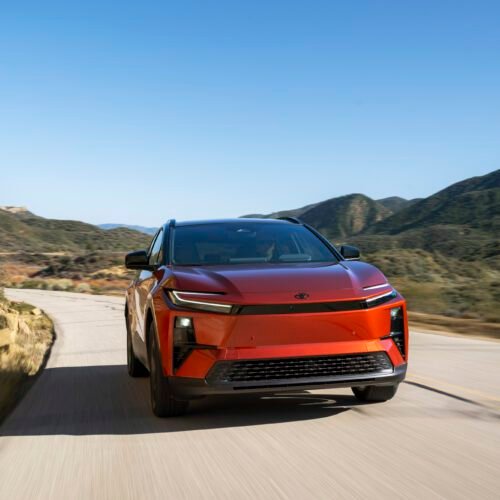
A red Toyota C-HR in profile

Is it cheeky to think of the C-HR as a bZ SWB?

A red Toyota C-HR drives away from the camera

Like the last C-HR, the rear door handles are in the C pillar.

No, the C-HR is one of those frivolous vehicles, one that puts bold styling and a sporty character ahead of simple utility. After all, the bZ already exists if you want stolid.

From the driver’s seat, it might look like a bZ. There’s the same multifunction steering wheel, the same small main instrument display, the same infotainment system, and a pleasing array of actual plastic buttons, each with just one discrete function. Toyota’s 14-inch touchscreen infotainment system isn’t particularly flashy, but the screen is responsive, and Apple CarPlay runs wirelessly.

Take it off the back

You notice the 3.9 inches (200 mm) that’s missing from the wheelbase if you sit in the back. It’s not especially cramped compared to the back seat of the old gas-powered C-HR, but it’s hardly palatial. As you sit level with the C pillar back there, it can feel a little dark even with the optional panoramic glass roof, which robs a little over an inch of headroom as a trade-off for letting more light into the cabin. There’s only one USB-C port in the back, and it’s only 15 W, unlike the two 60 W ports up front, but if you opt for the C-HR XSE, you can get heated rear seats to go with the standard heated fronts.

The C-HR certainly feels frenetic on the street. Even with the car set to Eco mode, it’s plenty peppy; in normal mode, I found the initial throttle response to be a bit too eager. Despite that, Toyota quotes the same 4.9-second 0–60 mph (97 km/h) time for the C-HR as the other AWD EVs it builds. Perhaps driving them back-to-back would reveal no appreciable difference, but if the point was to imbue the C-HR with an eager quality, Toyota’s engineers succeeded at the task. It’s not the last word in driving thrills, though, with front-biased power delivery thanks to that AWD setup and not particularly communicative steering.

Toyota C-HR rear seat.

Not exactly spacious.

C-HR cargo area.

With the rear seats flat like this, there’s 59.5 cubic feet (1,685 L) of cargo volume. With the rear seats in use, that shrinks to 25.3 cubic feet (716 L).

Over a week of mostly city driving, the C-HR reported an average of 3.8 miles/kWh (16.4 kWh/100 km), but also only estimated 149 miles of range with 72 percent state of charge in the battery, which might be down to the extremely hot and humid weather in DC but makes it hard to extrapolate out to a number that matches the official EPA range, which is 273 miles (439 km) when fitted with 20-inch wheels. (The 18-inch wheels on the C-HR SE add 14 miles/23 km in range.)

If you’re out and about and need a charge, the native NACS port, which tops out at 150 kW, means all of Tesla’s compatible Superchargers are among the tens of thousands of fast chargers you can use, although the position of the charge port behind the front wheel arch can make it a challenge to get close enough for the older Tesla cables to reach. A DC fast charge from 10–80 percent takes around 30 minutes, or 7.5 hours with an 11 kW AC charger, Toyota says.

The heat and humidity during our test week brought me to my other bugbear with the C-HR. I’ve made peace with the fact that no Toyota remembers to turn the auto hold function back on if I used it last time I drove the car. But the C-HR added another level of amnesia by never remembering that the AC should be on. Perhaps it’s an eco strategy to save a few Wh on startup, but if it’s hot enough to melt gallium in the shade, I want my car to remember to make it cold when I turn it on.

Japan’s frigate sales pitch masks a wider regional power play

0

Japan isn’t just selling warships — it’s quietly building a new Indo-Pacific security architecture in the shadow of China’s rise, amid uncertainty in US leadership.

This month, the Wall Street Journal reported that Japan is actively marketing its advanced, stealthy Mogami-class frigate to international buyers as the country aggressively rolls back decades-old restrictions on lethal arms exports to counter a rapid Chinese naval buildup and fluctuating US security commitments.

Manufactured by Mitsubishi Heavy Industries (MHI), the highly automated warship can hunt submarines, deploy underwater drones, and operate with a lean crew of just 90 personnel — a critical selling point for nations facing severe sailor shortages, though critics warn the reduced staffing compromises real-time damage control during combat.

Priced at approximately US$710 million per vessel according to Japan’s 2025 defense budget, the Mogami offers a stark, cost-effective alternative to the US Navy’s troubled next-generation Constellation-class frigate program, which has been severely plagued by design delays, cancellations, and a ballooning unit cost of $1.4 billion.

Driven by Japanese Prime Minister Sanae Takaichi’s overhaul of national defense policy amid the region’s most volatile security environment since World War II, Japan secured a landmark $6.5 billion defense contract with Australia in April to deliver three upgraded variants by 2029 while transferring local manufacturing technology.

Meanwhile, other regional Indo-Pacific nations, including New Zealand and Indonesia, are actively considering the warship to modernize their fleets.

In that sense, the Mogami may be less a naval platform than a vehicle for knitting together a network of regional partners through shared technology, logistics and industrial cooperation.

Japan’s push may be aimed at a capability gap among US allies and partners that the US is increasingly unable to fill on its own. Smaller regional navies in the Indo-Pacific rely on general-purpose, relatively affordable frigates as the workhorses of their fleets, but the US does not build frigates on any appreciable scale or at a feasible cost.

Should Japan’s frigate sales in the Indo-Pacific materialize, they would significantly streamline interoperability, training, and supply chains, benefiting smaller regional navies.

It would allow smaller regional navies, such as New Zealand’s, to integrate into the modernization plans of larger ones, such as Australia’s, with both navies already highly interoperable. Such an approach could minimize capability gaps while enabling shared training programs and a spare parts pool.

Beyond the mere sale of frigates, Japan’s marketing push may signal its efforts to build a coalition of like-minded partners in the Indo-Pacific to address uncertainties about US security commitments. Specifically, the frigates could serve as a focal point for defense diplomacy between Japan and its partners.

Sales of high-end military items, such as frigates, don’t end with the delivery of the ships themselves. More than that, customers purchase the entire sustainment package behind the ship that sustains it for its service life.

This package includes spare parts, maintenance, training, and software updates, to name a few. These frigates, therefore, help cement a long-term defense relationship between Japan and its partners.

Rather than supplanting the US-led alliance system, Japan’s frigate push may reinforce it by creating horizontal links among allies that have traditionally relied on the US as the sole hub. Such links could make regional security cooperation less dependent on US resources and political attention.

However, the challenge for Japan in sustaining this hub-to-hub defense relationship is to broaden those relationships beyond defense into related fields and to strengthen them from the transactional to the institutional level.

Beyond a defense relationship, Japan’s possible frigate sales could bolster its partners’ economic resilience, addressing an often-cited gap in the traditional US-led hub-and-spoke security architecture in the Indo-Pacific.

The US-led regional order has often struggled to translate security ties into equally robust economic relationships. This imbalance has left many allies and partners seeking deeper economic engagement alongside existing security ties.

China has demonstrated how economic relationships can reinforce strategic influence, most visibly through the Belt and Road Initiative (BRI) in Southeast Asia and export dependencies on its large market.

China’s economic investments in Indonesia may be a significant factor in Indonesia’s restraint in dealing with China, especially on issues such as the Natuna Islands dispute. That dynamic illustrates how economic dependence can shape strategic calculations even where security interests diverge.

Likewise, Australia and New Zealand’s dependence on China as a top export market for minerals and agricultural produce gives China a possible lever of influence over the former.

In response to that, Japan’s frigate marketing may aim to fuse the economic and defense spheres into a holistic package to counter China’s growing naval might and economic clout in the Indo-Pacific.

That approach could also address a disconnect between military planners and politicians. While military planners think in terms of addressing security challenges, politicians tend to think in terms of elections, which course of action would win them popular support for subsequent terms.

By combining military capabilities and economic benefits into a single package, Japan’s frigate sales may generate sufficient buy-in from both defense planners and politicians in its potential customers.

However, the long-term success of Japan’s frigate marketing push may depend on its partners’ abilities to build the policy, institutional, and governance ecosystem that enables the absorption of downstream economic benefits.

These downstream benefits may include jobs, the strengthening of local shipbuilding and repair industries and the fostering of education in science, technology, engineering and mathematics (STEM) fields, in which Japan could be a key partner.

Successfully harnessing these downstream benefits could incentivize politicians to pursue further defense and economic cooperation with Japan, avoiding one-off purchases and expanding cooperation into related fields beyond defense.

Ultimately, the real test of Japan’s emerging regional influence will not be how many frigates it sells, but whether it can transform defense transactions into durable networks of economic, industrial and political alignment.

In an Indo-Pacific region increasingly shaped by strategic competition and uncertain guarantees, the countries that can fuse security, technology and prosperity into a single ecosystem will set the terms of the next regional order.

Netherlands records first euthanasia case involving a child under 12

0
netherlands-records-first-euthanasia-case-involving-a-child-under-12
Netherlands records first euthanasia case involving a child under 12


A child under the age of 12 has died through euthanasia for the first time since the law was changed two years ago.

Health minister Sophie Hermans said the case had been reported to the committee that reviews all late-term abortions and medically assisted deaths of children.

Hermans revealed the child had died at the end of last year when she presented the committee’s annual report to parliament on Monday.

No details about the child’s circumstances, such as their age, gender or their medical condition, were given.

The death has also been referred to the public prosecution service, as happens with all euthanasia cases, who will decide if the doctors complied with the strict rules that protect them from being charged with unlawful killing.

When the law was extended to under-12s politicians expected around five cases per year to be reported. Previously terminally ill children who wanted to end their lives could only do so by palliative sedation or by refusing food and water.

Unbearable suffering

Euthanasia in the Netherlands is only permitted if the request comes from the patient and a doctor agrees that they are suffering unbearably with no prospect of relief. Around 6% of all deaths last year were through euthanasia.

The doctor must be satisfied that the patient is not acting under duress and must obtain a second opinion from at least one independent colleague.

In the case of a child under 12, their parents must give their consent once the doctor has established that there is no treatment available for their condition.

The committee’s guidelines state: “The doctor will involve the child, insofar as they are capable, in the decision and must be satisfied that the child’s life is not being ended against their will.”

Source: Dutch News

New survey finds decline in trust of US among key allies under Trump

0
new-survey-finds-decline-in-trust-of-us-among-key-allies-under-trump
New survey finds decline in trust of US among key allies under Trump

Confidence in the United States as a reliable partner has fallen sharply among many of Washington’s closest allies, a new survey found on Tuesday, with President Donald Trump receiving lower trust ratings than Chinese President Xi Jinping and Russian President Vladimir Putin, Anadolu reports.

The Pew Research Center survey, which covered 42,151 adults in 36 countries between Feb. 8 and May 13, 2026, found that only a median of 23% of respondents expressed confidence in Trump to “do the right thing regarding world affairs,” while 76% said they had no confidence in him.

Trump ranked below French President Emmanuel Macron (43%), Ukrainian President Volodymyr Zelenskyy (35%), Xi (34%) and Putin (31%) in the global confidence comparison. Only Israeli Prime Minister Benjamin Netanyahu, at 18%, ranked lower.

Trump received his highest ratings in the Philippines, where 68% expressed confidence in him. He was also viewed favorably in Israel, where 66% expressed confidence and 33% said they had no confidence. Majorities in Nigeria, Kenya and Ghana also expressed confidence in the US president.

Meanwhile, only 6% of respondents in Türkiye expressed confidence in Trump, while 92% said they had no confidence in him. In the Palestinian territories of the West Bank and East Jerusalem, confidence stood at just 4%, compared to 89% who expressed no confidence.

READ: Netanyahu says Israel must ‘break free from dependence’ after tensions with Trump administration

– Decline of trust in US in Europe, Latin America, Asia

Perceptions of the US as a reliable partner have deteriorated sharply across Europe, with Hungary and Poland the only countries surveyed where majorities continue to view Washington as dependable, while confidence has dropped by 28 to 52 percentage points in eight other nations since 2022.

Only 8% in Sweden, 10% in France and 15% in Germany say Washington considers their interests, with the UK slightly higher at 26%. Hungarians, at 35%, are the most likely among European countries to hold this view.

In Germany, the share saying the US considers other countries’ interests has collapsed from 60% in 2023 to 23% today.

In Asia, confidence in the US president ranged from 39% in India and 35% in Sri Lanka to just 25% in Japan, 22% in South Korea and 18% in Australia.

In Latin America, no country surveyed recorded majority confidence in Trump. His strongest ratings in the region came in Colombia, where 43% expressed confidence in him, followed by Peru at 31% and Brazil 30%.

– US role in world affairs

Only 35% across 36 countries said the US contributes to peace and stability around the world, down sharply since 2023.

A median of 76% disapproved of Trump’s handling of the Gaza war, while 74% disapproved of his approach to Iran — figures shaped in part by the US-Israeli war during the survey’s fieldwork period.

His tariff policies drew the broadest opposition, with 77% disapproving globally, rising to 92% in Germany, 86% in South Korea and 85% in Japan.

Trump may be mystery patient in odd case of 79yo getting experimental obesity drug

0
trump-may-be-mystery-patient-in-odd-case-of-79yo-getting-experimental-obesity-drug
Trump may be mystery patient in odd case of 79yo getting experimental obesity drug

In an extremely odd case, a single 79-year-old patient was granted early access to Eli Lilly’s powerful, still-experimental obesity drug retatrutide through the Food and Drug Administration’s “compassionate use” program—raising immediate questions if that sole patient is President Donald Trump, according to a report by Stat News.

Lilly’s retatrutide is a highly anticipated next-generation obesity drug that targets GIP and glucagon hormones in addition to GLP-1. It is currently in late-stage trials to treat obesity, diabetes, sleep apnea, and other conditions. Data from a Phase 3 trial that Lilly released in May indicates that patients with obesity (but without diabetes) who took the drug for 80 weeks lost 28 percent of their weight, an amount comparable to bariatric surgery.

Millions of Americans with obesity are eager to get the drug, with options being limited so far to enrolling in a clinical trial or trying to obtain it by dodgy methods.

But according to a barebones public notice and Stat’s sources, a single person has been granted early access through the expanded access, aka “compassionate use” pathway, which is typically used to grant access to patients with a “serious or immediately life-threatening disease or condition” and who are not able to enroll in a clinical trial, often because they are too ill.

The access request was first made in April, when the person was 79 years old (Trump turned 80 on June 14). It was made by a senior clinician at the National Institutes of Health named Ranganath Muniyappa, who requested it on behalf of a patient with refractory obesity, obstructive sleep apnea, and pulmonary hypertension, which is high blood pressure in the lungs. Sources told Stat this patient had spent a year on tirzepatide, a drug that targets the GLP-1 and GIP hormones. But the patient had achieved only moderate weight loss on the drug.

The patient was not recommended for bariatric surgery, given their age and other conditions. It was unclear whether the person would have been eligible for a trial. It’s also unclear if retatrutide would work in patients who have failed to see success with tirzepatide.

“Something very wrong”

The public notice of the expanded access is suspicious, omitting much of the information that such a notice would normally include, such as the conditions that might qualify a patient for such access.

“Only people in the know would be able to find this [notice], using the drug name,” Richard Klein, who helped launch the FDA’s expanded access program in the 1980s, told Stat. “There is something very wrong with the way this is listed because no one would know what it is from the listing, or what it’s for.”

Stat asked both the White House and the Department of Health and Human Services if Trump is the patient, and if he has obstructive sleep apnea and pulmonary hypertension, which were not included in a memo of his most recent medical evaluation. White House spokesperson Kush Desai did not answer the question and deferred to the health department. HHS spokesperson Emily Hilliard also did not directly deny that Trump is the patient.

She provided a statement saying:

The FDA supports expanded access programs that can provide patients with serious or life-threatening conditions access to investigational treatments when no comparable or satisfying approved therapies are available. Each request is reviewed on a case-by-case basis based on the clinical circumstances and applicable statutory and regulatory requirements.

Over a dozen experts who spoke to Stat said it was highly unusual for a drug company to grant expanded use of a drug for common conditions to a single patient rather than a cohort of patients with a specified profile.

Lilly spokesperson Misty Fuller did not answer Stat’s questions, saying, “We make these decisions following all applicable regulations.” The NIH clinician who made the request, Muniyappa, also did not respond to questions.

The contested legacy of Edmund Dene Morel – the man who exposed the murderous exploits of King Leopold II in the Belgian Congo

the-contested-legacy-of-edmund-dene-morel-–-the-man-who-exposed-the-murderous-exploits-of-king-leopold-ii-in-the-belgian-congo
The contested legacy of Edmund Dene Morel – the man who exposed the murderous exploits of King Leopold II in the Belgian Congo

Young shipping clerk Edmund Dene Morel was working as for the Liverpool firm Elder Dempster when he noticed what appeared to be a discrepancy in the figures. What Morel found in his investigation of that discrepancy would expose one of the most notorious systems of violence of the colonial era: the Congo Free State, ruled personally by King Leopold II of Belgium.

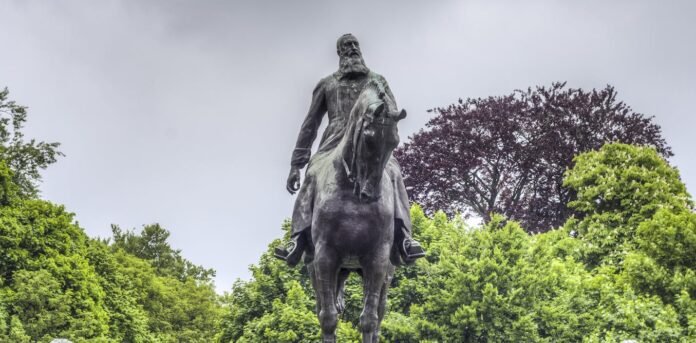
Leopold founded the Congo Free State in 1885. It was his private colonial possession, not a Belgian colony. During Leopold’s 23-year rule, millions of Congolese died amid widespread atrocities – murder, torture, mutilation, forced labour – driven by the extraction of ivory and rubber.

Morel would become the most effective public campaigner against Leopold’s regime. His writings helped transform what had been scattered missionary testimony into an international scandal. But while dedicating much of his energy to exposing Leopold’s crimes in the Congo, Morel proved far less willing to confront abuses linked to some of his own allies and financial supporters.

Born Georges Edmond Pierre Achille Morel de Ville in Paris in 1873, Morel moved to Britain with his English mother following his father’s death. In 1891 he joined Elder Dempster as a clerk. Four years later, when the firm opened a shipping route between Antwerp and West Africa, the bilingual Morel was an ideal candidate for the job.

He supplemented his income with journalism, drawing on information from sailors, traders and officials who passed through Elder Dempster’s offices. While researching an article, Morel noticed a striking imbalance in Congo trade statistics. Large quantities of rubber and ivory were being shipped to Belgium, but almost nothing flowed back to Africa except firearms and ammunition.

For a shipping clerk accustomed to ledgers and manifests, the implications were stark. Trade normally moved in both directions. The Congo figures suggested something closer to organised extraction: wealth leaving Africa, force returning in its place. Morel began to piece together testimony from missionaries, traders and officials, realising that the violence reported from the interior was not incidental but structural – an economic system sustained by terror. He described Leopold’s Congo as “a secret society of murderers with a king for a croniman”.

When Morel raised his concerns with Elder Dempster’s managing director, Alfred Jones, he was offered a promotion in return for his silence. He refused. In 1903 he launched a newspaper, The West African Mail, and the following year founded the British Congo Reform Association (CRA), which aimed to end Leopold’s rule.

Morel’s associates included the Liverpool businessman John Holt and the Anglo-Irish diplomat Roger Casement. Holt had extensive commercial interests in West Africa, including in rubber. Casement’s 1904 report for the British government documented widespread violence in the Congo’s rubber districts. Casement would later be executed for treason following his involvement in the 1916 Easter Rising.

Defending powerful allies

The CRA relied heavily on wealthy donors. Its largest single financial contributor was the British cocoa manufacturer William Cadbury. Cadbury paid Morel £50 per quarter as editor of the West African Mail – more than one-third of Morel’s personal income at the time – and asked that the arrangement remain private. He later helped fund the education of Morel’s eldest son and encouraged Morel to stand for parliament, promising further financial support.

At the same time, Cadbury Brothers were facing growing criticism for purchasing cocoa from plantations on the Portuguese islands of São Tomé and Príncipe. These plantations relied on coerced African labour recruited from Angola under a contract system that critics widely described as a form of slavery.

The issue was exposed publicly by the journalist Henry Nevinson in 1905 and 1906. Nevinson argued that British chocolate manufacturers, including Cadbury, bore responsibility for sustaining this system by continuing to buy plantation cocoa. Some humanitarian organisations went further: figures within the British and Foreign Anti-Slavery Society argued that British firms should boycott cocoa produced under coercive labour systems, a position Morel declined to endorse.

Cadbury’s response was cautious and incremental. The firm commissioned investigations, lobbied Portuguese officials and resisted immediate boycotts, arguing that sudden withdrawal would worsen conditions for workers. Morel consistently defended this approach in his journalism. While acknowledging the existence of abuse, he questioned Nevinson’s judgment and tone, portrayed Cadbury as acting in good faith, and worked to limit public criticism of the firm while the Congo campaign was ongoing.

Abuse on the plantations was not the point of dispute. What divided critics was how – and how forcefully – British firms should be held to account. On this question, Morel consistently sided with Cadbury’s cautious strategy, prioritising the Congo reform campaign and the cohesion of its supporters over public confrontation elsewhere. His humanitarianism was shaped as much by strategic calculation as by moral outrage.

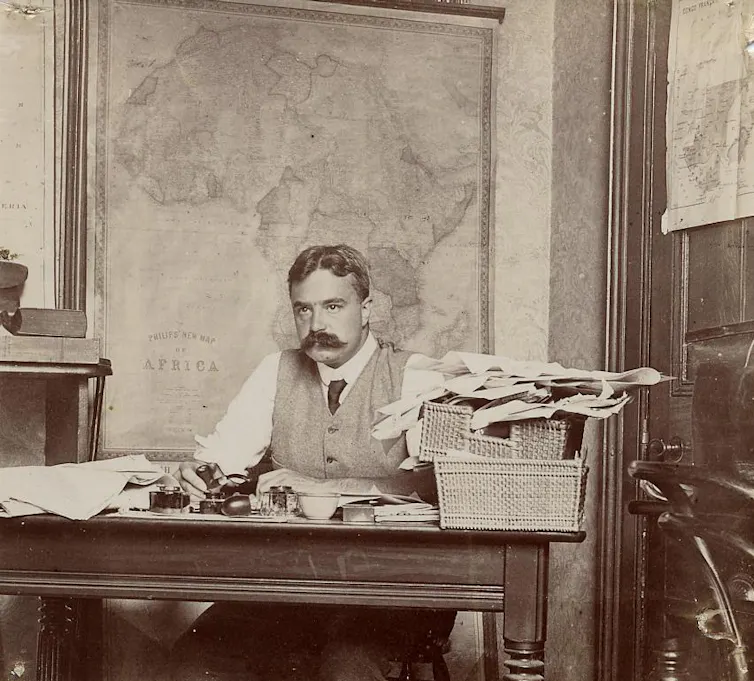
Campaigner: Edmund Morel as editor of the West African Mail in 1905. LSE Library

Morel’s legacy

Once the Congo campaign wound down, Morel remained politically active. He became a prominent critic of British foreign policy during the first world war and was imprisoned in 1917 for his opposition to the war. After the conflict, he joined the Labour Party and was elected MP for Dundee in 1922, defeating Winston Churchill. He died in 1924 at the age of 51.

Morel’s work against Leopold’s Congo has rightly been recognised as a landmark in the history of humanitarian activism. His investigative methods, international networking and ability to mobilise public opinion influenced later reform movements. In recognition of his activism, Morel’s name is inscribed on the Humanitarian Wall at the Wilberforce Institute in Hull, alongside other prominent historical figures, such as Nelson Mandela, Mahatma Gandhi and Martin Luther King.

He was also the subject of an early day motion proposed by Labour MP Jim McGovern in 2013 to “pay homage to his dedication to the Congo Reform Association and his early work in championing human rights for all”. The motion was signed by 17 MPs, including Jeremy Corbyn and John McDonnell.

But his legacy is not a simple one. Morel’s career shows how humanitarian campaigns can coexist with compromise, prioritisation and silence. He was capable of denouncing extreme violence while defending allies whose commercial interests were entangled with coercive labour systems elsewhere.

This does not negate Morel’s achievements. It does, however, complicate them. His story is a reminder that humanitarian activism has never been morally pure, and that understanding its impact requires attention not only to what reformers opposed, but also to what they chose not to confront.

Longtime Fed chair, Ayn Rand disciple Alan Greenspan dead at 100

0
longtime-fed-chair,-ayn-rand-disciple-alan-greenspan-dead-at-100
Longtime Fed chair, Ayn Rand disciple Alan Greenspan dead at 100

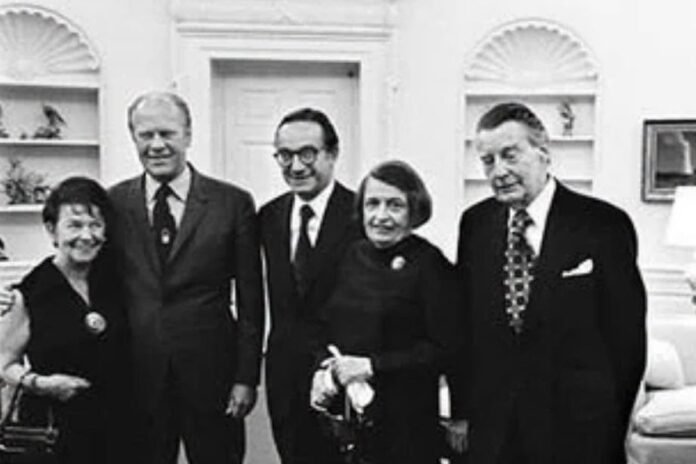
Ayn Rand and her husband, right, were in the room when Greenspan, center, was sworn in as chair of President Gerald Ford’s Council of Economic Advisors. Photo: Facebook

Alan Greenspan, whose policies during nearly 20 years as US Federal Reserve chair fueled soaring economic inequality and helped create the conditions for multiple economic crashes, died Monday at age 100 after a long battle with Parkinson’s disease.

While many corporate media outlets published hagiographic obituaries lionizing the “maestro” who presided over nearly two decades of low inflation, rising stock prices, and American economic confidence, critics focused on Greenspan’s role in promoting dangerous deregulation and “easy money” policies that inflated financial bubbles, with sometimes disastrous results.

Robert Reich – who served as US labor secretary under President Bill Clinton during all of Greenspan’s tenure – called him “in many ways the most powerful person in America” during that era, Reich wrote.

“He maintained an iron grip over the Fed, and almost single-handedly decided on interest rates,” Reich added. “He essentially fired George H. W. Bush by raising interest rates so high (ostensibly to ward off the inflation then threatening the economy) that the economy took a dive, and voters blamed Bush. This was enough to convince my boss, Bill Clinton, to do exactly what Greenspan wanted – which was to reduce the federal budget deficit and thereby destroy much of the agenda Clinton ran on (and I helped create).

“I don’t want to speak ill of anyone who has passed. Greenspan was an extremely charming, intelligent, and thoughtful man,” Reich added. “But the truth must be told: If any single person was responsible for the financial crisis of 2008, it was Greenspan. That crisis – the worst collapse since 1929, which led to the worst recession in decades, in which millions of Americans lost their jobs, savings, and even their homes – resulted from the deregulation of Wall Street that Greenspan advocated.”

At his swearing-in ceremony as chairman of the Federal Reserve last month, Kevin M. Warsh singled out just one of his predecessors as a role model for running a central bank: Alan Greenspan, who led the Fed for nearly two decades before stepping down in 2006. “Like Alan, I intend to fill the role of chairman with energy and purpose, just the way Chairman Greenspan did, faithful to the mission and the very best traditions of the Fed,” Mr. Warsh said in his first remarks in the top job. Mr. Greenspan died on Monday at age 100. But Mr. Warsh, who has vowed to lead a “reform-oriented” Fed, is carrying on his legacy in a number of important ways. That spans how the Fed communicates about its plans for interest rates to the data it ascribes the most weight to make policy decisions.

The New York Times

Former Greek Finance Minister Yanis Varoufakis wrote on X:

His epitaph? A singular, glorious confession, “I found a flaw in my model of the world.” A flaw, he said, as though it were a leaky pipe, not a total collapse of the intellectual architecture that anointed him Oracle. For decades, he preached that the self-interest of the predator was the invisible hand of the common good.

Then, in 2008, the beast devoured the table, and to his credit, he blinked, admitting that his entire worldview – the one that central bankers canonized and the world swallowed – was a fairy tale for rentiers. He did not, of course, admit to culpability. That would require a moral compass, a device notably absent from his Ayn Randian toolbelt. No, he merely noted the flaw, as a meteorologist might note a gust of wind, and returned to his well-earned silence.

Born 10 miles from Wall Street in Manhattan’s Washington Heights during one of the most infamous economic bubbles of all time, Greenspan was a protégé of libertarian writer and philosopher Ayn Rand and was influenced by the Atlas Shrugged author’s moral defense of capitalism, her fierce advocacy of deregulation and her insistence that self-interest was socially beneficial.

Their relationship cooled as Greenspan embraced more mainstream economic policies despised by Rand and gradually became a leading steward of the very sort of state-shepherded system she deeply distrusted.

After heading President Gerald Ford’s Council of Economic Advisers, Greenspan was appointed chair of the Fed by President Ronald Reagan in 1987. He would remain in the post well into George W. Bush’s second term.

Greenspan generally favored low interest rates, especially after crises like the 1987 stock market crash, the 1998 Long-Term Capital Management crisis, and the 2001 recession. His fame grew after he suggested that the economy might be experiencing a tech-driven “productivity miracle,” language that many investors took as validation that traditional valuation limits were obsolete.

Critics would later call it a “productivity mirage.

Staunch devotion to low interest rates by Greenspan’s Fed boosted stock prices and real estate values under “easy money” policies. Many investors came to believe that the Fed would intervene aggressively whenever markets fell sharply – the so-called “Greenspan put.”

However, since ownership of financial assets (and the firms that sell and promote them) is concentrated among the wealthy, it was the rich who benefited most from Greenspan’s polices. When bubbles burst, as they did after the dot-com boom that ended in early 2000 and during the 2008 global financial crisis, the rich bounced back thanks to their diversified portfolios and bailouts, while middle- and lower-income households were wiped out through asset devaluation, foreclosures, and job losses.

“It is no exaggeration to say the global financial crisis of 2008 had an enormous and lasting impact on American life and the way ordinary people view elites,” New York Times global economic correspondent Peter S. Goodman said on social media. “It is also no exaggeration to say that Alan Greenspan has as much responsibility for the crisis as an individual can.”

“For those not old enough to remember, it is difficult to state his aura during his time of greatest influence,” Goodman continued. “When he told Americans that they should buy houses and use variable-rate mortgages to do it, they listened. Much is made of his econ jargon-laden vernacular that went over the heads of nearly all listeners.”

“That was central to the mystique,” he added. “When he went to the Hill and spoke to Congress, most people had no idea what he was talking about but assumed that smarter kids did. And so his quasi-religious faith in the efficiency of markets as the ultimate insurance against risk went unchallenged and became dogma, and the risks kept building.

-Common Dreams

Brett Wilkins is a San Francisco-based journalist and author who contributes regularly to Common Dreams and Counterpunch. He is also a member of Collective 20, a new anti-war collective with Noam Chomsky, Medea Benjamin and others.

IDF Strikes Armed Terrorist Cell in Southern Lebanon, Hezbollah Claims Ceasefire Breach

0


The Israel Defense Forces (IDF) said Tuesday that it carried out a strike against an armed terrorist cell operating near Israeli troops in southern Lebanon, while Hezbollah accused Israel of violating the ceasefire agreement between the sides.

According to the military, the suspects were identified near Israeli forces in the Ali Taher Ridge area. The IDF said the operatives were targeted north of the security zone in order to “remove the threat.”

The strike came amid continued tensions along the Israel-Lebanon border despite the ceasefire framework currently in place.

Lebanese media reported earlier that two people were killed and several others wounded in Nabatieh al-Fawqa in southern Lebanon. The reports followed the Israeli operation in the area.

Hezbollah condemned the strike and said it represented a breach of the ceasefire arrangement.

In a statement, the organization said: “The Islamic Resistance warns that the enemy’s action constitutes a blatant violation of the ceasefire, which the resistance has adhered to until now.”

The incident also drew a response from Iran. Following reports of the Israeli strike, Iran’s representative to the United Nations warned that developments on the ground could affect ongoing diplomatic efforts.

“Any violation of the memorandum of understanding will pose challenges to the negotiations,” the representative said.

Israel’s military maintained that the operation was directed at an immediate threat and linked it to what it described as repeated violations by Hezbollah.

The IDF said that overnight, forces also conducted a broader wave of operations against Hezbollah targets in southern Lebanon.

“In order to remove threats and in response to the blatant violations by the Hezbollah terrorist organization, the IDF struck dozens of Hezbollah terrorist infrastructure sites and operatives in southern Lebanon overnight,” the military said.

According to the IDF, the targets included rocket-launching positions, weapons depots, and command centers.

The military reiterated that it continues to operate under the ceasefire framework while reserving the right to respond to threats.

Everyone pays the price as patent holders on seeds stifle innovation

0
everyone-pays-the-price-as-patent-holders-on-seeds-stifle-innovation
Everyone pays the price as patent holders on seeds stifle innovation

The United States is one of only a handful of countries that allows companies to hold patents on plant varieties. As a result, a small number of corporations can—and do—suppress competition in the seed industry, stifle innovation and turn taxpayer subsidies intended for farmers into corporate profits.

The US Department of Agriculture has found that two companies control more than 70% of US corn and soybean seed sales, and the top four cottonseed companies control nearly 94% of that market.

In a May 2026 court filing in a legal dispute between two US seed companies, the Department of Justice said patents on seeds are obstructing competition and research in the agriculture industry.

As researchers who work on plant breeding and seed policy, we have seen how that plays out. When huge companies assert their patents, smaller businesses and public plant breeders who often lack the legal resources to fight back are frequently dissuaded from conducting research and development that might actually not be illegal at all.

And a lack of competition allows dominant companies—not always based in the US—to collect large sums of taxpayer money that Congress allocated in hopes it would help farmers, not shareholders’ and executives’ bottom lines.

A shift in ownership

For most of human agricultural history, farmers freely saved, exchanged and planted seeds season after season, creating a diversity of crops suited to the places and people who grew them.

While some communities restricted the exchange of seeds for cultural or ceremonial reasons, seeds were broadly understood to be a shared resource. Even as recently as the 1970s, most plant breeding was carried out by public researchers at government stations and universities, while private companies focused on producing and selling those varieties at scale.

That diverse and decentralized system also served as an invisible insurance policy against disease and disaster: If one variety failed, there were plenty of others distinct enough to fill its place.

Beginning in the 20th century, though, governments began to grant companies patents on living organisms, beginning with a genetically engineered bacterium that broke down crude oil. Suddenly, chemical and pharmaceutical companies saw opportunities to earn money by engineering specific traits, such as herbicide tolerance, into key crop plants, including corn, soybeans, cotton and canola, and patenting those varieties.

Then they used those patent rights to prohibit other plant breeders, even university researchers, from conducting research and breeding with their seeds and to forbid farmers from saving their own seeds from one season to the next.

Those steps eliminated seed companies’ two most obvious sources of competition: other developers building on their work and farmers saving seed. The seed companies then had enough market power to set prices so high they took nearly all of farmers’ potential profits, while leaving them just enough of a margin to remain customers.

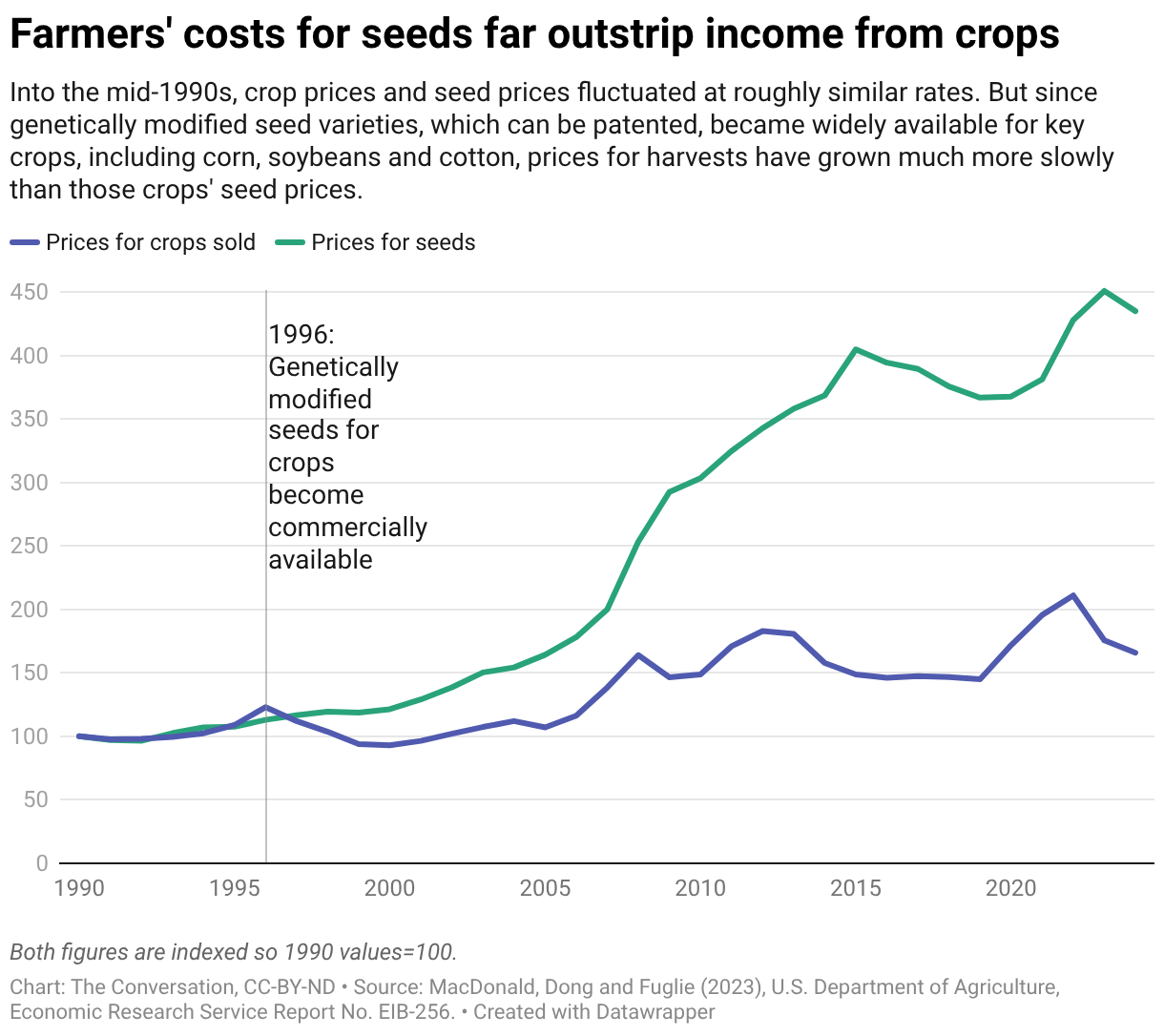
According to a report from the Department of Agriculture’s Economic Research Service, the price for genetically engineered seeds has more than quintupled since 1990, rising by 463 percent. But over that same period of time, the price farmers have received for their crops has increased only by 56 percent.

Both figures are indexed so 1990 values=100.

Both figures are indexed so 1990 values=100. Credit: The Conversation (CC BY-ND), MacDonald, Dong and Fuglie (2023), U.S. Department of Agriculture, Economic Research Service Report No. EIB-256.

Subsidies get diverted

When the prices farmers receive for certain crops fall below a certain threshold, or when farmers suffer losses from bad weather or unexpected trade disputes, the Department of Agriculture has a multitude of programs that offer payments to make up the difference.

But that money tends to spend little time in farmers’ pockets.

An August 2025 study shows that when farm subsidies increase, seed companies respond by raising their prices, charging based on what farmers can afford to pay rather than their own cost of producing and marketing the seed. Specifically, for every 1% increase in farm subsidies, seed companies raise their prices by 0.5%.

And when farmers go to sell their crops to grain processors, those companies benefit from being able to purchase commodity grains, such as corn, soybeans and canola, at a predictable price, held low because subsidies help farmers produce an abundant supply at margins that would otherwise drive farms out of business.

Testifying at an October 2025 Senate Judiciary Committee hearing on competition issues in the seed and fertilizer industries, Iowa farmer Noah Coppess put it plainly: “The reality in farming today is we’re price takers rather than price makers. That’s especially true when consolidation limits our options. … I have concerns with our input and equipment supply chains and their ability to manipulate our costs.”

The result is a system in which public money intended for farmers is redistributed to the seed suppliers and commodity purchasers who profit on either side of them.

Limiting research

Dominant seed companies prevent competitors from developing new breeding programs through a complex web of patents and restrictive licensing contracts that make it nearly impossible to acquire enough genetic material to get started.

The patent system is built on the premise that applicants must completely disclose how their inventions were made in order to get protection. This allows the public to understand the scope of the invention, as well as to improve upon it.

Genetic analyses on the protected seeds would be required to understand how a variety was bred and the genetic traits it contains. However, seed companies have also threatened independent researchers with patent-infringement lawsuits. Those threats prevent independent researchers from studying the crops that make up the country’s supply of food, feed, fuel and fiber.

The result is that no one outside of the dominant companies, not even the US government, knows which economically crucial crops, most of which are grown from patented seeds, might be vulnerable to emerging pests and pathogens. For years, plant breeders have been calling for genetic assessments of these seeds and the crops they grow; to date, no such studies have been conducted.

A shift in direction

But the May 2026 Justice Department court filing saying seed patents are blocking agricultural competition and research indicates the tide may be turning.

In 2023, multinational agrochemical company Corteva sued a genetic engineering startup, Inari, for infringing its patents by, among other things, obtaining samples of Corteva’s patented seeds from a public repository and analyzing their genetic makeup.

Though the Justice Department didn’t weigh in favor of either company, its court filing said companies should not be able to restrict the public from sequencing genetic material that was deposited as part of the process of securing patent protection.

Notably, the department’s court filing came from the Antitrust Division rather than the Civil Division, which usually handles intellectual property issues. That difference suggests that the government sees this extension of patent rights as an illegitimate way for a company to exclude other companies from competing.

The case is still winding its way through the legal process. But if the judge agrees, his decision could be consequential. For starters, competitors could begin to understand the strengths and weaknesses in seed varieties on the market and find ways to build on that innovation, which is precisely the type of activity the patent system was designed to encourage.

More competition in the market could provide an important check on seed prices, reducing the burden on American farmers and, thereby, taxpayers. Finally, researchers could conduct the studies that are needed to begin rebuilding the kind of genetic knowledge that was, for most of human history, held in common—an insurance policy in the best interest of us all.

Julie Dawson is Professor of Plant and Agroecosystem Sciences at the University of Wisconsin-Madison; Kiki Hubbard is a Researcher at the Nelson Institute for Environmental Studies, University of Wisconsin-Madison; and Paulina Jenney is Research Coordinator, Urban and Regional Food System Program, University of Wisconsin-Madison

This article is republished from The Conversation under a Creative Commons license. Read the original article.

0FansLike
0FollowersFollow
0FollowersFollow
0SubscribersSubscribe
- Advertisement -
Google search engine

Recent Posts