24.2 C
London
Friday, June 26, 2026
Home Blog

Bitcoin dips as Iran oil returns to the dollar system

0
bitcoin-dips-as-iran-oil-returns-to-the-dollar-system
Bitcoin dips as Iran oil returns to the dollar system

Bitcoin’s latest weakness cannot be explained only by ETF outflows or a cooling of large-holder demand. There is another layer that has not been sufficiently priced into the discussion: Iran’s partial return to legal, dollar-linked oil settlement.

I would not call it the single cause of Bitcoin’s decline. It is better understood as one structural pressure inside a broader repricing. But it matters because it cuts to the heart of one of crypto’s most politically powerful narratives — that digital assets serve as a backdoor for countries pushed outside the dollar system.

On June 22, 2026, the US Treasury’s Office of Foreign Assets Control issued Iran General License X, authorizing the production, delivery and sale of Iranian-origin crude oil, petrochemical products and petroleum products until August 21, 2026.

Reuters reported that the authorization also covers related services such as banking transactions, insurance and shipping, with payments allowed in US-dollar-denominated funds.

This should not be mistaken for a full lifting of Iran sanctions. It is temporary, narrow and tied to the present peace deal negotiations between Washington and Tehran. The political conditions may change quickly if those talks falter. Still, for markets, even a limited opening can change behavior.

Iranian oil is not a marginal story. The US Energy Information Administration (EIA) estimated in its June 2026 report that Iran exported about 1.576 million barrels per day of crude oil and condensate in 2025, generating roughly $48 billion in export revenue.

The same report pointed to the opacity surrounding Iranian oil flows: vessels turning off identification signals, ship-to-ship transfers and the relabelling of origin. That is the practical world in which alternative settlement systems gained relevance. It was never an abstract crypto thesis. It sat inside real energy trade, real compliance risk and real payment friction.

Crypto’s role in that environment has also been documented by US authorities. On June 2, the US Treasury sanctioned Nobitex, Iran’s largest digital-asset exchange, saying it handled more than 50% of Iran’s digital-asset inflows in 2025 and helped Iran’s central bank obtain hundreds of millions of dollars in stablecoins.

The same action named Wallex, Bitpin and Ramzinex, describing significant digital-asset flows and, in some cases, billions of dollars in transactions. Washington was not treating these platforms as ordinary exchanges. It was identifying them as part of the financial architecture used to move value around sanctions.

That is why the market implication is more subtle than the question of whether Iran literally buys or sells oil with Bitcoin. The first instruments affected are probably stablecoins, OTC brokers and informal cross-border payment routes.

Bitcoin is not the settlement tool for every barrel of oil. But Bitcoin is the flagship narrative asset of the crypto market. When the political case for sanctions-driven adoption weakens at the margin, Bitcoin does not escape the repricing.

The logic is simple: if a trader can settle Iranian oil through banks, shipping insurance and dollar-denominated payments under a legal authorization, the incentive to use crypto rails falls. Bitcoin carries price volatility. Stablecoins carry issuer, exchange and traceability risk.

OTC routes often come with discounts, compliance uncertainty and the danger of being mapped later by enforcement agencies. For a sanctioned trade, those costs may be acceptable. For a trade that can temporarily pass through the front door, they become much harder to justify.

This is happening just as Bitcoin’s own funding structure is under pressure. According to Galaxy Research, US spot Bitcoin ETFs saw 13 consecutive trading days of outflows from May 15 to June 3, with total redemptions of about $4.4 billion, or roughly 59,351 BTC.

CoinDesk and The Defiant reported the same figures. The market, therefore, is not reacting to a single Iran headline. Rather, it is digesting several disappointments at once: ETF demand is no longer behaving like a one-way absorption machine; large-holder buying is no longer enough to calm the market; and one part of the sanctions-driven crypto story has become less compelling.

Data source: Farside Investors  Image: Archduke United LPF

The IEA’s June report also pointed to a recovery in Middle Eastern export flows after the temporary US-Iran arrangement, with Strait of Hormuz-related flows rising from a May low of about 9.6 million barrels per day to around 12 million barrels per day.

When physical energy flows normalize, payment workarounds lose some of their urgency. That does not mean Bitcoin’s long-term value disappears. It does mean that one of the market’s favorite geopolitical arguments has to be marked down.

For years, crypto bulls have argued that sanctions, war and dollar restrictions would push states and traders toward digital assets. That argument is not dead. Russia, Iran and parts of the gray commodity world will still look for alternative rails whenever formal finance is blocked.

But the Iran case shows the other side of the same trade. When Washington opens even a narrow legal channel, the need for the workaround immediately becomes less obvious.

When the gray world is handed a front-door key, the back door starts to look less essential. The license is temporary and the order is unchanged — but markets are built on the margin, and at the margin, that key matters.

Jeffrey Sze is chairman of Habsburg Asia and GP of Archduke United LPF. He specializes in high-end art transactions and RWA-T operations, and secured a cryptocurrency exchange license in Switzerland in 2017.
Trump Administration Advances $700 Million Jet Engine Sale to Turkey 

0
trump-administration-advances-$700-million-jet-engine-sale-to turkey 
Trump Administration Advances $700 Million Jet Engine Sale to Turkey 


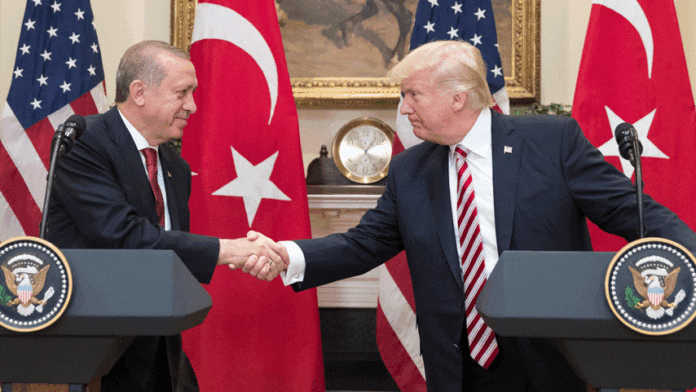
The administration of US President Donald Trump has formally notified Congress of its intention to sell approximately $700 million worth of jet engines to Turkey, Reuters reported, citing two sources. 

The proposed sale has drawn opposition from some lawmakers because of Turkey’s continued possession of Russian defense systems acquired in 2019. 

If approved, the transaction would represent a significant gesture toward Turkish President Recep Tayyip Erdoğan, whom President Trump considers one of his key allies, ahead of next month’s NATO summit. 

In its notification to Congress, dated June 24 and delivered late Wednesday, the State Department said, “The US government is prepared to license the export of these items having taken into account political, military, economic, human rights, and arms control considerations.” 

Congress has 15 days to introduce a joint resolution of disapproval if lawmakers seek to block the sale. Any such measure would have to pass both chambers of Congress and could still be vetoed by President Trump. 

At the same time, Vice President JD Vance said the administration is reviewing whether Turkey meets US egal requirements before moving ahead with additional defense agreements, including the possibility of readmitting Ankara to the F-35 fighter jet program. 

Speaking in the Oval Office, President Trump claimed Erdoğan had been close to becoming involved in the conflict with Iran. 

“He was a prime candidate to go into the war with Iran — maybe on the Iran side, because he’s not a big fan of Israel,” President Trump claimed, even though Turkey gave no indication that it was preparing to enter the US-Israel war against Iran and even came under Iranian fire at one point. 

“I asked him to stay out. He stayed out,” he told reporters. 

Praising the Turkish leader, President Trump added, “Erdogan is a great leader, a very strong person … Everything I’ve ever asked from him, he’s done. I’m going to probably do something that’s going to make him very happy.” 

Relations between Israel and Turkey have deteriorated since the Hamas massacre in Israel on October 7, 2023. In July 2024, Erdoğan said he might consider military action against Israel to halt the war in Gaza. Earlier this month, Turkey’s interior minister called for the “liberation” of Jerusalem. 

TV Stars Tragic Cause of Death Revealed

0
tv-stars-tragic-cause-of-death-revealed
TV Stars Tragic Cause of Death Revealed


The heartbreaking mystery surrounding The Wire actor Bobby J. Brown’s death has finally been answered.

Brown, who died at 62 after being caught in a Maryland barn fire in February, passed away from diffuse thermal injury and smoke inhalation, PEOPLE confirmed through the Maryland Office of the Chief Medical Examiner.

His death was officially ruled an accident.

The actor, best known for roles in The Wire, We Own This City, Law & Order: Special Victims Unit and Homicide: Life on the Street, died on Feb. 24 after the devastating fire.

For Brown’s family, the shocking news came in the middle of the night.

His daughter, Reina, previously recalled being jolted awake by a terrifying phone call from her younger sister.

“I was sound asleep. I had gone to bed about two hours before,” Reina told PEOPLE. “My little sister [was] freaking out, saying that Dad’s gone and that he got caught up in a barn fire, and I’m like, ‘What do you mean?’ ”

The news was so horrifying that Reina said she had to physically ground herself to believe it was real.

“I literally went outside and put both my feet on my front walk,” she said. “It’s cold, and I stood out in my bare feet in a nightgown because I wanted to make sure I was really awake.”

She added that she stood there to make sure she was not dreaming.

“I couldn’t believe it,” Reina said. “I was like, this isn’t real. And I still don’t even feel like it’s real.”

According to Reina, Brown had called for a family member to bring him a fire extinguisher as the flames spread.

“Everybody is still trying to process it,” she said. “It’s been difficult for all of us.”

She remembered her father as far more than an actor.

“My dad was an amazing human being,” Reina said. “He was super awesome. He was a pillar in the community, and he’s going to be missed by a lot of people.”

Brown’s agent, Albert Bramante, also paid tribute to the late performer after his death, praising both his talent and character.

“Bobby J. Brown was an actor of immense talent and even greater integrity,” Bramante told PEOPLE. “He approached his work with a discipline and a passion that were truly inspiring to witness.”

He continued, “While his career included many notable performances, it was his unwavering dedication to the craft of acting that defined him as an artist. We are deeply saddened by this loss and ask for privacy for his family and loved ones during this time.”

Brown was born and raised in Washington, D.C., and had already lived a remarkable life before finding success on screen.

Before acting, he was a boxer who won five Golden Gloves championships. He later trained under boxing trainer Carmen Graziano and pursued a professional boxing career in New Jersey before turning his attention to acting.

That decision eventually took him to New York, where he studied at the American Academy of Dramatic Arts.

Brown went on to appear in several gritty, acclaimed crime dramas, including The Wire, The Corner, We Own This City, Law & Order: Special Victims Unit and Homicide: Life on the Street.

He also worked behind the camera, directing the documentaries Off the Chain, which explored the abuse of American pit bull terriers, and Tear the Roof Off: The Untold Story of Parliament Funkadelic.

According to his IMDb biography, Brown donated a third of the profits from Off the Chain to animal welfare efforts through the Humane Society.

Months after his sudden death, the official ruling confirms what his family already knew: Brown’s final moments came in a terrifying accident that left those closest to him stunned, grieving and still trying to make sense of the loss.

Planet orbits so close to its star that their magnetic fields connect

0
planet-orbits-so-close-to-its-star-that-their-magnetic-fields-connect
Planet orbits so close to its star that their magnetic fields connect

For most of human history, our view of “close to the Sun” was defined by the orbit of Mercury, with its 88-day orbit and barren, baking surface. But from the moment we started discovering exoplanets, it became very clear that our own Solar System was anything but a guide to the rest of the galaxy. Planets with orbits only a few days long are strikingly common, with the proximity to the star creating things that seem bizarre from our perspective: metal vapor in the atmosphere, or atmospheres puffed out to ridiculously low densities.

Now, we can apparently add an additional oddity: overlapping magnetic fields. Researchers have found a star/planet combo that experiences periodic brightening, which they ascribe to the interactions between the magnetic fields of both bodies.

Looking for repetition

This is one of those cases where theory came before discovery. People had already proposed that a planet orbiting close to its host star could interact with it if its magnetic field were sufficiently strong. And, in a number of cases, researchers have found evidence that this is happening, with one case of an extremely young star emitting flares seemingly in response to the orbit of its innermost planet.

An international team of researchers has created the most comprehensive look at flaring in a star with a close-in planet. The star itself is called GJ 436, a red dwarf half the mass of the Sun that resides about 30 light-years from Earth. It has a single known exoplanet that is about four times as massive as Earth, and it completes an orbit every 2.6 days.

The researchers focused on the chromosphere, a thin layer near the exterior of the star that has emissions that are dominated by a relatively small number of ions and is known to be influenced by the star’s magnetic environment. The researchers used specific emissions from hydrogen and calcium ions as a marker for activity in the chromosphere.

We’ve been observing GJ 436 for years, so the team had a huge amount of archival data to search through. The team looked for periodic fluctuations in the emissions at the relevant wavelengths as a potential sign of a fluctuating magnetic influence. They found one, roughly the same period as the planet’s orbit, suggesting that the magnetic interactions were either limited to, or peaked at, one specific orbital configuration.

Why didn’t the signal line up precisely with the planet’s orbit? A model they produced helps explain this by also including factors like the star’s rotation, the uneven distribution of activity across the star’s surface, and the fact that the planet’s axis of rotation (and thus its magnetic field) probably isn’t precisely perpendicular to the plane of its orbit. With all of those factors considered, it’s possible to figure out how all of these details can produce a signal that lags the orbital period by a few hours.

It comes and goes

There were some other oddities, though. One is that there are no signs of enhanced activity from various other elements that are thought to be present in the chromosphere of most stars. The researchers, however, note that the chromosphere itself has multiple layers and propose that the signal they’re seeing is originating in the lower chromosphere.

The second issue was that in some observations, there were no periodic signals at all. Because we have enough archival observation data, however, the researchers were able to track when the signal appeared and disappeared. And they were able to find a periodicity to that—one that lined up precisely with the star’s cyclic activity. (Think of our Sun’s solar cycle, and apply that to a different star.)

The researchers suspect that, during high solar activity, the signal from the planet’s magnetic influence is swamped. At low periods in the cycle, the researchers suspect that there simply isn’t enough activity there for the magnetic interactions to enhance. So, they think that we see the enhanced chromosphere emissions only at intermediate levels of stellar activity.

How is the magnetic influence showing up on the star in the first place? The researchers consider a number of theoretical models, but the only one that produces enough energy at the chromosphere is one where loops of magnetic field connect the fields of the planet and the star. This model allows them to estimate the strength of the planet’s magnetic field, which they put at a minimum of 6 Gauss, over 10 times the strength of Earth’s.

While that all may seem a bit extreme, it’s not especially unusual, even in our Solar System. The magnetic field strength is similar to that of Jupiter, and Neptune’s magnetosphere extends out to far greater distances than the gap between GJ 436 and its planet.

As we noted above, this is the most comprehensive look at magnetic-driven flaring in an exosolar system, but it’s not the first. And there are hundreds of additional systems with close-in planets that we can still examine. So, in time, having measurements of exoplanet magnetic fields may become commonplace.

Science, 2026. DOI: 10.1126/science.adv3075 (About DOIs).

Alexandria Ocasio-Cortez Wades Into Tennessee Primary, Endorsing Justin J. Pearson

0


After rattling some observers by staying out of a slew of competitive congressional primaries in her home state this week, Rep. Alexandria Ocasio-Cortez, D-N.Y., endorsed a candidate in Tennessee on Thursday. 

Ocasio-Cortez is backing Tennessee state Rep. Justin J. Pearson in the 9th Congressional District, which will be a tough win for Democrats after Republicans scrambled to gerrymander it earlier this year thanks to the Supreme Court’s gutting of a key portion of the Voting Rights Act. The district covering parts of Memphis and its suburbs is one of more than a dozen that Republicans have redrawn at President Donald Trump’s demand to ward off what many in the GOP see as the increasingly likely prospect that they lose both congressional chambers to Democrats in November. 

An endorsement from democratic socialist Ocasio-Cortez is a coveted stamp of approval for progressive insurgents looking to challenge incumbents or capture open congressional seats. She has endorsed several Democratic primary candidates running for open seats in other states this cycle including Chris Rabb, who won his primary in Pennsylvania; Analilia Mejia, who won in New Jersey; and Junaid Ahmed, who lost his primary in Illinois. But critics raised eyebrows at her decision to stay out of key congressional primaries in New York; she opted instead to endorse a slate of democratic socialist candidates in the state Assembly.

The endorsement is a major boost to Pearson, who is also backed by Justice Democrats, the progressive group that first backed Ocasio-Cortez in 2018 against longtime incumbent Rep. Joe Crowley, and Sen. Bernie Sanders, I-Vt. Pearson originally launched his campaign with the intention of ousting two-decade incumbent Rep. Steve Cohen, the last remaining Democrat in Tennessee’s congressional delegation. Cohen dropped out of the race in May after state lawmakers split up his district into three neighboring districts, saying it was “drawn to beat” him. 

Observers theorized that Ocasio-Cortez’s absence from New York’s congressional primaries reflected a desire not to butt heads with Democratic Party leaders who endorsed against leftist challengers, potentially signaling her plans to run for higher office in a future cycle. Others argued that she stayed out to split her efforts with New York City Mayor Zohran Mamdani to maximize the left’s political currency in a cycle with historic outside spending against their candidates. Mamdani emerged as a kingmaker in Tuesday’s elections, backing three congressional candidates who won their primaries on Tuesday: socialists Clare Valdez and Darializa Avila Chevalier, and progressive Brad Lander, and several — but not all — of the New York City DSA’s endorsed candidates.

On Wednesday, Ocasio-Cortez said the left’s wins in New York’s House primaries were part of both “a moment” and “a movement” of voters demanding more from the Democratic Party after major losses in 2024. 

Endorsing in the races would have pitted Ocasio-Cortez against her congressional colleagues whose support she might need in a run for higher office, including House Minority Leader Hakeem Jeffries, poised to become House speaker if the Democrats retake the chamber in November. She’s made most of her other endorsements this cycle in open seats with no incumbent, including Rabb, Mejia, Ahmed, Adelita Grijalva in Arizona, Adam Hamawy in New Jersey, and Sam Forstag in Montana. She endorsed Democratic candidate Randy Villegas against the incumbent Republican, Rep. David Valadao, in California. Her former chief of staff, Saikat Chakrabarti, said her decision not to endorse him likely contributed to his loss in an open California primary to replace retiring Rep. Nancy Pelosi, D-Calif., by fueling attacks from his opponents.  

In New York City, Avila Chevalier and Lander ousted incumbents backed by Jeffries and Democratic leaders: Congressional Hispanic Caucus Chair Adriano Espaillat and Rep. Dan Goldman. Valdez won her primary in an open seat where retiring Rep. Nydia Velázquez had endorsed her preferred successor, Brooklyn Borough President Antonio Reynoso. Velázquez bemoaned Mamdani’s endorsement of Valdez against her pick in the months leading up to the race. And even after their candidates lost on Tuesday, Jeffries and other party leaders aired their disappointment in Mamdani’s decision to go against them. 

But in Tennessee, Pearson emerged as the frontrunner when the incumbent dropped out. He’s hoping to tap into voters’ frustrations with both parties by campaigning on economic change for the working class — a message that boosted both Ocasio-Cortez and Sanders. 

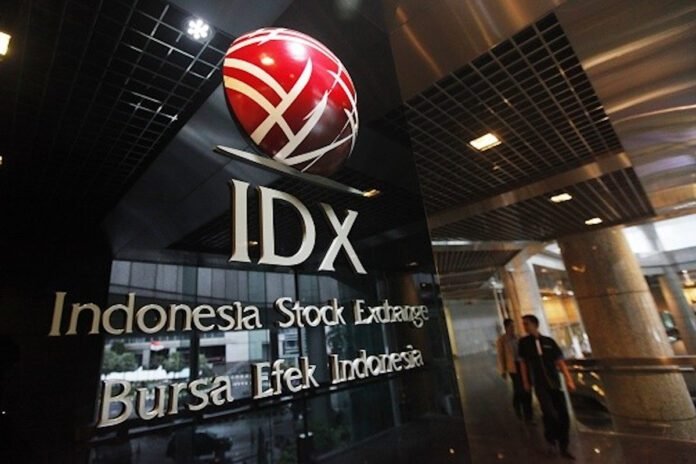
MSCI clock ticking on Indonesia’s broken and untrusted IDX

0
msci-clock-ticking-on-indonesia’s-broken-and-untrusted-idx
MSCI clock ticking on Indonesia’s broken and untrusted IDX

For decades, Indonesia Stock Exchange’s (IDX) institutional structure has acted as a brake on the growth and global competitiveness of Indonesia’s capital market.

The exchange still operates under a mutual ownership model, in which brokerage firms that use it are also its owners. While such arrangements were once common around the world, they have increasingly become an anachronism in modern financial markets.

When the same entities that trade on the exchange also control its strategic direction, conflicts of interest become unavoidable. The exchange is expected to function as a Self-Regulatory Organization (SRO), enforcing market discipline impartially. Yet under a membership-based structure, those subject to regulation effectively influence the regulator itself.

This concern is hardly new for Indonesia. As early as 2002, some international institutions conducted a comprehensive study on exchange demutualization and concluded that the existing non-profit model was no longer adequate for a market increasingly exposed to global financial shocks.

Reliance on member contributions limited the exchange’s ability to invest in advanced trading infrastructure, reducing liquidity and weakening the efficiency of price discovery. The structural shortcomings have become particularly visible when disciplinary action is required against brokerage firms involved in market manipulation or abusive trading practices.

Exchange executives often face political and institutional pressures because their positions are closely tied to the very members they are expected to supervise. Demutualization, therefore, is not merely an exercise in institutional modernization but is an urgently needed step toward separating ownership rights from trading privileges and establishing a more independent governance framework.

Momentum for this transition arrived with Law No. 4 of 2026, which amended Indonesia’s Financial Sector Development and Strengthening Law (P2SK). The legislation fundamentally changes the stock exchange’s ownership architecture by allowing individuals and legal entities, whether or not exchange members, to hold shares in the exchange.

In effect, it ends the long-standing ownership monopoly enjoyed by securities firms and opens the door to a more diversified shareholder base.

Promise and risks of demutualization

Transforming the IDX from a non-profit institution into a profit-oriented corporation is expected to improve managerial efficiency and enhance the exchange’s ability to raise capital. In the future, it could even pave the way for a public listing of the exchange itself, following a path already taken by many leading exchanges around the world.

Yet the most controversial aspect of the new law lies elsewhere. The legislation permits the Indonesian government, through the Ministry of Finance, Bank Indonesia and the sovereign investment vehicle Danantara to become shareholders in the exchange.

Supporters argue that state participation could strengthen market credibility, align the exchange with national development objectives and provide additional capital for technological modernization. During periods of financial stress, government-backed shareholders could also serve as a stabilizing force.

However, this arrangement introduces a potentially serious governance dilemma. The Indonesian state already occupies multiple roles within the financial system. Through the Financial Services Authority, it regulates and supervises markets.

Through Bank Indonesia, it manages monetary stability. Through the Ministry of Finance, it oversees fiscal policy and sovereign debt issuance. Through state-owned enterprises, it remains a dominant corporate shareholder. Through Danantara, it acts as a strategic state investor.

Adding ownership of the stock exchange to this list risks creating a double conflict of interest. Investors could reasonably question whether the exchange would remain fully neutral when supervising state-owned enterprises or when market decisions intersect with broader government objectives, including Danantara investments in both public and private entities.

Global institutional investors place significant weight on governance quality and regulatory independence. Concerns may emerge that state-linked companies could receive preferential treatment, regulatory leniency or informational advantages unavailable to private-market participants.

The legislation formally requires state shareholders to preserve the exchange’s independence. Yet legal language alone may not be sufficient. Effective safeguards will require secondary regulations that impose voting-right restrictions on state institutions and establish strong firewalls between the exchange’s commercial interests and its regulatory responsibilities.

Without these protections, demutualization could replace one governance problem with another.

MSCI verdict looms

Indonesia’s capital market presents a paradox. Investor participation has expanded at an extraordinary pace, yet structural vulnerabilities remain deeply embedded.

The number of capital-market investors surged from 14.87 million at the end of 2024 to more than 21 million by early 2026. Digital investment platforms, financial technology innovations and social-media-driven financial education have dramatically broadened retail participation.

Young investors dominate this expansion. Millennial and Generation Z punters account for more than half of Indonesia’s retail investor base. A growing aspiration toward financial independence has encouraged many young Indonesians to shift from traditional savings toward investment products.

Yet participation has expanded faster than financial sophistication. Financial literacy surveys continue to show a significant gap between investor enthusiasm and practical understanding of market risks.

On the corporate side, the exchange hosts a growing number of listed companies across multiple listing boards. However, quantity has not translated into resilience. Market capitalization remains heavily concentrated among a handful of large firms, many of which are controlled by dominant shareholders or business conglomerates.

Between late 2025 and April 2026, the market value of Indonesia’s ten largest listed companies declined by more than 25%, wiping out roughly 1.6 quadrillion rupiah (US$89 billion) in capitalization.

Some of the steepest losses occurred among large energy and natural-resource companies whose valuations had previously risen sharply. The dips have exposed a fundamental weakness: Indonesia’s market remains highly vulnerable to concentrated ownership structures and governance concerns, issues that have long attracted scrutiny from global index providers.

That scrutiny intensified in 2026 when MSCI conducted its latest market-classification review. Although MSCI retained Indonesia’s Emerging Market status, it downgraded assessments related to information flow and foreign-exchange market accessibility.

The decision effectively granted Indonesian regulators additional time before a possible future downgrade to Frontier Market status.

Yet MSCI’s message was hard and clear: persistent concerns remain regarding ownership transparency, ultimate beneficial ownership disclosure, English-language reporting standards, foreign-exchange restrictions, securities-lending limitations and indications of coordinated trading behavior.

Several high-profile financial scandals have reinforced these concerns. Cases involving companies such as Jiwasraya, Asabri, Kresna Life and WanaArtha Life damaged investor confidence and highlighted weaknesses in market oversight. In some instances, coordinated trading practices and questionable investment schemes contributed directly to substantial losses for ordinary investors.

Demutualization offers an opportunity to address part of this credibility deficit. A commercially managed exchange with diversified ownership would face stronger incentives to improve governance standards, enhance transparency, expand English-language disclosures and invest in surveillance systems capable of identifying market manipulation more effectively.

Deeper institutional change

For instance, Indonesia should seriously consider adopting a Non-SRO Holding Company structure.

Under the model, a publicly owned holding company would manage commercial activities and investment decisions, while regulatory functions would remain within separate SRO subsidiaries, including the exchange, clearing house, and central securities depository.

Such a framework would create a clearer separation between profit generation and market supervision. It would also align Indonesia more closely with governance practices adopted by several advanced financial centers.

Implementation would require coordinated action across multiple institutions that is now glaringly lacking.

OJK, the local financial regulator, would ned to establish ownership caps, restrict excessive voting power and strengthen fit-and-proper requirements for exchange leadership. The exchange itself would need to conduct an independent valuation process, separate membership rights from equity ownership, and accelerate the deployment of artificial-intelligence-based surveillance systems.

Meanwhile, the central securities depository would need to improve beneficial ownership tracking and expand real-time disclosure capabilities. And finally the Ministry of Finance would need to finalize implementing regulations and provide greater legal certainty for institutional investors, particularly pension funds that could serve as long-term anchor investors in the market.

Indonesia is entering a decisive period in its capital-market development. Demutualization can become more than an administrative reform; it can serve as the foundation for a more transparent, resilient and internationally competitive financial system.

Whether that promise is realized will depend not on the legislation itself, but on regulators’ willingness to enforce a genuine separation between ownership, commercial interests and market oversight before MSCI’s next major review in November 2026.

Only then can Indonesia convincingly demonstrate that its capital market is ready for the standards demanded by global investors who are increasingly fleeing the IDX.

Ronny P. Sasmita, PhD, is senior analyst at the Indonesia Strategic and Economic Action Institution, a Jakarta-based independent think tank

Israel will remain in territory occupied in Lebanon, Syria, Gaza ‘indefinitely’: Defence minister

0
israel-will-remain-in-territory-occupied-in-lebanon,-syria,-gaza-‘indefinitely’:-defence-minister
Israel will remain in territory occupied in Lebanon, Syria, Gaza ‘indefinitely’: Defence minister

The Israeli army will remain in territory occupied in Lebanon, Syria and the Gaza Strip “indefinitely,” Israeli Defence Minister Israel Katz said Thursday, Anadolu reports.

The army “will remain in the security zones in Lebanon, Syria and Gaza – indefinitely,” Katz said at a combat officers’ course graduation ceremony at the Israel Forces Officers Training School, as cited by Yedioth Ahronoth newspaper.

“Commanders and soldiers have all the necessary backing to complete their mission and defend themselves and the citizens of Israel,” he reportedly added.

Israeli attacks in Lebanon have killed more than 4,200 people and injured over 12,000 others since March 2, according to official Lebanese figures.

Israel continues to occupy areas in southern Lebanon, some held for decades and others seized during the 2023-2024 war. During its latest offensive, Israeli forces advanced more than 10 kilometers (6.2 miles) into Lebanese territory.

In Gaza, the Israeli army occupies more than 50% of the Palestinian enclave following a deadly war that killed more than 73,000 people and injured over 173,000 others since October 2023.

In Syria, Israel has occupied most of Syria’s Golan Heights since the June 1967 war and expanded its occupation after the fall of the Bashar al-Assad regime in late 2024.

On Dec. 8, 2024, Israel declared the collapse of the 1974 disengagement agreement with Syria and occupied the Syrian buffer zone, while Damascus said it remained committed to the agreement.

Katz vowed that Israel will strike Iran “with full force – in a manner that will clearly demonstrate the power gap between us.”

Israel and the US launched joint attacks on Iran in February, triggering retaliatory strikes targeting US military assets across the Middle East.

Last week, the US and Iran signed a memorandum of understanding that calls for ending hostilities across multiple fronts, including Lebanon, as part of efforts to reach a lasting peace agreement between the two sides.

Anthropic says Alibaba must be punished for largest Claude cloning attack

0
anthropic-says-alibaba-must-be-punished-for-largest-claude-cloning-attack
Anthropic says Alibaba must be punished for largest Claude cloning attack

Anthropic has accused the Chinese firm Alibaba of launching the largest attack yet attempting to clone Claude, as China races to match the capabilities of Anthropic’s leading model following Mythos’ release and subsequent restriction from foreign markets.

Ars obtained a June 10 letter sent to Senators Tim Scott (R-SC) and Elizabeth Warren (D-Mass.) one day ahead of a Senate committee hearing on “AI and the American Dream.” In the letter, Anthropic shared “new, confidential evidence of the largest campaign to illicitly extract Claude’s capabilities we have ever measured.”

The attacks occurred between April 22 and June 5, when “operators affiliated with Alibaba and Alibaba Qwen, Alibaba’s AI lab” allegedly generated “more than 28.8 million exchanges with Claude through almost 25,000 fraudulent accounts,” Anthropic said. Violating Claude’s terms of service and access restrictions, this campaign “targeted some of Claude’s most valuable capabilities, such as agentic reasoning, software engineering, and long-horizon tasks.”

According to Anthropic, Alibaba evaded detection by “using obfuscation techniques and proxy networks.” As Chinese demand for reliable obfuscation techniques increases, Anthropic warned there’s already “a growing circumvention economy” to fuel an ever-expanding web of future distillation attacks.

Alibaba allegedly ignored Trump warning

Like other Chinese labs attempting to copy US frontier models, Alibaba’s aim, Anthropic alleged, was to extract Claude’s capabilities “without incurring the training and R&D costs required to train” their own frontier model. These attacks have become “widespread” and “turn hundreds of billions of dollars in American investment and R&D into a massive subsidy for our geopolitical competitors,” Anthropic said.

Importantly, Anthropic said, the Alibaba campaign occurred after Donald Trump took steps to curb such illicit distillation attacks and defend US national security. In April, Trump accused China of “industrial-scale” AI theft after Anthropic accused Chinese firms DeepSeek, Moonshot, and MiniMax of using the same tactic as Alibaba allegedly used to generate “over 16 million exchanges with Claude through approximately 24,000 fraudulent accounts.” OpenAI and Google have published findings on similar attacks on their models, Anthropic said.

Anthropic accused Alibaba of “brazenly” racing to make a copycat Claude, seemingly unfazed by Trump’s threats to crack down on foreign efforts to copy US frontier models despite depending on US investors.

“Alibaba is listed on the New York Stock Exchange, maintains business operations in the United States, and is accountable to US investors and regulators,” Anthropic’s letter noted, “yet this activity unfolded in the weeks after” Trump’s memo warned that cloning attempts were “unacceptable.”

Ars could not immediately reach Alibaba for comment.

Anthropic wants firms like Alibaba punished

Alibaba is already preparing to clash with Trump, though. In a lawsuit filed Tuesday, Alibaba accused the Trump administration of blacklisting the company after falsely linking the company to the Chinese military, Reuters reported. Alibaba is seeking to remove the Trump designation, which they claimed has “no basis in fact or law.”

“Alibaba is governed by an independent board, none of whom has any military affiliation,” Alibaba said. “Its products and services are built for retail, logistics, and enterprise information technology—not weapons, defense, or intelligence.”

Anthropic appears unconvinced, however, that Alibaba isn’t working with the Chinese government. In the letter, Anthropic warned that without stronger interventions, these distillation attacks will “help China reach Mythos Preview-level capabilities sooner.”

To keep the US ahead of China, Anthropic recommended that Congress pass legislation with three objectives. First, antitrust laws must be updated to allow AI firms to share information about evolving Chinese tactics to deter more threats.

Second, the US needs more export controls on chips to hamstring Chinese access to advanced compute so that they simply can’t train on US model outputs. That could make conducting distillation attacks pointless, Anthropic suggested.

Finally, Congress should pass laws penalizing Chinese labs’ “bad behavior” so that it’s “more difficult and costly” to rely on distillation attacks to advance Chinese models. Penalties could include limiting Chinese firms from accessing US models or advanced US chips or from relying on data centers outside of China, Anthropic suggested.

Anthropic declined to clarify whether Alibaba’s alleged attacks were significant enough to help meaningfully accelerate China’s AI capabilities or comment on any specific steps taken to thwart the attacks. Instead, a spokesperson provided a statement to Ars, echoing sentiments expressed in the letter to senators.

“We believe combating the threat of illicit distillation requires coordinated action between government and industry, and we will continue working with Congress and the Administration to maintain American AI leadership,” Anthropic said.

China races to match Mythos’ capabilities

Anthropic’s letter positions the AI firm as intent on helping the US hold the line so that China cannot surpass US capabilities.

If that happened, Anthropic warned that China could blindside a defenseless US—suddenly possessing “advanced cyber capabilities to deploy against the US government and American companies and exploit vulnerabilities faster than previously possible.”

It’s important to keep the US as far ahead as possible, Anthropic’s letter said, because “the larger the capability gap,” the “more time the US government will have to harden cyber defenses and adopt AI systems across national security domains” as China’s AI advances.

Additionally, Anthropic warned that if the US ignores distillation attacks, China could release advanced AI models “with weak safeguards that are easily jailbroken, enabling other US adversaries to use these models for a wide range of activities that run contrary to US interests.”

Alibaba’s models have been downloaded more than 700 million times and are at the frontier of China’s AI industry. The official newspaper of the Central Committee of the Communist Party of China (CPC), People’s Daily, recently hyped Alibaba’s Qwen family of AI models as “the most popular open-source AI system worldwide.” The AI firm will likely maintain a defensive posture as US scrutiny escalates, but the company risks hobbling its business the longer its US fights endure. Alibaba’s stock dropped 3 percent after Anthropic’s accusations became public, Yahoo Finance reported.

Anthropic’s suspicions that China is racing to build models to match Claude’s capabilities have been confirmed by at least one major Chinese tech founder. At a cybersecurity conference in Beijing yesterday, 360 Security Technology founder Zhou Hongyi likened Anthropic’s Mythos to a “cyber nuclear weapon,” the South China Morning Post reported.

Zhou told the audience that Mythos’ sudden giant leap in its ability to find cybersecurity vulnerabilities was a “terrifying change” that had effectively “democratized” cyberattacks, SCMP reported.

For China, having no access to Mythos was a significant disadvantage, Zhou said. He bemoaned that Project Glasswing, which granted more than 40 US organizations access to Mythos Preview to strengthen cyber defenses, excluded China.

“This means US organizations can use Mythos to scan your vulnerabilities, but you don’t even have the qualification to catch a glimpse of Mythos,” Zhou said.

China’s only way forward is to create its own Mythos-like model, Zhou said, warning that such a “game-changing weapon in cyber warfare” cannot “be held solely in the hands of others.” According to Zhou, China must race to copy Mythos’ capabilities so that there’s mutually assured destruction should its rival attempt to seize gains using its advanced AI.

SCMP noted that “Zhou’s remarks marked the first time a prominent Chinese technology founder has publicly warned about the strategic risks posed by the US frontier AI model.”

Right now, Zhou said that Chinese firms are “well short of Mythos-level capabilities,” SCMP reported. He then positioned his own company as developing a solution, which focuses “on AI agent systems that combined existing foundation models with specialist security data sets and vulnerability knowledge bases,” instead of “trying to match the US in frontier model capability and computing power.”

Buildings Collapse as Twin Earthquakes Devastate Venezuela

0
buildings-collapse-as-twin-earthquakes-devastate-venezuela
Buildings Collapse as Twin Earthquakes Devastate Venezuela


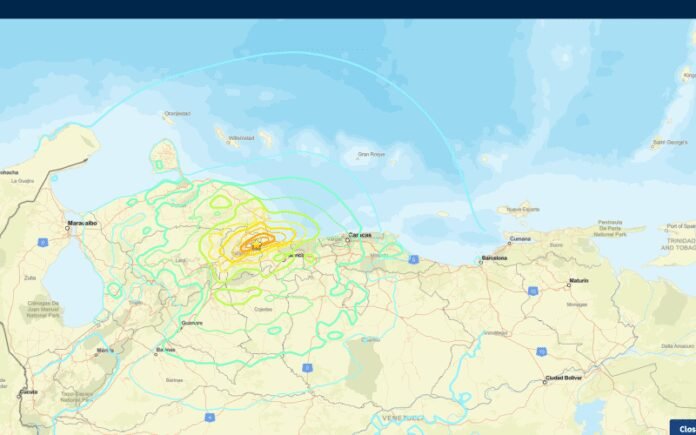
At least 32 people have been killed and more than 700 injured after two powerful earthquakes — measuring 7.2 and 7.5 — struck central Venezuela seconds apart, causing widespread destruction across Caracas and the coastal state of La Guaira.

Acting President Delcy Rodríguez declared a state of emergency, saying dozens of buildings had collapsed and rescue teams were “engaged in the arduous task of saving lives.” Schools, train services and the main airport in Maiquetía were shut due to structural damage.

The US Geological Survey confirmed the first quake was a foreshock, followed by a stronger mainshock in what it described as a rare seismic doublet. The quakes are among the strongest to hit Venezuela in more than a century.

Regional governments — including El Salvador, the Dominican Republic and Brazil — have offered rescue teams and humanitarian supplies. The United States said it is mobilising assistance, deploying disaster experts and preparing search‑and‑rescue support.

Residents fled into the streets as aftershocks continued, with authorities urging people to remain outdoors and avoid damaged buildings. A brief tsunami warning for nearby Caribbean islands was later lifted.

The full scale of destruction remains unclear as emergency crews continue to search through rubble in multiple neighbourhoods of the capital.

China built Indonesia’s nickel boom. Will it stay for the bust?

0
china-built-indonesia’s-nickel-boom.-will-it-stay-for-the-bust?
China built Indonesia’s nickel boom. Will it stay for the bust?

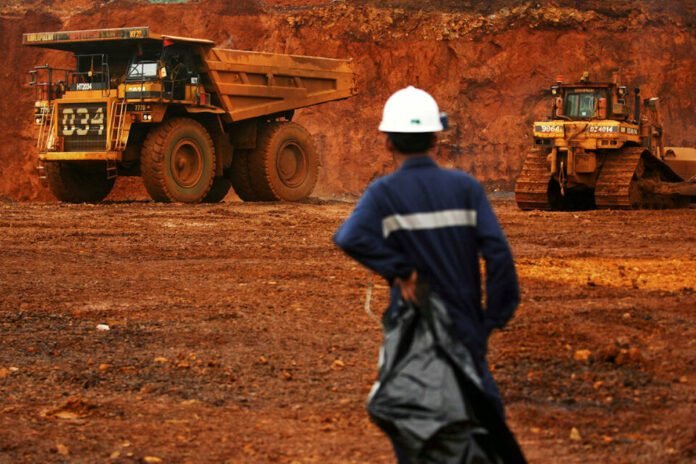
A worker watches as trucks load up raw nickel near Sorowako, Indonesia. Image: X Screengrab

When PT Gunbuster Nickel Industry (GNI) began operating in North Morowali, it represented everything Indonesia wanted its nickel industry to become.

Built with US$2.7 billion in Chinese investment, inaugurated by then-President Joko Widodo in 2021 and designated a National Strategic Project, the smelter was supposed to prove that Indonesia could move beyond exporting raw ore and become a manufacturing powerhouse.

Its latest troubles tell a different story. The Jakarta Commercial Court recently placed GNI under temporary debt restructuring after petitions from two shipping companies over unpaid obligations.

The timing is telling. GNI is affiliated with Jiangsu Delong Nickel Industry, one of China’s largest stainless steel producers, which has itself been struggling financially. Whether GNI ultimately recovers is less important than what its predicament says about the direction of Indonesia’s broad nickel industry.

The temptation is to see this as another example of Chinese companies overextending themselves overseas. But GNI’s troubles are only the most visible sign of stress in a sector that has been under pressure for months.

Earlier this year, the Indonesian Nickel Miners Association (APNI) identified three smelters facing serious operational difficulties: PT Huadi Nickel Alloy Indonesia in South Sulawesi, PT Wanxiang Nickel Indonesia in Morowali and GNI itself.

According to APNI secretary-general Meidy Katrin Lengkey, Huadi had stopped operating altogether, Wanxiang was left with only two active production lines and GNI had shut down five of its 20 lines.

GNI disputed that assessment and insisted operations remained normal. Even so, when several major smelters run into trouble at roughly the same time, the issue is unlikely to be confined to one company’s balance sheet. The roots of today’s problems lie as much in Jakarta as they do in Beijing.

For several years, Indonesia encouraged an extraordinary expansion of smelting capacity. Chinese investors responded exactly as policymakers had hoped, pouring billions of dollars into new processing facilities across Sulawesi and Maluku.

Then concern shifted toward oversupply. Falling nickel prices prompted the government to cut mining production quotas for 2026, reducing ore availability just as more smelters were coming online.

The contradiction should have been obvious. Indonesia restricted the supply of raw materials while continuing to expand the industry’s capacity to consume them. That mismatch is now showing up in company balance sheets.

The government’s response should not be to approve another wave of smelters in the hope that scale alone will solve the problem. The country has reached the point where success should no longer be measured by how many furnaces have been built, but by how much value Indonesia captures from each tonne of nickel it processes.

That means putting new smelter licenses on hold until the existing industry is on firmer footing. The priority should be to make current investments viable rather than to add more capacity to an already crowded market.

Indonesia’s comparative advantage increasingly lies further downstream — in battery materials, battery manufacturing and energy storage — not simply in producing more nickel pig iron.

This is also an opportunity for Danantara, Indonesia’s newly created sovereign wealth fund. Rather than viewing distressed smelters solely as private-sector problems, Indonesia’s sovereign wealth fund could selectively invest in facilities that remain strategically important but are financially constrained.

That is not about rescuing individual companies. It is about preserving industrial assets that will matter if Indonesia is serious about becoming part of the global electric vehicle and battery supply chain.

The episode also raises difficult questions for China’s role in Indonesia’s industrialization. Chinese companies deserve credit for helping Indonesia build its downstream nickel industry.

Few, if any, other countries were prepared to invest at the scale or speed that China did. But long-term partnerships are tested when markets wobble, not when prices are booming.

Indonesia, therefore, has every reason to expect clarity from its Chinese investors. If ore becomes scarcer or profit margins narrow, will they continue to expand their presence in Indonesia, or will investment simply migrate to new opportunities in Africa and elsewhere?

Jakarta cannot prevent companies from making commercial decisions, but it can expect investors in strategic industries to demonstrate a commitment that extends beyond the most profitable years.

That expectation cuts both ways. Indonesia cannot ask investors to think in decades while making policy one year at a time. The abrupt shift from encouraging smelter construction to restricting ore supply has exposed weakness and unpredictability in the country’s industrial planning.

GNI’s debt restructuring should therefore be seen as more than the misfortune of a single company. It is an opportunity to rethink a nickel strategy that has delivered remarkable growth but is now running into its own contradictions.

Indonesia’s next challenge is not building more smelters. It is about ensuring that those already standing continue to produce value — for the economy, for the energy transition and for the Chinese partnerships on which the industry was built.

Bhima Yudhistira Adhinegara is the executive director of the Center of Economic and Law Studies (CELIOS). Muhammad Zulfikar Rakhmat is the director of the China-Indonesia and MENA-Indonesia desks at CELIOS.

0FansLike
0FollowersFollow
0FollowersFollow
0SubscribersSubscribe
- Advertisement -
Google search engine

Recent Posts