33.6 C
London
Wednesday, June 24, 2026
Home Blog

Have Your SNAP Benefits Ever Been Stolen? Help ProPublica Investigate.

0
have-your-snap-benefits-ever-been-stolen?-help-propublica-investigate.
Have Your SNAP Benefits Ever Been Stolen? Help ProPublica Investigate.

Have you ever tried to use your electronic benefit transfer card to pay for groceries only to find that your SNAP benefits were gone? You may have been the victim of EBT theft. 

EBT theft happens when someone is able to get information off your EBT card in order to steal your Supplemental Nutrition Assistance Program benefits. You may not have immediately realized you were stolen from, only that there were less funds in your account than there should’ve been. If so, you’re not alone — it’s a widespread issue that affects hundreds of thousands of SNAP recipients each year.

If you think your benefits may have been stolen, we would like to hear from you. We need your help to understand the impact that EBT theft has on communities. 

To share your experience, fill out the survey below. Our reporters read every response and may follow up with you.

Don’t have SNAP benefits but know someone who does? You can also help by sending this form to them. If you have anything else you would like to share about SNAP or Medicaid generally, you can email us at [email protected].

Missouri’s Governor Is Opposed to Out-Of-State Funding, but Not for His Own Ballot Measure

0
missouri’s-governor-is-opposed-to-out-of-state-funding,-but-not-for-his-own-ballot-measure
Missouri’s Governor Is Opposed to Out-Of-State Funding, but Not for His Own Ballot Measure

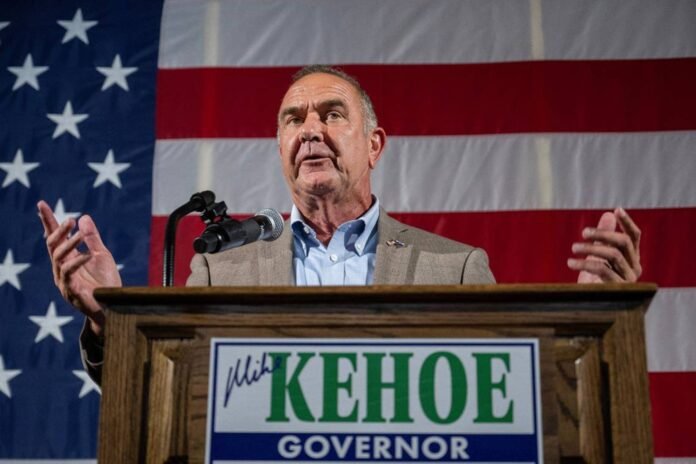
Missouri Gov. Mike Kehoe has spent months telling voters that the state constitution is under threat from “out-of-state special interests” using ballot initiatives to bypass the Republican-controlled legislature and enact major policy changes. The measures have included legalizing recreational marijuana, expanding Medicaid and restoring abortion rights

That argument is at the center of Kehoe’s support for Amendment 4, a measure in the Aug. 4 primary that would make it harder for Missourians to amend their constitution through citizen-led ballot initiatives.

“Our constitution shouldn’t be the victim of out-of-state special interests who spend millions to deceive voters and pass out-of-touch policies,” Kehoe said in a video posted to the social media site X.

But when it comes to a different constitutional amendment central to his own agenda, Kehoe is benefiting from financial support provided by a Delaware nonprofit that does not disclose the identities of its donors.

Kehoe has slated Amendment 5, which would put Missouri on a path toward eliminating the state income tax, on the ballot for the August election, along with Amendment 4.

While the governor and other proponents argue that phasing out the income tax would make Missouri more economically competitive and lower the overall cost of living, opponents say it would shift the tax burden onto working-class families by imposing new sales, use taxes on products and services not currently taxed, and increase Missouri’s existing sales tax rate. 

Critics also warn that the higher taxes could put Missouri retailers at a disadvantage, particularly in the Kansas City and St. Louis areas, where consumers can easily cross state lines to make major purchases. The cities are within a few miles of Kansas and Illinois, respectively.

A political action committee supporting Amendment 5, Missouri Promise PAC, has received $1.9 million from a nonprofit with almost the same name — Missouri Promise Inc. — that was incorporated late last year in Delaware. Neither the nonprofit nor the PAC discloses the identities or locations of the donors financing the campaign.

Three Facebook advertisements sponsored by an organization called Missouri Promise. Each ad campaigns in favor of a Missouri ballot measure, urging users to vote “Yes on Amendment 5” to phase out the state income tax and cut property taxes.
Ads like these on Facebook in support of Amendment 5 were paid for by Missouri Promise PAC. Facebook

Missouri Promise PAC has placed ads online and on TV. A 30-second ad follows the governor through a city neighborhood and a manufacturing plant before ending with him on horseback in cowboy attire.

“He made a promise,” the narrator says. “Now he’s going to deliver.”

Kehoe’s office did not respond to requests for comment.

Missouri Promise Inc. is led by Garrett Lott, a longtime Missouri Republican operative and political fundraiser, and Alex Melendez, a political consultant affiliated with Ohio-based Clark Fork Group, a firm that has provided consulting for conservative campaigns. 

Neither Lott nor Melendez responded to requests for interviews or to questions about the group’s operations. 

Marc Ellinger, a lawyer who serves as the treasurer of Missouri Promise PAC, said that the campaign had publicly disclosed all information required under Missouri law. Ellinger’s law office is also listed as the address for Secure Missouri, a Missouri nonprofit formed last year that recently contributed $1.5 million to the PAC.

Asked about the identities of donors to Missouri Promise Inc. and Secure Missouri, Ellinger said he could not address what disclosures the nonprofits themselves may eventually make about donors in their tax filings to the Internal Revenue Service. And he questioned whether any story would also examine financing behind opponents of Amendment 5. One campaign opposing Amendment 5 has been almost entirely funded by a $1,900,001 contribution from the Missouri Realtors PAC — a dollar more than Missouri Promise Inc.’s donation to the pro-Amendment 5 campaign. 

Ellinger suggested that the contribution was not necessarily more transparent than the funding behind Amendment 5, questioning whether the public knew the ultimate source of the Realtors’ money. But unlike Missouri Promise Inc. and Secure Missouri, which do not disclose their contributors, the Realtors’ political committee reports its donors in public filings with the Missouri Ethics Commission. Those filings allow the public to see who gave money to the committee and in what amounts.

Ellinger has been involved in Missouri tax-policy campaigns for years. In 2010, he served as spokesperson for a ballot initiative backed by St. Louis financier Rex Sinquefield that sought to require periodic votes on the 1% tax on wages paid by residents and workers in St. Louis and Kansas City. Missouri voters approved the measure, forcing both cities to submit the tax to voters every five years.

Sinquefield has spent millions of dollars over the past two decades supporting efforts to reshape Missouri’s tax system, including campaigns to eliminate the state income tax and curb local earnings taxes. Sinquefield did not respond to a request for comment.

Critics of both amendments said that Kehoe’s position is difficult to reconcile.

“The fact that the governor is benefiting directly from his face and image being plastered across Missouri TV screens by a dark money group from Delaware — or somewhere, not here — shouldn’t be lost on anyone,” said Mark Jones, a political strategist and spokesperson for the Missouri National Education Association, which opposes both amendments.

Ken Warren, a professor emeritus of political science at Saint Louis University and co-director for the SLU/YouGov Poll, said Kehoe’s complaints about out-of-state money shaping Missouri politics were somewhat surprising. Money from outside a state’s borders routinely flows into ballot measure campaigns and other political fights across the country. 

“It’s not good for democracy for dark money to be used,” Warren said. “Voters should be privy to where the money is coming from, whether it’s in state or out of state, because voters, when they make a choice, should know. So I agree in principle but note that he’s being hypocritical. Many Republican measures have been funded by out-of-state money and candidates. I don’t hold it against them because that’s the way campaigns are run.”

Taken together, the two amendments raise the stakes of what is typically a low-turnout August election. 

By placing them on the primary ballot rather than the November general election ballot, Kehoe ensured they would be decided by an electorate likely to be smaller and more Republican-leaning. The decision also separates the measures from a November ballot that will feature a high-profile fight over abortion rights, an issue that has proved capable of mobilizing large numbers of Missouri voters. 

The claim that outside interests have been driving constitutional change has become a familiar refrain among conservatives in Missouri and other Republican-led states, where voters have used ballot initiatives to enact policies that diverge from the priorities of GOP lawmakers. 

Republican lawmakers in Missouri and in other Republican-led states have responded by reversing voter-passed measures and making it more difficult for voters to amend state constitutions. 

Under Missouri’s current system, supporters of a citizen-initiated constitutional amendment must first collect signatures from voters across the state to qualify for the ballot. Once there, the proposal passes if it wins a simple majority of votes statewide. Under Amendment 4, citizen-led constitutional amendments would have to carry each of Missouri’s eight congressional districts in addition to winning statewide. As a result, a proposal that won statewide but fell short in a single district would fail, no matter how big the statewide margin. 

Critics say that requiring a measure to win in every district would require a level of political consensus that is increasingly rare in a state marked by sharp geographic and ideological divides. 

Supporters counter that such a requirement would ensure constitutional amendments reflect broad statewide agreement rather than support concentrated in a handful of population centers.

“There would have to be an even greater consensus to change the state’s primary document,” said state Rep. Brian Seitz, a Republican from Branson who supports Amendment 4. “It would give a consensus.”

The new requirement would apply only to constitutional amendments proposed by citizens through the initiative process. Amendments placed on the ballot by the Missouri General Assembly — like Amendments 4 and 5 — would still pass with a simple statewide majority.

That distinction lies at the center of the debate over Amendment 4. Critics argue the proposal would create two different sets of rules for amending the same constitution. If a statewide majority is no longer sufficient for citizens to amend the constitution, they ask, why should it remain sufficient when lawmakers propose an amendment? 

Supporters argue that citizen-led initiatives are especially susceptible to influence from wealthy donors and national interest groups, and therefore should be required to demonstrate support across Missouri’s diverse regions. Seitz said he is comfortable with the possibility that the higher standard could someday make it harder for Republicans to pass constitutional amendments if Democrats gain control of state government because, in his view, the goal is to make constitutional changes more difficult regardless of which party is in power.

Seitz said the legislature itself serves as a safeguard against one region of the state dominating another. Because lawmakers are elected from districts across Missouri, he argues that any proposal referred to voters has already been vetted by representatives from urban and rural areas alike.

“We’re not a democracy,” he said. “We are a representative republic.”

To make US-Iran deal stick, hold Trump’s war profiteers accountable

0
to-make-us-iran-deal-stick,-hold-trump’s-war-profiteers-accountable
To make US-Iran deal stick, hold Trump’s war profiteers accountable

Now that an initial diplomatic deal between the US and Iran has been signed and intensive negotiations are under way to fully end the war, Congress should do everything possible to ensure this agreement is fully implemented.

While the agreement is likely to have imperfections—thanks in large part to President Donald Trump harming US leverage and interests with a disastrous war—it would be a massive mistake to attack the deal simply because it comes from this president.

The key question to consider is what steps Congress can take to ensure it becomes a durable peace — rather than merely a pause before the next round of war.

With all the human loss, destruction, and global stakes, we must stop this war, but also ensure that the conditions of peace don’t lay the groundwork for a return to conflict—or inspire its repetition elsewhere. The political and financial cost of ending this war must fall on those who aided and profited from it. The question is whether we build the safeguards to make it last.

In June 2025, it was already clear that accepting President Trump’s false narrative of absolute victory (claiming to have fully obliterated Iran’s nuclear sites) would not end US-Iran tensions.

Any peace will remain fragile if the conditions that produced the war persist: the might-makes-right mindset that proved hollow against Iran’s strategic resilience; the preference for militarism over diplomacy, from Trump’s Joint-Comprehensive Plan-of-Action withdrawal to Biden’s failure to pursue a serious alternative to “maximum pressure” sanctions; the unconditional support for Israel even when it runs counter to US interests.

It is highly possible that during the initial 60 days of negotiations contemplated in the MOU, Israel will continue military action against Iran or in Lebanon to provoke a reaction and restart the cycle. The US cannot fully control what Israel would do. But it can stop aiding and abetting the war, which would make it far more difficult for Israel to sustain a campaign to spoil diplomacy.

Military action against Iran failed at producing any of its intended objectives, while it incurred costs that are in some cases irreversible and in others generational. The lives lost will not come back. The destruction of civilian infrastructure will shape Iranian society for decades.

And the war has granted perverse legitimacy to a brutal regime, recasting the government of the Islamic Republic not as the oppressor it is, but as David against Goliath, the underdog resistor against foreign aggression. Diplomacy produced better results at far lower cost on every measure that matters.

This war confirmed what few wanted to acknowledge: that US military bases across the Gulf, sold as a projection of strength, are also a profound vulnerability. Each base became a potential target, each host government a hostage to escalation.

For many Gulf governments, American military backing is a useful substitute for political legitimacy at home. Yet the war exposed the limits of that bargain: The same shield that promised security also turned them into targets.

Turning the Strait of Hormuz into a battlefield made this dynamic undeniable. Its closure hit energy markets and created rare pressure for de-escalation from Gulf elites who felt the costs directly. But while some elites were squeezed, others made billions.

The system is designed so the profiteers are never the ones paying the ultimate price. That is exactly why temporary market pressure is not a substitute for structural accountability to prevent future conflicts.

Those who profit from war have learned over many years that neither Republicans or Democrats will hold them accountable. A new Congress post November has a real opportunity to change that—to serve US interests, meaning the American people, not a select elite.

With US$72 billion spent on the Iran war, a $1.5 trillion military budget, and war contractors more powerful and unaccountable than ever, Congress needs to investigate all war profiteers, from arms contractors to companies like the drone firm backed by the Trump sons that sought to sell interceptors to the very Gulf states being attacked, a direct conflict of interest.

In a relatively new dystopian innovation in war capitalism during the war, prediction markets like Polymarket saw millions in bets on everything from the timing of strikes to casualty estimates. 

Suspected insider accounts netted $2.4 million on Iran War bets with a 98% win rate. This kind of betting on war outcomes by those with proximity to power blurs the line between forecasting and profiteering. It must also be addressed.

We do not even have to wait for elections in November to start this process. The growing support for War Powers resolutions with majority house support just this month, and the 40 senators backing the Joint Resolution of Disapproval to withhold certain arms from Israel, show what may be possible when Congress does its job. Congress should condition support, block escalation, and hold hearings on the legality of what has been done.

Such measures would serve a deeper purpose: signaling that a new Congress, and eventually a new administration, can offer something more than a return to the previous status quo: a set of concrete actions that change how war is authorized, how money is spent, and who benefits.

The problem is not a single president or party. It is the power structures that ensure those who profit from war never pay its cost, regardless of who holds office.

Corruption and war profiteering are not merely governance issues. They are theft from the American people, through unaccountable war spending, the unaffordable prices it produces, and an elite class that never pays for the policies it pushes.

A Congress that treats corruption and war profiteering as harm against the public and responds accordingly would demonstrate what a functioning democracy actually looks like.

Nancy Okail is the president and CEO of the Center for International Policy.

– Common Dreams

Pakistan PM: US-Iran memorandum excludes ballistic missile issue

0
pakistan-pm:-us-iran-memorandum-excludes-ballistic-missile-issue
Pakistan PM: US-Iran memorandum excludes ballistic missile issue

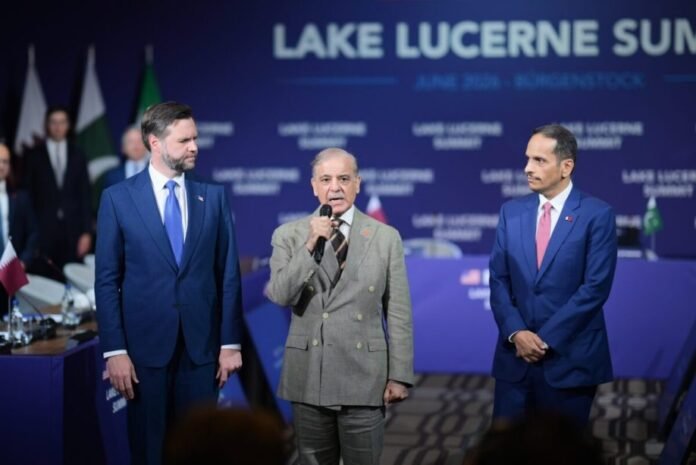
Pakistan Prime Minister Muhammad Shehbaz Sharif along with US Vice President J.D. Vance and Prime Minister and Foreign Minister of the State of Qatar Sheikh Mohammed bin Abdulrahman bin Jassim bin Jaber Al Thani deliver a speech prior to the commencement of the technical level talks between the US and Iran, hosted by Pakistan in Burgenstock, Switzerland, on June 21, 2026. [Government of Pakistan's X Account - Anadolu Agency]

Pakistan Prime Minister Muhammad Shehbaz Sharif along with US Vice President J.D. Vance and Prime Minister and Foreign Minister of the State of Qatar Sheikh Mohammed bin Abdulrahman bin Jassim bin Jaber Al Thani deliver a speech prior to the commencement of the technical level talks between the US and Iran, hosted by Pakistan in Burgenstock, Switzerland, on June 21, 2026. [Government of Pakistan’s X Account – Anadolu Agency]

Pakistani Prime Minister Shehbaz Sharif said on Tuesday that the memorandum of understanding signed between the United States and Iran, with Pakistani mediation, does not include any provisions related to Iran’s ballistic missiles.

Sharif made the remarks during a delegation-level meeting held as part of Iranian President Masoud Pezeshkian’s visit to Pakistan.

“There are no ballistic missiles in the Islamabad memorandum of understanding (MoU). The issue was never on the table, was never part of the agenda, and the Iranian side never even wanted to discuss it,” Sharif said.

He claimed that some parties around the world are seeking to scuttle the agreement.

“They don’t want the Iranian nation, a great nation, to come out of the ashes of war and touch the zenith of glory,” he said.

Turkey Gains Room To Maneuver as Israel Watches Its Regional Reach

0
turkey-gains-room-to-maneuver-as-israel-watches-its-regional-reach
Turkey Gains Room To Maneuver as Israel Watches Its Regional Reach


Giorgia Valente tracks a Middle East chessboard that has shifted after Iran’s weakening, leaving Turkey with more room to move—and more eyes watching its next steps.

The story centers on an Ankara-facing reading of the region after the US-Iran memorandum, the easing of tensions around the Strait of Hormuz, and the fading reach of Iran in Syria and beyond. Turkey, analysts say, has gained diplomatic weight with Washington and new space in Syria and Iraq. Yet that same rise has made Ankara more visible to Israel as a potential long-term strategic rival.

Barin Kayaoğlu, of the Social Sciences University of Ankara, describes Turkey’s response to the US-Iran memorandum as cautious relief. Ankara hopes the deal can lower shipping and energy risks, reopen room for trade with Tehran, and reduce the danger of wider war on its borders. But Kayaoğlu warns that Turkey does not want Iran to collapse. A fractured Iran could send refugees, armed groups, border insecurity, and Kurdish tensions toward Turkey.

Dr. Hande Ortay of KTO Karatay University offers the article’s more measured lens. She says Ankara does not see Israeli rhetoric as proof of imminent war, but as part of Israel’s broader concern over Turkey’s growing clout in Syria, the Eastern Mediterranean, the Palestinian arena, and regional diplomacy. Syria emerges as the main pressure point: Turkey wants a unified Syrian state; Israel wants freedom of action and a buffer against threats near its northern frontier.

Mustafa Metin Kaşlılar, of the Turkish Foreign Policy Research Center, gives the sharpest reading, arguing that Turkey’s voice against Israeli military action has boosted its regional standing. He also says Turkey and Israel still need quiet communication, especially in Syria, because a direct clash would carry heavy costs.

The full piece is worth reading because Valente captures the tension at the heart of Turkey’s moment: Ankara has gained influence after Iran’s setback, but influence in the Middle East rarely arrives without a bill attached.

Sony releases trailer for Taika Waititi’s Klara and the Sun

0
sony-releases-trailer-for-taika-waititi’s-klara-and-the-sun
Sony releases trailer for Taika Waititi’s Klara and the Sun

One of Taika Waititi’s greatest strengths as a director is his unique voice; he’s able to bring a light touch to tragedy (Jojo Rabbit) and a gentle sadness to offbeat comedy (Our Flag Means Death). That makes him an excellent choice to direct Klara and the Sun, based on the novel by Kazuo Ishiguro. Sony Pictures just released the first trailer, and it’s giving strong Hunt for the Wilderpeople vibes—a good thing, from my perspective, since that’s my favorite Waititi film.

Per the official premise:

Based on the bestselling novel from Nobel Prize winner Kazuo Ishiguro and written and directed by Academy Award winner Taika Waititi, Klara and the Sun introduces audiences to Klara (Jenna Ortega), an Artificial Friend who wants nothing more than to find the perfect home. When Klara meets Josie (Mia Tharia), each immediately senses a kindred spirit in the other. Josie has a fraught relationship with her mother (Amy Adams), and they’ve suffered great loss, but Klara’s innocent wonder and unwavering loyalty begin to heal the family and bring light to Josie’s complicated world.

The cast also includes Natasha Lyonne as an artificial friend (AF) store manager; Rachel House as the housekeeper, Melania; Aran Murphy (son of Cillian Murphy) as Josie’s best friend, Rick; and Sophia Bryant-Taukiri as Josie’s older sister, Sal. Steve Buscemi and Harry Greenwood also appear in as-yet-undisclosed roles.

Like Ishiguro’s novel, Klara and the Sun is set in an unidentified future, with Klara narrating. As a solar-powered AF, Klara has a special relationship with the sun, the source of her nourishment, but she also bonds with Josie when the girl and her mother are shopping for AFs. So Josie chooses Klara, despite the latter being an older model. Josie’s mom is skeptical but agrees on a trial basis, encouraged by the 20 percent discount. “Just remember everything you learned and hopefully they’ll come to love you like a member of the family or family dog,” Lyonne’s store manager tells Klara. Klara soon senses that something is wrong and turns to her old friend, the sun, for guidance. (Book readers will know what’s up.)

Ishiguro’s leisurely meditation on humanity’s relationship to technology might seem out of Waititi’s usual wheelhouse, but the director recently told Vanity Fair that he quickly realized he needed a new tonal approach to the material and adapted quickly to make his most dramatic film. “Sometimes I think you get caught up in, like, ‘Oh, people want the same tone as this other thing from eight years ago,’ and it’s nice to not have to cater to that so much or cater to your own expectations of what you think you want to do,” Waititi said.

Klara and the Sun hits theaters on October 23, 2026.

What is the ‘Omega Block’ causing Europe’s intense heatwave?

0
what-is-the-‘omega-block’-causing-europe’s-intense-heatwave?
What is the ‘Omega Block’ causing Europe’s intense heatwave?


The intense heatwave engulfing Western Europe, resulting in more than 40 deaths in France alone, is being sustained by a weather pattern known as an omega block.

Here is what ​you need to know about omega blocks and whether climate change means they could ‌become more frequent in the years ahead.

WHAT IS AN ‘OMEGA BLOCK’?

An omega block takes its name from the shape of the Greek letter Ω — with a bulge of warmer, settled high pressure held between two cooler low pressure ​systems.

The “blocking” element refers to how the high pressure area of warm air gets stuck. Under ​normal conditions, the jet stream carries weather systems steadily from west to east.

But ⁠during an omega block, that flow becomes disrupted and can buckle dramatically north and south, isolating ​the pressure systems. Weaker steering winds and temperature contrasts in the atmosphere contribute to these slow-moving, locked ​patterns.

The result is that hot, still air gets lodged over the same area. Omega blocks typically last between three and 10 days, but can persist for weeks.

WHAT HAPPENS DURING AN OMEGA BLOCK?

Under the high-pressure area in the centre, ​conditions become hot and dry. The high pressure also suppresses cloud formation, resulting in clear, sunny ​skies that allow temperatures to climb.

It is conditions like these that are baking France and Spain, where temperatures have exceeded ‌40 degrees ⁠Celsius (104 degrees Fahrenheit).

Regions in the low-pressure areas flanking the heatwave, meanwhile, are more likely to see cooler, rainy conditions.

Britain lies on the boundary between the high-pressure system and the cooler air to the northwest – producing intense heat in the south and east, and cooler, wetter conditions in the north and ​west, according to the UK ​Met Office.

IS ⁠CLIMATE CHANGE RESPONSIBLE?

Scientists have not yet agreed upon how climate change is affecting the frequency of blocking events like this one.

However, the global scientific consensus ​is clear that climate change is increasing the frequency and intensity of heatwaves.

Greenhouse ​gas emissions, ⁠mainly from burning coal, oil and gas, have heated the planet by about 1.3 C since pre-industrial times.

That warmer baseline means heatwaves reach higher temperatures.

Europe is now experiencing heatwaves that are 2 to 4 degrees ⁠hotter than ​they would have been without human-caused warming, said Clair Barnes, ​a research associate in extreme weather and climate at Imperial College London.

As a result, when patterns like omega blocks occur, the ​resulting heat can be significantly more intense.

The hidden amnesty in Indonesia’s cut-rate Patriot Bonds

0
the-hidden-amnesty-in-indonesia’s-cut-rate-patriot-bonds
The hidden amnesty in Indonesia’s cut-rate Patriot Bonds

Indonesia’s new sovereign investment vehicle, BPI Danantara, has officially launched the Patriot Bond, targeting an extraordinary 50 trillion rupiah (US$2.8 billion) in fundraising.

The special debt instrument consists of two tranches worth 25 trillion rupiah each: Series A with a five-year maturity and Series B with a seven-year maturity. The proceeds are expected to finance a range of large-scale strategic projects, from waste-to-energy facilities and renewable energy transitions to downstream industrialization initiatives across multiple sectors.

Yet behind the ambitious narrative of nation-building lies a feature that has sparked intense debate among market participants, independent analysts and financial academics: a fixed annual coupon rate of just 2% for both bond series.

That figure is far below prevailing market rates. Indonesia’s benchmark interest rate currently ranges between 5.25% and 5.8%, while retail government bonds such as SR023 offer yields of approximately 5.8% to 5.95%.

Such an issuer-friendly coupon structure would be virtually impossible to market to retail investors seeking market-based returns. The Patriot Bond is thus being distributed through a private placement mechanism aimed exclusively at major domestic corporations and conglomerates.

Cigarette manufacturer PT Hanjaya Mandala Sampoerna Tbk (HMSP), for example, became one of the first major buyers, purchasing 500 billion rupiah worth of the paper, evenly split between Series A and Series B.

From a corporate perspective, large business groups may be willing to absorb these low-yield bonds using idle capital because the return sacrificed relative to market rates can be viewed as a political transaction cost, one that helps secure legitimacy, regulatory goodwill and long-term business protection from the state.

This pragmatic calculation reflects a deeper anxiety about Indonesia’s current financing architecture. The government’s conventional fiscal capacity has been stretched by the rising costs of new populist programs, including the Free Nutritious Meals initiative, while the tax ratio is expected to remain stagnant.

To avoid breaching the legal budget deficit ceiling of 3% of GDP, the government has increasingly relied on Danantara as a centralized off-balance-sheet financing vehicle. Debt issued by Danantara is recorded as corporate debt rather than sovereign debt, preserving the appearance of fiscal stability.

Fiscal accounting engineering

Transferring debt obligations outside the state budget does not eliminate fiscal risk – it merely relocates it. If Danantara-funded mega-projects fail commercially, global financial markets and international creditors will still regard the Indonesian state as the ultimate bearer of risk.

The danger is amplified by the consolidation of major state-owned enterprises, including Pertamina, PLN and Telkom Indonesia, under Danantara’s umbrella. These corporations carry billions of dollars in international bond obligations, many of which contain strict change-of-control clauses.

Any transfer of majority ownership without careful negotiation could trigger technical defaults, allowing creditors to demand immediate repayment and potentially generating systemic liquidity shocks.

These structural concerns are reinforced by assessments from Moody’s Investors Service, which has argued that Danantara’s centralized management of mega-projects outside open-tender mechanisms represents a form of policy de-institutionalization.

The traditional technocratic roles of Indonesia’s National Development Planning Agency (Bappenas) and parliamentary oversight functions are becoming increasingly marginalized.

The government’s decision to revoke mining concessions and seize approximately four million hectares of private palm oil plantations for transfer to Danantara, without transparent criteria, may also be interpreted as an exercise of extrajudicial authority that weakens contractual certainty. When businesses can no longer accurately model regulatory risk, long-term investor confidence inevitably erodes.

From a macroeconomic perspective, if Danantara functions as a state entity engaged in quasi-fiscal activities, any investment losses it incurs will effectively become contingent liabilities of the government. The accumulation of debt and troubled projects outside the discipline of the national budget increases the probability of future defaults.

Over time, these liabilities could significantly inflate Indonesia’s public debt burden, strain government finances, and undermine long-term fiscal solvency. Signs of this pressure have already emerged.

The recent sharp depreciation of the rupiah beyond 18,000 per US dollar, marking a record low, reflects deep market concerns over the rapid expansion of quasi-fiscal liabilities and growing uncertainty about the government’s fiscal trajectory.

Red carpet for a hidden amnesty

The unusually lenient conditions attached to Patriot Bond purchases stem from Law No. 4 of 2026, which amended Indonesia’s Financial Sector Development and Strengthening Law (P2SK) and came into force on June 17, 2026.

Embedded within this sweeping legislative package is Article 50A, which grants extraordinary legal protection to Patriot Bond investors in the primary market. Buyers receive extensive immunity from criminal prosecution, special criminal investigations, including tax-related cases, and civil lawsuits.

Transaction records cannot be used as a basis for tax assessments or as evidence in court proceedings. The finance minister has further stated that the origin of funds invested in Patriot Bonds will not be scrutinized by national financial authorities.

A critical reading of Article 50A suggests that it effectively functions as a disguised amnesty, one that is considerably more generous and less demanding than Indonesia’s 2016 Tax Amnesty program.

Participants in the 2016 scheme were required to disclose their assets in detail and pay redemption fees. Under the Patriot Bond framework, however, holders may avoid disclosure requirements altogether, pay no redemption fee, enjoy sweeping legal protection over transaction data and still receive a state-backed 2% return.

This creates a profound legal and ethical contradiction. On one hand, middle-class taxpayers, workers, civil servants and small businesses are subjected to increasingly sophisticated tax surveillance systems such as Coretax and can face penalties for relatively minor administrative errors.

On the other hand, holders of undeclared wealth are offered a protective legal shield that allows them to conceal assets with minimal scrutiny. The contradiction becomes even sharper when compared with Indonesia’s export proceeds regulations, which require natural-resource exporters to repatriate 100% of their foreign-exchange earnings under stringent supervision.

While compliant businesses face ever-tighter oversight, individuals controlling opaque funds appear to receive an alternative pathway with remarkably few questions asked.

Doom loop effect

A policy that deliberately ignores the origin of invested funds weakens three foundational pillars of modern financial governance: Know Your Customer (KYC) standards, anti-money laundering (AML) enforcement and beneficial ownership transparency.

Under such a framework, KYC obligations risk becoming little more than procedural formalities. The result could be the transformation of Danantara into the largest legally sanctioned conduit for money laundering in Indonesia’s financial history.

Proceeds from corruption, narcotics networks, illegal online gambling operations or large-scale tax evasion could potentially be funneled into Patriot Bonds and re-emerge as ostensibly legitimate assets.

The long-term implications for Indonesia’s international reputation could be severe. The country only recently secured full membership in the Financial Action Task Force (FATF) after years of effort. Creating a legally protected channel with limited scrutiny risks raising concerns among global regulators and could ultimately jeopardize Indonesia’s standing within the international financial system.

Should confidence deteriorate further, long-term foreign institutional investors, many of whom operate under strict compliance mandates, could reduce their exposure to Indonesian assets. The consequence would be a higher sovereign risk premium and significantly more expensive borrowing costs in the years ahead.

The risks do not end there. Massive liquidity absorption by Danantara could crowd out private-sector financing, depriving productive businesses of capital needed for expansion and investment.

The final layer of vulnerability stems from the Financial Services Authority’s decision to permit Patriot Bonds to serve as collateral for bank lending, particularly at state-owned banks.

From a macroprudential standpoint, this creates a dangerous concentration of risk. If Danantara’s infrastructure or downstream projects fail financially, the market value of Patriot Bonds could collapse. Banks holding those bonds as collateral would then face a rapid deterioration in asset quality and a sudden surge in non-performing loans.

Losses originating from Danantara’s investment portfolio would quickly spread into the banking system, creating a classic doom loop in which fiscal distress and financial-sector instability reinforce one another.

To prevent such an outcome, Indonesia needs corrective measures, including stricter KYC and AML enforcement by the Financial Transaction Reports and Analysis Center (PPATK), explicit ring-fencing of sovereign guarantees and macroprudential limits restricting Patriot Bond collateral exposure to no more than 10% of a bank’s capital base.

Without such safeguards, a financing instrument designed to support development could ultimately become a source of systemic risk for Indonesia’s financial sovereignty.

Ronny P. Sasmita is senior analyst at the Indonesia Strategic and Economic Action Institution think tank and holds a Ph.D. from the University of Tokyo.

Early land animals skipped the tadpole phase

0
early-land-animals-skipped-the-tadpole-phase
Early land animals skipped the tadpole phase

For decades, biologists thought that early tetrapods, ancient vertebrates that started conquering the land over 300 million years ago, developed like modern amphibians—beginning their lives as purely aquatic tadpoles and then metamorphosing into terrestrial adults. “A lot of that comes from this old ‘scala naturae’ idea that you had fish that evolved into the next stage up, which were amphibians, and then amphibians evolved into the next stage up, which were reptiles that evolved into birds and mammals,” said Jason Pardo, a research associate at the Field Museum.

We’ve never had evidence that early tetrapods had an amphibian lifestyle; we have assumed it because it made intuitive sense. “It’s easier to make the transition from water to land if you’re already making that transition as part of your life cycle,” Pardo said. But now, a new Science study that Pardo co-authored with Arjan Mann (the Field Museum’s assistant curator of early tetrapods) shows our most basic assumptions about the first tetrapods that started living on land might be wrong.

Baby monsters

The researchers’ study focused mainly on embolomers, an extinct group of large predators that lived roughly 300 million years ago. Embolomers looked like a cross between a crocodile and an eel, with large skulls full of sharp teeth, followed by long, eel-like bodies. It had short, stocky limbs adapted mainly for paddling in water, but also capable of powering brief, clumsy excursions on land. They are thought to be one of the first vertebrates that made a partial transition from an aquatic to a terrestrial lifestyle. These animals could reach over three meters in length, but to understand the very beginning of their life cycle, scientists focused on examining some of their centimeter-scale babies.

One of the most important specimens in the study was an embolomere fossil designated FMNH PR 1082, which has been sitting in the collections at the Field Museum for decades. “I think it’s been there for about 50 or 60 years. It was originally found by a collector,” Mann said. The fossil was initially classified as a different tetrapod species due to its very small size. But armed with modern imaging techniques like electron microscopy, Pardo and Mann realized the fossil was in fact a very young embolomere that died before it could even consume its first meal. “We were able to identify features that linked it to embolomers like the shape of the vertebrae, the radial spines on the tail, and the nice little fangs,” Mann said.

The team also realized that this young embolomere looked like a miniature adult. What’s more, the individual had an abdominal yolk, a portion of the egg’s yolk sac that an embryo internalizes into its body cavity just before hatching to use as an energy reserve. (According to the researchers, this internal yolk mass suggests the ancestral tetrapod egg was relatively large and nutrient-dense, like the ones laid by reptiles and birds, as opposed to the small eggs laid by amphibians and fish.) Despite having hatched recently, the specimen lacked the external gills that tadpoles should have, and there were signs of ossification in its bones—it was a youngling, but it was no tadpole.

The lack of a tadpole phase so early in life suggested there was no metamorphosis in this animal’s life cycle, which led Pardo and Mann to hypothesize the development of early tetrapods was direct, as it is in the reptiles or mammals that appeared much later.

Then they started looking at other fossils to make sure the FMNH PR 1082 was not some kind of outlier. It turned out it wasn’t.

Skipping the tadpole

To confirm this wasn’t an isolated case, the team looked at a second, even smaller embolomere hatchling that also showed no signs of external gills. Once this was confirmed, the team started checking fossil collections in other museums across America, looking for youngsters of other ancient lineages to see whether the missing tadpole phase was a broader evolutionary trend. They found that a tiny hatchling of Phlegethontia longissima, a strange group of early tetrapods that lost their limbs entirely. These had a head dominated by large eyes and a partially ossified jaw—but again, no external gills.

Then, the researchers started looking further out along the evolutionary tree at earlier animals that hadn’t yet fully made the transition from fins to limbs. They focused on fossils that had historically been thought to be larval lungfish. Pardo and Mann’s re-examination revealed that these were young megalichthyids, early finned tetrapodomorphs that predated emobolomeres by 20 to 30 million years.

The smallest of these specimens measured just two centimeters. In a few cases, multiple individuals were preserved together in the same concretion, indicating that these animals may have remained in groups for some time after hatching. But even this species showed signs of direct development, with gradually ossifying bones rather than undergoing an abrupt, amphibian-like metamorphosis.

“We looked at a number of different species that represent different lineages in the transition from fish to tetrapods, and what we found is that none of them have anything that looks remotely like a tadpole,” Pardo said.

Without the tadpole phase and metamorphosis, though, the transition from water to land was probably way tougher than we thought.

Amphibian innovation

“We have lots of assumptions in our field that are based on relatively limited data,” Pardo said. One of those assumptions was that a distinct aquatic larval stage made the water-to-land transition easier for early tetrapods. While direct development, without undergoing a radical metamorphosis early in the animal’s lifecycle, might appear to be a simpler solution, it likely made the lives of young embolomers considerably harder.

The first challenge they faced was being tied to the same environment throughout their entire lifespan. Unlike amphibian tadpoles, they lived in the same ecological niche as larger juveniles and three-meter-long adults and had to compete with them for resources. Then there was the problem of supporting their body mass on land. The team noted in the paper that juvenile embolomers had weak, poorly developed limbs at hatching, which probably left them unable to move long distances across land. They were likely stuck wherever they hatched.

“It certainly makes it harder to not have a tadpole stage,” Pardo said.

He suggested that this is evidence that amphibian metamorphosis is not an ancient evolutionary stepping stone that enabled the first animals to expand out of water and conquer the land, which was then preserved in modern frogs or toads. Instead, it might be an evolutionary innovation that amphibians developed much later in response to challenges coming with the water-to-land transition.

“It may be something unique to amphibians that emerged as an adaptation to their specific way of living on land,” Pardo said. “Instead of being primitive, it may actually be something new, something novel and exciting. We’ve never thought about it this way.”

Science, 2026. DOI: 10.1126/science.aeb7635

Michael Jackson’s Bizarre Final Obsession Revealed

0
michael-jackson’s-bizarre-final-obsession-revealed
Michael Jackson’s Bizarre Final Obsession Revealed


Michael Jackson spent his life thrilling the world. But behind the curtain, sources claim the King of Pop had one final, jaw-dropping obsession: living forever.

The Thriller superstar, who died on June 25, 2009, at just 50 years old, was reportedly fascinated by the idea of human cloning and believed science could one day help him carry on his legacy long after death.

According to insiders, Jackson didn’t just daydream about immortality. He allegedly explored the idea seriously and even discussed making sure his DNA could be preserved for the future.

“Michael was very excited about having himself cloned,” one source close to the music legend claimed. “He wanted to live forever.”

The wild story reportedly traces back to 2002, when Jackson attended a cloning conference in Las Vegas with his longtime friend, famed illusionist Uri Geller.

Jackson’s former chauffeur, Al Bowman, said he drove the pair to the event and watched the pop icon leave completely electrified by what he had heard.

“He bounced out of that conference like a small child,” Bowman recalled. “He was smiling and on a high.”

According to Bowman, Jackson was especially intrigued by the Raëlians, a controversial group that believes human cloning could be the key to eternal life.

Bowman claimed he overheard Jackson and Geller talking in the back of the limo after the event, with Jackson allegedly saying he wanted a “mini-version” of himself to carry on his legacy.

“He was hoping that he could live forever,” Bowman said.

The chauffeur also claimed Jackson grabbed Geller by both arms and told him, “I really want to do it, Uri, and I don’t care how much it costs.”

For Jackson, the idea reportedly wasn’t new. Bowman, who worked for the Billie Jean singer for a decade, said Jackson had been fascinated by cloning ever since Dolly the sheep made worldwide headlines in 1996.

But the most sensational claim came from Michael C. Luckman, director of the New York Center for Extraterrestrial Research, who alleged Jackson made secret “safe deposits” of his sperm at three medical facilities around the world.

Luckman said he was told about the alleged deposits by late celebrity fashion designer Andre Van Pier, who had designed stage costumes for both Jackson and his sister Janet.

According to Luckman, Van Pier learned about the alleged futuristic plan through a source connected to a longevity center in Panama.

“Michael’s wish was the replicas would be able to carry on his legacy after his passing,” Luckman claimed.

Jackson’s death stunned the world in 2009. The Man in the Mirror singer died after suffering acute propofol intoxication, and his death was later ruled a homicide.

His personal physician, Dr. Conrad Murray, was convicted of involuntary manslaughter in 2011 and sentenced to four years in prison.

Even after death, Jackson’s empire continued to make staggering money. In 2016, his estate reportedly earned $825 million, marking the highest annual total ever recorded for a celebrity by Forbes at the time.

Still, Luckman claimed Jackson wanted more than a financial legacy.

Despite having three children — Prince, Paris and Prince Michael II — Jackson was allegedly obsessed with the idea that a scientific replica could one day continue his work.

Luckman has even claimed samples connected to Jackson were moved from a Los Angeles fertility clinic to the United Kingdom for safekeeping, raising his belief that the cloning dream may not be over.

“Michael wanted this to happen, and spent time and money trying to achieve his goal,” Luckman said.

He also suggested Jackson might not be the only dead icon people could try to “bring back” through science, pointing to the case of a Canadian dentist who purchased one of John Lennon’s teeth and publicly discussed using its DNA.

Whether Jackson’s alleged cloning dream was fantasy, science fiction or a secret plan that went further than anyone imagined, one thing is clear: the King of Pop’s strange fascination with immortality remains one of the most bizarre chapters in his already legendary life.

0FansLike
0FollowersFollow
0FollowersFollow
0SubscribersSubscribe
- Advertisement -
Google search engine

Recent Posts