26.8 C
London
Sunday, June 21, 2026
Home Blog

Efforts to save kelp forests from ocean warming are ramping up

0
efforts-to-save-kelp-forests-from-ocean-warming-are-ramping-up
Efforts to save kelp forests from ocean warming are ramping up

This story was originally published by Yale E360 and is reproduced here as part of the Climate Desk collaboration.

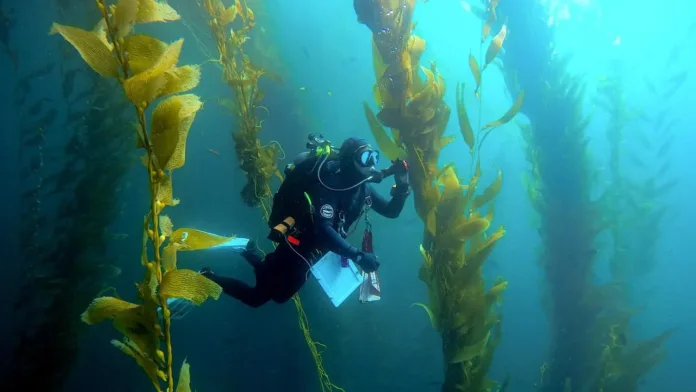
In the coastal waters off British Columbia, tribal volunteers from the Haida Nation dive for purple sea urchins amid a dense forest of rippling golden-brown kelp fronds. Sunlight filters through the canopy, creating a mesmerizing dance of light and shadow, as rays and sea lions wend through the kelp maze, sharks glide past, and bright orange garibaldis dash between the swaying fronds.

Kelp forests are biodiversity hot spots teeming with a colorful variety of seaweeds, sponges, crustaceans, and other small ocean animals, many of them found nowhere else. At one time, vast kelp beds grew in nutrient-rich shallow waters along roughly a third of the world’s coastlines, where they helped to reduce the strength of waves, minimized coastal erosion, and provided shelter to fish, invertebrates, and marine mammals. 

Today, however, many kelp forests are on life support, victims of water pollution from terrestrial agriculture and coastal development, bottom trawling for fish, and an explosion of kelp-devouring urchins, like those the Haida volunteers are collecting as part of an eradication program. But perhaps the most important driver of kelp decline is the rapid warming of the ocean. 

Healthy kelp forests need cool, nutrient-rich seawater to survive. As ocean waters warm, kelp can no longer inhabit parts of their former range. The crisis is escalating quickly. Kelp forests are vanishing twice as fast as coral reefs and four times faster than tropical rainforests. An estimated 40 percent to 60 percent of kelp forests worldwide have been lost or significantly degraded in the last 50 years. These precipitous declines typically received far less scientific scrutiny than higher-profile ecological crises. But kelp has gradually been getting more attention as scientists and the environmental community come to recognize the value of the carbon that coastal ecosystems, including kelp forests, can capture.

A 2023 literature review of more than 180 papers that examined the potential for kelp to store carbon suggested that the climate benefits of these underwater forests may have been “grossly underestimated,” says Albert Pessarrodana, a research fellow at the University of Western Australia and the review’s lead author. “Kelps are one of the fastest growing plants on the planet,” he said in an email interview, “uptaking as much carbon as tropical rainforests per unit of area.” 

A scuba diver uses a net on the ocean floor

A diver collects urchins from a barren near Tromso, Norway, to allow kelp to recover. Peter Leopold / Urchinomics

Much of the carbon that kelp sequesters ends up being released back into the marine environment in the form of leaf litter (kelp, which is a macroalgae, has leaflike structures called blades that are its organs of photosynthesis.) This detritus is typically ingested by fish and other marine organisms and excreted in a matter of days. Still, a small percentage of it ends up in the deep ocean where it remains for centuries, or even millennia. Roughly 62 million tons of carbon is carried into the deep ocean by coastal currents each year, according to two studies published in 2024.

“Unfortunately,” Pessarrodana says, “excessive warming can either kill kelps or severely curtail their growth, reducing their ability to uptake carbon.”

To counter the decline, scientists around the world are breeding new kelp varieties that they transplant as saplings into kelp habitat. The Scripps Institution of Oceanography and the San Diego Zoo have begun using artificial intelligence to digitally replicate kelp ecosystems and assess their vulnerability to climate change. Their findings will help focus resources on areas that are most likely to be saved. The organizations have also established a biobank to preserve kelp varieties for potential use in kelp farming and restoration projects. Researchers at the Woods Hole Oceanographic Institution on Cape Cod are using selective breeding to develop kelp strains with a higher tolerance to warming waters. Similar efforts are underway in China and Australia.

The Nature Conservancy’s Scott Breschkin has been working for the past year to eliminate urchins and replant beds of golden kelp on Australia’s Great Southern Reef, an interconnected system of rocky kelp reefs spanning about 5,000 miles of coastline across southern Australia and the island of Tasmania. Though less famed than the Great Barrier Reef, it is equally biodiverse, boasting thousands of species, some of which are still unknown to science. 

As Australia’s coastal waters warm, long-spined urchins are expanding their ranges, leaving virtually lifeless urchin barrens in their wake. “Once the reef transitions to an urchin desert, it is very hard to flip it back to a productive kelp habitat,” Breschkin explained, adding that urchins can persist for decades in a zombie-like state, awakening only occasionally to mow down any kelp sprouts that may appear, which makes it virtually impossible for kelp forests to recover. Eradicating sea urchins, he says, is a critical first step for kelp restoration.

Bull kelp grow on a deep reef in Monterey Bay, California, that had been a sea urchin barren the previous year. Michael Langhans

Jono Wilson, the director of ocean science for The Nature Conservancy’s California chapter, works with KelpWatch.org, a partnership of academic institutions and government agencies that is using satellite imagery and drones to monitor the distribution of canopy-forming kelps along California’s Pacific coast and assess where kelp restoration efforts have been successful. These undersea forests are often characterized by boom-and-bust cycles, flourishing and retreating as ecological conditions change, Wilson says. But recent climate-driven losses have been unprecedented. A 2013 to 2015 ocean warming event known as “the Blob” reduced kelp populations in Northern California by 95 percent. 

Since 2015, water temperatures in California’s kelp forests have not dropped below 57 degrees F, a rough threshold beyond which kelp cannot thrive. Higher temperatures disrupt the kelp reproductive cycle, affecting their ability to produce viable offspring. Like corals, kelp bleaches when stressed, losing the chlorophyll that allows it to photosynthesize. 

Kelp diebacks transform their ecosystems. “Kelp provide habitat and food for thousands of species,” says Wilson. “They are nurseries for abalone and economically important fish species like cod and rockfish. They are meccas for kayakers and recreational scuba divers.” The Nature Conservancy estimates that kelp forests contribute $250 million in economic value to California annually.

While kelp forests in Southern California are faring reasonably well — the dominant species, called giant kelp, grows quickly and can reach up to 200 feet tall — purple sea urchins are wiping out kelp beds dominated by bull kelp along the coasts of Central and Northern California. Wilson and his team are exploring ways to control those urchins. They are developing new kinds of more efficient urchin traps — round mesh devices baited with fish — and working with fertilizer companies to create a viable market for urchin shells, which contain calcium, nitrogen, and other plant nutrients. The Norwegian seafood firm Ava Ocean is currently using crushed urchin shells to produce a mineral-rich alternative to traditional bone-meal fertilizers. 

There have also been attempts to support the native sunflower sea star, a voracious consumer of sea urchins. Populations of this predatory starfish, which can grow as large as a car tire, have been reduced by 90 percent since the outbreak, in 2013, of sea star wasting disease. 
Read Next

Scientists recently isolated the bacterium responsible for the epidemic, giving them a better shot at helping sea stars recover. Aquariums in California and Oregon have successfully treated their affected sea stars with antibiotics, and scientists are hoping to learn how to breed disease-resistant sunflower starfish that can be released into the wild.

There have also been efforts since the late 1980s to breed and reintroduce sea otters, another urchin predator, to the coastal waters where they once flourished. Driven to the edge of extinction by the fur trade in the 19th and early 20th centuries, otters have now substantially recovered in parts of their former range. They now number well over 3,000 individuals in Northern California. Otters are also staging a comeback along the coast of Washington and British Columbia. Kelp forests where the otters have been released are faring noticeably better than kelp forests without otters.

So far, kelp restoration projects in the U.S. have been small scale, with most covering less than a hundred acres. Such projects are “very expensive and subject to zoning laws that make [them] hard to initiate,” says Kyle Cavanaugh, a coastal geographer at the UCLA Institute of the Environment and Sustainability. “These localized projects need to be scaled up if we hope to turn the tide on the loss of kelp habitat.”

Kelp restoration is happening on a far larger scale in East Asia. More than half of South Korea’s kelp forests have been lost or badly degraded over the past century. But thanks to the world’s largest kelp restoration projects, the nation now boasts 71,660 acres of kelp forest. Its goal is to eventually re-green 75 percent of its coastline. Farmers in South Korea harvest nearly a billion dollars worth of seaweed each year, cutting only the upper fronds and blades of the macroalgae. There are also more than 700 restoration projects in Japan where kelp, known as kombu, is a staple in Japanese cuisine, most commonly used in soups.

Kelp’s value as a food source, and to a lesser extent as an ingredient in cosmetics, skincare products, and biodegradable packaging, may be one key to its survival. But if we don’t find a way to slash emissions of greenhouse gases, experts say, the long-term prospects of kelp and other key ocean ecosystems may be bleak. “It’s likely that we’ll see more destructive marine heat waves and warmer waters overall,” says Cavanaugh. “Beds of far less-productive turf algae will replace giant kelp and prevent it from becoming reestablished.” 

In Maine and in other coastal regions around the world, carpet-like turf algae is already replacing kelp, according to a paper published last month by the Bigelow Laboratory for Ocean Sciences in Maine. This is “a radical ecological transformation,” says the University of Maine’s Shane Farrell, the study’s lead author. “The good news is we now understand what’s driving this shift, and this will help us predict when and where it will happen next and create different conservation strategies to combat it.”


Rainbow Antipasto Pasta Salad

0
rainbow-antipasto-pasta-salad
Rainbow Antipasto Pasta Salad

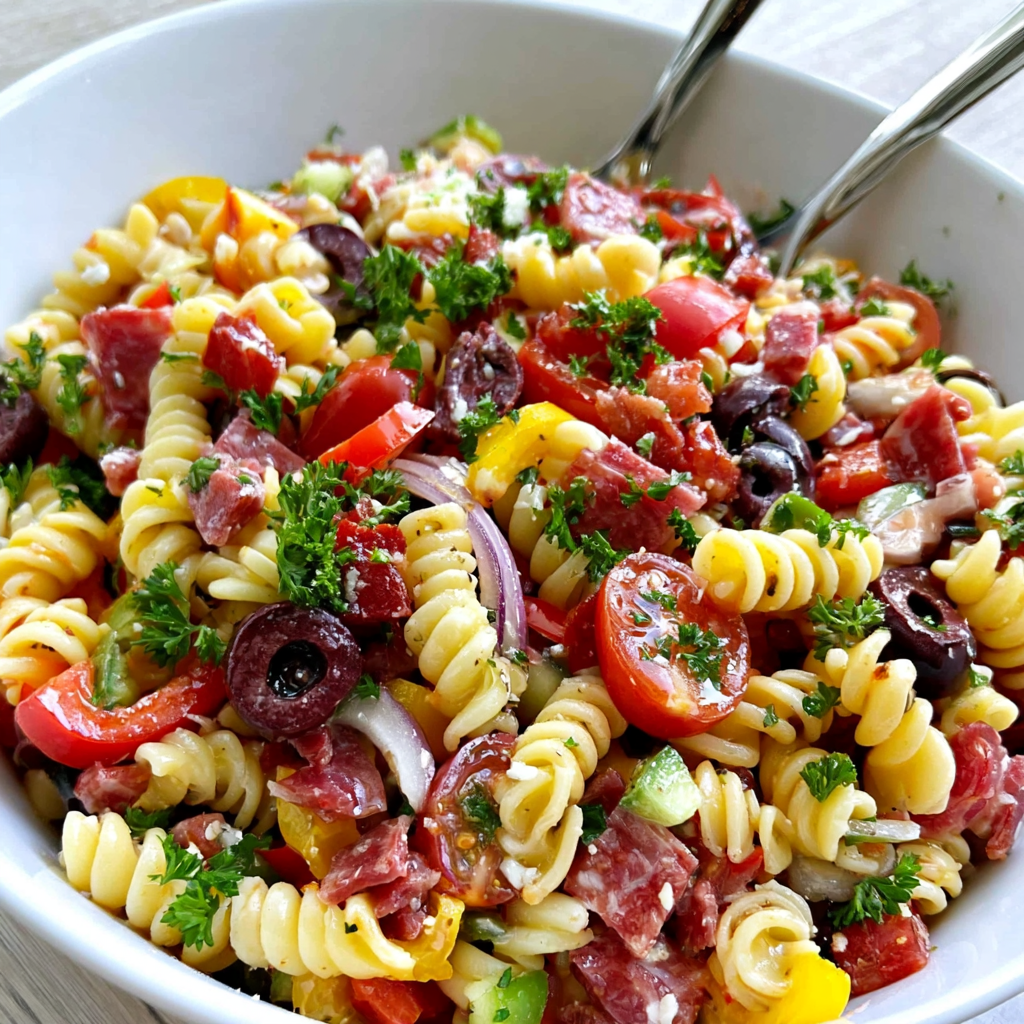
Rainbow Antipasto Pasta Salad is colorful, bold, easy to make, and packed with classic antipasto flavor. It combines tender pasta with salami, cheese, tomatoes, olives, artichoke hearts, pepperoncini, roasted red peppers, kale, red onion, and a zesty Italian herb vinaigrette.

This is the perfect pasta salad for potlucks, picnics, parties, summer dinners, or using up leftover antipasto platter ingredients. It is fresh, savory, tangy, slightly spicy, and full of texture in every bite.

Why You’ll Love This Antipasto Pasta Salad

  • Ready in about 30 minutes
  • Great way to use leftover antipasto ingredients
  • Colorful and perfect for parties
  • Easy to customize
  • Tossed with homemade Italian vinaigrette
  • Great for potlucks and meal prep
  • Can be served cold or at room temperature
  • Packed with sweet, salty, tangy, and savory flavors

Antipasto pasta salad is a pasta salad inspired by an Italian antipasto platter. Traditional antipasto platters often include cured meats, cheeses, olives, marinated vegetables, peppers, and other small bites.

This recipe takes those same ingredients and tosses them with pasta and a simple Italian herb vinaigrette. The result is a hearty, colorful pasta salad that works as a side dish, light lunch, or party dish.

Ingredients

For the Pasta Salad

  • 1 pound dry pasta, such as tri-color rotini
  • 4 to 6 cups chopped antipasto ingredients
  • 1 cup chopped fresh kale, massaged
  • ¼ small red onion, thinly sliced

Antipasto Ingredient Ideas

Use any combination of:

  • Diced salami
  • Mozzarella cubes
  • Cherry tomatoes
  • Olives
  • Artichoke hearts
  • Pepperoncini
  • Roasted red peppers
  • Provolone cheese
  • Marinated mushrooms
  • Grilled vegetables
  • Sun-dried tomatoes
  • Toasted nuts
  • Diced cantaloupe
  • Grapes
  • Figs

For the Italian Herb Vinaigrette

  • ⅓ cup extra virgin olive oil
  • ¼ cup red wine vinegar
  • 2 teaspoons Italian seasoning
  • ½ teaspoon kosher salt
  • ½ teaspoon freshly cracked black pepper
  • ¼ teaspoon garlic powder

Ingredient Notes

Pasta

Short pasta shapes work best because they hold the dressing and mix well with the chopped ingredients. Rotini, penne, fusilli, bowties, or shells are all great options.

Salami

Salami adds salty, savory flavor. You can also use pepperoni, prosciutto, soppressata, or leave the meat out for a vegetarian version.

Cheese

Mozzarella, provolone, fontina, or cubed cheddar can all work. Mozzarella gives the salad a mild, creamy bite.

Olives

Use black olives, green olives, Kalamata olives, or a mix for briny flavor.

Marinated Vegetables

Artichoke hearts, roasted red peppers, pepperoncini, and marinated mushrooms add tangy, bold flavor.

Kale

Massaged kale adds color and freshness. If you prefer, use spinach, arugula, or romaine instead.

Red Onion

Thinly sliced red onion adds sharpness and crunch. Use less if you want a milder flavor.

How to Make Rainbow Antipasto Pasta Salad

Step 1: Cook the Pasta

Bring a large pot of generously salted water to a boil.

Cook the pasta according to package directions until al dente.

Drain the pasta and rinse it under cold water for 20 to 30 seconds to stop the cooking.

Set aside.

Step 2: Make the Vinaigrette

In a small bowl or jar, combine olive oil, red wine vinegar, Italian seasoning, salt, black pepper, and garlic powder.

Whisk or shake until well combined.

Step 3: Massage the Kale

Add the chopped kale to a large mixing bowl.

Drizzle with about 2 tablespoons of the vinaigrette.

Massage the kale with your hands for about 1 minute, until it softens and turns darker green.

Step 4: Add the Pasta and Antipasto Ingredients

Add the cooked pasta to the bowl with the kale.

Add the chopped salami, cheese, tomatoes, olives, artichoke hearts, pepperoncini, roasted red peppers, and red onion.

Step 5: Toss Everything Together

Pour the remaining vinaigrette over the pasta salad.

Toss until everything is evenly coated.

Step 6: Serve

Serve immediately, or cover and refrigerate until ready to serve.

For best flavor, let the pasta salad chill for 30 minutes before serving.

Tips for the Best Antipasto Pasta Salad

Cook the Pasta Al Dente

Soft pasta can become mushy after sitting in dressing. Al dente pasta holds up better.

Rinse the Pasta

Rinsing with cold water stops the cooking and cools the pasta quickly.

Cut Ingredients Bite-Sized

Small, even pieces make the pasta salad easier to eat and help every bite taste balanced.

Massage the Kale

Massaging kale makes it softer, less bitter, and better for pasta salad.

Taste Before Serving

After chilling, pasta can absorb some dressing. Add a splash of olive oil, vinegar, or extra seasoning if needed.

Variations

Vegetarian Antipasto Pasta Salad

Leave out the salami and add extra cheese, olives, artichokes, roasted peppers, or marinated vegetables.

Spicy Antipasto Pasta Salad

Add extra pepperoncini, crushed red pepper flakes, or spicy salami.

Mediterranean Pasta Salad

Use feta, Kalamata olives, cucumbers, tomatoes, and chickpeas.

Italian Deli Pasta Salad

Add salami, pepperoni, provolone, mozzarella, roasted peppers, olives, and pepperoncini.

Extra Fresh Version

Add basil, parsley, arugula, cucumber, or fresh cherry tomatoes.

What to Serve with Antipasto Pasta Salad

This pasta salad pairs well with:

  • Grilled chicken
  • Burgers
  • Sandwiches
  • Garlic bread
  • Pizza
  • Grilled vegetables
  • Italian meatballs
  • BBQ dishes
  • Picnic foods
  • Charcuterie boards
  • Soup
  • Fresh fruit

Make-Ahead Instructions

This pasta salad is great for making ahead.

Prepare the salad and refrigerate it for up to 24 hours before serving.

If making it ahead, reserve a little vinaigrette to toss in right before serving so the salad tastes fresh and flavorful.

Storage Instructions

Store leftover antipasto pasta salad in an airtight container in the refrigerator for up to 3 days.

Stir before serving.

If the salad seems dry, add a small drizzle of olive oil or extra vinaigrette.

Frequently Asked Questions

Can I Make This Pasta Salad Ahead of Time?

Yes. It tastes great after chilling and can be made up to 24 hours ahead.

What Pasta Works Best?

Rotini, fusilli, penne, bowties, or shells work best because they hold dressing well.

Can I Make It Vegetarian?

Yes. Skip the salami and add extra vegetables, cheese, beans, or olives.

Can I Use Bottled Italian Dressing?

Yes. Homemade vinaigrette gives the freshest flavor, but bottled Italian dressing can be used in a pinch.

How Long Does It Last?

It will keep in the refrigerator for up to 3 days.

Recipe Information

Prep Time: 18 minutes
Cook Time: 12 minutes
Total Time: 30 minutes
Servings: 6 to 8

Final Thoughts

Rainbow Antipasto Pasta Salad is colorful, easy, and full of bold Italian-inspired flavor. It is a great way to turn leftover antipasto ingredients into a fresh and satisfying pasta salad.

With tender pasta, savory meats, creamy cheese, briny olives, tangy vegetables, fresh kale, and zesty vinaigrette, this salad is perfect for gatherings, potlucks, picnics, or simple make-ahead meals.

1st round of 4-party Iran-US talks concludes in Switzerland

0
1st-round-of-4-party-iran-us-talks-concludes-in-switzerland
1st round of 4-party Iran-US talks concludes in Switzerland

The first round of four-party talks involving Iran and the US, with mediation by Qatar and Pakistan, has concluded in Switzerland, Iran’s semi-official Fars news agency reported Sunday, citing a source familiar with the Iranian negotiating team.

According to the source, the initial round of the Swiss-hosted negotiations has now been completed.

The meeting was suspended after approximately 80 minutes of talks to allow the participating delegations to conduct internal consultations, the source added.

No further details were immediately released on when the next session would begin.

READ: ‘Great progress’ made in talks with Iran, Vance says as talks kick off in Switzerland

Earlier in the day, Qatar announced the start of US-Iran negotiations in Switzerland with the participation of Qatari and Pakistani mediators to discuss the implementation of the terms of an interim agreement between the two sides.

US and Iranian delegations arrived early in Switzerland for technical negotiations under the memorandum of understanding that was signed on Wednesday to end the months-long Middle East conflict and reopen the Strait of Hormuz.

The talks in Burgenstock are led by US Vice President JD Vance and Parliament Speaker Mohammad Bagher Qalibaf and Foreign Minister Abbas Araghchi on the Iranian side, under Pakistani mediation.

READ: US, Iranian delegations arrive in Switzerland for technical talks

Sugar Cookie Berry Cobbler

0
sugar-cookie-berry-cobbler
Sugar Cookie Berry Cobbler
Sugar Cookie Berry Cobbler served in a white bowl with vanilla ice cream, blueberries, and jammy mixed berries on a white marble background
Warm Sugar Cookie Berry Cobbler with sweet berries, golden cookie topping, and a scoop of vanilla ice cream.

Print Friendly, PDF & Email

Sugar Cookie Berry Cobbler is the kind of easy dessert that feels almost too simple to be this good. Sweet summer berries bake until juicy and jammy, while pieces of sugar cookie dough turn golden, buttery, and tender on top. Then, of course, a scoop of vanilla ice cream melts right into all those warm berry juices.

It is cozy, bright, and a little nostalgic, but still modern enough for a quick weekend dessert. Even better, this recipe uses just three main ingredients, so it is perfect when you want something homemade without pulling out half the pantry. Fresh berries are beautiful here, but frozen berries work just as well. That makes this cobbler easy to love all year long.


Sugar Cookie Berry Cobbler served in a white bowl with vanilla ice cream, blueberries, and jammy mixed berries on a white marble background
Warm Sugar Cookie Berry Cobbler with sweet berries, golden cookie topping, and a scoop of vanilla ice cream.

Recipe Yield: 6 servings

INGREDIENTS

4 cups mixed berries, fresh or frozen
1 tbsp fresh lemon juice
16.5 oz refrigerated sugar cookie dough, chilled
Vanilla ice cream, for serving optional

INSTRUCTIONS

1. Prep the oven:
Preheat the oven to 350°F. Lightly grease an 8×8-inch baking dish.

2. Add the berries:
Spread the berries evenly in the baking dish. Drizzle with lemon juice, then gently stir to coat.

3. Add the cookie topping:
Break the chilled sugar cookie dough into small uneven 1/2- to 1-inch pieces. Flatten a few pieces slightly, then scatter them over the berries, leaving small gaps for the juices to bubble through.

4. Bake the cobbler:
Bake for 40 to 48 minutes, or until the berries are bubbling in the center and the cookie topping is golden in spots. If using frozen berries, bake near the longer end.

5. Let it rest:
Cool for 20 minutes before serving. This helps the berry filling thicken slightly and keeps the cookie topping tender.

6. Serve warm:
Spoon into bowls and top with vanilla ice cream, if desired.


Helpful Tips to Perfect This Recipe

  • Do not thaw frozen berries: Frozen berries release plenty of juice as they bake. Add them straight from the freezer, and simply bake a few minutes longer if needed.
  • Keep the cookie dough pieces uneven: Smaller pieces bake into soft crumble-like bits, while larger pieces stay tender and cookie-like. That mix gives the cobbler the best texture.
  • Let it rest before serving: The filling will look very juicy right out of the oven. After 15 minutes, it settles into a warm, spoonable berry cobbler.

Rate This Recipe

Tried this recipe? Your rating helps others and means so much.

IDF Says Gaza Strikes Killed Hamas Financiers and Al Jazeera Cameraman Who Was a Sniper 

0
idf-says-gaza-strikes-killed-hamas-financiers-and-al-jazeera-cameraman-who-was-a-sniper 
IDF Says Gaza Strikes Killed Hamas Financiers and Al Jazeera Cameraman Who Was a Sniper 


The Israel Defense Forces (IDF) said it killed two senior terrorist operatives in southern Gaza last week who allegedly helped transfer more than half a billion shekels to Hamas, while also identifying an Al Jazeera cameraman killed in a separate strike as a Hamas sniper. 

According to the military, Hussein Qadra and Muhammad Farra, operatives in the military wings of Hamas and Palestinian Islamic Jihad, were involved in a financial infrastructure used to move funds into the Gaza Strip. 

The IDF said the network operated under Hamas direction and facilitated the transfer of more than half a billion shekels to the group’s military wing. 

Qadra and Farra allegedly managed the operation together. The military said the network relied on dozens of couriers and money exchangers operating in Turkey and Gaza to move funds. 

According to the IDF, the money was used to pay Hamas operatives and finance attacks. 

The announcement came as Al Jazeera reported Saturday that six people were killed in Israeli strikes in Gaza, including one of its cameramen. 

Responding to the report, the IDF said the cameraman, Ahmed Samir Muhammad Washah, was also a member of Hamas’s military wing. 

The military said Washah was killed in a strike in the Bureij area alongside two other Hamas operatives. 

“Alongside his work as an Al Jazeera photojournalist in recent years, Washah was an operative in Hamas’s military wing. In recent months, he advanced sniper attack plans and additional terrorist activities against IDF troops operating in the Gaza Strip,” the IDF says in a statement. 

Rosie O’Donnell to Replace Kimmel on Late-Night Show

0
rosie-o’donnell-to-replace-kimmel-on-late-night-show
Rosie O’Donnell to Replace Kimmel on Late-Night Show


Jimmy Kimmel is taking a break from late night — and he’s handing the mic to one of President Donald Trump’s most famous celebrity enemies.

Kimmel announced on Thursday night’s episode of Jimmy Kimmel Live! that he will be stepping away from the show for two months. But the host made it clear the break is his choice this time.

“I will be taking the next two months off, this time voluntarily,” Kimmel joked, appearing to reference the short period his show was previously pulled by ABC following his controversial comments about Charlie Kirk’s death in September.

While Kimmel heads off on sabbatical, the show will continue with a rotating lineup of celebrity guest hosts.

The list includes Tiffany Haddish, Colman Domingo, Ike Barinholtz, Anthony Anderson and country-rock star Jelly Roll.

But one name got the biggest reaction from the audience.

“And… I asked one of our commander-in-chief’s all-time favorites, Rosie O’Donnell, to be here to keep the hits coming,” Kimmel said, as the crowd burst into applause.

The move immediately raised eyebrows because O’Donnell and Trump have been locked in one of Hollywood’s longest-running political feuds.

O’Donnell, a former co-host of The View, left the United States after Trump won a second term and moved to Ireland with her youngest child, Clay, 13.

Her feud with Trump exploded again in July 2025 when the president publicly threatened to consider taking away her U.S. citizenship.

“Because of the fact that Rosie O’Donnell is not in the best interests of our Great Country, I am giving serious consideration to taking away her Citizenship,” Trump wrote on Truth Social at the time.

He continued, “She is a Threat to Humanity, and should remain in the wonderful Country of Ireland, if they want her. GOD BLESS AMERICA.”

O’Donnell fired back in a blistering Instagram post, accusing Trump of hating her because she has always spoken out against him.

“The president of the usa has always hated the fact that i see him for who he is,” she wrote, before calling him “a criminal con man” and saying his presidency was the reason she moved to Ireland.

Despite the fiery back-and-forth, O’Donnell’s citizenship appears to remain unchanged — and now she is preparing to return to American television in a very public way.

It will not be her first trip back to the U.S. since relocating overseas.

In February, O’Donnell revealed that she quietly returned home for two weeks to see her family.

“I recently went home for two weeks and I did not really tell anyone. I just went to see my family,” she told Chris Cuomo during an appearance on SiriusXM’s Cuomo Mornings.

She said the visit was partly emotional and partly practical.

“I wanted to see how hard it would be for me to get in and out of the country,” she said. “I wanted to feel what it felt like. I wanted to hold my children again. And I hadn’t been home in over a year.”

O’Donnell also appeared earlier this week on Watch What Happens Live, which films in New York City.

Now, with Kimmel stepping away for the summer, she is set to take over his late-night desk — and the timing could not be more loaded.

For Kimmel, it is a summer vacation.

For O’Donnell, it is a return to the spotlight.

And for Trump watchers, it may be another chapter in one of the messiest celebrity feuds in modern politics.

Review: Widow’s Bay is a boldly original take on comedic horror

0
review:-widow’s-bay-is-a-boldly-original-take-on-comedic-horror
Review: Widow’s Bay is a boldly original take on comedic horror

Widow’s Bay, the delightfully eccentric new comedic horror series from Apple TV, is easily one of the best new series of the year. There’s a reason everyone from Guillero del Toro and Ben Stiller to Damon Lindelolf (Lost) is raving about the show. It’s an eminently binge-able, addictive series that pays tribute to all the classic horror tropes while reinventing them in surprising ways. Think Stephen King meets Parks and Recreation, with a dash of Twin Peaks—except Widow’s Bay is very much its own refreshingly original beast.

(Some spoilers below but no major reveals.)

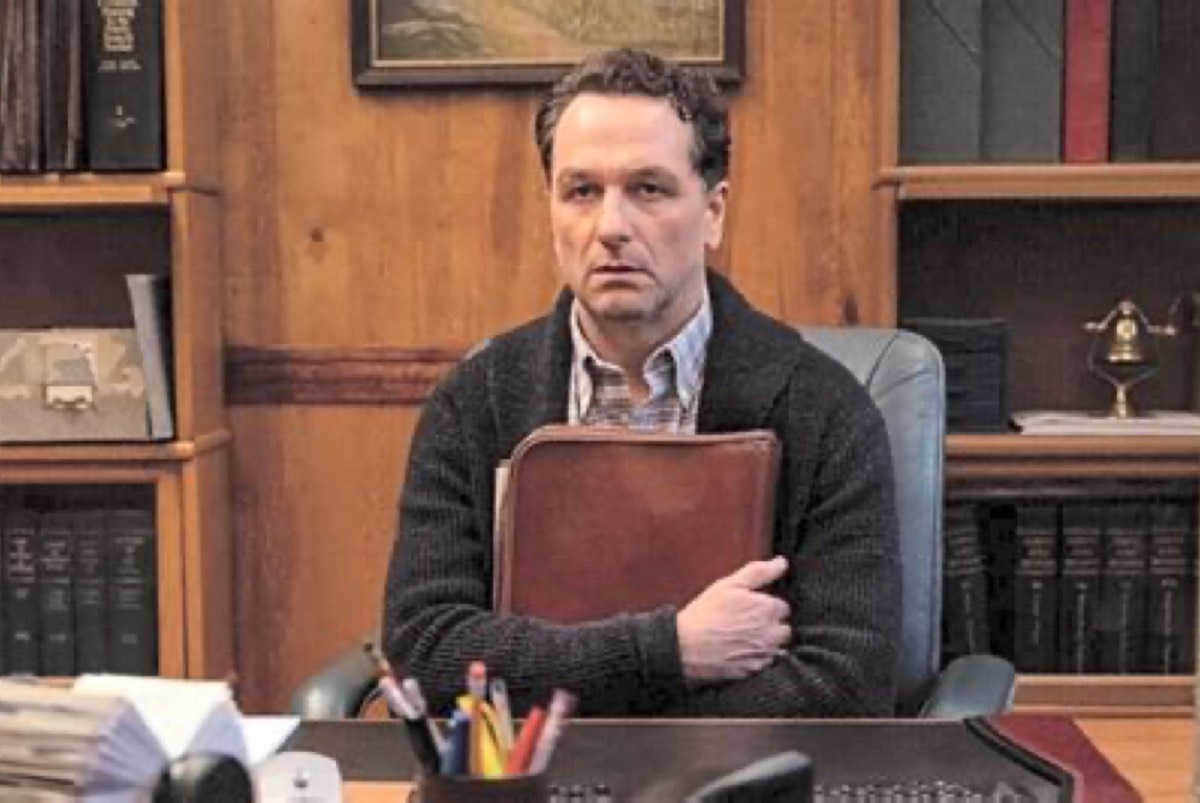
Tom Loftis (Matthew Rhys) is a widower and mayor of Widow’s Bay, a quirky little seaside town that has a colorfully bizarre history marked by periodic tragedies. Tom is eager to elevate the town into a trendy summer tourist destination. But the arrival of New York Times travel writer Arthur Lloyd (Bashir Salahuddin), who has the clout to make Tom’s aspirations for Widow’s Bay come true, coincides with the onset of a mysterious fog. Local resident Wyck (Stephen Root) warns Tom that the fog is an omen that the island is “waking up,” meaning more supernatural occurrences are bound to happen.

Initially skeptical, Tom becomes increasingly paranoid after a sailor who got lost in the fog essentially goes mad, with his eyes turning white just before dying. But by then Arthur has published a glowing account of his time in Widow’s Bay and tourists start flocking to the island for the summer season. Tom gamely tries to put a positive spin on things. He stays in the local haunted hotel alone overnight to prove it’s safe (it isn’t), and runs afoul of the legendary Sea Hag during the traditional mayor’s inaugural swim to open the beach.

But Tom still refuses to close everything down, despite Wyck’s warnings. Tom’s assistant, Patricia (Kate O’Flynn), has her own disturbing supernatural experience when she tries to host a “sunset cocktails” event to boost her social status in the town. It doesn’t go well and the mayhem is next level. That’s all I’m going to say, because the fun lies in the finding out.

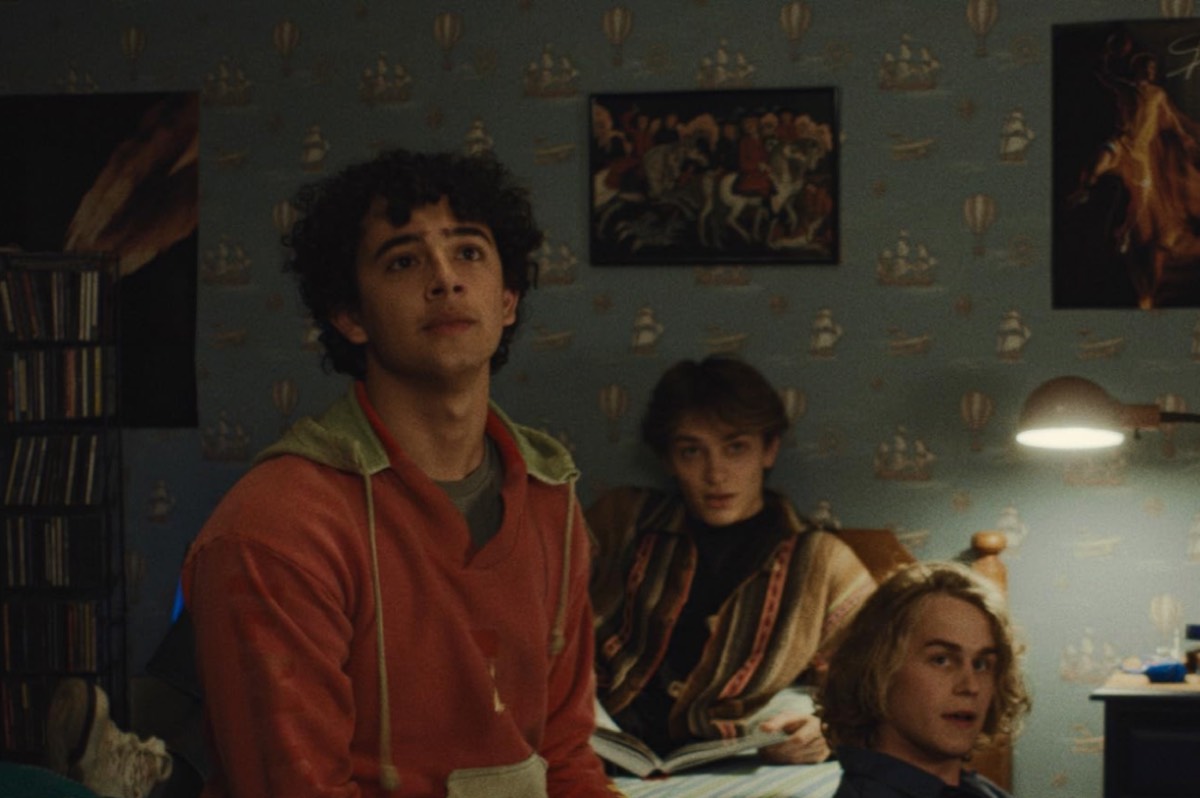
Meanwhile, Tom’s rebellious teenaged son, Evan (Kingston Rumi Southwick), has fallen in with a delinquent crowd out of sheer boredom, resentful that he’s never been allowed to leave the island. That’s because local legend holds that anyone born in Widow’s Bay cannot leave.  The supernatural energy keeps escalating with each subsequent episode, eventually delving into the island’s early history and the town’s founding by one Richard Warren (Hamish Linklater). That history still has repercussions for Widow’s Bay in the present.

A “dangerous excitement”

Series creator Katie Dippold is best known (until now) as one of the writers on Parks and Recreation, and Widow’s Bay actually started out as a spec script for that earlier series. “That version was much jokier,” she told Deadline Hollywood earlier this month. “It was more comedic and I think it gave a good idea of my sense of humor.” But she described that script as feeling more like a spoof, “and as a horror fan, I just wanna be immersed into the island,” she said. “I wanna feel like I could go explore this island and find all the little nooks and crannies and terrifying little spots. That’s my dream, but I’m strange.”

Tom’s rebellious teenaged son, Evan (Kingston Rumi Southwick) has never left the island.

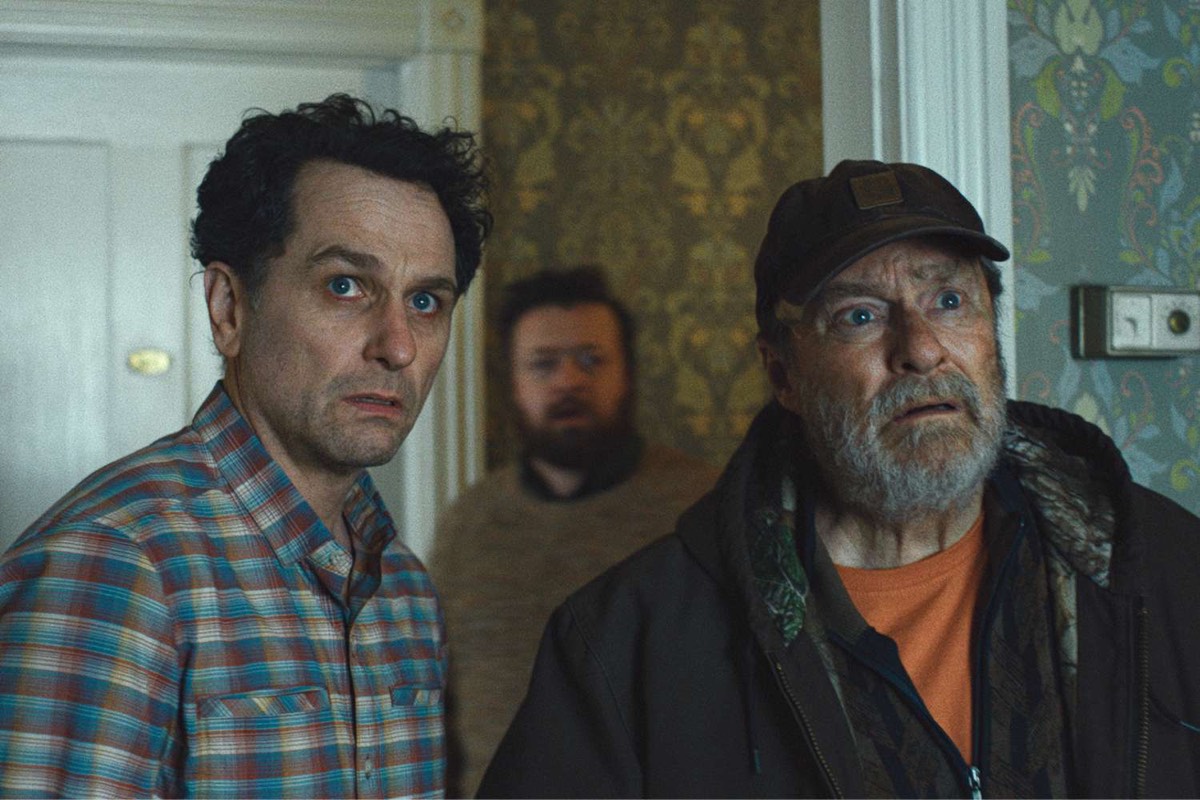
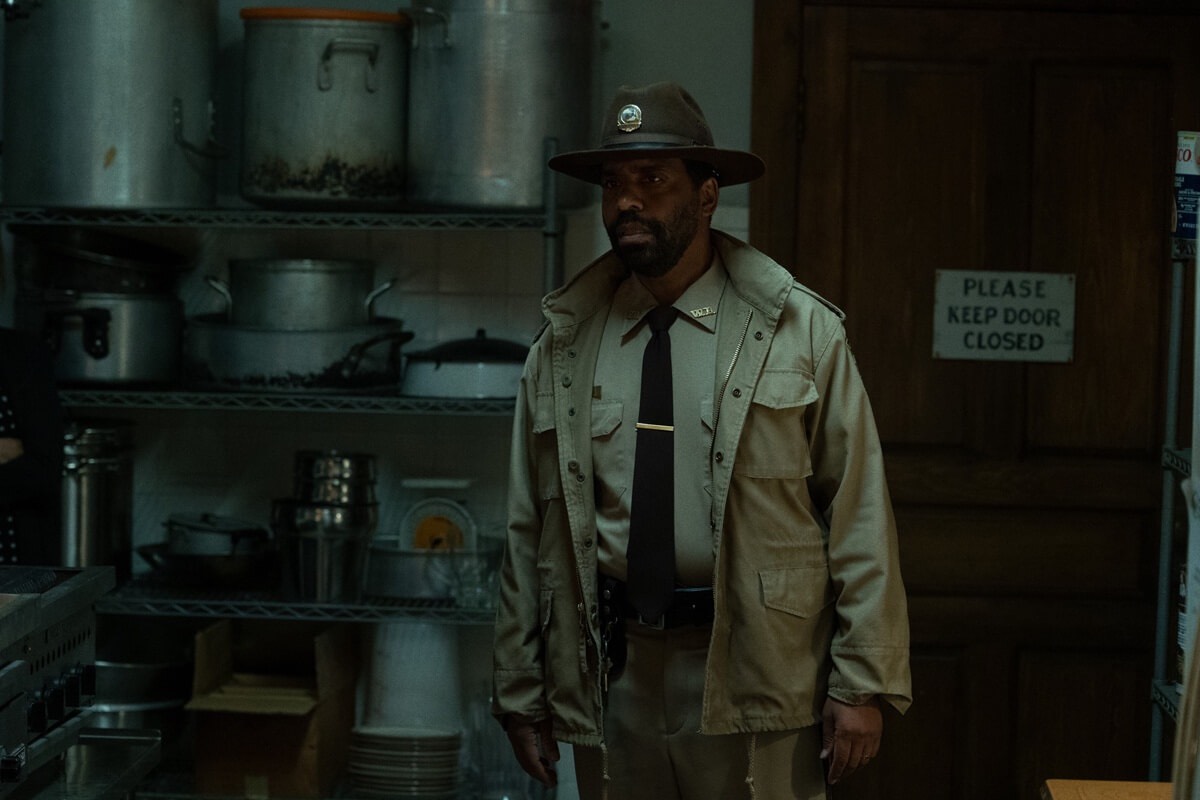
Tom and Wyck (Stephen Root) eventually become allies as supernatural happenings hint at an awakening island curse.

Clearly millions of viewers share Dippold’s strangeness. By the time the Patricia-centric fourth episode (“Beach Reads”) aired, viewership numbers had tripled since the launch, and those numbers have kept growing as positive word of mouth rapidly spread.

The most impressive aspect of the series is its mastery of tone: a perfect balance between quirky humor and spine-tingling horror that is incredibly difficult to consistently maintain. “I used to get into all sorts of antics when I was young, me and my friends going to check out the abandoned house and then running off,” said Dippold of the tone she wanted for the show. “It was almost kind of a dangerous excitement. And I just love that feeling because you’re so scared, but you’re laughing so hard, and I just wanted to get that feeling on television.”

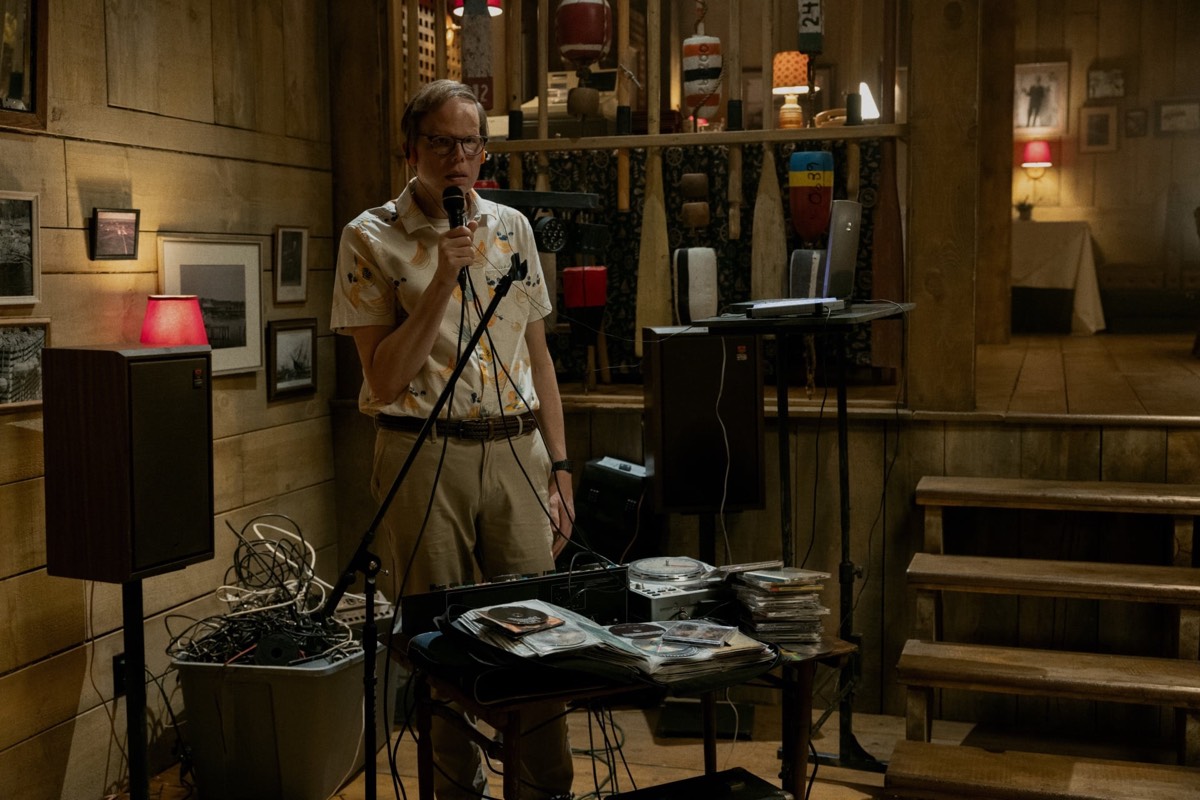
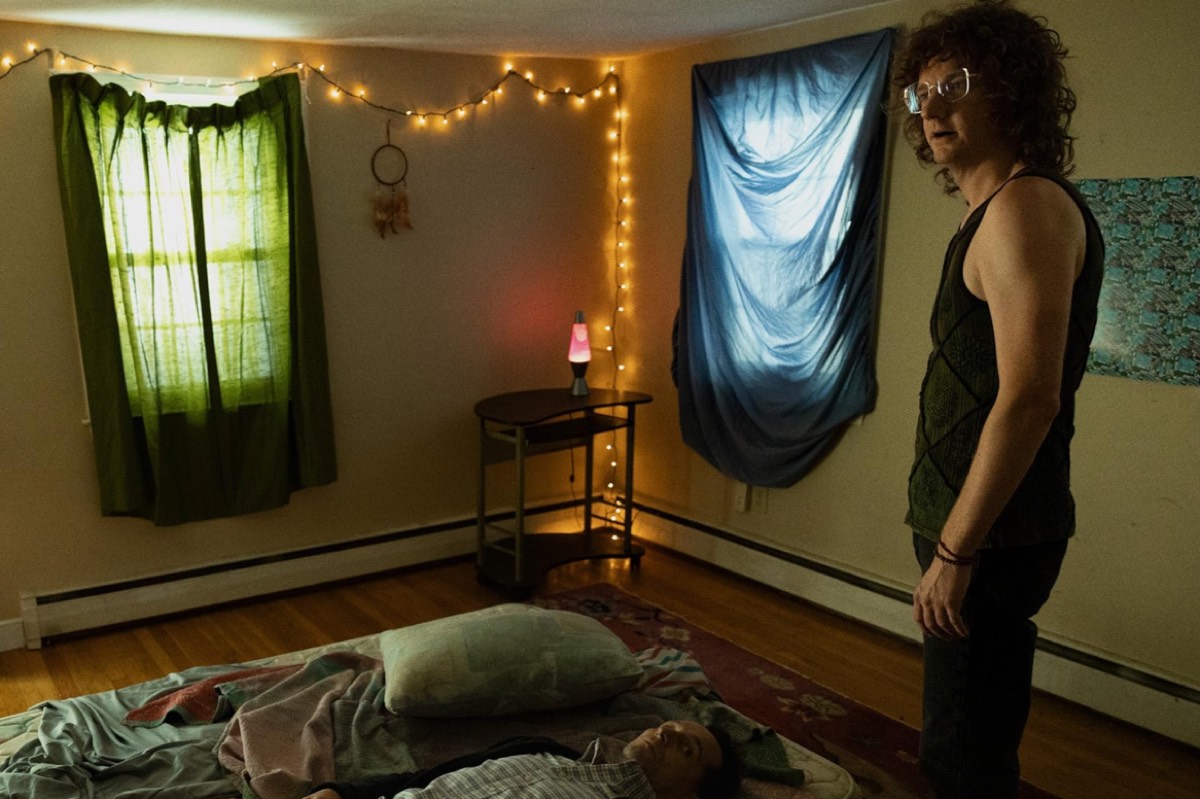
It also helps that Dippold has populated her fictional town with such well-drawn, unique characters; even one-off side characters, like Todd the Shaman (Chris Fleming) feel fleshed out and fully realized. That’s thanks to the show’s terrific cast, of course, but the actors are given a lot to work with in the smart, snappy scripts. And the series’ structure is very well plotted: it’s part monster of the week, part longer narrative arc. The show is warm and funny in the margins, and genuinely scary when the supernatural antics ramp up. There’s not a single false note across all ten episodes.

All episodes of the first season of Widow’s Bay are now streaming on Apple TV. A second season is already in the works so we’ll be getting even more comically horrific adventures. Dippold wants the show to come back as soon as possible—and so do we. She jokingly told Deadline that S2 will be “about how everything is great on the island and there’s nothing to worry about.” Don’t you believe it.

Jordan executes 6 individuals on alleged terrorism charges

0
jordan-executes-6-individuals-on-alleged-terrorism-charges
Jordan executes 6 individuals on alleged terrorism charges

A stark noose hangs in silence

A stark noose hangs in silence

Jordan has executed six persons who were convicted in separate terrorism and criminal cases tied to attacks that killed members of the Jordanian army and the Public Security Directorate, the Jordanian government said on Sunday, Anadolu Agency reports.

Citing Government Communications Minister and official spokesman Mohammad Al-Momani, Roya News reported that the executions were carried out at dawn on Sunday after all sentences became final and legal procedures were completed.

“Al-Momani detailed that two of those executed were convicted in the so-called ‘Salt Cell’ case, which involved the formation of a terrorist group in 2018.

“The attack resulted in the deaths of multiple security personnel, including officers and soldiers from the Public Security Directorate and the Jordan Armed Forces,” the report said.

Another was executed for a 2022 terrorism case involving the killing of a senior officer, said Al-Momani.

Two others were convicted in drug trafficking cases that turned violent during raids in 2014 and 2017, killing police officers.

A sixth was executed for a 2018 drug case in which a raid led to the death of a police officer, the official added.

READ: Jordan condemns Israeli seizure of properties near Al-Aqsa Mosque

Attack on Syrian Judge Highlights Ongoing ISIS Sleeper Cell Threat 

0
attack-on-syrian-judge-highlights-ongoing-isis-sleeper-cell-threat 
Attack on Syrian Judge Highlights Ongoing ISIS Sleeper Cell Threat 


[DAMASCUS] The Islamic State (ISIS) has claimed responsibility for an attack that seriously wounded a senior judicial official in the Damascus countryside, reigniting concerns about the continued presence of the group’s sleeper cells in areas surrounding the Syrian capital. 

The attack targeted Salah Ahmad Al-Saleh, head of the Babila courthouse administration, after an explosive device planted in his vehicle detonated in the Daff al-Shawk district south of Damascus on Tuesday.

Al-Saleh sustained severe injuries and was rushed to a hospital for treatment. Local sources said the blast was powerful enough to result in the amputation of one of his legs. The explosion also caused extensive damage to the vehicle. 

In the hours following the attack, Syrian security forces cordoned off the area and launched an investigation, collecting evidence and reviewing surveillance camera footage in an effort to identify the perpetrators and determine whether a broader network was involved. 

Less than 24 hours after the bombing, ISIS claimed responsibility through its media channels, saying its fighters had targeted the judicial official using a sticky bomb attached to his car. The statement marked the first official confirmation linking the militant group to the attack after widespread speculation over who was behind it. 

The Syrian government has not publicly commented on the ISIS claim. 

Speaking to The Media Line, jihadist groups expert Orabi Orabi said the attack carries particular significance because of the victim’s position within Syria’s judicial system. 

“Targeting a judicial figure differs from attacks against military or security officials,” Orabi said. “It sends a message aimed at state institutions and those working within them.” 

According to Orabi, the choice of a civilian government official suggests that the perpetrators sought to create an impact extending beyond the immediate casualties. 

“The operation appears intended to generate fear and demonstrate the ability of militant cells to reach government-linked figures even in areas subject to strict security measures,” he added. 

Babila is located in the southern Damascus countryside, an area that has undergone major political and security changes since reconciliation agreements in 2018 ended the presence of armed opposition factions there. Since then, parts of the Damascus countryside have witnessed sporadic assassinations and security incidents targeting local officials, civilians, and military personnel. 

Although ISIS has suffered major setbacks since the collapse of its self-declared caliphate between 2014 and 2017, the group continues to maintain clandestine cells across several parts of Syria, particularly in the Syrian desert as well as in eastern and southern regions of the country. 

These cells typically rely on guerrilla-style tactics, including targeted assassinations, improvised explosive devices, and limited-scale attacks, rather than attempts to seize and hold territory. 

In recent months, Syrian security agencies and local forces have conducted multiple operations aimed at dismantling suspected ISIS networks and arresting individuals accused of providing logistical support to the group. The campaigns are part of broader efforts to prevent ISIS from rebuilding its organizational structure or regaining the capacity to launch large-scale attacks. 

Analysts say ISIS’ decision to publicly claim responsibility reflects the group’s desire to remain relevant, demonstrate operational reach and reinforce its image as an active insurgent force despite years of military defeats. 

The incident also highlights the persistent challenge posed by sleeper cells, which operate covertly, avoid direct confrontation, and are often difficult for security forces to detect before attacks occur. 

Authorities continue to investigate the bombing, while additional security measures are expected to be implemented in the area to prevent similar attacks. 


How Brexit is estimated to have hit the UK economy

0
how-brexit-is-estimated-to-have-hit-the-uk-economy
How Brexit is estimated to have hit the UK economy


Britain’s economy has seen weak growth overall since it left the European Union at the start of 2020, though disentangling the effects of Brexit from the COVID-19 pandemic which hit Europe weeks later ​has been hard for analysts.

Following is a summary of estimates from official bodies and other ‌major researchers.

U.S. NATIONAL BUREAU OF ECONOMIC RESEARCH (NOVEMBER 2025)

  • Brexit reduced UK GDP by 6%-8% by 2025 compared with if Britain had remained in EU
  • Productivity and employment reduced by 3%-4%
  • Investment reduced by 12%-18%
  • Weakness caused by greater business uncertainty hitting investment, lower expected demand and slower ​productivity growth due to distraction of managing Brexit and greater impact on more productive firms that ​traded internationally
  • Calculations based partly on a ‘synthetic’ counterfactual UK based 61% on the United States, 11% ⁠on Estonia, 10% Greece and 7% Italy, as well as other countries which together matched Britain’s pre-Brexit economic ​performance
  • Research conducted by economists affiliated to Stanford University, the Bank of England, the Deutsche Bundesbank, King’s College London and ​the University of Nottingham

JULIAN JESSOP, INSTITUTE OF ECONOMIC AFFAIRS (NOVEMBER 2025)

  • Criticises NBER methodology for heavy weighting given to U.S economic performance, assumption that countries that UK matched pre-Brexit are a good post-Brexit match
  • U.S. growth has been an outlier since 2020, UK GDP per capita ​growth similar to Germany and France
  • 8% higher GDP would require UK to have significantly outperformed other big European ​economies
  • Substantially better UK employment performance within EU unlikely given already low unemployment
  • Brexit uncertainty a temporary hit to investment, not lasting

UK OFFICE ‌FOR ⁠BUDGET RESPONSIBILITY (JULY 2025)

  • Post-Brexit trading relationship to reduce long-run productivity by 4% relative to staying in the EU
  • Two-fifths of this impact had occurred before a post-Brexit trade deal came into force at the start of 2021
  • Britain’s EU exports and imports will be 15% lower in the long run than if it had remained
  • New trade deals with non-EU countries ​will not have a ​material impact
  • Calculations based on ⁠analysis of historic trade deals

UK NATIONAL INSTITUTE OF ECONOMIC AND SOCIAL RESEARCH (APRIL 2025)

  • 2%-3% loss in GDP per capita and labour productivity by 2023, rising to 5%-6% by 2035
  • 12%-13% ​decline in business investment by 2023, reducing to 7%-8% by 2035
  • Brexit impacts modelled as ​a decline in ⁠trade, permanent increase in uncertainty and reduced productivity, fed into NIESR’s standard model of the economy
  • Increased trading costs lead to fewer high-productivity UK firms exporting while reduced competition from the EU leads to more low-productivity firms serving the domestic ⁠market

JOHN SPRINGFORD, ​CENTRE FOR EUROPEAN REFORM (DECEMBER 2022)

  • 5.5% loss of GDP as of June ​2022, compared with staying in the EU
  • 11% loss of investment
  • 7% loss of goods trade, services trade largely unchanged
  • Around £40 billion ($54 billion) of lost tax ​revenue due to smaller economy
  • Similar methodology to later NBER paper

0FansLike
0FollowersFollow
0FollowersFollow
0SubscribersSubscribe
- Advertisement -
Google search engine

Recent Posts