Jordan executes 6 individuals on alleged terrorism charges
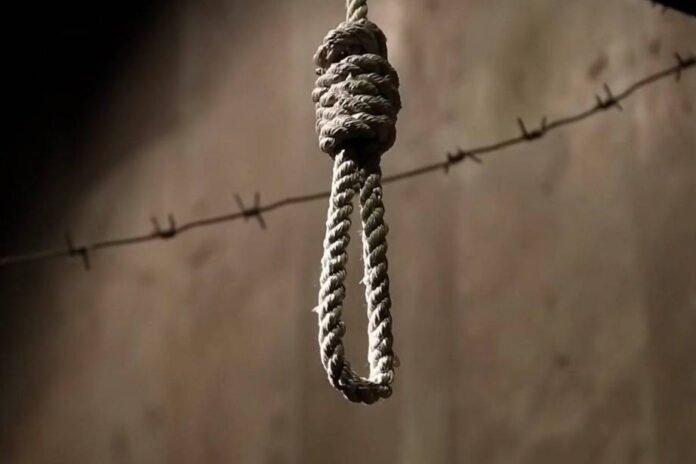
A stark noose hangs in silence
Jordan has executed six persons who were convicted in separate terrorism and criminal cases tied to attacks that killed members of the Jordanian army and the Public Security Directorate, the Jordanian government said on Sunday, Anadolu Agency reports.
Citing Government Communications Minister and official spokesman Mohammad Al-Momani, Roya News reported that the executions were carried out at dawn on Sunday after all sentences became final and legal procedures were completed.
“Al-Momani detailed that two of those executed were convicted in the so-called ‘Salt Cell’ case, which involved the formation of a terrorist group in 2018.
“The attack resulted in the deaths of multiple security personnel, including officers and soldiers from the Public Security Directorate and the Jordan Armed Forces,” the report said.
Another was executed for a 2022 terrorism case involving the killing of a senior officer, said Al-Momani.
Two others were convicted in drug trafficking cases that turned violent during raids in 2014 and 2017, killing police officers.
A sixth was executed for a 2018 drug case in which a raid led to the death of a police officer, the official added.
READ: Jordan condemns Israeli seizure of properties near Al-Aqsa Mosque
Attack on Syrian Judge Highlights Ongoing ISIS Sleeper Cell Threat
[DAMASCUS] The Islamic State (ISIS) has claimed responsibility for an attack that seriously wounded a senior judicial official in the Damascus countryside, reigniting concerns about the continued presence of the group’s sleeper cells in areas surrounding the Syrian capital.
The attack targeted Salah Ahmad Al-Saleh, head of the Babila courthouse administration, after an explosive device planted in his vehicle detonated in the Daff al-Shawk district south of Damascus on Tuesday.
Al-Saleh sustained severe injuries and was rushed to a hospital for treatment. Local sources said the blast was powerful enough to result in the amputation of one of his legs. The explosion also caused extensive damage to the vehicle.
In the hours following the attack, Syrian security forces cordoned off the area and launched an investigation, collecting evidence and reviewing surveillance camera footage in an effort to identify the perpetrators and determine whether a broader network was involved.
Less than 24 hours after the bombing, ISIS claimed responsibility through its media channels, saying its fighters had targeted the judicial official using a sticky bomb attached to his car. The statement marked the first official confirmation linking the militant group to the attack after widespread speculation over who was behind it.
The Syrian government has not publicly commented on the ISIS claim.
Speaking to The Media Line, jihadist groups expert Orabi Orabi said the attack carries particular significance because of the victim’s position within Syria’s judicial system.
“Targeting a judicial figure differs from attacks against military or security officials,” Orabi said. “It sends a message aimed at state institutions and those working within them.”
According to Orabi, the choice of a civilian government official suggests that the perpetrators sought to create an impact extending beyond the immediate casualties.
“The operation appears intended to generate fear and demonstrate the ability of militant cells to reach government-linked figures even in areas subject to strict security measures,” he added.
Babila is located in the southern Damascus countryside, an area that has undergone major political and security changes since reconciliation agreements in 2018 ended the presence of armed opposition factions there. Since then, parts of the Damascus countryside have witnessed sporadic assassinations and security incidents targeting local officials, civilians, and military personnel.
Although ISIS has suffered major setbacks since the collapse of its self-declared caliphate between 2014 and 2017, the group continues to maintain clandestine cells across several parts of Syria, particularly in the Syrian desert as well as in eastern and southern regions of the country.
These cells typically rely on guerrilla-style tactics, including targeted assassinations, improvised explosive devices, and limited-scale attacks, rather than attempts to seize and hold territory.
In recent months, Syrian security agencies and local forces have conducted multiple operations aimed at dismantling suspected ISIS networks and arresting individuals accused of providing logistical support to the group. The campaigns are part of broader efforts to prevent ISIS from rebuilding its organizational structure or regaining the capacity to launch large-scale attacks.
Analysts say ISIS’ decision to publicly claim responsibility reflects the group’s desire to remain relevant, demonstrate operational reach and reinforce its image as an active insurgent force despite years of military defeats.
The incident also highlights the persistent challenge posed by sleeper cells, which operate covertly, avoid direct confrontation, and are often difficult for security forces to detect before attacks occur.
Authorities continue to investigate the bombing, while additional security measures are expected to be implemented in the area to prevent similar attacks.
How Brexit is estimated to have hit the UK economy
Britain’s economy has seen weak growth overall since it left the European Union at the start of 2020, though disentangling the effects of Brexit from the COVID-19 pandemic which hit Europe weeks later has been hard for analysts.
Following is a summary of estimates from official bodies and other major researchers.
U.S. NATIONAL BUREAU OF ECONOMIC RESEARCH (NOVEMBER 2025)
Brexit reduced UK GDP by 6%-8% by 2025 compared with if Britain had remained in EU
Productivity and employment reduced by 3%-4%
Investment reduced by 12%-18%
Weakness caused by greater business uncertainty hitting investment, lower expected demand and slower productivity growth due to distraction of managing Brexit and greater impact on more productive firms that traded internationally
Calculations based partly on a ‘synthetic’ counterfactual UK based 61% on the United States, 11% on Estonia, 10% Greece and 7% Italy, as well as other countries which together matched Britain’s pre-Brexit economic performance
Research conducted by economists affiliated to Stanford University, the Bank of England, the Deutsche Bundesbank, King’s College London and the University of Nottingham
JULIAN JESSOP, INSTITUTE OF ECONOMIC AFFAIRS (NOVEMBER 2025)
Criticises NBER methodology for heavy weighting given to U.S economic performance, assumption that countries that UK matched pre-Brexit are a good post-Brexit match
U.S. growth has been an outlier since 2020, UK GDP per capita growth similar to Germany and France
8% higher GDP would require UK to have significantly outperformed other big European economies
Substantially better UK employment performance within EU unlikely given already low unemployment
Brexit uncertainty a temporary hit to investment, not lasting
Post-Brexit trading relationship to reduce long-run productivity by 4% relative to staying in the EU
Two-fifths of this impact had occurred before a post-Brexit trade deal came into force at the start of 2021
Britain’s EU exports and imports will be 15% lower in the long run than if it had remained
New trade deals with non-EU countries will not have a material impact
Calculations based on analysis of historic trade deals
UK NATIONAL INSTITUTE OF ECONOMIC AND SOCIAL RESEARCH (APRIL 2025)
2%-3% loss in GDP per capita and labour productivity by 2023, rising to 5%-6% by 2035
12%-13% decline in business investment by 2023, reducing to 7%-8% by 2035
Brexit impacts modelled as a decline in trade, permanent increase in uncertainty and reduced productivity, fed into NIESR’s standard model of the economy
Increased trading costs lead to fewer high-productivity UK firms exporting while reduced competition from the EU leads to more low-productivity firms serving the domestic market
JOHN SPRINGFORD, CENTRE FOR EUROPEAN REFORM (DECEMBER 2022)
5.5% loss of GDP as of June 2022, compared with staying in the EU
11% loss of investment
7% loss of goods trade, services trade largely unchanged
Around £40 billion ($54 billion) of lost tax revenue due to smaller economy
King Charles’ Secret One-Word Nickname for Meghan Markle Revealed
King Charles reportedly had a private nickname for Meghan Markle when she was still part of the royal family — and it was not exactly soft and sweet.
According to insiders, Charles is believed to have called his daughter-in-law “tungsten,” a reference to one of the toughest metals on Earth.
The nickname was said to be a nod to Meghan’s hard-as-nails inner strength, steely confidence, and ability to stand firm under pressure during her brief but dramatic time inside The Firm.
Meghan, now 44, married Prince Harry, 41, in 2018 and quickly became one of the most talked-about women in the world. But less than two years later, the couple stunned the monarchy by stepping back from royal duties and moving to the United States.
Before the royal fallout, however, Charles reportedly saw something in Meghan that left a major impression.
Sources said the future king noticed her poise during early public appearances with Harry, Prince William, and Catherine, Princess of Wales. Meghan’s polished public speaking, TV-star confidence, and ability to command attention reportedly made senior royals take notice.
Royal author Katie Nicholl previously wrote in her 2022 book The New Royals: Queen Elizabeth’s Legacy and the Future of the Crown that Meghan became “the breakout star” of the royal foursome.
One source quoted in the book claimed Meghan was “polished, passionate, and funny,” adding that she used her television experience to make a strong impression during joint appearances.
The source said it was a “wake-up moment” for William and Kate, who allegedly realized Meghan was “very impressive, very confident, and very capable.”
That same toughness is reportedly what inspired Charles’ unusual nickname.
One insider said Charles viewed Meghan as someone who “doesn’t bend easily under scrutiny,” and that her strength stood out to him from the beginning.
Another source claimed the nickname was not meant as an insult.
“He saw her as a stabilizing force for Harry,” the insider said. “Someone with direction, confidence, and the ability to stand her ground when things became difficult.”
Tungsten is known for its incredible strength and has the highest melting point of any known element. According to one source, that is exactly why Charles believed it fit Meghan.
“It reflected the steeliness Charles thought Meghan had at her core,” the source said. “He thought she was tough as nails inside, despite her later talk of feeling traumatized by her time with the royals.”
But any early warmth between Meghan and the royals did not last.
Relations between the Sussexes and the rest of the royal family have badly deteriorated since Harry and Meghan quit royal life. Their public interviews, Netflix series, memoir revelations, and repeated claims about life inside the palace have left the family deeply divided.
Harry and Meghan remain estranged from Charles, William, Kate, and other senior royals.
Meanwhile, Charles’ bond with Kate has reportedly grown stronger in recent years, especially as both faced serious health battles.
Kate announced in January 2025 that she was in remission from cancer, while Charles has continued treatment for his own cancer diagnosis.
One source claimed Charles sees Kate as “the daughter he never had” and has a deep affection for her.
“Unlike Meghan, he has a massive fondness for Kate,” the insider said. “But Meghan’s toughness did — and still does — impress him.”
Harry is believed to have last seen his father during a brief 54-minute reunion last year. Now, he and Meghan are reportedly hoping for another meeting with the king during a planned trip to the U.K. this summer.
Whether that reunion actually happens remains to be seen.
But if Charles’ alleged nickname is any clue, the king may still see Meghan as one of the toughest figures ever to shake up the modern monarchy.
What Indonesia’s finance chief really brought back from Beijing
When Finance Minister Purbaya Yudhi Sadewa landed in Beijing last week, the official agenda appeared straightforward: secure support for Indonesia’s first sovereign Panda Bond, deepen financial cooperation with China and strengthen investor confidence.
Yet beyond the announcements lies a more important question: how much of this represents genuinely new opportunities for Indonesia, and how much was intended to stabilize an increasingly sensitive relationship with China’s financial and investment community?
The centerpiece of the visit was undoubtedly the planned issuance of Indonesia’s first sovereign Panda Bond. Unlike Dim Sum bonds, which are issued offshore, Panda Bonds are sold directly in China’s domestic capital market and denominated in yuan.
The attraction is obvious. China possesses one of the world’s largest pools of institutional capital, and Indonesia is seeking additional sources of financing as global borrowing conditions become more uncertain.
Purbaya secured support for the initiative from Chinese Finance Minister Lan Fo’an and held discussions with the People’s Bank of China, which plays a crucial role in approving and facilitating access to China’s domestic bond market.
According to Indonesian officials, Chinese authorities encouraged Indonesia to move forward quickly once the necessary approvals are completed. But the financial significance of the Panda Bond should not be overstated.
Indonesia already enjoys substantial access to Chinese capital. Chinese institutions currently hold around $21 billion in Indonesian government securities. By comparison, the expected Panda Bond issuance of approximately $1 billion would represent only a modest addition. Indonesia’s outstanding Dim Sum bonds already reached 6 billion yuan, or roughly $842 million, in 2025.
The Panda Bond, therefore, appears less significant as a source of financing than as a symbol of deeper financial engagement. It opens a new channel, but not a transformative one.
The second major takeaway concerns local currency cooperation.
Throughout the visit, Indonesian officials linked the Panda Bond initiative to broader efforts to increase direct transactions between the yuan and the rupiah. Discussions with the People’s Bank of China reportedly covered local currency settlement mechanisms, yuan liquidity arrangements and cross-border payment cooperation.
This aligns with a broader trend among emerging economies seeking to reduce transaction costs and lessen exposure to exchange-rate volatility. It also fits Indonesia’s wider efforts to diversify financial relationships amid growing discussions about de-dollarization across parts of the Global South.
Yet progress should be measured carefully. The dollar remains deeply embedded in global trade, commodity pricing and international finance. Expanding yuan-rupiah settlements may improve efficiency at the margins, but it is unlikely to fundamentally alter the structure of Indonesia-China economic relations in the near future.
The visit also highlighted Indonesia’s efforts to broaden its financial partnerships. Beyond meetings with China’s Ministry of Finance and the People’s Bank of China, Purbaya met Chinese institutional investors, financial-sector stakeholders and representatives of the Shanghai Cooperation Organisation Development Bank.
The objective was to expand Indonesia’s investor base, improve understanding of Indonesia’s fiscal position and explore alternative financing channels that could complement existing sources of capital.
Perhaps the most substantial outcome emerged from Indonesia’s engagement with the Asian Infrastructure Investment Bank.
Purbaya secured a commitment of up to $17 billion in financing for projects within Indonesia’s national development agenda between 2025 and 2029. The figure dwarfs the planned Panda Bond issuance and has understandably made headlines.
But financing commitments are not the same as financing disbursements. The AIIB package represents a potential funding envelope rather than immediately available capital. Actual utilization will depend on project preparation, feasibility assessments, approvals and implementation capacity.
The announcement, therefore, raises a broader question: Does Indonesia face a shortage of available financing or of bankable projects capable of absorbing financing efficiently?
Indonesia has rarely struggled to attract capital. Chinese investors, global financial institutions, sovereign wealth funds and multilateral development banks have all demonstrated strong interest in the country’s growth story. The greater challenge has often been regulatory certainty, project execution and institutional coordination.
Only days before Purbaya’s arrival in Beijing, Chinese business groups and representatives of the Chinese Embassy in Jakarta publicly raised concerns about Indonesia’s investment climate, particularly in the nickel sector.
Complaints focused on regulatory uncertainty, quota policies, pricing mechanisms and operational costs. Such criticism was unusual in both its visibility and its directness.
Throughout his meetings, Purbaya emphasized Indonesia’s manageable debt levels, controlled fiscal deficits, resilient economic growth and continued investor confidence in Indonesian sovereign bonds.
He also sought to counter perceptions among some Chinese stakeholders that Indonesia’s economic outlook had weakened amid market volatility and pressure on the rupiah earlier this year.
Seen in this light, the most important objective of the visit may not have been securing new financing but rather preserving confidence. The timing of the trip, coming amid growing concerns among Chinese investors about Indonesia’s investment climate, suggests that reassurance was an important part of the agenda.
Confidence remains one of the most valuable currencies in international finance. Investor perceptions can shape capital flows as much as economic fundamentals, particularly during periods of uncertainty.
Yet confidence-building should not be confused with solving underlying challenges. Panda Bonds cannot substitute for regulatory predictability. Local currency settlements cannot resolve investor concerns about policy consistency.
Large financing commitments cannot guarantee successful implementation. Ultimately, confidence is sustained not by announcements but by policy execution.
Purbaya’s visit sought to expand Indonesia’s financing options, deepen engagement with Chinese financial institutions and maintain open channels of communication with one of Indonesia’s most important economic partners.
Whether those objectives translate into lasting economic benefits will depend less on what was discussed in Beijing than on what happens after the delegation returned home.
Muhammad Zulfikar Rakhmat is director of the China-Indonesia Desk at the Jakarta-based Center of Economic and Law Studies (CELIOS)independent research institute.Yeta Purnama is a researcher at CELIOS.Bhima Yudhistira Adhinegara is the executive director of CELIOS.
Coffee firms ill-prepared for EU rules on living wages, report finds
None of the world’s top coffee roasters and traders have committed to paying farmers a living income even though this is set to become a legal obligation for large companies operating in the EU from 2029, according to a major coffee sector report.
The EU’s landmark Corporate Sustainability Due Diligence Directive(CSDDD) requires large companies to fix human rights and environmental issues in their supply chains or face fines of up to 3% of global turnover.
According to the biennial Coffee Barometer, prepared by a group of NGOs, the law is the first EU instrument to recognise living income as a binding human right — a recognition that in turn has direct commercial implications for the coffee sector.
Large companies, moreover, will need to have set up their compliance systems well in advance of 2029 in order to comply.
“Pricing structures, contract duration and payment terms are no longer purely commercial decisions; where they are linked to adverse human rights impacts, companies are required to change them,” said the report.
It noted, however, that none of the world’s 15 largest roasters and traders that it reviewed disclosed the above or referenced living income commitments in their sustainability reporting.
Coffee remains a sector dominated by poverty-stricken smallholder farmers and this is its central challenge, according to the Barometer.
It estimates around 12.5 million farming households, most cultivating less than two hectares, produce the majority of the world’s coffee while struggling to secure a viable income, even at current relatively elevated price levels .
“Companies publish sustainability commitments, while core commercial operations continue to rely on low-cost commodity purchasing. Until (this changes), sustainability investments (will) work around the problem rather than on it.”
The companies reviewed by the Barometer include top global roasters Nestle, Starbucks and JDE Peet’s, and top traders Olam, Louis Dreyfus, Ecom and Volcafe.
Apart from China, Asia isn’t afraid of a remilitarizing Japan
China is harping non-stop about resurging Japanese “militarism” – but almost nobody in the Asia-Pacific region is listening – or believes it.
The more China blusters and warns of a dangerous Japan, the more ridiculous it looks and the better Japan appears by comparison.
Make no mistake, Japan caused plenty of misery in the region during the 1930s and 1940s. But World War II ended 81 years ago and today’s democratic, consensually governed Japan is another country.
That’s been obvious for a long time. Even in 1990, when US Marine General Hank Stackpole described US forces in Japan as the “cap in the bottle” that kept Japanese militarism in check, the idea seemed outdated.
Japan is well-liked in most of Asia, and has been for decades. Japanese investment and economic assistance are welcomed across Asia, and Japan’s role in regional security is now widely taken for granted.
But the idea that Japan is feared in the region because of World War II still persists, particularly among parts of the Western foreign policy commentariat. So it’s worth taking a closer look.
India: 1.4 billion Indians have a soft spot for Japan. Tokyo is viewed as having helped bring about Indian independence via its support for the Indian nationalist movement before and during World War Two. Commercial ties are vast, and bilateral defense ties are expanding.
Philippines: Japan has been a major and welcome investor and aid provider for years. And substantial defense ties have grown over the last decade, with Japanese ground forces conducting combat training during this year’s Balikatan Exercise.
Taiwan: Good feelings exist towards Japan, and the colonial era from 1895-1945, when Japan controlled Formosa, is not a sore point. Taiwan’s elected government would like even better ties with Japan, including a security relationship.
Singapore: The Japanese occupation from 1942-1945 was brutal and is not forgotten, but Singapore and Japan today have excellent relations. Tellingly, Singapore’s Prime Minister Lawrence Wong has stated that Singapore and other Southeast Asian countries support Japan playing a bigger regional role, including on the security front.
Malaysia: Prime Minister Anwar Ibrahim recently met Prime Minister Sanae Takaichi and confirmed their “comprehensive strategic partnership” and specifically mentioned expanded defense ties. Japan and Malaysia are currently discussing the transfer of retired Maritime Special-Defense Force ships to Malaysia.
Indonesia: In addition to being a major investor in Indonesia, Japan is seen as having helped rid Indonesia of Dutch colonial rule. The two nations cooperate on defense and are discussing transferring retired Japanese Asagiri-class destroyers to the Indonesian Navy.
Vietnam: Solid economic ties exist, along with Japan Coast Guard support for the Vietnam Coast Guard. And like Indonesia, Vietnam credits Japan with a role in bringing about Vietnamese independence from colonial France.
Thailand: A hub of Japanese commercial activity in the region for decades, ties are strong, including between the two nations’ royal families. Japan has also quietly built a notable defense relationship with Thailand.
Australia: Beyond longstanding economic and political ties, Canberra recently signed an agreement to buy Japanese Mogami-class destroyers and defense ties have deepened in both directions over the last 15 years. Australia has plenty of reasons to resent Japan’s cruel behavior toward Australian prisoners of war in World War II, but it doesn’t.
Pacific Islands: From the Solomon Islands to Micronesia to the US territories of the Commonwealth of Northern Mariana Islands and Guam, Japan is well-liked and appreciated for its development assistance and commercial presence. The Japan Self-Defense Force’s periodic visits and training activities in the region are conducted with little fanfare – and without any objection from Pacific Island nations.
However, despite this widespread respect and affection for Japan, there are less favorable views of Japan and the Japanese to be found.
South Korea: There is a widespread visceral resentment of Japan owing to Japan’s colonial occupation, but there are limits. It’s also manipulated for political gain by South Korea’s leftist politicians.
Paradoxically, many Koreans love visiting Japan. The two nations have had reasonable defense ties in the past, and under the leftist Lee Jae Myung administration, the Japan Maritime Self-Defense Force and the ROK Navy recently conducted search-and-rescue exercises together.
China: The Japanese in China from the 1930s onwards were often brutal. But the Chinese Communist Party that killed at least 50 million of its own people in peacetime and good weather in the years after the Japanese left, was glad to accept Japan’s overseas development assistance (ODA) and welcomed Japanese investment and the technology that came with it.
While plenty of deep-seated animosity towards Japan does exist, it’s only in the last 20 years or so that the CCP has aggressively stoked historical resentments for political advantage. This is done both for domestic purposes and also to put Japan on the back foot as it belatedly seeks to improve defenses against an assertive China.
Even still, millions of Chinese visit Japan as tourists and an estimated one million or so Chinese now live there.
The cliche “Asia is afraid of Japan owing to World War II” doesn’t stand up to scrutiny. And even if Japan carries out its plans to bolster its defenses, it would still be incapable of projecting power to threaten its neighbors.
Indeed, it’s ironic that while Beijing warns of Japanese militarism, it is China that has built up a powerful military with regional and global ambitions despite facing no enemies. In fact, China seems to be aiming to create its own version of Japan’s Greater East Asia Co-Prosperity Sphere that led to war and misery in the 1930’s and 1940’s.
Apparently, Beijing has learned from Japan’s history after all.
Grant Newsham is a retired US Marine officer and former US diplomat. He was the first Marine liaison officer to the Japan Self-Defense Force, and is a fellow at the Center for Security Policy and the Yorktown Institute. He is the author of the book, “When China Attacks: A Warning To America.”
Medico: Israel’s white phosphorus and glyphosate point back to Germany’s Bayer group
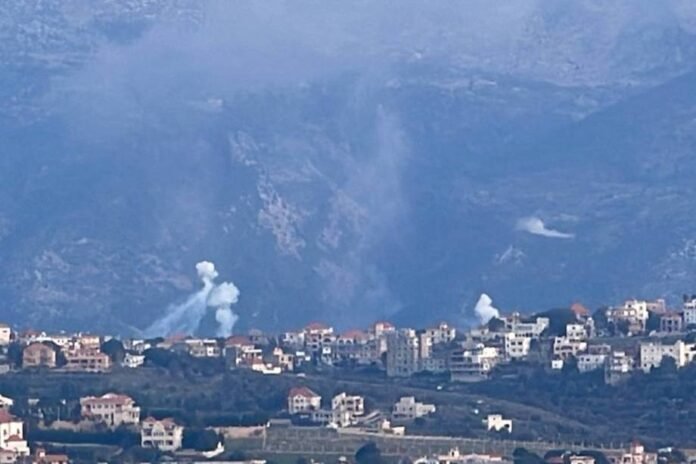
Human rights organisation Medico International and the German network “Coordination gegen Bayer-Gefahren“ (Coordination against Bayer Dangers, CBG) have reported that the glyphosate and white phosphorus used by the Israeli occupation forces in Lebanon which were presumably of German origin.
At the beginning of February this year, reports emerged in the international media alleging that the Israeli army had deployed the environmental toxin glyphosate in southern Lebanon and in occupied Syria.
According to Lebanon’s Ministry of Agriculture, glyphosate concentrations in some samples taken in the region exceeded “normal levels by around 20 to 30 times”. Lebanon’s president Joseph Aoun described the situation as “environmental and health crimes”.
The incident is of particular relevance to Germany, as the US-based glyphosate manufacturer Monsanto was acquired in 2018 by the German chemical and pharmaceutical giant Bayer, one of the world’s largest chemical corporations. As a result, not only did Germany’s mainstream media take up the issue – despite their otherwise consistent reluctance to report on Israeli war crimes – but the matter also reached the agenda of the German Bundestag.
However, there has been little in the way of public outrage. After a few critical remarks, the issue quickly faded from public debate, and it is unlikely that a wider German audience is aware that Israel is not only carrying out a genocide in Gaza using German-supplied weapons, attacking Iran and Lebanon with German arms, enforcing the blockade of Gaza with German naval vessels, and raiding Gaza Solidarity flotillas with the same equipment, but is also reportedly using chemical agents produced with German industrial involvement.
That may now be changing. Last Thursday, the human rights organisation Medico International published a report titled “Cartographies of Destruction: Israel’s War Against Lebanon”, produced in cooperation with its Lebanese partner organisation “Public Works”. Alongside numerous alleged war crimes, the report also documents the repeated use of white phosphorus by Israel in Lebanon. According to the report, this substance also originates from Monsanto. Jan Pehrke of the CBG stated: “There is strong evidence that phosphorus used in the Middle East war comes from Bayer’s glyphosate production facility in Soda Springs in the United States.”
While it has long been known that Israel has repeatedly used white phosphorus in its wars on Gaza and Lebanon, the alleged use of glyphosate is a relatively new claim. However, Riad Othman, Middle East officer at Medico International, noted that the carcinogenic herbicide was already “tested” by the Israeli military in the Gaza Strip in 2014.
During its shareholders’ meeting in April 2026, the Bayer executive board denied directly supplying glyphosate to the Israeli or US military. However, it did not issue a corresponding denial regarding white phosphorus. Meanwhile, earlier this year, US President Donald Trump designated elemental phosphorus – used in the production of both white phosphorus and glyphosate – as critical to US “national security”.
This decision came roughly two weeks after reports of glyphosate use in Lebanon and Syria surfaced, and shortly before the US-Israeli strike on Iran, during which white phosphorus was also reportedly used.
The views expressed in this article belong to the author and do not necessarily reflect the editorial policy of Middle East Monitor.
CENTCOM Challenges Iranian Claim of Hormuz Closure as Negotiators Head to Switzerland
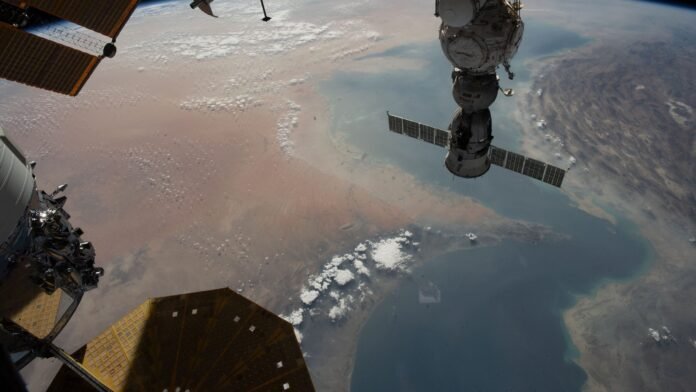
The United States and Iran offered conflicting accounts Saturday over the status of the Strait of Hormuz as officials prepared for negotiations in Switzerland on Sunday involving senior representatives from both countries.
Iran earlier announced that it was closing the strategic waterway and warned commercial vessels to stay away. The move came after fighting continued between Israel and Lebanon despite a declared ceasefire.
Islamic Republic of Iran Broadcasting reported that the naval branch of the Islamic Revolutionary Guard Corps issued warnings to ships operating near the strait, cautioning that vessels attempting to pass through could encounter mines or come under attack. Iranian state media also reported reduced maritime traffic in the Persian Gulf following the announcement.
The US military disputed Iran’s claim that the waterway had been closed.
“Iran does not control the Strait of Hormuz,” said Capt. Tim Hawkins, a Central Command (CENTCOM) spokesperson. “Traffic continues to flow, and US forces are monitoring the situation to ensure this remains the case.”
CENTCOM said 55 merchant ships and 17 million barrels of oil passed through the strait on Saturday. The command added: “US forces remain present and vigilant to ensure all aspects of the agreement with Iran are adhered to, obeyed, and in full force and effect.”
The dispute over the waterway emerged as diplomatic efforts continued ahead of talks scheduled for Switzerland.
Pakistani Prime Minister Shehbaz Sharif announced that he would travel to Switzerland to serve as a mediator during the discussions. Qatar is also expected to participate.
The US delegation is set to include Vice President JD Vance, Jared Kushner, and US special envoy to the Middle East Steve Witkoff. They are scheduled to meet with an Iranian delegation.
CNN reported that ending the conflict in Lebanon is “the most important item on the Iranian delegation’s agenda” as Iranian representatives prepare for the talks.
The negotiations are expected to begin on Sunday as both sides continue to publicly differ over developments in the Strait of Hormuz, one of the world’s most important maritime routes for global energy shipments.
Once a Target of TrackAIPAC, Ro Khanna Gains Its Endorsement
After a resounding primary victory and ahead of a potential presidential run in 2028, progressive California lawmaker Ro Khanna has received the endorsement of the influential advocacy and watchdog group TrackAIPAC, known for posting red cards of lawmakers and candidates who receive money from the pro-Israel lobby.
Khanna, a Democrat representing parts of San Francisco’s Bay Area, is the first member of Congress to go from a target of TrackAIPAC’s online fury to the winner of its endorsement. Though Khanna never took money from the pro-Israel lobby giant, the American Israel Public Affairs Committee, he received a red anti-endorsement card from TrackAIPAC in 2024 largely due to his legislative record. Khanna has taken money from the liberal Zionist group, J Street, which opposed Gaza ceasefire attempts in 2023 but has since pushed for conditions on military aid to Israel.
“Rejecting AIPAC money isn’t enough — every member of Congress must be clear on these issues.”
Khanna’s TrackAIPAC endorsement, first reported by The Intercept, came after the lawmaker on June 10 became the initial signatory of a new pledge from TrackAIPAC called PEACE to enforce American law, counter foreign influence, and end war crimes. Among other commitments, candidates who sign the pledge swear off money from AIPAC and aligned groups, acknowledge Israel’s genocide in Gaza, oppose military aid to any country that commits human rights violations, and agree to stand against efforts in Congress to enmesh the U.S. and Israeli militaries.
“I’m proud to be the first member of Congress to sign the PEACE Pledge to reject campaign contributions and political support from AIPAC, DMFI, and other groups that promote unconditional support for Israel,” Khanna told The Intercept in a statement. “The pledge also affirms my opposition to the genocide in Gaza and my commitment to voting against future military assistance to any country whose security forces are committing human rights violations. Rejecting AIPAC money isn’t enough — every member of Congress must be clear on these issues.”
With the endorsement and the new pledge, TrackAIPAC is flexing its growing influence on the Capitol. Its viral social media posts have played a large role in making AIPAC into a politically toxic entity, helping drive underground much of its campaign giving in the midterms. Those posts have also compelled lawmakers, including Khanna, to seek meetings with the group in hopes of removing their red cards. With its political arm, Citizens Against AIPAC Corruption, TrackAIPAC has also been endorsing and funding candidates.
TrackAIPAC’s founders said they want to offer a good-faith offramp for members of Congress looking to evolve on Israel and Palestine. Beyond tracking the pro-Israel lobby’s political spending, the group also serves as an advocacy organization pushing for Palestinian rights in the Capitol. It has claimed major midterm primary victories in races it has endorsed a candidate, such as in New Jersey with the victory Adam Hamawy, a former Army surgeon who volunteered in Gaza during the war; Chris Rabb in Pennsylvania; and Mai Vang in California.
“We’ve been really effective at building a megaphone and bringing accountability to folks who are on the wrong side,” TrackAIPAC co-founder Casey Kennedy, told The Intercept. “But with that success we’ve had, now we have a responsibility to offer a bridge to folks to chart a new path forward.”
The group has attracted controversy over its methodology, which examines campaign financing as well as lawmakers’ legislative record on policies relating to Israel and Palestine. TrackAIPAC has at times assigned its red card to lawmakers and congressional candidates who do not take AIPAC money, which critics have called unnecessarily confusing or misleading.
Last June, Khanna became the first lawmaker to meet with TrackAIPAC, according to the group, and asked why TrackAIPAC had initially assigned him a red card. By the time they met, the group had removed the red card but did not grant him its green seal of approval. Instead, it appended a label that remains on his page today, stating: “We encourage this representative to continue improving their legislative record on Israel-Palestine issues.”
In contrast, Squad member Rep. Alexandria Ocasio-Cortez, D-N.Y., has a green card and a positive label stating: “This candidate rejects Israel lobby contributions. This representative has a strong legislative record on Israel-Palestine issues.”
Khanna had previously appealed to TrackAIPAC on social media, doubling down on his rejection of AIPAC support. The posts drew the ire of AIPAC, which relentlessly attacked him on social media, at times using TrackAIPAC’s own red card graphic.
Khanna’s stances on Israel and Palestine have shifted in recent years. In the immediate weeks after October 7, 2023, Khanna voted in favor of a string of pro-Israel House resolutions, including reaffirming Israel’s “right to self-defense” on October 25. A week later, he signed a resolution that condemned antisemitism and “the support of Hamas, Hezbollah, and other terrorist organizations” in colleges and universities. Khanna was also notably absent on early resolutions calling for a ceasefire.
Khanna has since become a loud critic of Israel and has voted against a bill that sought to codify the International Holocaust Remembrance Alliance definition of antisemitism, which has been used to silence criticism of Israel. In the summer of 2025, he co-sponsored the Block the Bombs bill and signed on to a pair of resolutions by Rep. Rashida Tlaib, D-Mich., acknowledging Israel’s offensive in Gaza as a genocide and recognizing the Nakba. Earlier this month, Khanna attempted to strike a portion of the National Defense Authorization Act that would codify Israel’s joint development of weapons with the U.S.
It was also this month when Khanna’s office reached out again to TrackAIPAC to revisit the possibility of gaining the group’s endorsement, the group said. His office had been receiving inquiries about his “continue improving” label on TrackAIPAC’s presidential candidate list. At the time, TrackAIPAC had already been developing its pledge and offered it to Khanna’s office.
“Groups like AIPAC are pouring money into our elections and are influencing policies that undermine human rights,” Khanna told The Intercept in a statement. “When Track AIPAC offered, I was proud to sign the pledge.”
While Khanna has not formally announced a run for president, he is positioning himself to the left of the Democratic establishment on Israel. In April, he announced he supports the halt of both offensive and so-called defensive weapons to the country due to its human rights abuses.
Adam Carlson, a political consultant and pollster behind Zenith Research, who has been critical of TrackAIPAC’s methodology in the past, has said he expects other congressional and presidential candidates courting the left to sign on to the new TrackAIPAC pledge. But he doesn’t expect a shift from the kinds of establishment Democrats often in the crosshairs of TrackAIPAC over their support for Israel.
“It’s a flex — the more people they get to sign this pledge, the stronger they are,” Carlson said of TrackAIPAC. “But it won’t change the dynamic broadly.”
He cautioned of potential pitfalls, such as how the group will hold legislators who sign the pledge accountable and warned of the risk of purity tests on the left that could hurt certain candidates’ election chances in swing districts.
TrackAIPAC said anyone who abandons the pledge would again receive a red graphic and be targeted in the group’s intense social media campaigns. Cory Archibald, a TrackAIPAC co-founder, also resisted the premise of a purity test. “If you’re gonna have a litmus test,” Archibald said, “I think genocide is certainly a good one.”