Vance Cancels Trip To Geneva for Official MoU Singing
The White House announced late Thursday that Vice President JD Vance had canceled his planned trip to Switzerland for the official signing ceremony of the memorandum of understanding (MoU) intended to end the conflict with Iran.
The cancellation came hours after Vance indicated at a White House press conference that his travel plans remained uncertain, despite earlier announcements that a ceremony had been scheduled for Friday in Geneva.
Earlier in the week, Pakistani Prime Minister Shehbaz Sharif announced that Pakistan would host a ceremony in Switzerland to mark the agreement and launch technical-level negotiations.
Speaking Thursday, Vance said, “My plan is to go to Switzerland,” but added that he did not know “exactly when.”
“We think these technical negotiations are going to start sometime this weekend — that’s still the plan — but that could change,” he said.
It remains unclear whether or when the vice president will reschedule the trip.
President Donald Trump digitally signed the MoU on Wednesday in Versailles. Iranian President Masoud Pezeshkian also signed the document. Friday’s event was intended to serve as a ceremonial signing and the formal start of negotiations.
The White House announcement came as fighting continued in Lebanon. The Israel Defense Forces said four soldiers, including a battalion commander, were killed by a Hezbollah drone in southern Lebanon. The military said it subsequently carried out strikes against Hezbollah targets.
During Thursday’s press conference, Vance criticized Israel’s military approach and resistance to the MoU, which would, among other provisions, limit Israel’s ability to target Hezbollah and respond to attacks.
“It’s clear that large segments of the Israeli political system and population are very sensitive about this deal,” he said. “But I also think they’re picking up on some misinformation about the deal and running with it and sort of panicking about it.”
Addressing Israeli opponents of the agreement, Vance added: “I guess my response to them would be: What is your exact proposal? You’re a country of nine million people. You can’t just kill your way out of solving every single national security problem that you have.” (Vance incorrectly stated the population of Israel at nine million, when the correct number is 10 million.)
President Donald Trump also criticized Israel’s military operations in Lebanon during the G7 conference.
“We have a little dispute over Lebanon,” he told reporters. “I say, ‘You can do a little softer touch, Bibi. You don’t have to knock down a building every time somebody walks into it that’s from Hezbollah.’”
Governments have cut back the European Union’s proposal to spend national funds on the bloc’s energy infrastructure after Sweden threatened to restrict power exports over the plan, an internal negotiating document seen by Reuters showed.
The spat concerns a proposed EU law to raise funds for large cross-country energy infrastructure projects, like interconnectors, which are needed to integrate more renewable energy into the network and meet rising power demand from data centres and other sources.
The European Commission proposed in December that 25% of unused congestion revenues collected by power grid operators would be earmarked to fund EU-backed projects.
EU countries negotiating the legal proposal have cut that back, so that national operators would not have to hand over any congestion revenues collected from power trade within their country, their latest compromise proposal showed.
The draft proposal would also cut the share of cross-border congestion income earmarked for EU-backed projects to 10%, which would rise gradually to 25% by 2030.
The plans would scale back the available funding, which raises questions about where cash for new cross-border power projects will be found. Some of Europe’s biggest planned power interconnector projects have stalled in recent years due to lack of funds and other concerns.
The EU estimates that €1.2 trillion ($1.4 trillion) in power grid investments are needed by 2040.
COUNTRIES PLAN DEAL NEXT WEEK
Congestion revenues arise when grid constraints prevent electricity from flowing to high-demand areas—both within a country and across borders—resulting in substantial earnings for network operators.
Sweden, a vocal opponent of the EU plans, collected 30.5 billion Swedish crowns ($3.3 billion) in congestion revenues in 2025.
Stockholm threatened earlier this year to restrict electricity exports to neighbouring countries if the EU proposal went ahead. Sweden exports excess power via cables to countries including Germany, Denmark and Finland.
EU countries’ ministers aim to approve their position on the proposal at a meeting on June 26, after which they will negotiate the final law with the European Parliament.
A spokesperson for Cyprus’ EU presidency, which drafted the compromise, said the draft already had “broad support” among countries, but Cyprus would propose “minor tweaks” to ensure it was approved by a large majority next week.
A Swedish official told Reuters the government would continue working with Cyprus to find a solution on the congestion revenue issue.
How Did the Feds Get Into Anti-ICE Activists’ Signal Messages?
When anti-ICE activists rallied against the Trump administration’s deportation campaign in Minneapolis, many relied on the encrypted messaging app Signal for secure communications. In activist chats and quickly established ICE-tracking groups, locals used Signal to keep tabs on federal agents patrolling their communities.
When the Department of Homeland Security announced this week the arrest of 15 alleged “anti-ICE rioters” in Minnesota, it pointed directly at their Signal chats.
The indictment is in large part built upon on conversations from more than a dozen Signal groups, citing more than 100 specific messages. The case is a stark reminder that using an encrypted messaging platform like Signal is not in and of itself a magic bullet to safeguard communications. It also raises the question: How did Immigration and Customs Enforcement’s Homeland Security Investigations unit gain access to all of these communications in the first place?
The indictment doesn’t provide a clear answer. But sprinkled throughout the document are clues that suggest that law enforcement may have gained access to the physical devices of some of those indicted.
The indictment singles out its targets for their alleged participation in local ICE rapid response networks, where volunteers monitor and report the presence of federal agents in their communities by flagging details such as the license plate numbers of vehicles used by immigration authorities. ICE watchers in Minnesota have been met with intimidation from immigration authorities amid the national outcry following the killings of Alex Pretti and Renee Good as they observed the actions of immigration authorities.
The 15 people named in the latest indictment are all charged with “conspiracy to impede or injure an officer,” with some facing additional charges like “solicitation to commit a crime of violence” and “destruction of government property.” Though some of the accused had court appearances on Tuesday, their defense attorneys have not as of yet been named.
The indictment comes months after FBI Director Kash Patel said in a podcast interview that federal law enforcement had started an investigation into Minnesota ICE watchers using Signal groups to share information about immigration agents.
The bulk of the indictment consists of transcripts of group messages; at various points it also makes mention of voicemails, text messages, Signal direct messages, and Signal calls. For instance, the indictment in one spot mentions that two of the indictees “exchanged approximately 20 connected Signal calls.” This hints that authorities were able to access not just group chat messages, but likely had wholesale access to the devices of at least some of those indicted.
The Signal app provides end-to-end encryption, protecting communications in transit, so that anyone monitoring your internet or cellular data connection cannot see the contents of your messages. Signal also minimizes the amount of metadata collected, so if the organization behind the app, the Signal Foundation, was served with a compulsory legal process to reveal user information, it wouldn’t even know with whom you spoke or chatted.
But all that falls apart if your device gets into the wrong hands. In order to safeguard your Signal data from someone who obtains access to your device, it’s necessary to manually harden Signal by modifying some of its default settings.
Perhaps Signal’s most well-touted security and privacy feature is its ability to set disappearing messages. Messages can be set to expire in periods ranging from seconds to weeks. A default expiration time for all messages can be selected, and specific groups and conversations can be set to custom retention times. To minimize risk, set retention times to the shortest amount feasible — minutes or hours, instead of days or weeks.
Signal’s disappearing messages don’t remove evidence that communications between parties occurred in the first place.
Keep in mind that Signal’s disappearing messages delete the contents of a message, but they don’t remove evidence that communications between parties occurred in the first place. This means that even if a group has enabled disappearing messages, someone who gains access to a member’s device could later determine with whom they were chatting. Therefore it’s safest to regularly delete entire groups and chats, not just the messages themselves.
Just like its chat function, Signal also keeps similar records of voice and video calls. It’s as important to delete records of the calls as it is to delete records of text messages, both within the Signal app and in your phone’s standard call history.
On iPhones, Signal can integrate its call history into the iPhone’s regular call history. This privacy-eroding feature can be disabled on Signal on iOS by tapping your profile circle on the top-left corner of the app, clicking on Settings, then Privacy, then disabling “Show Calls in Recents.”
Additionally for Signal on iPhones, you’ll also likely want to disable settings like “Share Contacts with iOS” and “Use Phone Contact Photos” (for Android users, the equivalent is “Use address book photos”), which can be found under Settings, then Chats.
Such precautions may sound extreme, but in a recent case, authorities were able to recover deleted incoming Signal messages based on old push notifications that were archived on iPhones (the latest iPhone update fixes this issue, highlighting the importance of keeping your devices up to date). On that note, remember to either turn off Signal notifications entirely or have them display only the names of people sending messages — which should be pseudonyms, not real names.
John Travolta may have been hopelessly devoted to Olivia Newton-John long before fans ever watched them light up the screen in Grease.
The Hollywood star, now 72, reportedly pushed hard for Newton-John to land the role of Sandy Olsson in the 1978 movie musical, after his rise on Welcome Back, Kotter and just before Saturday Night Fever turned him into one of the biggest names in showbiz.
“I never let up on it,” Travolta previously said. “I insisted that she be met, and that we cast her.”
That decision helped create one of the most famous on-screen pairings in movie history.
Travolta and Newton-John’s chemistry as Danny Zuko and Sandy became the beating heart of Grease, helping the film rake in $366 million worldwide and turning the two stars into pop culture icons.
But according to insiders and a new tell-all, the spark between them may have gone far beyond the cameras.
“For John, it was instant attraction with Olivia,” one insider claimed. “He fell for her.”
Now, nearly 48 years after Grease was filmed, new claims are raising eyebrows about what allegedly kept the two from becoming a real-life Hollywood couple.
According to A Little More Love: The Life and Legacy of Olivia Newton-John by Matthew Hild, Newton-John allegedly considered what life with Travolta might have looked like. But the book suggests one major issue may have weighed on her mind: his connection to Scientology.
Travolta had converted from Catholicism to Scientology two years before filming Grease in the summer of 1977.
While Newton-John and Travolta remained close for decades, Hild’s book claims she later wondered whether marrying him would have meant pressure to join the church herself.
According to the book, Newton-John allegedly opened up to a musician friend more than 20 years later. The pal had reportedly once been married to a Scientologist, making him someone she felt could understand the concern.
“Obviously, you know John is a Scientist,” she allegedly said, according to the book. “I know the Church of Scientology really reveres him as a very valuable follower. If I had married John, would he have expected me to become a Scientist?”
The friend reportedly told her it would not have been “mandatory,” but it likely would have been “encouraged.”
Newton-John’s alleged response was short and telling.
“Thank you,” she reportedly replied. “That’s all I want to know.”
For longtime Grease fans, the claim adds a dramatic new twist to one of Hollywood’s greatest almost-love stories.
Newton-John herself admitted in her 2019 memoir that there was real attraction between her and Travolta when they first met.
“When we walked inside the room together, it was magic, and everyone saw it,” she wrote. “Yes, we really liked each other and there was an attraction.”
The two stars long denied officially dating, saying they were each involved with other people during filming.
Still, not everyone around them seemed convinced it was only acting.
Didi Conn, who played Frenchy in Grease, has recalled a cut kiss scene that she believed felt very real.
According to Conn, Travolta pulled Newton-John in for what she described as the “juiciest kiss,” and Newton-John appeared to respond in the moment.
“You see for a moment she’s surprised, and then she responds. It’s juicy, and it’s great,” Conn said.
“They weren’t acting in that moment. It was like he had his chance and he was going to take it. It was real — it really was.”
Director Randal Kleiser reportedly considered adding another kiss between Danny and Sandy in the final scene, when their car flies into the sky, but ultimately decided against it.
Travolta never hid how much Newton-John captivated him.
“If you were a young man in the ’70s, and I’m sure many of you were out there, if you remember that album cover of Olivia with that blue shirt on, with those big blue eyes staring right at you, every boy’s, every man’s dream was, ‘Oh, I’d love for that girl to be my girlfriend,’” he once gushed.
One insider claimed Travolta’s admiration for Newton-John went far deeper than her beauty.
“John became enamored with Olivia,” the insider said. “She was an older woman, five years his senior. He knew she was the kind of woman who would tell it to him straight. There was nothing pretentious about her. She was also warm and caring, and she had a captivating voice.”
Even if the romance never became the fairy tale fans hoped for, Travolta and Newton-John built a bond that lasted more than 45 years.
They reunited professionally in the 1983 film Two of a Kind and later teamed up again for the 2012 holiday album This Christmas.
Newton-John often spoke warmly about Travolta, once saying, “There’s a safety I feel when I’m with him. He’s always been my protector.”
Friends have claimed the loyalty between them ran both ways.
“She was a constant support throughout all his highs and lows, and he was a devoted friend during her battle with cancer,” the insider said.
Newton-John died in August 2022 at age 73 after a long battle with breast cancer.
Her death was a crushing blow for Travolta, who had already lost his wife, Kelly Preston, to the same disease in 2020 at age 57.
After Newton-John’s passing, Travolta shared an emotional tribute to the woman who had been his Sandy, his close friend and, according to some insiders, the great love story that never fully happened.
“My dearest Olivia, you made all of our lives so much better,” he wrote. “Your impact was incredible. I love you so much. We will see you down the road and we will all be together again. Yours from the moment I saw you and forever! Your Danny
About three years ago, someone asked me why, with my physics undergrad background and a PhD in economics, I had decided to become a professional blogger. I told him that blogging seemed like the highest-leverage thing I could do, in terms of actually having an impact on the world.
I didn’t mean that bloggers literally rule the world, of course — this isn’t Ender’s Game. Nor do I have any illusions that I’ll be able to have as much influence as a top politician like Donald Trump, a top entrepreneur like Elon Musk, and so on.
But in terms of what I could personally accomplish, it seemed like a no-brainer — being an opinion writer has probably allowed me to change the world much more than being an academic or an engineer or a financier or a consultant would have.
Why? Because blogging has allowed me to inject ideas into the discourse with unparalleled speed, breadth, and access. A researcher goes deep into a few topics; a blogger can quickly hit the main points of many topics.
This enables speed; academics might take months to write something useful about a breaking event like the Iran war or Trump’s tariffs, while I can have something out in hours.
It also enables me to comment on a wide variety of topics, because people expect me to be an analyst rather than a subject-matter expert. And speed and breadth in turn allow me to talk to a wide variety of important and interesting people — top academics, billionaire company founders, presidential advisors.
Injecting ideas into the discourse is incredibly powerful. John Maynard Keynes famously described the power of idea injection:
Practical men, who believe themselves to be quite exempt from any intellectual influences, are usually the slaves of some defunct economist. Madmen in authority, who hear voices in the air, are distilling their frenzy from some academic scribbler of a few years back.
To describe why idea injection is so powerful would take an entire post (which I do intend to write). There are a number of reasons. First, idea injection allows you to frame the terms of the debate. Whether people think your idea is right or wrong, once you put it out there, discussion of the issue at hand turns into discussion of whether your idea is good or bad.
As Keynes notes, an early writer’s ideas can also act as a kind of training data for later thinkers; it becomes a foundation off of which politicians, bureaucrats, staffers, other writers, and even entrepreneurs and financiers build when they make their own ideas.[1] Just today I saw Matt Yglesias and Jerusalem Demsas — two of my favorite pundits — riffing on my post on dating advice on their podcast.
But injecting ideas is only one part of a blogger’s influence. We’re also part of a community of intellectuals that span multiple disciplines and walks of life. On a daily basis I get to mull ideas over not just with other writers and pundits, but also with top academics, CEOs and entrepreneurs, Congressional staffers and political advisers, think-tankers, corporate researchers and engineers, and plenty of people from other countries.
This leads to a much richer discussion, with a greater diversity of viewpoints, than almost anything else I can think of. And they reach a very wide set of ears. In a way, blogging is like DARPA — ad-hoc multidisciplinary teams that build the rapid prototype of an idea. OK, maybe that’s a bit pretentious, but you get the point.
Anyway, the reason I’m writing all of this is not to brag, but to complain. Over the last two years, I’ve felt like my job has become a bit less important than it used to be, for three reasons:
The rise of populism on all sides of the political spectrum in the U.S. means that smart ideas are simply not as likely to be implemented by the people in power.
The general shift to Substack and other monetizable direct-to-audience channels has made punditry less conversational.
The rapid proliferation of AI writing has increased the demands on readers’ attention (including my own).
This doesn’t mean I think punditry is dead or unimportant — despite the title of this post, I dothink that what I write still matters — but it does mean I’m now spending some time thinking about how to regain some of the impact I felt I had a couple of years ago.
Populism means being intellectual is a liability
“Thus when the irreverent intellectual has done his work…The stage is now set for the fanatics.” — Eric Hoffer
Ten years ago, it was already apparent that wonkish policy types were to have a much diminished role under Donald Trump. Trump himself is not the type of person who’s inclined to listen to egghead intellectuals — he’ll always trust his own instincts, which were usually developed watching CNN in the early 1990s.
In his first term, though, he could sometimes be prevailed upon to listen to reason when a crisis struck — Operation Warp Speed and the CARES Act were done under his auspices, because he stepped back and allowed smarter folks to take over.
And in Trump’s first term, it still felt like there were lots of relevant ideas for econ types to debate — trade policy, place-based economic policies, new socialist ideas from the Bernie camp, and so on. It felt like a time of great political ferment and upheaval — even if Trump himself wasn’t listening to economists, someone would be soon.
In Trump’s second administration, though, that’s all gone. Whether it was Covid, Trump’s advancing age, or his attempted overthrow of the 2020 election that made Trump totally lose faith in everyone but himself, the big man now seems inclined to listen only to the voices in his own head.
Take tariffs, for instance. Essentially no one thought — or thinks now — that his tariffs were a good idea. Oren Cass, one of the last few tariff defenders, has been reduced to speaking in snarky generalities about how “econ isn’t a science”, because on some level he knows that the way Trump went about imposing tariffs is intellectually indefensible.
There was Peter Navarro, of course, at least until he got sidelined. But Trump didn’t get the tariff idea from Navarro. He thought of it all himself, and then looked around for someone — anyone! — who would be willing to stand in front of a podium and endorse the policy, and Navarro was just the guy he found.
Reading Navarro’s books, or trying to start a dialogue with Navarro, would have been useless, because Navarro’s ideas — such as they are — weren’t actually driving anything. It was all just a cult of personality.
The rest of Trump’s administration is the same way. The “MAHA” antivax insanity, the research funding cuts, the doomed war in Iran, the reckless spending — it’s all just ad-hoc stuff that Trump did, either on a whim, or because the last guy he talked with told him it would be a good idea, or because he’s in damage control mode after a drop in the S&P.
There’s no intellectual movement here, just a cult of personality. There’s no one to argue with, because nothing that’s happening is based on an argument in the first place.
This state of affairs will eventually end, of course. Whoever succeeds Trump won’t have his cult of personality, and will have to rely on ideologies and ideas that will be ripe for debate. And if a Democrat retakes the White House in 2028, ideas will be back on the table, as they were during the Biden administration.
But even on the left, the trend is away from open intellectual debate. Zohran Mamdani and the other socialist candidates who are winning primary races in blue cities are interested in ideas, but only from people within their own clique. Leftism in America is fundamentally a factional movement disguised as an ideological one; bloggers who aren’t on the team will simply be ignored, except for the occasional denunciation.
This is just populism. Populism isn’t really about doing stuff that’s popular; it’s about putting factional and tribal conflict above the national interest or the general public good. The goal is always to “own” the other side, and economic and social outcomes become subordinate to that goal.
Intellectualism thrives in times of relative social peace. This isn’t one of those. Hopefully, the tide of populism is receding in America, but the experiences of other countries suggest that these times of factional struggle can go on for a very long time.
Monetization means intellectuals are siloed
“Writing is like prostitution. First you do it for love, and then for a few close friends, and then for money.” — Ferenc Molnár
Substack has done a whole lot of good, both for me personally and (more importantly) for the world. In a time when most of the internet has been taken over by malignant opportunists and sensationalist attention-seekers, Substack stands as a lone island where reasoned, intelligent, earnest debate is still possible.
It has also allowed many writers to escape from publications that stifle their voice, impede their development and don’t pay them their due. In many ways, Substack has resurrected the old blogosphere from the early 2010s.
However, this resurrection has come at a price. Substack’s killer feature — email distribution — allows writers to get much larger and more loyal audiences, and to make a lot more money by charging those audiences for subscriptions. But this creates a financial incentive for writers to spend more time serving their customers and less time talking to each other.
In 2011, I was blogging part-time, because it was fun — the attention that mattered was when Brad DeLong or Paul Krugman or Tyler Cowen was interested in something I had to say. It was a little “republic of letters.”
Now I’m blogging full-time, and having a conversation with Brad or Paul or Tyler is still just as fun and stimulating, but it’s a distraction from my job of creating content for my paying audience. There are still interesting intellectual debates and exchanges in the blogosphere, but they are no longer the main thing writers are rewardedfor.
Turning intellectuals into content creators tends to put them in siloes. And Substack is far from the strongest in terms of silo-ing. Most of the internet is being taken over by vertical-scrolling short-form video, which is not exactly good for conversation and exchange.
I could go start a YouTube channel, but it would just be me talking directly to my fans — I’d basically be a TV talk show host. I might still do this, because it’s a high-leverage way to influence the world, but it’s not as intellectually rich or rewarding as being part of a round-table conversation.
Nor are interesting new ideas as likely to emerge from one-way siloed content creation. Ideas emerge not from singular minds in isolation, but from dialogue — the cross-pollination that the blogosphere and other intellectual communities create isn’t just fun, it’s productive. Writing for you, my readers, is not boring, but you’d get better content from me — and from all your other favorite writers — if we talked to each other more.
I do think that platform companies could consciously try to recreate intellectual dialogue by tweaking the features of their platforms. Substack has tried to do this with the Substack Live feature, with modest success. But a more powerful tool would be to allow Substackers to easily and automatically see when another Substacker links to their blog.
This feature existed on Blogger in 2006 — whenever another website linked to you, you’d see how many pageviews it drove to your blog. If Substack implemented this feature, it would get a lot of writers talking to each other more often.
AI is stretching our attention to the breaking point
“My ambitions accelerate. My afternoons do not.” — Claude
Unlike many people, I think AI writing is actually pretty good. Yes, there’s a recognizable style that the basic models use (“It’s not X, it’s Y” and lots of other little cliches). That style isn’t bad, it just gets overplayed when everyone uses it.[2]
Yes, AI models are still not great at boiling a complex idea down to one or two pithy sentences. But you can modify the style that AI uses. And AI can do plenty of things human writers can’t — it can seamlessly incorporate vast knowledge and novel data analysis into a piece as it writes it.
For example, I immediately suspected that this essay by Aaron Brown, Michael Mendelson and Cliff Asness, on the confusion of the debate over “affordability”, is mostly AI-generated, and Pangram — the most reliable AI text detector — flagged it as around 50% AI. But that’s not a knock against it — the essay is great.
It classifies different kinds of “affordability” problems — true poverty, precarity, downward mobility, etc. — into different buckets, gives some illustrative vignettes, and provides some useful numbers about each one. I broadly agree with the article’s conclusions, and I think it’s a valuable addition to the discourse.
A bigger problem is that in a world where a huge number of people generate effectively infinite amounts of good-quality content like this, it becomes hard for readers to decide where to allocate their attention.
Instead of identifying the few most consistently useful blogs and reading those in great detail, a lot of people will respond to the explosion of content by “reading” a larger number of posts but only lightly skimming each one.
It’s not my job I’m worried about here. It’s that in that world, even if my blog continues to get tons of readers and make me plenty of money, what I do becomes less important.
If people are just skimming what I write so they can move on to the next 10,000-word Claude-generated post, the fact that they’re paying me $10 a month is cold comfort — I’m not really reaching them.
And even more worryingly, no one is reaching them — if they’re skimming 100 posts a day instead of reading 10 all the way through, they’re not getting really good information from anywhere.[3]
I don’t know how severe this problem will be, to be honest. There was always a lot more high-quality content on the internet than anyone could ever read, and a lot of people always just skimmed my posts instead of reading them closely. Maybe AI can’tmake this problem worse because it was already maximally bad.
Also, I’m optimistic that AI itself will open up new channels for intellectual influence. It’s a well-known fact that if AI just consumes AI-generated output, it gets worse and worse. So AI companies try very hard to “clean” the text they use to train their models.
Human writers, whose personal experiences provide new data for AIs to learn from, can influence the world if their writing is used to train the next generation of AIs. Interestingly, I think I’m already doing this, quite by accident. I don’t know how reliable the website intheweights.com is, but it shows me in the top 2% of contributors:
I suspect that on the topics I write about, I’m even more influential. Claude and GPT often cite me as a source on topics I write about[4], and friends have told me that Claude recommends my blog with surprising frequency when they ask it for reading material. Maybe Tyler Cowen is right when he says we should be “writing for the AIs.”
In any case, I find that although blogging is still very fun, and I still think I’m having a positive impact, and my readership is still growing, the environment a lot more challenging than it was just two years ago.
The combination of a nation ruled by closed-minded tribalists, a blogosphere obsessed with putting out monetizable content and the rampant proliferation of high-quality AI output is forcing me to rethink what I do.
I want to keep injecting ideas into the discourse and participating in a vibrant and relevant intellectual community, but what it takes to do that might look a little different going forward.
Notes
1 Occasionally this can devolve into unconscious copying. I always smile when another pundit presents one of my ideas as their own, weeks or months after I wrote it. The reason I smile is because only the belief that it was their own original idea, instead of “that thing Noah Smith wrote”, allowed them to spend time and effort broadcasting the idea in the first place.
2 An analogy is the song “Under the Bridge” by the Red Hot Chili Peppers, which is actually a great song, but which got so overplayed in the late 1990s that it made me want to burn down the building whenever I heard it.
3 Have you ever met a guy who “reads” a hundred books a year? He’s almost certainly doing the same thing. Unless he’s Brian Potter, in which case he’s actually reading and absorbing every word. Brian Potter is superhuman.
4 Not when I use them, because it knows not to quote my own writing back at me, but when other people use them.
This article was first published on Noah Smith’s Noahpinion Substack and is republished with kind permission. Become a Noahopinion subscriber here.
4 IDF Soldiers, Including Battalion Commander, Killed in Southern Lebanon Explosion
The Israel Defense Forces (IDF) confirmed Friday that Lt. Col. Dor Ben Shimhon, commander of Battalion 52, and three additional soldiers were killed in a combat incident in southern Lebanon as the military investigates whether their tank was struck by an explosive device or an explosive drone launched by Hezbollah terrorists.
IDF Spokesman Brig. Gen. Effie Defrin said the battalion commander’s tank was hit at approximately 12:30 a.m. The circumstances of the incident remain under investigation, and the military has not yet determined what caused the strike.
The names of the three other soldiers killed in the incident have not yet been cleared for publication.
Ben Shimhon assumed command of Battalion 52 on April 20, 2026, about a week after the unit’s previous commander was seriously wounded during combat. He led the battalion during the past two months of fighting.
Ben Shimhon was married and the father of two daughters. He came from a family of combat soldiers. He and four of his brothers served in the 401st Brigade, while another brother served in the Golani Brigade. His wife serves as a combat officer in the Combat Intelligence Collection and Border Defense Corps.
Defrin also reported that at approximately 4 a.m., an explosive drone struck a Commando Brigade task force. Five soldiers were wounded in that incident, including an officer who sustained injuries.
The spokesman said Hezbollah continues to violate the agreement and that Israeli forces maintain freedom of action in the Yellow Line area.
He added that the military is prepared at any time to return to intensive combat in both Lebanon and Iran.
According to Defrin, 30 targets were struck before the battalion commander’s death, and another 70 targets were hit afterward by air and ground forces.
Andy Burnham eyes Downing Street after decisive election win
Labour mayor Andy Burnham cleared a path on Friday to ousting British Prime Minister Keir Starmer, potentially ushering in a new bout of political instability, by decisively winning a parliamentary seat in northern England.
Burnham, the Greater Manchester mayor nicknamed “King of the North”, won the contest in Makerfield in northwest England with 54.8% of the vote, beating the candidate for Nigel Farage’s populist Reform UK party, on 34.5%.
The scale of Burnham’s victory in what could be the most consequential by-election in more than six decades puts him in a strong position to challenge Starmer, struggling with some of the worst popularity ratings of any British leader.
Burnham indicated he wanted to counter the rise of polarising, populist politics, saying his victory was a chance to turn “away from the path that takes us to a divided, dark politics of the kind we see in the United States”.
Attention now turns to the timing of his move, and whether he can convince the prime minister to relinquish power without a potentially disruptive leadership contest.
BURNHAM HAILS VICTORY AS A ‘TURNING POINT’
In his victory speech, Burnham said the result could be a “turning point”.
“We must hear it, we must act upon it, and we must get it right,” he said. “There will be no second chance.”
Starmer, who has said he will fight on, quickly congratulated Burnham, saying on X: “Voters chose Labour’s campaign of hope and optimism over division and hate.”
Burnham, a 56-year-old career politician who has backed the nationalisation of key public services and criticised what he called four decades of failed neo-liberal economics, has said he would stand in any contest to replace Starmer.
Polls indicate he would win a leadership contest decided by party members, although some Labour lawmakers hope that process can be avoided.
That would mean Britain installing its seventh prime minister in just over a decade, the highest turnover in nearly two centuries – a reflection of voter anger at successive failures to improve living standards and public services and tackle illegal immigration.
LABOUR DIVISIONS DEEPEN AS PRESSURE GROWS ON STARMER
Two years after a landslide national election victory, Starmer, 63, is one of the least popular British premiers since polling records began. Scandals, policy U-turns and accusations of indecision have derailed delivery of the change he once promised.
About a quarter of his lawmakers have urged him to quit since Labour suffered heavy losses in local elections last month. Senior colleagues, including the defence and health ministers, have resigned over his leadership.
Starmer insisted this week he would stand in any leadership contest and warned his party about the dangers of a potentially divisive leadership campaign.
But several Labour lawmakers said the scale of Burnham’s win would force Starmer to consider stepping aside.
Culture minister Lisa Nandy, a prominent Burnham ally, told reporters she expected both men to speak soon. She ruled out quitting the cabinet but said she could not speak for others.
BURNHAM RETURNS TO LONDON WITH MOMENTUM
Burnham will return to London, the heart of government, with the credentials of someone who can defeat the insurgent Reform party, said one Labour lawmaker.
Many Labour members of parliament fear losing their seats in the next election, due in 2029, to Farage’s party, which leads opinion polls.
Another of Starmer’s rivals, former health minister Wes Streeting, said this week he would force a contest soon unless the prime minister announced when he would stand down. He said Burnham’s victory was proof that Labour needed to change.
Party rules require 20% of the parliamentary party, or 81 lawmakers, to announce they are backing a single candidate to trigger a leadership challenge.
During a month-long campaign, Burnham has acted like a prime minister-in-waiting, often explaining policies for a potential future government. But he has been forced to reassure nervous investors by insisting he would stick to strict fiscal rules.
Last year, he had said Britain was “in hock” to the bond markets, which were promptly rattled by the implication that he would increase government borrowing. He has since said those comments were misrepresented.
The UK will scan asylum-seekers’ faces for age checks—despite knowing the tech is flawed
Age verification is consuming the Internet. From social media bans in Australia to porn restrictions in half of US states, for many having to prove their age to access websites is becoming an everyday requirement. But one of the key technologies underpinning many of these age checks is about to seep into the offline world—with potentially life-changing consequences for people having their age predicted by AI.
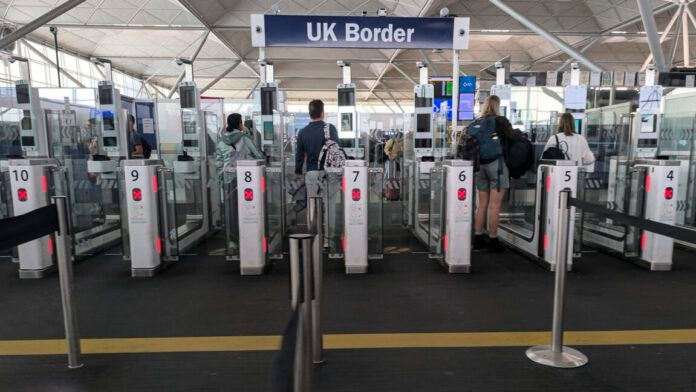
Starting next year, the British government is planning to introduce facial age estimation—where AI scans your face and suggests how old you are—to help determine the age of asylum seekers arriving at the United Kingdom’s border. The move is believed to be the first time that a so-called facial age estimation (FAE) system has been used in this way. Many asylum seekers arriving in the UK will not have documents proving their age, and if children are incorrectly classed as adults, they can be stripped of some legal protections and placed in adult-only detention centers.
An investigation by WIRED and Lighthouse Reports, in collaboration with The Independent, has obtained an internal UK government report detailing its tests of FAE technologies. It shows how the systems regularly mistake children for adults and appear to contain serious bias problems, which directly impact the largest group of migrants subject to age assessments in 2025, according to data from the Home Office. The investigation raises questions about the effectiveness of the technology and whether it should be deployed in such high-stakes scenarios.
The findings also come as the second Trump administration and governments around the world increasingly adopt anti-migrant policies while spending billions on surveillance technology that is often deployed against vulnerable people who have little knowledge of its use, how it works, or ways they can challenge it.
The leaked Home Office document obtained by Lighthouse Reports largely details the “best” performing of seven facial age estimation algorithms that the department tested last year, although it does not directly name the companies behind them. The report found that the system performed significantly worse when it was used to estimate the ages of Sub-Saharan Africans compared to other groups. Sub-Saharan Africans are the largest group of migrants entering the UK after crossing the English Channel in small boats in recent years, and had more age assessments raised in 2025 than cohorts from other regions, according to Home Office data. For female Sub-Saharan Africans, the age that the system guessed was off by an average of 4.6 years, meaning that a 13.5-year-old girl could be assessed as an 18-year-old adult.
The investigation also found that the Home Office, which oversees UK immigration and policing, disbanded a scientific committee designed to advise it on broader age estimation methods while it was exploring the introduction of AI. “We were keen to highlight the inadequacies of facial age estimation, but this opportunity was not presented to us, and then the committee was shut down,” says Tim Cole, an emeritus professor of medical statistics at University College London’s Institute of Child Health and former committee member. Cole describes the face scans as “hideously inaccurate.”
In addition to the internal report and the scientific committee members’ concerns, years of test results from the US National Institute of Standards and Technology have shown that FAE systems’ accuracy often depends on the race of the person being analyzed and the quality of the photos taken of them.
“We have rigorous processes in place to verify an individual’s age and are working to modernize these through the testing of fast and effective facial age estimation technology,” a Home Office spokesperson says in response to the findings. The spokesperson adds that the committee was disbanded due to requiring “different fields of expertise.”
While the Home Office says face scanning is designed to be an “additional” tool for border officers and won’t “replace or overrule human judgment,” it did not answer questions about how it plans to use the technology in real-world environments. “In cases of uncertainty,” the spokesperson says, “individuals will always be treated as children until a further assessment is conducted.”
Expanding estimates
The UK government first announced its plans to use face age estimation alongside border staff judgments to assess migrants in July 2025. Since then, the Home Office has delayed the rollout of the systems until 2027, saying it will use the “cutting-edge AI tech” to “crack down on fake claims” with the aim of stopping “adults attempting to game the system.”
Over the past five years, AI face scans have emerged as a key component of controversial online age verification programs, as lawmakers have mandated social media platforms, porn websites, and some retailers check their users’ ages. It has also been trialed at some bars and shops in the UK. Face age estimation works by analyzing the features of someone’s face—with the underlying systems trained on millions of age-labeled faces—to produce an estimated age. In controlled laboratory tests, the best algorithms can predict a person’s age to within around 2.5 years.
However, the results can vary wildly depending on the algorithm, a person’s gender, demographic details, and other factors. Poor-quality images, such as those with bad lighting, can drastically reduce the performance of the systems. (A case in point: People have tricked some systems using images of characters from video games.) The Home Office appears to have been aware of potential problems with the technology and still pushed ahead with its program.
The leaked Home Office report produced in April 2025, which was completed before the government purchased face-scanning technology, details the testing of seven FAE algorithms against more than 2.5 million images. However, the internal report says that the unnamed “best performing algorithm” had “substantial deviations” when tested on images of Sub-Saharan Africans. On average, that system also tended to predict that a 17-year-old would be over 18, and it performed worse on females.
Tens of thousands of people make asylum claims in the UK each year, with many arriving in the country after dangerous, physically demanding journeys in small boats crossing the English Channel. Currently, border staff who doubt the age of someone claiming to be under 18 can assess their physical appearance, answers to interview questions, and general demeanor, to make an initial decision about their age. These initial age estimations are made upon the “first encounter,” the Home Office says in guidance. Since 2010, 40 percent of people who have faced age assessments have been classed as adults, according to official statistics.
The leaked Home Office report says that its findings are based primarily on testing that uses high-quality images taken of documented people, and that may mean that the algorithms’ accuracy rates would be even worse in practice. The Home Office has indicated that FAE technology would help immigration officers who are making age assessments while working at the point of first encounter.
According to the internal report, the few photos included in the testing data that were taken at initial encounters were “routinely worse” than follow-up photos of the same people. The photo quality was apparently so bad that the report was unable to determine if that or the physical condition of asylum seekers at arrival had more of an impact on the algorithms’ age estimation results. NIST’s own testing has found that for many age estimation algorithms, lower-quality photos typically lead to larger errors. The internal report concluded that more needed to be done to study the impacts of stress that asylum seekers endure before arriving at their destination.
“Children seeking asylum have often suffered unimaginable trauma,” says Martha Dark, the co-executive director of rights group Foxglove. “They should not be the test subjects for experimental tech that has baked-in inaccuracy and racist bias.” Foxglove, along with 61 other organizations, sent an open letter to the UK government on Thursday asking for the Home Office to scrap its plans to use the tool.
It is unclear if the flawed system mentioned in the report was purchased by the UK government, but in May this year it spent more than $400,000 on face-scanning technology from German company Cognitec. (The company was one of the seven algorithms tested, but it is unclear which.) A WIRED and Lighthouse Reports analysis of public data about Cognitec’s face age estimation systems found that Cognitec’s system misclassified twice as many 16-year-olds as being 18 or older when the system was tested on a dataset of lower-quality photos taken at border crossings compared to higher-quality visa photos. Lighthouse Reports conducted a full audit of the data from the NIST face estimation scores, which showed demographic differences in performance, including that 16-year-olds from West Africa were more likely to be classified as 18 or older than Eastern European 16-year-olds.
A spokesperson for Cognitec says they could not comment on their work with the Home Office; however, they point out that “demographic differences” in performance apply to all face scanning algorithms. “The reasons for bias are extremely complex and often related to image quality issues,” the spokesperson says.
“The bias of Cognitec algorithms is low compared to other algorithms of similar overall accuracy, and be assured that we are diligently and continuously working on reducing bias by developing specific testing methodologies, designing loss functions in our network training, and by diversifying the training and testing data,” the spokesperson says.
Stress test
Even if accuracy can be improved, technology is rarely operated exactly how its creators intend. Bugs, technical flaws, and user error mean systems frequently produce errors. When coupled with sensitive decisions that may change people’s lives, those risks can be exacerbated.
For years, according to previous reports from the UK’s Independent Chief Inspector of Borders and Immigration, the Home Office’s human-led age estimations have included problems. There have been instances of “poor” recording keeping, “perfunctory” visual assessments, and at times a lack of explanation from border staff about existing processes. Staff conducting age assessments were not provided with any specific training for the task until 2023, according to the last inspection report.
“Making initial age decisions is a difficult and complex job, with immigration officers working in challenging circumstances, often under pressure to quickly process lots of new arrivals,” the Home Office says in recently published guidance about the potential use of face age estimation AI. “It allows immigration officers to test their judgment against the technology’s estimate.”
Yet in the leaked report from last year, the Home Office said how the face scanning technology would be used in an “operational context” was still being explored. The report, which the government previously declined to release in records requests, also highlights the testing found that “temporary aging” relating to trauma and the “stress of travel” appeared to impact the accuracy of face age estimation systems, raising further questions about the use of the technology in the asylum process.
WIRED, Lighthouse Reports, and the Independent asked the Home Office detailed questions about how already stretched border officers will interact with facial age estimates, whether staff will be provided with specific training that addresses the weaknesses in the systems, and if there will be specific standards required around where and when photographs to be used in the system will be taken. We also asked the Home Office about any steps it is taking to reduce the facial and gender disparities it identified in the technology.
The Home Office did not directly address these questions but said the UK’s National Physical Laboratory has been commissioned to carry out an “independent review” of testing the systems and looking at results of its trials. It has also publicly discussed using a “threshold” age—such as configuring the system to identify if people are under 20—to reduce margins of area. It is unclear if this approach will be taken or what any thresholds may be.
Meanwhile, experts worry that any use of facial age estimation technology at borders will be “dehumanizing” for the people it impacts and could become normalized for staff. “Over time there’s a real risk that this will become entrenched,” says Anna Bacciarelli, a senior researcher at Human Rights Watch. “There’s so much risk in every component of this system that it’s really just not worth pursuing to be able to say that you’re using AI to tackle migration.”
India doubts drove Pentagon’s Indo-Pacific name change
The Pentagon’s decision to restore the designation US Pacific Command (USPACOM), replacing the Indo-Pacific Command name adopted in 2018, has officially been presented as a historical adjustment rather than a strategic shift.
According to the US Department of Defense, the command’s area of responsibility remains unchanged, stretching from America’s Pacific coastline to India’s western border, while its mission and commitment to maintaining a “free and open” region remain intact.
The 2018 decision to rename Pacific Command as Indo-Pacific Command reflected a broader strategic vision that placed India at the center of Washington’s approach to Asia, elevating it from a major regional power to a key pillar of the Indo-Pacific framework.
Eight years later, the return to the Pacific Command designation raises an important question: Is Washington beginning to reassess some of the assumptions that shaped that strategy?
The India assumption
The Indo-Pacific concept emerged as the US sought to respond to China’s growing economic, technological and military influence. At the heart of that framework was the belief that India would play a leading role in preserving a balance of power favorable to the US across the region.
The rationale made good strategic sense. India has a population exceeding 1.4 billion people, was the world’s fourth-largest economy in 2025 and spends more than US$86 billion annually on defense. Its geographic location places it astride critical maritime routes connecting the Middle East, Africa and East Asia.
Washington invested heavily in this vision. Defense cooperation expanded dramatically, intelligence sharing deepened and military interoperability increased. The US and India signed a series of foundational defense agreements while bilateral defense trade grew from virtually zero in the early 2000s to more than $20 billion. Through mechanisms such as the Quad and joint exercises such as Malabar, India became increasingly integrated into American strategic planning.
Underlying all this was a broader assumption: that India would emerge not only as a counterweight to China but also as a stabilizing force in South Asia and a major contributor to wider Indo-Pacific security. The question today is not whether India has become more powerful, which it clearly has. Rather, it is whether the strategic expectations the US sought from India have been realized.
Outcomes over potential
To be sure, India’s recent achievements are substantial. Few countries have expanded their international profile as rapidly over the past two decades. Yet regional leadership depends not only on economic growth and military spending but also on the ability to shape regional outcomes and manage security challenges.
It is here that India’s record is mixed. The 2019 Balakot crisis demonstrated how rapidly tensions between India and Pakistan, both nuclear powers, could dangerously escalate despite enhanced international engagement with both countries. More recently, the May 2025 confrontation again required diplomatic intervention by outside powers to prevent further deterioration.
These episodes do not diminish India’s strategic importance. They do, however, highlight the limits of military and diplomatic coercion as instruments for managing the India-Pakistan relationship. The realities of nuclear deterrence have constrained escalation in recent clashes and limited the ability of India to impose unilateral outcomes on Pakistan.
For Washington, this matters because US policymakers under Trump increasingly seek partners capable of reducing America’s strategic burdens. As strategic competition with China intensifies, the US has strong incentives to avoid becoming repeatedly drawn into regional crises that divert attention from its broader priorities.
There are also signs that Washington is increasingly willing to evaluate India through a more transactional lens than was common during the early years of the Indo-Pacific framework. The contrast between Trump’s first and second administrations underlines the point.
Trump’s first term embraced the Indo-Pacific concept as a strategic vision in which India was positioned as a future counterweight to China. In this vision, strategic potential often received greater emphasis than immediate returns.
Trump’s second administration, however, is much more focused on measurable outcomes. Despite repeatedly describing India as an important strategic partner, Washington has maintained pressure on trade issues, pursued tariff disputes and approached economic negotiations through a framework emphasizing reciprocity rather than exceptional treatment.
This suggests that geopolitical importance alone no longer guarantees preferential consideration in American policymaking. This does not necessarily downgrade India in America’s vision. Rather, it suggests that Washington under Trump may be moving from strategic aspiration toward strategic performance as the principal standard of evaluation.
Pakistan’s rising relevance
This US reassessment of regional realities has coincided with renewed acknowledgment of Pakistan’s strategic significance. For much of the past decade, many analysts predicted that Pakistan’s relevance would steadily decline as India’s economic and diplomatic influence expanded. Yet geography and geopolitics continue to undercut those assumptions.
Pakistan is home to approximately 250 million people and maintains one of the world’s largest military establishments, with roughly 650,000 active personnel. It possesses a nuclear arsenal estimated at more than 170 warheads and occupies a strategic position connecting South Asia, Central Asia, Afghanistan and the Gulf.
Recent events have reinforced that relevance. Pakistan’s role in facilitating communication and diplomatic engagement between the US and Iran during their war has reinforced Islamabad’s value as a regional interlocutor. That role reminded US policymakers that Pakistan retains influence across multiple geopolitical theaters extending beyond South Asia to the Middle East.
Washington’s relationship with Pakistan has historically fluctuated according to changing geopolitical circumstances. Recent regional developments, however, have again underscored that Pakistan cannot be excluded from US strategic calculations about South Asia, Afghanistan or the Gulf.
That is, South Asia cannot be understood or managed exclusively through an India-centric framework. Regional outcomes are shaped by multiple actors whose influence derives from geography, military capabilities, diplomatic relationships and their ability to affect events beyond their immediate borders.
A shift in strategic thinking?
Critics may argue that the renaming of the Pacific Command is little more than bureaucratic branding. They would correctly note that the Quad remains active, defense cooperation between Washington and New Delhi continues to expand and India remains central to American efforts to balance China’s growing power.
Yet the significance of the renaming lies less in what it changes operationally than in what it reveals conceptually, i.e., that strategic frameworks are ultimately judged by results rather than intentions.
The restoration of Pacific Command does not signal an American abandonment of India, nor does it imply the collapse of the broader US-India strategic partnership. India remains one of the world’s most consequential powers and a critical American partner in Asia.
What may be changing, however, is that Washington is placing greater emphasis on strategic outcomes than on strategic expectations. If that trend continues, the future debate will not be about whether India remains important, but about whether the strategic expectations that drove its elevation in Washington have been fulfilled – and, if not, how Washington responds beyond renaming its largest military command.
Saima Afzalis a researcher specializing in South Asian security, counterterrorism, and broader geopolitical dynamics across the Middle East, Afghanistan and the Indo-Pacific. She is currently a Research Scholar at Justus Liebig University, Germany.
FBI Tried to Flip Anti-ICE Protesters Into Informants
John Mark Rozendaal was just trying to play music.
On May 29, along with scores of others, Rozendaal responded to calls on social media to gather outside of Delaney Hall, the immigration detention facility in Newark, New Jersey.
The privately run U.S. Immigration and Customs Enforcement facility had, in recent weeks, become the site of daily protests, spurred by a detainee hunger strike against alleged ghastly conditions inside.
When Rozendaal went to Delaney Hall, he took his cello with him.
“I consider music to be a de-escalatory thing to do,” he told The Intercept. “I sat down on the concrete barricade facing north and started to play.”
“The agent said, ‘We’re calling because you were arrested at Delaney Hall.’”
That night, however, the scene outside Delaney Hall quickly took a violent turn. New Jersey State Police and ICE agents issued a dispersal order and began to clear protesters from the area by force — with officers deploying chemical weapons and charging protesters on horseback.
“As I played, I saw this wall of plastic riot shields and cops in tactical gear advancing,” Rozendaal recalled. “There were tear gas canisters flying overhead. I could see horses behind the riot shields, flash-bangs. So it was quite dramatic.”
Moments later, Rozendaal was arrested by the New Jersey State Police and, according to an arrest report viewed by The Intercept, charged with one count of obstructing law enforcement. The charge was minor — but a week later, things took a strange turn when Rozendaal received a call from the FBI.
“The agent said, ‘We’re calling because you were arrested at Delaney Hall,’” Rozendaal told The Intercept. (The FBI declined to comment.)
In the following minutes, Rozendaal said the agents asked if he would be willing to provide the FBI with information on protesters that they described as “anybody planning to go to Delaney Hall with not the right intentions.”
“So, I mean, they were asking me to inform,” Rozendaal said.
Mainstay FBI Tactic
Rozendaal is not the only Delaney Hall protester to receive a call from the FBI.
In the weeks since arrests began stacking up at the protests — approximately 90 people have been arrested so far — at least half of those taken into custody have received calls from federal agents looking for information, according to Benjamin Van Meter, a deputy public defender with the Essex County Public Defender’s Office who represents a number of protesters facing charges.
Van Meter lodged a complaint with authorities over the matter, claiming the FBI contact with his clients violated their constitutional rights.
The phone number used to contact Rozendaal, according to call history logs reviewed by The Intercept, is registered to the FBI’s New York field office and is posted online as an anonymous tipline.
Rozendaal said he rejected the offer immediately and, when the agent attempted to question him further, invoked his right to remain silent, ending the conversation.
The FBI has a long track record of trying to turn protesters, political dissidents, and ethnic and religious minorities into informants. The strategy, which is still commonly used today, can serve agents by both collecting information while stoking distrust among members of political movements and religious communities, according to Amol Sinha, executive director of the American Civil Liberties Union’s New Jersey chapter.
“With every major protest movement in United States history, there have been attempts at infiltration.”
“With every major protest movement in United States history, there have been attempts at infiltration and attempts to disrupt them and to sow discord,” Sinha said. “The FBI has repeatedly been on the wrong side of history every time they’ve tried these tactics of infiltration.”
Sinha said it was important for anyone approached by federal agents to remember their right to remain silent and to ask for an attorney to be present for any questioning.
“Unless the FBI produces a warrant, you have the right to refuse entry, ” Sinha said. “You certainly have the right to stay silent and to demand a lawyer. You are not under any obligation to speak to them about anything — especially if they are charging you with a crime.”
“The Rights of Our Clients”
Samuel Becker, another protester facing local charges after an arrest outside Delaney Hall, told The Intercept he too got a visit from federal agents in the days following his arrest.
“The FBI would rather intimidate and punish the people protesting outside of Delaney Hall than investigate the physical, sexual, and psychological violence that ICE agents and their auxiliaries are inflicting on detainees across this country every day,” Becker said.
Van Meter, the public defender, wrote a letter to Robert Frazer, the U.S. attorney for the District of New Jersey, and two high-ranking FBI officials in New York and New Jersey, demanding that the FBI stop their attempts to question his clients without an attorney present. (The Department of Justice did not respond to a request for comment.)
“These attempts at contacting our clients at their homes and by phone violate their right to counsel and we ask that you immediately cease and desist from all attempts to question or interrogate our clients without their counsel present,” Van Meter wrote in the letter, dated June 9. “Any further efforts to question our clients are a continued violation of their constitutional right to counsel and our office remains ready to seek all available relief under both state and federal law.”
In a statement to The Intercept, Karen Paff, a spokesperson for the New Jersey Office of the Public Defender, said Van Meter and his colleagues were simply looking “to ensure that the rights of our clients are respected.”
“When law-enforcement officers seek to question individuals who are represented by counsel about matters within the scope of that representation, it is our responsibility to notify the appropriate agencies that counsel has been assigned and that any such communications must comply with the law,” Paff said. “This is not a new or case-specific practice. It is a routine part of our responsibility to clients in any matter where represented individuals may be approached for questioning.”
For Rozendaal, the intent of the FBI agents who sought him out seemed to go beyond just fishing for information.
“I think the real intent is to divide us, to make us scared to talk to each other, too scared to talk in general, scared to go to Delaney Hall,” Rozendaal said. “It won’t work.”