21.6 C
London
Saturday, June 27, 2026
Home Blog

Russian citizens told “switch to Android” after Apple blocks key Russian apps

0
russian-citizens-told-“switch-to-android”-after-apple-blocks-key-russian-apps
Russian citizens told “switch to Android” after Apple blocks key Russian apps

According to Apple’s 2025 App Store Transparency Report, Russia is the runaway world leader in one category: Demanding that Apple remove apps from its App Store.

In 2025, Russia asked that Apple remove 1,213 apps—many of these VPN apps designed to thwart the country’s draconian Internet censorship. (Vietnam was number two, requesting that 335 apps be blocked.)

Russia is essentially trying to build a closed, spy-friendly, domestic version of the Internet. While the Russian government loves demanding app bans from Apple, it only wants bad, degenerate apps banned. It does not want good, strong Russian apps banned, such as VKontakte (a Russian version of Facebook) or the Max messaging app (state-mandated communications software so creepy that one exile publication described it with the insanely long headline, “You already know Russia’s Max messenger spies on users. You probably don’t know just how many surveillance tools it hides, including even a neural network for eavesdropping.”)

In the last few weeks, Apple has blocked both of these key apps, making them unavailable to iPhone users in Russia. Existing installs will still function, but Apple has shut down push notifications from the apps, making them far less useful. Max was blocked on in the first week of June. VKontakte was blocked on June 25.

According to the Moscow Times, Kremlin spokesperson Dmitry Peskov said yesterday that “the Russian government expects an explanation from Apple for the removal of VK apps.”

VK Group, the developers of VKontakte and related services, issued its own statement complaining that “Apple has removed VK apps from the App Store without warning or explanation… VK has never been subject to sanctions nor included on sanctions lists, a fact confirmed by numerous legal opinions from international and US counsel. Apple has long been in possession of these official legal opinions and all relevant information. Nevertheless, Apple unilaterally removed VK apps without prior notice… We consider these actions by Apple regarding Russian users to be unjustified and unacceptable.” (Translation from Russian through Google Translate.)

VK Group also stressed that its Android apps “remain fully functional—including updates, notifications, and other features—and are available via RuStore, Google Play, Huawei AppGallery, Samsung Store, Xiaomi Store, and official product websites.”

This appears to be the new line from the Kremlin, as well. A Russian Telegram channel that reports on Peskov’s comments quoted him yesterday as saying that Apple perhaps could not be “trusted as a commercial service provider” and that the blocks are part of a pattern of “decisions by Apple that are, to put it mildly, bizarre.” (Translation from Russian through Google Translate.)

Still, despite the posturing, Peskov knows the score; there’s little Russia can do about the situation. So instead, he ended with an appeal to users. “There is always an immediate solution,” he said, “switch to Android, switch to our systems, switch to our equivalent service, and continue using the services you love.”

The political painting that is still on trial in South Korea

0
the-political-painting-that-is-still-on-trial-in-south-korea
The political painting that is still on trial in South Korea

In a Seoul courtroom in March this year, a prosecutor read out charges against Jeon Seung-il, a former art student, from an indictment first written in 1989. The language had not changed, nor had the charges. Thirty-seven years later, only the young defendant had grown old.

In 1989, he was 23 years old in a South Korea still shaped by decades of military rule. Jeon helped create a 77-meter-long painting depicting the country’s independence movement and democratic uprisings.

It led to his being charged and convicted under South Korea’s National Security Act with producing what the law calls “enemy-benefiting expression materials.”

Years later, the state displayed the same artwork at the National Museum of Modern and Contemporary Art and recognized him as a participant in the movement for constitutional rights. His criminal record, however, was never expunged.

Jeon’s case was finally reopened for retrial in 2026, after courts recognized that he had been unlawfully detained and coerced by intelligence agents decades earlier. The prosecution, which had opposed reopening the case, returned to the original indictment, again arguing that the painting promoted ideas “sympathetic” to North Korea.

Nearly four decades on, the legal framework remained frozen in time, refusing to match the rights-respecting reality the South Korean state now claims to celebrate. To understand how a painting can remain a crime for nearly four decades, you have to understand a war that has never ended.

Seventy-six years ago today, the Korean War began. Following the end of Japanese colonial rule in 1945, the peninsula had been divided at the 38th parallel, with the Soviet Union administering the North and the United States the South. By 1948, two separate states had been established. Two years later, war broke out.

The fighting lasted three years; the war has lasted a lifetime. It left millions dead or wounded, reduced much of the peninsula to rubble, and divided families that to this day have never been reunited.

What was signed in July 1953 was an armistice, a military agreement to stop fighting. Not a peace treaty. The armistice still holds, but peace never came. The peninsula remains divided by a demilitarized zone, one of the most heavily fortified borders in the world.

The division not only separates territory. It severed people from one another and from the right to know how the other side lived. International human rights law protects the right to seek, receive, and impart information “regardless of frontiers.” The two Koreas have ratified the International Covenant on Civil and Political Rights.

Yet both have built legal systems that criminalize how people access, discuss, and express the ideas, information, and culture of the other. The comparison is not one of equivalence. In both countries, however, the same unresolved conflict serves as justification for suppressing the same fundamental right.

In South Korea, the 1948 National Security Act criminalizes praising, encouraging, or siding with “anti-state organizations”, broadly defined in law as groups that claim governmental authority or seek to overthrow the state.

In practice, South Korean prosecutors and courts have applied this above all to one entity: North Korea. The effect reaches beyond the courtroom. Any expression that can be framed as sympathetic to North Korea risks attracting the label “ppalgaengi,” a slur meaning “red,” or “jongbuk,” literally “following the North,” a derogatory label branding someone as subservient to the enemy.

These are not merely words. They are social sentences that can end a career, destroy a reputation, and follow a person for life. The damaging effect of a law like the National Security Act is not only what it does to the people it prosecutes. It is also what it does to everyone else. The law prosecutes a few. The fear it generates silences the rest.

In December 2024, then-President Yoon Suk Yeol declared martial law, citing “pro-North anti-state forces.”

Although the declaration was overturned by parliament within hours and Yoon was eventually removed from office, the crisis exposed a chilling continuity. The same language once used to prosecute an art student for a painting was invoked to justify an attempt to shut down the National Assembly.

In North Korea, the same logic runs in the other direction, but with far harsher consequences. A 2020 law describes South Korean media as “rotten ideology,” punishing viewing it with lengthy prison terms and potentially with death for its distribution.

A 2023 law extends this to South Korean speech patterns and vocabulary. Yet people Amnesty International has interviewed who left even before these laws were enacted described a curiosity that no law could eliminate.

They sought out forbidden South Korean dramas and music, knowing the risks. What drew them was not politics, but the depiction of ordinary life that the state’s narrative never acknowledged. The more it was forbidden, the more they wanted it.

The UNESCO Constitution, drafted in 1945, warned that “ignorance of each other’s ways and lives” breeds “suspicion and mistrust” that “have all too often broken into war.” On the Korean Peninsula, both governments maintain this ignorance by law.

Neither system has escaped scrutiny. The UN High Commissioner for Human Rights has condemned North Korea’s laws before the Security Council, warning that punishing people for viewing or sharing foreign media violates the right to freedom of expression. The UN Human Rights Office has since reported a sharp escalation in this repression.

Pyongyang has dismissed these findings, defending its laws as sovereign measures. Similarly, since 1992, the UN Human Rights Committee has repeatedly told South Korea that its law fails the strict requirements of international human rights law, most recently in 2023. Each time, Seoul has used the “northern threat” to justify the status quo, and no reform has followed.

Seven decades after the fighting stopped, most Koreans have never seen a face from across the border. But the search for connection that both governments have spent decades trying to criminalize reveals something neither system can afford to admit: the desire to know the other Korea endures, even under a legal architecture built to enforce silence.

The ICCPR envisions “free human beings enjoying freedom from fear.” On the Korean Peninsula, this vision has been sacrificed to a war that stopped seven decades ago but was never allowed to end.

There has not yet been a verdict in art student Jeon’s retrial. But it is set to continue against the backdrop of an unending war that demands an unending enemy: one that cannot be freely known, openly discussed, or fully understood.

The cost is measured not only in the lives lost during the fighting, but in a fear inherited across generations, in the conversations that never happened, in the questions never asked, and in the futures that became harder to imagine.

Boram Jang is East Asia researcher at Amnesty International.

NFL Great Dies at 78

0
nfl-great-dies-at-78
NFL Great Dies at 78


Steve Zabel, a former college football and NFL star remembered for his rare two-way talent, has died at the age of 78.

The NFLPA Former Players announced Zabel’s death on social media earlier this week. His cause of death has not been released.

Zabel, a Minneapolis native, made his name at the University of Oklahoma, where he became one of the most memorable players of his era under head coach Chuck Fairbanks. Though he was primarily a tight end, Zabel also made a major impact on defense as a linebacker, helping turn Oklahoma into a Big Eight powerhouse.

His breakout junior season in 1968 earned him Second-Team All-American honors and helped cement his reputation as one of college football’s toughest and most versatile players.

In a 2021 interview with the Philadelphia Eagles, Zabel recalled the moment Fairbanks asked him to take on an even bigger role.

“Chuck Fairbanks called me in his office and said, ‘Steve, we’ve proven we can’t outscore people. We want you to play defensive end as well as tight end and see if we can’t win some games,’” Zabel said.

“For me, it was a great transition,” he continued. “I played both ways and punted, and we won our last six games in a row and won the Big Eight Championship.”

His college dominance made him one of the most intriguing prospects in the country. In 1970, the Philadelphia Eagles selected Zabel with the sixth overall pick in the NFL Draft.

Zabel spent the first five seasons of his NFL career in Philadelphia before joining the New England Patriots. He played four years in New England, then had a short stint with the Baltimore Colts before retiring after a decade in the league.

While his two-way magic made him a star at Oklahoma, the NFL had different plans for him. As a rookie with the Eagles, Zabel appeared in 14 games and made eight starts, catching one touchdown. But after that season, coaches decided his future was not on offense.

The Eagles told him they believed his temperament was better suited for defense and moved him to outside linebacker, where he remained for the rest of his pro career.

Zabel went on to become a respected defensive presence and was later named to the Patriots’ Team of the 1970s. During his college career, he was also selected First-Team All-Big Eight twice.

After football, Zabel took a different path than many former NFL players. Instead of chasing college coaching jobs, he chose to work at the high school level and give back to young athletes. He also helped establish several charitable programs in Oklahoma City.

Zabel is survived by his wife, three children, several grandchildren and a great-grandchild.

OPINION – Resisting the Urge To Sit Shiva for New York City 

0
opinion-–-resisting-the-urge to sit-shiva-for-new-york-city 
OPINION – Resisting the Urge To Sit Shiva for New York City 


When Zohran Mamdani won the New York City mayoral election in the fall of 2025, I began hearing talk of Jews making plans to leave the city, home to about 1 million Jews. 

While the conversation surprised and saddened me—and I was certainly alarmed by Mamdani’s victory—it was not until this past Tuesday night that I had to ask myself: how long will life be sustainable for Jews in NYC? 

Or put another way: Is this NYC’s Anatevka moment?  

For those confused by the reference, Anatevka is the mythical Russian shtetl where Sholom Aleichem’s Tevye the Milkman and family lived in poverty but relative peace with their non-Jewish neighbors until a pogrom drove them out.  

The spectacle of the Jews of Anatevka packing up their belongings and leaving is the most heartbreaking moment of the show Fiddler on the Roof (and the 1971 movie), both based on Sholom Aleichem’s story, and rendered especially poignant in the latest Yiddish-language version.  

It is hard not to see the results of New York’s Democratic primary on Tuesday as a political pogrom, with overtly anti-Israel candidates ousting moderates, screams of “Free Palestine” at post-election celebrations, and the mayor of our city dipping into the antisemite’s playbook to vilify AIPAC—among all special interest lobby groups—calling them “monsters.” 

NYC, we have a problem. 

This is what is most concerning about the primary results: Former encampment organizer and Hamas sympathizer Darializa Avila Chevalier winning in the 13th District, New York State Assemblymember Claire Valdez winning in the 7th District, and  former NYC Comptroller Brad Lander winning as congressman in the 10th District, ousting the incumbent Dan Goldman. Just last week, Goldman was informed via Instagram post that he was not welcome as a patron at a Brooklyn coffee shop Poetica because, as a pro-Israel Jew, he is allegedly a “genocide-enabler.”  

All three political victors were backed by Mamdani. All three put Israel/Palestine at the core of their campaigns. Two of the three—Chevalier and Valdez—are members of the Democratic Socialists of America, a progressive group which has been accused of antisemitism and anti-Zionism. And Lander, despite being Jewish and a self-described “liberal Zionist,” has sided with unabashed haters of Israel, validating their claims and canards.  

There is plenty of shock and anger to go around, not to mention fear and sadness, at the possibility that, like many great centers of Jewish life, New York City could turn against its Jewish residents. For those who live here, and in the contiguous suburbs,  the results of the primary are just the cherry on top of the sundae of shock and horror within a city that has experienced vicious mobs chanting antisemitic slogans outside of synagogues and the iconic 92nd St Y; red paint splashed on the facades of kosher restaurants; a Jewish member of Congress denied service at a coffee shop because he supports Israel; posters of murdered Israeli children torn down; public calls for global intifada. 

Suddenly, all the cool kids hate Israel and, by extension, the majority of Jews who support her. 

Following the election returns, my social media feed reminded me of an online shiva call. “I haven’t been this upset about an election since 2024. That tells you something. I’m now officially politically homeless. And I sense I’m not alone. In truly dark despair,” wrote Jeffrey Salkin, a Reform rabbi and author of numerous books. 

Zioness, a coalition of Jewish activists. posted yesterday: “Last night in Democratic primaries in New York City … Jewish identity was used as a potential liability. … Zionist identity was treated as disqualifying, and the ‘good Jew/bad Jew’ dichotomy was leveraged for power.” 

Others were more blunt. 

“We’re f-ed. Goodnight.” wrote the actor and spoken-word artist, Vanessa Hidary, as the primary results poured in on Tuesday night. 

Two days after the New York Democratic primary, the mood is heavy, possibly shell-shocked. Nearly three years after the genocidal attacks against Israel of 10/7, Israel and pro-Israel Jews are suddenly, illogically genociders. Anti-Israel/pro-Palestinian rhetoric is the new normal in Mamdani’s New York City, with a side of overtly antisemitic language and tropes.  

In her victory speech, Valdez proclaimed: “I will continue to call for Palestinian liberation. … We will stand up to the genocide. We will refuse to abide by apartheid. And we will use our money to improve lives here instead of destroying them abroad.” 

This is not the New York state of mind that Billy Joel (a Jew!) wrote about 50 years ago.  

So do we pack up like Tevye and the residents of Anatevka? 

The decision of where to live is personal, of course, and no, it is not crazy to want to jump from a sinking, burning ship, but for now, I am digging in my heels, rolling up my sleeves, muscling up, and bracing for the fight of my lifetime.  

This is my city, where I was born, where I came of age, where I raised a family, where I worked, played, and worshipped. It was in this city that I held my head up high because we Jews were an inextricable part of the social, intellectual, and political elite; we produced films, plays, and music; we composed Broadway musicals; we wrote award-winning books; we were feisty, muckraking journalists, acclaimed lawyers, and pioneering doctors. We have been the thought leaders, the entrepreneurs, the institution builders, the donors whose names adorn museum buildings and hospitals. Our spiritual leaders were known and respected. We were neurotic, self-reflective, self-deprecating, and sometimes self-aggrandizing.  

The fact of my Jewishness is interwoven into my very New Yorkness. 

For at least a century, New York City was the Jerusalem on the Hudson because it celebrated its Jewish citizens—creative visionaries, rabbis, and rebels. 

One thing is for certain: if New York City turns against its Jewish residents, the city is over. Cooked. Dead. Kaput. 

But I have built a fortress from my rampart in Morningside Heights, and damned if I am going to let my city go down without a fight.

Doctors suspected man had brain cancer. He actually had worms.

0
doctors-suspected-man-had-brain-cancer-he-actually-had-worms.
Doctors suspected man had brain cancer. He actually had worms.

A  60-year-old man in Spain went to the doctor complaining of a headache that he couldn’t shake. It had started two weeks prior and was only getting worse. He also said he had noticed subtle changes in his behavior.

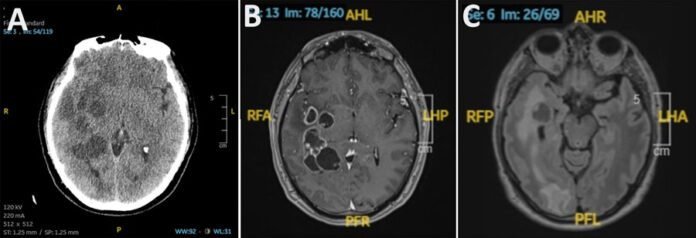
In a neurological exam, doctors found he had a mild delay in his movements, but no other deficits. His blood work was generally normal except for elevated IgE, a signal of immune responses linked to allergies, autoimmune disease, and parasitic infections. The doctors did a computed tomography (CT) scan of his head and saw much more obvious evidence of a problem: There were multiple lesions distributed throughout his brain accompanied by swelling.

In a case report in Emerging Infectious Diseases, the doctors reported working through the possible conditions that could explain all the findings. They noted that the man was not immunocompromised and had never traveled internationally. Their top suspicion was metastatic cancer.

For his headache, the doctors put him on an anti-inflammatory corticosteroid, and he finally got some relief. They then began an extensive series of tests to look for the cancer they thought had spread to his brain. This included a whole-body, contrast-enhanced CT scan, a colonoscopy, and a hybrid positron emission tomography/CT scan often used to map cancer. But the tests didn’t reveal any malignancies.

The doctors did another brain scan, this time with a magnetic resonance imaging (MRI) scan to get a better look at the lesions. With the more detailed imaging, they saw clearly that the lesions weren’t tumors; they were encapsulated tapeworm larvae. On the MRI, the doctors could see the worms’ heads, called scolexes.

The finding surprised the doctors since tapeworms aren’t endemic to Spain and he said he hadn’t traveled. However, the man may have been exposed during his work. Until 10-years prior, when he retired, he had worked in construction, often working alongside people who had migrated from regions where pork tapeworms (Taenia solium) are endemic. The parasitic worms can spread through the fecal-oral route. His doctors speculated his infection might have been a rare case of cryptic transmission from sharing meals and bathrooms with his coworkers, one of whom apparently had a tapeworm infection.

Sneaky worms

Taenia solium can infect people in two ways: by eating cysts in undercooked meat or ingesting eggs through fecal contamination. The parasite infects pigs, and when they ingest eggs from feces, the worms hatch in the pigs’ guts, bore through the intestines, get into the bloodstream, and migrate into a variety of tissues and muscles. There, they form into encapsulated larvae called cysticerci. If a person eats undercooked meat containing cysticerci, the larvae will develop into adult tapeworms in the person’s intestinal tract and live there, possibly for years. Meanwhile, those infected people will be shedding eggs in their feces.

If those eggs get spread around from poor hygiene and sanitation—into water, food, etc.—and make it into a person’s mouth, they do what they do in pigs. The eggs hatch, burrow into the bloodstream, and then go wandering around, embedding in various tissues, muscles, and organs, including the brain.

When cysticerci enter a person’s central nervous system, it’s a disease called neurocysticercosis (NCC), which is the diagnosis the doctors in Spain gave the man. Testing after his MRI revealed his immune system had made antibodies against Taenia solium, confirming the infection.

NCC can be serious, causing seizures, significant neurological deficits, cognitive decline, stroke, and other problems. But it can also be asymptomatic. The severity depends on where in the brain the worms settle. Luckily for the man, the effects were relatively mild. Doctors prescribed him two anti-parasitic drugs, and he recovered.

“Our case emphasizes that the absence of travel history should not preclude NCC from the differential diagnosis of multiple ring-enhancing brain lesions, even in regions where metastatic cancer is statistically much more likely,” they concluded. If they had caught onto the worms sooner, it would have prevented “unnecessary invasive oncologic procedures and lead to prompt, targeted antiparasitic therapy.”

King Charles becomes first British monarch to reveal tax bill

0
king-charles-becomes-first-british-monarch-to-reveal-tax-bill
King Charles becomes first British monarch to reveal tax bill


King Charles has become the first British monarch to publicly disclose his personal tax payments, revealing he paid £12.9 million in income and capital gains tax during the 2024-25 financial year.

The figures, published in the Royal Household’s annual report and accounts, also show that the Prince of Wales paid £7.76 million in tax over the same period. According to Buckingham Palace, the combined voluntary tax paid by King Charles and Prince William since the King acceded to the throne in 2022 exceeds £50 million.

Buckingham Palace said the publication of the tax figures was a personal decision by both the King and Prince William aimed at increasing transparency and encouraging greater public understanding of the monarchy’s accountability.

The accounts show King Charles paid £11.7 million in tax in 2023-24, while Prince William paid £8.34 million during the same period. However, the latest disclosures do not include a breakdown of how the tax liabilities were calculated or distinguish between income tax and capital gains tax.

The King receives income from the Duchy of Lancaster, a portfolio of land, property and investments that provides the monarch with an independent source of funding for official and private expenditure. The estate generated an income of £25.2 million in 2025-26. Other taxable income includes private investments, savings and revenue from the King’s Balmoral and Sandringham estates.

Prince William receives income from the Duchy of Cornwall, which funds his official duties, office and private family life. His private secretary, Ian Patrick, said the Prince pays income tax at the highest rate on any net surplus after eligible costs have been met, with those costs independently audited. The tax payable for 2025-26 remains under audit and will be published next year.

William has also decided to forgo the £1.5 million annual rental income from Dartmoor Prison. Instead, he has asked for the money to be removed from the Duchy of Cornwall’s income and directed towards supporting the local community, particularly Princetown.

The annual accounts also confirmed that King Charles and Queen Camilla will continue to live at Clarence House rather than move into Buckingham Palace after its refurbishment is completed. Palace officials said the decision would allow greater public access to Buckingham Palace and help generate additional income. It will be the first time since Queen Victoria’s reign that a monarch has chosen not to reside at Buckingham Palace.

The report also sets out changes to the Sovereign Grant, which funds the Royal Household’s official duties, staffing, travel, palace maintenance and other institutional costs.

The grant totalled £86.3 million in 2024-25, comprising £51.8 million in core funding and £34.5 million for Buckingham Palace renovations. Under a revised funding formula, the total will rise to £137.9 million in 2026-27 before falling to a core grant of £99.9 million annually from 2027-28 after the refurbishment project is completed.

Royal officials said the higher long-term core funding would support the maintenance of historic buildings, strengthen cyber security across royal residences and fund green energy projects, including replacing boilers at Windsor Castle. They stressed that the Sovereign Grant funds the institution rather than providing personal income to members of the Royal Family.

Replicating Ukraine’s drone success requires culture shift first

0
replicating-ukraine’s-drone-success-requires-culture-shift first
Replicating Ukraine’s drone success requires culture shift first

Ukrainian drone strikes are devastating Russian communities. The city of Sevastopol, the largest in Russian-occupied Crimea, is the latest community to be hit, losing power as Ukrainian drones strike energy facilities in the region.

Given the immense importance attached to Crimea by both Russian president Vladimir Putin and Ukrainians — it was the first area of Ukraine annexed in 2014 — the disruption was of great symbolic value.

Furthermore, drones damaging both the Russian economy and Putin’s pride are an increasingly common phenomenon in the conflict.

Ukraine has used drones with notable effect throughout the conflict. In the initial phases of the war in 2022, Ukraine successfully used Turkish-made Bayraktars to disrupt Russia’s invasion timeline. Ukraine’s greatest advancements, however, have come from its own drone industry.

Ukraine holds many cards

Ukraine’s domestic drone industry now ranks among the best in the world. Drones have given Ukraine considerable cards to play in not only the war with Russia, but also in relations with other countries as well.

Ukraine’s drone technology is so advanced, in fact, that Gulf countries consulted Ukrainian officials on countering Iran’s drone attacks during the recent Iran-United States-Israel war.

Ukraine’s significant success with drones is creating a fixation on the technology’s capabilities throughout the world’s military and political establishment. The Canadian military is committing nearly a billion dollars to drone research.

Drones can certainly impact warfare, as conflicts in Ukraine, Iran and elsewhere have clearly demonstrated. Nevertheless, drones aren’t yet fundamentally altering warfare more broadly. Ukraine, in fact, is using drones to make up for shortfalls in other areas.

Drones have a place in warfare, but countries cannot rely on them entirely, and they need the right military culture to successfully use them.

Ukrainian drone industry

Ukraine’s drone industry at the start of the war was relatively small. Most drones were imported, but there was a small and enthusiastic drone community.

When Russia invaded Ukraine in 2022, members of the drone community both enlisted and supported Ukrainian resistance against Russia. They proved to be highly effective in both monitoring Russian movements and employing a wide variety of drones to strike Russian military assets.

Drones offered Ukraine three significant advantages.

First, drones, compared to other military hardware, are cheap. Given the differing economic might between Russia and Ukraine, Ukraine needed to maximize its limited resources if it was to succeed in the conflict.

Second, drones, once factories were established, could be built in Ukraine. Given the frequent lag in military hardware arriving in Ukraine from abroad, even before Donald Trump assumed the American presidency for a second time in 2025, this was a significant advantage.

Third, the effective employment of drones replaced the need for humans. Ukraine, over the last couple of years, has faced personnel shortages and resulting political challenges over pressure from allies to increase enlistment rates.

These realities caused the Ukrainian military to enthusiastically embrace drones to the point that Ukraine became the first country to create a separate branch of the armed forces for drones.

Providing intelligence, strikes

Ukraine’s political and military needs meant that drones were required. Furthermore, Ukraine, contrary to the assessments of drone enthusiasts, is not employing drones in revolutionary ways. Instead, Ukraine is employing drones for tasks that have been common to armed forces for more than a century.

Short-range Ukrainian drones provide both battlefield intelligence and strike capabilities against Russian forces. In other armed forces, various sensors, as well as artillery and other munitions, perform these tasks.

Medium- and long-range Ukrainian drones have struck at Russian logistical hubs, as well as energy infrastructure inside Russia.

These are tasks that various branches of the armed forces of countries have performed for decades. The United States and Israel’s strikes against Iran are an example.

Not easily replicated

What’s often forgotten with technology is that it’s not just the hardware that matters, but also the people operating it. Armies are typically conservative institutions that resist change.

Ukraine, out of necessity, has a culture that embraces drones to enhance the country’s capabilities. This has gone so far as to “gamify” war. Russia, while also employing drones, has not been as effective as Ukraine, despite having vastly superior economic and industrial might.

Russian employment of drone operators is a large reason why. In Russia, those recruited as drone operators are diverted instead to serve as replacement frontline infantry in the attritional assaults favoured by Russian commanders. Not only is Russia thereby depriving itself of skilled drone operators, but media reports about the Russian army’s use of these drone enthusiasts discourage more of them from enlisting.

While many countries will try to copy Ukraine’s successful drone tactics, technology alone is not enough. The stark contrast between the Russian and Ukrainian militaries proves that culture matters just as much as — if not more than — the weapons themselves. To truly harness this new technology, a military must first build a culture capable of maximizing its potential.

James Horncastle is an assistant professor who holds the Edward and Emily McWhinney chair in international relations, Simon Fraser University.

This article is republished from The Conversation under a Creative Commons license. Read the original article.

6 farmers abducted by Israeli army in southern Lebanon amid ceasefire violations

0
6-farmers-abducted-by-israeli-army-in-southern-lebanon-amid-ceasefire-violations
6 farmers abducted by Israeli army in southern Lebanon amid ceasefire violations

The Israeli army abducted six farmers on Friday from the border town of Ain Arab in Lebanon’s Marjayoun district, a day after its forces burned several homes in the same town, Anadolu Agency reports.

The incident comes amid continued Israeli violations of the fragile ceasefire agreement that has been in effect since April 17, although the pace of violations has declined in recent days following the agreement between the US and Iran.

An Israeli force abducted six farmers while they were working on their land on the outskirts of the border town of Ain Arab before taking them into Israel, an Anadolu correspondent said.

The abductees include three Lebanese residents of the town and three Syrian workers, the correspondent said.

Israel continues to occupy areas in southern Lebanon, some held for decades and others seized during the 2023-2024 war. During its latest offensive, Israeli forces advanced more than 10 kilometers (6.2 miles) into Lebanese territory.

Since March 2, 2026, Israel’s offensive in Lebanon has killed more than 4,000 people, wounded more than 12,000 others, and displaced more than one million people, according to official Lebanese figures.

READ: Far-right Israeli minister urges ending Lebanon ceasefire after troops injured

South Korea plans to train entire military as “drone warriors”

0
south-korea-plans-to-train-entire-military-as-“drone-warriors”
South Korea plans to train entire military as “drone warriors”

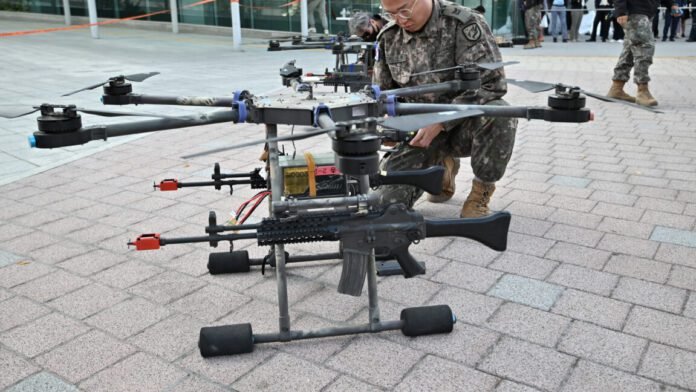
South Korea plans to train every single member of its nearly half-million-strong military to operate drones as easily as they handle personal firearms. That ambitious goal was announced as the South Korean military seeks to maintain a technological edge in its 70-year border standoff with the larger military of a hostile North Korea.

The goal is to make drones a “universal combat tool” for all troops by training them to use drones like a “second personal weapon,” said Ahn Gyu-back, South Korea’s Minister of National Defense, in a June 26 briefing reported by Reuters and other media outlets. The announcement coincides with broader plans to equip individual military units with more cheap and expendable drones for surveillance and strike missions, along with deploying more counter-drone lasers and microwave weapons.

Meanwhile, South Korea’s former drone operations command headquarters that used to have direct command authority over combat units will be reorganized to focus on collaborating with South Korean industry on developing and procuring commercial drone technology, according to The Korea Times. The South Korean defense minister specifically cited the conflicts in Ukraine and the Middle East as inspiring such military reforms with a focus on drone technologies.

South Korea is hardly alone among the many countries looking to Ukraine’s example in training and equipping their militaries with more drones. But Ukraine’s use of drones and military robots as a force multiplier to offset its numerical disadvantage on the battlefield versus Russia’s larger military may carry special resonance for South Korea, given that the South Korean military’s current active-duty strength of 450,000 personnel faces a numerical disadvantage against North Korea’s active-duty military consisting of more than 1.2 million soldiers.

Limits of the drone warrior plan

South Korea must overcome significant hurdles along the way toward fielding 500,000 “drone warriors.” The first challenge is that South Korea’s conscripted military has been shrinking in recent years due to the country’s declining birthrate, according to The Korea Times. So the South Korean military may struggle to merely achieve and maintain an active-duty force of at least 500,000 troops, and especially as long as the country’s mandatory military service excludes women.

Another practical constraint is that the South Korean military is not planning to equip everyone with drones even for training purposes, ministry officials clarified to The Korea Times. The defense ministry is starting out by providing 11,000 “training drones” to military personnel this year, with the goal of eventually deploying 60,000 drones across the military by 2029.

An additional complication comes from the South Korean military looking to procure drones with 100 percent domestically produced components and no Chinese components due to security concerns, according to the defense minister’s comments reported by Reuters. China is North Korea’s main economic and security partner.

However, China also dominates the world’s commercial drone market through leading drone manufacturers such as DJI. South Korean companies are building new military attack drones, but the defense ministry may struggle to find enough commercial drones made without Chinese components to train hundreds of thousands of military conscripts, said Min-Cheol Jung, a cofounder of the Team Retriever counter-drone red team based in South Korea, in a War on the Rocks article.

Jung also highlighted the South Korean military’s personnel shortage, especially among noncommissioned officers and officers expected to help train new conscripts to use drones.

Lessons from Ukraine

It’s worth noting that Ukraine, the model for so many countries’ military reform efforts, does not field a military where everyone is trained to be a drone pilot—although Ukraine has scaled up training to produce tens of thousands of drone operators.

Instead, Ukraine’s effective use of military drones comes from having widely deployed specialized drone operator teams to back up front-line infantry units, standing up the Unmanned Systems Forces branch of the military to develop drone doctrine and coordinate deep strike campaigns, creating a digital battle management system that provides updated battlefield information for rapid decision-making, and developing a homegrown drone industry that can mass produce millions of drones each year while nimbly innovating in response to changing battlefield conditions.

Meanwhile, North Korean soldiers who survived their encounters with Ukrainian drone warfare while fighting on Russia’s side have already been rotating back home to instruct the North Korean military. Though it’s less clear what kind of training lessons they may be imparting to their comrades.

At the same time, South Korean troops are not alone in facing off against the North Korean military. There are currently 28,500 US troops stationed in South Korea as a legacy of the US military intervention on South Korea’s side during the Korean War, which began with a North Korean invasion.

Taking its own cue from Ukraine’s drone innovations, the US military has also been integrating drone familiarization and counter-drone measures into basic training for its own new recruits, while the Pentagon has requested $54 billion for new drone and counter-drone systems in its fiscal year 2027 budget.

The Left Just Keeps Winning. It’s Time for Democrats to Bend the Knee.

0
the-left-just-keeps-winning-it’s-time-for-democrats-to-bend-the-knee.
The Left Just Keeps Winning. It’s Time for Democrats to Bend the Knee.


When Hakeem Jeffries, who’s positioning himself to be House speaker if the Democrats retake the chamber come November, was shown on the screen at an election party full of socialists in Brooklyn Tuesday night, the crowd chanted, “You’re next! You’re next!” Before polls closed on the night that would see the Jeffries-endorsed candidates fall and Mayor Zohran Mamdani’s candidates win, the New York congressman told reporters that he and the mayor have “agreed to strongly disagree” and that “a handful of primaries that go in one direction or the other in a given state or two aren’t going to reshape who we are as House Democrats.”

He may be right in the short term; it will take many nights like Tuesday to remake the face of the party. But what’s underway is nothing less than an existential threat to the version of the party that has made Jeffries its standard-bearer. If middle-of-the-road Democrats fail to reckon with this escalating reality and shift to the left, they risk making themselves irrelevant forever — and ceding even more ground to the Republicans as they cut off their nose to spite their face.

After all three congressional candidates that earned Mamdani’s endorsement — Darializa Avila Chevalier, Brad Lander, and Claire Valdez — won handily, as did nearly all of the Democratic Socialists of America’s down-ballot slate in New York, Jeffries and his ilk were quick to discount Mamdani’s political project as one that could never take root beyond the New York City meeting halls of Williamsburg and Bushwick. But as other primary races this cycle have shown us, that’s simply not true.

In Maine, Graham Platner delivered a crushing defeat in the Democratic Senate primary to Gov. Janet Mills, whom Chuck Schumer reportedly “aggressively recruited” to enter the race at all (and as we’ve covered, her campaign never really got off the ground or found anything approximating grassroots support). Platner’s victory — amid a spate of scandals over his online posts and alleged mistreatment of women — is now exposing the lie of one of his party’s favorite refrains for disciplining the left: that for all our differences, we must “vote blue no matter who.” 

These candidates stand for actual policy, not just mealy-mouthed “messaging.”

In the Senate race in Michigan, polling is strong for Abdul El-Sayed, a former public health official pushing Medicare for All and centering Israel’s genocide of Palestinians while competing with a both-sides-ing progressive and an outright AIPAC Democrat. Philadelphia nominated Chris Rabb, an outspoken anti-genocide democratic socialist, over the party’s political machine-mined candidate in Philadelphia, and Dr. Adam Hamawy, a 9/11 first responder who saved Sen. Tammy Duckworth’s life as an Army medic but was also tarred with Islamophobic attacks that tried to frame him as a supporter of terrorism, won a crowded 12-way primary in New Jersey earlier this month. (The latter three have all appeared on the trail with Hasan Piker, the popular streamer who’s become a potent political force for left-wing Democrats, much to the dismay of centrists who condemn him as “controversial” and worse.)

If you care to pay attention, there’s an obvious through line with all these candidates: They all stand for actual policy, not just mealy-mouthed “messaging,” and they have been unequivocal in their criticism of Israel. Mainstream Democrats have long lacked that moral clarity as America’s ally in the Middle East committed a genocide in Gaza and dragged the U.S. into an instantly unpopular war with Iran, and they’re being handed the losses they so richly deserve by candidates running to the left. For now, they’ve responded by making overtures of progressive change without meaningful or widespread policy shifts.

The idea that the party should respond to the will of its voters has become so foreign to the Democrats that Jeffries’s political operation has sneeringly referred to even the notion of a party challenge from the left as coming from “Team Gentrification.” On no issue is the division between voters and the national party as stark as it is when it comes to Israel.

A party that wants to defeat the rise of the far right in this country should look to bring the left in, especially as it continues to win at the ballot box. But instead, establishment Democrats have continued to bash and attempt to marginalize the growing left consensus. “If you hate the Democratic Party, then please don’t run for our nomination,” former Democratic National Committee chair Jaime Harrison wrote on social media on Tuesday.

But you can only condescend and disregard your party’s supporters for so long until they look for another vision of the future — one that doesn’t include you.

0FansLike
0FollowersFollow
0FollowersFollow
0SubscribersSubscribe
- Advertisement -
Google search engine

Recent Posts