18.6 C
London
Friday, June 19, 2026
Home Blog

China wins the Iran war without firing a shot

0
china-wins-the-iran-war-without-firing-a-shot
China wins the Iran war without firing a shot

“At this critical stage, relevant parties, including Israel, need to follow the overwhelming trend of peace and stability in the region,” said Chinese Foreign Ministry spokesman Lin Jian, following the signing of the first-stage US-Iran memorandum of understanding

The Chinese official’s remarks reflected much more than diplomatic optimism. They underscored a strategic reality: the US-Iran agreement is as much about restoring global energy flows as it is about ending regional armed conflict.

Much of the international debate has focused on sanctions relief, Iran’s nuclear commitments and whether President Donald Trump conceded too much to Tehran. Those questions matter. But the bigger story lies in the Strait of Hormuz, the world’s most critical energy corridor and Asia’s economic lifeline.

According to the International Energy Agency (IEA), nearly 15 million barrels of crude oil per day, representing about 34% of global seaborne crude trade, transited the Strait of Hormuz in 2025.

The waterway also carried around one-fifth of global liquefied natural gas (LNG) trade, predominantly from Qatar, with nearly 83% destined for Asian markets. Around one-quarter of global seaborne oil trade passes through the strait, making it indispensable to the world’s largest energy importers.

The conflict demonstrated how quickly that lifeline could be disrupted. Tanker traffic slowed, insurance premiums surged and freight costs climbed, driving volatility across oil markets and threatening another bout of imported inflation. The effects reached far beyond the Gulf, adding pressure on central banks already struggling to restore price stability.

No region had more at stake than Asia. China, India, Japan and South Korea depend heavily on Gulf crude and Qatari LNG to sustain manufacturing, transport and electricity generation. About 50% of China’s crude oil imports passed through the Strait of Hormuz in 2025, underscoring Beijing’s exposure to disruptions in the waterway.

While Beijing has diversified its imports through Russia and Central Asia and expanded its strategic petroleum reserves, no pipeline network can replace the volumes of oil and gas moving through the Strait of Hormuz. Stable navigation remains fundamental to Asia’s energy security.

That explains Beijing’s measured but positive response. China has consistently viewed Middle East stability through the lens of energy security and commerce rather than military competition.

Over the past decade, it has expanded strategic petroleum reserves, strengthened long-term energy partnerships across the Gulf and invested in ports, industrial parks and logistics corridors under the Belt and Road Initiative.

Its 25-year comprehensive cooperation agreement with Iran, expanding energy and investment ties with Saudi Arabia and the United Arab Emirates, and its role in facilitating the 2023 Saudi-Iran rapprochement reflect a broader strategy centered on secure energy supplies and economic influence rather than military projection.

The memorandum advances those objectives. Sanctions waivers allowing Iranian oil exports to resume will increase global supply while reducing market volatility. More significantly, the framework reportedly envisages a $300 billion private Reconstruction and Development Fund, with more than half the proposed investment already committed by companies across the Gulf, Asia, Africa and South America.

Structured as a private investment vehicle rather than a government-funded reconstruction program, the fund is expected to channel investment into Iran’s energy, logistics, manufacturing and transport sectors once a final agreement is reached. It creates a commercial incentive to preserve stability while negotiations continue.

For China, the implications extend well beyond access to Iranian crude. A more stable Gulf lowers freight costs, reduces shipping insurance premiums and improves supply-chain reliability across Asia. It also strengthens the commercial environment for Chinese firms already embedded in the region’s infrastructure and energy sectors.

Washington, too, had compelling economic reasons to reach an agreement. However ambitious the initial military objectives may have been, prolonged disruption in Hormuz threatened one of the world’s most critical energy corridors. Another sustained oil shock risked delaying interest-rate cuts, reviving inflation and weakening global growth.

The prospect of renewed private investment into Iran’s energy and transport sectors reinforces the economic logic behind the deal. Financial markets recognized the shift almost immediately. Oil prices retreated as traders anticipated additional Iranian supply, lower shipping risks and a gradual normalization of regional commerce.

China is hardly the only beneficiary. India stands to gain from lower import costs and easing inflation. Japan and South Korea secure more reliable LNG supplies, while European manufacturers would welcome lower energy costs after years of volatility.

Gulf exporters regain access to global markets, and international shipping companies benefit from safer navigation through one of the world’s busiest maritime corridors.

To be sure, the memorandum remains an interim political understanding rather than a comprehensive peace settlement. Future nuclear negotiations could falter, sanctions could return and regional rivalries remain unresolved. Commercial incentives alone cannot eliminate longstanding geopolitical tensions.

Even so, one conclusion is difficult to ignore. The contest in the Gulf was never solely about military power or nuclear diplomacy. It was equally about protecting the energy corridor underpinning the global economy.

Washington may have signed the agreement. Tehran may receive immediate economic relief through renewed oil exports and the prospect of large-scale private investment.

Yet if the Strait of Hormuz returns to stable operations, the greatest long-term strategic gains are likely to accrue to Asia. Among Asian powers, China appears better positioned than any other country to convert secure energy supplies into enduring economic and geopolitical influence.

The agreement may thus ultimately be remembered less for ending the conflict than for reopening the world’s most important energy corridor.

If that happens, Beijing’s long-term investments in Gulf partnerships, energy diplomacy and regional connectivity will look less like cautious hedging and more like a strategy whose dividends arrived without China having to negotiate the deal or fight the war.

Dr. Hriday Sarma is an advocate at the Supreme Court of India and a senior fellow at the South Asia Democratic Forum in Brussels.

ICE’s Unseen Toll in Minneapolis: Suicide Helpline Calls More Than Doubled During Surge

0


More than six months after federal agents descended on Minnesota, the toll of the immigration crackdown on the Twin Cities continues to mount.

The latest revelations about the far-reaching and deeply felt impacts of the campaign known as Operation Metro Surge come in a Human Rights Watch report published Thursday.

Based on more than 130 interviews, video analysis, and government arrest data, the report documents a dizzying array of abuses over the multi-month siege of Minneapolis and St. Paul — from lethal violence to free speech violations, unlawful detentions, and more.

While many of the abuses are well-known — including the killings of Minnesota residents Renee Good and Alex Pretti by federal agents — others occurred in the shadows of the infamous campaign.

Among the most troubling accounts are those provided by healthcare and mental health professionals.

According to the report, the National Alliance on Mental Illness in Minnesota saw a 120 percent increase in calls and a “significant increase” in the number of people struggling with suicidal thoughts or actions during Metro Surge. One medical provider knew of at least three teenagers who attempted to take their own life after their parents were detained in the crackdown, with one of the adolescents doing so on a “frequent” basis.

“One goal of the report is to bring light back to the full scope of the harm, and not only the harm that we saw in terms of violence in the streets, in terms of abusive detentions,” Reagan Williams, the author of the new report, told The Intercept, “but also the effects that that had for aspects of daily life for everybody here — the impact it had on people’s ability to leave their homes, to go to doctor, to go to school, to go to work.”

Human Rights Watch found the combination of violence and racial profiling that defined the crackdown caused many Minnesotans to forgo medical care.

The day after Good was killed, nearly a third of one healthcare provider’s patients — mostly Somali or Spanish-speaking immigrants — did not show up for pre-scheduled appointments. Another provider said the number of in-person visits at their office dropped by as much as 50 percent.

When Williams arrived in the Twin Cities, her focus was the kind of violent interactions documented in viral videos proliferating from Minnesota. She soon learned those weren’t the only issues community members were desperate to discuss.

“People that we talked with expressed emotions of exhaustion, fear, frustration, immense stress,” she said. “They expressed particular concerns for children, medical providers in particular, the impact of missing school, of knowing violence is happening in their communities — for immigrant children and children of color, the fear of having a parent taken, of themselves being taken.”

“Children are particularly vulnerable to long-term impacts of this kind of acute violence and stress,” Williams added. “Those are impacts that will continue on.”

“Near-Total Impunity”

Described by Trump administration officials as the largest immigration enforcement operation in history, the crackdown in the Twin Cities began in December and stretched into February. Thousands of officials from Immigration and Customs Enforcement and the U.S. Border Patrol conducted roving arrest operations throughout the area.

More than 4,000 immigrants were arrested during Metro Surge. At roughly 100 arrests per day, it was the highest per capita arrest rate in the country; 64 percent of immigrants arrested in the campaign had no criminal record.

“In Minnesota, US citizens and immigrants alike were racially profiled in the ordinary course of their day — approached by federal agents while driving, while at work, or while shoveling snow,” the report said. “Minnesota residents of Somali and Latin American descent were notably targeted, despite the fact that the overwhelming majority of these communities are US citizens or have green cards.”

A hotline run by the National Lawyers Guild recorded 524 cases of the U.S. citizens detained during the surge, though the figure is believed to be a significant undercount. A survey by the U.S. Immigration Policy Center at the University of California, San Diego earlier this year found that nearly a third of Minneapolis residents experienced an interaction with federal agents; of those interactions, nearly half occurred “at or near a school, healthcare facility, childcare facility, courthouse, or place of worship.”

The new report follows a fresh tally from Minneapolis officials, announced last week, estimating that Metro Surge cost the city nearly $700 million. A nonprofit serving tenants in Minnesota described the economic fallout as a “crisis,” the Human Rights Watch report said, with an 85 percent increase in people seeking rent payment assistance.

“If I told you every time ICE was near a school, you’d stop reading my messages.”

In one Minnesota school district, attendance dropped by nearly a third during the government operation. At least 14 incidents of immigration enforcement reported at or near campuses, including the arrest of a preschool teacher, a special education staff member, and a parent at a school bus stop.

“If I told you every time ICE was near a school,” the district’s superintendent told Human Rights Watch, “you’d stop reading my messages.”

Considering the sweeping impacts of the crackdown, Human Rights Watch is calling for an overhaul of the Department of Homeland Security, which oversees ICE and Border Patrol; congressional investigations into the actions of officials involved in the operation; legislation to prohibit immigration arrests at sensitive locations such as schools and hospitals; and a host of other reforms.

To date, the report said, “The many abuses committed by federal agencies during Operation Metro Surge have so far been met with near-total impunity.”

Vance Says to Israel: ‘You Can’t Just Kill Your Way’ Out of Security Threats, Defends Iran Keeping Missiles

0
vance-says-to-israel:-‘you-can’t-just-kill-your-way’-out-of-security-threats,-defends-iran-keeping-missiles
Vance Says to Israel: ‘You Can’t Just Kill Your Way’ Out of Security Threats, Defends Iran Keeping Missiles


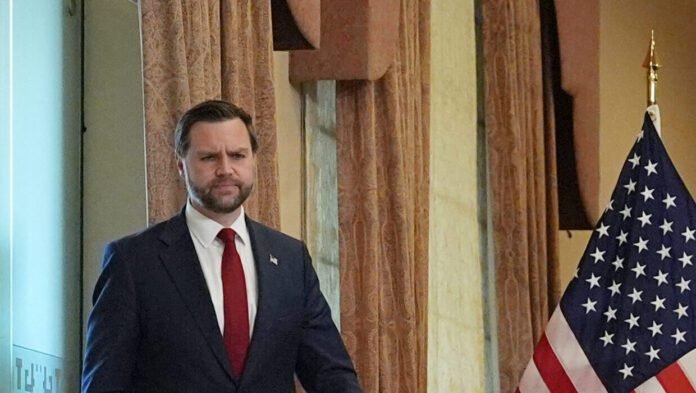
US Vice President JD Vance said Thursday that Israel “can’t just kill” its way out of its national security challenges and defended President Donald Trump’s position that Iran should be permitted to retain some ballistic missiles for self-defense under the memorandum of understanding (MoU) between Washington and Tehran.

Vance delivered a series of criticisms of Israel’s military strategy and of Israeli opposition to the MoU, which was signed digitally by President Trump on Wednesday night in Versailles.

Speaking to The New York Times, Vance characterized Israel’s response to the agreement as a “freakout” stemming from “mistrust.”

“I find this whole freakout in Israel a little bit odd because I think that it comes from a place of mistrust, and I think that America has earned the trust of that region of the world,” Vance said.

“We’ve done a very good job by that particular country, and that particular government, and I think that the idea that we’ve made a terrible deal is not supported by the facts, but just doesn’t make any sense if you consider the broad length of the relationship,” he added.

Vance defended the MoU while indicating that the United States intends to move forward with the agreement without placing heavy weight on Israeli concerns, despite Israel having fought the war alongside the United States.

He described Israeli concerns over concessions to Iran as a “weird panic” and said any measures favorable to Tehran, including sanctions relief, would be conditioned on Iran’s “behavior.”

“There is this weird panic almost in the Israeli system that I’ve picked up on where they assume that everything that is contemplated that is good for Iran will happen — but that will happen without the Iranians changing any behavior. And I just don’t know why anybody would think that’s true.”

While noting that Prime Minister Benjamin Netanyahu has avoided directly criticizing the MoU, Vance pointed to other Israeli officials, including National Security Minister Itamar Ben-Gvir, who have strongly condemned the deal.

“It’s clear that large segments of the Israeli political system and population are very sensitive about this deal,” he says. “But I also think they’re picking up on some misinformation about the deal and running with it and sort of panicking about it.”

Addressing Israeli critics of the agreement, Vance said: “I guess my response to them would be: What is your exact proposal? You’re a country of nine million people. You can’t just kill your way out of solving every single national security problem that you have.” (Vance incorrectly stated the population of Israel at nine million, when the correct number is 10 million.)

During a press conference, Vance also defended President Trump’s remark on Wednesday that Iran should be allowed to retain some of its ballistic missiles. He appeared to equate Iran’s right to self-defense with Israel’s.

“All the president said yesterday is that, of course, regional countries don’t give up the right of self-defense,” Vance says.

“Israel doesn’t give up the right of self-defense if Hezbollah fires rockets or drones at Israel,” he continues. “You can’t tell the country, whether Israel or Iran, they’re not allowed to have any self-defense.”

Vance said Israel had destroyed much of Iran’s ballistic missile capabilities and argued that the agreement would prevent Iran from building “the kind of missiles that can broadly threaten the entire world.”

“As part of the final deal, what we want to see is Iran not funding regional instability, funding regional terrorism, and of course, [not] trying to rebuild their nuclear weapons program.”

FDA advisors unanimously vote to approve Moderna’s mRNA after agency drama

0
fda-advisors-unanimously-vote-to-approve-moderna’s-mrna-after-agency-drama
FDA advisors unanimously vote to approve Moderna’s mRNA after agency drama

Independent advisors for the Food and Drug Administration on Friday voted 9–0 in support of approving Moderna’s seasonal mRNA flu vaccine, which a Trump appointee at the agency initially tried to block from even being reviewed.

In an all-day meeting, members of the FDA’s advisory committee—known as VRBPAC for Vaccines and Related Biological Products Advisory Committee—pored over data and presentations on the vaccine, which is dubbed mRNA-1010 and branded as mFlusiva. The presentations included a review from FDA scientists, which was supportive of the vaccine.

Data from a Phase 3 trial including over 40,000 adults age 50 and older found the mRNA vaccine was around 27 percent more effective against seasonal flu than a standard flu shot. A smaller Phase 3 trial, involving data from nearly 3,000 people age 65 years and older, showed the shot produces stronger immune responses than a high-dose flu vaccine, which is recommended for this age group. The safety profile of the vaccine was also generally good.

“I think that the studies that were presented today were very well conducted,” VRBPAC voting member Flor Munoz-Rivas, a pediatric infectious disease expert at Baylor College of Medicine, said after the vote. “They have very clear results that are very robust in terms of demonstrating that additional efficacy.”

She also expressed enthusiasm for the agile mRNA platform for the flu vaccine, which is based on the same platform Moderna used to develop its mRNA COVID-19 vaccines. In addition to the better efficacy, it allows for “rapid development of the vaccines in regular seasonal flu activity” and makes us “better prepared for emerging strains or pandemic strains in the future,” she said.

Fellow voting member Hayley Gans, a pediatric infectious disease expert at Stanford University, agreed. “I think that this particular platform adds exciting ways that we can actually move our vaccines to the future,” she said. “The signals that we’re seeing now are not putting people at risk and the benefits are actually large not only for this season, but for really what it can do for our vaccine platform. … This one has the potential to really move us in a modern direction.”

FDA drama

The outcome today is in stark contrast to a few months ago, when Trump official Vinay Prasad was overseeing vaccines at the FDA. In a shocking decision in February, Prasad rejected Moderna’s filing, refusing to even review the vaccine. Prasad claimed that the large vaccine trial was not “adequate and well-controlled” because it did not compare efficacy to a high-dose vaccine in people 65 and older. Instead, Moderna used the smaller trial to compare immune responses of mRNA-1010 to a high-dose vaccine—which was a plan the FDA had previously agreed would be acceptable.

Moderna was blindsided by the refusal, which Prasad issued over the objections of FDA scientists and career officials. Amid widespread outcry, the FDA reversed the decision the next week, agreeing to review the vaccine. Around the same time, Prasad was also behind the rejection of a closely watched gene therapy for Huntington’s disease made by UniQure, which was widely criticized and called “truly evil” by a former FDA official.

Prasad was pushed out of FDA at the end of April amid a string of decried decisions and controversies. Prasad’s decision on UniQure’s gene therapy was reversed on Wednesday.

Moderna released a statement saying it was pleased with today’s outcome.

“We appreciate the thoughtful review by the members of VRBPAC and their recognition of the clinical evidence supporting mRNA-1010,” Moderna CEO Stéphane Bancel said in the statement. “We believe mRNA-1010 has the potential to provide an important new option for seasonal flu prevention and further demonstrate the versatility of our mRNA platform. We look forward to continuing to work with the FDA as it completes its review.”

Next steps

While unanimous support from the advisors is a positive sign for the vaccine’s fate, the FDA ultimately decides whether to grant approval. The agency has set a deadline for a decision by August 5.

Moderna has previously said it is aiming to release the vaccine later this year, pending approval.

A further hurdle will be getting a recommendation from the Centers for Disease Control and Prevention. Newly FDA-approved vaccines would first be reviewed by the CDC’s advisory committee—the Advisory Committee on Immunization Practices (ACIP)—which would vote on recommendations for use that it thinks the CDC should adopt. Having recommendations from ACIP and CDC mean that almost all commercial insurance providers and federal programs would be required by law to cover the vaccine at no cost.

However, ACIP is effectively defunct after a federal judge issued a temporary injunction that blocked almost all of the allies anti-vaccine Health Secretary Robert F. Kennedy Jr. installed on the committee. The judge ruled that Kennedy’s handpicked advisors were appointed improperly. Like Kennedy, many of them hold anti-vaccine views and are also openly hostile to mRNA technology.

The US Department of Health and Human Services is now appealing the injunction on an expedited schedule that will stretch at least into July.

EU parliament backs law allowing offshore detention centres

0
eu-parliament-backs-law-allowing-offshore-detention-centres
EU parliament backs law allowing offshore detention centres


The European Parliament approved on Wednesday an overhaul of migration policy aimed at ramping up deportations and ​allowing member states to set up detention centres abroad, in what critics describe as a cruel system that weakens ‌safeguards for asylum seekers.

The move underlines the rise in anti-immigration sentiment across the European Union over the past decade that has broadened popular support for far-right parties.

The text, which requires final formal approval from the 27 EU member governments, marks a sharp hardening of EU migration policy that has taken shape since an influx ​of over a million refugees and migrants in 2015-16.

“The Return Regulation will provide the necessary tools to make returns more efficient, ​with faster and more effective procedures,” European Commission President Ursula von der Leyen said in a letter on ⁠Tuesday addressed to member states ahead of a meeting of EU leaders in Brussels.

EU countries say they struggle to ensure that rejected ​asylum seekers and people who overstay their visas leave their territory.

Critics argue EU migration policy has become too heavily focused on deterrence and ​deportation, overlooking the root causes of migration including conflict, poverty and political repression.

“The dehumanization of migrants and refugees, including in the UK, US, and many EU countries, is appalling, often leading also to the denial of their rights,” Volker Turk, the United Nations’ human rights chief, said on Monday in the United Nations ​Human Rights Council.

“The European Union’s new rules on returning migrants risk expanding the use of detention, establishing offshore return hubs, and weakening safeguards ​against refoulement.”

The Commission last month invited Taliban officials to Brussels to discuss deportations of Afghan migrants, despite warnings from human rights groups that such engagement could ‌endanger Afghans ⁠and violate core EU values.

The Commission and the Swedish government, which is co-hosting the visit, said the meeting is technical and does not constitute recognition of Taliban rule.

The visit, scheduled for June 22 to 23 according to a letter seen by Reuters and addressed to Abdul Qaher Balkhi, a Taliban foreign ministry spokesman, will focus on “the return and readmission of Afghan nationals without a right to stay in the European ​Union.”

A spokesperson for the Belgian ​foreign minister said on Wednesday that ⁠Belgium had received visa applications from five members of the Taliban delegation. He could not confirm when the meeting would take place.

He said the delegation will undergo security screening and that it is not ​clear yet when Belgium will be able to grant the visas.

The spokesperson also said that Belgian Foreign ​Minister Maxime Prevot ⁠does not agree with the invitation.

“He does not approve of the choice to invite representatives of the Taliban regime to Brussels. He would never accept that the Belgian government, in its own name, invite these individuals for discussions in Belgium.”

The Commission said last month that the deportations would ⁠be limited ​to individuals “who pose a security risk”.

Neither the Commission nor the Swedish migration minister confirmed ​the date of the meeting.

Western countries have refused to recognise the Taliban since the hardline Islamist group overthrew a U.S.- and NATO-backed government in Afghanistan in 2021 and regained ​power.

Source:  Reuters

Guinness Short Ribs

0
guinness-short-ribs
Guinness Short Ribs

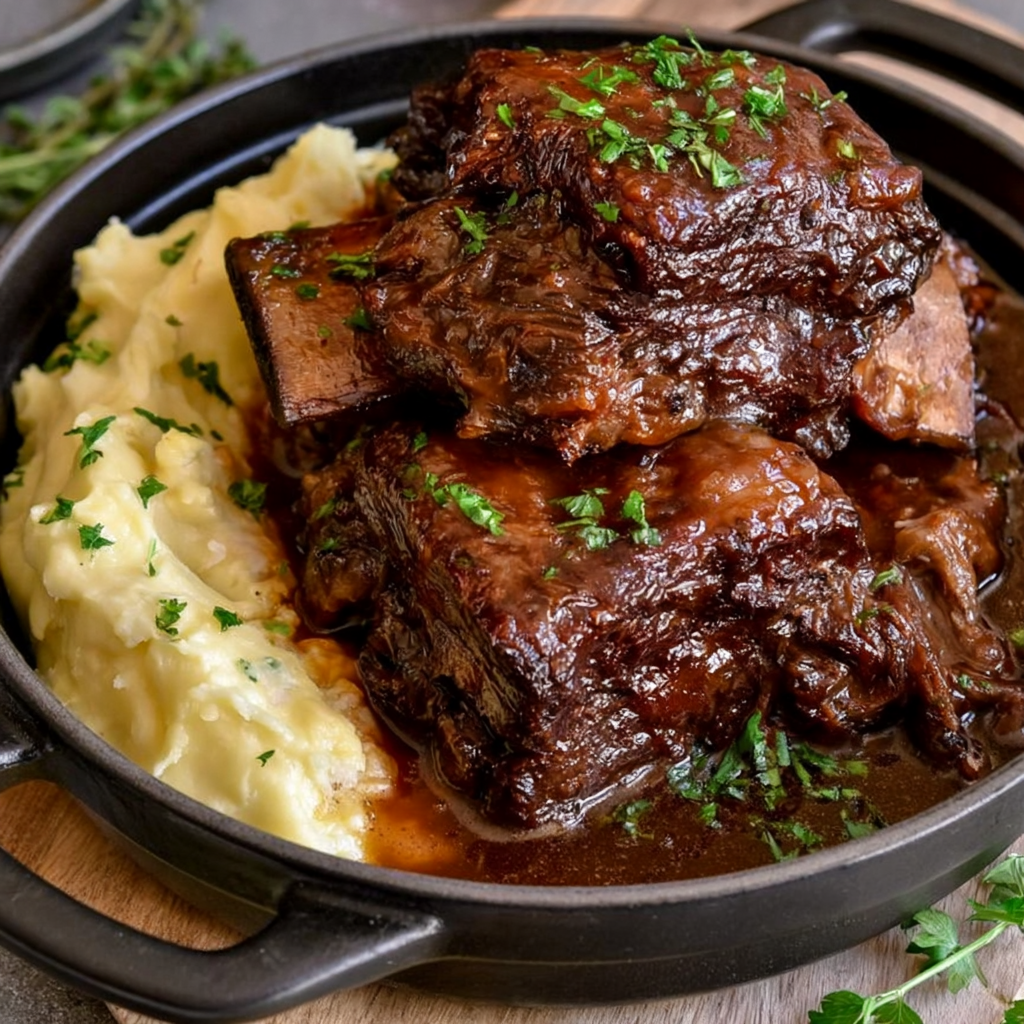
Guinness Short Ribs are rich, tender, savory, and slow-braised until the beef is fall-apart soft. Bone-in short ribs are seared until deeply browned, then cooked in a flavorful mixture of Guinness Extra Stout, beef broth, tomato paste, Worcestershire sauce, onions, and fresh herbs.

The result is a cozy one-pot dinner with a bold, malty pan sauce that turns into a smooth, silky gravy. Serve these short ribs over mashed potatoes, creamy polenta, buttered noodles, or rice for an impressive comfort food meal that is perfect for Sunday dinner, holidays, or special occasions.

Why You’ll Love These Guinness Short Ribs

  • Rich, savory, and deeply flavorful
  • Slow-braised until fork-tender
  • Made in one Dutch oven
  • Perfect for Sunday dinner or special occasions
  • Finished with a silky homemade gravy
  • Great served over mashed potatoes, polenta, noodles, or rice
  • Even better the next day
  • Cozy comfort food with bold flavor

What Makes This Recipe So Good?

The secret to amazing short ribs is slow braising. The beef is first seared to create a deep brown crust, which builds the base of the flavor. Then it slowly cooks in Guinness stout, beef broth, herbs, tomato paste, and Worcestershire sauce until the meat becomes incredibly tender.

Guinness Extra Stout adds a malty, slightly bitter richness that balances the beef and creates a bold sauce. After braising, the liquid is strained and thickened into a smooth gravy that is perfect for spooning over the ribs.

Ingredients

  • 1 teaspoon kosher salt
  • 1 teaspoon black pepper
  • 1 tablespoon extra virgin olive oil
  • 8 beef short ribs, about 2 pounds
  • 1 large yellow onion, diced
  • ¼ cup tomato paste
  • 1 bottle Guinness Extra Stout, 11.2 ounces
  • 2 sprigs fresh thyme
  • 2 sprigs fresh parsley
  • 2 sprigs fresh rosemary
  • 6 cups beef broth
  • 1 tablespoon Worcestershire sauce
  • ¼ cup unsalted butter
  • 2 tablespoons all-purpose flour

Ingredient Notes

Beef Short Ribs

Bone-in short ribs are best for braising because they have marbling, connective tissue, and bone, all of which create rich flavor and tender meat as they cook slowly.

Guinness Extra Stout

Guinness gives the braising liquid a deep, malty flavor. If you do not have Guinness, another stout beer can work.

Beef Broth

Beef broth creates the base of the braising liquid. Use low-sodium broth if you want more control over the salt.

Tomato Paste

Tomato paste adds body, color, and rich savory flavor. Cooking it briefly before adding liquid deepens the taste.

Worcestershire Sauce

Worcestershire sauce adds extra savory depth and enhances the beefy flavor of the gravy.

Fresh Herbs

Fresh thyme, rosemary, and parsley infuse the sauce with warm, aromatic flavor.

Butter and Flour

Butter and flour are used to make a roux, which thickens the braising liquid into a silky gravy.

How to Make Guinness Short Ribs

Step 1: Preheat the Oven

Preheat the oven to 350°F.

Step 2: Season the Short Ribs

Season all sides of the short ribs evenly with kosher salt and black pepper.

Set them aside while you heat the Dutch oven.

Step 3: Sear the Short Ribs

Add olive oil to a large oven-safe Dutch oven over medium-high heat.

Once the oil is hot and shimmering, add the short ribs.

Sear on all sides until deeply browned.

Work in batches if needed so the pot is not overcrowded.

Transfer the seared ribs to a plate and set aside.

Step 4: Cook the Onion and Tomato Paste

Reduce the heat to medium.

Add the diced onion and tomato paste to the same Dutch oven.

Stir and cook for about 2 minutes.

This step helps bring out sweetness from the onion and richness from the tomato paste.

Step 5: Deglaze with Guinness

Pour in the Guinness.

Use a wooden spoon to scrape up the browned bits from the bottom of the pot.

Let the mixture simmer for about 5 minutes to reduce slightly and cook off some of the alcohol.

Step 6: Add Broth and Herbs

Add the fresh thyme, parsley, rosemary, Worcestershire sauce, and beef broth.

Return the seared short ribs to the pot.

Make sure the ribs are mostly submerged in the braising liquid.

Step 7: Braise in the Oven

Bring the mixture to a boil.

Cover the Dutch oven with a lid.

Carefully transfer it to the oven.

Cook for about 3 hours, or until the short ribs are fork-tender and starting to pull away from the bone.

Step 8: Remove the Ribs

Remove the Dutch oven from the oven.

Carefully transfer the short ribs to a plate.

Loosely cover them with aluminum foil to keep warm.

Remove and discard the herb sprigs.

Step 9: Strain the Braising Liquid

Pour the remaining liquid through a fine mesh strainer into a large bowl.

Discard the solids.

Let the liquid sit for a few minutes so the fat rises to the top.

Skim off and discard the fat.

You should have about 3 cups of braising liquid.

Step 10: Make the Gravy

Return the Dutch oven to medium heat.

Add the butter and let it melt.

Whisk in the flour to form a smooth roux.

Cook for about 1 minute.

Slowly pour the reserved braising liquid back into the pot, whisking constantly to prevent lumps.

Bring to a simmer and cook for about 5 minutes, or until the gravy thickens enough to coat the back of a spoon.

Step 11: Serve

Serve the short ribs hot with the Guinness gravy spooned over the top.

They are especially delicious over mashed potatoes, polenta, egg noodles, or rice.

Tips for the Best Guinness Short Ribs

Sear the Ribs Well

A deep brown sear creates the foundation of flavor for the entire dish.

Don’t Rush the Braise

Short ribs need slow cooking to become tender. They are ready when they pull apart easily with a fork.

Use a Beer You Like

The flavor of the stout comes through in the sauce, so use one you enjoy.

Skim the Fat

Removing excess fat from the braising liquid keeps the gravy smooth and balanced.

Make the Gravy Slowly

Whisk the liquid into the roux gradually to avoid lumps.

Can I Make Guinness Short Ribs Ahead of Time?

Yes. These short ribs are excellent made ahead because the flavor deepens overnight.

Let the ribs cool slightly, then store them in the gravy in an airtight container in the refrigerator.

Reheat gently on the stovetop or in a 325°F oven until warmed through.

Can I Make This Without Guinness?

Yes. If you prefer not to cook with beer, replace the Guinness with additional beef broth.

The sauce will be less malty and complex, but still rich and delicious.

You can also use another stout beer if you do not have Guinness.

Slow Cooker Guinness Short Ribs

To make this recipe in a slow cooker, sear the short ribs first.

Cook the onion and tomato paste, then deglaze with Guinness and simmer for a few minutes.

Transfer everything to the slow cooker with the broth, Worcestershire sauce, and herbs.

Cook on LOW for 7 to 8 hours or on HIGH for 4 to 5 hours, until fork-tender.

Strain the liquid and make the gravy on the stovetop with butter and flour.

Best Cuts of Beef to Use

Bone-in short ribs are ideal, but you can also use:

  • Boneless short ribs
  • Chuck roast, cut into large chunks
  • Beef shank
  • Oxtail

Cooking time may vary depending on the cut, but the meat should be tender and easy to pull apart.

What to Serve with Guinness Short Ribs

These short ribs pair beautifully with:

  • Creamy mashed potatoes
  • Skins-on mashed potatoes
  • Creamy polenta
  • Egg noodles
  • Buttered noodles
  • Steamed rice
  • Roasted carrots
  • Green beans
  • Brussels sprouts
  • Burgundy mushrooms
  • Cauliflower mash
  • Crusty bread

Storage Instructions

Let the short ribs cool slightly.

Store the ribs and gravy together in an airtight container in the refrigerator for up to 4 days.

Keeping the ribs in the sauce helps them stay tender and flavorful.

Freezing Instructions

Cool the ribs and sauce completely.

Place them in a freezer-safe container or heavy-duty freezer bag.

Freeze for up to 3 months.

Thaw overnight in the refrigerator before reheating.

Reheating

Reheat slowly on the stovetop over low heat, stirring occasionally.

You can also reheat in a covered baking dish in a 325°F oven until warmed through.

If the gravy becomes too thick, add a splash of broth or water.

Frequently Asked Questions

Can I Use Boneless Short Ribs?

Yes. Boneless short ribs work well, though bone-in ribs add extra richness to the sauce.

Can I Use Dried Herbs?

Yes. Use about 1 teaspoon total dried herbs in place of the fresh herbs.

What If I Don’t Have Tomato Paste?

Use ½ cup tomato sauce and simmer a little longer to reduce. In a pinch, 1 tablespoon of ketchup can work.

Can I Make This in a Slow Cooker?

Yes. Sear the ribs first, then cook on low for 7 to 8 hours or high for 4 to 5 hours.

How Do I Know When Short Ribs Are Done?

They are done when the meat is fork-tender and pulls away from the bone easily.

Recipe Information

Prep Time: 20 minutes
Cook Time: 3 hours 20 minutes
Total Time: 3 hours 40 minutes
Servings: 4

Final Thoughts

Guinness Short Ribs are rich, tender, and packed with deep, savory flavor. The slow braise creates beef that falls apart easily, while the stout, herbs, broth, and tomato paste turn into a bold, silky gravy.

Serve them over mashed potatoes, polenta, noodles, or rice for a cozy, impressive dinner that tastes like something special but cooks mostly hands-off in one pot.

Optics say US lost in Iran – the power balance says otherwise

0
optics-say-us-lost-in-iran-–-the-power-balance-says-otherwise
Optics say US lost in Iran – the power balance says otherwise

Earlier this week, the United States Department of War restored the US Indo-Pacific Command’s name to the US Pacific Command, reversing an eight-year-old title change and restoring operational clarity.

The announcement comes in the same week that a growing chorus of commentators is arguing that America just lost the war in Iran:

● The Atlantic declared “Trump Celebrates While America Capitulates”, arguing Iran walked away with everything it wanted while Washington got little in return.

● CNN’s Stephen Collinson wrote that Trump broke his own rules, handing Iran economic relief before locking down hard commitments on nuclear weapons.

● Reuters reported that even Republican allies in Congress are questioning whether Washington and Tehran are describing the same deal.

Closer to home, Ravi Velloor ,  one of Singapore’s sharpest foreign affairs minds, makes the most sophisticated version of this argument in his Straits Times commentary this week, “As deal to end war emerges from chaos, Iran and China sweep the stakes.”

Velloor argues that the chaos surrounding America’s conduct has handed China a strategic opening to deepen Gulf relationships, expand its financial architecture and present itself as a stable, predictable alternative to an increasingly unpredictable Washington. And that, as a result, the regional order  that America built and has maintained since 1945  is shifting.

I would like to offer three reasons why Velloor’s reading, while sharp on the optics, also needs to account for the strategic ground the US actually gained through Operation Epic Fury.

First, this week’s Iran deal is structurally superior to anything achieved diplomatically before

Critics are right that the deal’s 60‑day framework leaves the hardest nuclear questions unresolved. Iran’s IRNA agency, for instance, has claimed no new concessions were made.

But the right comparison should be with former US President Barack Obama’s JCPOA, which left Iran’s centrifuges largely intact, embedded sunset clauses, allowed enrichment infrastructure to remain, and was followed by 60% enrichment capability and a four‑theater proxy network.

The White House claims that more than 13,000 Iranian targets were struck in 38 days under Operation Epic Fury; Iran’s navy was effectively destroyed, with every submarine sunk and 97% of naval mines cleared, and ballistic missile attacks on US forces fell by 90% within 19 days, the Pentagon said.

On top of that, we are learning that the terms of the deal would require the destruction of roughly 900 pounds of highly enriched uranium, with nuclear facilities at Fordow, Natanz and Isfahan slated for permanent dismantlement. Detailed nuclear provisions are to be finalized within 60 days under US-Israel oversight under the deal.

In sum, that means a heavily degraded Iranian military, proxy network and nuclear program. Objectively, this appears to put the US in a significantly stronger position than the JCPOA accomplished.

Furthermore, these facts sit inside a wider regional architecture. The Trump administration has tied US diplomatic facilitation to expanding the Abraham Accords to Saudi Arabia, Qatar, Egypt and Turkey, with the State Department’s May 2026 report laying out the formal strategy and institutional framework for recognizing Israel.

Now, if that expansion proceeds and Iran is drawn, even partially, into a US‑managed regional order, then the Beijing-Moscow-Tehran axis anchored in the Shanghai Cooperation Organisation loses a key western pillar.

That potential shift in regional architecture should be considered as part of the strategic value of the Iran deal, and has to be realistically weighed alongside the MOU’s immediate limits.

Second, the US-led security architecture has strengthened, with the USPACOM reversion as a clear indicator of the trend

In the Asia-Pacific, Japan had effectively pledged kinetic defense commitments for Taiwan, just as South Korea committed $150 billion to support American shipbuilding and defense industrial linkages.

At the recent Shangri-La Dialogue in Singapore, US Secretary of War Pete Hegseth was in a position to praise all ten key partners in and around ASEAN for stepping up on burden‑sharing.

This is not the behavior of a US-led security architecture in retreat, and the USPACOM renaming should be read in that context. Removing the “Indo” that former Defense Secretary James Mattis added in 2018, as a symbolic nod to India, acknowledges that New Delhi has not become the co‑manager Washington once hoped for.

India hedged throughout Operation Epic Fury, continued to buy Russian oil and S‑400 systems and deepened its BRICS+ engagement in parallel.

At the same time, analysts at ASPI had already flagged in late 2025 that the previous command construct lacked a dedicated, theater‑level warfighting headquarters, creating ambiguity in roles and focus.

Reverting to USPACOM restores a clear focus on the Pacific theater, centers stabilization of the Taiwan Strait as a core mission and ties that mission explicitly to treaty allies who are prepared to act as structural anchors.

Third  –  and this is what the skeptics most avoid  – China was supposed to play Iran as America plays Taiwan, but Beijing didn’t

Singapore’s former Foreign Minister George Yeo, in an interview with Professor Kishore Mahbubani for the Asian Peace Program, disclosed: “They (China) have an Iranian option  –  that if you really move on Taiwan, we’ll move on Iran. Since the 90s, I’ve always observed that the Chinese approach to Iran has been linked to the American approach to Taiwan.”

It was a widely held theory among those like Yeo who watched Beijing closely. Yet when Operation Epic Fury tested it, China’s response was calibrated and rhetorical.

Chinese Foreign Minister Wang Yi condemned the strikes, Beijing called for a UN Security Council ceasefire, and then nothing more happened.

Instead, Beijing pressed Iran to allow vessel transit to protect its own commercial interests in the Gulf, and in doing so, surrendered its so-called Middle East second front it had factored into its Taiwan contingency planning.

Velloor points to mBridge and China’s Gulf diplomacy as evidence of Beijing’s growing influence. But they are, at best, instruments of commercial reach, not strategic deterrence.

Here, Professor John Mearsheimer’s framework for what constitutes a great power is instructive: population and military wherewithal.

And on both, the Sino-US gap is not narrowing:

● China’s population has declined for four consecutive years, with its working-age cohort shrinking by 6.62 million in 2025 alone and 23% of its population already over 60.

● US nominal GDP stands at $31.8 trillion against China’s $20.6 trillion, with US GDP per capita exceeding $94,000 against China’s $15,000.

● On hard power, the US defense budget of $997 billion is 3.2 times China’s $314 billion and is  backed by 11 nuclear carriers against China’s three, 625 aerial tankers against 10, and 750 overseas bases against China’s single installation in Djibouti.

Operation Epic Fury demonstrated what that gap looks like operationally: 38 days, over 13,000 targets, full air superiority, a critical waterway secured and fewer than ten US soldiers killed in action. Neither Russia nor China can replicate this record today.

Is Southeast Asia misreading America’s exaggerated decline?

This year’s ISEAS State of Southeast Asia Survey found that 52% of Southeast Asians would choose China over the US if forced to align, reversing last year’s result, in which Washington held a slim lead. Japan emerged as the most trusted power in the region at 65.6%, ahead of the EU, US and China.

But trust in Japan is, at its foundation, trust in American-underwritten regional stability, a connection and distinction the survey’s respondents may or may not have deciphered.

That disconnect reflects Velloor’s point that in today’s geopolitics, the optics are messy. But optics and capability are not the same thing, and a structural reading of the power balance does not support the conclusion that America is losing ground in Asia, the Middle East and globally.

Despite the negative, messy optics, America appears to favor clarity. It is about time we in Southeast Asia did so too.

Marcos Loh is the chairman of the Public Affairs Group at PRCA Asia Pacific and a director at Temus, a Singapore AI and digital services firm. He is currently reading War Studies at King’s College London.

8 countries condemn occupier violence against Palestinians in occupied West Bank

0
8-countries-condemn-occupier-violence-against-palestinians-in-occupied-west-bank
8 countries condemn occupier violence against Palestinians in occupied West Bank

The foreign ministers of eight countries on Thursday condemned escalating Israeli occupier violence against Palestinians in the occupied West Bank, including recent attacks on two mosques in northern Ramallah, Anadolu reports.

Turkiye, Egypt, Indonesia, Jordan, Pakistan, Qatar, Saudi Arabia and the United Arab Emirates said they condemned “in the strongest terms” continued attacks on the Grand Mosque in the village of Jiljilya and Al-Farouq Mosque in the village of Mazar’a al-Nubani.

The foreign ministers said the attacks constituted a clear violation of the sanctity of places of worship and religious sites, as well as international law, including international humanitarian law and relevant UN resolutions.

They also rejected the “deplorable attacks by Israeli settlers” and continued illegal Israeli measures in the Occupied Palestinian Territory, saying the actions fuel instability, violence and extremism and undermine international efforts to achieve peace.

They held Israel, as the occupying power, responsible for the attacks.

The ministers urged the international community to uphold its legal and moral responsibilities, and compel Israel to halt its dangerous escalation in the occupied West Bank, end illegal practices, stop occupier violence, hold perpetrators accountable and ensure they do not enjoy impunity.

READ: 50 Palestinian Bedouin, herding communities displaced since late 2023, rights body says

They also reaffirmed their solidarity with the Palestinian people and their support for the realization of their legitimate and inalienable national rights, particularly the right to self-determination and the establishment of an independent and sovereign Palestinian state on the 1967 lines, with East Jerusalem as its capital.

The foreign ministers also reiterated support for efforts aimed at ending the Israeli occupation and achieving a just, lasting and comprehensive peace based on the two-state solution, in line with international law, relevant UN resolutions and the Arab Peace Initiative.

About 500,000 illegal Israeli occupiers live in illegal settlements across the West Bank, while another 250,000 live in settlements built on Palestinian land in occupied East Jerusalem, according to Peace Now – an Israeli organization that promotes a two-state solution to the conflict.

Israeli forces and occupiers have killed at least 1,169 Palestinians in the West Bank, including East Jerusalem, injured more than 12,600, and detained around 23,000 since October 2023, when the genocidal war against the Gaza Strip began, Palestinian figures showed.

In a landmark opinion last July, the International Court of Justice declared Israel’s occupation of Palestinian territory illegal and urged the evacuation of all settlements in the West Bank and East Jerusalem.

READ: Israel orders demolition of 9 Palestinian homes in Hebron amid West Bank escalation

Red, White, and Blue Strawberries

0
red,-white,-and-blue-strawberries
Red, White, and Blue Strawberries
Red, White, and Blue Strawberries dipped in white chocolate and blue sanding sugar on a white marble tray.
Fresh strawberries dipped in creamy white chocolate and sparkling blue sugar for a simple, festive holiday treat.

Print Friendly, PDF & Email

Red, White, and Blue Strawberries are the kind of simple holiday dessert that makes a platter feel instantly festive. Fresh strawberries bring the red, creamy white chocolate adds a sweet shell, and blue sanding sugar gives each berry a sparkling finish. They look special, but the method is wonderfully easy, which makes them perfect for the 4th of July, Memorial Day, Labor Day, or any summer celebration.

The trick is starting with completely dry strawberries and keeping the chocolate smooth enough for dipping. Then each berry gets a quick dip, a little sparkle, and time to set. That’s it. No baking, no complicated decorating, and no stress. Just bright, juicy berries with a creamy crunch that look beautiful on a dessert table and disappear fast.


Red, White, and Blue Strawberries dipped in white chocolate and blue sanding sugar on a white marble tray.
Fresh strawberries dipped in creamy white chocolate and sparkling blue sugar for a simple, festive holiday treat.

Recipe Yield: 24 strawberries

INGREDIENTS

24 large fresh strawberries, rinsed and completely dried
12 oz white chocolate melting wafers
1/8 tsp fine sea salt
1/3 cup blue sanding sugar
1 tsp coconut oil, optional, only if needed for thinning

INSTRUCTIONS

1. Prepare the strawberries:
Line a baking sheet with parchment paper. Pat the strawberries very dry, especially near the leaves, then let them sit at room temperature for 10 minutes.

2. Melt the chocolate:
Add the white chocolate melting wafers and coconut oil, if using, to a microwave-safe bowl. Microwave in 20-second intervals, stirring well each time, until smooth. Then stir in the salt.

3. Dip the strawberries:
Hold each strawberry by the leaves and dip about two-thirds of the berry into the melted white chocolate, leaving the red top visible. Let the excess chocolate drip back into the bowl.

4. Add the blue sugar:
Immediately dip the bottom third of each chocolate-covered strawberry into the blue sanding sugar, rotating gently so a white band remains in the center.

5. Let them set:
Place the dipped strawberries on the prepared baking sheet. Let them stand for 20 to 30 minutes, or until the chocolate is firm.

6. Serve:
Serve the strawberries the same day for the freshest texture. If needed, refrigerate for up to 4 hours, then let them sit at room temperature for 10 minutes before serving.


HELPFUL TIPS TO PERFECT THIS RECIPE

  • Dry strawberries are everything: Even a little moisture can make the chocolate slide off or set unevenly. Pat them dry well, then give them a few extra minutes on a towel before dipping.
  • Use melting wafers for the smoothest coating: White chocolate melting wafers set neatly and are easy for home cooks. If the chocolate feels too thick, add the coconut oil and stir until silky.
  • Dip the sugar right away: The blue sanding sugar sticks best while the chocolate is still soft. Work one strawberry at a time for the cleanest red, white, and blue look.

Rate This Recipe

Tried this recipe? Your rating helps others and means so much.

Microsoft discovers new lightweight backdoor that steals cryptocurrency

0
microsoft-discovers-new-lightweight-backdoor-that-steals-cryptocurrency
Microsoft discovers new lightweight backdoor that steals cryptocurrency

Microsoft says it has detected new self-propagating malware that spreads through USB drives in search of cryptocurrency credentials, which it then sends to attacker-controlled servers.

The company named the worm Crypto Clipper because it monitors the contents of device clipboards for patterns consistent with wallet addresses or seed phrases. When found, the malware also takes five screenshots over a 10-second period. Both the credentials and the screenshots are then sent to the attacker through Tor, a network protocol that provides anonymous routing by sending traffic through redundant nodes so logs can’t capture both the sending and receiving IP addresses. Crypto Clipper establishes the Tor connection by using a SOCKS5 proxy, a network protocol that sends traffic through a proxy server, which then forwards it to its final destination.

A lightweight backdoor

“The execution of this clipper is notable because it does not depend on a traditional installer or exposed IP-based C2 infrastructure,” Microsoft said Thursday. “Instead, it deploys a portable Tor client, routes traffic through a local SOCKS5 proxy, and blends data theft with remote code execution, turning a financially motivated stealer into a lightweight backdoor.”

Microsoft said it observed Crypto Clipper spreading through .lnk file on a USB drive. These files store executable code. When an infected USB drive is plugged into a device, the code checks whether it is already installed on the machine. If it isn’t, the malware downloads it through the Tor proxy. To better conceal evidence of the worm, the malware scans the infected USB drive and names the .lnk files with similar names.

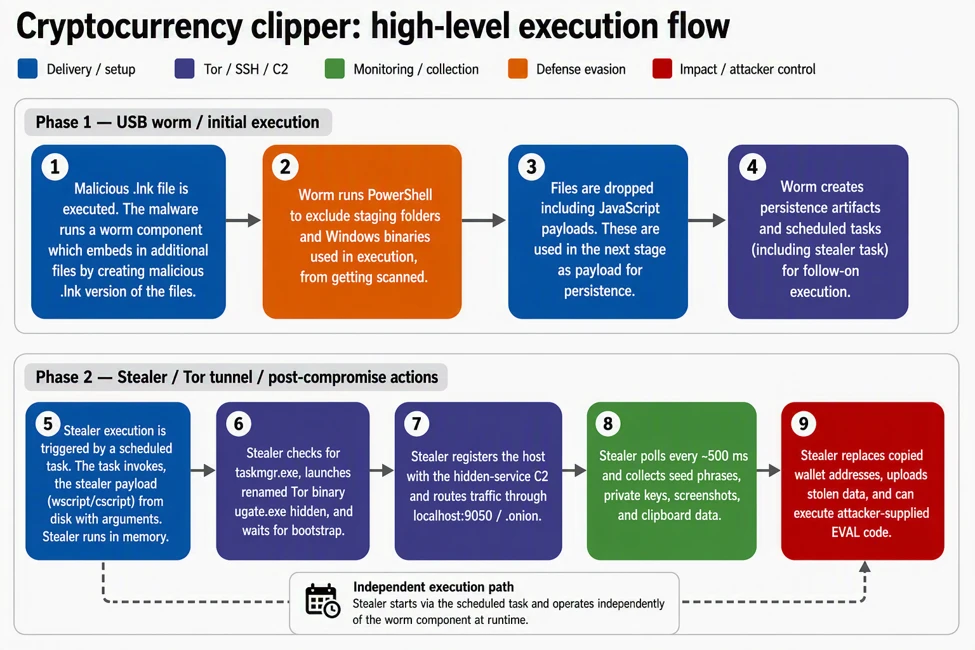
High-level execution flow of Crypto Clipper.

High-level execution flow of Crypto Clipper. Credit: Microsoft

Crypto Clipper monitors clipboard contents for patterns that are consistent with standardized 12- or 24-word seed phrases. When found, it uploads them, along with the screenshots, to the attacker’s server. The stealer also replaces addresses it finds with ones belonging to attacker-controlled wallets. This allows the malware to divert payments to the attacker’s pockets. Microsoft believes the purpose of the screenshots is to provide context that may be useful.

“This malware family shows how lightweight, script-based stealers can deliver outsized impact when paired with anonymized communications and runtime tasking,” Microsoft said. “The combination of Tor-routed C2, clipboard targeting, screenshot capture, and remote code execution gives attackers both immediate monetization paths and continued control over compromised devices.”

Microsoft Defender for Endpoint detects Crypto Clipper components as Suspicious JavaScript processes and Possible data exfiltrations using Curl. Microsoft Defender Antivirus detects it as Trojan: Win32/CryptoBandits.A. More generically, the strongest indications of infection are script interpreters spawning suspicious child processes, proxy usage on localhost:9050, screen-capture commands in PowerShell, and signs of clipboard inspection or crypto-address replacement.

0FansLike
0FollowersFollow
0FollowersFollow
0SubscribersSubscribe
- Advertisement -
Google search engine

Recent Posts