Palestinian injured, 2 arrested in Israeli raids across occupied West Bank
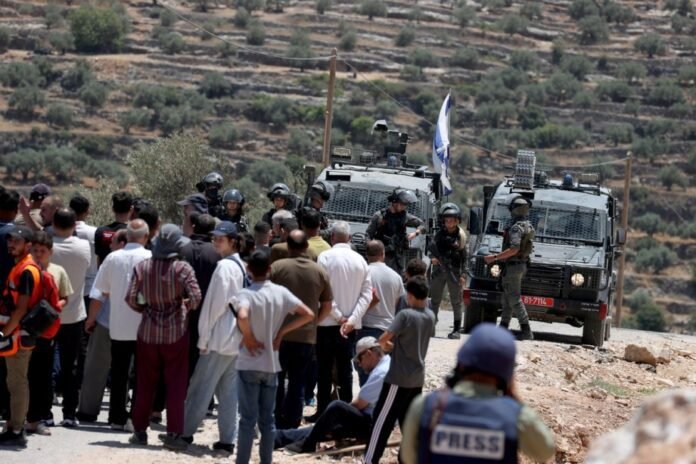
A Palestinian was injured and two others were arrested Saturday as the Israeli army carried out raids across several areas of the occupied West Bank, accompanied by occupiers’ attacks and the closure of roads and town entrances, Anadolu reports.
The latest incidents came a day after Israeli forces arrested 10 Palestinians from the village of Burqa, east of Ramallah, and burned about 10 dunams (2.5 acres) of olive groves.
The Jerusalem Governorate said in a statement that a young Palestinian suffered facial injuries, while several others, including children and elderly people, were overcome by tear gas after Israeli forces stormed a wedding celebration in the town of Hizma, northeast of Jerusalem, and fired a tear gas canister directly at attendees.
In the southern West Bank governorate of Hebron, the Palestinian news agency WAFA reported that Israeli forces arrested a Palestinian while he was grazing livestock in the village of Al-Deirat, east of Yatta. Another Palestinian was arrested while Israeli troops chased shepherds in the Wadi Rahila area near the village of Al-Rakeez in Masafer Yatta.
READ: Israeli forces kill Palestinian man inside home in occupied West Bank raid
The agency also said Israeli occupiers attacked a home in the Wadi Sair area northeast of Hebron and attempted to drive their livestock into the property before the homeowner confronted them and forced them to leave.
Meanwhile, Israeli forces erected several military checkpoints at the entrances to Hebron governorate and blocked major and secondary roads with iron gates, concrete blocks and earth mounds, severely restricting movement, witnesses told Anadolu.
In the northern West Bank governorate of Tubas, Israeli troops raided the village of Tayasir, deployed throughout its neighborhoods and searched several homes, ransacking property and mistreating residents, according to local sources.
East of Ramallah, Israeli occupiers grazed their sheep on privately owned agricultural land in the village of Al-Mughayyir after cutting through a metal fence surrounding the property, causing damage to crops and trees, the sources said.
The occupied West Bank has witnessed a sharp increase in attacks by Israeli occupiers and military forces targeting Palestinian farmland, including arson, land bulldozing and preventing farmers from accessing their land, particularly in areas near illegal settlements and settlement outposts.
According to official Palestinian figures, Israeli military operations and occupiers’ attacks in the occupied West Bank since Oct. 8, 2023, have killed 1,173 Palestinians, injured 12,666 others, led to the arrest of about 23,000 people and displaced about 33,000 residents.
READ: Palestine urges international steps to halt illegal Israeli settlement activity, Palestinian displacement
Rome and Persia history lessons for US-Iran peace deal
A public event in Tehran depicting ancient Persian warriors alongside modern Iranian forces. Image: EPA via The Conversation / Abedin Taherkenareh
“Making peace with Iran may be just as painful as winning the war,” a recent CNN report noted. As negotiations roll on during a shaky ceasefire, what a deal between the US and Iran might look like and whether it holds is anyone’s guess.
As a scholar of ancient Persia (which eventually became Iran), the difficulties US President Donald Trump is now facing don’t exactly surprise me.
After dozens of wars between the two ancient empires of Rome and Persia, peace deals often failed to solve problems and sometimes made the situation worse.
Lurching from conflict to conflict
The powerful empires of ancient Persia (ruled by the Parthians from 247 BCE to 224 CE, and then the Sasanians from 224 to 651 CE) rivaled the Roman Empire for centuries. They often went to war and the peace deals they struck were mostly about buying time.
The first major conflict between Rome and Persia was the disastrous invasion led by the Roman general Crassus in 53 BCE. Crassus himself died and thousands of Roman soldiers were killed in the plains near Carrhae in southern Turkey.
Ongoing conflict emboldened the Parthians and in 20 BCE, the Romans were forced to recognize the Euphrates River as a boundary as part of a peace agreement. For Rome, this represented a concession because up to this point its territorial expansion couldn’t be stopped.
Conflict between Rome and Parthia would break out again in the middle of the first century CE. This time, it was over the kingdom of Armenia, which sat strategically between the two empires in modern Armenia and eastern Turkey.
Following the war, the Roman emperor Nero and the Parthian King, Vologases I, struck the Treaty of Rhandeia in 63 CE. Under this deal, the king of Armenia was to be nominated by the Parthians but actually crowned by the emperor in Rome. The treaty settled the immediate dispute but over time became unwieldy.
Later, when the Parthians simply brushed the treaty aside, the Roman emperor Trajan punished them with a major invasion in 114 CE.
Despite some impressive initial successes, including the capture of the Parthian capital, the invasion failed. All of Trajan’s gains were lost by the time of his death in 117 CE.
Following the replacement of the Parthians by the Sasanians as rulers of Persia in 224 CE, conflict with Rome escalated even further. Control of Armenia was often the focus and formed a key element of peace agreements.
After the Roman emperor Gordian III’s death in an invasion of the Sasanian Empire in 244 CE, a fresh agreement was struck between the two powers. The Sasanians imposed financial penalties and a clause banning Roman involvement in Armenia.
In the late 290s, Rome would extract some revenge with a significant victory over the Sasanian king, Narseh. The Treaty of Nisibis that followed in 299 CE contained a number of clauses, which extended Roman power further east. It also gave control of Armenia to Rome.
But this treaty sowed the seeds of considerable enmity. When the Sasanian king Shapur II invaded Roman territory in the 350s, his main aim was to repudiate the treaty made 60 years earlier. This was reinforced when the Roman emperor Julian invaded the Sasanian Empire and suffered a heavy defeat (including his own death) in 363 CE.
While the level of conflict between Rome and ancient Iran was lower in the fifth century CE, it was even more pronounced in the sixth and seventh centuries. Rome and Iran were almost constantly at war during this period.
There were numerous treaties and attempts to strike peace but none lasted. Perhaps the most futile was the so-called Eternal Peace of 532, which lasted less than eight years.
Easier to make war than peace
As history shows, peace deals may be trumpeted at the time they are signed but can end up sowing the seeds of discord and future conflict.
Rome and Persia’s fight over Armenia was eventually settled in an agreement to partition the kingdom between Rome and Iran in the 380s. But it took more than 400 years to achieve, despite dozens of attempts.
An ongoing ebb and flow of conflict, invasions, threats and stalemates punctuated the entire time frame before.
Does a lasting peace arrangement between the US and Iran face similar prospects? Only time will tell. Hopefully this time, it won’t take centuries to get there.
4 IDF Soldiers Wounded in Southern Lebanon as Israel-Lebanon Talks Continue
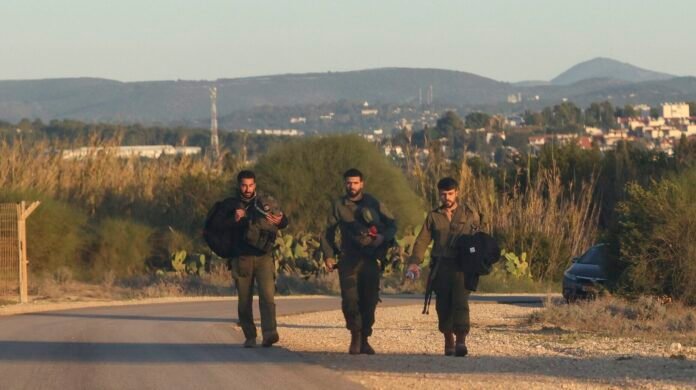
An Israel Defense Forces (IDF) combat officer was moderately wounded, and another combat officer and two additional soldiers sustained light injuries during an encounter with a terrorist in Beit Yahoun in southern Lebanon, as US-mediated negotiations between Israel and Lebanon were extended another day without a breakthrough.
The IDF Spokesperson said a member of an armed group threw a grenade at the soldiers before being eliminated. The injured personnel were evacuated for medical treatment, and their families were notified.
The incident occurred as Israeli and Lebanese delegations completed a third day of talks in Washington on Thursday. An Israeli embassy spokesperson told The Times of Israel that the negotiations ended without an agreement on a proposed partial Israeli withdrawal from southern Lebanon, but both sides agreed to continue discussions for a fourth day. Negotiators are scheduled to reconvene on Friday at the US State Department.
According to The Times of Israel, US officials had hoped Thursday’s discussions would produce an agreement under which Israel would withdraw from designated areas in its buffer zone, referred to as “pilot zones,” with Lebanese army forces replacing Israeli troops.
An Israeli source told the publication that the proposed arrangement would not affect Israel’s six-mile-deep buffer zone in southern Lebanon. Instead, the IDF would withdraw only from locations where Hezbollah infrastructure had already been cleared while maintaining its broader security zone.
Earlier Thursday, Israeli and Lebanese officials rejected a US claim that Israel had already begun withdrawing from key positions in southern Lebanon. A US official reportedly said the troop movement was a goodwill gesture toward the Lebanese government during ongoing negotiations.
Both Israeli and Lebanese officials have also expressed frustration over the US decision to address the conflict with Hezbollah as part of the memorandum of understanding signed last week with Iran rather than treating Lebanon as a separate diplomatic track.
Speaking on Thursday, US Secretary of State Marco Rubio said Israel and Lebanon were close to reaching a “commitment of intent” but did not provide further details on the negotiations.
Apple and Audi alumni have made a luxe EV based on the moon buggy
It seems to be the week for cheap EVs. Right after the production model of the Slate electric truck was revealed, complete with a bump in range, a new European entrant in electric mobility is launching out of stealth mode today and plans to bring its own affordable yet stylish rides to market.
Amble’s founders worked at Audi and Ford, started Cowboy ebikes, and cofounded Forpeople, the creative agency that works for, among others, Nio EVs, Arc’teryx, and Herman Miller. Indeed, Amble’s design lead, Julian Hoenig, worked on the infamously canceled Apple car, which goes some way to explaining how this, the $25,000 Amble One, looks like it could have driven straight out of Cupertino, despite hailing from Lisbon, Portugal.
The Amble One is a street-legal, stripped-down electric buggy designed for the kind of places where a normal car feels out of place. Coastal paths, private estates, and those dusty tracks between luxury hotel villas and the sea. Think of it as if Apple decided it was going to design a golf cart, then took the project even further.
The company calls the One a new category of lightweight electric vehicle for short-range mobility, and the specs show a degree of seriousness: a range of more than 60 miles, a top speed capped at 40 mph, a five-hour charge from any standard home socket, and a curb weight under 450 kilograms (992 pounds).
That last figure matters more than it sounds. To qualify as an L7e vehicle in Europe (the category that allows it to drive on public roads without being treated as a car), the Amble One must stay under 450 kilograms. “This is really hard,” says Adrien Roose, CEO and cofounder. “If you take a car and just shrink it, it doesn’t work.” The Amble One’s open, doorless design isn’t just an aesthetic choice that apes competitors such as the electric Moke, it seems. It’s part of what helps make the weight target achievable.
The founding team has pedigree. Roose cofounded Cowboy, one of the more recognized premium electric bike brands. Hoenig spent years at Audi, working on the RSQ, A4, R8, and Q3, then joined Apple’s design team, where he worked on the Apple Watch, Vision Pro, and Apple’s Project Titan car program. Michael Tropper cofounded Forpeople, a 120-person creative agency whose clients include InterContinental Hotels. Keeping the tourism theme, José António Uva, who serves as Amble’s chairman, restored São Lourenço do Barrocal, a 1,927-acre luxury Alentejo estate in Portugal that has become one of Europe’s acclaimed rural retreats.
This premium-meets-Cupertino connection is evident in the Amble One’s design language. Hoenig has made liberal use of aluminum, leather, cotton, and cork. An “unapologetic” flat windscreen emulates Mercedes’ classic G-Wagon, according to Hoenig. An interior dashboard bar is deliberately the same diameter as motorcycle handlebars, so any standard bike accessory mounts directly, should you wish to affix your phone. Large, friendly orange screws throughout mark every removable or reconfigurable element.
Hoenig also tells WIRED the One is directly inspired by none other than the NASA moon buggy. “I always loved the lunar rover, the moon buggy,” he says. “It is fantastic, and there’s not much to it—four wheels and the skateboard. Could we have this feeling of a skateboard, but extreme, where it’s not hidden by your typical exterior sculptural shape?” So here, just as with NASA’s $38 million Lunar Roving Vehicle, the electric platform itself is deliberately visible rather than hidden beneath bodywork. “You see the skateboard,” Hoenig says. “And then we put toppings on it.”
No, nothing from Apple’s canceled Project Titan crept into this vehicle, Hoenig says. What did carry over, however, was a philosophy: Pick the material suited to the job, let manufacturing drive the form.
The Amble One is configurable from the start. Rear seats fold flat. A canvas weatherproofing option is coming. A lockable front box will replace the standard basket for urban buyers. Hard doors are not planned, but a second platform—already in design and targeting a 2029 release—will move further toward conventional-car territory, with removable doors, a lower roofline, and a hardtop; it cleverly aims to replace not a family’s primary car, but its second car.
That incoming “Amble Two” is clearly the larger bet. “Most families do not need twice that $50,000 BYD or Tesla,” Roose says. “The second vehicle for families could be something that is designed for purpose, designed for shorter trips—and that can be much simpler, way more fun, way more open, and also more affordable.”
Car brands have models that are trying to crack this market, too. The 28-mph Citroen Ami with its 46-mile range is a prime example. Stellantis, which owns Citroen, recently announced plans to expand capacity for its supermini electric cars. “This is the beginning of a turning point,” Roose says.
Still, Amble might have a shot. The company apparently has 12 signed clients, over 500 vehicles committed, and more than 10 million euros in signed revenue, according to Roose. Properties including Amangiri in Utah, Mustique Island, Six Senses Les Bordes in the Loire Valley, and Uva’s own Na Praia in Comporta have placed orders. The first hospitality deliveries of the Amble One begin in mid-2027, while consumer preorders for Europe and the US are now open, with deliveries in 2028, starting from $25,000.
“A lot of companies in micromobility start in the urban market and want to compete with everyone, and we all know that this did not work out so far,” Hoenig says. “We’re taking a different approach: build our brand as a premium brand, and then step by step go more into this urban market.”
Could this “luxury” lunar-inspired supermini EV be the ride to get us all to ditch our ICE second car and finally embrace micromobility? The Amble One is a darn sight more appealing a prospect than the contenders that have come before it.
South Asia is home to nearly a quarter of the world’s population, yet it is one of the least connected regions in terms of people actually moving across borders.
Centuries of shared history, culture and language haven’t translated into easy travel between neighbors. Instead, visas, political tensions and diplomatic uncertainty still decide who gets to cross and who doesn’t.
People want to travel for the usual reasons: school, medical care, business or just to see family. But in South Asia, borders aren’t simply lines on a map — they’re high, impenetrable walls. That hurts a region that, more than most, needs economic cooperation, freedom of movement and cultural connection to thrive.
While other parts of the world are knitting themselves closer together, as seen in the European Union and ASEAN, South Asia is stuck on something more basic: getting to the country next door can be harder than flying halfway around the world.
For ordinary people, how far you can travel often has nothing to do with distance. It comes down to the state of diplomatic relations on any given day. Students, researchers, tourists, patients and businesspeople all get caught in the middle of political decisions over which they have no control or say.
Bangladesh and India show how fast border situations can shift. After Bangladesh’s political upheaval in August 2024, India sharply cut back on Bangladeshi tourist visas, keeping the door open mainly only for medical cases.
A trip to India, once routine for many Bangladeshis, became an ordeal. It took almost two years for India to announce that tourist visas for Bangladeshis would resume on June 28, 2026 — a move welcomed regionally as a concrete step toward mending ties.
Bangladesh and Pakistan tell a quieter, similarly stuck story. More than 50 years after 1971, when East Pakistan fought a war of independence from West Pakistan, resulting in the creation of Bangladesh, old wounds still shape ties.
Visa services have never shut down outright, but mobility has been restricted for decades — confined mostly to official, business or medical travel, with tourism barely registering. Two nations bound by history interact far less than their geography would suggest.
India and Pakistan are the starkest case. Since Partition in 1947, persistent wars and security crises have curtailed cross-border travel. The situation worsened after the Pahalgam attack in April 2025, when India suspended visa services for Pakistanis and revoked most visas already issued. Travel between the two countries has remained largely frozen since.
India and Afghanistan have similarly closed borders. When the Taliban seized power in August 2021, India suspended regular visa access for Afghan citizens. Access eased slightly in 2025, when India introduced e-visas for select categories — business, medical and students — a small but meaningful opening.
The Afghanistan-Pakistan border is as blocked as any in the region. Security concerns, armed conflict and diplomatic friction have created serious obstacles for Afghan nationals, with rights groups documenting mass deportations and tightening restrictions on families seeking refuge after the Taliban’s takeover.
Elsewhere, the barriers look different but amount to the same thing. Sri Lanka’s 2024 attempt to outsource its visa processing raised costs and entangled travelers in red tape before the Supreme Court suspended the deal, with the fallout still being sorted out.
Bhutan takes a different approach with its Sustainable Development Fee — not a visa restriction exactly, but a financial impediment to movement. Across much of the region, the size of your bank account increasingly decides how freely you can move.
Nepal and the Maldives remain exceptions, with more relaxed arrangements than most neighbors, though even these rest on one-off bilateral deals rather than any shared regional framework.
The bigger picture hasn’t changed: South Asians, more often than not, find it easier to fly somewhere distant than to visit the country next door. This isn’t just an inconvenience: limited mobility erodes academic collaboration, tourism and economic opportunity.
At the same time, governments rarely feel the cost directly. It’s the students pursuing education, the patients seeking urgent care, the families split by a border and the entrepreneurs trying to reach new markets who pay the price of the restrictions.
To be sure, building a more connected region doesn’t mean tearing down borders or ignoring genuine security concerns. But walls that unnecessarily prevent students, researchers and businesspeople from crossing borders for useful purposes are in nobody’s interest.
How much longer will South Asia let short-sighted border policy keep its neighbors strangers?
Meherun Nessa is a student at Jahangirnagar Universityin Dhaka, Bangladesh.
Antibiotic “megacluster” discovery provides new strategy to fight superbugs
Antibiotic resistance has loomed over humans since the moment we started using antibiotics. In the 20th century, the drugs downgraded potentially life-threatening bacterial infections to mere inconveniences—a miracle of modern medicine, it seemed. But the drugs aren’t really a human invention; we mostly swiped them from microbes, which have been locked in an arms race with each other for centuries. Microbial evolution has crafted both deadly molecules and clever tricks to dodge death as the wee organisms endlessly battle over turf and resources. More than 80 percent of the antibiotics used in clinics today are based on those turf-war weapons, which scientists refer to as “natural products.”
For decades, humans mined antibiotic molecules from microbes and tweaked them to develop new drugs, staying ahead of evolution’s cunning countermeasures. But in recent times, new natural products have been harder to find, and the pipeline of new antibiotics has slowed to a trickle. Meanwhile, existing antibiotics have been overused, and resistance has mounted to critical levels. Most antibiotics are single bioactive molecules, and some can be thwarted with single mutations. While the current situation is dire, a study in Nature this week reports a compelling discovery that not only points to a potentially new antibiotic regimen, but also an entirely new strategy to once again get ahead in the microbial arms race.
Exciting find
The study, led by biomedical researcher Eric Brown at McMaster University in Ontario, Canada, reports the discovery of a large block of genes—dubbed a “megacluster”—that codes for four molecules that appear to work in concert to derail a single essential metabolic pathway.
It’s “an exciting advance in efforts to restock the antibiotic arsenal,” Steven Rutherford, a microbial sciences expert at Genentech, wrote in an accompanying commentary piece in Nature. “More broadly, the study provides a road map showing how genome mining can be used to identify new antibacterial natural products and strategies for using them.”
The pathway the megacluster’s products attack is one for making biotin, also known as vitamin B7. The nutrient is required for growth and virulence in many human pathogens, and, more specifically, it’s a cofactor that critical metabolic enzymes need to work properly. Some bacteria can scavenge biotin from their surroundings, but it’s generally scarce, and bacteria contain evolutionarily conserved pathways to make it themselves.
Brown and his colleagues interestingly found the biotin-targeting megacluster in Streptomyces species, which are very well studied. Streptomyces are bacteria that live in soil and are known as gold mines for antibiotic molecule discovery. Many natural products have already been extracted from them, including the antibiotic streptomycin, an essential medicine discovered in the 1940s. Despite this, the megacluster has been overlooked until now, possibly in part because bacteria in labs are often grown in nutrient-rich media.
Fresh strategy
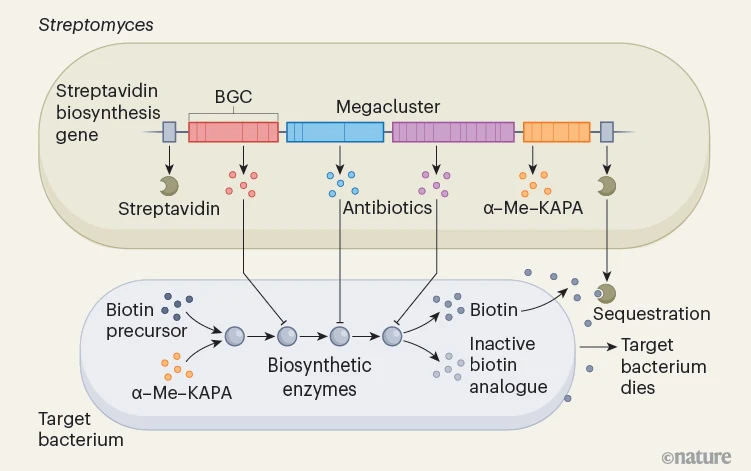
Also, when researchers are looking for new antibiotics in bacterial genomes, they scan for biosynthetic gene clusters (BGCs) that could be responsible for producing single molecules. But Brown’s team identified a cluster of four clusters—the megacluster—that produces not just one, but four molecules that work in different ways to trip up the biotin pathway. Careful study revealed that three of the clusters produce antibiotics molecules—stravidins, acidomycins, dapamycins—that each thwart a different enzyme in the biotin biosynthesis pathway. The remaining fourth cluster produces 2-methyl-7-keto-8-aminopelargonic acid, or α-Me-KAPA, which appears to be a dummy molecule that takes the place of a biotin precursor, basically hijacking the pathway to yield a useless biotin lookalike.
Further, the megacluster is flanked on both sides for the code to make streptavidin, a protein known to take up and sequester biotin.
A megacluster of genes that produces synergistic inhibitors of biotin biosynthesis.
A megacluster of genes that produces synergistic inhibitors of biotin biosynthesis. Credit: Nature, 2026, Rutherford
In all, the megacluster provides a sophisticated siege on an essential pathway in many bacteria, including Streptomyces’ foes. Experiments in test tubes and in mice confirmed that the megacluster’s products could kill off various bacteria and were more potent when used in combination.
As antibiotic resistance has increased in clinics, doctors and researchers have had to test which combinations of drugs might be able to boost efficacy. But, as Rutherford noted in his commentary, “The discovery of a natural megacluster that encodes the production of synergistic biotin-synthesis inhibitors suggests that evolution has already identified effective combinations of antibacterials that act through distinct mechanisms.” Moreover, such evolved synergistic systems may be harder for microbes to develop countermeasures against, thus they may stave off resistance.
Rutherford is careful to note that there are many big steps between this discovery and having a new antibiotic regimen in clinics. That includes more basic research, optimization of the molecules for delivery in humans, as well as pricy and lengthy safety and efficacy clinical trials.
Still, moving from scanning for individual BGCs to “megaclusters” is a fresh strategy that could reinvigorate natural product development.
“The architecture of the anti-biotin megacluster provides a paradigm for naturally evolved combination therapies, supporting a shift in antibiotic discovery from isolating individual hits to reconstructing native synergistic systems,” Brown and his colleagues conclude. “As genome-mining methods advance, the identification of similar megaclusters may reveal new paths for overcoming antimicrobial resistance by mimicking the strategies of nature.”
Vance, Rubio strike different tone on Iran and Israel
President Donald Trump’s administration has pushed hard to present a united front on the Iran war, but statements by his vice president and secretary of state have at times diverged over the past week, especially on the subject of Israel.
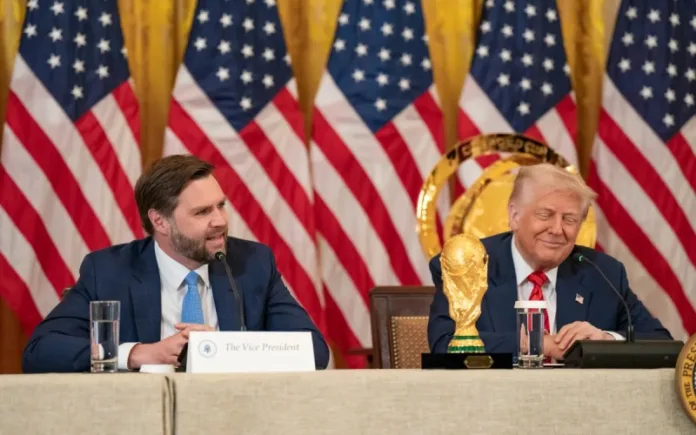
Vice President JD Vance, speaking at the White House last week, lashed out against Israeli critics of the preliminary U.S.-Iran deal. He suggested that Israeli bombings of civilian infrastructure in Beirut — intended to weaken Hezbollah, which has been attacking Israel — were undermining U.S.-led peace efforts.
Secretary of State Marco Rubio, who traveled through the Gulf this week, defended Israel’s military campaign in Lebanon, repeatedly describing its actions as a justified response to Hezbollah attacks. Pressed on Vance’s criticism, Rubio deflected before recounting an assault by the Lebanon-based militia on an Israeli checkpoint earlier in the week.
The contrast suggests that, even as the administration has emphasized unity, differing worldviews are at times rising to the surface — a challenge for a White House whose political coalition is deeply divided on foreign policy matters. It also offers an early glimpse of the Republican Party’s future, with Rubio and Vance both seen as potential 2028 presidential contenders.
Both Vance and Rubio were dispatched on high-profile trips abroad over the past week to defend the preliminary peace accord inked between Washington and Tehran on June 17.
Vance traveled to Switzerland for a round of talks with Iranian officials. Speaking to reporters on Sunday, he struck a decidedly optimistic tone on the state of talks with Iran. He has also said repeatedly in recent weeks that Gulf states could fund Iran’s reconstruction.
He has also frequently mentioned the possibility of a new, more cooperative relationship between Iran and the U.S., revealing in an interview released on Thursday that the U.S. had invited an Iranian intelligence official to serve as a deconfliction liaison with the Pentagon in Qatar.
Rubio, meanwhile, visited the United Arab Emirates, Kuwait and Bahrain to reassure allies — some of whom are concerned that the interim U.S.-Iran accord is too generous to Tehran — that their interests will be protected.
On Tuesday, Rubio said he would not ask Gulf allies during his trip to fund Iran’s reconstruction, saying such a possibility was “far down the road.” During a meeting with regional officials on Thursday, he emphasized that any deal has to be ironclad as it relates to U.S. interests and those of its allies.
“While we want a deal, we don’t want a deal at any price,” he said.
‘LOCKSTEP BEHIND PRESIDENT TRUMP’
The White House vigorously denied any divergence between the two officials.
“There is one camp – President Trump’s camp – and the entire administration is fully behind the President’s efforts to ensure Iran can never possess a nuclear weapon,” said White House spokeswoman Anna Kelly.
State Department spokesman Tommy Pigott called the idea that there were any foreign policy divisions between Rubio and Vance a “tired and fake” narrative, saying, “The entire administration is 100% in lockstep behind President Trump.”
A separate State Department spokesperson further argued there was no divergence between the two officials on Lebanon, saying the administration’s goal was to restore Lebanese government sovereignty over its entire territory.
Some analysts and commentators are unconvinced.
Michael Rubin, a senior fellow at the American Enterprise Institute think tank, said Rubio and Vance held clearly different views. “At their core they represent different strains,” he said.
The two officials come from radically different foreign policy backgrounds. Before taking office last year, Vance frequently criticized foreign wars as a waste of lives and money. Rubio made a name for himself as a “hawk” in the Senate, where he pushed for a more confrontational stance toward Iran, Russia and Cuba.
Both men are seen as potential successors to Trump and are the product of powerful, competing constituencies within the Republican Party.
On one side are “neoconservatives” whose adherents are more likely to advocate for foreign intervention. On the other are Republican voters and policy professionals who argue that many recent foreign wars were costly and reckless.
Only 52% of Republicans believe the current conflict has put the U.S. in a stronger position, according to a Reuters/Ipsos poll that closed Monday, suggesting a party divided between those camps.
Both Rubio and Vance have nevertheless supported all of Trump’s major foreign policy decisions, including his capture of Venezuelan leader Nicolas Maduro, his attack on Iran in February and his subsequent decision to pursue peace. Both have even used similar talking points in recent weeks, saying they will judge Tehran’s actions, not words, as negotiations unfold.
Asked by a reporter on Thursday to what degree his views on Iran differed from those of Vance, Rubio said they both took their lead from Trump.
“Everyone here is aligned behind the president,” he said.
Prince William Accidentally Exposes Royal Family’s Jaw-Dropping Wealth Crisis
King Charles and Prince William’s massive fortunes are under a harsh new spotlight after royal financial disclosures revealed just how much money sits behind the crown — and how the King’s own son appears to be far richer than him.
The latest figures have sparked fresh questions about royal wealth, public money and whether Britain’s most famous family is being transparent enough at a time when many ordinary families are still struggling to pay their bills.
According to the latest annual financial accounts from the Royal Household, King Charles has become the first British monarch to voluntarily reveal his personal tax payments since taking the throne.
But the disclosure has not quieted critics.
Instead, it has drawn even more attention to the jaw-dropping fortunes surrounding the monarchy — especially the wealth of Prince William, whose control of the Duchy of Cornwall has reportedly helped push his estimated net worth to around $1.6 billion.
That puts William far ahead of his father, whose fortune is estimated at roughly $898 million.
The massive numbers have fueled a new debate over whether the Royal Family can keep defending its financial arrangements while also receiving public funding.
Charles has spent years trying to present himself as a careful, old-fashioned royal who does not waste money. He has often been seen wearing older suits and jackets, and in 2023, he even made headlines after being photographed with a hole in his sock while visiting a mosque in London’s Brick Lane.
But the latest accounts paint a much more expensive picture of life inside the monarchy.
One of the biggest eyebrow-raising details involves the Royal Train, which is expected to be retired after another year of service. Despite being used only four times during the reporting period, it reportedly cost about $211,000 to operate.
Royal helicopter travel also came with a hefty price tag. The King and other members of the Royal Family reportedly made 177 helicopter trips, with each journey costing an average of about $5,000.
The Sovereign Grant, which helps fund the King’s official duties and the Royal Household, has also drawn attention after increasing under the latest arrangement. The grant is funded through profits generated by the Crown Estate, but critics have long argued that the public deserves a clearer picture of where the money goes.
Charles has repeatedly pushed the idea of a smaller, more modern monarchy. As Prince of Wales, he voluntarily published details of his tax payments, and he has now continued that practice as King by revealing the amount of income tax and capital gains tax he pays.
Supporters say that is a historic step toward transparency.
Critics say it is not enough.
The scrutiny comes as Charles continues a demanding public schedule while undergoing cancer treatment. Despite his health battle, the King completed more official engagements than any other member of the Royal Family during the latest reporting year.
Still, questions over royal spending are not going away.
Another major flashpoint is Buckingham Palace. The famous royal residence has undergone an enormous refurbishment project costing nearly $530 million, yet Charles has reportedly decided to remain at Clarence House rather than move into the palace once the work is finished.
That decision has raised fresh concerns about the cost of maintaining royal properties — especially if the monarch does not plan to live full-time in the most famous one.
Prince William has also tried to frame himself as a reformer.
The Duchy of Cornwall’s latest accounts show the Prince of Wales plans to sell about 20 percent of the estate’s landholdings over the next decade. The proceeds are expected to be put toward sustainable investments and community housing projects.
But even that has not stopped questions about William’s extraordinary wealth.
The Duchy of Cornwall is a vast estate that traditionally provides income for the heir to the throne. Now that William controls it, his financial position has soared past that of his father.
The revelations have left campaigners and royal watchers asking whether the monarchy’s financial system still makes sense in modern Britain.
One former palace aide said the numbers are impossible to ignore at a time when many families are under serious financial pressure.
“At a time when so many families are struggling to pay the bills, figures like these are bound to leave people asking whether the monarchy truly understands the pressures facing ordinary households,” the former aide said.
“Publishing tax payments is one thing, but it doesn’t answer the bigger question of how anyone can justify such extraordinary levels of wealth while receiving public funding.”
The insider added that transparency is welcome, but only if it comes with real accountability.
“Greater transparency is welcome, but transparency without accountability risks looking like a public relations exercise rather than meaningful reform,” the aide said.
For critics, the issue is not simply whether Charles pays tax. It is whether the public is getting the full story about the scale of royal wealth, the cost of royal life and the future of public funding for the monarchy.
“People will inevitably compare these fortunes with the financial realities facing millions across the country,” the insider said. “That’s a difficult contrast for the Royal Family to overcome.”
The aide added, “The monarchy cannot expect applause for revealing tax payments if the wider financial picture still leaves the public with more questions than answers about their huge wealth.”
For now, Charles may be trying to project an image of duty, tradition and restraint.
But with William’s billion-dollar fortune, a half-billion-dollar palace renovation, pricey helicopter travel and a growing demand for answers, the Royal Family’s money problems are not about being short on cash.
They are about explaining why they have so much of it.
Bangladesh’s Rahman looks to China to squeeze India on the Teesta
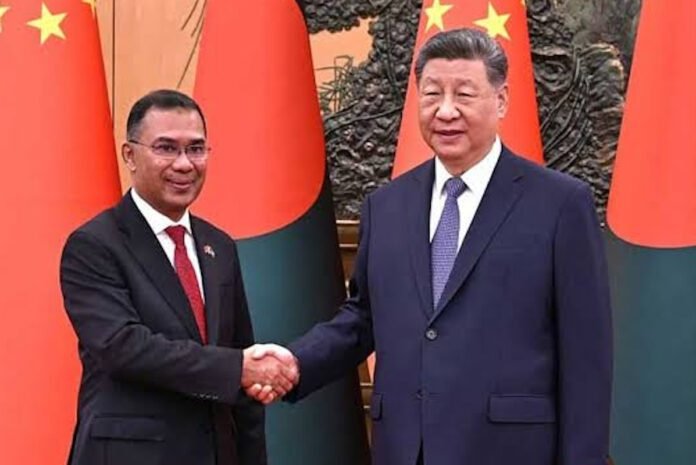
Bangladesh Prime Minister Tarique Rahman’s first four-day official visit to China yielded a predictable flurry of agreements spanning trade and green technology. But its true significance lies in the elevation of a single, long-stalled infrastructure initiative: the Teesta River Comprehensive Management and Restoration Project.
Once confined to the margins of diplomatic speculation, the project has emerged as the centerpiece of a deepening strategic partnership between Dhaka and Beijing, signaling a transition from political intent to actual implementation.
The reception in Beijing underscored the gravity attached to the visit. Rahman secured audiences with Premier Li Qiang, National People’s Congress Chairman Zhao Leji and President Xi Jinping.
The latter pledged that China would remain Bangladesh’s “trusted friend,” endorsing Dhaka’s long-term development agenda and its ambitions to join BRICS and the Shanghai Cooperation Organisation.
Yet it was the explicit, repeated references to the Teesta project that reverberated most strongly across the region. Guo Jiakun, a Chinese foreign ministry spokesman, framed the initiative as a crucial “livelihood project” that Beijing is prepared to support to the best of its ability.
For Bangladesh, the Teesta River represents an acute and enduring developmental vulnerability. Seasonal monsoons regularly inflict devastating floods upon the country’s northern plains, followed invariably by severe dry-season water shortages that cripple local agriculture.
The proposed multi-billion-dollar restoration scheme aims to tame these extremes through extensive dredging, embankment construction, reservoir creation, and the modernization of irrigation networks. Crucially, because the project is entirely contained within Bangladeshi territory, it bypasses the fraught question of transboundary water allocation.
This distinction is vital. For over a decade, a formal water-sharing treaty between Dhaka and New Delhi has been blocked by political opposition within the Indian state of West Bengal. Frustrated by fifteen years of Indian inertia on a critical environmental security issue, Dhaka has turned to Chinese engineering and capital to manage the water it already receives.
Inevitably, this pivot has caused consternation in New Delhi. Indian security analysts view any Chinese footprint in northern Bangladesh through a lens of intense geopolitical rivalry. The Teesta basin sits in uncomfortable proximity to the Siliguri Corridor — the narrow “Chicken’s Neck” of land that connects mainland India to its northeastern states.
The prospect of Chinese state-owned enterprises undertaking large-scale engineering works near this strategic chokepoint causes significant discomfort to India’s military establishment.
Anticipating these anxieties, both Beijing and Dhaka have sought to decouple the project from regional power plays.
Guo, at a press conference on Friday, the last day of Rahman’s visit, took the unusual step of explicitly dismissing India’s concerns, asserting that China-Bangladesh relations are not directed against any third party and should not be viewed through the prism of geopolitical competition.
Bangladeshi officials have been equally disciplined, steadfastly presenting the Teesta initiative as a purely humanitarian and economic priority designed to enhance agricultural productivity rather than alter regional strategic balances.
This rhetorical caution reflects the delicate balancing act that defines Bangladesh’s contemporary foreign policy. Dhaka finds itself navigating one of the world’s most competitive diplomatic environments. China has established itself as Bangladesh’s primary supplier of military hardware and its largest source of development finance.
Conversely, India remains Bangladesh’s most critical geographical neighbor, an essential trading partner, and a traditional security ally with deep historical and cultural ties.
Rahman’s strategy represents the execution of a multi-vector foreign policy. Rather than succumbing to a binary choice between Beijing and New Delhi, Dhaka is attempting to maximize economic concessions from both while jealously guarding its strategic autonomy.
By advancing the Teesta project with Chinese backing, Bangladesh is subtly signaling to New Delhi that its patience regarding unresolved bilateral grievances is not infinite, and that it possesses viable alternative partnerships.
How India chooses to respond will dictate the next chapter of South Asian diplomacy. New Delhi cannot realistically challenge Bangladesh’s sovereign right to pursue domestic infrastructure development without appearing indifferent to the welfare of millions of Bangladeshi citizens — a blunder that would only accelerate Dhaka’s drift into Beijing’s orbit.
Instead, India is likely to adopt a more sophisticated counter-strategy. This could involve a renewed political effort to revive the moribund Teesta water-sharing treaty, alongside accelerating Indian-financed cross-border energy and connectivity projects designed to anchor Bangladesh more firmly to the Indian economy.
New Delhi may ultimately be forced to accept Chinese commercial participation in Bangladesh’s development, provided it does not translate into permanent military infrastructure.
For China, underwriting the Teesta project offers rewards that extend far beyond a lucrative engineering contract. It cements Beijing’s reputation as a reliable development partner capable of delivering high-impact, politically resonant infrastructure.
Furthermore, it breathes new life into the Belt and Road Initiative in South Asia and advances the proposed China-Myanmar-Bangladesh Economic Corridor, securing a commercial conduit toward the Bay of Bengal.
Technical planning and rigorous risk assessments must still be finalized before construction crews break ground. Nevertheless, the political momentum generated in Beijing suggests the status quo has shifted irreversibly.
The Teesta project has evolved from a speculative proposal into a defining symbol of a self-assured Bangladeshi foreign policy — one where Dhaka is increasingly determined to dictate its own terms to the region’s competing giants.
Netflix now requires every user profile to be tied to unique email address
Recently, my father called me in a panic.
There were just a few minutes until Netflix would start streaming a live MMA event, and he couldn’t get into my account. For a while, he had accessed Netflix as an add-on member with his own profile through my household’s account. That day, however, he was logged out and couldn’t use my login credentials to watch Netflix. Instead, he saw a prompt asking him to “add an email address to your profile” to continue.
A Reddit user shared this image of the notification that affected profile owners are seeing.
Credit: Scotti_Dev/Reddit/Netflix
A Reddit user shared this image of the notification that affected profile owners are seeing. Credit: Scotti_Dev/Reddit/Netflix
After some frantic phone troubleshooting and a couple of password resets, we realized that my father had to create his own login to continue using the extra profile I paid for. Although I was able to get him set up in time (for some disappointing bouts), the situation was confusing and inconvenient.
More users have been encountering this situation as Netflix has gradually required that each profile under a Netflix subscription use a unique email address. When setting things up for my father, I was also asked, but not required, to provide a first and last name.
A Netflix spokesperson confirmed to Ars Technica:
This sign-in update is a permanent change that started rolling out on June 15, 2026.
The change means that every user can now have their own login credentials, which could make it easier for secondary account users to store or change their credentials, log in to a new device, or use two-factor authentication. This setup also enables profile owners to set their language, audio, and display settings without the account holder, Cord Cutters News notes.
The email requirement doesn’t apply to profiles designated as belonging to a child.
Other complaints argue that Netflix doesn’t truly need this information and is merely seeking more ways to track viewers and share information with advertisers. Notably, Netflix’s privacy policy says Netflix may share users’ email addresses with marketing and advertising companies.
More immediately, sharing his email with Netflix meant my dad automatically started receiving advertisements for Netflix programming in his inbox (though he can unsubscribe from them).
I am the only one that uses my Netflix so I created each profile to be for certain types of shows. I have a main one for the shows that are my general [TV], some favs to rewatch.
Then I have one for movies, documentaries, reality/competition shows etc.
It works great to organize and help if [I] am in a mood for, say, a documentary, [I] don’t have to scroll through all the other styles of shows.
Multifactor authentication
Amid discussions of the new profile requirement, Ars has also seen users becoming concerned that Netflix will require multifactor authentication as of July 7. This appears to stem from a Tuesday report from trade publication Media Play News (it’s no longer available online—you can view the article via the Internet Archive’s Wayback Machine). However, Ars understands that the multifactor authentication announcement only relates to business partner accounts and will not affect how regular users log in to Netflix.