20 C
London
Thursday, June 18, 2026
Home Blog

Israel Asked Facebook to Censor Iran War Content, Internal Documents Show

0
israel-asked-facebook-to-censor-iran-war-content,-internal-documents-show
Israel Asked Facebook to Censor Iran War Content, Internal Documents Show


Israel’s government asked Meta to censor social media content about its ongoing war against Iran, according to internal documents viewed by The Intercept.

Company records show that Israel petitioned Meta to take down Facebook and Instagram posts expressing support for Iran, opposition to Israel, and even depictions of Iranian missile impacts.

The government flagged a variety of materials related to the war, including posts mourning the death of Ayatollah Khamenei following his assassination by the U.S. and Israel on the opening day of the conflict, content supportive of Iran’s retaliatory attacks, and Iranian accounts that shared military analysis and propaganda sympathetic to the Iranian regime’s perspective.

“Governments wanting to suppress speech that is critical of their war efforts is as old as time.”

In some cases, Meta complied with the censorship requests, the records show, though it is unclear on what grounds. Meta maintains that it only removes content as required by law or materials that violate its speech policies.

When asked how many Iran-related takedown requests had been granted to date since the war began, the company did not answer. The Israeli Ministry of Justice, which submits takedown requests to social media platforms, did not respond to a request for comment.

Israel’s social media lobbying is not new; for years the nation has leaned on its close relationship with Meta to push for targeted enforcement of the company’s content moderation rulebook.

Israel’s Office of the State Attorney routinely lodges complaints to social media platforms on behalf of state security agencies about content deemed illegal or said to promote “terrorism,” according to its website. In the documents reviewed by The Intercept, the office in some cases made no claim that the social media content violated Israeli law. Instead, the office asked that posts or accounts should be removed because they were in violation of Meta’s content moderation rulebook.

Meta, for instance, designates Iran’s Islamic Revolutionary Guard Corps a “Dangerous Organization,” and prohibits users from engaging in many forms of positive speech about its actions. This means posts supportive of retaliatory missile launches by the IRGC, for instance, could run afoul of the company’s rules. No such prohibition exists for users who post favorably about the U.S. or Israeli militaries.

Meta did not respond to questions about the Iran war requests, but spokesperson Daniel Roberts provided a statement to The Intercept. “Anyone is able to report content they think violates our rules. Regardless of who or how a piece of content is flagged, we assess it based on our policies, which govern what is and isn’t allowed on our platform. It is wrong and irresponsible to imply that these requests are in any way unusual or improper.”

A company headquartered in California can determine what is or is not permissible speech for billions of users across the world, only a fraction of whom are American.

Meta has faced scrutiny, specifically in the Middle East, for removing content that doesn’t violate the company’s rules. A 2022 audit commissioned by the company itself found discrepancies in its content moderation practices between Arabic and Hebrew content. “Arabic content had greater over-enforcement (e.g., erroneously removing Palestinian voice) on a per user basis.” the company found. A 2023 report by the company’s inhouse Oversight Board described the “over-enforcement” of the company’s Dangerous Organizations and Individuals blacklist, disproportionately composed of Muslim and Middle Eastern entities.

Meta has long claimed that as an American company, it is legally required to sometimes remove content pertaining to certain entities sanctioned by the U.S., such as the Islamic Revolutionary Guard Corps. But legal scholars say that has little to no precedent or basis in existing sanctions law, which focus on matters of material support rather than political speech. It’s a policy that has created an immense ideological slant: A company headquartered in California can determine what is or is not permissible speech for billions of users across the world, only a fraction of whom are American.

Further adding to the imbalance when it comes to Middle East crises is the fact that Meta has granted Israel privileged access to its content moderation policy teams. In 2024, The Intercept reported how Meta employee Jordana Cutler, a former aide to Benjamin Netanyahu, served as a dedicated liaison to the Israeli government, advocating for the country’s interests and helping facilitate the removal of unwanted speech. Few other countries in the world have a dedicated representative within Meta — in 2020, a similar policy head for India market resigned after revelations she had lobbied for rule enforcement that favored India’s ruling Hindu nationalist party. Asked if Cutler has had a role in facilitating Israeli takedown requests of content relating to the war, Meta did not respond.

“Meta’s close relationship with the Israeli government for takedown requests has been a long-standing issue,” Evelyn Douek, a Stanford Law School professor and scholar of digital speech policies, told The Intercept. “Meta’s acquiescence in lots of takedown requests has been a long-standing practice.”

These asymmetries of censorship power are particularly sensitive during times of war, said Douek.

“Governments wanting to suppress speech that is critical of their war efforts is as old as time,” she said. “Allowing governments to claim national security reasons to suppress speech willy-nilly would obliterate the value of speech protections.”

According to a source familiar with the matter, Israel lobbied Meta to implement a blanket rule restricting imagery of war damage within its territory, mirroring an Israeli news media censorship policy that bars journalists from documenting weapon impacts without military approval. Meta has so far declined to implement such a policy for its billions of global users, the source said. Meta did not respond to questions about the status of this request.

The U.S. and Iran signaled this week that a ceasefire agreement is imminent, though Israel has suggested it would not abide by the terms of a deal. While many of the censorship requests directly addressed the war, others were tangential to the conflict itself. The records show Israel has pushed to remove content expressing outrage over last month’s storming of Al-Aqsa Mosque by far-right government minister Itamar Ben-Gvir. It also sought to stifle posts critical of rhetoric by Israel that linked Israel’s recent closure of Al-Aqsa with the ongoing war.

In general, Meta grants the vast majority of Israeli governmental takedown requests.

In general, Meta grants the vast majority of Israeli governmental takedown requests. The State Attorney’s Office boasted a 92 percent compliance rate in 2023, and a 2025 report by Drop Site News said the overall rate has climbed to 94 percent since the October 7 attack by Hamas.

Records reviewed by The Intercept show Israel asked for Iran war takedowns using the exact same language evoking Hamas’s October 7 attack that it submitted when requesting the censorship of pro-Palestinian and anti-Israeli speech across the globe during Israel’s war on Gaza.

“It suggests that they don’t expect their requests are being reviewed very carefully,” Douek said.

Douek argued that the wartime censorship requests underscore the danger of policing speech entirely out of public view through “opaque processes” like governmental backchannels.

“These companies … have been responsive to their own geopolitical and commercial interests, and have always been more responsive to powerful governments.”

“These platforms have always maintained that they are neutral, or that they are just a platform for people to express their views, but it has long been true that these companies have always presented a particular view of the world and have been responsive to their own geopolitical and commercial interests, and have always been more responsive to powerful governments,” Douek said.

This creates a deeply lopsided dynamic when it comes to the Iran war: The two arguably best-represented governments in the world within Meta — the U.S. and Israel — are allied belligerents in a conflict against a state deeply sanctioned by the company’s speech rules. “You’re going to end up with a skewed debate,” Douek said.
Before SpaceX IPO, Investors in China Secretly Acquired Stakes

0
before-spacex-ipo,-investors-in-china-secretly-acquired-stakes
Before SpaceX IPO, Investors in China Secretly Acquired Stakes

A businessman with ties to Chinese military contractors was among the overseas investors who acquired stakes in SpaceX while it was still a private company. An entity linked to the Qatari royal family also took a stake.

The new details come from a private investor list obtained by ProPublica that sheds light on a particularly delicate issue for Elon Musk’s rocket company: which people in countries like China bought into the company, and how. SpaceX built its business off sensitive U.S. government work like making spy satellites for the Pentagon. While there is no ban on Chinese investment in U.S. military contractors, such investment is heavily regulated.

In a sign of its sensitivity to the concerns, SpaceX barred investors from China and Hong Kong from buying shares in its initial public offering last week due to “regulatory and compliance risks,” Bloomberg reported. The U.S. government alleges that China has a strategy of using investments in sensitive industries for espionage and to get access to cutting-edge technology. 

The company’s IPO last week was the largest ever, making Musk the world’s first trillionaire. Musk has extensive business interests in China, where Tesla builds many of its cars.

The new records detail at least a dozen investors with addresses in mainland China, Hong Kong or Russia who acquired stakes in SpaceX years ago through a middleman firm in the U.S. called Tomales Bay Capital. The investments are relatively small, ranging from $800,000 to $40 million, and were made between 2018 and 2021.

One investment came from an entity owned by David Su, the co-founder of the prominent Beijing venture capital firm MPCi. The Su entity invested $15 million in a SpaceX fund in 2020, according to the investor list. It was not Su’s only foray into the space industry; his company has been a high-profile backer of some of SpaceX’s Chinese competitors. Two satellite companies that Su’s firm invested in were sanctioned by the U.S. government for allegedly assisting the notorious Russian mercenary organization the Wagner Group. One of the companies was sanctioned again last month for allegedly helping Iran attack U.S. military forces during the war. 

MPCi has also worked with Chinese government investment funds. Last year, the website for China’s Ministry of Science and Technology named Su’s firm as a partner in a state-backed effort to develop the country’s aerospace industry. 

There is no evidence that Su did anything improper. But the key question from the U.S. government’s perspective would be whether China-based investors got access to nonpublic information about SpaceX’s technology or strategies, said Sarah Bauerle Danzman, an Indiana University professor who has worked for the State Department scrutinizing foreign investments. “If an investor has conflicts of interests with other companies in China — if they could feed that information to competitors — it could be a national security concern,” she said. 

In a statement, MPCi said that Su “has not received any nonpublic information of SpaceX.” The statement described Su as “a Singapore citizen who resides in Singapore,” adding: “MPCi is a brand name with different teams and funds. Mr. Su is responsible for the US dollar funds.” According to a 2024 profile of him, Su “spent almost 100 per cent of his time in China over the last 20 years.”

A lawyer for Tomales Bay Capital said in a statement that the firm “has not provided any non-public, sensitive information regarding SpaceX to investors.” He said the investors are passive limited partners: “Aside from fund financials that include quarterly valuations, Tomales Bay’s investors have not received any further information regarding SpaceX.”

“The vast majority, if not all, of the investors included on the unsealed Tomales Bay investor list are not citizens of any foreign adversary, including Russia or China,” said the lawyer, Ryan Stonerock, “and certainly none of them are agents of Russia or China, or any other foreign adversary.” He added that some of the investors “may have mailing addresses listed” in Russia or China but do not actually live there “and are in fact citizens and residents of the United States or other countries that are not foreign adversaries.” 

SpaceX did not respond to questions. One of the Chinese space companies sanctioned by the U.S. government, Spacety, previously denied providing support to the Wagner Group. 

All the investors located in China or Russia that ProPublica identified appeared to be either wealthy businesspeople or their children. 

The new documents come from a corporate dispute in Delaware involving Tomales Bay Capital. The court records were unsealed this month after ProPublica moved to make them public, with the help of attorneys from the Reporters Committee for Freedom of the Press and the law firm Shaw Keller. Tomales Bay Capital appealed to the Delaware Supreme Court, which ruled in favor of ProPublica.

Tomales Bay Capital is run by an investor named Iqbaljit Kahlon, who has long been close to SpaceX’s leadership and even involved in the company’s operations. SpaceX CFO Bret Johnsen, who’s worked there for 15 years, testified that Kahlon “has been with the company in one form or fashion longer than I have.”

Before SpaceX went public, Kahlon made a fortune by acting as a middleman for investors hoping to add the rocket company to their portfolio. His firm regularly bought SpaceX stock, packaged it into investment funds and then charged fees to investors who bought pieces of those funds. 

In a 2021 pitch to one potential investor in China, Kahlon promised special access to SpaceX, including quarterly updates on the company’s business development, “visits to SpaceX, and the opportunities to interview with Space X’s CFO,” according to the meeting minutes, which later appeared in court records.

While ProPublica and other outlets have previously reported on the existence of Chinese investors in SpaceX, the identities of most of the rocket company’s investors have been closely guarded. The Kahlon investor list adds hundreds of names to the public picture of who owns SpaceX. The list details investments in several Tomales Bay Capital funds that have acquired SpaceX stock; it is possible that some of the funds own stakes in other companies too.  

Some of the SpaceX investors on Kahlon’s ledger are easy to identify: the Indian politician Abhishek Singhvi; Betsy DeVos, the former U.S. secretary of education; a British Virgin Islands company owned by Indonesian billionaires. But others on the list are shell companies whose ultimate owners remain hidden.

One such company is a Delaware LLC called HAL9001 Partners Fund I, which invested roughly $10 million in a SpaceX fund in 2020. The incorporation documents for HAL9001 were signed by the venture capitalist Roman Sobachevskiy. The Treasury Department recently fined a company that was co-owned by Sobachevskiy hundreds of millions of dollars for managing a different investment on behalf of a sanctioned Russian oligarch. Sobachevskiy has not been personally accused of wrongdoing. 

A Tomales Bay Capital spokesperson said that the oligarch “had no involvement with the investment.” Sobachevskiy did not respond to questions, including who put up the money for the SpaceX investment.

The records also shed some light on the connections between SpaceX and Qatar. Funds affiliated with Bracket Capital — an investment firm with offices in Los Angeles, London and Qatar — invested about $48 million through a series of deals from 2017 through 2020, the documents show. Bracket has money from the Qatari royal family, according to an email that Kahlon sent to SpaceX’s CFO. The ledger also lists Doha, Qatar, as the address for a mysterious entity called AM FIG Cayman Limited, which invested around $10 million in 2020.  

The documents do not specify whether the Bracket investments were made on behalf of the royal family or some other client. In 2021, as Kahlon was soliciting backers for yet another SpaceX deal, he texted a Bracket employee: “At the end we can just send Yalda to talk to big guy. We need a bail out lol.” (Yalda Aoukar is Bracket’s co-founder. It’s unclear whether the “big guy” refers to a member of the royal family and what Kahlon meant by “a bail out.”) 

Bracket did not respond to requests for comment.

The investments covered in the ledger were tiny percentages of SpaceX but would have generated windfalls. The company’s valuation has exploded in recent years, from $33.3 billion in 2019 to $2.7 trillion as of Wednesday morning.

Last year, ProPublica reported on SpaceX’s unusual approach to accepting money from Chinese investors. According to testimony from the Delaware case, the company allowed Chinese investors to buy stakes in SpaceX so long as the money was routed through the Cayman Islands or other offshore secrecy hubs.

Towers once planned for California shuttle launches leveled for SpaceX rockets

0
towers-once-planned-for-california-shuttle-launches-leveled-for-spacex-rockets
Towers once planned for California shuttle launches leveled for SpaceX rockets

One of the United States’ most storied space launch sites has been cleared of its decades-old support towers, making way for modern rockets to use the pad. Space Launch Complex-6 (SLC-6) at Vandenberg Space Force Station is arguably better known for what did not lift off from there than for what did.

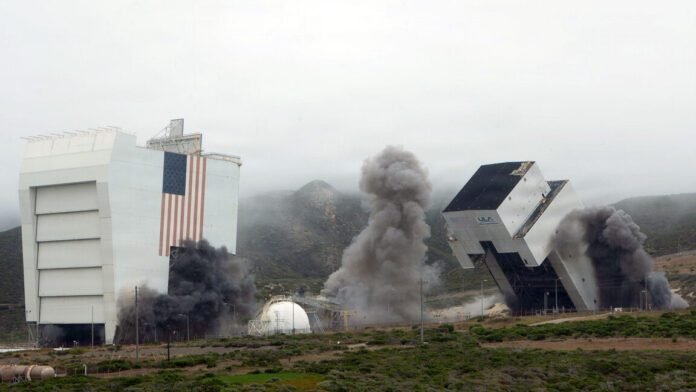
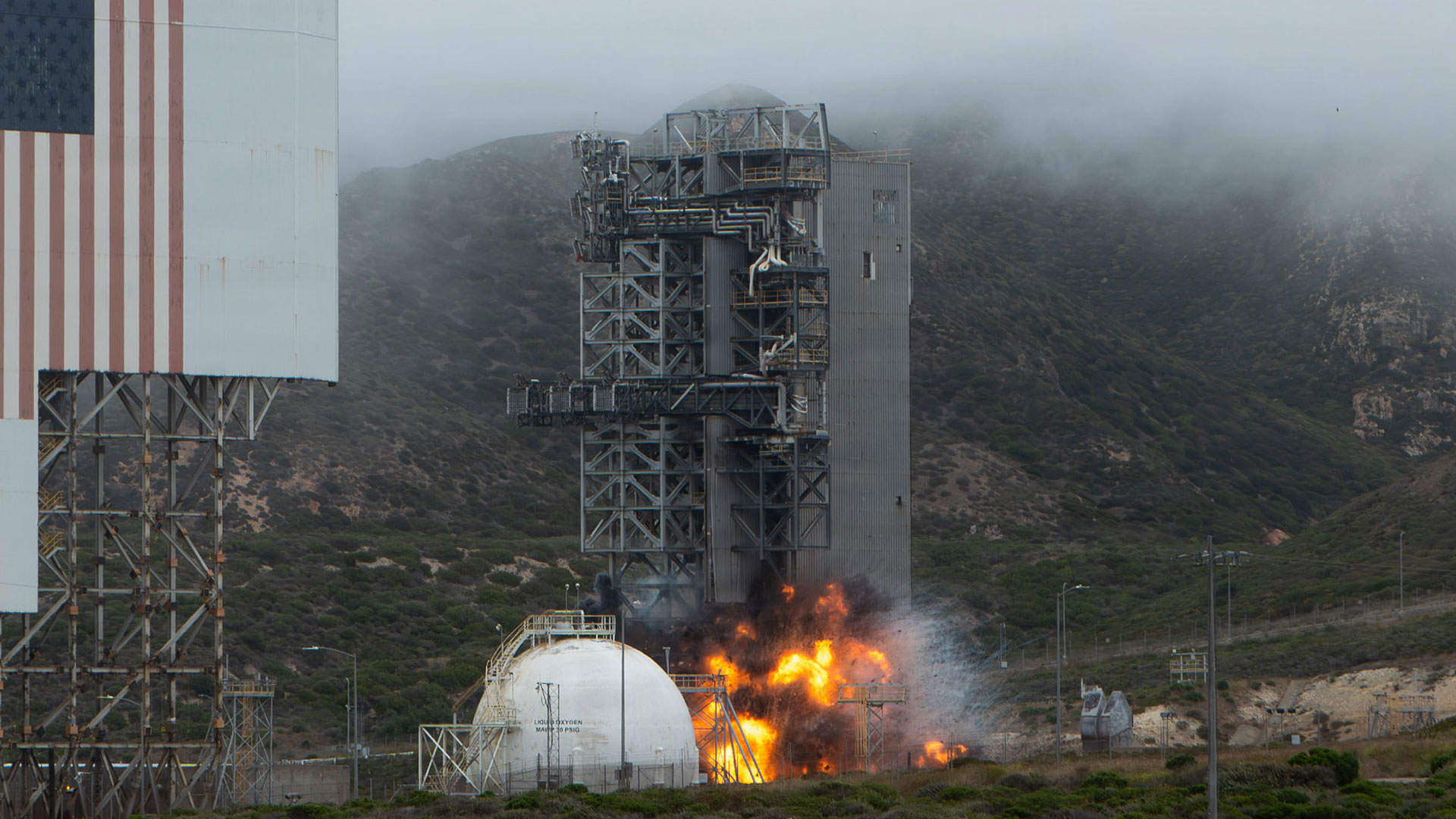
A series of demolition charges on Tuesday (June 16) brought down the access tower, mobile service tower, and what remained of the assembly building at SLC-6—pronounced “slick-six”—in Southern California. Once the location for the US Air Force’s first effort to put humans into space and later, the West Coast launch site for the space shuttle, SLC-6 will next be used by SpaceX in support of Falcon 9 and Falcon Heavy missions.

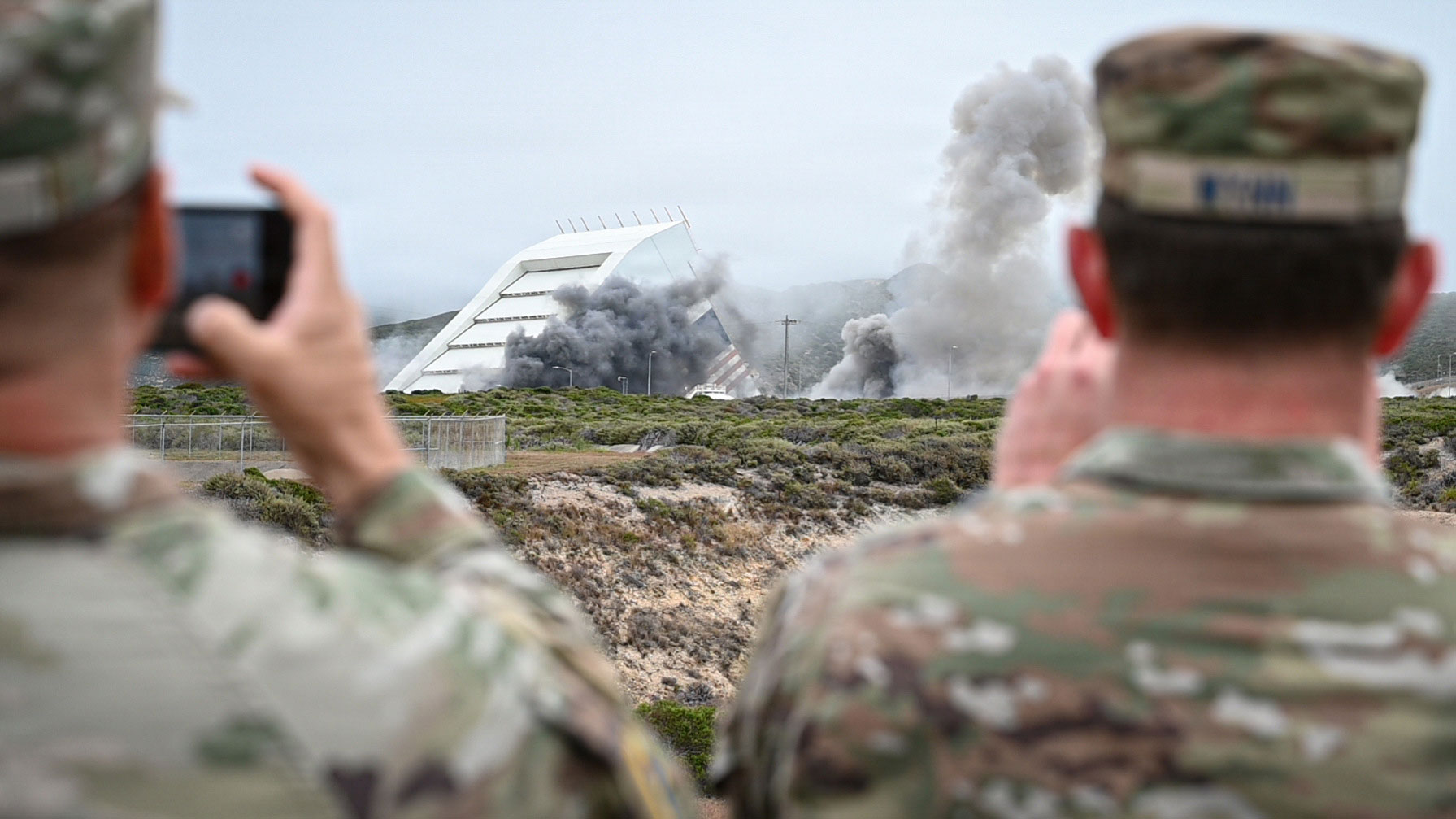
Vandenberg Space Force Base personnel watch as the assembly building at Space Launch Complex-6 (SLC-6) is toppled on June 16, 2026, to make way for SpaceX’s use of the site.

Vandenberg Space Force Base personnel watch as the assembly building at Space Launch Complex-6 (SLC-6) is toppled on June 16, 2026, to make way for SpaceX’s use of the site. Credit: Space Launch Delta 30/Tech. Sgt. Draeke Layman

“Space Launch Complex-6 represents six decades of American innovation and our unwavering commitment to securing space superiority,” Col. James T. Horne III, commander of Space Launch Delta 30 at Vandenberg, said in a statement. “By modernizing this historic footprint in partnership with our defense industrial base, we are building directly upon the foundation of our pioneers.”

The demolition was known to be planned but was only announced hours after it was completed at 11 am PDT (1800 GMT) on Tuesday. The detonations brought down the access tower first, followed by the mobile service tower and then the large American flag-adorned assembly building. Typical of Vandenberg weather, a marine layer of low clouds and fog added a somber look to the scene.

Have pad, will not launch

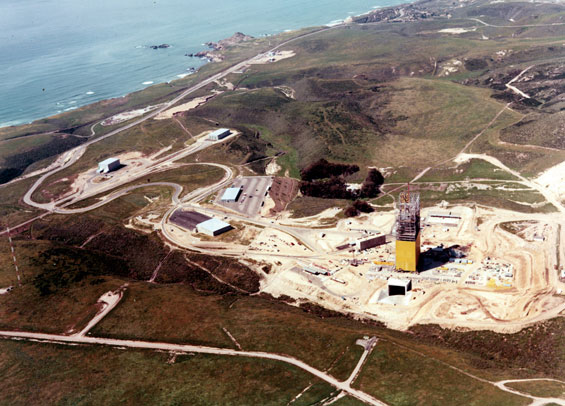
SLC-6 was first developed in 1966 to support the Air Force’s first effort to send astronauts into Earth orbit to conduct reconnaissance using a vehicle and hardware adapted from NASA’s Project Gemini. The site’s mobile service tower and concrete apron were built for the Titan IIIM modified missile, but the program was canceled in June 1969 before any launches from SLC-6 could be conducted.

Space Launch Complex-6 (SLC-6) as seen under construction in 1966 in support of the US Air Force’s Manned Orbiting Laboratory (MOL) program.

Space Launch Complex-6 (SLC-6) as seen under construction in 1966 in support of the US Air Force’s Manned Orbiting Laboratory (MOL) program. Credit: U.S. Air Force/1369th Audiovisual Squadron

Looking to recoup some of its investment from the MOL infrastructure, the Air Force next chose SLC-6 as its launch site for Department of Defense dedicated space shuttle missions. With the intention of permanently moving the orbiter Discovery to California, the Air Force designed SLC-6 differently from NASA’s Kennedy Space Center, most notably by stacking the vehicle directly on the pad rather than in a more distant assembly building.

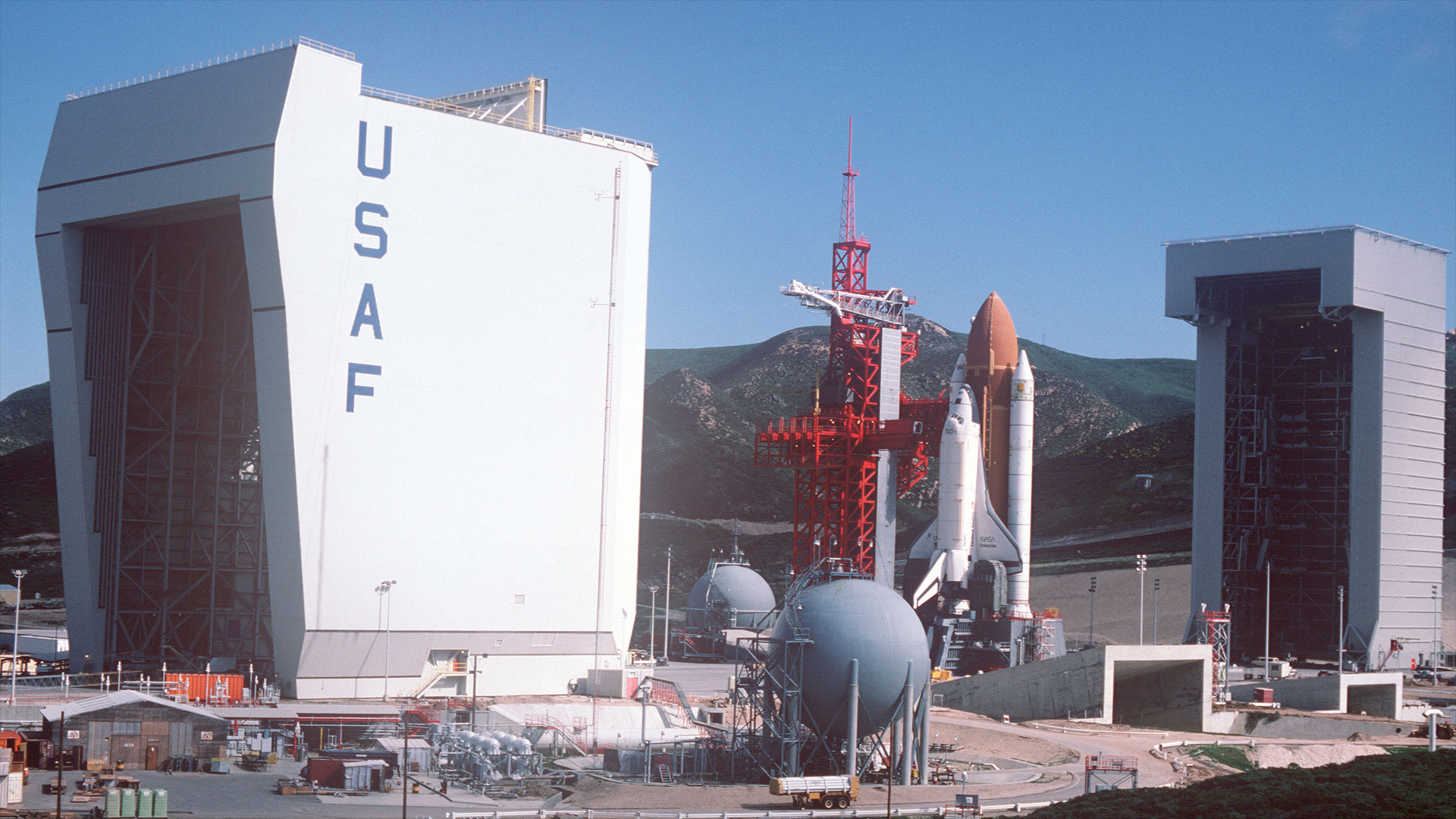
In the end, only the prototype Enterprise was stood up with an external tank and solid rocket boosters on SLC-6 before the Challenger tragedy in 1986 caused the DOD to rethink its reliance on the shuttle. Again, the Air Force walked away from the built-up facility, having never launched a single mission.

NASA’s prototype space shuttle orbiter Enterprise, stacked with an external tank and two solid rocket boosters, stands at Space Launch Complex-6 (SLC-6), flanked by the assembly building and mobile service tower at Vandenberg Air Force Base (today Vandenberg Space Force Base) in California in February 1985.

NASA’s prototype space shuttle orbiter Enterprise, stacked with an external tank and two solid rocket boosters, stands at Space Launch Complex-6 (SLC-6), flanked by the assembly building and mobile service tower at Vandenberg Air Force Base (today Vandenberg Space Force Base) in California in February 1985. Credit: U.S. Air Force/Tech. Sgt. James Pearson

After a brief effort to revive SLC-6 for use with the Titan IV in the early 1990s, the site finally saw its first operational use with the launch of Lockheed Martin’s LMLV-1 in 1995, followed by Athena I and Athena II rockets with payloads for NASA and Space Imaging (later GlobalEye) in 1997 and 1999, respectively.

Boeing (later United Launch Alliance or ULA) then leased the site and modified the shuttle-legacy structures, including the assembly building, mobile service tower, and access tower, for a series of 10 Delta IV rocket launches on missions for the National Reconnaissance Office (NRO). The final launch from SLC-6 to date was of a Delta IV Heavy on September 24, 2022.

SpaceX at SLC-6

In 2023, SpaceX signed a lease to use SLC-6 for its Falcon rockets. Tuesday’s demolition advanced the company’s plans toward modernizing the site.

Since 2013, SpaceX has been launching Falcon 9 rockets from Space Launch Complex-4 (SLC-4) at Vandenberg.

In addition to now having access to SLC-6 itself, SpaceX in 2016 acquired the Orbiter Transporter System (OTS) originally developed for the West Coast site. The 76-wheel motorized vehicle is now used to transport flown Falcon 9 first stages from the company’s Cape Canaveral facilities to its Florida launch pads.

Explosive charges sever the structural supports of the Fixed Umbilical Tower at Space Launch Complex-6 during a controlled demolition on June 16, 2026, at Vandenberg Space Force Base in California.

Explosive charges sever the structural supports of the Fixed Umbilical Tower at Space Launch Complex-6 during a controlled demolition on June 16, 2026, at Vandenberg Space Force Base in California. Credit: U.S. Space Force/Staff Sgt. Daekwon Stith

According to a 2025 environmental impact study, SpaceX expects it will take an additional 18 months to complete modifications to SLC-6, including the construction of two landing pads for the reusable Falcon 9 first stage boosters. Falcon Heavy launches could begin as soon as 2030, pending the NRO’s needs.

“We are not just updating infrastructure,” said Horne. “We are leveraging industry capabilities to field a more resilient space enterprise, ensuring the United States is prepared to protect our national interests and meet future challenges for decades to come.”

Click through to collectSPACE for more photos of the demolition of the SLC-6 support towers.

Why Xi is walling in China’s money – and why it won’t work

0
why-xi-is-walling-in-china’s-money-–-and-why-it-won’t-work
Why Xi is walling in China’s money – and why it won’t work

TOKYO – China’s latest fix for its ailing economy: build a better birdcage.

The metaphor runs deep in Chinese culture, where enclosures for pet birds have long captured the tension between freedom and control — the belief that markets, like captive creatures, need defined limits or they descend into chaos. But Xi Jinping’s attempt to cage Chinese citizens’ money movements abroad probably won’t fly as intended.

In recent weeks, Beijing has moved to seal off the channels through which its 1.4 billion citizens send capital overseas. On May 22, the China Securities Regulatory Commission cracked down on unlicensed brokers funneling investor money into foreign markets. Regulators are now pressing Hong Kong and Singapore brokerages to wind down their cross-border securities, futures, and fund businesses.

The CSRC is working on a two-year timeline and, officially, the target is “illicit” flows. But the shift in mood alone is likely to have an unintentional chilling effect on Asia’s largest economy.

The risk, says Ashwin Binwani, founder of Singapore-based Alpha Binwani Capital, is that the crackdown turns “significantly worse” — spreading into a broader, market-spooking clampdown. Economist Gary Ng at Natixis notes that the “biggest problem is that you never know how far the crackdown on cross-border capital flow can go,” which is sure to reverberate through Hong Kong’s financial sector.

These actions don’t happen in isolation. More than five years on, global investors are still parsing the fallout from the clampdown on Jack Ma’s Alibaba and the broader crackdown on China’s internet giants.

The same goes for last month’s revelation that Beijing is micromanaging the travel of AI researchers — echoing the Soviet-era practice of “birdcaging” academics, athletes, and artists to keep them from straying too far from home.

These moves, and many others like them, sit awkwardly beside Xi’s 2013 pledge to let market forces play a “decisive” role in economic life. They’re also a reminder that his party too often treats the symptoms of China’s problems rather than their root causes.

In the short term, the effect is corrosive. Eurasia Group analyst Dominic Chiu notes that the new rules are already prompting major banks to quietly tighten or freeze account openings for mainland clients. Longer term, others point out, the strategy looks less like financial progress than like fear — odd timing for a country that wants the yuan taken seriously as a reserve currency.

There is, however, a genuine bright spot at the People’s Bank of China. On June 17, Governor Pan Gongsheng told a business forum that the PBOC may shift toward a Fed-style overnight policy rate — a move that would sharpen Beijing’s control over short-term funding costs and bring China’s central bank closer in line with its global peers.

True independence for the PBOC would be better still. For the yuan to seriously rival the dollar or the euro, Pan’s institution needs real authority over monetary policy, not just an advisory role beneath the State Council, which has final say. Still, this would be a meaningful reform.

Since July 2024, the PBOC has formally adopted a policy framework centered on the 7-day reverse repo rate as its primary policy rate. It was a step forward, improving the transmission of the PBOC’s monetary tweaks from short-term rates to longer-term borrowing costs. It meant de-emphasizing the importance of China’s loan-prime rate and the medium-term lending facility.

If the PBOC now shifts to an overnight rate policy — and odds are high that it will – it would have more influence over markets by being more transparent. It could mean an eventual move to scheduled decision meetings, offering markets forward guidance and publishing at least vague minutes of the discussions.

That, in turn, would mean less policy opacity surrounding Chinese assets. It would also increase foreign participation in onshore bond markets, which are already swelling thanks to the Bond Connect program.

A more transparent, rules-based framework would bolster the case for the year as a reserve currency. The PBOC, in theory, would have less scope to micromanage the exchange rate behind the scenes. While that could mean a more volatile yuan rate in the near term, it would increase the currency’s credibility.

The key to the Fed’s power in Washington is its statutory independence and the sanctity of its mandate to control inflation and limit unemployment. Here’s why this is a useful step for China, but not the game-changer global markets seek.

Until Team Xi is willing to insulate the PBOC from political pressure, a shift to a Fed-style communication framework has limited impact. Adopting a more G7-like toolkit and calendar is a good start, but it’s only that. Still, even a partial convergence with the G7 central banks is progress.

“Measures to improve the short-end interest rate control mechanism represent a crucial step in the transition of China’s monetary policy toward a price-based approach, with the core objective being to enhance the central bank’s ability to precisely control short-term interest rates,” notes Dong Ximiao, chief economist at CMB-China Unicom Consumption Finance.

This global moment seems ripe for China to position the yuan to play a bigger role in trade, finance and central bank reserves.

With the US national debt zooming toward US$40 trillion, inflation rising at a 4.2% rate thanks to US President Donald Trump’s Iran war and complete gridlock among lawmakers in Washington, there are ample reasons for global investors to crave an alternative.

As JPMorgan warned in late 2025, well before bombs fell on Tehran: “Increased polarization in the US could jeopardize its governance, which underpins its role as a global safe haven.”

Earlier this month, a European Central Bank report argued that gold is now the world’s largest reserve asset, eclipsing US government bonds. Gold, by the ECB’s numbers, accounted for 27% of global central bank reserve assets at the end of 2025, up from 20% a year earlier. “Geopolitical tensions continue to drive strong central bank demand for gold,” wrote ECB President Christine Lagarde of the findings.

As Hamad Hussain at Capital Economics tells CNBC, “recent doubts over the dollar’s safe-haven status could also boost the attractiveness of both gold and the euro as reserve assets over the coming years.”

Adds Mark Haefele, chief investment officer at UBS Global Wealth Management: “Investors should ensure portfolio diversification and hold sufficient exposure to gold and hedge funds” as stock markets become turbulent.

In his speech on Wednesday, Pan unveiled fresh steps to boost the yuan’s global profile. Pan said the PBOC is creating the RMB Repo Facility for Foreign and International Monetary Authorities, or FIMA RMB Repo.

It will enable overseas central banks, monetary authorities, international financial institutions and sovereign wealth funds to access yuan liquidity from the PBOC. This will be done via repo transactions using Chinese government bonds and other high-grade bonds as collateral.

The PBOC is also considering rolling out a liquidity tool to support non-banking financial institutions during crises. This requires striking a balance between preserving financial stability and avoiding so-called “moral hazard” that incentivizes bad behavior. Yet it’s the kind of guardrail that might cheer global investors seeking a reasonable level of predictability.

In Beijing last month, Xi told Trump’s billionaire entourage – including Apple’s Tim Cook, BlackRock’s Larry Fink, Blackstone’s Stephen Schwarzman, Nvidia’s Jensen Huang and Tesla’s Elon Musk – that China would “open wider” and offer them “broader prospects.”

Since then, though, Xi has moved to tighten controls on cross-border capital, wall off the AI sector and reduce transparency. Less openness from the leadership of Asia’s biggest economy, not “wider” access, as Xi promised. Xi’s actions over the last month smack more of anxiety than the confidence Wall Street had come to expect from Beijing during the Xi era.

At the same time, this week’s barrage of economic data is upending Xi’s deflation-is-over narrative. This argument is predicated on the 1.2% year-on-year increase in consumer prices in May. That, after consumer prices averaged 0% across 2025.

Yet news retail sales dropped 0.6% year-on-year in May, the weakest since late 2022, suggesting China’s weak demand is probably deepening. At the same time, fixed-asset investment fell a much deeper-than expected 4.1% in the first five months of 2026.

It means that, like Japan, China may be having a harder time defeating the “deflationary mindset” that doesn’t care about the numbers the National Bureau of Statistics releases month to month. The weakness of recent data suggests that solid Chinese exports aren’t enough to bolster economic confidence.

Defeating deflation once and for all means ending a property crisis now in its fifth year. It also means getting Chinese households to deploy the more than $22 trillion in savings they’re sitting on.

This giant stockpile of cash is more than four times Japan’s annual GDP, whose lost decades demonstrate the high cost of complacency. The two challenges are connected, of course. Roughly 70% household wealth is tied to property.

If China’s economy were to become more transparent and stable, and to offer alternatives to owning real estate, perhaps citizens wouldn’t feel such great urgency to invest abroad. Team Xi is erring if it thinks a finance birdcage is the answer, when what’s needed is bold efforts to increase trust in the economy and make Chinese households want to invest at home.

Follow William Pesek on X at @WilliamPesek

US-Iran memorandum of understanding formally finalized after presidents sign text

0
us-iran-memorandum-of-understanding-formally-finalized-after-presidents-sign-text
US-Iran memorandum of understanding formally finalized after presidents sign text

Iran said early Thursday that a 14-point memorandum of understanding (MOU) with the United States aimed at ending the war had been formally finalized after the presidents of both countries signed the text of the agreement, Anadolu reports.

Iranian Foreign Ministry spokesman Esmail Baghaei said the “Islamabad memorandum” had become fully official after being signed by both Tehran and Washington, according to remarks carried by Iran’s semi-official Mehr News Agency.

Baghaei said the agreement was signed digitally and confirmed that negotiations under the memorandum would focus exclusively on nuclear issues and sanctions relief.

He said the two sides would hold talks for up to 60 days, with the possibility of extending negotiations if necessary due to the complexity of the issues involved.

Baghaei said the plan for the negotiating teams to be in Geneva remains in place, but the memorandum was signed digitally and no signing ceremony would be held in Switzerland.

The memorandum became more difficult to violate after being signed by the presidents of both countries and was described as formally finalized, he noted, adding that implementation would be more challenging.

Iran would carry out its obligations only if the other side fulfilled its commitments, he added, Tehran would monitor implementation “without any leniency.”

The memorandum stipulates that future negotiations will focus exclusively on the nuclear issue and sanctions relief. He underlined that Tehran deliberately avoided discussing nuclear matters during the war-ending talks.

READ: Trump says US will have to give Iran’s money back

Baghaei highlighted that Lebanon is mentioned three times in the memorandum’s opening provision, including references to respect for its sovereignty and territorial integrity.

He added that if Israel’s attacks against Lebanon continue, it will be considered a violation of the US commitments under the MOU.

“We do not separate the United States and the Israeli regime,” Baghaei said, adding that despite differences between Washington and Tel Aviv, it is the responsibility of the United States to ensure Israel respects commitments made under the memorandum.

The spokesman also said US commitments regarding the lifting of its naval blockade on Iran had effectively begun following urgent talks after Israeli attacks on Beirut’s southern suburbs and Iranian threats of retaliation.

He added that Iranian vessels had already entered and exited ports “without problems,” describing it as a sign that US commitments were beginning to take effect.

He added that Iran expects oil sanctions relief to begin immediately and be implemented in practice, including the ability to export oil, secure shipping and insurance services, and receive revenues from oil sales.

The spokesman said Tehran had separately negotiated issues related to frozen Iranian assets, sanctions relief and post-war reconstruction alongside the memorandum itself, adding that the US had committed to removing obstacles to the release and use of Iranian funds.

Baghaei said Iran’s commitments regarding the Strait of Hormuz would begin following the signing and implementation of the memorandum.

On the Strait of Hormuz, Baghaei said Iran was finalizing arrangements for managing traffic through the strategic waterway in coordination with Oman, noting that Iran and Oman are the only two littoral states bordering the strait.

READ: Iran to charge ships for services in Strait of Hormuz, parliament speaker says

He said safe passage through the Strait of Hormuz would be ensured while preserving Iran’s sovereignty over the waterway and added that Tehran plans to charge fees for services provided there.

Baghaei also reiterated that Iran’s missile program and defense capabilities would not be discussed in any negotiations with any party.

“Iran’s missiles are for launching, not for negotiating,” he said.

The spokesman further said Iran would not transfer its enriched uranium stockpile abroad, describing such a move as unacceptable, while noting that dilution of enriched uranium remains one possible option for future discussions.

The US and Iran on Wednesday remotely signed a memorandum of understanding, officials from both countries announced.

The 14-point draft, made public by US officials on Wednesday, calls for an immediate and permanent end to military operations on all fronts, including Lebanon, removal of the naval blockade on Iran within 30 days, and safe passage for commercial vessels through the Strait of Hormuz.

It also includes a reconstruction and economic development plan for Iran valued at a minimum of $300 billion, oil export waivers, the release of Iran’s frozen assets, and a reaffirmation by Tehran that it will not develop nuclear weapons, with the future of its enriched uranium stockpile to be negotiated.

IDF Reservist Who Foiled 2016 Knife Attack Killed in Southern Lebanon

0
idf-reservist-who-foiled-2016-knife-attack-killed-in-southern-lebanon
IDF Reservist Who Foiled 2016 Knife Attack Killed in Southern Lebanon


Israel Defense Forces (IDF) Reservist Master Sgt. Alexander Filin, 29, of Haifa, was killed Wednesday during combat operations in southern Lebanon, while the deputy commander of the IDF’s 36th Division and a reserve battalion commander were moderately wounded in the same area by an explosive device, the military announced.

Filin served as a fighter in the headquarters of the 36th Division and was killed during fighting near the border. The wounded officers included the division’s deputy commander, a colonel, and a reserve battalion commander in Transportation Unit 556 holding the rank of lieutenant colonel. Notifications were delivered to the families.

The incident occurred at approximately 5 p.m. while a force accompanying the deputy division commander was operating on foot in the Litani area. An initial investigation found that the force was likely struck by an enemy explosive device. Additional details remain under investigation. Following the incident, the military shelled terrorist infrastructure in the area with artillery fire.

Filin previously made headlines in 2016 after thwarting a stabbing attack shortly after completing basic training. During an interview with Walla at the time, he described how a terrorist attempted to attack him and another soldier at a checkpoint near the entrance to Nablus in the West Bank.

“It was a normal day, we were doing our job, checking vehicles,” Filin said. “Suddenly a car came from the direction of Nablus and 30 meters from our position accelerated and crashed into the concrete barrier.”

Describing the confrontation, he said: “I kicked him to push him away and tried to chamber a round. The first time I couldn’t because of the pressure. The second time I kicked him again, he moved back, I chambered the weapon and shot him.”

Earlier Wednesday, an explosive drone detonated near a Givati Brigade tank in the Tabanit area of southern Lebanon. Four soldiers were wounded by shrapnel and evacuated by helicopter for medical treatment. Minutes later, a second explosive drone struck the evacuation vehicle, wounding a fifth soldier.

Of the five casualties in the drone attack, one soldier was seriously wounded, two were moderately wounded, and two sustained light injuries. In response, the military fired artillery at terrorist infrastructure in the area.

Earlier this week, the military struck terrorist cells in Lebanon after rockets, mortar shells, and anti-tank missiles were launched at forces operating in the sector. No casualties were reported in those incidents.

US security forces thwart dozens of drone incidents in first days of World Cup

0
us-security-forces-thwart-dozens-of-drone-incidents-in-first-days-of-world-cup
US security forces thwart dozens of drone incidents in first days of World Cup


The federal government has seized dozens of drones since the start of the FIFA World Cup earlier this month, according to statistics released by the Department of Homeland Security on Wednesday.

Across multiple stadium locations, federal officials working with local law enforcement have brought down drones with mitigation measures approved for their arena. In some cases authorities seized the drones entirely.

A DHS spokesperson said those counter drone teams “have been hard at work” supporting the games across eight of eleven venues.

It was not immediately clear if any of the drones were carrying disruptive devices or potential explosives. DHS did not immediately respond to follow-up questions.

FBI Director Kash Patel said Tuesday that the agency had thwarted an attack on President Donald Trump’s UFC event at the White House in which individuals attempted to use explosive-laden drones to attack it.

On Wednesday, Patel also said on X that the FBI had arrested an unauthorized immigrant operating a drone outside a fan fest in Atlanta.

In all, since the World Cup started on June 11 through June 16, DHS said authorities reported 145 “incursions” in restricted space across eight U.S. venues, including Atlanta, Dallas, Houston, Kansas City, Seattle, Boston, San Francisco and Philadelphia (the data did not include the Los Angeles, Miami or New Jersey venues, though the FBI has reported drone activity in those locations as well).

Authorities successfully thwarted or “mitigated” 55 drones and seized 39 across those eight venues, according to DHS.

The venue with the most incidents was in Atlanta. According to DHS, authorities there observed 36 incursions into no-fly zones near the sporting events, with 20 mitigations and 11 seizures.

These mitigations and seizures involved Customs and Border Protection, the Federal Protective Service and the Coast Guard, DHS said.

At a recent congressional hearing, DHS secretary Markwayne Mullin disclosed that officials were still scrambling to get ahead of potential drone threats, and said DHS has been preparing to handle such incursions as best it could.

“We have spent a tremendous amount of ability and money to be able to be very offensive with drones, but on the counter-drone measures, everybody’s a little behind,” Mullin said.

Source: Politico

Homemade Egg Noodles

0
homemade-egg-noodles
Homemade Egg Noodles

Homemade Egg Noodles are simple, fresh, tender, and made from scratch with just a few basic ingredients. You do not need a pasta machine or any special equipment—just flour, salt, eggs, water, your hands, a rolling pin, and a knife.

These old-fashioned egg noodles are perfect for soups, stews, casseroles, or simple buttered noodles. They cook quickly, taste fresher than store-bought pasta, and bring that classic homemade comfort to any meal.

Why You’ll Love These Homemade Egg Noodles

  • Made with simple pantry ingredients
  • No pasta machine needed
  • Ready in about 15 minutes
  • Perfect for soups and stews
  • Soft, tender, and fresh
  • Great old-fashioned recipe
  • Easy to cut into any shape or width
  • Delicious with chicken soup, beef stew, or butter

What Makes Homemade Egg Noodles So Good?

Fresh egg noodles have a soft, chewy texture and rich flavor that dried store-bought noodles cannot fully match. The egg yolks make the dough tender and flavorful, while the flour gives it structure.

Because these noodles are fresh, they cook much faster than dried pasta. Drop them into boiling water or soup, and they are ready in just a few minutes.

Ingredients

  • 2 cups all-purpose flour
  • 2 teaspoons kosher salt
  • 3 large egg yolks
  • 1 large egg
  • ¼ cup water

Ingredient Notes

Flour

All-purpose flour works perfectly for homemade egg noodles. It gives the noodles structure while keeping them tender.

Eggs and Egg Yolks

The egg and extra yolks add richness, color, and flavor. They also help the dough come together.

Salt

Kosher salt seasons the dough and helps the noodles taste flavorful on their own.

Water

Water is added slowly to bring the dough together. Add it 1 teaspoon at a time so the dough does not become too wet.

How to Make Homemade Egg Noodles

Step 1: Mix the Flour and Salt

Add the flour and salt to a clean work surface.

Use your fingers to mix them together.

Create a well in the center of the flour.

Step 2: Add the Eggs

Add the egg yolks and whole egg into the well.

Use your fingers to slowly work the eggs into the flour.

Mix gently until the dough starts to form.

Step 3: Add Water Slowly

Add water 1 teaspoon at a time.

Continue working the dough until it holds together.

You may not need all the water, so add it gradually.

Step 4: Knead the Dough

Knead the dough for about 10 minutes.

Press the heel of your hand into the dough, push it forward, fold it back, rotate, and repeat.

The dough should become smooth and no longer powdery.

If it feels too sticky, sprinkle in a little more flour.

Step 5: Roll the Dough

Use a rolling pin to roll the dough to your desired thickness.

For thinner noodles, roll the dough as thin as possible.

For thicker, rustic noodles, leave it slightly thicker.

Step 6: Cut the Noodles

Use a knife to cut the dough into your preferred noodle width.

You can make thin noodles, wide noodles, or rustic strips.

Gather any scraps, re-roll them, and cut again until all the dough is used.

Step 7: Cook the Noodles

Bring a pot of water or broth to a boil.

Drop the fresh noodles into the boiling liquid.

Cook for 2 to 4 minutes, depending on thickness.

Taste-test one noodle to make sure it is fully cooked.

How to Knead Egg Noodle Dough

Kneading helps develop the right texture for fresh noodles.

Use the heel of your hand to push the dough forward, then fold it back and rotate it.

Continue kneading for about 10 minutes, or until the dough is smooth and firm.

If the dough looks dry and powdery, add a tiny bit more water.

If it feels wet or sticky, dust it with a little flour.

How Thick Should Egg Noodles Be?

This depends on how you plan to use them.

For soup, roll the noodles fairly thin because they will cook quickly and soften in the broth.

For stews or casseroles, slightly thicker noodles work well because they hold their shape.

The thinner you roll the dough, the faster the noodles will cook.

Tips for the Best Homemade Egg Noodles

Add Water Slowly

Do not pour all the water in at once. Add it little by little until the dough holds together.

Knead Well

A good knead gives the noodles better texture.

Don’t Worry About Perfect Shapes

Homemade noodles are meant to look rustic.

Cook Fresh Noodles Quickly

Fresh pasta cooks much faster than dried pasta.

Test Before Draining

Cooking time depends on noodle thickness, so taste one before removing them from the pot.

Ways to Use Homemade Egg Noodles

These noodles are delicious in:

  • Chicken noodle soup
  • Turkey noodle soup
  • Beef stew
  • Chicken and noodles
  • Creamy chicken pasta
  • Buttered noodles
  • Casseroles
  • Brothy vegetable soups
  • Homemade noodle bowls

Can You Dry Homemade Egg Noodles?

Yes. If you are not using the noodles right away, let them dry for a couple of hours.

Spread them out in a single layer so they do not stick together.

Once dried, store them in an airtight container in a cool place for up to 1 week.

Storage Instructions

Fresh uncooked noodles can be used right away or dried before storing.

If storing short-term, place the noodles in an airtight container and refrigerate for up to 2 days.

For longer storage, let them dry fully and keep them in an airtight container in a cool place for up to 1 week.

Freezing Instructions

You can freeze homemade egg noodles.

Place the cut noodles on a baking sheet and freeze until firm.

Transfer to a freezer-safe bag or container.

Freeze for up to 2 months.

Cook from frozen in boiling water or broth, adding an extra minute or two if needed.

Frequently Asked Questions

Do I Need a Pasta Machine?

No. You can make these noodles with only your hands, a rolling pin, and a knife.

Can I Use a Mixer?

Yes. You can use a stand mixer with a dough hook, but making the dough by hand works very well.

Why Is My Dough Too Sticky?

It may have too much water. Add a little flour, one small sprinkle at a time.

Why Is My Dough Too Dry?

Add water 1 teaspoon at a time until the dough holds together.

How Long Do Homemade Egg Noodles Cook?

Fresh egg noodles usually cook in 2 to 4 minutes, depending on thickness.

Recipe Information

Prep Time: 10 minutes
Cook Time: 5 minutes
Total Time: 15 minutes
Servings: About 4

Final Thoughts

Homemade Egg Noodles are simple, comforting, and surprisingly easy to make. With just a few ingredients and no special equipment, you can prepare fresh noodles that taste wonderful in soups, stews, casseroles, or with a little butter.

Once you try making egg noodles from scratch, you may never look at store-bought noodles the same way again.

“Dangerous” AI models are coming no matter what

0
“dangerous”-ai-models-are-coming-no-matter-what
“Dangerous” AI models are coming no matter what

Late last week, Anthropic took its new Claude Fable 5 and Mythos 5 AI models offline following a United States government export-control directive barring “any foreign national” from using the services. The company has been in talks with the White House since Friday but has yet to secure an agreement that would allow it to reinstate the offerings.

Since Mythos debuted in April, Anthropic has claimed—and warned—that the model has advanced capabilities for not only finding software vulnerabilities to help defenders patch them, but also figuring out ways to exploit them that could be used by bad actors. Anthropic itself noted this double-edged sword in its launch of Mythos 5 and Claude Fable 5. “A great deal of advanced usage of AI models is dual use: the same queries that are beneficial in the hands of cybersecurity professionals and biology researchers could be dangerous if available to malicious actors,” the company wrote in a blog post last week.

With this in mind, the company initially released a version called Mythos Preview to a select consortium as part of a working group known as Project Glasswing. Mythos 5 was also privately released to this group last week, while Claude Fable 5, which is a Mythos-grade model, was released to the general public with specific blocks on its ability to give responses to questions about biology and cybersecurity.

Then, at the end of last week, the Trump administration moved to restrict both models because it believes that Fable 5’s guardrails can be disabled to allow full access to the Mythos 5 capabilities, allegedly making it a national security risk.

Experts say, though, that this institutional clash is simply delaying or masking a hard truth: Anthropic may be the tip of the spear in this moment, but AI capabilities in general and models from multiple companies and open-weight developers will almost certainly have similar capabilities to Mythos 5 in the near future—if they don’t already.

“It’s myopic in the extreme to think that no other competitors to Anthropic will develop similar capabilities to Mythos or even that they have not already done so,” says Tarah Wheeler, chief security officer of the specialized cybersecurity consulting firm TPO Group. “There are other companies hot on Anthropic’s heels who probably have the capabilities, too, and are holding them in reserve as they see how Anthropic is being treated in the current regulatory environment.”

Anthropic itself has emphasized this point since the launch of Mythos Preview. “The real message is that this is not about the model or Anthropic,” Logan Graham, the company’s frontier red team lead, told WIRED when Mythos Preview launched in April. “We need to prepare now for a world where these capabilities are broadly available in 6, 12, 24 months.”

OpenAI, for example, also did a private release of a cybersecurity-focused model in mid-April and announced an expanded cybersecurity strategy.

Researchers note that even before this next generation of models, existing AI offerings could be used for advanced vulnerability-hunting and exploit development with a refined harness. A large group of cybersecurity leaders emphasized this to the administration in an open letter on Sunday, arguing that the White House’s export-control directive was misguided.

“It’s not one model; it’s the general trend of technology,” says Bruce Schneier, a researcher at Harvard University and the University of Toronto who has been analyzing the situation. “Smaller, cheaper, open-source models, sometimes by themselves and sometimes in concert with each other, can match Mythos/Fable’s performance with more sophisticated prompting. And we should expect other models to match Mythos/Fable’s creativity and tenaciousness within months—slightly longer for open-source models.”

What the White House and governments around the world need to focus on, experts say, is democratically developing much broader and more transparent plans for how they will contend with advances in AI capabilities on cybersecurity and in other sensitive areas as they inevitably occur.

“The policy question is not whether a technology has risk,” says Chris Wysopal, cofounder of the cloud security firm Veracode. “The question is whether a specific restriction meaningfully reduces that risk or whether it mainly slows down the people trying to make systems safer.”

This story originally appeared at wired.com.

Reality Star, 22, Vows to Expose ‘Shocking’ Truth of Childhood

0
reality-star,-22,-vows-to-expose-‘shocking’-truth-of-childhood
Reality Star, 22, Vows to Expose ‘Shocking’ Truth of Childhood


Collin Gosselin is ready to tell his side of the story — and he says it is far darker than anything viewers saw on TV.

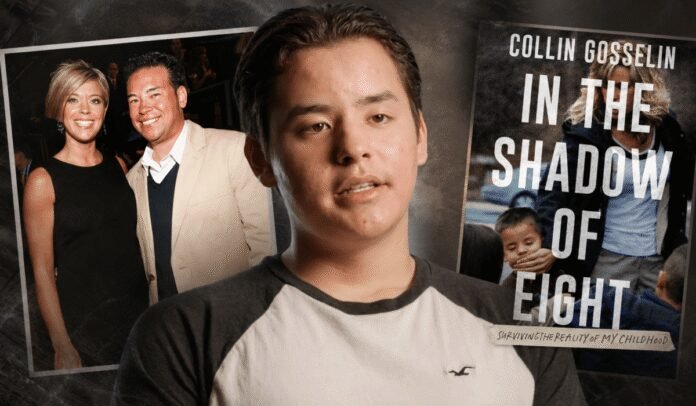
The former “Jon & Kate Plus 8” child star is releasing a bombshell memoir this fall, promising to pull back the curtain on what he describes as the shocking truth behind his famous family’s carefully polished image.

The book, titled “In the Shadow of Eight: Surviving the Reality of My Childhood,” is set to hit shelves on Oct. 13.

According to the publisher’s description, the tell-all will reveal the “never-before-told story” of how Collin survived a childhood lived in front of cameras while, he claims, the worst parts of his life were hidden from the public.

The description teases a brutal look at “the dark side of fame,” including the people and systems Collin says allowed him to be “erased.”

Now 22, Collin is expected to revisit deeply disturbing allegations from his childhood, including claims that he was held down, hidden in a basement, and forced to take powerful antipsychotic drugs when he was just 11 years old.

The book also reportedly includes a shocking memory from Christmas morning, when gifts were allegedly taken back once the cameras stopped rolling.

The cover itself is already raising eyebrows. It features an old photo of his mother, Kate Gosselin, with her hand clamped over Collin’s mouth.

Collin is one of Jon and Kate Gosselin’s sextuplets, along with Aaden, Joel, Alexis, Hannah and Leah. The former couple also share 25-year-old twins Cara and Madelyn.

The family became household names when their TLC reality show, “Jon & Kate Plus 8,” premiered in 2007. After Jon and Kate’s messy divorce, the show continued as “Kate Plus 8” and ran for years as viewers watched the children grow up on camera.

But Collin now says the public never saw the full story.

While speaking to Us Weekly, he said his childhood was “broadcast to millions,” but claimed that much of what really happened was deliberately kept hidden.

“Finally, I’m sharing what was really happening behind the scenes,” Collin told the outlet. “This book is about truth, survival, resilience and finding my voice after years of being silenced.”

He added that he hopes his story helps others feel less alone.

“If my story helps even one person feel less alone or gives them the courage to tell their own, then every difficult page was worth writing,” he said.

Collin also admitted he was scared to speak out for years.

“I was afraid,” he said, explaining that he did not think people would believe him and was not ready to tell his story.

Over the years, Collin has made headlines for accusing his mother of child abuse and exploitation. He has claimed he was zip-tied, locked in a basement and later institutionalized.

Kate has repeatedly denied his abuse claims.

The family feud has also divided the Gosselin siblings. In 2023, Collin’s sister Madelyn publicly defended Kate and accused Collin of physical violence and hate speech. Collin and his father, Jon, denied those claims.

Jon was granted sole custody of Collin in 2018. Hannah later moved in with him as well.

Jon appeared to support Collin’s new book by sharing pre-order links on Instagram Stories. Kate has not publicly commented on the memoir.

Collin says writing the book forced him to relive some of the hardest parts of his life, but also helped him find something he had long been searching for.

“This isn’t the story people think they know,” he said. “It’s the story I’ve lived.”

0FansLike
0FollowersFollow
0FollowersFollow
0SubscribersSubscribe
- Advertisement -
Google search engine

Recent Posts