On June 16, outside Seoul’s Olympic Park Handball Gymnasium, an extraordinary scene unfolded.
For days, the venue had been at the center of controversy surrounding South Korea’s June 3 nationwide local election, with participants in the election transparency movement alleging that election-related materials stored inside could help answer lingering questions about the vote.
Earlier that day, police and representatives from the People Power Party (PPP) reached an agreement permitting entry under specific conditions, including live camera coverage and restrictions on the removal of election materials.
As police prepared to enter the gymnasium, a young woman stepped forward and stood in front of the entrance.
The standoff
Rally participants urged her to move. Politicians negotiated. Police waited.
When people tried to persuade her to move, she continuously shook her head without uttering a word. As the pleading continued, she turned her back to the crowd and held the door shut by herself.
After nearly two hours of intense stalemate, police withdrew and the effort was abandoned.
The symbolism was striking. At the center of a dispute involving political parties, law enforcement and the media stood neither an elected official nor a movement leader, but an ordinary citizen acting alone.
A changing political landscape
The incident also revealed a deeper shift in South Korean politics.
For decades, leftists viewed themselves as the natural representatives of youth, democratic resistance and social change. Yet many younger voters increasingly see politics through a different lens.
Rather than focusing on ideological labels, they tend to judge political actors according to who holds power and how that power is exercised.
Many members of the leftist generation built their political identities during the democracy movement of the 1980s. Today, however, many of them occupy influential positions throughout politics, academia, media and civil society.
This helps explain why the standoff resonated so strongly. To many participants, it appeared less as a confrontation between the state and a fringe movement than as a clash between citizens and an established political elite.
That perception deepened when Seoul police threatened that those involved in the rallies could potentially “lose everything.” Critics saw the remarks not as a routine law-enforcement warning but as another example of authorities demanding forced compliance rather than earning trust.
Freedom versus control
Many younger South Koreans grew up in a prosperous democracy and regard personal freedom as a birthright rather than an aspiration.
As PPP spokesman Park Min-young recently explained:
Even young women are saying this now. Gender issues have largely become an issue of the past. When they look at conservative governments or conservative politicians, they may not necessarily like them. They may not feel particularly positive about them. But at least when conservatives are in power, people’s lives do not become more difficult.
Conservatives are not constantly trying to control or regulate how they live. Housing prices do not suddenly skyrocket. Inflation does not surge because the government is flooding the economy with money. Jobs do not disappear.
But when the left comes to power, they engage in all kinds of moral posturing and virtue signaling. Then, after just five years in office, housing prices have doubled, people who refused vaccines cannot even enter cafés, businesses are shut down, and one restrictive measure after another is imposed.
People end up thinking, When the left governs, my life becomes more difficult. My quality of life deteriorates. This is something that people in their twenties and thirties increasingly feel regardless of gender.
As a result, efforts by governments, activist groups or cultural institutions to shape personal behavior often provoke resistance. The issue extends beyond elections to questions of speech and personal autonomy.
The image of a lone young woman standing before the Handball Gymnasium resonated because it crystallized sentiments already present among many younger voters.
A new generation at the door
Increasingly, young South Koreans view public institutions less as protectors of liberty than as potential constraints upon it.
If that perception continues to spread, the political consequences may extend far beyond a single afternoon in Seoul.
The significance of June 16 was not that a young woman stood in front of a door. It was that so many young Koreans saw themselves standing there with her.
Hanjin Lew is a South Korean political commentator on East Asian Affairs.
Montenegro ready to assume EU membership responsibilities, president tells MEPs
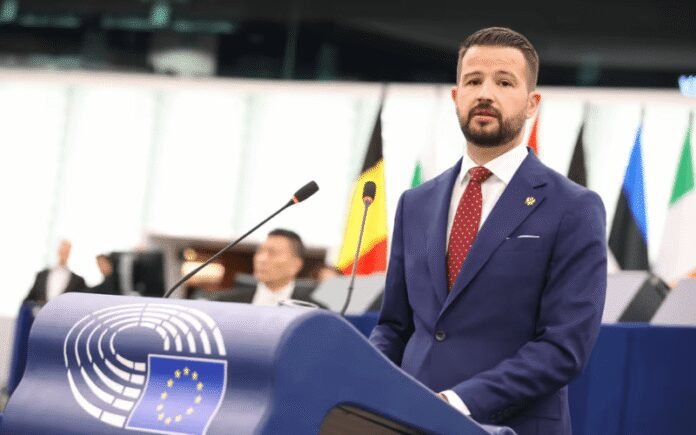
Montenegro is ready to assume the responsibilities of European Union membership and contribute to the bloc’s future, President Jakov Milatović told the European Parliament on Tuesday, describing the current period as a historic moment for both his country and the EU’s enlargement policy.
Welcoming Milatović to Parliament, European Parliament President Roberta Metsola said: “This is Europe’s enlargement moment, and Montenegro is leading the way. Enlargement is not an act of charity – it is an investment in a stronger, safer and more prosperous Europe.”
Addressing MEPs, Milatović urged the EU to demonstrate that reforms, democratic development and strategic consistency have their rightful place within the European project.
He said Montenegro was prepared to contribute to European policies, “bind its future to the common European future”, and become the 28th member state of the European Union.
Milatović noted that Montenegro has opened all 33 negotiating chapters and provisionally closed 16, while the Council has already begun work on the draft accession treaty. However, he acknowledged that further work remains, particularly on strengthening the rule of law, independent institutions and an efficient public administration.
Reflecting on Montenegro’s independence in 2006, Milatović said the country had chosen to build a “European, democratic, civic and open Montenegro”, describing its European path as more than a foreign policy objective and instead “a steadfast foundation of values”.
While acknowledging setbacks and periods when reforms progressed more slowly than citizens and European partners had expected, he said public support for the European idea had remained strong because citizens viewed it as the route to a better future.
Montenegro began EU accession negotiations in 2012. All 33 negotiating chapters have been opened and 16 have been provisionally closed. The country’s negotiating team aims to conclude accession talks by the end of 2026. The European Parliament is due to vote on a report assessing Montenegro’s EU accession progress on Wednesday.
Massive breach spills credentials for thousands of sensitive networks
Researchers have uncovered a massive breach of Fortinet firewalls that has given Russian-speaking attackers near-unrestricted access to some of the world’s largest and most powerful organizations, including Oracle, Chevron, Lenovo, Federal Express, a NATO defense contractor, and Fortinet itself.
Nearly 74,000 Fortinet devices from more than 21,000 IP addresses in 194 countries have been compromised and their plaintext credentials exposed online, Bob Diachenko, a security researcher and head of SecurityDiscovery.com, said online and in an interview. He said he found the data after gaining access to the attackers’ command-and-control server and other infrastructure. The exposed data also included the industry, revenue, and employee count for each compromised organization.
Exceptional scale, poor opsec
Independent researcher Kevin Beaumont reported that “almost all” of the compromised devices remained online as of Wednesday morning. He went on to say that he has confirmed with multiple organizations found in the attackers’ logs that the credentials are real and current. In many cases, once the threat actors compromised the devices, they went on to access affected organizations’ centralized authentication systems, such as Radius servers and Microsoft Active Directory. The number of compromised devices comprises roughly half of all Internet-facing Fortinet firewalls, based on polling from Shodan.
“The scale of this breach touches nearly every sector of the global economy, sparing no industry,” researchers from Hudson Rock, a security firm that also analyzed the data, wrote. “The threat actors have built a verified database of working credentials for some of the largest enterprises on the planet.”
Diachenko, Beaumont, and Hudson Rock all urged Fortinet users to investigate their networks immediately for signs of compromise. Hudson Rock provided this search engine for locating affected domains.
The scale of the operation is exceptional. The threat actor, which Diachenko said was criminally motivated, started by mass-scanning the Internet for FortiGate remote login endpoints. They then used a custom binary with 25,000 threads to spray hundreds of thousands of those endpoints with thousands of login and password combinations. Successful attempts now gave the attackers a “network tap inside the organization.”
Hudson Rock said the attackers went on to “actively intercept SSL VPN authentication hashes and crack them using a massive, dedicated 45-GPU cluster managed via Hashtopolis.” From there, they used the GPU cluster to crack the hashes, meaning to try massive combinations of plain-text passwords until they found the right one. These passwords allowed the threat actors to move laterally to compromise Active Directory environments and other centralized authentication systems.
“This aggressive methodology has led to severe, real-world consequences,” Hudson Rock said. “Diachenko’s research confirmed full network compromises at multiple organizations across Japan, Taiwan, Vietnam, Iraq, and Turkey. Most alarmingly, this includes a Turkish NATO defense contractor from which classified defense documents were successfully exfiltrated by the group.”
In the interview, Diachenko put it more succinctly. “The scale is the sophistication,” he said.
The scale didn’t stop there. The attackers used the massive cluster to run a” feedback-driven, 12-level recursive system.” In other words, there wasn’t a single flat dictionary run. Password candidates came from custom dictionaries with as many as eight words, common keyboard patterns, and cracking rules. Each one looped back with each step. When guesses were successful, the passwords were fed back as seeds to generate still more candidates. In other words, the cracking techniques improved with each successful guess.
“They were quite innovative on that,” the researcher said.
The innovation contrasts sharply with the operational security of the attackers, who left artifacts on the server they used. In hacker circles, such moves are considered amateur mistakes.
Hudson Rock said that the top countries where compromised devices were found were India, the US, Taiwan, Mexico, Turkey, and Thailand. The top industries affected were IT services, construction materials, telecommunications, construction and engineering, industrial equipment, and financial services. Other organizations whose data appeared in the database included: Foxconn, Samsung, Comcast, Siemens, PwC, and Accenture. Hudson Rock said that the database listed thousands of others, including major government agencies and critical infrastructure providers.
Firewalls have long been a favorite network entry point for hackers. These devices accept connections from the outside Internet, sit at the perimeter of a network, and have access to valuable resources deep inside.
The links above list a number of steps Fortinet firewall users should take to ensure their networks are secure. Given that the data has been available to cybercriminals and potentially other threat actors who, like Diachenko, found it, the risk is substantial.
Full MOU text revealed as Trump justifies ending Iran war
Foreign policy analysts and peace advocates expressed relief Wednesday that the end of the unprovoked US-Israeli war on Iran could be in sight, as the US government released the text of the memorandum of understanding reached this week by the Trump administration and Iranian negotiators.
But observers noted that the text of the agreement and President Donald Trump’s remarks at the Group of Seven meeting in France appeared to acknowledge how needless the war was—after 3,400 Iranians and thousands more people across the Middle East were killed by US and Israeli troops.
The memorandum of understanding (MOU) declares the “immediate and permanent termination of military operations on all fronts, including in Lebanon,” where Israeli forces have killed more than 3,600 people since early March, allows a 60-day window to negotiate the final terms of the deal, and holds that Iran will “maintain the current status quo of its nuclear program,” which Iranian officials have consistently said is not for military purposes.
“The United States of America will not impose any new sanctions and will not deploy additional forces in the region,” says the MOU.
At the National Iranian American Council, policy director Ryan Costello rejected the commentary of some Trump opponents in Washington, DC who portrayed the deal as a surrender by the US, with some Democratic lawmakers scoffing at the deal’s inclusion of a $300 billion reconstruction fund for Iran—where US and Israeli attacks have destroyed or damaged “100,000 housing units along with schools, hospitals, bridges, and other vital infrastructure.”
“The core terms of the agreement are either mutually beneficial or have significant upside, even the ones being decried, denounced, and misportrayed,” wrote Costello. “Time will tell if this memorandum can survive the caustic politics in Washington and Tehran that have accompanied any lessening of tensions between the US and Iran, and ultimately deliver relief that is sorely needed… Yet, what has been started is not a threat to American security, it is a threat to the Washington mindset that any US-Iran outcome is ultimately zero-sum and that Iran’s gain is an American loss. The US will benefit if our nation moves off the path of war with Iran. That will be accomplished by the memorandum and the steps that it entails.”
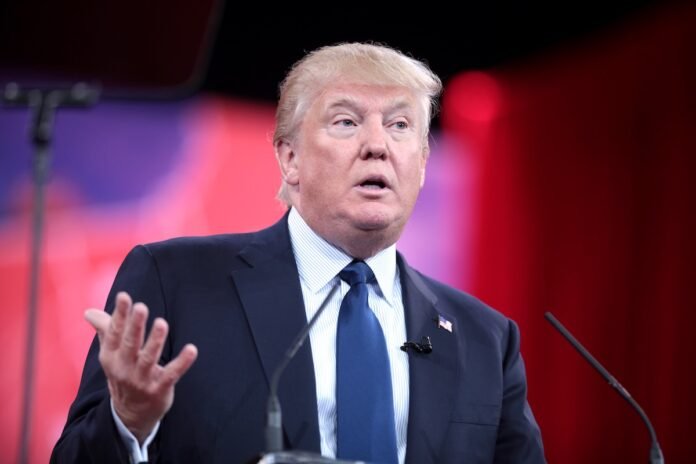
In remarks to the press at the G7 summit, Trump addressed questions about how the MOU will stop Iran from developing a nuclear weapon—the key objective of the war, White House officials have repeatedly said. He issued a threat to “bomb them” if Iran does not refrain from developing a nuclear weapon, before indicating he had arrived at a viewpoint long pushed by opponents of the war and foreign policy experts.
“It is a little hard though, when you say that somebody wants it, other people have it, other adjoining states have it, and you’re not letting them have it for purposes of electricity and things like that,” the president said, referring to Iran’s nuclear program.
Trump added that neighboring countries also have ballistic missiles, which Iran has long maintained it should be permitted to have as part of its national security arsenal.
Matt Duss, executive vice president at the Center for International Policy. termed those “things it would’ve been great to figure out before you started a war over them.”
Danny Citrinowicz, a Middle East policy expert, said: “It may have taken a long, costly, and complicated conflict, but the United States appears to have arrived at a conclusion that should have been evident from the start: Iran’s missile program is not negotiable because it sits at the very core of the regime’s security doctrine.”
“Reasonable people can ask whether such a prolonged conflict was necessary to reach this conclusion,” he said. “Yet it is better to recognize strategic realities late than never at all. Before events spiraled completely out of control, the US administration stepped back from maximalist objectives and returned to a more measured and realistic approach.”
The president suggested that the planned official signing of the deal, scheduled for Friday, could still potentially fall through, and threatened to resume bombing if Iranian officials did not “behave.”
He added that he will take credit for the agreement if it holds, and will blame Vice President JD Vance “if it doesn’t.”
Below is the text of the MOU:
The United States of America and the Islamic Republic of Iran have jointly agreed in good faith on [ __ date] on the following: 1 — The United States of America and the Islamic Republic of Iran and their allies in the current war are signing this MOU to declare the immediate and permanent termination of military operations on all fronts, including in Lebanon, and undertake from now on not to initiate any war or any military operation against each other, and to refrain from the threat or use of force against each other, and ensuring the territorial integrity and sovereignty of Lebanon. The final deal will confirm the permanent termination of the war on all fronts, including in Lebanon and other provisions of this paragraph. 2 — The United States of America and the Islamic Republic of Iran undertake to respect each other’s sovereignty and territorial integrity and to refrain from interfering in each other’s internal affairs. 3 — The United States of America and the Islamic Republic of Iran commit to negotiating and achieving the final deal in maximum 60 days, extendable with mutual consent. 4 — Immediately upon the signing of this MOU, the United States of America will begin the removal of its naval blockade and any disturbances or impediments against the Islamic Republic of Iran, and will fully end the naval blockade within 30 days. During this period, the traffic of vessels will be in proportion to the numbers of pre-war traffic being restored by the Islamic Republic of Iran. The United States of America further undertakes to remove its forces from the proximity of the Islamic Republic of Iran within 30 days after the final deal. 5 — Upon the signing of this MOU, the Islamic Republic of Iran will make arrangements using its best efforts for the safe passage of commercial vessels with no charge, for 60 days only, from the Persian Gulf to the Sea of Oman and vice versa. The traffic of commercial vessels will immediately start, and considering the need for removing the technical and military obstacles, and demining by the Islamic Republic of Iran will be instated within 30 days. The Islamic Republic of Iran will conduct dialog with the Sultanate of Oman to define the future administration and maritime services in the Strait of Hormuz in discussion with other Persian Gulf littoral states in line with the applicable international law and the sovereign rights of coastal states of the Strait of Hormuz. 6 — The United States of America undertakes with regional partners to develop a definitive, mutually agreed plan with at least USD 300 billion for the reconstruction and economic development of the Islamic Republic of Iran. The mechanism for the implementation of this plan will be finalized as part of a final deal within 60 days. All required licenses, waivers and permissions needed for the relevant financial transactions will be granted by the United States of America. 7 — The United States of America undertakes to terminate all types of sanctions against the Islamic Republic of Iran, including the United Nations Security Council resolutions, IAEA Board of Governors resolutions, and all unilateral US sanctions, primary and secondary, in an agreed upon schedule as part of the final deal. The Islamic Republic of Iran and the United States of America acknowledge the critical importance of the sanctions termination issue above mentioned, and expressed their intentions to immediately address these issues in the negotiations in order to achieve mutual agreement on them. 8 — The Islamic Republic of Iran reaffirms that it shall not procure or develop nuclear weapons. The United States of America and the Islamic Republic of Iran have agreed to resolve the disposition of stockpiled enriched material pursuant to a mechanism that will be mutually agreed upon in accordance with the schedule mentioned in paragraph seven, with the minimum methodology to be down blended on site under the supervision of the IAEA. The two parties also agreed to discuss the issue of enrichment and other mutually agreed matters related to the Islamic Republic of Iran’s nuclear needs, based on a satisfactory framework being agreed upon in the final deal. The final deal will confirm the provisions of this paragraph. The United States of America and the Islamic Republic of Iran acknowledge the critical importance of the nuclear issues above mentioned. They express their intention to immediately address these issues in the negotiations in order to achieve mutual agreement on them. 9 — Pending the final deal, the United States of America and the Islamic Republic of Iran agree to maintain the status quo. The Islamic Republic of Iran will maintain the current status quo of its nuclear program, and the United States of America will not impose any new sanctions and will not deploy additional forces in the region. 10 — The United States of America undertakes that immediately upon the signing of this MOU and until the termination of sanctions, US Department of Treasury will issue waivers for the export of Iranian crude oil, petroleum products and derivatives, and all associated services, including banking transactions, insurances, transportation, etc. 11 — The United States of America undertakes to make fully available for use the frozen or restricted funds and assets of the Islamic Republic of Iran upon the implementation of this MOU. The United States of America and the Islamic Republic of Iran will mutually agree on the procedures related to the release of these funds during negotiations. Such funds, whether retained in the original account or transferred, shall be made fully usable for payment to any ultimate beneficiary designated by the Central Bank of the Islamic Republic of Iran. The United States of America undertakes to issue all necessary licenses and authorizations accordingly. 12 — The United States of America and the Islamic Republic of Iran agree that an executive mechanism will be established to monitor the successful implementation of this MOU and the future compliance of the final deal. 13 — After signing this MOU, and subject to the beginning of the implementation of paragraphs 1, 4, 5, 10 and 11 of this MOU, and the continuing implementation of these measures, the United States of America and the Islamic Republic of Iran will start negotiations regarding the final deal exclusively on the other paragraphs. 14 — The final deal will be endorsed by a binding UNSC resolution.
Read the Full Text of the US-Iran Memorandum of Understanding
The following is the full text of the 14-point Memorandum of Understanding (MoU) between the United States and Iran, which outlines a framework for ending hostilities, addressing Iran’s nuclear program and negotiating a broader final agreement.
The document calls for an immediate ceasefire between the United States, Iran and their allies, including an end to fighting in Lebanon. It also sets a 60-day timeline for negotiating a final accord, with provisions covering sanctions relief, the reopening of maritime traffic through the Strait of Hormuz, the release of frozen Iranian assets and the resumption of Iranian oil exports.
The agreement includes a commitment by Iran not to develop or acquire nuclear weapons and establishes a process for resolving the future of its enriched uranium stockpiles under International Atomic Energy Agency supervision (IAEA). It also proposes a reconstruction and economic development plan for Iran worth at least $300 billion to be developed with regional partners.
The memorandum further outlines steps for lifting US, UN and IAEA sanctions, creating a monitoring mechanism to oversee implementation and securing eventual endorsement of a final agreement through a binding United Nations Security Council resolution.
Below is the complete text of the memorandum as released:
The United States of America and the Islamic Republic of Iran have jointly agreed in good faith on [ __ date] on the following:
1 — The United States of America and the Islamic Republic of Iran and their allies in the current war are signing this MoU to declare the immediate and permanent termination of military operations on all fronts, including in Lebanon, and undertake from now on not to initiate any war or any military operation against each other, and to refrain from the threat or use of force against each other, and ensuring the territorial integrity and sovereignty of Lebanon. The final deal will confirm the permanent termination of the war on all fronts, including in Lebanon and other provisions of this paragraph.
2 — The United States of America and the Islamic Republic of Iran undertake to respect each other’s sovereignty and territorial integrity and to refrain from interfering in each other’s internal affairs.
3 — The United States of America and the Islamic Republic of Iran commit to negotiating and achieving the final deal in maximum 60 days, extendable with mutual consent.
4 — Immediately upon the signing of this MoU, the United States of America will begin the removal of its naval blockade and any disturbances or impediments against the Islamic Republic of Iran, and will fully end the naval blockade within 30 days. During this period, the traffic of vessels will be in proportion to the numbers of pre-war traffic being restored by the Islamic Republic of Iran. The United States of America further undertakes to remove its forces from the proximity of the Islamic Republic of Iran within 30 days after the final deal.
5 — Upon the signing of this MoU, the Islamic Republic of Iran will make arrangements using its best efforts for the safe passage of commercial vessels with no charge, for 60 days only, from the Persian Gulf to the Sea of Oman and vice versa. The traffic of commercial vessels will immediately start, and considering the need for removing the technical and military obstacles, and demining by the Islamic Republic of Iran will be instated within 30 days. The Islamic Republic of Iran will conduct a dialogue with the Sultanate of Oman to define the future administration and maritime services in the Strait of Hormuz in discussion with other Persian Gulf littoral states in line with the applicable international law and the sovereign rights of coastal states of the Strait of Hormuz.
6 — The United States of America undertakes with regional partners to develop a definitive, mutually agreed plan with at least USD 300 billion for the reconstruction and economic development of the Islamic Republic of Iran. The mechanism for the implementation of this plan will be finalized as part of a final deal within 60 days. All required licenses, waivers and permissions needed for the relevant financial transactions will be granted by the United States of America.
7 — The United States of America undertakes to terminate all types of sanctions against the Islamic Republic of Iran, including the United Nations Security Council resolutions, IAEA Board of Governors resolutions, and all unilateral US sanctions, primary and secondary, in an agreed upon schedule as part of the final deal. The Islamic Republic of Iran and the United States of America acknowledge the critical importance of the sanctions termination issue above mentioned, and expressed their intentions to immediately address these issues in the negotiations in order to achieve mutual agreement on them.
8 — The Islamic Republic of Iran reaffirms that it shall not procure or develop nuclear weapons. The United States of America and the Islamic Republic of Iran have agreed to resolve the disposition of stockpiled enriched material pursuant to a mechanism that will be mutually agreed upon in accordance with the schedule mentioned in paragraph seven, with the minimum methodology to be down blended on site under the supervision of the IAEA. The two parties also agreed to discuss the issue of enrichment and other mutually agreed matters related to the Islamic Republic of Iran’s nuclear needs, based on a satisfactory framework being agreed upon in the final deal. The final deal will confirm the provisions of this paragraph. The United States of America and the Islamic Republic of Iran acknowledge the critical importance of the nuclear issues above mentioned. They express their intention to immediately address these issues in the negotiations in order to achieve mutual agreement on them.
9 — Pending the final deal, the United States of America and the Islamic Republic of Iran agree to maintain the status quo. The Islamic Republic of Iran will maintain the current status quo of its nuclear program, and the United States of America will not impose any new sanctions and will not deploy additional forces in the region.
10 — The United States of America undertakes that immediately upon the signing of this MoU and until the termination of sanctions, US Department of Treasury will issue waivers for the export of Iranian crude oil, petroleum products and derivatives, and all associated services, including banking transactions, insurances, transportation, etc.
11 — The United States of America undertakes to make fully available for use the frozen or restricted funds and assets of the Islamic Republic of Iran upon the implementation of this MoU. The United States of America and the Islamic Republic of Iran will mutually agree on the procedures related to the release of these funds during negotiations. Such funds, whether retained in the original account or transferred, shall be made fully usable for payment to any ultimate beneficiary designated by the Central Bank of the Islamic Republic of Iran. The United States of America undertakes to issue all necessary licenses and authorizations accordingly.
12 — The United States of America and the Islamic Republic of Iran agree that an executive mechanism will be established to monitor the successful implementation of this MoU and the future compliance of the final deal.
13 — After signing this MoU, and subject to the beginning of the implementation of paragraphs 1, 4, 5, 10 and 11 of this MoU, and the continuing implementation of these measures, the United States of America and the Islamic Republic of Iran will start negotiations regarding the final deal exclusively on the other paragraphs.
14 — The final deal will be endorsed by a binding UNSC resolution.
Sooner than expected? Useful quantum error correction promised for 2028.
Quantum computing news usually picks up near the end of the year, as companies try to provide evidence that they are hitting benchmarks on time. However, there have been interesting announcements as the summer starts this year, from incremental progress to attention-grabbing promises. As we did earlier this month, Ars has a rundown of some of the most significant announcements.
These include a promise of useful, error-corrected quantum computing as soon as 2028, details on an updated trapped ion processor, and a case in which claims of quantum supremacy have been cut back a bit thanks to advances in more traditional algorithms.
2028 is remarkably soon
Many people in the field expect that useful quantum computers are still about five to 10 years away. While there may be a few useful algorithms that can be run on existing error-prone hardware, almost all of the interesting problems that quantum computing can be applied to will require some form of error correction enabled by linking a small collection of hardware qubits together into what’s called a logical qubit. Logical qubits include the redundant storage of information along with neighboring qubits that can be measured to determine when errors occur and how to fix them.
To do useful computations, you need a healthy number of logical qubits—roughly 100 to provide a complete model of the behavior of some simple chemicals, to tens of thousands to perform complicated algorithms like the one that can break encryption. (So, any definition of “useful” comes with the important caveat “for whom?”) That means, at a minimum, we’re going to need thousands of high-quality hardware qubits to build a useful error-corrected machine.
At the moment, existing qubit technologies offer either high quality or lots of qubits. There are roadmaps from here to where we want to be, but they require a few years of incremental progress. Hence, the five- to 10-year estimates.
On Monday, Amazon and QuEra claimed they will get there in two years. “By 2028, we will bring Libra, a Megaquop-scale device, capable of executing one million quantum operations over hundreds of logical qubits, to our customers, enabling first scientific applications in quantum chemistry, high-energy physics, and materials simulation that are beyond the reach of classical and Noisy Intermediate-Scale Quantum (NISQ) computers today,” Amazon’s statement said.
Those customers currently have access to a number of different quantum computing technologies via its Braket cloud service. Libra is hardware that will be provided by QuEra, a startup based in the Boston area that is pursuing neutral atom quantum computing by sharing staff and a long-term intellectual property agreement with research groups at Harvard University and the Massachusetts Institute of Technology.
Neutral atom quantum computing is based on our ability to use lasers to cool individual atoms and trap them in a grid of overlapping light beams, with the qubit being stored in the spin of the nucleus. Separate laser systems can also move atoms around, providing any-to-any connectivity, which enables considerable flexibility for algorithmic and error-correction purposes. The technology currently falls into the “easy to make lots of them” category of hardware qubits—QuEra’s academic partners have demonstrated a 3,000 qubit grid.
However, the operation of these systems tends to heat the atoms, and moving them around is slow, so they get lost at a problematic frequency. While the people behind QuEra have demonstrated some impressive error correction, there was still considerable work to do. Understanding how the company plans to get from its current demonstrations to a high-quality system will be essential for evaluating how likely we are to start seeing error-corrected computation before the decade wraps up.
This makes the timing of Amazon’s announcement very frustrating, because QuEra intends to lay out a detailed roadmap to its Libra system next week. We’ve been promised a full briefing ahead of that, but for now, all we can say is that the two companies involved aren’t prone to hype, and probably wouldn’t be announcing this if they didn’t have very good reasons to expect things to work out.
A formal description of Helios
In November, Quantinuum announced its next quantum computing hardware, named Helios, based on trapped ion technology. Trapped ions have some things in common with neutral atoms, but instead of a laser grid, they rely on electronics to move around ionized versions of the atoms. Despite the similarities, the ions are on the opposite sides of the current divide: Existing hardware doesn’t hold many qubits, but the qubits are extremely high-quality.
In Wednesday’s issue of Nature, the company provides a more detailed technical description of Helios. Nothing has changed from our description of the hardware; it’s still a storage ring linked to two legs where operations take place, with ions flowing into and out of the legs as an algorithm is performed. (Read the link in the paragraph above if you want to know more—it’s a pretty cool system.) But the paper offers some additional details.
One of those details involves cooling the ions so they don’t escape the device. The Helios system allows the cooling to be run in parallel to the sorting of ions and other operations. “This parallel sorting with ground-state cooling allows cooling and gating cycles to run nearly continuously, as the next batch of qubits is ready to shift in as the current batch finishes operations,” the paper states. The company also implies that it sees an opportunity to increase the cooling elsewhere in the future to an extent that nearly every ion will be cooled off by the time it’s actually needed for an operation.
Helios also comes with a software stack that abstracts its user’s intentions from the actual qubit hardware. Instead, users program “virtual qubits,” and a real-time control system chooses the actual hardware qubits to use. This is likely how the system will enable algorithms with error-corrected logical qubits, with the user allowing the system to handle the details of doing the actual error correction.
But the most striking news is the error rates. During single-qubit gate operations, the error rate is 0.00003, meaning you can do a lot of these operations and be confident that an error was pretty unlikely. Even the worst error rate, for two-qubit gates, is 0.0008. As a result of this and the 98 qubits Helios hosts, the machine as a whole is essentially impossible to simulate using classical computers. By the time the system would do eight rounds of operations, it would take the largest supercomputer about 10,000,000 years to simulate its behavior.
Advantageous?
The issue of what traditional computers can do and how long it will take them has become a central issue in the biggest question the field faces: Can we get real-world quantum computers to do the key thing that theory says they should be able to, namely, do things that classical computers effectively can’t? This started out with big claims about what was termed “quantum supremacy,” some of which didn’t hold up very well once computer scientists took a careful look at the problem.
Since then, however, there’s been a bit of a shift to focus on quantum advantage, which I tend to think of as quantum computers doing things that are just wildly impractical on classical hardware. IBM has set up a quantum advantage tracker, and there’s a general consensus that we’re right on the cusp of seeing some clear examples.
But everyone involved in the discussion recognizes that each claim of quantum advantage acts a bit like a challenge to computer scientists to optimize existing classical algorithms. This seems to be exactly what’s going on, based on a claim by a group of computer scientists at a company called Q-CTRL. In May, the group put up a manuscript on the arXiv showing that they could use an IBM quantum processor to simulate a Fermi-Hubbard model in a way that was 3,000 times faster than an optimized algorithm running on a cluster of 32 CPUs.
People at another software company (Multiverse Computing) saw that as a challenge. In collaboration with some academics, they noticed a tradeoff in the algorithm used in the quantum advantage demonstration. Basically, to limit the complexity, the Q-CTRL team limited the number of symmetries they considered. But the Multiverse team saw that including all the symmetries possible in the system reduced the number that had to be considered independently. That trade-off favored shorter execution times on classical systems.
The Multiverse team also used the output of simulations to determine when to use a simplified approach to one calculation and optimized the algorithm to run on BPUs. The net result was that they cut the quantum advantage from a factor of 3,000 down to 36. Plus, they ran the simulation for one additional time step beyond what had been done on the quantum system.
The result is exactly the reason IBM set up its tracker: People there recognized that any claims of quantum advantage would only be accepted after an ongoing conversation between quantum computing scientists and more traditional algorithm makers. The awkward result of this is that even if a valid claim of quantum advantage is submitted (or already sits in the tracker), it may be several years before it’s widely recognized for what it is.
At that point, if Amazon and QuEra are right, we’ll already have error-corrected quantum computing hardware.
Donald Trump’s Department of Justice unsealed a federal indictment on Tuesday announcing hefty charges against 15 anti-fascist protesters for alleged actions taken in response to the brutal U.S. Immigration Customs and Enforcement surge in Minneapolis earlier this year.
The federal prosecutor in the case, Minnesota U.S. Attorney Daniel Rosen, warned that more arrests and charges could follow.
Once again, prosecutors are throwing extreme and overreaching charges at activists in a scrambling effort to criminalize organized, collective opposition to Trump’s most violent policies.
The Minneapolis indictment exemplifies the Trump regime’s escalating strategy: Criminalize whole political movements with claims of collective liability and “conspiracy,” and treat typical acts of protest, constitutionally protected speech, association, and political identification as criminal acts.
Call it the spaghetti-against-the-wall approach.
The indictment, Rosen said, is a part of Trump’s National Security Presidential Memorandum-7, or NSPM-7, initiative to target and prosecute leftists and anti-fascists as terrorists.
Minneapolis is not an incidental target for Trump’s Department of Justice. The city unleashed an oftentimes-inspiring response to the ICE crackdown: mutual aid organizing, confrontational protest, blockades, and strikes in response to brutality set a national example for how to fight back when federal agents descend on a city to kidnap our immigrant neighbors.
“Conspiracy” to What?
The “conspiracy” in Minneapolis according to the government, involves purported antifa activists acting with the aim of impeding ICE operations and injuring officers. The indictment names no federal officer injuries, and only minor incidents of property damage — like a protester leaving a dent in an ICE vehicle from kicking it.
Among other pieces of evidence cited for the alleged criminal conspiracy are the most basic protest strategies, including self defense, nonviolent tactics, and First Amendment-protected activity.
The government points out that organizers employed phrases like “become ungovernable” — a liberatory slogan so common it has spread to cute animal memes.
Demonstrators are accused of building and advocating for the use of shields at protests outside an ICE detention facility — the sort of protests in which, in Minneapolis and nationwide, federal agents have beaten people and fired rubber bullets and tear-gas canisters directly at heads and bodies.
The indictment even claims that people tracking ICE vehicles and alerting others to their presence, as agents prowled neighborhoods looking for immigrants to kidnap, is evidence of criminal conspiracy.
That certain protest activities may have indeed impeded ICE in its efforts to ruin lives and whiten the country do not make those activities illegal. Minor violations and property damage may involve unlawful acts, but do not constitute a mass criminal conspiracy.
Certainly, none of it calls for unleashing the vast resources of the federal government against protesters. The Trump administration, however, has made its own strategy clear: Make the stakes of association with political movements dangerously high.
The Minneapolis charges do not stand alone. Recent weeks have seen an array of federal arrests, prosecutions and raids aimed at Trump’s favored targets: Anti-fascists, Palestine-solidarity activists, and voting rights advocates.
Protesters who participated in the Atlanta-based Stop Cop City movement were hit last week with new federal charges under the NSPM-7 initiative — despite the fact that state cases against the movement for the very same incidents have consistently collapsed.
This month, the FBI also raided the homes of numerous Palestine-solidarity activists connected to the University of Michigan, with eight activists indicted on federal charges for allegedly aiming to “intimidate” university officials in protests aimed at ending the school’s investment in Israel’s genocide. FBI agents also raided the offices of an Ohio voter-registration organization, seizing employees’ phones and computers.
Such repression is not the sole preserve of Trump’s regime or Republican administrations, but we are witnessing an escalation in authoritarian efforts to criminalize political resistance.
The assault on the left has been, perversely, carried out in tandem with brazen attempts to lavish Trump’s violent far-right supporters with impunity, government jobs, and even financial rewards.
When the Spaghetti Sticks
Sometimes the spaghetti does stick. In March, a Texas jury found eight defendants guilty of terrorism charges for simply being present and wearing black at a protest in which a shooting took place outside ICE’s Prairieland Detention Facility in Northern Texas.
The ruling was a major victory for the Justice Department — a case in a Trump-friendly jurisdiction, presided over by a Trump-appointee judge, the government’s flimsy effort won through.
In Spokane, Washington, three anti-ICE demonstrators were convicted in May on conspiracy charges for impeding federal officers in a case with similarities to the Minneapolis indictment. The original federal prosecutor in the Spokane case resigned instead of signing indictments against protesters; he did not believe they were warranted, he said. As is a pattern with Trump’s Department of Justice, however, the prosecutor’s successor moved forward with charges. Six people took plea deals, but three refused, wanting to defend their First Amendment rights in court. For typical protest activity, they were convicted of federal conspiracy charges. They face up to six years in prison.
Trump has ample reason to relentlessly push politically motivated cases, even those thrown out in lower courts.
Just consider the extraordinary, ongoing efforts to deport Palestinian activists like Mohsen Madawi and Mahmoud Khalil, or a Salvadorian immigrant with legal status, Kilmar Abrego Garcia.
With an ideologically aligned far-right Supreme Court, Trump has ample reason to relentlessly push politically motivated cases, even those thrown out in lower courts.
Antidote to Collective Guilt
Cases like Prairieland threaten to set frightening precedents, but the lesson they offer is not that federal prosecutors have somehow now cracked the mass-prosecution code after other collective liability efforts had failed. Rather, the lesson is an older one, about solidarity.
Prosecutors in the Prairieland case relied heavily on the testimony of cooperating defendants, who testified against co-defendants as a part of plea deals. Without that testimony, the case would likely not have played out the same way.
“If people hadn’t cooperated in Prairieland, the case would’ve been extraordinarily different,” said Xavier T. de Janon, an attorney with the People’s Law Collective, which is representing Stop Cop City protesters in state-level cases. “Their entire prosecution was made possible by cooperators, and their investigation was successful because people cooperated very quickly.”
De Janon nonetheless stressed that, while the federal government was successful in the Prairieland trial, the Justice Department has accrued “hundreds of failures.”
“If people hadn’t cooperated in Prairieland, the case would’ve been extraordinarily different.”
In Stop Cop City cases so far, as was the case in the mass federal prosecution against the so-called J20 protesters at Trump’s first inauguration, no defendants aided prosecutors as cooperating witnesses. Efforts to isolate and criminalize “bad protesters” failed, and collective prosecutions, based on the flimsiest of claims, collapsed.
The response to ICE in Minneapolis and St. Paul was powerful precisely because residents blended tactics of mutual aid, community support, mass mobilization, and militancy. The worst possible response to the Justice Department’s sweeping indictment would be for certain elements of the movement to follow the government’s lead and demonize antifa associations and confrontational protest.
The government is escalating a well-worn strategy to disarticulate and defang movements.
“This is a fascist society, not just the government, but the fabric of society,” said de Janon. “People thinking, ‘If I go to a rally, I might be charged with a federal felony and spend 25 years in prison’ — it is outrageous.”
There is no denying that the Department of Justice is attempting to make the stakes devastatingly high for even minimal association with today’s liberatory movements, from anti-fascist immigrant defense to Palestine solidarity.
The price for failing to stand together against this fascist overreach is, however, far higher still.
Russian greatness unrestored, Ukraine is Europe’s new rising power
Russia’s ongoing war against Ukraine is often, and misleadingly, characterized as a great power conflict. The narrative goes like this:
Russia went to war against Ukraine because it felt threatened by NATO’s enlargement into eastern Europe after 1991; the real enemy is the United States, which is, at the very least, “principally responsible” for the war.
This interpretation follows Kremlin talking points. It takes the logic of the Cold War and drops it into a fundamentally different present-day world. It has been debunked both by political scientists and by historians.
In reality, Russia’s war is the opposite of a great power conflict. It is a confrontation between middle powers. The great powers – the United States and China – are acting from the sidelines.
Russia has not been a great power since the implosion of the Soviet Union in 1989–1991. As I discuss in my newly updated book, Russia’s War Against Ukraine, Russia is a middle power with a great power complex.
It has successfully usurped Soviet great-power legacies, including its permanent seat on the UN Security Council and one of the world’s largest nuclear arsenals. It has also projected a vision of itself as a world leader, which has gained some traction with conservatives in the global north and critics of US hegemony in the global south.
But it can no longer back up these claims. Russia’s gross domestic product (GDP) is only slightly bigger than South Korea’s, and it is smaller than Canada’s or Brazil’s.
It still has one of the world’s largest militaries, with an estimated 1.1 million active-duty personnel. But in order to maintain it, Russia had to devote 7.5% of its economy – or US$190 billion – to military spending in 2025.
Meanwhile, the oft-decried underspending of Europe’s NATO members, none of which spends more than 4.5% of GDP, added up to nearly three times as much: US$559 billion.
Russian President Vladimir Putin went to war to reverse this reality and make Russia great again. But Russia’s army failed to overwhelm Ukraine’s army in the war, even though Kyiv has just 880,000 active-duty personnel. (other estimates vary.)
Four and a half years after the full-scale invasion, Russia has suffered a functional defeat in Ukraine. About 80% of Ukraine remains in Ukrainian hands behind a largely static front line. Moscow has now been reduced to conducting an air assault against civilians, a criminal strategy of desperation with few historical examples of success.
Its international influence is also waning. Since 2022, Russia has lost carefully cultivated allies in Syria, Venezuela and Hungary. Europe, once a lucrative market for Russian hydrocarbons, has turned hostile for the long term.
Meanwhile, Ukraine has risen from a minor power on the outskirts of Europe to a diplomatic and military middle power at the continent’s heart.
While still financially dependent on Europe, it is now a world leader in the production of drones. President Volodymyr Zelensky’s recent “drone diplomacy” in the Middle East – which culminated in ten-year deals with three countries – further demonstrated a country punching well above its weight.
Ukraine is also playing a central role in Europe’s ongoing self-assertion – and this week, took an important step forward toward joining the European Union.
Why the great powers have distanced themselves
This war, then, is a war between middle powers, not a proxy conflict between great powers. It cannot be construed as some great game over “Eurasia.”
Neither China nor the US wanted a war in Europe this century. China remains focused on Taiwan, while the US has been trying to come to terms with a disastrous withdrawal from Afghanistan and its concerns over China’s rise in the Indo-Pacific. Throughout the escalating crisis that Russia manufactured in the second half of 2021, the Biden administration tried to deescalate, create diplomatic off-ramps and spoil Russian war plans by making them public.
After the full-scale invasion in early 2022, China and the US remained wary of elevating Putin’s war to a great power conflict.
China took advantage of incredibly cheap Russian energy supplies and markets now deserted by European or US exports. It became “the decisive enabler” of Russia’s war, hoping to distract the US from Asia.
But Beijing was careful not to deliver weapons to Russia. It also took a public stance against nuclear escalation and affirmed “the sovereignty and territorial integrity” of all countries involved.
More importantly, China never sanctioned Ukraine, which is dependent on Chinese-produced parts and materials for its growing drone industry.
The United States, meanwhile, has hesitated in its support of Ukraine.
Originally, US intelligence officials assumed Russia would win the war within days. As Ukraine survived, mostly because of its own arsenals, the Biden administration began supporting it, albeit with caveats. The weapons it sent came with strings attached and deliveries were often delayed for fear of crossing some Russian red line or other.
This war was even more inconvenient for the United States than it was for China. That sentiment has only intensified under the Trump administration. As the US has pulled back, a flexible coalition of democratic middle powers has stepped up to help Ukraine.
What we see happening in Ukraine, then, is the realignment of the world system from a US-dominated global order after 1991 to a multi-polar world. In this world, middle powers are playing a much larger role than during either the Cold War or its aftermath.
The leaders of middle powers including Australia and Canada are in the process of waking up to this reality.
US President Donald Trump, by contrast, has not yet understood this state of affairs. Even if he might now return his attention to this war, he will find he has fewer cards to play than he thought.
Jeff Bezos says AI will create labour shortages rather than mass unemployment
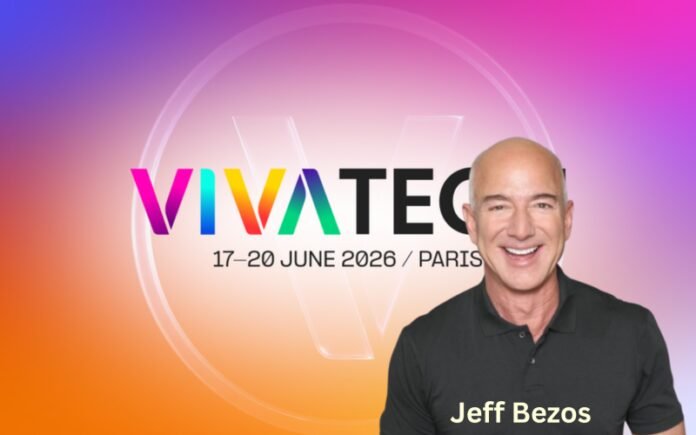
Artificial Intelligence will lead to labour shortages, not the replacement of humans, Amazon founder Jeff Bezos predicted on Wednesday.
Bezos was speaking about his new AI startup Prometheus, which is aimed at speeding up physical manufacturing, at the VivaTech conference in Paris.
California says AT&T lied to FCC in attempt to shut off old phone network
California state regulators say AT&T lied to the Federal Communications Commission in an attempt to shut off its old copper phone network without providing an adequate replacement.
“AT&T asserts that California seeks to prohibit or hinder wireline carriers from discontinuing copper facilities and investing in fiber,” said a June 15 filing by the state of California and the California Public Utilities Commission. “Indeed, AT&T has been making this argument for years. It is not and has never been true.”
As we reported last month, AT&T sued California over the state’s refusal to let it stop providing phone service to all potential customers in its wireline network territory. AT&T also petitioned the Federal Communications Commission to declare that California cannot enforce its rules and to let AT&T stop providing service to about 199,000 phone customers.
Although California officials say AT&T is allowed to upgrade copper lines to better technology, such as fiber, AT&T has repeatedly claimed state rules force it to maintain the copper lines. For example, AT&T told the FCC in a petition that “in California, the aging, fragile, and expensive copper lines are still there, frozen in time by California regulations enacted by prior generations for the benefit of prior generations.” AT&T told the FCC in another filing that “California requires AT&T to continue offering POTS [Plain Old Telephone Service] throughout its territory.”
California told the FCC that, in reality, the CPUC declined to adopt rules that would prevent phone companies from replacing copper lines with fiber. In a 2008 decision, it decided that such rules would “discourage and delay fiber systems from being built in California, contrary to clear state legislative direction to bring affordable and widespread high quality communications services to all Californians.”
California: Wireless replacement not good enough
What AT&T wants is the ability to replace copper lines with wireless service in areas where the carrier decides that fiber upgrades wouldn’t be profitable enough. California says the wireless service is not an adequate replacement for wired phone service.
“AT&T’s discontinuance applications rely principally on the availability of AT&T’s LTE-based Advanced Phone service, and claim that affected customers are served by one or more ‘facilities-based mobile wireless’ provider as well,” California told the FCC this week. “AT&T has not shown, however, that the indoor mobile voice coverage in the affected areas—as opposed to the outdoor coverage—is sufficient to render wireless service an adequate substitute for AT&T’s wireline residential and business services.”
AT&T points to the FCC’s National Broadband Map to demonstrate its coverage capabilities, but this map “displays broadband, not voice, coverage,” California said. Meanwhile, the FCC’s Mobile LTE Coverage Map displays voice coverage but includes the disclaimer that it “depicts the coverage a customer can expect to receive when outdoors and stationary” and “is not meant to reflect where service is available when a user is indoors.”
AT&T’s own coverage data can’t show that its mobile network adequately replaces copper-based phone service, California said. The state filing quoted a disclaimer on AT&T’s website that the “map displays approximate outdoor coverage. Actual coverage may vary. Coverage isn’t guaranteed and is subject to change without notice.”
Because obstructions such as buildings and walls may affect wireless service quality, “mobile service provider maps cannot reliably determine that a wireless service is an adequate replacement for a wireline service without further proof of indoor coverage,” California said.
Price and 911 concerns
Without a service-quality guarantee for every customer, the wireless technology “conflicts with the requirements of the [FCC’s] Adequate Replacement Test,” California said. Instead of greenlighting AT&T’s applications, the FCC “should require AT&T to confirm with a high level of certainty that mobile coverage will be available to affected customer indoors, not simply outdoors,” California said.
California described several other problems with AT&T’s proposal to replace copper lines with wireless service, such as potential price increases and diminished 911 reliability:
Availability alone does not establish equivalency. A service should not be considered an adequate replacement for the wireline services AT&T now seeks to retire if it costs substantially more than the existing service; requires additional equipment purchases; depends on additional, customer-supplied broadband; fails during commercial power outages without customer-provided backup power; is incompatible with assistive technologies; provides inferior indoor coverage; or results in diminished 911 functionality or reliability. The existence of such barriers indicates that the proposed discontinuance may reduce consumer welfare and undermine the longstanding federal goal of universal service.
California said that AT&T Phone-Advanced (AP-A), a VoIP service that relies on the mobile network, could be “considerably more costly than California’s Basic Service: APA relies on a cellular signal or a separate Internet connection and Internet service plan. For areas of the state with a poor cellular signal—typically, rural and low-income areas—consumers would need to order and pay for a separate Internet service, assuming one is available, which would make AP-A more expensive than Basic Service.”
It is also unclear from AT&T’s applications whether AT&T Phone-Advanced supports the California Lifeline program that provides discounts for low-income households, or the California Relay Service for the deaf and hard of hearing, the state filing said.
State urges FCC to move slowly
AT&T said it has received relief from Carrier of Last Resort obligations in 20 of the 21 states in its wireline service territory. Carrier of Last Resort rules require phone companies to provide landline telephone service to any potential customer in their service territory.
The CPUC rejected AT&T’s request to end its California landline obligations in 2024. At the time, the agency urged AT&T to upgrade copper lines to fiber rather than shut down the outdated portions of its network.
In addition to its FCC petition, AT&T filed a lawsuit against California last month seeking an order that would preempt California’s Carrier of Last Resort rules. “California requires AT&T to spend $1 billion each year to maintain a century-old telephone network that almost no one uses,” AT&T alleged in its lawsuit.
Lawsuits can take years, but the FCC may be inclined to act on AT&T’s requests more quickly. Under Chairman Brendan Carr, the FCC issued an order that made it easier for carriers to discontinue copper networks and asserted that state rules are subject to preemption if they conflict with the FCC’s discontinuance authorizations and authority.
California regulators urged the FCC to move with caution. If the agency doesn’t reject AT&T’s applications outright, it should at least remove them from the streamlined process that could result in a quick approval, California said. California could ultimately sue the FCC if the agency tries to preempt the state rules.
“California opposes the applications as presented and respectfully asks the Commission to reject these applications,” the state said. “In the alternative, we ask the Wireline Competition Bureau to remove these applications from the streamlined process and ask the Commission to direct AT&T to address the concerns we have raised here.”