Israeli Security Minister Ben-Gvir appoints relatives of slain Israelis as prison inspectors: Reports
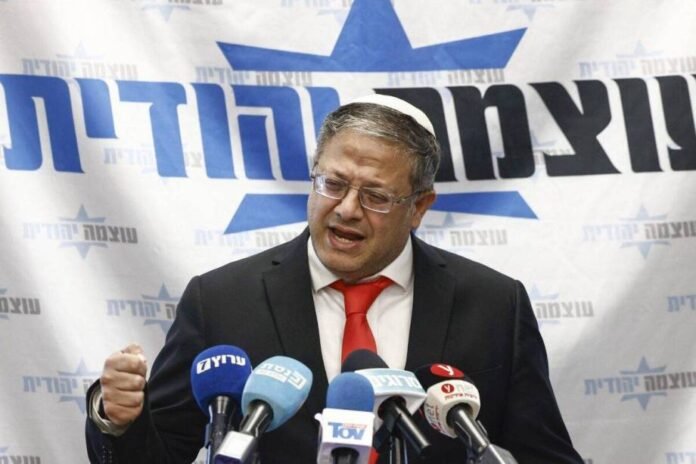
Israeli National Security Minister Itamar Ben-Gvir has decided to appoint relatives of slain Israelis as official prison inspectors in a move aimed at tightening detention conditions for Palestinian detainees, Israeli media reported Wednesday.
“The minister’s goal is to worsen the conditions of security prisoners,” people close to Ben-Gvir said, according to Israel’s Channel 12.
Israel uses the term “security prisoners” to refer to Palestinian detainees.
According to the broadcaster, Ben-Gvir decided to appoint the family members as official visitors and inspectors of Palestinian prisoners instead of qualified professionals.
“Minister Ben-Gvir reduced the number of inspectors to fewer than 20, and instead appointed bereaved families,” the channel said.
The inspectors are responsible for overseeing prisoners and monitoring their detention conditions and treatment inside Israeli prisons.
READ: Ben Gvir attacks Trump-Iran deal: Israel ‘not bound by US agreement’
The move drew criticism in Israel, with political sources describing it as “a crazy decision that violates the law and will harm international relations,” Channel 12 reported.
“With all due respect to the bereaved families, ultimately they are not an official or professional body,” the channel quoted former senior officials in the Israel Prison Service as saying.
The former officials warned that the move could trigger international criticism and escalate tensions inside and outside prisons.
Since taking office in late 2022, Ben-Gvir has moved to tighten detention conditions for Palestinian prisoners, including through policies that rights groups describe as food deprivation and medical neglect.
The Israeli rights group Physicians for Human Rights-Israel said Tuesday that Palestinian prisoner Imad Sarhan faced medical neglect and was not examined for more than two and a half years before his death on Saturday at Gilboa Prison.
According to the group, Sarhan suffered from several health conditions, including heart disease, diabetes, high blood pressure and obesity.
Sarhan’s death raised the number of Palestinian prisoners who have died in Israeli prisons since Oct. 7, 2023, to 104, according to the Israeli newspaper Haaretz.
Around 9,500 Palestinian prisoners, including women and children, are being held in Israeli prisons and face starvation, torture and medical neglect that have led to the deaths of dozens of detainees, according to Palestinian and Israeli rights reports.
READ: Extremist Israeli minister ‘stepped on prisoners’ heads’ during Ofer Prison raid, rights group says
Windows and Linux users: The deadline to update Secure Boot keys is near
The clock is ticking for Windows and Linux users to update cryptographic keys that protect their systems against firmware-based UEFI infections, a pernicious form of malware that loads before operating system and anti-malware protections start.
Beginning June 24, three certificates that cryptographically verify that each piece of firmware and software that loads during system boot will expire. The Microsoft-signed certificates are the linchpins of Secure Boot, a Microsoft-designed chain of trust. Secure Boot checks the digital signatures of all code that loads during system startup to ensure it originates from a trusted provider, such as the manufacturer of the motherboard the system runs on.
Secure Boot is designed to thwart bootkits, a form of malware that alters the systems responsible for loading firmware and software during the initial boot sequence. Because bootkits load before the OS and most other code, they can be difficult to detect. Once installed, they typically load malware onto the OS that steals credentials, backdoors the system, or performs other malicious actions. Even when the OS is disinfected, the bootkit can reinfect the system. Bootkits survive OS reinstallations as well.
A brief history of bootkits
The genesis of bootkits dates back to the early 1980s with the creation of several pieces of malware that targeted Apple II machines during the boot process. They spread in the wild through floppy disks that ostensibly contained pirated games.
Windows bootkits gained notice in the early 2000s as proofs of concept developed by researchers of offensive security. BootRoot, a bootkit demonstrated at the 2005 Black Hat security conference, is likely the first such instance. The malware infected the Network Driver Interface, which streamlined communications between network protocol drivers enabling service such as TCP/IP network adapter drivers. In the years following, similar PoCs included Vbootkit, the Stoned Bootkit, and Mebroot. There were many more.
In 2012, a new form of bootkit was demonstrated. Instead of targeting machines through the BIOS or master boot record, one such bootkit attacked Mac OS X systems by infecting the EFI, a package of firmware that started the boot process. A second very primitive bootkit targeted Windows 8 machines by infecting the UEFI bootkit, the predecessor to the UEFI. Around 2013, a researcher demonstrated a more advanced UEFI bootkit for Windows named Dreamboat.
The first known case of a real-world attack targeting the UEFI came in 2018 with the discovery of malware dubbed LoJax. A repurposed version of legitimate anti-theft software known as LoJack, it was created by the Kremlin-backed hacking group tracked under names including Sednit, Fancy Bear, and APT 28. The malware was installed remotely using malware tools that can read and overwrite parts of the UEFI firmware’s flash memory.
In 2020, researchers unearthed the second known instance of real-world malware attacking the UEFI. Each time an infected device rebooted, its UEFI checked whether a malicious file was present in the Windows startup folder and, if not, installed it. Researchers from Kaspersky, the security provider that discovered the malware, named it “MosaicRegressor.” Researchers have yet to determine how the compromised UEFIs became infected. Since then, a handful of new UEFI bootkits have come to light. They are tracked under names including ESpecter, FinSpy, and MoonBounce.
Necessity is the mother of invention
In response to the threats, Microsoft worked with device makers to develop Secure Boot, an industry-wide standard that uses cryptographic signatures to ensure that each piece of software loaded during startup is trusted by a computer’s manufacturer. Secure Boot is designed to create a chain of trust that prevents attackers from replacing the intended bootup firmware with malicious firmware. If a single link in the startup chain isn’t recognized, Secure Boot will prevent the device from starting.
Then in 2023, researchers discovered LogoFail, a series of critical vulnerabilities found UEFIs booting up just about every Windows and Linux system in the world. An image-parsing bug in the software that presented hardware manufacturers’ logos during bootup allowed attackers to bypass Secure Boot and infect the UEFI with malicious firmware.
The discovery of LogoFail requires Microsoft to replace the existing cryptographic signatures underpinning Secure Boot with new ones. Three older signatures, which are dated 2011, are being removed. In their place are ones dated 2023. Microsoft is in the process of updating Windows 10 and Windows 11 machines. Linux distributors are also in the process of updating “shims,” a small, first-stage UEFI bootloader that acts as a trusted bridge between Secure Boot keys and the Linux bootloader.
Machines that fail to update the Secure Boot-related keys will continue to function, but they will no longer be protected against new UEFI threats. To be clear, they were already vulnerable to new UEFI threats that exploited the industry-wide LogoFail vulnerability. The key refresh is designed to mitigate that risk and prevent unrelated UEFI attacks that may arise in the future.
To check the status of the keys on Windows machines, users can open Windows Security settings > Device Security > Secure Boot. A green checkmark means the update has been completed. Most Windows machines automatically update the keys during regular monthly patch distributions, but older machines may require manual attention. Linux users should watch for the release of new shims. If at all possible, users should hold off on installing new motherboard firmware updates until after the new certificates are replaced.
Anti-Putin Artist ‘Executed’ in Poland After Mocking Russian Leader
A Russian artist who built a reputation for mocking Vladimir Putin and his allies has been shot dead in Poland in what local reports are describing as a possible execution-style killing.
Semyon Skrepetsky, 44, whose real name was Robert Kuzovkov, was killed in the eastern Polish city of Biała Podlaska, near the border with Belarus.
The exiled Russian artist and anti-Putin activist was known for his biting satirical artwork, often portraying Putin as an absurd and bloodthirsty dictator. He also mocked Belarusian leader Alexander Lukashenko and Chechen strongman Ramzan Kadyrov, both close allies of the Kremlin.
Local media reported that the alleged gunman approached Kuzovkov and shot him at close range. Medics tried to save him, but he died despite immediate resuscitation efforts.
Polish police have launched a manhunt for the killer as suspicions grow that Skrepetsky may have been targeted because of his outspoken criticism of Putin and his supporters.
Authorities released a CCTV image of a suspect leaving the scene and appealed to the public for help identifying him.
Police spokesman Andrzej Fijołek confirmed the victim was a 44-year-old Russian citizen.
“We have established the identity of the man who was shot dead today in Biała Podlaska by an unknown man,” Fijołek said.
“We are doing everything to apprehend the perpetrator of the murder,” he added.
Police warned that the killing appeared to have been planned and said the suspect may have changed clothes after fleeing the scene.
“At the moment, the most important thing is to establish his identity and detain him as quickly as possible,” Fijołek said.
A taxi driver who reportedly drove possible suspects from Warsaw was also being questioned by police, according to local reports.
The shooting came just three days after Skrepetsky staged a protest outside the Russian embassy in Berlin.
During the protest, he pulled a Russian flag from a slit in the back of his trousers before throwing it into a trash bin. He later stood outside the embassy holding a painting of Soviet dictator Joseph Stalin cradling an infant Putin.
Skrepetsky had claimed he received violent threats from pro-Putin “patriots” before his death.
Polish media reports said the shooting “bears all the hallmarks of a political execution,” noting that the Siberian-born artist was an “uncompromising critic” of Putin’s regime and a political refugee.
The Poland-based opposition channel Nexta Live went even further, claiming, “This murder is 100 per cent an order from Russia.”
A Russian military Telegram channel also linked the killing to Skrepetsky’s recent protest in Berlin, writing that he had likely been tracked from there before being shot.
Some pro-Kremlin commenters appeared to celebrate the artist’s death, with one saying he had “pushed his luck too far.”
Skrepetsky’s killing comes amid a long history of Putin critics and Kremlin opponents dying under suspicious or violent circumstances, both inside Russia and abroad.
Polish authorities have not yet publicly confirmed a motive, but the killing has already sparked fears that another outspoken critic of Moscow may have been silenced.
Are Jeffries and Schumer Getting Ready to Greenlight Domestic Spy Power for Trump?
When Congressional Democrats rallied against President Donald Trump’s appointment of Bill Pulte to serve as temporary director of national intelligence last week, they said he was an unqualified pick who would be too eager to use the job to undermine elections.
Now some high-ranking Democrats are lining up to support another permanent appointee with a dubious claim to the legal job requirements — Jay Clayton — who has also openly questioned the integrity of U.S. elections.
Some to Democrats are lining up to support Jay Clayton, who has questioned the integrity of elections.
Clayton’s nomination will be heard by the Senate Select Committee on Intelligence on Wednesday. Senate Majority Leader John Thune, R-S.D., hopes to have him confirmed as soon as Thursday — a lightning-fast process for a top intelligence post.
What’s at stake, however, isn’t just the outcome of Clayton’s nomination process. Trump’s pick is intertwined with the fate of a key domestic surveillance law, Section 702 of the Foreign Intelligence Surveillance Act, that expired Friday.
Privacy advocates are worried that Clayton’s nomination will give some Democrats the excuse they have been looking for to vote for renewing Section 702. The advocates are raising concerns about Clayton and calling on Congress to add a warrant requirement to the surveillance law, no matter who ultimately takes over as intel chief.
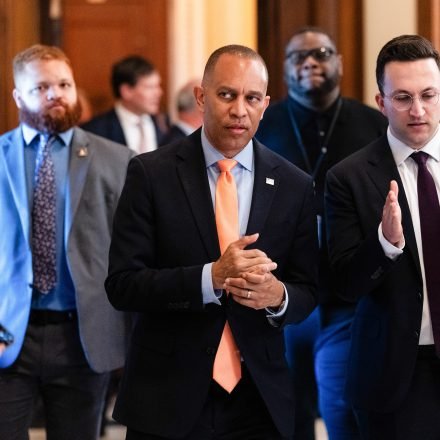
The top Democrats on the House and Senate intelligence committees, Rep. Jim Himes of Connecticut and Sen. Mark Warner of Virginia, who have both supported renewing Section 702 without major changes, have issued positive statements about Clayton’s nomination.
Neither House Minority Leader Hakeem Jeffries, D-N.Y., nor Senate Minority Leader Chuck Schumer, D-N.Y., has tipped their hand as to whether Clayton’s nomination will lead them to support a so-called “clean” renewal of Section 702.
Jeffries said last week that he supports making significant reforms to the law, although he did not specifically commit to a warrant requirement.
Sean Vitka, executive director of the left-leaning advocacy group Demand Progress, urged Democratic leaders to stand firm on reform.
“There is no universe where the momentary person who happens to satisfy Himes and Warner’s vibe check,” Vitka said, “should mitigate everybody’s concerns that are decades old with warrantless surveillance.”
Election Conspiracies
The reauthorization of Section 702 once appeared to be on a “glide path,” according to Warner. The law sets the parameters for when intelligence agencies can warrantlessly search American communications collected abroad.
Congress was within days of passing a new version of the law with minor tweaks when Trump nominated Pulte, the director of the Federal Housing Finance Agency and chair of mortgage giants Fannie Mae and Freddie Mac, to serve as temporary director of national intelligence.
When he tapped Pulte, Trump said he wanted to him to use the post to investigate “rigged” elections. That alarmed Democrats who noted that Pulte is already accused of misusing sensitive mortgage databases to help launch investigations against Trump’s political enemies.
The intelligence chief post has no formal role in election administration, but that did not stop outgoing Director of National Intelligence Tulsi Gabbard from appearing at an FBI raid of a Fulton County, Georgia, ballot warehouse.
Pulte’s lapdog reputation was not the only thing that worried Democrats. They also noted that he did not meet the job requirement for the intelligence chief post in statute, which states that the nominee “shall have extensive national security expertise.”
Centrist Democrats who were willing to renew Section 702 despite Gabbard’s overt politicization of the intelligence chief job finally had enough when it came to Pulte’s nomination. Even Warner and Himes voted against the law’s reauthorization.
Trump’s nomination of Clayton was an attempt to undo the backlash. Clayton currently serves as the federal prosecutor for the Southern District of New York and was previously the Securities and Exchange Commission chair — the kind of resume that reassures Washington insiders.
“I’ve known and respected Jay Clayton for decades,” Himes said on X. “His intelligence, temperament and deep commitment to public service will make him a terrific DNI. Had this nomination been made a week ago, lots of pain might have been avoided.”
Advocates were more dubious. They noted that only days before his selection, Clayton had been asked on CNBC about the delays in returning California’s election results that had fueled right-wing conspiracy theories.
“On the integrity side, we’re doing an absolutely terrible job,” Clayton said, without offering evidence. “And the American people are right to question it.”
Clayton’s willingness to engage with one of Trump’s favorite tropes alarmed advocates, who say that Gabbard’s role in the Georgia warehouse raid shows how the intelligence chief post could be misused to sow election doubt.
Clayton’s willingness to engage with one of Trump’s favorite tropes alarmed advocates.
Even centrist Democrats concede that, like Pulte, Clayton doesn’t have “extensive” national security experience. In his defense, supporters point to the role of federal prosecutors in launching national security cases.
Sen. Jack Reed, D-R.I., the ranking member of the armed services committee, sounded a note of skepticism on “Fox News Sunday.”
“We have to look very clearly at Jay Clayton,” Reed said. “He is a very accomplished lawyer, but the statute requires someone taking this job to have significant national security experience, and that has to be measured. I don’t think he does.”
Senators of both parties will have an opportunity to probe Clayton’s qualifications at Wednesday’s confirmation hearing. Warner has said that Clayton will have to answer questions about his views on elections.
Whatever happens with his nomination, privacy advocates say the entire saga of replacing Gabbard further proves the need for major reforms to Section 702.
“It doesn’t matter who’s in charge,” longtime privacy booster Sen. Ron Wyden, D-Ore., said on June 11. “FISA 702 can’t be renewed without real reforms.”
“Case in point: Trump’s latest nominee for director of national intelligence was peddling election conspiracies just a few days ago.”
Donald Trump and Benjamin Netanyahu have different war aims – can the Iran peace deal survive?
The clock is ticking on the Iran peace deal. A memorandum of understanding between Iran and the US is due to be signed in Geneva on June 19, allowing for a 60-day ceasefire extension and the opening of the strategically vital waterway, the Strait of Hormuz. But key questions remain unresolved that could yet scupper the agreement.
For Washington and Tehran, the memorandum also includes Lebanon. Iran has made the signing of the deal contingent on an Israeli undertaking to withdraw from the territories it has occupied in southern Lebanon during the war. And the US president, Donald Trump, has demanded that the Israeli prime minister, Benjamin Netanyahu, behave “more responsibly in Lebanon”.
But Israel’s bombing of south Lebanon and Beirut continues, the Israeli military presence in Lebanon remains and Israel’s leaders remain adamant they will not withdraw. So where does Israel feature in this deal and how will it respond?
The terms of the deal remain confidential, and will only be revealed after the signing has taken place. But reports suggest that the US will be responsible for constraining Israeli military activity in Lebanon. Iran, meanwhile, appears to see the two states as one adversary in this war.
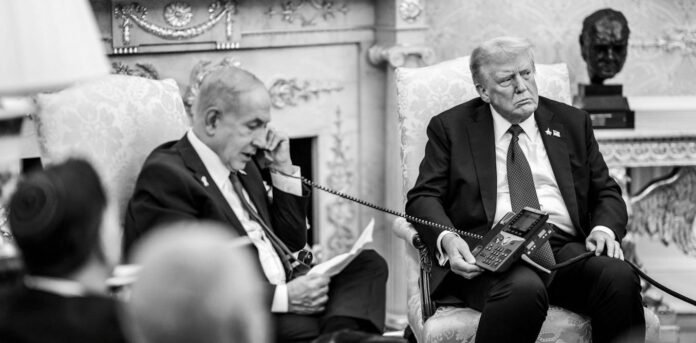
Over the past year, questions about the relationship between Trump and Netanyahu have regularly been asked, highlighting the divergent approaches to Iran and the broader security environment of the Middle East taken by the two states. The Israeli strike on Hamas targets in the Qatari capital of Doha in the summer of 2025 provoked much anger, prompting the White House to release an image of Netanyahu on the phone with the emir of Qatar, Tamim bin Hamad Al Thani, while Donald Trump looked on, clearly unimpressed.
Leaked comments during the war with Iran have highlighted the extent of frustration felt by Trump towards Netanyahu. Speaking with Axios, a US media outlet, on June 14, Trump fumed: “Why did BB have to do a fucking attack? I was so pissed off. I let him know he has no fucking judgement. I let him know that.” Trump later warned Israel on Truth Social not to “blow it”.
Two weeks earlier, Trump and Netanyahu had an angry phone call about Israel’s threats to resume air strikes. In a conversation reported by Axios, Trump shouted: “What the fuck are you doing? You’re fucking crazy. You’d be in prison if it weren’t for me. I’m saving your ass. Everyone hates you now. Everybody hates Israel because of this”.
Divergent strategies
The tensions between the two men also reflect considerable strategic divisions emerging between Israel and the US. The two countries have long been close diplomatic partners, with shared strategic and ideological visions for the future of the Middle East. Support for Israel has been a cornerstone of domestic US politics alongside US foreign policy – prompting widespread reflection on the strategic merits of such an approach.
An article by John Mearsheimer and Stephen Walt, American political scientists, later turned into a book, engaged with the topic, questioning if the US-Israeli relationship was a consequence of “love or the lobby”, with a clear reference to the pressure exerted on US politicians by the American Israel Public Affairs Committee – widely regarded as one of the most powerful lobbying groups in America with considerable influence on US policy.
Yet the strategic goals of the two states now appear to be in direct conflict. For the US, ensuring that the memorandum of understanding is signed and a final deal is reached with Iran is of paramount importance. For Israel, where public opinion is largely in favour of the war with Iran as well as conflict with Hezbollah, the memorandum signals capitulation and provoked deep anger.
Many in Israel are calling on the government to reject the deal. One of Netanyahu’s coalition members, finance minister Itamar Ben-Gvir, declared that Israel must not accept the US ceasefire.
In an effort to distance Israel from the US, Ben-Gvir declared that “a sovereign state is not a contractor for any superpower. It is not bound by agreements that block its ability to protect its people”. He argued that Israel “must continue to demolish the houses in southern Lebanon … We must continue to be independent.”
Israel Katz, Israel’s defence minister, vowed that Israeli military will remain in southern Lebanon promising to retaliate if Iran hits Israel in support of Lebanon.
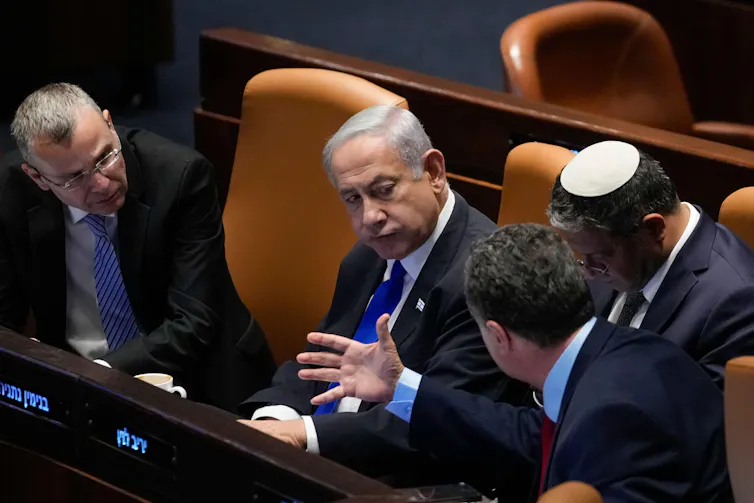
Israeli prime minister, Benjamin Netanyahu, with ministers including national security minister, Itamar Ben Gvir, and minister of defence, Israeli Katz.AP Photo/Maya Alleruzzo
Netanyahu also expressed defiance. In a televised press conference on June 15, he declared that Israel “established deep security zones around the state of Israel. We did this in Gaza, in Lebanon and in Syria … And I want to make it clear: we will remain in these security zones … to protect our country.” This appears to be in direct contradiction of the terms of the memorandum of understanding and raises serious questions about the relationship between both Trump and Netanyahu and the US and Israel.
It appears that the relationship is now at a crossroads. Will Trump exert pressure on Netanyahu to stop the Israeli bombardment of Lebanon and to withdraw from the country, or will he turn a blind eye to Israeli military actions, risking the deal that he so desperately wants? If the US president insists on an Israeli withdrawal, will Netanyahu comply? And what does this mean for either man’s electoral chances in the autumn, with Netanyahu facing a general election by October and Trump facing mid-term elections in early November?
With the two supposed allies each clearly at loggerheads over what their countries – and perhaps more importantly, they themselves – want, can the deal survive? And what does this mean for Israel’s relationship with the US? The clock is ticking.
Has Trump achieved his goals in the war with Iran?
Shortly after the U.S. and Israel launched airstrikes on Iran on February 28, U.S. President Donald Trump laid out a host of objectives, from destroying Iran’s ballistic missile capabilities to ensuring Tehran can never have a nuclear weapon.
More than three months later, with a preliminary peace deal in place, what has Trump achieved?
MISSILES AND DRONES
Before the war, Iran held the largest ballistic stockpile in the Middle East, with between 2,500 and 6,000 missiles of different types. Some were capable of reaching Israel, with ranges of up to 2,000 kilometers (1,240 miles), and some carried cluster munition warheads that are harder to defend against.
Iran is also a major manufacturer of long-range drones – in particular, the one-way Shahed drone that has been used by Russia against Ukraine, as well as by Tehran.
Roughly one month into the war, U.S. sources told Reuters that one-third of that arsenal was destroyed, with another third likely damaged, destroyed or buried.
U.S. Admiral Brad Cooper told Congress on May 14 that Iran’s ability to build and stockpile missiles and long-range drones had been set back by years. He said more than 1,500 missiles and 6,000 drones had been intercepted by the U.S. and its allies during the conflict.
It is unclear how many missiles Iran has left, but the country still has the ability to reach U.S. allies – most recently on June 6, when it launched salvos at Kuwait and Bahrain, and June 7, when it fired missiles at Israel. Those countries said the attacks did no significant damage.
CONVENTIONAL MILITARY
The U.S. military says it has degraded Iran’s conventional military ability to project power in the region or threaten U.S. operations.
Cooper told Congress that the U.S. military had destroyed 161 Iranian naval ships and knocked out 82% of its air defense systems. He said the Iranian air force, which flew up to 100 sorties daily before the war, now does not fly any missions at all.
Despite this, Iran was still able to effectively shut the Strait of Hormuz through the duration of the conflict, bottling up merchant ships that transport one-fifth of the world’s oil and natural gas supply through the use of speedboats, mines, drones and missile boats.
NUCLEAR PROGRAM
Trump has repeatedly said that his main goal is to prevent Iran from developing a nuclear weapon. Tehran has consistently said it has no intention of building a bomb and its program is for peaceful purposes.
But the war has not significantly changed Iran’s nuclear capability. U.S. intelligence last month estimated that Iran would need less than a year to produce a nuclear weapon – the same timeline it laid out following the June 2025 strikes on Iranian nuclear facilities.
Iran’s nuclear program will be a central issue for negotiators once the framework deal is formally signed on Friday. Trump has said Iran’s enriched uranium must be taken out of the country, while Iran’s Supreme Leader Ayatollah Mojtaba Khamenei says it must not be sent abroad, sources say.
IRANIAN PROXIES
Trump said on March 2 at the White House that Tehran cannot be allowed to continue to arm and fund the armed proxy groups in Iraq, Lebanon, Gaza and Yemen that Iran has relied on for decades to project power and harass enemies.
Iran has shown no willingness to halt its support for those groups since the start of the war, but U.S. military and independent assessments have found that Iran’s proxy network is much less effective than it used to be.
Much of this was underway before the war began. Israel killed many of Hamas’ top leaders and thousands of its fighters in Gaza following the October 7, 2023, attack on its territory and killed many of the Hezbollah militia’s leadership in Lebanon as well. Iran also lost an important conduit for resupplying Hezbollah with the collapse of former President Bashar al-Assad’s rule in Syria in 2024. Sanctions and Iran’s economic woes also undercut its ability to fund these groups.
The groups have not played a major role in the war. Hamas has not attacked Israel from its Gaza enclave, while the Houthis have not significantly disrupted Red Sea shipping from Yemen.
Hezbollah joined the war on March 2 when it launched missiles and drones into Israel, prompting Israel to respond with airstrikes and a ground invasion that have killed nearly 3,700 people and displaced 1.2 million in Lebanon. Some 28 Israeli soldiers and four civilians have died in the conflict so far.
Cooper told Congress in May that Iran no longer has the ability to reliably supply those groups with advanced weapons, though he did not specify what that meant.
REGIME CHANGE
Trump encouraged Iranian protesters to overthrow their rulers before the war began and said Supreme Leader Ayatollah Ali Khamenei’s death on February 28 was their “single greatest chance” to seize the government. On March 6, he said the war would only end with “UNCONDITIONAL SURRENDER” from Iran, paired with a new, “acceptable” leader.
Though the war has failed to dislodge Iran’s theocratic government, Trump has claimed that he has accomplished his goal because Khamenei has been replaced by his son, Ayatollah Mojtaba Khamenei. Trump characterized the new leadership as “a new, and more reasonable, regime” on March 29.
Trump in recent weeks has refrained from repeating his calls for the toppling of Iranian leaders.
Lemon Pepper Chicken Skewers are juicy, flavorful chicken bites seasoned with lemon pepper, Cajun seasoning, garlic, paprika, and olive oil, then cooked until tender and brushed with a rich seasoned butter. They are quick, easy, and perfect for air fryer dinners, summer grilling, meal prep, or party appetizers.
These chicken skewers are made with simple ingredients and cook fast, making them a great option for busy weeknights. You can prepare them in the air fryer, bake them in the oven, or cook them on the grill for a smoky summer meal.
Why You’ll Love These Lemon Pepper Chicken Skewers
Ready in about 22 minutes
Juicy, flavorful chicken
Easy air fryer recipe
Can also be baked or grilled
Perfect for dinner or appetizers
Great for meal prep
Brushed with seasoned butter
Bright lemon pepper flavor with a Cajun kick
What Makes These Chicken Skewers So Good?
The chicken is first tossed in olive oil, lemon pepper, garlic, paprika, salt, and Cajun seasoning. This gives every bite bold flavor before cooking.
After the skewers are cooked, they are brushed with melted butter mixed with more seasoning and fresh parsley. This final step makes the chicken extra juicy, glossy, and flavorful.
Ingredients
For the Chicken
Wooden skewers, soaked in water for 30 minutes
2 pounds boneless, skinless chicken breasts, cut into 1-inch cubes
2 tablespoons extra virgin olive oil
½ teaspoon paprika
½ teaspoon kosher salt
½ teaspoon lemon pepper
½ teaspoon minced garlic
1½ teaspoons Cajun seasoning
For the Seasoned Butter
¼ cup unsalted butter, melted
½ teaspoon paprika
½ teaspoon lemon pepper
½ teaspoon minced garlic
1½ teaspoons Cajun seasoning
1 teaspoon freshly chopped parsley
Ingredient Notes
Chicken
Boneless, skinless chicken breasts work great for this recipe because they cook quickly and stay tender when cut into evenly sized pieces. Chicken thighs can also be used, but they may need a slightly different cooking time.
Lemon Pepper
Lemon pepper adds bright citrus flavor and a little peppery bite.
Cajun Seasoning
Cajun seasoning gives the skewers extra boldness and a mild spicy kick.
Olive Oil
Olive oil helps the seasoning stick to the chicken and keeps it moist while cooking.
Butter
The seasoned butter is brushed on after cooking for extra richness and flavor.
Wooden Skewers
If using wooden skewers, soak them in water for at least 30 minutes before cooking. This helps prevent burning or charring.
How to Make Lemon Pepper Chicken Skewers
Step 1: Soak the Skewers
Place wooden skewers in water and let them soak for at least 30 minutes.
If needed, break the skewers in half so they fit in your air fryer basket.
Toss until all the chicken pieces are evenly coated.
Step 3: Thread the Chicken
Thread the seasoned chicken cubes onto the soaked skewers.
Add about 4 to 5 pieces of chicken per skewer.
Try to keep the pieces close in size so they cook evenly.
Step 4: Air Fry
Place the skewers in the air fryer basket in a single layer.
Cook at 400°F for 11 to 12 minutes, flipping halfway through.
The chicken is done when it reaches an internal temperature of 165°F.
Work in batches if needed.
Step 5: Make the Seasoned Butter
While the chicken cooks, add melted butter to a small bowl.
Stir in paprika, lemon pepper, minced garlic, Cajun seasoning, and chopped parsley.
Mix until well combined.
Step 6: Brush and Serve
Brush the seasoned butter over the hot cooked chicken skewers.
Serve immediately while warm.
Oven Instructions
Preheat the oven to 400°F.
Line a baking sheet with parchment paper.
Season the chicken and thread it onto skewers as directed.
Place the skewers on the prepared baking sheet.
Bake for 20 to 25 minutes, flipping halfway through, until the chicken reaches 165°F.
Brush with seasoned butter before serving.
Grill Instructions
Preheat the grill to medium-high heat.
Season the chicken and thread onto skewers.
Grill for 8 to 10 minutes per side, or until the chicken reaches 165°F.
Brush with seasoned butter before serving.
Wooden Skewers vs. Metal Skewers
Both wooden and metal skewers work for this recipe.
If using wooden skewers, soak them in water for at least 30 minutes before cooking. This helps prevent burning.
If using metal skewers, make sure they fit inside your air fryer basket or baking dish.
Can I Assemble Chicken Skewers Ahead of Time?
Yes. You can season the chicken and thread it onto skewers ahead of time.
Store uncooked skewers covered in the refrigerator for 2 to 3 days.
You can also freeze uncooked chicken skewers for up to 3 months. Thaw overnight in the refrigerator before cooking.
Tips for the Best Chicken Skewers
Cut Even Pieces
Cut the chicken into similar-sized cubes so everything cooks evenly.
Don’t Overcrowd the Air Fryer
Place skewers in a single layer so the air can circulate.
Check the Temperature
Chicken is fully cooked at 165°F. Use a meat thermometer for best results.
Brush Butter After Cooking
Adding the seasoned butter after cooking keeps the flavor fresh and rich.
Adjust the Salt
The butter mixture skips extra salt because the seasonings already add plenty of flavor.
Variations
Spicy Lemon Pepper Skewers
Add cayenne pepper or extra Cajun seasoning for more heat.
Garlic Butter Chicken Skewers
Add extra garlic to the seasoned butter.
Lemon Herb Chicken Skewers
Add fresh thyme, rosemary, or oregano.
Chicken Thigh Skewers
Use boneless chicken thighs for a juicier, richer option.
Grilled Summer Skewers
Add bell peppers, zucchini, red onion, or cherry tomatoes between the chicken pieces.
What to Serve With Lemon Pepper Chicken Skewers
These chicken skewers work as an appetizer or main dish. Serve them with:
White rice
Cilantro rice
Parmesan garlic butter rice
Mashed potatoes
Roasted potatoes
Baked potatoes
Caesar salad
Lemon parmesan salad
Roasted asparagus
Green beans
Roasted carrots
Brussels sprouts
Grilled vegetables
Storage Instructions
Store cooked chicken skewers in an airtight container in the refrigerator for up to 4 days.
Remove the chicken from the skewers before storing if preferred.
Freezing Instructions
Let the cooked skewers cool completely.
Wrap each skewer in aluminum foil and place them in a freezer-safe bag.
Freeze for up to 3 months.
Thaw overnight in the refrigerator before reheating.
Reheating
Reheat in the air fryer at 350°F until warmed through.
You can also reheat in the oven or microwave.
Brush with a little extra melted butter if needed to refresh the flavor.
Frequently Asked Questions
Can I Use Chicken Thighs?
Yes. Boneless chicken thighs work well, but they may need a slightly different cooking time.
Do I Have to Soak Wooden Skewers?
Yes, soaking helps prevent wooden skewers from burning during cooking.
Can I Make These in the Oven?
Yes. Bake at 400°F for 20 to 25 minutes, flipping halfway through.
Can I Grill These Chicken Skewers?
Yes. Grill over medium-high heat for 8 to 10 minutes per side.
How Do I Know When the Chicken Is Done?
The chicken is done when it reaches an internal temperature of 165°F.
Recipe Information
Prep Time: 10 minutes Cook Time: 12 minutes Total Time: 22 minutes Servings: About 6
Final Thoughts
Lemon Pepper Chicken Skewers are quick, flavorful, and easy to make in the air fryer, oven, or on the grill. The chicken is juicy and well-seasoned, and the buttery lemon pepper finish makes every bite extra delicious.
Serve them for dinner, parties, cookouts, meal prep, or a simple high-protein appetizer everyone will enjoy.
40 years on, Maradona’s ‘Hand of God’ goal is still celebrated. But should it be?
In soccer, memorable goals are generally linked to the players who scored them. Few can be recalled without mention of the individual – or even the team – involved.
Yet, two goals in one game 40 years ago have attained that status. One is known universally as the “Hand of God,” and the other is widely acknowledged as the “Goal of the Century.” Both were scored by Argentine star Diego Maradona against England in the quarterfinal of the FIFA World Cup at Mexico City’s Azteca Stadium on June 22, 1986.
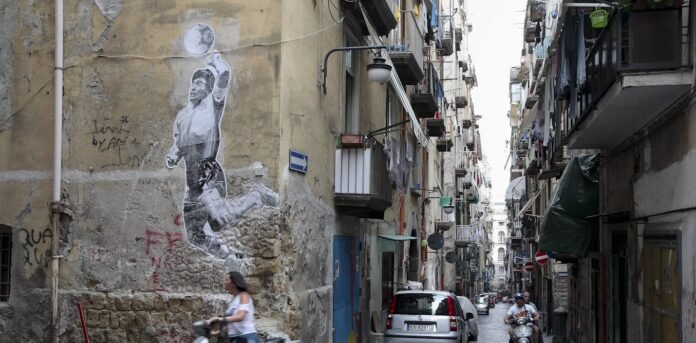
A poster depicting the ‘Hand of God’ goal outside the Stadio Diego Armando Maradona in Naples. (Antonio Balasco/Kontrolab/LightRocket via Getty Images
The goals, scored just minutes apart, are among a handful that are immediately recognized decades later – and they hold special resonance in Argentina. Their perceived importance was such that when in 2012 Argentine President Cristina Fernández de Kirchner inaugurated a “Gallery of Popular Idols” at Casa Rosada, the country’s presidential palace, the exhibit included photos of both goals.
But it was the “Hand of God” that stood out, with the iconic capture of Maradona’s outstretched arm punching the ball over England goalkeeper Peter Shilton placed front and center, jumping out at visitors.
A year after the Gallery of Popular Idols was installed, I toured it with a group of international college students from a study-abroad program led by my wife. Knowing that I was a philosopher of sport, members of the group asked me an ethical question: Why was a goal scored illegally – it should have been disallowed as an obvious handball – given such prominence in the presidential palace? The same could be asked of the place it holds in the Argentine consciousness now, with the image common in murals, T-shirts and in songs.
A vendor holds a collectable towel featuring Diego Maradona’s ‘Hand of God’ goal at a sport shop in Buenos Aires.Juan Mabromata/AFP via Getty Images
As I explained to the students, to understand why that game and those goals by Maradona – of the 34 he scored for the national team – have become so entrenched in the Argentine imagination, it is necessary to reflect on the complex history of Anglo-Argentine relations.
Anglo-Argentine relations
From the late 16th century onward, Britain sought to expand its empire into South America, mainly to expand the markets for its products elsewhere.
After failed attempts to invade Buenos Aires in 1806 and 1807, Britain played a key role in Argentina’s independence from Spain a few years later. Throughout the rest of the 19th century and the early 20th century, Britain had a major presence in the Argentine economy. So large was the investment and so numerous the British expatriate community that Argentina was described as Britain’s “Sixth Dominion.” Soccer, by way of this community, became a consuming passion of Argentines, too.
Still, the relationship was at times antagonistic. A long-running point of contention was over a group of islands 300 miles off the South American coast, known as the Falkland Islands in the United Kingdom and Islas Malvinas in Argentina.
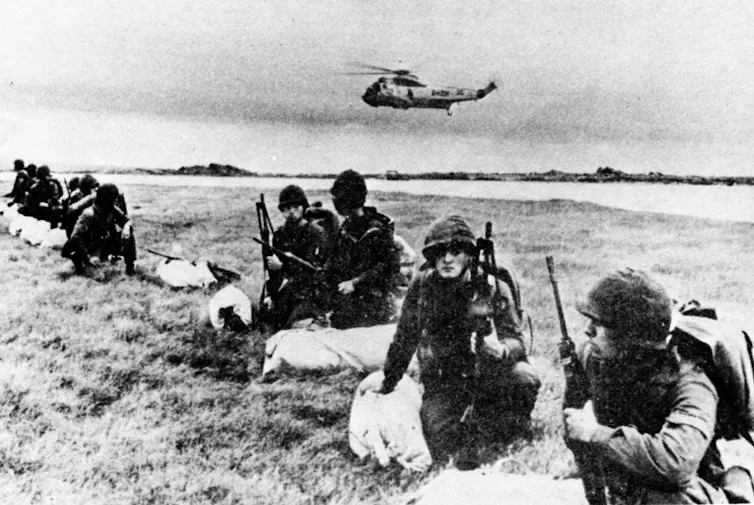
Britain has occupied the islands since 1833, and Argentina has claimed them as its own ever since. Building tension gave way to war in 1982, when Argentina, then under a brutal dictatorship, sent a military expedition to the islands.
Britain’s decisive response shattered the Argentine foray. Losing the war was a traumatic experience for Argentina, but one that proved an important step in the country’s eventual return to democratic rule the following year.
Maradona’s World Cup
Relations between the two countries were still tense when Argentina and England faced off during the 1986 World Cup. Diplomatic ties had not yet resumed, and many in Argentina perceived the game as an opportunity to honor the conscripts who died in the war and remind the world of the country’s claim to the Malvinas/Falkland Islands.
It was a game charged with intricate political and historical connotations. And Argentina entered it with the greatest player of the age in Diego Maradona.
“With two lefty goals against England, Maradona avenged the wound to his country’s pride inflicted in the [Malvinas/]Falklands war: the first he converted with his left hand … and the other with his left foot, after having sent the English defenders to the ground,” Galeano noted.
In the space of just five minutes, Maradona lifted his nation and was elevated to the status of an idol among idols. After the game, as controversy over the first goal swirled, Maradona, following the cue of a journalist, agreed that it must have been scored by the “Hand of God.”
While the second goal was the incarnation of soccer beauty, the imagery surrounding the first made it equally if not more iconic.
That Argentina went on to win the championship only added to Maradona’s imperishable repute, no matter what he did. His death on Nov. 25, 2020, triggered a wave of mourning in Argentina and around the world.
All that is good in the game
Back at the presidential palace, the students pressed me about how I and others should feel about the “Hand of God.” My answer, echoing philosophical arguments I made in a chapter I wrote for a book co-edited with philosopher Daniel G. Campos, went as follows.
Context matters for understanding the meaning that many in Argentina ascribed to that goal. Nonetheless, context cannot justify it.
Soccer is a social practice regulated by rules and what philosophers call “internal goods” – intrinsic rewards that come from participating in an activity. Soccer’s internal goods not only define the game but also represent the foundation for its standards of excellence. They comprise what are known as “constitutive” and “restorative” skills that the sport is meant to test.
Constitutive skills are those implemented during open play and include dribbling, passing and shooting the ball, and opening up spaces. Restorative skills are employed when a game is interrupted and include the ability to take penalty and corner kicks, among others.
Because of its structure, in soccer these sets of skills are clearly related to different ways to control and strike the ball with one’s feet.
A soccer genius … and a case of cheating
Scoring goals with one’s hand is neither a constitutive nor a restorative skill of soccer. Instead, it is an “extra-lusory skill” – that is, one not meant to be tested and thus does not legitimately belong in the game.
In fact, scoring a goal with one’s hands contradicts and dishonors the internal goods that define soccer and its standards of excellence. In this sense, the “Hand of God” downgrades the competency by which players distinguish themselves.
Additionally, it is an unambiguous case of cheating. Maradona intentionally and surreptitiously violated a rule of the sport to obtain an advantage that he would not have obtained otherwise – it distorts the sport, spoils the result and disrespects the opposing team.
It should not, as such, be encouraged or celebrated. Rather, it should be condemned.
Worse, it draws attention away from the kind of play that Maradona, who was subjected to repeated fouling by the English players throughout the game, embodied in the second goal. Indeed, soccer is honored and flourishes with that kind of play.
Over the course of a 60-yard run, Maradona danced past opponents, escaped challenges and left English defenders helpless before beating the goalkeeper with a clinical finish. Journalist Brian Glanville described it in 1993 as “astounding, a goal so unusual, almost romantic.” He added: “It hardly belonged to so apparently rational and rationalized an era as ours.”
That goal is arguably the most celebrated goal in World Cup history.
Forty years after that epochal game between Argentina and England, I suggest that Argentina and the world of soccer should in one breath condemn the scandalous “Hand of God” and rejoice in the sublime “Goal of the Century” – while never forgetting the context in which the two goals occurred.
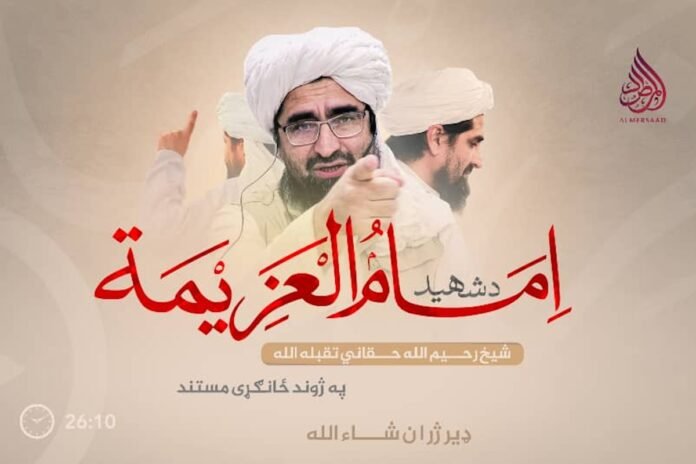
Al-Mirsad: the new, modern face of Taliban propaganda
For much of the last two decades, the Taliban fought its war with rifles, roadside bombs and guerrilla ambushes. Today, one of its most important battlefields lies not in the mountains of Afghanistan but in the information domain.
The Islamic Emirate of Afghanistan (IEA) increasingly recognizes that modern conflicts are shaped not only by military power but also by narratives, legitimacy and perception management.
The emergence of English-language platforms such as Al-Mirsad illustrates how the Taliban’s communication apparatus has evolved from insurgent propaganda into a sophisticated strategic communications system aimed at influencing international audiences and defending the movement’s political legitimacy.
This outlet’s evolution has attracted growing attention among regional analysts. In May 2026, The Durand Dispatch – Strategic Messaging published a 17-page study by Joey Moran examining Al-Mirsad, which is sometimes transliterated from the Arabic as Al-Mersaad.
Based on an analysis of 137 articles published between January 2025 and March 2026, the study argues that Al-Mirsad, which means the “watchtower” or “observatory”, functions less as an independent media outlet and more as an instrument of statecraft.
Its messaging revolves around three objectives: delegitimizing Islamic State Khorasan Province (ISKP), repositioning Pakistan as Afghanistan’s principal external adversary and projecting the Islamic Emirate as a sovereign state operating within an emerging multipolar order.
Taken together, these themes suggest that the Taliban have modernized their communications strategy without fundamentally altering their ideological foundations. What has changed is not the movement’s worldview but the sophistication with which it is communicated.
Delegitimizing ISKP
Al-Mirsad’s most consistent narrative focus is the delegitimization of ISKP. References to ISIS, Daesh, Khawarij and Fitnah appear throughout its English-language output, reflecting a sustained effort to challenge the group’s religious and political legitimacy.
This is more than a counterterrorism narrative. By repeatedly labeling ISKP as “Khawarij,” Al-Mirsad seeks to place the organization outside accepted Islamic authority. Similar terminology has also appeared in narratives concerning Tehreek-e-Taliban Pakistan (TTP), suggesting that such labels function as political instruments as much as religious classifications.
Alongside this religious framing is the portrayal of ISKP as a foreign project. Al-Mirsad frequently depicts the group as the product of external intelligence manipulation, financed and supported by actors seeking to destabilize Afghanistan. Pakistan’s intelligence services are often presented as facilitators of this agenda.
Whether such claims convince international audiences is less important than their strategic function. They reinforce the Taliban’s image as both the defender of Afghanistan and the principal force confronting extremism. At the same time, they undermine attempts to justify military pressure on Afghanistan under a counterterrorism pretext.
Notably, many of these narratives appeared before major Pakistan-Afghanistan tensions escalated in 2026, suggesting prior narrative preparation rather than reactive messaging.
What also distinguishes Al-Mirsad from traditional jihadist media is its audience. ISKP media products primarily target recruitment and ideological mobilization. Al-Mirsad increasingly addresses diplomats, analysts and policymakers. Its objective is not recruitment but legitimacy.
Pakistan as the new adversary
One of the most significant shifts in Taliban communications is the gradual replacement of the United States by Pakistan as the principal external antagonist.
For years, Taliban narratives revolved around resistance to foreign occupation. Following the US withdrawal, Pakistan increasingly assumed the role of external adversary. Growing tensions over cross-border militancy, border management and security incidents have provided fertile ground for this transition.
Within Al-Mirsad’s messaging, Pakistan is portrayed through several overlapping lenses: a sponsor of instability, a state seeking to conceal domestic failures through external confrontation and a declining regional power struggling to retain influence over Afghanistan.
In some narratives, Pakistan is depicted as facilitating ISKP and exporting its internal contradictions across the border.
During military escalations in October 2025 and February 2026, Al-Mirsad consistently framed Pakistani strikes as violations of Afghan sovereignty. Coverage emphasized civilian casualties and the suffering of women, children and refugees, reinforcing a narrative of Afghan victimhood and sovereign self-defense.
Equally revealing is what Al-Mirsad chooses not to discuss. Despite remaining central to Afghanistan-Pakistan tensions, Fitna al Khawarij (FAK), an official state designation used by Pakistan to describe the TTP and its affiliates appeared in only four of the 137 articles examined.
When discussion became unavoidable, it was often reframed as Pakistan’s domestic problem or presented in ways that minimized Afghan responsibility. This suggests that strategic omission has become as important as strategic messaging.
The contrast with Pakistan’s communications approach is also notable. Islamabad generally advances its position through official statements and diplomatic engagement. Al-Mirsad operates through a broader narrative framework that blends religion, sovereignty, history and geopolitics to shape how international audiences interpret Afghanistan-Pakistan tensions.
Manufacturing legitimacy
The third pillar of Al-Mirsad’s messaging strategy is legitimacy.
Although the Islamic Emirate remains without broad international recognition, its communications increasingly portray Afghanistan as a normal and accepted member of the international community. Russian engagement, expanding ties with China and India’s gradual reopening of channels with Kabul are regularly highlighted as evidence of growing acceptance.
Each diplomatic meeting, trade agreement or regional engagement is presented as proof that Afghanistan’s rulers are becoming an unavoidable political reality. The emphasis is less on formal recognition and more on practical engagement.
This narrative aligns with broader geopolitical trends. As competition among major powers intensifies and a more multipolar Eurasian order emerges, the Islamic Emirate seeks to position itself as a pragmatic regional actor capable of engaging diverse partners irrespective of Western preferences.
At the same time, issues that continue to obstruct formal recognition receive considerably less attention. Restrictions on women, concerns regarding inclusive governance, ICC arrest warrants and allegations of links with transnational extremist organizations rarely occupy the same prominence as stories emphasizing diplomatic progress. Al-Mirsad systematically amplifies signs of de facto recognition while downplaying obstacles to formal acceptance.
Perhaps the most revealing aspect of this strategy is its management of contradiction. The Taliban continue to reject democracy as incompatible with Islamic governance while simultaneously seeking legitimacy from an international system largely built upon democratic norms.
Al-Mirsad frequently invokes Koranic authority, Rashidun precedents and the legacy of Mullah Omar to reinforce ideological continuity even as it seeks international acceptance.
Similarly, narratives emphasizing Afghan sovereignty often coexist with broader appeals to pan-Islamic solidarity. Rather than resolving such contradictions, Al-Mirsad manages them through selective messaging tailored to different audiences.
The language of jihad, mujahideen and martyrdom also remains visible throughout its content. In this sense, the Taliban’s communications modernization has not been accompanied by ideological moderation. The movement has changed how it communicates, but not what it believes.
New information battlefield
Al-Mirsad is at the heart of the evolution of Taliban statecraft.
Unlike the Taliban of the 1990s, which relied largely on information control and unsophisticated propaganda, today’s rulers increasingly compete in the global marketplace of narratives. Information operations now complement diplomacy, governance and security policy. Media has become an instrument of statecraft.
The broader lesson extends beyond Afghanistan. Future regional crises are likely to be shaped not only by military developments but also by competing efforts to define sovereignty, victimhood, counterterrorism and political legitimacy before international audiences. In that contest, narrative advantage may prove as consequential as battlefield success.
Al-Mirsad demonstrates how a movement once associated primarily with insurgency has adapted to the realities of twenty-first-century geopolitical competition. The struggle for influence is no longer confined to borders or battlefields. Increasingly, it is fought in the information space – where narratives shape perceptions of legitimacy and, ultimately, regional outcomes.
Saima Afzal is a researcher specializing in South Asian security, counterterrorism, and broader geopolitical dynamics across the Middle East, Afghanistan and the Indo-Pacific. She is currently a research scholar at Justus Liebig University, Germany.
UN Ambassador to Israel Mike Huckabee, declared on Tuesday that the US owes its existence to the Jewish heritage rooted in the land of Israel.
His remark follows President Donald Trump’s comment at the G7 that “without the US, there would be no Israel.”
Speaking at the International Conference on Israeli Heritage in Judea and Samaria, Huckabee said part of his mission as ambassador is to convey Israel’s importance to the United States.
“It is your heritage, without a doubt, but it is also the heritage of the United States. Without Israel, without the Jewish foundation, there would not be America. We owe our very existence to what happened in this land,” Huckabee said.
His remarks came as President Donald Trump commented on US-Israel relations and Israel’s military actions against Hezbollah in Lebanon during the G7 conference on Tuesday.
“Without the US, there would be no Israel. Without me, there would be no Israel because no other president was willing to do what I did. I have had a great relationship with Bibi. Now Bibi has to be more responsible with respect to Lebanon,” Trump said.
“Without me, there would be no Israel – because no other president was willing to do what I did,” Trump said.
The president further stated that Israel had been fighting Lebanon for too long and said he had suggested that Syria address the Hezbollah threat instead.
Strikes on Hezbollah became a cause for reportedly heated exchanges in private conversations between the two leaders in the past two weeks.
Netanyahu and Defense Minister Israel Katz have continued to state that Israel retains the right to maintain positions in Lebanon and conduct operations against Hezbollah when necessary to protect communities in northern Israel.