Home Blog

Iranian Suspect Arrested in Montenegro Over Alleged $3.4 Billion US Cyber Hacking Campaign 

0
iranian-suspect-arrested-in-montenegro-over-alleged-$3.4-billion-us-cyber-hacking-campaign 
Iranian Suspect Arrested in Montenegro Over Alleged $3.4 Billion US Cyber Hacking Campaign 


An Iranian national wanted by US authorities on cybercrime charges was arrested in Montenegro in a joint operation involving Montenegrin authorities and the US Federal Bureau of Investigation, after investigators alleged he participated in a yearslong hacking campaign targeting American universities and infrastructure that caused an estimated $3.4 billion in losses. 

The suspect, identified only as A.B., is a 39-year-old dual Iranian and Turkish citizen sought by the Southern District Court in New York on charges including conspiracy to commit computer fraud, hacking and identity theft. 

Montenegro’s police directorate said he was detained Thursday in the Adriatic coastal resort of Kotor. Authorities said the case will now be referred to a High Court judge in Montenegro’s capital, Podgorica, to begin extradition proceedings. 

In a statement, the police directorate alleged that, “From 2013 onward, … he carried out massive hacking attacks … targeting more than 150 universities in the United States, causing damage estimated at over $3.4 billion.” 

Authorities said the cyber campaign focused on compromising university systems and stealing data from academic institutions across the United States. Investigators also alleged that access to hacked university accounts, along with the information obtained through the intrusions, was exploited for the benefit of the Islamic Revolutionary Guard Corps and other Iranian entities, including universities. 

The arrest followed cooperation between Montenegrin authorities and the US Federal Bureau of Investigation as part of the effort to locate and detain the suspect sought by US prosecutors. 

The extradition request will now be reviewed by the Montenegrin judiciary, which will determine whether A.B. will be transferred to the United States to face the charges filed in New York. 

US authorities have repeatedly warned about cyber operations linked to Iran that target American infrastructure and institutions. Intelligence and law enforcement agencies have also reported an increase in Iranian hacking campaigns during April, citing continued efforts by state-linked actors to infiltrate networks and obtain sensitive information. 


Kentucky Man Believed Dead ‘Wakes Up’ as Doctors Prepared to Harvest Organs

0
kentucky-man-believed-dead-‘wakes-up’-as-doctors-prepared-to-harvest-organs
Kentucky Man Believed Dead ‘Wakes Up’ as Doctors Prepared to Harvest Organs


A Kentucky man who was believed to be brain dead was allegedly moments away from having his organs harvested when he suddenly woke up on the operating table — crying, moving and proving he was still alive.

Anthony Thomas “TJ” Hoover was rushed to Baptist Health Richmond Hospital in Richmond, Kentucky, on Oct. 25, 2021, after suffering cardiac arrest following a drug overdose. The next day, his family was reportedly told there was no hope.

His sister, Donna Rhorer, said doctors told relatives that Hoover had “no reflexes” and “no brain activity.” Faced with the heartbreaking news, the family made the painful decision to remove him from life support.

They were then told Hoover was a registered organ donor.

But as the family prepared to say goodbye, Rhorer noticed something that stopped her cold. Her brother’s eyes were opening — and, she said, they appeared to be following people around the room.

“We had his honor walk Friday afternoon. During his honor walk, his eyes started opening up,” she told WKYT. “He was tracking. His eyes were tracking us around.”

When the family raised concerns, Rhorer said medical staff reassured them that what they were seeing was “just reflexes” and “normal.”

“Who are we to question the medical system?” she said.

Hoover was taken into surgery, where doctors were reportedly preparing to remove his organs for transplant. But about an hour later, a surgeon came back out with shocking news.

“He said he wasn’t ready,” Rhorer recalled. “He woke up.”

Even more disturbing, Rhorer said the family later learned that Hoover had allegedly shown signs of waking up earlier that same day during a heart catheterization — something she says relatives were not told at the time.

“If we had known that, then clearly we would have known he wasn’t brain dead,” she said.

After the terrifying ordeal, doctors reportedly told the family to take Hoover home and keep him comfortable because his prognosis was still grim.

Three years later, Rhorer is still caring for her brother. Hoover survived, but the overdose and cardiac arrest left him with lasting struggles, including problems with walking, balance, speech, memory and vision.

The case became even more disturbing when Rhorer said a former Kentucky Organ Donor Affiliates employee later contacted her with new details about what allegedly happened inside the operating room. According to the former employee, Hoover had been “thrashing” on the table and “crying visibly” as staff prepared for the organ donation procedure.

The near-tragedy has sparked serious questions about how organ donation cases are handled and how doctors determine whether a patient is truly beyond saving.

Baptist Health said in a statement that patient safety is its “highest priority,” adding that the hospital works closely with patients and families to make sure organ donation wishes are followed.

Reports say the Kentucky attorney general’s office and a federal agency that oversees organ procurement organizations are now looking into the case.

For Hoover’s family, the horror of that day still lingers.

They walked into the hospital believing they were saying goodbye. Instead, they watched a man declared brain dead fight his way back from the brink — just before it was almost too late.

Lebanon’s Washington framework entrenches power, not order

0
lebanon’s-washington-framework-entrenches-power,-not-order
Lebanon’s Washington framework entrenches power, not order

Diplomacy often celebrates the signing of agreements. History judges whether those agreements change realities or merely rename them. The trilateral framework negotiated in Washington between Lebanon, Israel and the United States belongs, at least in its current form, to the latter category. 

Marketed as the ‘beginning of the beginning’ of a pathway towards peace, the arrangement appears less a diplomatic breakthrough than a sophisticated mechanism for managing instability. Rather than resolving the conflict, it institutionalises its underlying asymmetries, transforming peace into a conditional privilege rather than a reciprocal obligation. Even the framework’s architects have stopped short of calling it a final settlement, acknowledging that it remains only an experimental process built around phased implementation and ‘pilot’ security zones.

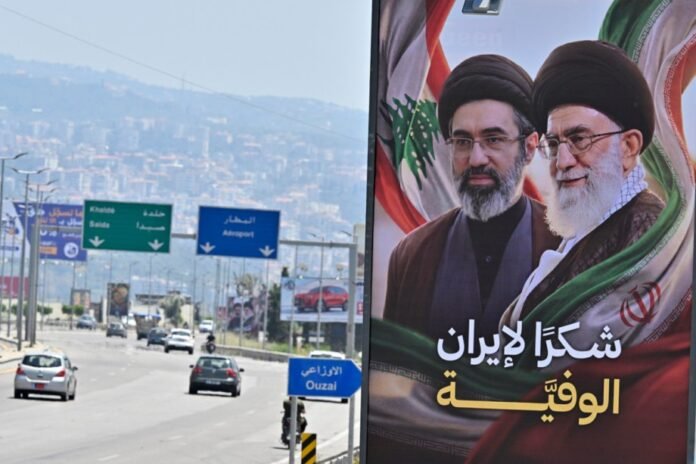
The central paradox is striking. Lebanon has formally accepted obligations that its own government lacks the practical capacity to enforce, while Hezbollah—the military actor capable of determining whether any ceasefire survives—was absent from negotiations and has publicly rejected the process.

As the framework itself acknowledges, the Lebanese Armed Forces are expected to establish authority over southern Lebanon through internationally supported deployments, while Israel retains the right to resume military operations should Hezbollah violate the arrangement. The agreement therefore depends upon compliance from an actor that never accepted its legitimacy in the first place.

This disconnect exposes something deeper than another fragile Middle Eastern ceasefire. It reveals the increasingly performative character of sovereignty in contemporary international politics. Classical international law assumes that governments exercise a monopoly over the legitimate use of force within their territory. Lebanon demonstrates the limits of that assumption. Formal sovereignty exists on paper, yet decisive coercive authority remains fragmented among the Lebanese state, Hezbollah, Israel and the external patrons sustaining each side. 

READ: FACTBOX – Key points in US-mediated framework between Israel, Lebanon

International diplomacy nevertheless continues treating Beirut as though it possesses unified control over territory and armed actors, creating what amounts to sovereignty by legal attribution rather than empirical reality.

This matters because the Washington framework is built around performance rather than parity.

Success is measured not through mutual restraint but through Lebanon’s ability to satisfy security benchmarks established largely around Israeli threat perceptions. Israeli withdrawals are conditional and reversible.

Lebanese compliance is externally monitored. Hezbollah’s behaviour determines implementation, despite Hezbollah refusing participation altogether. The result resembles less a peace treaty than a perpetual examination in which only one side continuously sits the test.

The real story begins where the map of Lebanon ends. The framework treats the conflict as a local security problem, yet its trajectory is increasingly dictated by a regional balance of power stretching from Washington to Tehran. Peace on the border has become inseparable from rivalry far beyond it.

The architecture inherits the structural asymmetries embedded within United Nations Security Council Resolution 1701. Passed after the 2006 Lebanon war, Resolution 1701 requires the Lebanese state to prevent armed groups from operating south of the Litani River and calls for the extension of exclusive state authority. Yet it has never established equivalent enforcement mechanisms regarding Israeli overflights, cross-border incursions or targeted strikes inside Lebanese territory. 

The consequence is not simply legal imbalance but political predictability: Lebanon remains perpetually vulnerable to accusations of non-compliance while Israel retains broad latitude to justify exceptional measures under the doctrine of self-defence. As your source argues, this asymmetry transforms UNSCR 1701 into a framework of ‘managed failure’ rather than durable conflict resolution.

This is where the Washington framework becomes more than a Lebanese story. It illustrates an emerging characteristic of the contemporary rules-based international order: legal obligations increasingly operate asymmetrically according to relative power rather than formal equality. The strongest actors retain considerable discretion in interpreting obligations, while weaker states are judged primarily by their capacity to satisfy externally defined conditions.

Israel occupies a unique position within this structure. It functions not simply as a participant in negotiations but, in practical terms, as a de facto veto-player over implementation. Security concerns become self-interpreting legal instruments. Military action can be presented as a defensive necessity rather than a treaty violation. 

Without an independent enforcement authority capable of binding all parties equally, the distinction between legal obligation and strategic preference becomes increasingly blurred. The framework thereby risks institutionalising precisely the unilateral discretion that international law is designed to constrain.

Equally significant is the role of the United States. Washington simultaneously serves as mediator, principal military supporter of Israel, and principal architect of implementation mechanisms. That combination inevitably raises questions about structural neutrality. Mediation traditionally depends upon confidence that competing interests receive comparable consideration. 

READ: Hezbollah chief rejects Lebanon-Israel deal, demands Israeli withdrawal

Yet the framework overwhelmingly translates Israeli security requirements into operational benchmarks while asking Lebanon to demonstrate state capacity that decades of internal fragmentation and regional intervention have rendered extraordinarily difficult. Even supporters of American diplomacy acknowledge that the arrangement is fundamentally security-driven rather than politically balanced.

The framework exposes an uncomfortable truth: modern diplomacy has become remarkably adept at managing instability while repeatedly failing to resolve it. Lebanon is no longer the subject of diplomacy but its object—a battlefield governed by external calculations rather than national sovereignty. Peace has become a carefully curated illusion, preserving strategic hierarchy while leaving the conditions for the next confrontation entirely intact.

The broader geopolitical picture reinforces this concern. The framework cannot be understood independently of US-Iran relations. Hezbollah’s strategic calculations remain closely linked to Tehran, while Israeli military decisions remain deeply intertwined with Washington. Consequently, southern Lebanon risks becoming less a bilateral frontier than a pressure valve within wider regional bargaining. Local communities become spectators to negotiations whose decisive variables increasingly reside in Washington and Tehran rather than Beirut or Jerusalem.

This reality challenges one of international relations’ oldest assumptions: that peace agreements reflect the sovereign consent of the parties most directly affected. Here, sovereignty appears increasingly conditional, mediated through external patrons whose strategic calculations ultimately shape the conflict’s trajectory. Lebanon signs. Israel calibrates. Iran influences. The United States arbitrates. The state ostensibly at the centre of the agreement exercises the least strategic autonomy.

None of this diminishes Israel’s legitimate security concerns, nor does it excuse Hezbollah’s refusal to submit to exclusive state authority. Both remain central obstacles to lasting peace. But sustainable diplomacy requires recognising that stability achieved through structural imbalance rarely remains stable for long. History repeatedly demonstrates that agreements perceived as privileging one side’s strategic discretion over genuinely reciprocal obligations tend to postpone confrontation rather than resolve it. 

The Washington framework therefore represents something more troubling than another imperfect ceasefire. It exposes an uncomfortable truth about the contemporary international order. Peace is increasingly defined not by equal application of law but by successful management of hierarchy. 

International legitimacy becomes contingent upon alignment with prevailing distributions of power. Sovereignty becomes conditional. Compliance becomes selective. Stability becomes synonymous with preserving strategic freedom for the strongest actors. If that becomes the accepted model of conflict resolution, Lebanon will not be the exception. It will be the precedent.

OPINION: Lebanon paid the price for a ceasefire that never existed

The views expressed in this article belong to the author and do not necessarily reflect the editorial policy of Middle East Monitor.

Adidas edging Nike in World Cup sales boost

0
adidas-edging-nike-in-world-cup-sales-boost
Adidas edging Nike in World Cup sales boost


As the World Cup brand battle heats up, sportswear giant Adidas appears to be getting a bigger boost than rival Nike, early data show.

Both companies are investing heavily in the ​tournament, but Nike is relying on it for sales and visibility as it tries to right its ship amid years of steadily leaking market share. ‌Investors will be looking for signs of progress next week when Nike reports fourth-quarter earnings.

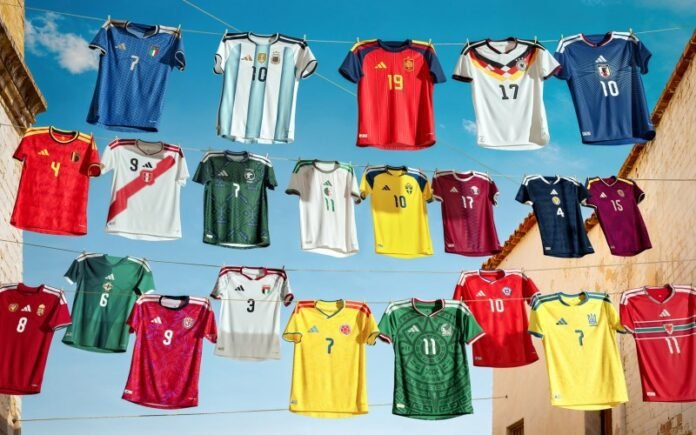
Adidas, an official World Cup sponsor and a brand long associated with soccer, is sponsoring 14 teams and supplying the coveted match ball.

Nike is outfitting 12 national teams, partnering with local street-wear designers, and refreshing soccer merchandise at more than 5,000 Nike and wholesale stores globally.

But while both brands are poised to get a ​World Cup boost to their apparel businesses, Adidas is benefiting “to a greater degree thus far,” said Drake MacFarlane, a research analyst at M Science.

Spending on Adidas ​apparel surged 70% in May from the previous year and stayed strong into June, according to M Science data. MacFarlane attributed the ⁠trend to “substantial growth” in jersey sales ahead of the World Cup.

Nike’s apparel business is growing as well, he added, but that growth is being outpaced by Adidas, which ​has “the right set of product for the consumer.”

Foot traffic data tell a similar story.

Visits to Adidas’ U.S. stores surged 47% during the first week of the World Cup compared to ​2026 averages, versus an 11% jump at Nike’s U.S. factory stores, according to data from Placer.ai, shared with Reuters.

For Adidas, those visits represented a 16% jump versus the same week last year — but for Nike, they represented a drop, Placer.ai found.

While the Nike data only covers outlet stores, the overall findings still indicate that Adidas “has been top of mind for shoppers and may have done a good job ​in its store activation around the event,” said Elizabeth Lafontaine, Placer.ai’s director of research.

British retailer JD Sports said Mexico jerseys – which are supplied by Adidas – were its best-selling team ​kit during the week beginning June 15. Nike’s U.S. team jerseys took the second spot in total sales, the retailer said.

A bright spot for Nike: 28% of its World Cup merchandise in ‌the U.S. ⁠sold out during the first two weeks of the tournament – well above Adidas’ 7%, according to a report from LSEG this week.

FOOTWEAR IN FOCUS

Nike has had a strong presence at the World Cup.

A Reuters analysis found that 232 of the 528 World Cup starters so far have worn Nike boots, with Adidas close behind at 218. “Nike is right there” despite Adidas’ close association with FIFA, said David Swartz, an equity analyst at Morningstar. “Strong visibility … is good for its brand strength.”

World soccer’s governing body FIFA runs the tournament.

Nike could use the ​win: sales have fallen as demand for classic ​lines like Dunk and Air Jordan ⁠has cooled. Competition from newer players like On and Deckers has intensified, and analysts say the company has been slow to pivot to new styles.

While World Cup visibility can’t hurt, “at the end of the day it’s really all about the product,” said Mari Shor, senior ​equities analyst at Columbia Threadneedle, which holds Nike stock. “If [Nike’s] product isn’t resonating, the rest of it doesn’t matter.”

Nike’s share of the ​global sports footwear market ⁠has fallen from 29.2% in 2022 to 22.9% last year, according to Euromonitor International data, obtained by Reuters.

Nike and Adidas have lately traded blows.

In April, Nike entered exclusive talks to provide balls for certain UEFA soccer matches, a role that was Adidas’ for 25 years. Later that month, though, Kenyan Sabastian Sawe wearing new, ultra-light shoes from Adidas broke the two-hour marathon barrier, a ⁠coup as the ​two companies battle for sports innovation.

Nike CEO Elliott Hill, who took the helm in 2024, vowed to refocus Nike ​on key sports like soccer and running, saying the company had “lost its obsession with sport.”

Yet it remains the larger company by far, its footwear market share still nearly double second-place Adidas.

It’s “the biggest dog in the fight,” ​said Sarah Henry, a portfolio manager at Logan Capital Management. “It should be able to hit everybody else pretty hard.”

Source:  Reuters

Netanyahu Defends Lebanon Framework, Says Israel Retains Freedom To Strike Hezbollah 

0
netanyahu-defends-lebanon-framework,-says-israel-retains-freedom to strike-hezbollah 
Netanyahu Defends Lebanon Framework, Says Israel Retains Freedom To Strike Hezbollah 


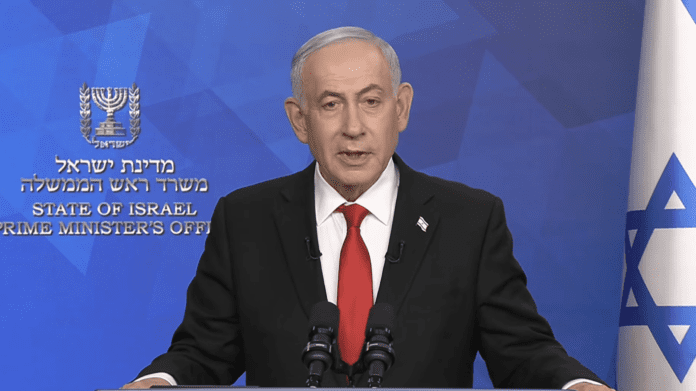
Prime Minister Benjamin Netanyahu defended Israel’s framework agreement with Lebanon on Saturday, saying the accord preserves Israel’s military freedom of action, weakens Hezbollah and Iran, and creates new diplomatic opportunities, while using a wide-ranging press conference to address questions about the military campaign, domestic politics, and Israel’s regional strategy. 

Opening the briefing, Netanyahu said Israel had withdrawn only from two pilot areas that the Israel Defense Forces determined were not operationally necessary and would remain in what he described as the “yellow security zone.” 

“We remain in the yellow security zone that protects us, and that is a tremendous, tremendous achievement,” he said, arguing that international pressure to remove Israeli forces from the area had failed. 

Netanyahu thanked President Donald Trump, Secretary of State Marco Rubio, Ambassador Yechiel Leiter, and the Israeli negotiating team, as well as the Lebanese government, for helping reach the agreement. He said Israel had “dealt Hezbollah a severe blow” and was “breaking not only Iran’s axis of terror, but also its political axis.” 

The prime minister said Hezbollah had possessed 150,000 rockets and missiles before the war and that Israel had destroyed about 90% of that arsenal, eliminated Hassan Nasrallah and the commanders of the Radwan Force, and killed more than 1,000 Hezbollah terrorists since the war began, including more than 200 during the past two weeks. 

Netanyahu also said Israeli forces had seized the Beaufort and the Ali al-Taher Ridge overlooking Bint Jbeil and continue destroying Hezbollah’s infrastructure throughout the security zone. 

“There are bunkers there, there are tunnels there, there are terror villages there. We are eliminating all of it,” he said, while adding that Israel still faces challenges, particularly the threat posed by explosive drones. 

The first question came from Nadav Elimelech of i24NEWS, who asked whether the agreement limits Israel’s operational freedom against Hezbollah and whether such operations could jeopardize the agreement. Elimelech also asked about legislation concerning ultra-Orthodox military service and Netanyahu’s proposal for a broad national government. 

Netanyahu insisted the military’s instructions remain unchanged. “If you see a threat, act,” he said. “It is not only the right to act—it is the obligation to act against an immediate threat.” He said the standing orders had recently resulted in the elimination of 200 terrorists and described an operation in which Israeli forces destroyed a building containing seven Hezbollah terrorists before they could attack. 

Turning to domestic politics, Netanyahu argued that Israel must avoid internal divisions. 

“As Menachem Begin said, ‘No more civil war.’ There will not be one here,” he said, adding that he intends to establish “a broad national government—not a narrow government, not a left-wing government dependent on Arab parties.” Netanyahu said any party willing to recognize Israel as the nation-state of the Jewish people, support individual rights, a free economy, technological advancement, and Israel’s ability to defend itself would be welcome. 

Responding to Elimelech’s question on Haredi conscription, Netanyahu called for broad agreement on military service and judicial reform. He said arrests of Torah students inside yeshivas discourage enlistment, arguing that “Young Haredim want to enlist,” but that such enforcement produces “exactly the opposite” result. At the same time, he said those not engaged in Torah study should remain subject to the full force of the law. 

Channel 14 reporter Saria Herush asked how Israel would respond if Hezbollah violated the agreement and what assurances Israel had received from Lebanon and the United States that Hezbollah would be removed from southern Lebanon. 

Netanyahu replied that Israel’s primary guarantee was its own military capability. “The moment they violate the agreement … we strike with great force,” he said, adding that the Lebanese government’s decision to sign the agreement was “a very courageous move” because it effectively told Hezbollah and Iran, “We are making peace with Israel.” 

He also said support for the agreement had emerged among Lebanon’s Christian, Druze, Muslim, and even some Shiite communities, while cautioning that Israel would judge the accord by Lebanon’s actions. He said the Lebanese army must still reform itself because “There are jihadists within its ranks.” 

Ynet’s Itamar Eichner challenged Netanyahu over comments by opposition lawmaker Gadi Eisenkot, who described Lebanon as “a political graveyard for prime ministers,” and also asked about government recognition of the Armenian Genocide. 

Netanyahu dismissed Eisenkot’s criticism, arguing that following his advice would have meant stopping operations in Khan Yunis, avoiding Rafah, never entering Lebanon, and leaving Hamas and Hezbollah largely intact. 

“So, you know what I say? I’ll answer you in Yiddish,” Netanyahu said. “Who cares?” He added that his decisions were guided by national security rather than political considerations and defended operations in Gaza, Lebanon, Syria, and Iran. On the Armenian Genocide, he responded, “I did not block it, and I certainly support it.” 

Danny Zaken of Israel Hayom asked whether the Lebanon agreement conflicted with the US-Iran memorandum of understanding and which political parties Netanyahu hoped would join a future coalition. 

Netanyahu said Israel was not a party to the US-Iran agreement but would continue protecting its own interests. He announced plans to send a delegation to Washington to present Israel’s position on Iran’s nuclear program and said Secretary of State Marco Rubio had supported Israel’s insistence on maintaining the security zone in southern Lebanon. 

Asked which parties he hoped to bring into government, Netanyahu said he would welcome anyone who accepted his core principles. He specifically rejected the creation of a Palestinian state “between the Mediterranean Sea and the Jordan River,” saying public opinion had shifted during the war. He also argued that most Israelis reject internal conflict and said a broad national consensus was necessary to capitalize on what he described as Israel’s military victories in Gaza, Lebanon, and Iran. 

Concluding the press conference, Netanyahu rejected criticism that Israel had failed to achieve all of its wartime objectives, saying opponents who had advocated halting operations in Khan Yunis had been prepared to accept “zero” achievements. “Your government didn’t achieve 100 percent; you only achieved 80 or 90 percent,” he said of his critics. “That is a joke. It is simply not serious.” 

He said Israel had removed the immediate nuclear threat from Iran, severely degraded Tehran’s ballistic missile production, brought back all of the hostages from Gaza, dismantled most of Hamas’ military capability, and transformed the strategic balance in Lebanon. Netanyahu concluded that those gains should now be preserved through a broad national government capable of addressing the remaining challenges and pursuing additional regional agreements. 



Madonna Eyes Shocking Sex Book Sequel 30 Years Later

0
madonna-eyes-shocking-sex-book-sequel-30-years-later
Madonna Eyes Shocking Sex Book Sequel 30 Years Later


Madonna may be ready to strip down her legacy all over again.

More than three decades after her notorious Sex book horrified critics, thrilled fans and turned the pop world upside down, insiders claim the 67-year-old Queen of Pop is now weighing a jaw-dropping follow-up to the scandalous project that nearly swallowed her career whole.

The original book, released on October 21, 1992, alongside her album Erotica, was not just a celebrity coffee-table book. It was a cultural bomb.

Wrapped in shiny silver Mylar and packed with provocative imagery, Sex sold more than 1.5 million copies in just days. It also unleashed a firestorm, with furious critics accusing Madonna of shamelessly using shock, nudity and controversy to keep herself at the center of the spotlight.

But the outrage only made the book more infamous.

Now, decades later, the once-condemned release has become one of the most coveted pop culture collectibles in the world. Original copies have never been officially reissued, and collectors still hunt them down like forbidden treasure. Rare editions can sell for hundreds or even more than $1,000, especially if they are still sealed in their original silver packaging.

According to insiders, Madonna has been watching the obsession closely.

“Madonna knows Sex still has power,” one source said. “People are still talking about it, still searching for it and still paying huge money for it. That has absolutely sparked conversations about whether she could do something even more daring now.”

The source added that a sequel could be explosive.

“She knows a modern follow-up would cause chaos,” the insider claimed. “A book looking back at her life, her body, her image and her decades of controversy could sell like crazy. Madonna understands shock better than anyone.”

Another insider said the singer is not interested in simply copying what she did in the ’90s.

“She does not want to look like she is repeating herself,” the source said. “But she is very aware that Sex is part of her legend. There have been serious discussions about what a new version would look like, especially now that she is older, more defiant and still determined to control her own image.”

The original Sex book hit shelves at a time when Madonna was already testing America’s limits. Some saw it as fearless self-expression. Others called it desperate, vulgar and career-damaging. For a moment, even some longtime fans wondered whether the Material Girl had finally gone too far.

But Madonna survived the backlash.

And now, the very project that once made her a target has become a collector’s prize.

Rare-book experts say the book’s scarcity has only made it more desirable. Because Madonna never allowed the original to return to shelves in its full form, demand has continued to grow year after year. BookFinder has repeatedly ranked Sex among America’s most sought-after out-of-print books.

One rare-book specialist said the demand is unlike almost anything else in celebrity publishing.

“People have been chasing this book for decades,” the specialist said. “Every year, a new generation discovers it and wants a copy. That kind of staying power is extremely rare.”

The condition of each copy can make a major difference. Sealed books are the holy grail for collectors, while clean opened editions can still attract intense interest. The book’s metal-and-spiral binding is fragile, which means many copies have been damaged over time.

“Condition is everything,” one memorabilia dealer said. “A sealed copy is the top prize, but even opened copies can bring strong money if they are well preserved.”

For Madonna, the timing could be tempting.

After years of headlines about her appearance, her age, her relationships and her refusal to fade quietly into pop history, a new Sex-style project would be the kind of headline-grabbing move only she would dare to attempt.

One collector source said the original book is no longer just a scandalous celebrity release.

“Sex is not just a book anymore,” the source said. “It is a piece of pop culture history. That is why people keep hunting for it.”

Whether Madonna will actually move forward with a sequel remains unclear. But the possibility alone is enough to send shockwaves through the publishing world, the collector market and her fan base.

After all these years, Madonna may be preparing to prove she still knows how to make America gasp.

Israeli army to begin pilot withdrawal from southern Lebanon: Report

0
israeli-army-to-begin-pilot-withdrawal-from-southern-lebanon:-report
Israeli army to begin pilot withdrawal from southern Lebanon: Report

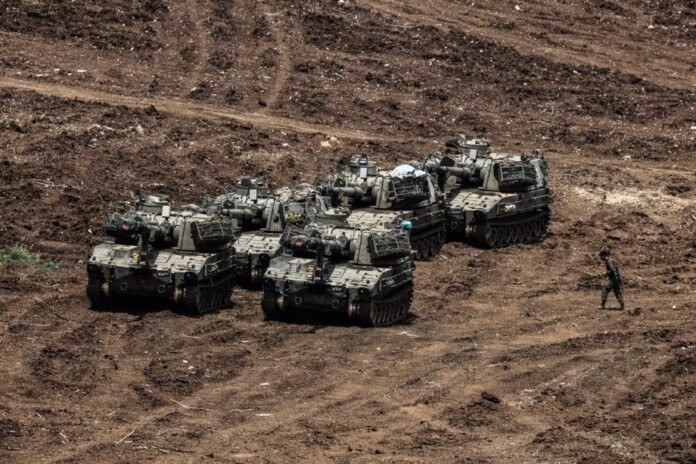
Movement of Israeli military vehicles and tanks is observed around the village of al-Aadaissah near the Lebanon-Israel border in May 13, 2026. [Tsafrir Abayov - Anadolu Agency]

Movement of Israeli military vehicles and tanks is observed around the village of al-Aadaissah near the Lebanon-Israel border in May 13, 2026. [Tsafrir Abayov – Anadolu Agency]

The Israeli army is preparing to begin the pilot phase of its withdrawal from southern Lebanon as early as Sunday under a recently signed framework agreement between Beirut and Tel Aviv, according to Israeli media reports.

The withdrawal is expected to begin from one of the two “pilot zones” specified in the agreement, Israel’s public broadcaster KAN reported.

KAN said no official details have been released on the locations or timetable for the withdrawal.

“Under the agreement, a direct communication channel is also expected to be opened between Israel and Lebanon,” the broadcaster said.

On Thursday, Lebanon and Israel signed a US-sponsored framework agreement stipulating a phased Israeli withdrawal from Lebanese territory, beginning with two pilot areas.

READ: Hezbollah chief rejects Lebanon-Israel deal, demands Israeli withdrawal

Iran Launches Reported Strikes on US Military Targets After Hormuz Clash

0
iran-launches-reported-strikes-on-us-military-targets-after-hormuz-clash
Iran Launches Reported Strikes on US Military Targets After Hormuz Clash


Iran’s Islamic Revolutionary Guard Corps (IRGC) announced Saturday that it had launched strikes against US military targets in the Middle East, including reported drone attacks on Naval Support Activity Bahrain, after US forces carried out retaliatory strikes on Iranian military sites following an attack on commercial shipping in the Strait of Hormuz.

The latest exchange followed Friday’s US airstrikes on Iranian coastal radar and missile positions. US Central Command launched the strikes after President Donald Trump accused Iran of violating a newly brokered ceasefire by targeting a Singapore-flagged merchant vessel transiting the Strait of Hormuz.

In a Truth Social post on Friday, President Trump wrote, “The Islamic Republic of Iran shot at least four One Way Attack Drones at Ships transversing the Strait of Hormuz.”

According to US officials, the vessel was struck while operating near Oman’s coastline after Iran’s paramilitary navy warned commercial ships not to use sea lanes through the strategic waterway unless authorized by Tehran. The attack damaged the ship’s bridge, although the vessel continued its voyage.

President Trump later wrote, “Damage was done, but the Ship was able to proceed on its way. We knocked down three other Drones. Obviously, this is a foolish violation of our Ceasefire Agreement.”

On Saturday, Iran’s Foreign Ministry and the Revolutionary Guards said they had targeted “US-linked targets” in retaliation for the American strikes. The IRGC announced attacks on US military positions, including Naval Support Activity Bahrain.

A US official told CNN that the military “detected a couple drones” after Iran announced it had launched attacks against American military targets in the Middle East. The official said the drones did not reach their intended targets.

Bahrain’s government condemned the reported Iranian drone attacks as a flagrant violation of the country’s sovereignty.

The latest military exchange followed heightened tensions in the Strait of Hormuz. During the weekend, Iran closed the strategic waterway after demanding an end to Israeli military operations in Lebanon. On Friday, a commercial tanker was also struck by what was described as an “unidentified projectile” while transiting the strait.

The confrontation marked the latest challenge to the ceasefire framework announced by President Trump and came as tensions continued around one of the world’s most strategically important maritime shipping routes.

Digital euro clears key hurdle as EU seeks to break free from U.S. credit cards

0
digital-euro-clears-key-hurdle-as-eu-seeks-to-break-free-from-us.-credit-cards
Digital euro clears key hurdle as EU seeks to break free from U.S. credit cards


The European Central Bank secured key parliamentary backing on Tuesday for the launch ​of a digital euro, an electronic means of payments aimed at making the euro zone less reliant on U.S. credit cards at a time of fraying ‌transatlantic relationships.

The digital euro, essentially an electronic wallet guaranteed by the central bank but marketed by banks or fintech companies, will allow all euro zone residents to make payments online and in person.

Six years in the making, the ECB’s digital cash has become a more pressing issue since Donald Trump returned to the White House, slapping tariffs on even established trade partners such as the European Union and raising fears that the U.S. could one day weaponize ​its dominance over payment networks like Visa and Mastercard.

The approval of draft rules by the economic committee of the European Parliament comes after three years of wrangling between the ECB ​and banks, which have been concerned about deposit outflows and lost revenues and sought to limit the scope of the project.

“The introduction of the ⁠digital euro would… reduce overreliance on non-European providers by becoming a pan-European means of payment and would bring the single currency into the digital era by giving Union citizens the freedom to ​opt to pay with central bank money in their daily transactions,” the draft regulation says.

FINAL APPROVAL BY YEAR-END?

Siegbert Frank Droese of the far-right Europe of Sovereign Nations, a political group in the ​European Parliament, said his group had voted against the proposal, raising the likelihood that a further vote would be needed at the Parliament’s plenary.

Barring an objection at the plenary, lawmakers should start negotiating with the European Council of EU governments and the European Commission next month, aiming for final approval by the end of the year.

The ECB, which plans to run a 12-month pilot of the digital euro starting in the second half of next year ​before a full launch in 2029, said it looked forward to Parliament adopting its final position.

Outside the euro area, China has been piloting a digital yuan at scale, while countries like India ​and Brazil have conducted trials. Britain has focused on research, amid concerns over privacy, financial stability and banking-sector impact, while U.S. President Trump has forbidden the Federal Reserve from issuing a digital currency.

HOLDING LIMITS, POLITICAL ‌OVERSIGHT POINT TO ⁠COMPROMISE

Like the European Council before it, the EU’s Parliament laid out key safeguards for banks fearing deposit flights.

Lawmakers proposed in the draft regulation that the European Commission decide how many digital euros every user could own, based on an ECB recommendation, and review that ceiling at least every two years.

Businesses would not be allowed to hold digital euros for longer than 24 hours. The digital euro would not earn any interest or cost anything to its users.

“The proposal reflects political compromises,” Laura Casonato, head of policy at Positive Money Europe, an advocacy group for monetary reform, said. “It keeps commercial ​banks at the centre of distribution, with only ​a limited role for public channels and ⁠other providers, and does not go as far as presenting the digital euro as a true alternative to bank deposits.”

Such concessions were likely crucial to win over critics such as Fernando Navarrete Rojas, the parliament’s negotiator on this file, who only recently dropped his opposition to making the digital ​euro available online.

ECB simulations show depositors could withdraw up to 699 billion euros ($795.88 billion) from euro zone banks if a limit on digital euro ​holdings was set at ⁠3,000 euros each. This is equal to 8.2% of all retail sight deposits, although the impact would be greater for small market lenders and retail banks.

COSTS, COMPENSATION AND EXEMPTIONS ARE OPEN QUESTIONS

Auke Zijlstra of the far-right Patriots for Europe Group said the only main discussions with other European institutions would revolve around how participating companies should be compensated for the set-up costs, which the ECB put at between four billion ⁠euros and ​six billion euros spread over four years.

But he added the digital euro may prove “obsolete” by the time it launches ​given competing initiatives by the private sector. These include instant payment service Wero, backed by a consortium of major European banks.

Damian Boeselager of the Greens said the digital euro should be cheap for merchants, many of whom will be forced to ​accept the new means of payments. The Parliament’s proposal contains an exemption for small-business owners and the self-employed.

($1 = 0.8783 euros)

Source:  Reuters

Chilling Phone Tip Rocks Nancy Guthrie Case

0
chilling-phone-tip-rocks-nancy-guthrie-case
Chilling Phone Tip Rocks Nancy Guthrie Case


NBC is reportedly bracing for the possibility that Savannah Guthrie could suddenly step away from Today again as the mystery surrounding her missing mother takes a dark and explosive new turn.

The beloved morning show anchor has been showing up on live television while privately facing a nightmare no daughter should have to endure. But now, after an anonymous tipster claimed a hidden phone may hold disturbing clues about Nancy Guthrie’s disappearance, insiders say the network is quietly preparing for a possible shake-up behind the scenes.

According to Rob Shuter’s Naughty But Nice, NBC staffers are increasingly worried about how much more Savannah can take as the case grows more twisted.

“Everyone is deeply worried about Savannah,” one NBC insider claimed. “She’s showing incredible strength on camera, but every new twist is another emotional blow. No one expects a daughter to carry this kind of heartbreak while hosting live television every morning.”

The latest bombshell centers on a bizarre anonymous message allegedly sent to TMZ by someone claiming to have evidence connected to Nancy’s disappearance.

The person reportedly demanded one bitcoin in exchange for information, claiming they had a phone hidden in a secure location with possible clues about what happened to Savannah’s mother.

“I have a phone stashed in a secure location guaranteeing both the information it stores and the safety of the phone,” the tipster reportedly wrote.

Even more chilling, the anonymous source allegedly claimed the device contains “a short video of the main guy with Nancy the day that was probably her last,” along with photos, names, addresses and ages of the people supposedly connected to the case.

The tipster also claimed more than one person may have been involved, but said the phone mainly points to the alleged “main guy.”

The disturbing message has reportedly been forwarded to the FBI as investigators continue sorting through tips in the haunting case.

TMZ reportedly asked the anonymous source to send at least one screenshot from the alleged video to help prove the claims before any money was discussed. The outlet also reported the message came from the same email address and referenced the same Bitcoin wallet used in earlier communications about Nancy’s disappearance.

The anonymous writer also tried to distance themselves from another recent tipster, writing, “I am not the idiot who recently called in a tip about her burial site in Mexico.”

As the claims pile up, NBC is said to be preparing for the possibility that Savannah may need to leave the Today anchor desk to focus on her family.

Sources claimed former Today co-anchor Hoda Kotb has already made it clear she is ready to step in immediately if Savannah decides she needs time away.

“Hoda didn’t hesitate,” another insider claimed. “She made it clear she’ll be there the moment she’s needed. This isn’t about replacing Savannah. It’s about protecting a friend. Right now, everyone wants Savannah focused on one thing: finding her mother.”

Savannah has remained composed in front of the cameras, but insiders reportedly believe the emotional strain behind the scenes is becoming impossible to ignore.

For now, she is still appearing on Today. But with the investigation taking one shocking turn after another, NBC is reportedly preparing for the very real possibility that one of its biggest stars may have to walk away from morning television again as the hunt for her missing mother intensifies.

0FansLike
0FollowersFollow
0FollowersFollow
0SubscribersSubscribe
- Advertisement -
Google search engine

Recent Posts