China’s answer to the US Navy may not be a single “carrier-killer” missile, but a coordinated swarm designed to overwhelm defenses through sheer scale, speed and complexity.
This month, the South China Morning Post (SCMP) reported that a research team led by Associate Professor Gao Tianyun from China’s National University of Defense Technology published a peer-reviewed paper detailing a step-by-step strategy to destroy dispersed US carrier groups from 3,000 kilometers away, targeting assets as far as Guam.
Published in the defense journal Tactical Missile Technology, the study addresses the US Department of Defense’s (DoD) Distributed Maritime Operations (DMO) concept, which scatters naval formations to mitigate regional vulnerability.
To counter this layered defense, the Chinese researchers propose an initial surprise strike using submarines to launch hypersonic anti-ship missiles at forward-deployed US Aegis destroyers. This tactic aims to crack the outer mid-course missile shield, exposing the aircraft carrier to subsequent salvos.
The plan then employs an orchestrated, multi-directional “firepower package” that combines cheap decoy drones, low-cost cruise missiles, and wave-skimming subsonic stealth missiles to deplete defense ammunition and saturate radar tracking.
Notably, the swarm uses a “leader-follower” mode in which a designated scout missile relays data to low-flying missiles, dynamically adjusting if the leader is intercepted. The authors argue that these mass-swarm tactics capitalize on China’s massive shipbuilding and missile manufacturing capacities relative to US deindustrialization.
Yet the effectiveness of any missile swarm depends on more than the number of missiles launched. To strike a moving carrier 3,000 kilometers away, China must first maintain an unbroken kill chain capable of finding, tracking and targeting the fleet despite US efforts to disrupt it.
In a May 2026 Center for Strategic and International Studies (CSIS) brief, Seth Jones notes that traditional US surface warships, such as carriers and destroyers, are highly exposed to precision strikes from the People’s Liberation Army Rocket Force (PLARF), despite their complex onboard defensive systems. Jones adds that their immense physical profiles make them vulnerable to large salvos of cruise, ballistic, and hypersonic missiles.
Complex kill chains – the procedures and assets that enable finding, fixing, tracking and targeting – may be the critical vulnerability in China’s missile-swarm concept.
As Jonathan Caverley notes in a 2025 Texas National Security Review (TNSR) article, long-range strikes against moving carrier groups require an uninterrupted chain of sensors, communications networks and weapons guidance systems. That architecture, he says, depends heavily on vulnerable space-based surveillance assets, creating multiple opportunities for disruption.
Veerle Nouwens and her co-authors argue in a January 2024 report for the International Institute for Strategic Studies (IISS) that while China can readily threaten fixed targets, striking moving carrier groups remains far more demanding. They note that maintaining continuous over-the-horizon awareness requires a sophisticated sensor network that may be vulnerable to US cyber, electronic warfare and counter-space operations.
Even if China strengthens its targeting architecture, it will still need to overcome increasingly distributed and unmanned US defensive networks designed specifically to absorb saturation attacks.
Beyond electronic and cyberwarfare, Jordan Spector, in a March 2026 Proceedings article, notes that the US Navy can counter saturation threats by implementing a layered, unmanned architecture that maximizes defensive depth.
He describes a layered defense consisting of an outer layer of a network of medium unmanned surface vessels (MUSVs) that expands early-warning detection and electronic jamming capabilities.
After that, Spector says a magazine on large unmanned surface vessels (LUSVs) serves as a remote arsenal, boosting missile capacity with multiple types of interceptors. Behind that, cruisers and destroyers coordinate terminal defense from the inner layer. He notes that such an integrated framework offloads risk to affordable, autonomous systems, preserving carrier strike group survivability.
China is not standing still, however. To make missile swarms more resilient, the People’s Liberation Army (PLA) is exploring kill-web architectures and autonomous systems that could continue operating even after portions of its targeting network are degraded or destroyed.
In a 2025 article in the peer-reviewed Air & Space Defense journal, Wang Chaochen and other writers mention that while conventional kill chains suffer from sequential dependencies—making them highly vulnerable to being severed if a single node fails—a kill web dynamically integrates dispersed combat nodes across land, sea, air, space, and cyber domains.
Wang and others say that by leveraging an open service architecture, edge computing, and local autonomous decision-making, the kill web ensures information is shared in real time. Consequently, they note that even if specific links suffer electronic interference or physical damage, the system dynamically reorganizes multi-path adaptive links to maintain uninterrupted operational lethality.
Beyond kill webs, China can employ increasingly autonomous AI to lessen dependence on kill networks. As Kateryna Bondar and Matt Mande mention in a report this month for the Center for Strategic and International Studies (CSIS), traditional unmanned systems rely on a constant communication link—the “tether”—to a human operator for flight, navigation, and targeting.
Bondar and Mande note that while electronic warfare can sever this link, rendering the platforms useless, genuine AI-enabled edge autonomy mitigates this vulnerability by allowing a system to operate independently.
They point out that instead of requiring constant human intervention, an operator can provide a strategic goal, and the autonomous system then calculates its own route, navigates entirely without GPS, and independently identifies and engages targets, removing the single point of failure caused by external signal disruption.
The decisive question for China’s missile-swarm strategy may therefore be less about missile range or salvo size than whether it can preserve long-range targeting effectiveness after parts of its battle network have been disrupted.
In a future Pacific conflict, the decisive contest may not be over whose missiles fly farther or arrive in greater numbers, but whose battle network keeps fighting after communications, sensors and command links begin to fail.
An Army Whistleblower Believed in Pete Hegseth — Until the Military Covered Up Her Child’s Abuse
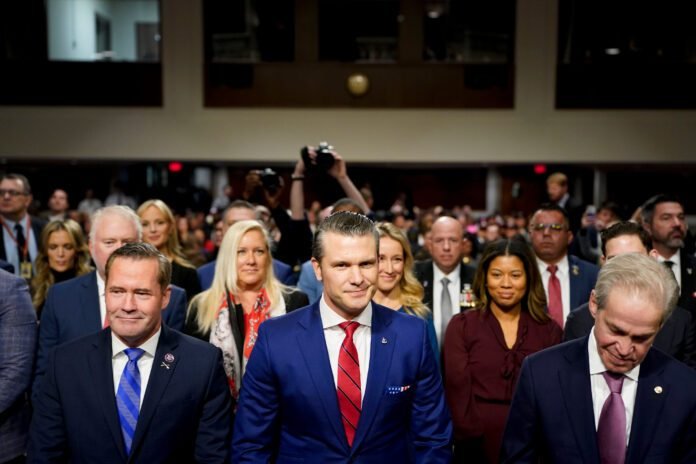
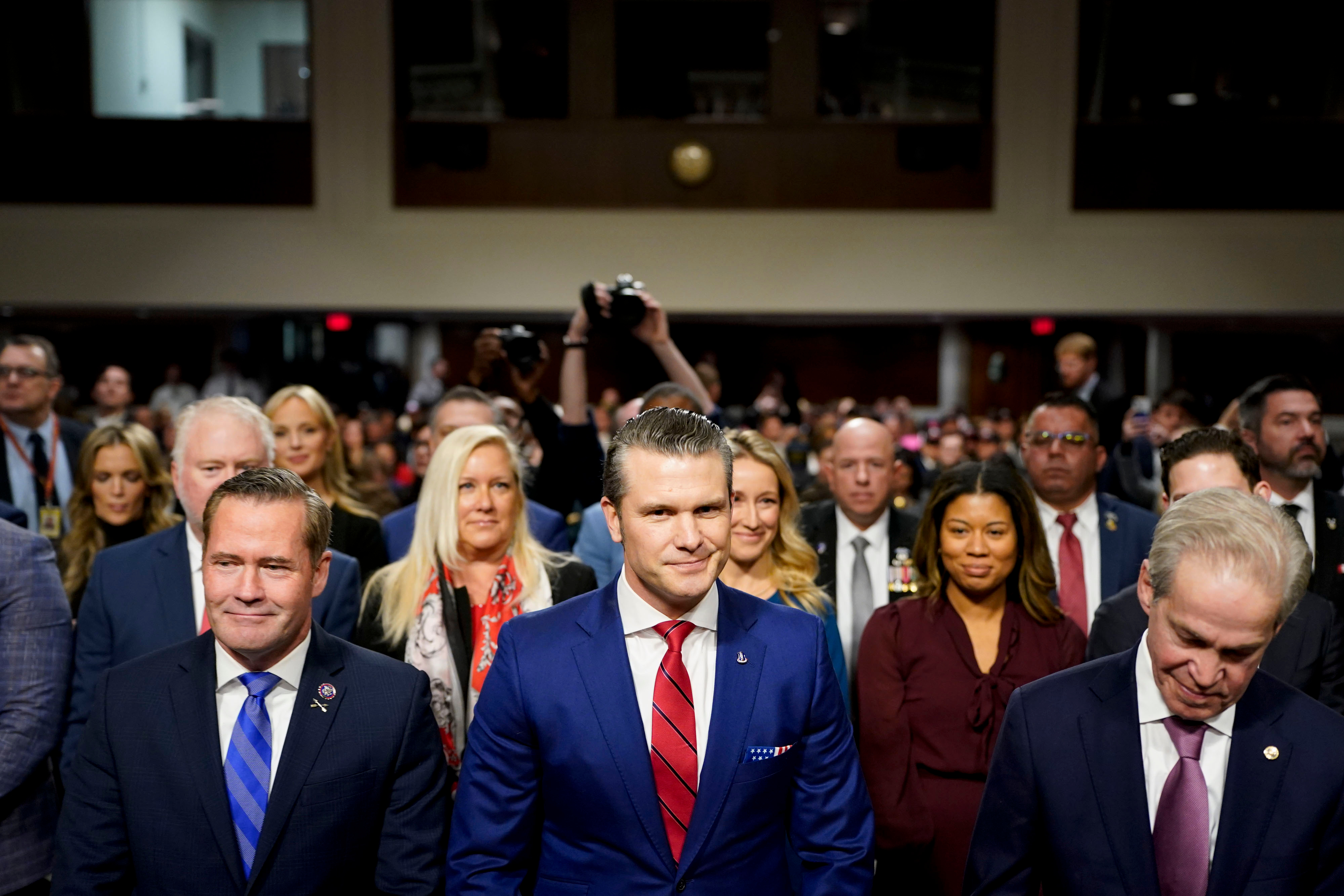
Amanda Feindt sat in the fourth row during the Senate confirmation hearing of Defense Secretary Pete Hegseth. A U.S. Army major and former whistleblower who had submitted a letter supporting his nomination, Feindt listened as Hegseth spoke about troop readiness, military lethality, and protecting military families. Service members and veteran advocates around her wore shirts and hats bearing his name.
While Feindt sat in the Senate chamber, her 4-year-old son was in the military’s care, spending the day at the North Post Child Development Center at Fort Belvoir, in nearby Virginia. There, according to records reviewed by The Intercept, he was subjected to treatment that would leave lasting psychological effects.
It took a year for Feindt and her husband to figure out what it was.
In a series of interviews with The Intercept, Feindt described a grueling pattern of obfuscation in which military officials refused to answer questions about her child’s treatment, directed her to file public records requests, and claimed not to have the attendant evidence — then produced it months later. Military experts characterized these delays as part of a pattern in which the institution seeks to slow-walk and minimize findings of child abuse or mistreatment to decrease reputational damage. Over a year of persistent requests, Feindt and her husband finally pieced together a picture of their child’s treatment during at least two instances that January: The day of the hearing, when staff mocked and harassed the 4-year-old, and a few days earlier, when surveillance video showed them stepping on his feet and pinning his legs under a table. Local authorities later classified the treatment as child abuse.
“My son barely has the words to describe what happened to him,” Feindt told The Intercept. “You can see it in the video — they’re screaming while the abuse is taking place.”
Three other military families whose children suffered maltreatment in U.S. Army facilities described similar roadblocks. Parents who sought surveillance footage in other abuse investigations described receiving heavily redacted videos, incomplete clips, or footage with audio removed.
“This is a standard tactic in administrative cases,” said Ryan Sweazey, a retired Air Force officer and former inspector general. “They tell you the investigation is done, and if you want to challenge it, you have to file a FOIA request. The report then comes back heavily redacted months or years later.”
That’s what happened to the Feindt family: Army officials allowed them to review only a limited portion of the footage and would not provide copies of the video. While they watched, Feindt and her husband recorded audio and later described the scenes in a memorandum to Defense Department officials, both of which they shared with The Intercept. When the family sought additional footage and records, Feindt said officials directed them to file a Freedom of Information Act request before saying the remaining footage had been deleted after review.
According to Feindt’s memorandum, three staff members watched the teacher pin the 4-year-old’s legs and mock him without intervening. The footage then shows the teacher yanking the child upward by his clothing, grabbing him by the wrists, and pushing him out of camera view, Feindt and her husband write. In the audio the family shared with The Intercept, a child Feindt identified as her son can be heard screaming for the teacher to stop.
Pete Hegseth arrives for his confirmation hearing before the Senate Armed Services Committee in Washington, D.C., on Jan. 14, 2025.Photo: Kent Nishimura/Bloomberg via Getty Images
Accusations of child abuse in the Army are handled through a quasi-judicial body known as the Incident Determination Committee, or IDC, which operates without many of the safeguards found in civilian courts. These panels can include social workers involved in the underlying case, members of the chain of command, or personnel with limited subject-matter expertise. The committee applies a “preponderance of information” standard that experts say can produce conclusions at odds with civilian investigators reviewing the same evidence.
Once the committee reaches a determination, parents are typically not allowed to review how the decision was made. Proceedings occur behind closed doors, with no transcript, evidentiary record, or opportunity for cross-examination available to families or attorneys.
“It’s one entity acting as judge, jury and executioner. There is no real due process, and there are almost no checks and balances,” said Sweazey.
The Feindt family was left unsure why their IDC did not substantiate abuse claims despite medical concerns and video evidence reviewed by investigators. Feindt tried to attend the committee’s hearing, but her request was denied. Afterward, she sought additional CCTV footage from the daycare, but Fort Belvoir officials told her the case was closed and she would have to file a FOIA request.
The system overseeing military child care centers is so fragmented that even grieving parents struggle to determine who is responsible when something goes wrong, said Jason Degenhard, a retired Army master sergeant who served in special operations. In 2012, Degenhard’s 4-fmonth-old son was in the care of the child development center on Pope Air Force Base (which today is part of Army base Fort Bragg) when a caregiver placed him on his stomach for tummy time, propped him against a rolled blanket, and left the room, as reported by WRAL News in Raleigh, North Carolina.
The infant’s muscles were not developed enough to support his weight, and he suffocated, causing catastrophic brain damage. The baby, named Sonny, was removed from life support days later.
“If you are a new parent trying to figure out how these centers are doing, you really do not have anything to go off of,” Degenhard said. In his telling, his chain of command supported the family immediately after Sonny’s death, but he remained troubled by what he described as limited institutional accountability afterward. Although the center was located on Pope Air Force Base, it operated under Army garrison authority, and Degenhard said the overlapping bureaucracies often left the family unsure who had the authority to provide answers or accept responsibility.
After federal prosecutors declined to pursue criminal charges, the Degenhards settled a wrongful death lawsuit against the federal government. Their emotional distress claims were dismissed.
“The heartbreak goes beyond the personal,” said Degenhard, who is still suffering from grief 14 years later. “The professional heartbreak is the lack of accountability, the lack of communication, and the lack of supervision.”
Feindt’s son became fearful and mistrustful of adults, regressed in potty training, and developed nightmares after Hegseth’s January 2025 confirmation, she told The Intercept. The family transferred him to another daycare, where Feindt said he struggled to adjust and accumulated roughly 20 behavioral incident reports in his first month, prompting administrators to bring in trauma specialists for support. His doctors said his symptoms resembled post-traumatic stress.
Army internal documents and communications acknowledged that supervisors watched her son being mistreated but did not intervene; no mandatory reporters documented the incident; and the parents were never notified. The conduct aligns with the Defense Department’s criteria for emotional maltreatment of a minor, but the Army IDC refused to classify the child’s treatment as abuse.
“For 15 months, the military told us this didn’t meet criteria,” Feindt said. “They made our lives a living hell.”
More than a year after the incident, in March 2026, Fairfax County Child Protective Services substantiated the case as child abuse and neglect, according to information provided to the family and confirmed by The Intercept. The finding will remain on the caregiver’s record for seven years.
On May 1, Fort Belvoir Child and Youth Services sent a letter to parents acknowledging a “founded disposition of a child abuse allegation,” stating that one caregiver had been removed from the facility and another was in the process of being terminated.
Records reviewed by The Intercept indicate the conduct at the childcare center extended beyond a single confrontation involving Feindt’s son.
Investigative materials obtained through FOIA describe repeated incidents in which caregivers allegedly mocked, threatened, and harassed children inside the classroom. Investigator notes reviewed by The Intercept describe a caregiver tugging a child’s hair, lifting a child by the back of their shirt, roughly repositioning children during classroom activities, and swinging a broom at a child.
In November 2021, when Pete Hegseth was a co-host on “Fox & Friends Weekend” and Amanda Feindt was an Army major, a storage tank maintained by the U.S. military began leaking jet fuel into the drinking water supply at Joint Base Pearl Harbor–Hickam in Oahu, Hawaii. In what became known as the Red Hill incident, for the name of the fuel storage facility, about 20,000 gallons of JP-5 jet fuel contaminated drinking water for roughly 93,000 people, including members of the military and civilians. The Associated Press reported that about 6,000 people were poisoned.
Feindt and her family were among the military households exposed to contaminated drinking water during the Red Hill fuel leak. After developing severe gastrointestinal symptoms, the entire family sought emergency medical care. Her infant son suffered chemical burns after bathing; her husband underwent multiple medical procedures for ongoing complications; and her daughter later developed neurological issues that the family believes stemmed from the exposure. The Feindts were evacuated from their home, shuffled between seven hotels, and relocated across the country twice. Feindt, a former cancer patient, developed enlarged and suspicious cervical lymph nodes.
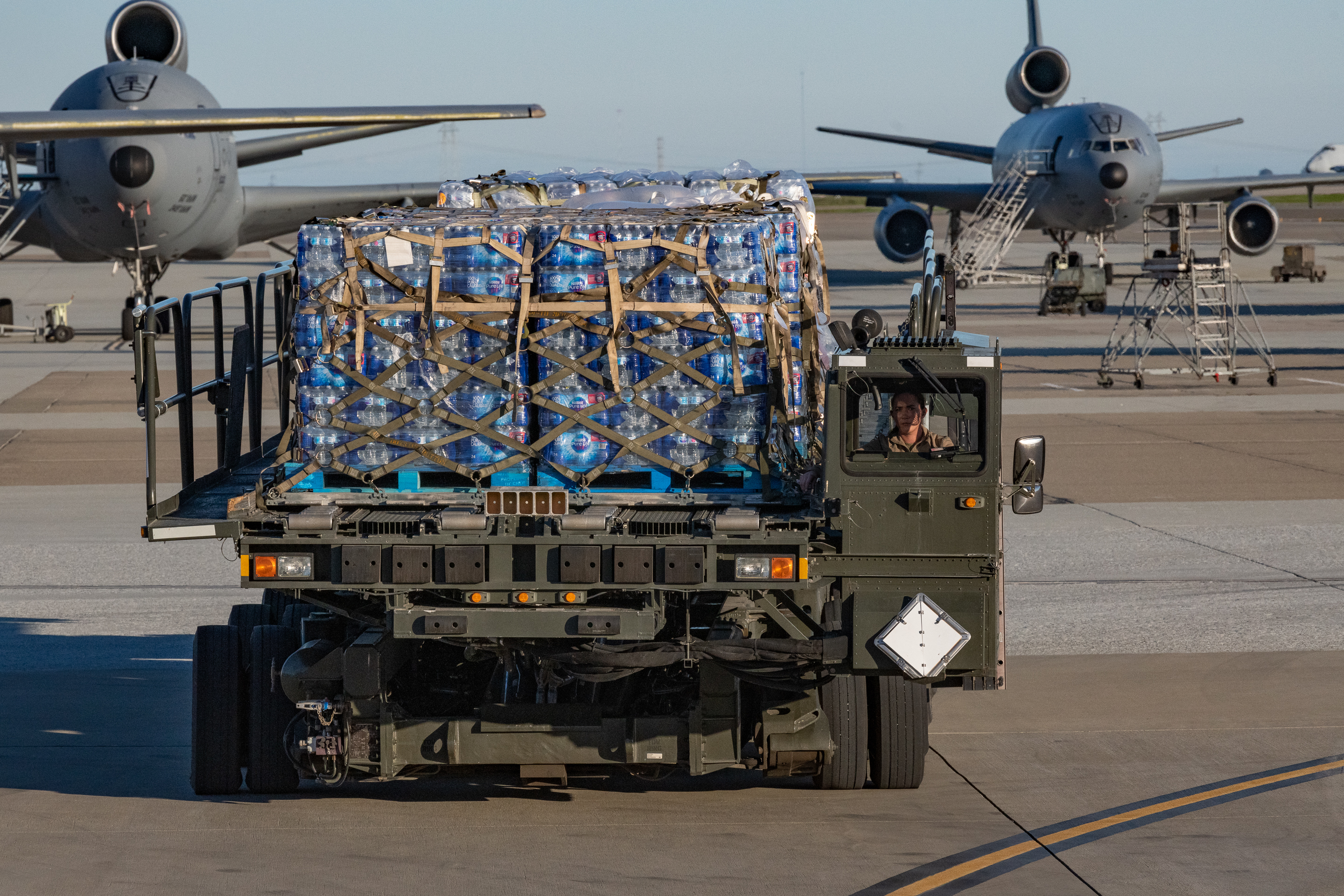
Air transportation specialists at Travis Air Force Base, Calif., load bottled water to be shipped to Joint Base Pearl Harbor-Hickam, Hawaii, amid the Red Hill water crisis on Dec. 10, 2021.Photo: Grant Okubo/U.S. Air Force via DVIDS
Feindt became a substantiated whistleblower and lead plaintiff in a lawsuit over the fuel leak, arguing that the contamination had upended her family’s health, finances, military career, and daily life. Hegseth was of the first national reporters to contact her about Red Hill.
“There was a lot of back-and-forth by email,” Feindt said, recalling that Hegseth knew her attorney and would write from his personal Gmail as he followed the case. “He would check in about Red Hill, and we would give updates to him and Fox. He always seemed like he would advocate for us as a reporter.”
“He always seemed like he would advocate for us as a reporter.”
In the four years since Feindt’s exposure at Red Hill, the family has managed more than 700 medical appointments, multiple surgeries, and long hospitalizations. The Army moved the family to Fort Belvoir so Feindt could enter the Soldier Recovery Unit, a program intended to support service members with complex medical issues.
When her son experienced abuse at the Fort Belvoir childcare center, Red Hill came back to haunt her.
Staff members for Secretary of the Army Dan Driscoll told Feindt they would not meet with her because of her association with the Red Hill litigation, which she believed had already concluded. (A federal court found the U.S. government liable for poisoning military families through the Red Hill fuel spill, but awarded substantially lower damages than plaintiffs sought.) She escalated the matter beyond Army leadership, going up to Stephen Simmons, deputy assistant secretary of defense for military community and family policy, who acknowledged Feindt’s concerns and indicated he was aware of the situation as it unfolded in messages reviewed by The Intercept.
Simmons referred The Intercept’s request for comment to the Pentagon’s public affairs team, which did not answer detailed questions.
Sweazey, who also runs a nonprofit that supports whistleblowers, said he believes Feindt faced retaliation after pressing the Army for accountability.
“Unfortunately, it appears to be retaliation, and it’s not rare,” Sweazey said. “The moment someone questions the institution, they can become a target.”
Experts say abuse allegations inside military childcare centers often move slowly, with limited transparency and strong institutional pressure to minimize failures.
“Burying cases like these is a matter of control and institutional survival,” said Maj. Gen. Dennis Laich, a retired Army officer and director of the Eisenhower Media Network. “Incidents viewed as leadership failures can damage careers.”
When a toddler named Evie Glick came home injured from the Ford Island childcare center in Honolulu in 2022, staff told her mother that Evie had tripped, fallen, and hit her head. Jennifer Glick, a special agent with the Army Criminal Investigation Division, accepted that explanation at the time.
The following year, Navy Family Advocacy officials informed the family that Evie may have been physically abused at the daycare after another military family, the Kuykendalls, raised concerns uncovered while investigating the abuse of their own daughter, Bella. The Kuykendalls later launched Operation Mei Mei, an advocacy effort pushing for greater transparency and accountability in military childcare centers.
When the Glicks sought details, records, and footage, they said they received few answers.
It wasn’t until nearly three years after Evie’s injury that Glick saw surveillance footage through Operation Mei Mei. She said the videos contradicted the explanation she had originally been given.
“We were lied to. The [daycare] never told us our daughter was abused,” Glick said. “My first question, being in law enforcement myself, was: Where is the investigation?”
“The moment someone questions the institution, they can become a target.”
Glick said the footage showed a caregiver grabbing Evie by the arm, pulling her to the ground, and making her head strike the floor — causing the injury that, years earlier, the family had been told happened when Evie fell. In another clip, Glick said, a provider removed Evie’s shoes and socks and threw them away while the 18-month-old cried and wandered the classroom for 16 minutes.
Glick later filed a FOIA request seeking additional footage. She said the material she eventually received was heavily edited, redacted, and stripped of audio.
“They told me I could only view it with a JAG officer present,” Glick told The Intercept, referring to a judge advocate general, or a military lawyer. “There were three clips, each less than 20 minutes long. It wasn’t the full footage I asked for.”
As Feindt was fighting for recognition of her son’s abuse, and unbeknownst to her, the North Post Child Development Center at Fort Belvoir lost its accreditation.
In July 2025, the facility failed to complete required renewal requirements, including annual reporting and coordination of a site visit, as The Intercept confirmed with the National Association for the Education of Young Children.
The Intercept asked Fort Belvoir this April whether the center had experienced any recent changes to its licensing or accreditation status, including suspension, probation, or revocation. Fort Belvoir Public Affairs responded that the facility’s “current licensing status has not been changed” but did not directly answer questions regarding accreditation or respond to related follow-ups.
“My number one problem is that [Army childcare centers] are not responsible or reportable to the state.”
Unlike civilian daycares, Defense Department child development centers are not licensed by the state where they’re located. Instead, they operate under DoD oversight, but DoD policy requires centers to maintain national accreditation standards.
“My number one problem is that [Army childcare centers] are not responsible or reportable to the state,” said Degenhard, the father whose infant died in Army care. “They follow their own compliance and standards.”
According to a summary circulated among parents following a May 14 Fort Belvoir Parent Advisory Board meeting reviewed by The Intercept, installation officials later acknowledged the center had lost accreditation and recently reapplied. Families had not been informed the facility had operated without accreditation for almost a year.
Families had not been informed the facility had operated without accreditation for almost a year.
Feindt said she first learned of the lapse from a former daycare employee and independently contacted the accrediting organization to verify the information before raising it with installation leadership. The issue was later discussed at the parent meeting, where officials acknowledged the loss of accreditation.
Feindt said she was relieved that the caregiver who abused her child had been fired. “But this is not just about our family,” she said. “It’s a serious indictment of a system that failed to protect military children.”
Hegseth posted a photo of himself fist-bumping a child, captioned “This is our why.” “Well, if that’s the case,” Feindt said, “why aren’t we taking care of our military kids?”Screenshot: @secwar via Instagram
“Leaders at all levels will be held accountable,” Hegseth announced at the confirmation proceeding Feindt attended in January 2025. “And warfighting and lethality and the readiness of the troops and their families will be our only focus.”
Since taking office, Hegseth has made the military’s killing capability and the restoration of what he calls a “warrior ethos” the defining themes of his tenure. He has ordered the elimination of diversity, equity, and inclusion programs across the Defense Department; repeatedly criticized what he describes as “woke” influences in the military; and personally intervened in a series of culture-war controversies involving military installations and schools. Critics argue those battles have consumed attention that could otherwise be directed toward long-standing quality-of-life issues affecting service members and their families.
Lawmakers like Rep. Jill Tokuda, D-Hawaii, are pushing for greater transparency through measures like the Military Child and Youth Program Abuse and Neglect Notification Act, which would require timely notification to parents and establish more consistent reporting standards across services when allegations of abuse arise. But experts say the military continues to struggle with accountability when abuse allegations emerge inside its own child care system.
“How can anyone be mission ready or focused on lethal force if the military, in my family’s case, literally poisoned my child and now I can’t take them to daycare because they were abused?” Feindt said.
For Glick, her child’s abuse fundamentally changed how she views military service and childcare inside the Defense Department.
“That affects readiness because people will walk away if they don’t feel their children are safe,” she said.
The Pentagon has shown it can respond quickly when controversies involving children attract national political attention. After parents complained and a flurry of right-wing press coverage erupted over a transgender teacher who wore an animal tail and collar at a Fort Bragg elementary school, Hegseth proudly announced the teacher’s firing within weeks.
Feindt said the speed of that response contrasted sharply with her family’s experience.
“It shows they can act quickly when something becomes politically important,” she said. “But when military children are actually being harmed, families are left fighting the system alone.”
More than a year after the incident involving her son, Feindt said she believes meaningful change will only come if military families and senior leaders speak publicly about what they have experienced.
She pointed to a photo Hegseth posted online showing him fist-bumping a child alongside the caption: “this is our why.”
“Well, if that’s the case,” Feindt said, “why aren’t we taking care of our military kids? Why do we have a system that protects itself instead of protecting our children?”
Why We Changed Our Code of Ethics to Address Prediction Markets
What would you think of me, the ProPublica editor responsible for newsroom standards, if I placed a bet on the baseball game I’m currently listening to on the radio? Probably that I’m doing something plenty of others do, and that my wallet will be lighter in a few innings.
What would you think of me if I stood to make a tidy sum based on the outcome of a news event ProPublica has been covering? You’d probably think that’s downright shady, because isn’t the job of a journalist to report the news and not make money off it?
Lest you think I’m an ethically compromised editor, you can rest easy. According to a recent update to ProPublica’s code of ethics, “no employee should wager on the outcome of news events on the prediction markets — regardless of whether or not they are involved in coverage of said event.”
ProPublica has always prohibited employees from profiting off inside information, so you may wonder why we amended our code of ethics to specifically single out prediction markets. We have not encountered any instances of this happening on our staff, but it has become harder and harder to deny the influence and reach of prediction markets beyond sports. In fact, deals between prediction markets and news organizations abound, such as Kalshi with CNN, Fox News and The Associated Press, and Polymarket with Dow Jones.
At ProPublica, it felt imperative for us to establish professional boundaries in a world where a person can have a financial stake in almost anything. Our thinking was: If one of our employees has money riding on an outcome, can a reader be sure we’re covering a story without bias?
We take your trust seriously and know that it is something to be earned and maintained. We’ve always held ourselves to high standards. The code of ethics specifically exhorts our journalists to “avoid any actions that could make a reasonable reader doubt their ability to report fairly or with neutrality on the subjects of their coverage.” We know that even the appearance of us doing anything other than working in the public interest is troubling.
When we began seeing instances of people making money off the outcome of news events, one of our concerns was that readers might assume journalists were doing the same. Even gambling on news events that ProPublica would most likely not cover, like next year’s presidential election in France, isn’t a good look for a journalist. If someone on our staff is doing that, a reader might wonder if they are betting on something closer to home or to their field of expertise.
However, we also wanted to take care to not close the door on activities that don’t pose such an existential reputational risk. A bunch of investigative journalists throwing a few dollars into an office sports pool will probably not have the public thinking we’re incapable of being fair — although some of our team allegiances might make readers think we’re gluttons for punishment. And putting a bit of money on a ballgame isn’t a huge cause for alarm. So we took care to say that “betting on sporting events (like the Super Bowl or the Kentucky Derby) and taking part in small-stakes, friendly contests (like office pools on the Oscars) are permissible when legal and when employees are not involved in coverage of those events.”
(And even though our code of ethics allows us to bet on sporting events in these cases, I don’t because I prefer to spend my money on cheap seats and stadium novelties.)
Other outlets are also tackling this issue. NPR recently issued guidance that says “editorial employees are not allowed to use prediction markets or similar sites to place bets on developments of news events, or anything else we might cover, or on things NPR controls,” including who will appear on upcoming Tiny Desk Concerts. And the New York Times’ standards editor said in a memo to staff that “betting on the outcome of news events on the prediction markets is a violation of our principles and ethical guidance and is not permitted.”
Beyond journalism, this has also gotten attention at the state and national levels. Places like Maryland and New York have put rules in place to prohibit state employees from using inside information to bet on prediction markets. And a number of lawmakers in the U.S. House of Representatives have called for banning members of the chamber and their staff from gambling on the platforms.
Our code of ethics isn’t immutable, and down the road we may revisit this topic and further bolster our guidelines. Or we may tackle something that isn’t even on our radar today. But we will always act with the reader in mind so you know you’re getting the truth from people who are accountable only to you. You can bet on it. Actually, maybe don’t do that.
Trump’s Iran deal ends war but leaves Tehran stronger
After weeks of on-again, off-again negotiations, US President Donald Trump finally seems to have secured an agreement from the Iranian regime to end the war that has roiled the region – and global energy markets – since late February.
Just what’s been agreed to, however, will likely remain contested until the deal is expected to be signed on Friday.
Spurred on by Israeli Prime Minister Benjamin Netanyahu, Trump launched the war on February 28 with the goal of toppling the Iranian regime and making Tehran capitulate – much as he had done in Venezuela.
However, he could not achieve this goal in the face of Tehran’s robust defensive response. Under enormous domestic and international pressure, Trump ultimately decided he had to take the diplomatic resolution available to him to end the conflict as quickly as he could.
The “memorandum of understanding” that Washington and Tehran have just announced is a confirmation of this reality.
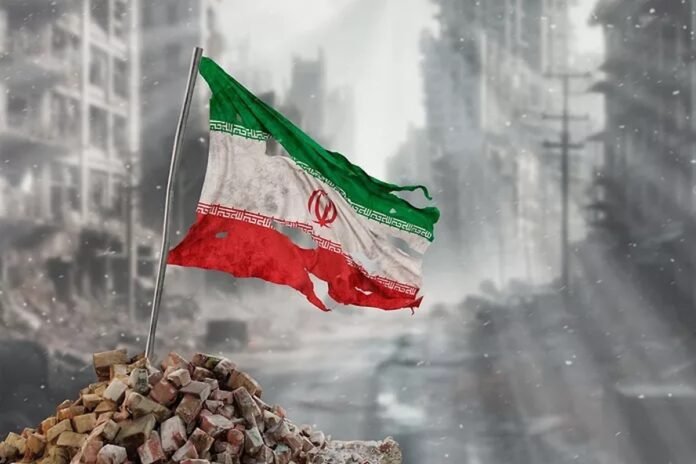
It will leave Iran in a stronger position than before the war, the US with far less leverage in the region, and Israel in the lurch. The deal will also prompt the Arab states in the Persian Gulf to reassess their security alliances with the US and come to terms with Iran as an influential regional player.
Few apparent points of agreement
Iranian and US sources have provided different versions of the deal.
Both sides seem to have agreed to allow traffic to resume in the Strait of Hormuz and lift the US naval blockade of Iran’s ports. Negotiations will also continue over the next 60 days on Iran’s nuclear program.
Beyond this, the two sides appear to be far apart on other issues.
According to Iranian media, the deal would halt the fighting on all fronts, including Israel’s bombing of Lebanon, and reopen the Strait of Hormuz within 30 days “under Iranian arrangements.”
It also calls for the release of US$24 billion in frozen Iranian assets during the 60-day negotiations, and obliges the US and its allies to deliver reconstruction plans for Iran worth at least $300 billion.
According to the US media outlet Axios, however, the deal calls for the strait to be reopened immediately without tolls. A US official told Axios that after reopening the strait, Iran would be given “temporary sanctions waivers” to allow it to sell oil.
Many contentious issues related to Iran’s nuclear program remain to be resolved, as well. These include the future of Iran’s stockpile of highly enriched uranium and whether Iran should be allowed to enrich uranium at an agreed level for peaceful purposes.
An end to a meaningless war
When Trump and Netanyahu launched the war, they aimed to topple Iran’s government, destroy its nuclear program and missile capability, and sever its ties with its regional affiliates – the Lebanese Hezbollah, the Yemeni Houthis, the Iraqi Shia militias, and Palestinian Hamas and Islamic Jihad.
The overall goal was to alter the regional order to the advantage of the US and Israel. This would allow Netanyahu to achieve his long-cherished objective of turning Iran into a feeble entity and pursue his vision of a “Greater Israel” in the strategically vital and oil-rich Middle East.
However, despite its authoritarian nature and all the domestic and foreign policy challenges confronting it, the Iranian Islamic system has shown it is built to survive. It has endured the decapitation of its leadership, the massive US-Israel military bombardment and subsequent US blockade of Iranian ports.
Iran has certainly sustained heavy damage to its infrastructure and economy – as well as civilian casualties. But the regime was able to respond in ways that has proved very costly for the US, its regional Gulf Arab allies, and Israel.
Its control over the Strait of Hormuz, which Tehran never had before the war, has triggered a global energy and fertiliser crisis and provided Tehran with massive leverage.
Trump, meanwhile, was dealing with increasing domestic opposition to the war, combined with diminishing air defense interceptors and a lack of support among traditional US allies. Given all this, Trump has had good reasons not to allow the conflict to go on for too long, especially in an election year.
The deal must be very disheartening for Netanyahu, whose determination to fundamentally weaken Iran is potentially unravelling.
He may still try to undermine the peace deal by continuing strikes on Lebanon and perhaps formally annexing Gaza and the West Bank. But given Netanyahu’s dependence on the US for his military operations and political survival, Trump has plenty of leverage to force him and the far-right ministers in his cabinet into line.
If and when a final peace deal is signed, it carries the potential to open the way for some kind of rapprochement between Iran and the US as a prerequisite for a more stable and peaceful Middle East. But it is not time yet for excessive jubilation.
Both sides have been here before. They had been negotiating a deal on Iran’s nuclear program for months before the US and Israel attacked Iran. According to Omani mediators, a deal was “within reach” when the bombs started falling.
This means any ceasefire reached now could be very fragile. It also raises the question of what this war – waged with no concern for international law or US Congressional approval – was all about in the first place.
Netanyahu Rejects Lebanon Provision in Iran Agreement, Says IDF Will Remain
Prime Minister Benjamin Netanyahu told President Donald Trump that Israel will not withdraw from Lebanon and does not consider itself bound by provisions related to Lebanon in the emerging agreement with Iran, Israeli sources said.
Netanyahu informed Trump that Israeli forces would remain deployed in their current positions in Lebanon and continue operations against Hezbollah threats, including the destruction of terrorist infrastructure and military responses to attacks targeting Israel, the sources said.
Israeli cabinet ministers were said to support the position, with the understanding that Israel would continue pursuing its security interests in Lebanon. Netanyahu received full backing for that approach during a cabinet meeting, according to Israeli sources.
Defense Minister Israel Katz reinforced the position, saying, “Prime Minister Netanyahu and I are leading a clear policy that establishes that the IDF will remain in the security zones in Lebanon, Syria and Gaza – indefinitely to protect the border and Israeli communities from jihadist elements.”
Katz added, “We oppose the IDF’s withdrawal from Lebanon, despite all the existing pressures and those that will come.”
He said both Netanyahu and Israeli officials had conveyed that message to Washington. Katz stated that Netanyahu raised the issue with Trump and other U.S. officials, while he personally discussed it with U.S. Secretary of Defense Pete Hegseth.
Israel’s position differs from statements made by Pakistan Prime Minister Shebaz Sharif, who said the parties had “declared the immediate and permanent termination of military operations on all fronts, including in Lebanon.” Iran’s Deputy Minister of Foreign Affairs Kazam Gharibabadi also called for a “permanent and immediate end to the war on all fronts, including Lebanon.”
Meanwhile, Trump publicly criticized Israeli strikes conducted Sunday against Hezbollah targets in Dahieh, near Beirut, after Iran threatened to abandon the ceasefire and retaliate.
Axios reported that Trump told Netanyahu he had “no f—ing judgment.”
Speaking to Fox News, Trump said: “A deal will be signed within two or three hours. I told Netanyahu— what the hell are you doing?”
In a post on Truth Social, Trump wrote that the strike “should not have happened, particularly on a special day when we are so close to a Peace Deal with Iran.”
Plane Suddenly Crashes in Missouri Killing All Onboard
Twelve people were killed Sunday after a plane packed with skydivers crashed near Kansas City in a horrifying midair disaster.
Eleven skydivers and the pilot all died after the private aircraft went down in Missouri shortly after taking off from Butler Memorial Airport around 11:30 a.m. local time.
The plane reportedly made a sudden turn for unknown reasons near Business 49 Highway before crashing moments later, leaving behind smoking wreckage in a grassy field as emergency crews rushed to the scene.
Everyone on board was killed.
Officials have not yet said what caused the aircraft to turn back or whether any of the skydivers were able to jump from the doomed plane before it plunged to the ground.
The devastating crash triggered a major emergency response, with the Federal Aviation Administration and the National Transportation Safety Board sending investigators to the scene.
Business 49 Highway was shut down near the airport as crews worked to secure the wreckage and begin the grim task of figuring out what went wrong.
The Bates County Sheriff’s Office said all lanes were closed while authorities handled the crash site.
The tragedy has left the local skydiving community shaken as investigators search for answers in one of the deadliest small-plane crashes in the region in recent memory.
Ex-Israeli premier urges removal of Netanyahu ‘with sticks, stones’ if elections are sabotaged
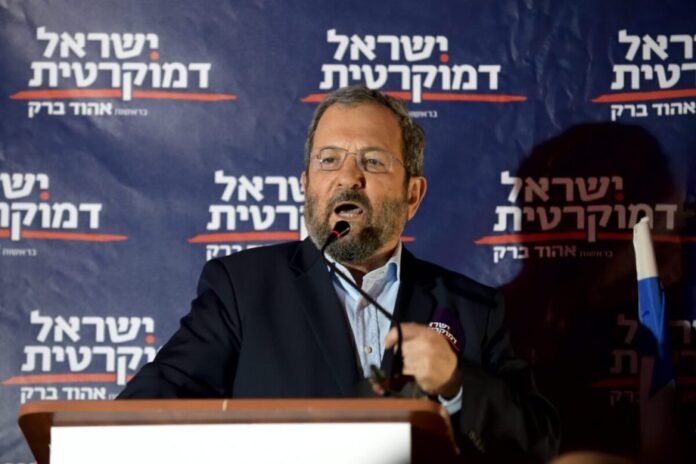
Former Israeli Prime Minister Ehud Barak on Sunday called for Prime Minister Benjamin Netanyahu to be removed “with sticks and stones” if he attempts to undermine the upcoming general election, Anadolu reports.
Barak, who served as Israel’s prime minister from 1999 to 2001, made the remarks in an interview with Israel’s public broadcaster KAN.
“I fear Netanyahu may try to sabotage the elections, and he can do it very easily,” Barak said. “If he tries, we will have no choice but to remove him with sticks and stones.”
Netanyahu, 76, has led the current government since late December 2022. His coalition has been widely described as the most right-wing since Israel was established on Palestinian territories in 1948.
The Knesset’s current term expires in October 2026, with elections expected to be held in September or October.
Barak argued that Netanyahu “could sabotage the elections by launching operations in Lebanon that would provoke retaliation from Hezbollah and Iran.
“Netanyahu wants an endless war because he understands that ending it would accelerate his trial,” Barak said. “Just as he obstructed some prisoner-exchange deals (with Hamas), he also blocked the possibility of progress in Lebanon.”
READ: Netanyahu’s Likud drops to lowest level since August 2025, poll shows
Netanyahu is currently standing trial in Israel on corruption charges and is also wanted by the International Criminal Court (ICC) since 2024 on allegations of war crimes and crimes against humanity in Gaza.
Barak also criticized the emerging agreement between the US and Iran. “In one word: bad. In two words: very bad,” he said.
He warned that “Israel is paying the price for Netanyahu’s arrogance and lack of foresight,” adding that the arrangement under discussion was “not an agreement, but a memorandum of understanding that failed to address either missiles or Iran’s regional allies.”
Barak argued that “none of the objectives of the war against Iran have been achieved.”
The remarks drew immediate criticism from Netanyahu’s allies.
Boaz Bismuth, a Likud lawmaker and chairman of the Knesset Foreign Affairs and Defense Committee, called for a criminal investigation into Barak for what he described as legitimizing violence against the prime minister.
“He should be sent to a psychiatrist, and if he is found mentally fit, a criminal investigation should be opened against him immediately,” Bismuth said in a post on US social media company X.
While US President Donald Trump said an agreement with Iran that would open the Strait of Hormuz would be signed on Sunday, Tehran has disputed the timeline and says the signing could happen in the coming days.
Since the April 8 ceasefire mediated by Pakistan, efforts aimed at ending the war launched by the US and Israel against Iran on Feb. 28 have continued.
READ: Iran threatens to halt US negotiations if Israeli attacks continue in Lebanon
Syria’s Break With Hezbollah Opens New Questions After Trump Remarks
Damascus’ shift away from its old alliance with Tehran and Hezbollah could reshape border security, smuggling routes, and the group’s freedom of movement
[DAMASCUS] US President Donald Trump’s recent remarks suggesting that Syria could play a role in efforts against Hezbollah in Lebanon have sparked widespread debate—not only because of what he said, but because of what his comments reveal about the dramatic shifts in regional alliances since the fall of former Syrian President Bashar Assad’s government in late 2024.
Speaking on June 8 about developments in Lebanon to NBCs Meet the Press, President Trump suggested that Syria could help facilitate “more surgical” strikes against Hezbollah. He also praised Syrian President Ahmed al-Sharaa, saying he had succeeded in restoring a degree of stability to Syria after years of war and turmoil.
The US president indicated that Washington could either assist directly or “recommend Syria” as part of efforts to address Hezbollah’s role in Lebanon, a statement that immediately fueled speculation about the nature of Damascus’ potential role in any future confrontation with the Iran-backed group.
The remarks opened a broader discussion about Syria’s place in the region’s changing political landscape. For decades, Syria served as Hezbollah’s most important Arab ally, providing the geographic, political, and military depth that helped the group expand its regional influence.
President Trump’s comments were followed by a brief response from al-Sharaa, who dismissed reports suggesting that Syrian forces could enter Lebanon, describing such claims as “completely untrue.” While his statement set clear limits on speculation about direct military involvement, it did not explicitly address issues such as border control, anti-smuggling operations, or other forms of possible security cooperation.
To understand the significance of the American president’s remarks, it helps to revisit the relationship that linked Syria and Hezbollah for decades.
Damascus played a central role in supporting Hezbollah from its initial emergence in the 1980s. During Syria’s military presence in Lebanon, the relationship was built on shared interests in confronting Israel and maintaining a strategic partnership with Iran.
The alliance deepened significantly after the outbreak of the Syrian civil war in 2011. Hezbollah intervened militarily on behalf of the Assad government, deploying thousands of fighters to key battlefronts, including Qusayr, Qalamoun, and the Damascus countryside, and helping the regime survive one of the most perilous periods of the conflict.
At the same time, Syrian territory became a critical corridor for Iranian weapons shipments to Lebanon and an essential part of Hezbollah’s military logistics network.
That reality changed dramatically following Assad’s downfall and the emergence of new leadership under al-Sharaa. Unlike its predecessor, the new Syrian government is not part of the regional axis that linked Damascus, Tehran, and Hezbollah. Instead, it inherited a war-ravaged state seeking economic recovery, regional reintegration, and international legitimacy.
Despite the controversy generated by his remarks, President Trump did not call for direct Syrian military action against Hezbollah, nor did he announce any joint US-Israeli-Syrian initiative. Rather, his comments appeared to reflect a broader political and security vision in which the new Syrian leadership could help limit Hezbollah’s influence and operational freedom.
Retired Syrian Air Force Brig. Gen. Mohammad Mansour told The Media Line that such a role could take several forms.
The first would involve tighter control of the Syrian-Lebanese border
“The first would involve tighter control of the Syrian-Lebanese border,” Mansour said, noting that the lengthy and complex frontier has long served as a key route for transporting weapons, equipment, and personnel.
A second possibility, he explained, would be a more aggressive campaign against smuggling networks that expanded during the Syrian war and became part of Hezbollah’s logistical infrastructure.
Mansour added that Syria could also strengthen security measures against networks or structures linked to Hezbollah within Syrian territory, particularly in border areas where the group has maintained a significant presence in recent years.
Many regional observers argue that Hezbollah’s loss of the freedom of movement it once enjoyed in Syria would itself mark a strategic shift, even without any direct confrontation between Damascus and the group.
For Syrian researcher Abdul Rahman Riyad, the key transformation lies in the changing priorities of the Syrian state.
The relationship that once connected Damascus with Tehran and Hezbollah is no longer what it was before 2024
“The relationship that once connected Damascus with Tehran and Hezbollah is no longer what it was before 2024,” Riyad told The Media Line. He argued that Syria’s new leadership is focused primarily on rebuilding state institutions and consolidating regional and international legitimacy, rather than participating in the axis-based conflicts that defined the previous era.
The issue is not about Syria confronting Hezbollah directly
Political analyst Fawaz Dalloul offered a similar assessment. “The issue is not about Syria confronting Hezbollah directly,” he said. “It is about restoring sovereignty over borders and crossings. Any effort aimed at controlling borders, reducing smuggling, or preventing the movement of weapons outside state authority will inevitably affect Hezbollah’s logistical capabilities, even if it is not specifically directed against the group.”
From Lebanon, political activist and journalist Fatima Othman offered a different perspective. According to Othman, Hezbollah’s future remains tied primarily to Lebanon’s internal balance of power and the Lebanese state’s ability to extend its authority throughout the country. “At the same time,” she noted, “any change in the regional environment surrounding Hezbollah—especially on the Syrian front—will inevitably affect the operational space the group has enjoyed for decades.”
Despite these differences in emphasis, all three perspectives converge on one central point: the most significant shift is not the possibility of Syria entering a military confrontation with Hezbollah, but the fact that Damascus no longer serves as the unrestricted strategic depth upon which the group has long depended.
The Syrian leadership faces enormous economic and domestic challenges while simultaneously seeking international recognition, foreign investment, and support for reconstruction efforts. In that context, Damascus appears increasingly interested in presenting itself as a sovereign state capable of exercising authority over its entire territory and preventing armed groups from operating beyond government control.
The new administration has also benefited from growing Arab and international engagement, as well as a series of US measures in 2025 that first eased and then lifted a range of sanctions imposed during the Assad era.
As a result, many analysts believe that Syria’s current interests differ fundamentally from those of the previous government. Stability, economic recovery, and state-building have become more pressing priorities than participation in regional power struggles.
Does this mean an alliance with Israel? At least for now, the answer appears to be no. There are no official indications of a Syrian-Israeli alliance or publicly acknowledged military cooperation against Hezbollah in available reporting. Syrian leaders are also aware that any overt rapprochement with Israel would generate significant domestic and regional backlash while providing ammunition to political opponents.
This helps explain al-Sharaa’s firm rejection of reports suggesting that Syrian forces could enter Lebanon. Yet Damascus’ insistence on asserting sovereignty over its territory could still produce outcomes unfavorable to Hezbollah, particularly if it includes tighter monitoring of unofficial border crossings and expanded efforts against smuggling networks.
President Trump’s remarks—and Syria’s response—highlight the scale of the transformations that have reshaped the Middle East over the past two years. A country once considered Hezbollah’s closest Arab ally is now being discussed as a potential factor in limiting the group’s influence.
While Damascus continues to reject any suggestion of direct military involvement in Lebanon, changes in Syria’s political structure and strategic priorities appear to have fundamentally altered its relationship with Hezbollah.
Ultimately, the key question may not be whether Syria will participate in a war against Hezbollah, but whether it will prevent the group from benefiting from the strategic advantages that Syrian territory provided for decades. If that happens, the consequences for Hezbollah’s future could prove more significant than any direct military confrontation.
Meghan Markle Left Kate Middleton Speechless with ‘One-Word Joke’
Meghan Markle’s awkward royal balcony moment with Kate Middleton is back in the spotlight after Prince Harry claimed one tiny joke brought the mood to a screeching halt.
The Duchess of Sussex made her first appearance at Trooping the Colour in June 2018, just weeks after marrying Harry in a lavish royal wedding watched around the world. But according to Harry, what should have been a happy family moment quickly turned painfully uncomfortable.
In his memoir Spare, Harry recalled that he and Meghan had returned from their Mediterranean honeymoon “just in time” for the official celebration of Queen Elizabeth II’s birthday.
At first, he said, everyone seemed cheerful.
“Everyone present was in a good mood, upbeat,” Harry wrote.
Then Kate Middleton turned to Meghan and asked what she thought of her first Trooping the Colour.
Meghan’s answer was just one word.
“Colourful,” she joked.
According to Harry, the response was met with a silence so brutal it nearly swallowed the balcony whole.
“And a yawning silence threatened to swallow us all whole,” he wrote.
Harry did not explain exactly why the joke landed so badly, but the moment has since become another symbol of the icy tension that reportedly grew between the Sussexes and the Waleses behind palace doors.
Just days later, Meghan joined Queen Elizabeth II for her first royal trip with the monarch. Harry claimed the two women “got on famously,” suggesting Meghan was able to charm the queen even as things with William and Kate remained strained.
But behind the scenes, the so-called “Fab Four” were already cracking.
Later that month, Harry said he, Meghan, William and Kate sat down in an attempt to clear the air. Instead, the meeting reportedly turned into a tense list of grievances.
Harry claimed Kate was upset over the now-infamous bridesmaid dress drama before the Sussex wedding. He also wrote that William and Kate were annoyed Harry and Meghan had not given them Easter gifts.
Another sore spot involved Meghan allegedly telling Kate she had “baby brain” while the princess was pregnant. Kate reportedly told Meghan she owed her an apology for talking about her hormones.
Harry and Meghan, meanwhile, were reportedly irritated that William and Kate had switched seats at their wedding.
“None of this airing of grievances was doing any good,” Harry wrote. “We weren’t getting anywhere.”
Harry and Meghan last took part in Trooping the Colour in 2019, before stepping back from royal duties and leaving Britain in early 2020.
They returned during Queen Elizabeth II’s Platinum Jubilee in 2022, but watched the parade from a side window of Buckingham Palace instead of appearing on the famous balcony with senior royals.
On Saturday, June 13, 2026, the royal family gathered once again for Trooping the Colour in London. King Charles III, Queen Camilla, Prince William, Kate Middleton and their three children, Prince George, Princess Charlotte and Prince Louis, all took part in the annual parade.
Harry and Meghan were not invited.
While the royal family carried on the tradition in London, Harry remained stateside and appeared remotely at an Invictus event in Germany.
The Duke of Sussex spoke by video for the opening day of the Invictus Germany Sports Festival in Düsseldorf, tied to the wounded service member and veteran competition he founded in 2014.
Harry told competitors it was an “honor” to send his message as they gathered for another Invictus sporting event.
“Germany is setting a powerful example of what it means to honor service with dignity and enduring commitment,” he said.
But back in Britain, the balcony looked very different from the one Meghan stood on in 2018.
And years later, Harry’s account of that one-word joke still paints a picture of a royal family already struggling to hide the chill.
These Vegan Tofu Donuts are light, fluffy, chewy, and surprisingly easy to make with just a few simple ingredients. Made with silken tofu, flour, sugar, maple syrup, and baking powder, these little donut holes are crispy on the outside and soft on the inside.
They are completely egg-free, dairy-free, and vegan, but still taste sweet, tender, and satisfying. The silken tofu adds moisture and helps create that soft, springy texture without needing butter, milk, or eggs.
Serve them warm with cinnamon sugar, cacao sugar, or kinako sugar for a simple homemade dessert or snack.
Why You’ll Love These Tofu Donuts
These vegan donut holes are quick, easy, and fun to make.
You’ll love this recipe because it is:
Vegan and dairy-free
Made without eggs or butter
Ready in about 15 minutes
Crispy outside and chewy inside
Made with only a few ingredients
Perfect for snacks or dessert
Easy to coat with different toppings
Great for tofu beginners
What Are Tofu Donuts?
Tofu donuts are soft fried donut holes made with silken tofu. The tofu adds moisture to the dough and helps create a fluffy, chewy texture.
You do not need to press the tofu for this recipe. The moisture in the tofu is part of what brings the dough together.
The dough is shaped with spoons, fried until golden, and rolled in sugar while warm.
Silken tofu makes the donuts soft, moist, and chewy. There is no need to press it because the moisture helps form the dough.
Sugar
Sugar adds sweetness to the dough and helps the donuts brown as they fry.
Maple Syrup
Maple syrup adds a little extra sweetness and flavor.
Flour
All-purpose flour gives the donuts structure. Add it gradually and mix until a thick dough forms.
Baking Powder
Baking powder helps the donuts puff up and become light.
Oil
Use a neutral oil for frying, such as vegetable oil, canola oil, or sunflower oil.
How to Make Vegan Tofu Donuts
Step 1: Mash the Tofu
Add the silken tofu to a mixing bowl.
Whisk until smooth and creamy.
Step 2: Add Sweeteners
Add the sugar and maple syrup.
Whisk again until fully combined.
Step 3: Add Dry Ingredients
Add the flour and baking powder.
Mix until a thick, smooth dough forms.
The dough will be sticky, and that is normal.
Step 4: Heat the Oil
Heat vegetable oil in a frying pan over medium heat.
The oil should be around 320°F–350°F.
Step 5: Shape the Donuts
Use two spoons to scoop and shape small balls of dough.
Carefully drop the dough into the hot oil.
Step 6: Fry
Fry the donuts for 2–3 minutes, turning occasionally, until golden brown on all sides.
Work in batches so the pan does not get overcrowded.
Step 7: Drain
Transfer the cooked donut holes to a wire rack or paper towel-lined plate.
Let them cool slightly.
Step 8: Coat with Sugar
Mix sugar with cinnamon, cacao powder, or kinako.
While the donuts are still warm, roll them in the sugar mixture until coated.
Serve warm.
Sugar Coating Ideas
Cinnamon Sugar
A classic sweet coating with warm flavor.
Cacao Sugar
A chocolatey coating with a slightly rich and bittersweet taste.
Kinako Sugar
A Japanese-style coating made with roasted soybean flour. It has a mild, nutty flavor.
Plain Sugar
Simple, sweet, and perfect for a quick finish.
Tips for the Best Tofu Donuts
Do not press the tofu.
Whisk the tofu until smooth before adding the other ingredients.
Use two spoons to shape the sticky dough.
Keep the oil between 320°F and 350°F.
Do not make the donut holes too large, or the inside may not cook properly.
Fry in small batches.
Coat the donuts while they are still warm.
Eat them fresh for the best texture.
Easy Variations
Matcha Tofu Donuts
Add 1 teaspoon matcha powder to the sugar coating.
Chocolate Tofu Donuts
Add cacao powder to the coating or drizzle with melted vegan chocolate.
Vanilla Tofu Donuts
Add ½ teaspoon vanilla extract to the dough.
Lemon Sugar Donuts
Mix sugar with a little lemon zest for a fresh flavor.
Powdered Sugar Donuts
Dust the cooled donuts with powdered sugar.
What to Serve with Tofu Donuts
These donuts are delicious as a snack, dessert, or tea-time treat.
Serve them with:
Hot coffee
Matcha latte
Green tea
Iced coffee
Vegan hot chocolate
Fresh fruit
Vegan whipped cream
Chocolate sauce
Maple syrup
Strawberry jam
Storage Instructions
These tofu donuts taste best the day they are made.
Store leftovers in an airtight container at room temperature for 1 day.
For longer storage, refrigerate for up to 3 days.
Reheating Tips
Reheat tofu donuts in a toaster oven, air fryer, or oven until warm.
This helps bring back some of the crisp texture.
Avoid microwaving if you want the outside to stay crisp.
Frequently Asked Questions
Do I need to press the tofu?
No. This recipe uses silken tofu’s moisture to form the dough.
Can I use firm tofu?
Silken tofu works best. Firm tofu will not blend as smoothly and may create a different texture.
Why is my dough sticky?
The dough is supposed to be sticky. Use two spoons instead of your hands to shape it.
Why are my donuts browning too fast?
The oil may be too hot. Keep the oil around 320°F–350°F so the inside cooks before the outside burns.
Can I bake these donuts?
This recipe is designed for frying. Baking will give a different texture and may not be as fluffy or crisp.
Can I make them ahead?
They are best fresh, but you can store them for up to 3 days and reheat before serving.
Recipe Card
Vegan Tofu Donuts
Light and fluffy vegan tofu donut holes made with silken tofu, sugar, maple syrup, flour, and baking powder. Crispy outside, chewy inside, and perfect with cinnamon sugar.
Prep Time: 5 minutes Cook Time: 10 minutes Total Time: 15 minutes Servings: About 20 pieces
Ingredients
Donuts
½ block silken tofu, about 7 ounces
3 tablespoons sugar
1 ½ tablespoons maple syrup
1 cup plus 3 tablespoons all-purpose flour
2 teaspoons baking powder
Vegetable oil, for frying
Sugar Coating
1 tablespoon sugar
½ teaspoon cinnamon, cacao powder, or kinako
Instructions
Add silken tofu to a mixing bowl and whisk until creamy.
Add sugar and maple syrup. Whisk until smooth.
Add flour and baking powder.
Mix until a thick dough forms.
Heat vegetable oil in a frying pan over medium heat.
Use two spoons to shape small balls of dough.
Carefully drop the dough balls into the hot oil.
Fry for 2–3 minutes, turning occasionally, until golden brown.
Transfer to a wire rack or paper towel-lined plate.
Mix sugar with cinnamon, cacao powder, or kinako.
Roll warm donuts in the sugar coating.
Serve and enjoy.
Notes
Do not press the tofu.
The dough will be sticky, so shape it with spoons.
Keep the oil temperature between 320°F and 350°F.
Make the donut holes small so they cook evenly.
Store leftovers in an airtight container for 1 day or refrigerate for up to 3 days.
Nutrition Estimate
Per donut hole:
Calories: 65
Carbohydrates: 10g
Protein: 2g
Fat: 2g
Sugar: 3g
Nutrition values are approximate and may vary depending on oil absorption and coating.
Final Thoughts
These Vegan Tofu Donuts are simple, soft, chewy, and delicious. The silken tofu keeps them moist and tender, while frying gives them a golden, crispy outside.
They are quick enough for a sweet snack, fun enough for sharing, and easy to customize with your favorite sugar coating.