14.6 C
London
Monday, June 15, 2026
Home Blog

Vegan Tofu Donuts

0
vegan-tofu-donuts
Vegan Tofu Donuts

These Vegan Tofu Donuts are light, fluffy, chewy, and surprisingly easy to make with just a few simple ingredients. Made with silken tofu, flour, sugar, maple syrup, and baking powder, these little donut holes are crispy on the outside and soft on the inside.

They are completely egg-free, dairy-free, and vegan, but still taste sweet, tender, and satisfying. The silken tofu adds moisture and helps create that soft, springy texture without needing butter, milk, or eggs.

Serve them warm with cinnamon sugar, cacao sugar, or kinako sugar for a simple homemade dessert or snack.

Why You’ll Love These Tofu Donuts

These vegan donut holes are quick, easy, and fun to make.

You’ll love this recipe because it is:

  • Vegan and dairy-free
  • Made without eggs or butter
  • Ready in about 15 minutes
  • Crispy outside and chewy inside
  • Made with only a few ingredients
  • Perfect for snacks or dessert
  • Easy to coat with different toppings
  • Great for tofu beginners

What Are Tofu Donuts?

Tofu donuts are soft fried donut holes made with silken tofu. The tofu adds moisture to the dough and helps create a fluffy, chewy texture.

You do not need to press the tofu for this recipe. The moisture in the tofu is part of what brings the dough together.

The dough is shaped with spoons, fried until golden, and rolled in sugar while warm.

Recipe Summary

Prep Time: 5 minutes
Cook Time: 10 minutes
Total Time: 15 minutes
Servings: About 20 donut holes
Course: Dessert, Snack
Cuisine: Japanese-Inspired / Vegan

Ingredients

For the Donuts

  • ½ block silken tofu, about 7 ounces
  • 3 tablespoons sugar
  • 1 ½ tablespoons maple syrup
  • 1 cup plus 3 tablespoons all-purpose flour
  • 2 teaspoons baking powder
  • Vegetable oil, for frying

For the Sugar Coating

  • 1 tablespoon sugar
  • ½ teaspoon cinnamon, cacao powder, or kinako

Ingredient Notes

Silken Tofu

Silken tofu makes the donuts soft, moist, and chewy. There is no need to press it because the moisture helps form the dough.

Sugar

Sugar adds sweetness to the dough and helps the donuts brown as they fry.

Maple Syrup

Maple syrup adds a little extra sweetness and flavor.

Flour

All-purpose flour gives the donuts structure. Add it gradually and mix until a thick dough forms.

Baking Powder

Baking powder helps the donuts puff up and become light.

Oil

Use a neutral oil for frying, such as vegetable oil, canola oil, or sunflower oil.

How to Make Vegan Tofu Donuts

Step 1: Mash the Tofu

Add the silken tofu to a mixing bowl.

Whisk until smooth and creamy.

Step 2: Add Sweeteners

Add the sugar and maple syrup.

Whisk again until fully combined.

Step 3: Add Dry Ingredients

Add the flour and baking powder.

Mix until a thick, smooth dough forms.

The dough will be sticky, and that is normal.

Step 4: Heat the Oil

Heat vegetable oil in a frying pan over medium heat.

The oil should be around 320°F–350°F.

Step 5: Shape the Donuts

Use two spoons to scoop and shape small balls of dough.

Carefully drop the dough into the hot oil.

Step 6: Fry

Fry the donuts for 2–3 minutes, turning occasionally, until golden brown on all sides.

Work in batches so the pan does not get overcrowded.

Step 7: Drain

Transfer the cooked donut holes to a wire rack or paper towel-lined plate.

Let them cool slightly.

Step 8: Coat with Sugar

Mix sugar with cinnamon, cacao powder, or kinako.

While the donuts are still warm, roll them in the sugar mixture until coated.

Serve warm.

Sugar Coating Ideas

Cinnamon Sugar

A classic sweet coating with warm flavor.

Cacao Sugar

A chocolatey coating with a slightly rich and bittersweet taste.

Kinako Sugar

A Japanese-style coating made with roasted soybean flour. It has a mild, nutty flavor.

Plain Sugar

Simple, sweet, and perfect for a quick finish.

Tips for the Best Tofu Donuts

Do not press the tofu.

Whisk the tofu until smooth before adding the other ingredients.

Use two spoons to shape the sticky dough.

Keep the oil between 320°F and 350°F.

Do not make the donut holes too large, or the inside may not cook properly.

Fry in small batches.

Coat the donuts while they are still warm.

Eat them fresh for the best texture.

Easy Variations

Matcha Tofu Donuts

Add 1 teaspoon matcha powder to the sugar coating.

Chocolate Tofu Donuts

Add cacao powder to the coating or drizzle with melted vegan chocolate.

Vanilla Tofu Donuts

Add ½ teaspoon vanilla extract to the dough.

Lemon Sugar Donuts

Mix sugar with a little lemon zest for a fresh flavor.

Powdered Sugar Donuts

Dust the cooled donuts with powdered sugar.

What to Serve with Tofu Donuts

These donuts are delicious as a snack, dessert, or tea-time treat.

Serve them with:

  • Hot coffee
  • Matcha latte
  • Green tea
  • Iced coffee
  • Vegan hot chocolate
  • Fresh fruit
  • Vegan whipped cream
  • Chocolate sauce
  • Maple syrup
  • Strawberry jam

Storage Instructions

These tofu donuts taste best the day they are made.

Store leftovers in an airtight container at room temperature for 1 day.

For longer storage, refrigerate for up to 3 days.

Reheating Tips

Reheat tofu donuts in a toaster oven, air fryer, or oven until warm.

This helps bring back some of the crisp texture.

Avoid microwaving if you want the outside to stay crisp.

Frequently Asked Questions

Do I need to press the tofu?

No. This recipe uses silken tofu’s moisture to form the dough.

Can I use firm tofu?

Silken tofu works best. Firm tofu will not blend as smoothly and may create a different texture.

Why is my dough sticky?

The dough is supposed to be sticky. Use two spoons instead of your hands to shape it.

Why are my donuts browning too fast?

The oil may be too hot. Keep the oil around 320°F–350°F so the inside cooks before the outside burns.

Can I bake these donuts?

This recipe is designed for frying. Baking will give a different texture and may not be as fluffy or crisp.

Can I make them ahead?

They are best fresh, but you can store them for up to 3 days and reheat before serving.

Recipe Card

Vegan Tofu Donuts

Light and fluffy vegan tofu donut holes made with silken tofu, sugar, maple syrup, flour, and baking powder. Crispy outside, chewy inside, and perfect with cinnamon sugar.

Prep Time: 5 minutes
Cook Time: 10 minutes
Total Time: 15 minutes
Servings: About 20 pieces

Ingredients

Donuts

  • ½ block silken tofu, about 7 ounces
  • 3 tablespoons sugar
  • 1 ½ tablespoons maple syrup
  • 1 cup plus 3 tablespoons all-purpose flour
  • 2 teaspoons baking powder
  • Vegetable oil, for frying

Sugar Coating

  • 1 tablespoon sugar
  • ½ teaspoon cinnamon, cacao powder, or kinako

Instructions

  1. Add silken tofu to a mixing bowl and whisk until creamy.
  2. Add sugar and maple syrup. Whisk until smooth.
  3. Add flour and baking powder.
  4. Mix until a thick dough forms.
  5. Heat vegetable oil in a frying pan over medium heat.
  6. Use two spoons to shape small balls of dough.
  7. Carefully drop the dough balls into the hot oil.
  8. Fry for 2–3 minutes, turning occasionally, until golden brown.
  9. Transfer to a wire rack or paper towel-lined plate.
  10. Mix sugar with cinnamon, cacao powder, or kinako.
  11. Roll warm donuts in the sugar coating.
  12. Serve and enjoy.

Notes

Do not press the tofu.

The dough will be sticky, so shape it with spoons.

Keep the oil temperature between 320°F and 350°F.

Make the donut holes small so they cook evenly.

Store leftovers in an airtight container for 1 day or refrigerate for up to 3 days.

Nutrition Estimate

Per donut hole:

  • Calories: 65
  • Carbohydrates: 10g
  • Protein: 2g
  • Fat: 2g
  • Sugar: 3g

Nutrition values are approximate and may vary depending on oil absorption and coating.

Final Thoughts

These Vegan Tofu Donuts are simple, soft, chewy, and delicious. The silken tofu keeps them moist and tender, while frying gives them a golden, crispy outside.

They are quick enough for a sweet snack, fun enough for sharing, and easy to customize with your favorite sugar coating.

Trump says Israeli strike on Beirut ‘should not have happened’ amid Iran peace talks

0
trump-says-israeli-strike-on-beirut-‘should-not-have-happened’-amid-iran-peace-talks
Trump says Israeli strike on Beirut ‘should not have happened’ amid Iran peace talks

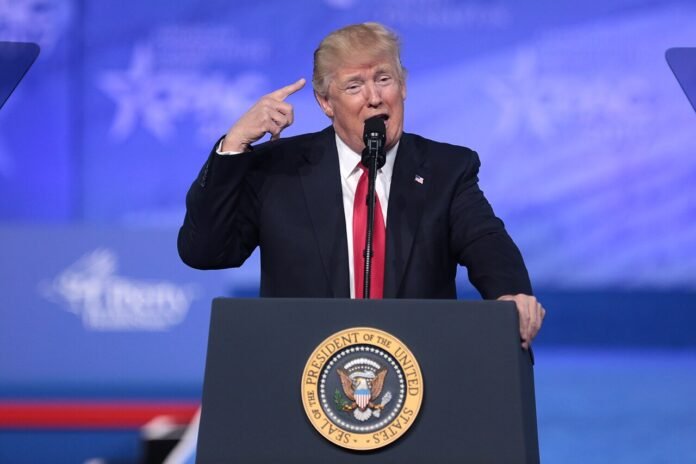
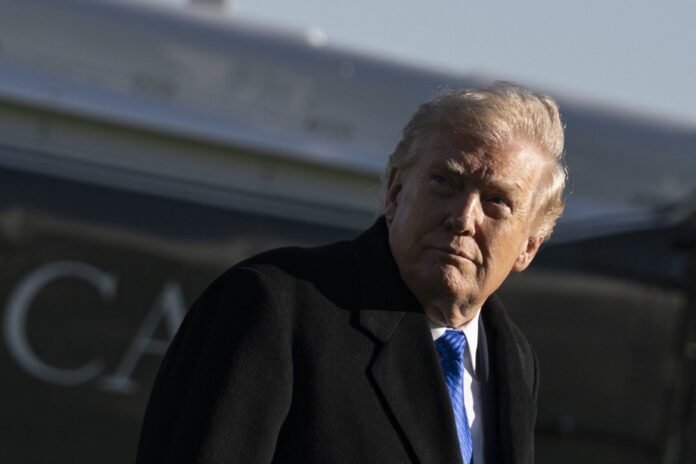
US President Donald Trump on Sunday criticized an Israeli attack on Beirut, asserting that the strike should not have occurred while Washington is on the verge of a peace agreement with Iran, Anadolu reports.

“This morning’s attack on Beirut should not have happened, particularly on a special day when we are so close to a peace deal,” Trump wrote on his social media platform Truth Social.

He argued that the incident Israel was responding to was “small and meaningless,” resulting in no casualties, and urged all parties to “stand down” to avoid disrupting the diplomatic process.

“We are very close to a deal that will bring peace to the region, including to Lebanon,” he said, calling for an immediate halt to all Israeli attacks in Lebanon, as well as a cessation of strikes by Hezbollah.

READ: 3 killed as Israeli army launches airstrikes in Lebanese capital in new ceasefire violation

“This could be the beginning of a long and beautiful peace — Let’s not blow it,” added Trump.

Earlier, Axios, citing Israeli and US officials, claimed Israel had informed US Central Command before the Beirut attack.

Trump on Saturday said that a deal with Iran is scheduled to be signed on Sunday, even as Tehran disputed the timeline. Sources in Tehran told the Fars News Agency that the proposed memorandum of understanding remains “under consideration” and no final decision has been announced.

Meanwhile, Mohammad Bagher Qalibaf, speaker of Iran’s parliament, accused Washington on Sunday of lacking the “will or ability” to meet its obligations, citing continued Israeli strikes in Lebanon.

While Iran has called for ending the war on all fronts including Lebanon, release of its frozen assets and end of the US blockade of its ports; the US is demanding that Tehran halt its nuclear program and fully reopen the Strait of Hormuz.

READ: Iran threatens to halt US negotiations if Israeli attacks continue in Lebanon

Cajun Dirty Spaghetti

0
cajun-dirty-spaghetti
Cajun Dirty Spaghetti
Close-up of Cajun Dirty Spaghetti with Italian sausage, peppers, and creamy Cajun tomato sauce served in a white pasta bowl.
Rich, cozy, and loaded with bold Southern-inspired flavors, this Cajun Dirty Spaghetti makes pasta night extra comforting.

Print Friendly, PDF & Email

Cajun Dirty Spaghetti is the kind of cozy, flavorful dinner that feels like comfort food with a fun Southern twist. Tender spaghetti is tossed with savory sausage, colorful vegetables, tomatoes, and a rich Cajun-inspired sauce that clings beautifully to every bite. A simple packet of onion soup mix adds an unexpected layer of deep, savory flavor that makes this dish taste like it simmered all day.

Although inspired by Louisiana flavors and classic dirty rice, this fusion-style pasta brings something a little different to the table. It’s hearty, satisfying, and perfect for busy weeknights when everyone wants something warm and comforting. Plus, leftovers taste even better the next day, making this recipe one you’ll happily come back to again.


Close-up of Cajun Dirty Spaghetti with Italian sausage, peppers, and creamy Cajun tomato sauce served in a white pasta bowl.
Rich, cozy, and loaded with bold Southern-inspired flavors, this Cajun Dirty Spaghetti makes pasta night extra comforting.

Recipe Yield: 6 servings

INGREDIENTS

12 oz spaghetti
1 lb mild Italian sausage, casings removed
1 cup diced yellow onion
1/2 cup diced celery
1/2 cup diced green bell pepper
1/2 cup diced red bell pepper
3 garlic cloves, minced
2 tbsp unsalted butter
2 tbsp all-purpose flour
1 packet onion soup mix (1 oz)
1 tbsp Cajun seasoning
1/2 tsp smoked paprika
1 can (14.5 oz) petite diced tomatoes, undrained
1 cup low-sodium chicken broth
1/2 cup heavy cream
1/4 tsp black pepper
2 green onions, sliced

Chopped fresh parsley, for garnish (optional)

INSTRUCTIONS

1. Cook the pasta:
Cook the spaghetti according to the package directions until al dente. Reserve 1/2 cup pasta water, then drain and set aside.

2. Brown the sausage:
Meanwhile, heat a large deep skillet over medium heat. Add the sausage and cook for 6 to 8 minutes, breaking it into bite-sized crumbles, until browned. Drain excess grease if needed.

3. Soften the vegetables:
Add the onion, celery, bell peppers, and garlic. Cook for 4 to 5 minutes, stirring occasionally, until softened.

4. Make the Cajun roux:
Push the sausage mixture to one side of the skillet. Add the butter to the empty side and melt it. Sprinkle in the flour and whisk continuously for 1 minute until smooth and lightly golden.

5. Build the sauce:
Stir in the onion soup mix, Cajun seasoning, smoked paprika, diced tomatoes, chicken broth, and black pepper. Mix everything together and bring to a gentle simmer. Cook for 5 minutes to allow the flavors to blend.

6. Add the cream:
Reduce the heat to low and stir in the heavy cream. Simmer gently for 2 to 3 minutes until the sauce is smooth and slightly thickened. Avoid boiling.

7. Toss with the pasta:
Add the cooked spaghetti and toss until evenly coated. If needed, add a splash of the reserved pasta water until the sauce reaches your preferred consistency.

8. Finish and serve:
Sprinkle with green onions and parsley, if desired. Serve warm.


Helpful Tips to Perfect This Recipe

  • Reserve some pasta water. A few tablespoons of starchy pasta water help create a silky sauce and make it easier for the Cajun sauce to coat the spaghetti beautifully.
  • Use Italian sausage for extra flavor. Mild or hot Italian sausage adds richness and pairs wonderfully with the Cajun spices. Ground beef works too, but sausage gives the dish more depth.
  • Don’t overcook the sauce. Once the cream is added, keep the sauce at a gentle simmer. This keeps it smooth and creamy while preventing it from becoming too thick.

Rate This Recipe

Tried this recipe? Your rating helps others and means so much.

Somaliland President Makes First-Ever State Visit to Israel Amid Plans for Jerusalem Embassy

0
somaliland-president-makes-first-ever-state-visit-to-israel-amid-plans-for-jerusalem-embassy
Somaliland President Makes First-Ever State Visit to Israel Amid Plans for Jerusalem Embassy


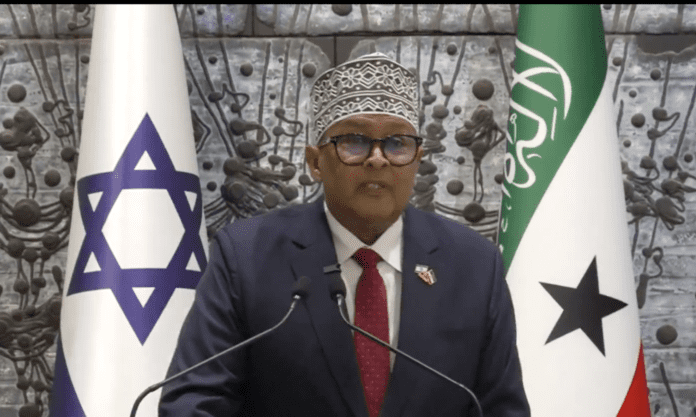
Somaliland President Abdirahman Mohamed Abdullahi arrived in Jerusalem for a state visit focused on strengthening ties with Israel following Israel’s recognition of Somaliland as an independent state, marking the first visit by a Somaliland head of state to Israel.

The visit was confirmed during an official welcoming ceremony with Israeli President Isaac Herzog. It comes after Israel’s Dec. 26, 2025, decision to recognize Somaliland as an independent and sovereign state.

Following the recognition, Somaliland announced plans to establish a formal embassy in Jerusalem, further advancing diplomatic relations between the two governments.

Upon his arrival, Abdullahi reflected on Somaliland’s long campaign for international recognition. “Israel answered first,” Abdullahi wrote, referring to Somaliland’s 35-year effort to secure recognition since declaring independence from Somalia in 1991.

“Today marks a historic milestone in our journey and the beginning of a new chapter in the relationship between Somaliland and Israel,” he added.

Herzog welcomed the Somaliland leader in both English and Somali, writing, “Ku soo dhawow Israel” — welcome to Israel.

During the reception, the two leaders highlighted shared security interests in their respective regions and emphasized the importance of safeguarding maritime freedom. The visit also included the signing of cooperation agreements in agriculture, finance and technology.

Speaking at the ceremony, Herzog said Israel and Somaliland had “acted with courage and realism,” noting that Israel had recognized Somaliland as an independent state after it had existed as a reality on the ground for decades.

Herzog also referenced public celebrations in Somaliland following the announcement of the new relationship.

“The beautiful images of the people of Somaliland waving Israeli flags in celebration of this new relationship warmed all our hearts,” he said.

Abdullahi thanked Israel for its reception of the Somaliland delegation and described the visit as an important step in bilateral relations.

“We are deeply appreciative that the State of Israel has chosen to receive us with such honor,” he said. “The ceremony and hospitality extended to our delegation reflect not only protocol but also a genuine gesture of respect.”

Israel bombs Beirut, allegedly hoping to sabotage US-Iran deal

0
israel-bombs-beirut,-allegedly-hoping-to-sabotage-us-iran-deal
Israel bombs Beirut, allegedly hoping to sabotage US-Iran deal

Donald Trump.

The Israeli military bombed the southern suburbs of Beirut on Sunday just as Iranian and US officials voiced optimism that a diplomatic agreement was in reach, prompting accusations that the government of Prime Minister Benjamin Netanyahu was trying to derail the negotiations.

Israel’s strikes reportedly targeted a five-story apartment building, killing at least three people, according to Lebanese authorities. Netanyahu said the bombing was a response to Hezbollah rocket fire into northern Israel.

The latest bombing of Beirut came hours after US President Donald Trump said he expected a memorandum of understanding (MOU) to be signed as early as Sunday, potentially setting the stage for negotiations to end the illegal war Trump started in late February. Iranian officials have pushed back on the US president’s claim that the MOU will be signed Sunday, but Iran’s foreign minister said Friday that an agreement had “never been closer.”

The Associated Press reported Sunday that Israel’s new strikes on Beirut “threatened to hamper negotiations over a deal, which in its current form is a deep disappointment to Israel’s government.”

“The last time Israel struck the Beirut suburbs a week ago, it set off the most serious escalation of fighting between Iran and Israel since the tenuous ceasefire took hold April 7,” AP added.

Kenneth Roth, former executive director of Human Rights Watch, wrote on social media that “as a US-Iranian deal seems like it might be closer, Israel predictably bombs the Beirut suburbs, evidently hoping to sabotage the deal.”

“Why does Trump put up with this and continue to arm and fund such obstructionism?” Roth asked.

Mohammad Bagher Ghalibaf, Iran’s chief negotiator and speaker of parliament, said Israel’s strikes indicate that the US “either does not have the will or the ability to fulfill its obligations.”

“You cannot gain concessions by giving [Israel] a green light,” he added. “The good cop, bad cop routine has become old. If you do not have the will or the ability to fulfill your commitments, then there is no basis for talking about continuing down this path.”

While the MOU that’s reportedly under consideration has not been released in full, its broad outlines have been reported in media outlets and divulged by Iranian and US officials in recent days. Reuters reported Sunday that “a final draft of the memorandum of understanding with the US covered a range of issues, from Tehran’s nuclear work to reopening the Strait of Hormuz and US waivers on oil sanctions, with a final deal to be discussed in the 60 days following agreement by the two sides.”

Under the MOU, Iran would immediately reopen the Strait of Hormuz and the US would end its illegal blockade of Iranian ports, according to Reuters. The US would also agree to waive oil sanctions on Iran and release $25 billion in frozen Iranian assets, while Iran would agree to “maintain the current status of its nuclear program, refraining from further uranium enrichment ⁠and expansion of nuclear facilities.”

Abbas Araghchi, Iran’s foreign minister, said in a television interview on Friday that the MOU’s proposed 60-day ceasefire extension would include Lebanon.

Axios reported that Netanyahu has “found himself in the dark” as US-Iran negotiations have progressed in recent days, “calling allies close to the Trump administration to try and gather information.”

Following Sunday’s strike on Beirut, Trump told Axios’s Barak Ravid that Netanyahu “has no fucking judgment.”

“I passed this message on to him – that I am very unhappy with the attack in Beirut,” said Trump, whose administration has approved billions of dollars worth of weapons sales to the Israeli government.

Trita Parsi, executive vice president of the Quincy Institute for Responsible Statecraft, warned that “Israel will do more sabotage unless Trump imposes a cost on Israel.”

“Netanyahu knows exactly what he is doing and is judging that an attack on Beirut – rather than southern Lebanon – is exactly what’s needed to derail the pending US-Iran deal,” Parsi argued.

-Common Dreams

Prince Harry ‘Snubbed’ by Star at NBA Finals Game (Video)

0
prince-harry-‘snubbed’-by-star-at-nba-finals-game-(video)
Prince Harry ‘Snubbed’ by Star at NBA Finals Game (Video)


Prince Harry’s NBA night out turned into a royal cringe-fest after Spike Lee appeared to leave him hanging in a brutally awkward courtside exchange.

The Duke of Sussex made a surprise appearance at Game 5 between the New York Knicks and San Antonio Spurs in Texas on June 13, but the biggest drama did not happen on the court.

It happened in the stands.

Video from the game showed Harry greeting another guest at Frost Bank Center when Lee suddenly pointed in his direction, seemingly trying to get the prince’s attention.

Harry quickly turned back, stepped toward the legendary filmmaker and stuck out his hand for a friendly shake.

Then came the painful pause.

Instead of immediately grabbing Harry’s hand, Lee kept pointing and talking, leaving the prince frozen in an uncomfortable moment that looked like a full-on snub.

Harry appeared caught off guard as his handshake hung in the air. In a move that only made the moment look even stranger, he then placed a hand on Lee’s stomach while the two continued talking.

Fans immediately pounced on the clip, with many wondering whether the Hollywood icon had just brushed off the runaway royal in front of the crowd.

But after a few icy seconds, the tension finally melted.

Lee eventually shook Harry’s hand, and the pair appeared to laugh off the weird encounter as they kept chatting courtside.

As Harry walked away, Lee pointed toward himself as if trying to clear something up. Harry pointed back before heading to his seat.

The bizarre exchange may have had a strange royal connection.

Years ago, Harry was revealed to have used a secret Facebook account under the name “Spike Wells” while dating former girlfriend Chelsy Davy.

Lee previously joked about the mystery nickname, saying he once asked Prince William to find out why Harry had used it.

“I asked his brother to find out,” Lee said in 2019. “When I know, you’ll know!”

The nickname reportedly mixed Harry’s childhood moniker with an alias he used during his military days.

Harry’s surprise NBA appearance came without Meghan Markle, who stayed behind in California.

The duke also avoided the hottest celebrity seats, choosing instead to sit several rows back alongside U.S. Army veteran JP Lane, a member of the Invictus Games community.

Other famous faces at the game included Timothee Chalamet and Ben Stiller.

The solo outing came as Harry’s estranged royal relatives were thousands of miles away in London for Trooping the Colour, the annual celebration of the monarch’s official birthday.

Harry and Meghan have not attended the royal spectacle since 2022, after quitting royal duties and moving to Montecito.

The couple have been seen at NBA games before, including Lakers playoff matchups and the NBA All-Star Game, but this time Harry was flying solo — and left to handle one of the most awkward celebrity encounters of the night all by himself.

Want a deal on a heat pump? Team up with your neighbors.

0
want-a deal-on-a heat-pump?-team-up-with-your-neighbors.
Want a deal on a heat pump? Team up with your neighbors.

This story was originally published by Canary Media and is reproduced here as part of the Climate Desk collaboration.

Last year, Marie Tai needed a better way to keep her condo cool. Her window air-conditioning units were borderline ineffective, even running at full blast. Summers have been getting more intense in Tai’s Boston neighborhood because of a rapidly warming climate, and she had just adopted a 16-year-old cat named Mittens, who was still recovering from being hit by a car.

Tai had already been considering a heat pump, an all-electric appliance that heats and cools spaces and lets homeowners ditch polluting fossil fuels. But three contractors had quoted her prices ranging from about $28,000 to $40,000. Tai, who heads finance and administration at Harvard University’s Project Zero, thought those estimates seemed excessive for her 1,000-square-foot, two-bedroom place. So she had hit pause on the project.

But with Mittens’ well-being front of mind, Tai renewed her heat pump search last spring. Through Facebook, she found an opportunity to participate in a program that aggregates demand, organized by Laminar Collective, a local startup that does research on the tech and coordinates installations.

These heat pump group-buy initiatives let installers purchase equipment in bulk and spend less time chasing leads, accruing savings that they can pass on to customers. Tai, tantalized by Laminar’s menu of low prices for a heat-pump setup, decided to give it a shot.

Read Next

After a representative from the startup visited her home to check what heat pump size and configuration would fit her needs, Tai signed up for a ductless minisplit system for $20,000 — thousands less than even her lowest initial quote. She then also took advantage of an additional $8,500 state rebate and eight-year financing with 0 percent interest.

The new equipment has been life-changing, Tai said.

She no longer has to buy fuel oil for heating in the winter, and the heat pump is so efficient that last year she saved roughly $1,300 on her energy bills. In contrast to the old, noisy window ACs, the new system’s wall-mounted, air-filtering indoor units ​“are so quiet,” she said. Her allergy symptoms have improved. And Mittens is comfortable and doing well, she noted. ​“I couldn’t be happier.”

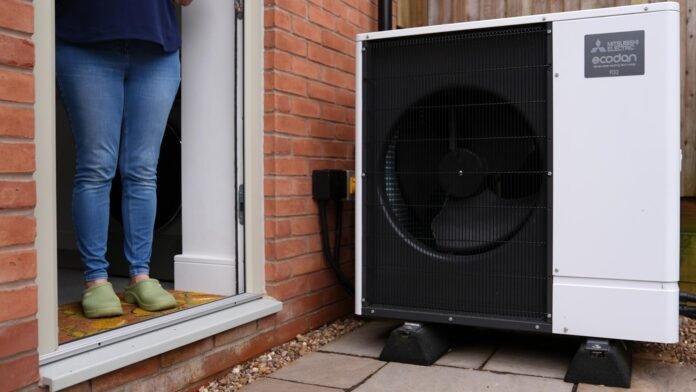
Like Tai, homeowners in communities across the U.S. are signing up for an unusual way of buying heat pumps: together. Companies, nonprofits, and local governments are increasingly offering programs that coordinate consumer demand to secure meaningful discounts of around 10 to 20 percent, which can translate to roughly $3,000 to $6,000 per installation. It’s like a group buying a pack of muffins at Costco rather than each buying a muffin at Starbucks.

The bulk-buy approach is taking off as the Trump administration demolishes electrification incentives. Last year, the Republican-led Congress eliminated a $2,000 federal tax credit for home heat pumps. Late last month, the administration said that it won’t allow home energy-efficiency rebates to be used by people looking to get off gas.

Read Next

While heat pumps reduce pollution and typically cut owners’ energy bills, they can be a pricey proposition up front. Whole-home installations typically range from $17,000 to $30,000, depending on the property size, insulation, climate, and many other factors, according to electrification advocacy nonprofit Rewiring America.

“Even though homeowners often save significantly over time, the first quotes can bring real sticker shock,” said Cole Merrick, founder and CEO of VoltHub, an online heat-pump installation marketplace.

VoltHub and heat-pump general contractor Vayu organized a California group-buy program this spring to serve the counties of Los Angeles and Orange and the greater San Francisco Bay Area. They’re offering another one this summer.

Most heating, ventilation, and air-conditioning replacements are emergencies, and these jobs will continue to make up the majority of Vayu’s business, said founder and CEO Shreyas Sudhakar. But for households that can hold off on getting a heat pump installed, group buys are ideal, he noted.

The process entails a waiting period, which can be several weeks to about six months, as the slots fill up and the installer determines the final pricing. The installer then confirms individual quotes with customers — who can decide not to move forward without penalty — and schedules the work.

Heat pump group buys come in different forms. They can be organized at the grassroots level, offered by a contractor, or run by a third party that aggregates demand over a limited time window. Through a competitive bidding process, the third party vets qualified installers and chooses one or more to carry out the jobs.

Read Next

The collective bargaining approach has succeeded in the past. Nonprofit Solar United Neighbors has led similar group buys for rooftop solar since 2007, helping thousands of households net deals on installations.

Now, the organization is partnering with iChoosr, an international company that helps households electrify, in order to get group deals for heat pumps, too. Using iChoosr’s Switch Together platform, people in select areas can sign up to unlock group discounts for the all-electric appliance, as well as solar and batteries. Since 2023, more than 5,100 U.S. homeowners have gotten their solar panels or batteries via iChoosr, which earns a fee from participating vetted installers for jobs they get through the platform, said Fred Wu, a director of community engagement for the company.

iChoosr was already running successful bulk-purchasing programs for heat pumps in the U.K. and the Netherlands, and launched its first offerings in the U.S. last year with Solar United Neighbors. It opened one program in the Colorado Front Range and another in the Washington, D.C., area in July, closed those lists in September, and finished up the installations — for about 90 households — by the end of the year.

On the heels of that success, iChoosr reran group buys in both regions this spring. More than 1,000 households have signed up expressing interest so far.

This year, the company will also launch new programs in the metro areas of Houston and Dallas, Chicagoland, and northern Arizona around Flagstaff, partnering with nonprofits and local governments at no cost to them, Wu said.

For contractors, these bulk-buy initiatives are a boon.

They cut down on the installers’ sales and marketing costs, thanks to word of mouth and publicity from third parties like iChoosr. Home electrification contractor Elephant Energy, which is working with iChoosr to deploy the Colorado heat-pump installations, saves about $300 per project, said CEO and co-founder DR Richardson. Elephant has also run its own community bulk buys across its California, Colorado, and Massachusetts markets, he noted.

Group-buy initiatives smooth out demand by allowing for planned installations when business naturally slumps. Heating, ventilation, and air-conditioning work is highly seasonal, with most people calling an HVAC technician during the first heat wave or cold snap.

“For a lot of businesses, two months will make up 70 to 80 percent of the revenue for the year,” said Sudhakar from Vayu. ​“So to be able to have some guaranteed revenue that is on the books and [can] fill downtime is really valuable.”

But heat pump group-buying programs aren’t ubiquitous yet. Wu of iChoosr recommends that homeowners who are interested but not in a rush contact city and county leaders to let them know that they’d like to get a bulk deal going in their area.

“We’re continuously trying to expand the program,” Wu said. ​“The first thing we need … is a local government that wants to bring this to their constituents.” These partnerships lend credibility and visibility to the group initiatives, since local governments help promote them.

Tai, in Boston, was grateful to be part of Laminar Collective’s heat-pump bulk buy. It not only helped her save money but also provided her time to get her questions answered without the sales pressure she felt from one-on-one solicitations. ​“It’s empowering,” she said. After she told her neighbor about her experience, they got their heat pump that way, too.


US claims 125 million barrels of oil escorted through Strait of Hormuz

0
us-claims-125-million-barrels-of-oil-escorted-through-strait-of-hormuz
US claims 125 million barrels of oil escorted through Strait of Hormuz

US Defense Secretary Pete Hegseth suggested on Sunday that Washington has maintained control over the Strait of Hormuz, successfully guiding millions of barrels of oil through the strategic waterway despite regional tensions, Anadolu reports.

“Project Freedom never stopped, and we have run 125 million barrels of oil through the straits, and Iran could not do anything about it,” Hegseth told CBS News.

He claimed that not a single Iranian vessel managed to transit the American blockade, asserting that US President Donald Trump’s administration holds “absolute leverage” in ongoing diplomatic negotiations from a position of strength.

READ: Iran threatens to halt US negotiations if Israeli attacks continue in Lebanon

The defense chief warned that the US military posture will remain active to ensure Tehran complies with the memorandum of understanding within the next 60 days. He noted the military has developed plans to ensure nuclear material is “down blended, destroyed, or removed.”

Hegseth said the document on table stipulates that Tehran “will never have a nuclear weapon, won’t seek one, won’t buy one, won’t have one.”

Trump on Saturday said a deal with Iran is scheduled to be signed on Sunday, even as Tehran disputed the timeline.

Sources in Tehran told the Fars News Agency that the proposed deal remains “under consideration” and no final decision has been announced.

OPINION: Trump’s Strategic Mistakes in His War Against Iran

‘Peace or Pause?’ Israel’s Acceptance of Iran Deal Is Reluctant, Conditional, Analyst Tells TML

0
‘peace-or-pause?’-israel’s-acceptance-of-iran-deal-is-reluctant,-conditional,-analyst-tells-tml
‘Peace or Pause?’ Israel’s Acceptance of Iran Deal Is Reluctant, Conditional, Analyst Tells TML


Islamabad-based analysts say the proposed US-Iran memorandum of understanding may lower tensions but leave Israel wary of unresolved nuclear, missile, and regional threats

[ISLAMABAD] A proposed US-Iran memorandum of understanding appeared to face a delay on Sunday, as Iranian officials signaled that Tehran had not yet given final approval despite earlier statements from US President Donald Trump and Pakistani Prime Minister Shehbaz Sharif that a virtual signing ceremony would take place within 24 hours.

The emerging agreement, reportedly mediated by Pakistan and Qatar, is intended to ease regional tensions, advance follow-up nuclear negotiations, and reopen key transit routes. Its timing has become a central question as competing signals from Washington, Islamabad, Tehran, Doha, and Jerusalem shape expectations about whether the deal will move forward.

Iran’s Fars News Agency, citing a source it described as credible, reported Sunday afternoon that Iran had not reached a final decision on the proposed understanding with the United States. The report said political, legal, and technical reviews of the proposal were still underway inside the Iranian system.

According to Fars, the source said the Islamic Republic had consistently maintained that any decision on a potential agreement would be made solely to safeguard national interests, preserve Iran’s red lines, and obtain the necessary guarantees.

Saudi news outlet Al Arabiya reported that the United States and Iran were still expected to sign an agreement during a virtual meeting Sunday. The talks, reportedly mediated by Pakistan and Qatar, are expected to include the signing of a memorandum of understanding to ease tensions and restore regional transit routes.

Tasnim News Agency reported that a high-ranking Qatari delegation had arrived in Tehran for talks with Iranian officials on the latest diplomatic efforts. The meeting reportedly included a review of recent regional developments and the state of the negotiations.

As diplomacy continued, Prime Minister Benjamin Netanyahu and Defense Minister Israel Katz said Sunday that the Israel Defense Forces had struck Hezbollah targets in Beirut’s Dahieh district in response to Hezbollah fire toward Israel. The strike came a week after Israeli operations in Beirut helped trigger a rapid escalation between Iran and Israel.

In a joint statement, Netanyahu and Katz said the military operation targeted “terrorist targets” belonging to Hezbollah: “We will not tolerate fire into our territory.”

Iran warned that the Israeli strikes could damage the diplomatic process. Mohammad Ghalibaf, Iran’s parliament speaker and a chief negotiator, wrote on X that the attack “has once again shown that America either lacks the will to fulfill its commitments or the ability to do so.”

Israeli officials have voiced concern that the proposed memorandum of understanding could leave Israel exposed to future threats from Iran and groups it supports across the region. On Saturday night, Israeli officials told N12 that the emerging agreement could put Israel’s security at risk and restrict its ability to act against Iran-backed groups such as Hezbollah.

Although media reports suggest that President Trump has kept Netanyahu informed about the emerging memorandum of understanding with Iran, opposition leaders in Israel have sharply criticized the proposal.

Yair Lapid, a former prime minister and current opposition leader, said the emerging agreement achieves none of Israel’s war goals. He argued that the Iranian regime would survive, its missile program would remain intact, and Tehran could rebuild its nuclear program.

This is a complete failure by Netanyahu, and in the process, he is turning us into a client state that takes orders about its national security

In a post on X on Saturday, Lapid said: “This is a complete failure by Netanyahu, and in the process, he is turning us into a client state that takes orders about its national security.”

Dr. Azeem Khalid, a New York-based international relations expert, told The Media Line that “Prime Minister Benjamin Netanyahu is unlikely to view any US–Iran understanding through the same lens as President Donald Trump.”

Khalid said Israel could not block an agreement between Washington and Tehran, but it could influence the political and security environment around it. He said Israeli concerns over Iran’s nuclear program, missile capabilities, and regional network of armed groups would not disappear simply because a document was signed.

“If Israel concludes Tehran is using diplomacy to preserve strategic advantages, friction between Washington and Tel Aviv could emerge quickly. Israel’s political lobby in Washington could complicate or even disrupt the process,” he said.

Khalid said the peace framework was likely to remain fragile because of Israeli security concerns and domestic political pressure on Netanyahu.

This agreement should be seen as a test, not a victory

“This agreement should be seen as a test, not a victory,” he said. “If the next 60 days bring verifiable nuclear limits, IAEA [International Atomic Energy Agency] access, phased sanctions relief, restraint by regional proxies, and some regional support, including Israeli concerns, the agreement could reshape Middle East dynamics.”

If the process fails, Khalid warned, Israel could still affect developments despite not being a signatory, raising the risk of renewed escalation, higher oil prices, proxy tensions, and wider uncertainty.

He said diplomacy had opened the door, and the key question was whether President Trump, Iran’s leadership, Netanyahu, and other regional players would choose to move through it.

Natasha Matloob, an Islamabad-based analyst and researcher whose work focuses on politics, security, and human rights in South Asia and the Middle East, told The Media Line that “Israel will not openly reject this agreement, but it will not embrace it either.”

Matloob said Israel was likely to accept the agreement only reluctantly and would continue pressing for tougher follow-on nuclear negotiations.

“Israel will work behind the scenes to harden the follow-on nuclear negotiations,” she said, adding that “acceptance will be reluctant and conditional.”

“The deeper conflicts are there, Iran’s regional proxies, Lebanon, Yemen, still remain unresolved,” Matloob told The Media Line.

This is a pause, not a permanent peace. The next 60 days of nuclear talks are decisive and will determine whether this holds.

She added that “this is a pause, not a permanent peace. The next 60 days of nuclear talks are decisive and will determine whether this holds.”

Inside Iran, the political environment remains sensitive. Reports from Iranian and regional outlets indicate internal opposition to the proposed agreement, including demonstrations by hardline protesters in Tehran and Mashhad. The protests reflect widening divisions between those supporting diplomatic engagement for economic relief and factions strongly opposed to any compromise with Washington.

Speaking to Fars News Agency, Brig. Gen. Abolfazl Shekarchi, senior spokesman for Iran’s Armed Forces, accused President Trump of relying more on slogans, tweets, and media campaigns than action on the ground.

Shekarchi said President Trump was seeking a way out of the war and ongoing crises and trying to find an honorable exit strategy. He added that Iran had responded to its enemies on the battlefield and would continue to do so, saying slogans, tweets, and psychological warfare would not solve America’s problems.

A senior US administration official, speaking to journalists in a phone briefing, said the proposed agreement would have regional scope beyond Iran itself.

The official said that “it includes Lebanon, it includes Iran, it includes Gulf coastal states, and it includes Israel.”

The official added that Washington is “80 to 85%” confident that an agreement with Iran will be signed in the coming days.

He said the agreement would include “significant” sanctions relief and the unfreezing of Iranian assets, in exchange for Iran agreeing to dismantle its nuclear program and surrender its nuclear material.

Islamabad, which has played a central mediation role, had not issued a new public comment by Sunday afternoon.

Matloob said Pakistan had already achieved an important diplomatic milestone by helping facilitate engagement between Washington and Tehran after decades of hostility. She added that a successful agreement would further elevate Islamabad’s diplomatic standing, while even a failed effort would leave Pakistan with credit for attempting to reduce regional tensions.

She also noted that Pakistan’s geographic proximity to Iran, longstanding ties with Saudi Arabia, and constructive relations with China had strengthened its diplomatic credibility.

Washington says a deal is close, Pakistan and Qatar are trying to push it over the line, and Israel is warning against concessions that could leave Iran’s military and regional networks intact. Tehran, meanwhile, says it is still reviewing the terms—and until that review ends, the signing remains uncertain.

Did a medieval flying monk spot Halley’s comet, twice? It’s complicated

0
did-a-medieval-flying-monk-spot-halley’s-comet,-twice?-it’s-complicated
Did a medieval flying monk spot Halley’s comet, twice? It’s complicated

Early in the 11th century, a young Benedictine monk named Eilmer jumped from the 150-foot tower of his abbey in the small English town of Malmesbury, wearing a pair of crude wings he’d fashioned from willow wood and cloth. Eilmer managed to glide a good 600 feet, passing over the city wall before crash-landing in a small valley near the river Avon. The fall broke both his legs, crippling him. Malmesbury Abbey still boasts a stained-glass window in honor of Brother Eilmer.

This legendary experiment in medieval aviation comes to us via 12th-century historian William of Malmesbury in an account written circa 1125, although William neglected to provide future historians with an exact date for the feat. But William does mention another key episode in Eilmer’s life when the monk was “advanced in years”: Eilmer witnessed Halley’s comet in 1066, commenting, “It is long since I saw you.” Some historians have interpreted this to mean that Eilmer saw Halley’s comet on an earlier fly-by in 989, when he would have been a young boy.

Assuming Eilmer was at least five years would in 989, he would have been born no later than 984. This would make Eilmer in his 80s in 1066, with his attempt at flight—which occurred when he was “in his first youth”—likely falling between 1000 and 1010. However, it’s an estimate that is based on a lot of assumption, according to James Aitcheson of the University of Leicester, who argues in a paper published in the journal Notes and Queries that Eilmer may have seen a different comet altogether in his youth—the comet of 1018. If so, he would have been born much later and the date of his flight would have occurred between the 1020s and 1040s.

The comet of 1018 would have been visible in the British isles for about two weeks in the fall, per Aitcheson, and Eilmer may have merely assumed that it was the same as his 1066 observation of Halley’s comet, which left him “crouching in terror at the gleaming star.” Aitcheson suggests Eilmer could have been born in the early 1010s, making him over 50 in 1066, technically still consistent with William of Malmesbury’s description of Eilmer as being advanced in years.

This would also challenge recent speculation that Eilmer understood the periodicity of Halley’s comet centuries before the late 17th century astronomer Edmund Halley. So should it really be Eilmer’s Comet? Aitcheson thinks not. He acknowledges that Eilmer could have had access to historical records of comet sightings in Britain and Europe, and thus could have spotted the pattern of its cycle among all the other records of comet appearances.

But the only record we have of Eilmer is through William of Malmesbury, who doesn’t say anything about whether Eilmer was an amateur astronomer. “Indeed, it is not clear that sky-watchers in the Early Middle Ages were able to tell one comet apart from another,” Aitcheseon writes in his paper. A later date for Eilmer’s birth also makes it just possible that the monk lived long enough (to age 90) to meet William in person and “directly passed on the story of his pioneering feats of aviation.”

DOI: Notes and Queries, 2026. 10.1093/notesj/gjag066  (About DOIs).

0FansLike
0FollowersFollow
0FollowersFollow
0SubscribersSubscribe
- Advertisement -
Google search engine

Recent Posts