21.5 C
London
Saturday, June 13, 2026
Home Blog

Review: Disclosure Day is big on action, light on ideas

0
review:-disclosure-day-is-big-on-action,-light-on-ideas
Review: Disclosure Day is big on action, light on ideas

The summer blockbuster season has kicked off in earnest with the theatrical release of Disclosure Day, director Steven Spielberg’s highly anticipated return to his “aliens are among us” sci-fi roots. Verdict: there’s not much fresh or original here as movies about aliens go, but it’s a fast-paced film with a luminous performance by Emily Blunt that won’t fail to entertain.

(Some spoilers below but no major reveals.)

The first half of the film is essentially a political thriller—shades of 1974’s The Parallax View and similar films—as global tensions have the world teetering on the brink of World War III. A cybersecurity specialist named Daniel (Josh O’Connor) has stolen a piece of alien technology and highly classified files from his employer, Wardex Corporation, a top-secret extension of the US government led by Noah Scanlon (Colin Firth). Scanlon flushes out Daniel by holding his girlfriend Jane (Eve Hewson) hostage. At the tradeoff, Daniel double-crosses them and escapes with Jane, and the two go on the run as Scanlon declares Daniel a traitor.

Meanwhile, Kansas City TV meteorologist Margaret (Emily Blunt) is having breakfast with her boyfriend Jackson (Wyatt Russell) when a cardinal flies through the window and locks eyes with her before flying away. Margaret resumes her conversation with Jackson, only in Russian—a language she has never learned. On the way to work, she finds she can read the thoughts and feeling of other people, and converse in their native languages. And then—in a pivotal moment featured in all the trailers—Margaret starts her live weather report, only to lapse into an alien language on air. That moment immediately goes viral.

This brings her to Scanlon’s attention, as well as that of Scanlon’s Wardex colleague Hugo Wakefield (Colman Domingo). Hugo is the one pulling the strings behind the scenes to arrange for Daniel’s theft of the top secret materials. His goal: reveal their contents—detailing human-alien encounters over the last 80 years—to the world. Scanlon is equally intent on stopping the truth from ever getting out, and it becomes a high-stakes race against time as Daniel and Margaret try to evade his minions and find each other.

A vibe shift

I won’t say much about the final 30 minutes or so, because it would be giving too much away (although the final trailer gave some pretty strong hints). Suffice to say there is a pronounced vibe shift toward the mystical as the plot threads converge. In Spielberg’s capable hands, it works, although some have criticized the CGI, particularly for the animals. Given what those animals turn out to represent, I think it was the right decision to make them look otherworldly, as if they were stepping out of a fairly tale into our darker, grittier world.

Noah Scanlon (Colin Firth), head of Wardex, is chasing down Daniel so the truth doesn’t get out.

Daniel’s girlfriend Jane (Eve Hewson) gets caught in the middle.

Spielberg has assembled an excellent cast, but it’s Blunt who anchors the film. Her performance has been garnering critical raves and the kudos are well-deserved. Blunt is an accomplished and versatile actress and she brings all that experience to bear to portray Margaret, as the character discovers the full range of her abilities—and accesses some long-dormant childhood memories in the process. Blunt even used her vocal training as an actor to produce the alien language guttural clicks and pops in a single four-minute take, refusing to let the filmmakers rely on AI-based post-processing to do so.

This is a nearly two-and-a-half-hour film but Spielberg’s expert pacing keeps it from feeling overlong. With a few notable exceptions, the plot mostly makes sense and it all works best when the film is in full thriller mode. But the underlying themes and ideas aren’t particularly deep, and the big final reveal is decidedly underwhelming. There is nothing here we haven’t seen a million times before; we’ve seen it from Spielberg himself, in fact.

Honestly, it’s not clear why Spielberg wanted to make another alien movie when he already made two of the most seminal films in the genre: Close Encounters of the Third Kind and E.T. Spielberg has credited a 2017 New York Times feature on the Pentagon’s UFO program for re-igniting his interest and declared himself even more convinced that intelligent alien life exists somewhere in our vast universe. Fair enough; plenty of scientists would agree it’s possible. But it doesn’t seem like he has anything new to say about it.  Disclosure Day is closer in tone to Close Encounters, a fine film in its own right. But E.T. is arguably a perfect film, which is why it’s stood the test of time. How can you improve on perfection?

The short answer is you can’t, and Disclosure Day doesn’t. But it’s still an eminently watchable, impeccably crafted film from one of our greatest directors. If you just want an entertaining ride and can block out all the nagging inconsistencies, Disclosure Day checks all the boxes. Or you can just rewatch E.T.

Disclosure Day is now playing in theaters.


Migration Pact Enters Force as EU Seeks Balance Between Solidarity and Responsibility

0
migration-pact-enters-force-as-eu-seeks-balance-between-solidarity-and-responsibility
Migration Pact Enters Force as EU Seeks Balance Between Solidarity and Responsibility


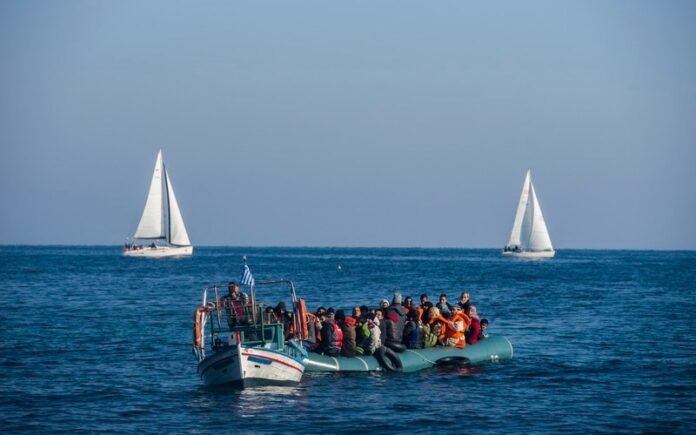
The European Union’s new Migration and Asylum Pact enters into force on 12 June, ushering in the most significant reform of the bloc’s migration framework in years and placing renewed emphasis on balancing solidarity among member states with greater responsibility in managing migration.

Adopted in May 2024 after years of negotiations, the Pact introduces a common set of rules aimed at strengthening external border controls, streamlining asylum procedures and improving the return of individuals who do not qualify for international protection.

Central to this reform is a new solidarity mechanism requiring all member states to contribute to migration management. Countries will be able to choose from a range of measures, including relocating asylum seekers, making financial contributions or providing operational and technical support to member states facing disproportionate migratory pressures.

Speaking at a press briefing at the European Parliament, Swedish MEP Tomas Tobé described the element of solidarity as a cornerstone of the agreement.

“We do need to ease the burden on countries under pressure,” he said, stressing that solidarity must be accompanied by responsibility. According to Tobé, the Pact establishes an important foundation for a more coordinated European approach to migration.

The issue of responsibility was also highlighted by German MEP Birgit Sippel, who noted that responsibility for asylum applications has always rested with individual member states. However, she argued that the EU previously lacked sufficient trust and clarity regarding which country should handle applications. She described the agreement as a significant achievement, saying it demonstrated that a broad majority of member states and the European Parliament had found common ground on one of Europe’s most contentious policy areas.

Nevertheless, Sippel expressed concern that many countries are still not fully prepared for implementation despite having had two years to prepare. She also emphasised the importance of safeguarding fundamental rights, ensuring access for NGOs and maintaining legal protections for asylum seekers throughout the process.

Among the most notable changes introduced by the Pact are mandatory screening procedures at the EU’s external borders. These checks will verify identities, assess security risks and determine whether individuals should enter the asylum system or be returned to their country of origin. Border procedures will also allow authorities to process certain unfounded asylum applications more quickly.

The Pact further introduces provisions allowing asylum procedures to be transferred to safe third countries under specific conditions and establishes a framework for identifying safe countries of origin, helping authorities process applications more efficiently.

Another major development is the expansion of information-sharing systems across the EU. Spanish MEP Jorge Buxadé Villalba highlighted the creation of a more comprehensive European database incorporating biometric and identity data. He argued that the system would help prevent fraud, reduce multiple asylum applications in different countries and facilitate the return of irregular migrants, provided member states invest in the necessary technological infrastructure.

As the Pact begins to apply across the European Union, attention will now shift from legislation to implementation. While supporters view the reforms as a long-awaited compromise between solidarity and responsibility, several MEPs argued that the effectiveness of the new framework will ultimately depend on how successfully member states translate the rules into practice.

Migration remains a significant challenge for the European Union, with Eurostat reporting 912,000 first-time asylum applications in 2024, making it one of the highest annual totals recorded in recent years. Including repeat applications, the total number of asylum requests lodged across the EU approached one million. While the figure marked a decline from the previous year, it continued to place considerable pressure on member states’ asylum systems, particularly those at the EU’s external borders. Germany, Spain, Italy, France and Greece together accounted for more than four-fifths of all first-time applications, highlighting the uneven distribution of migratory pressures across the bloc.

Despite a decline in overall migration figures in some categories, the issue has returned to the political forefront amid renewed far-right mobilisation and a series of high-profile violent incidents, including the recent knife attack in Belfast in which a man was left with severe injuries during a brutal street stabbing that triggered unrest, as well as the murder of 18-year-old British student Henry Nowak in Southampton, who was fatally stabbed after his attacker falsely claimed he had been the victim of a racist assault, fuelling widespread debate over policing, immigration, and community tensions.

MEPs also called on Hungary to fully align with the EU’s Migration and Asylum Pact, noting that under the new government led by Prime Minister Péter Magyar, Budapest is expected to adopt a more pragmatic approach compared to the previous administration under Viktor Orbán, which had strongly opposed mandatory relocation mechanisms and refused to participate in the EU’s solidarity scheme. While the previous government argued that the Pact undermined national sovereignty and rejected quota-based redistribution, the current administration has signalled it will engage with EU migration rules, even if it maintains a firm stance on border protection and controlled migration. EU lawmakers stressed that Hungary’s participation is essential for the Pact to function effectively across the bloc. MEP Tobé said that Magyar’s position was not so different from that of other Prime Ministers and while some further discussions were needed, he saw no major risks to the implementation of the plan.

Logo featuring the text 'INT FL-EWROPA' with stars and EU flag elements.

Text highlighting that the content is co-funded by the European Union, with a disclaimer about the European Parliament's lack of involvement and liability.

The Houthis Weigh the Cost of Escalation at Bab el Mandeb

0
the-houthis-weigh-the-cost-of-escalation-at-bab-el-mandeb
The Houthis Weigh the Cost of Escalation at Bab el Mandeb


Escalation around the Red Sea chokepoint could pressure Israel and the United States while risking backlash from Egypt, Saudi Arabia, China, Europe, and global shipping interests

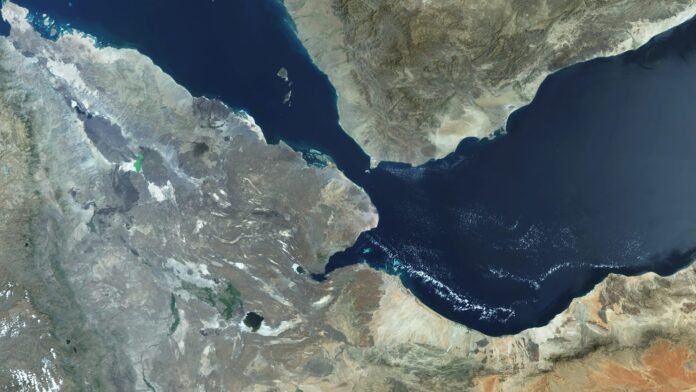
Bab el Mandeb gives Yemen’s Houthis a way to pressure Israel and the United States, but using that leverage too aggressively could turn Egypt, Saudi Arabia, China, Europe, and global shipping interests against them.

That is the calculation now surrounding the narrow passage linking the Red Sea to the Gulf of Aden and the Arabian Sea, as fears grow over a possible escalation around the Strait of Hormuz. Analysts say the Houthis may be willing to fire missiles, launch drones, or threaten Israeli-linked shipping, but a full attempt to close or seriously obstruct Bab el Mandeb remains less likely because of the wider costs it would impose.

The comparison with Hormuz is tempting but incomplete. Hormuz is the main artery for Gulf energy exports, carrying around one-fifth of global oil and petroleum liquids consumption. Bab el Mandeb does not match Hormuz in oil volume, but it remains strategically vital as the southern gate of the Red Sea, connecting the Indian Ocean to the Suez Canal and, from there, to the Mediterranean and European markets. A disruption there would not replicate the scale of a Hormuz closure, but it could still affect oil shipments, fuel supplies, container traffic, insurance costs, delivery times, and the economic stability of countries dependent on the Red Sea-Suez route.

Recent instability has already shown how quickly insecurity around Bab el Mandeb can reshape global shipping. In 2024, oil trade flows through the strait averaged 4 million barrels per day through August, down from 8.7 million barrels per day in 2023, as attacks and security risks pushed vessels away from the area, according to US Energy Information Administration data. UN Trade and Development has also warned that Red Sea disruptions have contributed to rerouting, higher costs, and uncertainty across maritime trade, which carries more than 80% of world trade by volume.

Egypt has already paid a steep price. Suez Canal revenue fell to $3.991 billion in 2024, down from a record $10.25 billion in 2023, according to figures reported by the Associated Press. The International Monetary Fund also reported that Suez Canal trade dropped by 50% year over year in the first two months of 2024 as ships rerouted away from the Red Sea.

For Saudi Arabia, Bab el Mandeb is tied to the security of its Red Sea coastline and to its ability to move crude through alternative routes if the Gulf becomes too exposed. For China and Asian importers, the passage is part of the wider architecture of energy and trade flows linking the Indian Ocean to the Mediterranean.

That leaves the Houthis with three broad options: rhetorical escalation, limited attacks, or a far more dangerous attempt to obstruct the strait itself. The first two would allow the group to signal alignment with Iran and its regional allies while keeping escalation within familiar bounds. The third would turn a confrontation with Israel and the United States into a direct threat to the economic interests of Saudi Arabia, Egypt, China, Europe, and the wider shipping industry.

These risks are not theoretical. On June 8, Yemen’s Iran-aligned Houthi movement announced a ban on Israeli maritime navigation in the Red Sea and warned of possible escalation against ships linked to Israel. The threat did not apply to all commercial shipping, but Reuters reported that it raised concern because previous Red Sea attacks had already created uncertainty over ship identification, insurance risk, and possible rerouting around Africa.

Abdulghani Al-Iryani, a researcher at the Sana’a Center for Strategic Studies, said the Houthis are under pressure to act but are also aware of the price they could pay if they overplay their hand.

The Houthis are under tremendous pressure to do something. They have been trying to avoid it all this time.

“The Houthis are under tremendous pressure to do something. They have been trying to avoid it all this time. In this instance, the potential benefit is very limited, both in terms of military benefits for Iran and for the Houthis, and the cost is huge for the Houthis,” Al-Iryani told The Media Line.

That cost, he explained, is not only military. It is also diplomatic, particularly in relation to Saudi Arabia. After years of war, the Houthis have sought to preserve the possibility of a favorable arrangement with Riyadh. A major disruption of Bab el Mandeb could threaten that track.

They would lose their chance, which has been tantalizing for a few years now, to make a favorable deal with Saudi Arabia

“They would lose their chance, which has been tantalizing for a few years now, to make a favorable deal with Saudi Arabia,” he said.

In Al-Iryani’s assessment, the more likely scenario is not a full Houthi attempt to close the strait, but a limited move designed to show participation without triggering maximum retaliation.

“I think the most likely scenario is that, if they feel they have no choice but to do something, they will make a token contribution to the military efforts with Iran. They may fire a few missiles, maybe sink a couple of vessels linked to Israel, but nothing so drastic that it would cause economic pain to Saudi Arabia and make Saudi Arabia upset,” he said.

The Houthis may be part of Iran’s regional camp, but Al-Iryani argues that they should not be understood simply as a proxy Tehran can activate at will. Iran’s network, in his view, functions more through aligned interests than direct command.

“Actually, it is working the axis of resistance as much as they expected it to work, because Tehran never considered these groups proxies. Tehran considered them allies. They expected them to act in their own self-interest.”

For Al-Iryani, that means the Houthis may serve Iranian interests without being under Iranian command. Their role is shaped by overlap, not obedience. They share strategic ground with Tehran, but their calculations remain rooted in Yemen’s local power struggle, their own survival, and their relationship with Saudi Arabia.

The Houthis, he added, are particularly different from Hezbollah and some Iraqi militias because of their religious and political structure. While they receive support from Iran and share ideological and strategic ground with the axis, their center of authority remains local.

“That is much less the case for the Houthis, because unlike Hezbollah and the Iraqis, the Houthis do not consider Khamenei to be their spiritual leader. They are not Twelvers; they are Zaydis,” Al-Iryani said.

“It is true that there is a small faction of field commanders who have converted to Twelver Shiism, but the majority are still Zaydis, and they consider their spiritual leader to be Abdul-Malik al-Houthi. So they will only do what they see as being in their self-interest.”

That local calculus also affects how the Houthis can frame any new confrontation to their domestic audience. According to Al-Iryani, defending Iran is not an easy cause to sell in Yemen, where historical memory and public sentiment toward Iran are more complicated than the Houthis’ current alignment may suggest.

“The Houthis cannot show their popular base in Yemen that they should suffer in support of Iran. During the Iran-Iraq war, the vast majority of Yemenis, almost unanimously, supported Iraq against Iran. Tens of thousands of Yemenis actually fought that war on the side of Iraq,” he said.

“So it is very hard for the Houthis to sell the idea of sacrifice in defense of Iran.”

The Palestinian issue is different. Yemenis, he said, are deeply emotionally connected to Palestine, giving the Houthis a broader mobilizing narrative when their actions are framed around Gaza or Israel rather than Iran itself.

“Again, it is not the same as the Palestinian issue. The Palestinian issue is very, very emotional for Yemenis,” he said.

A Yemeni analyst and journalist who spoke to The Media Line on condition of anonymity offered a similar assessment, while stressing that the Houthi movement, formally known as Ansar Allah, should not be underestimated.

“The situation of Ansar Allah, the Houthis, is not significantly different from before. Their current involvement may appear more influential than before, but this is due to several factors, including political alliances with some neighboring countries, the extended period of relative calm, and the group’s increased strength,” he said.

The analyst also rejected the idea of the Houthis as merely a tool in Iran’s hands.

“In my personal opinion, Ansar Allah has proven itself to be an ally, not merely a proxy or a puppet to be manipulated when needed,” he said.

Even under this framework, he argued, closing Bab el Mandeb would be unlikely because of the damage it could cause to actors beyond Israel or the United States.

Closing Bab el Mandeb remains highly unlikely because of the potential harm it would cause to their international allies, whether Ansar Allah’s allies or Iran’s allies

“Closing Bab el Mandeb remains highly unlikely because of the potential harm it would cause to their international allies, whether Ansar Allah’s allies or Iran’s allies,” he said.

The analyst later said Houthi engagement in the Red Sea could still affect China, Egypt, Saudi Arabia, and other countries Iran does not want to alienate. That, he suggested, makes full closure a risky option even for a group that has proved willing to disrupt shipping.

For the anonymous analyst, the Houthis remain a strategic pressure card, especially against Saudi Arabia. Their ability to threaten Red Sea shipping and Saudi economic interests gives Iran leverage even if the group does not fully enter the war.

Still, he argued that the Houthis themselves may prefer restraint after years of conflict.

“The Houthis want to have a bit of rest because they were exhausted,” he said.

The question, then, is whether extreme action would serve the Houthis’ interests. Both analysts say a limited show of force remains more plausible than a full maritime shutdown.

Al-Iryani said the Houthis would likely try to delay any major decision and wait to see if a ceasefire or diplomatic exit emerges.

“I really think that the Houthis will try to delay any decision they may have to make and hope that there will be a ceasefire,” he said.

“If a ceasefire does not come, and they feel they have to do something, they will do something symbolic just to please the axis of resistance and part of their base.”

Asked directly whether he believed the Houthis would try to seize or close Bab el Mandeb, Al-Iryani said the move would be too costly.

The anonymous analyst also said he did not expect the Houthis to become heavily involved unless Saudi Arabia openly sided with Washington in a way that would be perceived as direct participation. He said such a scenario remained unlikely.

The economic risk remains severe even if the most extreme scenario does not materialize. Al-Iryani warned that disruptions to maritime chokepoints should not be understood as producing a gradual, linear rise in prices. The real danger, he said, comes when markets and reserves reach a critical point.

“If that happens, people do not understand. They think it is linear, that the price will follow a linear path. The fact of the matter is that there is a critical point. That is when the strategic oil reserves of the U.S. and China are depleted. Then the crisis will be many, many times greater than the original crisis. The situation will become very critical,” he said.

“If you close the Bab el Mandeb Strait just as the reserves are depleted, we are going to have a catastrophe in oil prices.”

The anonymous analyst gave an even starker warning about the vulnerability of the Gulf if Iran is hit directly, saying oil prices could rise as high as $200 per barrel. Such a spike would represent a severe global price shock.

Beyond the maritime question, Al-Iryani said the current confrontation may have strengthened the Iranian regime rather than weakened it. His point was not that Tehran can simply order the Houthis into battle, but that Iran’s regional camp may be more durable than outside pressure assumes.

“I think the Iranian regime is now much stronger. Historically, the system in Iran operated on three legs: the temple, the bazaar, and the sword. It was the balance between the three that shaped most of the states in Iran. Then the mullahs came, and the temple became number one, which was a historical shift.”

That durability, however, does not erase the Houthis’ local vulnerabilities. In Yemen, Al-Iryani said, the group’s control does not mean it enjoys broad affection from the population.

“The Houthis are much more hated in Yemen than Hezbollah is in Lebanon. The reason the Houthis are in control is because they are the government. They control state institutions, especially coercive institutions,” he said.

“They are hated. And when people fight with the Houthis, it is because the Houthis have found them. The only way they can survive is by serving in the army.”

A real attempt to shut Bab el Mandeb would raise the stakes far beyond the symbolic level, threatening Saudi Arabia, Egypt, China, global shipping companies, and energy markets at once. That is precisely why it remains such a dangerous but difficult card for the Houthis to play.

The most likely scenario may not be a second Hormuz in the Red Sea, but a controlled escalation: enough for the Houthis to show they are part of the axis, not enough to burn the Saudi channel or provoke a wider confrontation that could isolate them.

Bab el Mandeb gives the Houthis leverage. Using it fully could also expose the limits of that leverage.


RFK Jr. melts down over NYT report, admits he blacklists reporters

0
rfk-jr.-melts-down-over-nyt-report,-admits-he-blacklists-reporters
RFK Jr. melts down over NYT report, admits he blacklists reporters

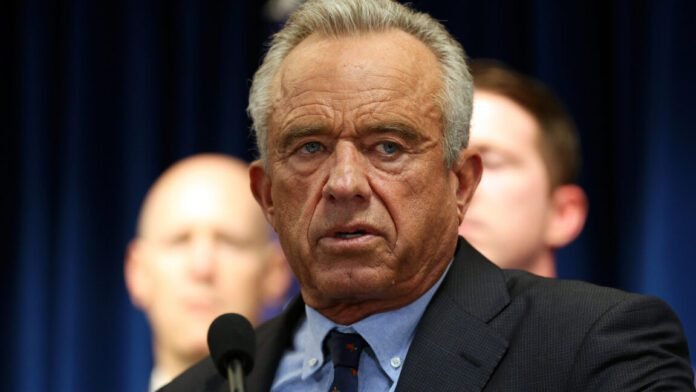
Anti-vaccine Health Secretary Robert F. Kennedy Jr. posted a long, enraged social media response to a New York Times article reporting that health department insiders think Kennedy is disengaged from the work of his sprawling agency. His response, however, seems to back the Times’ claim.

The report, published Sunday, June 7, relied on accounts from a dozen people who have had direct contact with Kennedy during his time as health secretary. Collectively, the sources indicate that Kennedy has little interest in the details of the health department’s work and little direct interaction with career staff. Kennedy misses critical, regularly scheduled meetings with agency leaders, is sometimes “checked out” in the meetings he attends, and has been out of the loop on key decisions, such as the firing of Tracy Beth Høeg, a political appointee elevated to top drug regulator at the Food and Drug Administration. In his stead, Kennedy often refers people to his protective, longtime assistant, Stefanie Spear, who colleagues say has slowed department operations and fueled some significant leadership departures.

On Wednesday night, Kennedy responded to the report with an 871-word diatribe on social media against the reporter, veteran journalist Sheryl Gay Stolberg, and the Times. His key argument was that much of the story could be refuted by a look at his jam-packed public calendar.

“All one needs to refute your argument is to glance at my publicly available calendar,” he wrote in his opening paragraph. At another point, he elaborated, writing “Had you read my calendar, you would have seen that I have back-to-back meetings all day, every day, with both career and political staff…”

The problem with Kennedy’s argument is that he does not have a publicly available calendar. This journalist is not aware of any such calendar. On Thursday, journalists at Stat News reported that Kennedy’s public calendar was news to them, too. Over the past year, they have requested his calendar multiple times through the Department of Health and Human Services (HHS) press office and by filing Freedom of Information Act (FOIA) requests.

“Unwilling to talk to you”

“None of STAT’s FOIA requests have been completed, and some haven’t been acknowledged—despite HHS policy requiring a response with tracking and contact information within 10 days of submitting a request,” the journalists wrote. “That includes three STAT inquiries from September 2025. The web page previously used to track requests has been taken down.”

The outlet noted that it’s not just journalists who are not able to get information from HHS; requests from citizens and lawmakers have also gone unanswered, though a leader of Kennedy’s anti-vaccine group, Children’s Health Defense, reportedly is getting his FOIA requests fulfilled, Stat noted.

Ars Technica has reached out to the HHS press office for comment as well as a link to the publicly available calendar. There was no immediate response. Stat reported that HHS did not respond to their comment requests in light of Kennedy’s post.

That Kennedy seems to be under the false impression that his calendar is public adds to the argument that he is not in touch with the workings of his agency, backing the Times’ report that Kennedy is disengaged.

Kennedy’s unfamiliarity with his calendar’s accessibility and the lack of information from HHS are also particularly striking, given that Kennedy came into the position touting plans for “radical transparency.” In April 2025, he told reporters: “We’re restoring all the FOIA offices, and we’re going to make it much easier for people to get the information. We’re going to post as much as we can.”

But Kennedy’s social media outburst on Wednesday further made clear that Kennedy is not committed to transparency as health secretary. In it, he acknowledged that the HHS is withholding information from select journalists, in other words, blacklisting them.

“[S]ince we all are aware of your predictable bias, we at HHS are unwilling to talk to you about the topics that are important,” Kennedy wrote of the Times. “The fact that you have minimal access to decision makers leaves you covering trivia and relying on your own capacity for invention.”

Google sues Chinese cybercrime network that used Gemini to automate scams

0
google-sues-chinese-cybercrime-network-that-used-gemini-to-automate-scams
Google sues Chinese cybercrime network that used Gemini to automate scams

Google loves telling us all the ways people are using its generative AI products to build new things, grow businesses, and save the world. Supposedly. Of course, people are also using AI for crime. Google has announced a new legal salvo aimed at a Chinese group called Outsider Enterprise, which is allegedly responsible for a massive AI-powered scam campaign. Google says it’s working with law enforcement and mobile carriers to fight back.

According to Google’s legal filing, Outsider Enterprise operates through Telegram. The group offers phishing-as-a-service to individuals who may not be technically savvy enough to set up fraudulent websites and text campaigns on their own. In its Telegram channels, Outsider Enterprise reportedly provided instructions on how to use Google’s Gemini AI to create websites that imitate those of Google, YouTube, and government agencies such as New York’s E-ZPass. The group offered nearly 300 scam templates.

Google says that scams enabled by Outsider Enterprise resulted in more than 2.5 million text messages being sent to Android users. About 55,000 of those messages happened in a two-week period last month. In all, Google has tracked 9,000 fake websites and 1 million URLs connected to the scam network.

The text messages often made claims about account problems or issues with a package delivery. When users clicked on the links, they ended up on one of those fraudulent websites, designed by Gemini to look legitimate. The cybercriminals used these sites to steal personal data and banking details. Google’s filing does not estimate the amount of money stolen through Outsider Enterprise scams, but the blog post notes that hundreds of people have lost some amount of money.

Google worked with AT&T, Verizon, and T-Mobile to block many of these malicious text messages, and Google notes that its on-device scam detection in Google Messages probably helped reduce the number of successful phishing attempts, too. This AI-powered feature apparently stops 10 billion scam texts every month, so it’s fair to expect it caught at least some Outsider Enterprise activity.

Laws for AI threats

Google has filed lawsuits against scammers before, but this is the first time it has taken direct action against a group alleged to be using Gemini as part of its scams. Google discusses the security measures it has baked into Gemini every time it announces a new model, but these can clash with the overarching need for chatbots to follow instructions and please users. And then you end up with thousands of scammers using Gemini to build fake websites.

In addition to its civil lawsuit, Google is assisting the FBI’s cybercrime division with a parallel criminal investigation. However, no one knows who’s behind Outsider Enterprise, and even if Google did have names, there’s little to be done when the perpetrators are in China. The company can go after fraudulent domains and Telegram accounts in hopes of disrupting the Outsider Enterprise operation, but the scams may simply change form.

Google believes that the era of AI calls for new approaches to law enforcement, so it’s taking this opportunity to renew its public support for a spate of legislation. The company has called out seven different potential federal laws, like the National Strategy for Combating Scams Act, the Strategic Task Force on Scam Prevention Act, and the AI Plan Act.

Most of the legislation Google promotes calls on one or more federal law enforcement agencies to set up task forces to counter the threat of AI-assisted scams and market manipulation. One of them (Artificial Intelligence Public Awareness and Education Campaign Act) is aimed at improving the public’s ability to spot malicious uses of AI. However, the industry-wide goal of attaining human-like intelligence in AI systems will only make this content harder for people to spot, even with all the well-meaning government legislation in the world.

USPS Worker Dies After Chilling Collapse – Fourth Worker Dead at Atlanta Facility

0
usps-worker-dies-after-chilling-collapse-–-fourth-worker-dead-at-atlanta-facility
USPS Worker Dies After Chilling Collapse – Fourth Worker Dead at Atlanta Facility


A Georgia woman is demanding answers after her fiancé collapsed and died at work inside a troubled USPS facility near Atlanta, where three other workers have reportedly died since it opened just over two years ago.

Demarcus Little Sr., 45, died June 3 at the Palmetto Regional Processing and Distribution Center, a massive suburban Atlanta mail facility that has already faced criticism over major delays and now renewed scrutiny over worker safety.

His fiancée, Laura Wheaton, said Little called her during his break that night and told her he was not feeling well. According to Wheaton, he asked a supervisor if he could go home because he felt sick, but was allegedly told no.

Not long after, Little was reportedly found on the floor.

Wheaton later wrote on Facebook that coworkers began calling her the next day with disturbing claims about what happened in his final moments. She said she was told Little had been foaming at the mouth and that no one performed CPR because of a workplace policy employees allegedly described as “NEVER TOUCH A BODY.”

“They are telling so much weird things that happened,” Wheaton wrote, adding that workers feared they would be fired if they spoke out.

The chilling details did not stop there.

911 calls obtained by WXIA revealed that multiple coworkers tried to get emergency help to the facility. In one call, a worker told dispatchers, “We have a young man who has fallen out. He appears to be having a stroke.”

Another caller sounded increasingly alarmed as the minutes ticked by.

“We’ve called several times, and nobody has made it here,” the coworker said. “This man has been down for like 10 minutes.”

According to WXIA, the first 911 call came in at 11:06 p.m., but first responders did not arrive until 11:25 p.m.

Little’s cause of death has not been released.

His death has brought new attention to a series of fatalities at the same USPS facility. In November 2025, another employee, Russell Scruggs Jr., died there. Coworkers reportedly told the World Socialist Web Site that supervisors stood around him without administering CPR. Workers also claimed there was no defibrillator available and that an ambulance took more than an hour to arrive after going to the wrong entrance.

Before Scruggs, 59-year-old Eric Smith died at the facility in June 2025 after a medical emergency. In August 2024, 48-year-old Sharon Barnes also died there.

The causes of death for Barnes and Scruggs have not been publicly released.

Atlanta Black Star reviewed USPS policies for “serious workplace accidents” and reported that the agency’s available procedures explain how to report serious injuries, but do not clearly outline what employees should do when a medical emergency is happening in real time.

USPS issued a statement after Little’s death, saying, “Our thoughts are with their family, friends, and colleagues during this difficult time. We will be providing counseling services to employees at the Palmetto Regional Distribution Center.”

The Palmetto facility has also been blasted by Georgia lawmakers over serious mail delays affecting metro Atlanta residents.

For Wheaton, the biggest question remains unanswered: Could more have been done to save the man she loved?

Atlanta Black Star said it reached out to USPS and Wheaton for more information but had not heard back.

Brussels Unveils Fresh Russia Sanctions Package, Drawing Sharp Rebuke from Moscow

0
brussels-unveils-fresh-russia-sanctions-package,-drawing-sharp-rebuke-from-moscow
Brussels Unveils Fresh Russia Sanctions Package, Drawing Sharp Rebuke from Moscow


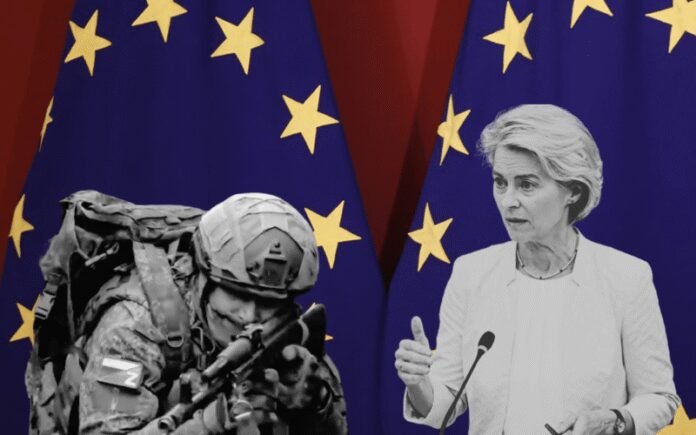
The European Union is moving to tighten pressure on Russia through a new package of sanctions targeting oil exports, cryptocurrency channels and individuals who fought in Ukraine, while Moscow has condemned an EU decision to expand naval inspections of vessels suspected of transporting Russian oil.

European Commission President Ursula von der Leyen announced a proposed 21st round of sanctions against Russia, including a visa ban on anyone who has served in the Russian armed forces since the start of the war in Ukraine.

“We propose for the first time to ban entry into the European Union for anyone who has served in the Russian armed forces since the beginning of the war,” von der Leyen said, adding that the measure is intended to ensure that “Europe stays off-limits for anyone who has participated in the invasion of Ukraine.”

The proposed sanctions package would also maintain the current price cap on Russian crude oil at around $44 per barrel until January, a move Brussels says is designed to prevent Moscow from benefiting from higher energy prices driven by the conflict in the Middle East.

“This will give oil markets time to stabilise, while preserving pressure on Russia’s revenues,” von der Leyen said.

The package further targets cryptocurrency exchanges, banks and oil traders accused of helping Russia circumvent existing restrictions. Brussels also plans to blacklist 30 additional tankers linked to what it describes as Russia’s “shadow fleet” used to transport oil exports.

Other proposed measures include restrictions on imports of certain Russian fish products, including Alaska Pollock and cod, and additional curbs on companies in third countries supplying goods to Russia’s military sector. EU officials said 14 more firms from mainland China and Hong Kong could be added to the sanctions list.

The proposals require unanimous approval from all 27 EU member states before they can take effect.

The sanctions announcement comes days after the EU expanded the mandate of Operation IRINI, its naval mission in the Mediterranean originally established to enforce the United Nations arms embargo on Libya. Under the revised mandate, EU military vessels can stop and inspect foreign ships suspected of involvement in transporting Russian oil.

Russia strongly criticised the move on Wednesday.

Foreign Ministry spokeswoman Maria Zakharova said the inspections posed a threat to maritime security and accused the EU of intimidating civilian shipping. She rejected the EU’s use of the term “shadow fleet,” describing it as a political construct with no basis in international law.

“The European Union’s deployment of ships from the IRINI naval operation deployed in the Mediterranean to inspect or seize, as they now say, vessels carrying oil products would constitute a flagrant violation of international law,” Zakharova told reporters.

She warned that Moscow would take all necessary measures to protect shipping interests.

“We reserve the right to use the full arsenal of political, legal, and other instruments at our disposal to protect maritime security and the legitimate interests of shippers and shipowners,” she said.

EU officials maintain that sanctions are increasingly weighing on Russia’s economy despite Moscow’s ability to withstand multiple rounds of restrictions since its 2022 invasion of Ukraine.

EU foreign policy chief Kaja Kallas said this week that Western sanctions have cost Russia up to $1.5 trillion since the war began. Von der Leyen argued that the economic burden is being felt by ordinary Russians through falling living standards and the human cost of the conflict.

Pakistan says peace deal ‘closer than ever’, signing expected within 24 hours

0
pakistan-says-peace-deal-‘closer-than-ever’,-signing-expected-within-24-hours
Pakistan says peace deal ‘closer than ever’, signing expected within 24 hours

Pakistan’s Prime Minister Shehbaz Sharif said on Saturday that Iran and the US are closer than ever to signing a peace deal, with the deal expected to be finalized within the next 24 hours, Anadolu reports.

In a post on US social media platform X, Sharif said the negotiations had entered their final stage and expressed optimism about the prospects for a breakthrough.

“We are closer to a peace deal than ever before,” he wrote.

According to Sharif, Pakistan is preparing for the electronic signing of the agreement immediately after its finalization. He added that technical-level talks are expected to begin next week to discuss implementation and other related matters.

Sharif also thanked the US and Iran for their continued engagement in the negotiations.

READ: US, Iran agree on peace deal’s ‘final text’ to end war: Pakistan

Threads of underground fungal networks are long enough to reach beyond the Solar System

0
threads-of-underground-fungal-networks-are-long-enough-to-reach-beyond-the-solar-system
Threads of underground fungal networks are long enough to reach beyond the Solar System

Hidden underground around the world lie 110 quadrillion kilometers of arbuscular mycorrhizal fungal networks—webs of ultra-thin threads that, if connected in a single line, would stretch almost a billion times the distance between the Earth and the sun, according to new research published in Science on Thursday.

These fungal communities form intimate relationships with the roots of plants, which they provide with nutrients like phosphorus and nitrogen in exchange for carbon, 1 billion tons of which the networks sequester underground annually, previous research has found. If the fungal network wasn’t storing it, that carbon would be warming the atmosphere.

But those networks have never been mapped globally until now. The new study led by Society for the Protection of Underground Networks, or SPUN, an organization founded to map mycorrhizal fungi networks, used a combination of literature review, soil samples from around the globe, machine learning and laboratory testing to estimate the distribution and mass of these systems and map where they are densest.

“This is the moment where we went from knowing that this system exists to really knowing where it is, how dense it is and where it’s been,” said Toby Kiers, executive director and co-founder of SPUN and a co-author of the study.

For decades, researchers have known arbuscular mycorrhizal fungi form intimate symbiotic relationships with roughly 80 percent of the globe’s plant species and are found nearly everywhere plants are. But the extent of those networks and where they are densest, such as grasslands, and where they are being lost, like in agricultural areas, hasn’t been well understood until now.

“[The study] helps us come to grips with how important these below ground organisms can be to everything that we see above ground,” said James Bever, a professor of ecology and evolutionary biology at the University of Kansas who studies the interactions between plants and microbes like fungi in soils but was not involved in the new study.

Justin Stewart, an evolutionary ecologist at SPUN and lead author of the study, said previous studies the team had done on biodiversity of fungi were similar to asking someone to describe the forest outside their home.

“They could say ‘well there are three tree species in it.’ That’s great. That tells me about the biodiversity,” he said. “But you don’t actually know how big the forest is, how far apart the trees are. You don’t have information on its structure.”

Mycorrhizal fungal networks are made up of hyphae, each smaller than a strand of human hair. These living pipes transport the nutrients and carbon between the plants and fungi.

Because they are so long and thin, Stewart said, they can reach deeper into soils than roots, getting nutrients deep underground that plants can’t reach, while simultaneously storing carbon where it can stay put for a long time under the right conditions.

“You’re getting a win-win,” Stewart said. “The plants are growing better, and carbon’s being drawn down. That all depends on having dense fungal networks and soils that are active and alive.”

Quantifying these fungal networks started with a review of existing studies on mycorrhizal fungi. Those studies contained 16,000 core samples taken from ecosystems around the world to understand the length of the fungal threads in a volume of soil. Each sample was geolocated, and from there the team was able to use machine learning to create predictive maps of fungal networks globally, and identify where the model is performing well and where uncertainties show more data is needed.

Working with AMOLF, a research institute in Amsterdam, they developed a technique using a robot with a camera that recorded fungal networks growing over time in a lab, to get better estimates of their widths. From there, the team was able to calculate the network’s mass, which amounted to about five times the weight of all humans on Earth.

The study only covers living arbuscular mycorrhizal fungal networks, Stewart said, and doesn’t include dead fungal networks, which also help to store carbon and add to the total biomass and influence of the networks on ecosystems. Research into dead fungal networks is still being explored.

The study also found where these networks are most threatened. Fungal network densities across croplands are about half of what they are in wild ecosystems. Meanwhile, wild grassland ecosystems hold about 40 percent of the world’s arbuscular mycorrhizal biomass. Yet those grasslands are among Earth’s least protected ecosystems, and they are converted into farmland at four times the rate of forests, posing a potential threat to these networks and the benefits they bring to plant life and carbon storage.

Previous research from SPUN has found 90 percent of fungal communities across the globe are unprotected, and many ecosystems, like the deserts of the American Southwest, are understudied.

What exactly is driving mycorrhizal fungi losses, and the consequences of that decline, need to be explored next, the researchers said, which is why the SPUN team will be at this year’s United Nations Climate Change Conference—COP31—to present to policymakers about the importance of the networks and the role they could play in protecting ecosystems and sequestering carbon.

Understanding mycorrhizal fungi more deeply at the ground level is key, said Corentin Bisot, an AMOLF biophysicist and co-author of the study.

“We’re still far from completely understanding how, if you have a grassland next door, and you want to [increase] microbes and fungi there,” Bisot said. “We don’t have the toolbox for you to do it.”

This study, Stewart said, is just the first map. And like the first maps the Spaniards drew of California—which presented the state as an island, he said, there will be new discoveries about the density of fungi networks around the globe to grow the public’s understanding of them.

This article originally appeared on Inside Climate News, a nonprofit, non-partisan news organization that covers climate, energy, and the environment. Sign up for their newsletter here.

UNCLOS conciliation gives Cambodia, Thailand a just path to peace

0
unclos-conciliation-gives-cambodia,-thailand-a-just-path-to-peace
UNCLOS conciliation gives Cambodia, Thailand a just path to peace

On June 2, Cambodia initiated compulsory conciliation proceedings with Thailand under the UN Convention on the Law of the Sea (UNCLOS). We did so to protect our national sovereignty and maritime rights after Thailand unilaterally walked away from a 25-year-old bilateral memorandum of understanding.

That MoU was intended to facilitate an agreement over where the maritime border should be drawn between our two countries, and how valuable undersea oil and gas deposits should be shared. Thailand has since agreed to join the UNCLOS conciliation process. This is a positive and welcome step.

The significance of this moment, however, is greater than a dispute between two countries. It offers us all a chance to collectively step up at the international, regional and local level.

First, it is a chance for the international community – great powers, middle powers and small states alike – to see effective international law in action. And, at a critical moment in history, to offer support to peaceful dispute resolution under the auspices of the UN when the multilateral rules-based order is under pressure.

Second, it is a chance for the ASEAN community to draw on the region’s rich history of mutual support and the organization’s well-deserved reputation as a role model on the international stage. And third, it is a chance for Thailand and Cambodia – neighbors with a history together stretching back centuries – to step away from confrontation and choose peace.

There is reason for confidence. Ten years ago, compulsory conciliation under UNCLOS resolved a maritime dispute between Timor-Leste and Australia that had seemed intractable.

The asymmetry between those two states was stark: Australia’s population was 20 times bigger, its nominal GDP nearly 500 times larger and its military expenditure roughly 1,000 times higher.

Faced with that imbalance, Timor-Leste enlisted the assistance of international experts to break the deadlock through UN-led conciliation and agree on a permanent maritime boundary. At first, Australia opposed the process. Yet just two years later, an historic treaty was signed.

For Timor-Leste, the agreement was a nation-changing success. But Australia also praised the result. Why? Because both countries agreed to follow the rule of international law, not the rule of the strong over the weak.

Australia’s then-Foreign Minister Julie Bishop said the treaty “reflects the importance of UNCLOS” and “shows how international law can enable countries to resolve their disputes peacefully.”

That precedent speaks directly to Cambodia and Thailand today. The UNCLOS conciliation process will require good faith from both sides. It will also require consistency and pragmatism.

Consistency is essential. In the Timor-Leste case, Australia had every opportunity to suspend its engagement in bilateral cooperation and talks with Timor-Leste overseen by the conciliation commission. But it did not. It engaged consistently. Relations between the two neighbors improved as a result. And, in the end, a maritime boundary treaty was agreed.

Pragmatism is equally essential. The Cambodia-Thailand dispute is not merely an abstract legal problem. It concerns a real maritime area and real energy resources – resources that could contribute to economic security and development for both countries and the wider region.

A process that discusses only the lines on a map while refusing to address what lies within those lines would leave critical issues unresolved.

Cambodia is not asking the UNCLOS Conciliation Commission to impose a one-sided answer. We are asking for the process to address the issue as it is: a maritime-boundary dispute that has always been connected to the question of the peaceful development of energy resources.

We recognize that Thailand has national interests. Cambodia has national interests, too. International law does not require either side to abandon those interests. It requires both sides to pursue them peacefully, respectfully and within a rules-based framework.

The same commitment to peaceful resolution must extend to our shared land border. The current ceasefire between Cambodia and Thailand continues to hold, but it is fragile. Cambodia remains concerned by the situation on the ground in the occupied areas well inside Cambodian territory.

Borders and sovereignty must never be altered by force or fait accompli. On land just as at sea, steadfast adherence to international law and existing treaties and agreements, as well as dialogue, good faith and mutual respect, are key to ensuring that sovereignty, territorial integrity and international boundaries are respected.

Cambodia remains ready to engage peacefully and consistently with Thailand on all the issues we face, both on land and at sea. There are effective mechanisms to do so, as the UNCLOS process for the sea has shown.

Cambodia attaches great importance to its relationship with Thailand, a close neighbor with a common commitment to peace and prosperity in our region. We must, at all costs, continue to talk when the stakes are so high.

The maritime area must not become another theater of mistrust. And the land border must not see a further escalation of tension. Instead, Cambodia and Thailand should follow the tradition of how Southeast Asian states resolve difficult disputes.

The Timor-Leste case began with acrimony and ended with agreement. It began with uncertainty and ended with proof that compulsory conciliation under international law can break a deadlock and resolve disputes when bilateralism has run its course.

Cambodia welcomes Thailand’s engagement in the UNCLOS conciliation process. We ask that all sides engage in good faith. Our peoples, our region and the world will bear witness.

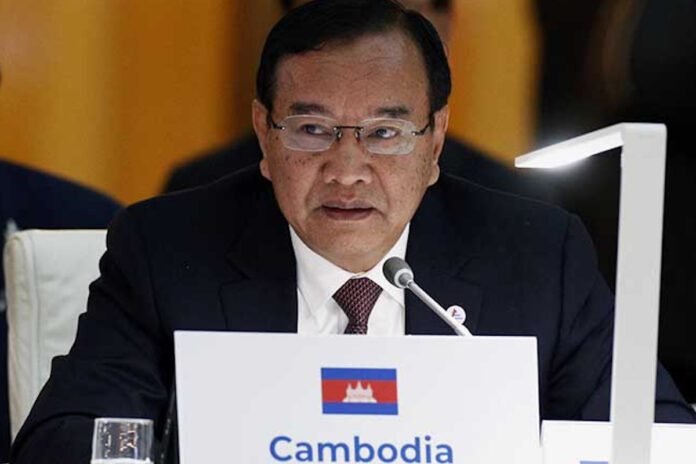
H.E. Prak Sokhonn is the Deputy Prime Minister and Minister of Foreign Affairs and International Cooperation of the Kingdom of Cambodia.

0FansLike
0FollowersFollow
0FollowersFollow
0SubscribersSubscribe
- Advertisement -
Google search engine

Recent Posts