13.9 C
London
Sunday, June 14, 2026
Home Blog

Israeli army claims to kill several Hezbollah members in Lebanon strikes

0
israeli-army-claims-to-kill-several-hezbollah-members-in-lebanon-strikes
Israeli army claims to kill several Hezbollah members in Lebanon strikes

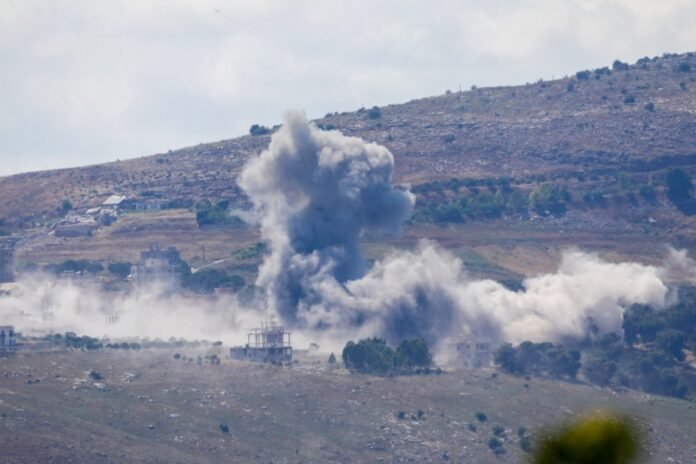
The Israeli army claimed Saturday to have killed several Hezbollah members and struck more than 70 infrastructure targets in southern Lebanon in the last 24 hours amid continued violation of an ongoing ceasefire, Anadolu reports.

A military statement said that the destroyed infrastructure included buildings allegedly used by the group to launch attacks against Israeli forces and northern Israel.

There was no immediate comment from Hezbollah on the Israeli claim.

Meanwhile, the Israeli army said that a drone had crashed in southern Lebanon, without causing injuries among soldiers.

The Israeli army continued its daily airstrikes in southern Lebanon on Saturday, killing at least five people, according to Lebanese media.

READ: Lebanon faces choice between ‘state monopoly on arms or militia influence’, says president

The Lebanese army said one of its soldiers was seriously injured in a drone strike in southern Lebanon.

Since March 2026, the Israeli army has killed 30 Lebanese soldiers and wounded several others in separate attacks in southern Lebanon, according to the military.

Israel has been waging an offensive on Lebanon since March 2 that has killed over 3,700 people and wounded more than 11,600 others, in addition to displacing over 1 million people.

Despite a ceasefire on April 17, Tel Aviv has continued the offensive through daily shelling and the widespread demolition of homes in dozens of villages.

READ: Lebanese army death toll rises to 30 after soldier dies from wounds in Israeli strike

Pokémon Go players unwittingly contributed to tech with military drone uses

0
pokemon-go-players-unwittingly-contributed-to-tech-with-military-drone-uses
Pokémon Go players unwittingly contributed to tech with military drone uses

A decade after the global craze for Pokémon Go peaked, an AI company has been using billions of real-world images captured by millions of players to develop navigation technologies for delivery robots and possibly military drones. That represents an intriguing but potentially discomfiting legacy for an augmented reality mobile game that has incentivized gamers to capture short smartphone videos of physical neighborhoods and landmarks.

The AI company, Niantic Spatial, was spun out of Pokémon Go game developer Niantic in May 2025, after Niantic separately sold its licensed games such as Pokémon Go to the Saudi-backed video game publisher Scopely. But before that deal, Niantic publicly announced plans to use scans from millions of Pokémon Go players along with data captured by users of the company’s Scaniverse app to train and develop a “large geospatial model”—a 3D model of the physical world trained on the geolocated images provided by app users scanning real-world locations.

“Ground scans were one component to help train Niantic Spatial’s real-world foundation models —AI systems that learn to recognize and interpret physical spaces,” a Niantic Spatial spokesperson told Ars. “The models are the product of that training, not a copy of or a means of accessing the underlying scans, which were of public points of interest such as statues and fountains.”

After Niantic Spatial spun out as a standalone company, it trained its model on 30 billion images mostly clustered around urban environment locations that game players were incentivized to visit, according to MIT Technology Review. The images often captured the same location from many different angles under different lighting and weather conditions, and came with valuable metadata showing the location and orientation of user phones when they were capturing such images.

Such ground scans “were an entirely optional feature in games, where users created a short video of a public location,” the Niantic Spatial spokesperson said. “We’ve been transparent about the fact that the scans would improve our technology platform since 2019 in our privacy policy and public announcements.”

That allowed Niantic Spatial to develop its own visual positioning system—a type of technology that can provide a device’s position and orientation by comparing visual data from cameras with reference data from detailed 3D maps of environments. Such a system can be especially helpful indoors, in city environments where GPS and other global navigation satellite systems’ signals are unreliable, or in regions where there is active GPS jamming.

MIT Technology Review highlighted Niantic Spatial’s technology in March 2026, when the company announced a new partnership with Coco Robotics. The robotics company aimed to use Niantic Spatial’s AI model and visual positioning system to help its fleet of four-wheeled delivery robots navigate city streets.

But in December 2025, Niantic Spatial had also announced a deal with the spatial intelligence company Vantor to develop a positioning system that could help both flying drones and ground vehicles navigate GPS-denied environments. Vantor, formerly known as the space and satellite company Maxar Intelligence, has multiple US government contracts with the National Geospace-Intelligence Agency, various branches of the US military, and the Department of Homeland Security.

The new military-industrial complex

The “comprehensive positioning system” aimed to integrate Niantic Spatial’s visual positioning system with Vantor’s 3D terrain data and Raptor software. During the Defence Geospatial Intelligence (DGI) conference held in London in February 2026, Tory Smith, director of product management at Niantic Spatial, described early testing of the integrated system as leading to a 70 percent reduction in positioning error with accuracy to within 1.5 meters in many scenarios.

The partnership between Niantic Spatial and Vantor received more public attention through a recent story by Trouw, a Dutch news publication. “Without the large number of scans from all those gamers, the development of this system would never have progressed so quickly,” said Jeroen van den Hoven, professor of ethics and technology at Delft University of Technology in the Netherlands, in an interview with Trouw. “The players have indirectly, in a perhaps minimal but still effective way, made a contribution to military applications.”

Visual positioning systems are not necessarily fraught with ethical problems, even in a military scenario. For example, the Ukrainian military has been deploying battlefield robots and drones with their own visual positioning systems to survive the prevalence of GPS jamming in the ongoing Russo-Ukrainian war. “If the Ukrainians can win the just war against aggressor Russia with this, it is a good development,” Van den Hoven told Trouw.

But the Dutch newspaper also interviewed Floris De Hingh, a longtime Pokémon Go player who expressed concern about his gameplay data supporting US military systems. De Hingh specifically described himself as “strongly opposed to the war Trump is currently waging against Iran.”

“The training data came from people who thought they were catching Pikachu, under a license most never read, sold up a chain that ends at a sovereign wealth fund and a defense prime,” wrote Haye Kesteloo, editor in chief and founder of the news website DroneXL. “Consent obtained for a game is not consent for a weapons program, even if the end use turns out to be defensible.”

A Vantor spokesperson told Ars that the company “is not using any Pokémon Go data, nor do we have access to any information from the Pokémon Go dataset.” Similarly, Niantic Spatial’s spokesperson said that the agreement between the companies does not include direct sharing of game data.

But some Pokémon Go players, such as De Hingh, will probably be uncomfortable with the idea that their gameplay data helped train Niantic Spatial’s models in the first place—especially when the company’s visual positioning system may be used for military applications. Vantor acknowledged that it is “exploring adapting Niantic Spatial’s ground-based visual positioning system” to work alongside Vantor’s existing “GPS-denied positioning capabilities,” which currently rely on satellite imagery.

Niantic Spatial told Ars that it has no ongoing access to data from current Pokémon Go players, because the game license has belonged to video game publisher Scopely since May 2025. But players may still want to stay on top of the game’s Terms of Service agreement and privacy policy to understand how their data is currently being used—or may otherwise be used in the future. It’s a lesson that goes well beyond Pokémon Go.

US, Pakistan Confirm Iran MoU Signing on Sunday as Tehran Questions Timeline and Israel Warns of Security Threats

0
us,-pakistan-confirm-iran-mou-signing-on-sunday-as-tehran-questions-timeline-and-israel-warns-of-security-threats
US, Pakistan Confirm Iran MoU Signing on Sunday as Tehran Questions Timeline and Israel Warns of Security Threats


Iran indicated that the signing of the agreement “will not be tomorrow” (Sunday), as Israeli officials warn the deal will “endanger Israel’s security interests”

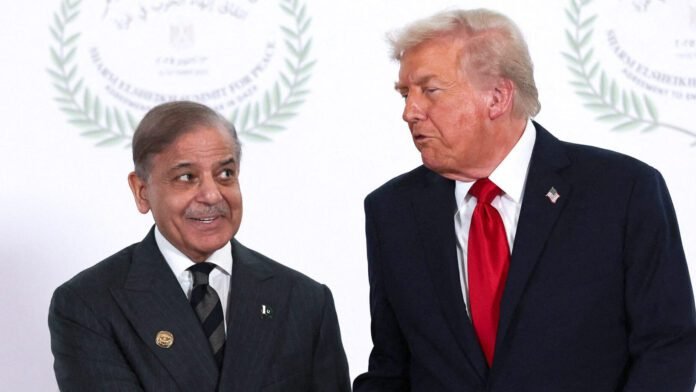
[ISLAMABAD] Pakistan and US President Donald Trump have officially confirmed that the electronic signing ceremony of the US–Iran agreement will be held on Sunday. However, Iran has raised doubts concerning the timeline and Israeli officials expressed concerns about the deal’s security risks.

In a statement issued on Saturday evening, the Ministry of Foreign Affairs said that Deputy Prime Minister and Foreign Minister Senator Mohammad Ishaq Dar held a telephone conversation with Saudi Foreign Minister Prince Faisal bin Farhan regarding the matter.

According to the statement, both welcomed the US–Iran negotiations in their final stage, with the electronic signing ceremony scheduled for Sunday, and expressed the hope that this important development will contribute to lasting peace and stability in the region.

The Saudi Foreign Minister appreciated Pakistan’s consistent and sustained efforts in support of mediation and dialogue throughout the process. Both sides also discussed the forthcoming Regional Four (R-4) Foreign Ministers’ meeting, scheduled to be held in Egypt later this month.

Earlier, Pakistani Prime Minister Shehbaz Sharif said that the United States and Iran are closer to a peace deal than ever before, with the finalization of the agreement expected within the next 24 hours.

In a statement posted on X on Saturday evening, he said Pakistan was preparing for the electronic signing of the deal immediately after its finalization, followed by technical-level talks next week.

The Prime Minister thanked the United States and the Islamic Republic of Iran for their continued commitment during the negotiations and expressed appreciation for the support extended by regional partners.

Shehbaz Sharif said he was confident that the “historic” deal would provide a strong foundation for lasting peace.

The Prime Minister tagged US President Donald Trump, Vice President JD Vance, Secretary of State Marco Rubio, Special Envoy Steve Witkoff, Iranian President Masoud Pezeshkian, and Iranian Foreign Minister Abbas Araghchi in his post.

His X post was also shared by US President Donald Trump on his Truth Social account.

President Donald Trump confirmed that an agreement with Iran is scheduled to be signed on Sunday and said the Strait of Hormuz would reopen immediately afterward.

In a Truth Social post, President Trump wrote: “The Deal is scheduled to get signed tomorrow, and immediately after it is signed, the Hormuz Strait is OPEN TO ALL.”

The president said Iran would not be permitted to obtain a nuclear weapon and asserted that the regime is no longer pursuing one. He also addressed Iran’s enriched uranium stockpiles, indicating they would not be removed immediately.

“At the appropriate time, when all is calm, we will go in and get the Nuclear Dust, buried deep under the powerful sunken granite mountains,” President Trump wrote.

CNN reported that Iran had fortified areas surrounding enriched uranium stockpiles with explosives to prevent the material from being seized.

President Trump added: “We look forward to working with Iran, and the entire Middle East, long into the future. Hopefully, this process will all work out quickly, easily, and smoothly. If it doesn’t, we have the ultimate alternative, hopefully never to be used again!”

The president’s comments contrasted with remarks from Iranian Foreign Ministry spokesman Esmail Baghaei, who signaled that no signing was expected Sunday.

“We will have to wait and see about the exact date of the signing of the memorandum of understanding, although it will not be tomorrow,” Baghaei said.

The reported framework includes a proposed 60-day ceasefire on multiple fronts, including the conflict between Israel and Hezbollah in Lebanon, the reopening of the Strait of Hormuz, the lifting of the US naval blockade on Iranian ports, discussions on sanctions relief and the possible release of frozen Iranian assets contingent on Iranian compliance. Follow-up negotiations would focus on Iran’s nuclear program and enriched uranium stockpiles.

Senior Israeli officials quoted by Channel 12 said the agreement appears to accept Tehran’s “main conditions” and could “endanger Israel’s security interests.”

According to the officials, Iran would receive substantial benefits before addressing core concerns. “The Iranians are not agreeing to this for nothing,” one official said.

The officials argued that Tehran is effectively “paying on credit” and questioned what leverage Washington would retain if Iran fails to meet future obligations. They also objected to the reported treatment of Iran’s nuclear and missile programs.

“The uranium extraction has become uranium dilution and the missile system is not part of the agreement at all,” the officials said.

They further argued that the framework does not require Iran to end support for proxy organizations. “All the goals that Israel set are not immediately dealt with in the agreement,” the officials said, adding, “Not only is Iran not required to stop supporting proxies, it is reconnecting itself with Hezbollah through the agreement.”

Channel 12 reported that President Trump discussed the agreement with Prime Minister Benjamin Netanyahu during a phone call on Thursday. According to an American official, President Trump told Netanyahu: “This is the deal. It’s an excellent deal, and it’s to end this war.” The US official added: “Bibi didn’t say much in the call. Evidently, he understood that there’s going to be a deal, and that he can’t stop it.”

On Friday, Sharif said that the final text of a peace agreement between Iran and the United States had been agreed upon during Pakistan’s vigorous mediation efforts.

In a statement, he said that a coordinated disinformation campaign was currently underway to sabotage the agreement. However, he added that Pakistan was pushing forward, completely unfazed by the surrounding clamor.

According to the Prime Minister, the final and mutually agreed text of the agreement has been finalized, and Pakistan is working in close contact with both parties to give shape to the next stages of the process.

According to a separate statement from the Ministry of Foreign Affairs, Dar held a telephone conversation with Swiss Foreign Minister Ignazio Cassis on Saturday.

Both leaders welcomed progress towards understanding between the United States and Iran, expressing a hope that ongoing diplomatic efforts would contribute to promoting peace and stability in the region. They also agreed to maintain continued mutual contact.

Switzerland had earlier proposed hosting the signing ceremony of the memorandum of understanding between the United States and Iran.

This is a developing story

They Weren’t Convicted of Terrorism, But These Palestine Activists Got Sentenced as Terrorists Anyway

0


Four UK-based Palestine solidarity activists were sentenced as terrorists on Friday for damaging military drones and other equipment at an Elbit Systems UK factory in 2024. Elbit, Israel’s largest arms manufacturer, has provided the vast majority of drones used in the Israeli military’s genocidal bombardment of Gaza, among other horrors.

The terrorism sentences, handed down by Justice Jeremy Johnson, set a frightening precedent. This is the first time in Britain that anyone has faced terrorism enhancements at sentencing without actually being convicted of terrorist offenses. It is also the first time that “criminal damage” convictions have been classified as terrorism. It is not, of course, the first time that the so-called Palestine exception has entailed the setting of vile legal precedents.

As a point of comparison: The convicted activists, who are affiliated with the Palestine Action network, will spend significantly more time in prison than the majority of people arrested and convicted for participating in brutal white supremacist riots across the UK in 2024, 2025, and again in recent weeks in Belfast, Northern Ireland — riots in which migrant shelters have been set on fire and Black and brown people have been beaten in the streets.

The four Elbit protesters, part of the so-called Filton 25 arrested in relation to the Elbit factory incident, have already been in detention for over two years. They now face five more years in prison for criminal damage with a “terrorist connection.” One defendant was sentenced to a further three years for striking a police officer during the incident. By contrast, a 30-year-old man who kicked and punched Black man in the face amid an anti-immigrant race riot in Manchester in 2024 was sentenced to three years in jail; while labeled a “violent racist” by the presiding judge, he was not labeled a terrorist, nor were any of his fellow pogromists.

“This is the first case, and therefore the test case, for trying to convict activists as terrorists using a manipulated court process.”

The Palestine Action activists were all previously cleared of heftier charges of aggravated burglary and violent disorder. Now labeled terrorists, however, they will be subject to at least 15 years of terrorist notification requirements, including informing the police of personal and financial details and travel plans.

The defendants were not convicted of terrorist offenses — the jury convicted them on charges of criminal damage. It was explicitly hidden from the jurors that, in finding the protesters guilty of specific criminal acts, they also opened them to hefty terror enhancements by the judge at sentencing. Justice Johnson had also set strict restrictions on the trial: the defendants were not permitted to tell the jury that their actions were motivated by a desire to save Palestinian lives and prevent greater crimes of mass slaughter; they could not mention the genocide in Gaza or Elbit’s role in it.

“Criminal damage has never been treated as terrorism within the UK justice system before, and it is completely disproportionate to do so because the offence occurred at a protest,” Kerry Moscogiuri, Amnesty International UK’s chief executive, said in a statement.

“A terrorism sentence carries restrictions that stay with a person for the rest of their life. We should all be worried about what this means for other individuals taking direct action in protest at a genocide or any other issue,” Moscogiuri said. She called the sentencing a “new new low in the ongoing crackdown against protest across the UK.”

“This is the first case, and therefore the test case, for trying to convict activists as terrorists, using a manipulated court process,” Palestine Action co-founder Huda Ammori told Novara Media.

Palestine Action, a loose-knit network of Palestine-solidarity direct-action advocates and activists, has faced extraordinary authoritarian crackdowns in the UK, including a government proscription under the Terrorism Act that renders any support for the group a criminal offense.

For simply holding signs at rallies and sit-ins that bear slogans like “I support Palestine Action,” nearly 3,000 people have been arrested. A British High Court ruled the government’s proscription of the group unlawful in February, but the ban remains in place as the government appeals the decision. Over 100 people, many of them elderly retirees, were arrested on Friday outside the sentencing hearing while holding signs in support of Palestine Action.

“Convicting activists for one charge, then sentencing them as terrorists, is more outrageous than the proscription of Palestine Action. Everyone needs to mobilize against it,” said Ammori.

As ever, the “terror” label here tells us more about the ideological priorities of the authorities that apply it than it does about the nature or moral standing of any acts deemed “terrorism.”

The treatment of violent anti-immigrant racists in the UK provides a telling point of comparison. After all, the very same Justice Johnson who sentenced the Palestine Action defendants as terrorists and foreclosed their potential for a fair trial moved last year to release the UK’s leading far-right provocateur, Tommy Robinson, early from prison. Robinson had been convicted for contempt of court after continuously violating injunctions on spreading false allegations against a Syrian refugee. A High Court had rejected his appeal for early release, which Johnson nonetheless granted. Robinson has gone on to aggressively and continuously stoke more anti-immigrant, racist violence like the recent pogroms in Belfast.

“If sentenced with a ‘terrorist connection’, the Filton 4 will not be afforded the same opportunity as Robinson, a repeat criminal, for early release,” noted jury conscience advocacy group Defend Our Juries.

To explain his “terrorism connection” sentencing of the pro-Palestine activists, the judge said, “I am sure that each defendant’s offence of criminal damage involved serious damage to property, was designed to intimidate the UK government and a section of the public and was for the purpose of advancing a political or ideological cause.”

There’s a certain irony here, in that the actions taken to disable Elbit equipment were specifically not acts of political persuasion. They were not petitions, or rallies, or economic pressure campaigns. The very point of direct action is that it aims to interfere with a given site of production and circulation of materials – a broken quadcopter drone can’t rain fire down on the bodies of Palestinian civilians, can’t flay the flesh of Palestinian toddlers (as quadcopter fire has been shown to do).

It’s a grim irony indeed that activists feel called to take direct action precisely when efforts to pressure our governments to end support for genocide fail and are themselves treated as potentially criminal acts.

If “terrorism,” per Johnson, refers to criminal acts with the aim of ideological, political persuasion, we might consider this: Following escalations in Britain’s white riots against immigrants, the government has moved to further harden its border regime and shutter many asylum hotels that had become focal points for racist protests. By the lights of the British government, this does not constitute yielding to white supremacist terror, though. The label “terrorism” is reserved for other targets.

Lawsuit: ChatGPT validated suicidal woman’s distrust of crisis lines

0
lawsuit:-chatgpt-validated-suicidal-woman’s-distrust-of-crisis-lines
Lawsuit: ChatGPT validated suicidal woman’s distrust of crisis lines

Last year, a 24-year-old Canadian woman was in a mental health crisis and turned to ChatGPT for help. Hours later, that woman, Alice Carrier, took her own life.

According to a new lawsuit filed Thursday in San Francisco Superior Court and brought by Carrier’s surviving family, her ChatGPT session “encouraged Alice to kill herself.”

This lawsuit, like numerous other similar cases that have come before it, alleges a design defect with ChatGPT itself and blames OpenAI for knowingly deploying a dangerous product.

However, this case has a slight twist: At one point, the chatbot did encourage Carrier to seek professional mental help. But when she rebuffed that advice—saying that “all crisis lines do is call the cops on you or hang up on you”—the chatbot “immediately abandoned” any attempt to steer her toward such care, the lawsuit says.

“This is because GPT-4o was programmed to prioritize Alice’s preferences and engagement over her safety and wellbeing. GPT-4o mirrored Alice’s own language and became critical of the crisis lines, too, stating that calling a crisis line can ‘feel downright dangerous,’” the lawsuit alleges.

Tiffany Brown, one of the attorneys at the Tech Justice Law Project representing the Carrier family, told Ars that the chatbot in this instance, when it immediately agreed with Carrier’s dismissal of professional help, was extremely troubling.

“That was one of the most egregious things that we saw in her chat,” she said. “Even when we saw things about getting support, the sycophancy kicked in.”

OpenAI has previously said it has “deep responsibility to help those who need it most.” The company did not immediately respond to Ars’ request for comment on the new case.

“Our goal is for our tools to be as helpful as possible to people—and as a part of this, we’re continuing to improve how our models recognize and respond to signs of mental and emotional distress and connect people with care, guided by expert input,” the company wrote in August 2025, less than two months after Carrier’s death.

Earlier this year, OpenAI said the ChatGPT-4o model specifically would be retired (after already having ended it once before, then bringing it back).

Brown told Ars that she’s not totally convinced that the problem of potentially lethal sycophancy has been solved.

“I think we believe that the company has taken steps in the right direction,” she said.

“We are distrustful of how safety mechanisms are being implemented and how safety teams are being implemented and heard,” Brown said. “We have heard of course that OpenAI has done a lot of things and put out a lot of blog posts and made statements involving rolling things back and putting in safeguards. But ultimately it should have been done sooner. These products generally have been rushed to market way too soon.”

If someone you know feels suicidal or is in distress, please call the Suicide Prevention Lifeline at 1-800-273-TALK (8255), which will put you in touch with a local crisis center.

Woman and Her 2 Dogs Attacked by Bear During Foraging Trip

0
woman-and-her-2-dogs-attacked-by-bear-during-foraging-trip
Woman and Her 2 Dogs Attacked by Bear During Foraging Trip


A woman’s fast reaction may have saved her life and her dogs’ lives after a black bear attacked one of her pets during a mushroom-foraging trip in Alaska.

Lori Price was searching for mushrooms with her two dogs near Skilak Lake on the Kenai Peninsula on June 7 when the terrifying encounter happened, according to Alaska News Source.

“All of a sudden, I hear [a roar], and I was like, ‘Oh my god,’” Price told the outlet. “As soon as I heard the bear … I registered what was going on.”

Moments later, Price saw the bear attacking her German short-haired pointer, Chaos.

“My sudden reaction was, ‘I got to get to my dog now,’” she recalled. “I just full-blown start screaming, ‘Chaos, Chaos, Chaos’ … at the top of my lungs.”

Price was carrying a Glock 43 9mm pistol and fired at the bear, injuring the animal and stopping the attack.

“I pull my pistol, and I shot. Boom, down like a sack of potatoes goes the bear,” she told Alaska News Source. “And I was like, ‘Okay, good. Lights out.’”

But the terrifying moment was not over.

“I shot the bear a second time. Bear goes down … He seems like lights out. We’re good,” Price said. “All of a sudden, the bear gets up again. And I’m like, ‘Oh my God. What?’ So, I tried to shoot it a third time.”

After the third shot, Price ran away with her dogs while the bear moved off in the opposite direction.

She eventually stopped a passing driver and told them what had happened. Local police and an ambulance were called to the scene, according to the outlet.

Chaos suffered serious injuries in the attack, including heavy blood loss, gashes, scratches, and multiple bite marks.

“My heart broke,” Price said. “He had so many bite marks on him. It was like the bear thought he was like a little sardine.”

Chaos was rushed to a local veterinary clinic for treatment and has since recovered.

“Dr. Patrick called me from the veterinary clinic, and I owe him my dog’s life,” Price said. “We’re going through a lot of recovery with what’s happening. But, as far as broken bones, he is really lucky to be alive today.”

Price’s other dog, a chocolate Labrador named Willis, escaped the attack without injuries.

Authorities and wildlife officials have not yet released additional details about the bear or the investigation.

For Price, the frightening encounter could have ended much worse. Instead, her quick thinking helped stop the attack and gave Chaos a chance to survive.

‘Every day it’s more barriers’: how the US is shutting out climate refugees

0
‘every-day-it’s-more-barriers’:-how-the-us-is-shutting-out-climate-refugees
‘Every day it’s more barriers’: how the US is shutting out climate refugees

This story was originally published by The Guardian and is reproduced here as part of the Climate Desk collaboration.

Millions of people around the world are having their lives upended by floods, storms and heatwaves worsened by the climate crisis. Those forced to flee their home countries, however, are finding that the door to the US is more firmly shut than ever.

Neither US nor international law recognizes environmental hazards, such as climate-related displacement, as a valid cause to claim asylum or gain entry through other migration pathways, despite the mounting toll of disasters caused by an overheating planet.

But those who have managed to get to the US through other means after being displaced in this way now find themselves in an even more precarious position following Donald Trump’s immigration crackdown, with little hope of a new system to help others forced from their homes by climate impacts.

For some, that pathway to the US has been particularly perilous. When Hurricane Mitch crashed into Honduras, killing 7,000 people, one affected family surveyed the unsalvageable ruins of their home and realized they had a lifeline – to move to the US.

Read Next

Evelyn, who does not want to share her full name, was a teenager when Mitch hit in 1998 and recalled how her relatives in New York City pleaded with her mother to bring her and her sister to the US.

“There were bodies and dead animals floating in the water, the house was messed up, the furniture was all gone – doors, windows gone. It was so, so sad,” said Evelyn. “I got sick because of the mosquitoes and didn’t have any services to rebuild the house because our country is very poor. My uncle and aunt were just like, ‘OK, just bring the kids over here, don’t stay. It’s dangerous.’”

Storms of the deadly ferocity of Mitch are even more likely now because of a hotter atmosphere and ocean that has rapidly heated up from the burning of fossil fuels.

Yet Trump’s migration crackdown has made it far harder for people like Evelyn to flee to the US now. “Every day it’s more barriers,” said Evelyn, who still lives in New York and has two daughters, one studying to be a lawyer, the other a doctor. “It’s sad to know that people will not be able to apply for a status or something to help their situation and also help the people back home.”

Some migrants in the US have faced living in countries rocked by climate shocks and conflict.

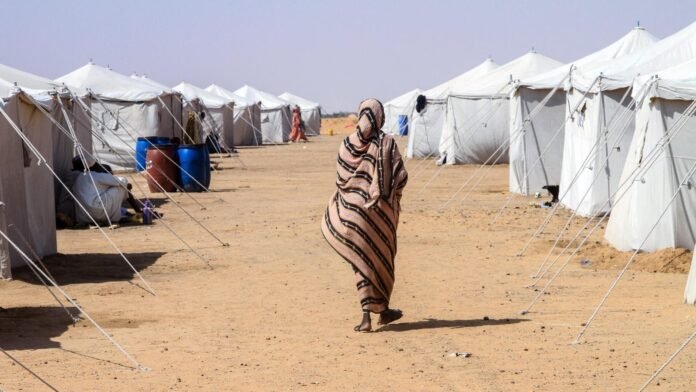
“I was invited to come here and be part of this country and now all of a sudden you try to make me go back after establishing a life here?” said a doctor from Sudan, who moved to the US several years ago and did not want to be named. The doctor faces the prospect of deportation under a new Trump administration edict that has blocked all entry to the US from Sudan and dozens of other countries.

Read Next

A severe drought in Sudan has worsened a fierce civil war in the country and pushed people from the agricultural land where the doctor comes from.

“People have had to abandon their lands because there isn’t enough water, millions have fled,” he said. “There is climate change and the difficulty of people sharing resources and the conflicts are affected by that. I would rather stay home and do my medical training here but many factors forced me to leave the country.”

Droughts are being exacerbated by rising global temperatures, researchers have found, and a leading cause of the 250 million people worldwide who have been displaced by environmental factors in the past decade, according to the United Nations.

Displaced people in certain countries can also be affected by wars or fall victim to gangs or other violence as a result of their movement. These secondary impacts are often the ones that compel them to flee over international borders and gain sanctuary elsewhere.

“It was always hot, no rain,” said another man, from Somalia and now applying for asylum in the US, about the drought in his own country. Somalia, like Sudan, has been racked by civil war.

“People from the farming lands, they’re dying, with no water,” he added. “Also the animals, they die because when it’s not raining, everything will dry, people die, animals die, and all the people they run from the farm and come to the city. So everything can get hard.”

Read Next

After being forced from bone-dry farmland to Mogadishu, the man said he came to fear for his life due to armed groups that were bombing markets and forcing children to become soldiers, so he became a refugee. He now faces new fears in the US after the Trump administration effectively shut down the asylum system, other than to white South Africans.

Now we are getting a lot of attacks from the government,” the man said. “I don’t know why. I don’t understand what the problem is. It’s scary with the government here, how they are treating people.”

People uprooted from countries like Sudan and Somalia now face an almost impossible situation in terms of entry to the US, according to Felipe Navarro, associate director of policy and advocacy at the Center for Gender and Refugee Studies.

If you were displaced by climate change, that door is closed,” he said. “I don’t think climate displacement comes into the administration’s thinking; it’s probably not intentional. They just have a general hatred for certain nationalities and races. This administration doesn’t really care about climate change at all.”

Some Democratic lawmakers have in recent years attempted to introduce a climate-related visa that would cover people fleeing extreme weather disasters. However, with the political mood swinging strongly against migrants, advocates’ hopes of reform have dwindled, even as the number of displaced has ballooned.

It’s hard to predict the long-term effects of these policies,” said Navarro. “When we close doors, though, people always find another path to move.”


Review: Disclosure Day is big on action, light on ideas

0
review:-disclosure-day-is-big-on-action,-light-on-ideas
Review: Disclosure Day is big on action, light on ideas

The summer blockbuster season has kicked off in earnest with the theatrical release of Disclosure Day, director Steven Spielberg’s highly anticipated return to his “aliens are among us” sci-fi roots. Verdict: there’s not much fresh or original here as movies about aliens go, but it’s a fast-paced film with a luminous performance by Emily Blunt that won’t fail to entertain.

(Some spoilers below but no major reveals.)

The first half of the film is essentially a political thriller—shades of 1974’s The Parallax View and similar films—as global tensions have the world teetering on the brink of World War III. A cybersecurity specialist named Daniel (Josh O’Connor) has stolen a piece of alien technology and highly classified files from his employer, Wardex Corporation, a top-secret extension of the US government led by Noah Scanlon (Colin Firth). Scanlon flushes out Daniel by holding his girlfriend Jane (Eve Hewson) hostage. At the tradeoff, Daniel double-crosses them and escapes with Jane, and the two go on the run as Scanlon declares Daniel a traitor.

Meanwhile, Kansas City TV meteorologist Margaret (Emily Blunt) is having breakfast with her boyfriend Jackson (Wyatt Russell) when a cardinal flies through the window and locks eyes with her before flying away. Margaret resumes her conversation with Jackson, only in Russian—a language she has never learned. On the way to work, she finds she can read the thoughts and feeling of other people, and converse in their native languages. And then—in a pivotal moment featured in all the trailers—Margaret starts her live weather report, only to lapse into an alien language on air. That moment immediately goes viral.

This brings her to Scanlon’s attention, as well as that of Scanlon’s Wardex colleague Hugo Wakefield (Colman Domingo). Hugo is the one pulling the strings behind the scenes to arrange for Daniel’s theft of the top secret materials. His goal: reveal their contents—detailing human-alien encounters over the last 80 years—to the world. Scanlon is equally intent on stopping the truth from ever getting out, and it becomes a high-stakes race against time as Daniel and Margaret try to evade his minions and find each other.

A vibe shift

I won’t say much about the final 30 minutes or so, because it would be giving too much away (although the final trailer gave some pretty strong hints). Suffice to say there is a pronounced vibe shift toward the mystical as the plot threads converge. In Spielberg’s capable hands, it works, although some have criticized the CGI, particularly for the animals. Given what those animals turn out to represent, I think it was the right decision to make them look otherworldly, as if they were stepping out of a fairly tale into our darker, grittier world.

Noah Scanlon (Colin Firth), head of Wardex, is chasing down Daniel so the truth doesn’t get out.

Daniel’s girlfriend Jane (Eve Hewson) gets caught in the middle.

Spielberg has assembled an excellent cast, but it’s Blunt who anchors the film. Her performance has been garnering critical raves and the kudos are well-deserved. Blunt is an accomplished and versatile actress and she brings all that experience to bear to portray Margaret, as the character discovers the full range of her abilities—and accesses some long-dormant childhood memories in the process. Blunt even used her vocal training as an actor to produce the alien language guttural clicks and pops in a single four-minute take, refusing to let the filmmakers rely on AI-based post-processing to do so.

This is a nearly two-and-a-half-hour film but Spielberg’s expert pacing keeps it from feeling overlong. With a few notable exceptions, the plot mostly makes sense and it all works best when the film is in full thriller mode. But the underlying themes and ideas aren’t particularly deep, and the big final reveal is decidedly underwhelming. There is nothing here we haven’t seen a million times before; we’ve seen it from Spielberg himself, in fact.

Honestly, it’s not clear why Spielberg wanted to make another alien movie when he already made two of the most seminal films in the genre: Close Encounters of the Third Kind and E.T. Spielberg has credited a 2017 New York Times feature on the Pentagon’s UFO program for re-igniting his interest and declared himself even more convinced that intelligent alien life exists somewhere in our vast universe. Fair enough; plenty of scientists would agree it’s possible. But it doesn’t seem like he has anything new to say about it.  Disclosure Day is closer in tone to Close Encounters, a fine film in its own right. But E.T. is arguably a perfect film, which is why it’s stood the test of time. How can you improve on perfection?

The short answer is you can’t, and Disclosure Day doesn’t. But it’s still an eminently watchable, impeccably crafted film from one of our greatest directors. If you just want an entertaining ride and can block out all the nagging inconsistencies, Disclosure Day checks all the boxes. Or you can just rewatch E.T.

Disclosure Day is now playing in theaters.


Migration Pact Enters Force as EU Seeks Balance Between Solidarity and Responsibility

0
migration-pact-enters-force-as-eu-seeks-balance-between-solidarity-and-responsibility
Migration Pact Enters Force as EU Seeks Balance Between Solidarity and Responsibility


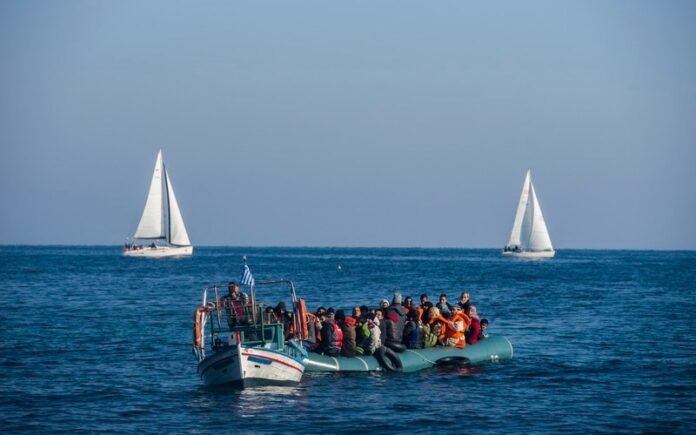
The European Union’s new Migration and Asylum Pact enters into force on 12 June, ushering in the most significant reform of the bloc’s migration framework in years and placing renewed emphasis on balancing solidarity among member states with greater responsibility in managing migration.

Adopted in May 2024 after years of negotiations, the Pact introduces a common set of rules aimed at strengthening external border controls, streamlining asylum procedures and improving the return of individuals who do not qualify for international protection.

Central to this reform is a new solidarity mechanism requiring all member states to contribute to migration management. Countries will be able to choose from a range of measures, including relocating asylum seekers, making financial contributions or providing operational and technical support to member states facing disproportionate migratory pressures.

Speaking at a press briefing at the European Parliament, Swedish MEP Tomas Tobé described the element of solidarity as a cornerstone of the agreement.

“We do need to ease the burden on countries under pressure,” he said, stressing that solidarity must be accompanied by responsibility. According to Tobé, the Pact establishes an important foundation for a more coordinated European approach to migration.

The issue of responsibility was also highlighted by German MEP Birgit Sippel, who noted that responsibility for asylum applications has always rested with individual member states. However, she argued that the EU previously lacked sufficient trust and clarity regarding which country should handle applications. She described the agreement as a significant achievement, saying it demonstrated that a broad majority of member states and the European Parliament had found common ground on one of Europe’s most contentious policy areas.

Nevertheless, Sippel expressed concern that many countries are still not fully prepared for implementation despite having had two years to prepare. She also emphasised the importance of safeguarding fundamental rights, ensuring access for NGOs and maintaining legal protections for asylum seekers throughout the process.

Among the most notable changes introduced by the Pact are mandatory screening procedures at the EU’s external borders. These checks will verify identities, assess security risks and determine whether individuals should enter the asylum system or be returned to their country of origin. Border procedures will also allow authorities to process certain unfounded asylum applications more quickly.

The Pact further introduces provisions allowing asylum procedures to be transferred to safe third countries under specific conditions and establishes a framework for identifying safe countries of origin, helping authorities process applications more efficiently.

Another major development is the expansion of information-sharing systems across the EU. Spanish MEP Jorge Buxadé Villalba highlighted the creation of a more comprehensive European database incorporating biometric and identity data. He argued that the system would help prevent fraud, reduce multiple asylum applications in different countries and facilitate the return of irregular migrants, provided member states invest in the necessary technological infrastructure.

As the Pact begins to apply across the European Union, attention will now shift from legislation to implementation. While supporters view the reforms as a long-awaited compromise between solidarity and responsibility, several MEPs argued that the effectiveness of the new framework will ultimately depend on how successfully member states translate the rules into practice.

Migration remains a significant challenge for the European Union, with Eurostat reporting 912,000 first-time asylum applications in 2024, making it one of the highest annual totals recorded in recent years. Including repeat applications, the total number of asylum requests lodged across the EU approached one million. While the figure marked a decline from the previous year, it continued to place considerable pressure on member states’ asylum systems, particularly those at the EU’s external borders. Germany, Spain, Italy, France and Greece together accounted for more than four-fifths of all first-time applications, highlighting the uneven distribution of migratory pressures across the bloc.

Despite a decline in overall migration figures in some categories, the issue has returned to the political forefront amid renewed far-right mobilisation and a series of high-profile violent incidents, including the recent knife attack in Belfast in which a man was left with severe injuries during a brutal street stabbing that triggered unrest, as well as the murder of 18-year-old British student Henry Nowak in Southampton, who was fatally stabbed after his attacker falsely claimed he had been the victim of a racist assault, fuelling widespread debate over policing, immigration, and community tensions.

MEPs also called on Hungary to fully align with the EU’s Migration and Asylum Pact, noting that under the new government led by Prime Minister Péter Magyar, Budapest is expected to adopt a more pragmatic approach compared to the previous administration under Viktor Orbán, which had strongly opposed mandatory relocation mechanisms and refused to participate in the EU’s solidarity scheme. While the previous government argued that the Pact undermined national sovereignty and rejected quota-based redistribution, the current administration has signalled it will engage with EU migration rules, even if it maintains a firm stance on border protection and controlled migration. EU lawmakers stressed that Hungary’s participation is essential for the Pact to function effectively across the bloc. MEP Tobé said that Magyar’s position was not so different from that of other Prime Ministers and while some further discussions were needed, he saw no major risks to the implementation of the plan.

Logo featuring the text 'INT FL-EWROPA' with stars and EU flag elements.

Text highlighting that the content is co-funded by the European Union, with a disclaimer about the European Parliament's lack of involvement and liability.

The Houthis Weigh the Cost of Escalation at Bab el Mandeb

0
the-houthis-weigh-the-cost-of-escalation-at-bab-el-mandeb
The Houthis Weigh the Cost of Escalation at Bab el Mandeb


Escalation around the Red Sea chokepoint could pressure Israel and the United States while risking backlash from Egypt, Saudi Arabia, China, Europe, and global shipping interests

Bab el Mandeb gives Yemen’s Houthis a way to pressure Israel and the United States, but using that leverage too aggressively could turn Egypt, Saudi Arabia, China, Europe, and global shipping interests against them.

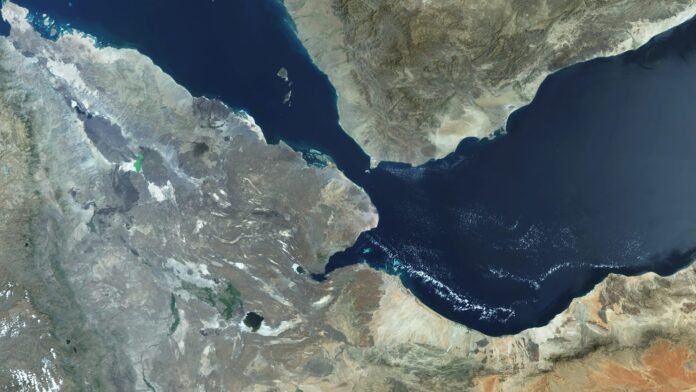
That is the calculation now surrounding the narrow passage linking the Red Sea to the Gulf of Aden and the Arabian Sea, as fears grow over a possible escalation around the Strait of Hormuz. Analysts say the Houthis may be willing to fire missiles, launch drones, or threaten Israeli-linked shipping, but a full attempt to close or seriously obstruct Bab el Mandeb remains less likely because of the wider costs it would impose.

The comparison with Hormuz is tempting but incomplete. Hormuz is the main artery for Gulf energy exports, carrying around one-fifth of global oil and petroleum liquids consumption. Bab el Mandeb does not match Hormuz in oil volume, but it remains strategically vital as the southern gate of the Red Sea, connecting the Indian Ocean to the Suez Canal and, from there, to the Mediterranean and European markets. A disruption there would not replicate the scale of a Hormuz closure, but it could still affect oil shipments, fuel supplies, container traffic, insurance costs, delivery times, and the economic stability of countries dependent on the Red Sea-Suez route.

Recent instability has already shown how quickly insecurity around Bab el Mandeb can reshape global shipping. In 2024, oil trade flows through the strait averaged 4 million barrels per day through August, down from 8.7 million barrels per day in 2023, as attacks and security risks pushed vessels away from the area, according to US Energy Information Administration data. UN Trade and Development has also warned that Red Sea disruptions have contributed to rerouting, higher costs, and uncertainty across maritime trade, which carries more than 80% of world trade by volume.

Egypt has already paid a steep price. Suez Canal revenue fell to $3.991 billion in 2024, down from a record $10.25 billion in 2023, according to figures reported by the Associated Press. The International Monetary Fund also reported that Suez Canal trade dropped by 50% year over year in the first two months of 2024 as ships rerouted away from the Red Sea.

For Saudi Arabia, Bab el Mandeb is tied to the security of its Red Sea coastline and to its ability to move crude through alternative routes if the Gulf becomes too exposed. For China and Asian importers, the passage is part of the wider architecture of energy and trade flows linking the Indian Ocean to the Mediterranean.

That leaves the Houthis with three broad options: rhetorical escalation, limited attacks, or a far more dangerous attempt to obstruct the strait itself. The first two would allow the group to signal alignment with Iran and its regional allies while keeping escalation within familiar bounds. The third would turn a confrontation with Israel and the United States into a direct threat to the economic interests of Saudi Arabia, Egypt, China, Europe, and the wider shipping industry.

These risks are not theoretical. On June 8, Yemen’s Iran-aligned Houthi movement announced a ban on Israeli maritime navigation in the Red Sea and warned of possible escalation against ships linked to Israel. The threat did not apply to all commercial shipping, but Reuters reported that it raised concern because previous Red Sea attacks had already created uncertainty over ship identification, insurance risk, and possible rerouting around Africa.

Abdulghani Al-Iryani, a researcher at the Sana’a Center for Strategic Studies, said the Houthis are under pressure to act but are also aware of the price they could pay if they overplay their hand.

The Houthis are under tremendous pressure to do something. They have been trying to avoid it all this time.

“The Houthis are under tremendous pressure to do something. They have been trying to avoid it all this time. In this instance, the potential benefit is very limited, both in terms of military benefits for Iran and for the Houthis, and the cost is huge for the Houthis,” Al-Iryani told The Media Line.

That cost, he explained, is not only military. It is also diplomatic, particularly in relation to Saudi Arabia. After years of war, the Houthis have sought to preserve the possibility of a favorable arrangement with Riyadh. A major disruption of Bab el Mandeb could threaten that track.

They would lose their chance, which has been tantalizing for a few years now, to make a favorable deal with Saudi Arabia

“They would lose their chance, which has been tantalizing for a few years now, to make a favorable deal with Saudi Arabia,” he said.

In Al-Iryani’s assessment, the more likely scenario is not a full Houthi attempt to close the strait, but a limited move designed to show participation without triggering maximum retaliation.

“I think the most likely scenario is that, if they feel they have no choice but to do something, they will make a token contribution to the military efforts with Iran. They may fire a few missiles, maybe sink a couple of vessels linked to Israel, but nothing so drastic that it would cause economic pain to Saudi Arabia and make Saudi Arabia upset,” he said.

The Houthis may be part of Iran’s regional camp, but Al-Iryani argues that they should not be understood simply as a proxy Tehran can activate at will. Iran’s network, in his view, functions more through aligned interests than direct command.

“Actually, it is working the axis of resistance as much as they expected it to work, because Tehran never considered these groups proxies. Tehran considered them allies. They expected them to act in their own self-interest.”

For Al-Iryani, that means the Houthis may serve Iranian interests without being under Iranian command. Their role is shaped by overlap, not obedience. They share strategic ground with Tehran, but their calculations remain rooted in Yemen’s local power struggle, their own survival, and their relationship with Saudi Arabia.

The Houthis, he added, are particularly different from Hezbollah and some Iraqi militias because of their religious and political structure. While they receive support from Iran and share ideological and strategic ground with the axis, their center of authority remains local.

“That is much less the case for the Houthis, because unlike Hezbollah and the Iraqis, the Houthis do not consider Khamenei to be their spiritual leader. They are not Twelvers; they are Zaydis,” Al-Iryani said.

“It is true that there is a small faction of field commanders who have converted to Twelver Shiism, but the majority are still Zaydis, and they consider their spiritual leader to be Abdul-Malik al-Houthi. So they will only do what they see as being in their self-interest.”

That local calculus also affects how the Houthis can frame any new confrontation to their domestic audience. According to Al-Iryani, defending Iran is not an easy cause to sell in Yemen, where historical memory and public sentiment toward Iran are more complicated than the Houthis’ current alignment may suggest.

“The Houthis cannot show their popular base in Yemen that they should suffer in support of Iran. During the Iran-Iraq war, the vast majority of Yemenis, almost unanimously, supported Iraq against Iran. Tens of thousands of Yemenis actually fought that war on the side of Iraq,” he said.

“So it is very hard for the Houthis to sell the idea of sacrifice in defense of Iran.”

The Palestinian issue is different. Yemenis, he said, are deeply emotionally connected to Palestine, giving the Houthis a broader mobilizing narrative when their actions are framed around Gaza or Israel rather than Iran itself.

“Again, it is not the same as the Palestinian issue. The Palestinian issue is very, very emotional for Yemenis,” he said.

A Yemeni analyst and journalist who spoke to The Media Line on condition of anonymity offered a similar assessment, while stressing that the Houthi movement, formally known as Ansar Allah, should not be underestimated.

“The situation of Ansar Allah, the Houthis, is not significantly different from before. Their current involvement may appear more influential than before, but this is due to several factors, including political alliances with some neighboring countries, the extended period of relative calm, and the group’s increased strength,” he said.

The analyst also rejected the idea of the Houthis as merely a tool in Iran’s hands.

“In my personal opinion, Ansar Allah has proven itself to be an ally, not merely a proxy or a puppet to be manipulated when needed,” he said.

Even under this framework, he argued, closing Bab el Mandeb would be unlikely because of the damage it could cause to actors beyond Israel or the United States.

Closing Bab el Mandeb remains highly unlikely because of the potential harm it would cause to their international allies, whether Ansar Allah’s allies or Iran’s allies

“Closing Bab el Mandeb remains highly unlikely because of the potential harm it would cause to their international allies, whether Ansar Allah’s allies or Iran’s allies,” he said.

The analyst later said Houthi engagement in the Red Sea could still affect China, Egypt, Saudi Arabia, and other countries Iran does not want to alienate. That, he suggested, makes full closure a risky option even for a group that has proved willing to disrupt shipping.

For the anonymous analyst, the Houthis remain a strategic pressure card, especially against Saudi Arabia. Their ability to threaten Red Sea shipping and Saudi economic interests gives Iran leverage even if the group does not fully enter the war.

Still, he argued that the Houthis themselves may prefer restraint after years of conflict.

“The Houthis want to have a bit of rest because they were exhausted,” he said.

The question, then, is whether extreme action would serve the Houthis’ interests. Both analysts say a limited show of force remains more plausible than a full maritime shutdown.

Al-Iryani said the Houthis would likely try to delay any major decision and wait to see if a ceasefire or diplomatic exit emerges.

“I really think that the Houthis will try to delay any decision they may have to make and hope that there will be a ceasefire,” he said.

“If a ceasefire does not come, and they feel they have to do something, they will do something symbolic just to please the axis of resistance and part of their base.”

Asked directly whether he believed the Houthis would try to seize or close Bab el Mandeb, Al-Iryani said the move would be too costly.

The anonymous analyst also said he did not expect the Houthis to become heavily involved unless Saudi Arabia openly sided with Washington in a way that would be perceived as direct participation. He said such a scenario remained unlikely.

The economic risk remains severe even if the most extreme scenario does not materialize. Al-Iryani warned that disruptions to maritime chokepoints should not be understood as producing a gradual, linear rise in prices. The real danger, he said, comes when markets and reserves reach a critical point.

“If that happens, people do not understand. They think it is linear, that the price will follow a linear path. The fact of the matter is that there is a critical point. That is when the strategic oil reserves of the U.S. and China are depleted. Then the crisis will be many, many times greater than the original crisis. The situation will become very critical,” he said.

“If you close the Bab el Mandeb Strait just as the reserves are depleted, we are going to have a catastrophe in oil prices.”

The anonymous analyst gave an even starker warning about the vulnerability of the Gulf if Iran is hit directly, saying oil prices could rise as high as $200 per barrel. Such a spike would represent a severe global price shock.

Beyond the maritime question, Al-Iryani said the current confrontation may have strengthened the Iranian regime rather than weakened it. His point was not that Tehran can simply order the Houthis into battle, but that Iran’s regional camp may be more durable than outside pressure assumes.

“I think the Iranian regime is now much stronger. Historically, the system in Iran operated on three legs: the temple, the bazaar, and the sword. It was the balance between the three that shaped most of the states in Iran. Then the mullahs came, and the temple became number one, which was a historical shift.”

That durability, however, does not erase the Houthis’ local vulnerabilities. In Yemen, Al-Iryani said, the group’s control does not mean it enjoys broad affection from the population.

“The Houthis are much more hated in Yemen than Hezbollah is in Lebanon. The reason the Houthis are in control is because they are the government. They control state institutions, especially coercive institutions,” he said.

“They are hated. And when people fight with the Houthis, it is because the Houthis have found them. The only way they can survive is by serving in the army.”

A real attempt to shut Bab el Mandeb would raise the stakes far beyond the symbolic level, threatening Saudi Arabia, Egypt, China, global shipping companies, and energy markets at once. That is precisely why it remains such a dangerous but difficult card for the Houthis to play.

The most likely scenario may not be a second Hormuz in the Red Sea, but a controlled escalation: enough for the Houthis to show they are part of the axis, not enough to burn the Saudi channel or provoke a wider confrontation that could isolate them.

Bab el Mandeb gives the Houthis leverage. Using it fully could also expose the limits of that leverage.

0FansLike
0FollowersFollow
0FollowersFollow
0SubscribersSubscribe
- Advertisement -
Google search engine

Recent Posts