In California, a Former Biden Official Will Face Fox News Personality for Governor
A longtime fixture of the Democratic establishment in California and a Republican former Fox News host will head to a runoff in the race to be the state’s next governor in November.
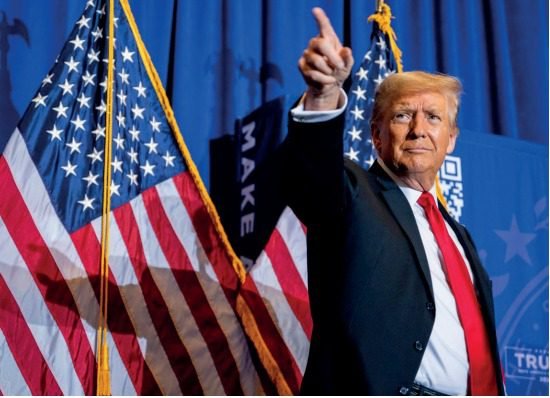
Steve Hilton, a conservative former political aide and commentator, finished second Tuesday, a week after the state’s nonpartisan primary day. He will compete with Xavier Becerra, the former Health and Human Services secretary under President Joe Biden. The pair edged out Tom Steyer, a billionaire philanthropist who ran on a progressive platform.
The ascension of Hilton, a conservative power player endorsed by President Donald Trump, suggests dissatisfaction with the slate of Democratic candidates on offer in the open primary and an inability for Steyer, who has never held elected office, to break through with a campaign vowing to help redistribute the wealth.
It also offers Becerra an easier path to election, with California voters expected to skew heavily Democratic in November.
Becerra, who ran a relatively quiet campaign focused on his credentials, previously served as California attorney general under Govs. Jerry Brown and Gavin Newsom. He came under fire for his work in that office, as The Intercept reported last month. In 2018, Becerra’s office pushed for the state Supreme Court to artificially inflate the IQ of an intellectually disabled Black man in order to execute him, and he fought to uphold death penalty sentences during the Covid pandemic, despite a moratorium Newsom imposed. Becerra has also been criticized for his alleged mishandling of migrant children who were in his office’s care while serving as HHS secretary.
His primary campaign managed to overcome those criticisms, racking up high-profile endorsements from figures including Reps. Jim Clyburn, D-S.C., and Ted Lieu, D-Calif., as well as several notable labor unions. Becerra’s campaign was also boosted by the rapid and scandalous departure of former front-runner Rep. Eric Swalwell, D-Calif., after multiple women accused him of sexual misconduct, including rape. Swalwell denied the allegations but swiftly resigned from Congress and ended his gubernatorial campaign, clearing a path in the centrist lane that Becerra quickly filled.
Hilton, meanwhile, spent months neck and neck in the polls with Steyer, a former hedge fund manager who used his immense wealth to fund his campaign yet ran on what was widely considered the most progressive platform in the race, earning the head-turning endorsement of Our Revolution, the group founded by Sen. Bernie Sanders, I-Vt.
While he’s a relative unknown in the United States, Hilton has a reputation in the United Kingdom for helping to orchestrate the rise of former British Prime Minister David Cameron. If he manages to defeat Becerra in November, Hilton will be California’s first Republican governor since Arnold Schwarzenegger, the architect of the state’s open primary system.
Anthropic shuts down Fable, Mythos models following Trump admin directive
Anthropic completely shut off access to its Mythos 5 and Fable 5 models Friday night, just days after they were launched.
The move comes after Anthropic’s receipt of a US Commerce Department directive Friday evening, subjecting the new models to export controls restricting their use anywhere outside the United States. In a message posted Friday night, Anthropic said the only way for it to ensure compliance with that government order in the immediate term “is that we must abruptly disable Fable 5 and Mythos 5 for all our customers.” Access to other Anthropic models is not affected.
An Axios report cited an administration official saying that the administration is concerned by reports of a jailbreak that reportedly gets around broad classifier-based safeguards meant to block Fable 5 prompts regarding cybersecurity, chemistry, and biology. The administration reportedly requested a pause in the release of these models to gain time for the “national security apparatus” to be “hardened” against this kind of threat. That hardening could be complete “in the next few weeks,” Axios’ source suggested.
In its Friday night announcement post, Anthropic said the government has only provided it with “verbal evidence of a potential narrow, non-universal jailbreak” that involves getting Fable 5 to review a specific codebase for software flaws. The company says it has only seen evidence of this kind of jailbreak being used to find “minor” and “relatively simple” software vulnerabilities, and that other publicly available models like GPT-5.5 has similar capabilities on this score.
“We are complying with the government’s legal directive and are removing access to Fable 5 and Mythos 5 for all users,” Anthropic writes. “However, we disagree that the finding of a narrow potential jailbreak should be cause for recalling a commercial model deployed to hundreds of millions of people. If this standard was applied across the industry, we believe it would essentially halt all new model deployments for all frontier model providers.”
Earlier this month, President Trump signed an executive order urging AI model makers to submit to voluntary government security testing. That order came after an initial signing ceremony planned for last month was abruptly postponed amid reported concerns of disagreements about it within the administration.
Anthropic apologized to customers for a “disruption” that it said is the result of a “misunderstanding,” and said it will release more details about the situation in the next 24 hours.
Former Olympic runner Ciarán Ó Lionáird has died suddenly at just 38 years old, leaving the international track world stunned and heartbroken.
The Irish Olympian’s death was confirmed Thursday by his longtime athletics club, Leevale AC, which said Ó Lionáird died in Montreal, Canada. His cause of death has not been revealed.
The news sent shockwaves through the running community, where Ó Lionáird was remembered not only as a standout athlete, but as a beloved teammate and friend.
“Ciarán was an exceptional athlete who represented his club, county and country with distinction, but he was equally valued as a wonderful clubman, teammate and friend,” Leevale AC said in a statement.
The club said it was “deeply saddened by his untimely passing,” adding that Ó Lionáird “will be dearly missed by his family, friends, his adopted Leevale family, the Shines, and the wider athletics community.”
Ó Lionáird proudly represented Ireland on one of the biggest stages in sports, competing in the 1500m at the 2012 London Olympics.
He also captured a bronze medal in the 3000m at the 2013 European Indoor Championships, cementing his place as one of Ireland’s respected distance runners.
After retiring in 2016 ahead of the Rio Olympics, Ó Lionáird later attempted a comeback in hopes of reaching the Tokyo Games. Though he fell short, his determination earned admiration from fans and fellow athletes.
His sudden death at 38 has left many asking questions, as no details surrounding the cause have been made public.
For now, tributes are pouring in for an athlete remembered as a fierce competitor, a loyal clubman, and a man gone far too soon.
Here’s what Jeff Bezos’ new startup Prometheus will do
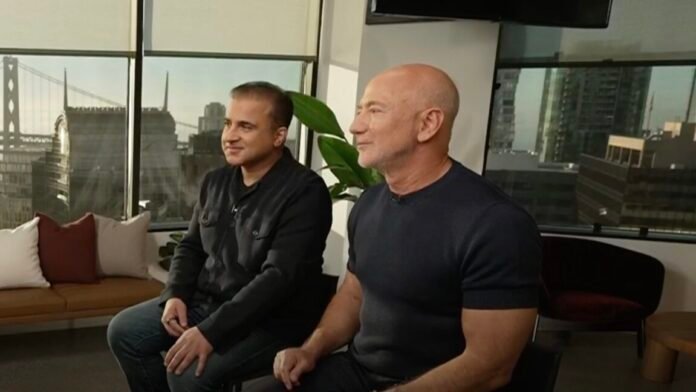
In November, Jeff Bezos announced that he would become co-CEO of a new startup called Prometheus. At the time, the startup said it would focus on “physical AI”—an increasingly common term for applying the same deep learning principles behind large language models or generative AI to things like robotics and manufacturing—but specifics were scarce. Now, with a major new round of funding, Bezos and co-founder Vik Bajaj have talked about it in slightly more detail.
The funding round is significant—$12 billion now, after an initial round of $6.2 billion last year, for a valuation of $41 billion. The funding comes from JPMorgan Chase, Goldman Sachs, BlackRock, and others, plus a sizable amount from Bezos’ coffers. The startup currently employs 150 people.
Much of that funding will be put toward buying compute. “One of the reasons we’ve had to raise a significant amount of funding is because… what we’re doing is very compute-intensive and we need to create that data,” Bezos told CNBC.
So what exactly are they doing? Bezos summarized a significant portion of the company’s focus as creating an “artificial general engineer.”
“All societal wealth is driven by invention,” Bezos told The New York Times. “Six thousand years ago, somebody invented the plow, and we all got wealthier. Then, much later, somebody invented the steam engine, and we all got wealthier.” He went on to say that “what Prometheus seeks to do is to offer a set of tools that dramatically accelerates that invention loop.”
Speaking to CNBC, he used the same examples but described the company’s goal in loftier terms. He said the objective is to produce technological breakthroughs that will produce “civilizational wealth,” not just wealth for a single individual or company.
Bajaj described the team’s goals in slightly more pragmatic terms. He said designing new technologies “takes a thousand human minds creatively working together” and is “one of the most complex things we do as a species.” He added that the engineers behind those breakthroughs “use tools that really haven’t changed for decades. Part of what we want to do is arm them with tools that allow them to come up with those designs much more quickly.”
A couple of months ago, The New York Times reported that Bezos and Bajaj are working to raise a $100 billion investment fund to go into companies that could leverage and benefit directly from what Prometheus may produce. That could include some of Bezos’ own other ventures, such as Blue Origin.
It’s still early for Prometheus, and no specific new products or technologies have been announced. Prometheus is not operating in a vacuum, either. There are numerous other startups exploring AI’s applications in the physical world, from training world models to drive policies for robotics, to overhauling manufacturing with more robust and capable automation. With this round, though, Prometheus has a significant funding advantage over most competitors.
Trump confident on deal but Iran says discussions still ongoing
Iran has stated that no final agreement has yet been reached with the United States, despite comments by Donald Trump suggesting that a deal could be signed within days, Reuters reported.
Trump expressed optimism that an agreement to end the conflict could be concluded as early as this weekend, potentially paving the way for the reopening of the Strait of Hormuz to international shipping.
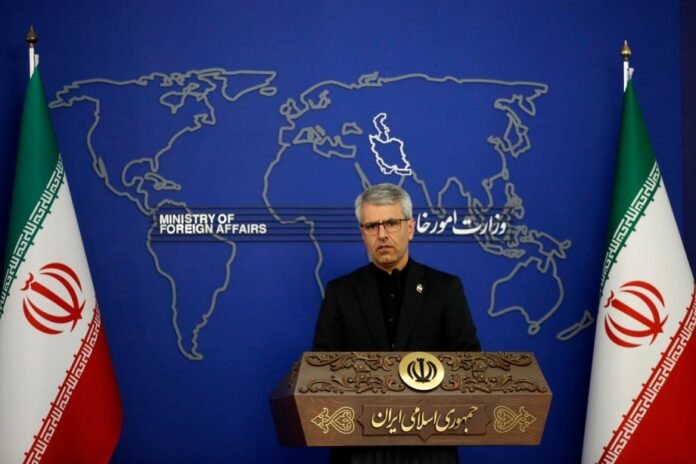
However, Iranian officials stressed that discussions remain ongoing. Foreign Ministry spokesperson Esmaeil Baghaei said that while significant progress has been made and much of the proposed framework has been agreed upon, several key issues remain unresolved.
“We have not reached a final conclusion on this matter,” Baghaei said, noting that the proposal is still being reviewed by the relevant authorities in Tehran.
If finalised, the agreement would represent a significant breakthrough in efforts to end months of hostilities that have unsettled global energy markets and disrupted trade routes.
The latest developments come amid continued tensions, with both sides exchanging strikes in recent days despite an earlier ceasefire announcement, fuelling concerns over a possible escalation.
Iran is seeking the removal of sanctions, access to frozen assets and recognition of its interests in the Strait of Hormuz, while Washington maintains that any agreement must ensure Iran cannot develop nuclear weapons.
Diplomatic contacts remain active as regional and international stakeholders closely monitor the situation.
Iran says understandings reached on most issues in talks with US
Iran’s Foreign Ministry spokesman Esmaeil Baghaei said Friday that Tehran has reached understandings on most issues under discussion with the United States and is conducting final internal reviews of a proposed agreement, Anadolu reports.
Speaking on state television, Baghaei said Foreign Minister Abbas Araghchi’s earlier remarks that the proposed Islamabad Memorandum of Understanding had “never been closer” accurately reflected the current state of negotiations.
“At present, understanding has been reached on the majority of the issues, and we are in the final stage of internal reviews,” Baghaei said.
He said meetings involving relevant Iranian institutions were underway to examine the draft text and determine Tehran’s final position.
Baghaei argued that an agreement could have been reached weeks ago, but accused the US side of repeatedly changing its positions, issuing contradictory statements and introducing new demands that prolonged the process.
He also rejected accusations that Iran lacked goodwill in the negotiations, saying Tehran had consistently approached the talks in a constructive manner.
READ: Trump calls Iranian foreign minister’s post on possible US-Iran deal ‘very positive’: Report
The spokesman declined to confirm media reports regarding the contents of the negotiations.
“None of the published reports can be officially confirmed,” he said, adding that details would be announced once a final conclusion is reached.
Baghaei said the decision-making process requires consensus among relevant authorities and institutions before any agreement can be approved.
The remarks came hours after Araghchi said in a post on the US social media platform X that the proposed Islamabad Memorandum of Understanding between Iran and the United States “has never been closer” and urged media outlets to refrain from speculation until the process is finalized.
The Pakistan-mediated negotiations have focused on ending hostilities between Iran and the United States, reopening the Strait of Hormuz to maritime traffic and reaching consensus on Iran’s nuclear program.
Iranian officials have repeatedly said a large portion of the text has already been agreed upon, while accusing Washington of slowing progress through shifting positions and contradictory statements.
READ: US, Iran agree on peace deal’s ‘final text’ to end war: Pakistan
David Hockney, Influential British Artist and Pop Art Pioneer, Dies at 88
David Hockney, the British artist whose work helped shape modern pop art and who was among the most influential British painters of the 20th and 21st century, has died at the age of 88.
Born on 9 July 1937 in Bradford, West Riding of Yorkshire, Hockney built a career spanning several artistic disciplines, including painting, drawing, printmaking, photography, and stage design. He emerged as a leading figure in the pop art movement of the 1960s and remained active in the art world for decades.
David Hockney, Portrait of an Artist (Pool with Two Figures), 1972. (Christie’s, Fair Use/Wikimedia Commons)
His work evolved through multiple styles and mediums. In addition to swimming pool paintings for which he became widely known, Hockney created portraits using photo-collage techniques, explored abstract interpretations of landscapes, and later embraced emerging technology, producing artworks that incorporated 3D methods.
Before pursuing his artistic career full-time, Hockney completed two years of national service as a hospital orderly after registering as a conscientious objector. He later enrolled at London’s Royal College of Art in 1959.
Recognizable for his bleached blond hair and distinctive round glasses, Hockney became a familiar presence in London and American cultural circles during the 1960s. His friendships included prominent figures such as Andy Warhol, Ossie Clark, and Dennis Hopper.
Hockney continued producing new work late into his life despite declining health. Nine months before his death, a major retrospective of his career concluded at the Louis Vuitton Foundation in Paris. Even after the exhibition closed, he remained focused on new projects.
Working from a London studio and using a wheelchair, Hockney continued painting while dealing with health challenges.
In an interview with The New York Times before the Paris exhibition opened in April 2025, he spoke about his plans to keep working.
“I just go on with my work,” he told The New York Times before the show opened in April 2025. “When I come back from Paris, I’m going to carry on painting.”
Hockney’s career spanned more than six decades and included contributions across a wide range of artistic forms, from traditional painting and printmaking to photography and digital experimentation.
D.C. Mayor Candidates Are Fixating on Teen Hangouts — and Turning the Cops on Them
Kenyan McDuffie stood in a dark suit and gingham tie in front of an infamous Chipotle in southeast Washington, D.C. The day before, a video of teenagers fighting inside the fast-casual restaurant had gone viral — and presented the former city councilmember a political opportunity in his mayoral campaign.
His opponent, City Council and Democratic Socialists of America member Janeese Lewis George, was “sitting on her hands and playing politics” by opposing a police-enforced curfew for minors, McDuffie said.
So-called “teen takeovers,” or large, coordinated meetups of teenagers in public spaces, have become a key political cause in D.C., where McDuffie argues the city needs to crack down to stave off the worst excesses of the federal government. His critics say he’s falling into a rhetorical trap laid by the Trump administration.
“When teen takeovers threaten the safety of residents and the young people themselves,” McDuffie wrote in a letter to the City Council, “the Council cannot afford to leave law enforcement and communities without every appropriate tool at their disposal.”
Last summer, before the federal takeover of D.C., McDuffie and Lewis George both voted in favor of broad emergency curfew powers that allowed Mayor Muriel Bowser to create targeted zones that youth could not enter after certain hours, enforced by local police. D.C. has long had limited curfew laws on the books, and an update to the city’s permanent curfew law with new restrictions on enforcement is set to go into effect mid-July.
The candidates, who will face off in a Democratic primary to replace Bowser on Tuesday, have since split. Lewis George voted against both extending the emergency and implementing the new permanent law. McDuffie, though no longer on the council, said he supported both.
To some, the scene at the Chipotle represented lawlessness and amplified their fears around the city’s youth. To others, the incident, which police told local media caused no injuries or damage, failed to warrant curfew policies which would increase arrests and police harassment of teenagers, primarily Black teens.
The neighborhood around the Chipotle is beautiful, said Alex Dodds, “designed as a space where people should come and gather.”
“When Black children do that, they are seen as criminals,” said Dodds, campaign director for Free DC, an organization advocating for the city’s sovereignty that has endorsed Lewis George. “I don’t even understand what we want children to do.”
A few miles away from McDuffie’s Chipotle press conference, Jeanine Pirro, U.S. attorney for the District of Columbia, struck an eerily similar chord to McDuffie.
“Teen takeovers … have terrorized our neighborhoods,” said the former Fox News host. “They have shut down businesses, and they have wasted hard-earned tax dollars of law-abiding residents who just want to live and work in peace.”
Federal law enforcement officials would soon begin a “summer surge” targeting teenagers, Pirro warned. She added that her office would begin “aggressively prosecuting parents” whose children violated curfew laws, threatening them with up to six months in prison.
McDuffie has weaponized the teen gatherings in campaign advertisements and public comments to argue that strict curfew zones — and the tough-on-crime mayoral candidate pushing them — will help forestall more aggressive actions by the Trump administration.
But advocates for D.C. sovereignty and youth in the criminal justice system warned that his rhetoric would only legitimize the administration’s efforts to incarcerate D.C. youth on a large scale, and that there is no evidence teen curfews reduce violent crime. Instead, they say, such curfews would increase the rates of arrest and harassment, particularly of Black teens, at a time when the city is swarming with federal agents.
“Kenyan McDuffie is much more buying into the Trump administration’s playbook of lock-them-up and using fear to gain support,” said Dodds. “It’s so frustrating for our elected leaders … to obey in advance and go out of their way to press for a youth curfew.”
Trump personally weighed in on the race on Thursday, threatening to “take back Washington, run it on the federal basis,” if Lewis George were elected.
The theory in favor of juvenile curfews is that if you deter teens from gathering, they’ll have fewer opportunities to commit crime. But that relies on a misconception, said Riya Saha Shah, chief executive officer of the Juvenile Law Center.
“Social science research has shown us that [curfews] are actually not effective at reducing crime or victimization,” said Shah. “It could result in increased crime or displaced crime in different places or at different hours of the day.”
In 2015, research on juvenile curfews in D.C. found that they actually increased rates of gun violence among youth. Researchers theorized that the emptier streets that resulted from curfew policies could make “remaining offenders more comfortable opening fire.”
While juvenile curfews do not reduce crime, Shah said, they do increase run-ins with police, particularly for Black and brown children. A 2011 study found that African American youths were 269 percent more likely to be arrested for violating curfew laws than white ones. The laws can also end up criminalizing teenagers for being unhoused, and an estimated 10,000 children in D.C. experience housing insecurity or homelessness every year.
“They may be brought into a system by virtue simply that they don’t have the ability to go home,” Shah said.
In D.C., where nearly 20 federal agencies have been deployed, these types of curfews pose immense risks for teens. “There are so many different kinds of law enforcement all over the city now,” said Shah. “It really increases the likelihood that children will be arrested.”
“There are so many different kinds of law enforcement all over the city now. It really increases the likelihood that children will be arrested.”
In his letter to the City Council urging extended youth curfews, McDuffie argued the curfews were necessary to protect “Home Rule,” the 1970s law that gave Washington, D.C., relative independence from the federal government.
“President Donald Trump has deployed the National Guard on D.C. streets and floated proposals to try 14-year-olds as adults. Every week that this Council allows curfew authority to lapse, it hands the White House and its allies fresh evidence for that narrative and justification for federal intervention,” he wrote.
Lewis George, by contrast, has emphasized that her primary objection to the curfew extension is the intense presence of federal law enforcement in the city.
Despite the lack of evidence to support the idea that teen curfews lower violent crime rates, the policy is overwhelmingly popular with D.C. voters. A Washington Post-Schar School poll found that 71 percent of voters supported imposing curfews in certain parts of the city at night.
Though her current position is unpopular, Lewis George has continued to surge in the polls, leading McDuffie by 11 points in the same poll. Internal numbers shared with The Intercept have her up further.
But Lewis George has not done as well as her opponent with Black voters, a key constituency in the capital sometimes known as Chocolate City. In the Washington Post-Schar School poll, she trailed McDuffie by 5 points with Black voters. A spokesperson for her campaign said that Lewis George was proud of the multiracial coalition she had built, and argued that she does best in the most racially diverse areas of the city.
The relationship between race and power is complicated in Washington D.C. Rapid gentrification has pushed out much of the city’s Black population, displacing an estimated 20,000 between 2000 and 2013. Between 2000 and 2020 Black residents went from being 59 percent of the population to 41 percent. And yet, the city’s political leadership has largely remained Black — it’s had a Black mayor since Home Rule was established.
“There’s an element of disappointment with the Democrats in the city.”
Kurtis Hagans, chair of Metro DC DSA, which endorsed Lewis George, said it is understandable that people with long-standing ties to the city would be skeptical of someone promising change at the scale Lewis George is calling for. She has pledged to build 72,000 new homes in five years to deal with the city’s housing affordability crisis — double the goals set by McDuffie and Bowser; called for stronger labor protections; promised to vigorously enforce wage theft laws; and vowed to establish a Federal Workforce Transition Center to retrain the thousands of federal workers who were laid off by the Trump administration.
“There’s an element of disappointment with the Democrats in the city, folks who have before promised big change and transformative change, and then have let them down,” said Hagans, referencing previous mayors Vincent Gray and Adrian Fenty. “I can imagine that’s like, OK, well, at least we know Bowser.”
Mayor Bowser has not officially endorsed a candidate, but she has clearly made known her preference for McDuffie, who has benefited from her coalition of more centrist Democrats and the city’s business community.
In Dodds’s view, Bowser has spent much of her final term in office attempting to appease Trump with little to show for it.
“If appeasement was working,” she said, “we wouldn’t be getting attacked, and they wouldn’t be sending in troops, and they wouldn’t be escalating law enforcement, and they wouldn’t be overturning our laws, and they wouldn’t be attempting to destabilize our budget. But they are still attempting to do all of that, so what good has appeasement gotten us?”
She noted that crime rates had been declining for two years and that the Trump administration still deployed the National Guard and federalized the police force in August 2025. A month later, Trump pushed a House bill to charge children as young as 14 as adults.
Alignment between local leaders and the White House on pushing carceral policies predates Home Rule.
In “Locking Up Our Own: Crime and Punishment in Black America,”scholar James Forman explains how many Black leaders in Washington and elsewhere were complicit in pushing the carceral policies of the 1970s, including teen curfews, that eventually led to the mass incarceration of Black Americans.
As Forman and scholars like Elizabeth Hinton have noted, those leaders were asking for support services alongside these carceral policies, as McDuffie is doing now. But those large-scale investments failed to materialize. Instead, their communities were ravaged by policing and mass incarceration policies that tore families apart.
Lewis George, who initially ran for her council seat on a platform of divesting from the police, is no stranger to attacks calling her soft on crime. But for some it’s disappointing to see those same attacks coming from McDuffie, who previously was largely aligned with Lewis George on issues of criminal justice.
McDuffie had previously expressed skepticism over the emergency teen curfews, though he and Lewis George both voted in favor.
McDuffie has taken progressive actions on policing in the past. In 2020, amid heightened political energy around police brutality and broader calls to defund the police, McDuffie voted to pull $15 million from the Metropolitan Police Department’s budget. And in 2021, he said that “we need to redirect funding away from the police department.”
Dodds said it concerned her that McDuffie’s campaign appeared to be capitalizing on D.C. residents’ fears. She argued that’s what the Trump administration wants.
“They very much want us to feel afraid of young people and of Black children in ways that are inherently racist,” said Dodds, “because when we feel afraid, we fight each other instead of fighting for one another.”
SpaceX is now a public company valued for its AI potential, so what comes next?
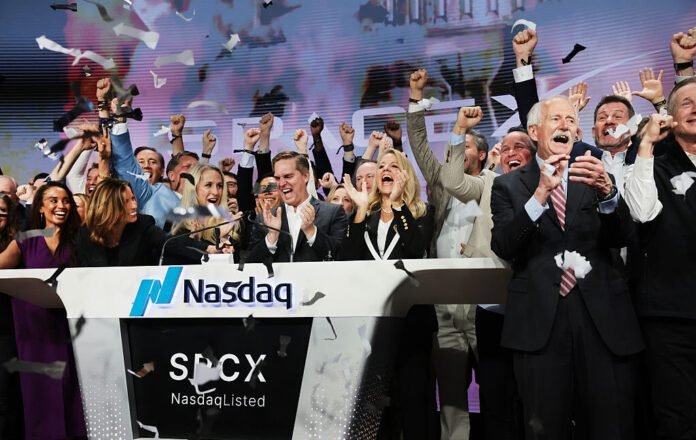
Space Exploration Technologies, better known simply as SpaceX, became a publicly traded company on Friday nearly a quarter of a century after it was founded.
The company began trading on the Nasdaq exchange in New York City at $135 a share, valuing SpaceX at nearly $1.8 trillion. By the end of the trading day the company’s shares were selling at $160.95, a respectable increase of more than 19 percent.
On paper, SpaceX founder Elon Musk became the world’s first trillionaire, with his personal stake in the company valued at more than $700 billion. Because of the company’s stock options plan, thousands of current and former employees became overnight millionaires. Employees at SpaceX have worked remarkably hard over the last 24 years, and now they will be richly compensated for having done so.
SpaceX now stands as one of a handful of the most valuable companies in the world. Should it be? There is broad disagreement about whether SpaceX is fool’s gold with its sky-high valuation, or represents a valuable opportunity to finally own a piece of a dominant space company that could some day command the business of data centers in orbit.
SpaceX is now largely an AI company
One thing is clear: SpaceX is now subject to significant public disclosures, and it will conduct much more of its business in the public eye. Although Musk retains complete autonomy in terms of ownership and voting rights, he will now be beholden to shareholders in a very important way: the price of his company’s stock.
Most shareholders bought SpaceX stock today not to be part of a the company’s long-term plans to settle Mars, or to help NASA land humans on the Moon. Certainly, some space enthusiasts did. However, most people invest in stocks to make money.
As SpaceX made clear in its S-1 document filed in May, however, the company’s value does not lie in its “space-enabled solutions” or its Starlink internet constellation. As part of its “total addressable market,” the company views these as comprising less than 7 percent of its value.
Rather, Musk and SpaceX see the majority of its value in providing AI services, mostly from space, and primarily for enterprise applications. If investors agree that’s where the vast majority of the company’s profit lies, it is where they will want to see SpaceX put its time and resources.
So as of today, SpaceX is owned by investors who largely want to see it make money; to reach its enormous valuation, it must make that money through orbital data centers. This is a sobering thought for NASA, which was the company’s most important backer during its early years when bankruptcy was never too far away.
Even a decade ago, a majority of the value of SpaceX’s contracts were coming from NASA and other US government entities. Since then, however, revenues from Starlink have begun to significantly outstrip NASA’s contracts, and this will likely become even more true in the future.
How much of a priority is Artemis?
NASA relies on SpaceX for so much right now: flying its astronauts and most important science payloads into space, and playing an important part in the Artemis campaign. But the $2.9 billion contract NASA signed with SpaceX in 2021 to build a Human Landing System for the Moon program is now regularly dwarfed by the AI compute contracts SpaceX is signing with companies like Anthropic and Google, which are worth tens of billions of dollars.
For SpaceX, the money (at least in the near term) is in AI—it is not in NASA government contracts. Yet NASA is desperate for SpaceX to begin delivering on critical milestones for the Artemis Program in the coming months and develop the capacity to land humans on the Moon.
Key to all of the work for NASA is the massive Starship rocket, and how SpaceX will prioritize its further development. The large rocket appears to be close to reaching operational status, with the ability to put about 100 metric tons into low-Earth orbit. Assuming that happens in the coming months, how will SpaceX use its Starship launches? Will it spend its energies on preparing and launching a critical refueling demonstration in orbit, which will require back-to-back Starship launches? Will it fill up a lander prototype next year, which will mean a dozen or more tanker flights simply to enable an uncrewed lunar landing test for NASA?
Or will the company focus on putting profit-making Starlink satellites into orbit, followed by critical tests of data center satellites? In short, will it follow the money?
It’s a valid question, because investors will be watching closely.
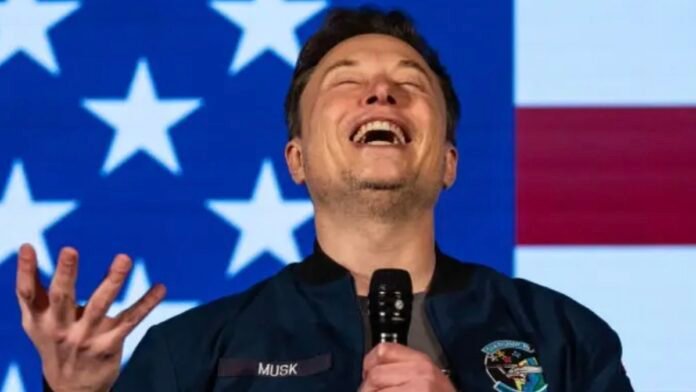
SpaceX goes public Friday (June 12) at around US$1.7 trillion. Elon Musk owns enough SpaceX stock that, on top of everything else he holds, Musk becomes the first person in human history to cross the trillion-dollar line. The coverage will be all hype. Unprecedented. A genius. Where’s he going next? What does the future hold?
It wasn’t like Elon Musk invented some amazing capacity. He didn’t do something transformational for the world. He didn’t harness electricity. He didn’t invent the transistor. He didn’t invent rocket flight. He didn’t invent satellite technology. He didn’t even make them much better.
What he did was learn how to game the system. He took what America built through generations of investment and generations of hard work and turned it into a profit center for himself. He took American loans, American intellectual property, American space, American airwaves, and turned them into a wealth engine for one man.
Tesla exists because of a half-billion-dollar loan from the American government, handed over in 2010 when the banks wouldn’t touch him. The deal gave the government the right to buy three million shares of Tesla stock at a locked-in cheap price. That was our cut if the company took off.
The company took off, and Musk rushed to pay the loan back nine years early, because under the deal, early repayment canceled the government’s shares. They were worth about $270 million the week he wired the money, and Tesla’s stock has multiplied many times over since. The press called the repayment a triumph. We got our money back with a little interest, and he kept the stock the American people were due.
SpaceX is the same story just bigger. In a purely capitalist system, SpaceX wouldn’t exist. It would’ve died in 2008. The company was broke, three rockets had failed, and Musk was burning the last of his money.
Then NASA wrote a $1.6 billion contract for cargo runs to the space station, and that money built the Falcon 9. The people who study this industry say it plainly. NASA is what saved the company when it was on the brink of bankruptcy.
And NASA by then was an agency we’d been squeezing since the 1980s. We decided, instead of doing things ourselves as a nation, instead of demanding the lion’s share of what we’d developed over sixty years of rocketry and satellites and spaceflight, that we’d hand it off to billionaires and let them compete for the contracts.
SpaceX now holds around $22 billion in federal contracts. Across the whole Musk empire the public money runs closer to $38 billion. The launch pads, the airwaves, the satellites overhead, the early customers, the technology our space program spent two generations developing. He built on all of it, and we kept no share of it.
I’m not saying SpaceX is bad at rockets. The rockets work. But outbidding Boeing and Lockheed, the most bloated contractors in America, is a low bar, and he cleared it with technology our space program developed, on contracts we paid for. And China is proving right now that none of it was one man’s miracle.
They’re behind on reusable rockets and behind on launch rates, sure. They’re also closing fast, as a national project, with state companies and state-backed startups and satellite constellations in the tens of thousands. Getting to space is something a country can decide to build and own. We decided to hand it to one man instead.
The rest of his fortune sits in Tesla, and that deal is even worse. Tesla is worth more than every other major carmaker on the planet combined. Toyota, BYD, GM, Ford, Volkswagen, Honda, Mercedes, BMW, all of them together, still short of Tesla. Plenty of those companies earn more actual profit than Tesla does.
Toyota alone makes several times Tesla’s money. The valuation isn’t a measure of the business. It’s an obvious bubble, one of those bubbles people will look back on like the tulip bubble and ask how anybody ever believed it.
Meanwhile the tariffs are the only reason Chinese carmakers aren’t whipping us in our own market. BYD passed Tesla as the biggest seller of electric cars in the world, and it makes a good one for around ten thousand dollars. Musk has admitted himself that without trade barriers, Chinese automakers would demolish most of their rivals.
The tariff wall protects the whole American industry, and Tesla is its single biggest beneficiary. We’re babying these companies instead of pushing them to get better, and we’re not taking a dime of ownership while we do it.
They’ll tell you the wall is national security. It isn’t. We haven’t kept our means of production. We don’t make enough steel even for ourselves, and that’s while we’re barely building anything.
Start building at scale again and we’d be importing even more of it. We can’t build transmission lines or move energy around this country. We’ve lost the machine tools. We shipped the means of production to China and other countries, and now we’re handing what’s left to a handful of billionaires.
National security would be making these companies better. It would be forcing them to share the patents we paid to develop. It would be forcing a universal charger. It would be making them earn their money through quality production that competes on the open market, not through bubble valuations.
Then they handed him our retirement accounts. When a company joins a major stock index, every fund tracking that index has to buy it. Nobody decides the company is worth the money. The rule says buy. So every two weeks tens of millions in paychecks pour in on autopilot. SpaceX wanted that money sooner than the rules allow, because Elon Musk is special, apparently.
His advisers pushed the index providers to change the rules, and two of the three folded. Nasdaq rewrote its policy so a company like SpaceX can join in 15 trading days instead of three months. Russell cut its wait to five. Somewhere around $22 to $27 billion in automatic buying will hit a stock with almost no shares actually trading. The S&P 500, the biggest index of them all, refused.
It said earn your way in, a company that loses money doesn’t qualify. One gatekeeper said no. Two said yes. The rules got bent for him, and that’s not speculation. It happened. One more handout, except this time the money is yours, pulled out of your paycheck and pointed at his stock whether the price makes sense or not.
We’ve watched this movie before. Amazon went a decade without real profits and the market funded it anyway, because everyone could see the government handing it advantage after advantage.
Bezos planted the company in Washington State to dodge sales tax, and for 20 years Amazon skirted sales taxes across most of the country, a built-in discount on every order that local stores couldn’t match, because they had to charge the tax. It crushed them. Then cities lined up to hand the richest man alive billions more in breaks for a headquarters. We supported these guys, who then took everything and ran.
Now we’ve created a class of men who hold more wealth than many states. Musk holds more than many countries. That concentration gives one human incomprehensible power, and we will hand him more of it every year. We outsourced our production to China. Now we’re outsourcing our state itself to a few men, who just sub it back out to us.
The answer is not a wealth tax. Tax Musk and Bezos and Zuckerberg, pull the money into the government, push it back into broken systems, and you haven’t restructured a thing. Pull wealth from Musk and pour it into a healthcare system that already swallows a huge percentage of dollars before they reach a patient, and you don’t get better health or longer lives. You get more valuable healthcare companies.
Pull it into housing allowances and down payment assistance, and you don’t get cheaper homes. You push the prices up, hand the gain to private equity firms that already own the housing, and make it harder for the next family that wants to own a home. A wealth tax spreads a little money around the top and leaves the same people owning the same things.
It doesn’t move power. Tax the oligarchy and the money flows back as rent to the same oligarchs, the medical ones, the housing ones, the tech ones, and we get nothing for it. No power, no stability, no better income. We get a company town as a national economy.
But the golden share in US Steel is veto power with no money in it, a say with no stake. The Intel shares are also money with no say. None of it comes with the part that matters, which is input on where these companies go and what they do with the resources we let them use.
We protect their intellectual property, most of which we developed. We protect their markets. We give them our military, our courts, our FBI, a stable country to get rich in. And what we’re getting back is poorer and sicker, with a shrinking share of the things that are ours.
Real public ownership means both. The profits and the say-so, together, the demands any investor would make. When the public builds the thing, the public owns a piece of the thing. Call it American Equity. We knew how to do this. The New Deal did it. The Arsenal of Democracy did it.
The country that built the Transcontinental Railroad and the New York City subway did it. That system, the one Hamilton started with public credit behind American manufacturing, is the system China runs today. They took our playbook. We traded it for stock market rackets.
We can raise hospitals. We can send rockets into space. We can launch satellites, and we can do it for ourselves. There’s nothing particularly amazing about Elon Musk except his willingness to fleece the American people out of what’s theirs. So stop. Stop handing him the contracts. Strip the special treatment. Claw back the intellectual property and the advantages we built for him, and go to the moon ourselves again.
There’s a cycle to this. Countries in the spot we’re in generally stop existing. Not because they lack potential. Not because they have nothing worth producing. They stop existing because they fail to come together and remove the rot, the corruption, the inequality and demand accountability from the people who’ve dodged it the longest. We’re at the part of the cycle where we take our stuff back, or we fail.
Today they crown the first trillionaire. They’ll say he earned it. The truth is simpler and uglier. He’s a welfare trillionaire. Half a billion in government loans, tens of billions in government contracts, sixty years of our research. We made him.
And a wealth tax won’t unmake him, because taxing the mega oligarch just funds the baby oligarchs. The only way to reclaim the power they’ve taken from us is to take back some of what’s ours, some of our capacity, some of our infrastructure, our share of the things we paid to build.
Bernie Sanders said it this week, the public should own half of the big AI companies. We need to be thinking a lot more along those lines. If we want homes people can afford, healthcare that doesn’t bankrupt us, and work that pays, it starts with owning things again.
Corbin Trent is an Appalachian-born general contractor and political organizer. He co-founded Brand New Congress and Justice Democrats, helped recruit AOC, and served as her first communications director. He publishes AmericasUndoing.com, a project exposing America’s economic decline and calling for bold, public-led rebuilding. Find morework on his TikTok, YouTube and Facebook channels.