21.6 C
London
Friday, June 12, 2026
Home Blog

Iran’s 14-Point Proposal Demands $300 Billion ‘Recovery Plan,’ Complete Troop Withdrawal, Leaves Missile Program Off the Table

0
iran’s-14-point-proposal-demands-$300-billion-‘recovery-plan,’-complete-troop-withdrawal,-leaves-missile-program-off-the-table
Iran’s 14-Point Proposal Demands $300 Billion ‘Recovery Plan,’ Complete Troop Withdrawal, Leaves Missile Program Off the Table


Iranian media outlets close to Tehran’s negotiating team have published details of a reported 14-point draft framework that would govern a potential agreement between the United States and Iran on sanctions, regional security and nuclear issues. 

A notable feature of the reported proposal is the absence of any provisions addressing Iran’s ballistic missile program. Israeli Prime Minister Benjamin Netanyahu has repeatedly told its ally, the United States, that any acceptable agreement must address both Iran’s nuclear activities and its missile capabilities. 

The framework also reportedly calls for a $300 billion economic recovery and reconstruction package for Iran, despite repeated US statements rejecting the idea of paying reparations to Tehran. 

Separately, a pro-Hezbollah media outlet reported that the provision concerning the withdrawal of foreign forces from areas surrounding Iran could be interpreted to include demands that Israel abandon its remaining strategic positions in Lebanon. 

According to Mehr, the proposal is still being reviewed by Iranian authorities and has not yet received final approval. The framework reportedly combines immediate confidence-building measures with a longer-term negotiating process aimed at reaching a final nuclear agreement. 

The reported provisions are: 

1. Ceasefire across regional fronts

An immediate and permanent ceasefire would take effect on multiple fronts, including Lebanon.

2. US commitment to respect Iranian sovereignty

Washington would pledge not to interfere in Iran’s internal affairs.

3. Removal of naval restrictions

Naval measures imposed on Iran would be lifted within 30 days

4. Reduction of US military presence near Iran

American forces would be withdrawn or reduced in areas Tehran considers strategically sensitive.

5. Reopening of the Strait of Hormuz

The waterway would resume normal operations within 30 days under arrangements agreed with Iran.

6. Suspension of energy sanctions

Restrictions on Iranian oil, petrochemical and related exports would be removed.

7. Economic recovery package

The United States and allied countries would provide at least $300 billion in reconstruction and development assistance.

8. Sixty days of nuclear negotiations

A two-month negotiating period would be established to reach a final agreement on Iran’s nuclear program and the removal of sanctions imposed by the United States, the United Nations and the International Atomic Energy Agency.

9. Reaffirmation of non-proliferation commitments

Iran would formally reaffirm its adherence to the Nuclear Non-Proliferation Treaty and restate that it does not seek nuclear weapons.

10. No additional pressure during talks 

The United States would refrain from increasing troop deployments in the region or imposing new sanctions while negotiations continue.

11. Release of frozen Iranian funds

A total of $24 billion in Iranian assets frozen abroad would be released, with half made available before final negotiations begin.

12. Monitoring and verification mechanism

A system would be established to oversee compliance with commitments undertaken by both parties.

13. United Nations ratification

Any final agreement would require approval through a United Nations Security Council resolution.

14. Conditions and scope of final negotiations

Final negotiations would not begin until half of Iran’s frozen funds had been released, energy sanctions had been suspended and naval restrictions had been lifted. The talks would focus on nuclear issues, sanctions and economic recovery, while Iran’s ballistic missile program and support for regional proxy groups would remain outside the scope of the negotiations. 



PeopleSoft 0-day affecting hundreds of organizations steals gigabytes of data

0
peoplesoft-0-day-affecting-hundreds-of-organizations-steals-gigabytes-of-data
PeopleSoft 0-day affecting hundreds of organizations steals gigabytes of data

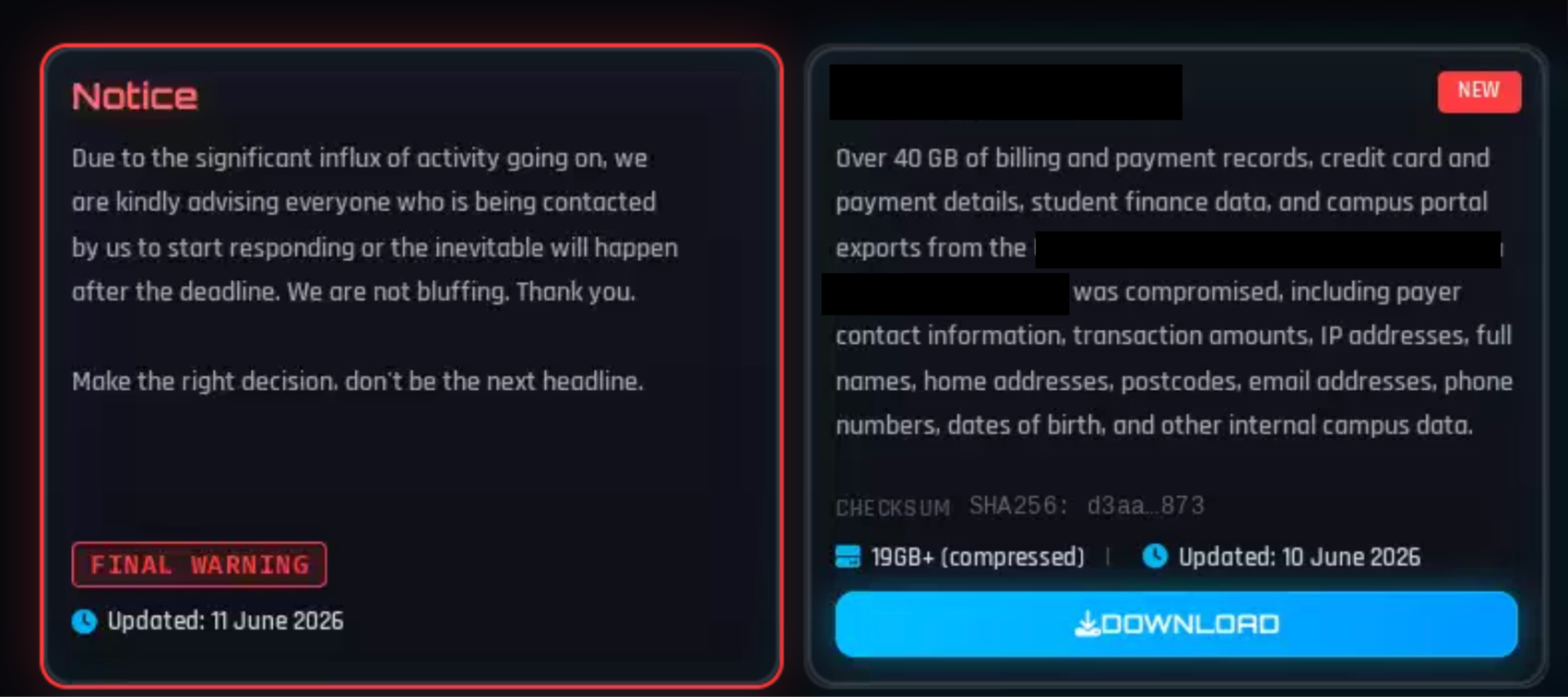
One of the world’s most active ransomware groups exploited a critical vulnerability in Oracle’s PeopleSoft software suite and used it to target about 100 customers and extort at least one of them to pay up in exchange for not leaking stolen data, researchers said.

The group, tracked as ShinyHunters, had been exploiting the PeopleSoft vulnerability for more than two weeks before Oracle flagged it. CVE-2026-35273, as the vulnerability is tracked, carries a severity rating of 9.8 out of 10, making the former zero-day one of the year’s most critical vulnerabilities to be exploited.

Google’s Mandiant security team said it’s an SSRF (server-side request forgery), a vulnerability that allows attackers to send requests from a susceptible server to systems used by the targeted organization. Oracle said the SSRF is remotely exploitable, and the company has issued a stopgap mitigation but has yet to fully patch the flaw. Google has confirmed that victims are receiving extortion demands.

9.8 0-day exploited for 2 weeks

The University of Nottingham confirmed on Wednesday that it was the victim of a hack that put a “significant” amount of student data in the hands of a threat actor. The confirmation came after ShinyHunters claimed the university was one of its recent victims and published gigabytes of data it claimed to have stolen in the hack.

Mandiant said ShinyHunters has been exploiting the vulnerability since May 27. As of Wednesday, the group had targeted roughly 300 endpoints belonging to 100 user organizations. About 68 percent of the organizations operated within the higher education sector. A researcher said on Tuesday that the group responsible had “exposed several directories revealing ongoing targeting of PeopleSoft.” The attackers also left available a staging server containing tools used in the attack.

“While several organizations successfully blocked the activity or remediated the vulnerabilities, others experienced compromise, resulting in stolen data being published on the ShinyHunters DLS,” Mandiant said. (DLS is short for data leak site.)

An analysis of a bash script left in the staging environment shows the attackers performed reconnaissance on compromised organizations, including mapping the PeopleSoft configurations, viewing process scheduler, and WebLogic server XML configurations. Eventually, the threat actors established an outbound SSH connection to 176.120.22.24, the IP address hosting ShinyHunters’ DLS. The stolen data was first compressed using the zstd tool. The DLS claimed to have recovered 48GB of data from a single victim.

A partially redacted section of the ShinyHunters’ DLS.

A partially redacted section of the ShinyHunters’ DLS. Credit: Mandiant

ShinyHunters has been active since at least 2019. Over the past several years, it has executed scores of hacks against some of the world’s largest companies, affecting millions of people downstream. A small sample of victims includes Ticketmaster (through the breach of Snowflake, which hosted the data), Spain’s biggest bank, Santander, and Salesforce (and, through it, Google and, reportedly, many other companies). ShinyHunters uses various techniques to gain initial access, including exploiting cloud misconfigurations and software vulnerabilities, stealing OAuth tokens, supply chain attacks, voice phishing, and other forms of social engineering.

Mandiant and Rapid7 are providing detailed indicators of compromise. They are also advising PeopleSoft customers on the steps they should take immediately. Given ShinyHunters’ success rate, all PeopleSoft users would do well to heed the calls.

What’s driving up your expenses? Many Americans say climate change.

0
what’s-driving-up-your-expenses?-many-americans-say-climate-change.
What’s driving up your expenses? Many Americans say climate change.

For decades, American politicians have been slow to take on climate change and curb carbon dioxide emissions, under the assumption that doing so might pass along costs to their voters. Ironically, their failure to rein in fossil fuel emissions has yielded the same result: Expenses for everyday Americans have soared as a result of more extreme flooding, fires, and heat.

“What’s striking is that already, households are bearing serious costs,” said Kimberly Clausing, a law professor at the University of California, Los Angeles. She co-authored a paper from earlier this year finding that families were paying between $400 and $900 more each year because of the effects of climate change, with the costs above $1,300 in the 10 percent hardest-hit counties, many of them found in Florida, Louisiana, Nebraska, Colorado, and California. 

On Wednesday, the Commerce Department reported that the annual inflation rate reached 4.2 percent in May, the highest rate in three years. Though the war in Iran is mostly responsible for this recent increase, a surprising number of Americans are attributing the general economic pinch they’re feeling to the changing climate. Two-thirds of U.S. voters agree that global warming is affecting the cost of living to some degree, according to new survey data from the Yale Program on Climate Change Communication, including most Democrats and moderate Republicans. Of those two-thirds, a majority of them said that climate change was driving up what they pay for groceries, utility bills, and home insurance.

Rising energy prices were at the top of people’s lists, a concern that some climate advocates are tapping into ahead of the midterm elections this November. On Monday, the LCV Victory Fund, a political action committee, announced that it will target “energy bill voters” with messages about how clean, affordable energy can trim their monthly expenses, and how Republicans have held back renewable power. That follows successes for Democrats in the off-year elections in 2025, where energy prices played a role in state races in Georgia, New Jersey, and Virginia.

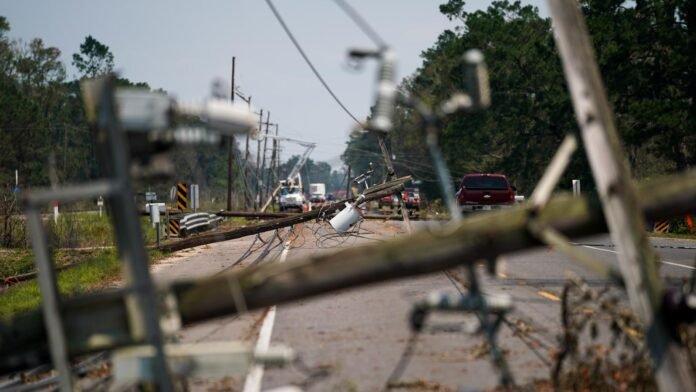
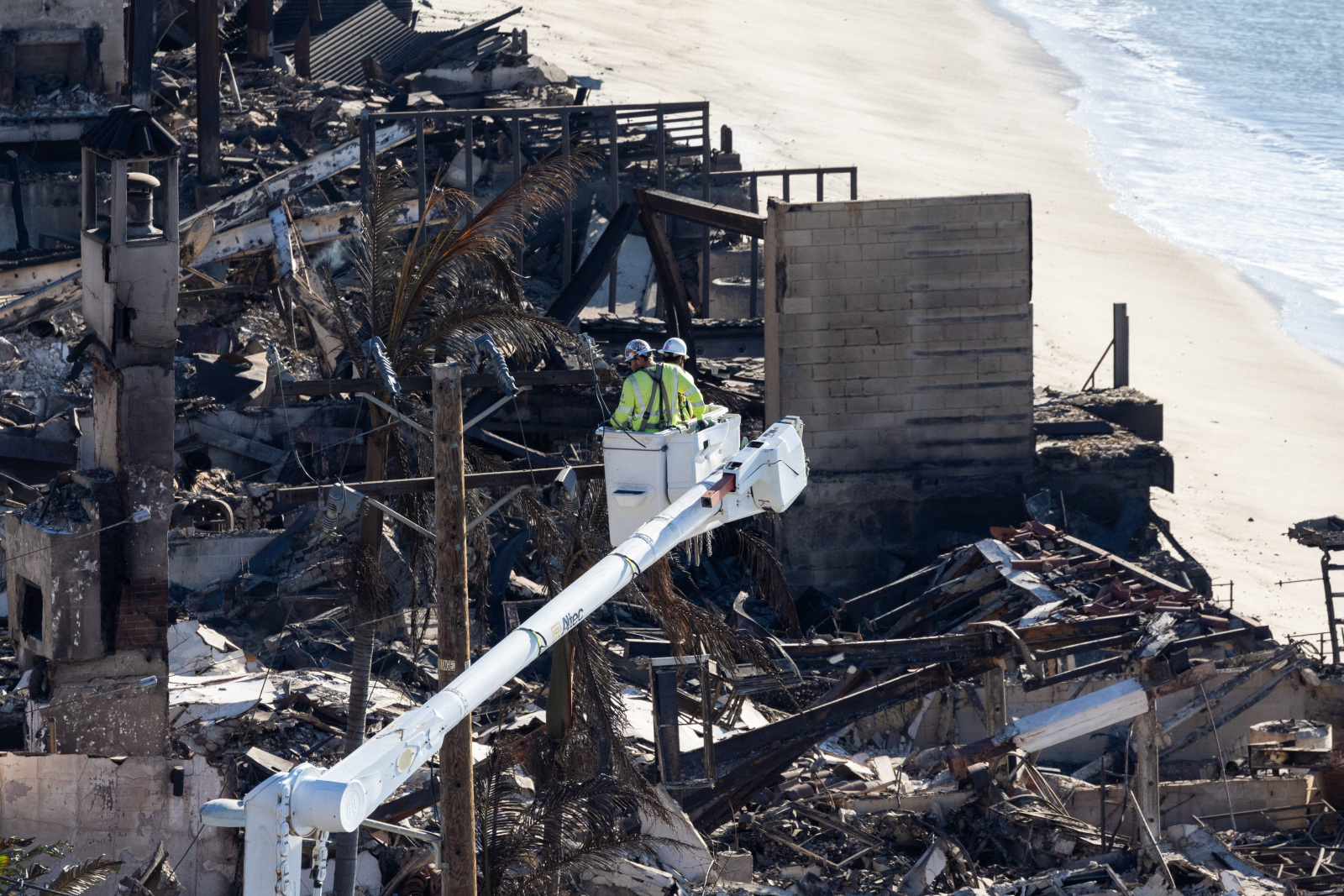
There are many factors pushing up electricity prices, but in some parts of the country, efforts to revamp the electric grid to handle more extreme weather is the primary reason. In California, utilities are upgrading their infrastructure to reduce wildfire risk; in the Southeast, they are rebuilding after hurricanes and flooding and billing their customers for it. In Arizona, residents are cranking up the air conditioning during scorching heat and paying more for power simply because they’re using more AC.

Photo of utility workers in a lift over a background of burned homes and palm trees by the beachaverage of about $35 more on electricity per year, compared with an extra $356 on homeowners’ insurance premiums, the biggest cost. Clausing, who owns a house in Portland, Oregon, said the insurance premium on her home skyrocketed from around $1,000 five years ago to about $2,200 today — an increase that her insurance company said was to help recoup the costs of wildfire damage in Oregon.


Another major category of costs in Clausing’s study was the health effects of climate change. As wildfire smoke grows more common, exposing people to harmful particulate matter, it’s leading to early deaths. The estimated economic damage of these premature deaths works out to $103 for every household in the United States each year. That’s not to mention the other ways climate change damages the public’s health, from lengthening allergy seasons to expanding the geographic spread of infectious diseases as temperatures warm, allowing ticks and mosquitoes to explore new territories. 

But it seems like many Americans haven’t made the connection: Only 35 percent of those in the Yale survey who agreed that climate change was driving up prices saw a link to higher health care costs. That’s because these health risks haven’t been adequately communicated to the public, said Anthony Leiserowitz, the director of the Yale Program on Climate Change Communication. “Health is one of the most powerful ways we have of saying, ‘Actually, this affects our lives right here, right now. It’s already affecting the people and places and things that we love,’” he said.

Read Next

Though most of the respondents thought climate change made groceries more expensive, it’s hard to measure the effect of extreme weather on food costs, according to Catherine Wolfram, a co-author of the study and a professor of applied economics at the MIT Sloan School of Management. That’s mainly because the United States’ food supply comes from all over the world, mitigating the impact of, say, a drought in Brazil or a heat wave in the Great Plains. Still, other research has found that hot summers can lead to higher food prices, with more increases projected as the world warms. 

As the effects of global warming grow more extreme, it’s becoming clear that they’re posing a problem for the budgets of lower-income Americans. Clausing is studying ways to design policies that tackle climate change without burdening poor families, through rebates or other mechanisms that can offset costs. 

“I’m glad people are connecting the dots,” Clausing said. “I think, at the moment, if you pursue better climate policy, the benefits to households, for the country as a whole, would exceed the costs.”


ICE Should Show It Hasn’t Been “Infiltrated by Violent Extremists,” Senator Urges

0
ice-should-show-it-hasn’t-been-“infiltrated-by-violent-extremists,”-senator-urges
ICE Should Show It Hasn’t Been “Infiltrated by Violent Extremists,” Senator Urges


A Democratic senator has asked newly confirmed Homeland Security Secretary Markwayne Mullin to explain the department’s racist social media presence and assure the agency has not been “infiltrated by violent extremists.”

Sen. Sheldon Whitehouse, D-R.I., pointed to a March bulletin from Colorado law enforcement analysts that was unearthed by The Intercept last month. It warned that DHS posts using language popular with neo-Nazis could inspire acts of far-right violence within the U.S. as well as prompt white supremacists to join the agency.

The bulletin by the Colorado Information Analysis Center cited repeated instances of DHS recruitment posts spurring discussion among neo-Nazis about enlisting in ICE with the hope of spurring a race war. It noted at least one instance of white supremacists claiming online that someone in their organization “had already been a captain at an ICE-contracted detention facility.”

The DHS posts, which sometimes appeared to borrow material verbatim from racist memes, songs, and tropes, were made as part of a recruiting push under then-DHS Secretary Kristi Noem. Noem and former U.S. Border Patrol official Greg Bovino, who became the public face of Trump’s draconian mass deportation agenda, were pushed out of their positions by the White House this year.

Whitehouse said that Mullin should disavow his predecessor’s “dangerous recruitment campaign.”

“I cannot believe that you support the messages associated with these recruitment campaigns, or want anyone under your supervision to use the imprimatur of the United States Government to promote those messages,” Whitehouse said in a letter dated Wednesday.

In response to a request for comment, a DHS spokesperson criticized Whitehouse and the Colorado law enforcement analysts. The analysts’ report came from a fusion center, part of a network of information clearinghouses for local, state and federal police that spread across the U.S. following 9/11.

“It is gross that Senator Whitehouse and the state of Colorado are actively weaponizing official law enforcement bulletins to promote dangerous anti-ICE conspiracy theories,” the agency wrote in a statement. “Comparing recruitment efforts aimed at filling critical public safety roles to extremist rhetoric is not only absurd, but it also dangerously undermines the mission and sacrifices of federal officers.”

Mullin also rejected criticism of the department’s social media accounts when he was questioned by Rep. Shri Thanedar, D-Mich., about the Colorado fusion center’s report at a June 3 hearing.

“I’m very concerned that your department is promoting white nationalist, anti-immigrant sentiments on official social media accounts,” Thanedar said.

Mullin brushed off Thanedar’s assertion that this concern was backed by the facts.

“There is no facts,” Mullin said. “You throw out ‘nationalism,’ ‘Naziism,’ and that is exactly what causes the hatred and the violence that happens to our officers every single day.”

Whitehouse initially wrote to Noem on Feb. 23 with a detailed list of questions about the origin of the ICE recruiting posts. Noem never responded, according to Whitehouse’s more recent letter.

Since Trump installed Mullin atop DHS, the former U.S. senator from Oklahoma has taken small steps to distance the department from some of Noem’s most controversial moves, including a decision to lower training standards for newly hired ICE officers. DHS also appears to be posting fewer of the most provocative posts since Mullin took office.

In his latest letter to Mullin, Whitehouse said he was still trying to get to the bottom of who authorized and crafted the posts. He’d also previously asked whether there were sufficient checks in place to prevent the hiring of individuals with connections to “violent extremist or terrorist organizations.”

“DHS and ICE have deployed recruitment ads featuring white nationalist slogans, songs, and imagery while lowering recruitment standards—facilitating the hiring of agents with histories of violent extremism. I renew my request about what DHS has done to ensure it has not been infiltrated by violent extremists, and who is responsible for this dangerous recruitment campaign,” Whitehouse said in this week’s letter.

Noem has stayed out of the public eye since her March ouster, taking a role as special envoy for Trump’s so-called Shield of the Americas program. Bovino has been more outspoken. He attended a “remigration” conference with white nationalists in Portugal. In an interview before the conference’s start, the now-retired Border Patrol commander-at-large compared himself approvingly to Nazi general Erwin Rommel, describing the Third Reich strategist as someone who captured the imagination of the public.

Trump has backed away from renewed war with Iran – here’s why

0
trump-has-backed-away-from-renewed-war-with-iran-–-here’s-why
Trump has backed away from renewed war with Iran – here’s why

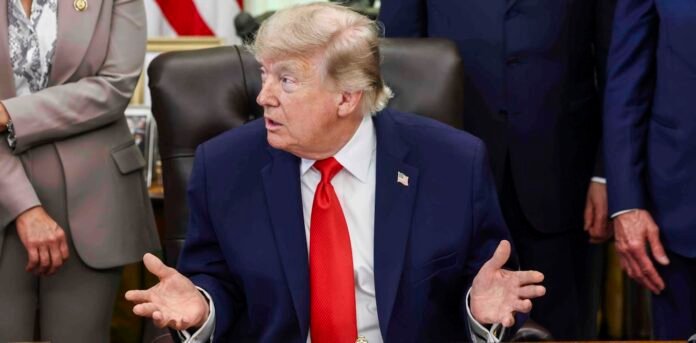
The US and Iran stepped back from the brink of returning to all-out war on June 11. Hours after saying the US military would carry out strikes against Iran for a third consecutive night, Donald Trump postponed the attack. The Iranian military had said the US would “receive a more severe response than before” if it followed through on its threats.

Trump claimed to have cancelled the strikes because of progress in negotiations between the two countries. In a statement posted on social media, Trump said: “Discussions and final points have been, in both concept and great detail, approved by all parties involved.” He later added that the deal is set to be signed over the “next few days”.

Whether this will happen remains to be seen. Trump has declared that a deal between the US and Iran is imminent on numerous occasions only for no agreement to be signed. Iran’s foreign ministry has also called claims that an agreement has been reached speculative, insisting that “nothing has been finalised”.

And, even if it is signed, the agreement Trump is talking about is far from a final peace deal. It appears to be a memorandum of understanding, establishing a framework for the two countries to talk about unresolved issues. These include Iran’s ballistic missile capabilities and nuclear programme.

Iranians walk past a poster featuring the late Iranian supreme leader, Ayatollah Ali Khamenei, alongside his son and successor, Ayatollah Mojtaba Khamenei.

Iranians walk past a poster featuring the late Iranian supreme leader, Ayatollah Ali Khamenei (left), alongside his son and successor, Ayatollah Mojtaba Khamenei (right) in Tehran on June 11. Abedin Taherkenareh / EPA

Rather than the supposed diplomatic progress, perhaps more significant in persuading Trump to pull back from renewing an all-out war with Iran was that a return to conflict simply would not have been in the interests of the US.

War, as Prussian military strategist Carl von Clausewitz observed in his 1832 book, On War, is the continuation of politics by other means. Its enormous costs can be justified only when they are tied to a coherent strategy and when there is a clearly defined political objective that there is a reasonable prospect of achieving.

Measured against this standard, there was no argument for returning to war with Iran. The difficulty begins with the absence of any discernible plan in Washington. Trump has articulated no strategy and no definition of victory beyond a vague aspiration to prevent Iran from obtaining nuclear weapons.

He was drawn into prosecuting a war based on intelligence about the fragility of the regime in Tehran that proved flawed and on scenarios that were overconfident and have not come to pass. These scenarios suggested the decapitation of Iran’s leadership would lead to sudden regime collapse and a popular uprising that would see the country transition to democracy.

There is also very little a return to all-out war could have accomplished. The reason for this is that the Iranian regime is not a conventional state that can be brought down by overwhelming firepower. The regime, which is now dominated by the powerful Islamic Revolutionary Guard Corps, can best be described as a militia with a state.

It is operating through a dispersed network of forces across air, land and sea, which were designed as an asymmetric instrument of power capable of absorbing, scattering and outlasting precisely the kind of concentrated military pressure the US military was built to deliver.

Weeks of intensive bombing earlier in the war did not shatter the regime’s centre of gravity. Rather, it consolidated the regime and has left it more cohesive and determined than it was before. In contrast to the more cautious regime of Iran’s late supreme leader, Ayatollah Ali Khamenei, which tended to wait and to respond, the new regime has become assertive.

It has been quick to retaliate against US and Israel attacks with severity and to set the pace of escalation. On June 8, for example, Iran launched barrages of missiles towards Israel in protest at the Israeli military’s escalating campaign in Lebanon.

A man drives a tractor near the remains of an Iranian missile that landed in a field in Syria.

A man drives a tractor near the remains of an Iranian missile that landed in a field near the Syrian town of Najha on June 8. Mohammed Al Rifai / EPA

Costs of war

Iran also retains the capacity to impose intolerable costs on everyone while retaining a high threshold of pain itself. If an all-out war returned, there was a very real risk that Iran would have moved to close the Bab al-Mandab Strait between Yemen and the Horn of Africa by mobilising its ally, the Houthis.

This threat is already on the table. The Houthis paused their attacks on shipping in the region after a ceasefire was signed in Gaza in October 2025, but have warned these will resume if the Iran war escalates. The Bab al-Mandab Strait serves as the principal bypass route for Saudi oil and for much of Gulf maritime trade, both of which are currently unable to transit the closed Strait of Hormuz.

Iran is also likely to have resumed direct attacks on the Gulf states with greater scope and intensity than before, which could have converted an already severe global energy crisis into something far worse. Perhaps the most consequential impact of returning to all-out war, therefore, was the prospect that it would have cost the US its valuable Gulf partners.

Every Iranian strike that American installations in the region attract reinforces a lesson the Gulf monarchies are increasingly inclined to draw, which is that the presence of American bases on their soil makes them targets rather than affording them protection.

Faced with a closed Strait of Hormuz, the global economy in decline and a looming defeat for his Republican party in November’s US midterm elections, Trump is clinging to the hope that he can pressure Iran into accepting a deal. The chances of this strategy proving a success are slim.

Palestinian Football Association president criticizes US over delayed visa for World Cup events

0
palestinian-football-association-president-criticizes-us-over-delayed-visa-for-world-cup-events
Palestinian Football Association president criticizes US over delayed visa for World Cup events

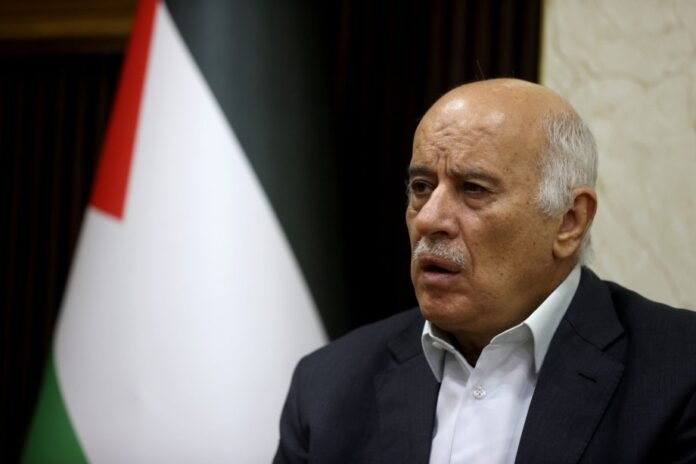
Palestinian Football Association President Jibril Rajoub criticized the US for failing to grant him a visa to attend World Cup-related events, saying the delay reflects disrespect for FIFA and the unifying role of the sport, Anadolu reports.

Rajoub attended the opening match of the FIFA World Cup between Mexico and South Africa in Mexico City on Thursday but remains among several accredited participants who have either been denied US visas or are still awaiting approval to enter the country.

In an exclusive statement to Anadolu from Mexico, Rajoub said he has yet to receive permission to enter the United States despite his entitlement to participate in World Cup activities as head of the Palestinian Football Association.

“I believe that FIFA regulations, or at least its traditions, require any country hosting a global event to honor its obligations toward that event by facilitating the entry of everyone connected to it,” Rajoub said.

He said the World Cup is the most important sporting event in the world and that participation by football federation presidents in related activities, including the FIFA Congress, requires host countries to facilitate their entry.

“This is not a favor on their part; it is a right, and they are obligated to uphold it,” he said.

Rajoub argued that failing to facilitate entry for participants undermines the principles associated with hosting a global sporting event.

“Through this behavior, they are stripping themselves of the moral right to host such a major sporting event,” he said.

Rajoub said he had not yet received approval to enter the US and suggested that others may be facing similar difficulties.

READ: Palestinian FA chief refuses handshake with Israeli counterpart at FIFA congress

“Up to this moment, I have not received approval to enter, and I believe I am not the only one. There are many others facing the same problem,” he said.

Rajoub said the issue goes beyond individual cases and affects the broader values promoted by international sport.

“I see this as a sign of disrespect not only toward FIFA, but also toward the sporting message that unites people and builds bridges between them. In the end, this is a global event, not an event that belongs solely to the United States,” he said.

Recent visa-related issues have raised concerns ahead of international football events hosted by the US.

Earlier this month, officials from Iran’s Football Federation said they had yet to receive US visas to attend activities related to the 2026 FIFA World Cup.

In a separate case, Somali referee Omar Abdulkadir Artan was unable to travel to the US to officiate at the FIFA Club World Cup because his visa application was not approved on time, despite being appointed by FIFA for the tournament.

Concerns have also been raised about some supporters’ ability to attend competitions in the US. Earlier reports suggested that fans from several countries, including the Ivory Coast, may have difficulty traveling to the country due to visa restrictions and entry requirements.

The US is co-hosting the 2026 FIFA World Cup alongside Canada and Mexico.

READ: FIFA under fire for silence on targeting of Palestinian athletes

The $20,000 question: Can a lawnmower engine defeat a superpower?

0
the-$20,000-question:-can-a-lawnmower-engine-defeat-a-superpower?
The $20,000 question: Can a lawnmower engine defeat a superpower?

An Aegis destroyer, the crown jewel of late 20th-century naval engineering, crewed by hundreds of highly trained sailors, detects an incoming threat over the Red Sea. The ship’s computer calculates. The captain orders. A Standard Missile-2, representing roughly $2 million worth of American industrial and technological genius, streaks skyward and detonates its target with satisfying precision.

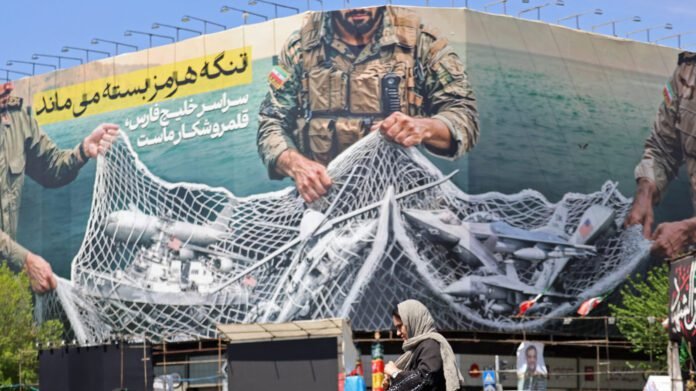
The threat in this particular version of a scene playing out at its basics with increasing regularity across the world’s contested skies was a Shahed-series drone — basic fiberglass wrapped around a lawnmower engine — costing less than $20,000. The Americans won the engagement. But it ought to give pause to anyone still invested in the mythology of American military supremacy that the Americans are losing the war of arithmetic.

This is the central irony of what strategists are now calling the drone revolution, though “revolution” may be too dramatic a word for what is really a very old story wearing new clothes.

Empires have always faced the problem of cost asymmetry, the gap between what it costs a great power to defend its position and what it costs a weaker adversary to challenge it. The British learned this lesson in the American colonies. The French learned it in Algeria. The Americans themselves learned it, or should have, in Vietnam, in Lebanon, in Iraq and in Afghanistan.

The drone is not a new argument. It is the same argument, delivered by fiber-optic cable at 100 miles per hour.

When Russia launched its full-scale invasion of Ukraine in 2022, it expected Kyiv to fall within days. When the United States and Israel bombed Iran in early 2026, they anticipated the rapid collapse of the Islamic Republic. In both cases, overwhelming military power failed to defeat the smaller and weaker side.

Ukraine and Iran did not win these confrontations in any conventional sense. They simply refused to lose in the way they were supposed to. And they refused, in large part, because they had mastered the drone.

The economics are not complicated, even if Washington’s procurement bureaucracy seems constitutionally incapable of grasping them. Every time a $2 million interceptor destroys a $20,000 drone, a superpower’s global influence shrinks just a little bit more. Multiply that exchange ratio across thousands of engagements, across multiple theaters, across years of conflict, and you arrive at something that looks less like a military campaign and more like a slow financial hemorrhage.

Iran’s strategy, like the Houthis’ before it, is not to defeat the United States in battle. The goal is to make the cost of Western intervention so politically and economically unsustainable that the superpower simply stops showing up.

This is, of course, a limited form of victory. Drones do not hold territory. They do not sign treaties or install governments. Russia’s experience in Ukraine demonstrates that layered electronic warfare, short-range air defense, camouflage and dispersal mean that many drones fail before reaching their targets, and those that do often struggle to achieve decisive effects against hardened or mobile systems.

The drone enthusiasts, like every generation of enthusiasts for the latest wonder weapon, are prone to overstatement. No, a swarm of Shaheds will not sink a carrier strike group. No, FPV drones will not render the armored division obsolete tomorrow morning.

But that framing misses the point entirely. The question was never whether drones could defeat a superpower in a set-piece engagement. The question is whether they can raise the cost of intervention high enough, for long enough, to alter the superpower’s political calculus. And here the evidence is rather unambiguous.

Ukraine’s “Spiderweb” operation in June 2025 saw five Russian airbases, hundreds of miles apart, deep within Russian territory, simultaneously attacked by drones, wrecking or disabling roughly $7 billion worth of jet fighters.

The drones were not the assets of a peer competitor. They were the improvised weapons of a country fighting for its survival, assembled from commercial components and flown by operators who learned their craft on gaming consoles. The Kremlin, a nuclear superpower, found its strategic bomber fleet degraded by what amounted to a very ambitious hobby-drone operation.

Washington has noticed. The U.S. defense budget in 2026 is expected to dedicate around $7.5 billion to counter-unmanned aerial systems alone. Beijing, characteristically, is thinking in larger numbers: China recently launched a program to field one million tactical drones by 2026, while the United States reported procuring 50,000 in 2025.

The manufacturing gap is not a gap that more Pentagon budget lines will close. It reflects deeper structural realities about industrial capacity, supply chains and the willingness to build things quickly and cheaply rather than expensively and perfectly.

The deeper problem, as always, is cultural and political rather than technological. The United States is still clinging to hardware that is too expensive to lose. In modern warfare, if a weapon is too expensive to lose, it is too expensive to use. Shifting a military culture built around exquisite, irreplaceable platforms toward an “attritable” model, weapons designed to be expended, not preserved, requires not just new procurement rules but a fundamentally different theory of what military power is for.

Can drones defeat a superpower? The answer, characteristically, is: It depends on what you mean by defeat. They cannot conquer one. They can, however, exhaust one, financially, politically, strategically. They can turn each intervention into a referendum on whether the prize is worth the price. They can make the arithmetic so unfavorable that the calculus of restraint starts looking more attractive than the calculus of engagement.

History suggests that it’s rare for an empire to fall to a single weapon. En empire falls when the costs of maintaining its position outruns the political will to bear those costs. The drone has not invented that dynamic. It has simply made it faster, cheaper, and more available to a wider range of actors than ever before.

Washington should find that thought clarifying rather than reassuring.

Originally published on Leon Hadar’s Global Zeitgiest, this article is republished with permission.

$130 billion in data center projects blocked by protests so far this year

0
$130-billion-in-data-center-projects-blocked-by-protests-so-far-this-year
$130 billion in data center projects blocked by protests so far this year

It’s clear that communities now have an effective playbook to block data center construction. This week, researchers flagged the first quarter of 2026 as producing the “most blocked and delayed data center projects on record,” NBC News reported.

Data Center Watch, a project from AI intelligence firm 10a Labs that tracks data center fights around the US, reported that protestors “blocked or delayed at least 75 projects nationwide worth about $130 billion from January through March,” NBC News reported.

That’s “the most in a three-month period since the group began tracking in 2023,” and it shouldn’t be parsed as “a cyclical spike,” the researchers said. Instead, there’s been a “structural shift,” as “communities have internalized an opposition playbook, legislative sessions introduced formal regulatory uncertainty, and the number of active opposition groups more than doubled to 833 across 49 states,” researchers said.

The political momentum behind data center protests is expected to influence the upcoming midterm elections, with both parties increasingly sympathizing with resistance as opposition intensifies.

Sociologist’s unique take on data center opposition

Sociologist Tressie McMillan Cottom has been spending time with organizers in North Carolina to better understand the playbook that’s fueling this momentum. In an op-ed for the New York Times encouraging Democrats to make data centers a key campaign issue, she noted that she “wasn’t sold on data center resistance as a political possibility,” but “time on the ground changed my mind.”

Not only are people crossing political divides to oppose local construction projects, but also people “are passionate enough to attend political education sessions about water rights, land use, and thermodynamics,” McMillan Cottom wrote. As she explained, people aren’t just educating themselves to keep noisy factories from driving up utility costs, threatening public health, or wasting local resources; some people are, for the first time, experiencing what it’s like to work with their neighbors to overcome adversity through political will:

“I have been watching this new groundswell of dissent firsthand in community meetings, organizing sessions and civic trainings here in North Carolina. The resistance has lifelong joiners, alumni from environmental and housing movements and young organizers. There are also a lot of people who have never dreamed of being disagreeable in public, much less considered joining a raucous social movement. The imminent risk of living next to a data center may be why they show up for a meeting, but they’re committing to the issue for bigger, deeper reasons. Political corruption and corporate malfeasance make them feel politically impotent. Voicing their objections, sharing their anxieties with others, recalling politicians who override them and in some cases beating the opposition is giving them something few politicians are offering—a taste of political power.”

Although it may be hard for Democrats to craft a national message that capitalizes on anti-data-center sentiment, McMillan Cottom suggested that, if they could, it would be the “greatest untapped opportunity” to win more elections.

Data Center Watch noted that the record of $130 billion data centers blocked or delayed in early 2026 was close to matching the value of the total number they recorded for all of 2025, about $156 billion. The researchers suggested that the back half of 2025 marked a “turning point, as data center opposition emerged as a national-level narrative” that showed the AI industry can no longer see the fights as individual zoning disputes. It “is now reshaping elections, regulation, and site viability nationwide,” Data Center Watch reported last year.

For officials hoping to quickly build data centers to propel America’s AI ambitions, facing the mounting opposition as the playbook has come together has been tough, NBC News reported. Where before, officials were criticized for quietly signing deals without discussing construction with nearby residents, now they’re encountering backlash before any deal is in the books, Data Center Watch found.

“In some cases,” researchers reported, “opposition mobilized before any project was officially filed, the mere rumor of a data center was enough to trigger organized resistance.”

AI industry struggles to counter narrative

AI firms and data center developers, as well as officials who hope to benefit from striking deals, are beginning to counter the data center hate as best they can.

Most recently, OpenAI released a report claiming that China was trying to influence the US data center debate by using ChatGPT. OpenAI quickly banned the bad actors, they reported, who were creating comics and memes to post on X, as well as generating social media comments, supposedly in the hopes of swaying US sentiment.

There has also been a push to paint public dissent as “naïve,” McMillan Cottom noted, “or, worse, un-American.”

Proponents of data centers argue that debates over electricity price hikes or water resources are misinformed. In a recent Atlantic piece claiming “the data-center panic is overblown,” it’s emphasized that only drought-stricken locations or areas with strained grids need to worry about those concerns. And economists suggested that communities risk overlooking little-discussed long-term benefits, like employment gains that “are likely to grow as new data centers attract businesses that use AI.”

In Loudon County, Virginia, The Atlantic noted, 53 million square feet of data centers have been constructed over the past 20 years. Although data centers account for only about 3 percent of the county’s land area, they generate “almost half of its property-tax revenue—a projected $1.3 billion in 2026,” The Atlantic reported. Although some data center projects were removed from residential zones due to noise complaints, communities have largely benefited from letting data centers in, with lower tax rates and more affordable housing.

This week, Meta claimed a similar data center PR win in Louisiana. One of the tech giant’s data center projects more than doubled Richland Parish’s sales and use tax, leading some teachers to get $50,000 bonuses, due to an ordinance that “lets the school board collect a 1 percent sales tax to fund teacher bonuses,” The Wall Street Journal reported. Scott Franklin, a director of the parish’s chamber of commerce and a farmer who sold the land to Meta for the data center, told WSJ that “anybody that complains about teachers getting a $50,000 check, they just instantly lose all credibility with me.”

But The Atlantic story seems to gloss over one of the biggest complaints that locals have about data centers: a lack of comprehensive environmental reviews. Mostly, communities simply don’t want local officials to take the kind of shortcuts to expedite data center approvals that Donald Trump and other Republicans have called for.

In Illinois, Governor J.B. Pritzker is pushing lawmakers to develop a legislative framework for responsible data center development in the state with proper environmental reviews at its center. And other cities, counties, and states are pivoting to get residents more information as deals are increasingly obstructed by residents loudly vocalizing opposition. Most recently, a data center developer in Utah vowed to handle all communications himself to make his construction project more transparent, after backlash reduced the total approved land area for the site by 50 percent.

Dems slow to embrace data center resistance

McMillan Cottom suggested that no public officials on the right or the left have perfected their messaging to align with anti-data center sentiments. It may be money standing in the Democrats’ way of fully embracing the data center resistance, she suggested, as many AI firms are donating hundreds of millions to campaigns to sway elections.

Massachusetts Sen. Elizabeth Warren’s plans to tax AI firms to force more transparency are “wonky,” she said. And Sen. Bernie Sanders’ call for Americans to profit off AI—which Trump, to some degree, agrees on—depends on creating a wealth fund that at least one critic warned “would enshrine the tech sector’s as-yet-unproven claims of its importance.”

Perhaps Rep. Alexandria Ocasio-Cortez has come closest to plugging into the nationwide rage. After joining Sanders in calling for a nationwide data center moratorium in March, she used jars she claimed were filled with dirty data center water to press the Environmental Protection Agency over its alleged failures to investigate a Meta project in Georgia.

Meta has denied that its Georgia data center is polluting waters. But analysts think that Ocasio-Cortez’s instinct to use the jars to symbolize data center opposition seems more likely to strike a nerve and drum up support than even the most genuine pushes to regulate or tax data centers, so long as the long-term harms of construction remain unknown and the risks of AI remain abstract.

The Atlantic’s piece concluded that the “reasons for resisting data centers may ultimately have less to do with the tangible costs than the symbolic ones.”

Along similar lines, McMillan Cottom suggested that “the voters showing up to fight data centers demonstrate that a lot of us want something different.” And what many politicians and AI fans see as a sea of unsubstantiated backlash is actually “the righteous rage driving millions of Americans to look up from their enemy and finally see, instead, a neighbor and future worth fighting for,” she wrote.

Mercedes-Benz expands into drone defence as Europe boosts military spending

0
mercedes-benz-expands-into-drone-defence-as-europe-boosts-military-spending
Mercedes-Benz expands into drone defence as Europe boosts military spending


Mercedes-Benz is moving further into Europe’s fast-growing defence sector through a partnership with Munich-based start-up Tytan Technologies to develop mobile systems designed to counter small hostile drones around critical infrastructure.

Under the planned collaboration, the companies will produce a “Drone Defender” platform built on Mercedes vehicles, including the Sprinter van and the G-Class SUV already used in military variants. The system will carry sensors and interceptor drones intended to detect and neutralise suspicious unmanned aerial vehicles, including so-called first-person view (FPV) drones that have become a major concern for European security agencies.

The move comes amid reports of increased drone activity near airports and military sites across Europe since Russia’s invasion of Ukraine in 2022. Intelligence officials have linked some incidents to hostile surveillance and disruption tactics.

Tytan, founded in 2023, has already secured a contract worth around €20mn from Germany’s armed forces to develop a prototype base protection system. The new platform is expected to be significantly cheaper than existing high-end solutions such as Rheinmetall’s Skyranger, which can cost more than €10mn per unit.

Production of the new system is targeted to begin by the end of this year, with ambitions to scale output into the thousands annually. The initiative reflects a broader shift among German carmakers, which are facing pressure from slowing automotive demand and rising competition from China, and are increasingly exploring defence-related manufacturing opportunities.

The trend is also gaining traction across the industry. Reports suggest Volkswagen has explored cooperation with Israeli defence firm Rafael, while defence group KNDS has examined potential use of automotive production capacity in Germany.

Mercedes itself already produces military versions of the G-Class in Austria and has indicated that defence activity could expand further, albeit remaining a niche part of its overall business.

Women’s prize for non-fiction winner, The Finest Hotel in Kabul, gives voice to the people of Afghanistan

0
women’s-prize-for-non-fiction-winner,-the-finest-hotel-in-kabul,-gives-voice-to-the-people-of-afghanistan
Women’s prize for non-fiction winner, The Finest Hotel in Kabul, gives voice to the people of Afghanistan

The Finest Hotel in Kabul: A People’s History of Afghanistan is about an institution tasked with the job of housing strangers – Kabul’s Intercontinental Hotel. Through this hotel, which sits high on a hill, and the people within it, seasoned BBC journalist and current foreign affairs editor, Lyse Doucet, attempts tell an immersive history of the sweeping changes that have faced Afghanistan since it opened in 1969.

The book has won the third ever Women’s prize in non-fiction. As an scholar of the region, I can tell you that the hotel is a useful lens through which to tell the recent history of Afghanistan.

The modern state of Afghanistan occupies an integral position in the Silk Road region. It was home to an expansive and historic civilisation in which commerce and hospitality had long been entwined with one another.

Inns, better known as caravanseries in the region, played a central role in the provision of security, the exchange of information, and the formation of identity for traders.

Beyond caravanserais, caring for strangers occupied a critical place in the local moral universe of people in the region. In some contexts this took place in communal gathering places; in others, in villages or the guesthouses of the wealthy and powerful. Across the region, though, social institutions designed to receive, respect, and protect outsiders, from near and far, were a prominent feature of everyday life. While a very different sort of resting place, The Kabul Intercontinental sits within this rich history.


Read more: Women’s prize for non-fiction: powerful biographies, moving histories and creative approaches to health – six experts review the shortlist and winner


As with other bold architectural buildings of the 1960s, whose history is also tied up to a flow of western capital, the hotel stood for a vision of Afghanistan’s future – of modernity, development and international prestige. As the years passed, the reality ebbed and waned.

Its initial guests included Pan American Airlines flight crews and Afghan socialite and fashion designer Safia Tarzi, a scion of the country’s ruling royal family. People staying in its plush rooms enjoyed local delicacies like drinks from the Afghan-Clemd factory (a state-owned distillery) whose products included the rare taste of alcohol imported from Mongolia and others flavoured with the finest Afghan red raisins.

This luxury, however, would change as the final decade of the cold war ripped Afghanistan and its families to shreds. This is when Doucet’s relationship with the hotel began as she first checked in on Christmas eve 1988.

In its walls she experienced the Soviet evacuation. She saw armed mujahideen commanders from the hills, internationally renowned terrorists, and Taliban leaders tear out the hotel’s bars and smash the bottles of brandy they discovered within. Gone was the glamour, along with the music and mixed-gendered dancing in the hotel’s ballroom.

After the events of 9/11, the international jetset did return. However, these guests were uniformed Nato officials, local elites, international journalists and the employees of aid organisations. They flocked to the hotel, but often pursued by Taliban fighters who tracked them down with ruthless and bloody efficiency.

So Kabul’s “finest hotel” became to be associated with the cloistered and security-cordoned lives of Afghan and international elites and their acolytes. But as Doucet emphasises throughout, it was ordinary people who kept the institution afloat. Responding to changes of personnel and ideological direction, they navigated the changing, violent and deeply unpredictable world around them with deftness and skill. Many losing their lives in the course of doing so.

Around the world, similar hotels were built to demonstrate prestige and signal prosperous futures. However, while the Intercontinental’s doors never closed, others have either fallen into disrepair or come to be used for purposes quite different from those for which they were designed.

Take the Sevastopol Hotel in Moscow, which was built in 1979 to accommodate visitors for the 1980 Moscow Olympics. In the 1990s, it was transformed by Afghan merchants. Rooms built to house guests visiting for Olympics were transformed into commercial offices and retail shops; the hotel’s underground levels becoming warehouses packed full of Chinese-made toys, hardware items, and suitcases.

Doucet’s book is one of the few conventional journalistic accounts of Afghanistan that depicts the country’s ordinary people as rounded individuals seeking to lead respectable lives amid violence and unpredictability. It is a welcome corrective work and a worthy winner.

This article features references to books that have been included for editorial reasons, and may contain links to bookshop.org. If you click on one of the links and go on to buy something, The Conversation UK may earn a commission.

0FansLike
0FollowersFollow
0FollowersFollow
0SubscribersSubscribe
- Advertisement -
Google search engine

Recent Posts