Cameras, sensors, and 3D body scans: All the tech helping eliminate blown calls
At the 2026 World Cup, the refs on the field and the officials on the sidelines will be able to use an abundance of tech to help call penalties, spot offside violations, and make other consequential decisions.
The video assistant referee system, known as VAR, and the semi-automated offside technology (SAOT) have been used in soccer for years. But the setup at this summer’s World Cup represents some of the most advanced uses of adjudication tech to date—not just in soccer, but across all high-level sports.
During each match, the pitch will be awash in sensors, cameras, and new computer vision software. One especially notable advancement this year is the use of digital twins. Every player in the World Cup has had their body scanned by a computer. The digital twin of any athlete—which precisely matches their height, limb length, and shoe size—can be dropped into a virtual simulation of the game to determine their exact position relative to the ball, boundary lines, and other players. Officials can use all of this data to help spot infractions, determine penalties, and smooth out the edges of the beautiful game.
Even though these systems can study the action more closely than is possible with the human eye, flesh-and-blood refs are still part of the game. But when the referees get it wrong—which they do, ask any fan—and their decisions are challenged, officials can to turn to the technology to correct any mistakes, replacing subjective calls with objective truths.
These systems are primarily used to catch big errors, like checking to see if a particular player was offside during a play that resulted in a game-deciding goal. But teams can often call for a review of even inconsequential plays. It raises the question of where the system’s value lies: in bringing an impartial eye to pivotal moments, or in allowing the league to adjudicate tiny infractions of an inch here or an inch there.
FIFA and other worldwide soccer agencies have made their position on the subject clear: They want the big errors gone, sure, but those inches also matter a lot.
The eyes have it
Elements of this year’s setup are similar to the 2022 World Cup, but with upgrades. Hawk-Eye remains the event’s optical tracking provider, with its computer vision system capturing over two dozen skeletal points on each player at all times. The tracking system uses 16 high-resolution cameras this time around compared to 12 in 2022, FIFA director of innovation Johannes Holzmüller says.
And like in 2022, that optical data will be combined with advanced sensors inside the ball itself. Kinexon, a leader in the sports wearables space, will again be providing the match ball’s digital brain. This time it will include an ultrawide-band and IMU sensor setup (including both an accelerometer and gyroscope, the latter of which is vital for capturing ball spin) that tracks the ball’s precise location and any distinct touches, recording those data points 500 times per second.
The 2022 version of the ball sensor sat suspended in the center of the ball’s interior, supported by a string-based sling made by Adidas, which also makes the ball itself. This time, though, Adidas has created a small bladder to hold the sensor that’s placed along the inside wall of the ball.
“It’s vulcanized inside the bladder with a little plastic pouch,” says Maximillian Schmidt, Kinexon’s cofounder and managing director. “That vulcanization is just way more stable than those strings, which had hooks that could break easier.”
Placing the sensor along the ball’s interior wall instead of the center, however, requires some counterbalancing so the added weight on one side of the ball doesn’t make it wobble. While Schmidt says the entire setup weighs just 13 grams, his team had to calibrate everything to ensure every touch or movement of the ball is tracked evenly. And because the sensor now sits right at a point where it could be kicked directly, more robust impact testing was a key part of the process.
Combined, these optical and in-ball tracking systems will capture every nuance of all 104 World Cup games. But it’s the high-tech assist borrowed from the world of virtual reality that will make them, somehow, even more accurate.
Digital twins
During the lead-up to the tournament, all 2026 World Cup players have undergone a 360-degree high-resolution scan from FIFA’s tech partner, Lenovo. These scans will be ingested into the Hawk-Eye system, where they will replace generic avatars that have previously been used for offside and other VAR applications.
Art Hu, Lenovo’s global chief innovation officer, says these scans will define the body’s shape, muscle tone, and even shoe size with an accuracy of 1 to 2 millimeters. “That’s an order of magnitude improvement on an ordinary avatar,” Hu says.
Hu notes that this sort of full-body scanning itself isn’t especially novel, with a number of such scanners used across different sectors. The real technical challenge here is using a single scan of a player, taken while they’re standing still, and applying that digital twin to Hawk-Eye’s skeletal pose data in active gameplay scenarios—when the players are running, jumping, or sliding. The cost of these few extra inches of precision is an enormous amount of computing power and algorithmic tuning.
FIFA tested the new setup at the Club World Cup and Intercontinental Cup in 2025, plus at various youth tournaments over the last 18 months, Holzmüller tells me.
Prior versions of this digital twin tech had already been used to assist in VAR decisions for the lead-up to all goals and penalty kicks. The new one will also help review red-card penalties and incidents where an on-field official accidentally penalizes the wrong player. The VAR technicians will have the ability to overturn corner kick decisions if the system is able to detect the error and then alert the refs on the field through their headset without delaying the game. (Some calls take longer to calculate and would slow down the game as a result, and therefore VAR won’t be used for those.)
In another effort to reduce wasted time from reviews, VAR will now send immediate alerts to sideline officials for obvious, promptly detectable offside decisions, stopping play right away. This differs from past arrangements that allowed play to continue after the violation, only stopping the action later if a notable event like a goal or a penalty took place.
Holzmüller says his team is confident that the upgrades to the VAR system’s accuracy will allow for the correct call to be made more often, even on especially nuanced decisions, like “when there’s only one toe offside.”
Keeper peeper
While the vast majority of offside plays can be spotted by watching slowed-down broadcast footage in video replays, a handful of infractions (or non-infractions) occur at the precise moment between video frames. Despite the rarity of this problem, FIFA is dead set on solving it: Holzmüller says a combination of the 3D scans and ball-tracking data—which by capturing positions 500 times per second can produce higher-resolution data than video’s 60 frames per second—will supplement the video footage to provide the most complete picture possible.
Maybe the most interesting feature of the digital twin tech is a “3D goalkeeper view” within VAR. This visualizer can show the goalie’s point of view and, using the system’s digital inputs, determine if an attacking player in an offside position interfered with the keeper. This interference has long been illegal in soccer, but the number of players and size of the field have made it hard to call accurately.
Hu points out the wide array of possible uses for digital twin technologies across sports, from officiating applications like these to athlete health and performance. As models become more powerful and computing costs drop, they’ll only improve.
It’s fair to wonder if the juice is truly worth the squeeze for gaining an inch or two of resolution on certain rare calls. Holzmüller readily admits these advances, and all the technical and financial legwork that comes with them, might only change a few calls throughout the entire tournament. From FIFA’s perspective, though, there’s no question of its value when it comes to arguably the world’s biggest sporting event.
“We have to bring the best technology to the World Cup,” he says. “That’s our goal.”
EU agrees fast-track rules to boost defence investment and cut red tape
European Parliament and Council negotiators have reached a deal on a package of EU measures aimed at speeding up defence investment and improving the bloc’s ability to respond to security threats.
The proposals, part of the “Omnibus V” simplification agenda, are designed to streamline permitting, procurement, and cross-border transfers of defence equipment, while strengthening the European Defence Fund and easing regulatory barriers across the sector.
At the centre of the agreement is a new accelerated permitting system for defence projects such as factories and infrastructure expansions. Authorities will now have a default deadline of 42 working days to decide on applications, extendable twice in exceptional cases, but capped at 102 working days overall. If deadlines are missed, a tacit approval mechanism will apply in certain conditions.
Member states will also be required to establish single points of contact for defence projects, with digital tracking systems and annual reporting to the European Commission to improve transparency and efficiency.
The deal introduces a general transfer licence to simplify the movement of defence products within the EU, alongside updated procurement rules, higher thresholds, and longer framework agreements of up to ten years.
EU institutions say the reforms are aimed at unlocking up to €800 billion in defence investment by 2030 under the Readiness 2030 strategy, strengthening Europe’s industrial base and reducing bottlenecks in the defence supply chain.
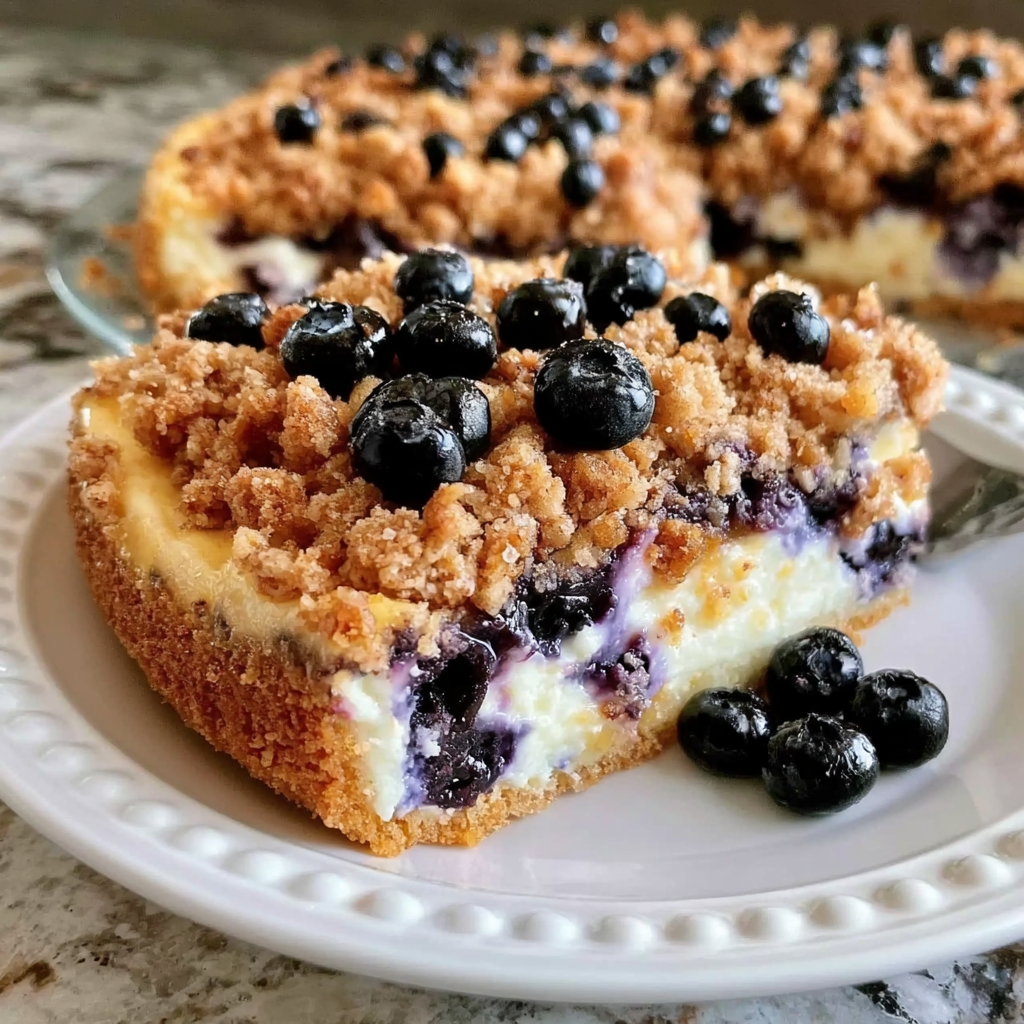
This Blueberry Cream Cheese Crumb Cake is soft, creamy, buttery, and loaded with juicy blueberries. It has a tender cake base, a sweet cream cheese layer, and a cinnamon crumb topping that makes every bite rich, cozy, and delicious.
This is the kind of cake that works for breakfast, brunch, dessert, holidays, or a simple afternoon treat with coffee. The blueberries add bright fruity flavor, the cream cheese layer makes it smooth and indulgent, and the crumb topping gives it that bakery-style finish everyone loves.
If you enjoy blueberry desserts, this cake is a must-bake recipe.
Why You’ll Love This Blueberry Cream Cheese Crumb Cake
This cake is simple enough for everyday baking but special enough for guests.
You’ll love it because it is:
Soft, moist, and buttery
Filled with juicy blueberries
Layered with sweet cream cheese
Topped with a cinnamon crumb topping
Perfect for breakfast, brunch, or dessert
Easy to make in an 8-inch pan
Great with coffee or tea
Beautiful for family gatherings
What Makes This Cake Special?
This crumb cake has three delicious layers. The cake base is tender and sweet, the cream cheese filling adds a creamy cheesecake-like center, and the crumb topping brings a buttery cinnamon crunch.
The blueberries bake into the cake and add little bursts of juicy flavor. It tastes like a mix between coffee cake, cheesecake, and blueberry crumb cake all in one.
Recipe Summary
Prep Time: 20 minutes Cook Time: 35–40 minutes Total Time: About 1 hour Servings: 9 pieces Course: Breakfast, Brunch, Dessert Cuisine: American
Ingredients
For the Cake
1 cup all-purpose flour
1 cup granulated sugar
½ cup unsalted butter, softened
2 large eggs
1 teaspoon vanilla extract
2 teaspoons baking powder
½ teaspoon salt
1 cup fresh blueberries
For the Cream Cheese Layer
8 ounces cream cheese, softened
½ cup powdered sugar
1 teaspoon vanilla extract
For the Crumb Topping
1 cup all-purpose flour
½ cup brown sugar
½ cup unsalted butter, melted
1 teaspoon cinnamon
Ingredient Notes
Blueberries
Fresh blueberries work best for this cake because they hold their shape and add juicy flavor. You can also use frozen blueberries, but do not thaw them first.
Cream Cheese
Use softened cream cheese so the filling mixes smoothly. Full-fat cream cheese gives the richest texture.
Butter
Softened butter is used in the cake batter, while melted butter helps create the crumb topping.
Brown Sugar
Brown sugar gives the crumb topping a warm, caramel-like flavor.
Cinnamon
Cinnamon adds cozy flavor to the crumb layer and pairs beautifully with blueberries and cream cheese.
Step 1: Prepare the Pan
Preheat your oven to 350°F.
Grease an 8-inch square baking dish or line it with parchment paper.
Step 2: Make the Cream Cheese Layer
In a medium bowl, mix the softened cream cheese, powdered sugar, and vanilla extract until smooth and creamy.
Set aside.
Step 3: Make the Cake Batter
In a large bowl, beat the softened butter and granulated sugar together until light and fluffy.
Add the eggs one at a time, mixing well after each addition.
Stir in the vanilla extract.
Step 4: Add the Dry Ingredients
In a separate bowl, whisk together the flour, baking powder, and salt.
Gradually add the dry ingredients to the wet ingredients.
Mix until just combined.
Step 5: Add the Blueberries
Gently fold the blueberries into the cake batter.
Be careful not to overmix or crush the berries.
Step 6: Assemble the Cake
Spread half of the cake batter into the prepared baking dish.
Spoon the cream cheese mixture over the batter and gently spread it out.
Add the remaining cake batter over the cream cheese layer.
It does not have to be perfectly smooth.
Step 7: Make the Crumb Topping
In a bowl, combine the flour, brown sugar, melted butter, and cinnamon.
Stir until crumbly.
Sprinkle the crumb topping evenly over the cake.
Step 8: Bake
Bake for 35–40 minutes, or until the cake is golden brown and a toothpick inserted into the center comes out clean.
Step 9: Cool and Serve
Let the cake cool in the pan for at least 10 minutes.
For cleaner slices, allow it to cool completely before cutting.
Serve as is, or dust lightly with powdered sugar.
Tips for the Best Crumb Cake
Use room temperature butter and cream cheese for smooth mixing.
Do not overmix the cake batter after adding the flour.
Use fresh blueberries when possible for the best texture.
If using frozen blueberries, add them straight from the freezer.
Let the cake cool before slicing so the cream cheese layer sets.
Bake until the top is golden and the center is fully set.
Variations
Lemon Blueberry Crumb Cake
Add 1 tablespoon lemon zest to the cake batter for a bright citrus flavor.
Raspberry Cream Cheese Crumb Cake
Replace blueberries with fresh raspberries.
Mixed Berry Crumb Cake
Use a mix of blueberries, raspberries, and blackberries.
Almond Blueberry Crumb Cake
Add ½ teaspoon almond extract to the cake batter and sprinkle sliced almonds over the crumb topping.
Extra Crumb Topping
Make 1 ½ batches of crumb topping if you love a thick bakery-style crumb layer.
What to Serve with Blueberry Cream Cheese Crumb Cake
This cake is delicious with:
Hot coffee
Iced coffee
Black tea
Vanilla ice cream
Whipped cream
Fresh berries
Greek yogurt
A drizzle of lemon glaze
It is perfect for brunch, dessert tables, potlucks, and weekend baking.
Storage Instructions
Store leftover cake in an airtight container in the refrigerator for up to 5 days.
Because of the cream cheese layer, refrigeration is best.
Freezing Instructions
Wrap individual slices tightly in plastic wrap and place them in a freezer-safe bag or container.
Freeze for up to 3 months.
Thaw at room temperature or overnight in the refrigerator before serving.
Reheating Tips
Enjoy the cake chilled, room temperature, or slightly warm.
To reheat, microwave a slice for 10–15 seconds, or warm it gently in a low oven.
Frequently Asked Questions
Can I use frozen blueberries?
Yes. Use frozen blueberries straight from the freezer and do not thaw them first.
Can I make this cake ahead of time?
Yes. This cake can be made a day ahead and stored in the refrigerator. Let it sit at room temperature for a little while before serving.
Can I use a different berry?
Yes. Raspberries, blackberries, or mixed berries all work well.
Why is my crumb topping too wet?
If the topping feels too wet, add 1–2 tablespoons more flour until it becomes crumbly.
Can I make this gluten-free?
Yes. Use a 1:1 gluten-free all-purpose flour blend.
Does this cake need to be refrigerated?
Yes. Since it contains a cream cheese layer, store it in the refrigerator.
Recipe Card
Sherry’s Blueberry Cream Cheese Crumb Cake
A soft blueberry crumb cake layered with sweet cream cheese filling and topped with a buttery cinnamon crumb topping. Perfect for breakfast, brunch, dessert, or coffee time.
Prep Time: 20 minutes Cook Time: 35–40 minutes Total Time: About 1 hour Servings: 9 pieces
Ingredients
Cake
1 cup all-purpose flour
1 cup granulated sugar
½ cup unsalted butter, softened
2 large eggs
1 teaspoon vanilla extract
2 teaspoons baking powder
½ teaspoon salt
1 cup fresh blueberries
Cream Cheese Layer
8 ounces cream cheese, softened
½ cup powdered sugar
1 teaspoon vanilla extract
Crumb Topping
1 cup all-purpose flour
½ cup brown sugar
½ cup unsalted butter, melted
1 teaspoon cinnamon
Instructions
Preheat oven to 350°F.
Grease an 8-inch square baking dish or line it with parchment paper.
In a bowl, mix cream cheese, powdered sugar, and vanilla until smooth. Set aside.
In a large bowl, beat softened butter and granulated sugar until light and fluffy.
Add eggs one at a time, mixing well after each addition.
Stir in vanilla extract.
In a separate bowl, whisk flour, baking powder, and salt.
Add dry ingredients to the wet ingredients and mix until just combined.
Gently fold in blueberries.
Spread half of the batter into the prepared pan.
Spoon the cream cheese mixture over the batter.
Spread the remaining batter over the cream cheese layer.
In another bowl, mix flour, brown sugar, melted butter, and cinnamon until crumbly.
Sprinkle the crumb topping over the cake.
Bake for 35–40 minutes, or until golden brown and set in the center.
Cool before slicing and serving.
Notes
Use softened cream cheese for a smooth filling.
If using frozen blueberries, do not thaw them.
Let the cake cool before slicing for the cleanest pieces.
Store leftovers in the refrigerator for up to 5 days.
Nutrition Estimate
Per serving:
Calories: 360
Carbohydrates: 48g
Protein: 5g
Fat: 18g
Sugar: 30g
Fiber: 1g
Nutrition values are approximate and may vary depending on ingredients used.
Final Thoughts
Sherry’s Blueberry Cream Cheese Crumb Cake is sweet, creamy, fruity, and comforting. The soft cake, juicy blueberries, rich cream cheese layer, and buttery crumb topping make it a dessert that feels homemade and special.
Serve it with coffee in the morning, tea in the afternoon, or as a simple dessert after dinner.
Pinterest Description
This Blueberry Cream Cheese Crumb Cake is soft, buttery, and loaded with juicy blueberries! With a creamy cheesecake-style layer and cinnamon crumb topping, it’s perfect for breakfast, brunch, dessert, or coffee time. #BlueberryCrumbCake #CreamCheeseCake #BlueberryDessert #CoffeeCakeRecipe #EasyBakingRecipes #BrunchRecipes #HomemadeCake #BlueberryRecipes
The Right’s “Election Fraud” Cry for Midterms Previewed in Primaries
On Tuesday night, oyster farmer and combat veteran Graham Platner overwhelmingly sailed to victory in the Democratic Senate primary in Maine. His opponent, Gov. Janet Mills unofficially dropped out in late April, leaving Platner effectively unopposed. But a series of scandals rocked his candidacy, leaving his viability against Republican Sen. Susan Collins in November in question.
The veteran has repeatedly emphasized the way his combat trauma made him a worse version of himself, and how in later years he has been able to heal and evolve. In Maine, Democrats so far appear to have accepted that message of redemption, and his promise to provide a progressive economic agenda for Maine.
“It’s a very working-class state that has been very badly impacted by job loss and then, in recent years, by a pretty extreme wave of gentrification,” Intercept reporter Noah Hurowitz says. “The progressive policy agenda of Graham Platner combined with the perceived authenticity of his ‘I am a fighter, I will actually do this,’ whereas Janet Mills who has been in power and overseen a lot of this and has not been perceived to bring a lot of the changes that Mainers seek” is resonating with voters.
We also check in on California, where Intercept contributor Jordan Uhl breaks down the latest conspiracy theories about voter suppression, which conservatives have hinged on the defeat of former reality TV star Spencer Pratt, and the early results in the governor’s race. Uhl also breaks down how betting platforms like Kalshi and Polymarket are adding to the confusion, and what that could mean come November.
“If they don’t like the outcome, it’s rigged. If they like the outcome, it’s fine,” says Uhl. “At the gubernatorial level, you can see how Megyn Kelly pointing to prediction market data is symptomatic of a larger problem here. People weren’t looking to actual polling data. They were looking to the behavior of gamblers to inform their analysis.”
For more, listen to the full conversation of The Intercept Briefing on Apple Podcasts, Spotify, YouTube or wherever you listen.
Transcript
Jessica Washington: Welcome to The Intercept Briefing, I’m Jessica Washington, politics reporter at The Intercept.
Noah Hurowitz: I’m Noah Hurowitz, I cover federal law enforcement, immigration, and elections at The Intercept.
JW: Noah, it’s great to have you on again. This week we wanted to check in with you about the Democratic Senate primary in Maine where Graham Platner, the combat veteran and oyster farmer, faced a series of scandals.
But before we do all of that, let’s get into the results from Tuesday night. So Maine Gov. Janet Mills had already suspended her primary race against Platner in late April, so he was effectively running unopposed in the primary. But Noah, what were the results from Tuesday night, and what do they tell us about Mainers and what they want?
NH: The results were an overwhelming win for Platner. He came in at over 70 percent of the vote. The AP called it on Tuesday night with 8 percent showing. It was just very clear that he had carried the day, and I think a big part of that was because Governor Mills had unofficially suspended campaigning earlier in the cycle in April.
But in light of some of the news that came out the week before the primary, Janet Mills had slyly reminded people that she was still on the ballot. So there was a question going into Tuesday night of what is her showing going to be and what will that tell us about general support for Platner.
She did carry about 19 percent of the vote last time I checked which does show that one in five Democratic primary voters in Maine at least had some issue with casting a ballot for Platner in the primary. I don’t know if it tells us much about what his support is going to be in the general, because that is going to be a much more pitched battle.
It’s going to be much more Democrat versus Republican, rather than a vote where people felt like they could cast, let’s say, a protest vote against a candidate that they were not sure about.
JW: Yeah, and I really want to get more into the general election, because I think that’s going to be pretty interesting.
But we obviously can’t talk about Graham Platner without talking about the scandals that have emerged in the last few months. I’m just going to read through some of them. So until October of last year, he had a tattoo of Nazi iconography. He had previously made rape apology posts on Reddit. He was accused and admitted to sending inappropriate messages while married.
And I would argue most damning, an ex-girlfriend, who we should note is currently a Republican operative, accused him of physically restraining her and locking her in a room overnight. She also claimed that he was well aware of the meaning of the Nazi tattoo. Now, Platner has denied both allegations from his ex-girlfriend, but he has admitted to having the tattoo, which he covered up last year, and making the posts.
Do you think that these scandals hurt his campaign, or do you think that people perceive these stories as political attacks from the establishment? And by the establishment, I mean both in Maine and then also, I would argue, in the form of mainstream media like The New York Times and Politico. And I’m wondering, did those attacks maybe actually increase his support? I tend to think the latter.
NH: Yeah, the stuff about the tattoos and the Reddit posts came out pretty early into the campaign last fall. To be honest, I thought that they were going to sink him. I don’t know how you survive, having a Nazi tattoo. But he steamrolled right through that.
A big part of his message about himself has been a story of redemption. He was a combat veteran. It took him a long time to overcome a lot of the effects of that. He’s talked openly about his struggles with alcohol, about his post-traumatic stress disorder, and about how he was a very angry young man and found some level of peace after he came back to Maine, where he grew up.
The new stuff in the week before the primary, first there was an article about him having sexted with women after he was married, quite recently. And then, of course, as you mentioned, the The New York Times story, where there were allegations of physical abuse, allegations of him physically restraining his ex-girlfriend.
That, I think, did prompt a much more serious reckoning. A lot of his supporters were, A, yes, outright dismissive of what they saw as an establishment attack on an insurgent populous candidate. But I think it also, whether this is canny politics on his part or whether you choose to believe him, it was possible for him to say that, “Look, that’s just not who I am anymore. I regret deeply a lot of my actions when I was struggling in that way, and, here I am, a changed man fighting for you.” And that was a big part of his speech on Tuesday night when he accepted the nomination. He spoke a lot about redemption and about grace.
This was something that came up in my conversations with people in Maine in the run-up to the election was that, look, Maine is a state with high levels of substance use disorder. Maine is a state where there’s a lot of poverty, and there’s a lot of people who are veterans. And I think that the message of, “I was having a rough time, and I got my act together,” really does resonate. So I think there’s a combination of seeing this as an establishment attack, but also in accepting his story of getting his act together.
JW: It’s understandable, and I think at the same time, there is something to the narrative of an angry young man who really took it out allegedly on the women in his life, and then also making some of these posts that are obviously really offensive. I think particularly for female voters, I have to imagine there are a lot of women who are thinking, “I knew an angry young man, and I’m still living with the consequences of that angry young man. And it’s great for him to find redemption, but I’m still in this.” Those stories can be both triggering, but, and I imagine hopeful for some of those men who still find themselves in that place. But I think it’s a complicated space to walk.
NH: Yeah, no you’re absolutely right. And I think when it comes to someone running for office on a message of fighting for the common man or whatever. I think that a lot of the people who support his candidacy have this attitude of, yes, he had a messy personal life. Yes, some of these things that are described are inexcusable. But should that consign us to another Susan Collins term? Should that consign us to a more watered-down Democratic candidate who is not going to bring the same fire? And I think for a lot of people the answer is no. A lot of the people who I spoke to were wrestling with those questions. That’s something that’s going to continue to be in the discourse for sure.
JW: In your conversations, did you feel like people were more so focused on his progressive economic agenda, or did they feel more anger at the establishment? Is this about sticking it to Janet Mills, sticking it to Susan Collins, or is this about— He’s really putting forward a very progressive economic agenda for Maine. What do you feel resonated with people you spoke to?
NH: I think they go hand-in-hand. One of the biggest issues for Mainers is affordability. The state has been in a prolonged job crisis basically for decades.
Everybody knows someone who has been laid off from the paper mill. Because the paper mill closed, they lost their logging trucking route. People know lobstermen who have been forced off the water. It’s a very working class state that has been very badly impacted by job loss, and then in recent years by a pretty extreme wave of gentrification.
I went to school in Maine in Portland, and I don’t think I know anyone who still lives in Portland. Everyone has had to move to other cities like Lewiston and Auburn, which then in the chain reaction of gentrification and displacement then sees higher prices. But the jobs haven’t really come.
I think that the progressive policy agenda of Graham Platner combined with the perceived authenticity of his, “I am a fighter, I will actually do this,” whereas Janet Mills has been in power and overseen a lot of this and has not been perceived to bring a lot of the changes that Mainers seek.
JW: We have seen a knee-jerk reaction from some people on the left to dismiss outright the concerns around some of Platner’s actions, and accuse those who raise the issue of being a centrist or a corporate shill.
But at the same time, it’s clear that he is not the establishment pick, and his campaign has been heavily reported on and scrutinized in the media. Noah, you’ve done a lot of really great nuanced reporting on this race, which by the way everyone should check out, but what do you make of the reaction to Platner from both sides of this political divide?
NH: There’s two things. There’s what is being talked about in Maine and what is being talked about in national media. This was something that I didn’t quite get to when we were talking about the scandals, but another thing that came up in multiple conversations with political knowers of things in Maine, is that it’s not just the establishment that people see behind these attacks, but also national media — the New York Times, The Wall Street Journal, The Washington Post. People in Maine are generally suspicious of what they call folks from away.
Maine is a very unique political landscape. I hesitate to even call it purple because it is this mishmash of some right-leaning tendencies. People tend to be very pro-gun. But on the other hand, there’s a lot of more socially liberal or libertarian tendencies among Mainers. There’s people on the hard right who hate Platner because they think he’s a stooge, because they think he’s pro-immigrant, because they are in the tank for, if not Susan Collins for the power of the Trump administration, which would be badly affected by losing a Republican senator.
On the left in Maine the support is just generally there for Platner. He’s done very well there. More toward the center in, let’s say, national politics, I think that there has definitely been a lot of wariness around Graham Platner whether that’s because they think he’s going to be another Fetterman, which by the way, I don’t think he’s going to be another Fetterman. That’s best exemplified by John Fetterman going off nonstop against Graham Platner.
There’s a worry that they don’t know what direction he’s going to go in, that they can’t control him or that they just worry about his electability. But knowing Maine and having reported on this now for a while, I think that if anything he’s going to be more electable than a Janet Mills. Susan Collins has fended off pretty formidable challenges in the past. In 2020, she faced a challenge from Sara Gideon, who was a very well-known Democratic politician in Maine, fairly progressive. But she didn’t have that sort of insurgent credibility that Platner brings to the race.
And despite polling well, Sara Gideon lost badly. She lost by eight points. So I think that if anything, Maine specifically demands an outside-the-box challenge to someone as entrenched as Susan Collins.
JW: What is your expectation of how these scandals will follow Platner into the general election against Susan Collins?
Obviously she’s going to use them. I also would imagine, thinking about how things have come out so far, that there could be more things coming out. How do you imagine this is going to affect him in the general?
NH: I think that people are going to be digging. I think that national reporters and local reporters are going to be looking for anything that they can find. Just based on the kind of behavior that was described in these stories, one could assume that a messy life yields a lot of opposition research. I do think that some of the main points have already been arrived at in The New York Times reporting, and the tattoo and the Reddit post.
Susan Collins will definitely use these stories against Platner in the general but frankly, I think that it might hit a little bit less than it would coming in a primary from a Democrat, because another thing that people brought up multiple times in my reporting over the last week was that there’s this double standard.
It’s not just that, oh, Trump’s behavior has lowered the bar. It’s that Susan Collins has supported Donald Trump every step of the way, despite the Access Hollywood tape. She voted to confirm Brett Kavanaugh despite the allegations against him. She enabled the elimination of Roe v. Wade. One issue that I think matters a lot to people in Maine and has a distinct intersection here with issues of women’s rights and women’s health is that affordability is not just, “Oh, I can’t pay my rent.” Hospitals are closing in Maine, specifically OBGYN units.
So a lot of people in Maine are having to go either to Portland or to Boston for procedures that they might otherwise have been able to get at units that closed in the mid-coast area or farther north. This was something actually that Platner brought up in his speech.
So I think if you’re saying that he is bad to women based on the reporting so far, I think you can definitely make that argument, and I don’t think that Graham Platner would disagree. Ultimately I think that the Platner campaign strategy is going to be, “This is not about necessarily like personal taste. It’s about what I will deliver for the people of Maine.” And what Susan Collins has delivered for the people of Maine is Brett Kavanaugh, Donald Trump’s consistent hatred of and demeaning attitude towards women, the overturn of Roe v. Wade, and this affordability crisis where hospitals are closing in the state and forcing women to go for procedures to Portland or to Boston,
JW: So it sounds like we’re going to have a lot to watch in this race come November. Noah, we’re going to leave it there. Thank you so much for joining us.
NH: Thanks so much for having me.
JW: Next, we head to LA, where the mayoral primary has become the latest victim of right-wing panic and false claims of election fraud with Intercept contributor and my co-host, Jordan Uhl. But first, a quick break.
[Break]
JW: Hey, Jordan. Great to have you here.
Jordan Uhl: Hey, it is great to be here on the other side of the conversation.
JW: Jordan, you’ve been following the primaries for California governor and LA mayor quite closely. And because vote counting can take weeks in Los Angeles and the state generally for various reasons, including there being huge population centers and a lot of vote-by-mail ballots, it has become the latest target of claims by Republicans that there is election fraud.
President Donald Trump posted on social media, “Not possible for Spencer Pratt to have lost the LA runoffs after the big lead he had.” By the way, Pratt is the Republican candidate in the LA primary. In an interview with NBC “Meet the Press,” Trump stormed off after being pressed for evidence of his claims that the California governor’s race and the 2020 presidential elections were rigged.
[Clip plays]
Kristen Welker: …presented in a court of law-
Donald Trump: The election was rigged. It was a dirty election.
Kristen Welker: Mr. President.
Donald Trump: And it’s happening again right now in California.
Kristen Welker: You’ve never presented evidence that the 2020 election was rigged.
Donald Trump: It’s happening right now in California. Right now, it’s, look at what’s happening in California.
Kristen Welker: Where’s the evidence to that?
[Clip ends]
JW: As Republican gubernatorial candidate Steve Hilton and Pratt’s leads dwindled, conservative commentator Megyn Kelly parroted really similar talking points on her show.
Megyn Kelly: No one is going to trust this outcome if those two are eliminated from the general election given the leads that we’ve seen. … If you look at the betting markets, and they don’t know anything more than we do, generally they don’t, they’re all now voting against Spencer Pratt and Steve Hilton even making it.
JW: We’re going to end the clip there. Kelly goes on to complain about the mail-in ballots coming in as if that’s nefarious, when it’s just a continuation of legitimate vote counting.
It’s worth noting a few days later, as more votes have come in, Hilton is now set to face Democrat Xavier Becerra in the state’s general election come November. But that hasn’t stopped loud MAGA voices from claiming the LA election was stolen from Pratt.
Now, it seems to me that if you can believe an election was rigged in Los Angeles because a conservative former reality TV star with no experience and a reputation for wasteful spending and explosive outbursts didn’t win, you can believe anything.
But Jordan, how has the right tried to spin his defeat? What does it tell us as we head into November? Are there trends you’re seeing in the LA mayor’s race that mirror national trends in elections across the country?
JU: I mean, that is just patently ridiculous. The trends that we’re seeing are just continuations of trends or behavior patterns that Republicans have already exhibited in elections previously.
“If they don’t like the outcome, it’s rigged. If they like the outcome, it’s fine.”
If they don’t like the outcome, it’s rigged. If they like the outcome, it’s fine. More of the same here. At the gubernatorial level, you can see how Megyn Kelly pointing to prediction market data is symptomatic of a larger problem here. People weren’t looking to actual polling data; they were looking to the behavior of gamblers to inform their analysis.
So Hilton, now we know, is making the runoff. She was certain — based on gambling behavior — that he wouldn’t. So in her mind, the only conclusion was fraud.
There were many people who waited until later to decide who to vote for, that may not inform who they vote for in the general. But conservatives didn’t have a menu of options.
The field was largely consolidated behind Pratt in LA, and for the most part, you had the Trump endorsement of Steve Hilton for governor. While Chad Bianco, the sheriff from Riverside, did pull some votes, for the most part, they were lining up behind [Hilton]. So it was much more clear who they would vote for, so it allowed them to cast their vote early.
JW: Thinking just about Pratt, we’ve seen him on television as this kind of outrageous figure. I want to just play a couple clips just to give an idea of what millennials have going on in their mind when they hear the name Spencer Pratt.
[Clip montage plays]
Spencer Pratt: Wah, wah, wah, wah. What are you crying about, Stephanie? What the f— are you crying about? …
That’s why you’re not in my life, you crazy bitch. …
Your mom is just the vagina that made Heidi come onto Earth. Your mom is not Jesus or God!
Brody Jenner: Dude, relax, bro. What the hell is wrong with you?
Spencer Pratt: I hate that bitch. Excuse my French.
[Clips end]
JW: OK, so now that everyone’s gotten a taste of Pratt — if I’m being honest, I did that mostly for fun. But to talk about something a little bit more serious, as you’ve pointed out, betting markets are playing a role in this election. So Kalshi, Polymarket, can you explain briefly what Kalshi and Polymarket are, and how they’re factoring into this election and more elections around the country?
JU: These are, you could say, loopholes to current gambling laws. Well, you’re not actively betting in a sportsbook, you’re making a prediction about an outcome, and somehow — I’m not a lawyer — somehow that is legal. In California, sportsbooks are illegal. So in states like California, these platforms thrive. But they operate nationally for the most part.
“ Ideally, they want those customers to lose money so they make increased profits.”
They have been pumping a ton of money into advertisements, but also through influencers in paid promotional posts. Now, what that looks like is influencers or creators will point to prediction market data. The example that we saw with Megyn Kelly: Oh, well, the prediction markets are saying one thing, but then a different outcome occurred.
That’s not actual polling data. And this blurring of the lines is deliberate by Polymarket and Kalshi — not because they want people to have a clear picture, but because they want people to use their platforms. They want to bring in new customers. Ideally, they want those customers to lose money so they make increased profits.
Now, the argument that I’ve heard against this from people who have been approached by these companies is, “I don’t want anything to do with it,” because in a sense it could be seen as a form of voter suppression.
Let’s take the New York mayoral election as an example. If betting market data said that Andrew Cuomo had a 90 percent chance of winning the election, and you are a supporter of Zohran, you might see those odds and think, “It’s not worth it. He’s going to win.” But as we saw in that election, Zohran Mamdani brought the vote out and won. He is now mayor of New York. So polling showed a much closer race.
Polling in the LA mayoral primary showed in the last reputable poll before the election that Councilmember Nithya Raman was in second place. Spencer Pratt was in third. And now as these results are counted, it matches the polling data. It did not match the behavior of gamblers.
I think the biggest issue here, Jessica, is that Republicans only make up around 15 percent of the population in Los Angeles. If you look at the 2024 presidential election data, Spencer Pratt got, as it stands right now, within 1 percent of the vote share that Donald Trump got in the election. So the idea that he would somehow outperform Trump, just pull all of these votes from two Democrats in the city to somehow either make the runoff or, as he claimed in the eve of the election, win outright in the primary, which would be more than half of the vote — it was never rooted in reality or past elections.
JW: Yeah, it really concerns me. The idea that we would be replacing polls, which are, admittedly imperfect, but at least they’re scientific and evidence-based, not just vibes and guesses.
And not to air out the business of my co-host, but you’ve been approached by one of these companies. Can you tell us about that? What are they offering people to partner with them, and what are the expectations?
JU: They did. Kalshi has reached out to me twice with offers of “partnerships.” And what that looks like isn’t explicit pitching, “Hey, use this platform. I use this platform,” like you would in a traditional product placement.
It’s much more covert. They want you to integrate that betting market data into your content. It’s kind of a backdoor way of advertising. I had said no, just cut them off from the beginning in both offers; I’m not interested in that. But I have friends with representation who heard them out just to get a sense of what they were offering. I have heard from multiple people: They’re throwing around six-figure offers and, in many cases, multiple six-figure offers. We’re talking mid-six figures.
The people that I’ve talked to all said, no, they didn’t feel good about it, for the concerns that we’ve laid out. In their opinion, these companies are predatory, and it could have a suppressive effect on the vote. And there just aren’t really guardrails on these platforms which allows them to prey on people.
“They want you to integrate that betting market data into your content. It’s kind of backdoor way of advertising.”
JW:Wired reported that both Kalshi and Polymarket had to ask influencers they were partnering with to take down paid partnership tags after they falsely claimed the LA primary results were dubious. Semafor reported that Kalshi asked one of its MAGA influencers — who wrote, “Is California cheating to get Spencer Pratt out?” and “They’re stealing it, aren’t they?” to their 1.7 million X followers — to take down the post. Jordan, what do you make of that?
JU: This is a problem of their own making. I’d say a less charitable interpretation of their marketing strategy on social media would be to pay people who would likely be ideologically aligned with candidates who have no hope of winning to boost the prediction market data that shows that they are either outperforming or, in Pratt’s case, making the runoff or winning outright.
“ That’s just free money for Kalshi.”
Those outcomes were not rooted in polling data. But to a client base or a customer base who would believe those things are possible based on data from bettors — that’s just free money for Kalshi. All of those people would lose their bets, and that’s a windfall of cash.
So it seems like they were trying to walk things back when they had already paid these people to promote somebody who had no real prospects.
JW: I have to say, there is something interesting to me that this is the same year I found out what a “parlay” was, and it’s also the same year that the betting markets are trying to take over the election. But just coincidence, I guess.
So Vanity Fair just put out an article, “Spencer Pratt’s Mayoral Campaign Proves It Takes More Than Mastering the Algorithm to Get Elected.” He really did pop off with these AI videos that didn’t do it for me personally, but seemed to really be catching attention.
He had all this celebrity endorsement, but it didn’t go anywhere for him electorally. He, I think, did worse than just any kind of standard Republican probably would have done. Jordan, what do you make of the ways in which we’re maybe noticing the attention economy isn’t the exact same thing as electoral success?
JU: Spencer Pratt learned a lesson that many lefty progressive candidates over the past several years have learned the hard way, that simply running an online or Twitter-focused campaign does not lead to votes. Spencer Pratt had a lot of buzz, but that buzz was national. So of course, that’s not going to lead to votes in the city of Los Angeles.
The AI ads, some of them weren’t even made by his campaign, while they did use AI-generated images for posters and campaign art. To me, that kind of illustrates the hollowness of that campaign. It was much more sensational. It was more of a spectacle than substance. And to my knowledge, I don’t know what kind of ground game Spencer Pratt had. You need to get out and knock on doors. That it is campaigning 101.
He threw some parties. He cut a couple videos. He had some really slick ads. But are you talking about issues that matter to all of Los Angeles? The way he talked about the unhoused population in Los Angeles was seen by many as cruel and insensitive.
When talking about the fires, the fires of last year, which were a centerpiece of his campaign, it always seemed to come back to him. He lost his home. I know multiple people who lost their homes, and they didn’t resort to demonizing homeless people.
Even the frustration with the city’s response or the state’s response, no objective observer can look at those fires and the conditions that worsened them — the Santa Ana winds — that came in and made it difficult, and in many cases impossible, for helicopters to get into the hills to fight those fires, which is how they do combat wildfires in the hilly parts of the city.
The speed of those winds were 70, 80 miles an hour. You can’t get a helicopter up there. No rational person is going to see that and say, “Yes, this is clearly the mayor’s fault.” This is just a tragic disaster.
So for him to insinuate that this is all Mayor Bass and Nithya Raman’s fault is insulting to voters’ intelligence. They can recognize maybe the way it was responded to wasn’t great, but they’re not the reason the fires started in the first place.
JW: I did want to get into one positive takeaway from the LA mayoral primary that Clara Jeffery, Mother Jones editor-in-chief and my former boss, pointed out on Blue Sky, that now that the race will be between incumbent Mayor Karen Bass and Council Member Nithya Raman, we might actually get a real conversation around affordable housing and housing policy in general. Jordan, can you tell us a bit more about Raman and the issues on the table heading into November?
JU: This is going to be a very fascinating race to watch, and it has already started with Karen Bass blaming problems of homelessness on Nithya Raman. I think what she’s going to need to navigate is, Bass, the current mayor, will need to navigate is helping her potential voters understand that the city council does have a lot of power, more power in LA than city councils around the country.
Now, you can’t blame all of LA’s problems on one single council member, but I’m going to be very interested to see how this plays out. Yes, I think on the policy front, that’s great. We actually can have, ideally a substantial policy debate in a general election. This is typically not something that we see.
That’s why a lot of people, I think, were hopeful that Tom Steyer could make the runoff, because that potentially could force the favorite, Xavier Becerra, into tacking to the left on some of his positions, like oil, housing, and the billionaire tax. Unfortunately, he has nothing to hold him accountable. There’s no leverage to force him to shift positions now that he’s going to be facing Steve Hilton.
There is a shifting landscape in the LA mayoral race, which is going to be very fascinating. Nithya Raman, certainly not without critics, but she is widely seen as to the left of Karen Bass, and potentially we could see Karen Bass make promises that if she does defeat Raman in the general, will then be used to hold her accountable.
JW: Yeah, it is hard to imagine any kind of substantive debates happening in the alternate reality where we had a Spencer Pratt, Mayor Karen Bass race. Jordan, we’re going to leave it there, but thank you so much for joining me on the Intercept Briefing.
JU: Thank you so much for having me.
JW: That does it for this episode.
This episode was produced by Laura Flynn. Ben Muessig is our editor-in-chief. Maia Hibbett is our Managing Editor. Fei Liu is our product and design manager. Nara Shin is our copy-editor. William Stanton mixed our show. Legal review by David Bralow.
Slip Stream provided our theme music.
This show and our reporting at The Intercept doesn’t exist without you. Your donation, no matter the amount, makes a real difference. Keep our investigations free and fearless at theintercept.com/join.
And if you haven’t already, please subscribe to The Intercept Briefing wherever you listen to podcasts. Do leave us a rating or a review, it helps other listeners to find us.
Let us know what you think of this episode, or If you want to send us a general message, email us at podcasts@theintercept.com. What issues are you following in the midterms, send us an email or leave us a voice mail at 530-POD-CAST that’s 530-763-2278
Is China really deflating deflation? It’s harder than Beijing thinks
TOKYO – China’s “deflation-is-over” narrative is getting louder, but the foundations are still shaky.
Consumer prices rose 1.2% year-on-year in May, while producer prices jumped 3.9%, lifted by higher costs for energy, semiconductors and metals. To many economists, this is the clearest sign yet that the 2025 deflation scare is giving way to reflation.
But Japan’s long struggle shows how stubborn deflationary psychology can be. And it’s far from clear that Beijing is delivering the structural reforms needed to ensure China’s weak‑price era is truly ending.
Two reforms stand out — and neither is being pursued with urgency. First, resolving the deep housing crisis, which increasingly resembles Japan’s 1990s bad‑loan spiral. Second, building a real social safety net so 1.4 billion citizens feel confident enough to spend rather than hoard savings.
These priorities are tightly linked. With roughly 70% of household wealth tied to property, stabilizing the real‑estate market across China’s 70 largest cities is essential for reviving consumption and sustaining 4.5%- 5% growth.
But the longer Xi’s government acknowledges these pressures while avoiding decisive action, the more a deflationary mindset takes hold — and the harder it becomes to shake.
Japan is the cautionary tale. Even as the Bank of Japan prepares to lift rates to 1% next week — the farthest from zero in more than three decades — deflationary undercurrents still run through the economy.
On paper, Japan looks like it has finally escaped its low‑price trap. The BOJ expects inflation to reach 2.8% this year, suggesting reflation is taking hold. But beneath the headline, real wages remain negative, with pay packets consistently trailing price gains and domestic demand weakening as a result.
The result is a slow‑burn form of stagflation, and Tokyo has yet to deliver the structural reforms needed to close the gap between rising prices and stagnant household incomes.
“For the Japanese economy to fully break free from its long-standing deflationary mindset,” says Toshihiro Nagahama, economist at the Dai-ichi Life Research Institute, “it’s imperative for the government and the central bank to align, articulate their risk assessments, maintain honest and transparent dialogue with financial markets, and resolutely execute bold, long-term growth investments.”
Nagahama argues that today’s global economy is being shaped by an unusually dense intersection of forces — the war in Ukraine, volatility across the Middle East, and a series of historic turning points in central‑bank policy. The common thread is unmistakable: geopolitics is now driving economic outcomes, not the other way around.
With the Iran war on an uncertain path, he warns that governments can’t anchor their strategies to hopeful scenarios. They must instead plan around worst‑case risks, including the possibility of a multi‑year disruption in the Strait of Hormuz, a chokepoint that would reshape global energy flows and inflation dynamics.
“While these shifts present a formidable trial for Japan, they also represent a historic opportunity,” Nagahama notes. “As the country sheds its decades-long deflationary mindset and restores nominal growth, these external shocks serve as a critical test for fully escaping the paradigm of contracting equilibrium.”
Japan may not get the policy rethink it needs. Prime Minister Sanae Takaichi’s economic playbook still leans heavily on ultralow rates and a weak yen — the same formula Tokyo has relied on for nearly three decades. That’s why next week’s expected BOJ rate hike to 1% is already irritating a political establishment that prefers monetary comfort to structural change.
The timing is awkward. The June 16 meeting will proceed without Governor Kazuo Ueda, hospitalized with a liver infection. Yet, as Nomura economist Mari Iwashita notes, his absence is unlikely to alter the decision.
Even so, Takaichi’s camp is pressing the BOJ to ease off. Last year, she dismissed even the idea of rate hikes as “stupid,” despite mounting evidence that Japan’s 27‑year experiment with zero rates has backfired. Her government is the 14th since the late 1990s to double down on a weak‑yen strategy meant to lift exports and juice GDP.
Instead of reviving Japan’s animal spirits, the approach dulled them. Decades of near‑free money reduced the urgency for policymakers to boost competitiveness and for CEOs to innovate, restructure, and take risks. That complacency now shows: Japan Inc. is watching uneasily as BYD reshapes the global electric vehicle market and DeepSeek jolts the AI landscape — the kind of disruption Japanese firms once delivered in the 1980s.
Since taking office in October, Takaichi has shown little inclination to break from this script. “Sanaenomics” is essentially a continuation of Shinzo Abe’s playbook, built on the same reliance on ultralow rates and a deliberately weak yen.
The problem is that Japan’s current bout of inflation isn’t the healthy, demand‑driven kind policymakers once hoped for. It’s being fueled by high import costs for energy, food, and other essentials — classic cost‑push inflation, not the “demand‑pull” gains that signal rising confidence. In short, it’s bad inflation.
A similar dynamic is now confronting China. The gap between surging producer prices and muted consumer prices is the widest since June 2022. That divergence suggests manufacturers are struggling to pass higher input costs on to consumers, leaving profit margins under pressure.
If that squeeze persists, it could have serious implications for wages across a $20 trillion economy, undermining household spending and complicating Beijing’s reflation narrative.
This trajectory explains why Eurasia Group CEO Ian Bremmer entered 2026 warning that “China’s deflation trap” wouldn’t go away as easily as many hope.
The problem, Bremmer says, is that Xi continues to “prioritize political control and technological supremacy over the consumption stimulus and structural reforms that could break the cycle. Beijing has the means to prevent a crisis, but living standards will deteriorate, the fallout will spread abroad, and the world’s second-largest economy will remain stuck in a trap of its own making.”
Home prices falling for five years mean “household wealth destruction on par with America’s 2008 crash, except it’s still accelerating,” Bremmer adds. “Consumer confidence, investment, and domestic demand have cratered with it. Beijing bet big that high-tech manufacturing would fill the gap left by property. Instead, state-driven investment has created overcapacity, and weak domestic demand means there aren’t enough buyers to absorb it.”
One clear result of Xi’s “involution” policy is that too many Chinese firms are chasing too little demand, slashing prices to survive. “Margins collapse, forcing even well-run firms to cut wages and jobs to stay afloat,” Bremmer notes.
“Workers spend less. Demand weakens further, so firms cut prices again. Meanwhile, debts grow harder to service with each turn of the cycle. Banks and local governments keep zombie firms alive — rolling over loans, protecting local champions — which keeps overcapacity entrenched,” he adds.
It means, Bremmer concludes, that “the debt-deflation spiral feeds on itself. Donald Trump’s tariffs last year made the situation worse, closing off a critical export market and confronting Chinese firms with a grim choice: slash prices to find buyers outside the United States, or transship goods through third countries to reach America anyway. Either path squeezes margins further. Over a quarter of listed Chinese companies are now unprofitable, the highest share in 25 years.”
The bottom line is that deflationary pressures can persist long after headline inflation turns positive, quietly eroding confidence. That’s why markets are buzzing about the possibility of PBOC easing in the months ahead — a move that could weaken the yuan and widen China’s trade surplus.
As economist Brad Setser of the Council on Foreign Relations puts it: “Of course, no one explicitly says they would welcome a bigger surplus. But if an international institution’s policy advice is monetary easing — to fight deflation — and fiscal consolidation because of off‑balance‑sheet risks, plus more exchange‑rate flexibility, it is effectively advocating for the country to export its way out of its domestic troubles.”
Beijing, however, has been reluctant to let the yuan slide. A stable or appreciating currency serves three strategic purposes for Xi’s leadership. It reduces the risk of offshore defaults among heavily indebted property developers.
It supports Xi’s ambition to elevate the yuan as a credible reserve currency. And it helps manage tensions with the Trump White House, which remains acutely sensitive to any sign that Beijing is tilting the playing field in favor of its exporters.
However 2026 shakes out, hopes Xi’s team is successfully deflating China’s deflation could be in for a rude awakening. Japan’s example shows that even if headline data suggest that reflation is afoot, the deflationary mindset is very hard to change.
Energy diplomacy without energy resources: How some states gain influence without oil and gas
For more than a century, energy diplomacy has been closely associated with countries endowed with vast oil and gas reserves. The ability to produce and export hydrocarbons has often translated into geopolitical leverage, economic influence and strategic importance. However, the foundations of energy power are gradually changing. In today’s interconnected world, influence increasingly depends not only on what a country possesses beneath its soil, but also on how effectively it positions itself within the global energy system.
Beyond Oil and Gas: A Changing Definition of Energy Power
Traditional energy diplomacy was built upon resource ownership. Countries with large reserves enjoyed advantages in international negotiations and strategic partnerships. Yet the contemporary energy landscape is becoming more complex.
Energy markets today rely on transportation networks, logistics hubs, financial institutions, technological capabilities and regulatory frameworks. As a result, countries without significant oil and gas reserves can still acquire considerable influence by controlling or facilitating the movement of energy across regions.
This shift suggests that energy power is no longer defined solely by production. It is increasingly determined by connectivity, infrastructure and strategic geography.
READ: China, Saudi Aramco discuss energy security, oil and gas cooperation
Geography as a Strategic Asset
Turkey illustrates this transformation. Despite lacking the vast hydrocarbon resources of some of its neighbours, it has become one of the world’s most important energy transit states. Its location between Asia, the Middle East and Europe enables it to host critical pipelines and transportation corridors.
Through strategic investment in infrastructure and regional connectivity, Ankara has transformed geography into geopolitical influence. Its significance in energy diplomacy stems not from resource abundance but from its ability to connect producers with consumers.
This model demonstrates that location itself can become a source of power when combined with long-term strategic planning.
The Rise of Energy Hubs
Singapore provides another important example. The city-state possesses almost no significant oil or gas reserves. Nevertheless, it has emerged as one of the world’s leading centres for energy trading, refining and logistics.
Its influence is derived from efficient institutions, advanced infrastructure and a business environment capable of attracting global energy companies. Singapore’s experience challenges the traditional assumption that natural resources are the primary source of energy-related influence.
Similarly, the United Arab Emirates has expanded its role beyond simple resource extraction. While it remains an energy producer, much of its growing international influence is linked to its ports, logistics networks, energy investments and financial services.
These cases reveal a broader reality: countries increasingly gain influence not only by producing energy but also by facilitating its movement, financing its development and managing its distribution.
READ: US companies benefit from Strait of Hormuz disruptions, Rosneft chief says
The Energy Transition and New Forms of Influence
The global transition towards cleaner energy sources is accelerating this transformation.
Unlike traditional fossil fuels, renewable energy systems depend heavily on technology, advanced manufacturing, electricity networks, digital infrastructure and critical minerals. Consequently, influence is becoming more diversified.
Countries capable of developing technological expertise, providing financing, building energy infrastructure or serving as strategic transportation corridors may acquire geopolitical significance even without large fossil fuel reserves.
The emerging energy order rewards innovation and connectivity as much as resource ownership.
What This Means for the Middle East
For decades, the Middle East derived much of its geopolitical importance from its vast hydrocarbon wealth. Oil and gas will undoubtedly remain important components of the regional economy for years to come. However, future influence may increasingly depend on factors beyond resource abundance.
Regional states are already investing in renewable energy, hydrogen production, electricity interconnections, smart infrastructure and logistics networks. These developments suggest that the next phase of energy diplomacy in the Middle East may be shaped as much by infrastructure and technology as by oil fields and gas reservoirs.
Countries that successfully position themselves as energy hubs, innovation centres or transportation gateways may enjoy advantages that extend beyond traditional resource wealth.
Rethinking Energy Diplomacy
The evolving global energy landscape requires a broader understanding of energy diplomacy. Policymakers have long focused on reserves, production volumes and export capacity as indicators of power. While these measures remain important, they no longer tell the whole story.
Infrastructure, institutional capacity, technological capability and strategic connectivity have become equally important components of influence. States that recognise this transformation are likely to secure stronger positions in the emerging international order.
The future of energy diplomacy may therefore belong not only to those who own energy resources, but also to those who control the networks through which energy flows.
In the twenty-first century, power is increasingly measured not merely by what a country extracts from the ground, but by the role it plays in connecting markets, facilitating exchanges and shaping the architecture of the global energy system.
OPINION: The strategic value of Kurdish gas for Europe’s energy security
The views expressed in this article belong to the author and do not necessarily reflect the editorial policy of Middle East Monitor.
These Cheesecake Deviled Strawberries are fresh, creamy, and almost too pretty to eat. A beautiful no-bake treat that’s perfect for brunches, parties, and sweet little celebrations.
Cheesecake Deviled Strawberries are one of those simple little treats that somehow feel extra special. Fresh juicy strawberries are filled with a creamy Greek yogurt cheesecake-style filling and topped with sweet blueberries for a naturally colorful dessert that looks beautiful on any table.
They come together in minutes, require no baking, and feel light yet satisfying. The combination of sweet berries and creamy vanilla filling creates a flavor that’s fresh, bright, and surprisingly indulgent without being overly rich.
Although they’re perfect for summer gatherings and patriotic holidays, these pretty stuffed strawberries are just as lovely for brunches, baby showers, or an easy afternoon treat. Plus, they always seem to disappear faster than expected—which is usually the best compliment a recipe can get.
These Cheesecake Deviled Strawberries are fresh, creamy, and almost too pretty to eat. A beautiful no-bake treat that’s perfect for brunches, parties, and sweet little celebrations.
Recipe Yield: 24 filled strawberries
Ingredients
12 large strawberries ¼ cup plain Greek yogurt ¼ cup cream cheese, softened 1 Tbsp honey ¼ tsp vanilla extract 24 blueberries
Instructions
1. Prepare the strawberries: Rinse and dry the strawberries thoroughly. Slice them in half lengthwise, keeping the stems attached if desired. Using a small spoon or melon baller, gently scoop a shallow indentation from the center of each half.
2. Make the filling: In a small bowl, beat the Greek yogurt, softened cream cheese, honey, and vanilla extract until smooth and creamy.
3. Fill the strawberries: Transfer the filling to a piping bag or zip-top bag with a corner snipped off. Pipe a swirl of filling onto each strawberry half.
4. Add the topping: Place one blueberry on top of each filled strawberry, pressing lightly so it stays in place.
5. Chill and serve: Arrange the Healthy Deviled Strawberries on a platter and refrigerate for 15–30 minutes before serving. Serve chilled.
Helpful Tips to Perfect This Recipe
Dry the strawberries completely: Moisture is the enemy of a stable filling. Pat the berries very dry before slicing and filling.
Use full-fat cream cheese for the richest flavor: Although reduced-fat cream cheese works well, full-fat cream cheese creates the creamiest cheesecake-like texture.
Pipe the filling instead of spooning it: Piping gives these Healthy Deviled Strawberries their signature “deviled” appearance and makes them look extra elegant for parties and brunches.
Ebola cases in DRC rise to 676 as Kenya protests erupt over US plans
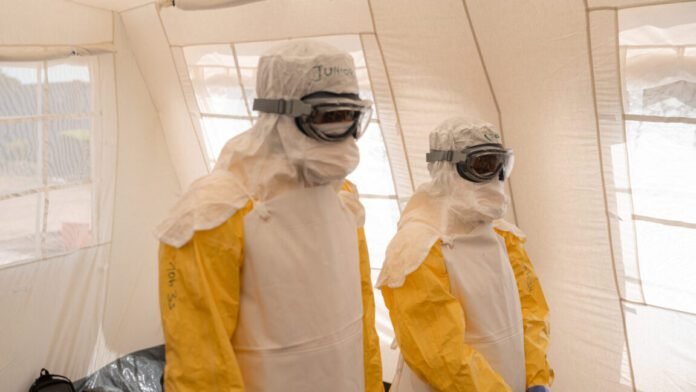
Nearly a month into the Ebola outbreak in the Democratic Republic of the Congo, cases continue to rise as officials are still trailing the virus in their response efforts.
As of Thursday, June 11, the DRC has reported 676 confirmed cases, 136 deaths, and 119 suspected cases. Uganda is reporting 19 confirmed cases and two deaths.
The outbreak, caused by the Bundibugyo strain of Ebolavirus, is already the third largest Ebola outbreak on record. But health experts fear that it could grow much larger and had been quietly spreading for months before the outbreak was declared on May 15.
Reuters reported Thursday that investigators with the DRC health ministry are working backward to find the first case—patient zero—and have identified what may have been an early superspreader event on February 4. They zeroed in on the funeral of a 44-year-old pastor in the remote gold-mining town of Mongbwalu.
The pastor was said to have died of a severe abdominal infection, which could have been a manifestation of Ebola. But he was never tested for the virus. More than 80 people attended his funeral, and many relatives and community members fell ill in the following days. Within two weeks of burial, nearly 50 deaths were recorded in the town, and many of those had reported symptoms that could have been from Ebola, including fever, vomiting, and bleeding.
As the scope of the outbreak is still coming into view, the US Centers for Disease Control and Prevention released modeling of how it could unfold. The key finding was that if public health interventions aren’t implemented swiftly and strongly—with contract tracing and case isolation—then the outbreak could rival or exceed the largest Ebola outbreak ever recorded. That’s the 2014–2016 West Africa Ebola outbreak, which totaled over 28,000 cases and 11,000 deaths.
In one of the CDC modeling’s worst-case scenarios, in which only 20 percent of Ebola cases are isolated, most simulations projected more than 20,000 cases and more than 4,000 deaths within just three months.
“Utterly disgusted”
With the US withdrawal from the World Health Organization and the US Agency for International Development (USAID) dismantled, American contributions to the response effort have been weaker and slower than in past outbreaks, diminishing the overall response.
Meanwhile, the Trump administration’s isolationist strategy involving travel restrictions and border closures has raised tensions in other countries. The administration is planning on preventing even US citizens from returning to the states if they have been exposed or infected with the virus. Instead, the US is trying to stand up a makeshift quarantine facility at a military base in Kenya, a country currently unaffected by the outbreak.
The plans have sparked outrage and violent protests among Kenyans. According to reporting by The New York Times, protesters accuse Kenyan officials of bowing to Trump at the expense of allowing a deadly virus into the country, accepting Americans that America itself refuses to take in.
“We are utterly disgusted by the government’s apparent willingness to trade national biosecurity and the lives of its citizens for foreign aid,” the Kenya Medical Practitioners Pharmacists and Dentists Union said in a statement.
The Times reports that hundreds of people have gathered for protests in Nanyuki, the town closest to the air base. At least three protesters have been shot and killed in conflicts with police, according to the Kenya Human Rights Commission.
Although a Kenyan court had temporarily suspended the quarantine facility from opening, the Trump administration continues to move forward with the plans.
A Popular Doctor Had Long Warned That Vitamin K Shots Are Risky for Newborns. Now He’s Changed His Tune.
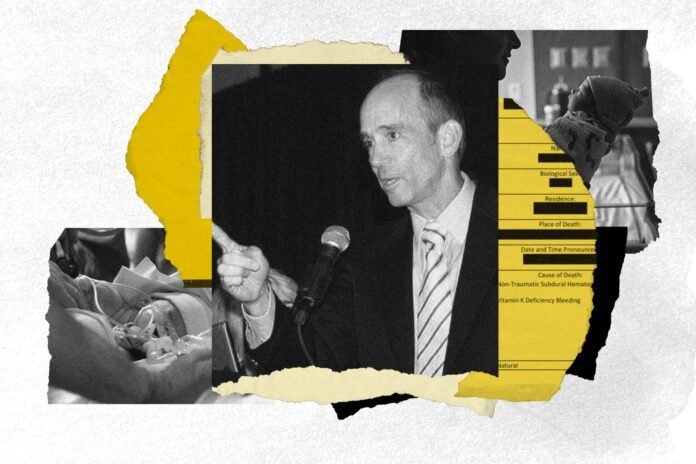
For more than a decade, Dr. Joseph Mercola cautioned parents against a potentially lifesaving shot of vitamin K for their newborn babies: “Vitamin K shots are completely unnecessary for your newborn.”
But now, in a break from his past warnings, Mercola is saying he no longer believes that.
ProPublica contacted Mercola recently as it was preparing an article about babies who died as a result of their parents turning down the vitamin K shot. Mercola’s new point of view is just as unequivocal as his old one: “The data is clear: vitamin K saves lives,” he wrote in an April article on his website two days after ProPublica contacted him. He added: “Based on the totality of the published evidence, I support vitamin K prophylaxis for all newborns.”
He also directed parents to speak to their children’s pediatricians.
“Vitamin K deficiency bleeding is rare, but when it occurs, the consequences can be devastating and irreversible,” Mercola wrote. “A single injection at birth can prevent it. Please talk to your doctor.”
Mercola is a leading vaccine skeptic and an ardent supporter of Health and Human Services Secretary Robert F. Kennedy Jr. He is a popular figure online, with a Facebook page that has some 1.7 million followers. He sends out a daily newsletter and sells alternative treatments for a variety of ailments.
His reversal comes at a critical moment. Hospitals and research studies have documented an alarming jump in babies not receiving the vitamin K shot, which has been recommended by the American Academy of Pediatrics since 1961 to help newborns’ blood to clot. Without it, research shows, babies are 81 times more at risk for late vitamin K deficiency bleeding, which can be fatal.
Just as has happened with measles and other vaccines, vitamin K shots have become the target of a deluge of false information online. That has caused some parents to view it as an unnecessary pharmaceutical intervention amid a lingering mistrust of the medical system following the COVID-19 pandemic.
Some point to a 2010 post from Mercola, entitled “The Dark Side of the Routine Newborn Vitamin K Shot.” A doctor in Tennessee recalled reluctant families citing the article, as did doctors in Oregon.
In the years that followed, Mercola stood by his opposition. He reiterated his position in 2014, after four babies in Nashville, Tennessee, suffered vitamin K deficiency bleeding. And he did so again in 2019, after hospital staff contacted child protective services in Illinois and took temporary custody of a newborn whose parents refused the shot for their baby.
In place of the shot, Mercola had recommended vitamin K drops, which are taken orally and have been touted online as a popular alternative. The drops, however, are not approved by the Food and Drug Administration and research shows they are not as effective as the shot, though they are used in some European countries.
In his April article, he addressed the rampant false information online regarding the vitamin K shot and acknowledged the role his writing may have played in spreading it. “The internet contains a significant amount of misinformation about vitamin K,” Mercola wrote. “Some of it may reference my own 2010 article. That article reflected the state of a scientific debate that has since been resolved. The science moved forward, and so have I.”
Dr. Joseph Mercola published an article on his website saying he’d changed his views on vitamin K. He now says vitamin K shots are the “prudent choice” and he encourages parents to consult their pediatrician.Mercola.com, highlighted by ProPublica
In fact, the science around the vitamin K shot has been settled for decades. The discovery of vitamin K and its role in clotting blood won the Nobel Prize in 1943. Newer studies have confirmed and furthered many of the findings that were available in 2010, but they do not represent a scientific shift from previous research. Some recent studies that Mercola cited in the April article document the rise in babies not receiving the shot and the catastrophic bleeding in the brain that can follow, but again both reinforce the same science that has encouraged giving the shot for more than 60 years.
In Mercola’s earlier posts, he wrote about what he deemed to be risks from the shot, beginning with “inappropriate” and “unnecessary” pain to the baby. He incorrectly claimed that the amount of vitamin K injected into newborns was far more than the needed dose. In addition, he wrote that the shot may contain preservatives that can be “toxic” to a baby’s immune system.
Benzyl alcohol is often used as a preservative in vitamin K shots, but the Centers for Disease Control and Prevention and other organizations have stressed that it’s safe. In the 1980s, doctors realized that some extremely premature babies suffered benzyl alcohol toxicity, but, according to the CDC, that was because they were on so many medications containing it. In addition, many hospitals now offer preservative-free options.
Some families have also expressed fear about a “black box warning,” which appears on a drug’s label to alert providers of serious risks. The shot does contain a boxed warning, as do more than 400 other medications, but that is primarily related to adults and vitamin K that is given through an IV, not as a shot in the thigh muscle, which is how doctors typically administer vitamin K to babies. None of the dozens of doctors interviewed by ProPublica said they have ever seen an adverse reaction in an infant who received a vitamin K shot.
Read More
But even back in 2010, Mercola dispelled one popular misconception that vitamin K injections increased the risk of cancer. That belief stemmed from a pair of older refuted studies. In 2010, he wrote, “that conclusion was in error.” In April, he reinforced that message.
Alternative treatments promoted by Mercola have attracted federal scrutiny. He and his companies have had to pay millions of dollars to settle allegations that he had made false claims about the safety of products.
During the pandemic, for instance, the FDA sent Mercola a warning letter after he offered unapproved and misbranded products, including vitamin C, on his website as ways to prevent or treat COVID-19.
In 2017, the Federal Trade Commission announced it was mailing $2.59 million to people who bought Mercola indoor tanning systems. The agency charged that Mercola and his companies claimed the tanning systems were safe and that research showed that indoor tanning doesn’t raise the risk of melanoma, a type of skin cancer.
Mercola did not admit wrongdoing. His online posts include a disclaimer that they are intended as a way of sharing knowledge and information, not medical advice. He also has said his 2010 vitamin K article was based on an interview with a Dutch researcher who studied vitamin K.
Mercola, a doctor of osteopathic medicine, declined to be interviewed for this story but said his current stance is accurately reflected in the April article. “While I do not agree with all of the characterizations and conclusions in your summary,” he wrote in response to questions from ProPublica, “I have nothing further to add at this time.”
Even though Mercola has now reversed his position on vitamin K, many on social media still cling to debunked and distorted claims. On Facebook, TikTok and Instagram, unsubstantiated claims often go unchecked.
One theme that has emerged on social media is the notion that God created babies perfectly, and there must be a reason they are born without sufficient vitamin K. In one video on TikTok, a woman who identifies herself as a nurse asked, “Did God really get it wrong?”
Responding to another, someone wrote, “Just know our creator didn’t make a mistake. Every baby is born like this for a reason.”
Others lump the vitamin K shot, which is not a vaccine, in with vaccines. A comment on a video about the vitamin K shot declared, “My baby isn’t getting any vaccines.” It received more than 600 likes.
Mercola also is not the only doctor being cited by vitamin K shot opponents. Commenters on Instagram, TikTok and Reddit have directed people to Dr. Suzanne Humphries, who has spoken out about vaccines and the vitamin K shot for many years.
“My opinion is that the more I read about vitamin K,” she said in a video posted in 2014, “the more I can’t believe that it’s injected into newborn infants.”
Last month, she appeared in a lengthy interview on the website of Children’s Health Defense, the anti-vaccine nonprofit founded by Kennedy. She cited the pair of studies from more than 30 years ago that found an association between the shot and cancer, though they were both called into question shortly after they were published. As even Mercola noted in 2010, severaladditionalstudies found no increased risk of cancer following the shot.
“Those of us that believe in a divine creator,” she said, “believe that maybe it is by design, or that actually it is by design, and that there’s a reason for it.”
Humphries did not respond to requests for comment.
During Kennedy’s time at Children’s Health Defense, the group published a post in 2020 that claimed aluminum adjuvants — added components that boost the body’s immune response — in vaccines are “significant sources of early exposure” to aluminum. Some vitamin K shots contain a small amount of aluminum, but studies have not found any evidence of serious or long-lasting harm. Adjuvants, according to the CDC, have been used “safely in vaccines for decades.”
Brian Hooker, chief scientific officer at Children’s Health Defense, said the aluminum concern remains, as does the cancer fear, despite multiple studies that found no basis for them. He said he would like to see more research on the vitamin K shot, as well as other newborn interventions like the hepatitis B vaccine.
“I do want to look at the individual components of these shots in conjunction with everything else that the infant is getting,” he said, “and to me that body of literature is really incomplete.”
Hooker said he worked with Kennedy for many years and, while they are no longer in direct contact, he has full confidence in the country’s leading federal health official. But Kennedy’s silence has served to deepen skepticism among experts.
“Now we’re starting to see something that I never saw, which was brain bleeds and gut bleeds in infants,” said Rep. Kim Schrier, a Washington Democrat who worked as a pediatrician for more than 15 years before running for Congress. “And that’s so scary and heartbreaking.”
At an April House subcommittee hearing, Schrier confronted Kennedy about vitamin K, saying that he made parents distrust doctors and shots, and as a result some parents are refusing the vitamin K shot and other standard care.
“Right now, Secretary Kennedy, given what I just told you about vitamin K, will you just tell pregnant women out there for the record, ‘Yes, you should get your babies the vitamin K shot’?” Schrier asked Kennedy.
Kennedy did not oblige her. He said he has never said anything about the vitamin K shot.
An HHS spokesperson did not answer ProPublica’s questions but said the CDC recommends that parents give newborns the vitamin K shot within 6 hours of their birth to prevent vitamin K deficiency bleeding. She acknowledged that uptake of the shot has declined during recent years “as public trust in health care institutions has fallen, particularly during the COVID-19 pandemic amid heavy-handed mandates and inconsistent messaging during the Biden administration.”
“Rebuilding that trust,” the spokesperson wrote in an email, “requires honesty, informed consent, and respect for individual choice.”
Schrier said she empathizes with parents who are inundated with so many conflicting messages. She said she recently stepped out of the Capitol building and overheard a woman say — inaccurately — that every childhood vaccine contains glyphosate, which was an ingredient in some forms of the weed killer Roundup.
“I can just see how this is going to spiral right now. It gets out there, then it’s on social media,” Schrier said. “Every parent just doesn’t want to do the wrong thing.”
India’s Nicobar Island push threatens China’s Malacca lifeline
BANGKOK – India’s military is expanding across the Andaman Sea into Southeast Asia with the construction of a multi-billion-dollar air and sea base on remote Great Nicobar Island, New Delhi’s furthest reach toward the Strait of Malacca, where rival China ships more than 70% of its imported oil.
“The Great Nicobar Island Project, which is of strategic, defense and national importance, transforms the region into a major hub of maritime and air connectivity in the Indian Ocean region,” India’s Prime Minister Narendra Modi proudly shared on his social media in September.
New Delhi and its allies, potentially including Washington, could benefit in that watery zone if a serious conflict erupts with China after the massive project is completed on the isolated and previously neglected island.
Construction has already begun. An initial phase allowing air and sea operations may be ready within a few years.
Great Nicobar is India’s southernmost island, 3,000 kilometers southeast of New Delhi, in the 800-kilometer-long tropical Nicobar archipelago.
“When completed, the Great Nicobar project would allow India to monitor activities near the Strait of Malacca, a key trade corridor for China,” the Hong Kong-based South China Morning Post reported on May 22.
“Amid the Hormuz blockade, supporters of the Indian project — including some of the country’s military veterans — argue it would enable New Delhi to ‘control’ or disrupt Chinese supply chains and worsen its ‘Malacca dilemma,’” the paper said.
China Global South Projects, a foreign-run analysis website, agreed and said on May 21: “Chinese analysts warn India’s Nicobar push threatens Beijing’s ‘Malacca Lifeline.’”
“Chinese analysts see the project as a sign that New Delhi is trying to turn Great Nicobar into an economic and military outpost near one of China’s most important maritime lifelines, giving India greater ability to monitor the Malacca Strait and project influence across the region.
“India is increasingly seen as a maritime rival that could shape China’s access to the Indian Ocean and Southeast Asian sea lanes, and potentially gain leverage near one of Beijing’s most important economic lifelines,” it reported.
When India completes construction of the Greenfield International Airport to handle fighter jets and commercial planes, it will replace the tiny airport at Campbell Bay, the small east coast capital of Great Nicobar Island.
Installation of advanced radar capability at Campbell Bay’s existing Indian Naval Air Station Baaz (“Hawk” in Hindi) would give New Delhi increased surveillance over the western mouth of the equatorial Strait of Malacca, which is also used by the US Seventh Fleet.
Great Nicobar Island is only 175 kilometers northwest of Indonesia’s large Sumatra Island, which forms the western mouth of the Malacca Strait, near west Malaysia, Singapore and southwest Thailand.
The strait, which opens onto the Andaman Sea and the wider Indian Ocean, has come under increased focus after the Iran war and Strait of Hormuz blockade made narrow shipping routes vulnerable chokeholds on a fluid chessboard.
India is also building a huge deepwater seaport at the island’s southern Galathea Bay, which opens onto the Andaman Sea, where an estimated 70% of Chinese oil imports pass from the Middle East into the Strait of Malacca for onward passage to China’s east coast.
Galathea Bay’s International Container Transshipment Terminal is planned to become the nation’s biggest port, potentially dwarfing India’s west coast facilities at Mumbai (Bombay).
“It may be competing to become the container handling hub in the entire Indo-Pacific region,” said Kumar Joshi, Great Nicobar Island’s lieutenant governor.
Similar to international port facilities in Singapore, Malaysia and Sri Lanka, it would be used to transship and reroute cargo by allowing large vessels to load or unload smaller ships that ply routes to nearby ports across Southeast Asia.
India’s own transshipments would be less expensive if it did not have to pay fees and taxes at those three foreign ports when its vessels move cargo to and from other ships. Along with the Andaman Islands further north, Great Nicobar Island “is emerging as India’s gateway to Southeast Asia and the global Blue Economy,” Joshi said in October.
Construction is being carried out in phases, with an initial opening planned for 2028 and expansion continuing over the next 20 years. New Delhi also expects to make money from providing refueling, repair, warehousing and other commercial activities for international vessels transiting the Strait of Malacca and the nearby Andaman Sea.
Tourism would also benefit from a boost when international travelers begin arriving by air or on cruise ships in Great Nicobar.
A new power plant on the island is in the works to supply energy for the massive project, which would include a new town larger than the capital, populated by importing more than half a million Indians from the mainland to operate the facilities. Enthusiasts insist the island could become the next Hong Kong by mid-century.
Many of the island’s 1,200 residents, however, hunt and gather their food in the rainforest, including about 300 Shompen tribespeople who are among the most isolated and uncontacted on Earth.
“We, as scholars with expertise on the crime of genocide, are writing to express our utmost concern that the indigenous Shompen people of India’s Great Nicobar Island will face genocide if the plan to turn their island into the ‘Hong Kong of India’ goes ahead,” Survival International, a British campaign group for indigenous people, said in a petition to New Delhi.
“The Shompen people have lived for hundreds, if not thousands, of years in harmony with the rich natural world of Great Nicobar Island, largely without contact with outsiders,” the petition said.
It was signed by 39 prominent American, British, and other genocide and Holocaust scholars.
Environmentalists, meanwhile, warn of possible toxic chemical pollution, disrupted ecosystems, threats to endangered land and sea creatures from spills and shipping, and other havoc from the expanded military installations.
Worried geologists reportedly documented the possibility of an underwater earthquake triggering a tsunami that could inundate the island.
Great Nicobar Island is only about 910 square kilometers and almost totally covered in thick, relatively unexplored forests, graced by elegant lagoons and fish-rich coral reefs.
Hoping to quell complaints about the estimated $9 billion cost and potential environmental risks, Prime Minister Modi said the project is “a prime example of economy and ecology complementing each other” after optimistic Union Minister Bhupender Yadav briefed him in September.
The “project has great significance not only for economic development of the island and surrounding areas of the strategic location, but also for defense and national security,” India’s environmental court, known as the National Green Tribunal, determined in 2023 favoring its development.
“The area is located in China’s ‘String of Pearls’ strategy, which is sought to be countered by Indian authorities under India’s ‘Act East’ policy,” the court said.
The String of Pearls describes China’s expanding number of foreign seaports, which are already established in Sri Lanka, Pakistan, East Africa and elsewhere — making New Delhi, Washington and others concerned.
India’s Act East policy refers to New Delhi’s recent efforts to strengthen commercial, military, and diplomatic relations with prosperous Southeast Asia rather than prioritizing ties with its bordering neighbors in financially strapped South Asia.
Richard S. Ehrlich is a Bangkok-based American foreign correspondent reporting from Asia since 1978, and winner of Columbia University’s Foreign Correspondents’ Award. Excerpts from his two new nonfiction books, “Rituals. Killers. Wars. & Sex. — Tibet, India, Nepal, Laos, Vietnam, Afghanistan, Sri Lanka & New York” and “Apocalyptic Tribes, Smugglers & Freaks” are available here.