
In the 1950s and 1960s, a massive wave of underground humor swept across the USSR and the Eastern Bloc featuring a fictional broadcaster called Armenian Radio (known in the West as Radio Yerevan). Many of the jokes involved food lines and food scarcity, a fact of Soviet life.
In one widely circulated shaggy dog story, a man gets in different lines to try and buy some food for dinner. Each time, he reaches the end of the line to be told they are out of (meat, sausages, chicken etc.). He finally explodes in anger. A KGB man tells him to please behave better.
This is something new. The man in line comments that not only is the Soviet Union out of hamburger and chicken, it is out of bullets.
The Armenian Radio story reflects the condition of Great Britain today, not the Soviet Union of past years. The British military is out of everything. It even lacks bullets.

While the UK pretends to be a great power, it has a broken-down army, a fleet with submarines that can’t submarine and frigates that can’t frigate. Yet, despite these massive deficits, the UK promotes the war in Ukraine vociferously, thinking (one supposes) that as long as the Ukrainians are fighting and dying, the UK can worry less about defending itself.
As a member of NATO the UK depends on the United States for its survival, and on the “special relationship” it may have squandered under Keir Starmer. The near collapse of Britain’s fighting capability, including its dreadful lack of reserves and stockpiles, is paralleled by what looks like internal social collapse: a cultural crisis that is altering the UK, not for the better.

The overall mess has now led to the resignation of the UK’s defense secretary, John Healey. Healey is a long-time Labor politician and Starmer stalwart. He is not a defense expert and has no particular national security background.
Healey reportedly demanded £18 billion in new funding to patch the critical structural holes in the armed forces (such as the idled submarine fleet, escort ship shortages and munitions stockpiles). The Treasury and Downing Street ultimately offered only £13.5 billion, with officials noting that only £10 billion of that was actually “new” money.
While Starmer previously pledged a long-term goal of hitting 3% of GDP on defense, Healey’s resignation letter revealed that the Treasury’s actual plan would only see defense spending reach 2.68% by 2030. Healey stated bluntly that this “falls well short of what is required for defense and the country at this dangerous time.”
- At the end of the Cold War (1991), the British Army stood at roughly 155,000 active troops. Today, that number has dropped to approximately 72,500 – the lowest level since the Napoleonic era. The Royal Navy and Royal Air Force (RAF) have seen similar cuts, shrinking by 25% and 40% respectively since 2000.
- The Ministry of Defense (MoD) has consistently missed recruitment targets. Privatized recruitment contracts have faced severe bureaucratic delays, causing applicants to drop out. Furthermore, social attitudes toward the military have shifted significantly among younger generations, hampering standard recruitment efforts.
- Physical and mental health conditions mean that more than a fifth of remaining regular forces are classified as “not fully deployable” or completely undeployable.
The US has around 80,000 to 100,000 soldiers in Europe, more than the entire British army. US troops are better equipped and far better supported despite the huge distance between the US and Europe.
The level of UK support for NATO, defined as on or near the alleged front lines, is minimal. Roughly 800 to 1,000 British soldiers (typically an armored or mechanized infantry brigade combat team subunit equipped with Warrior infantry fighting vehicles or Challenger tanks) are stationed in Estonia. In Poland the UK maintains a smaller cavalry troop presence (usually around 150 personnel) integrated into the US-led NATO battlegroup in Orzysz.
While the UK is able to surge troops for NATO exercises, it is notably weak in supporting the Baltic States and Poland. The UK does provide intermittent RAF Typhoon deployments to bases in Lithuania, Estonia, or Romania.
Britain’s navy is in poor shape. There is a severe availability crisis for the hunter-killer submarine fleet. The Royal Navy has an operational availability rate of 0% for its deployed attack submarines. All of them are undergoing repairs. Britain’s ballistic missile submarines, Vanguard-class (Strategic Deterrence / SSBN) also are barely operational. The UK operates four Vanguard-class ballistic missile submarines based at HMNB Clyde (Faslane) in Scotland. They maintain the UK’s Continuous At-Sea Deterrent (CASD).
Under a doctrine active since 1969, at least one British nuclear missile submarine is hidden underwater at sea every single second of the year. Each carries American-made Trident D5 strategic ballistic missiles, armed with British-manufactured nuclear warheads. Commissioned in the 1990s with a 25-year design life, these boats are ancient and wearing out. Maintenance overhauls that used to take months now take years, forcing the remaining active crews into grueling, record-breaking deployments (sometimes exceeding six months underwater) just to keep a single boat on patrol.
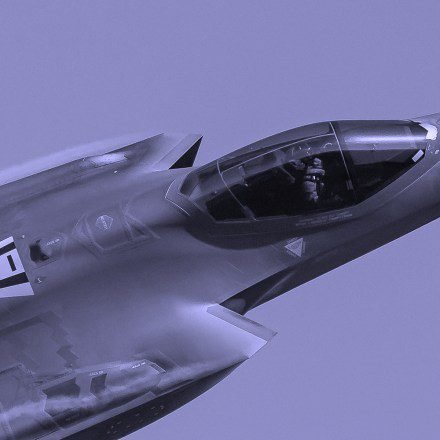
The UK has not had funds to procure enough F-35B aircraft for its aircraft carriers. The UK simply does not own enough F-35Bs to fully stock even one carrier’s maximum flight deck capacity (~36 to 40 jets) purely with British airframes. To project maximum power during major deployments, British carriers routinely embed US Marine Corps F-35B squadrons alongside the Royal Air Force/Royal Navy joint squadrons to fill the empty spots on the flight deck.
British carriers also don’t have adequate fleet support. They have had to rely on NATO assets, especially the US, for escort duties. This is critical to protect carriers from enemy submarines and from missile and drone attack. Whether British carriers, without integrated escort, are supportable in combat scenarios is an open question.

The situation is also dire in the surface fleet, especially type 23 frigates (Duke Class). The operational readiness of the escort fleet is under intense strain. Only a single Type 23 frigate (HMS St Albans) was actively working up or operating at sea, with the remainder immobilized in various stages of maintenance, refit, or crew reallocation.
A notable portion of the remaining force is locked in extended upkeep blocks to keep them structurally sound and safe for sea. HMS Kent, for example, entered a major, planned deep maintenance and modernization cycle to sustain its baseline utility through the late 2020s.
To plug gaping personnel deficits across the fleet and preserve resources for incoming platforms, the Ministry of Defence prematurely retired HMS Argyll and HMS Westminster. HMS Westminster was decommissioned despite recently undergoing a massive, multi-million-pound refit, because the Navy could not sustainably crew the vessel while simultaneously preparing personnel for future platforms.
The UK has severely depleted its previously inadequate weapons stockpiles. So, too has the United States, but the difference is the US is stepping up defense manufacturing (as best it can with an obsolete defense manufacturing infrastructure) while the UK lacks funds and will power to increase defense production. The failure to meet financial targets (which led to the Defense Secretary’s resignation) means that the road ahead is full of potholes.
A related problem is that the UK has been moving much equipment to Ukraine, but this cannot be sustained. NATO is hoping, along with the Ukrainians, that their drone strategy will keep the Russians contained and force a negotiation that will end Russian occupation of Ukrainian territory. But this is a big wish, and drone “dominance” will sooner or later end as new counter-drone solutions get fielded.
The recently published UK Strategic Defence Review outlines a 10-year roadmap aimed at shifting the country toward true “warfighting readiness” rather than just looking good on a parade ground. The Defence Review is a solid assessment of Britain’s dire defense situation. It is unlikely under the current UK government that the Defence Review recommendations will be followed, or that funds will be found to change the current mess.
With plummeting defense capabilities, sooner or later UK politicians (and the supporting cast of defense experts) need to adjust to reality and rethink the country’s national security strategy. With a de minimis security role in NATO and empty stockpiles, the UK should be thinking more about home defense and less about power projection. In short, the UK needs to redefine its defense strategy from top to bottom.
As things now stand, the UK has a big hole in its defense bucket. It cannot continue without radical change in its plans and strategy.
Stephen Bryen is a former US deputy undersecretary of defense. This article, which originally appeared on his newsletter Weapons and Strategy, is republished with permission.

 enormous amounts of carbon underground in peat, or dead plant material that resists decay and accumulates over centuries.)

![Group of Palestinian children in Bureyc Camp raise the Palestinian flag over the rubble of buildings destroyed by Israeli strikes following announcements of recognition of the State of Palestine by Canada, Australia, the UK, and Portugal, on September 22, 2025, in Gaza City, Gaza. [Moiz Salhi - Anadolu Agency]](https://i0.wp.com/www.middleeastmonitor.com/wp-content/uploads/2025/09/AA-20250922-39196022-39196002-DAILY_LIFE_IN_GAZA_AMID_ISRAELI_ATTACKS.jpg?fit=920%2C613&ssl=1)